Introduction
Many people begin yoga for flexibility, stress relief, or better health. Over time, they may discover that yoga is not only about the body. It is also a path for training the mind, calming inner restlessness, and understanding consciousness at a deeper level. If you are looking for what is samadhi in yoga explained in a simple way, this guide will help you understand its meaning, stages, and spiritual purpose without making the topic confusing.
One of the most important ideas in this path is Samadhi. If you are searching for what is Samadhi in yoga explained in clear language, Samadhi can be understood as the final stage of deep meditation, where the mind becomes fully absorbed and the usual sense of separation begins to fade.
It is not a simple mood, a dream, or a moment of relaxation. Samadhi is a refined state of consciousness described in ancient texts, especially Patanjali’s Yoga Sutras. It is the highest limb of yoga and is often linked with pure awareness, spiritual union, and freedom from ego-based identity.
What Is Samadhi?
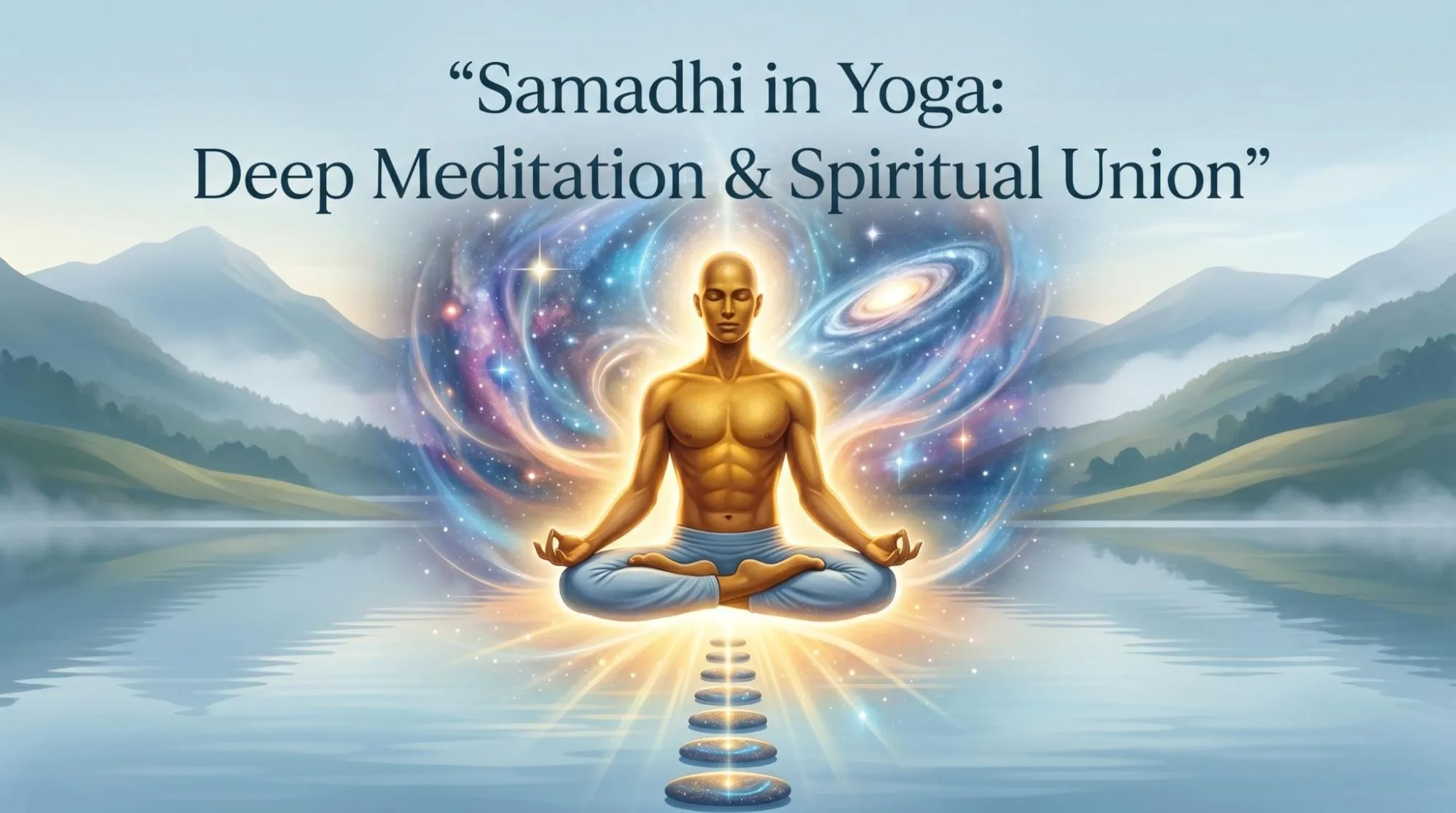
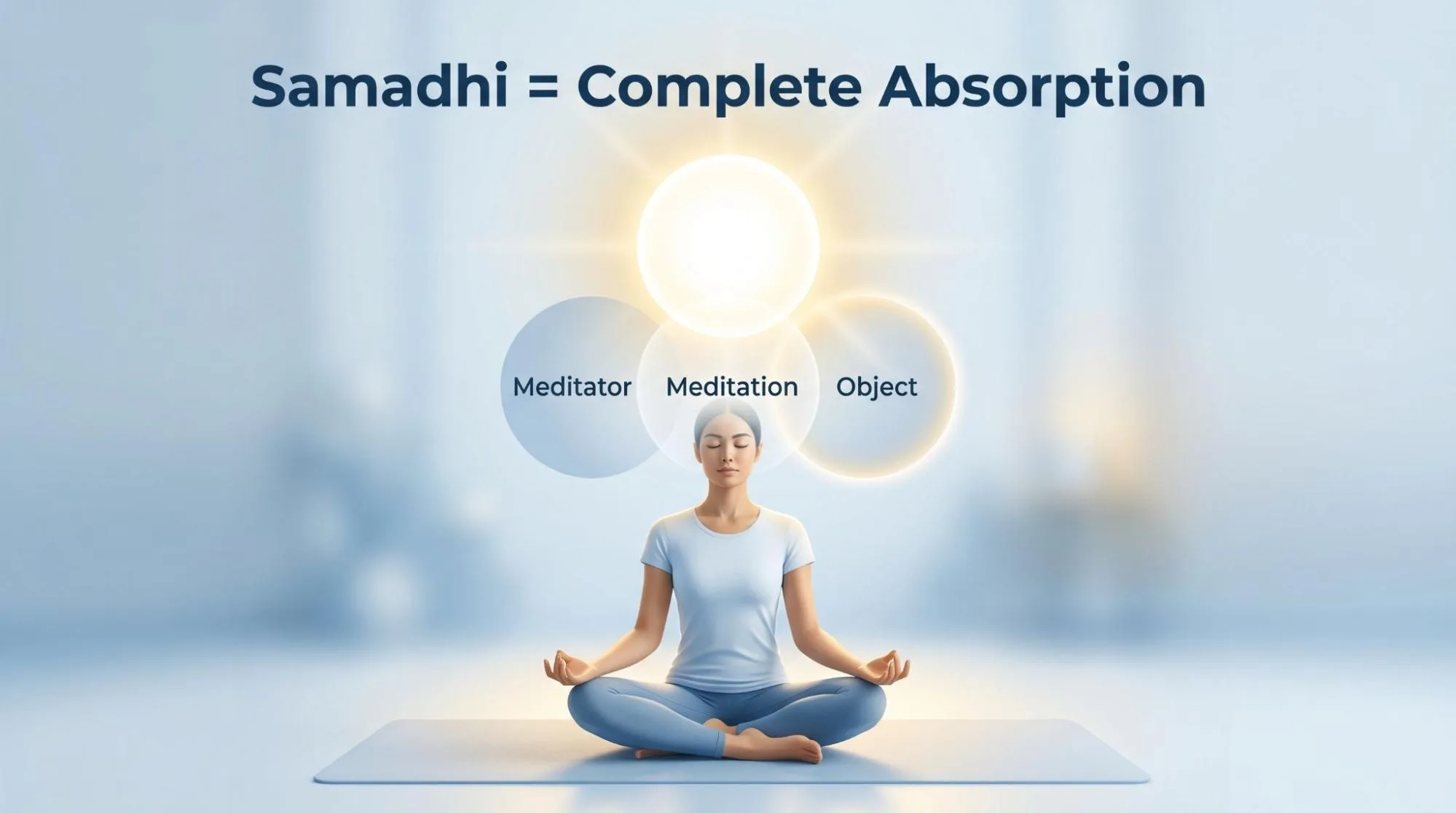
Samadhi is the final stage of yoga where meditation becomes complete absorption. In this state, the meditator, the act of meditation, and the object of meditation no longer feel separate in the usual way. A clear answer to what is samadhi in yoga explained is this: Samadhi is the state where meditation becomes so deep that the mind rests in complete absorption.
In normal meditation practice, a person may focus on the breath, a mantra, or an object. Thoughts may still come and go. But in Samadhi, the mind becomes deeply still, steady, and absorbed.
This does not mean the person is unconscious. Samadhi is often described as a highly awake state of meditative awareness. The mind remains clear, but it is no longer disturbed by ordinary mental movement.
The Sanskrit Meaning of Samadhi
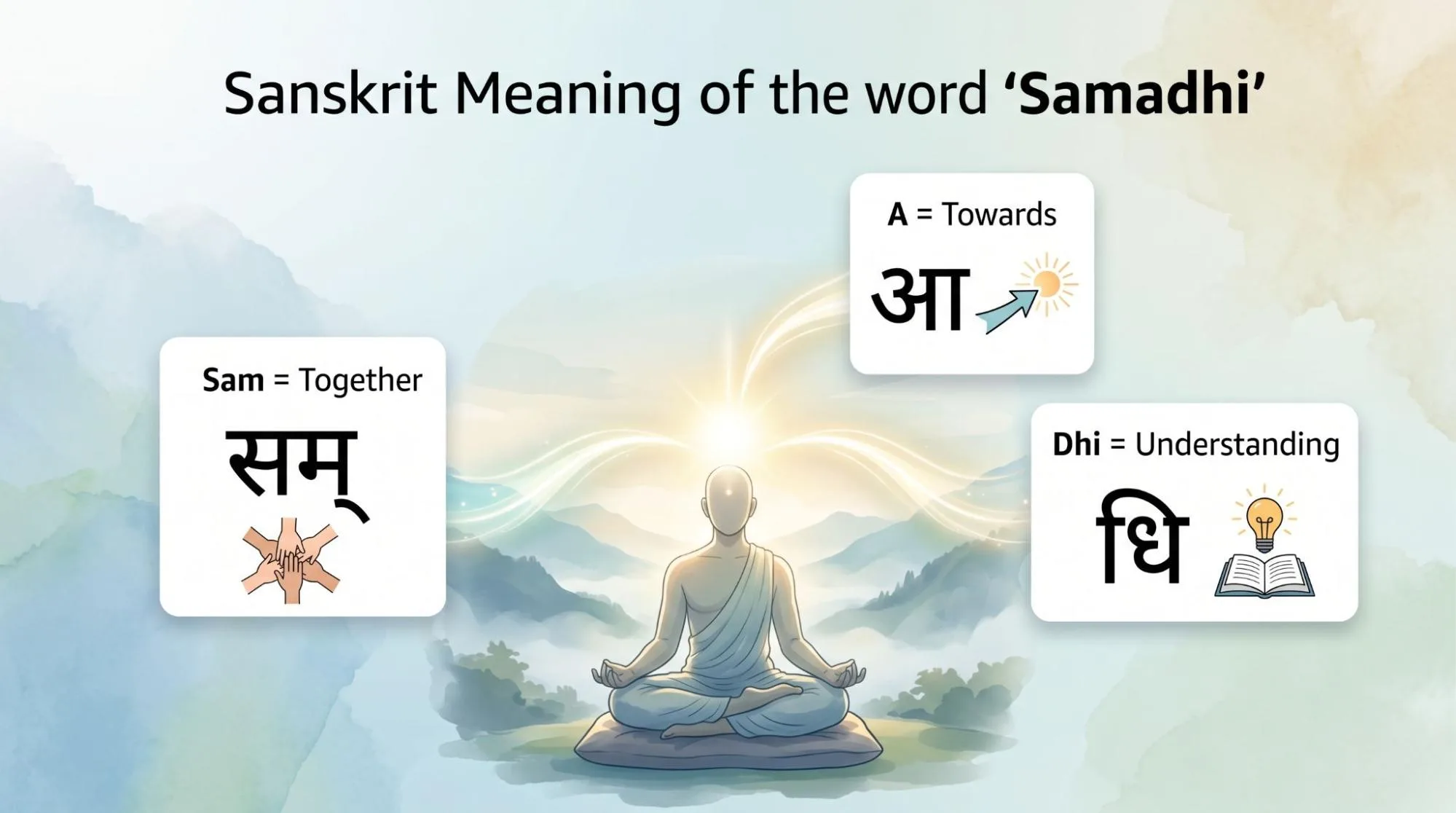
The word Samadhi comes from Sanskrit. It is commonly translated as “complete absorption,” “bringing together,” or “putting into union.” The meaning becomes easier to understand when we look at its parts.
Sam: Together or Completely
“Sam” means together, fully, or completely. It suggests a state where the scattered energy of the mind becomes gathered into one steady awareness.
A: Towards
“A” gives the sense of direction or movement toward something. In Samadhi, awareness moves toward unity, stillness, and direct experience.
Dhi: To Put, Hold, or Understand
“Dhi” is connected with understanding, intelligence, and holding awareness. In Samadhi, understanding is not only mental. It becomes direct and silent.
So, Samadhi can be understood as a state where awareness is completely gathered, held, and unified.
Learn More : What Is Ahimsa in Yoga? A Simple Guide to Non-Violence, Kindness, and Daily Practice
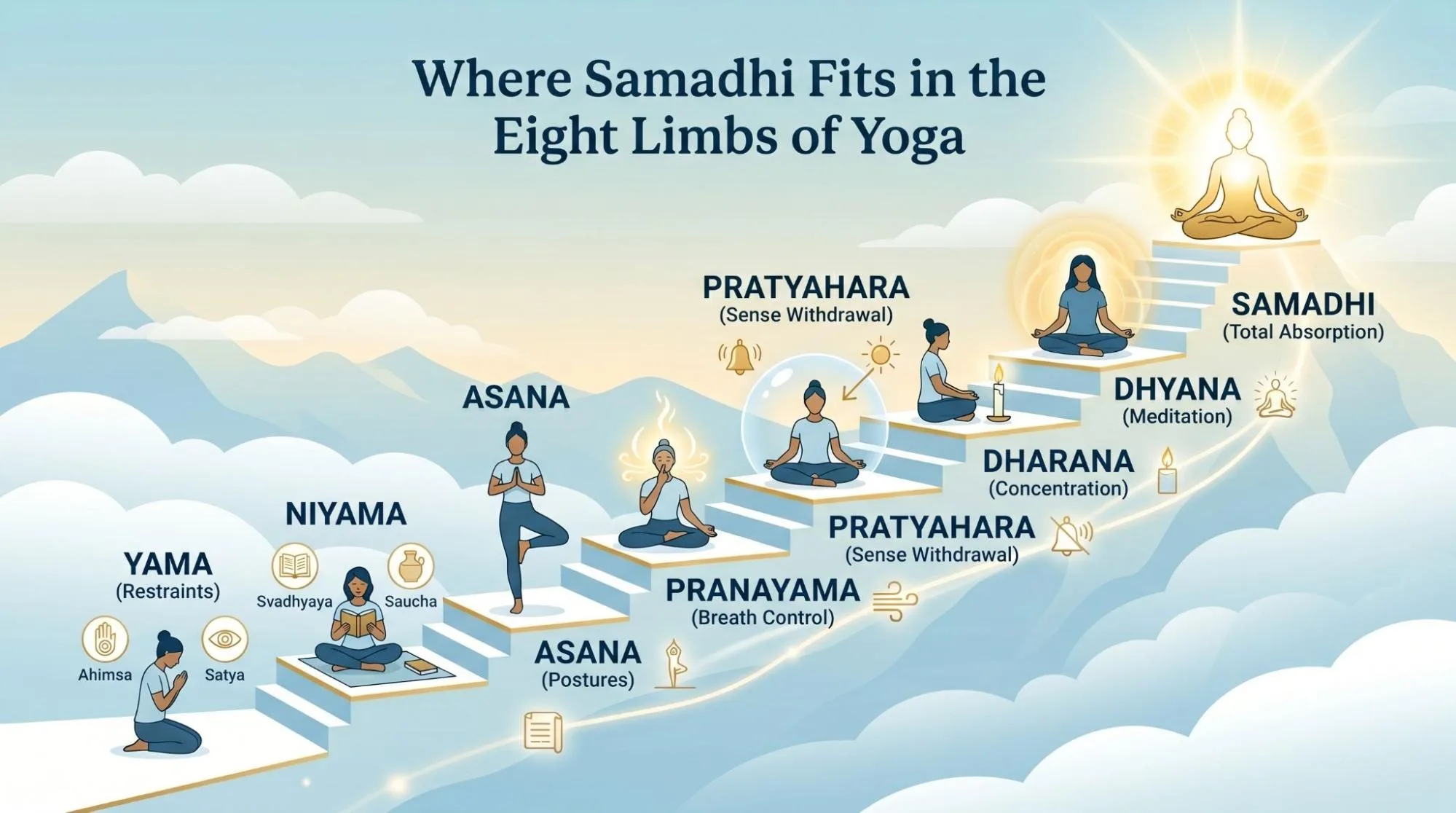
Where Samadhi Fits in the Eight Limbs of Yoga
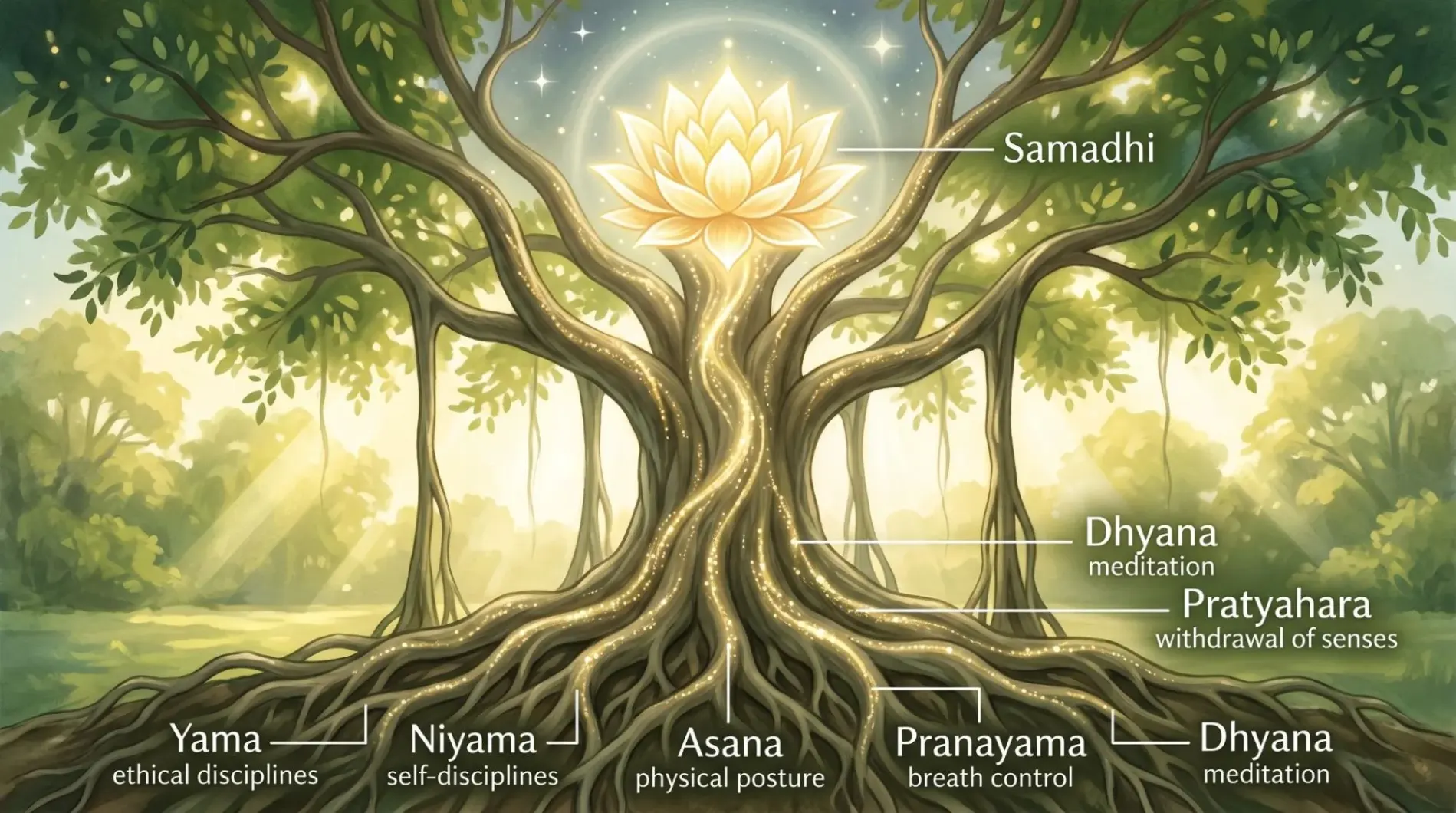
In Patanjali’s Yoga Sutras, yoga is explained through eight limbs. Samadhi is the final stage, but it does not appear suddenly. Each earlier limb prepares the body, breath, senses, and mind. To understand what is samadhi in yoga explained properly, it helps to see it as the final limb that comes after dharana concentration and dhyana meditation.
Yama: Ethical Discipline
Yama is about ethical living. It includes non-violence, truthfulness, non-stealing, moderation, and non-greed. A peaceful life helps create a peaceful mind.
Niyama: Personal Observance
Niyama focuses on personal discipline, contentment, self-study, purity, and surrender. These habits reduce inner conflict and support steady practice.
Asana: Physical Posture
Asana prepares the body for stillness. A stable and comfortable posture helps a person sit for meditation without constant physical discomfort.
Pranayama: Breath Control
Pranayama works with the breath. When the breath becomes calm, the nervous system and mind also begin to settle.
Pratyahara: Withdrawal of the Senses
Pratyahara means drawing the senses inward. Instead of running after every sound, image, or distraction, the mind learns to rest inside.
Dharana: Focused Concentration
Dharana concentration is the practice of fixing attention on one point. This may be the breath, a mantra, a symbol, or a chosen inner focus.
Dhyana: Uninterrupted Meditation
Dhyana meditation is a deeper flow of attention. In dharana, the mind may still need effort to stay focused. In dhyana, the attention becomes smoother and more continuous.
Samadhi: Total Absorption
Samadhi is the final stage. It is the point where meditation becomes complete absorption and the sense of “I am meditating” becomes very subtle or disappears.
What Samadhi Feels Like
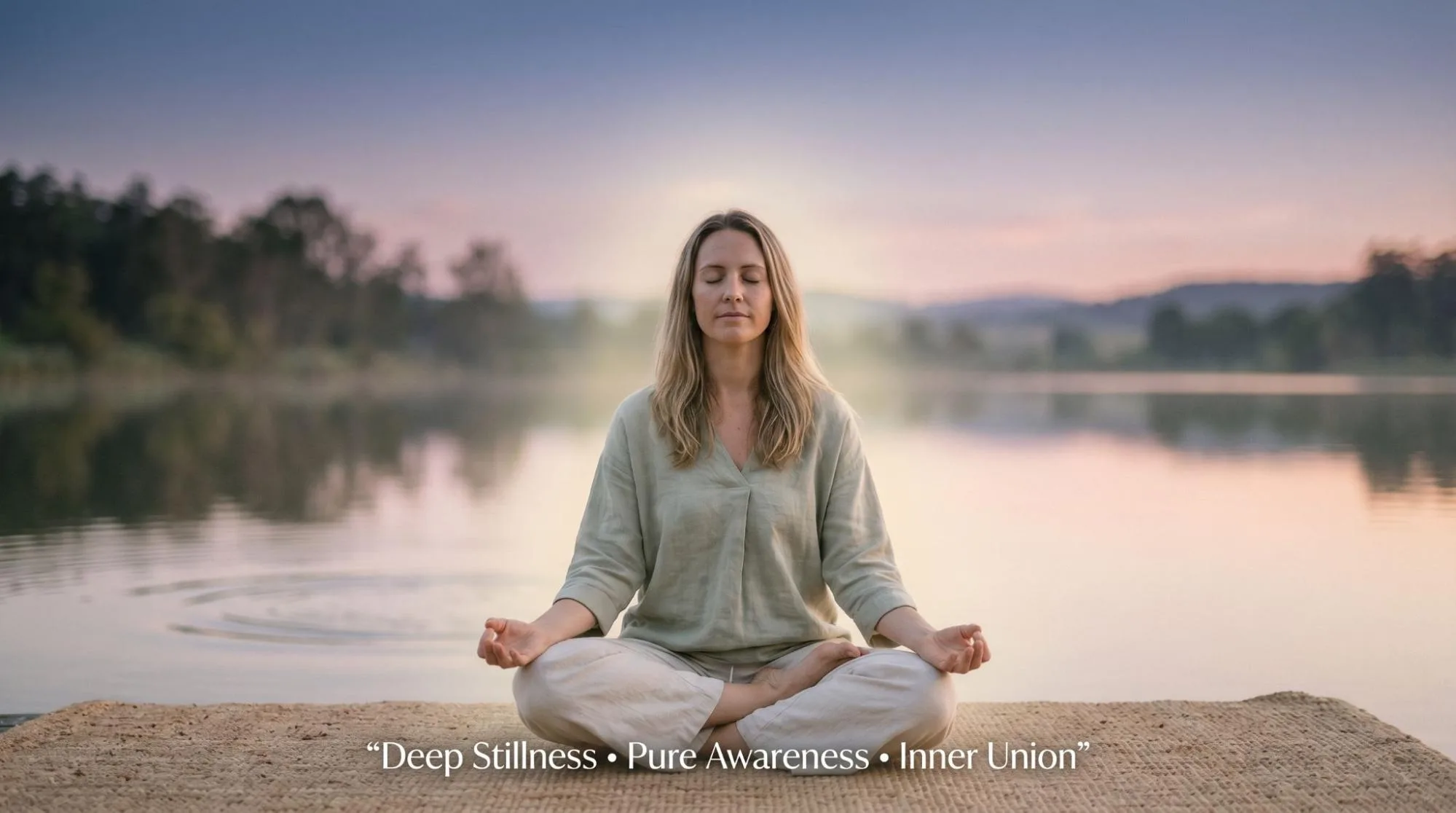
Samadhi is difficult to describe because it goes beyond ordinary thought. Still, yoga traditions often describe it as a state of deep meditative stillness, pure awareness, and inner unity.
A person in Samadhi may experience:
- Deep silence of the mind
- Complete absorption in meditation
- Freedom from ordinary mental noise
- A sense of unity with universal consciousness
- Awareness without strong ego identity
- Peace that is not dependent on outside conditions
This is why Samadhi is often linked with an enlightened state. However, yoga also explains that there are different states of Samadhi, and not all are the same depth.
The Two Main Stages of Samadhi
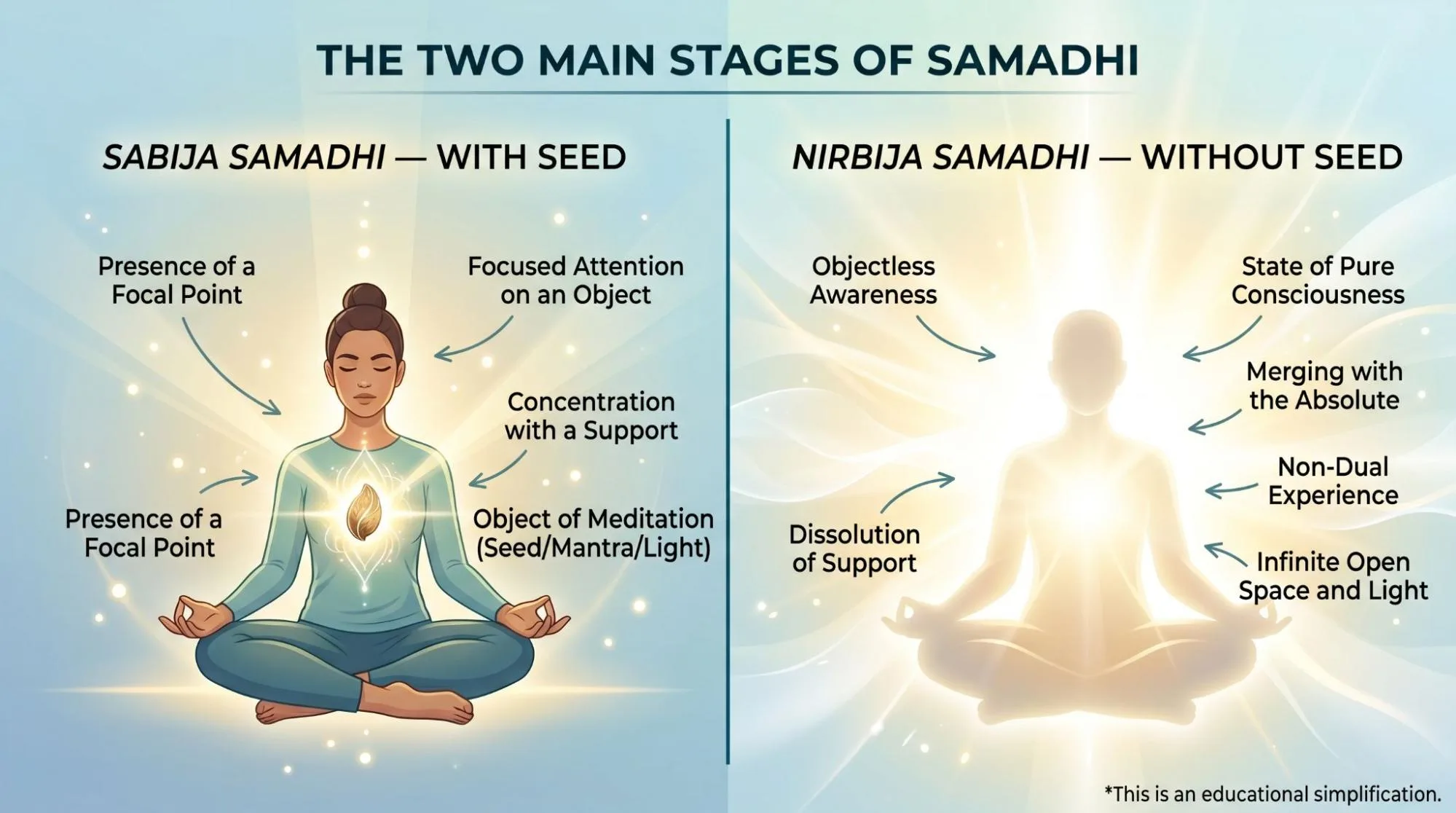
Different yoga traditions describe Samadhi in different ways, but two main stages are commonly discussed: Sabija Samadhi and Nirbija Samadhi.
Sabija Samadhi: Samadhi With Seed
Sabija means “with seed.” In Sabija Samadhi, there is still a subtle object of meditation present.
The person may be deeply absorbed in a mantra, breath, light, idea, or spiritual focus. The mind is quiet, but there is still a seed of awareness connected to something.
This is an advanced state of meditative absorption, but it still has a subtle point of focus.
Nirbija Samadhi: Samadhi Without Seed
Nirbija means “without seed.” In this state, even the subtle object of meditation falls away.
There is no ordinary thought, no mental image, and no separate object being held by the mind. Awareness rests in itself. This is considered a deeper and more refined state of Samadhi.
Learn More : Aparigraha: The Yoga Practice of Non-Attachment and Simple Living
Samadhi and the Ego
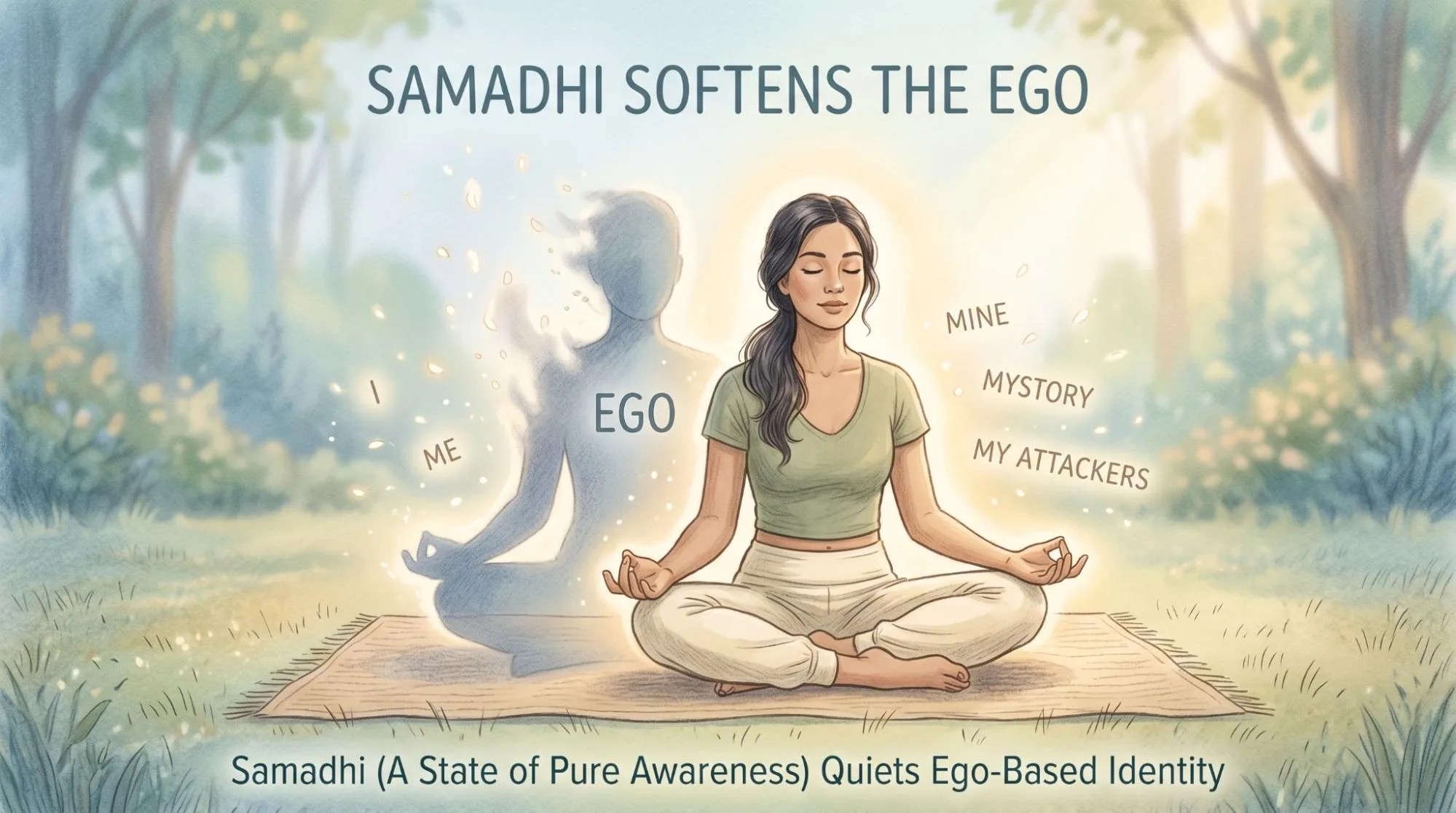
Samadhi has a close connection with the quieting of the ego.
In daily life, most people experience everything through “I,” “me,” and “mine.” I am thinking. I am doing. I am succeeding. I am failing. Even in meditation, the thought may arise: “I am meditating well.”
In Samadhi, this ego-centerd feeling becomes quiet. The usual boundary between the observer and the observed becomes very thin.
This does not mean a person loses their identity forever or cannot function in normal life. It means that during Samadhi, awareness is not controlled by the ordinary ego.
This is also why Samadhi should not be treated as a spiritual achievement to show off. The idea “I have attained Samadhi, so I am superior” is the opposite of the humility that deep yoga practice develops.
Can Samadhi Be Practiced Directly?
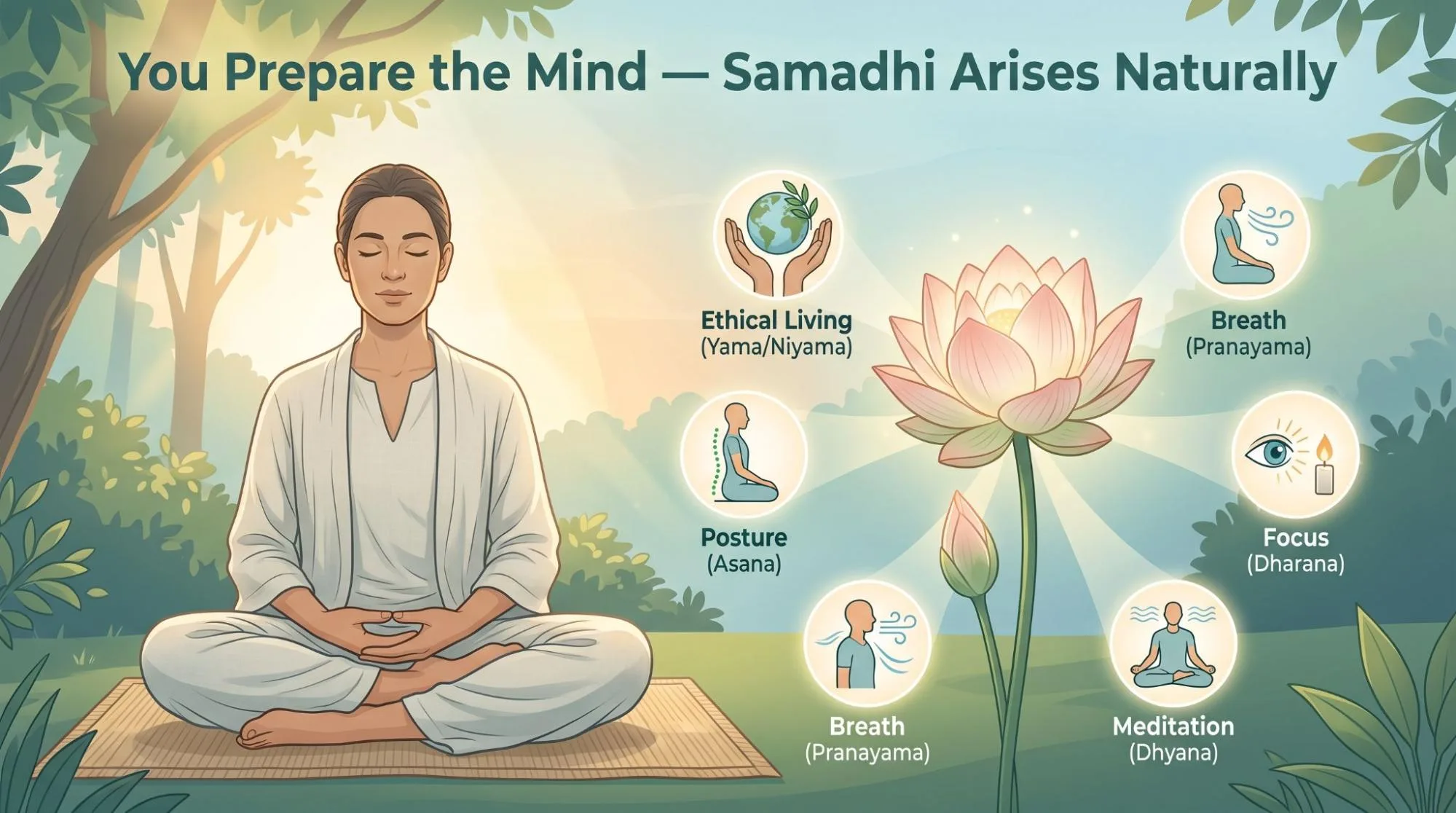
Samadhi cannot be forced directly. A person cannot simply decide, “Today I will enter Samadhi,” and make it happen by pressure.
What can be practiced is preparation.
The earlier limbs of yoga create the right conditions. Ethical living, steady posture, breath control, sense withdrawal, dharana concentration, and dhyana meditation all prepare the mind.
A simple way to understand it is this: you cannot force a flower to bloom by pulling it open. You can give it sunlight, water, and the right environment. In the same way, Samadhi arises when the mind becomes ready.
Why Samadhi Is Important in Yoga
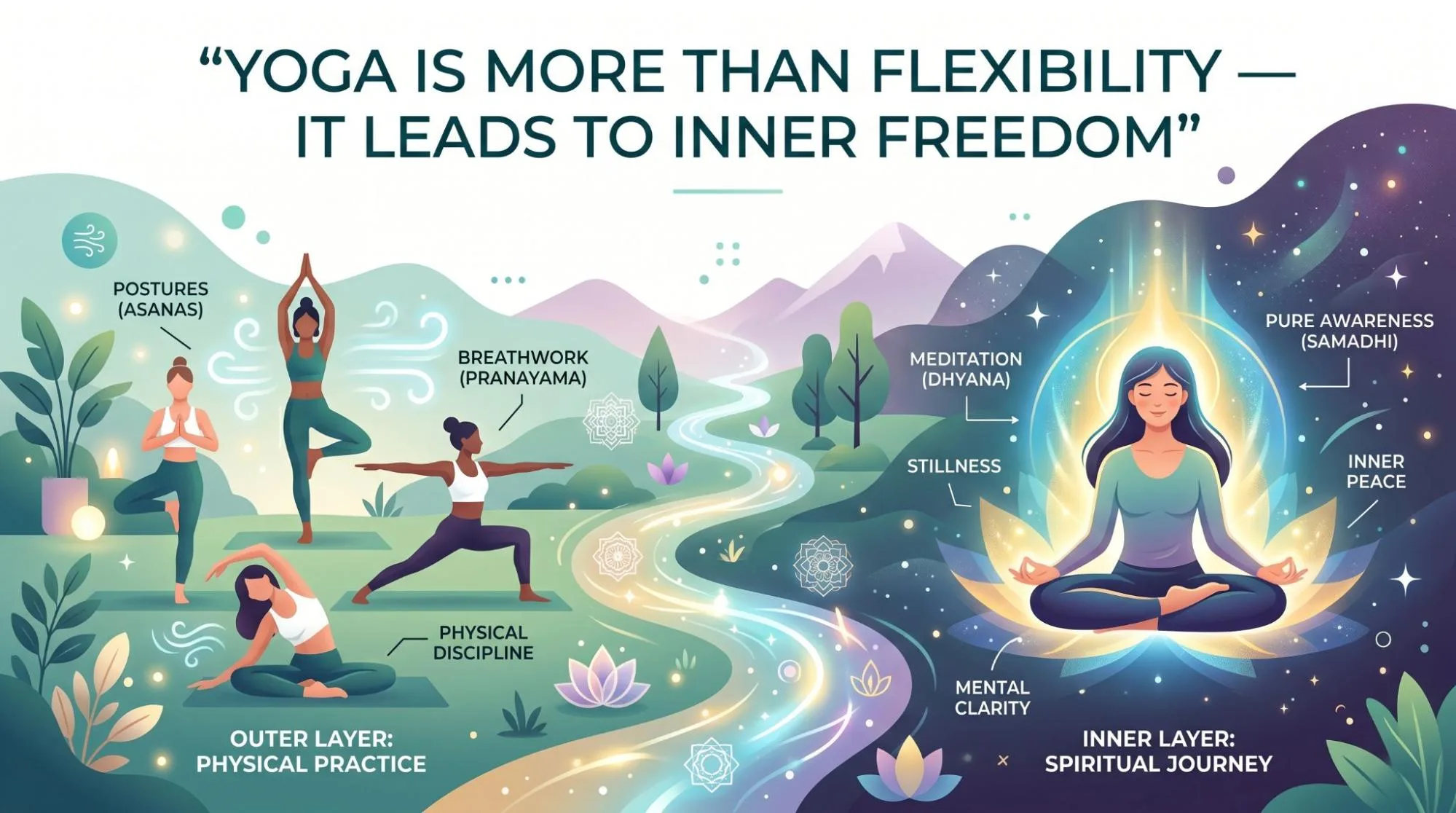
Samadhi is important because it shows the highest purpose of yoga. When people search for what is samadhi in yoga explained, they are usually trying to understand why yoga goes beyond posture, breathing, and ordinary relaxation.
Modern yoga is often connected with fitness, flexibility, and relaxation. These benefits are useful, but traditional yoga goes deeper. It is a path toward freedom from mental suffering and direct experience of pure awareness.
In Patanjali’s Yoga Sutras, yoga is connected with stilling the movements of the mind. Samadhi represents the deepest result of that stillness.
It teaches that peace is not only found by changing outer circumstances. A deeper peace can be discovered when the mind becomes clear, steady, and free from constant disturbance.
Common Misunderstandings About Samadhi
Samadhi is a deep spiritual concept, so it is often misunderstood. Here are some common mistakes.
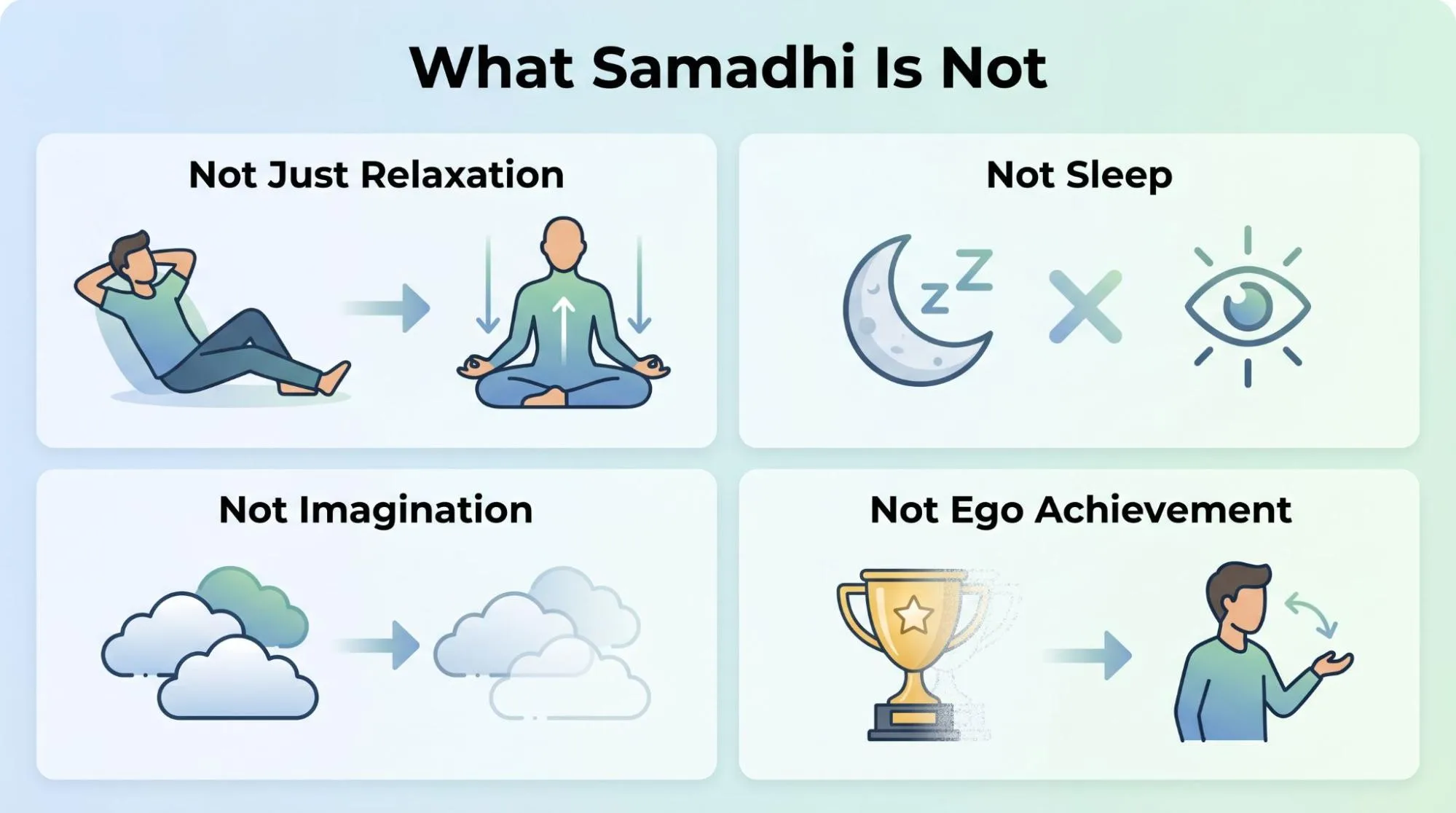
Samadhi Is Not Just Relaxation
Relaxation may help meditation, but Samadhi is much deeper. A relaxed body is not the same as complete absorption.
Samadhi Is Not Sleep
In sleep, awareness is usually dull or absent. In Samadhi, awareness is refined, awake, and clear.
Samadhi Is Not Imagination
Samadhi is not fantasy, visualization, or daydreaming. Imagination creates mental pictures. Samadhi quiets the mental waves and moves beyond ordinary thinking.
Samadhi Is Not an Ego Achievement
Samadhi is not something to use for pride. The deeper the practice becomes, the less space there is for ego.
How the Earlier Limbs Prepare the Mind for Samadhi
The earlier limbs of yoga are not just background ideas. They are practical preparation.
Yama and niyama clean up the way we live. Asana steadies the body. Pranayama calms the breath and energy. Pratyahara reduces sensory distraction. Dharana trains focus. Dhyana deepens meditation.
When these practices mature, the mind becomes quieter and more refined. Then Samadhi becomes possible.
This is why yoga is called a complete path. It does not only train the body. It trains behavior, breath, senses, attention, and awareness.
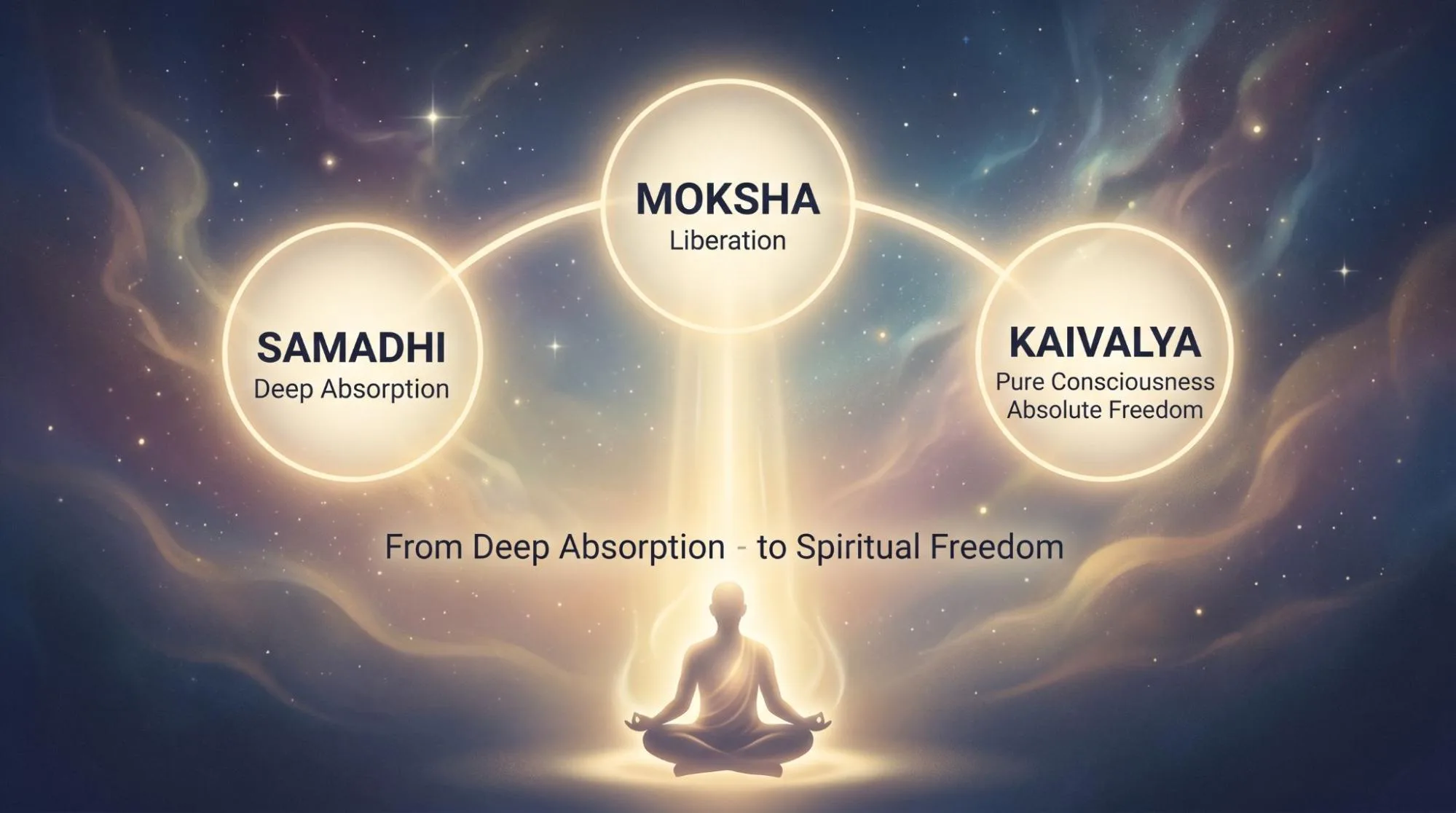
Samadhi, Moksha, and Kaivalya
Samadhi is often connected with moksha and kaivalya.
Moksha means liberation or freedom. Kaivalya, in the yoga tradition, points to the ultimate freedom of pure consciousness from the movements of mind and nature.
Samadhi is not always identical with final liberation, because yoga texts describe different levels of Samadhi. Still, deep Samadhi is seen as a doorway toward spiritual freedom.
It gives direct experience of awareness beyond the ordinary ego. This is why many teachers connect Samadhi with the highest aim of yoga.
Practical Lessons We Can Learn from Samadhi
Even if someone has not attained Samadhi, the teaching is still useful.
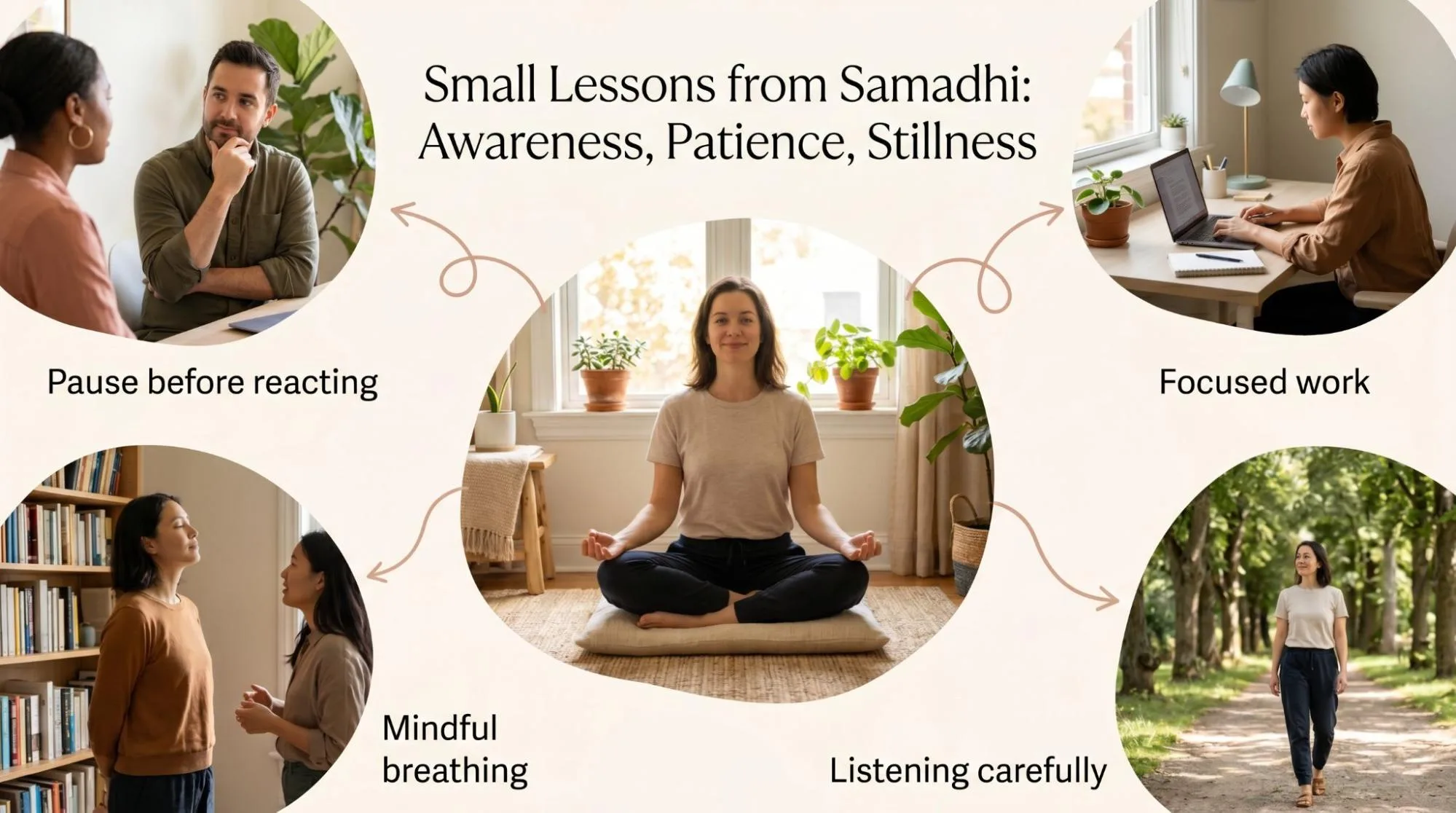
Samadhi reminds us that the mind does not have to stay restless forever. It shows that attention can become steady, thoughts can become quieter, and life can be lived with more awareness.
In daily life, this can mean:
- Pausing before reacting
- Listening with full attention
- Doing one thing at a time
- Practicing meditation without chasing results
- Letting go of constant comparison
- Living with more honesty and simplicity
These small lessons matter. Yoga Samadhi may be the final stage, but the path toward it can improve ordinary life in very real ways.
FAQs About Samadhi in Yoga
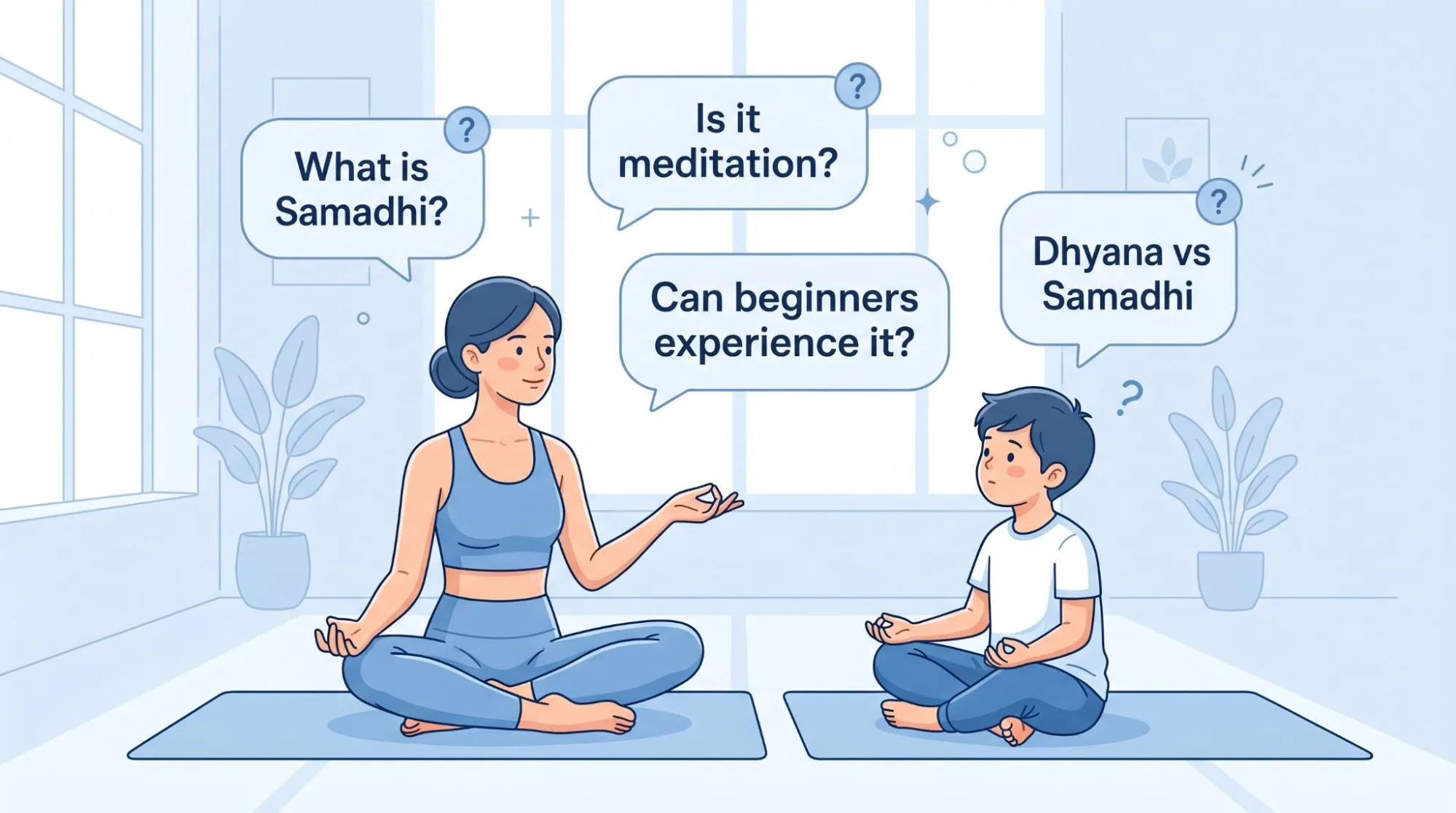
What is Samadhi in yoga explained simply?
Samadhi is the final stage of yoga where the mind enters deep meditative absorption. The meditator, meditation, and object of meditation begin to feel unified.
Is Samadhi the same as meditation?
No. Meditation is the practice. Samadhi is a deeper state that may arise through advanced meditation practice.
What is the difference between dhyana and Samadhi?
Dhyana is uninterrupted meditation. Samadhi is complete absorption, where the sense of “I am meditating” becomes very subtle or disappears.
Can beginners experience Samadhi?
Beginners may experience calmness, focus, or peaceful moments, but Samadhi is traditionally seen as an advanced state. Beginners should focus on regular practice rather than chasing experiences.
Is Samadhi mentioned in Patanjali’s Yoga Sutras?
Yes. Samadhi is central to Patanjali’s Yoga Sutras and is described as the eighth limb of yoga.
Does Samadhi mean enlightenment?
Samadhi can be connected with an enlightened state, but not every form of Samadhi is the same. Yoga teachings describe different states of Samadhi.
How can I prepare for Samadhi?
You prepare through ethical living, breath control, concentration, dhyana meditation, self-discipline, and a steady meditation practice. Samadhi cannot be forced, but the mind can be prepared.
What is samadhi in yoga explained for beginners?
Samadhi is the final stage of deep meditation where the mind becomes still, absorbed, and connected with pure awareness.
Learn More : Asteya: The Yogic Practice of Non-Stealing in Daily Life
Conclusion: Samadhi as the Highest Union in Yoga
Samadhi is the highest union in yoga because it points beyond ordinary thought, ego, and distraction. It is a state of complete absorption, deep meditative stillness, and pure awareness. The simplest way to remember what is samadhi in yoga explained is this: it is the highest state of yoga, where meditation becomes union, silence, and complete awareness.
The most helpful way to approach Samadhi is not to chase it like a prize. A better way is to practice sincerely, live with awareness, and allow the mind to become clearer over time.
Yoga begins with simple steps: posture, breath, discipline, focus, and meditation. At its deepest level, it leads toward stillness, freedom, and union with a consciousness greater than the restless mind.