Starting a beginner-friendly yoga routine is one of the safest and most effective ways to improve flexibility, strength, and mental clarity. A structured routine allows beginners to progress gradually while reducing the risk of injury. This guide includes gentle warm-ups, easy yoga poses, and a short daily routine designed specifically for beginners to practice confidently at home.
Why a Beginner Friendly Yoga Routine Is Important
A beginner-friendly yoga routine provides structure, safety, and consistency for those new to yoga. Instead of randomly trying poses, following a simple routine helps the body adapt gradually while building confidence, awareness, and long-term discipline.
Benefits of a Simple Yoga Routine
- Improves flexibility and strength: A simple yoga routine gently stretches tight muscles while strengthening weak areas. Over time, this balanced approach improves joint mobility, muscle tone, and overall body coordination without excessive strain.
- Reduces stress and anxiety: Practicing yoga regularly helps calm the nervous system through mindful breathing and slow movement. This reduces stress hormones, promotes relaxation, and improves emotional well-being.
- Builds balance and posture: Beginner yoga poses focus on alignment and body awareness. This improves balance, strengthens postural muscles, and helps correct habits developed from prolonged sitting or poor posture.
How to Start Your Beginner Yoga Routine
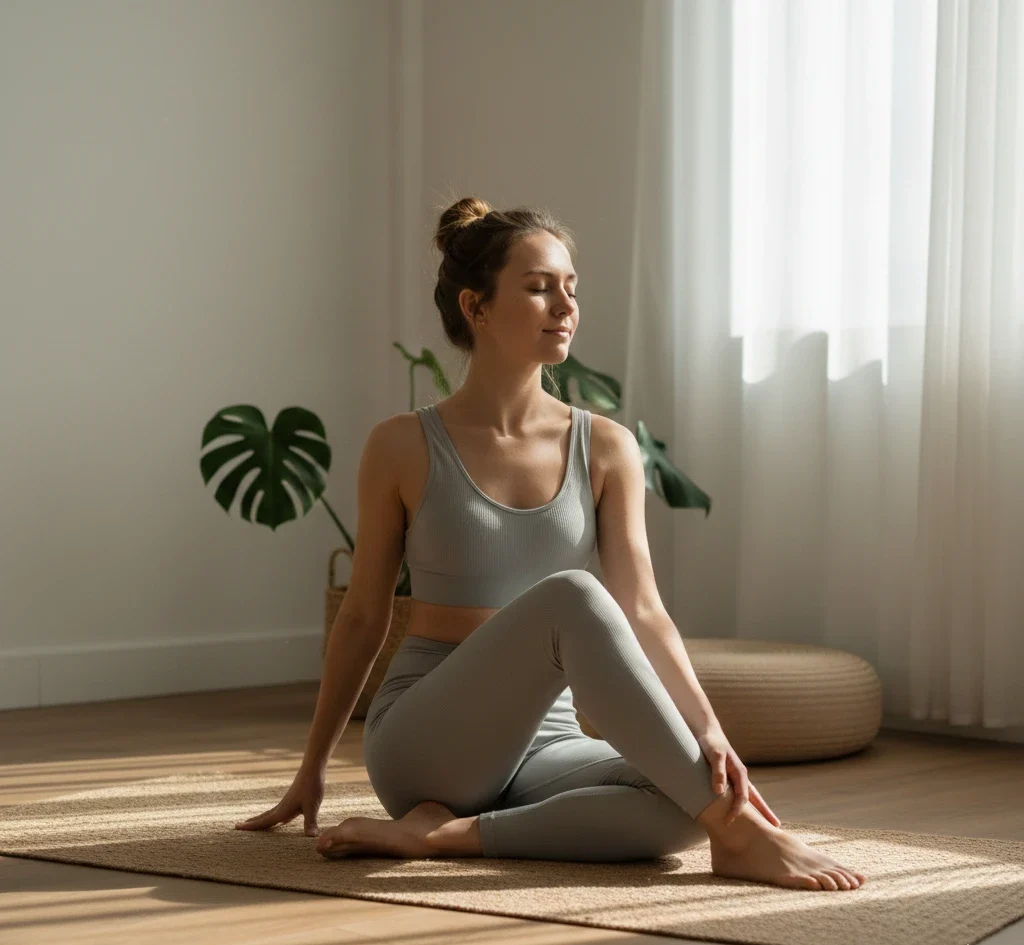
Preparing your space and mindset before starting yoga ensures a safe, comfortable, and distraction-free experience. Proper preparation allows beginners to focus fully on movement, breathing, and relaxation.
Home Setup and Preparation
- Choose a quiet space: Practicing yoga in a calm and quiet environment helps improve concentration and breathing. A peaceful space allows the mind to relax and enhances the overall effectiveness of your yoga routine.
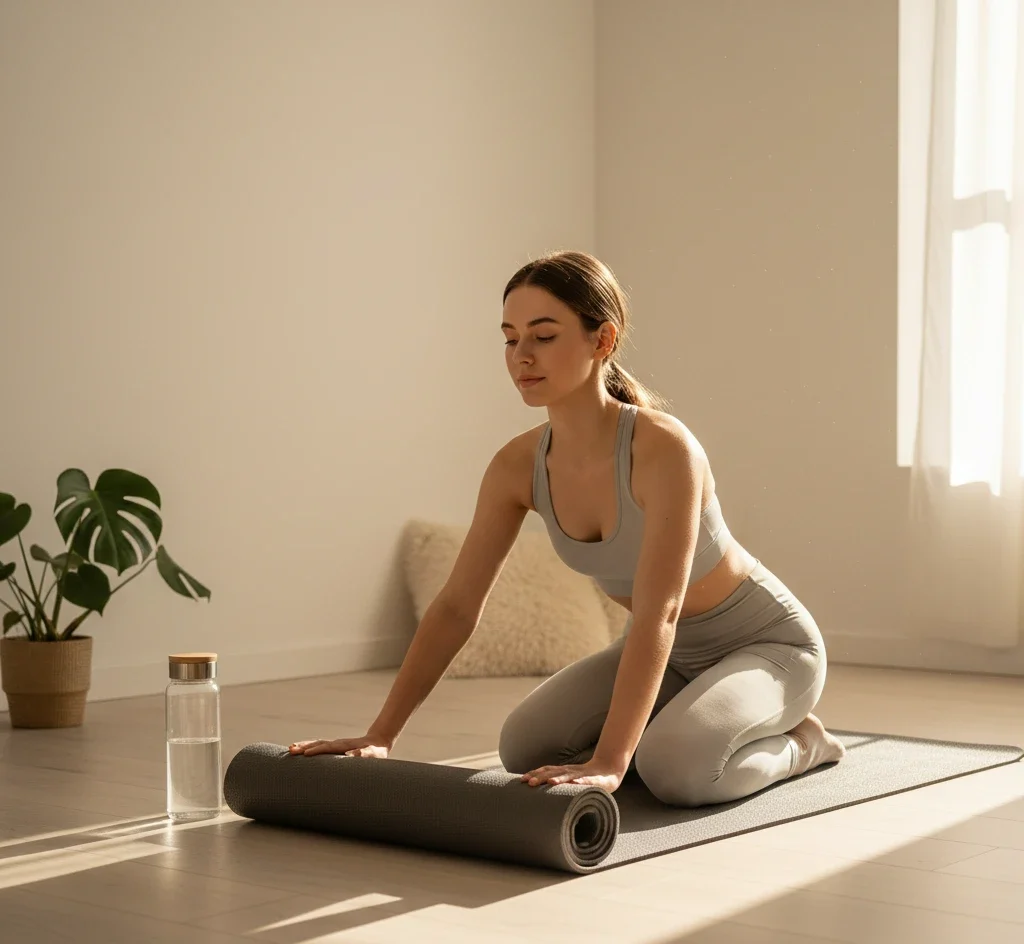
- Use a comfortable yoga mat: A non-slip yoga mat provides stability and cushioning, protecting the knees, wrists, and spine. It also helps maintain proper alignment during basic yoga poses.
- Wear flexible clothing: Comfortable, stretchable clothing allows unrestricted movement and helps you maintain correct posture. Tight or restrictive clothing can interfere with balance and breathing.
- Keep water nearby: Staying hydrated supports muscle function and prevents fatigue. Small sips of water before or after practice help maintain energy levels during beginner yoga sessions.
Beginner Yoga Warm-Up
Warming up before yoga prepares the muscles and joints for movement, reduces stiffness, and lowers the risk of injury. Gentle warm-up stretches help beginners ease into their practice safely.
Gentle Stretches to Start
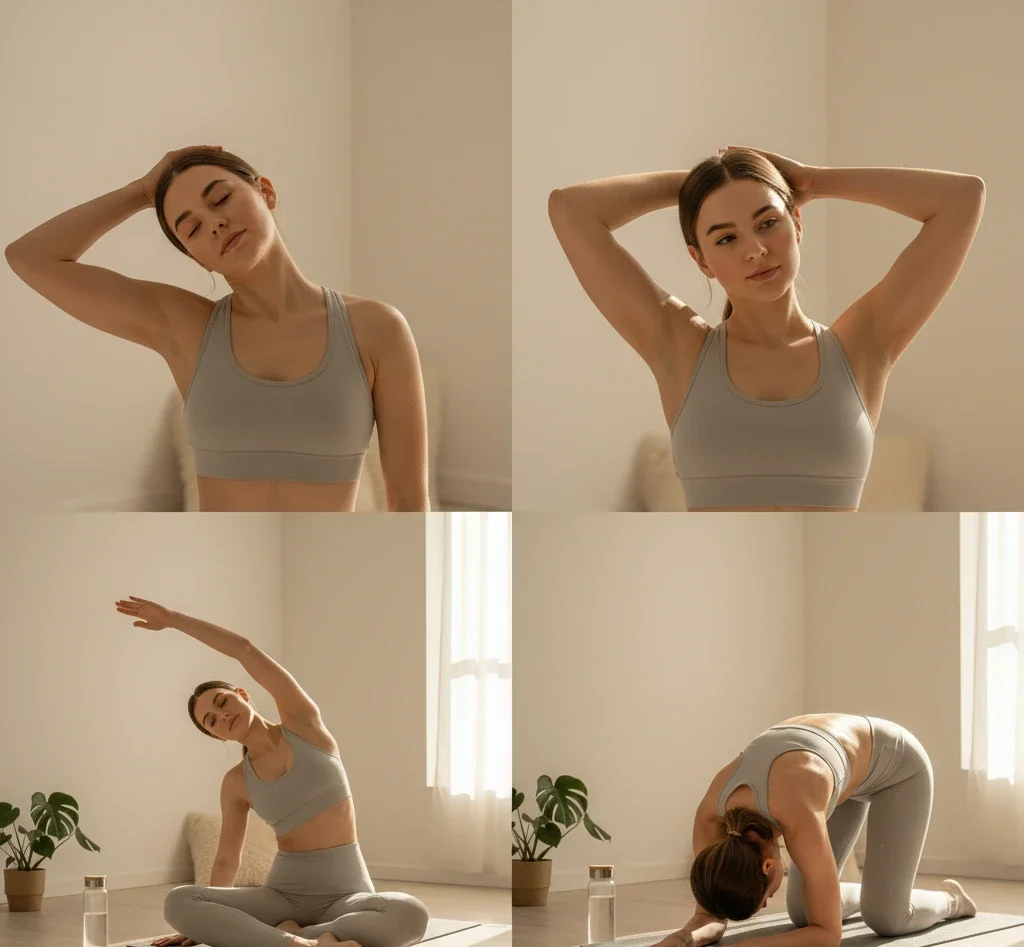
- Neck stretches: Gentle neck movements release tension caused by stress, screen use, or long sitting hours. These stretches improve mobility and reduce stiffness in the neck and shoulders.
- Shoulder rolls: Shoulder rolls loosen tight muscles in the upper back and shoulders. This improves circulation and prepares the upper body for weight-bearing yoga poses.
- Side stretches: Side stretches lengthen the spine and open the ribcage, improving flexibility and breathing capacity. These movements create space in the torso and reduce stiffness.
- Cat-Cow stretch: This gentle spinal flow warms up the back, improves flexibility, and coordinates movement with breath. It is ideal for beginners to prepare the spine for yoga poses.
Easy Yoga Poses for the Routine
Easy yoga poses form the foundation of a beginner-friendly routine. These poses build strength, flexibility, and relaxation while teaching proper alignment and breath awareness.
Basic Yoga Postures for Beginners
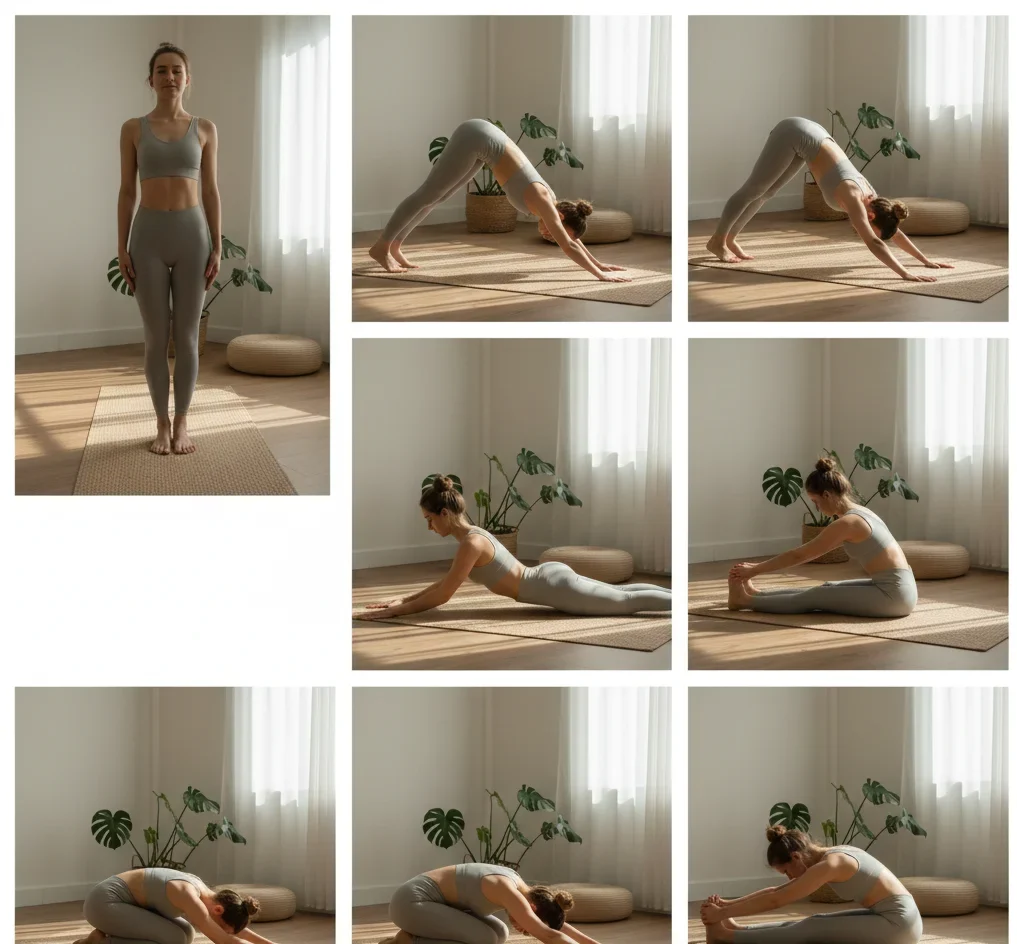
- Mountain Pose (Tadasana): This foundational standing pose improves posture, balance, and body awareness. It teaches proper alignment and helps beginners feel grounded and stable.
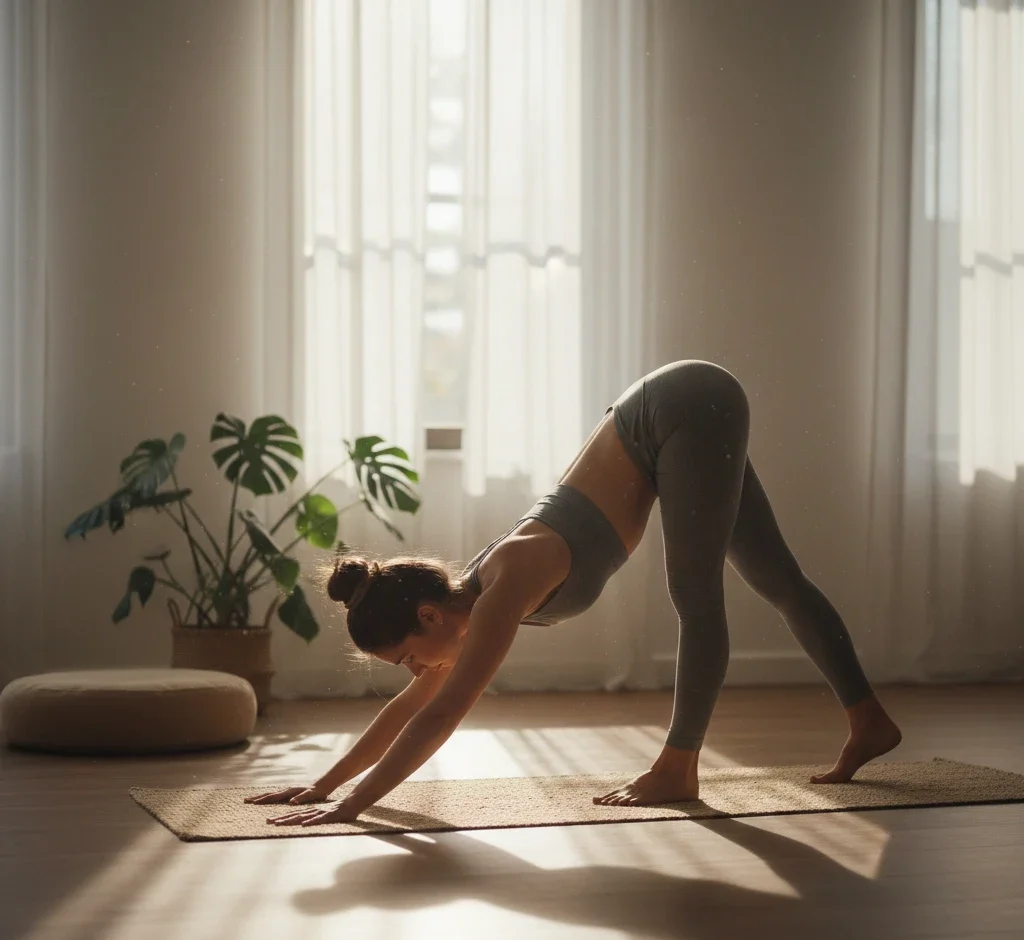
- Downward Dog (Adho Mukha Svanasana): A full-body stretch that strengthens the arms and legs while lengthening the spine. This pose improves circulation and relieves stiffness in the back and legs.
- Cobra Pose (Bhujangasana): Cobra Pose opens the chest and strengthens the lower back. It supports spinal health and helps counteract the effects of prolonged sitting.
- Child’s Pose (Balasana): A deeply relaxing posture that gently stretches the lower back and hips. It calms the mind and allows the body to rest during the yoga routine.
- Seated Forward Bend: This pose stretches the hamstrings and lower back while promoting relaxation. It helps release tension and improve flexibility gradually.
Beginner-Friendly Yoga Flow
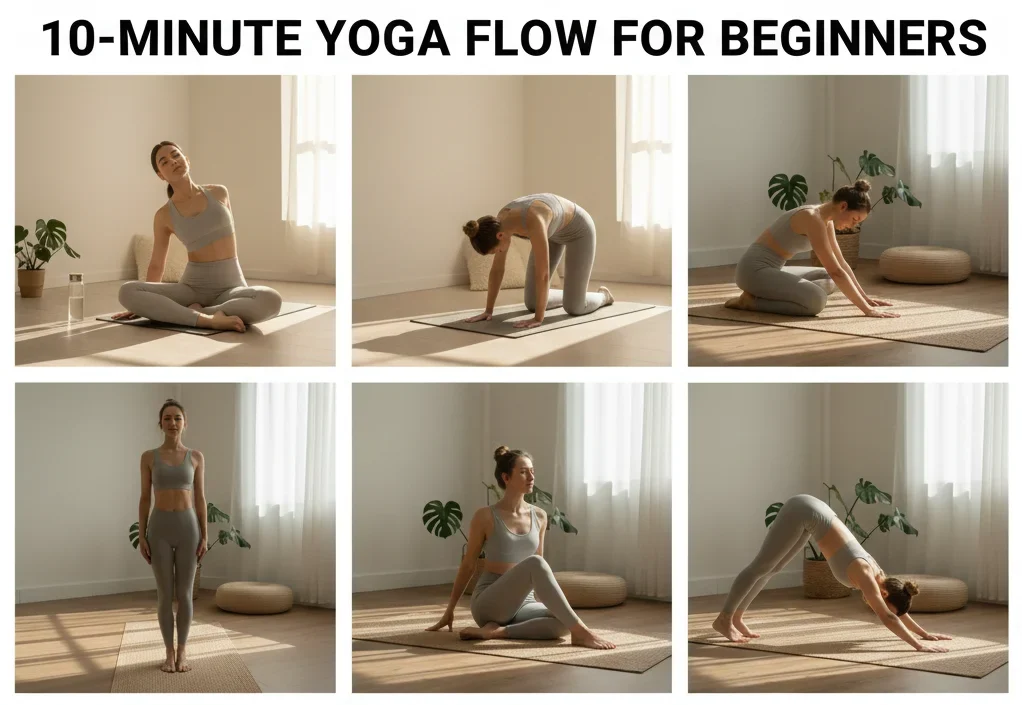
- Perform poses slowly and mindfully: Moving slowly helps beginners maintain proper alignment and reduces the risk of injury. Mindful movement also improves body awareness.
- Focus on breathing with each pose: Coordinating breath with movement enhances relaxation and improves oxygen flow to muscles, making poses more effective.
- Repeat sequence 2–3 times: Repeating the flow allows the body to warm up fully and strengthens muscle memory without causing fatigue.
Short Daily Routine (10–15 Minutes)
A short daily yoga routine is ideal for beginners because it allows the body to adapt gradually without feeling overwhelmed. Even 10–15 minutes of consistent practice can lead to noticeable improvements in flexibility, strength, posture, and mental calmness. Short routines are easier to maintain daily, helping beginners build a sustainable habit while avoiding fatigue or burnout.
Sample Yoga Sequence
- 2 minutes warm-up stretches: Warm-up stretches gently activate muscles, increase blood circulation, and lubricate the joints. This preparation reduces stiffness and lowers the risk of injury, allowing the body to move more comfortably into yoga poses.
- 6–8 minutes yoga poses flow: This phase focuses on moving through basic yoga postures slowly and mindfully. The flow builds strength, balance, and flexibility while improving coordination and body awareness. Beginners should focus on proper alignment and controlled breathing rather than speed or depth.
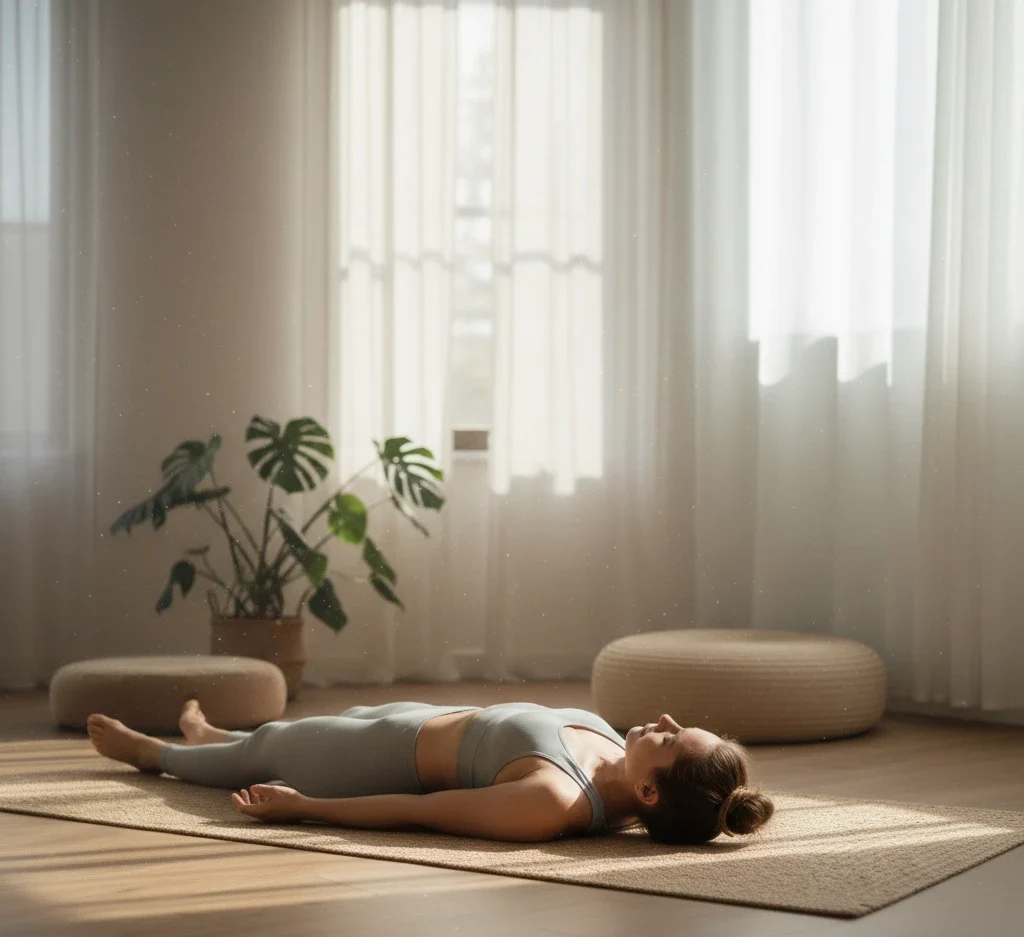
- 2–3 minutes deep breathing and relaxation: The final relaxation period allows the nervous system to calm and the muscles to release tension. Deep breathing helps reduce stress, improves oxygen flow, and allows the body and mind to absorb the full benefits of the yoga practice.
Tips for a Successful Beginner Yoga Routine
Following simple and practical tips helps beginners stay safe, motivated, and consistent while practicing yoga at home. A mindful approach allows the body to adapt gradually, reduces the risk of injury, and ensures steady physical and mental progress. These tips support long-term success and help beginners build a positive relationship with their yoga practice.
Important Advice
- Practice consistently every day: Consistency is the foundation of a successful beginner yoga routine. Practicing yoga daily, even for a short time, helps improve flexibility, strength, balance, and mental focus over time. Regular movement also trains the body to relax and recover more efficiently.
- Listen to your body: Paying attention to how your body feels during each pose is essential for safe practice. If you experience pain, discomfort, or excessive fatigue, take a break or modify the pose. Respecting your limits allows muscles and joints to strengthen naturally without unnecessary strain.
- Avoid pushing beyond comfort level: Yoga progress happens gradually through patience and mindful movement. Forcing the body into poses before it is ready can lead to injury and frustration. Moving within a comfortable range helps beginners develop flexibility and strength safely while maintaining confidence and enjoyment.
Conclusion – Build a Daily Habit
Building a daily yoga habit is far more effective than practicing occasionally for long periods. For beginners, consistency helps the body adapt gradually while reducing the risk of injury and burnout. A short, mindful yoga routine practiced regularly improves flexibility, strength, posture, and mental focus over time. By staying patient and committed, beginners can create a sustainable practice that supports long-term physical health, emotional balance, and overall well-being.
Final Thoughts
- Start with short sessions: Beginning with short yoga sessions allows the body and mind to adjust without feeling overwhelmed. Even 10–15 minutes of daily practice helps build discipline, improve mobility, and establish a healthy routine that is easier to maintain long term.
- Gradually increase duration: As flexibility, strength, and confidence improve, increasing the length of practice naturally feels more comfortable. Gradual progression prevents strain and supports steady improvement, making yoga a safe and enjoyable habit.
- Enjoy the journey of yoga: Yoga is not about perfection or comparison. Progress looks different for everyone, and respecting your personal pace builds confidence and motivation. Enjoying the process encourages consistency and makes yoga a lifelong practice rather than a temporary routine.
Frequently Asked Questions (FAQs)
Can beginners practice a yoga routine every day?
Yes, beginners can safely practice yoga every day as long as the routine is gentle and beginner friendly. Short daily sessions allow the body to adapt gradually, reduce stiffness, and build consistency without overloading the muscles or joints.
How long should a beginner yoga routine be?
A beginner yoga routine should ideally last 10–15 minutes. This duration is enough to warm up the body, practice basic poses, and relax the mind while avoiding physical fatigue.
Do beginners need special equipment for yoga?
No special equipment is required for beginner yoga. A yoga mat and comfortable, stretchable clothing are sufficient for practicing safely at home.
Is warming up necessary before starting yoga?
Yes, warming up is very important for beginners. Gentle stretches prepare the muscles and joints, improve mobility, and help prevent strain or injury during yoga poses.
Can beginner yoga help reduce stress and anxiety?
Yes, beginner yoga routines that include slow movements and deep breathing help calm the nervous system, reduce stress, and improve overall mental well-being.
What if I am not flexible enough to do yoga?
Flexibility is not required to start yoga. Beginner-friendly poses are designed to improve flexibility gradually over time through consistent and gentle practice.
Should beginners follow a fixed yoga sequence?
Following a simple and consistent yoga sequence helps beginners build confidence, understand proper alignment, and develop a sustainable daily yoga habit.
Is it better to practice yoga in the morning or evening?
Both morning and evening yoga practices are beneficial. Morning yoga helps energize the body, while evening yoga supports relaxation and stress relief. Choose a time that fits your routine.
Can yoga improve posture for beginners?
Yes, regular practice of basic yoga postures strengthens core muscles, improves body awareness, and supports better posture over time.
How long does it take for beginners to see results?
Most beginners start noticing improvements in flexibility, reduced stiffness, and better relaxation within 2–4 weeks of consistent daily yoga practice.