
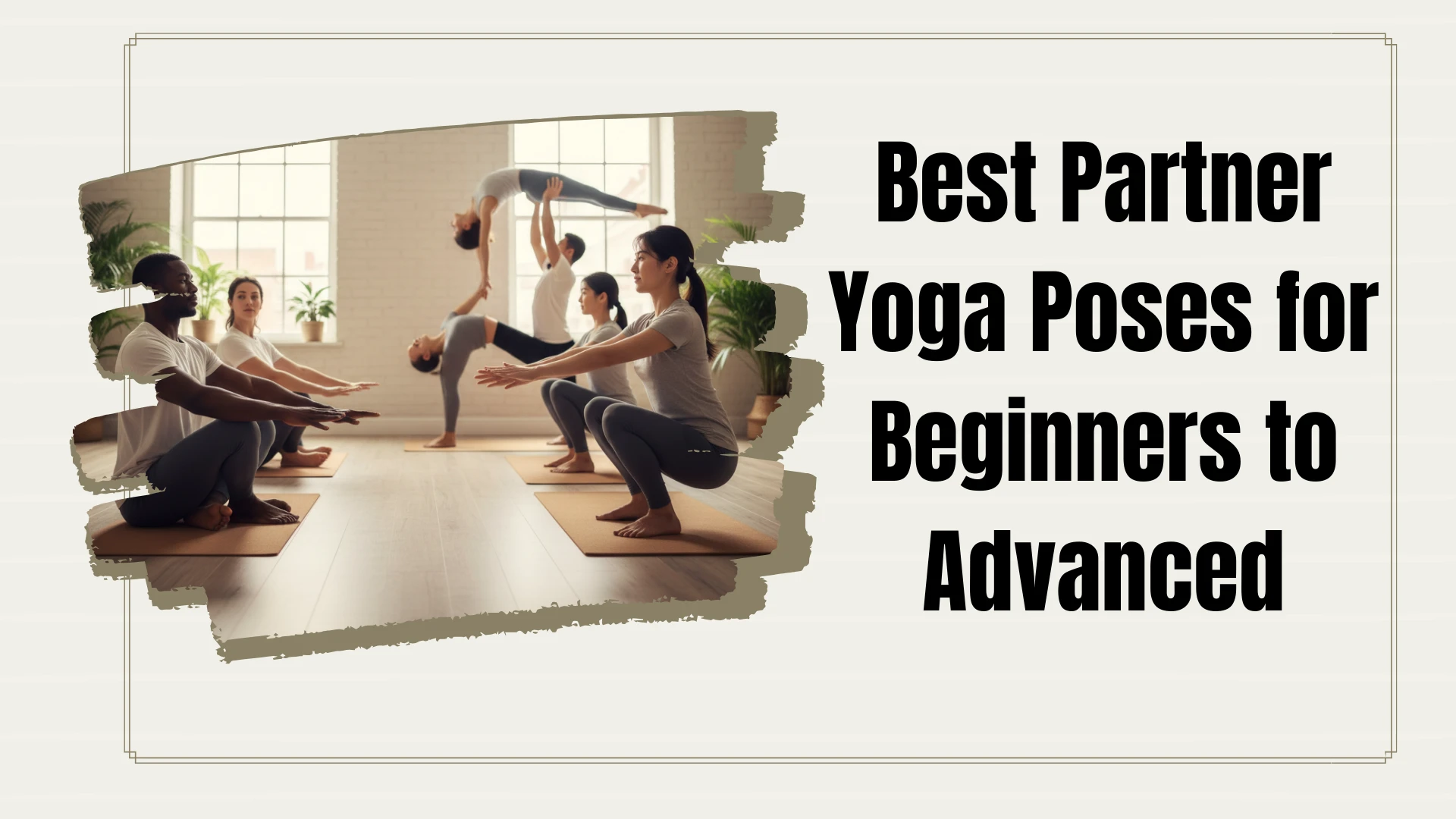
Partner yoga is a beautiful way to practice yoga with another person. It can be done with friends, couples, family members, or yoga students in a classroom. Partner yoga helps build trust, improve flexibility, develop balance, and deepen communication between two people. It is different from normal yoga because every pose is performed together, using each other’s support and connection.
In today’s busy lifestyle, people look for activities that improve physical strength and also refresh the mind. Partner yoga, or yoga poses for 2 people, is one of the best ways to connect with another person while improving overall fitness. It is enjoyable, motivating, and suitable for all age groups. Many people do couples yoga poses, acro yoga poses, and 2-person yoga poses to build a healthy relationship and create emotional closeness.
What Is Partner Yoga?
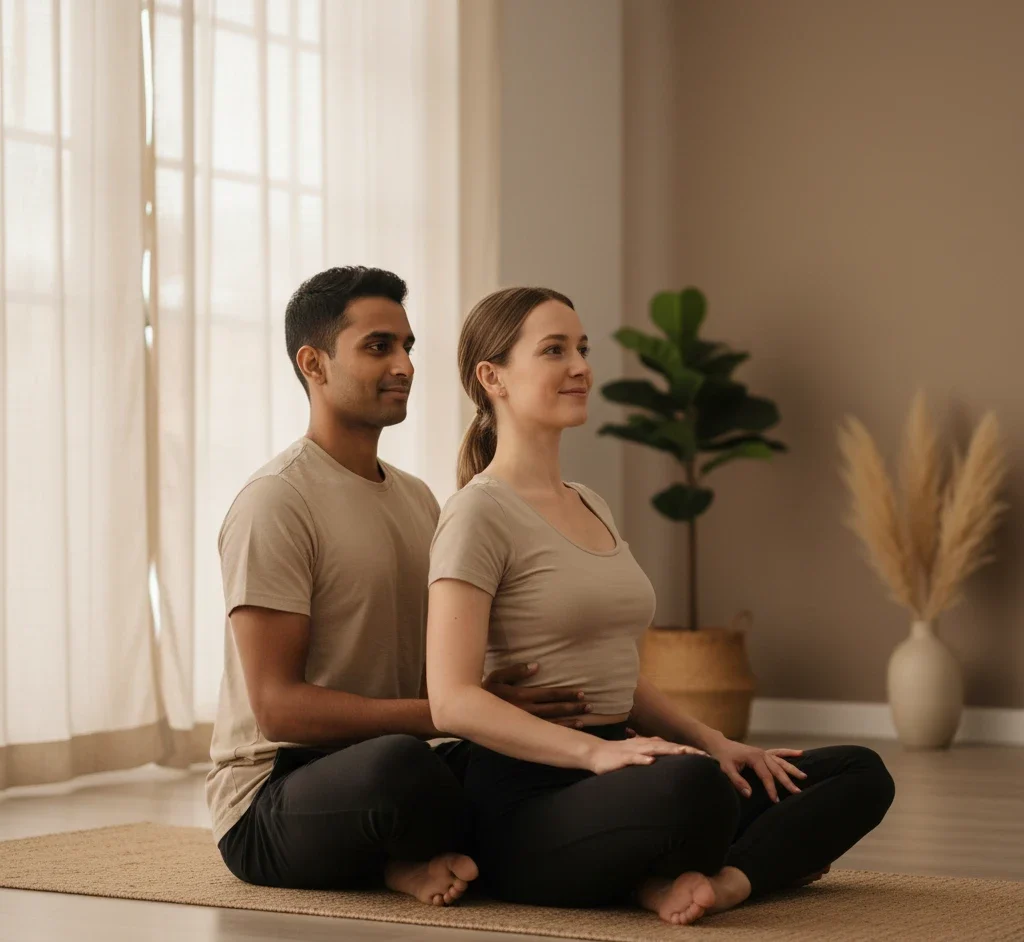
Partner yoga is a style of yoga where two people perform poses together by using balance, coordination, and body support. Instead of practicing individually, each person helps the other in stretching, stability, and holding the pose. Partner yoga focuses on teamwork and harmony.
Key Benefits of Partner Yoga
- Improves flexibility and body alignment
- Builds communication and trust
- Helps relax muscles and reduce stress
- Creates emotional bonding between friends or couples
- Encourages cooperation instead of competition
- Supports deeper breathing and concentration
- Makes exercise more fun and enjoyable
How to Prepare for Partner Yoga
Before starting partner yoga, always warm up and stretch lightly. Choose a clean space with enough room to move freely. Keep a yoga mat or soft surface for safety.
Safety Tips
- Move slowly and gently
- Communicate before changing any position
- Stop immediately if there is pain or discomfort
- Select poses according to your fitness level
- Maintain balance and stability with each movement
Who Can Do Partner Yoga?
- Complete beginners
- Friends
- Couples
- Parents with kids
- Yoga teachers with students
- Fitness groups and teams
Partner yoga is friendly for beginners and does not require any high-level flexibility in the beginning. With regular practice, the body becomes stronger and more flexible.
10 Simple & Fun Beginner Partner Yoga Poses
(Easy for Everyone—also known as easy partner yoga poses and beginner 2-person yoga poses)
These poses are best for people who are trying partner yoga for the first time. They help build comfort, balance, and communication.
-
Partner Forward Fold
Sit facing each other with your legs stretched straight forward. Keep feet touching if possible. Hold each other’s wrists or hands, and slowly take turns leaning backward and forward.
What It Improves: Deep hamstring stretch, lower-back pressure release, and calm breathing.
Best Tip: Move gently—don’t pull too hard.
-
Seated Spinal Twist
Sit back-to-back with legs crossed. Place your right hand on your partner’s left knee and your left hand on your partner’s right knee. Twist gently to each side while breathing slowly.
What It Improves: Spine flexibility, shoulder opening, and tension release around the upper back.
Ideal For: People who sit long hours at desks.
-
Double Tree Pose
Stand side by side and hold hands. Lift the inside leg and place the foot on the opposite calf or thigh. Maintain balance while keeping the back straight.
What It Improves: Core stability, balance, and concentration.
Pro Tip: Look at one point in front of you to stay steady.
-
Temple Pose
Stand facing each other. Step your feet wide, bend forward, and place your arms overhead to touch your partner’s arms, forming a shape like a temple roof.
What It Improves: Chest opening, shoulder stretch, and upper-body flexibility.
Feels Good For: People with rounded shoulders or tight chests.
-
Partner Boat Pose
Sit facing each other, bend knees, and hold hands. Lift legs together, slowly straightening them to form a V shape.
What It Improves: Core strength, hip flexibility, and teamwork.
Challenge: Try holding for 10–15 seconds while breathing calmly.
-
Partner Child Pose
One person sits in child pose (kneeling and bending forward). The second person gently lies back across the first person’s spine.
What It Improves: Deep relaxation, back stretch, emotional release.
Perfect For: Ending stress and creating calm connection.
-
Back-to-Back Breathing Pose
Sit cross-legged back-to-back. Close your eyes and breathe slowly so you can feel each other’s breath rhythm.
What It Improves: Mental peace, focus, and synchronizing breath.
Best For: Emotional bonding, anxiety reduction.
-
Supported Mountain Pose
Stand straight with backs touching. Try to align your head, shoulders, and hips evenly. Support each other by leaning back gently.
What It Improves: Body posture, balance, and spine alignment.
Helpful For: People with posture imbalance or back tightness.
-
Side Bend Stretch Pose
Stand together and hold hands overhead. Bend slowly to the right and left sides while keeping your body tall.
What It Improves: Side body stretch, rib cage expansion, lung capacity.
Great For: Runners, athletes, or people with stiff waists.
-
Partner Shoulder Stretch
Stand facing each other. Hold each other’s forearms or hands behind the back and slowly pull backward.
What It Improves: Shoulder mobility, upper-back tension release.
Tip: Keep the neck relaxed and avoid forcing.

10 Intermediate Partner Yoga Poses
These require more balance, communication, and muscle control.
-
Supported Backbend
Stand behind your partner and hold their shoulders while they gently bend backward. Support the lower back if needed.
Benefits: Opens chest, improves spine flexibility, and increases confidence in balance.
-
Partner Downward Dog
One person forms a downward-dog shape. The second places feet on the lower back or hips while hands remain on the ground.
Benefits: Full-body stretch, arm and leg strength, deep stability.
Tip: Move slowly and communicate clearly.
-
Double Dancer Pose
Stand facing each other, hold one hand, and lift the opposite foot behind you to hold with the other hand. Balance while leaning forward.
Benefits: Leg strength, flexibility, and focus.
Challenge Add-On: Try holding for 20 seconds.
-
Partner Plank
Both stay in plank position facing each other. Tap opposite hands gently.
Benefits: Core strength, arm power, teamwork.
Fun Idea: Count slow taps together.
-
Double Warrior Pose
Stand side-by-side in the Warrior II position and stretch outside arms.
Benefits: Leg power, hip flexibility, courage, and balance.
-
Flying L Pose
The base partner lies on the back with legs up; the flyer balances hips on feet and lifts arms sideways.
Benefits: Strength, balance, trust, stability.
Needs: Strong core support and slow movement.
-
Partner Camel Pose
Both kneel facing away but close enough to hold hands behind. Lean back and stretch your chest upward.
Benefits: Heart-opening stretch, spine flexibility, emotional release.
-
Partner Wheel Assist
One performs wheel pose while the partner supports lifting from the shoulders or back.
Benefits: Deep backbend improvement and strong flexibility.
-
Double Chair Pose
Face each other holding hands. Squat down together slowly, keeping arms straight.
Benefits: Thigh strength, joint mobility, and leg endurance.
-
Leaning Tower Pose
Stand facing each other, hold arms tight, and slowly lean backward in opposite directions.
Benefits: Full-body stretch, trust building, balance development.
5 Advanced Partner Yoga Poses (Acro Yoga Style)
These require strong control and are normally practised in studios under supervision.
-
Airplane Plank
The base holds the plank, and the flyer balances feet on the back while lifting arms sideways.
-
Flying Superman Pose
The base lifts the flyer by the hips with legs while the flyer stretches arms forward like flying.
-
Flying Bow Pose
The flyer bends legs backward, holding feet, while the base is supported by feet on hips.
-
Square Pose
Four arms and four legs balance together, forming a square structure.
-
Star Pose
The flyer balances sideways in a star shape supported by base legs and hands.
Final Thoughts
Partner yoga is more than just exercise. It builds deep trust, improves body balance, and creates emotional harmony between two people. Whether you practice with a friend, partner, or student group, partner yoga helps improve flexibility, support, strength, and mental peace. It is suitable for everyone—beginners, intermediate, and advanced learners.
Practicing partner yoga poses, couples yoga poses, acro yoga poses, yoga poses for two people, and 2-person yoga poses can bring joy, confidence, and connection into life. Partner yoga is a powerful way to grow together physically and emotionally.