
Quick answer: Nadi Shodhana Pranayama, also called alternate nostril breathing, alternates the breath between the nostrils. It may support calm attention and relaxed breathing when practised gently, without forced retention.
Important Safety Note
Keep the breath natural and stop if you feel dizzy, breathless, panicked, or uncomfortable. Do not add breath retention unless guided by a qualified teacher. People with heart, breathing, blood-pressure, pregnancy-related, or other health concerns should seek professional guidance first.
Nadi Shodhana Pranayama is one of the most calming breathing practices in yoga. Many people know it as alternate nostril breathing, while others compare it with anulom vilom. It looks simple from the outside, but the effect on the mind and body can feel surprisingly deep.
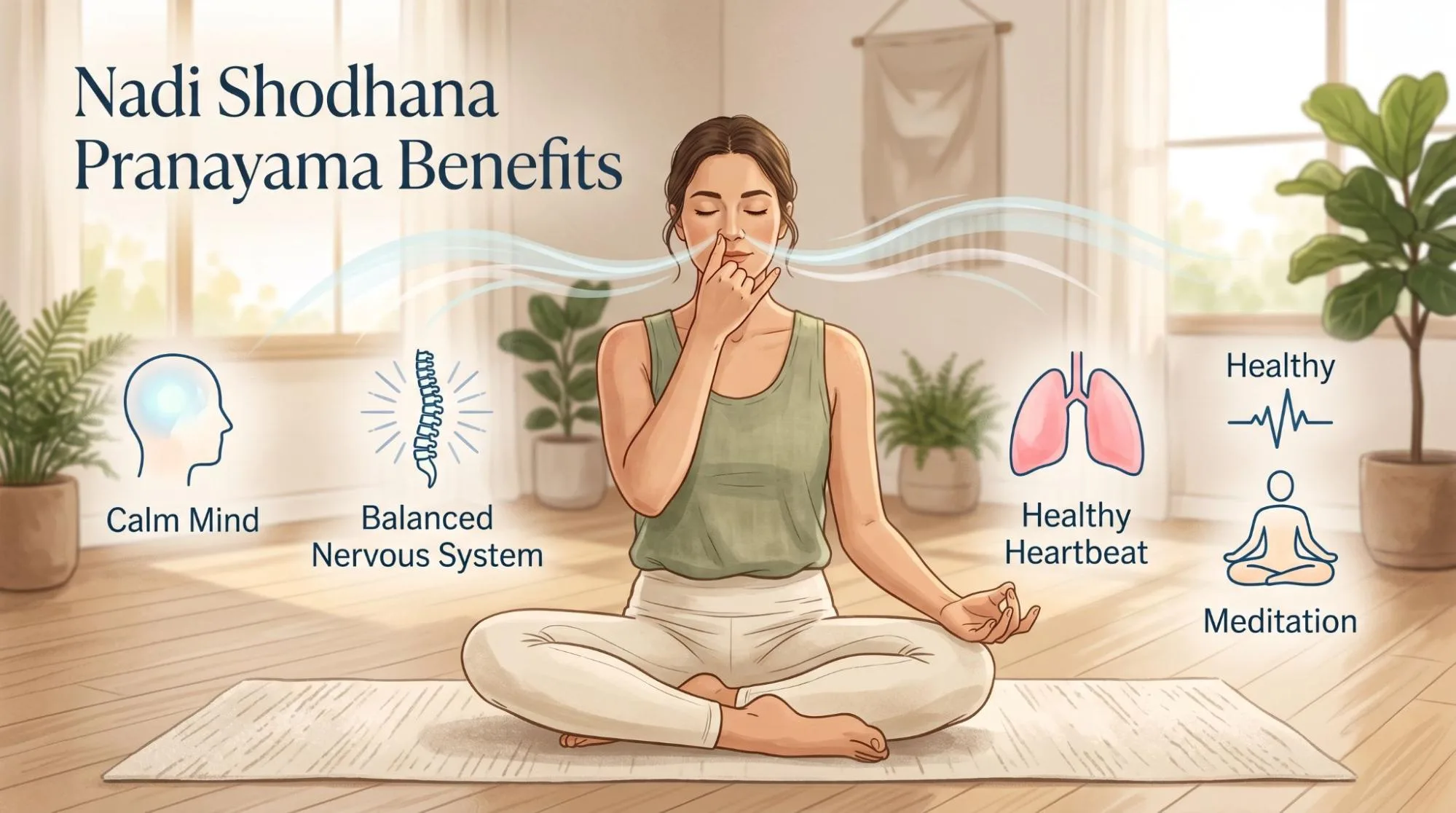
The main nadi shodhana pranayama benefits include a calmer nervous system, better focus, smoother breathing, emotional steadiness, and a more settled state before meditation. It is gentle enough for beginners, yet powerful enough to remain a daily practice for experienced yoga students.
What is Nadi Shodhana Pranayama?
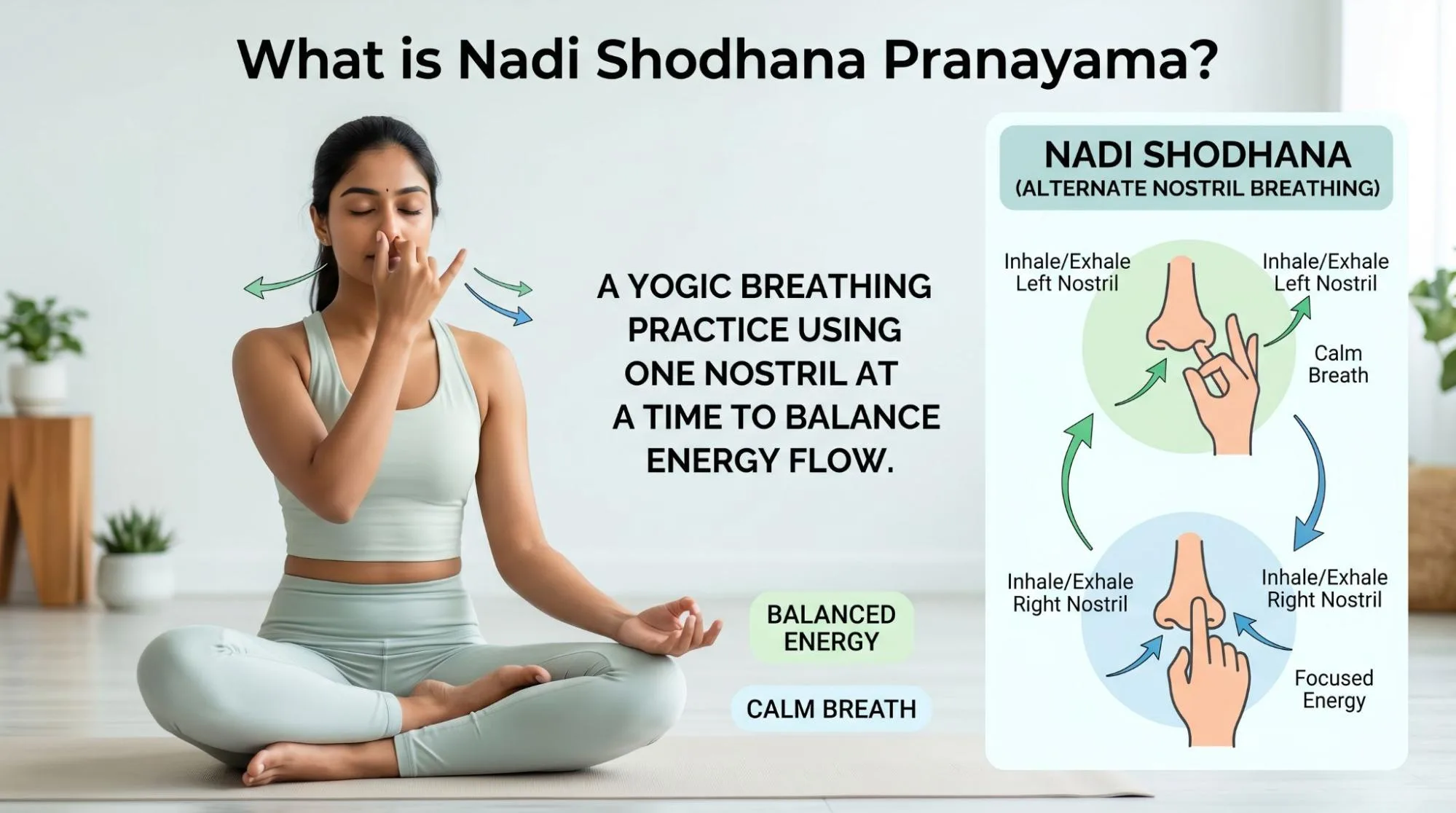
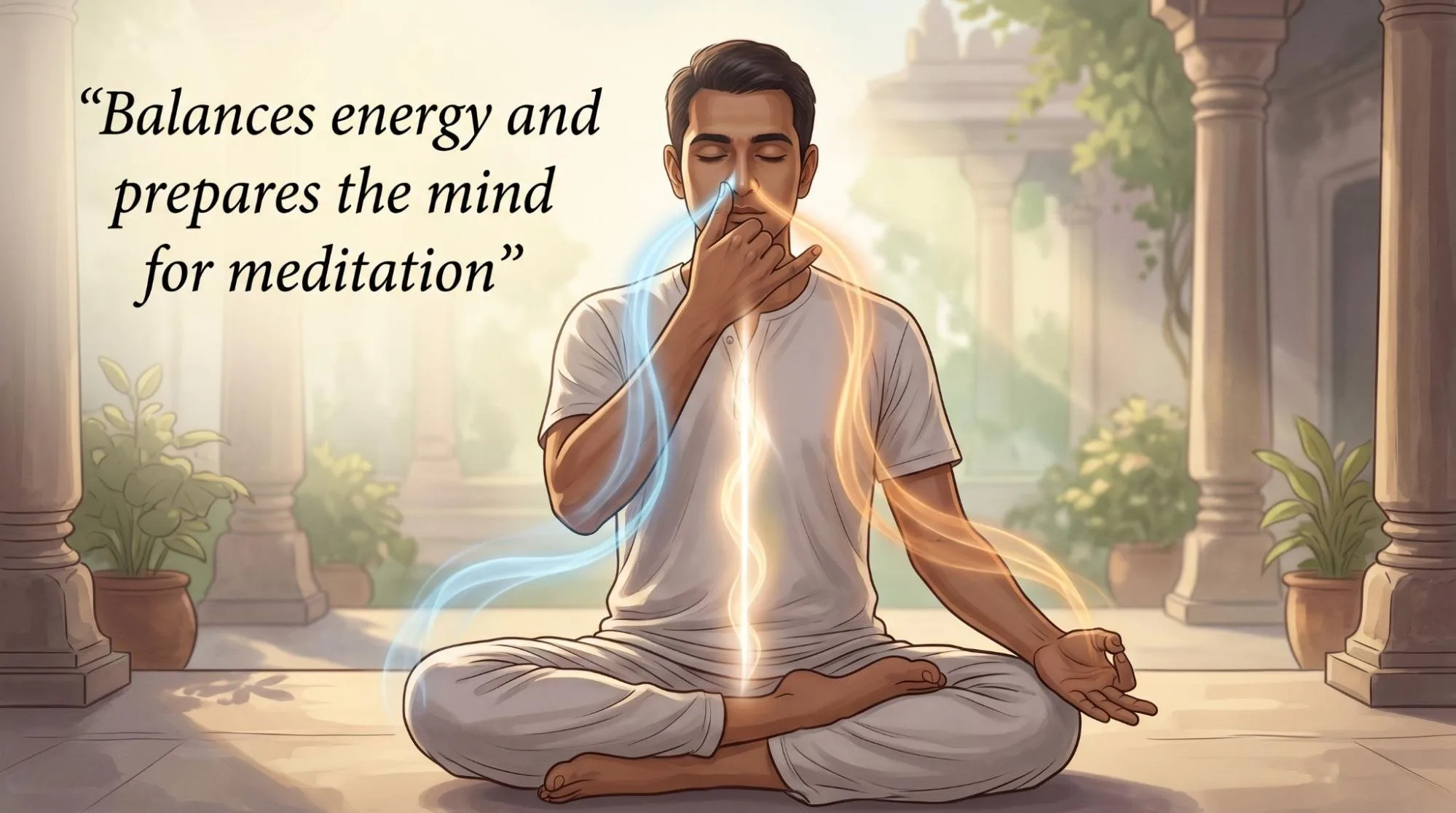
Nadi Shodhana Pranayama is a yogic breath practice where you breathe through one nostril at a time. The word “nadi” refers to an energy channel, while “shodhana” means cleansing or purification. In simple words, this breathing technique is traditionally used to clear and balance the body’s subtle energy pathways.
In practice, you close the right nostril, inhale through the left, then close the left nostril and exhale through the right. The cycle continues in a smooth rhythm. A yoga teacher may also guide you to add gentle breath retention later, but beginners should keep it natural.
How Nadi Shodhana Pranayama Works in the Body
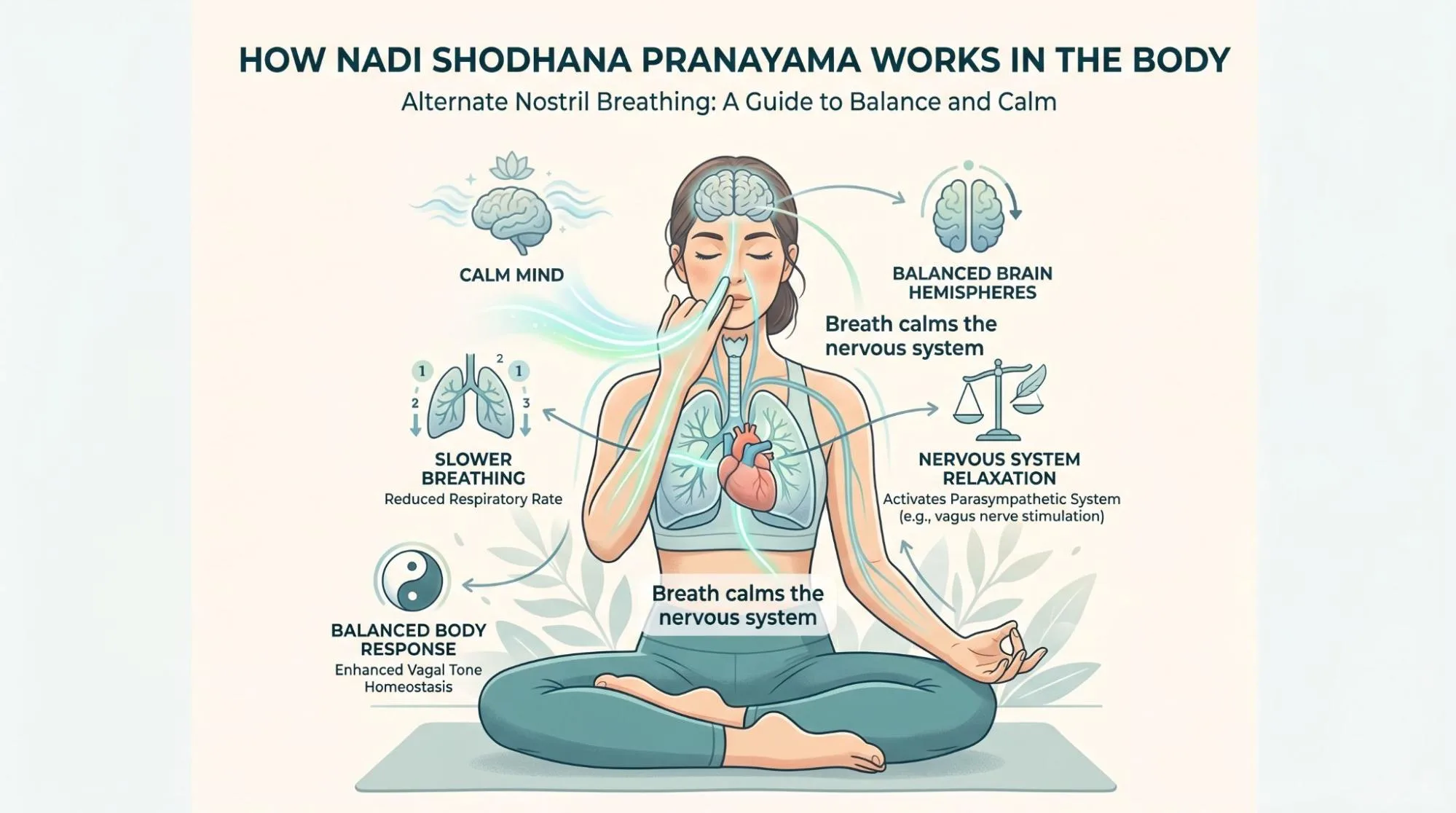
The nadi shodhana pranayama benefits begin with the breath. When you slow your breathing, your body receives a signal that it is safe. This may help shift the nervous system away from stress mode and toward a calmer, more balanced state.
This pranayama breathing also encourages awareness. Instead of breathing automatically, you pay attention to each inhale and exhale. That steady focus can reduce mental noise, soften emotional tension, and bring the mind back into the present moment.
Learn More : Meditation for Sleep and Anxiety: Simple Techniques to Calm Your Mind at Night
Mental and Cognitive Benefits of Nadi Shodhana Pranayama
The mental nadi shodhana pranayama benefits are often the first ones people notice. After only a few quiet rounds, the mind may feel less scattered. Thoughts still appear, but they usually feel easier to observe.
Reduces Anxiety and Stress
Nadi Shodhana Pranayama may help reduce stress by slowing the breath and calming the nervous system. When your breathing becomes steady, your body often follows. The shoulders soften, the face relaxes, and the mind feels less rushed.
This does not mean it replaces therapy or medical care. Still, as a daily self-care tool, alternate nostril breathing can support emotional regulation during busy or stressful periods.
Improves Focus and Concentration
One of the practical nadi shodhana pranayama benefits is improved focus. The pattern gives the mind a simple task: inhale, switch nostrils, exhale, repeat. That gentle structure helps pull attention away from distractions.
Students, professionals, and meditation beginners often use this breathing technique before study, work, or prayer. It clears mental clutter without forcing the mind to become silent.
Supports Emotional Balance
Yogic tradition connects Nadi Shodhana with balance between Ida and Pingala energy. Ida is usually linked with cooling, calming qualities, while Pingala is linked with active, warming qualities. The practice is believed to bring both into harmony.
Some people also connect this practice with the left and right hemispheres of the brain. It is better not to overstate this scientifically, but the practice can certainly help create a feeling of mental and emotional balance.
Helps Calm Racing Thoughts Before Sleep
If your mind becomes active at night, Nadi Shodhana Pranayama can be useful. The rhythm gives your thoughts somewhere gentle to rest. You are not fighting the mind; you are guiding it back to the breath.
Practice nadi shodhana for five quiet minutes before bed. Keep the breath soft, never forced. This can help prepare the body for rest, especially when paired with reduced screen time and a calm evening routine.

Physical and Cardiovascular Benefits of Nadi Shodhana Pranayama
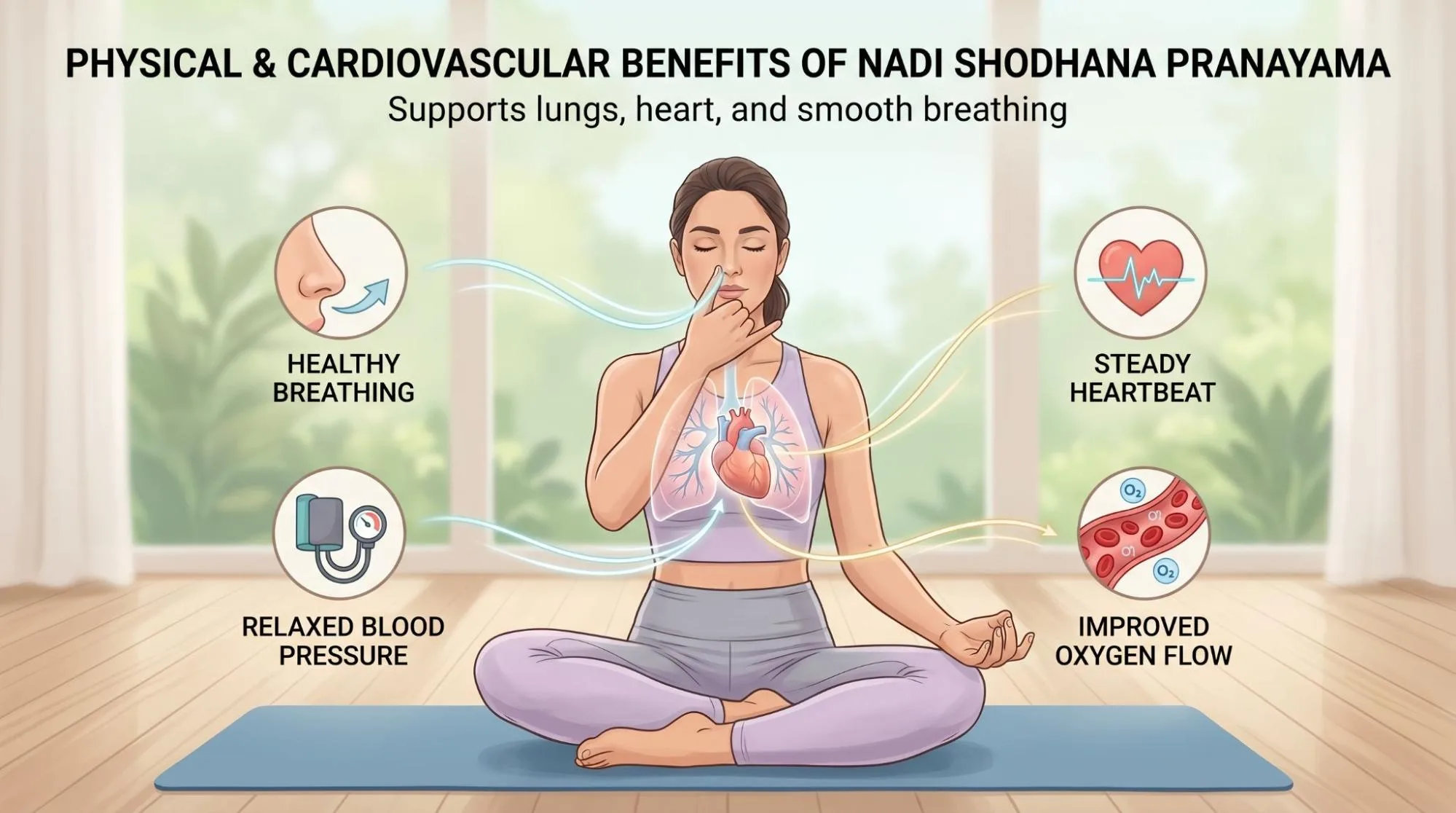
The physical nadi shodhana pranayama benefits come from slower, more controlled breathing. When done safely, it may support heart and lung function by encouraging a relaxed breathing rhythm.
May Support Relaxation
Slow breathing practices may support relaxation by helping the body relax. Nadi Shodhana Pranayama encourages longer, calmer breaths, which may reduce physical tension and stress-related strain.
People with high blood pressure should avoid breath holding unless guided by a qualified yoga teacher or healthcare professional. Gentle breathing is usually safer than advanced retention practices.
Supports Heart Rate Variability
Heart rate variability shows how well the body shifts between stress and recovery states. Calm breathing practices may support this natural rhythm. This is one reason many people feel centered after pranayama breathing.
The goal is not to control the heart directly. The goal is to breathe steadily, relax the body, and allow the nervous system to settle.
Boosts Respiratory Function
Nadi Shodhana Pranayama can improve awareness of breathing patterns. Many people breathe shallowly without noticing. This practice encourages slower inhalation and fuller exhalation, which may support better respiratory control.
It may also help you notice if one nostril feels blocked or if your breath feels uneven. That awareness is useful, especially for beginners learning yogic breath techniques.
Helps Improve Gas Exchange
Smooth breathing can support better oxygen intake and carbon dioxide release. When the breath is rushed, the body may feel tense or unsettled. When the breath is steady, breathing often becomes more efficient.
One of the quiet nadi shodhana pranayama benefits is that it teaches patience with the breath. You stop chasing a big inhale and begin allowing a natural, steady breathing rhythm.
Energetic and Yogic Benefits of Nadi Shodhana Pranayama
In yoga, Nadi Shodhana Pranayama is more than a relaxation tool. It is also used to prepare the mind for deeper inner work. The breath becomes a bridge between body, energy, and awareness.
Purifies the Nadis
Traditional yoga describes nadis as subtle pathways where life energy moves. Nadi Shodhana is believed to purify these pathways so energy can flow more freely.
Whether you view this spiritually or practically, the experience is often similar. The body feels lighter, the breath feels smoother, and the mind becomes less restless.
Balances Ida and Pingala Energy
The practice alternates between the left and right nostrils, which symbolically balances Ida and Pingala energy. This balance is one of the classic nadi shodhana pranayama benefits mentioned in yogic teachings.
When energy feels too dull, the practice can bring clarity. When energy feels too intense, it can bring calm. That balance makes it useful at different times of day.
Prepares the Mind for Meditation
Meditation becomes easier when the breath is steady. Nadi Shodhana Pranayama gently gathers attention before meditation begins. It works like tidying a room before sitting down to work.
Even two or three minutes can help. The mind may not become perfectly quiet, but it usually becomes more willing to stay present.
Learn More : Walking Meditation: A Simple Guide to Mindful Walking for Calm and Focus
How to Practice Nadi Shodhana Pranayama Step by Step
You do not need special equipment to practice nadi shodhana. A quiet seat, a few minutes, and a gentle attitude are enough.
Sit in a Comfortable Position
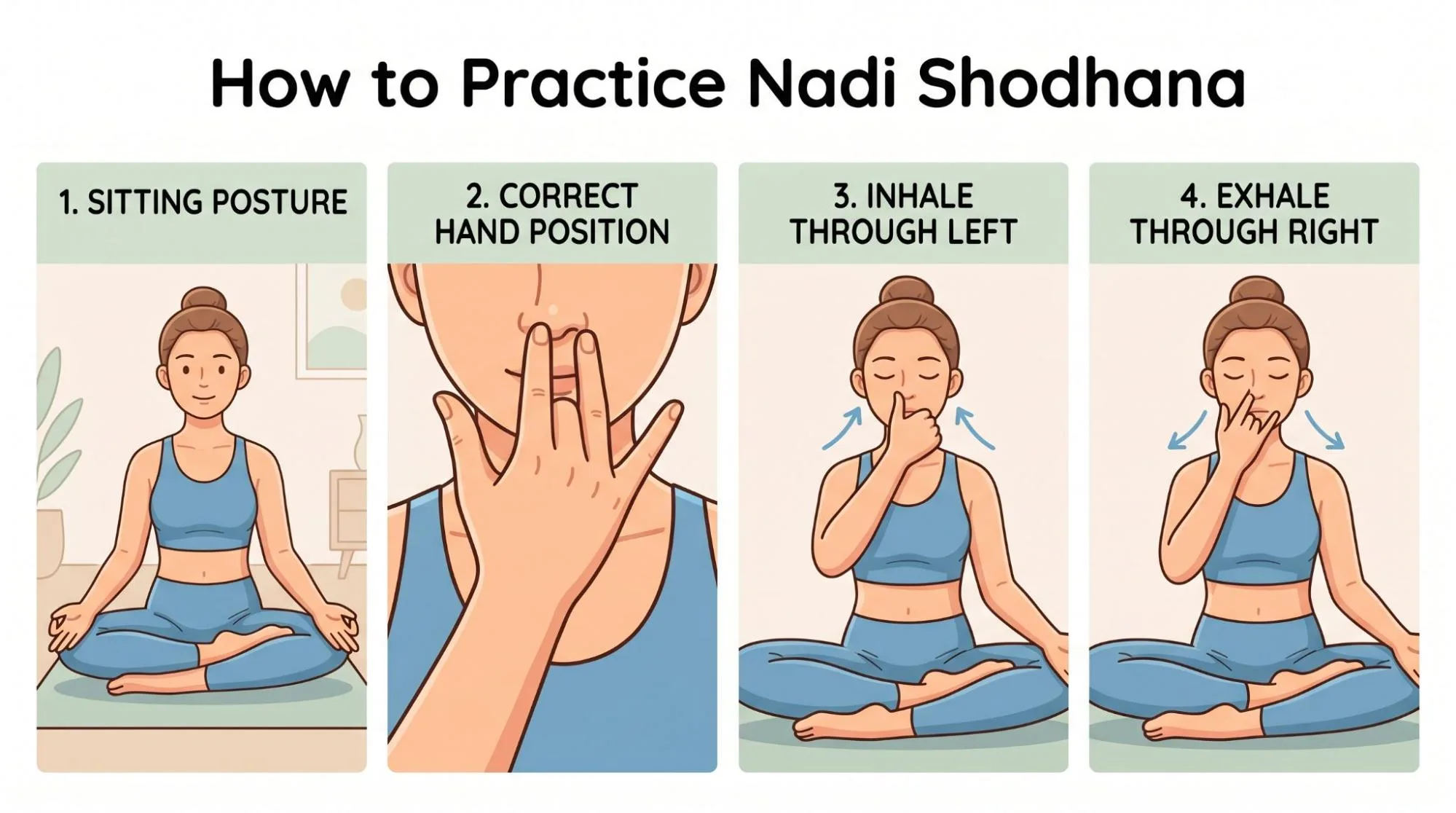
Sit on the floor, a cushion, or a chair. Keep your spine upright but not stiff. Let your shoulders relax and rest your left hand on your knee.
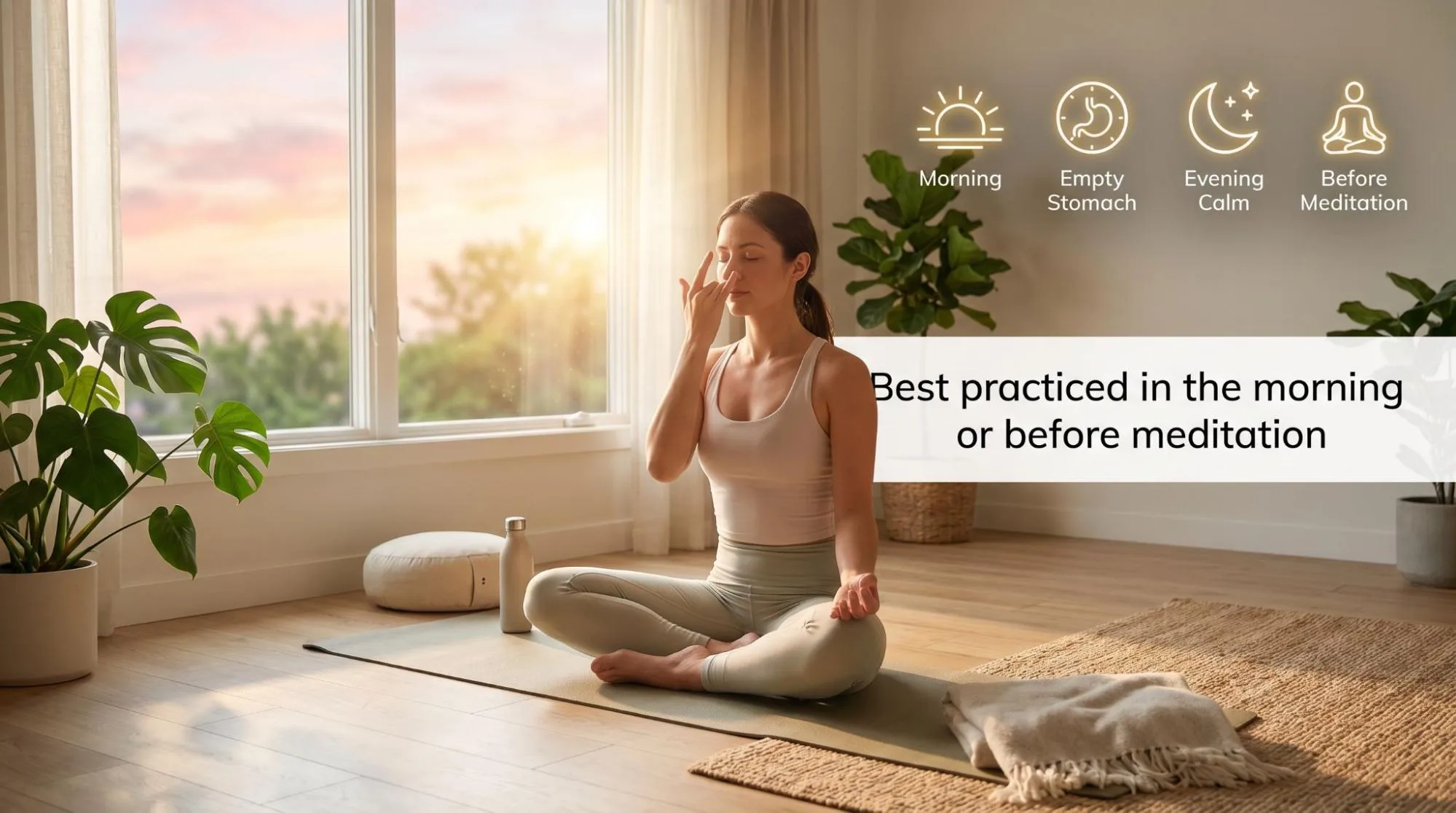
Try to practice on an empty stomach, especially in the morning. If you have eaten recently, wait until your stomach feels comfortable.
Use the Correct Hand Position
Use your right hand for the nostrils. Fold the index and middle fingers toward the palm, or gently rest the middle fingers between the eyebrows if that feels natural.
Use the thumb to close the right nostril. Use the ring finger to close the left nostril. Do not press hard; a light touch is enough.
Begin the Breathing Cycle
Close the right nostril and inhale through the left nostril. Then close the left nostril and exhale through the right. Inhale through the right, close the right nostril, and exhale through the left.
This completes one full round. Keep the breathing smooth, quiet, and relaxed. If you feel dizzy, stop and return to normal breathing.
Keep the Breath Smooth and Natural
Do not strain for a deep breath. The breath should feel easy, not dramatic. Beginners can start with four to six rounds and slowly increase with comfort.
A simple pattern is inhale for four counts and exhale for four counts. Later, a trained yoga teacher may guide longer counts or breath retention.
Best Time to Practice Nadi Shodhana Pranayama
The best time to practice Nadi Shodhana Pranayama is early morning on an empty stomach. The mind is usually quieter, and the body is fresh. It can also be practiced in the evening after work to release tension.
You can also use it before meditation, study, prayer, or sleep. Avoid practicing immediately after heavy meals, intense exercise, or during severe nasal congestion.
Common Mistakes to Avoid
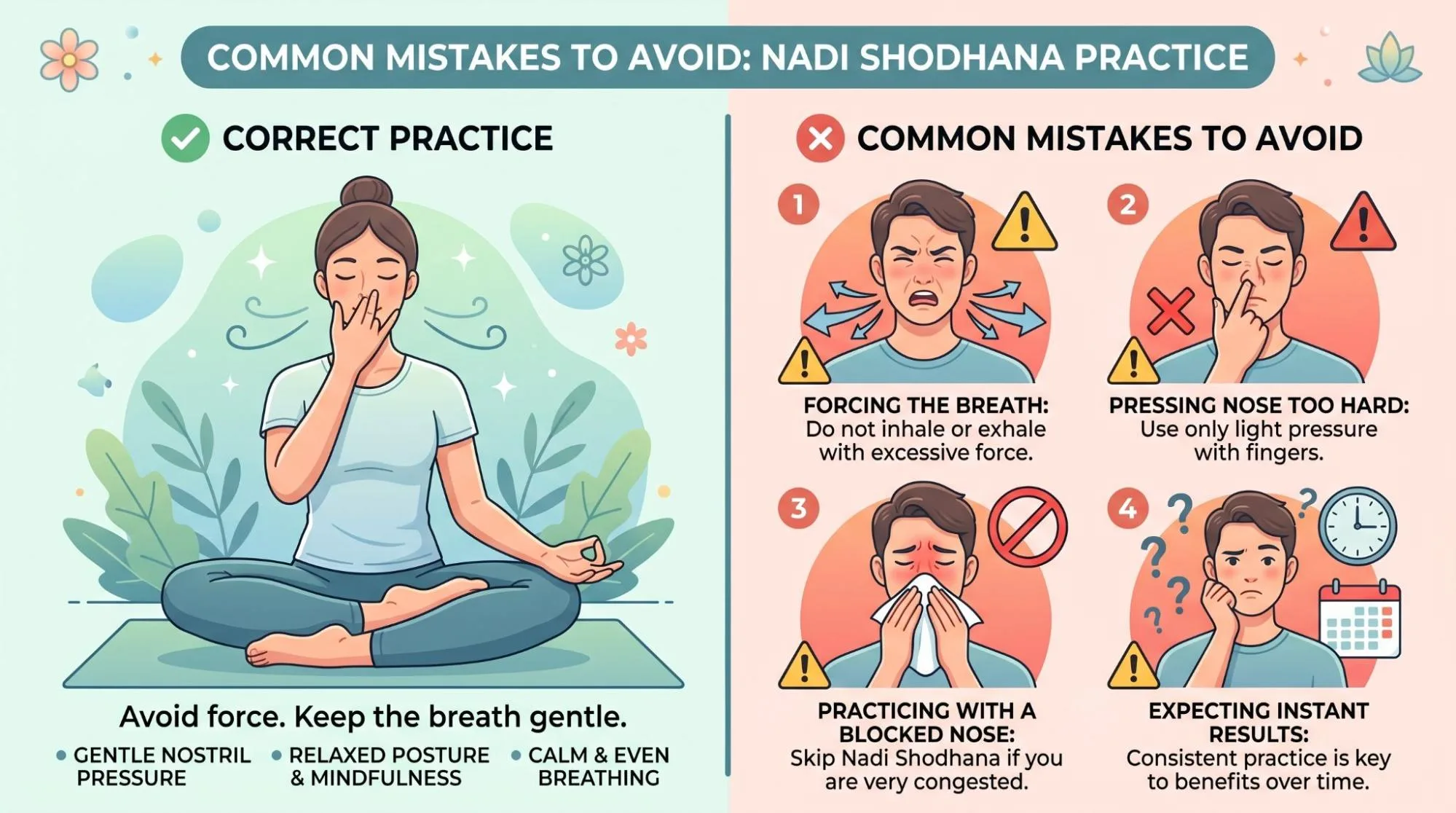
The nadi shodhana pranayama benefits come from consistency, not force. Small mistakes can make the practice uncomfortable, so keep things simple.
Forcing the Breath
Never pull the breath aggressively. Forced breathing can create tension, dizziness, or anxiety. Let the inhale and exhale stay smooth.
Pressing the Nose Too Hard
You only need light pressure to close the nostril. Pressing too hard can irritate the nose and disturb the natural flow of breath.
Practicing With a Blocked Nose
If your nose is blocked, skip the practice or do very gentle breathing through both nostrils. Struggling through congestion defeats the purpose.
Expecting Instant Results
Some people feel calm immediately, while others need time. The benefits of nadi shodhana grow with regular practice. Think of it like watering a plant, not flipping a switch.
Who Should Be Careful With This Practice?
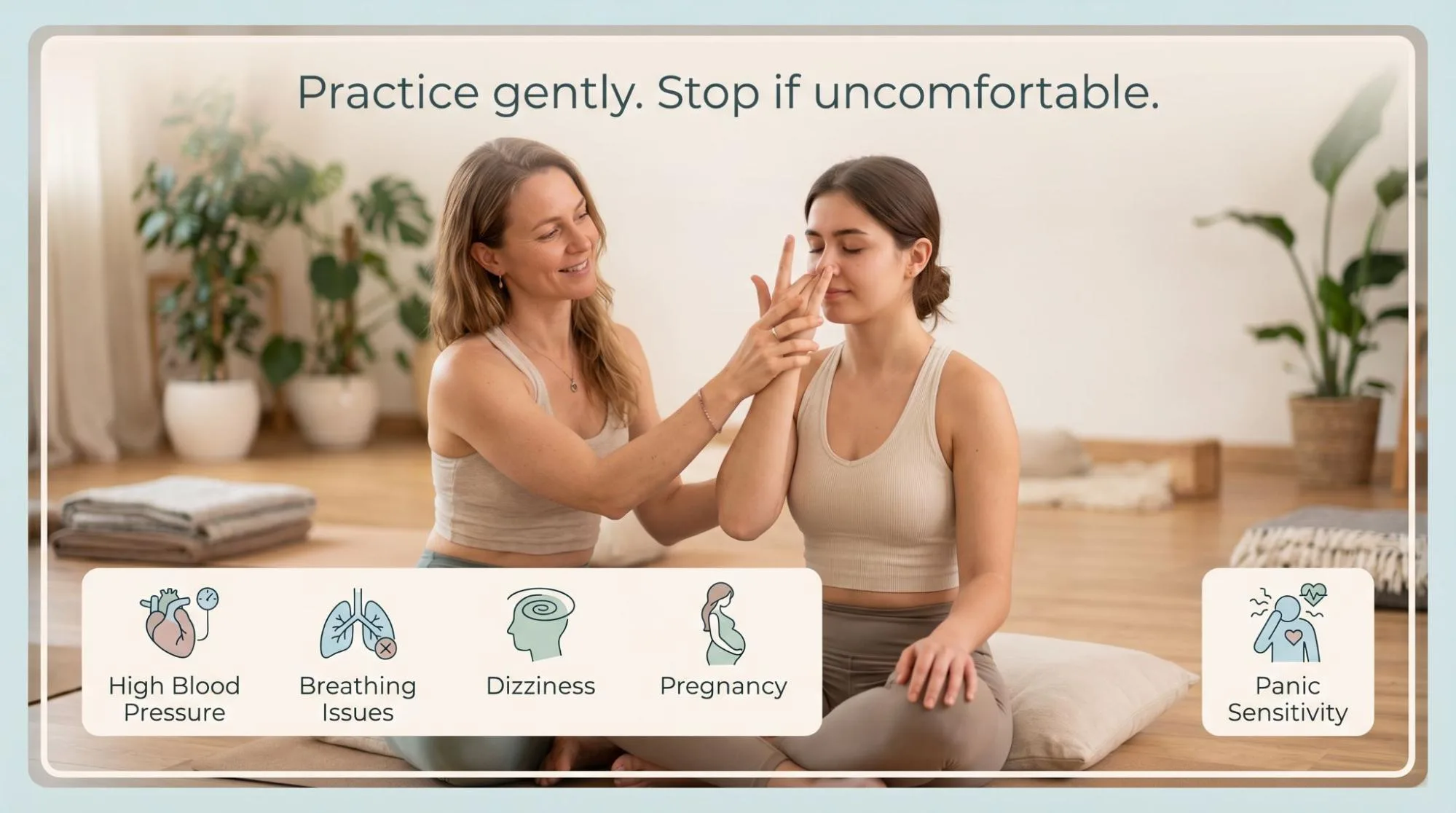
Most healthy beginners can practice Nadi Shodhana Pranayama gently. Still, some people should be careful. If you have uncontrolled high blood pressure, serious heart disease, severe asthma, chronic breathing problems, or panic attacks triggered by breath control, speak with a healthcare professional first.
Pregnant people should avoid breath retention and keep the practice soft. Children should only practice under guidance. Anyone feeling dizzy, breathless, or uncomfortable should stop immediately.
Simple Daily Routine for Beginners
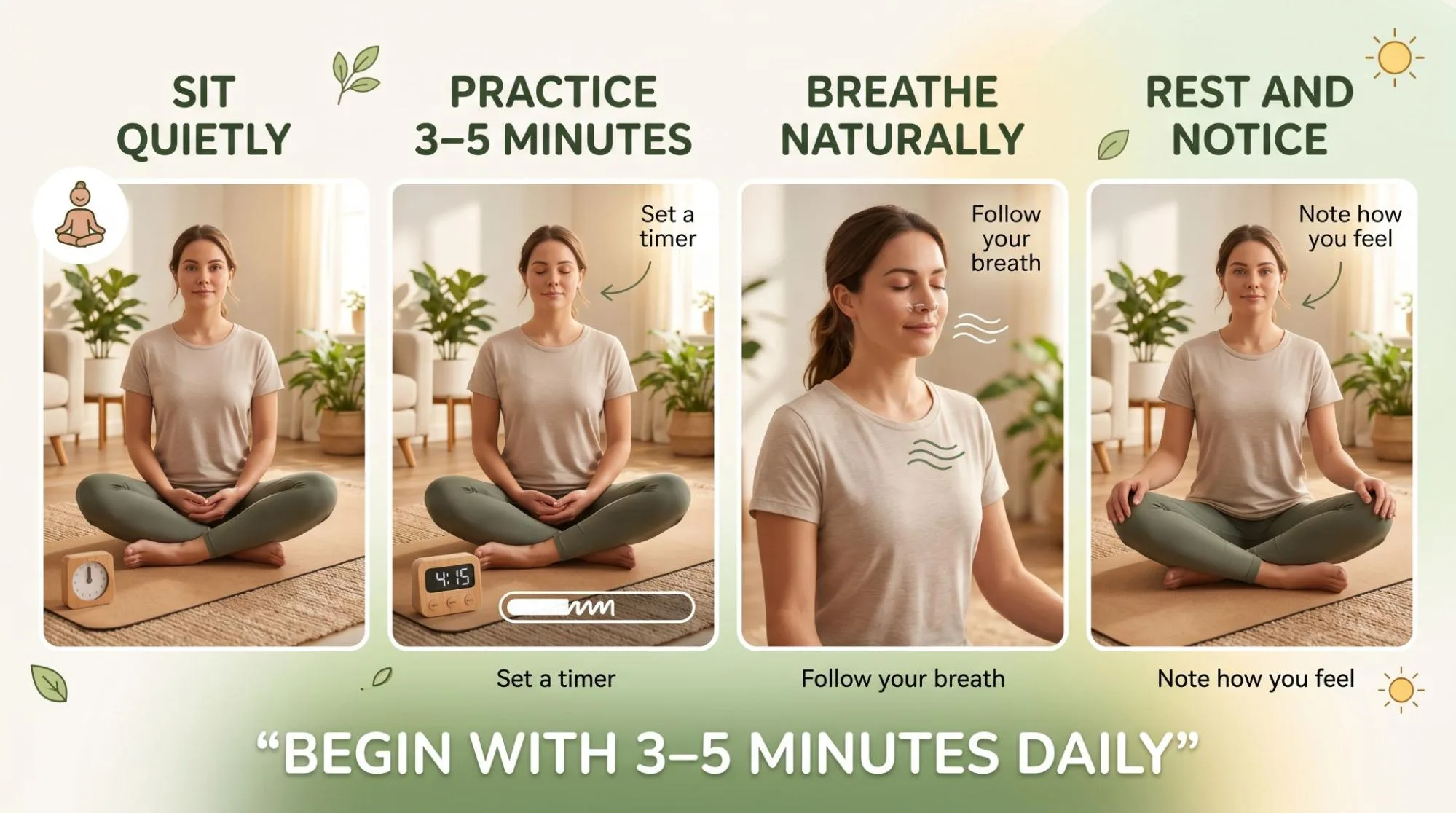
Start small. Sit comfortably for three to five minutes. Take a few normal breaths first, then practice four to six rounds of alternate nostril breathing.
A beginner routine can look like this:
- Sit quietly for one minute.
- Practice nadi shodhana for three to five minutes.
- Rest with normal breathing for one minute.
- Notice how your mind and body feel afterward.
This simple routine is enough to experience early nadi shodhana pranayama benefits without pressure. Once it feels natural, you can slowly increase the time to seven or ten minutes.
FAQs
What are the main nadi shodhana pranayama benefits?
The main nadi shodhana pranayama benefits include calmer breathing, reduced stress, better focus, emotional balance, and preparation for meditation. It may also support respiratory awareness and relaxation.
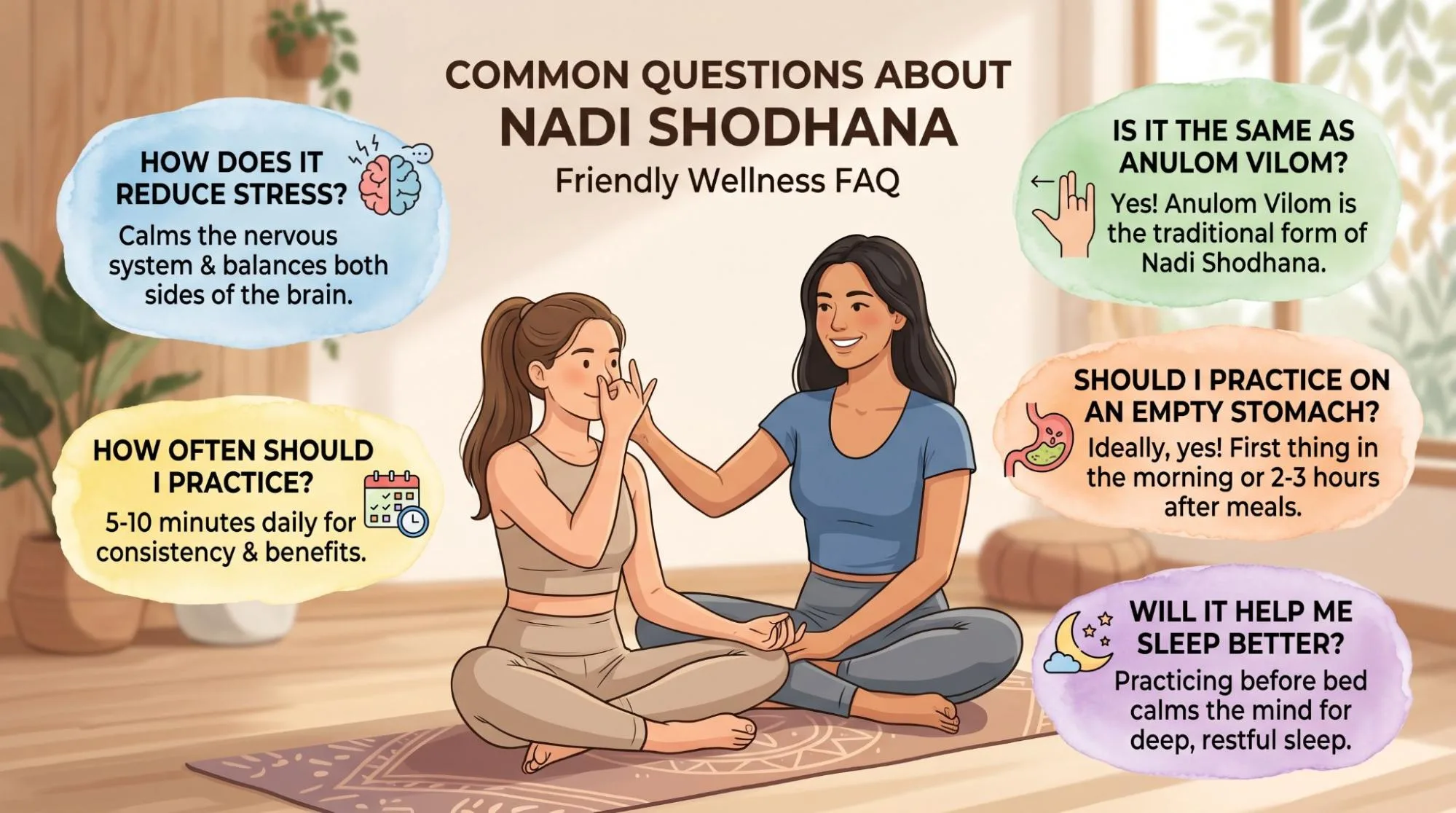
Is Nadi Shodhana the same as Anulom Vilom?
They are closely related, and many people use the names interchangeably. In some traditions, anulom vilom is taught as a simpler alternate nostril breathing practice, while Nadi Shodhana may include more structured ratios or retention.
Can I practice Nadi Shodhana every day?
Yes, most beginners can practice it daily if they keep the breath gentle. Start with a few minutes and increase slowly. Daily practice often brings the best nadi shodhana pranayama benefits.
Should I practice Nadi Shodhana on an empty stomach?
Yes, practicing on an empty stomach is usually best. Morning is ideal, but evening practice is also fine if you wait after meals and feel comfortable.
Can Nadi Shodhana help with sleep?
It may help calm racing thoughts before sleep by slowing the breath and relaxing the nervous system. Practice gently for a few minutes before bed without breath holding.
Learn More : 9 Trataka Meditation Candle Gazing Benefits, Steps, and Safety Tips
Conclusion
Nadi Shodhana Pranayama is a simple practice with a deep calming effect. It teaches you to breathe with awareness, balance your attention, and settle the nervous system without needing anything complicated.
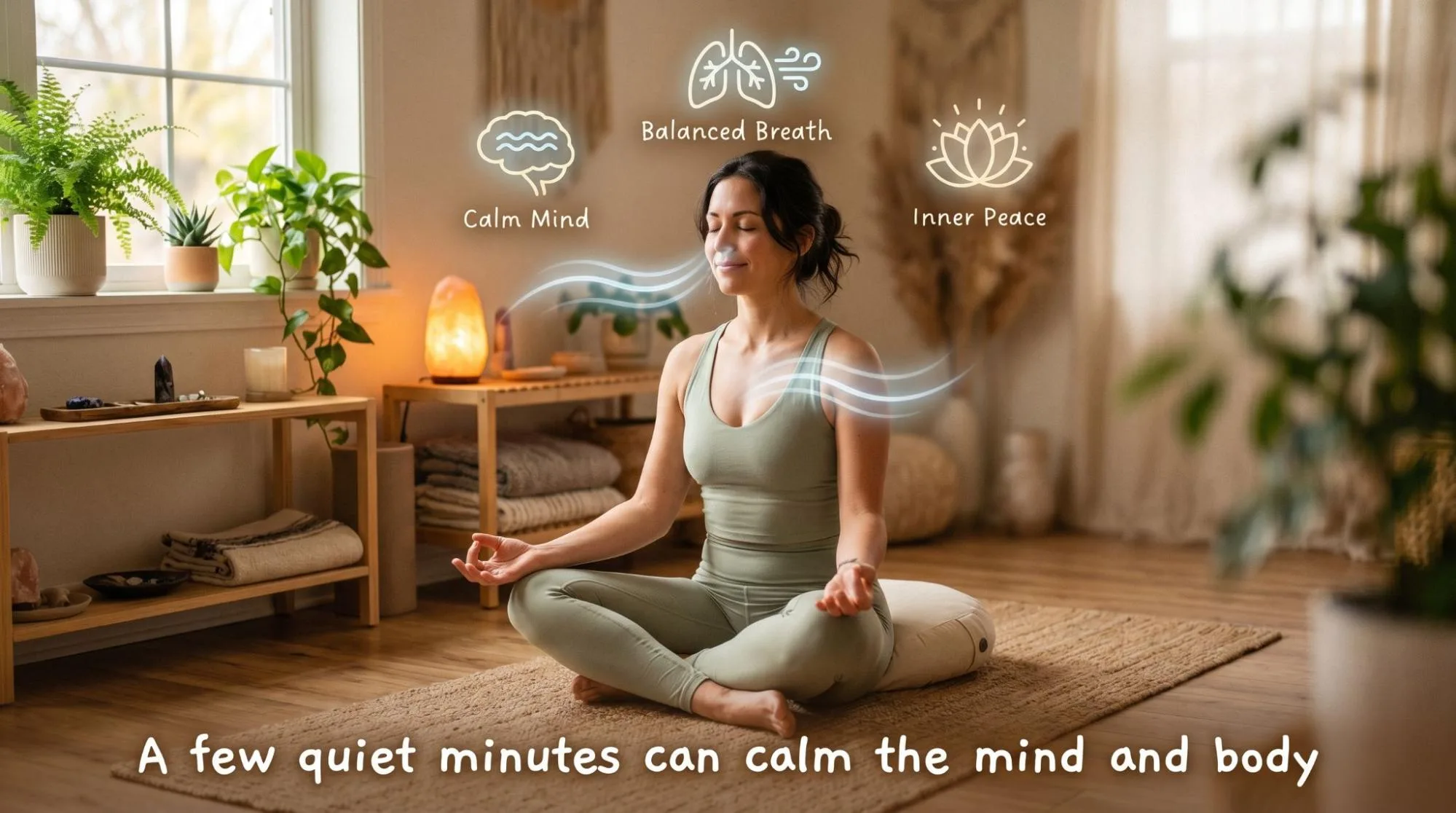
The best nadi shodhana pranayama benefits come from gentle, regular practice. Keep the breath smooth, avoid force, and let the practice become part of your daily rhythm. A few quiet minutes each day can make the mind clearer, the body calmer, and meditation much easier.
Frequently Asked Questions
Is Nadi Shodhana the same as alternate nostril breathing?
They are closely related names. Different traditions may teach slightly different patterns, so follow the instructions of a qualified teacher.
Can beginners practise Nadi Shodhana daily?
Many beginners can start with a few gentle minutes each day. Stop if the practice causes discomfort and return to normal breathing.
Should beginners hold their breath?
No. Beginners should keep the breathing smooth and natural. Retention should only be added with appropriate guidance.