
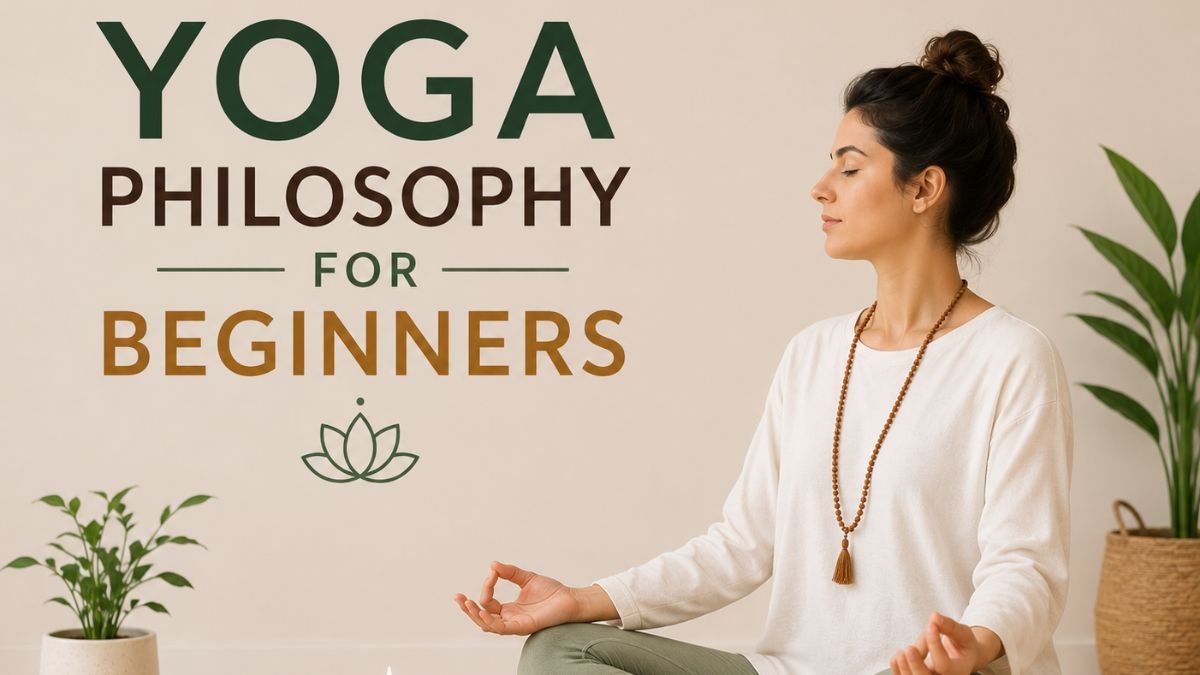
Quick answer: Yoga philosophy for beginners introduces ideas about awareness, ethics, discipline, and living with greater clarity. It is a reflective tradition, not a substitute for medical or mental-health care.
Important Safety Note
Stay within a comfortable range and never force movement or breath. Stop for sharp pain, numbness, tingling, dizziness, panic, or unusual shortness of breath. Seek qualified guidance for injuries, recent surgery, pregnancy concerns, or persistent symptoms.
Starting yoga can be about much more than learning physical poses. yoga philosophy for beginners introduces simple ideas about the mind, actions, habits, and personal growth. Understanding the basic yoga philosophy can help you see why yoga includes breathing, meditation, self-control, and awareness. You do not need any previous knowledge to begin. A simple introduction to yoga philosophy can help you understand the deeper side of this practice.
What Is Yoga Philosophy?
yoga philosophy for beginners is a simple way to explore the ideas behind yoga. It looks at how people can develop awareness, balance, discipline, and a better relationship with themselves and others. The foundations of yoga include physical practice, breathing, meditation, ethical behavior, and personal discipline. You can learn these ideas slowly without trying to understand everything at once.
Why Learn Yoga Philosophy as a Beginner?
Learning yoga philosophy for beginners can give your yoga practice more meaning. The yoga principles for beginners can help you think about patience, honesty, kindness, and self-control in daily life. Yoga is not only about becoming flexible. It also encourages you to pay attention to how you think and act. These yogic principles can be used both on and off the yoga mat.
The History of Yogic Philosophy
The history of yogic philosophy goes back thousands of years and includes many teachers, texts, and traditions. When studying yoga philosophy for beginners, it is useful to know that yoga developed over a long period rather than being created by one person. The ancient yoga teachings included ideas about meditation, discipline, awareness, and spiritual development. Different traditions later developed their own ways of explaining these ideas.
Understanding the Eight Limbs of Yoga
One important part of yoga philosophy for beginners is learning about the eight limbs of yoga. These eight parts describe a wider path of yoga practice. They include ethical behavior, personal discipline, physical postures, breath control, turning attention inward, concentration, meditation, and deeper awareness. Learning the eight limbs can show beginners that yoga includes much more than physical exercise.
The First Two Limbs
The first two parts of the eight limbs of yoga focus on behavior and personal habits. yoga ethics for beginners can include ideas about honesty, kindness, non-harming, cleanliness, contentment, and self-discipline. These teachings do not need to feel like strict rules. Instead, they can help you think about your choices and how they affect your life and other people.
The Role of Yoga Ethics
yoga philosophy for beginners becomes easier to understand when you connect it with everyday actions. yoga ethics for beginners encourage people to become more aware of how they speak, behave, and respond to situations. The goal is not to become perfect. Instead, these yogic principles can help you develop better habits and make thoughtful choices in your daily life.
The Patanjali Yoga Sutras
The Patanjali Yoga Sutras are an important traditional text for people studying yoga philosophy for beginners. They discuss ideas related to the mind, concentration, meditation, discipline, and the path of yoga. Beginners do not need to read the entire text immediately. Learning a simple explanation of the Patanjali Yoga Sutras can provide useful background for understanding traditional yoga teachings.
Ancient Yoga Teachings
The ancient yoga teachings focused on the relationship between the body, mind, actions, and inner awareness. When exploring yoga philosophy for beginners, you may come across ideas about self-control, meditation, concentration, and personal growth. These beginner yogic teachings can still be explored today because many of them deal with common human experiences, such as distraction, stress, habits, and the desire for a more balanced life.
Meditation and Yoga Philosophy
meditation and yoga philosophy are closely connected in many traditional yoga systems. For people studying yoga philosophy for beginners, meditation can provide a practical way to develop focus and awareness. Instead of only reading about the mind, you can sit quietly and observe your thoughts and breathing. These spiritual yoga practices can be approached slowly and do not require advanced physical yoga skills.
Simple Meditation for Beginners
A simple meditation can be part of yoga philosophy for beginners. Sit comfortably, close your eyes if you wish, and pay attention to your natural breathing. When your mind wanders, gently return your attention to the breath. This practice connects with meditation and yoga philosophy because it encourages awareness and concentration. Start with five minutes and increase the time only when you feel comfortable.
Spiritual Yoga Practices
The spiritual yoga practices found in different traditions can include meditation, breath work, reflection, and focused attention. yoga philosophy for beginners can introduce these practices without requiring you to change your personal beliefs. The spiritual side of yoga can be explored as a way to understand yourself, your thoughts, and your values. Different people may connect with these practices in different ways.
Mindful Living Principles
The mindful living principles found in yoga encourage people to become more aware of everyday actions. This can be a useful part of yoga philosophy for beginners because you do not have to practice yoga only during a class. You can pay attention while eating, walking, talking, working, or resting. These small moments can help bring the yogic principles of awareness and patience into normal life.
Creating a Yoga Lifestyle
A yoga lifestyle does not mean that you must completely change your daily routine. For people learning yoga philosophy for beginners, it can simply mean making more thoughtful choices and creating time for movement, breathing, meditation, and reflection. The foundations of yoga can be included in a normal modern lifestyle. Start with small habits that feel realistic instead of trying to change everything at once.
Foundations of Yoga Philosophy
The foundations of yoga include several connected areas. These can include ethical behavior, personal discipline, physical practice, breath control, concentration, and meditation. Understanding these areas can make yoga philosophy for beginners easier to follow. You can study one foundation at a time and think about how it relates to your own life. Learning slowly can make the ideas easier to remember and use.
Beginner Yogic Teachings in Daily Life
The beginner yogic teachings do not have to stay inside books or yoga classes. yoga philosophy for beginners can become more useful when you apply simple ideas to daily situations. For example, practicing patience when you are frustrated or speaking honestly during a difficult conversation can reflect some traditional yogic principles. Small actions can help you understand philosophical ideas in a practical way.
How to Start Learning Yoga Philosophy
If you want to study yoga philosophy for beginners, begin with simple topics rather than difficult texts. Start with an introduction to yoga philosophy, then explore the eight limbs of yoga, yoga ethics, meditation, and traditional teachings. You can read beginner books, attend a class, listen to a teacher, or take notes after your yoga practice. The most important thing is to stay curious and give yourself time to learn.
Common Mistakes Beginners Should Avoid
People studying yoga philosophy for beginners sometimes think they need to understand every traditional concept immediately. This can make learning feel harder than it needs to be. Start with the basic yoga philosophy and focus on one idea at a time. Another common mistake is thinking that yoga philosophy is only about spirituality. It also includes practical ideas about behavior, attention, discipline, and daily habits.
How Yoga Philosophy Can Support Personal Growth
Learning yoga philosophy for beginners can encourage you to become more aware of your thoughts and actions. The mindful living principles can help you pause before reacting to difficult situations. A simple yoga lifestyle can also encourage regular movement, quiet time, and healthy habits. These ideas are not quick solutions. They are practices that can be explored and developed over time.
Conclusion
At YogaPoints yoga philosophy for beginners provides a simple introduction to the ideas behind the wider yoga tradition. By learning the foundations of yoga, eight limbs of yoga, yoga ethics for beginners, meditation, and ancient yoga teachings, you can understand yoga beyond physical poses. Start slowly and explore one topic at a time. With patience and regular practice, these teachings can become useful parts of your everyday life.
FAQs
1. What is yoga philosophy for beginners?
yoga philosophy for beginners is an introduction to the ideas behind yoga. It covers topics such as awareness, discipline, ethics, meditation, and personal growth.
2. What should beginners learn first?
Start with the basic yoga philosophy and an introduction to yoga philosophy. You can then explore the foundations of yoga and the eight limbs of yoga.
3. What are the eight limbs of yoga?
The eight limbs of yoga describe different parts of traditional yoga practice. They include ethical behavior, personal discipline, physical poses, breathing, concentration, meditation, and deeper awareness.
4. What are the Patanjali Yoga Sutras?
The Patanjali Yoga Sutras are a traditional yoga text that discusses the mind, meditation, discipline, concentration, and other important ideas related to yoga philosophy.
5. Is yoga philosophy only spiritual?
No. yoga philosophy for beginners includes spiritual ideas, but it also covers practical topics such as behavior, self-discipline, awareness, and daily habits.
6. Can beginners practice yoga philosophy at home?
Yes. You can study beginner yogic teachings, practice simple meditation, and use mindful living principles at home. You can also include breathing and reflection in your normal routine.
7. How can yoga philosophy improve daily life?
The yoga principles for beginners can encourage patience, awareness, honesty, and self-control. These ideas can become part of a balanced yoga lifestyle when practiced consistently.
Frequently Asked Questions
What is yoga philosophy?
It is a broad set of teachings about mindful living, self-awareness, ethics, and practice. Different yoga traditions explain these ideas in different ways.
Do I need to be religious to study yoga philosophy?
No. Many people explore it as a practical framework for reflection, habits, and personal growth without adopting a particular religion.
How should a beginner start?
Begin with one principle, read reliable sources, and apply it gently in everyday life rather than trying to change everything at once.
