Introduction
Chair Pose Utkatasana benefits go far beyond strong legs. This simple-looking yoga pose asks a lot from the body, the breath, and the mind at the same time. When you bend your knees, raise your arms, and settle into what feels like sitting in an imaginary chair, you start working several major muscle groups together in one steady shape.
That is part of why utkatasana or chair pose is such a respected posture in a yoga practice. It builds core strength, supports posture, challenges balance, and helps you stay focused when the pose starts to feel intense. It is a powerful pose, but it is also one that beginners can learn with patience and good alignment.
What Makes Chair Pose So Effective?
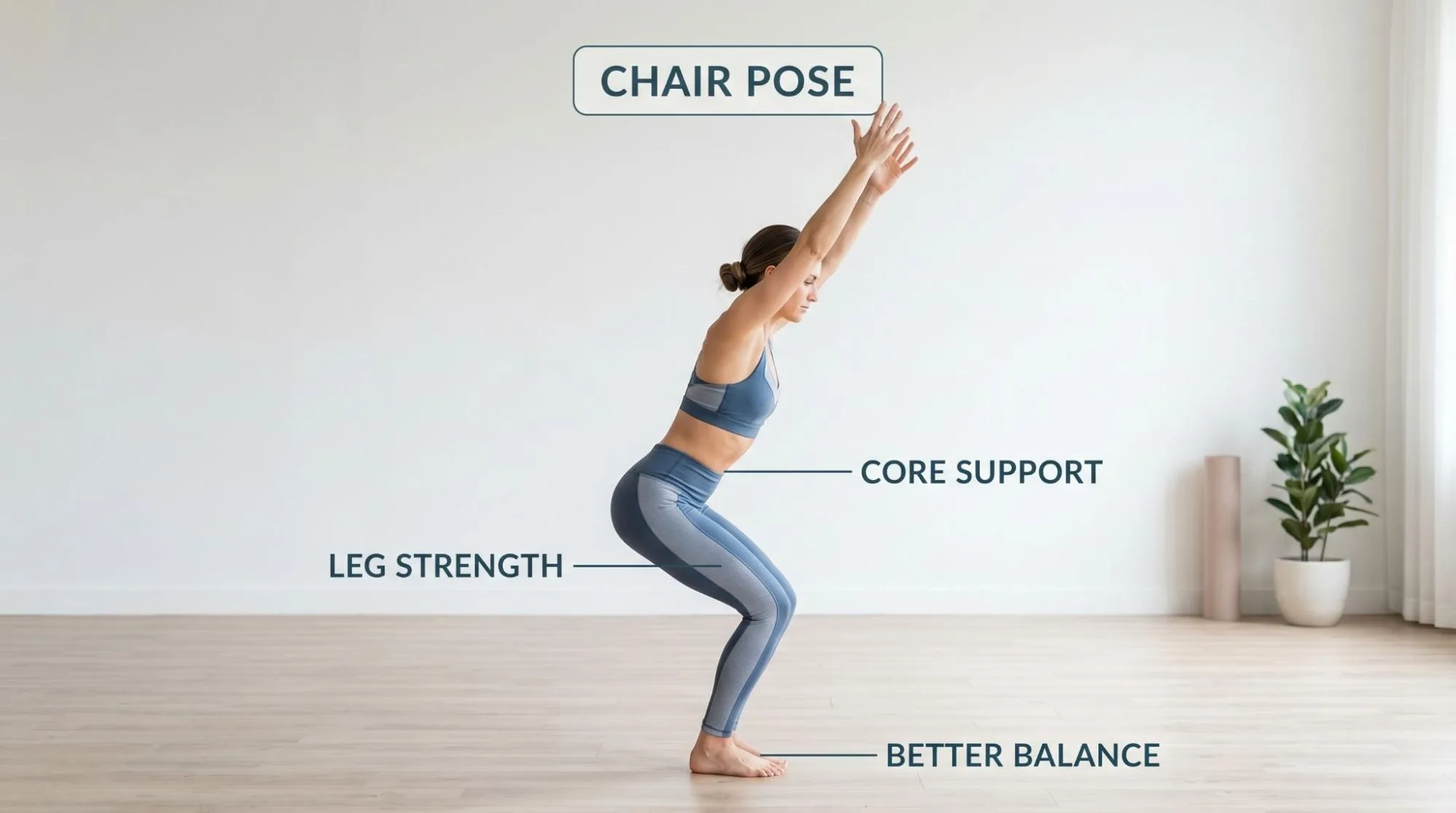
Chair Pose works because it does not isolate just one area. It brings the lower body, core, shoulders, and breath into one coordinated effort. That makes it both simple and demanding.
When practiced well, the pose teaches your body how to stay steady under pressure. That lesson carries into everyday movement too.
Physical Strength and Toning
Legs and Glutes
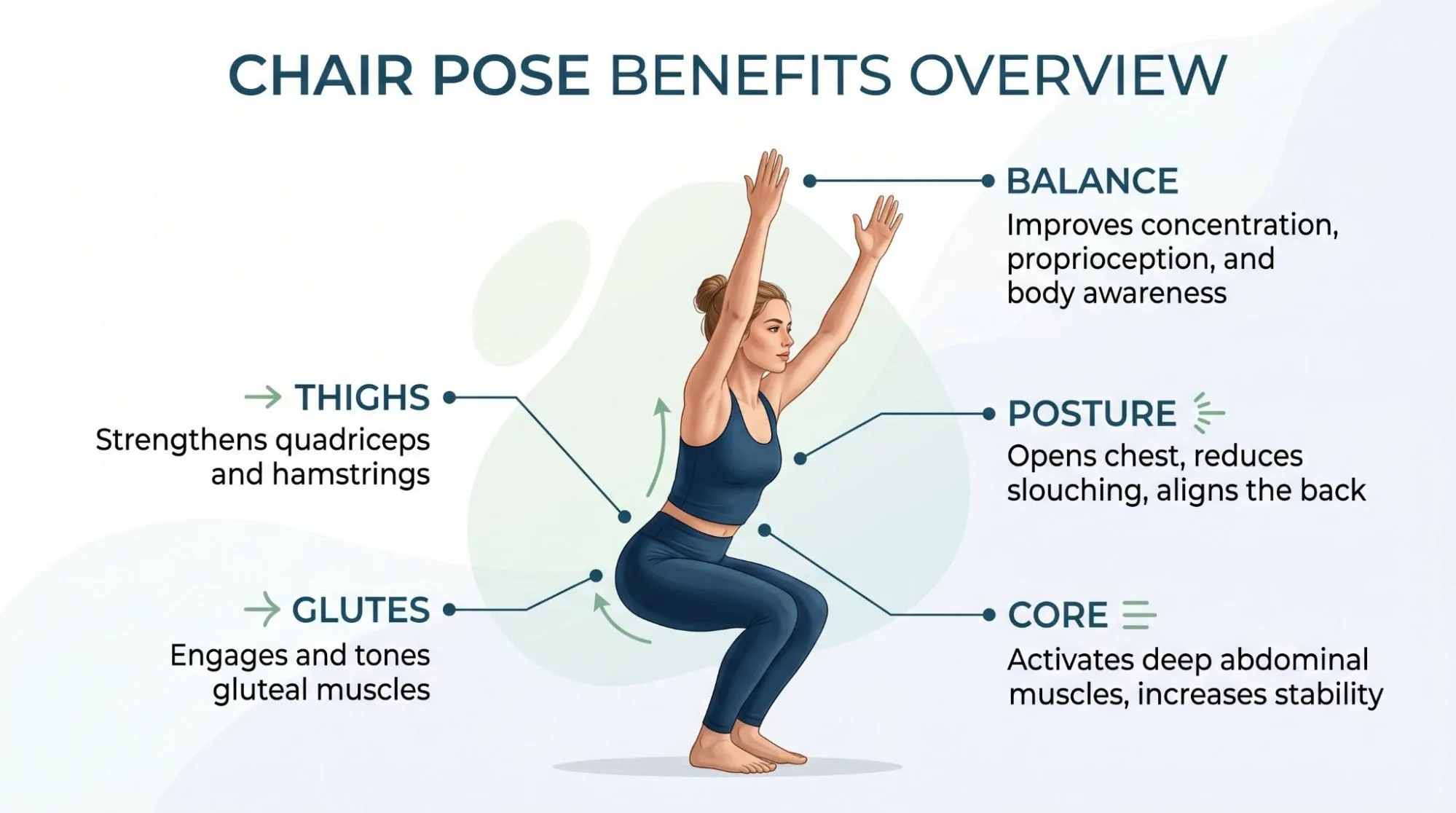
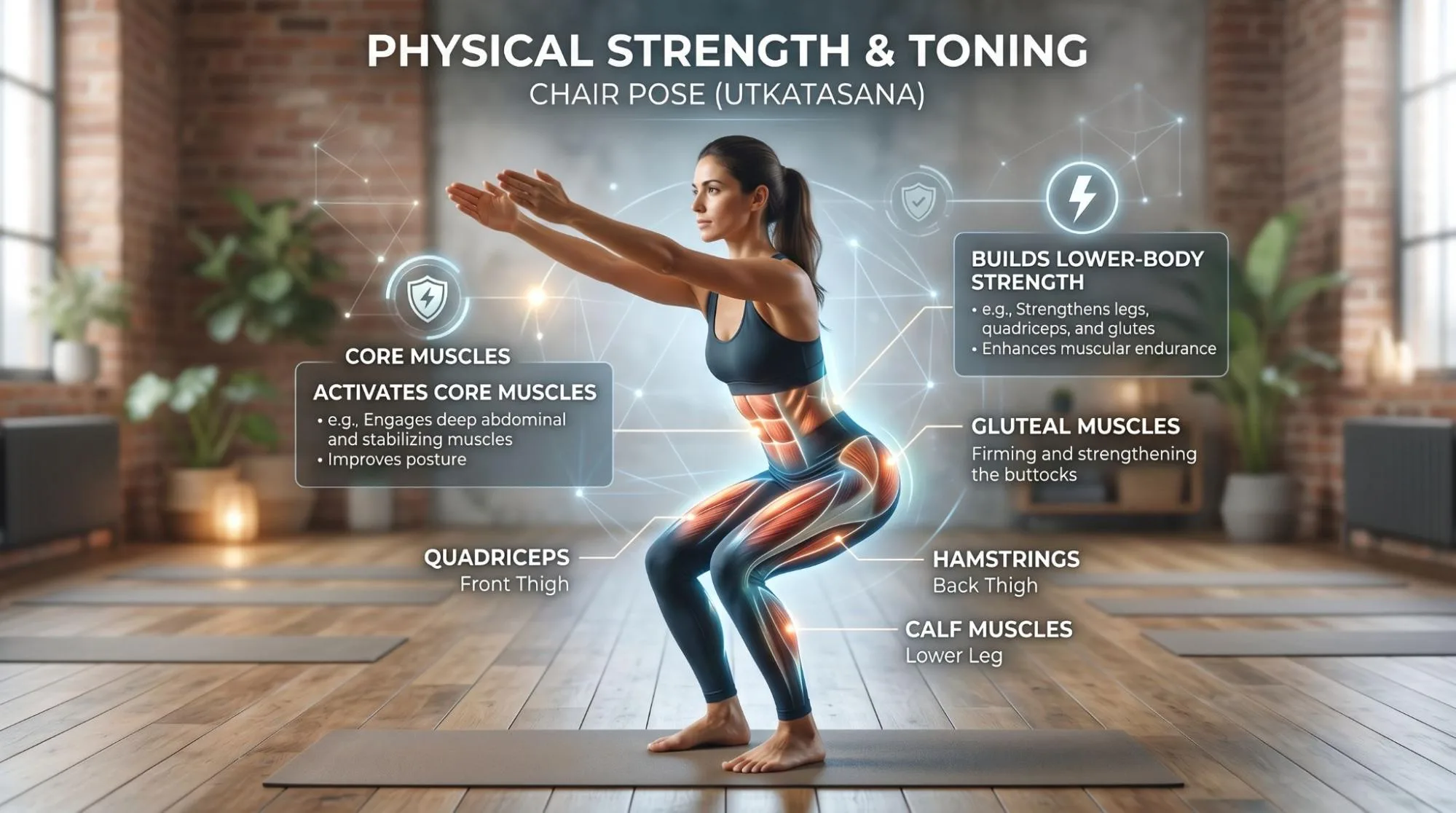
Chair Pose is well known for building the thighs and glutes. As you hold the squat-like shape, the quadriceps work hard to support your body weight. The glutes also stay active, helping you stay lifted instead of sinking too low.
This is one reason people notice improved lower-body endurance over time. The pose asks for steady effort, not sudden power.
Core and Back
Your core muscles stay engaged to keep the torso upright. Without that support, the body would tip forward. The back also works to maintain length through the spine.
This makes Chair Pose useful for people who want better trunk stability and more control in standing postures.
Knees and Ankles
The pose also strengthens the small stabilizing muscles around the knees and ankles. That matters because these joints support daily movement, from walking upstairs to standing for long periods.
When alignment is clean and the weight is distributed well, these joints learn to handle load more safely.
Learn More : Cat and Cow Pose: Benefits, Steps, Tips, and Beginner Guide
Posture and Spinal Alignment
Chest Opening
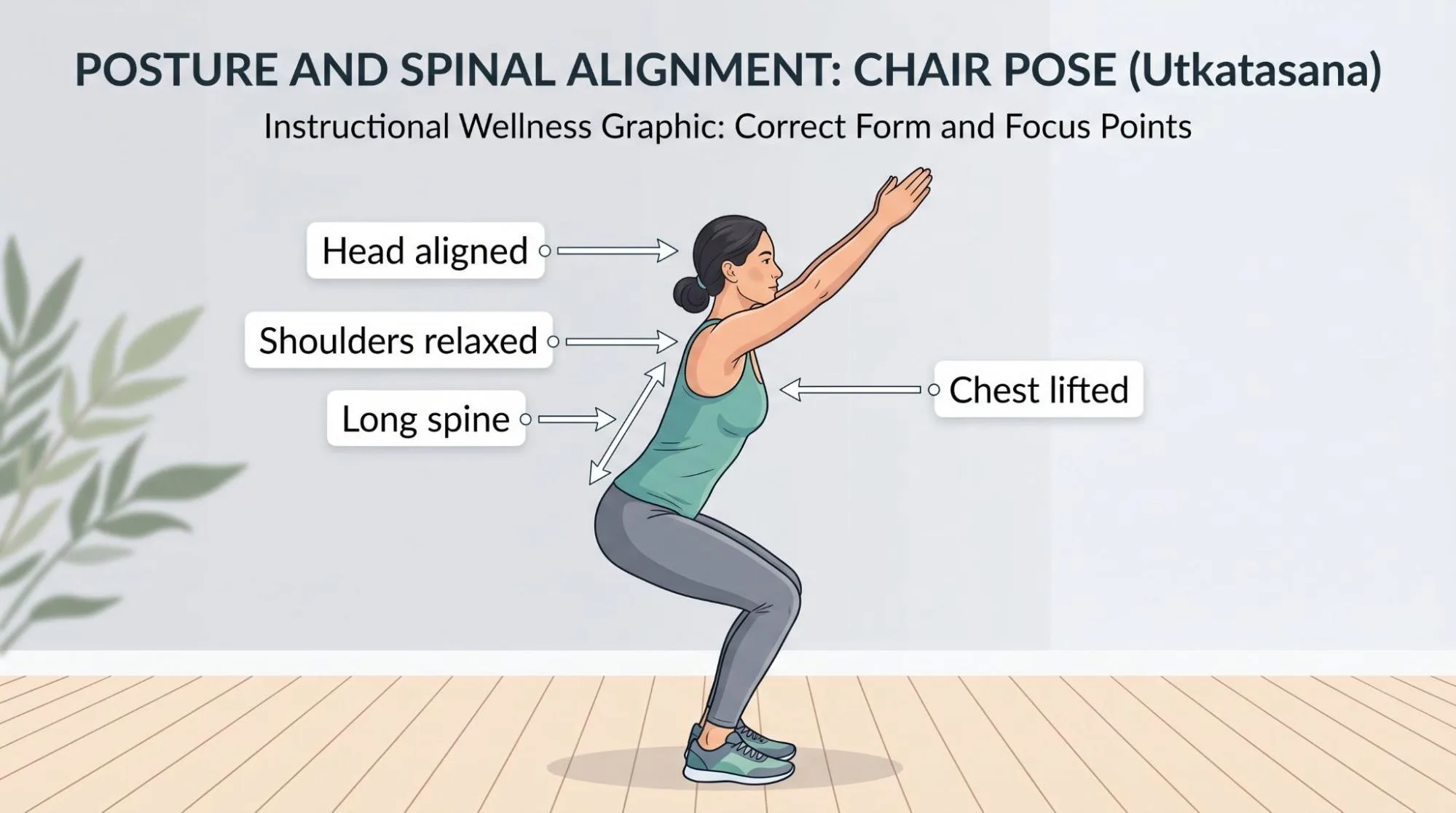
A common version of Chair Pose asks you to raise your arms overhead. When done with control, this helps open the chest a little and counter the hunched shape many people carry during the day.
The chest does not need to be forced open. Just creating space through the front body can already improve how the pose feels.
Shoulder Mobility
The shoulders also get involved, especially when the palms facing each other or when the arms stay in line with the ears. The upper back and shoulder blades have to stay active so the shoulders do not collapse forward.
That small detail often makes the difference between a pose that feels strong and one that feels strained.
Better Body Alignment
Chair Pose teaches the body to organize itself well. You lengthen your spine, lift through the crown of the head, and keep the chest from collapsing into the thighs.
That sense of stacked alignment is useful in many other standing yoga poses and in ordinary movement too.
Balance, Coordination, and Stability
Weight Distribution
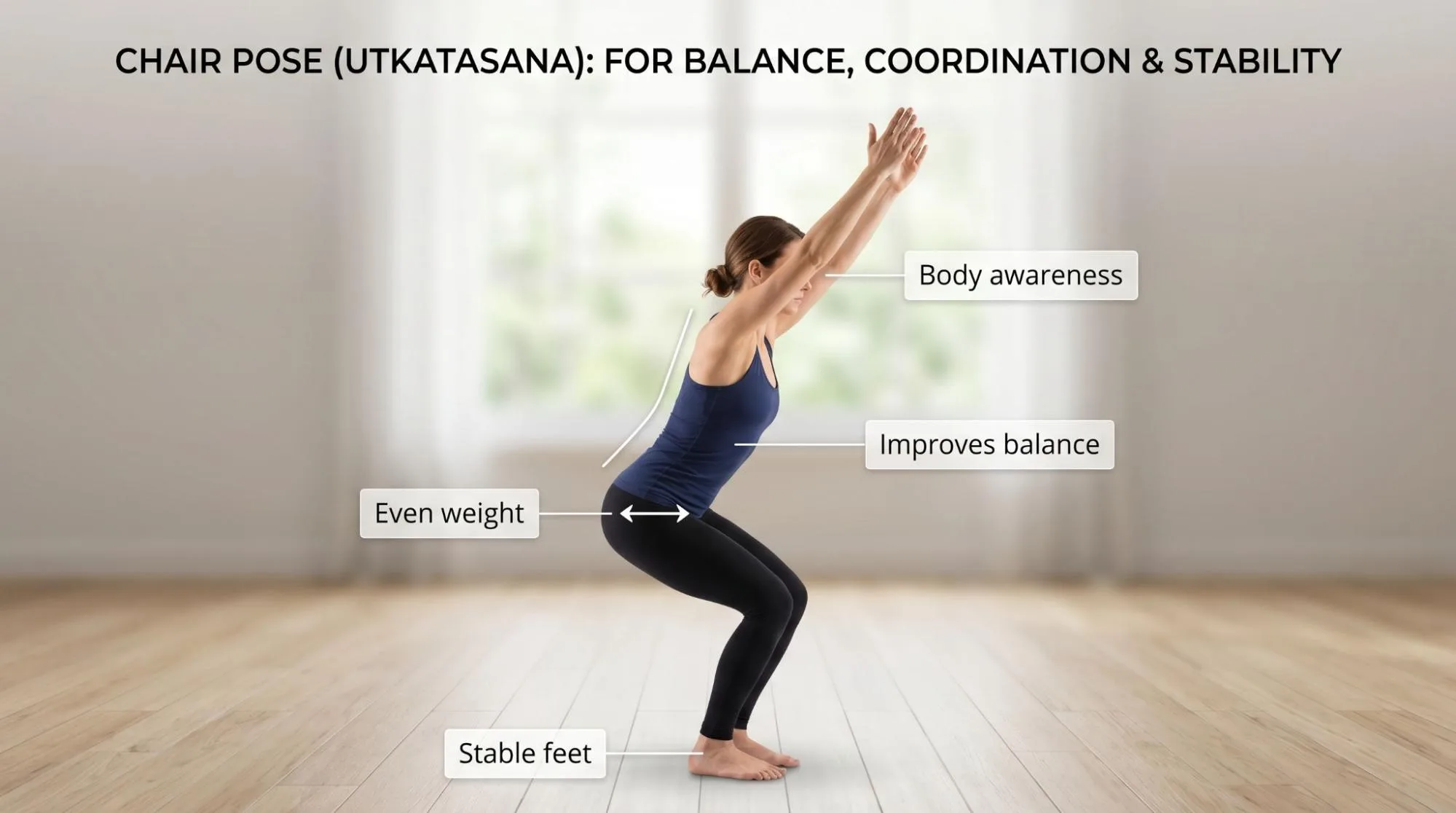
One reason Chair Pose is tricky is that it tests how evenly you place your weight. If too much pressure goes into the toes or the heels, the posture becomes unstable.
A balanced stance helps the body feel grounded. That grounding is part of what makes the pose so useful.
Coordination and Proprioception
The pose also improves coordination and body awareness, sometimes called proprioception. You are paying attention to where your limbs are, how deeply you are bending, and how the torso is positioned in space.
That may sound small, but this kind of awareness helps people move more smoothly in daily life.
Stability in Daily Life
Better balance is not just a yoga goal. It helps in simple things like stepping off a curb, carrying groceries, or moving quickly without losing control.
Chair Pose trains that stability in a very direct way.
Internal Health and Circulation
Heart and Lungs
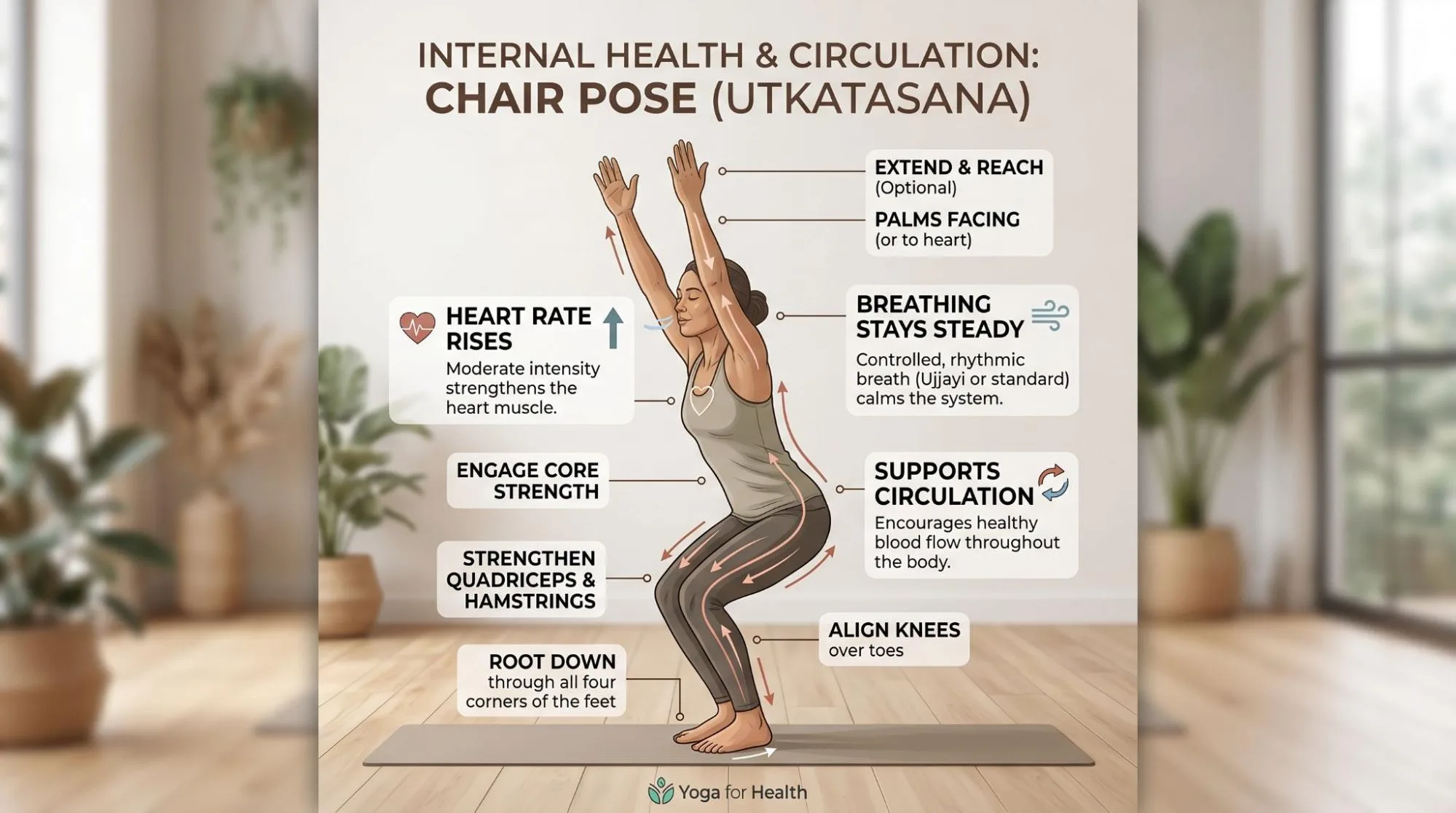
Because the posture uses large muscle groups at once, it can raise the heart rate. For many people, that creates a light cardiovascular challenge, especially when the pose is held for several breaths.
It also asks the breath to stay steady even when the legs start burning. That makes the pose valuable for breath control.
Digestive Support
The shape of the pose gently compresses the abdomen, which may help some people feel more awake in the middle section of the body. While it is not a cure for digestion problems, the pressure and release can feel supportive.
This is one reason many people find Chair Pose energizing rather than relaxing.
Learn More : Warrior 1 Pose: Benefits, Steps, Alignment, and Beginner Tips
Mental Benefits of Chair Pose
Willpower and Focus
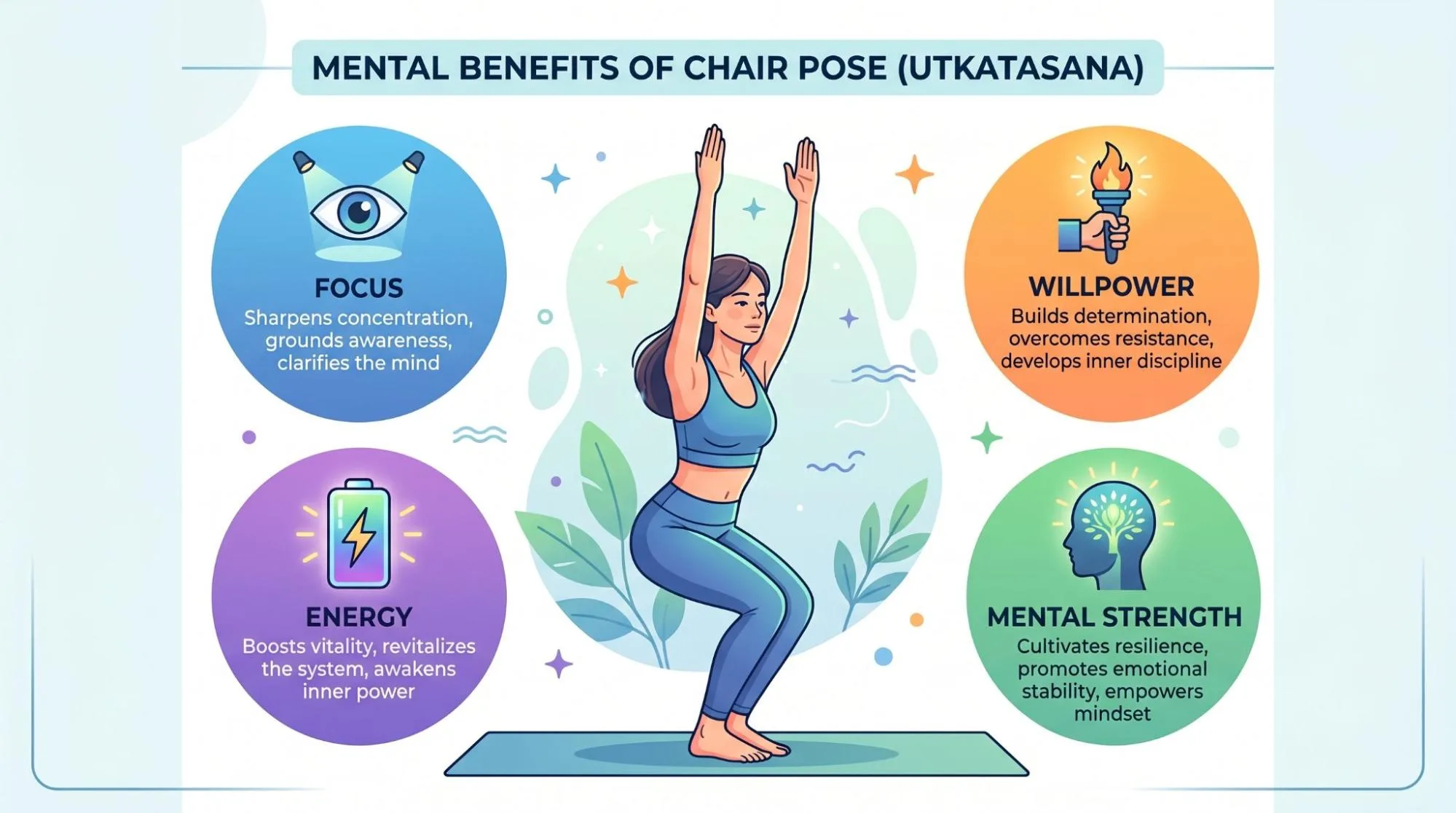
Chair Pose is not just a physical challenge. It tests patience. The longer you stay in it, the more you have to stay mentally present.
That is where the real training happens. You learn to keep breathing and stay calm while the muscles are working hard.
Energy and Alertness
This is not a sleepy pose. It wakes you up. Many people feel more alert after holding it for a few breaths, especially when the chest is lifted and the breath stays smooth.
It can be a good posture to practice when you want a fresh reset during your yoga practice.
How to Practice Chair Pose Correctly
Step-by-Step Practice
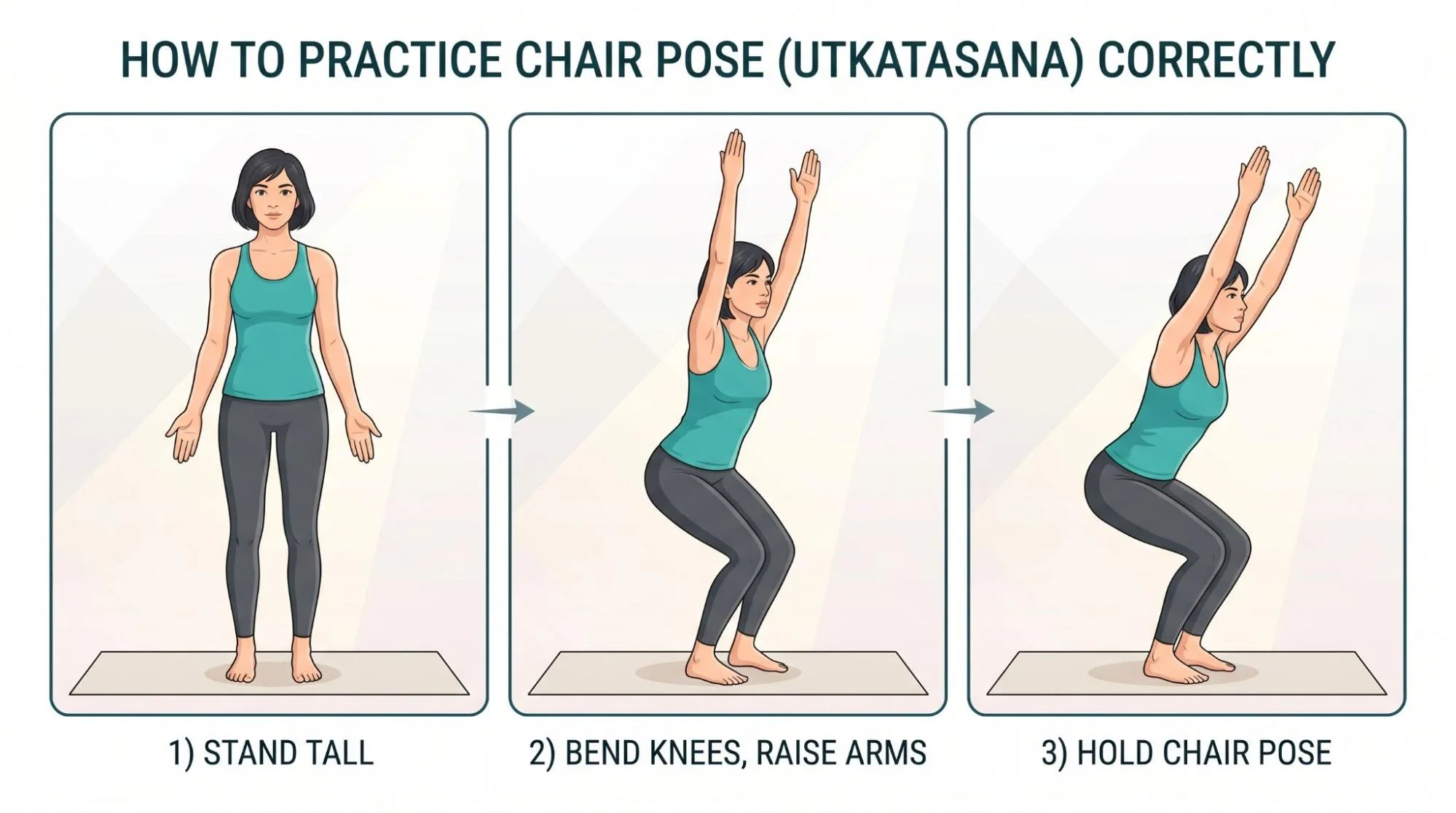
- Stand tall with your feet hip-width apart.
- Inhale and raise your arms overhead.
- As you exhale, bend your knees and send your hips back as if lowering into a chair.
- Keep your chest lifted and your spine long.
- Try to keep the knees pointing forward, not collapsing inward.
- Stay for 3 to 5 breaths, or longer if your body feels steady.
- Press through the feet and return to standing slowly.
A helpful image to keep in mind is sitting in an imaginary chair. That idea often helps beginners find the right depth.
Breathing in the Pose
Breath matters a lot here. Do not hold your breath while trying to look strong. Instead, keep the inhale and exhale smooth and controlled.
A steady breath helps you stay relaxed in the face, neck, and shoulders, even when the legs are working hard.
Common Mistakes to Avoid
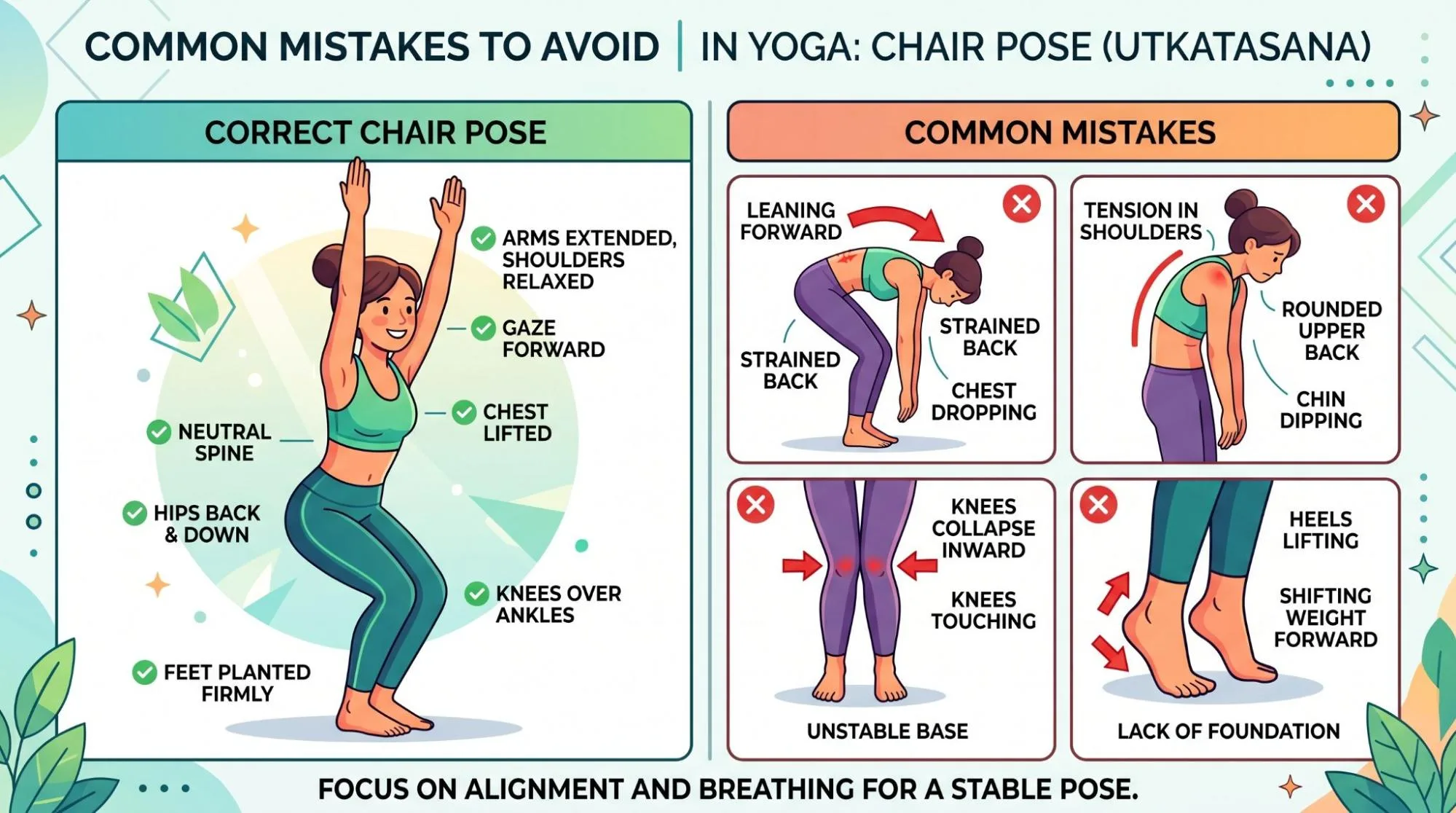
Letting the Knees Collapse Inward
This is one of the most common alignment problems. When the knees cave in, the legs lose stability and the joints can feel strained.
Think about gently pressing the knees in line with the toes.
Leaning Too Far Forward
Many people lean forward too much because the thighs are working hard. A small forward lean is normal, but the chest should not dump into the knees.
Try to keep the torso active and the spine long.
Lifting the Heels
Some students lift their heels without meaning to. That can make balance harder and shift too much pressure into the toes.
Keep the heels grounded unless you are intentionally practicing a variation.
Tension in the Neck and Shoulders
If the arms are overhead, the neck can tighten quickly. The shoulder blades should stay broad and soft, not jammed upward.
Let the shoulders stay active, but not squeezed.
Modifications for Beginners
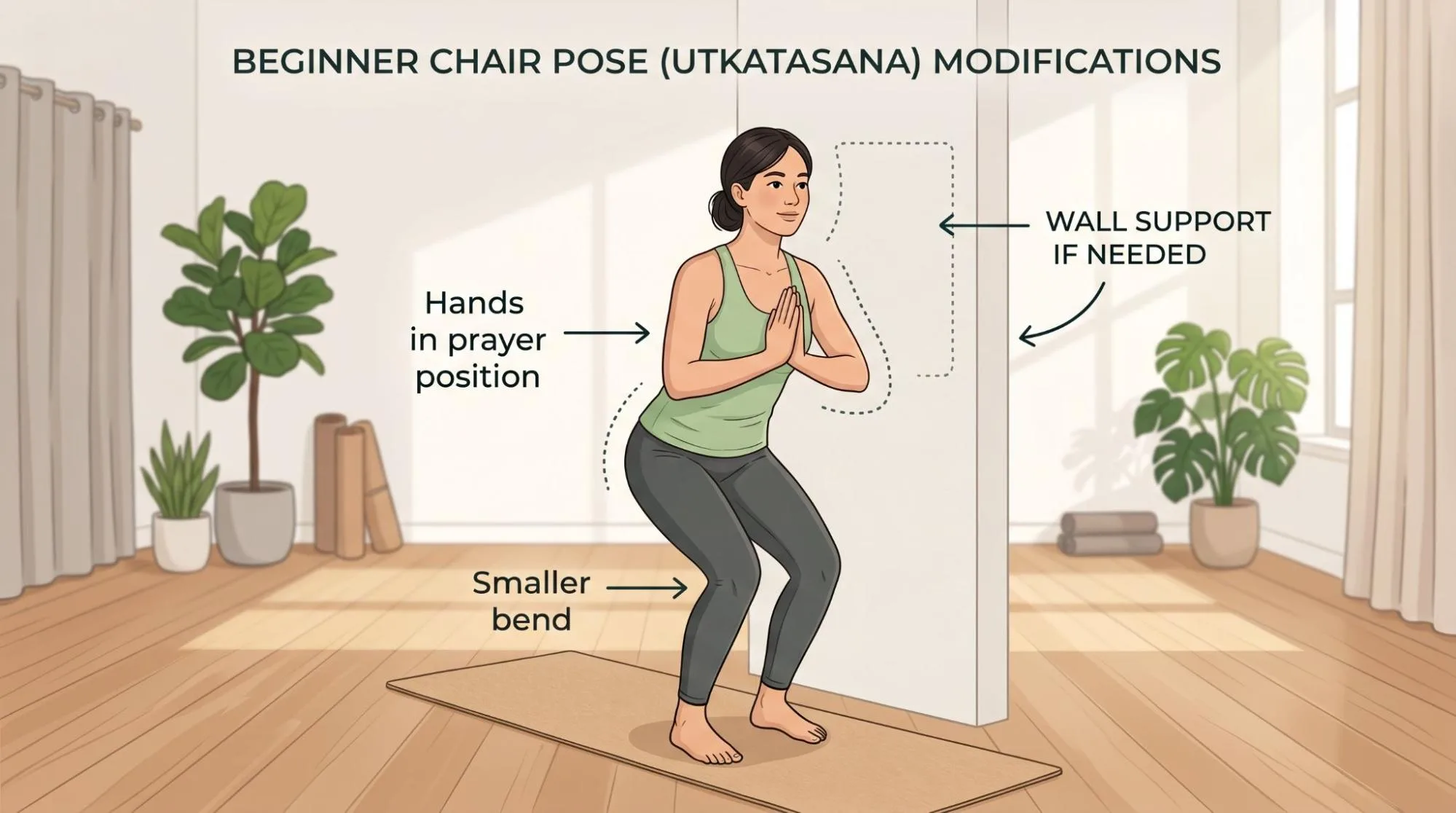
Beginners do not need to force a deep squat. A small bend in the knees is enough to start. The pose becomes more valuable when it is done with control, not when it is made extreme.
You can also keep the arms lower, such as beside the body or in a prayer position at the chest. That can make the posture feel more stable while you build confidence.
If the full version feels too intense, practice near a wall for support.
Variations for a Stronger Practice
Twist Variation
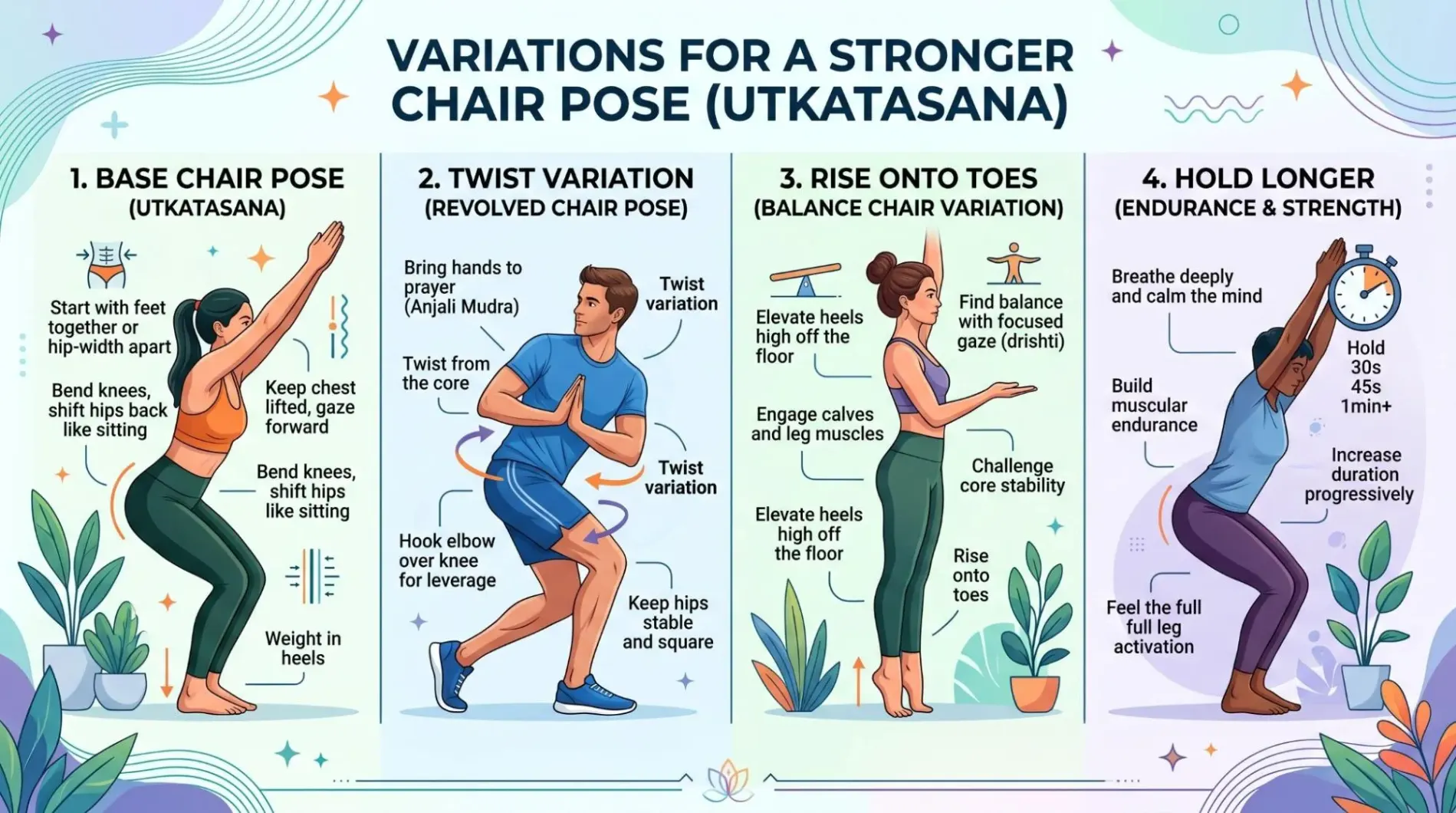
A gentle twist variation adds more challenge to balance and core control. You can bring the hands to prayer position and rotate slightly from the torso while keeping the knees steady.
This should be done carefully. The twist should feel controlled, not forced.
Rising onto the Toes
Another variation is lifting slightly onto the balls of the feet. This increases the work in the calves and feet and makes balance much more demanding.
Use this only if the regular pose already feels steady.
Holding the Pose Longer
You can also deepen the practice by staying in the posture for more breaths. Longer holds build endurance in the legs and core muscles.
Just remember that quality matters more than time. A shorter hold with clean alignment is better than a long hold with poor form.
Why Chair Pose Belongs in a Regular Yoga Routine
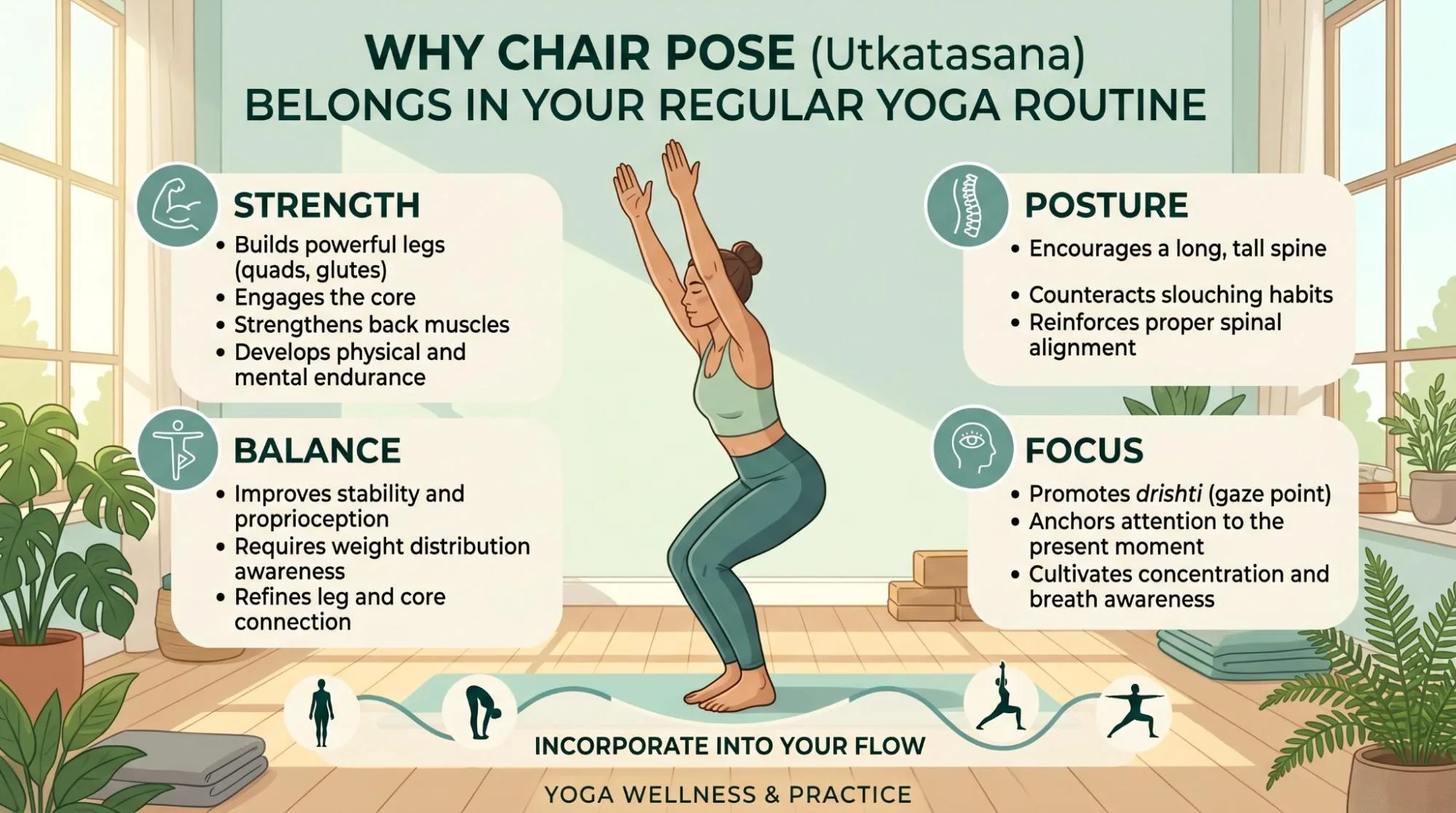
Chair Pose is one of those postures that looks simple from the outside but teaches a lot inside the body. It builds strength, improves balance, supports better alignment, and trains your mind to stay steady under pressure.
It also connects well with other standing poses because it teaches the body how to root, lift, and stabilize at the same time. That makes it a useful part of almost any yoga practice, whether you are a beginner or an experienced student.
When practiced regularly, the benefits of utkatasana become easy to notice: stronger legs, a more active core, better posture, and more confidence in movement. It is a practical pose with real everyday value.
FAQs
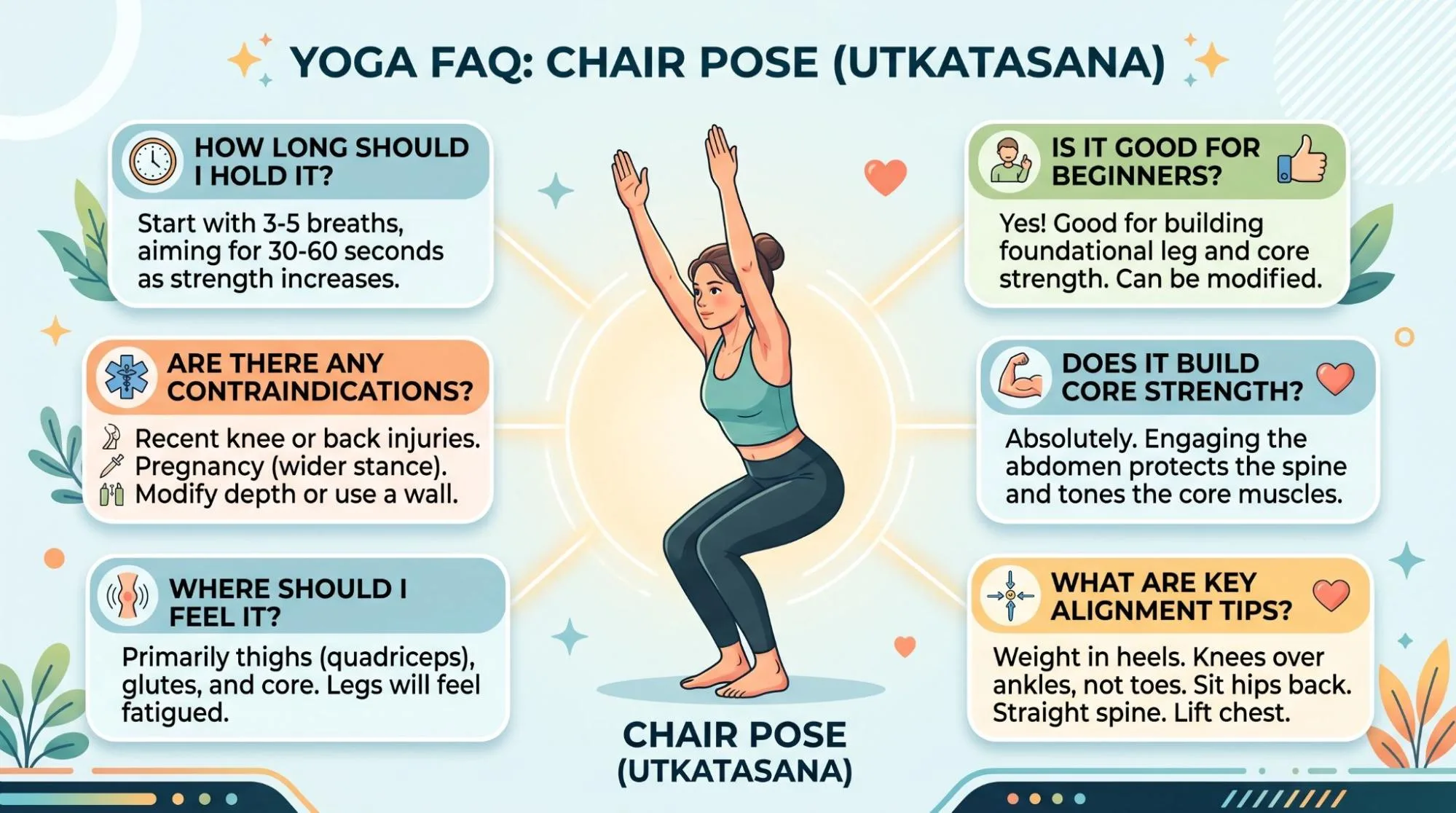
Is Chair Pose good for beginners?
Yes. Beginners can practice a gentler version with a smaller knee bend and the arms lowered if needed. Good alignment matters more than depth.
How long should I hold the Chair Pose?
Start with 3 to 5 breaths. As strength improves, you can hold it longer while keeping the breath steady.
Does Chair Pose build core strength?
Yes. The core stays active to keep the torso upright and balanced, which makes it a strong posture for core training.
Why do my knees hurt in Chair Pose?
Knee discomfort usually comes from poor alignment, too much depth, or weak support from the hips and feet. Keep the knees in line with the toes and avoid forcing the pose.
Learn More : Garland Pose, or Malasana: Beginner Yoga Guide
Conclusion
Chair Pose is more than a simple squat with the arms up. It is a full-body posture that asks for strength, awareness, and patience all at once. The best thing about it is that you do not need to be advanced to benefit from it. With regular practice, this yoga pose can support stronger legs, better balance, steadier breathing, and more confident movement in everyday life.
If you practice it with care, Chair Pose Utkatasana benefits can become a real part of how your body feels, stands, and moves.