
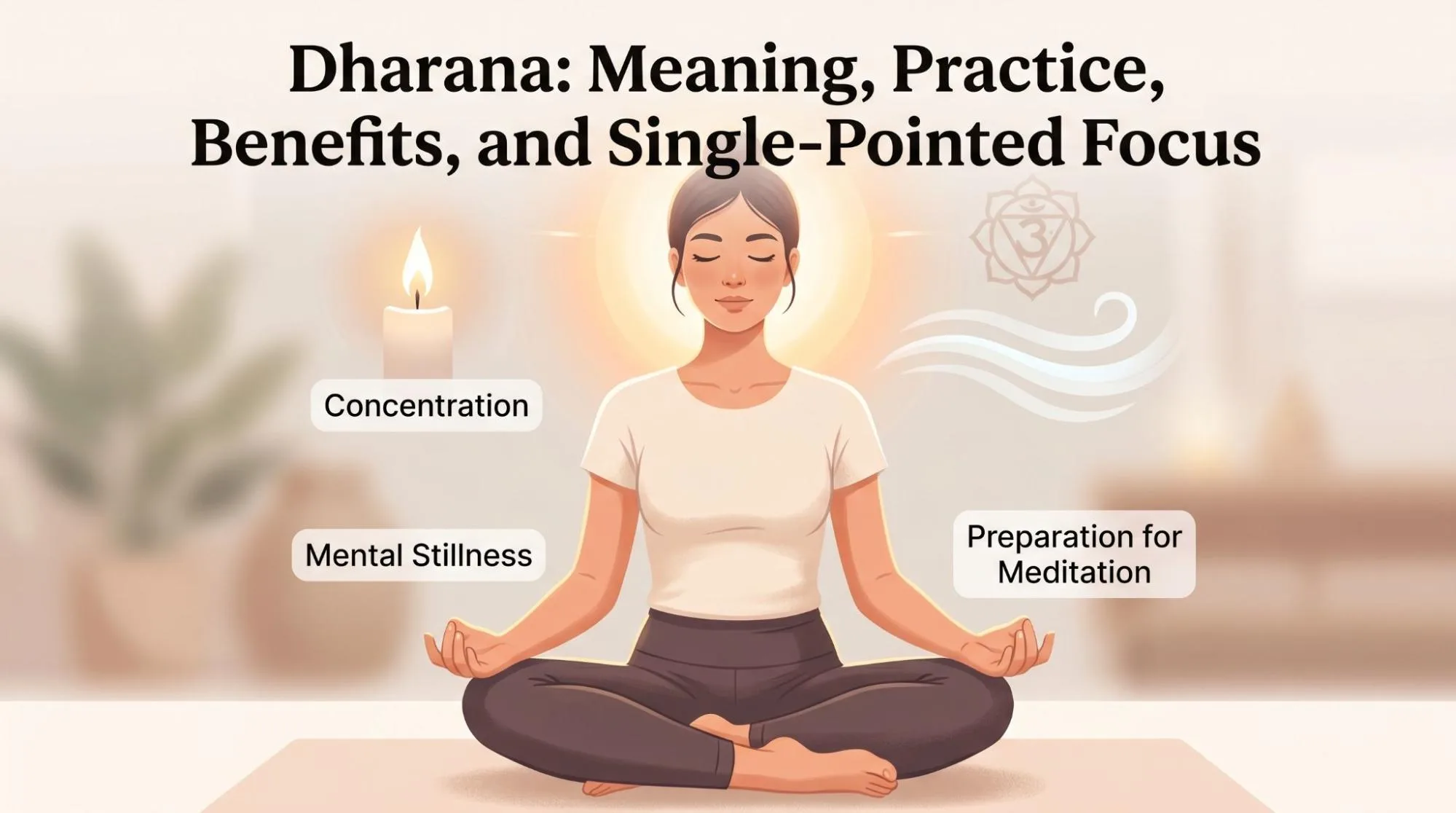
Dharana is one of the most practical ideas in yoga, yet many beginners skip over it because it sounds a little abstract at first. In simple words, Dharana means training the mind to stay with one thing. If you are wondering what is Dharana in yoga, it is the practice of training attention through one steady focus.
That “one thing” may be the breath, a mantra, a candle flame, a chakra, or a spiritual symbol. The point is not to stop every thought by force. The real practice is learning to notice when the mind wanders and gently bring it back.
So, what is Dharana in yoga? It is the art of single-pointed concentration. It helps prepare the mind for meditation and brings more steadiness into daily life. Many beginners ask what is Dharana in yoga because it is the first clear step toward steady meditation.
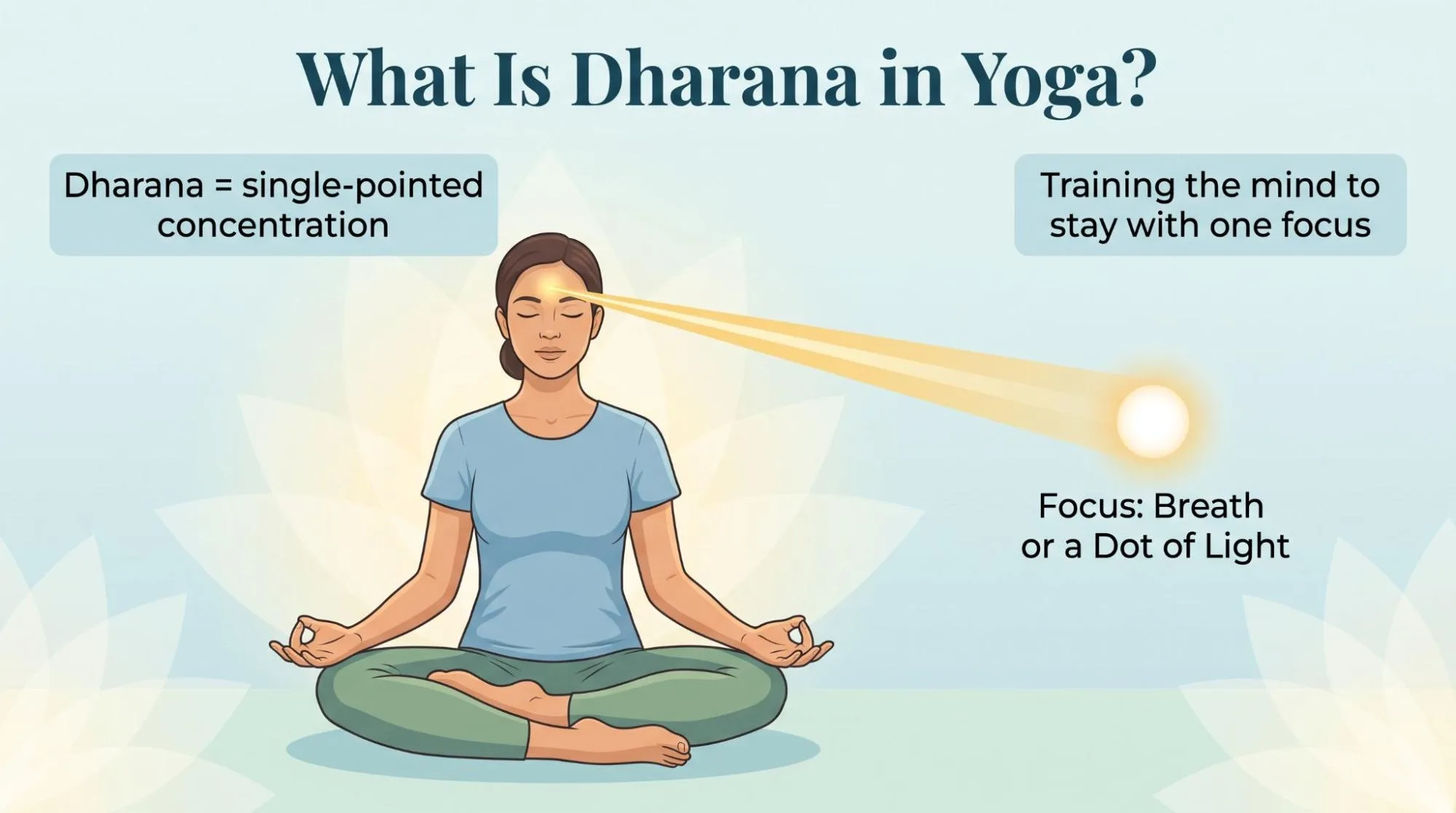
What Is Dharana in Yoga?
Dharana is the practice of focused attention. It is a stage in yoga where the mind is held steadily on one chosen point.
For example, when you sit quietly and keep your attention on your breathing, that is Dharana. When your mind moves away and you bring it back to the breath, that is also part of Dharana.
This makes Dharana a very human practice. The mind will wander. That does not mean you are failing. The training happens each time you return. This is why understanding what is Dharana in yoga helps beginners move from distraction toward meditation.
The Meaning of the Word Dharana
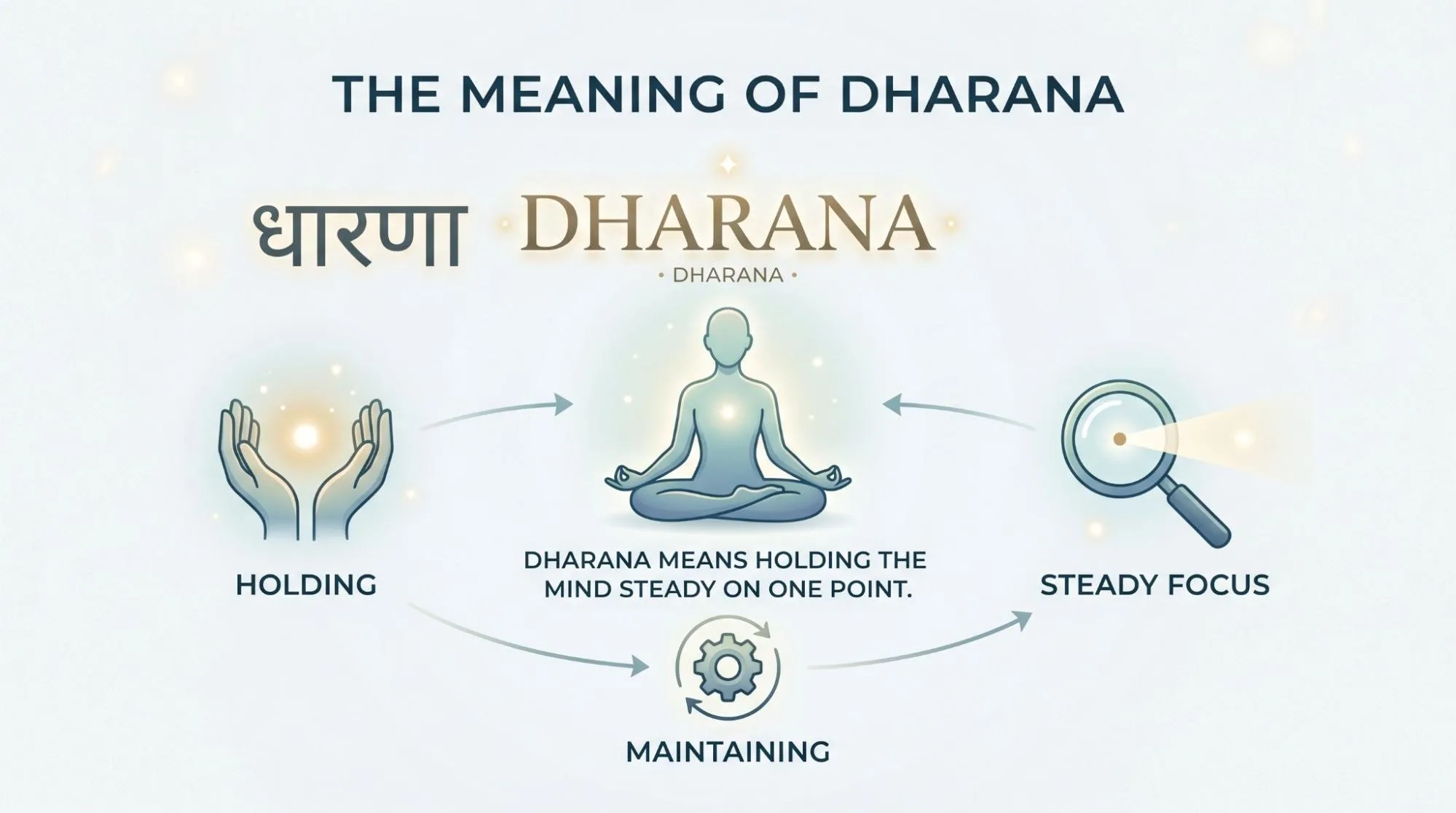
The word Dharana comes from Sanskrit. It is often understood as “holding,” “supporting,” or “maintaining.”
In yoga, this means holding the mind on one object of focus. Instead of allowing attention to move from thought to thought, Dharana gives the mind a place to rest.
A simple way to understand it is this:
Dharana is the practice of “placing the mind” and keeping it there with awareness.
Dharana as the Sixth Limb of Patanjali’s Ashtanga Yoga
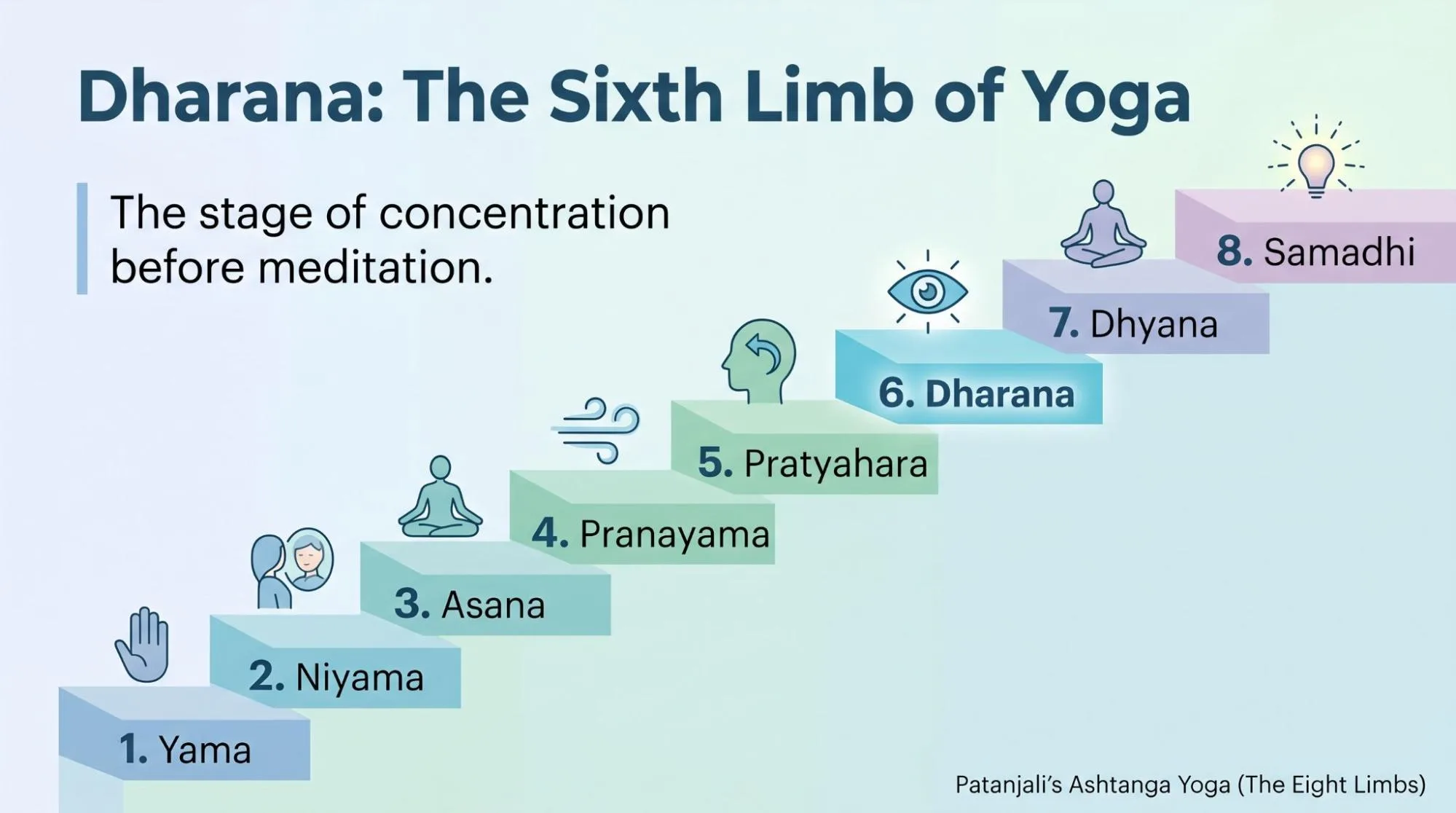
Dharana is known as the sixth limb of Patanjali’s Ashtanga Yoga. In the Yoga Sutras, Patanjali describes an eight-limbed path that guides a person from outer discipline toward inner awareness.
The eight limbs include ethical living, physical posture, breath control, sense withdrawal, concentration, meditation, and spiritual absorption.
Dharana comes after Pratyahara and before Dhyana. This position is meaningful. It shows that concentration does not appear suddenly. The mind first needs some quietness. Then it can become steady enough for deeper meditation.
Learn More : Patanjali Yoga Sutras for Beginners
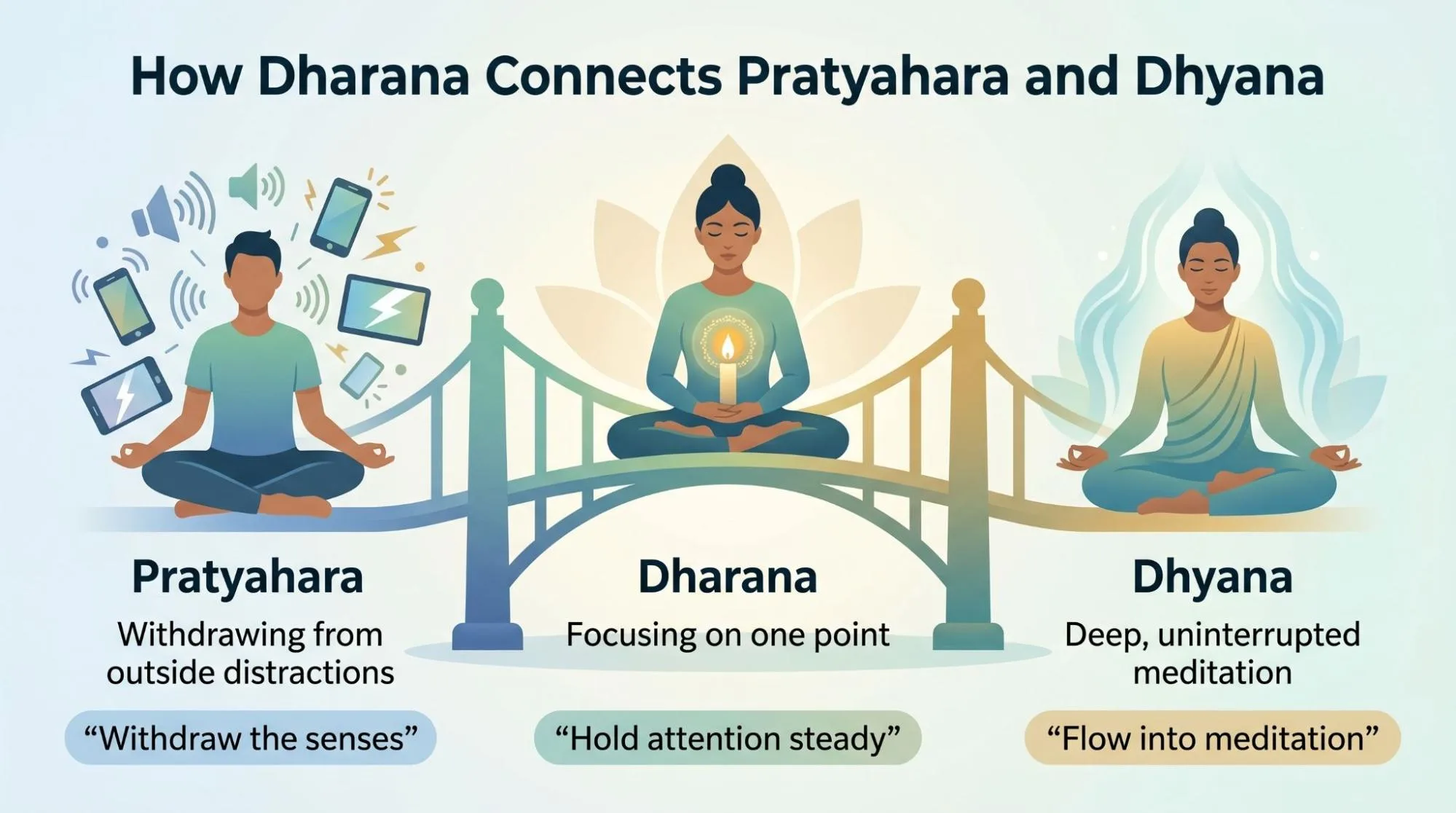
How Dharana Connects Pratyahara and Dhyana
Dharana works like a bridge between sense withdrawal and meditation.
Pratyahara: Preparing the Mind by Withdrawing the Senses
Pratyahara is the stage where attention begins to turn inward. The senses are no longer chasing every sound, image, message, or outside distraction.
This does not mean you stop hearing or seeing. It means you stop reacting to everything so strongly.
Dharana: Holding Attention on One Point
Once the senses are quieter, Dharana begins. Here, the mind is trained to stay with one focus point.
This may feel simple, but it takes patience. Even a few minutes of true concentration can show how restless the mind usually is.
Dhyana: When Concentration Becomes Meditation
Dhyana is meditation. It happens when concentration becomes smooth and continuous.
In Dharana, you are still making effort. In Dhyana, the effort becomes softer. The mind flows toward the object without so much interruption.
How Dharana Works in the Mind
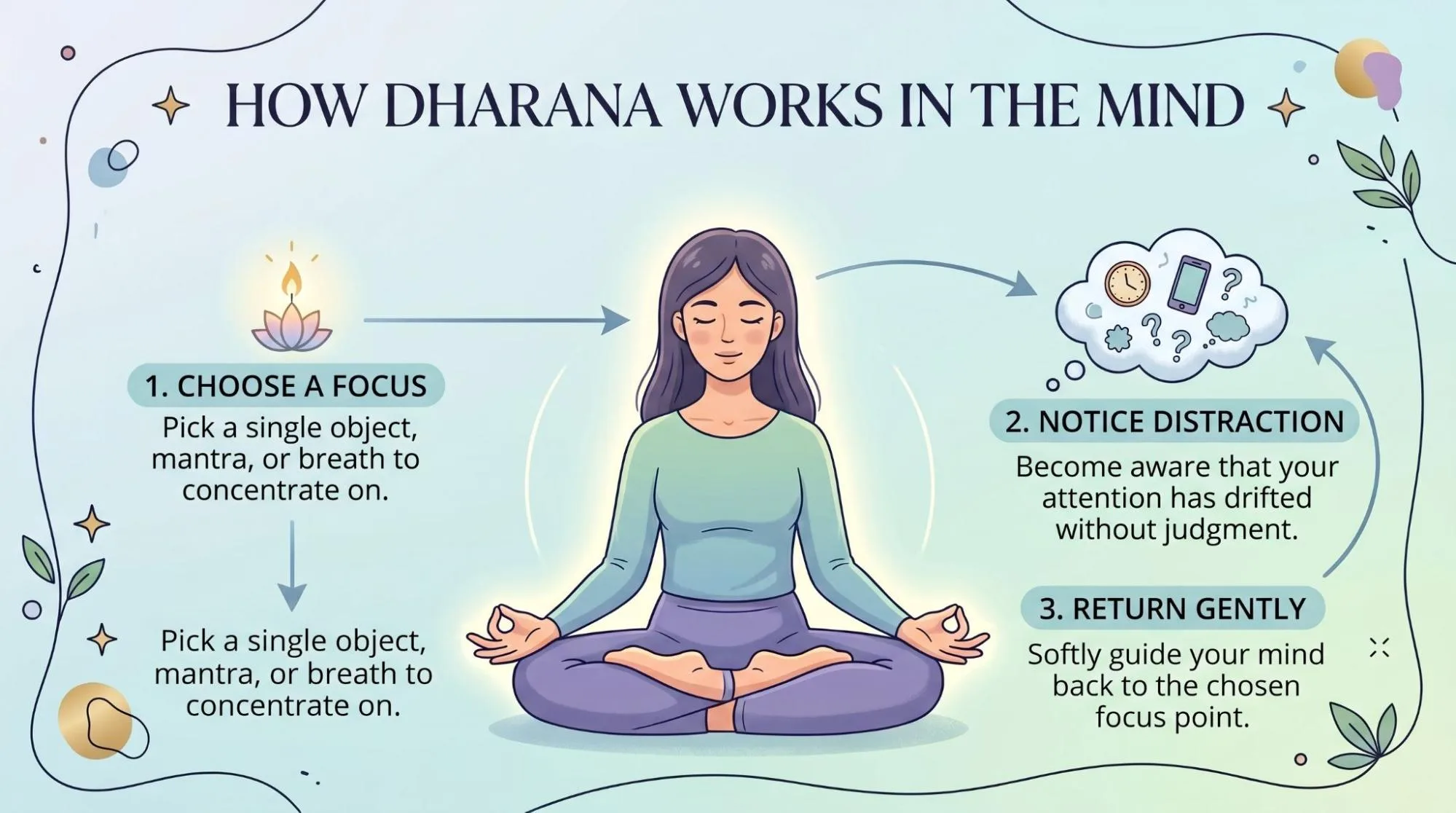
Dharana concentration is not about fighting thoughts. It is more like teaching a young child to sit calmly. You guide the mind again and again, without anger.
Choosing a Focus Point
The first step is choosing one object of focus. This gives the mind a clear direction.
Without a focus point, the mind usually jumps between memories, worries, plans, and random thoughts.
Noticing When the Mind Wanders
During practice, the mind will move away. You may start thinking about work, your phone, a conversation, or something that happened earlier.
The moment you notice this, awareness has already returned.
Returning the Mind Gently
The most important part of Dharana is the return. You bring the mind back to your focus point without judging yourself.
This gentle return builds mental discipline over time.
Common Dharana Focus Points
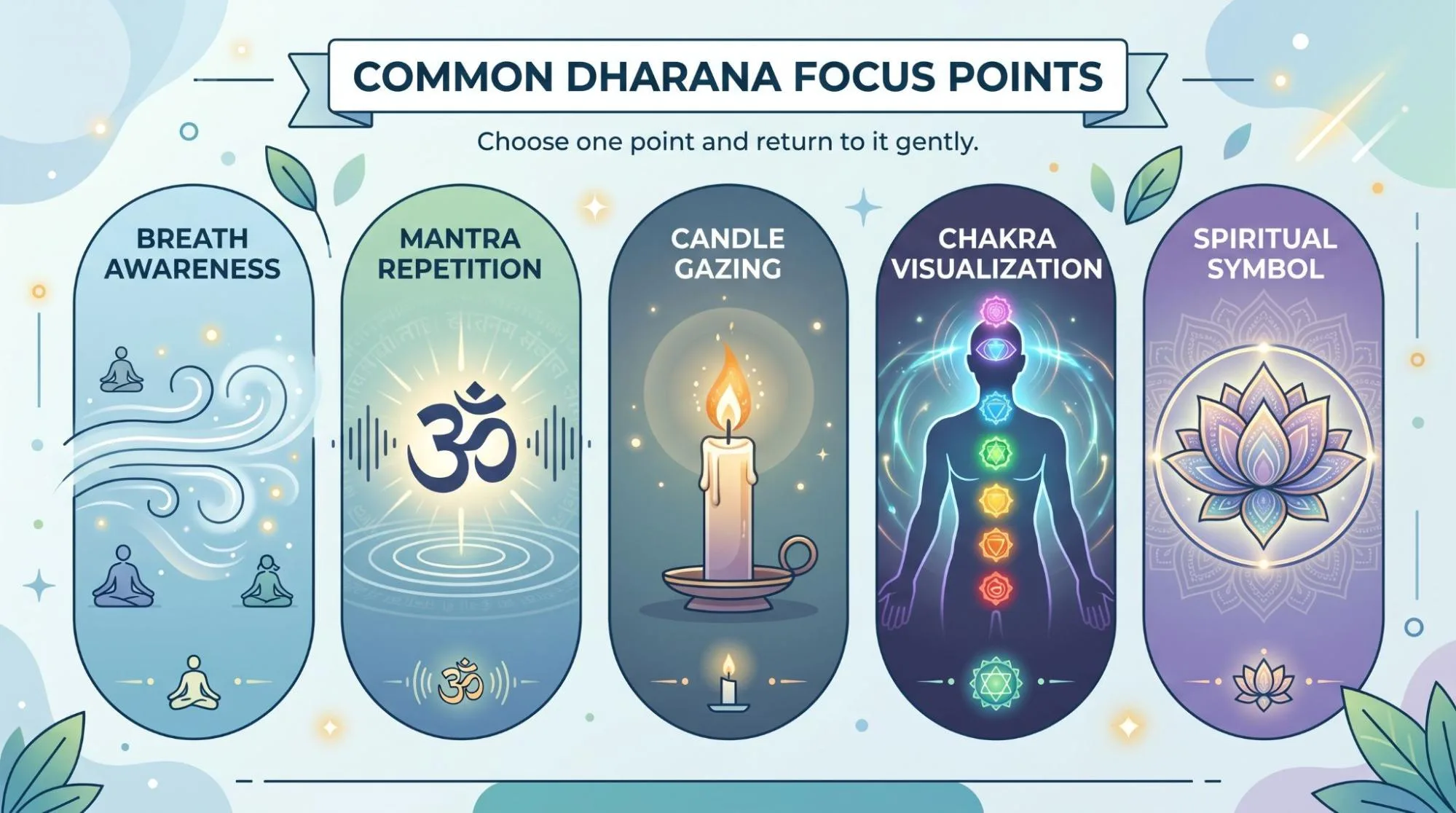
There is no single focus point that works for everyone. Beginners can try different methods and then stay with one that feels natural.
Breath Awareness
The breath is one of the easiest focus points. It is always present and does not require any object.
You can notice the inhale, the exhale, or the feeling of air moving through the nose.
Mantra Repetition
A mantra gives the mind a sound to hold. It may be repeated silently or softly.
The rhythm of a mantra can make concentration easier, especially when the mind feels busy.
Tratak or Candle Gazing
Tratak is the practice of gazing at a candle flame. The eyes stay softly focused on the flame.
This can improve visual concentration, but it should be practiced gently. Do not strain the eyes.
Chakra Visualization
Some people practice Dharana by focusing on a chakra, such as the heart centre or the space between the eyebrows.
This method combines attention with inner visualization.
Focus on a Spiritual Symbol
A spiritual symbol, image, or sacred object can also be used. The purpose is not decoration. The symbol becomes a steady anchor for the mind. When people ask what is Dharana in yoga, the answer is not only concentration but also mental discipline.
Benefits of Practicing Dharana
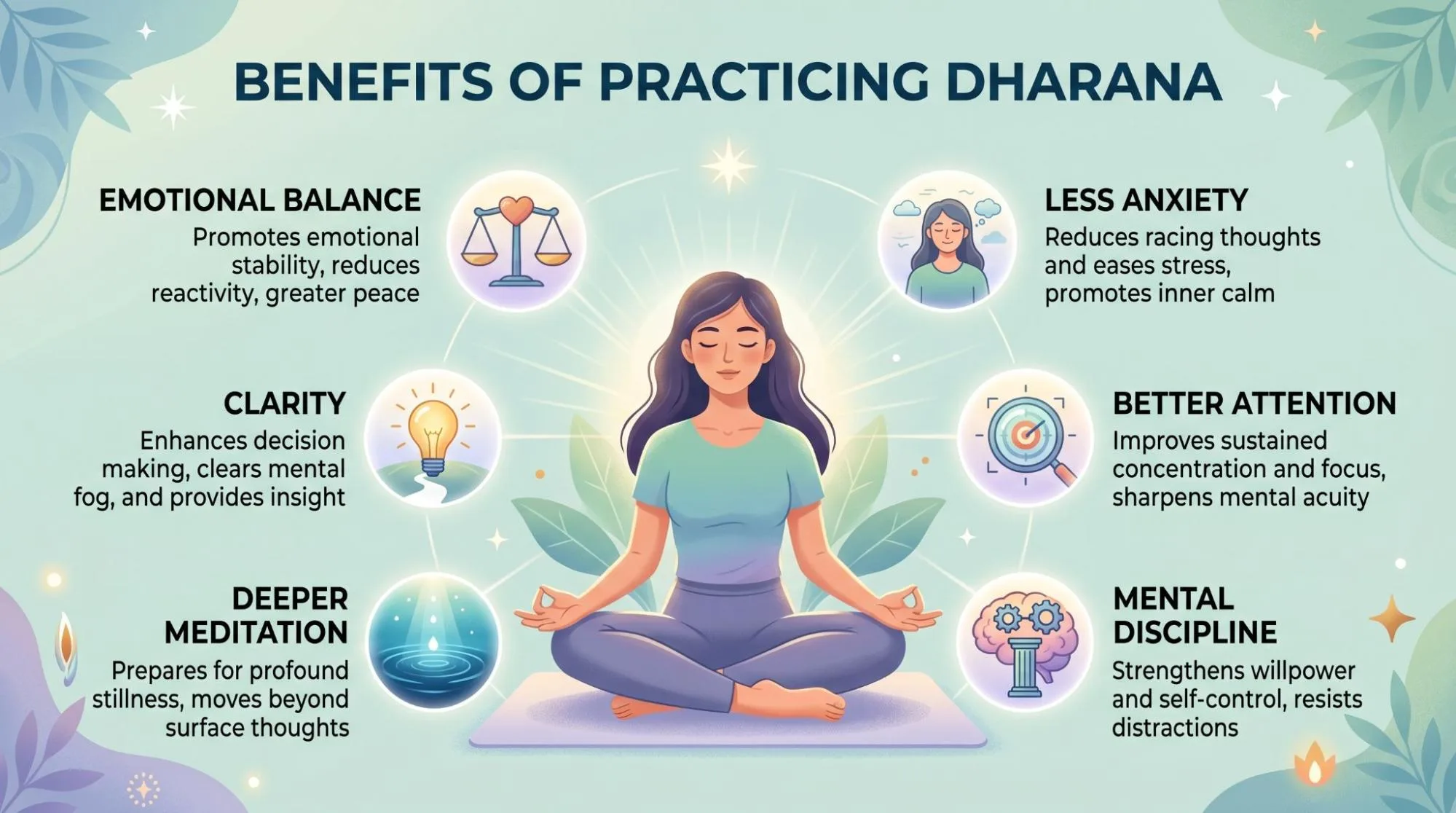
The benefits of Dharana grow slowly. It is not a one-day mental trick. With regular practice, it can support both inner calm and everyday focus. The real value of what is Dharana in yoga is that it trains the mind to return calmly.
Reduces Anxiety and Mental Restlessness
A restless mind often jumps toward fear, overthinking, and “what if” thoughts. Dharana gives the mind something stable to return to.
This can help reduce stress and create a calmer inner state.
Improves Attention Span
Many people struggle to focus because their attention is constantly pulled in different directions. Practicing Dharana trains the mind to stay with one task for longer.
This can help with study, work, reading, and prayer.
Builds Mental Discipline
Dharana strengthens self-control. Each time you return to the focus point, you are building patience and discipline.
It is a quiet practice, but it develops real inner strength.
Supports Deeper Meditation
Dharana prepares the mind for meditation. Without concentration, meditation often turns into daydreaming or sleepiness.
When concentration becomes steady, Dhyana becomes more natural.
Increases Cognitive Clarity
A scattered mind feels foggy. A focused mind sees more clearly.
Dharana can help improve mental clarity because it reduces unnecessary mental noise.
Helps Control Emotional Reactions
When the mind becomes more focused, you may notice emotions before reacting to them. This creates a small but powerful gap.
In that gap, you can choose a better response.
Learn More : Pratyahara Yoga Meaning and Practice: A Simple Guide for Beginners
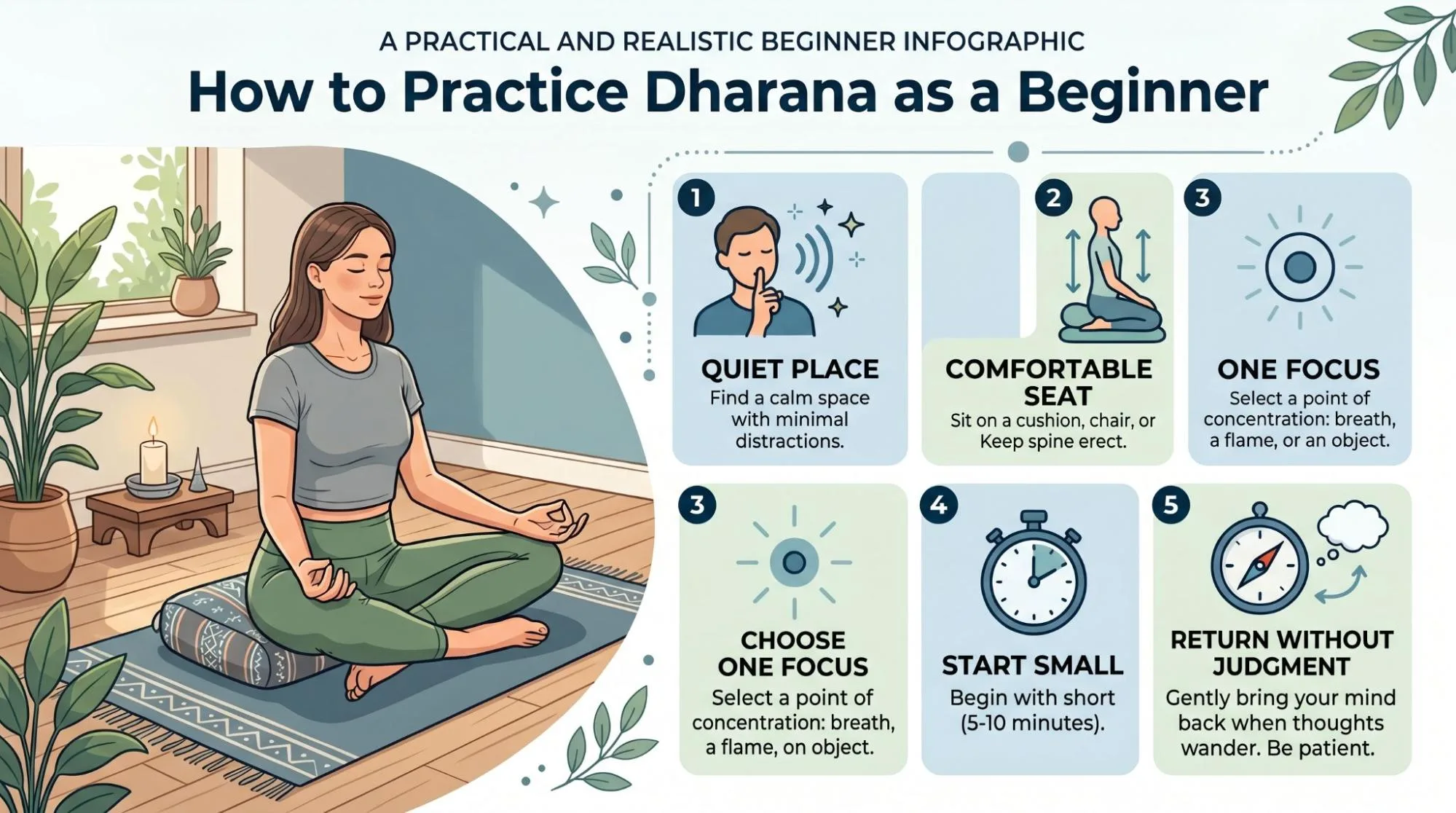
How to Practice Dharana as a Beginner
You do not need a perfect yoga room or long practice time. Start small and keep it realistic.
Choose a Quiet Place
Pick a place where you are less likely to be interrupted. It does not have to be completely silent, but it should feel settled.
Turn off notifications if possible.
Sit in a Comfortable Position
Sit on a chair, cushion, or yoga mat. Keep the spine upright but not stiff.
Comfort matters because pain and tension can quickly become distractions.
Select One Focus Point
Choose one simple focus point. For beginners, the breath is usually best.
Do not keep changing the object during the same session.
Practice for a Short Time First
Start with 3 to 5 minutes. That is enough in the beginning.
A short daily practice is better than one long session that you only do once a month.
Bring the Mind Back Without Judgment
When thoughts appear, do not feel disappointed. Just notice them and return.
This is the heart of the practice.
Common Mistakes in Dharana Practice
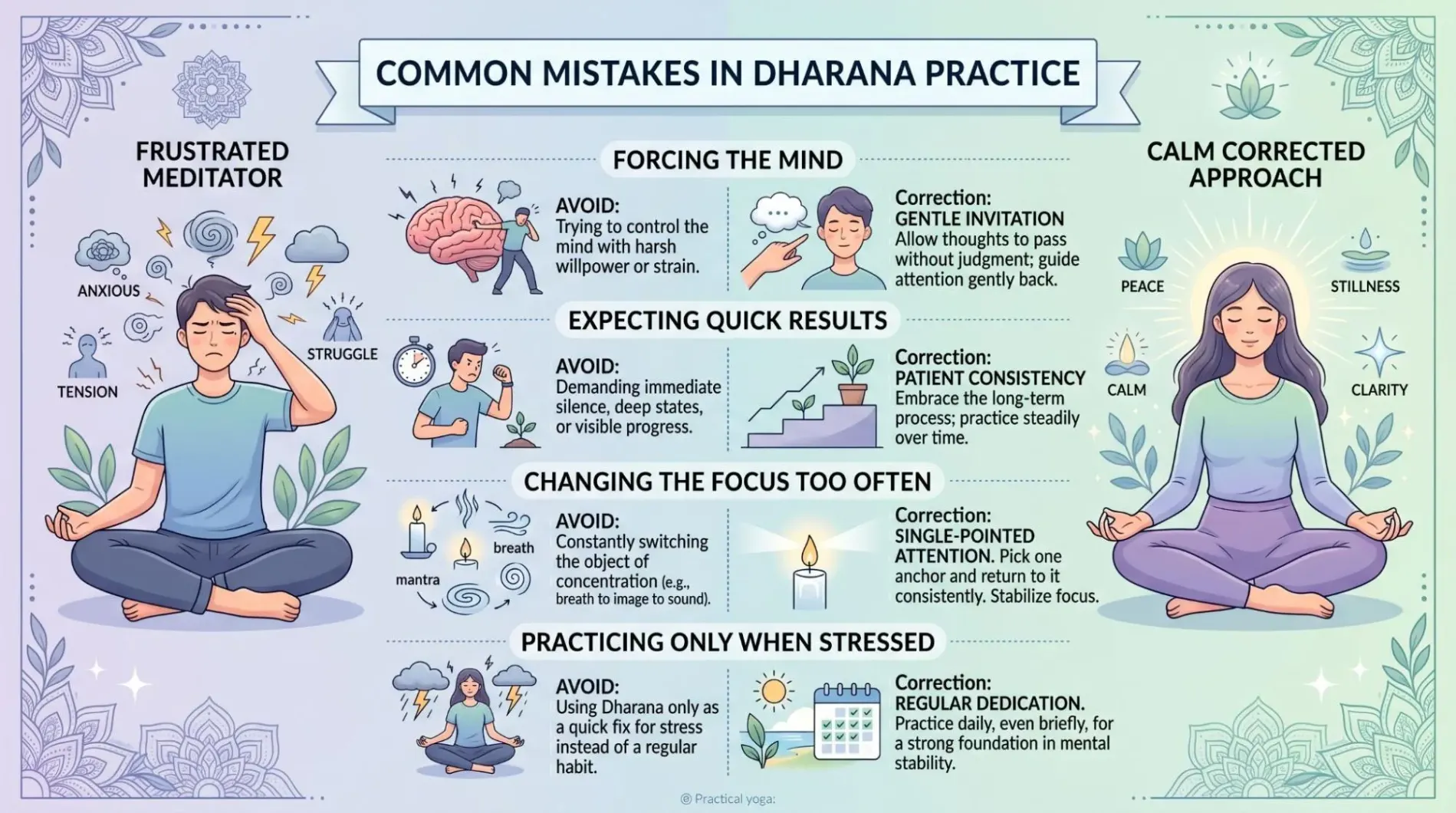
Dharana is simple, but a few common mistakes can make it feel harder than it needs to be.
Trying to Force the Mind
Forcing the mind usually creates more tension. Concentration should be firm but gentle.
Think of it as guiding, not pushing.
Expecting Quick Results
The mind has been wandering for years. It will not become steady in two sessions.
Progress is often quiet. You may first notice that you become aware of distraction more quickly.
Changing the Focus Point Too Often
Trying a new method every day can weaken the practice. Once you choose a focus point, stay with it for some time.
Depth comes through repetition.
Practicing Only When Stressed
Many people turn to focus practices only when life feels heavy. That is fine, but Dharana works better as a regular habit.
Practice when you are calm too. Then it becomes easier to use when stress appears.
Dharana in Daily Life
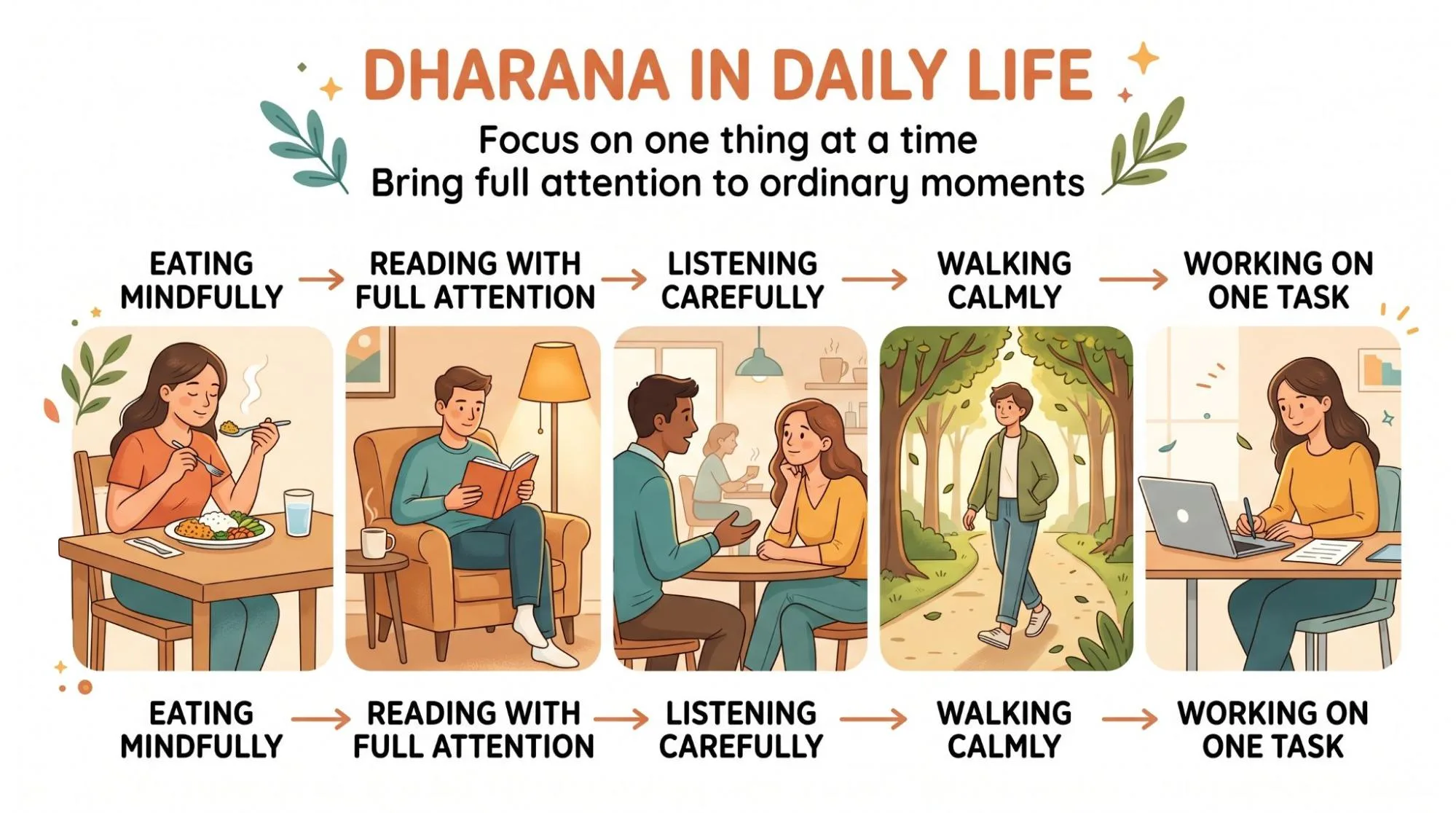
Dharana is not only for yoga practice. It can be used in normal life. You can also understand what is Dharana in yoga through simple daily acts of full attention.
You practice Dharana when you:
- Eat without scrolling your phone
- Listen to someone without planning your reply
- Read one page with full attention
- Pray with presence
- Work on one task without switching tabs every minute
- Walk while noticing your steps and breath
These small moments train attention. Over time, they make the mind less scattered.
Dharana and Modern Mental Wellness
Modern life makes concentration difficult. Phones, noise, constant messages, and multitasking keep the mind busy all day.
Dharana offers a simple counterbalance. It teaches the nervous system to slow down and gives attention a stable direction.
This is why Dharana can support mental wellness. It may help reduce stress, improve self-awareness, and create a more peaceful relationship with thoughts.
It is not a replacement for medical care or therapy. But as a daily mental practice, it can be deeply supportive.

Difference Between Dharana and Meditation
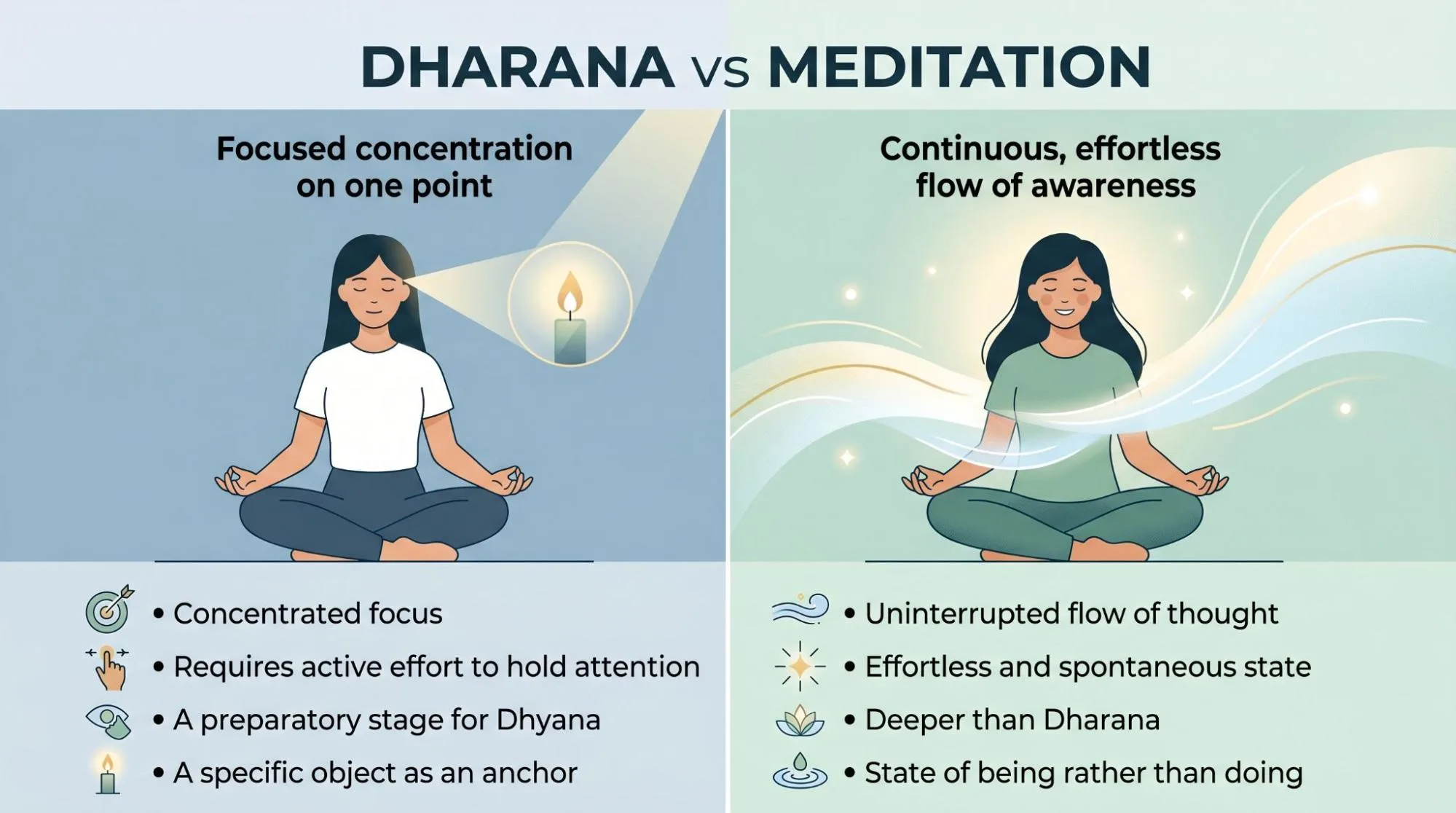
Dharana and meditation are connected, but they are not exactly the same.
Dharana is concentration. You choose one focus point and keep bringing the mind back.
Meditation, or Dhyana, is a deeper state where attention becomes more continuous and natural.
A simple example:
Dharana is like carefully pouring oil drop by drop.
Dhyana is like the oil flowing in one smooth stream.
Dharana needs effort. Meditation begins when that effort becomes steady and quiet.
To practice what is Dharana in yoga, start with one simple object such as the breath.
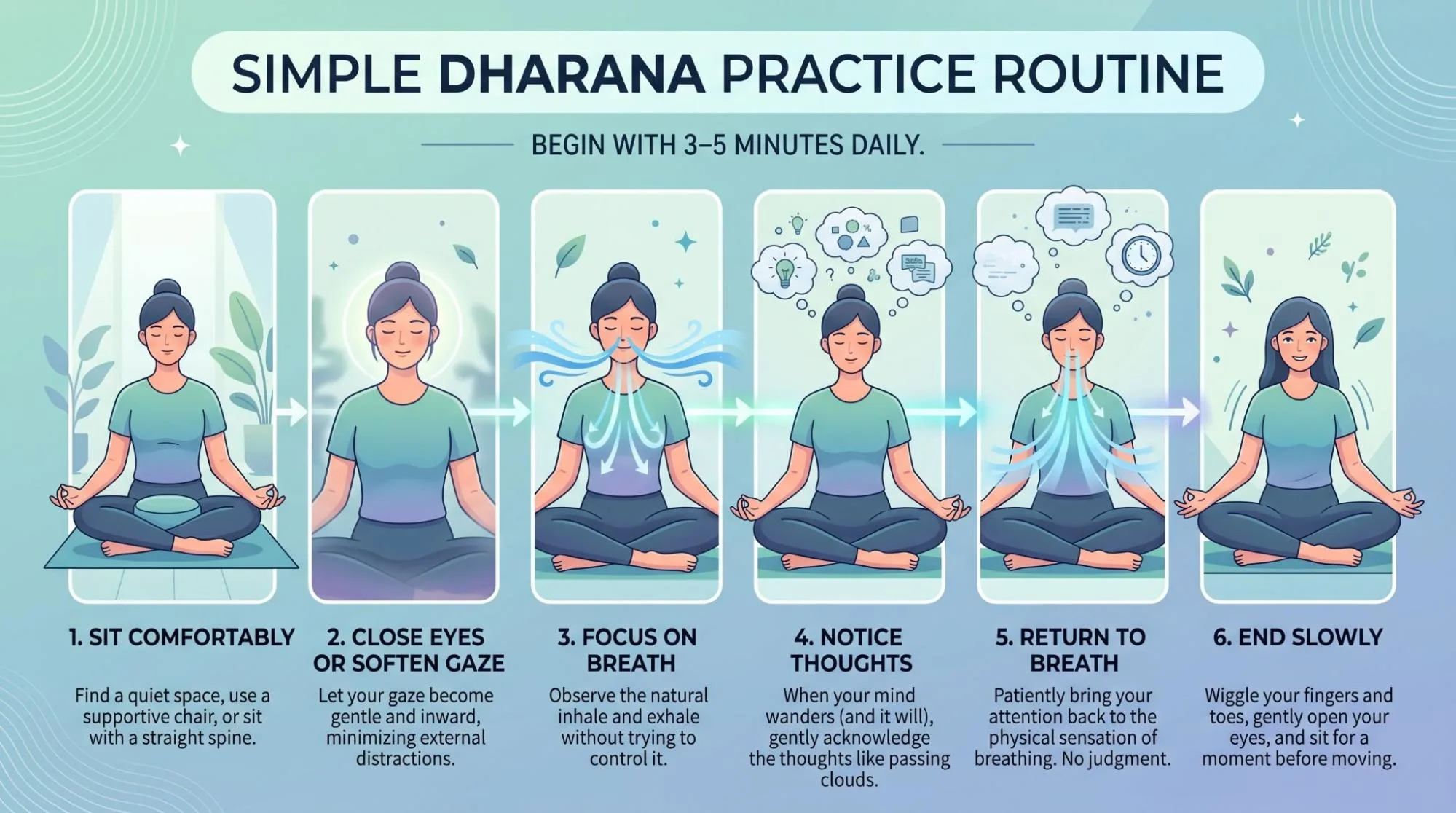
Simple Dharana Practice Routine
Here is a beginner-friendly routine you can try.
Step 1: Sit Comfortably
Sit in a relaxed but alert position. Let your hands rest naturally.
Step 2: Close Your Eyes or Soften Your Gaze
You can close your eyes or keep them slightly open with a soft gaze.
Step 3: Choose the Breath as Your Focus
Bring your attention to the natural breath. Do not control it too much.
Just notice the inhale and exhale.
Step 4: Notice Thoughts Without Following Them
Thoughts will come. Let them appear without chasing them.
You do not need to finish every thought.
Step 5: Return to the Breath
Each time the mind wanders, return to the breath.
This return is the practice.
Step 6: End Slowly
After a few minutes, take a deeper breath. Notice your body, your surroundings, and then open your eyes.
Do not rush back immediately.
FAQs
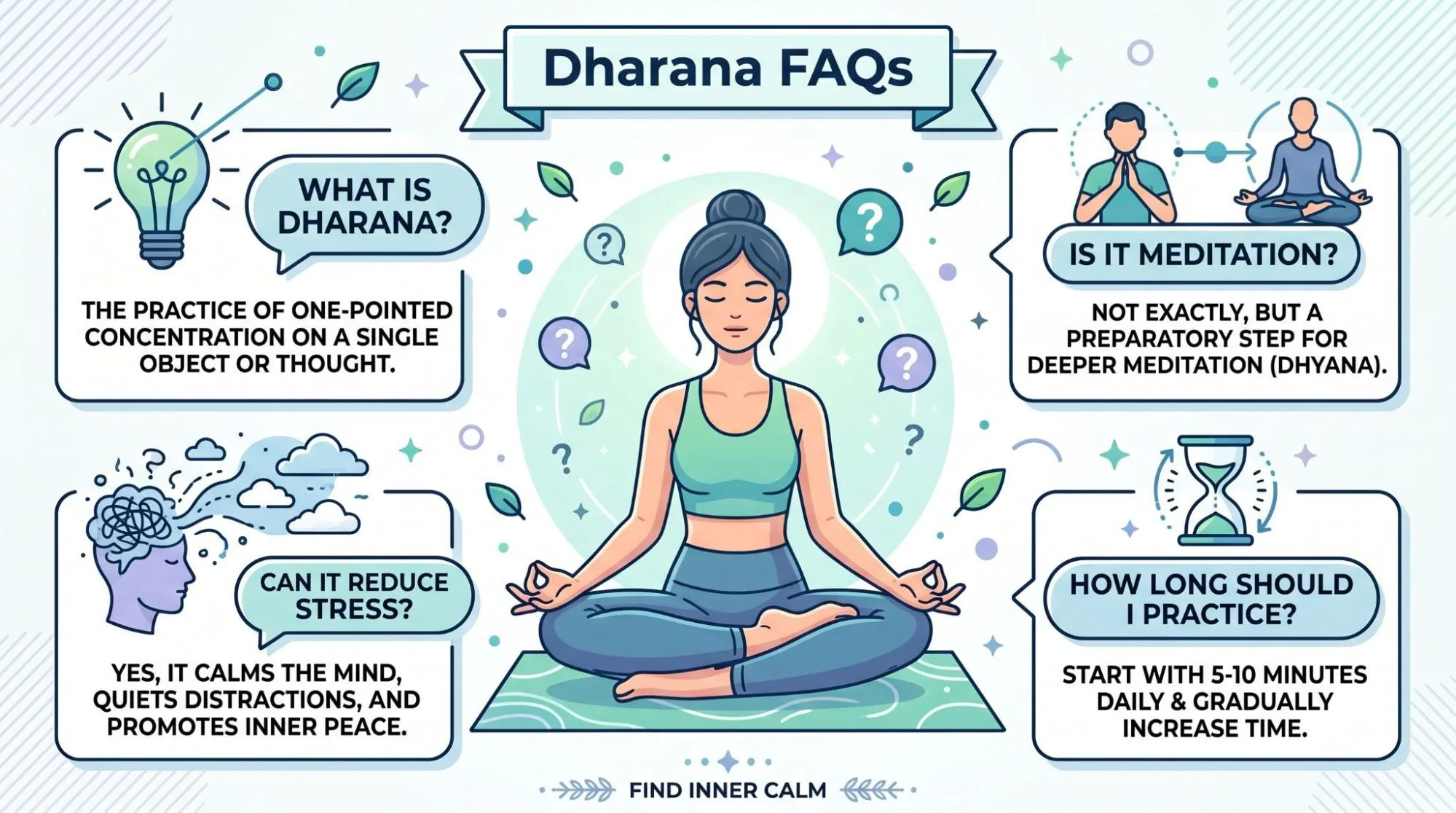
What is Dharana in yoga?
It is single-pointed focus that prepares the mind for meditation.
What is Dharana in yoga for beginners?
It is learning to hold attention on one point without force.
Is Dharana the same as meditation?
No. Dharana is concentration, while meditation is a deeper, more continuous flow of awareness. Dharana usually comes before meditation.
How long should I practice Dharana?
Beginners can start with 3 to 5 minutes daily. Once the mind becomes more comfortable, the time can be increased slowly.
Can Dharana reduce stress?
Yes, Dharana may help reduce stress by calming mental restlessness and giving the mind a steady focus. It works best when practiced regularly.
What is the best focus point for beginners?
The breath is usually the best focus point because it is simple, natural, and always available.
Why does my mind wander during Dharana?
Mind wandering is normal. Dharana is not about having no thoughts. It is about noticing distraction and returning to the chosen focus point.
Learn More : Samadhi: Yoga’s Final Spiritual Union
Conclusion
Dharana is a simple but powerful limb of yoga. It teaches the mind to stay steady, return gently, and become less controlled by distraction.
You do not need to master it quickly. A few quiet minutes each day can slowly change how your mind responds to stress, emotions, and daily tasks.
Start with the breath. Sit comfortably. Let the mind wander if it does. Then bring it back.
That small return, repeated with patience, is where Dharana truly begins.