
Quick answer: Pratyahara is the fifth limb of Patanjali’s eight-limbed yoga path. It means becoming aware of sensory input without automatically chasing every sound, urge, notification, or thought, so attention can settle inward.
Important Safety Note
Pratyahara is not forced isolation or avoidance of responsibilities. Keep the practice gentle and stay connected to ordinary routines. Stop if silence, inward focus, or sensory reduction causes panic, dissociation, or distress, and seek qualified support when needed.
Pratyahara yoga meaning and practice is about withdrawing attention from external distractions and turning the mind inward. It helps beginners understand how to calm the senses, improve focus, and prepare for deeper meditation. Pratyahara is one of the most useful but least understood parts of yoga. Many people know yoga through asana practice, breathing, or meditation, but pratyahara is the quiet bridge between the outer practice and the inner one.
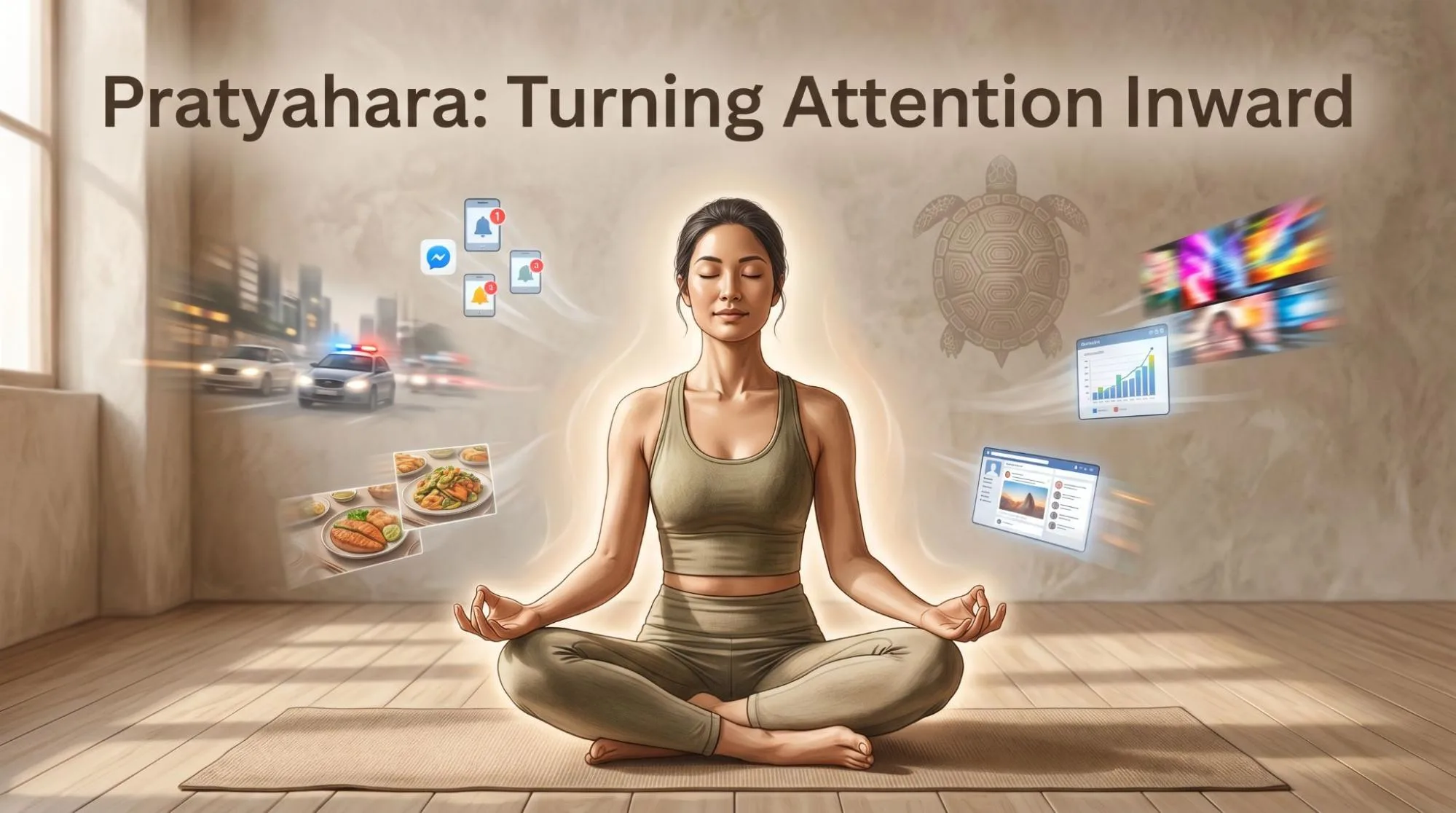
In simple words, pratyahara means withdrawal from the senses. But it does not mean running away from life, ignoring the external world, or forcing yourself to feel nothing. A better way to understand pratyahara is this: remaining in the middle of a stimulating environment and consciously not reacting.
It is the practice of bringing energy back from the senses so the mind becomes steadier, calmer, and ready for deeper spiritual practices. Understanding pratyahara yoga meaning and practice helps beginners develop better focus and inner awareness.
What Is Pratyahara in Yoga?
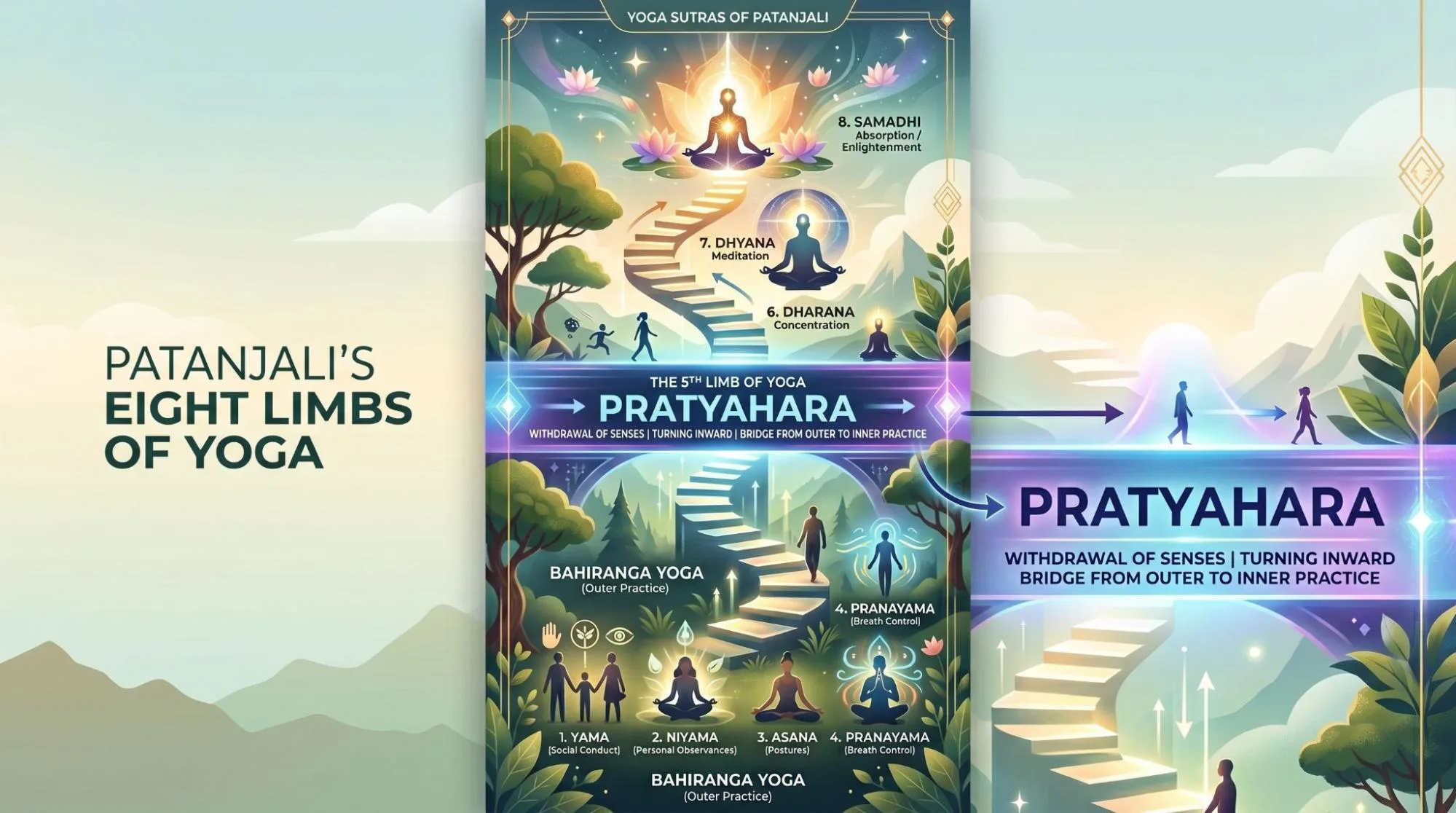
Pratyahara is the fifth limb in the yoga system explained in the Yoga Sutra of Patanjali. It comes after yama, niyama, asana, and pranayama, and before dharana, dhyana, and samadhi.
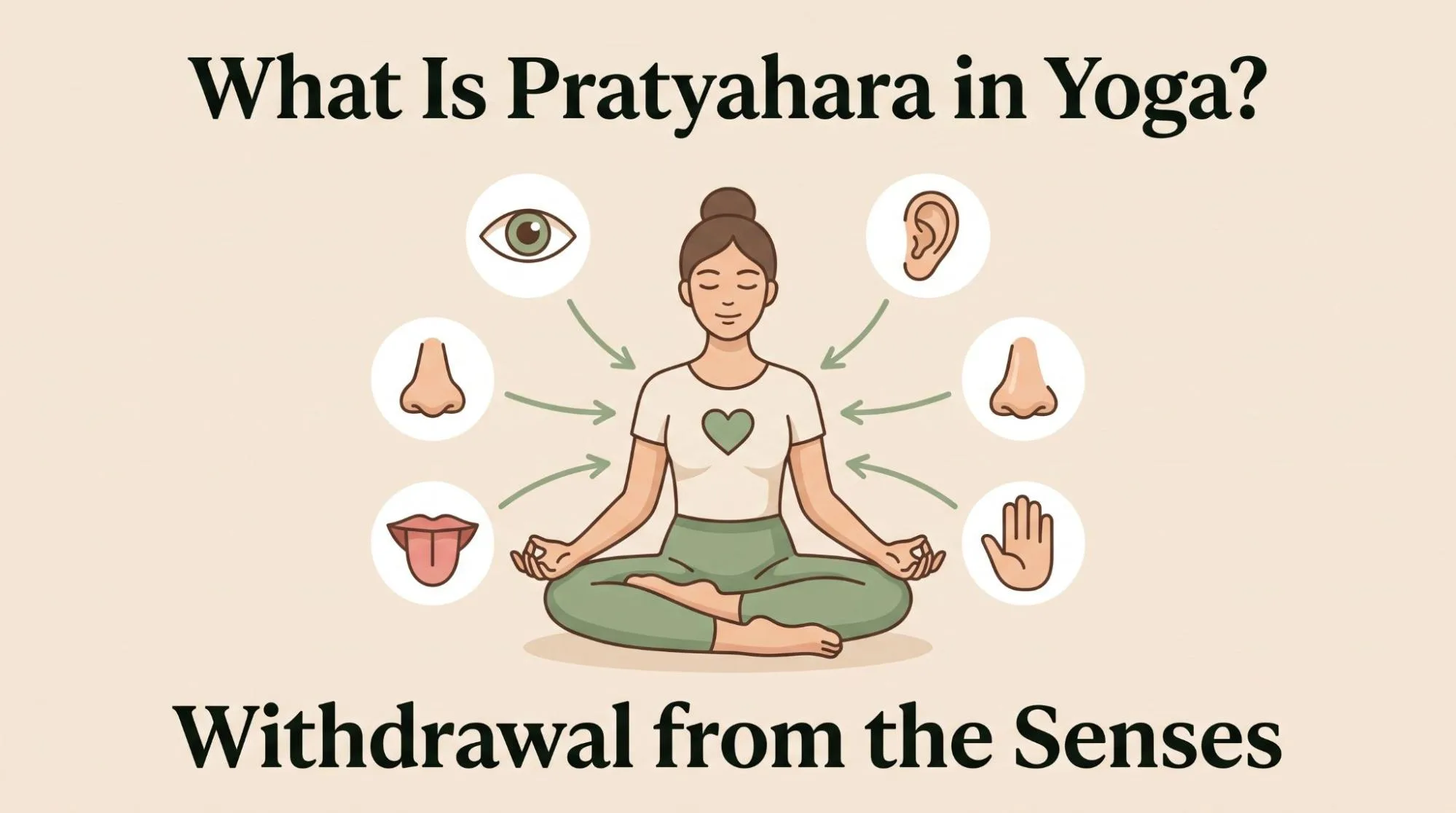
This makes it an important aspect of yoga because it connects the physical and breathing practices with practice meditation. When the sense organs are constantly pulled by touch, sight, sound, taste, and smell, the mind becomes scattered. Pratyahara helps bring that scattered attention inward.
It is not about hating the senses. It is about learning not to be controlled by them.
The Meaning of Pratyahara
The pratyahara yoga meaning and practice can be understood as consciously withdrawing attention from external distractions.
For example, you may hear traffic outside, feel your phone nearby, or notice thoughts coming and going. In pratyahara, you do not fight these things. You simply stop feeding them with reaction.
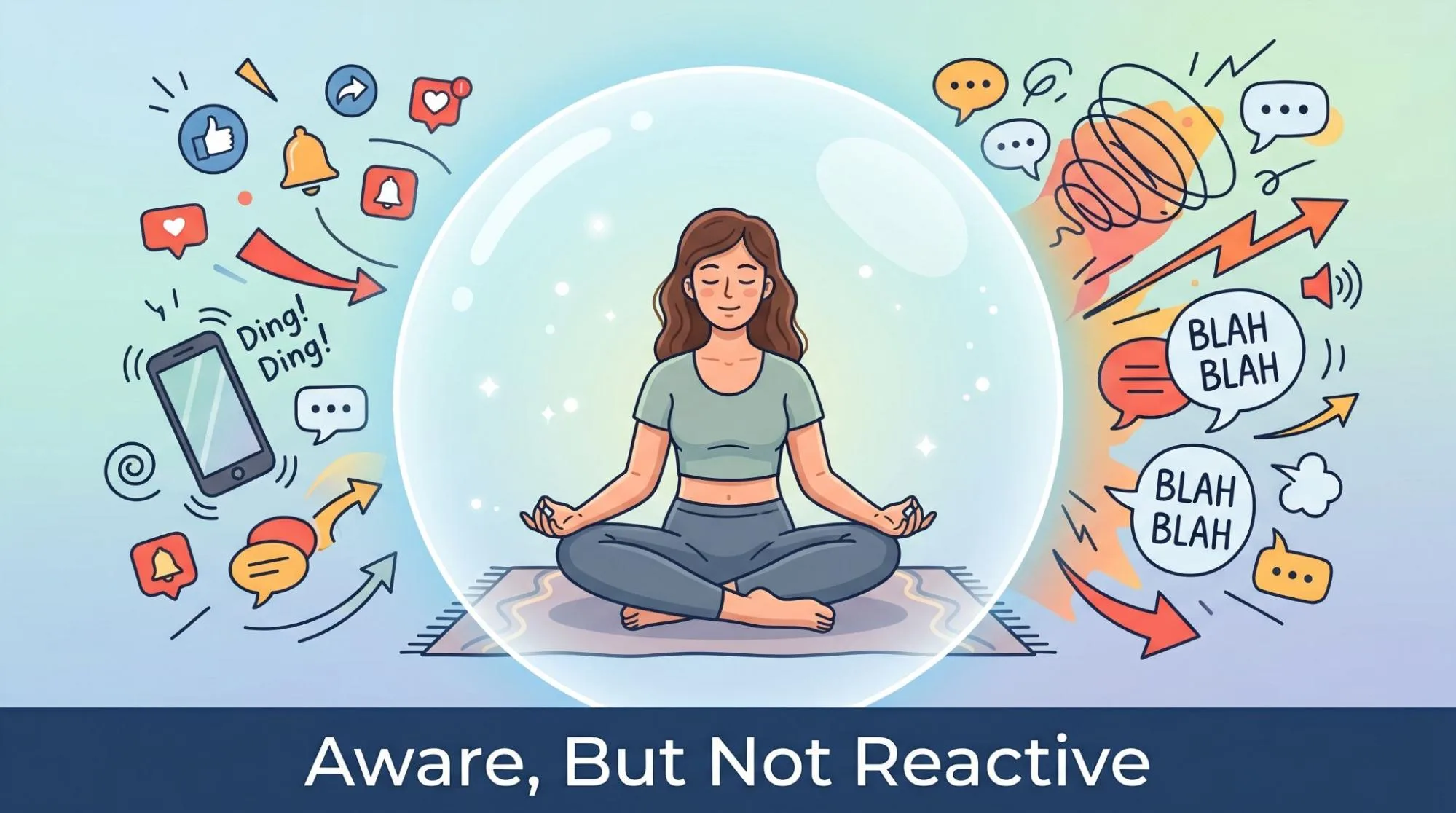
This is where many beginners misunderstand pratyahara and forgetting. It does not mean forgetting the world exists. It means you are aware of the world, but you are not being dragged by every sound, message, or sensation.
Learn More : Samadhi: Yoga’s Final Spiritual Union
Sanskrit Meaning of Pratyahara
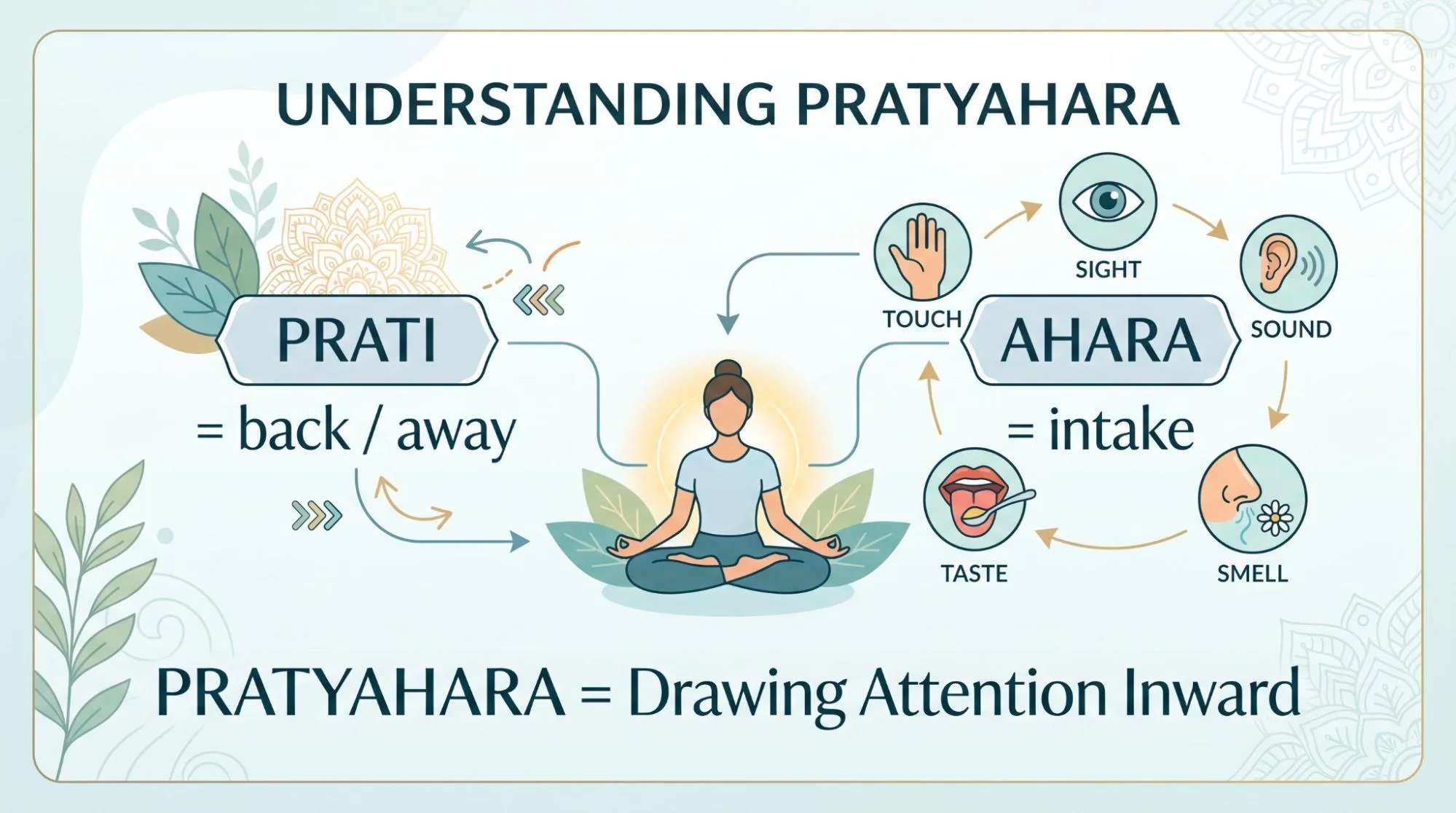
The word pratyahara comes from two Sanskrit roots:
- Prati means away, against, or back.
- Ahara means food, intake, or what we take in.
So, pratyahara can mean drawing back from what we take in through the senses. The “food” here is not only physical food. It also includes what we consume through touch, sight, sound, smell, and taste.
This is why pratyahara offers a very practical lesson: be careful about what you allow into your mind every day.
Pratyahara and the Tortoise Analogy
A common way to understand pratyahara is the tortoise analogy. Just as a tortoise draws its limbs into its shell, a yoga practitioner learns to draw attention inward.
The tortoise is not destroying its limbs. It is simply protecting itself and becoming still.
In the same way, pratyahara is not escaping between pratyahara and normal life. It is not withdrawing and escaping from responsibility. It is a gentle inner discipline where you stop chasing every signal from the external world.
Pratyahara in Patanjali’s Eight Limbs of Yoga
In the Yoga Sutra of Patanjali, pratyahara is placed as the fifth limb. This position is meaningful.
The first four limbs prepare the body, behaviour, and breath. The next three limbs deal with deep concentration, meditation, and absorption. Pratyahara stands in the middle.
It helps the practitioner move from outer discipline to inner awareness.
Why Pratyahara Comes After Pranayama
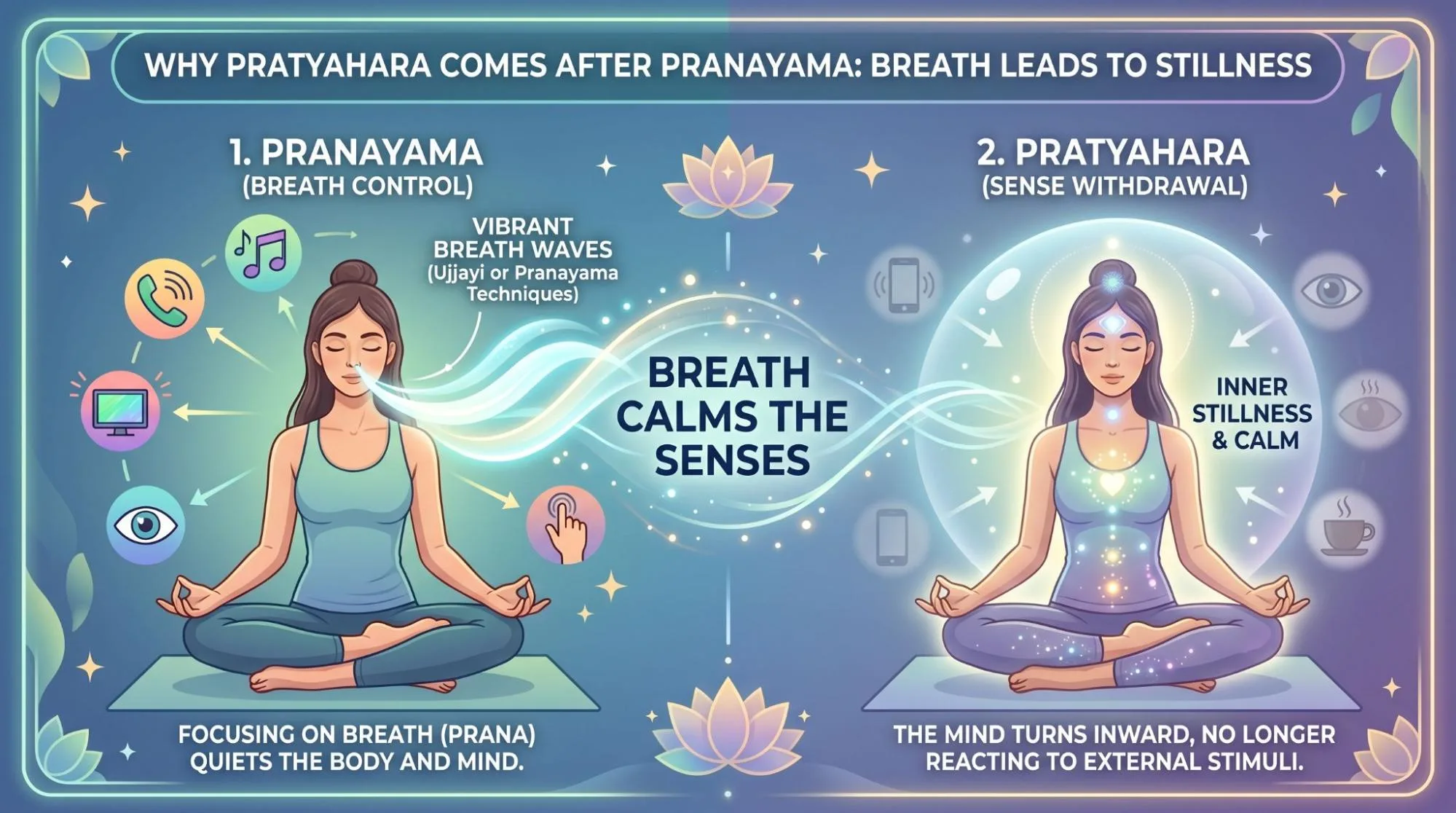
Pratyahara comes after pranayama because breath control naturally affects the senses and the mind.
When breathing becomes slow and steady, the nervous system starts to settle. The mind becomes less restless. At that point, consciously withdrawing from sense distractions becomes easier.
This is why pranayama is often a helpful doorway into pratyahara.
How Pratyahara Prepares the Mind for Meditation
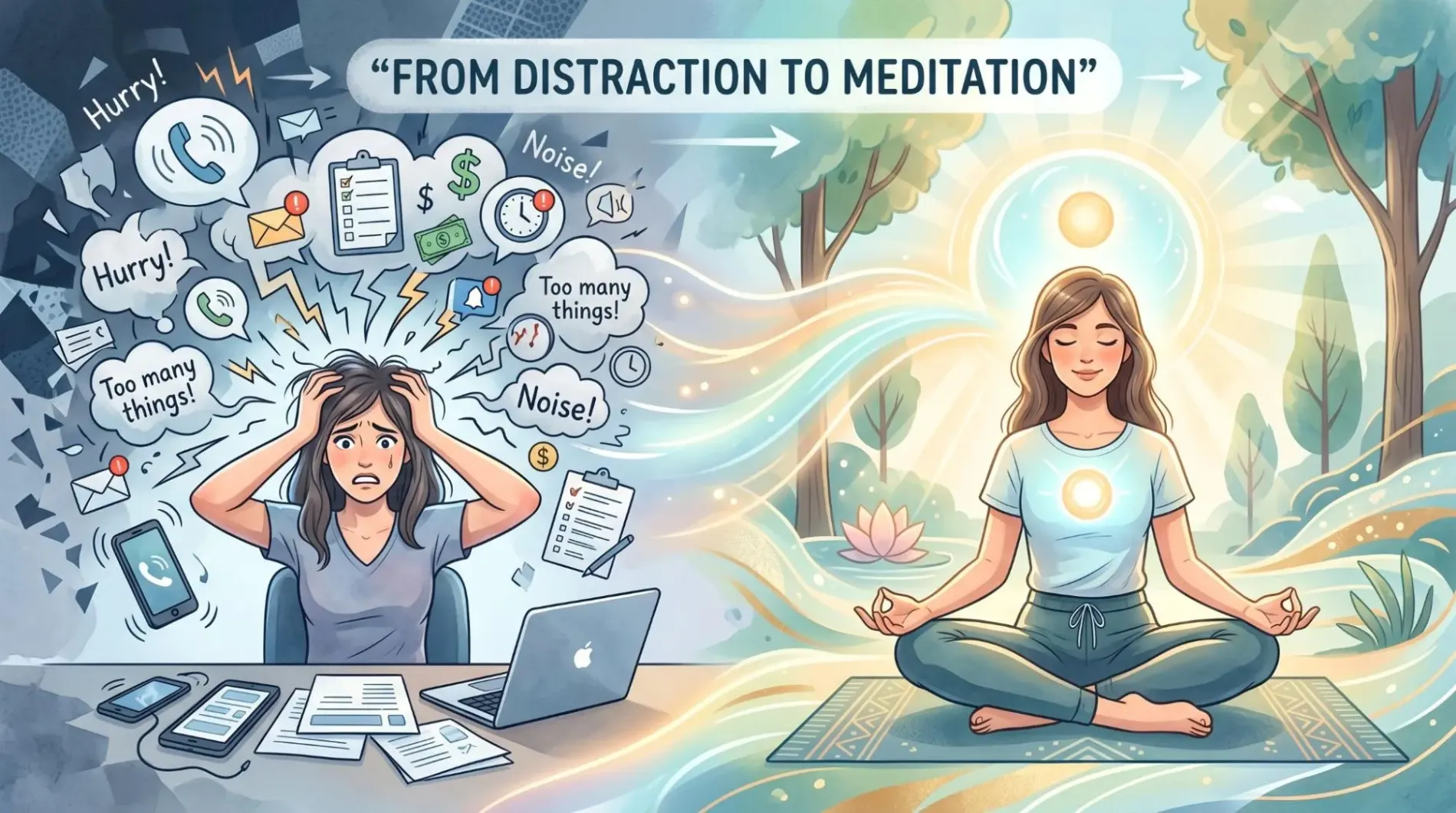
Meditation becomes difficult when the senses are constantly active. A small sound, an itch, a memory, or a phone notification can pull the mind away again and again.
Pratyahara teaches the mind not to run after every distraction.
Once attention stops moving outward so much, concentration becomes more natural. This is why pratyahara is often called preparation for meditation.
Benefits of Pratyahara Yoga Meaning and Practice
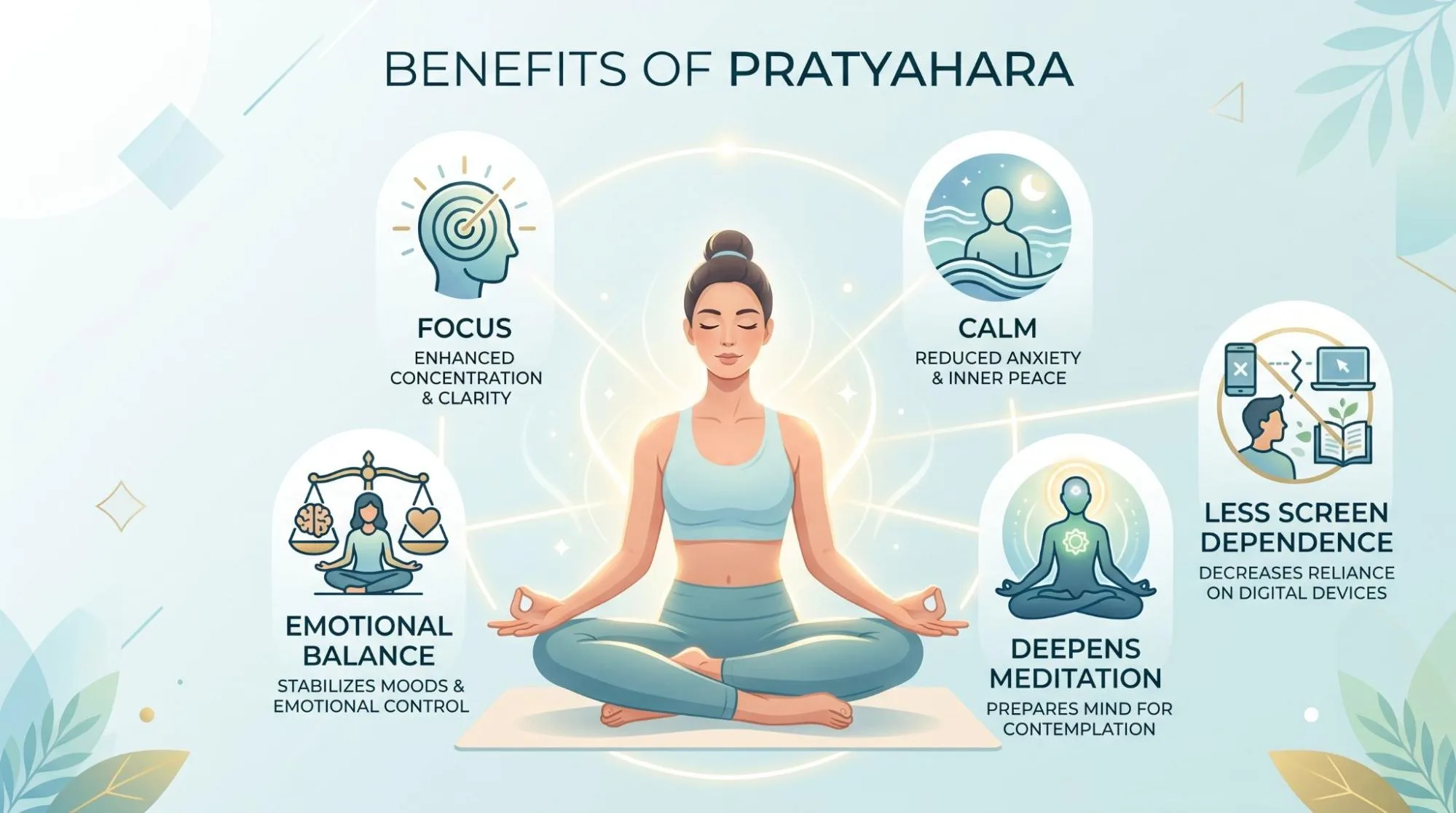
One of the biggest benefits of pratyahara yoga meaning and practice is improved concentration and emotional balance. Pratyahara has both spiritual and everyday benefits. It helps in meditation, but it also helps with stress, focus, emotional balance, and digital overload.
Better Focus
When the senses are always chasing something, focus becomes weak. Pratyahara trains attention to stay steady.
This can help while studying, working, praying, reading, or doing any task that needs mental clarity.
More Inner Calm
Pratyahara creates a quiet space inside. Even if the outside world is noisy, the mind slowly learns not to react to everything.
This does not happen in one day, but with regular practice, you may feel less disturbed by small things.
Improved Meditation
If you want to practice meditation, pratyahara is extremely helpful. It reduces the habit of jumping from one distraction to another.
Meditation then feels less forced and more natural.
Better Emotional Control
Many emotional reactions begin with sensory triggers. A message, a tone of voice, a memory, or something seen online can disturb the mind.
Pratyahara gives you a pause. In that pause, you can choose a better response.
Less Dependence on External Stimulation
Modern life trains us to need constant stimulation. Phones, music, videos, notifications, and scrolling keep the senses busy.
Pratyahara helps reduce that dependency. You begin to feel more comfortable with silence, stillness, and your own inner space.
Learn More : Patanjali Yoga Sutras for Beginners
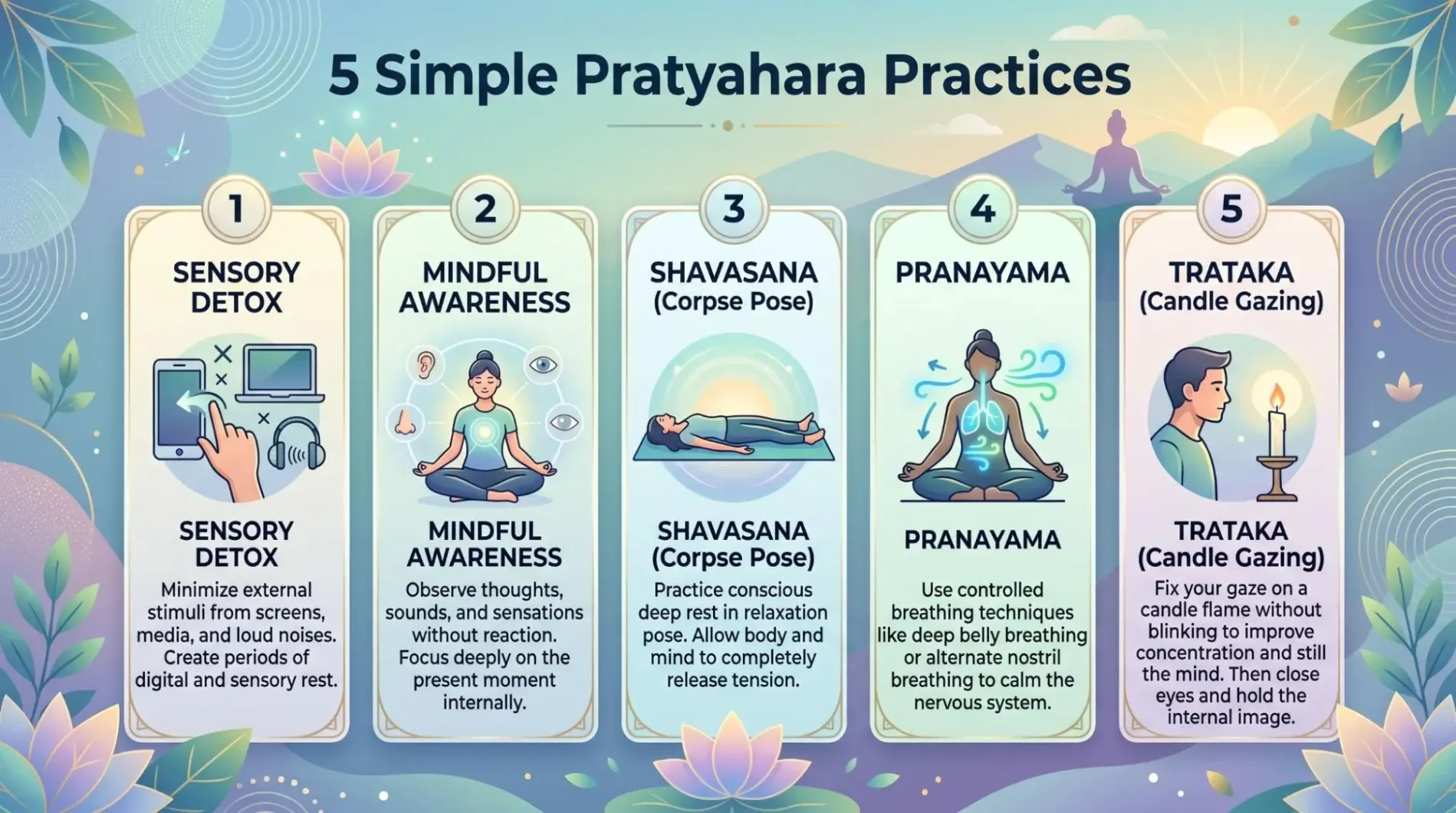
Simple Ways to Practice Pratyahara
Pratyahara does not require a complicated setup. You can begin with small, simple practices.
Sensory Detox
A sensory detox means reducing unnecessary input for a short time.
You can try:
- Sitting without your phone for 10 minutes
- Eating one meal without watching anything
- Taking a quiet walk
- Turning off notifications for a while
- Spending a few minutes in silence
The aim is not punishment. The aim is rest for the senses.
Conscious Engagement
Pratyahara is not only about closing the eyes. It can also mean staying aware while living normally.
For example, you may hear noise around you but choose not to react. You may see something online but choose not to click. You may feel irritation but choose not to feed it.
This is pratyahara in daily life.
Shavasana
Shavasana is one of the best ways to experience pratyahara.
You lie still, close the eyes, relax the body, and allow the senses to soften. Sounds may still be there. Sensations may still be there. But you practice staying relaxed instead of reacting.
Pranayama
Simple breathing practices help prepare the mind for pratyahara.
Even a few minutes of slow breathing can reduce mental noise. When the breath becomes calm, the senses naturally become quieter.
Trataka
Trataka is a yogic concentration practice where you softly gaze at one object, often a candle flame.
After some time, the eyes close and attention turns inward. This can help train the senses, especially sight, to become steadier.
How to Practice Pratyahara as a Beginner
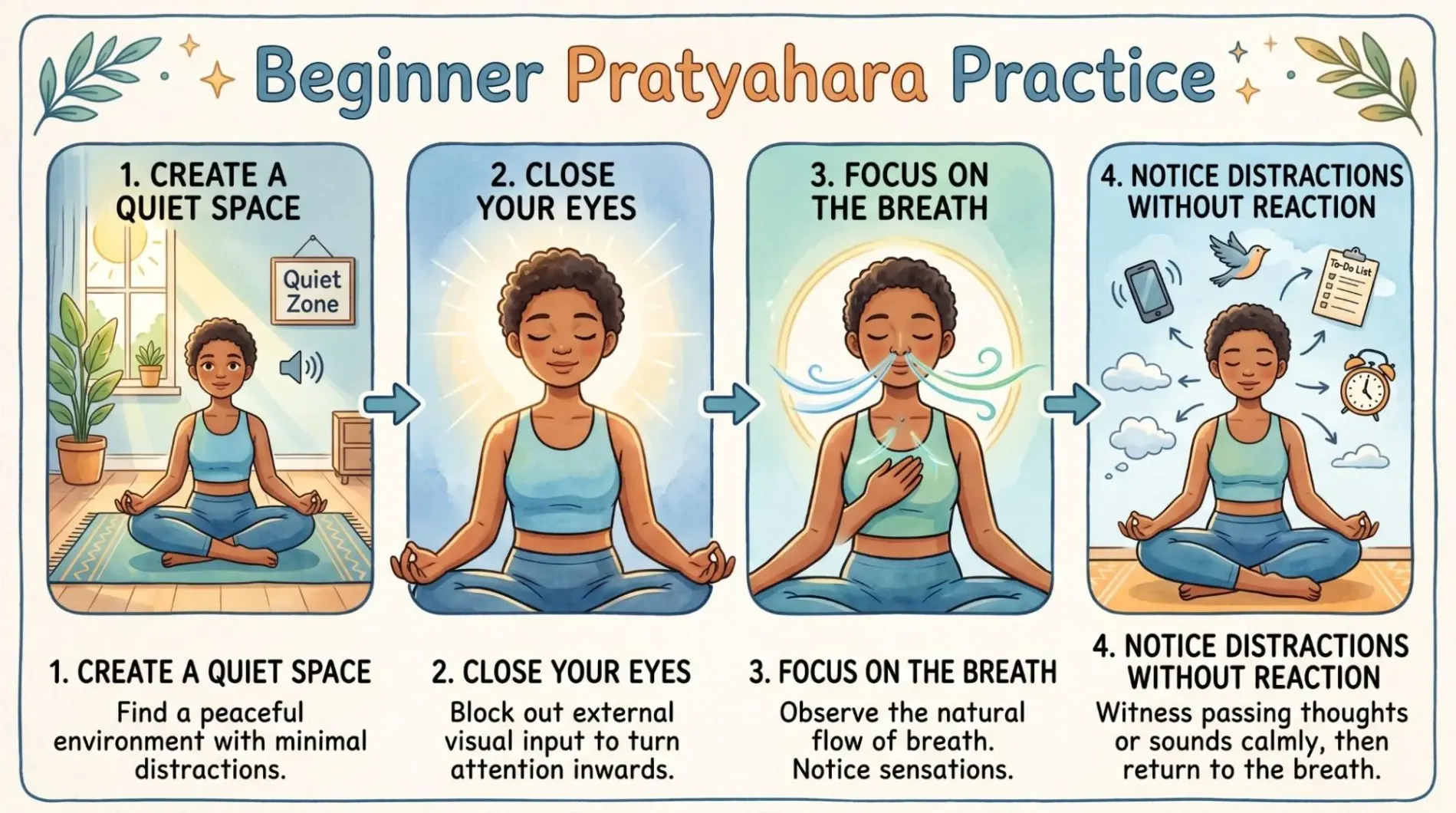
For newcomers, pratyahara yoga meaning and practice can start with simple breath awareness and reduced sensory distractions. You do not need to be advanced in yoga to begin pratyahara. Start small and keep the practice gentle.
Step 1: Choose a Quiet Space
Find a place where you are less likely to be disturbed. It does not have to be perfectly silent. A calm corner is enough.
Sit comfortably or lie down if needed.
Step 2: Close the Eyes and Relax the Body
Close your eyes gently. Relax the face, shoulders, hands, and legs.
Let the body feel supported. The more relaxed the body is, the easier it becomes to turn inward.
Step 3: Focus on the Breath
Bring attention to natural breathing.
Do not force the breath. Just notice the inhale and exhale. If the mind wanders, bring it back softly.
Step 4: Notice Distractions Without Reacting
You may hear sounds, feel sensations, or notice thoughts.
Do not fight them. Do not follow them. Just notice and return to the breath.
This is the heart of pratyahara: awareness without reaction.
Common Mistakes in Pratyahara Practice
Beginners often make pratyahara harder than it needs to be. These mistakes are common and easy to fix.
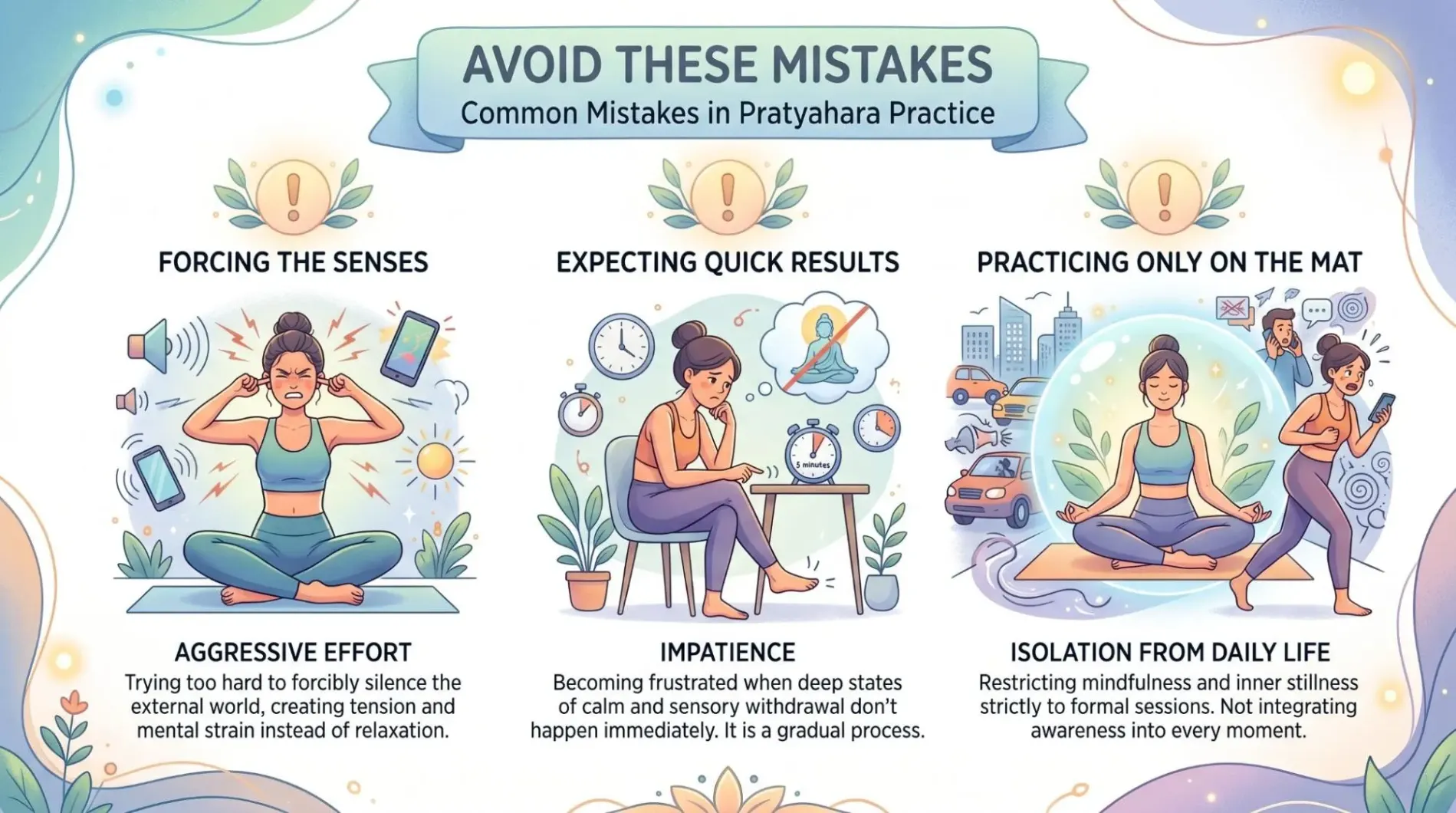
Forcing the Senses
Pratyahara is not about forcing the senses to shut down. If you try too hard, the mind may become more restless.
Let the senses settle naturally.
Expecting Quick Results
Some days the mind will feel calm. Other days it will feel noisy. That is normal.
Pratyahara grows through patient practice, not pressure.
Practicing Only on the Yoga Mat
Pratyahara is not limited to yoga class. It is also useful while using your phone, talking to people, working, eating, or handling stress.
The real test is daily life.
Pratyahara in Daily Life
Pratyahara in daily life means creating a healthier relationship with the external world. Applying pratyahara yoga meaning and practice in daily life can reduce stress and improve mindfulness.
You can practice it when:
- You pause before replying in anger
- You stop scrolling when your mind feels tired
- You eat slowly and notice your food
- You listen without reacting immediately
- You sit quietly for a few minutes after work
Small moments matter. They train the mind to become less reactive.

Pratyahara and Digital Wellness
Digital life is one of the biggest reasons pratyahara feels relevant today. Phones constantly pull attention outward through touch, sight, sound, and quick emotional triggers. Modern technology makes pratyahara yoga meaning and practice more relevant than ever.
A practical digital pratyahara practice may include:
- Keeping the phone away during meals
- Avoiding screens before sleep
- Turning off non-essential notifications
- Taking short breaks from social media
- Checking messages at planned times instead of constantly
This is not about rejecting technology. It is about using it without letting it control your attention.
Pratyahara and Meditation
Pratyahara yoga meaning and practice creates the mental foundation needed for deeper meditation. Pratyahara and meditation are closely connected.
Before meditation becomes deep, the senses need to become less demanding. If every sound or feeling pulls the mind away, meditation feels difficult.
Pratyahara creates the inner conditions for meditation. It helps the mind move from distraction to steadiness.
Pratyahara and Inner Awareness
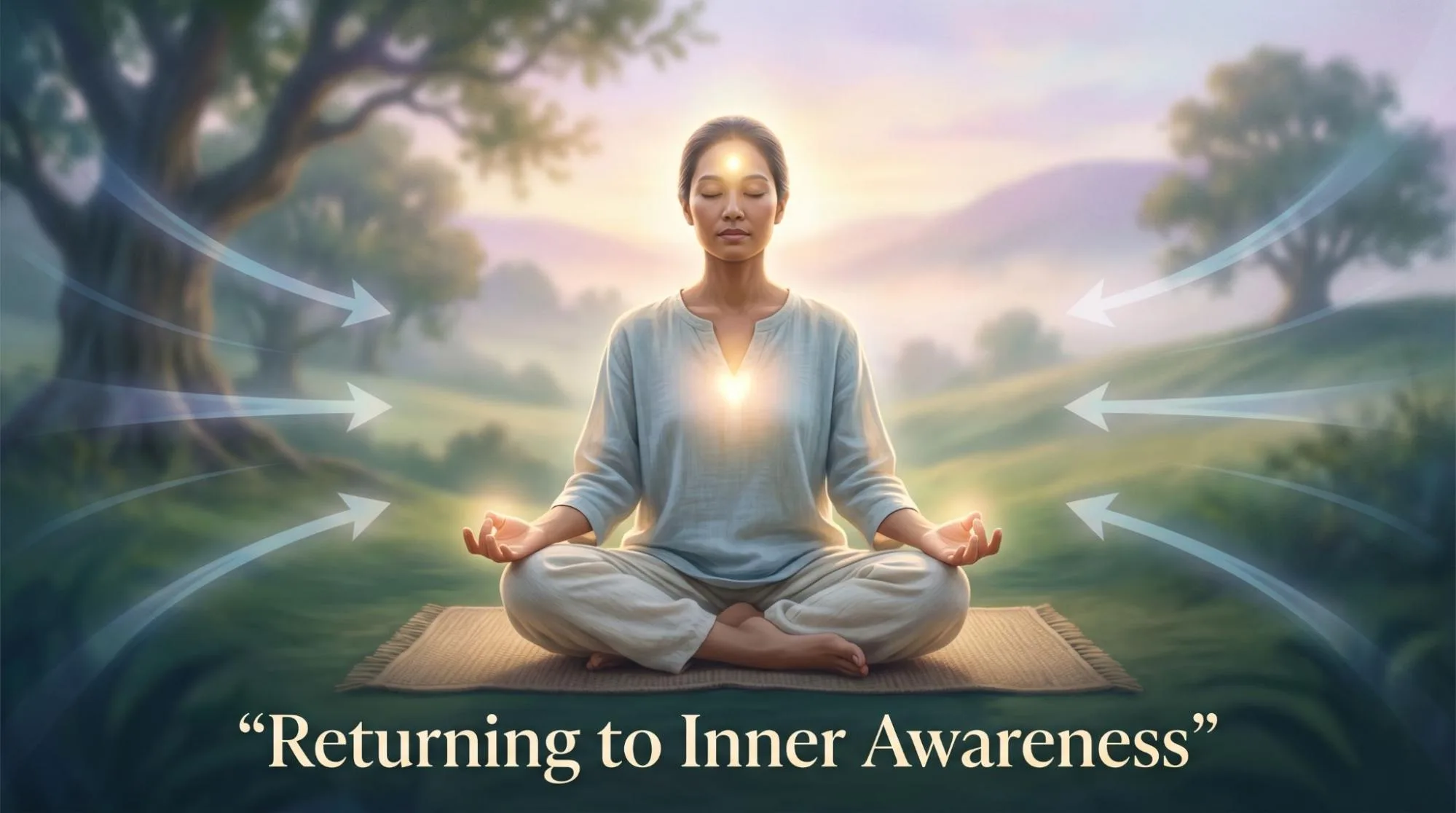
The deeper purpose of pratyahara is inner awareness.
When less energy goes outward, more awareness becomes available inward. You begin to notice your thoughts, habits, emotions, and reactions more clearly.
This self-awareness is one of the most valuable gifts of yoga.
FAQs About Pratyahara Yoga Meaning and Practice
What is the simple meaning of pratyahara?
Pratyahara means withdrawal from the senses. In simple terms, it is the practice of turning attention inward and not reacting to every external distraction.
Is pratyahara the same as avoiding the world?
No. Pratyahara is not avoiding life or escaping responsibility. It means staying aware while becoming less controlled by sensory distractions.
Can beginners practice pratyahara?
Yes. Beginners can practice pratyahara through silence, breath awareness, Shavasana, sensory detox, and mindful daily habits.
How is pratyahara related to meditation?
Pratyahara prepares the mind for meditation by reducing sensory distraction. It helps attention become calmer and more stable.
What is an example of pratyahara in daily life?
One simple example is hearing your phone notification but choosing not to check it immediately. You notice the urge, but you do not react automatically.
Does pratyahara mean stopping the senses?
No. The senses still work. Pratyahara means changing your relationship with them so they do not control your mind.

Learn More : Yama and Niyama: Meaning, Principles, Benefits, and Daily Practice
Final Thoughts
By consistently applying pratyahara yoga meaning and practice, you can cultivate greater inner peace and self-awareness. Pratyahara is a quiet but powerful part of yoga. It teaches you how to live in the world without being pulled by every sound, image, feeling, or impulse.
For beginners, the best approach is simple: sit quietly, breathe, notice distractions, and return inward without force. Over time, this practice can bring better focus, calmer emotions, deeper meditation, and a stronger connection with inner awareness.
That is the real value of pratyahara yoga meaning and practice. It is not about escaping life. It is about meeting life with a steadier mind.

Frequently Asked Questions
What is pratyahara in simple words?
It is the practice of noticing sensory input while reducing automatic reaction to it. The aim is steadier attention, not shutting down the senses.
Is pratyahara the same as escaping the world?
No. It does not mean avoiding life or responsibilities. It means choosing where attention goes instead of being controlled by every distraction.
How can beginners practise pratyahara?
Try ten quiet minutes without your phone, mindful eating, natural breath awareness, or noticing a notification without checking it immediately.
Does pratyahara help meditation?
It may make meditation easier by reducing the habit of reacting to every external sensation and distraction.
