
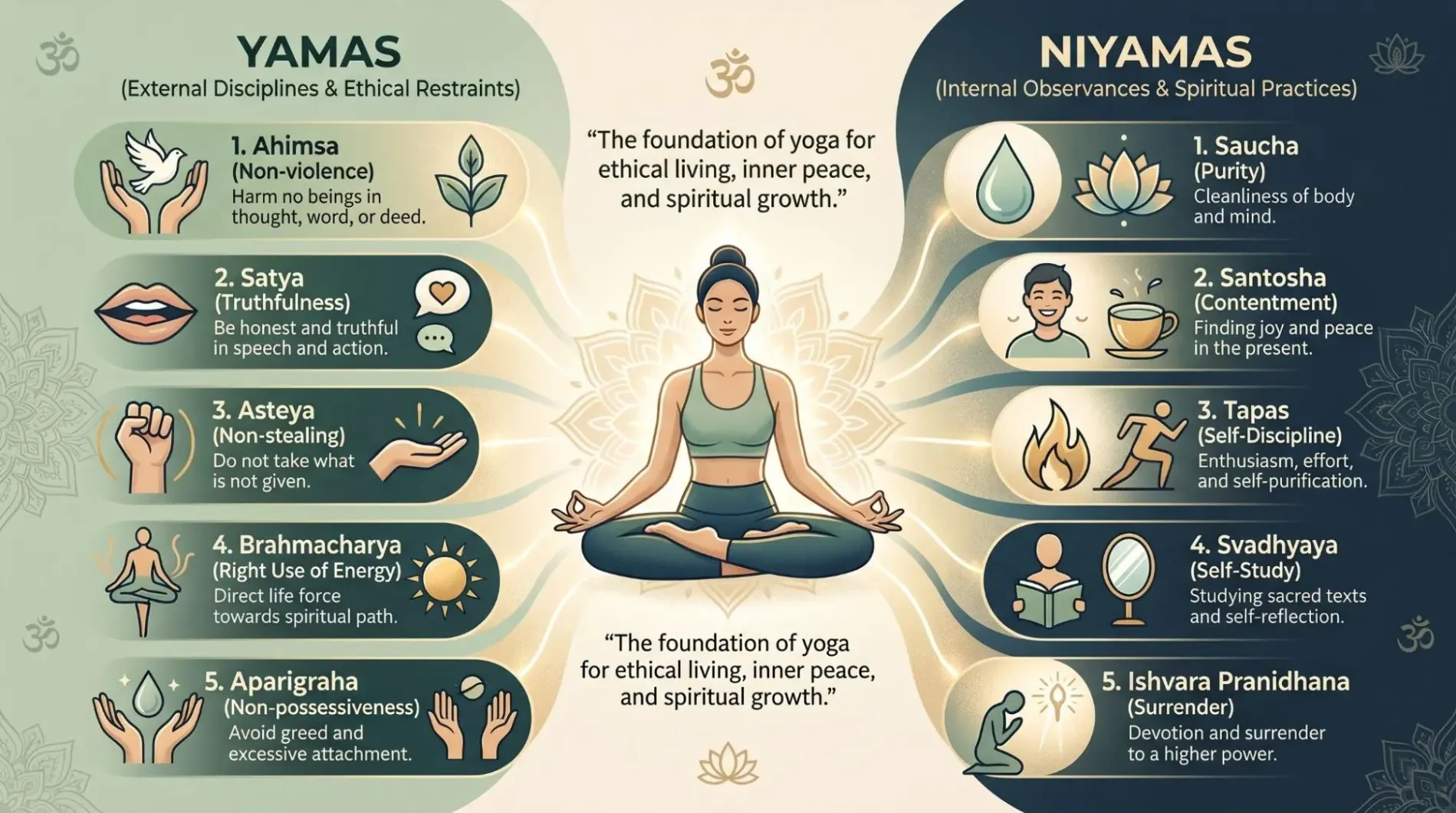
Yoga is often seen as stretching, breathing, or doing physical postures. But in traditional yoga philosophy, yoga is much deeper than that. It is a way of living life with awareness, balance, honesty, and self-control.
The yamas and niyamas are the first two steps in the eight limbs of yoga described in the Yoga Sutras of Patanjali. They guide how we treat others, how we manage ourselves, and how we build a calmer and more meaningful life.
For beginners, these Sanskrit words may sound difficult at first. But their meaning is simple and very practical. They can be applied in ordinary day to day life, whether you are a yoga student, a teacher, a parent, a professional, or simply someone trying to live better.
 alt=”Yoga philosophy book showing the Yamas and Niyamas” title=”Yoga philosophy book showing the Yamas and Niyamas”
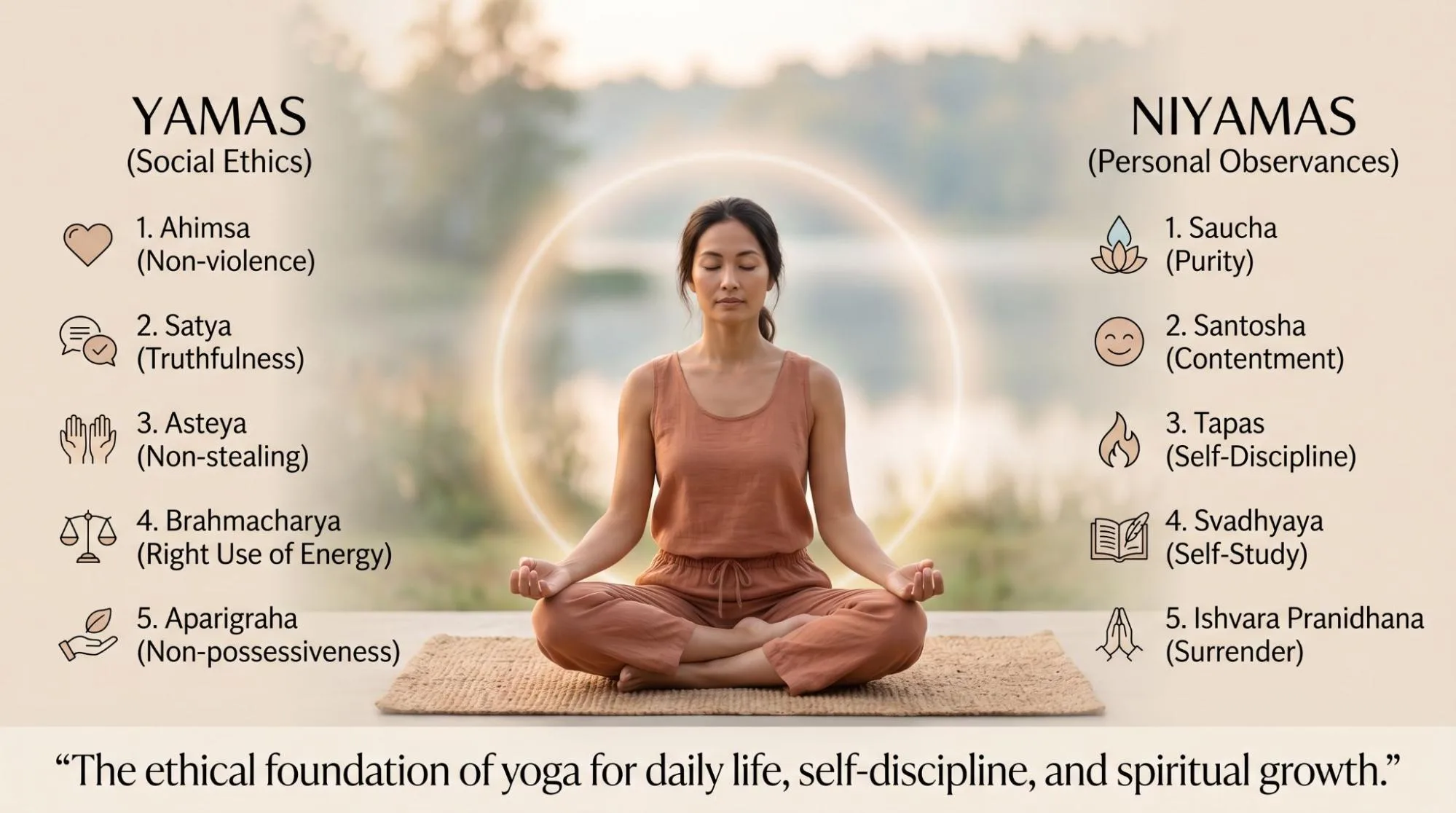
Quick answer: Yamas and niyamas are two groups of ethical and personal practices described in Patanjali’s Yoga Sutras. The yamas guide how we relate to others; the niyamas guide how we care for and discipline ourselves.
Practical note: These principles are not a demand for perfection. A useful starting point is to choose one idea—such as honest speech, contentment, or self-study—and notice how it appears in an ordinary day.
What Are Yama and Niyama?
Yama and Niyama are ethical and personal principles in yoga.
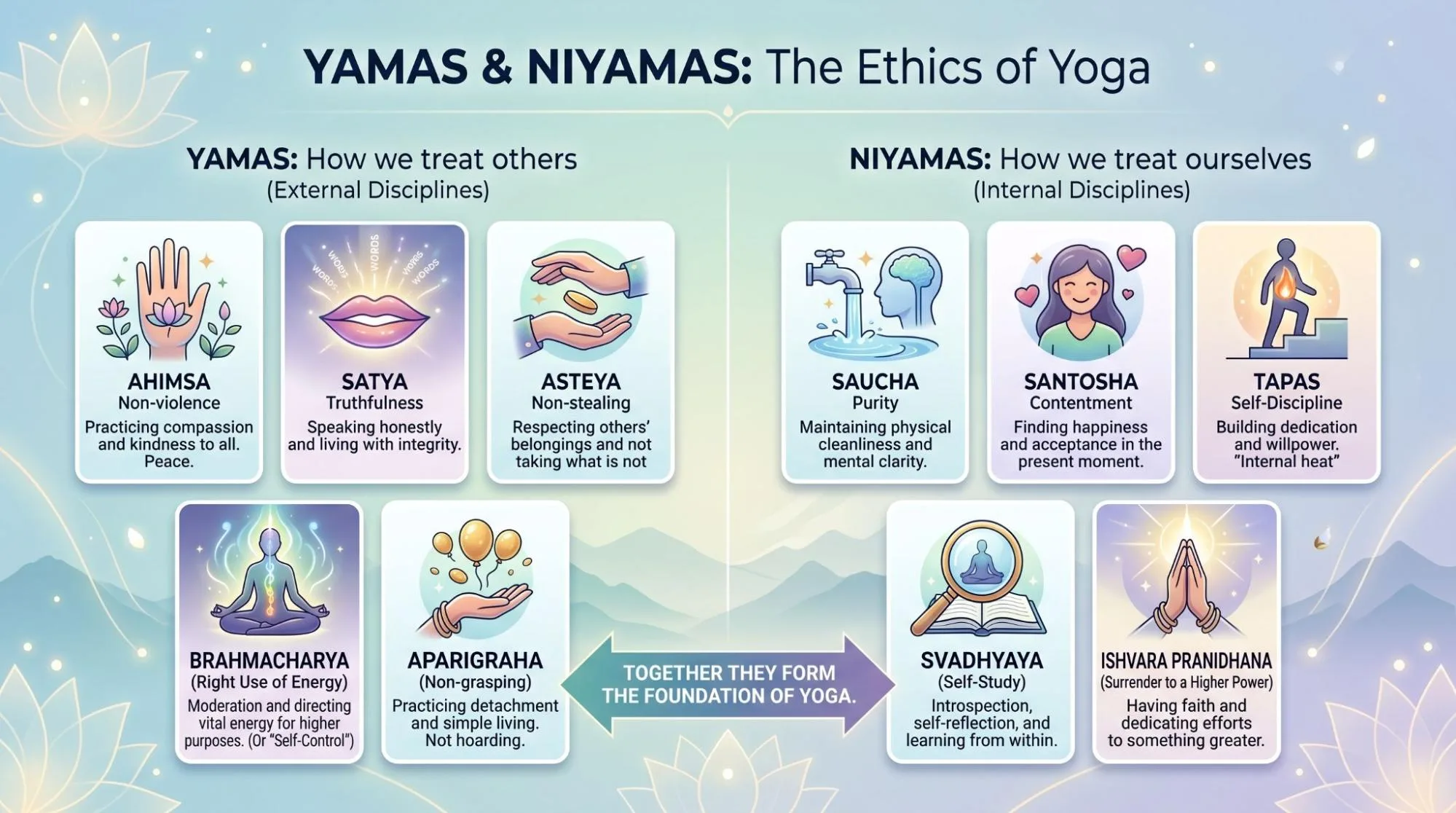
The Yamas are social and ethical guidelines. They mainly guide our behaviour toward other people and the world around us. In simple words, yamas primarily focus on our actions when in community.
The Niyamas are personal disciplines. They guide our inner life, habits, thoughts, self-study, and spiritual attitude. The niyamas focus more generally on self-improvement, purity, discipline, contentment, and surrender.
Together, yamas and niyamas help us build a strong foundation for yoga practice. Without them, yoga can easily become only physical exercise.
 alt=”Ahimsa non-harming principle in yoga philosophy” title=”Ahimsa non-harming principle in yoga philosophy”
Yama and Niyama in the Patanjali Eight Limbs of Yoga
Patanjali explained yoga through eight limbs:
- Yama
- Niyama
- Asana
- Pranayama
- Pratyahara
- Dharana
- Dhyana
- Samadhi
Many people begin yoga with postures asanas, but in Patanjali’s system, yama and niyama come before asana. This shows that yoga begins with character, conduct, and awareness.
When we approach the eight limbs of yoga, yama and niyama act like roots. They support the physical, mental, and spiritual parts of practice.
For yoga teachers, these principles are especially important. A teacher does not only guide movement. A good teacher also reflects patience, honesty, compassion, and discipline through their own conduct.
 alt=”Satya truthfulness reflection in daily life” title=”Satya truthfulness reflection in daily life”
Learn More : What Is Ahimsa in Yoga? A Simple Guide to Non-Violence, Kindness, and Daily Practice
The Five Yamas of Yoga
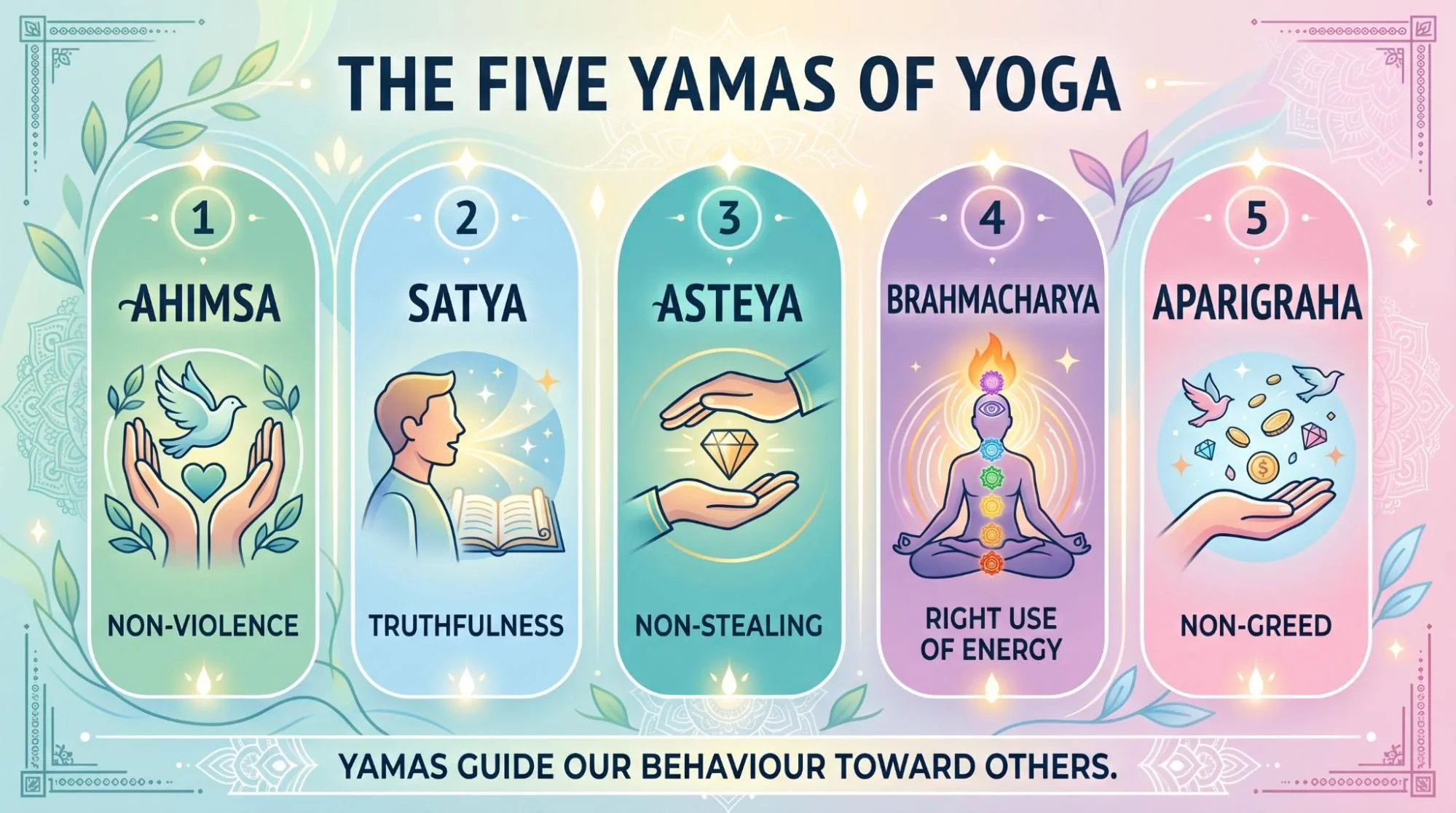
The five yamas are Ahimsa, Satya, Asteya, Brahmacharya, and Aparigraha. They help us live with kindness, honesty, respect, and balance.
Ahimsa: Non-Violence and Compassion
Ahimsa means non-violence. It is not only about avoiding physical harm. It also includes harsh speech, cruel thoughts, anger, judgment, and harmful behaviour toward yourself or others.
Practising ahimsa may mean speaking gently, avoiding unnecessary criticism, caring for your body, and not hurting yourself through negative self-talk.
A simple question can help: “Is this thought, word, or action creating harm or reducing harm?”
Satya: Truthfulness in Thought and Speech
Satya means truthfulness. It asks us to be honest in our thoughts, words, and actions.
But truth should not be used harshly. In yoga, truthfulness works with compassion. Being truthful does not mean hurting people with careless words. It means speaking clearly, honestly, and responsibly.
Satya also means being honest with yourself. Sometimes the hardest truth is accepting your own habits, fears, or weaknesses.
Asteya: Non-Stealing and Respect for Others
Asteya means non-stealing. This includes more than taking physical things. It also means not taking someone’s time, credit, ideas, peace, or emotional energy unfairly.
In daily life, asteya means respecting other people’s effort, boundaries, and space. It also means not taking more than you need.
The connection between truthfulness asteya is important. When we lie, manipulate, or take credit unfairly, we steal trust.
Brahmacharya: Right Use of Energy
Brahmacharya is often explained as control of energy. Traditionally, it has been linked with restraint, but in daily life it means using your physical, emotional, mental, and creative energy wisely.
This principle asks us to notice where our energy goes. Are we wasting it on distractions, arguments, overthinking, or unhealthy habits?
Brahmacharya teaches balance. It helps us avoid excess and live with more focus.
Aparigraha: Non-Greed and Letting Go
Aparigraha means non-greed or non-possessiveness. It teaches us not to cling too tightly to things, people, results, or opinions.
This does not mean giving up comfort or success. It means not letting attachment control your peace.
In daily life, aparigraha may look like buying only what you need, letting go of comparison, releasing resentment, and accepting change with maturity.
 alt=”Asteya non-stealing ethical practice” title=”Asteya non-stealing ethical practice”
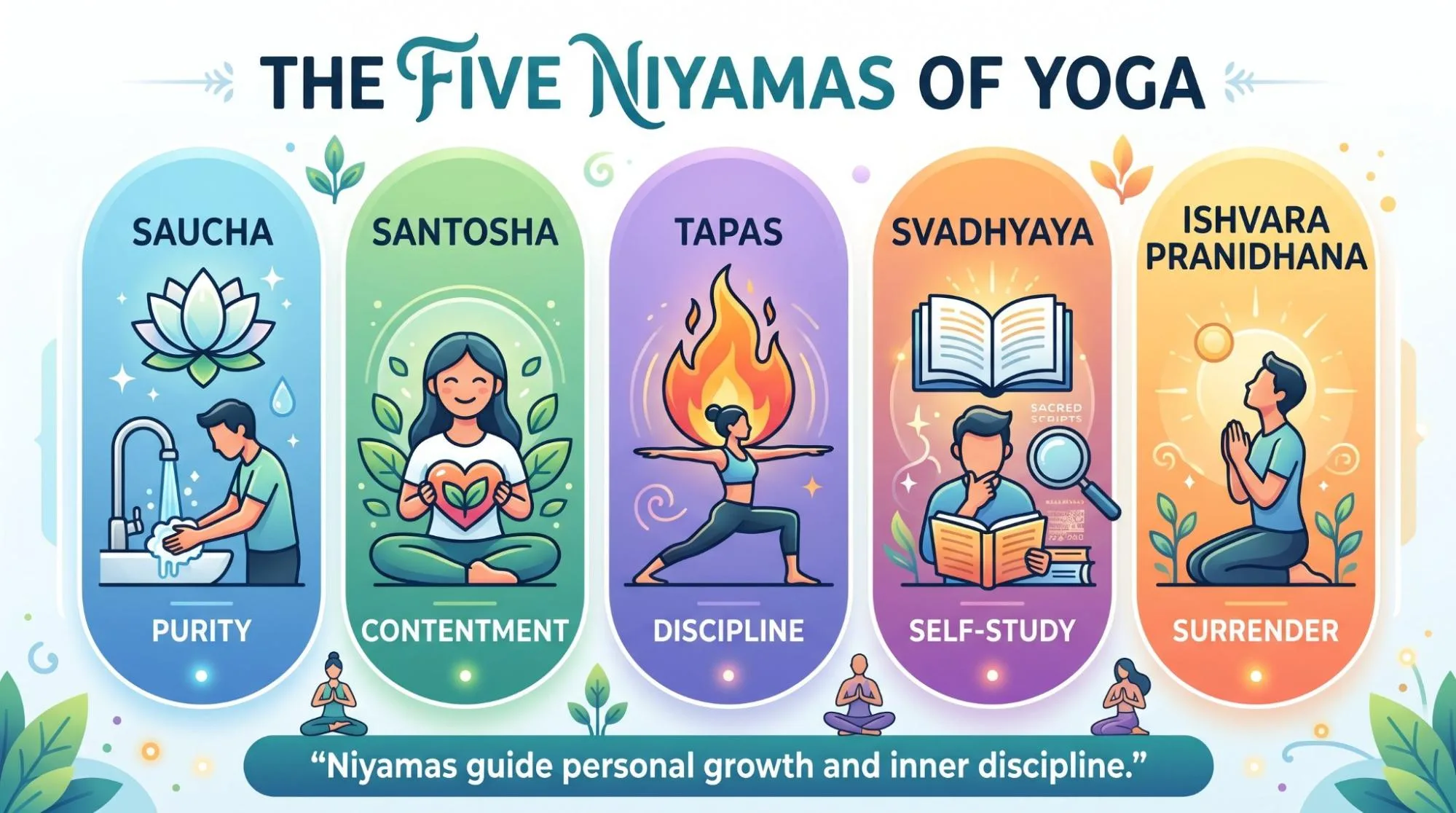
The Five Niyamas of Yoga
The five niyamas are Saucha, Santosha, Tapas, Svadhyaya, and Ishvara Pranidhana. They help us develop self-discipline, inner clarity, and spiritual awareness.
A full and fulfilling yama niyama practice needs both sides: ethical behaviour with others and honest inner work.
Saucha: Purity of Body, Mind, and Environment
Saucha means purity or cleanliness. It includes the body, mind, surroundings, and lifestyle.
At a simple level, saucha means keeping your body and environment clean. On a deeper level, it means being careful about what you allow into your mind.
Reducing gossip, negative media, clutter, and unhealthy habits can support mental clarity. Saucha is not about being perfect. It is about creating a cleaner space for peace and focus.
Santosha: Contentment and Gratitude
Santosha means contentment. It is the ability to appreciate what is present while still growing.
Contentment does not mean laziness. You can work toward your goals and still be grateful for what you have now.
Santosha helps reduce constant comparison and dissatisfaction. It teaches us to find peace in simple things.
Tapas: Self-Discipline and Inner Strength
Tapas means discipline, effort, or inner fire. It is the strength to keep doing what supports your growth, even when you do not feel like it.
Tapas may include regular yoga practice, healthy routines, mindful eating, waking up early, or keeping promises to yourself.
The balance between content tapas is important. Santosha brings acceptance, while tapas brings effort. Together, they create steady growth.
Svadhyaya: Self-Study and Inner Reflection
Svadhyaya self study means observing yourself honestly. It includes studying wisdom texts, but it also means learning from your thoughts, reactions, and habits.
You can practise svadhyaya by asking:
- Why did I react this way?
- What pattern keeps repeating?
- What do I need to improve?
- What am I learning from this situation?
This principle makes yoga personal. It helps you understand yourself more deeply.
Ishvara Pranidhana: Surrender to a Higher Power
Ishvara Pranidhana means surrender to a higher power or something greater than the ego.
For some people, this means devotion to God. For others, it means trust in life, truth, nature, or a higher wisdom.
In practice, it means doing your best and letting go of the result. This can bring peace, especially when life feels uncertain.
 alt=”Brahmacharya mindful use of energy” title=”Brahmacharya mindful use of energy”
 alt=”Brahmacharya mindful use of energy” title=”Brahmacharya mindful use of energy”
Yama and Niyama Meaning in Daily Life
The real meaning of yama and niyama is found in ordinary life.
They appear in how you speak, how you react, how you work, how you treat your body, how you handle money, and how you behave when nobody is watching.
For example:
- Ahimsa helps you speak with kindness.
- Satya helps you stay honest.
- Asteya teaches respect for others.
- Brahmacharya helps you use energy wisely.
- Aparigraha helps you let go.
- Saucha supports clarity.
- Santosha brings gratitude.
- Tapas builds discipline.
- Svadhyaya creates self-awareness.
- Ishvara Pranidhana teaches trust.
These principles are not only for monks or advanced yoga students. They are useful for anyone who wants to live with more balance.
 alt=”Aparigraha letting go and simplicity” title=”Aparigraha letting go and simplicity”
Learn More : Tapas Yoga Meaning Self Discipline
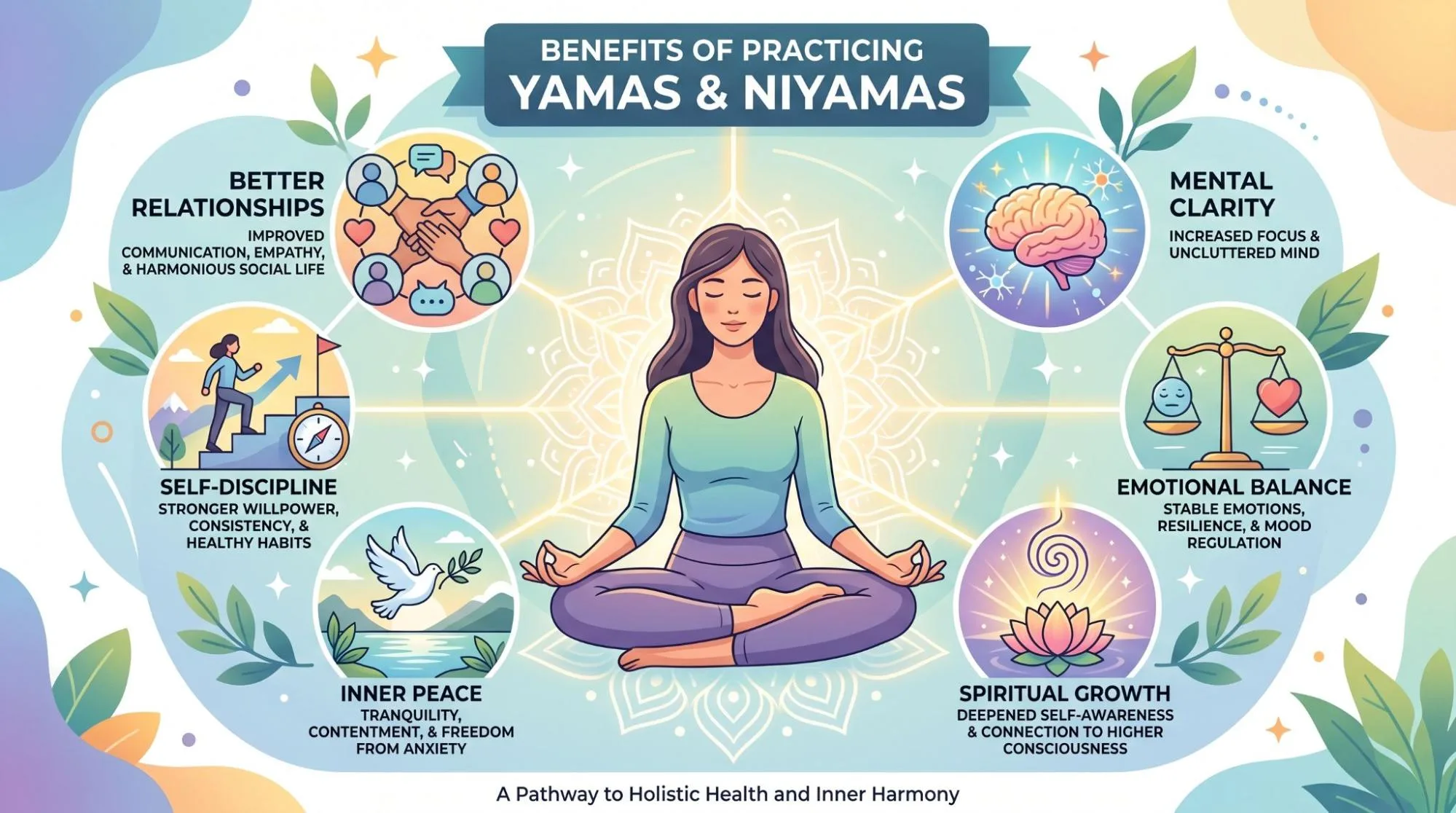
Benefits of Practising Yama and Niyama
Practising yamas and niyamas supports both physical and psychological well-being. They help reduce stress, improve behaviour, and create a calmer relationship with yourself and others.
Mental Clarity and Emotional Balance
When your actions match your values, your mind feels lighter. Truthfulness reduces confusion. Non-greed reduces anxiety. Self-study helps you understand your emotions instead of being controlled by them.
Better Relationships with Others
Yamas are deeply connected with relationships. When you practise compassion, honesty, respect, and non-possessiveness, people feel safer around you. You become less reactive and more thoughtful.
Stronger Self-Discipline and Personal Growth
Niyamas help build consistency. Tapas strengthens discipline, saucha supports healthy routines, and svadhyaya helps you learn from your own behaviour.
Deeper Spiritual Awareness
Yama and niyama prepare the mind for deeper yoga practice. Meditation becomes easier when daily life is guided by honesty, simplicity, discipline, and surrender.
 alt=”Saucha cleanliness and mindful routine” title=”Saucha cleanliness and mindful routine”
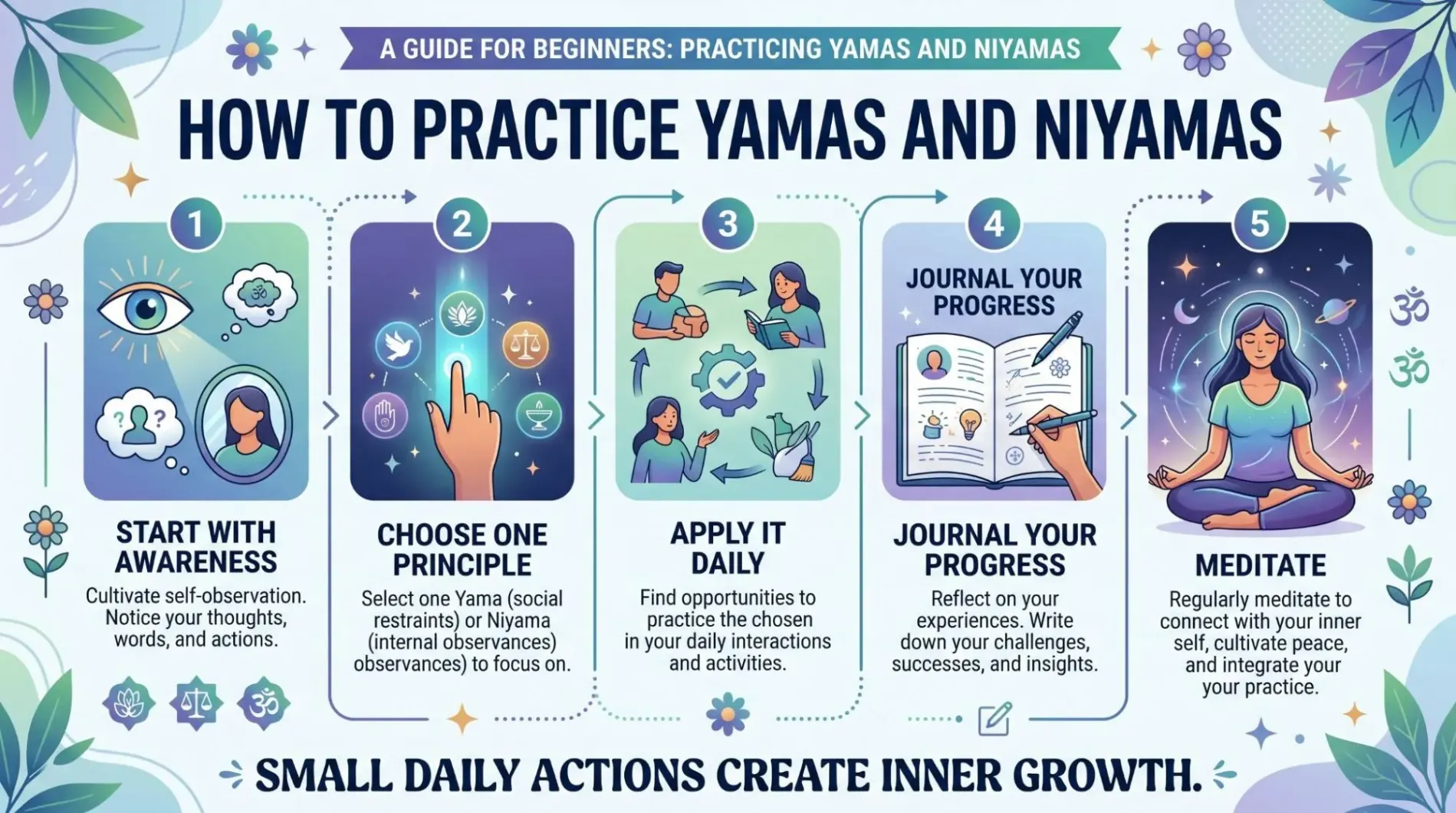
How to Practice Yama and Niyama
You do not need to practise all ten principles perfectly. Start small.
Start with Awareness
Notice your thoughts, words, and actions. Where are you harsh? Where are you dishonest? Where do you waste energy? Awareness is the first step.
Use Journaling for Reflection
Write for a few minutes each day. Ask yourself what you practised well and where you struggled. This makes svadhyaya simple and practical.
Apply One Principle in Daily Actions
Choose one principle for a week. For example, practise ahimsa by speaking more gently, or practise tapas by keeping one small daily promise.
Connect Practice with Meditation
Before meditation, reflect on one principle. You may silently repeat, “May I act with kindness,” or “May I let go of what I cannot control.”
alt=”Santosha contentment meditation practice” title=”Santosha contentment meditation practice”
 alt=”Santosha contentment meditation practice” title=”Santosha contentment meditation practice”
Common Mistakes to Avoid
Beginners often make yama and niyama harder than they need to be.
Avoid these mistakes:
- Treating them like strict rules
- Trying to master all ten at once
- Using them to judge others
- Confusing contentment with laziness
- Practising discipline too harshly
- Thinking yoga is only about postures
- Reading about them without applying them
The best practice is honest, simple, and consistent.
Frequently Asked Questions About Yamas and Niyamas
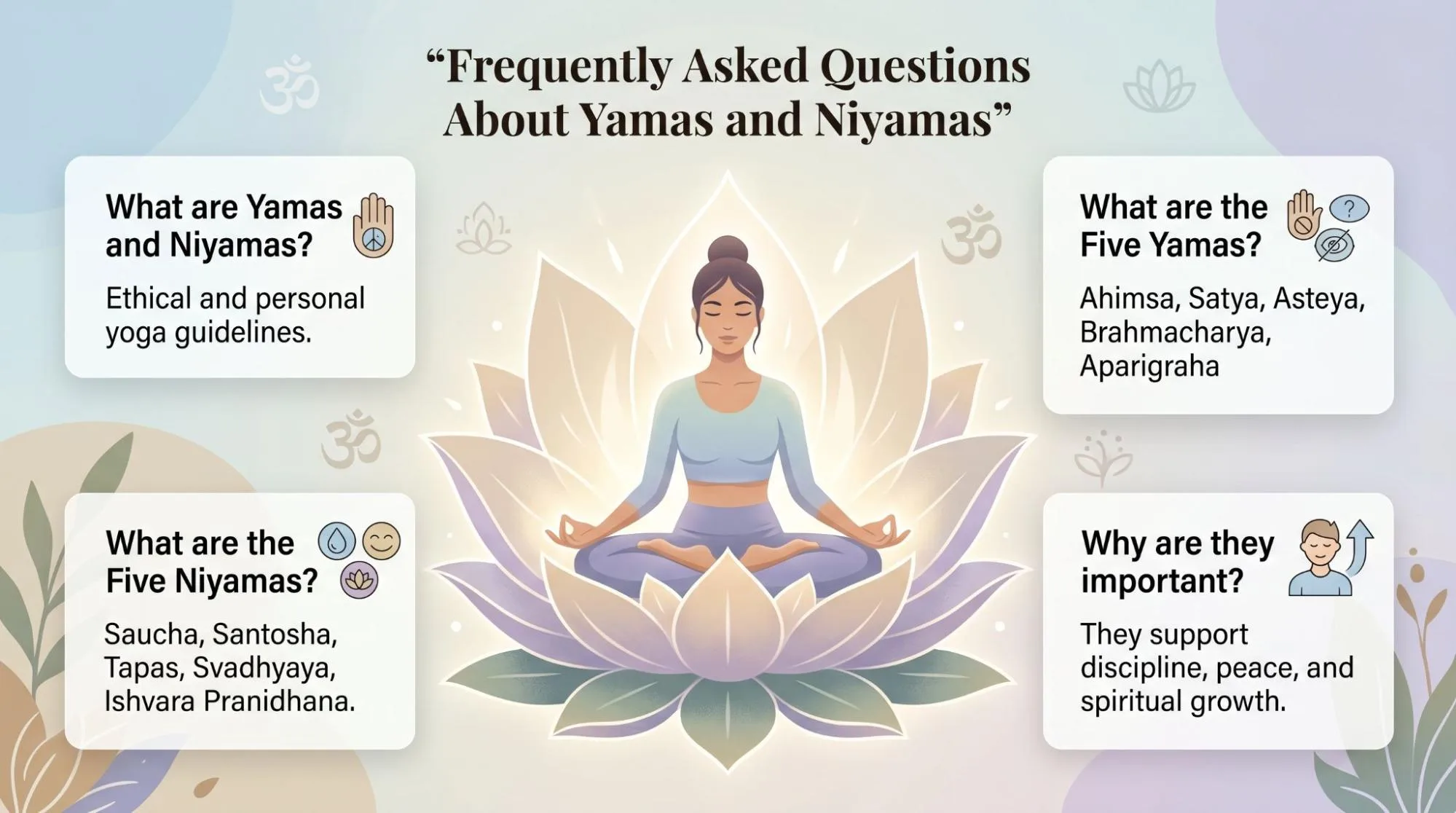
What are Yamas and Niyamas?
Yamas and niyamas are the first two limbs of yoga. Yamas guide social ethical behaviour, while niyamas guide personal discipline and inner growth.
What is the meaning of Yamas and Niyamas?
Their meaning is to help a person live with awareness, honesty, kindness, discipline, and spiritual balance.
What are the Five Yamas of yoga?
The five yamas are Ahimsa, Satya, Asteya, Brahmacharya, and Aparigraha.
What are the Five Niyamas of yoga?
The five niyamas are Saucha, Santosha, Tapas, Svadhyaya, and Ishvara Pranidhana.
Why are Yamas and Niyamas important in yoga philosophy?
They are important because they form the ethical and personal foundation of yoga practice.
How do you practice Yama and Niyama in daily life?
Practise them through small actions such as speaking truthfully, avoiding harm, keeping your space clean, showing gratitude, and reflecting on your behaviour.
How do Yamas and Niyamas help with spiritual growth?
They reduce selfishness, attachment, dishonesty, and restlessness. This makes meditation and inner awareness deeper.
Are Yamas and Niyamas only for yoga students?
No. Anyone can practise them, even without doing yoga postures.
Which Yama should beginners practice first?
Ahimsa is a good starting point because kindness affects your thoughts, speech, actions, and relationships.
Which Niyama is best for daily practice?
Santosha is very useful for daily life because gratitude and contentment can be practised anywhere.
 alt=”Tapas disciplined yoga practice” title=”Tapas disciplined yoga practice”
Learn More : Cat and Cow Pose: Benefits, Steps, Tips, and Beginner Guide
Conclusion
Yamas and niyamas are practical guides for living with more peace, honesty, and awareness. The yamas help us act responsibly with others, while the niyamas help us build inner discipline and clarity.
You do not need to become perfect. Start with one principle. Notice it during the day. Practise it in small situations. Over time, these simple teachings can quietly change the way you think, speak, act, and live.
Further reading: For general yoga and mindfulness information, see NCCIH: Yoga—What You Need To Know.
