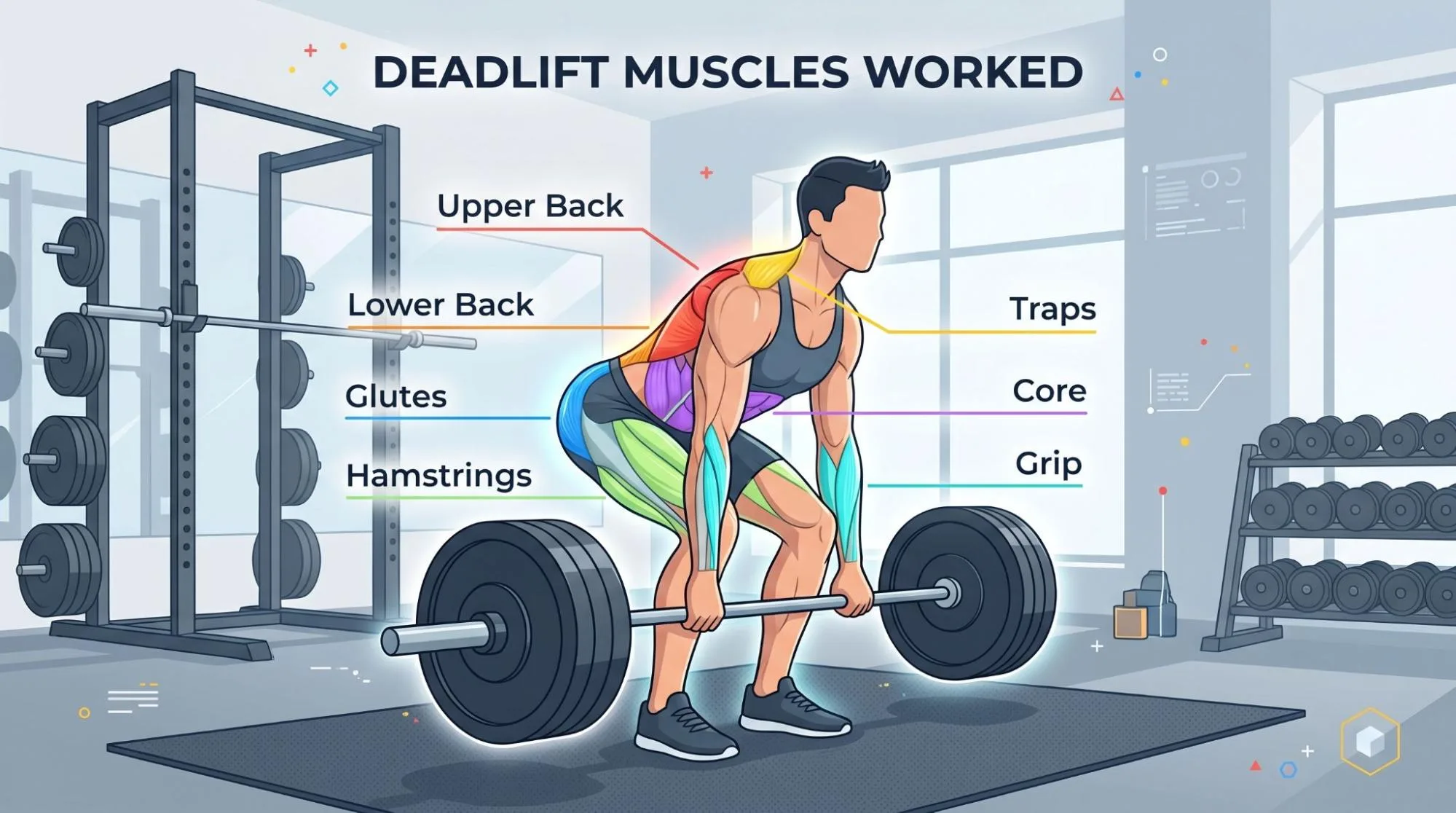
One of the most effective methods to provide full-body strength, enhance posture, and train the muscles on the back side of your body, is a deadlift workout. It primarily works on your glutes, hamstrings, lower back, upper back, core and grip. When properly performed, deadlifts can help you to lift better, move better and achieve true functional strength.
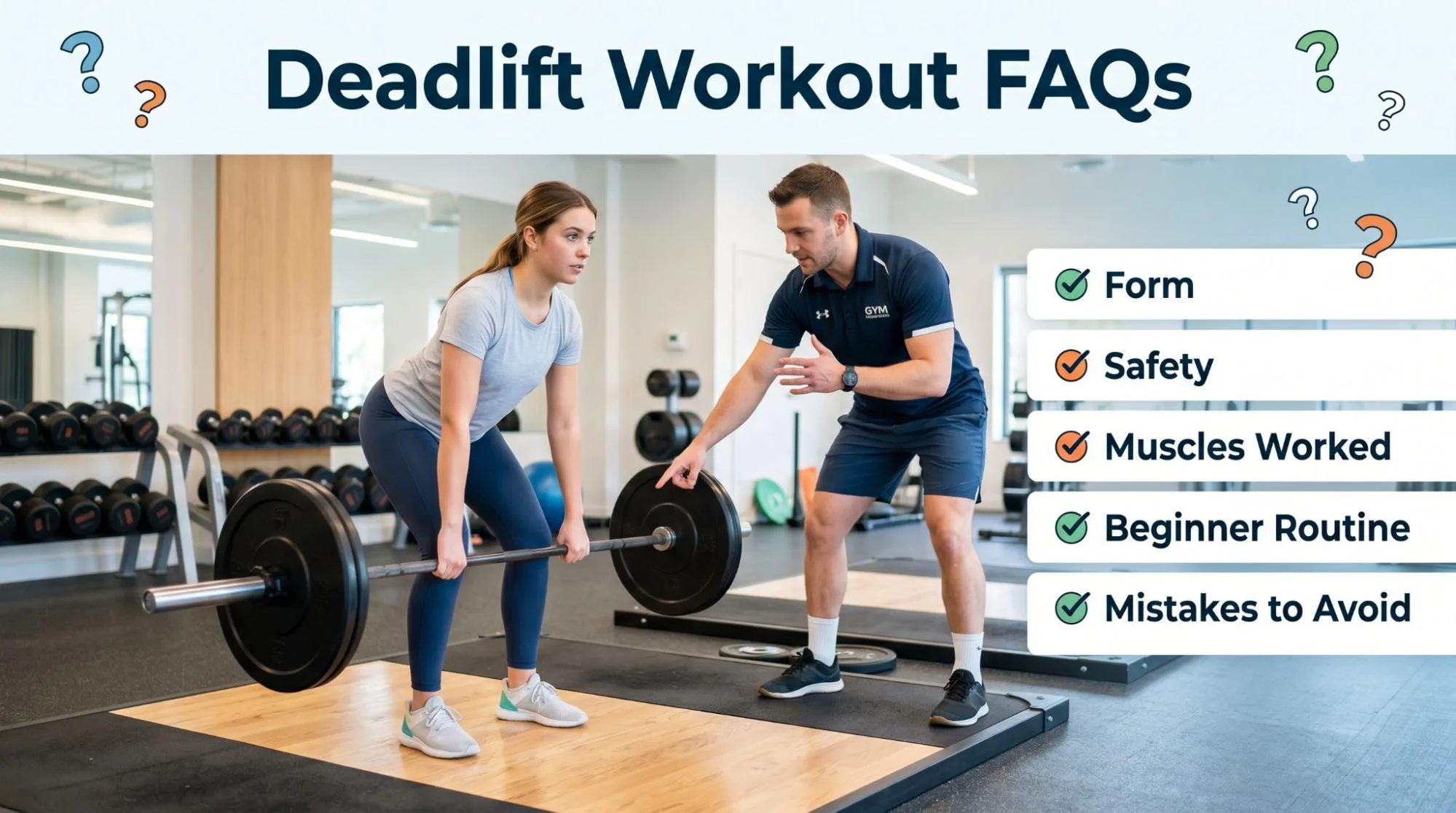
This manual has details on how to perform deadlifts correctly, what muscles they utilize, the best variations of the deadlift, sample routines, tips on form and what mistakes should be avoided at all times.
What Is a Deadlift Workout and Why Is It Important?
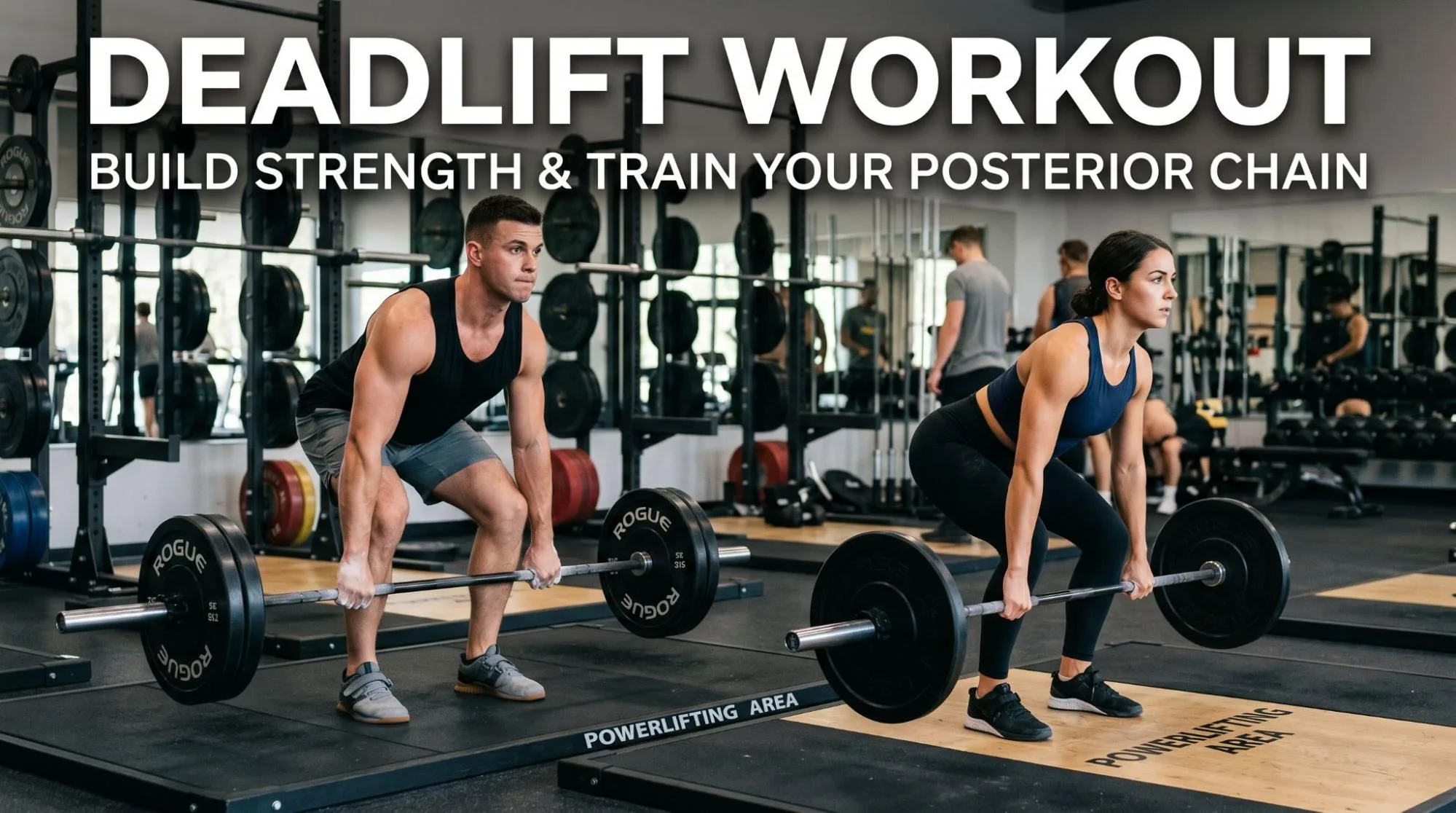
Deadlift exercise is a type of strength exercise that is built on the assumption of raising weight off the ground, through a hip-hinge motion. It also demonstrates your body to lift without injuring using your legs, hips, back and core combined as opposed to using only one body muscle group to do the lifting.
Deadlift is applicable since it entails training in actual movement. When you pick something out of the ground, are carrying heavy bags or are carrying a box, what happens is the same in your body. That is why deadlifts are not only useful in respect of the achievements in the gym, but also in terms of daily activities and prevention of injuries.
Good deadlift workout can provide increased power, balance, posture and overall-body coordination. It is also among the primary exercises applied in the context of strength training since it enables you to train a lot of muscles simultaneously.
Deadlift Muscles Worked During the Movement
To know all deadlift muscles in the exercise will allow you to better perform the proper exercise. Though it is a back exercise, the deadlift is in fact a full anterior chain exercise, a number of major muscle groups all working together.
Glutes
Your glutes will allow your hips to be moved forward when lifting the weight. Their contribution at the top of the deadlift whilst standing upright and locking out of the movement would be significant. Strong glutes are known to help increase the hip power, posture and lower body strength.
Hamstrings
The reason these hamstrings will take effect is when you hinge at the hips and pull the weight up out of the floor. They help to control the movement and also in the lengthening of hips. A deadlift exercise that has the right technique may help in strengthening, stabilizing and training your hamstring, to work better during the sports and day to day movements.
Lower Back
The muscles of the lower back are involved to make sure that when lifting, your back is steady. They are not to be rounded or fallen under the weight. Instead they will be narrow and narrow as your hips and limbs do the greater part of the work.
Upper Back and Traps
The upper back, traps and the rear shoulders help to keep the bar near to your body. They also inhibit your shoulder circles in front. This is the reason why a good number of individuals combine a deadlift exercise in order to build up strength and enhance posture of their back.
Core
The main focus is to take care of your spine during the lift and stability of the body during the lift. Prior to lifting the weight, one has to hollow the abdomen as though you are about to get punched. This aids in maintaining your body in a robust condition to the beginning as well as the end of the movement.
Grip and Forearms
Deadlifts also train grip strength as you will be needed to tighten grip on the bar when lifting. The heavier it is, the greater is the participation of the hands and forearms. Row, pull-ups, carry and other pulling exercises can be assisted with strong grip strength as well.
Benefits of a Deadlift Workout for Strength and Fitness
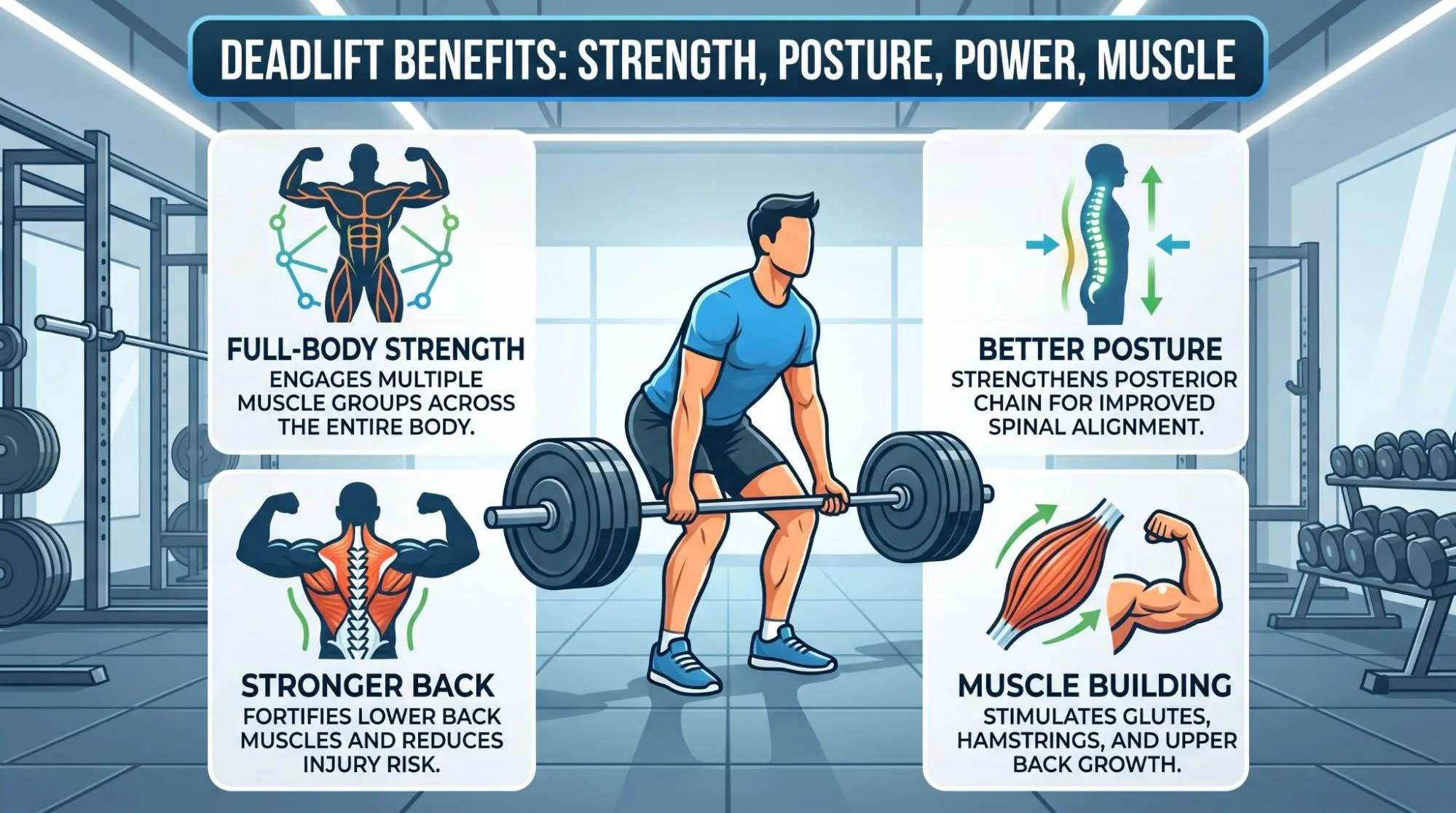
The workouts of deadlift have a lot of advantages as they train a number of muscles in a single powerful motion. Whether you are simply a novice, a sportsman, a bodybuilder and whatsoever one desires to gain to accomplish something useful, one can use it.
Builds Full-Body Strength
Deadlifts are lower body, upper-back, core and grip exercises that work out together, simultaneously. This makes the exercise very effective. Instead of them having to work each of the muscles individually, you can get a single deadlift exercise to help you gain strength in the entire body.
Improves Posterior Chain Power
The posterior chain involves your glutes, hamstring, lower back and upper back. These are the muscles which assist us to run, jump, lift, stand and move in control. A good posterior chain can also aid in maintaining good posture.
Supports Better Posture
A good deadlift routine will help to make the muscles, which hold your body straight, stronger. Your butt and back muscles may ultimately be weak when you sit in long sitting positions. When properly done, deadlifts could be used in a manner that one can restore their strength there.
Helps With Fat Loss and Muscle Building
The mass of muscles involved in deadlifts is enormous and thus, it burns large quantities of energy as compared with most of the minor isolated muscles. Combined with a good diet and regular workouts, it can be used to promote the following: Calorie burning, muscle growth and better body composition.
Improves Daily Movement
Deadlifts are used to assist in attainment of good lifting habits. You are also taught on how to bend the hips, hold the back to keep it neutral, brace up with the core to be able to lift in a controlled manner. In these kinds of habits, stresses on your back may be decreased when you are lifting items out of the gym.
How to Do Deadlifts Properly Step by Step
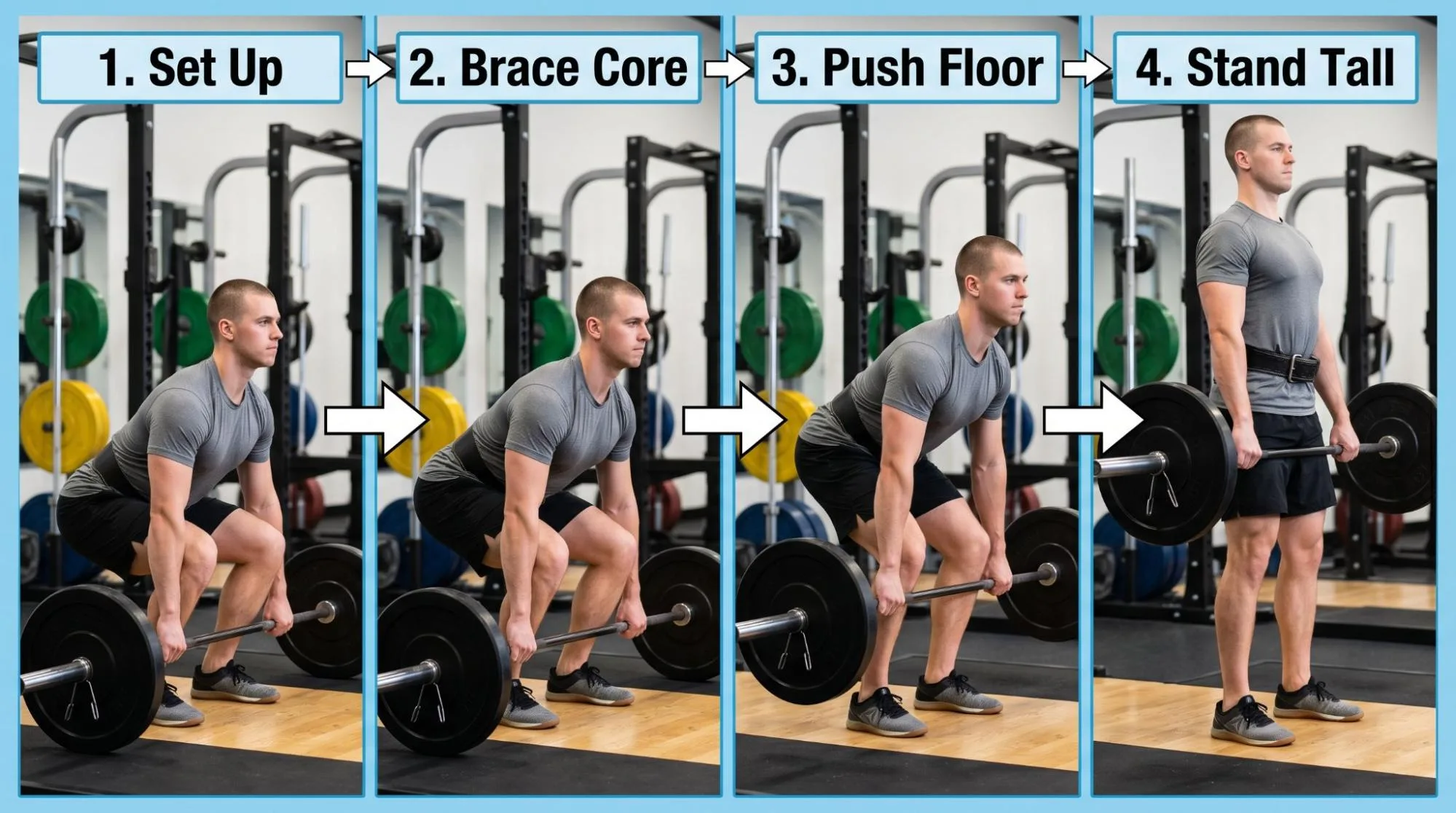
It is more important to learn how to do the deadlifts correctly rather than lifting heavy weights. Good set-up, correct body position, controlled pulling and safe lock out at the top is about to have.
Step 1: Stand With the Bar Over Mid-Foot
Feet are about the same width as hips. The bar ought to be above the mid-part of your feet, keeping not too far back or touching your shins too soon. This is a post that helps the bar to bring itself straight on its path.
Step 2: Grip the Bar Firmly
Kneeling, grasp the bar with both hands, but with a slight position above your legs. The starting grip can be done using a double overhand grip. Keep hands tight, and arms straight. Your arms are to be hook-like, rather than pulling-like.
Step 3: Set Your Back and Chest
Before lifting, you are recommended to take your chest a few inches higher, and keep your back in a neutral position. Do not bend straight your lower back. Your hips should be low as compared to your shoulders but high compared to squatting. This helps to achieve a strong first posture.
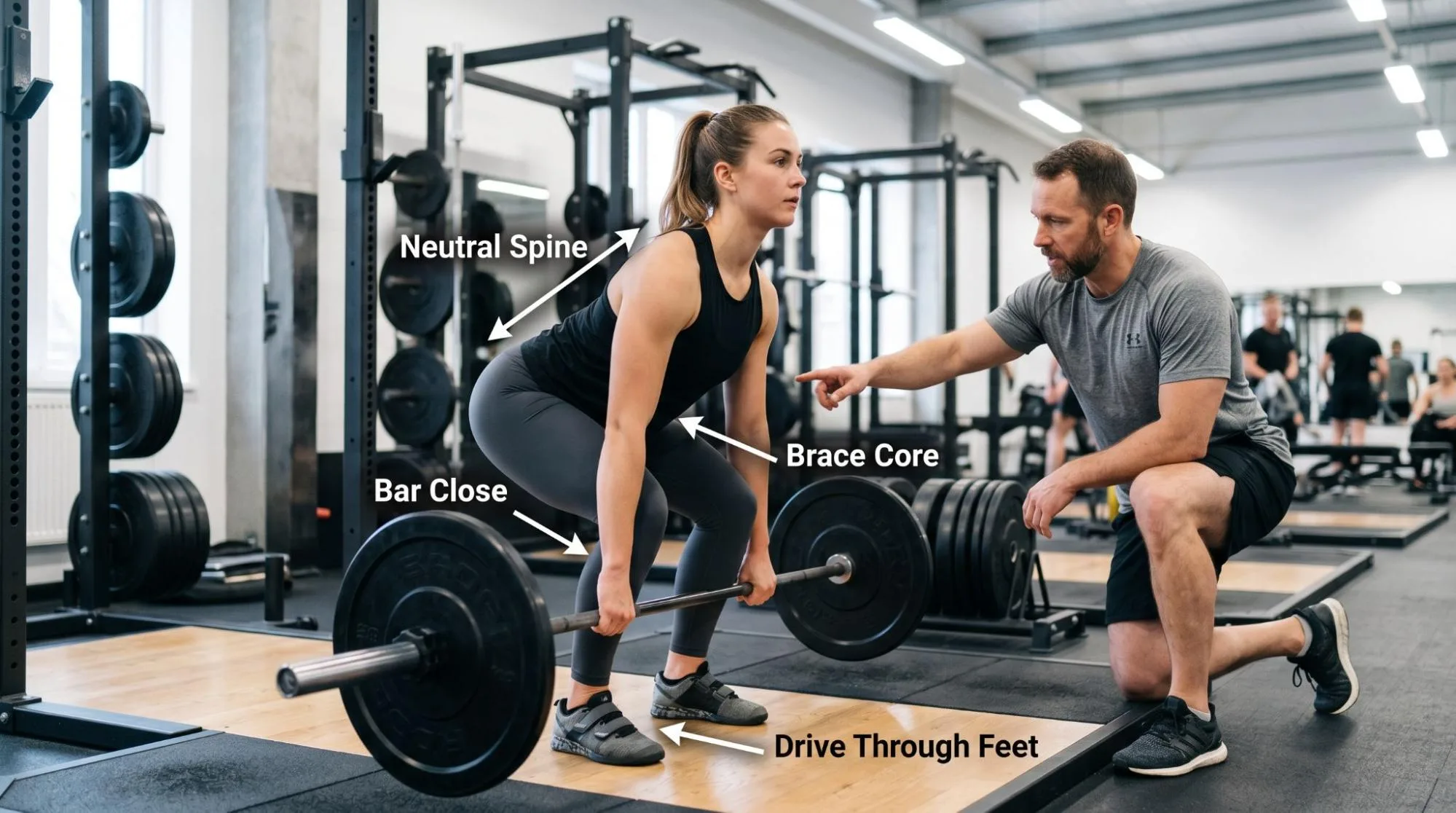
Step 4: Brace Your Core
Bend your belly into a deep breath, and squeeze your core. Bracing may alleviate the chance of ruining your backbone as well as fix your body in place. Consider that you have solidified your torso prior to you drawing out the weight of the floor.
Step 5: Push the Floor Away
It is important to start the lift by pushing through the feet. Do not kick the bar with your arms. Have the bar as near the legs as possible and have the hips and shoulders rise simultaneously. This will help in an easy and safe movement.
Step 6: Stand Tall at the Top
On the top are straight, with your hips straight forward. Using glutes squeeze, chest held up, bend not backwards. The lockout should be strong but not overdone.
Step 7: Lower the Bar With Control
To drop the bar, push your hips back, first and ensure that the bar is as close to your body as possible. Once the bar passes your knees bend them and reposition the bar on the floor. Do not drop the weight, except in a gym where it is allowed and where you wear the proper equipment.
Deadlift Form Tips for Better Results
The hints regarding good deadlift form will be able not only to make it possible to lift in a more safe way, but also to enjoy the better results of each workout. Small changes in setup and movement can be of considerable importance in power, comfort, and long run developments.
Keep the Bar Close
When lifting, the close-to-your-shin and thighs should be kept. The farther you get the bar out of your body, the more pressure you get on your lower back and movement becomes more difficult that it would have been.
Keep Your Spine Neutral
Neutral spine is a quality, which means that your back is neither round, nor over arched. Elbow your chest and tighten your core and bring your head in natural position. Look neither too far upwards nor downwards.
Use Your Legs and Hips Together
Deadlifts are not only an exercise of the lower back. The working movement of your legs is to push the floor off or the movement of your hips is forward. When you solely push using your back the form will disintegrate and the motion will not be safe.
Do Not Rush the Setup
There are numerous deadlift errors that occur prior to the weight even being taken off the floor. Stop to have your feet rested, grip, back, core and breathing. A proper arrangement will result in a proper lift.
Control Every Rep
All the reps should have the outlook of being clean and disciplined. Do not drop the bar on the floor, do not hurry through the reps and do not lose tightness between the lifts. The quality reps gain strength sooner than heavy reps who are sloppy.
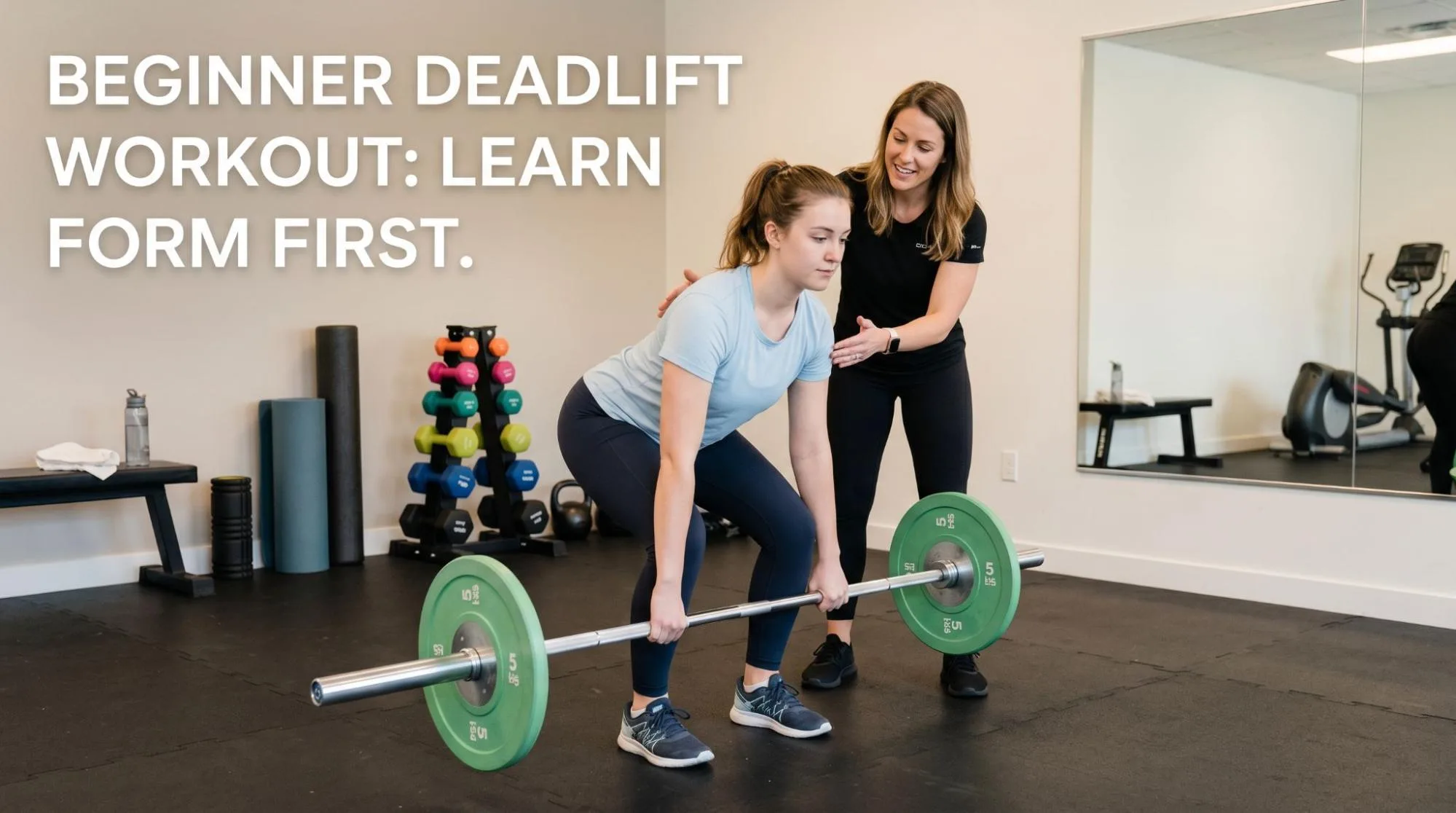
Deadlift Workout for Beginners
Instead, a deadlift exercise in beginners should be concerned with learning first, and then moving on to heavy. Novices are recommended to adopt a light, practise form and adopt a slow pace as confidence is attained.
Beginner Deadlift Routine
This simple routine is a good one as I remain a beginner of deadlifts. It helps to maintain the amount of volume as well as provide your body with sufficient time to learn the movement.
- Warm-up: 5 to 10 minutes
Begin with light cardio, hip hinges, squats with body weight and glute bridges. This will prepare your hips, legs and back to heights. - Deadlift: 3 sets of 5 reps
Being rather lightweight or medium to allow flawless form. Have a 2-3 minute routine that helps to freshen your body. - Romanian deadlift: 2 sets of 8 reps
Loss of weight and practice of feeling your hamstrings being tugged. This helps in enhancing better control of hip-hinge. - Plank: 3 sets of 20 to 30 seconds
Core power is developed with the use of planks which could be utilized in terms of lifting and deadlifting various items more safely. - Glute bridge: 2 sets of 12 reps
This will exercise your gluts and will teach you how to straighten your hips in the correct position.
Novices are able to perform this routine one or two times a week. Do not lift heavy on a daily basis. Your muscles, bones and your nervous system need rest.
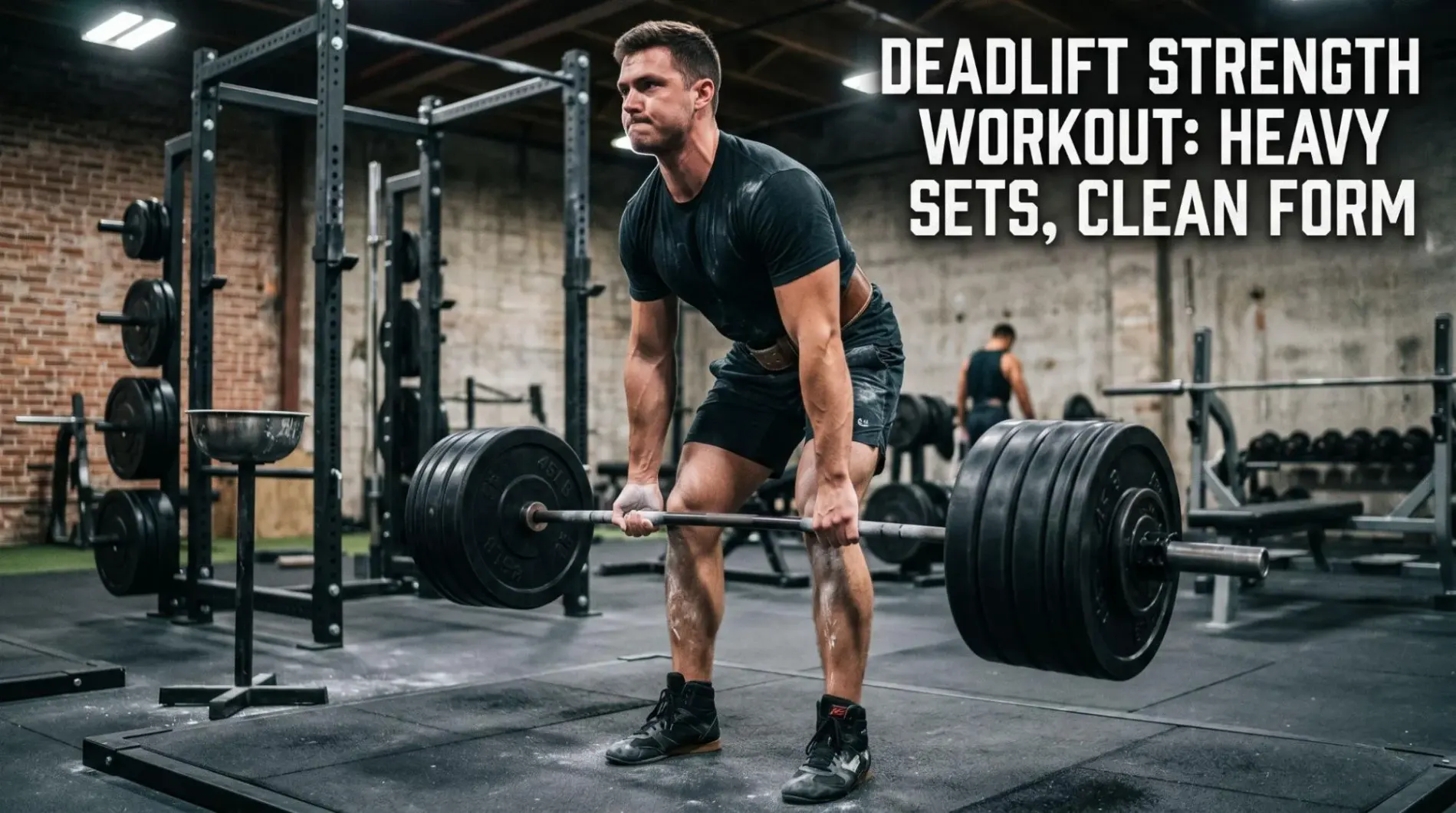
Deadlift Strength Workout for Progress
The aim of an overweight deadlift strength workout, or program, is to train you to be able to lift heavier and heavier over time. In this type of exercise, one has less reps, and the rest-duration and slow increase.
Strength-Based Deadlift Routine
This exercise is more suited to lifters who may have mastered the correct form and desire to gain more power.
- Deadlift: 5 sets of 3 reps
Load the weight in a challenging manner without compromising on form. The reps must be powerful, disciplined and hygienic. - Paused deadlift: 3 sets of 3 reps
Stop and take a one second pause just below the knee. This generates control and assists in correcting the weak areas of the lift. - Barbell row: 3 sets of 8 reps
The rows will make your upper back stronger and the bar will be kept closer and your position when pulling will be improved. - Hamstring curl: 3 sets of 10 reps
This works on the hamstrings and aids in equalizing the lower body. - Farmer’s carry: 3 rounds
Move long or long-distance dumbbells. This enhances grip, core stability and upper-back stability.
To achieve strength gains, add weight gradually. Excessive weight gain in a short period of time may result in a bad form and the possibility of injury.
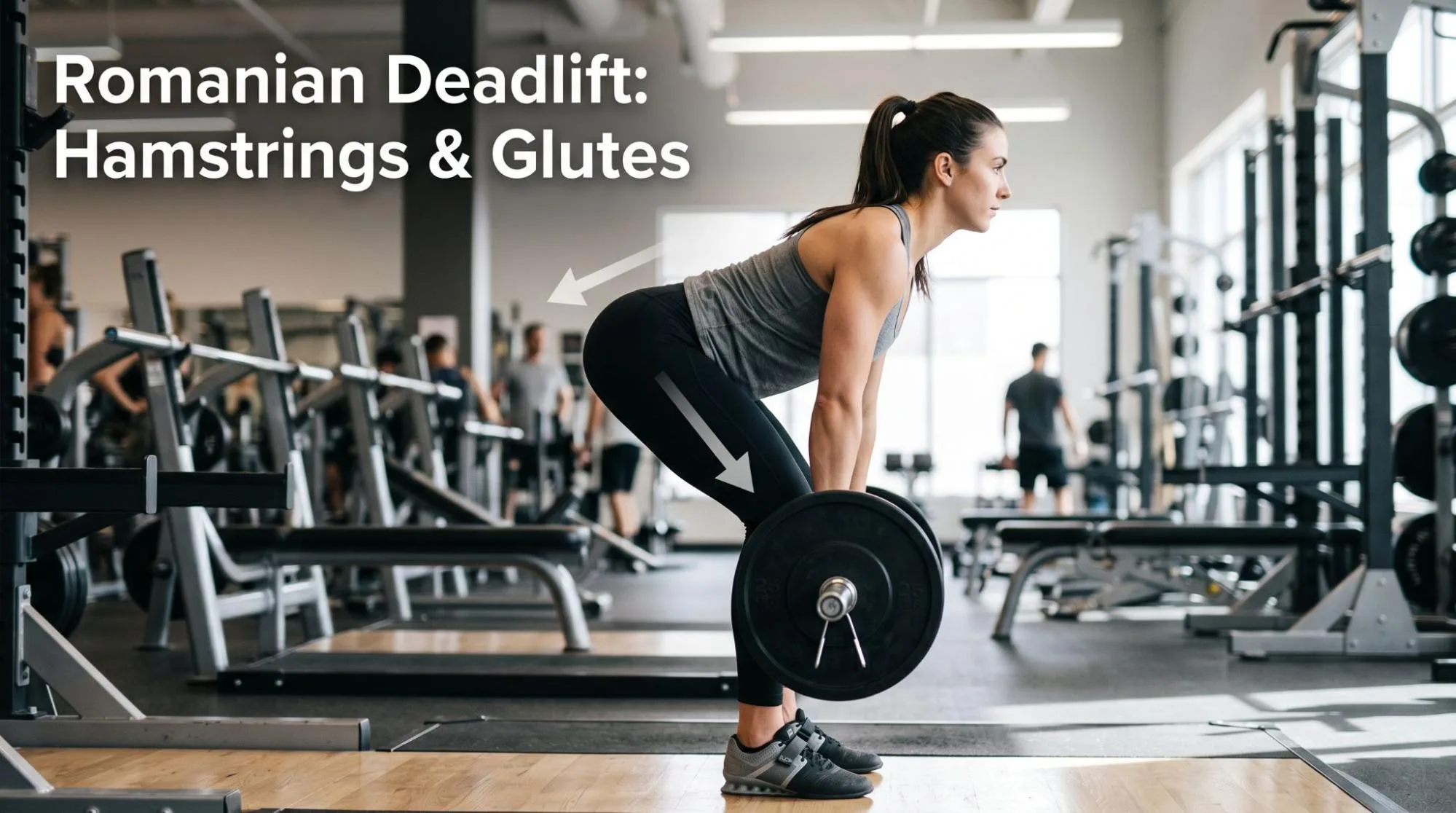
Romanian Deadlift Workout for Hamstrings and Glutes
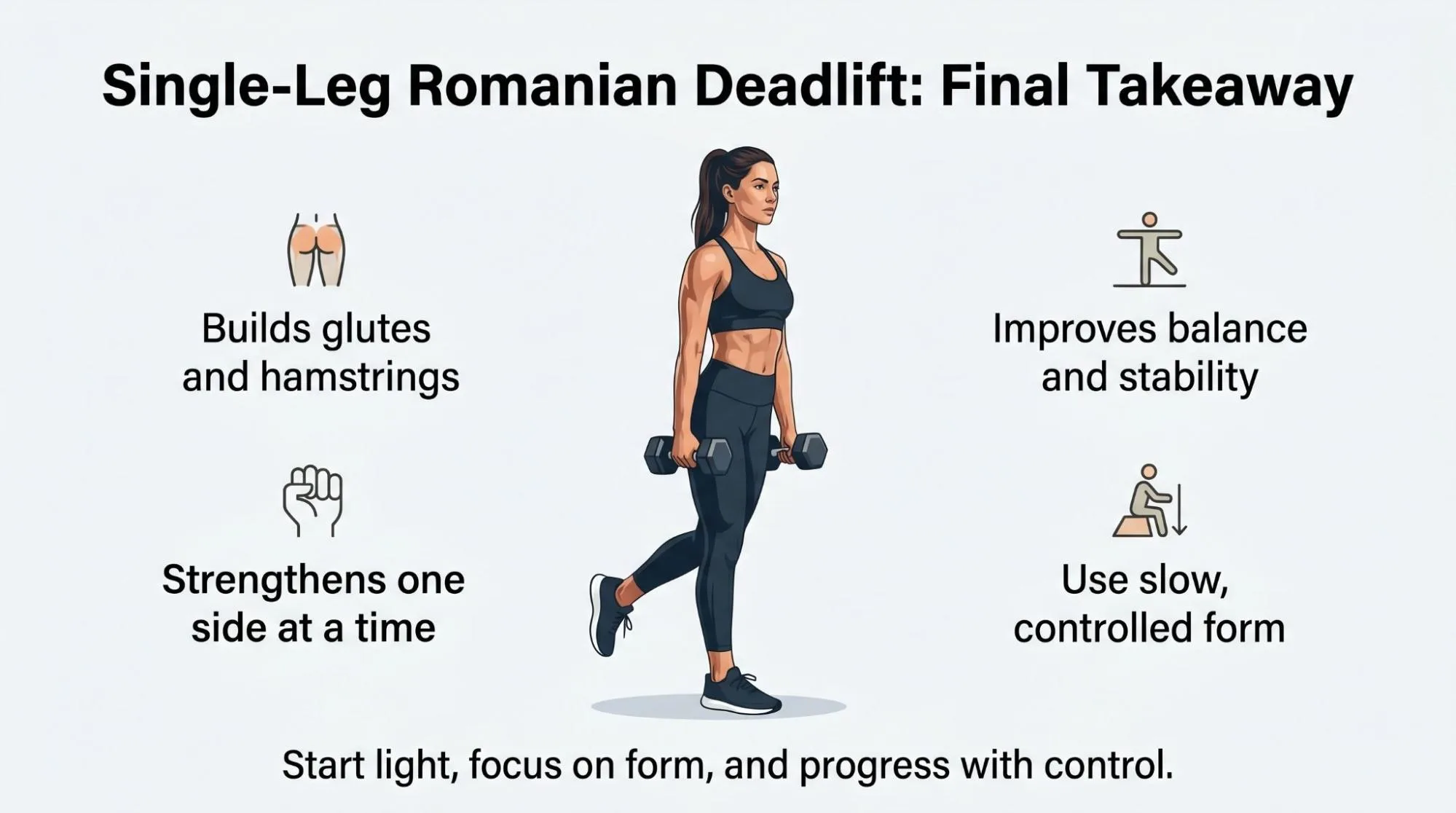
In order to train the hamstrings and glutes, an exercise, the Romanian deadlift, can be used instead of the normal deadlift. The position of the weight at a standing position is termed the push off position and the movement that allows the weight to be controlled is seen as the push up of bending in the direction of the back.
How Romanian Deadlifts Work
In Romanian deadlift, your knees should be slightly bent and your hips are to move back. The bar moves down your thighs until you experience some stretching of your hamstrings. Then you scrunch your butt and stand up again.
Romanian Deadlift Routine
- Romanian deadlift: 4 sets of 8 reps
Take your time and concentrate on the stretch of the hamstrings. Round your back not. - Dumbbell Romanian deadlift: 3 sets of 10 reps
Dumbbells will enable inexperienced individuals to master balance and control prior to using a barbell. - Hip thrust: 3 sets of 10 reps
This is beneficial as it tightens the glutes and enhances hip drive. - Back extension: 2 sets of 12 reps
Keep in mind that the movement should be kept in check not extended to the maximum at its limit.
Romanian deadlifts are effective in muscle building, enhancing hip movements, and strengthening the back part of the body.
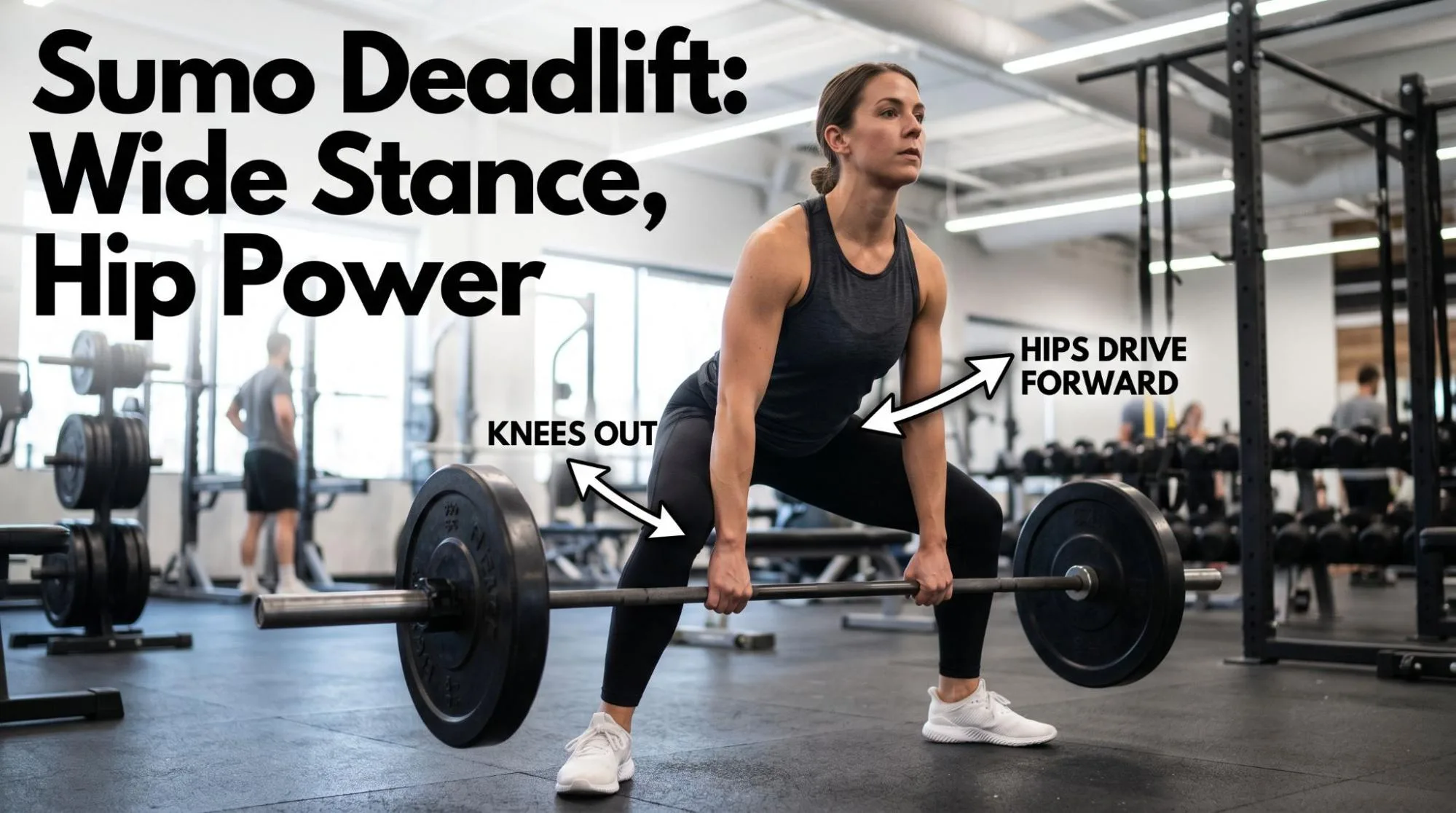
Sumo Deadlift Workout for Lower Body Power
A broader stance is taken in a sumo deadlift exercise compared to the conventional deadlift. The bar you are holding is in your legs and your hips are initially closer to the bar.
Why Choose the Sumo Deadlift?
The sumo deadlift might also be handy in those instances when one wishes to get rid of the burden imposed on the lower back and trust his or her legs and hips. Lifters with strong hips, or with good mobility or longer legs can successfully use it.
Sumo Deadlift Routine
- Sumo deadlift: 4 sets of 5 reps
Pull out your knees and in your chest. Kick up, up, up with your feet, and stand up, up, up to the top. - Goblet squat: 3 sets of 10 reps
This aids in bettering hip placement and leg power. - Cable pull-through: 3 sets of 12 reps
This will train hip extension and glute activation. - Side plank: 3 sets per side
The core is stronger with the help of planks on the side that help in body control.
The sumo deadlift does not have any advantage or disadvantage over the normal deadlift. It is just another form that could be better suited to a particular body aspiration.
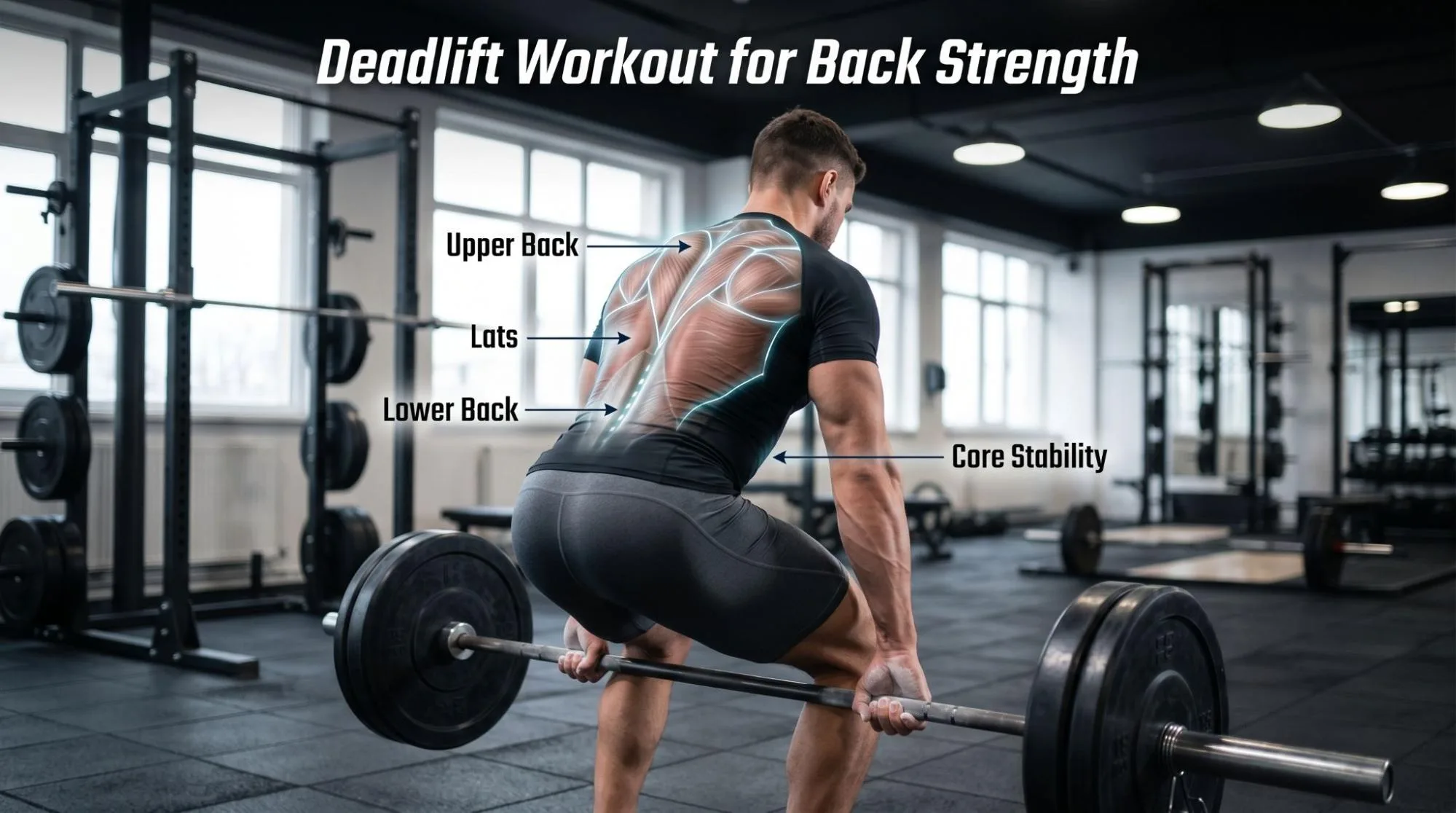
Deadlift Workout for Back Strength
The back strength workout should consist of deadlift exercises as well as the support exercise of the upper back, lower back and core. The aim is to develop a good and stable back without the use of maximum-weight deadlifts alone.
Back-Focused Deadlift Routine
- Deadlift: 4 sets of 4 reps
Torque a medium to heavy weight and emphasize good form. Hold your lats close, and the bar closed. - Chest-supported row: 3 sets of 10 reps
This strengthens the upper back without exerting an undue burden on the lower back. - Lat pulldown: 3 sets of 10 reps
Good lats aid in keeping the bar near during deadlift and enhance pulling power. - Back extension: 3 sets of 12 reps
This will make the lower back, glutes, and hamstrings stronger once performed in a controlled manner. - Dead bug: 3 sets of 10 reps per side
This basic exercise should demonstrate to you how to keep your back straight and have your limbs and legs move.
This type of exercise would aid in building a stronger, thicker back, in addition to improving your deadlift form.
Deadlift Mistakes to Avoid
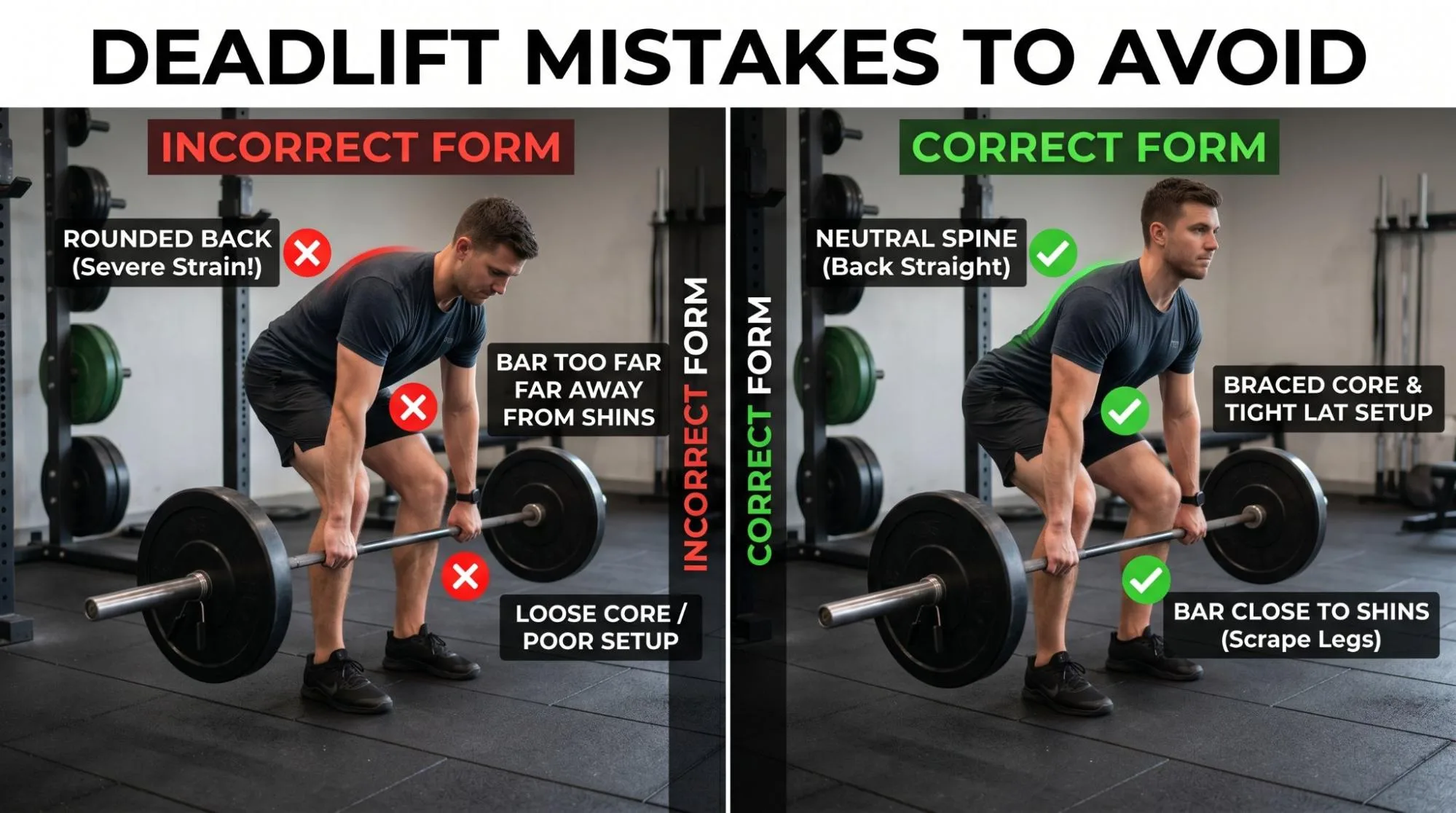
Knowing the main mistakes that people commit when performing a deadlift, this knowledge will enable you to stay be safe and achieve more improvement. The key problems of deadlifting include wrong positioning, weight is too heavy or one has no control over it.
Rounding the Lower Back
It is the most common of errors. The load will be magnified by your lower back and it can result in an even greater load on your back. Maintain your chest lifted, core engaged and reduce the weight in case you are not able to hold.
Pulling With the Arms
When doing the deadlift the arms must remain straight. Do not bend your elbows, or make an effort to pull up the bar. The work should be done by your legs, hips and your back, but your hands are merely holding the bar.
Letting the Bar Drift Forward
When the bar goes out of your body, lift will be more difficult and unsafe. Keep the bar in touch with your shins and thighs as you move.
Starting With Hips Too Low
All squats are not deadlifts. When the hips start too low, then the knees will start the bar to move forward and ruin your bar path. Start by with positioning your hips at a higher place than the squat position but lower than your shoulders.
Lifting Too Heavy Too Soon
When you are poor shaped, being heavy weight is not good. Gradually gain strength and only add weight when you have a consistent technique. Ego lifting should always be preceded by good form.
Not Bracing the Core
In the absence of the core bracing, your body will be relaxed and unstable. Take a deep breath, twist the abs and keep the torso straight before each rep.
Weekly Deadlift Workout Routine
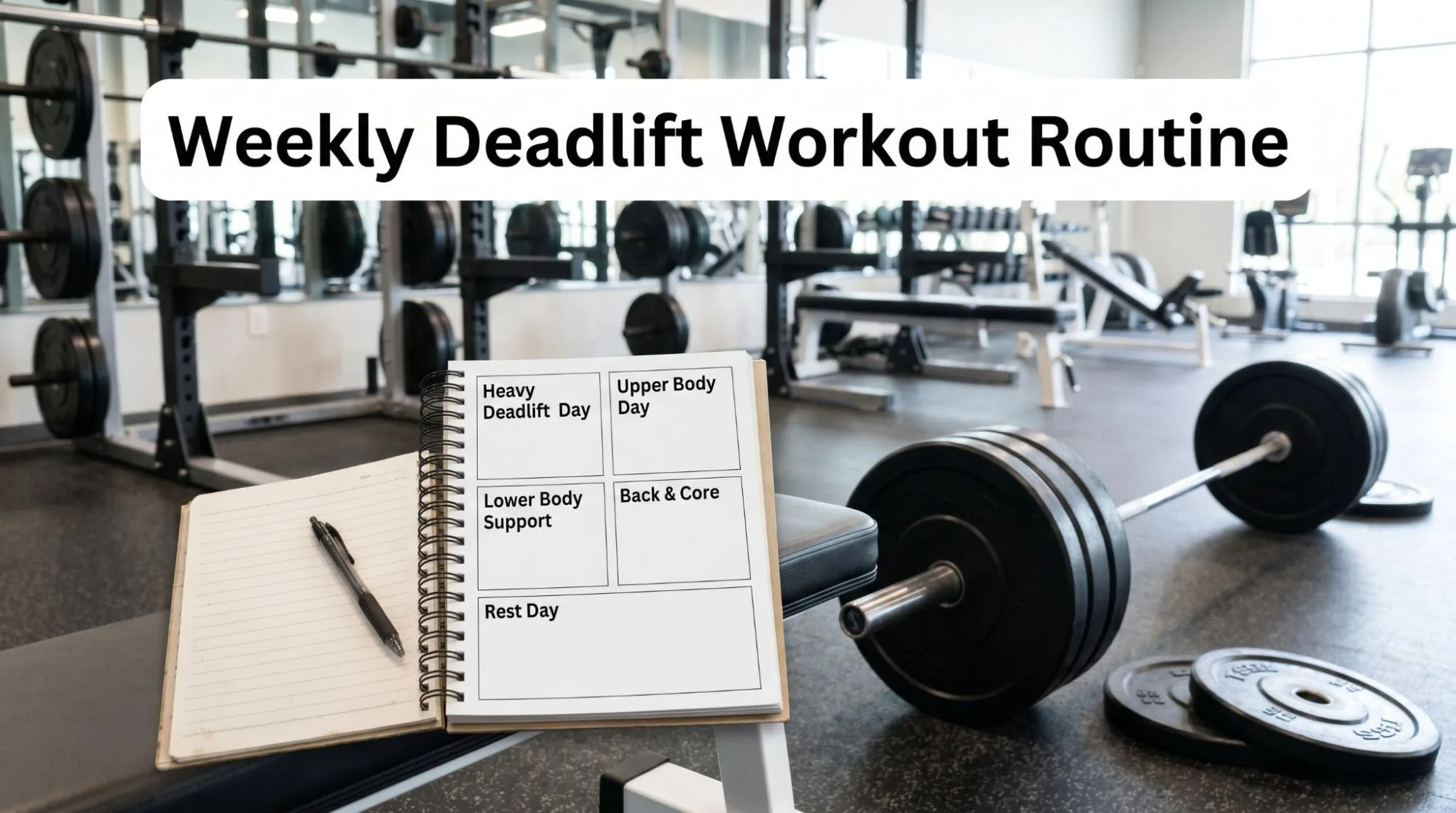
The exercise program of the right deadlift exercise requires to be included into your regular training program without necessarily having to over-work your body. The deadlifts are not easy hence a person reacts well to one or two determined deadlift sessions per week.
Simple Weekly Plan
- Day 1: Heavy deadlift day
Get powerful with either the traditional or sumo deadlifts. Carry on with reps that are not as intense and have rest in between sets. - Day 2: Upper-body training
Work out your chest, shoulders, arms and upper back. During this day, one should not work heavily on the lower back. - Day 3: Lower-body support day
Incidents of Romanian deadlifts, squats, lunges and glute work. Maintain the weight moderate and emphasize on control. - Day 4: Back and core day
To aid in deadlift performances, add rows, pulldowns, planks, dead bugs, and carries. - Rest days
Progress includes recovery. Expansion Sleep, food, hydration and mobility work are what are used to help your body develop even stronger.
This routine is not rigid and alterations on what you want to accomplish. Amateurs could get away with fewer sets but more experienced lifters may need a more comprehensive, systematic approach to the progression.
Best Warm-Up Before a Deadlift Workout
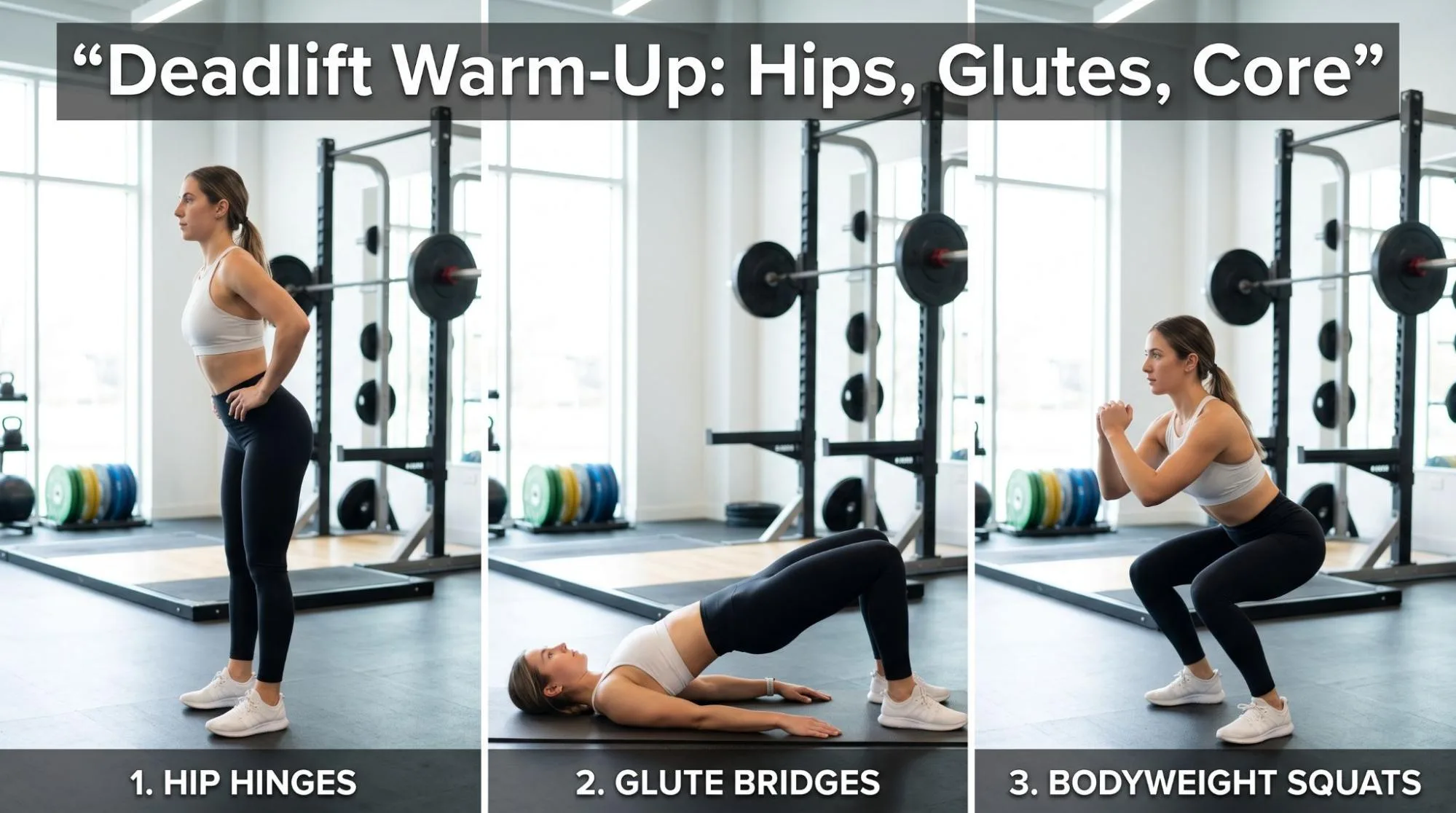
The warmth-up can be used to help your muscles, joints and nervous system to be prepared to do lifting. It also allows you to move comfortably and increases the chances of not gaining bad form should you forget to decide during the heavy sets.
Warm-Up Routine
- Light cardio for 3 to 5 minutes
To enhance the flow of blood, use a bike, a treadmill or a rowing machine. - Hip hinges for 10 reps
Drill: Push your hips behind and hold your spine straight. - Glute bridges for 12 reps
Warm up your butt muscles before lifting. - Bodyweight squats for 10 reps
Warm up your hips, knees and ankles. - Light deadlift sets
Start with the unloaded bar or exceedingly small weight. Prior to you getting to working sets, you need to add weight gradually before you get to the working sets.
Load, heavy deadlifts etc. Do not run into heavy deadlifts. Warm-up sets will allow your body to warm-up and your technique will be enhanced.
Frequently Asked Questions
What is the best deadlift workout for beginners?
Easy deadlifts, Romanian deadlifts, glute bridges, planks and warm-ups are the best deadlifts exercises that a beginner can perform. Novices must concentrate on the correct form prior to pulling heavy weight.
How many times per week should I do deadlifts?
Deadlifts can be performed by most individuals one or two times a week. Given the nature of deadlifts being tedious activities, your body should be in a position of providing adequate rest between sessions in order to recover and get stronger.
Is a deadlift workout good for back muscles?
Indeed, a deadlift exercise would help to enhance your lower back, upper back, traps, lats, and core. It should however be done with the appropriate form to prevent any unwarranted strain.
What muscles do deadlifts work the most?
In the case of deadlifts, the muscles that most tend to be engaged are the glutes, hamstring, lower back, the upper back, the traps, the core as well as the grip. They also get the quads and hips to participate in the pulling movement.
What are the most common deadlift mistakes?
Rounding of the back, pulling that is too heavy, letting the bar slip off the body, not bracing the core, pulling with the arms are the most common mistakes.
Are Romanian deadlifts better than regular deadlifts?
Romanian deadlifts are, not worse but, different. They use more of the hamstring and also the glutes unlike normal deadlifts which train the heavier pulling strength of the earth floor.
Can deadlifts help build muscle?
Yes, deadlifts can be used to build muscle as they can effectively train most of the large muscle masses at the same time. They are especially useful with the glutes, hamstrings, back and traps.
Should I use conventional or sumo deadlifts?
Choose the change that will be more comfortable to your body and goals. Traditional deadlifts uses a much narrower stance as compared to sumo deadlift which utilizes a much wider stance and incorporation of a greater amount of hip involvement.
Strong Conclusion
A deadlift workout is one of the best exercises that one can do to gain strength, posture and training back chain flexibility. It exercises your glutes, hamstrings, back, core and grip all in one move. Deadlifts can be a great supplement to your workout program regardless of the objective you have of either building muscle or improving athletic performance or simply being able to move better on a daily basis.
The most significant aspect is that first one should concentrate on form. Know how to get deadlifts right, push the bar to the end and tighten your belly, or even scramble to get through your lifts. You can begin light when you are a beginner, so that you can proceed gradually when you are getting familiar with it.
Another advantage is that you can employ various forms as per your objectives. A Romanian deadlift workout is great for hamstrings and glutes. A deadlift exercise can serve as a way of training the hips and legs, and can involve a wider stance. Back strength This type of exercise can enhance posture and pulling strength.
Smart train, get rid of the usual mistakes and provide the organism with a proper rest. The deadlift can also be one of the best and most gratifying exercises in your fitness regime with patience and consistency.