
The satya meaning in yoga philosophy is not only about telling the truth. It is about living honestly through your thoughts, speech, actions, and daily choices. Satya is one of the most practical teachings in yoga philosophy because it brings truthfulness into real life, not just onto the yoga mat. The satya meaning in yoga philosophy is about being honest in your words, clear in your thoughts, and sincere in your actions. It teaches us to live with integrity, speak with kindness, and stop pretending to be something we are not. When practiced gently, satya helps create peace in the body and mind and makes daily life feel more honest, balanced, and grounded.

What Is Satya in Yoga?
The satya meaning in yoga philosophy becomes clearer when we understand satya as truthfulness with kindness, not harsh honesty. Satya is a Sanskrit word that means truth, honesty, or truthfulness. In yoga philosophy, satya is not only about telling the truth to others. It is also about being honest with yourself, acting with integrity, and living in a way that matches your real values.
The satya meaning in yoga philosophy goes deeper than simple honesty. It asks us to notice where we pretend, exaggerate, hide, or act against what we know is right.

Satya as the Second Yama
Satya is the second of the five yamas in the Yoga Sutra of Patanjali. The yamas and niyamas are ethical guidelines that support a balanced yoga practice and a peaceful life.
The five yamas are:
- Ahimsa — non-harming
- Satya — truthfulness
- Asteya — non-stealing
- Brahmacharya — moderation
- Aparigraha — non-attachment
Satya comes after ahimsa, which matters a lot. Truth should never be used as a weapon.

Learn More : Pratyahara Yoga Meaning and Practice: A Simple Guide for Beginners
The Deeper Meaning of Satya
Satya truthfulness means seeing things clearly. It means asking:
- Am I being honest about my feelings?
- Am I speaking the truth kindly?
- Am I acting in line with what I say?
- Am I ignoring something because it is uncomfortable?
In yoga philosophy, truth is not just spoken. It is lived through the body and mind.
Satya and Ahimsa
Satya and ahimsa work together. Ahimsa means non-violence or non-harming. So, while satya asks us to be truthful, ahimsa reminds us to be kind.
For example, being honest does not mean saying cruel things. You can speak truthfully without humiliating someone. Sometimes, silence is better than a harsh truth spoken at the wrong time.

Why Satya Is Important in Daily Life
In daily life, the satya meaning in yoga philosophy teaches us to avoid pretending, exaggerating, or acting against our values. Satya helps us live with less confusion. When our words, thoughts, and actions are not aligned, we feel inner tension. We may look calm outside, but inside there is pressure.
Practicing satya in daily life creates clarity. You know what you stand for. People know they can trust you. Your decisions become cleaner because they are not based on pretending.
Practicing Satya in Speech
Speech is the most obvious place to practice satya. This means:
- Saying what is true
- Avoiding lies and false promises
- Not exaggerating stories to impress others
- Speaking kindly, not sharply
- Not using honesty as an excuse to hurt people
A simple rule is this: speak the truth, but make sure your words are useful and respectful.

Practicing Satya in Thoughts
Satya also begins inside the mind. Many people lie to themselves before they lie to others.
You may tell yourself, “I’m fine,” when you are exhausted. Or, “I don’t care,” when you are actually hurt. Practicing satya means gently noticing what is really happening inside you.
This kind of honesty is not weakness. It is self-awareness.

Practicing Satya in Actions
Satya becomes real when your actions match your words. If you say health matters to you, your choices should support that. If you promise someone something, you should try to honor it.
To act with integrity means your behaviour reflects your truth, even when no one is watching.

Learn More : Asteya: The Yogic Practice of Non-Stealing in Daily Life
Satya on the Yoga Mat
The satya meaning in yoga philosophy also applies to physical practice because yoga asks you to listen honestly to your body instead of forcing a pose. Satya is also part of physical practice. On the yoga mat, truthfulness means respecting your body’s limits.
If your body is tired, satya asks you to notice it. If a pose causes pain, satya asks you not to force it. Yoga practice is not about pretending to be flexible or strong. It is about listening honestly to the body and mind.
Sometimes the most truthful practice is resting.

Satya in Relationships
Relationships need truth, but they also need care. Satya in relationships means being honest without being careless.
It may look like:
- Saying how you feel clearly
- Admitting when you are wrong
- Not pretending everything is okay
- Keeping promises
- Avoiding manipulation or hidden intentions
Trust grows when people feel your words are real.

Satya and Self-Acceptance
One of the hardest parts of practicing satya is accepting yourself as you are right now. Not the perfect version. Not the image you show others. Just the real you.
Self-acceptance does not mean you stop growing. It means you stop lying to yourself about where you are starting from.
That honesty makes real growth possible.
Common Misunderstandings About Satya
Truthfulness Does Not Mean Being Harsh
Some people think satya means saying whatever comes to mind. That is not real truthfulness. If your words are true but harmful, ego may be speaking louder than wisdom.
Satya should be clear, kind, and responsible.
Silence Can Sometimes Be the Right Choice
Not every truth must be spoken immediately. If speaking will create unnecessary harm, silence may be wiser.
Silence is not dishonesty when it comes from compassion, patience, or respect for timing.
Honesty Does Not Require Oversharing
Being honest does not mean telling everyone every private detail. You can be truthful and still have boundaries.
Satya supports honesty, not emotional dumping.
Benefits of Practicing Satya
Creates Inner Peace
When you stop pretending, the mind becomes lighter. You no longer need to manage false stories.
Builds Trust and Strong Relationships
People trust those whose words and actions match. Satya makes relationships more stable and respectful.
Improves Self-Awareness
Truthfulness helps you understand your emotions, habits, and choices more clearly.
Supports Spiritual Growth
In yoga philosophy, spiritual growth begins with seeing reality honestly. Satya helps remove illusion and self-deception.
Strengthens Confidence
When you live honestly, you become more grounded. You do not need to act like someone else.

Satya in the Yoga Sutras
In the Yoga Sutra, Patanjali presents satya as an ethical foundation for yoga. It is not separate from meditation or physical practice. It prepares the mind for deeper awareness.
A person who practices satya becomes more aligned. Their speech carries more weight because it comes from sincerity, not performance.
How to Practice Satya Every Day
Be Honest With Yourself
Start by checking in with yourself. Ask, “What am I really feeling?” or “Am I avoiding something true?”
Speak Truthfully and Kindly
Before speaking, pause. Ask whether your words are true, helpful, and respectful.
Avoid Exaggeration
Small exaggerations can become habits. Try to speak simply and accurately.
Keep Your Commitments
Do not promise what you cannot do. If you cannot keep a commitment, communicate honestly.
Respect Your Body’s Limits
In yoga practice and daily life, listen to your body. Rest when needed. Do not force your way through pain or exhaustion.

Satya and Modern Life
Satya in the Digital Age
Modern life makes it easy to edit reality. Social media often encourages people to show only the best moments. Practicing satya online means being mindful of what you share, avoiding false appearances, and not spreading information you have not checked.
You do not have to show everything. But what you show should not be intentionally misleading.
Satya in the Workplace
At work, satya means honest communication, fair dealing, and taking responsibility. It also means not pretending to know something when you do not.
A truthful workplace builds trust. People can solve problems faster when they are not hiding mistakes or avoiding reality.
Satya in Personal Relationships
In personal life, satya helps prevent resentment. When you speak honestly and kindly, small problems are less likely to become deep wounds.
Truthfulness also helps you choose relationships where you can be real, not constantly perform.
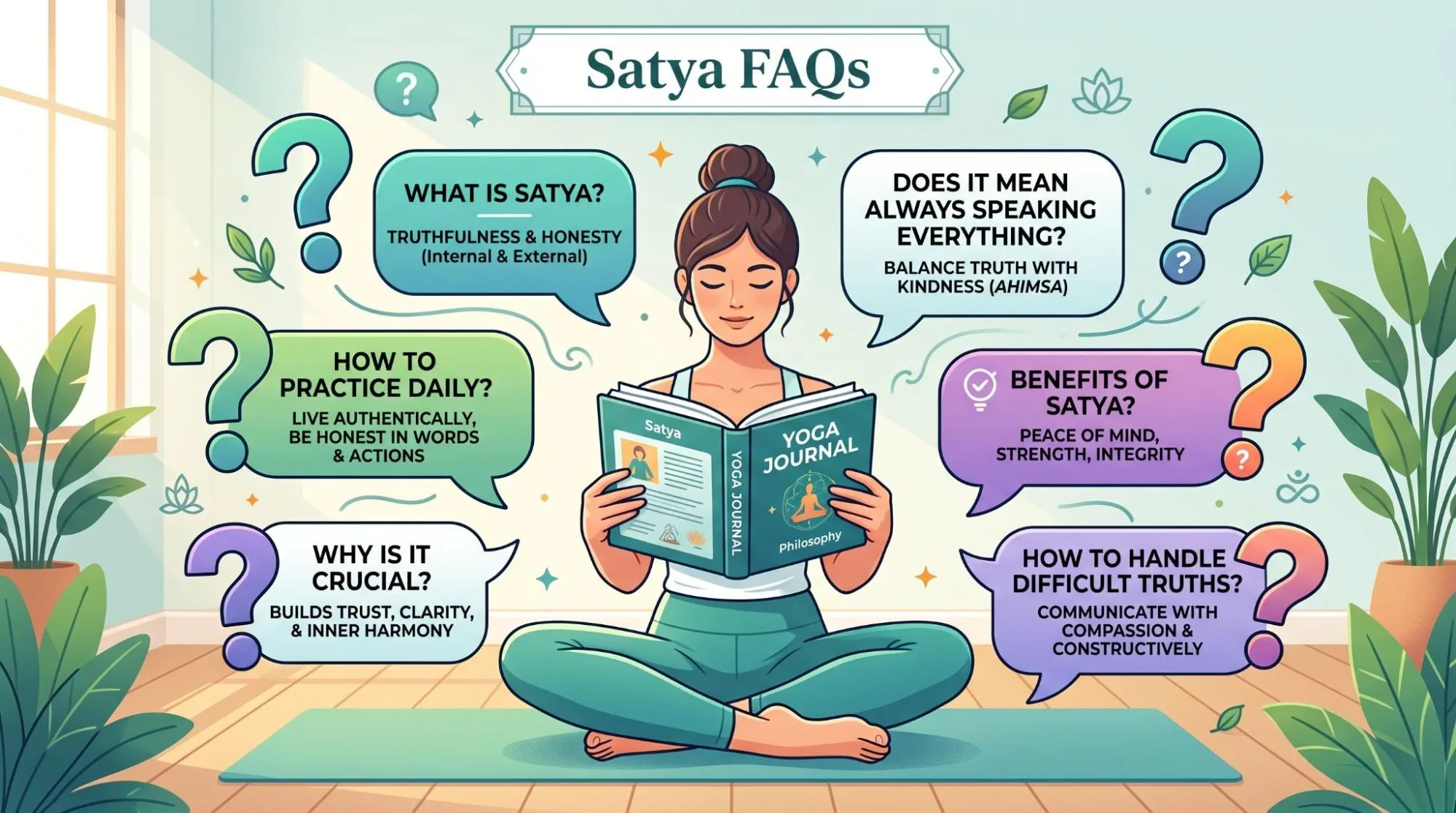
FAQs About Satya in Yoga
What is the simple meaning of satya?
Satya means truthfulness. In yoga, it means being honest in speech, thoughts, and actions.
What is satya meaning in yoga philosophy?
The satya meaning in yoga philosophy is living in truth. It includes honest speech, self-awareness, integrity, and alignment between what you think, say, and do.
Is satya only about not lying?
No. Satya is more than avoiding lies. It also means not exaggerating, not pretending, and not acting against your inner truth.
How can I practice satya daily?
You can practice satya by speaking honestly, keeping promises, avoiding exaggeration, respecting your body, and being honest about your feelings.
Can truthfulness hurt others?
Truth can hurt when spoken without kindness. In yoga, satya should be balanced with ahimsa, which means non-harming.
How does satya help in yoga practice?
Satya helps you listen to your body honestly. It prevents forcing poses, comparing yourself with others, or ignoring pain.
Learn More : Patanjali Yoga Sutras for Beginners
Final Thoughts
The satya meaning in yoga philosophy reminds us to speak truthfully, act with integrity, and live with more peace and self-awareness. Satya is a simple idea, but it can change the way you live. It asks you to be honest without being harsh, clear without being careless, and real without needing to prove anything.
In yoga philosophy, truthfulness is not only a moral rule. It is a path toward peace, trust, self-awareness, and a more grounded life. Practicing satya every day helps you live closer to who you truly are.