Kundalini yoga philosophy explained simply means understanding Kundalini yoga as a practice of awareness, breath, energy, meditation, and inner growth. Kundalini yoga can sound mysterious at first. People hear words like “kundalini energy,” “chakras,” “serpent power,” or “awakening the kundalini,” and it may feel a little too advanced or spiritual. Kundalini yoga philosophy explained simply helps beginners understand this practice without fear, confusion, or overthinking.
But at its heart, Kundalini yoga is about awareness. It teaches you to notice your breath, your thoughts, your energy, your habits, and the quiet connection between the body and mind. This guide explains kundalini yoga philosophy simply, so beginners can understand what it means, how it works, and how to approach it safely.
What Is Kundalini Yoga?
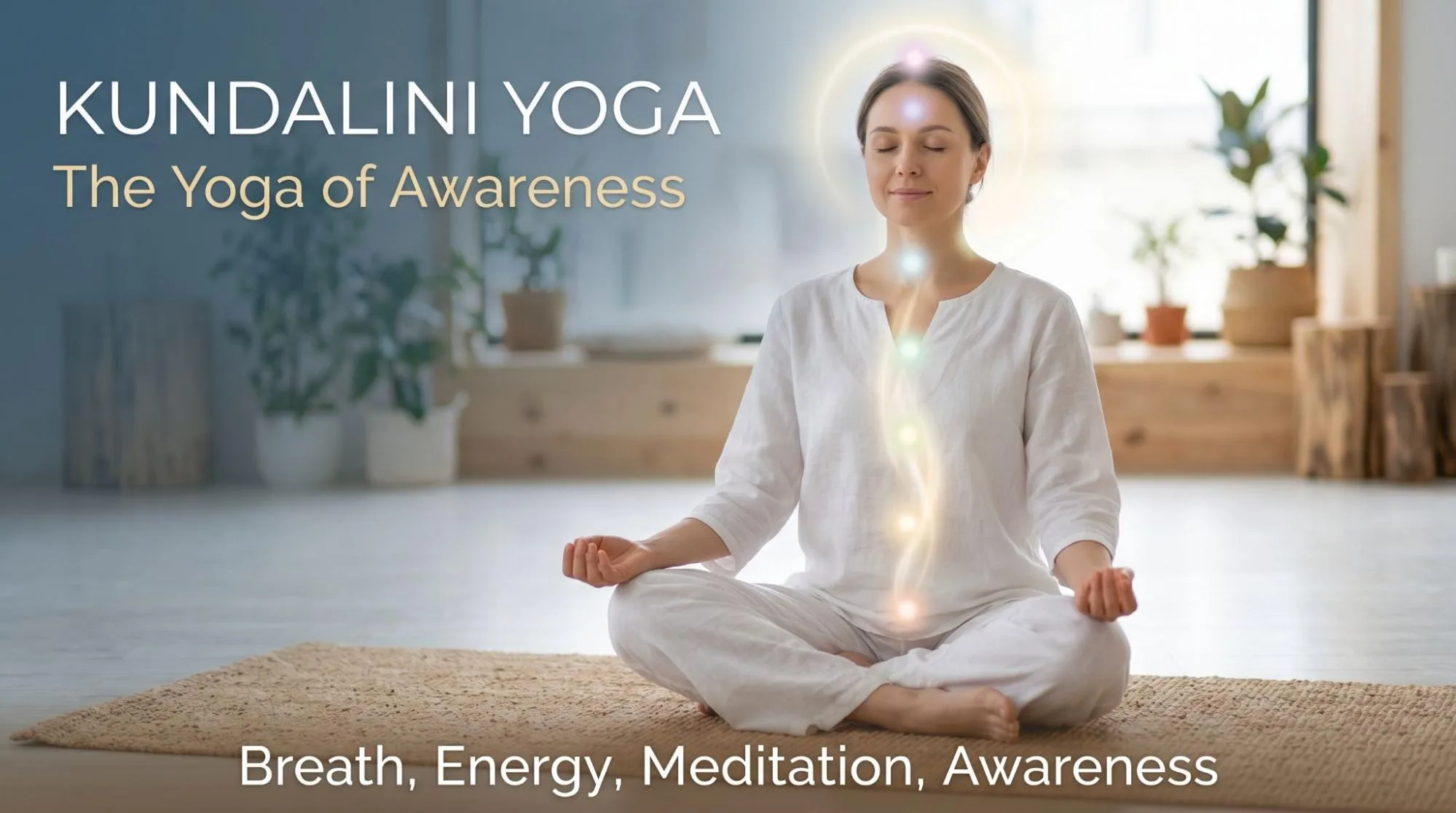
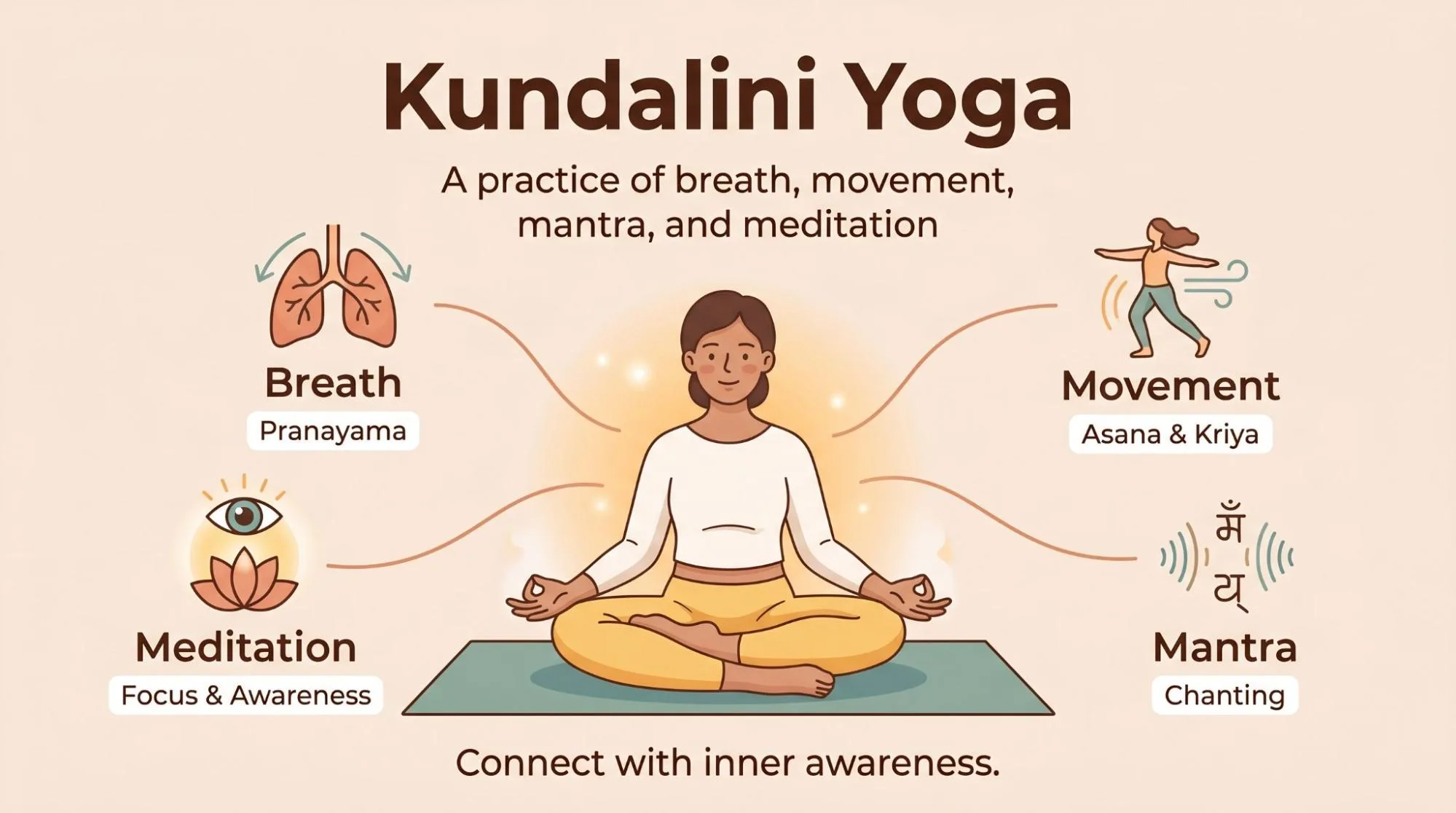
Kundalini yoga is a spiritual practice that uses breathwork, movement, meditation, mantra, chanting, and awareness-based exercises to help a person connect with their inner energy.
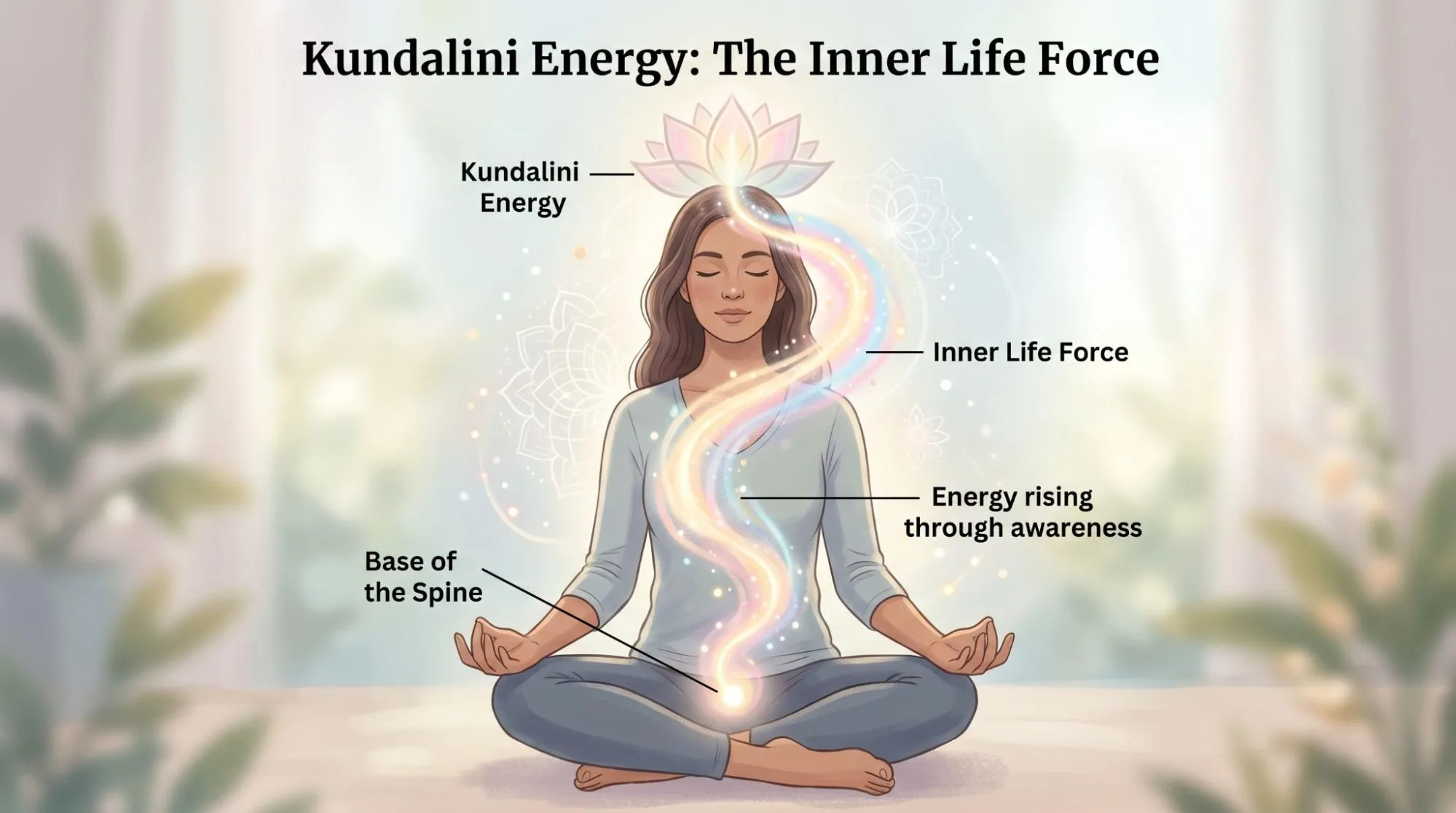
The term kundalini is often described as a hidden life force or spiritual energy resting at the base of the spine. Traditional teachings sometimes call it kundalini shakti or serpent power because it is symbolically pictured as a coiled energy.
Modern Kundalini yoga became widely known through teachers such as Yogi Bhajan, who introduced a structured form of practice involving kriyas, breathing techniques, mantra, and meditation. In short, kundalini yoga philosophy explained simply is about using breath, awareness, movement, and meditation for inner growth.
Why Kundalini Yoga Is Called the Yoga of Awareness
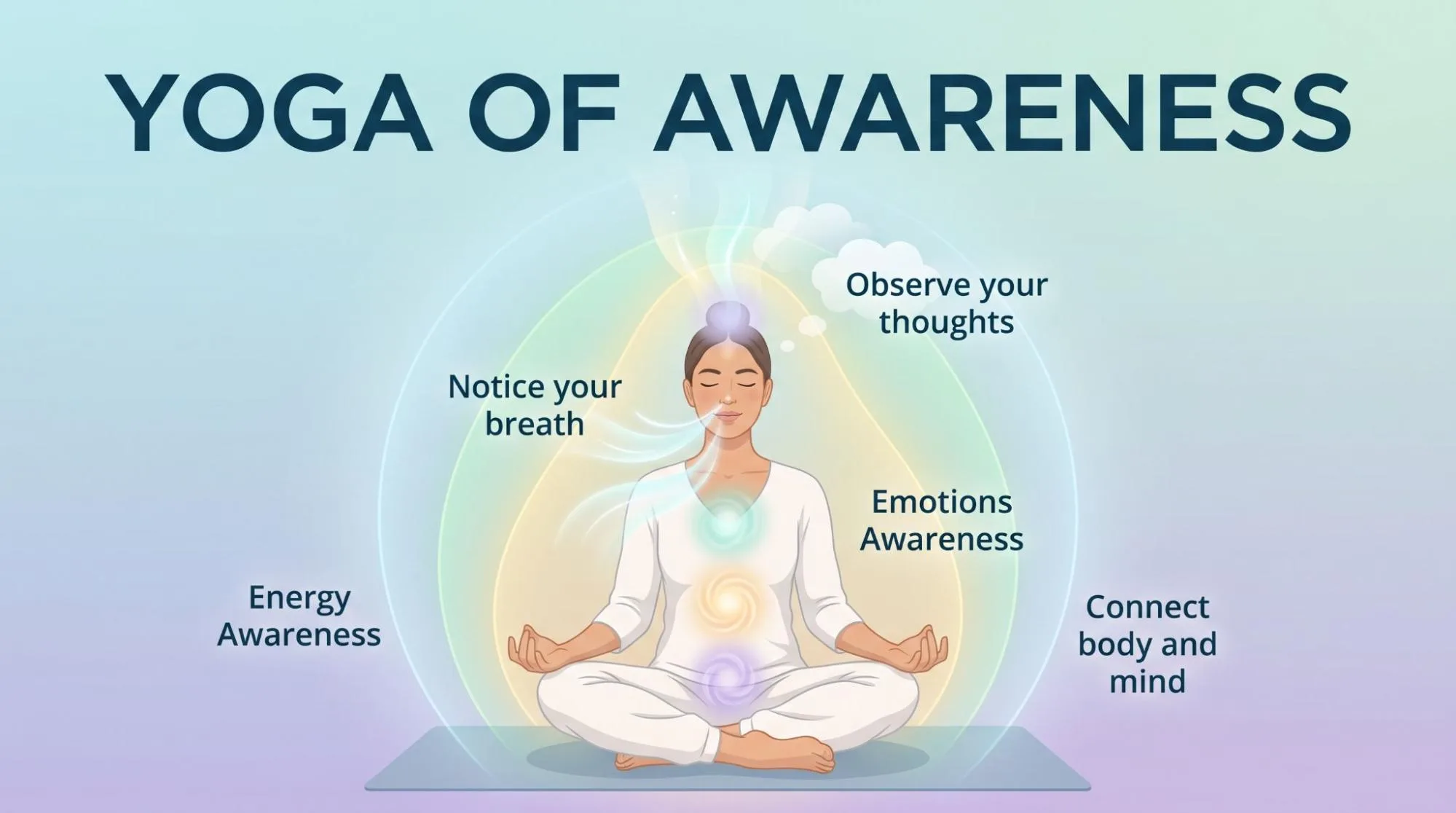
Kundalini yoga is called the “yoga of awareness” because its goal is not only flexibility or physical strength. It is more about becoming conscious of yourself.
Through repeated yoga practices, you begin to notice:
- How your breath changes with emotions
- How your thoughts affect your energy
- Where tension sits in the physical body
- How habits shape your daily choices
- How stillness can bring mental clarity
Awareness is the real foundation. The practice does not ask you to escape life. It helps you become more present inside it. This is why kundalini yoga philosophy explained simply always begins with awareness, not complicated spiritual ideas.
Learn More : Crown Chakra: Meaning, Spiritual Awakening, Balance, and Activation
Kundalini Yoga Philosophy Explained Simply
The philosophy of Kundalini yoga is based on the idea that every person has a deeper spiritual potential. This potential is not outside you. It is already within you, but it may be hidden under stress, fear, distraction, emotional patterns, or lack of self-awareness.
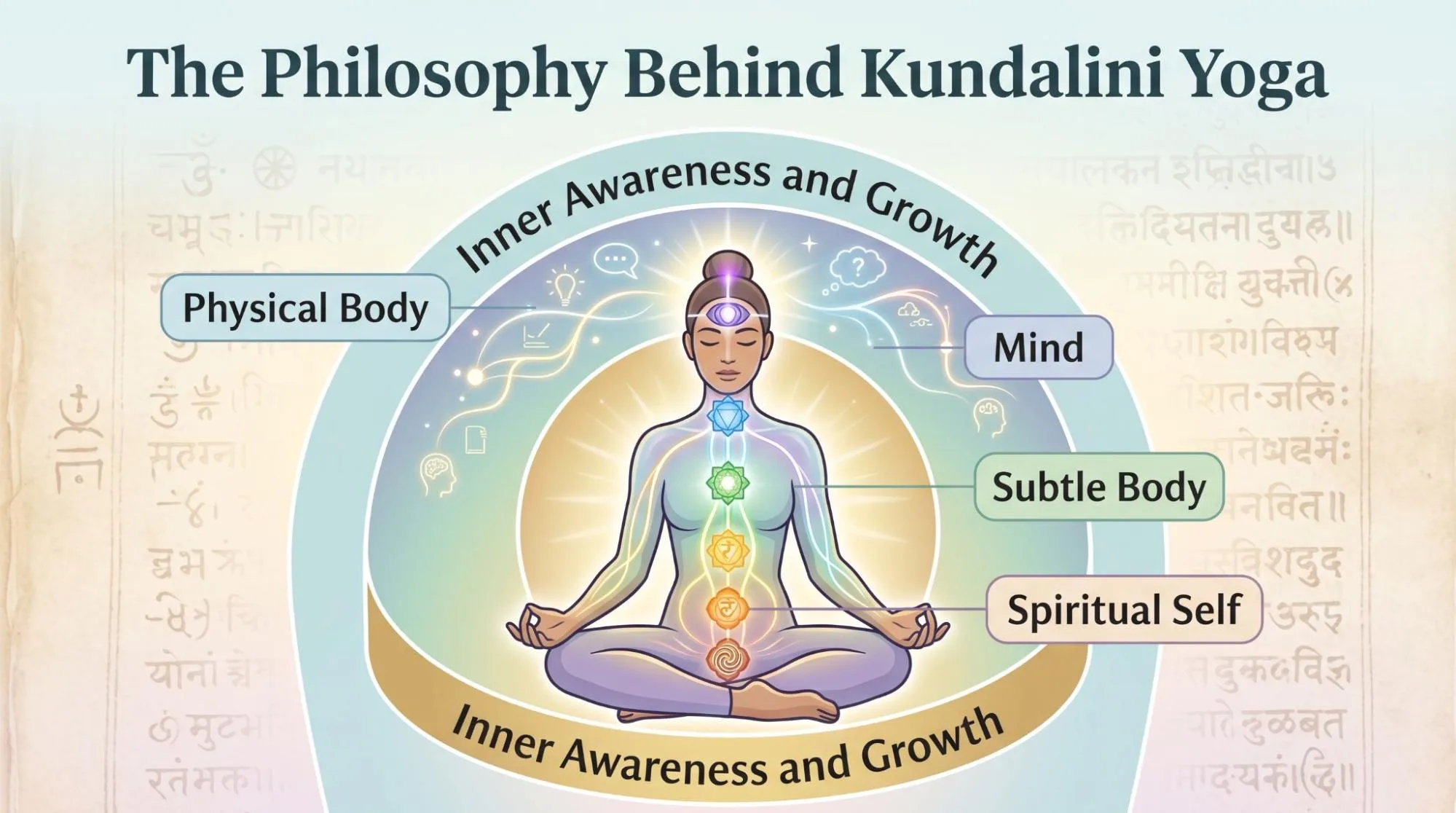
Ancient texts such as the Yoga Kundalini Upanishad and the Hatha Yoga Pradipika discuss energy, breath, the subtle body, and inner transformation. These teachings describe the human being as more than just the physical body.
In this view, we have:
- A physical body
- A mind with thoughts and emotions
- A subtle body connected with energy
- A deeper spiritual self
Kundalini yoga works with all these layers together.
Kundalini Energy: The Inner Life Force
For beginners, kundalini yoga philosophy explained simply means seeing kundalini energy as inner potential, not something to force or rush. Kundalini energy is often described as a powerful inner life force. In traditional symbolism, it rests at the base of the spine near the root chakra.
The idea is not simply about having a dramatic spiritual experience. For beginners, it is better to understand kundalini energy as your inner potential for growth, clarity, courage, creativity, and higher awareness.
Awakening the kundalini should not be treated like a quick goal or trend. In serious spiritual practice, it is approached with patience, discipline, grounding, and proper guidance.
The Seven Chakras in Kundalini Yoga
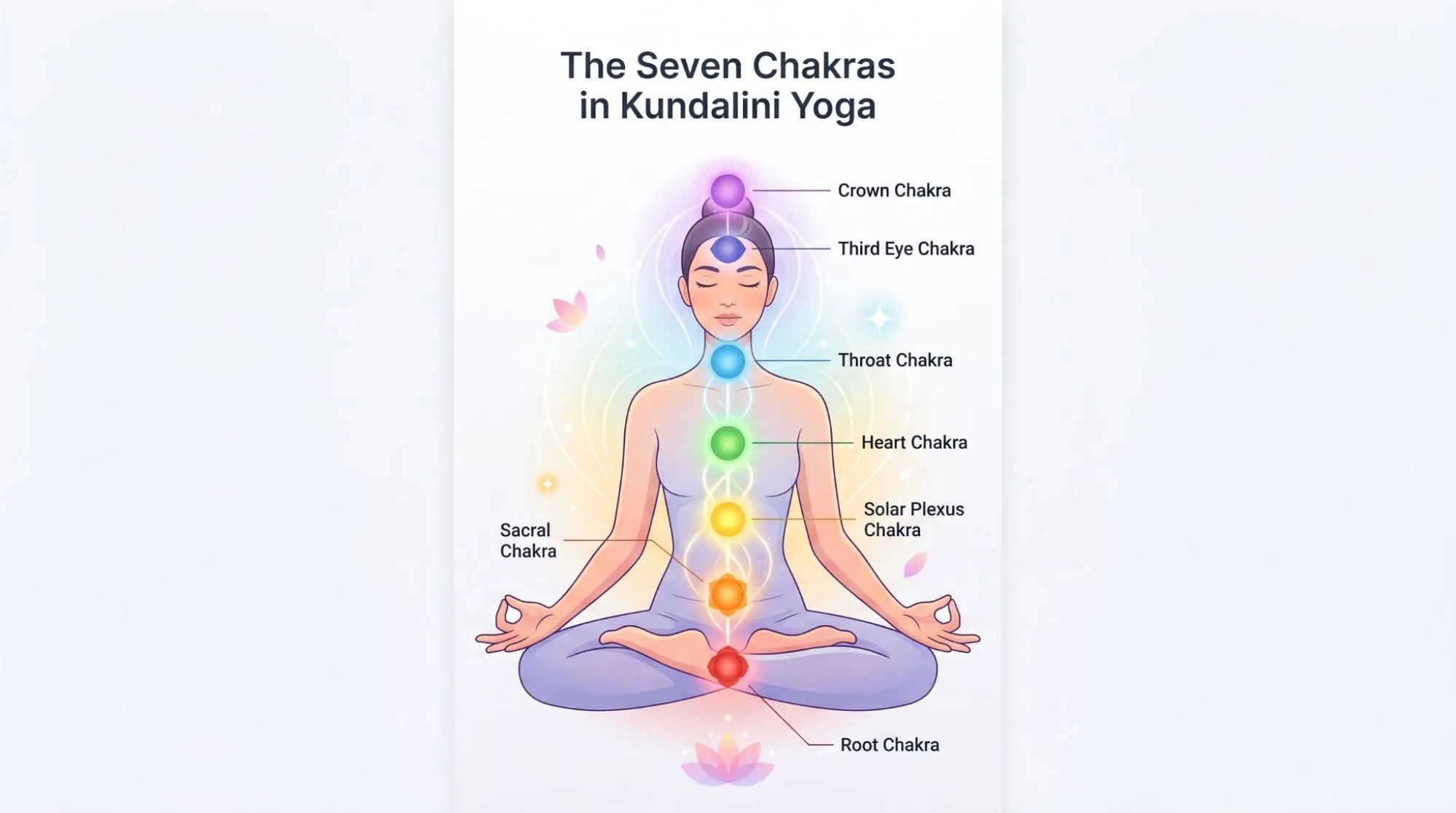
Chakras are energy centres in the subtle body. Kundalini philosophy teaches that energy rises through the central channel of the body, passing through these chakras.
Each chakra is connected with a different area of human experience.
Root Chakra
The root chakra is located at the base of the spine. It is linked with safety, stability, grounding, and survival.
When this area feels balanced, a person may feel more secure, steady, and present in daily life.
Sacral Chakra
The sacral chakra is connected with emotions, creativity, pleasure, and relationships.
A balanced sacral chakra supports emotional flow and healthy expression.
Solar Plexus Chakra
The solar plexus chakra is linked with confidence, discipline, personal power, and decision-making.
This is where many people feel nervous energy, willpower, or inner strength.
Heart Chakra
The heart chakra relates to love, compassion, forgiveness, and connection.
In Kundalini yoga, opening the heart does not mean becoming overly emotional. It means becoming more honest, kind, and balanced in how you relate to yourself and others.
Throat Chakra
The throat chakra is connected with truth, communication, and self-expression.
When this energy feels clear, speaking honestly and listening deeply become easier.
Third Eye Chakra
The third eye chakra is linked with intuition, insight, and inner vision.
This does not mean guessing the future. It means seeing yourself and your life more clearly.
Crown Chakra
The crown chakra is connected with spiritual awareness and higher consciousness.
Traditional teachings sometimes connect this level with deep meditation and the state of samadhi, where the mind becomes still and absorbed in awareness.
Practical Tools Used in Kundalini Yoga
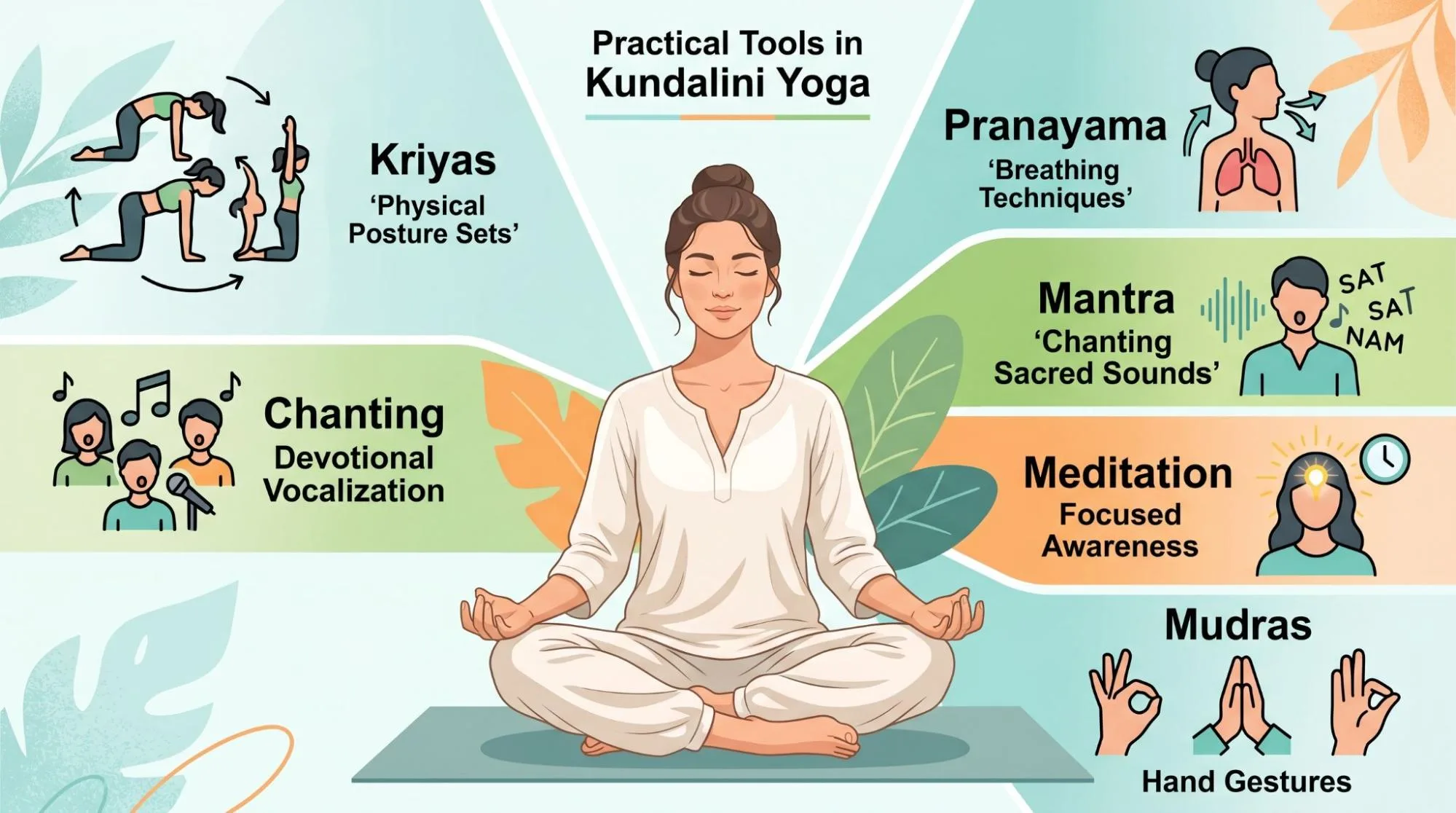
Kundalini yoga uses several practical tools. These are not random techniques. Each one has a purpose.
Kriyas
Kriyas are specific sets of movements, breathing patterns, sounds, or meditations. A kriya may focus on the spine, nervous system, emotions, concentration, or energy balance.
For beginners, simple kriyas are best.
Pranayama
Pranayama means breath control. In Kundalini yoga, breathing practices are used to calm the mind, build focus, and increase awareness.
Slow breathing is usually the safest place to start.
Mantra
A mantra is a repeated sound, word, or phrase. In Kundalini yoga, one common mantra is “Sat Nam,” often understood as “truth is my identity.”
Mantra helps steady the mind when thoughts are restless.
Meditation
Meditation is central to Kundalini yoga. It may include silent sitting, breath awareness, mantra repetition, or focused attention.
The aim is not to stop every thought. The aim is to notice thoughts without being controlled by them.
Mudras
Mudras are hand positions used during meditation or breathwork. They help create focus and symbolic intention during practice.
For example, gently touching the thumb and index finger can support calm attention.
Chanting
Chanting uses sound and rhythm to settle the mind and open awareness. Some beginners feel shy at first, which is normal. You can start softly or even repeat the sound mentally.
Learn More : Samadhi: Yoga’s Final Spiritual Union
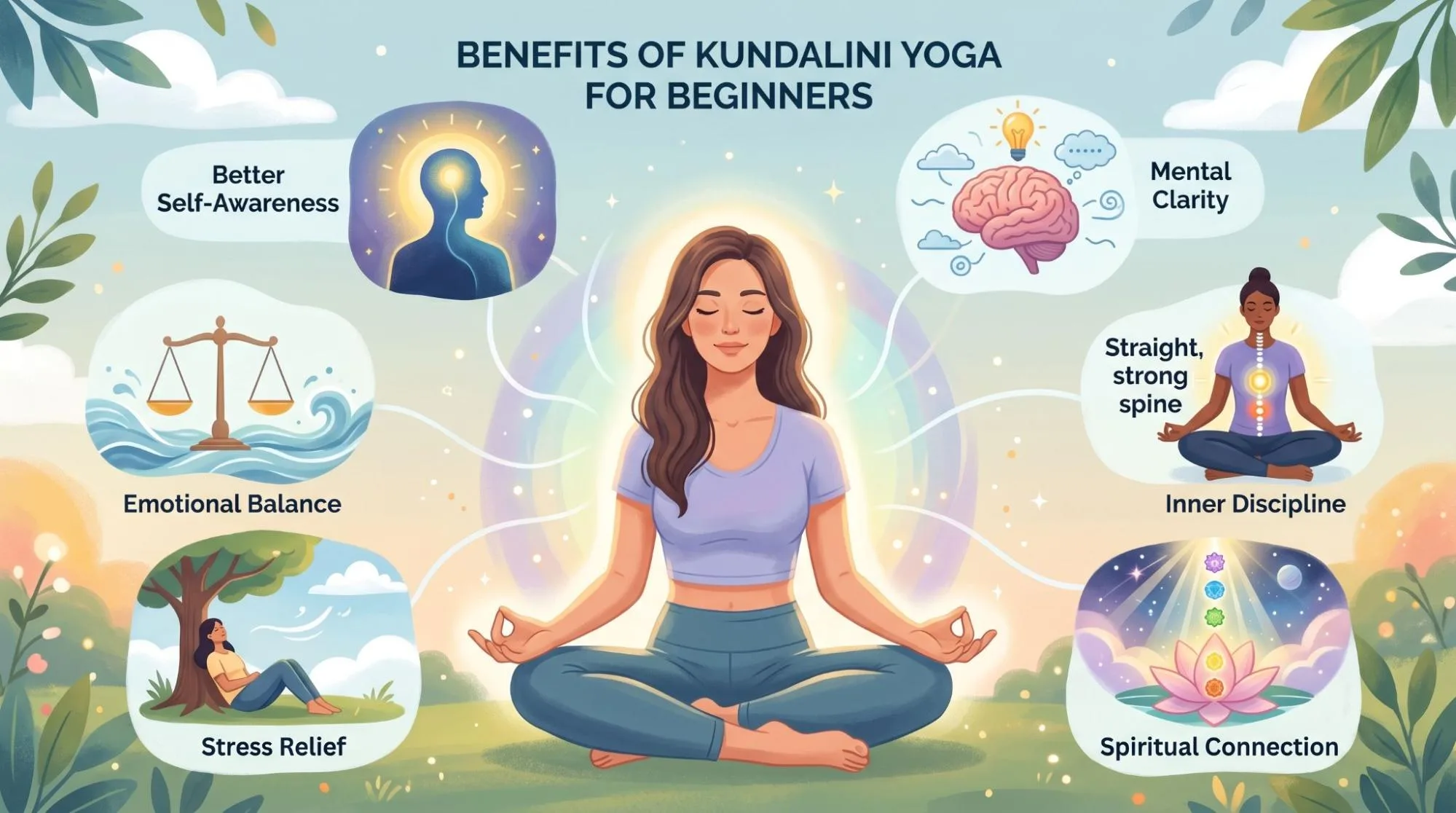
Benefits of Kundalini Yoga for Beginners
Kundalini yoga can support both inner and outer wellbeing when practiced carefully.
Better Self-Awareness
This practice helps you notice your inner patterns. You may begin to see when you react from fear, stress, anger, or habit.
That awareness alone can create change.
Improved Mental Clarity
Breathwork, mantra, and meditation can help clear mental noise. After practice, many people feel more focused and less scattered.
Emotional Balance
Kundalini yoga encourages you to sit with emotions instead of pushing them away. Over time, this may support emotional steadiness.
Stress Relief
Slow breathing, gentle movement, and meditation can calm the nervous system. Even a short daily practice may help reduce stress.
Stronger Inner Discipline
Kundalini yoga works best with consistency. Practicing regularly builds patience, discipline, and commitment.
Deeper Spiritual Connection
For those who approach it as a spiritual practice, Kundalini yoga can create a deeper sense of connection with the self, life, and inner awareness.
How to Practice Kundalini Yoga Safely
Kundalini yoga philosophy explained simply also means practicing safely, slowly, and with respect for your body and mind. Kundalini yoga should be practiced with respect. It is not something to rush.
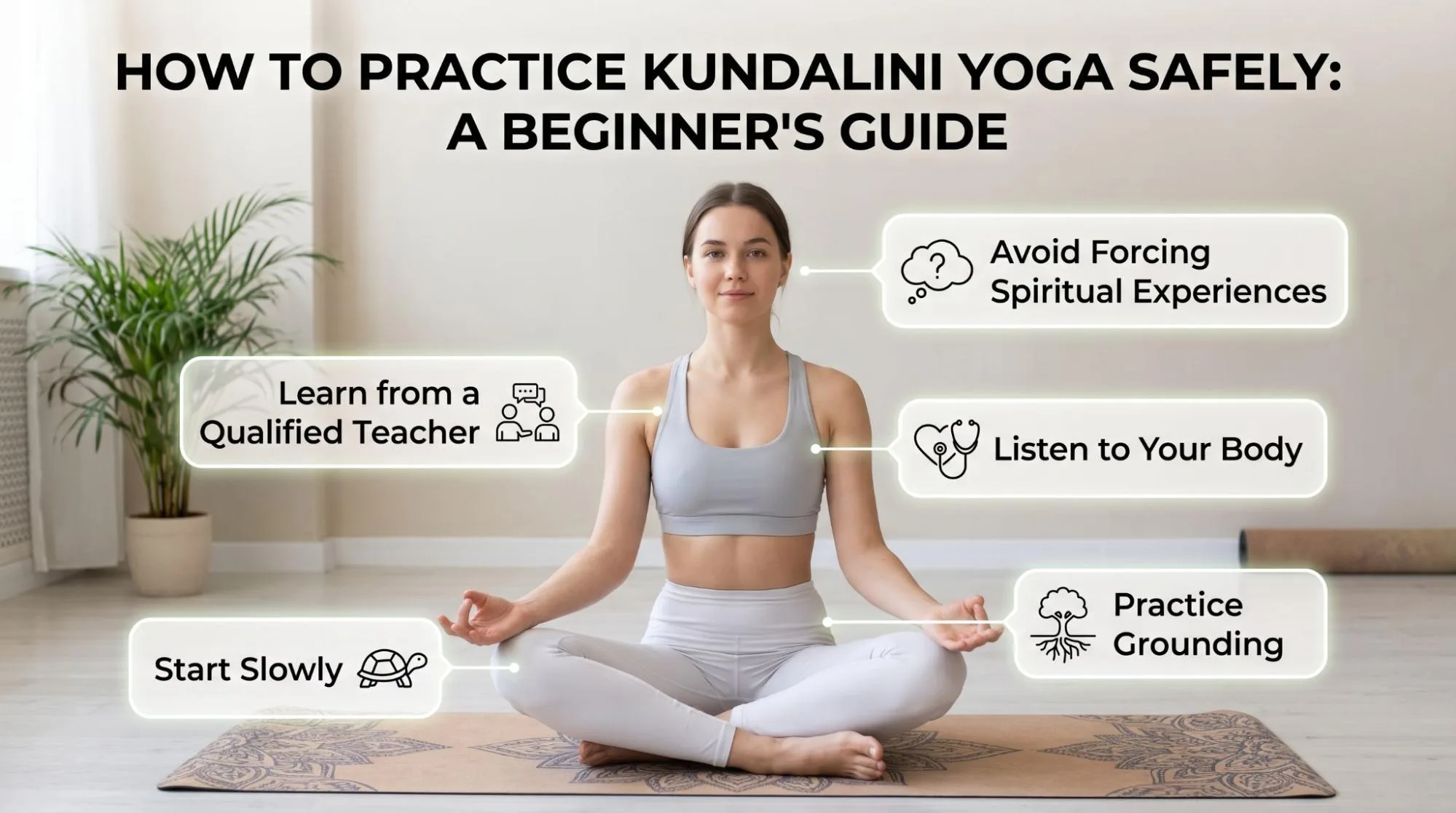
Start Slowly
Begin with short sessions. Even 5 to 10 minutes is enough in the beginning.
Your body and mind need time to adjust.
Learn from a Qualified Teacher
A trained teacher can guide you safely, especially if you want to practice stronger kriyas, breathwork, or meditation techniques.
Listen to Your Body
If something feels painful, dizzying, or emotionally overwhelming, stop and rest. Spiritual practice should not feel like punishment.
Avoid Forcing Spiritual Experiences
Do not chase visions, intense sensations, or dramatic awakenings. Real growth is usually steady and quiet.
Practice Grounding
Grounding helps you stay balanced. After practice, drink water, stretch gently, walk slowly, or sit quietly before returning to daily tasks.
A Simple Kundalini Yoga Practice for Beginners
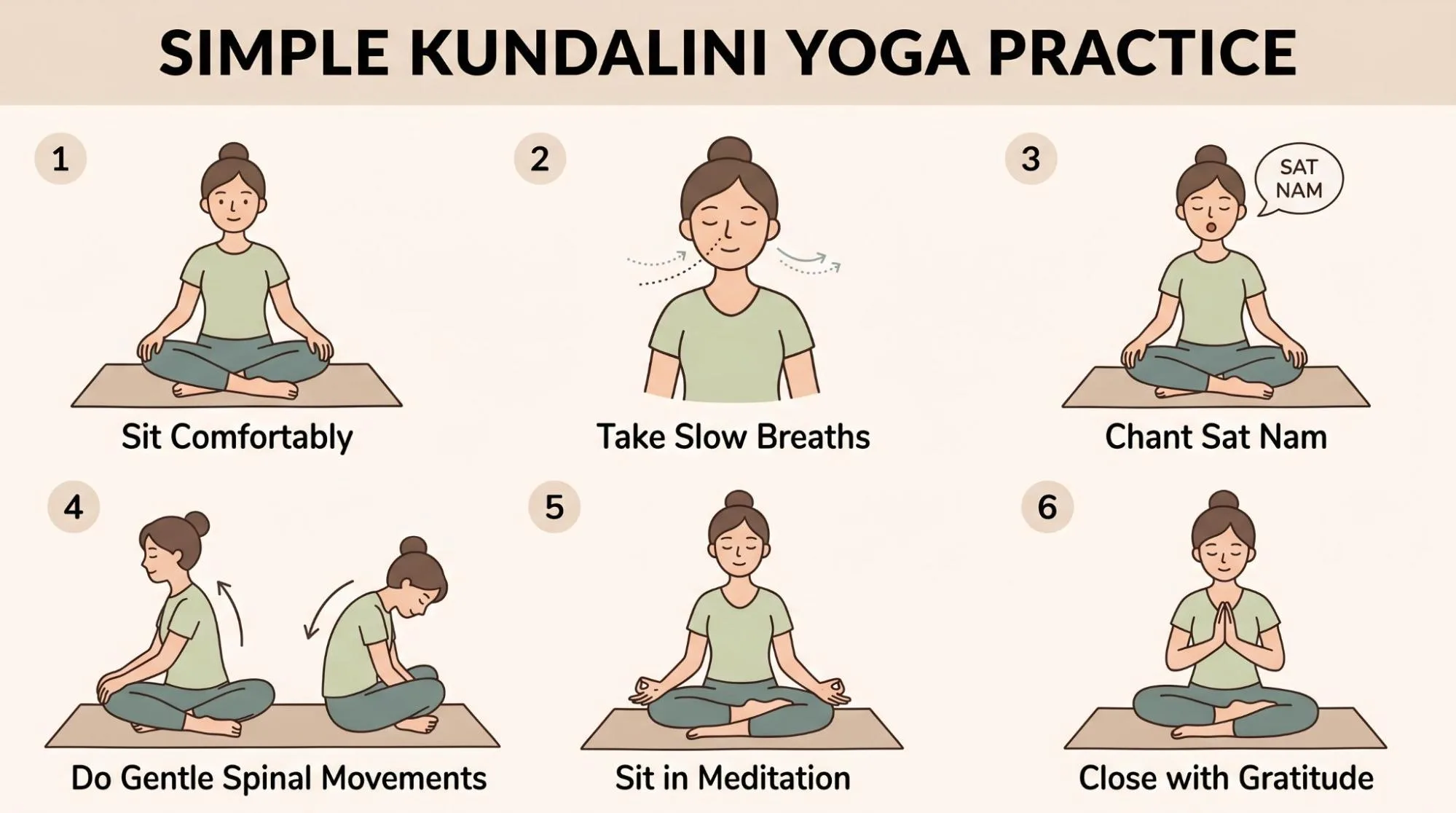
Here is a gentle practice you can try.
Sit Comfortably
Sit on the floor or on a chair. Keep your spine straight but not stiff. Rest your hands on your knees.
Take Slow Breaths
Inhale slowly through the nose. Exhale gently through the nose. Do this for one to two minutes.
Chant Sat Nam
Softly repeat “Sat” as you inhale and “Nam” as you exhale. If chanting out loud feels uncomfortable, repeat it silently.
Do Gentle Spinal Movements
Place your hands on your knees. Inhale and gently lift your chest forward. Exhale and round your spine slightly.
Move slowly for one to three minutes.
Sit in Meditation
Become still. Watch your breath. Let thoughts come and go without fighting them.
Close with Gratitude
Place your hands near your heart. Take one slow breath and thank yourself for practicing.
Simple, steady practice is better than forcing a long session.
Common Mistakes Beginners Should Avoid
Beginners often make a few common mistakes with Kundalini yoga.
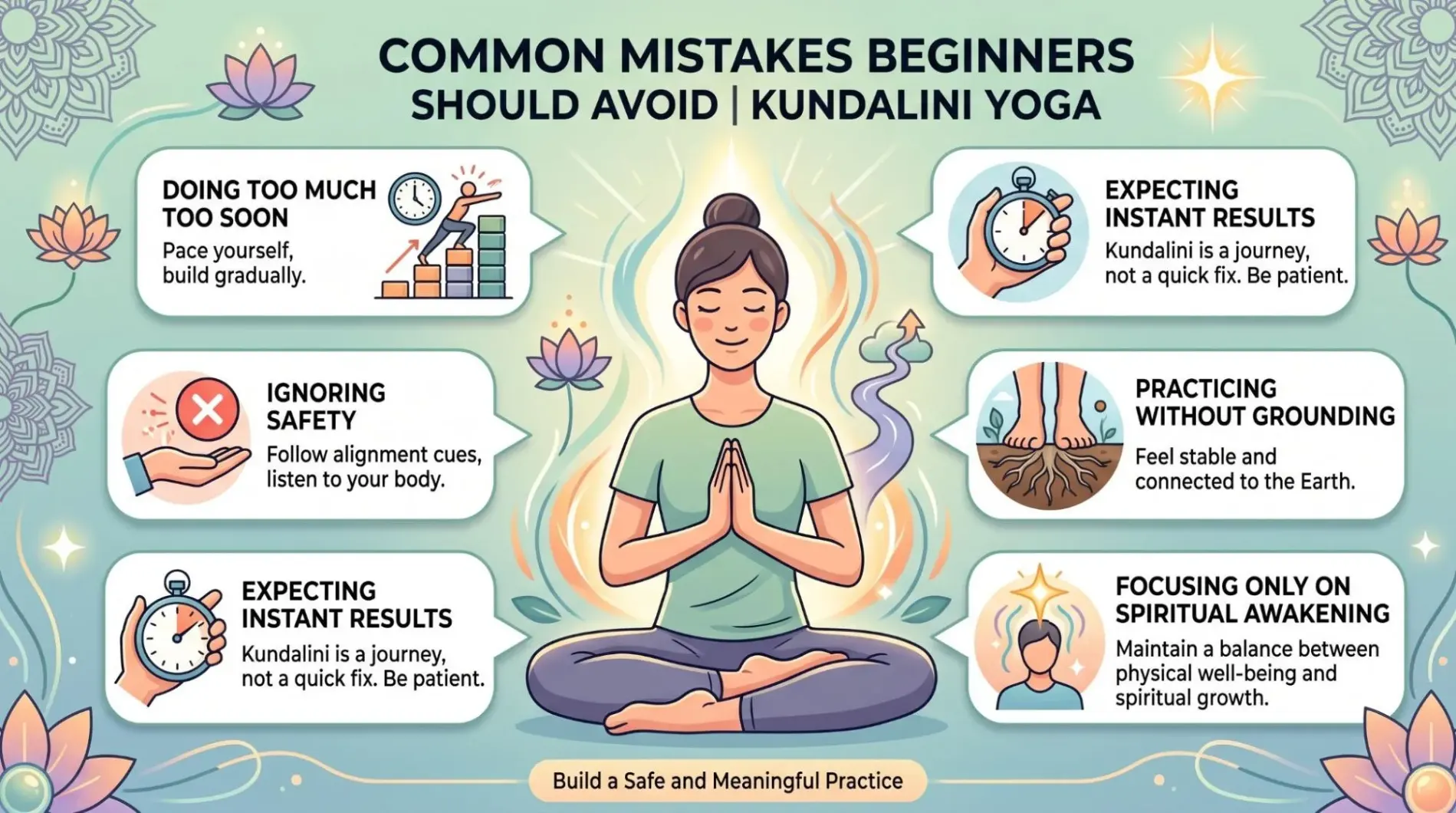
Doing Too Much Too Soon
Strong breathing exercises or long kriyas can feel intense. Start small and build gradually.
Ignoring Safety
If you have medical concerns, anxiety, trauma history, pregnancy, or breathing issues, speak with a qualified teacher or healthcare professional before doing intense practices.
Expecting Instant Results
Kundalini yoga is not a shortcut. Some days feel peaceful. Other days feel ordinary. Both are part of practice.
Practicing Without Grounding
Spiritual work needs grounding. Eat well, rest, work, connect with people, and stay present in normal life.
Focusing Only on Spiritual Awakening
Awakening the kundalini is not the only point. Awareness, kindness, emotional balance, and daily discipline matter just as much.
Kundalini Yoga and Daily Life
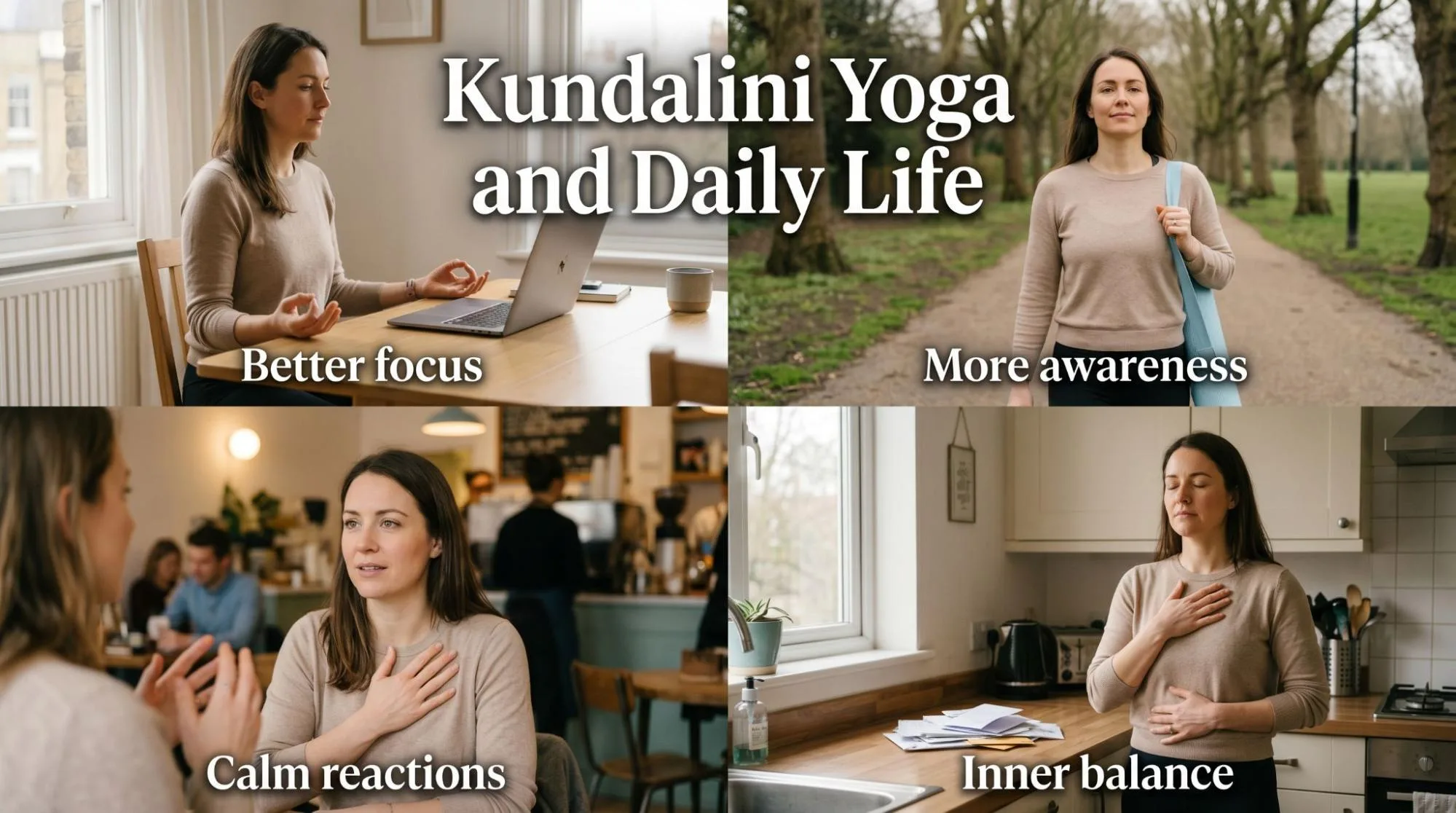
Kundalini yoga is not only for the yoga mat. Its real value appears in daily life.
You may become more patient during stress. You may pause before reacting. You may speak more honestly. You may notice when your body feels tense or tired.
This is where the practice becomes real.
Kundalini yoga teaches that awareness should move into ordinary moments: eating, working, walking, listening, resting, and relating to others.
Is Kundalini Yoga Right for You?
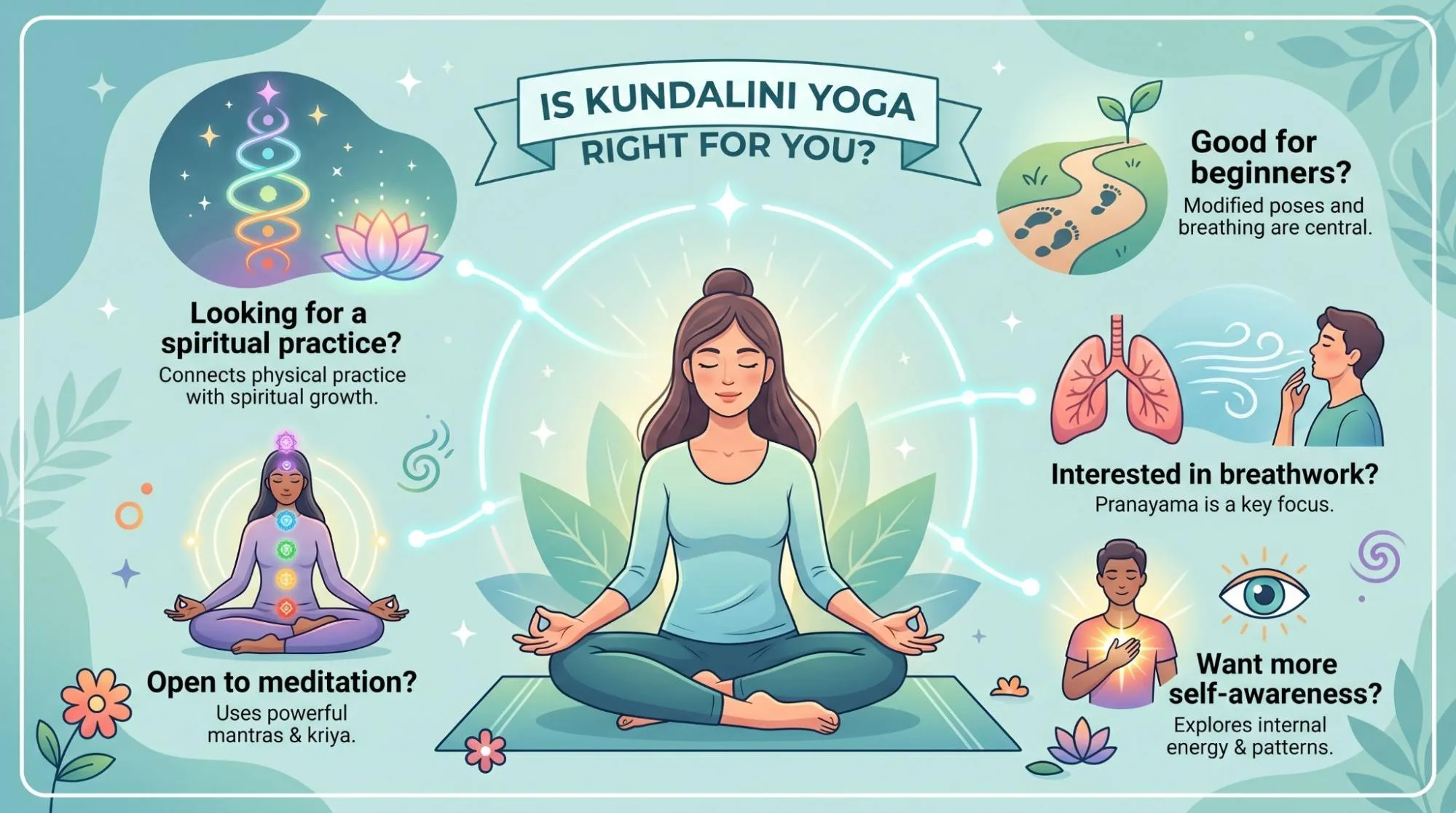
Kundalini yoga may be right for you if you want a practice that includes meditation, breathwork, mantra, movement, and spiritual reflection.
It may suit people who are looking for:
- A deeper spiritual practice
- Better self-awareness
- Breath-based meditation
- Emotional balance
- A stronger connection between body mind and inner life
But if you prefer only physical exercise, styles like Hatha yoga or gentle flow yoga may feel easier at first.
There is no need to force yourself into one path. The best practice is the one you can approach safely and consistently.
FAQs About Kundalini Yoga
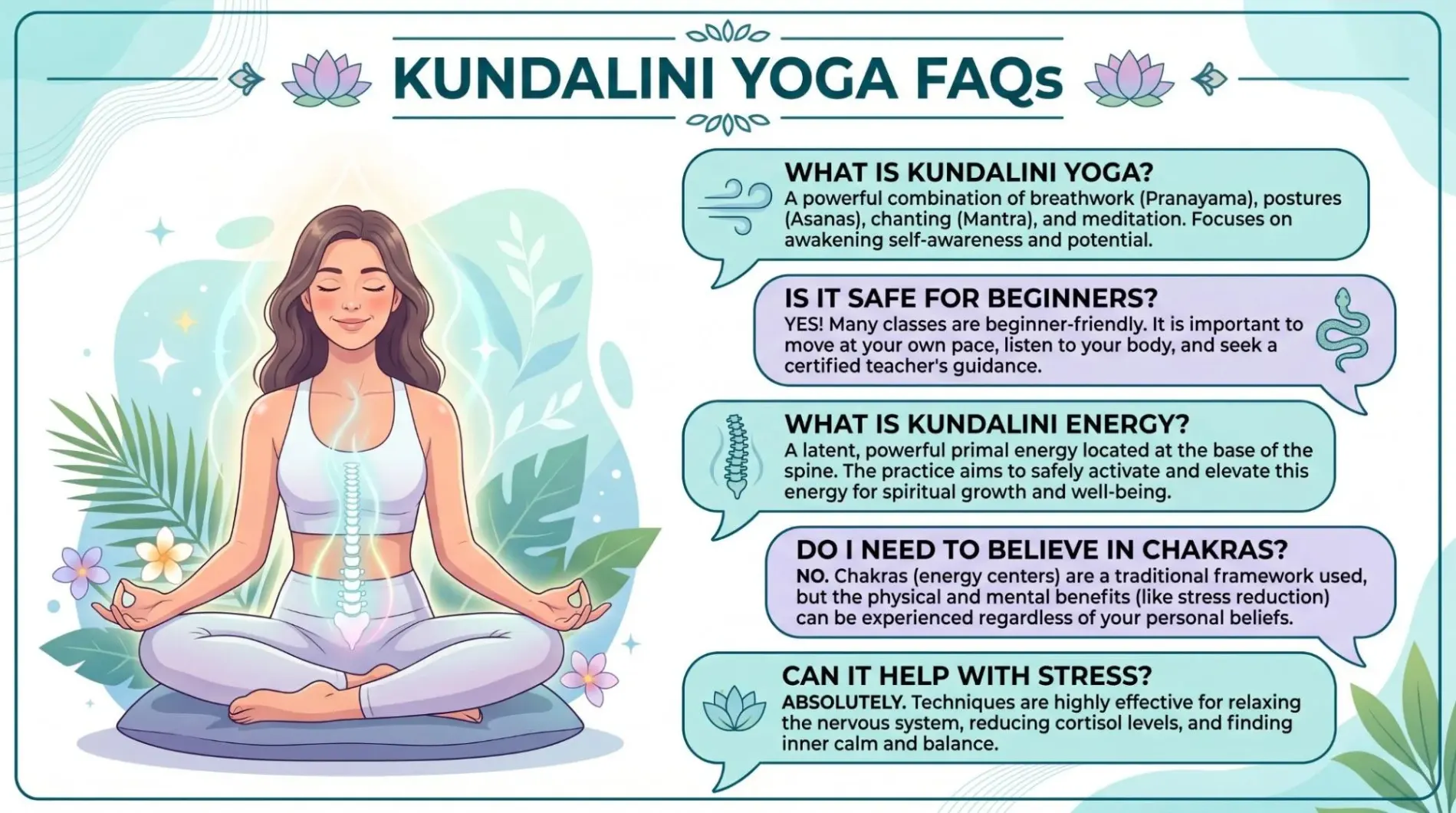
What is Kundalini yoga in simple words?
Kundalini yoga is a spiritual yoga practice that uses breathing, movement, mantra, meditation, and awareness to connect with inner energy and personal growth.
Is Kundalini yoga safe for beginners?
Yes, Kundalini yoga can be safe for beginners when practiced slowly and gently. Beginners should avoid intense kriyas or strong breathwork without guidance.
What does kundalini energy mean?
Kundalini energy refers to the inner life force or spiritual potential believed to rest at the base of the spine. It is also called kundalini shakti or serpent power in traditional teachings.
Do I need to believe in chakras to practice Kundalini yoga?
No. Some people approach chakras spiritually, while others see them as symbolic tools for understanding emotions, awareness, and personal growth.
What is the difference between Kundalini yoga and Hatha yoga?
Hatha yoga often focuses more on physical postures, breath, and balance. Kundalini yoga uses movement too, but it places a stronger focus on energy, mantra, meditation, kriyas, and awareness.
Can Kundalini yoga help with stress?
Many beginners find that slow breathing, meditation, chanting, and gentle movement help calm the mind and reduce stress. Results vary, but regular practice can support relaxation and emotional balance.
What is kundalini yoga philosophy explained simply?
Kundalini yoga philosophy explained simply means understanding Kundalini yoga as a practice of awareness, breathwork, meditation, mantra, and inner energy.
What is kundalini yoga philosophy explained simply?
Kundalini yoga philosophy explained simply means understanding Kundalini yoga as a practice of awareness, breathwork, meditation, mantra, and inner energy.
Learn More : Kriya Cleansing in Yoga
Conclusion: Kundalini Yoga as a Path to Awareness and Inner Growth
Kundalini yoga is best understood as a path of awareness. It is not about chasing strange experiences or trying to become spiritual overnight. Kundalini yoga philosophy explained simply shows that this path is less about rushing spiritual awakening and more about steady awareness, balance, and inner growth. At its simplest, it teaches you to breathe with attention, move with awareness, listen to your inner state, and live with more clarity.
For beginners, the safest approach is slow, grounded, and patient. Start with simple breathwork, gentle movement, mantra, and meditation. Let the practice grow naturally. When practiced with care, Kundalini yoga can become a steady companion for self-awareness, emotional balance, inner discipline, and spiritual growth.