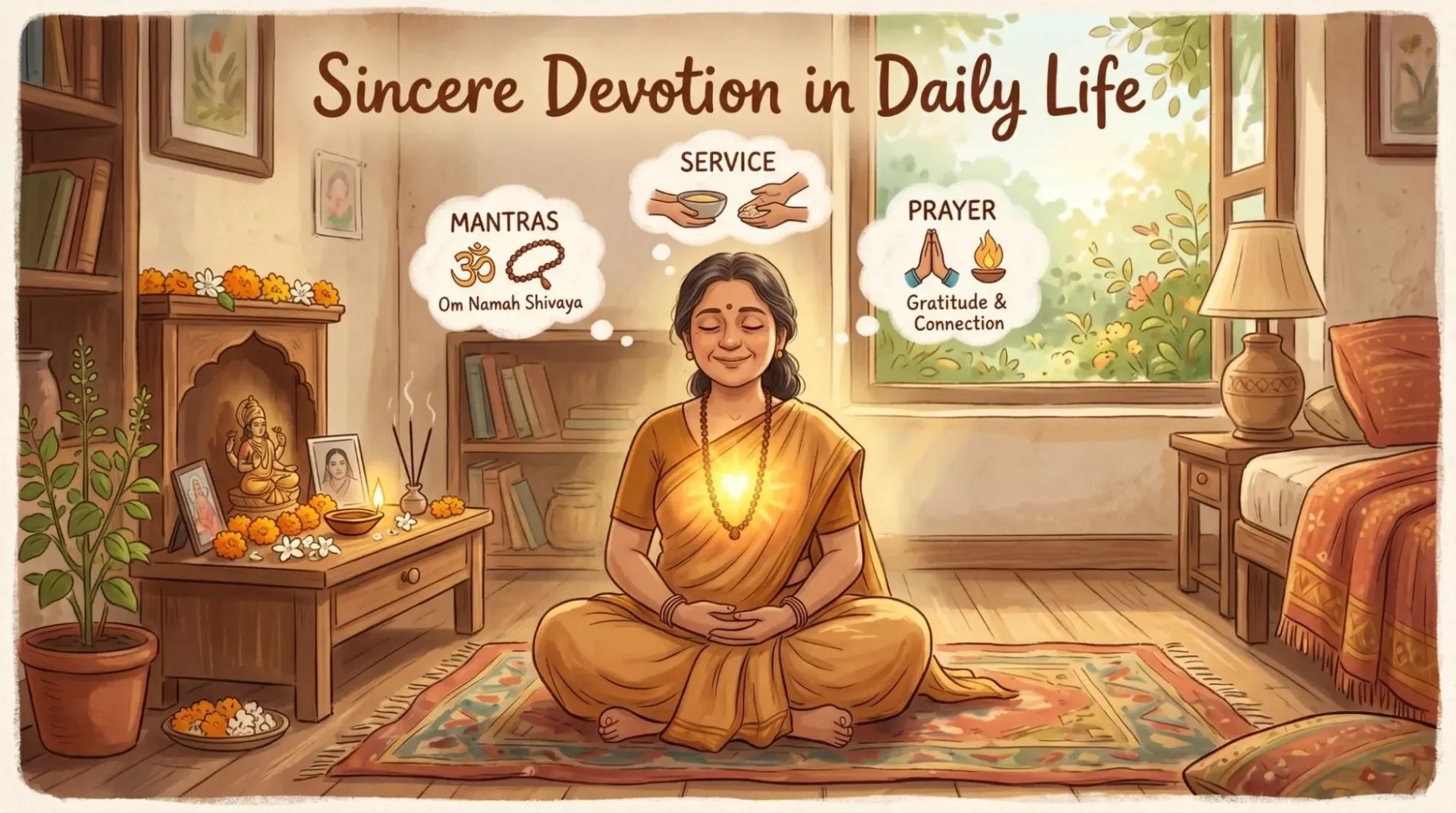
Bhakti Yoga meaning and practice teaches love, devotion, remembrance of God, and surrender. It is a gentle spiritual path that helps beginners connect with the divine through chanting, prayer, service, and daily devotion.
Unlike some forms of yoga that focus mainly on physical postures or breath control, Bhakti Yoga works through the heart. It helps a person turn mind emotions toward divine love, prayer, service, and remembrance of God.
For many people, Bhakti Yoga feels simple because it does not require advanced poses or complicated rituals. It asks for sincerity. Whether someone worships Lord Krishna, another form of the divine, or understands the divine in a broader spiritual way, the practice is based on love and devotion. Bhakti Yoga meaning and practice is simple for beginners because it starts with love, prayer, and devotion.
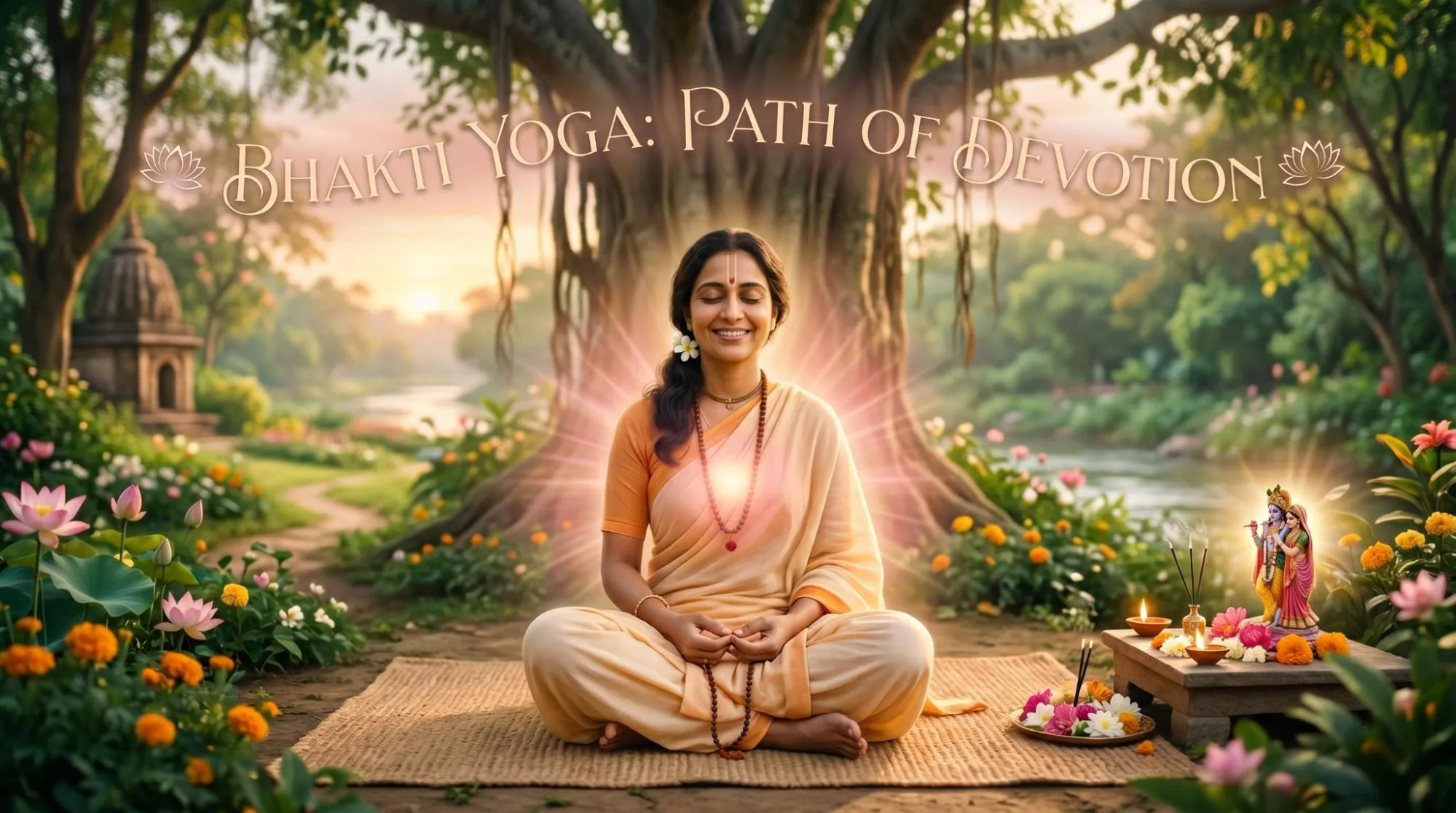
Understanding Bhakti Yoga
Understanding Bhakti Yoga meaning and practice helps you see devotion as a daily spiritual habit. Bhakti Yoga means creating a love relationship with the divine. This relationship may feel like that of a friend, child, servant, parent, or beloved. The main idea is to move from ego-centred living toward a heart that is completely surrendered.
In the Bhagavad Gita, Bhakti is described as a powerful way to reach spiritual growth through devotion, faith, and self-offering. A person does not need to be perfect to practice Bhakti. What matters is genuine intention.
Bhakti Yoga is also connected with intense longing. This is not ordinary desire. It is the soul’s longing to feel close to the divine, to worship the divine, and to live with love in daily life.
Learn More : Jnana Yoga Meaning: A Powerful Beginner Guide
Core Practices of Bhakti Yoga
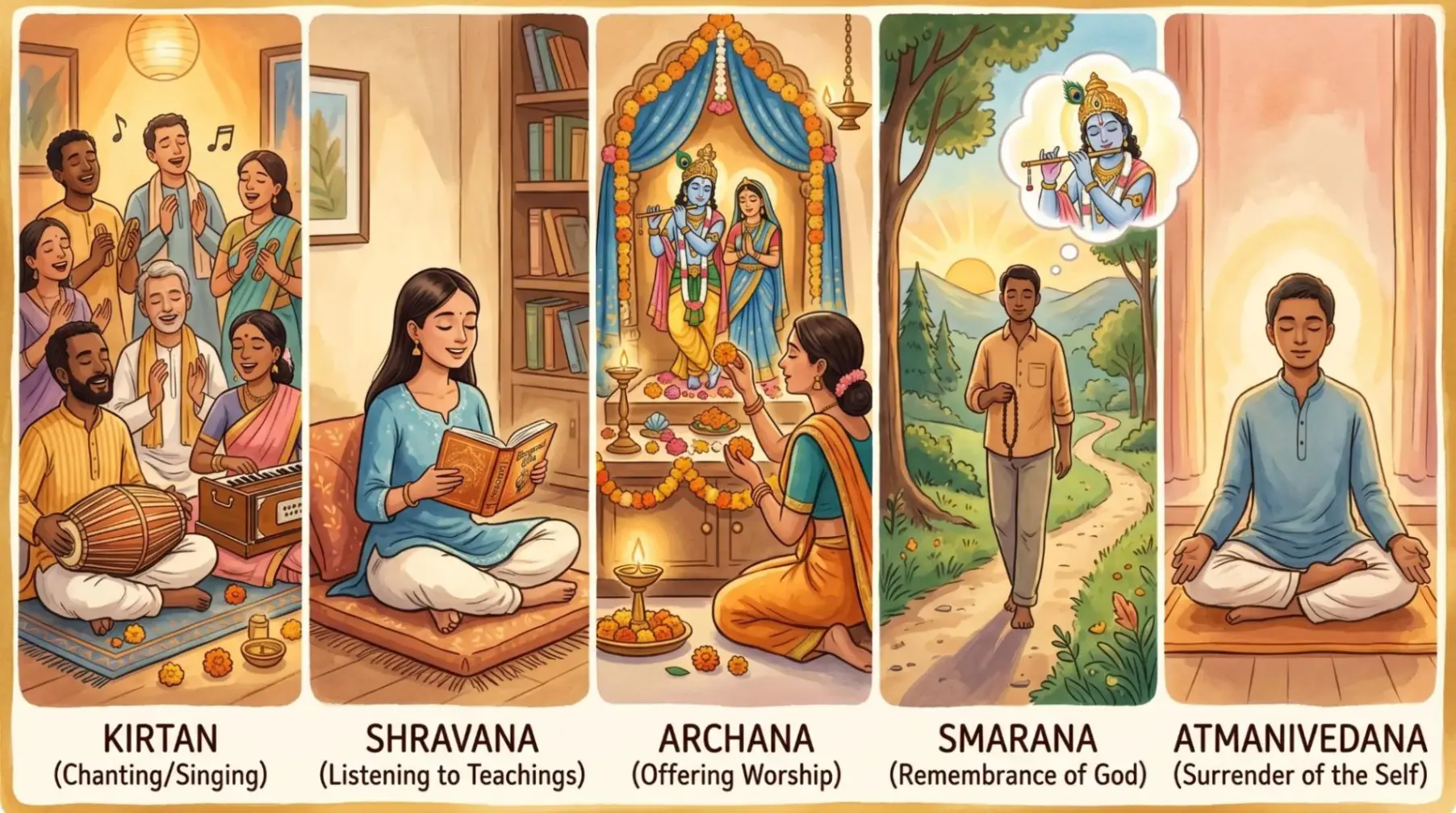
The core of Bhakti Yoga meaning and practice includes chanting, listening, worship, remembrance, and surrender. Bhakti Yoga has many devotional practices. Traditionally, these are known as forms of Bhakti. The following practices are especially common and easy to understand.
Kirtan: Chanting and Singing
Kirtan is the singing or chanting of divine names, prayers, or mantras. It may be done alone or in a group.
For example, many Bhakti traditions include chanting names of Lord Krishna or other sacred names. The purpose is not performance. It is a way to soften the heart, calm the busy mind, and bring attention back to the divine.
Even a few minutes of chanting can shift the mood. The rhythm, sound, and repetition help the mind settle naturally.
Shravana: Listening to Spiritual Teachings
Shravana means listening. This can include listening to sacred stories, spiritual talks, scriptures, or teachings from trusted guides.
Listening is powerful because it shapes the inner world. When the mind hears wisdom again and again, it slowly becomes less restless and more centred.
A beginner can start by listening to simple teachings from the Bhagavad Gita or stories of saints and devotees.
Archana: Devotional Worship
Archana means worship. It may include offering flowers, lighting a candle, burning incense, or saying a prayer before a home altar.
The act itself may look simple, but the meaning is deep. It teaches humility, gratitude, and presence. Instead of rushing through life, the devotee pauses and offers something with love.
Smarana: Constant Remembrance
Smarana means remembrance of God. This practice brings Bhakti Yoga into daily life.
You may remember the divine while walking, cooking, working, driving, or resting. It does not always need formal prayer. Sometimes it is just a quiet thought: “May I act with love.”
This practice helps devotional awareness become part of ordinary life.
Atmanivedana: Complete Surrender
Atmanivedana means offering oneself completely. It is the practice of surrender.
This does not mean becoming passive or careless. It means doing your best while letting go of the need to control everything. A person acts with sincerity and trusts the divine process.
Over time, this brings peace, especially during uncertainty.
How to Start Practicing Bhakti Yoga
Bhakti Yoga meaning and practice becomes easier when you begin with one small daily habit. You do not need a temple, special clothes, or a perfect routine to practice Bhakti Yoga. Start small and stay sincere.
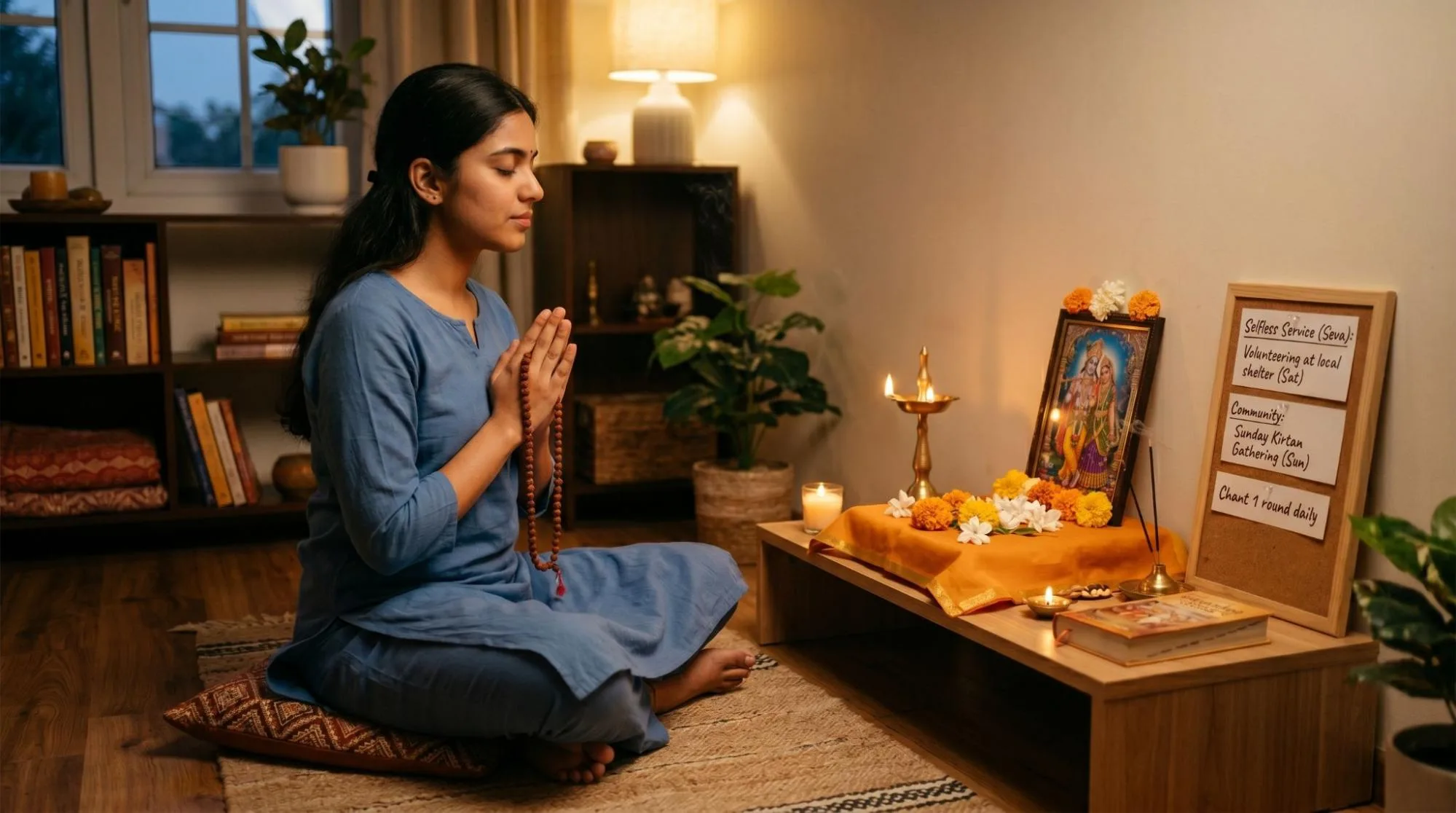
Set Up a Personal Altar
A home altar can be a small clean space with meaningful spiritual items. It may include:
- A picture or symbol of the divine
- A candle or lamp
- Flowers
- A scripture or prayer book
- A small bowl for offerings
The altar reminds you to pause, pray, and reconnect. Keep it simple. The feeling behind it matters more than decoration.
Chant Mantras
In Bhakti Yoga meaning and practice, mantra chanting helps bring the mind back to love and devotion. Mantra chanting is one of the easiest ways to begin Bhakti practice.
Choose a short mantra or divine name that feels meaningful. Repeat it softly, clearly, and with attention. You can chant for 5 minutes in the morning or before sleeping.
If the mind wanders, gently return to the sound. That is part of the practice.
Offer Selfless Service
Devotional service is love in action. It means serving without always expecting praise or reward.
This may include helping family, feeding someone, supporting a community, volunteering, or simply doing daily duties with kindness.
In Bhakti Yoga, service becomes spiritual when it is offered with love.
Engage with the Community
A spiritual community can support your practice. Group chanting, study circles, prayer meetings, or temple visits can make Bhakti feel alive and steady.
Still, the community should not become pressured. Choose spaces that feel respectful, peaceful, and sincere.
Benefits of Bhakti Yoga
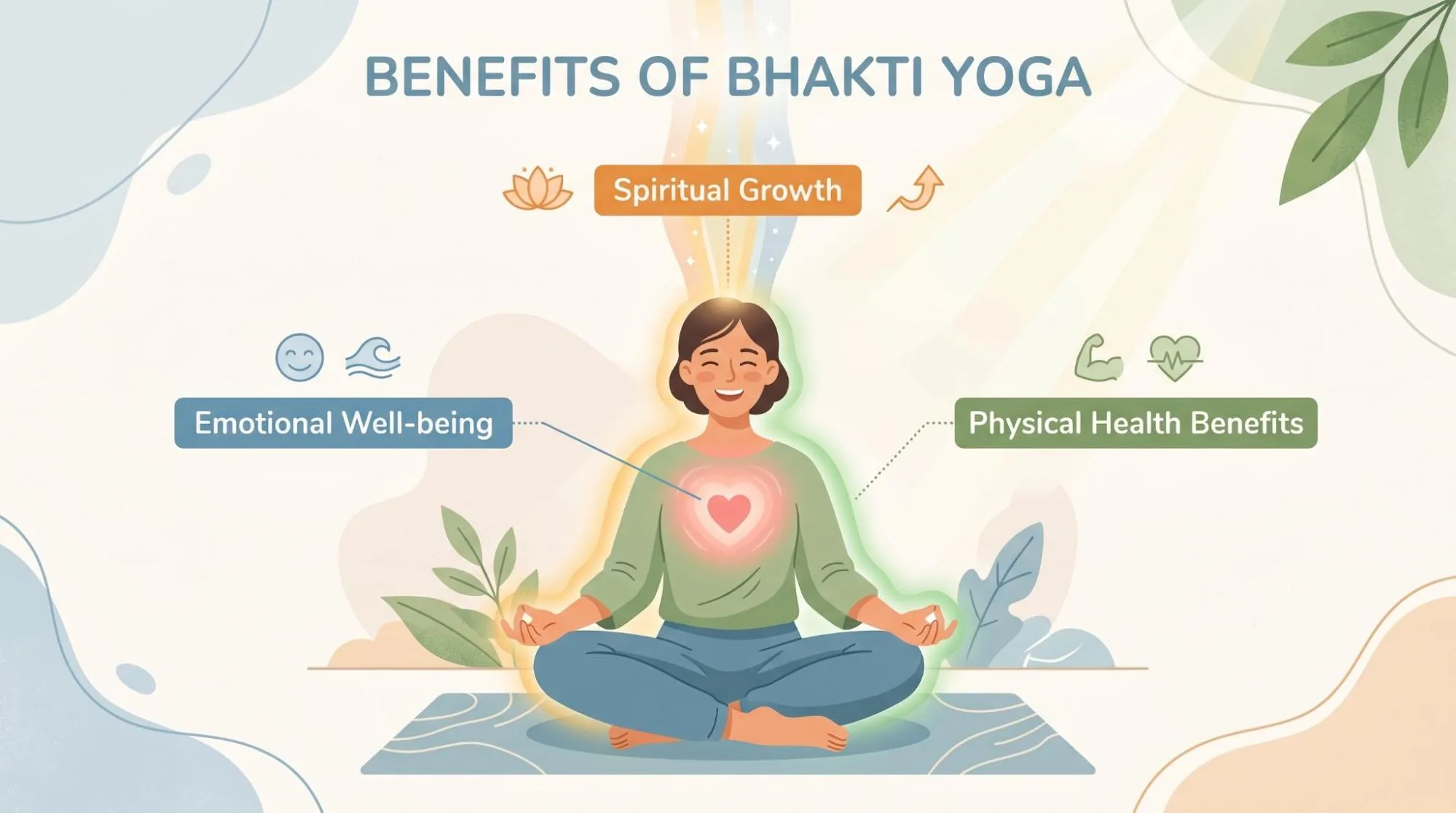
The benefit of Bhakti Yoga meaning and practice is that it supports emotional peace and spiritual growth. Bhakti Yoga affects the heart, mind, and daily behaviour. Its benefits are not only spiritual; many people also experience emotional balance and inner strength.
Emotional Well-being
Bhakti Yoga helps release heavy emotions through prayer, chanting, and surrender. When feelings are offered to the divine, they become easier to process.
People who practice Bhakti often feel:
- More peaceful
- Less lonely
- More grateful
- More emotionally steady
- Less controlled by anger or fear
It gives the heart a safe place to rest.
Spiritual Growth
The deeper purpose of Bhakti Yoga is spiritual growth. Through love and devotion, the ego slowly becomes softer.
A person starts asking better questions:
Am I acting with kindness? Am I remembering the divine? Am I serving with sincerity?
This is how Bhakti becomes more than belief. It becomes a way of living.
Physical Health Benefits
Bhakti Yoga is not mainly a physical yoga practice, but it can still support the body indirectly.
Chanting, prayer, and meditation may help calm the nervous system. A calmer mind can support better sleep, lower stress, and more balanced daily habits.
Of course, Bhakti Yoga should not replace medical care. But as a spiritual practice, it may support emotional and physical well-being together.
Learn More : Patanjali Yoga Sutras for Beginners
Integrating Bhakti Yoga into Daily Life
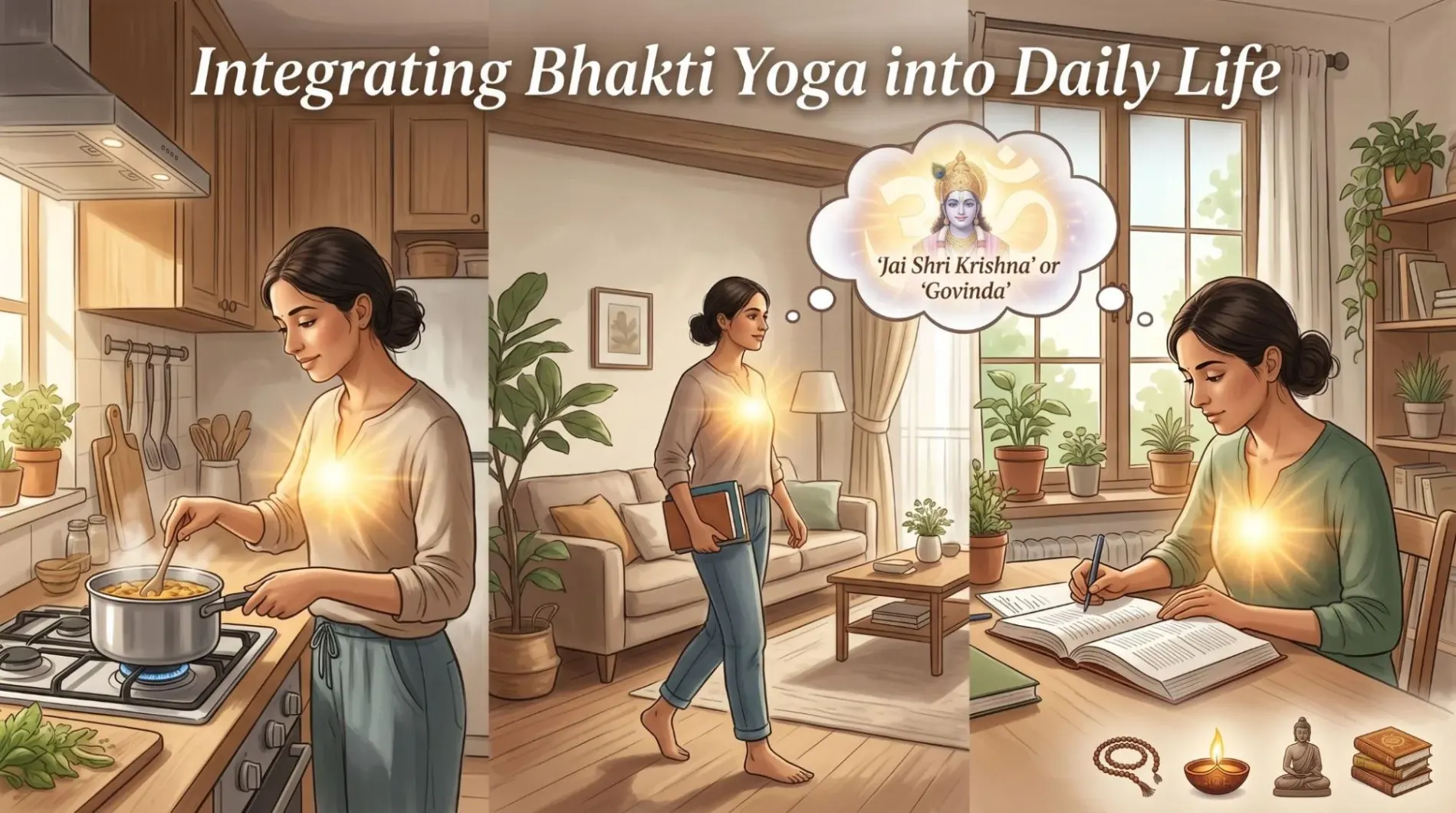
In daily life, Bhakti Yoga meaning and practice can be followed through prayer, kindness, and selfless service. Bhakti Yoga becomes most useful when it enters normal life, not only formal worship.
Mindful Activities
You can turn simple tasks into devotional practice. Cooking, cleaning, studying, working, and caring for others can all become offerings.
Before beginning a task, pause for a moment and think: “May this be done with love.”
That small shift changes the feeling of the work.
Regular Meditation and Prayer
A short daily routine is better than an intense practice done once in a while.
You may try:
- 5 minutes of mantra chanting
- A short prayer in the morning
- Quiet remembrance before sleep
- Reading one verse from a sacred text
Keep it realistic. Bhakti grows through consistency, not pressure.
Study Sacred Texts
Reading sacred texts helps guide devotion with wisdom. The Bhagavad Gita is one of the most respected texts connected with Bhakti Yoga.
You do not need to read many pages at once. One verse, read slowly and reflected on honestly, can be enough.
Common Challenges and How to Overcome Them
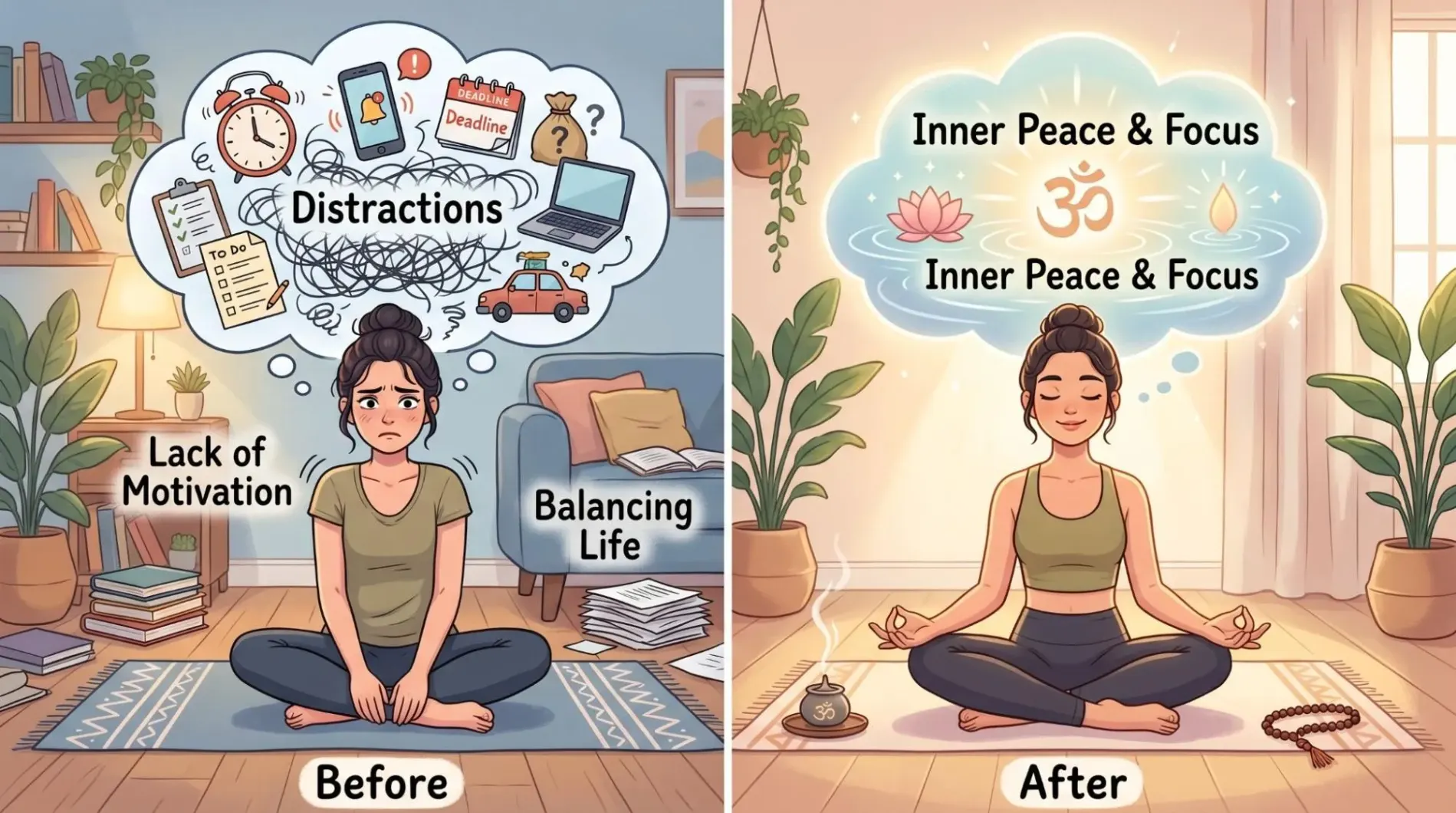
Every spiritual practice has challenges. Bhakti Yoga is simple, but that does not mean the mind always cooperates.
Distractions and Busy Mind
A distracted mind is normal. During chanting or prayer, thoughts may come again and again.
Do not fight them harshly. Just return to the mantra, prayer, or remembrance. Each return is part of the practice.
Lack of Motivation
Some days the heart feels open. Other days it feels dry.
On low-motivation days, keep the practice very small. Light a candle. Say one prayer. Chant one round. Read one line.
Small devotion is still devotion.
Balancing Daily Life
Many people think they need hours of free time for spiritual practice. In reality, Bhakti Yoga can fit into daily life.
You can remember the divine during work, repeat a mantra while walking, or offer your daily duties as devotional service.
Bhakti does not ask you to leave life. It teaches you to live with love inside life.
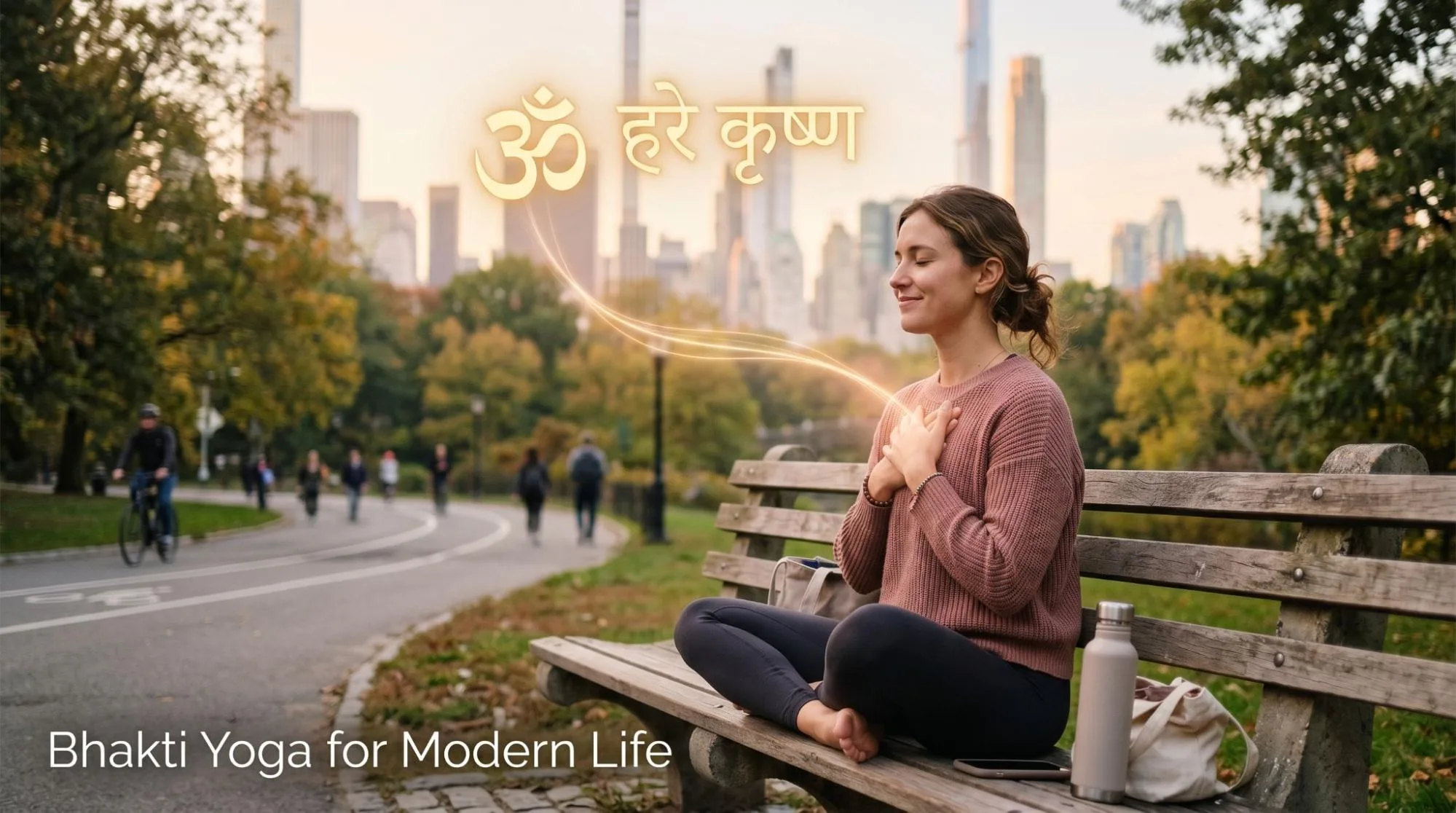
Bhakti Yoga for Modern Life
Modern life can make people feel disconnected, rushed, and emotionally tired. Bhakti Yoga offers a gentle way back to the heart.
It reminds us that spiritual practice does not always have to be complicated. Love, gratitude, chanting, service, prayer, and surrender can become part of an ordinary day.
For someone searching for Bhakti Yoga meaning and practice, the simplest answer is this: Bhakti Yoga is the practice of turning life toward divine love.
FAQs About Bhakti Yoga
What is Bhakti Yoga?
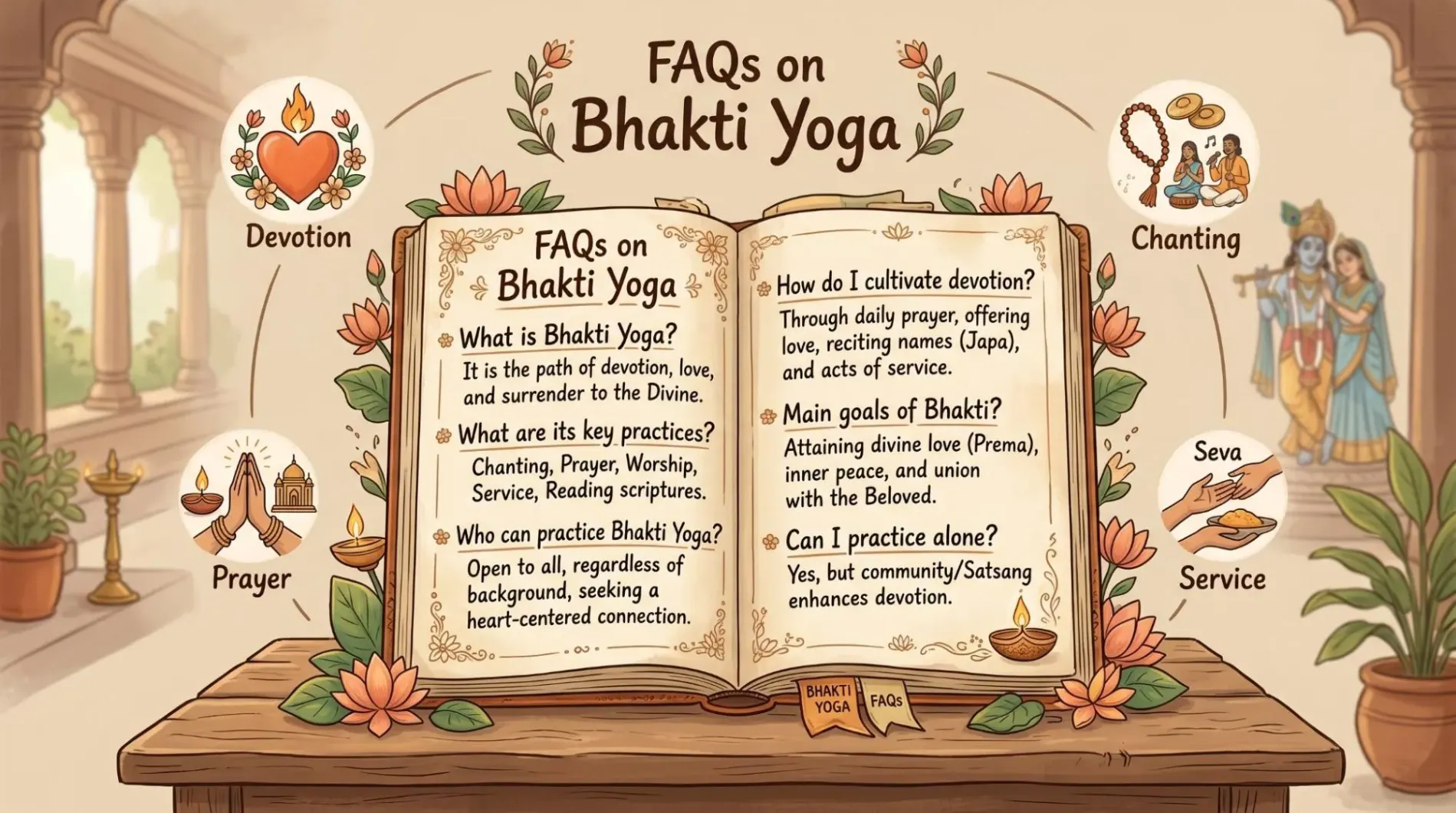
Bhakti Yoga meaning and practice means following the path of devotion through prayer, chanting, service, and remembrance. Bhakti Yoga is the yoga of love and devotion. It is a spiritual path that focuses on worship, prayer, chanting, remembrance of God, and surrender to the divine.
How is Bhakti Yoga different from other types of yoga?
Many yoga styles focus on postures, breath, meditation, or knowledge. Bhakti Yoga focuses mainly on love, devotion, and the heart’s relationship with the divine.
Can beginners practice Bhakti Yoga?
Yes. Beginners can start with simple chanting, prayer, reading sacred teachings, or offering daily actions with love.
Do I need to follow a specific religion to practice Bhakti Yoga?
Bhakti Yoga comes from Hindu spiritual traditions, but the spirit of devotion can be practiced by anyone who feels drawn to divine love and sincere worship.
What are the nine practices of Bhakti Yoga?
The nine practices include listening, chanting, remembering, serving, worshiping, praying, serving as a devotee, friendship with the divine, and complete surrender.
How do I start chanting mantras?
Choose a short mantra or divine name. Sit comfortably, repeat it slowly, and keep your attention on the sound and meaning.
What is the purpose of a home altar in Bhakti Yoga?
A home altar creates a peaceful space for prayer, chanting, offerings, and daily remembrance.
Can Bhakti Yoga reduce stress and anxiety?
Bhakti Yoga may help reduce stress by calming the mind, softening emotions, and creating a feeling of trust and support.
How often should I practice Bhakti Yoga?
Daily practice is helpful, even if it is only 5 to 10 minutes. Consistency matters more than length.
Can Bhakti Yoga be combined with other yoga practices?
Yes. Bhakti Yoga can be combined with meditation, breathwork, asana, study, and selfless service.
Learn More : Svadhyaya: The Yoga Practice of Self-Study and Inner Reflection
Final Thoughts
Bhakti Yoga meaning and practice is not about perfection; it is about sincere love and devotion. Bhakti Yoga is a gentle but powerful path. It does not demand perfection. It asks for sincerity, love, and a willingness to remember the divine in daily life.
Start with one small practice: chant a mantra, say a prayer, read a verse, or serve someone with kindness. Over time, these small acts can open the heart and make devotion a natural part of life.