
Quick answer: Svadhyaya is the yoga practice of self-study and honest self-reflection. It can include observing thoughts, journaling, studying trusted yoga texts, and noticing patterns during practice. The goal is awareness and compassion, not harsh self-judgment or endless overthinking.
Important Context
Self-reflection should feel supportive. If journaling or meditation increases distress, pause and seek help from a qualified mental-health professional. Svadhyaya is not a replacement for therapy or medical care, and it should never be used to blame yourself for difficult emotions.
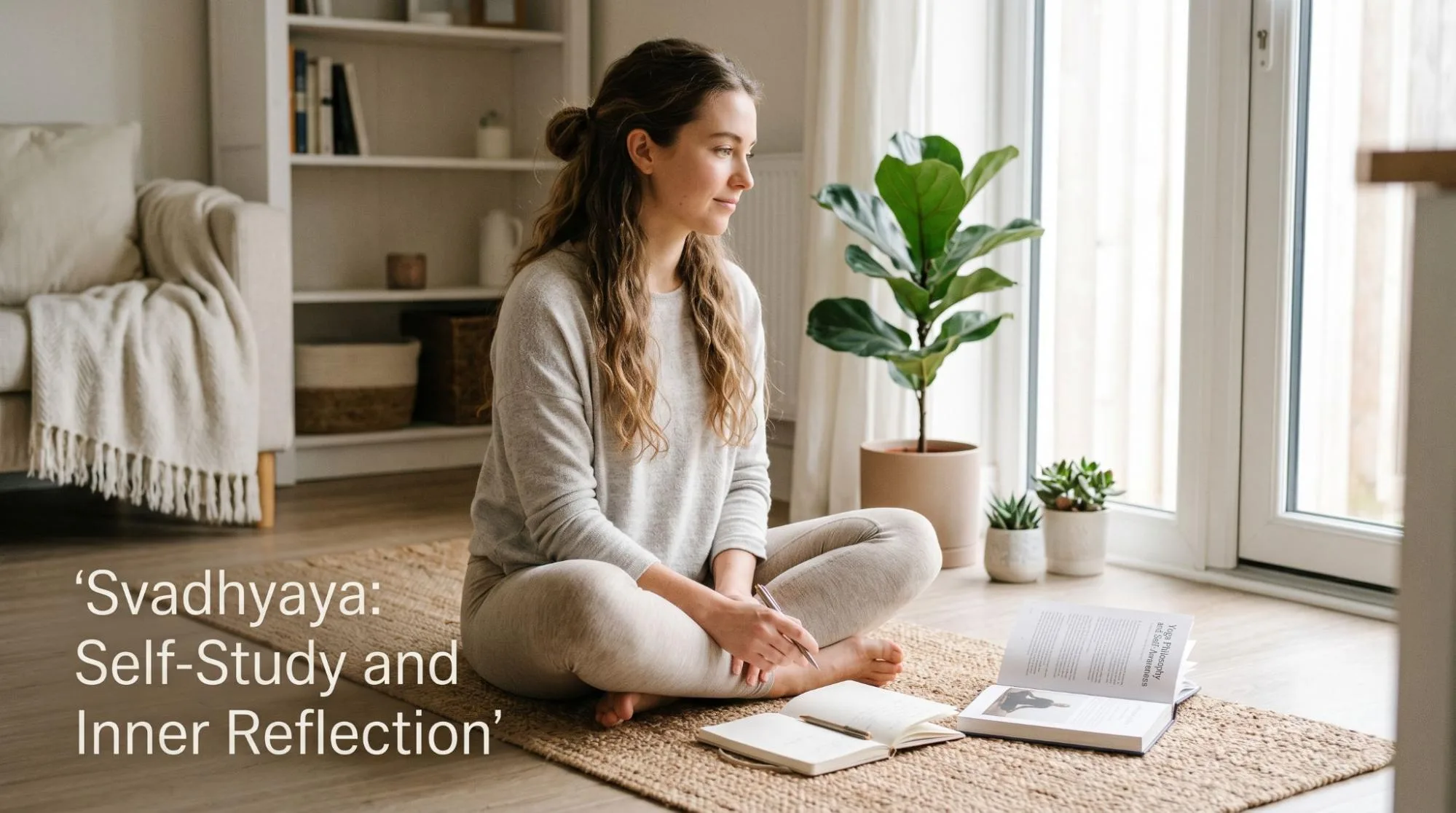
Understanding the svadhyaya self study yoga meaning can make your yoga practice feel much more personal. Svadhyaya is not only about reading old books or learning Sanskrit words. It is the practice of looking honestly at yourself: your thoughts, habits, reactions, emotions, strengths, and patterns.
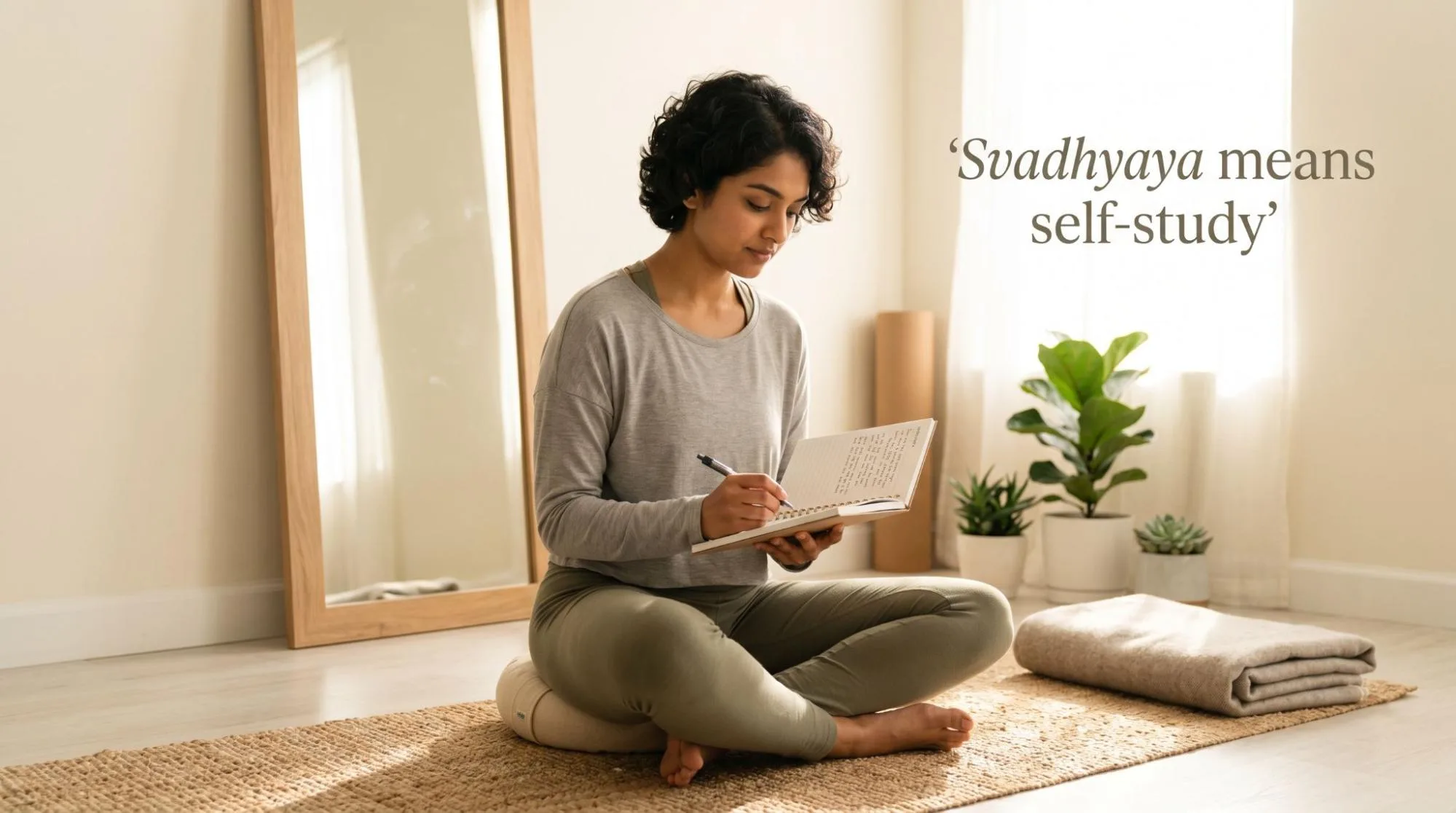
In simple words, svadhyaya means “self-study.” It invites you to slow down and pay attention to what is happening inside your body and mind. This can happen during yoga practice, while reading sacred texts, while journaling, or even while noticing how you react in daily life.
Svadhyaya is one of those yoga teachings that feels ancient and modern at the same time. It comes from yoga philosophy, but it is still very useful for people dealing with stress, distractions, emotional habits, and busy routines today.
What Is Svadhyaya in Yoga?
Svadhyaya comes from two Sanskrit words: “sva,” meaning self, and “adhyaya,” meaning study, lesson, or inquiry. So, svadhyaya self study means learning about yourself with honesty and awareness.
In yoga, this self-study is not harsh criticism. It is not about judging every mistake or forcing yourself to become perfect. It is more like becoming a calm observer of your own life.
You begin to notice questions such as:
- Why do I react this way?
- What thoughts keep repeating in my mind?
- What makes me feel peaceful?
- What habits are helping me grow?
- What habits are holding me back?
This is the real practice of svadhyaya. It helps you understand yourself beyond labels, moods, and outside expectations.
Svadhyaya as the Fourth Niyama
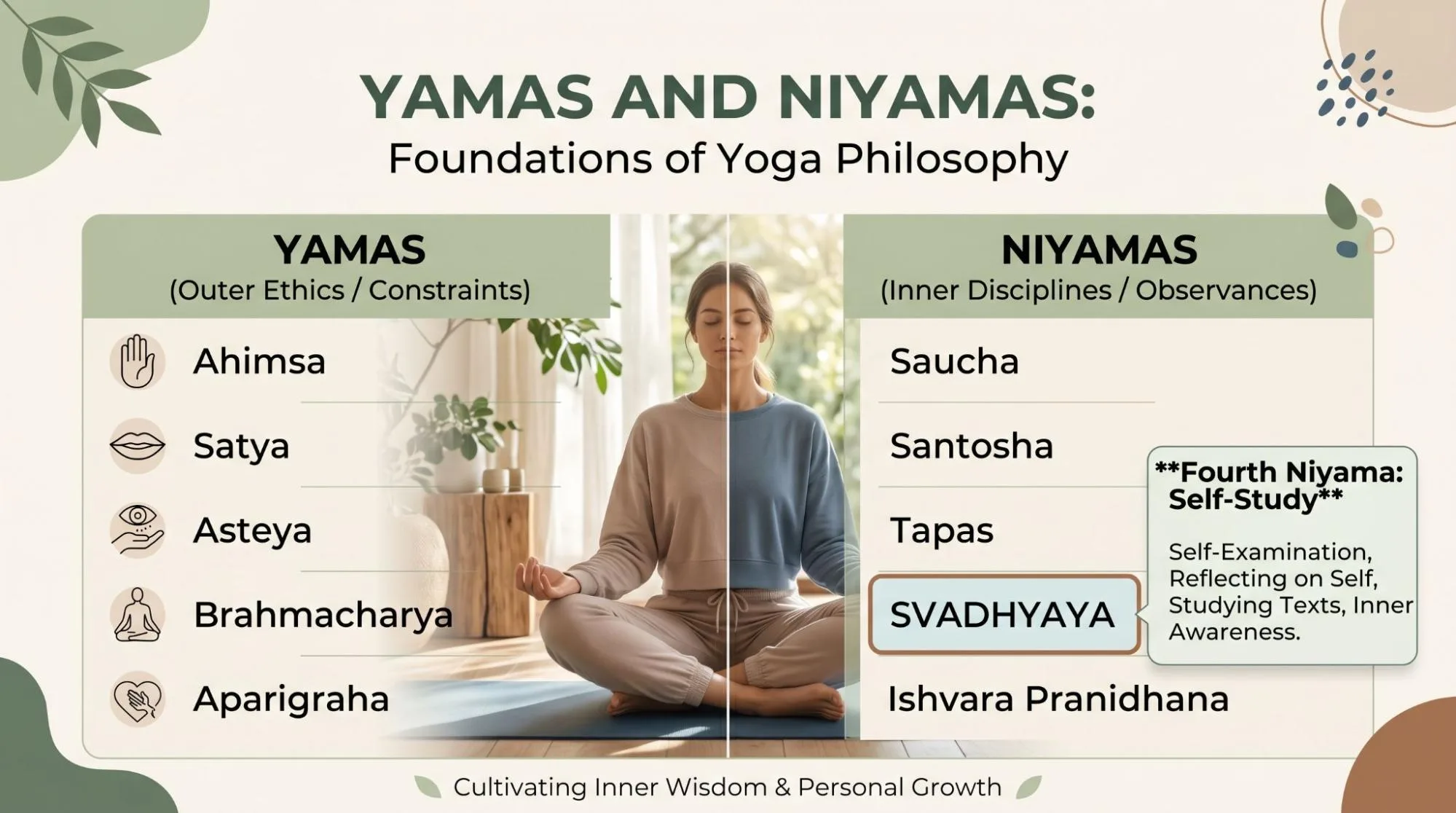
In Patanjali’s Yoga Sutras, yoga is described through eight limbs. Two important parts of this system are the yamas and niyamas. The yamas guide how we relate to others, while the niyamas guide our personal discipline and inner life.
Svadhyaya is the fourth niyama. It sits among other personal practices such as purity, contentment, discipline, and surrender. This placement matters because yoga is not only physical movement. It is also a path of awareness.
The fourth niyama reminds us that true growth begins when we are willing to look within. A person may practice advanced yoga poses, but without self-awareness, the deeper purpose of yoga can be missed.
The Deeper Meaning of Self-Study
Many people think svadhyaya means only the study of sacred books. That is part of it, but not the whole picture.
Traditionally, svadhyaya includes the study of sacred texts such as Patanjali’s Yoga Sutras and the Bhagavad Gita. These texts offer ancient wisdom about the mind, ego, action, discipline, and inner peace. But reading alone is not enough.
The deeper meaning is reflection.
You read, pause, and ask, “How does this apply to my life?” You notice the fluctuations of the mind, the way thoughts rise and fall, and how emotions shape your choices. This is where sacred texts become practical instead of theoretical.
Svadhyaya turns knowledge into personal understanding.

Learn More : Yama and Niyama: Meaning, Principles, Benefits, and Daily Practice
Why Svadhyaya Matters in Modern Life
Modern life gives us endless noise. Phones, work pressure, social media, family duties, comparison, and stress can pull attention outward all day. Many people know what others are doing, but they rarely know what is happening inside themselves.
Svadhyaya helps bring attention back home.
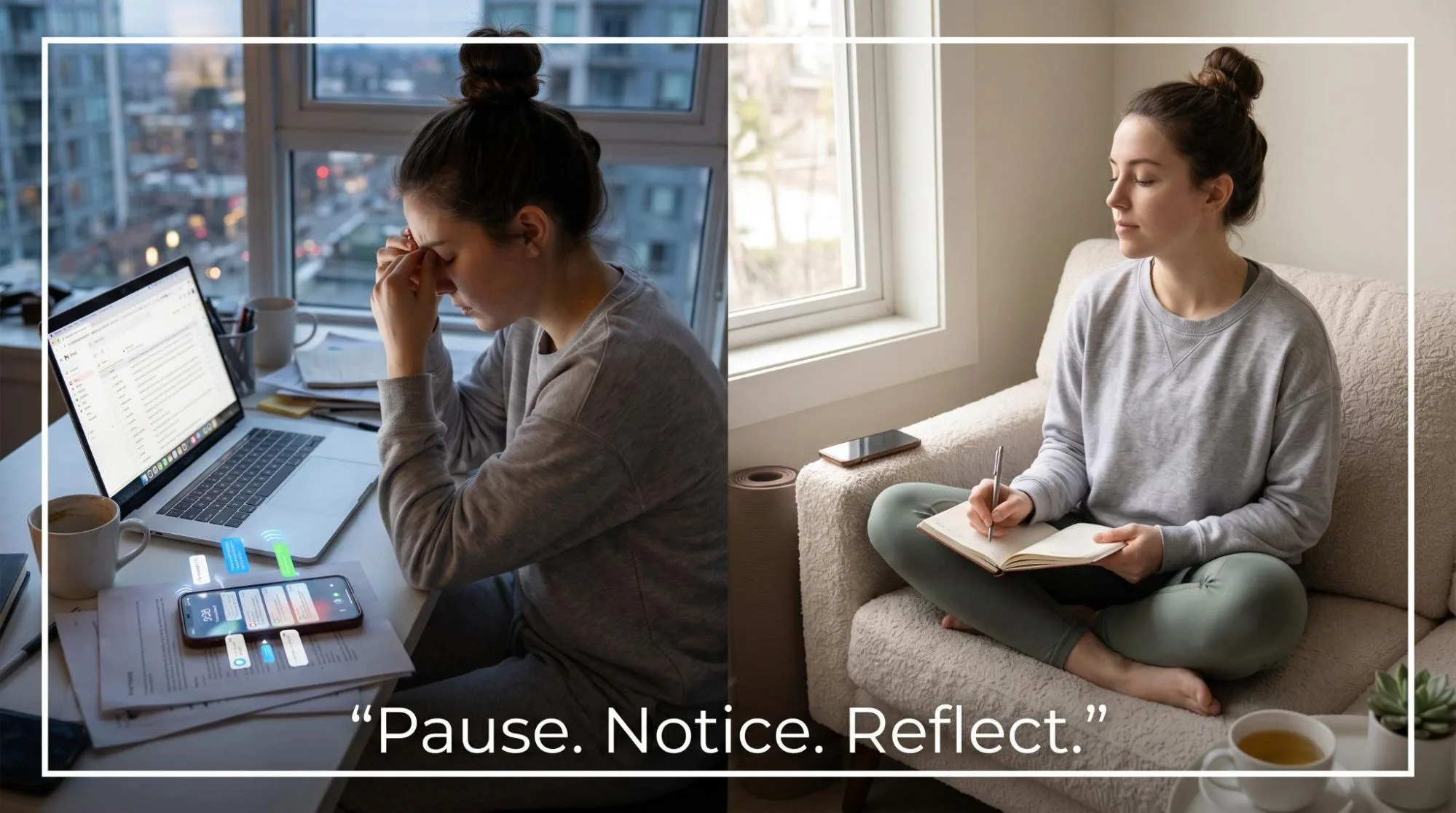
It teaches you to pause before reacting. It helps you notice stress before it becomes anger. It encourages you to understand your own needs instead of copying everyone else’s lifestyle.
This is why svadhyaya is still useful today. It gives people a quiet way to understand their bodies and minds without needing anything complicated.
How to Practice Svadhyaya in Daily Life
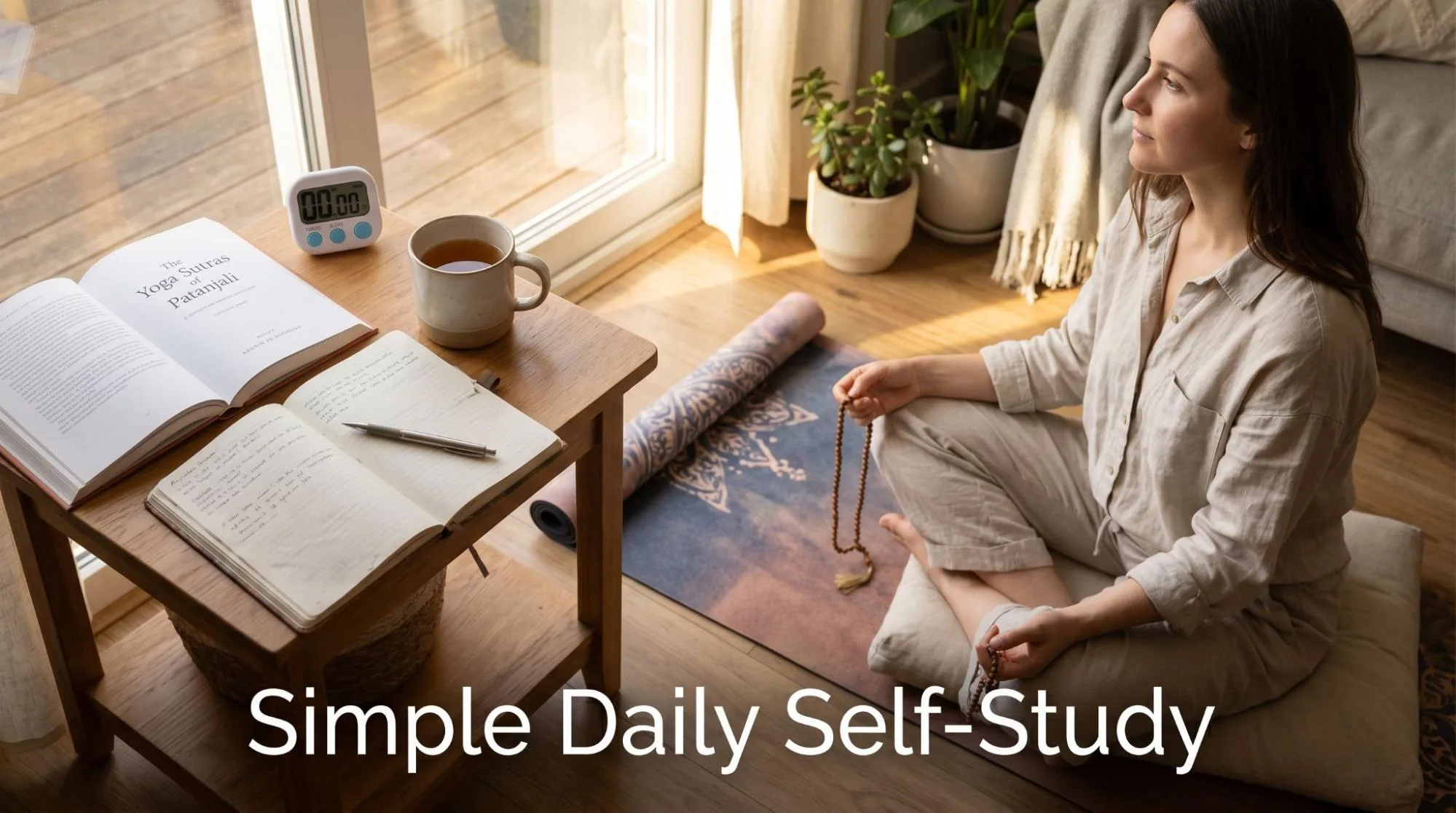
You do not need a special place or long spiritual routine to begin. Svadhyaya can become part of daily practice in small, realistic ways.
Introspection
Introspection means looking inward. It can be as simple as sitting quietly for a few minutes and noticing your thoughts.
You might ask yourself:
- What am I feeling right now?
- Is this feeling coming from the present moment or an old pattern?
- What do I need to understand instead of avoiding?
The key is to pay attention without immediately judging yourself. Some days, you may find calm. Other days, you may notice irritation, fear, or impatience. Both are useful observations.
Journaling
Journaling is one of the easiest ways to practice svadhyaya in daily life. Writing helps you see your thoughts more clearly.
You do not need perfect grammar or long pages. A few honest lines can be enough.
You can write about:
- A situation that disturbed you
- A habit you noticed
- Something you are grateful for
- A repeated emotional pattern
- A lesson from your yoga practice
Over time, journaling reveals patterns that are easy to miss at the moment.
Study of Yogic Texts
The study of sacred texts is a traditional part of svadhyaya. You may read a short passage from Patanjali’s Yoga Sutras, the Bhagavad Gita, or another trusted yoga philosophy text.
But read slowly. One small idea, reflected on deeply, is more useful than rushing through many pages.
After reading, ask:
- What does this teaching mean in real life?
- Where do I see this pattern in myself?
- How can I practice this lesson today?
This keeps the study practical and personal.
Mantra Chanting
Mantra chanting is another form of svadhyaya. A mantra gives the mind a steady focus. Instead of chasing every thought, the mind learns to return to one sound or phrase.
This can be helpful when the fluctuations of the mind feel strong. Chanting gently trains attention. It also creates a sense of rhythm, calm, and inner steadiness.
You can chant aloud, whisper, or repeat silently. The main point is awareness, not performance.
Mindful Yoga Practice
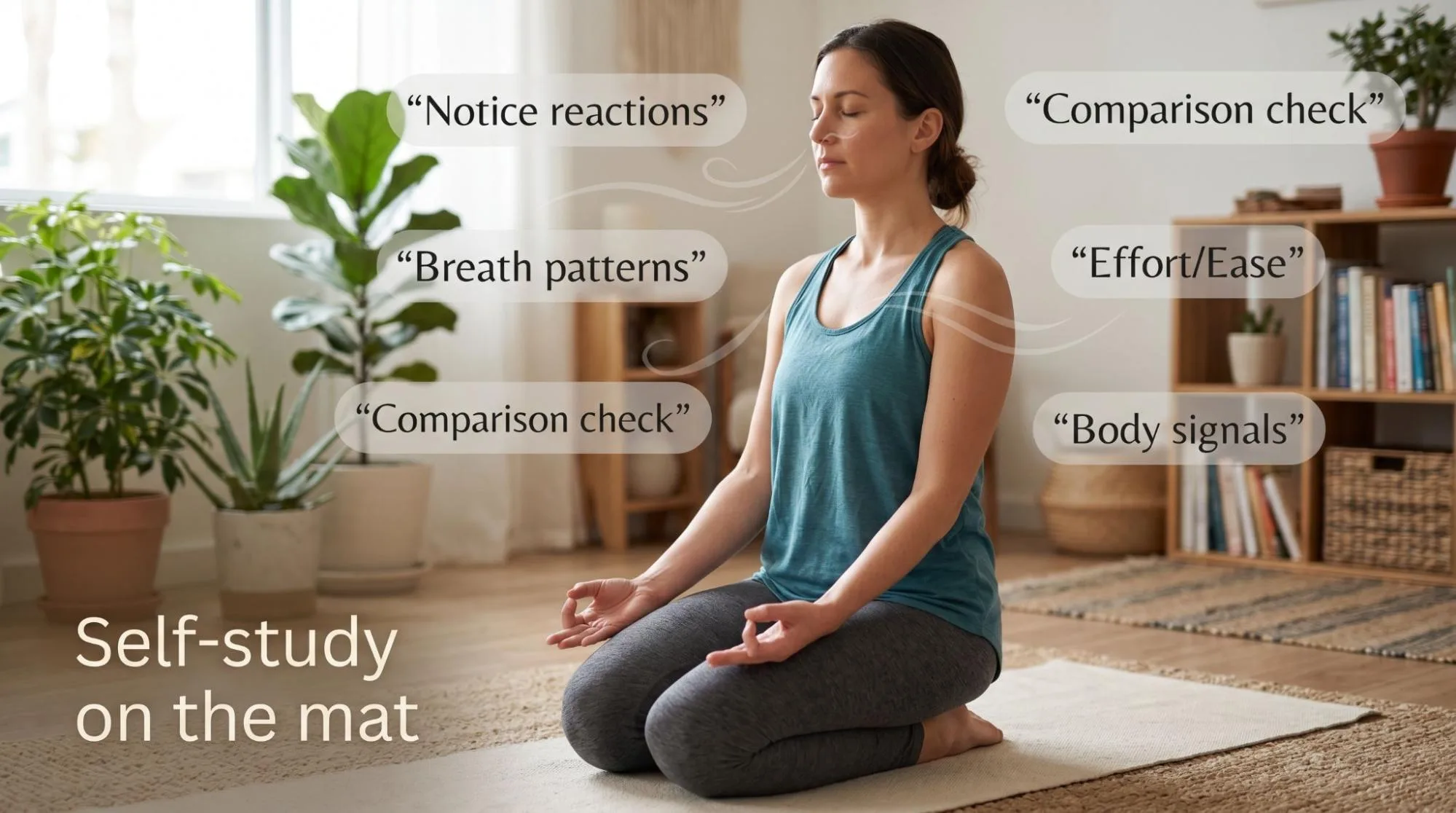
Svadhyaya on the mat means using yoga poses as a mirror. You are not only stretching or building strength. You are observing yourself.
Notice how you respond when a pose feels difficult. Do you become frustrated? Do you compare yourself with others? Do you hold your breath? Do you force your body?
These small observations are powerful. The yoga mat often shows us the same habits we carry into daily life.
Benefits of Svadhyaya
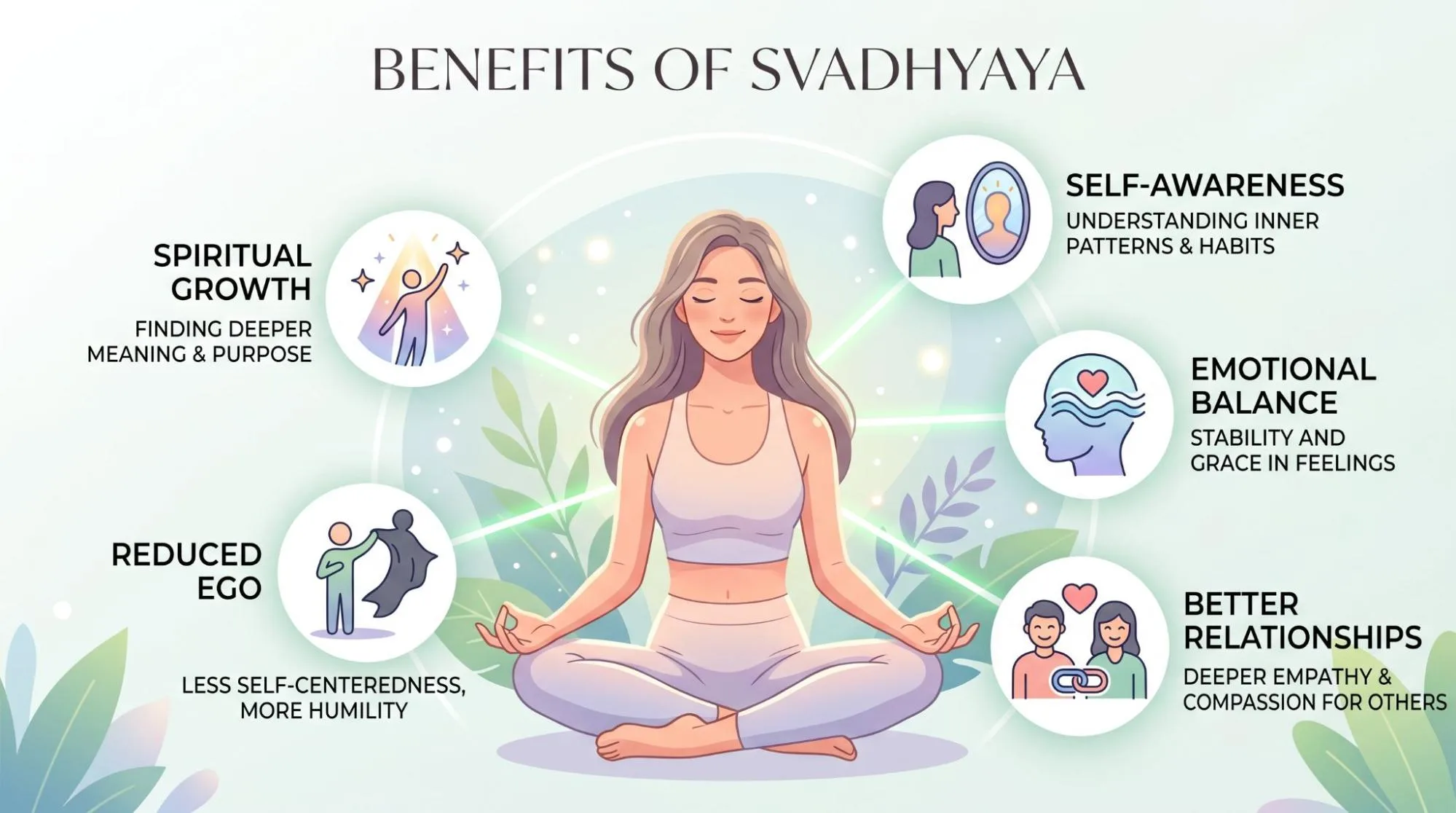
Svadhyaya is a quiet practice, but its benefits can be very real when practiced regularly.
Greater Self-Awareness
The first benefit is clearer self-awareness. You begin to understand your thoughts, choices, and emotional patterns.
Instead of saying, “This is just how I am,” you start seeing what can change and what needs compassion.
Better Emotional Control
Svadhyaya creates space between feeling and reaction. You may still feel anger, fear, or sadness, but you become less controlled by them.
That small pause can change many things. It can prevent unnecessary arguments, rushed decisions, and emotional regret.
Improved Relationships
When you understand yourself better, you usually relate to others more kindly. You stop blaming everyone for every feeling. You also become better at noticing your own role in conflicts.
This does not mean accepting poor treatment. It means responding with more clarity instead of reacting from ego or habit.
Reduction of Ego
The ego often wants to be right, admired, or protected. Svadhyaya helps you notice this without shame.
You may see where pride, insecurity, or comparison appears in your life. Once you see it clearly, it becomes easier to soften.
Deeper Spiritual Growth
Svadhyaya supports deeper spiritual growth because it connects outer practice with inner understanding. Yoga becomes more than exercise. It becomes a path of learning, humility, and awareness.
This is where ancient wisdom becomes alive in everyday experience.
Learn More : What Is Ahimsa in Yoga? A Simple Guide to Non-Violence, Kindness, and Daily Practice
Svadhyaya on the Yoga Mat
Svadhyaya on the mat is simple but honest. During yoga practice, pay attention to your breath, body, thoughts, and reactions.
For example, in a balancing pose, you may notice impatience. In a deep stretch, you may notice resistance. In a resting pose, you may notice how hard it is to relax.
None of this is wrong. It is information.
Try asking yourself during practice:
- Am I forcing this pose?
- Am I breathing smoothly?
- Am I comparing myself?
- What is my body teaching me today?
This makes yoga practice more mindful and less mechanical.
Svadhyaya Off the Yoga Mat
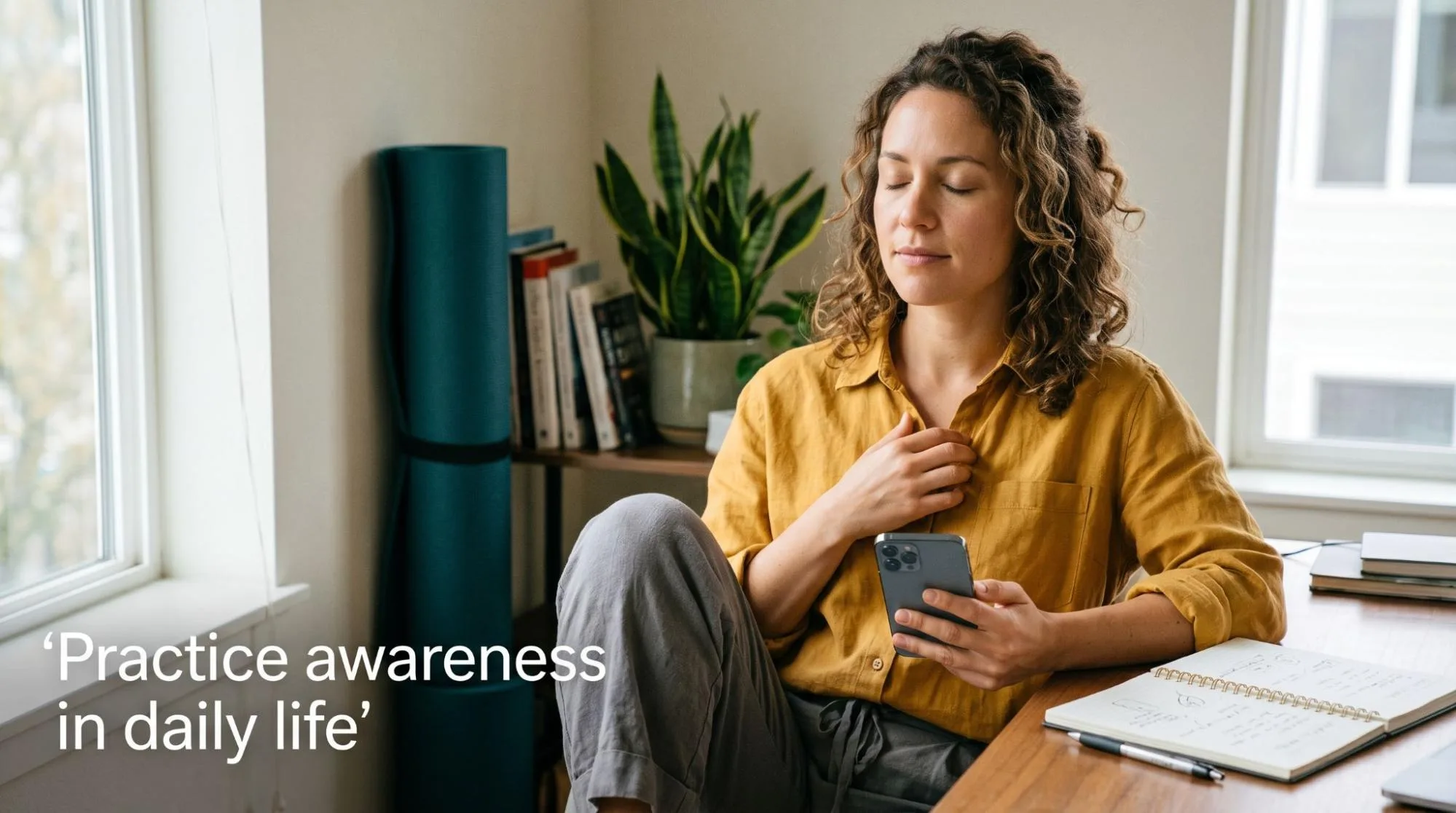
The real test of svadhyaya often happens off the yoga mat.
It appears when someone criticizes you. It appears when plans change. It appears when you feel jealous, tired, impatient, or defensive.
Daily life becomes the classroom.
You can practice by pausing and asking, “What is this moment showing me about myself?” This one question can shift your whole response.
Svadhyaya off the mat also means noticing what you consume: the people you spend time with, the content you watch, the words you repeat, and the beliefs you carry.
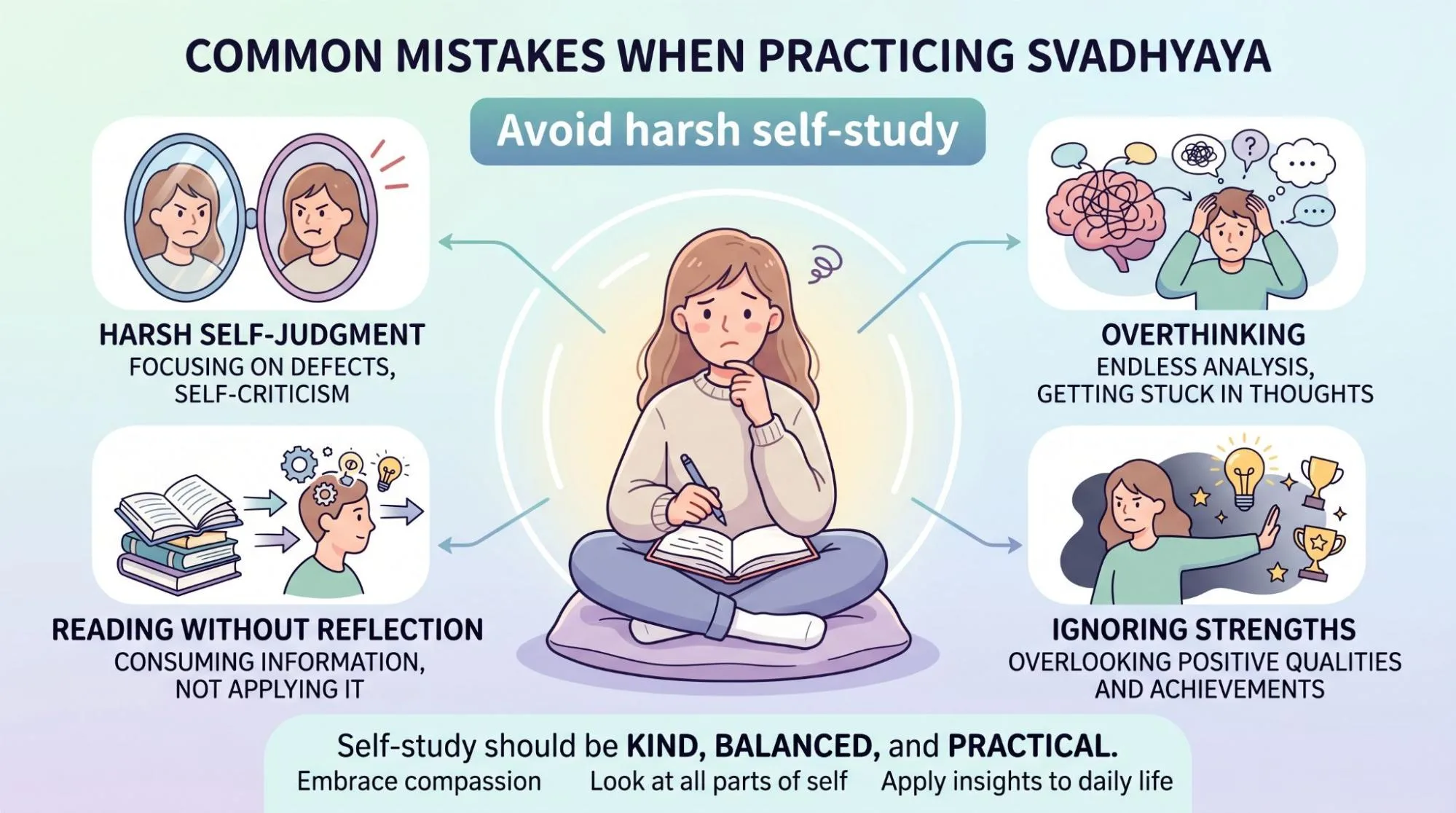
Common Mistakes When Practicing Svadhyaya
Svadhyaya is helpful, but it can become heavy if misunderstood.
Judging Yourself Too Harshly
Self-study is not self-attack. If you notice a weakness, do not turn it into a reason to dislike yourself.
The goal is awareness with honesty and kindness.
Overthinking Everything
Some people turn reflection into endless mental analysis. That can create more stress.
Svadhyaya should bring clarity, not confusion. Reflect, learn, and return to the present moment.
Ignoring Positive Qualities
Self-study should not focus only on flaws. Notice your patience, courage, kindness, effort, and growth too.
Seeing your positive qualities helps create balance.
Reading Without Reflection
Reading sacred texts without reflection can become only information gathering. The real value comes when you apply the teaching to your own life.
Even one meaningful sentence can guide a full day of practice.
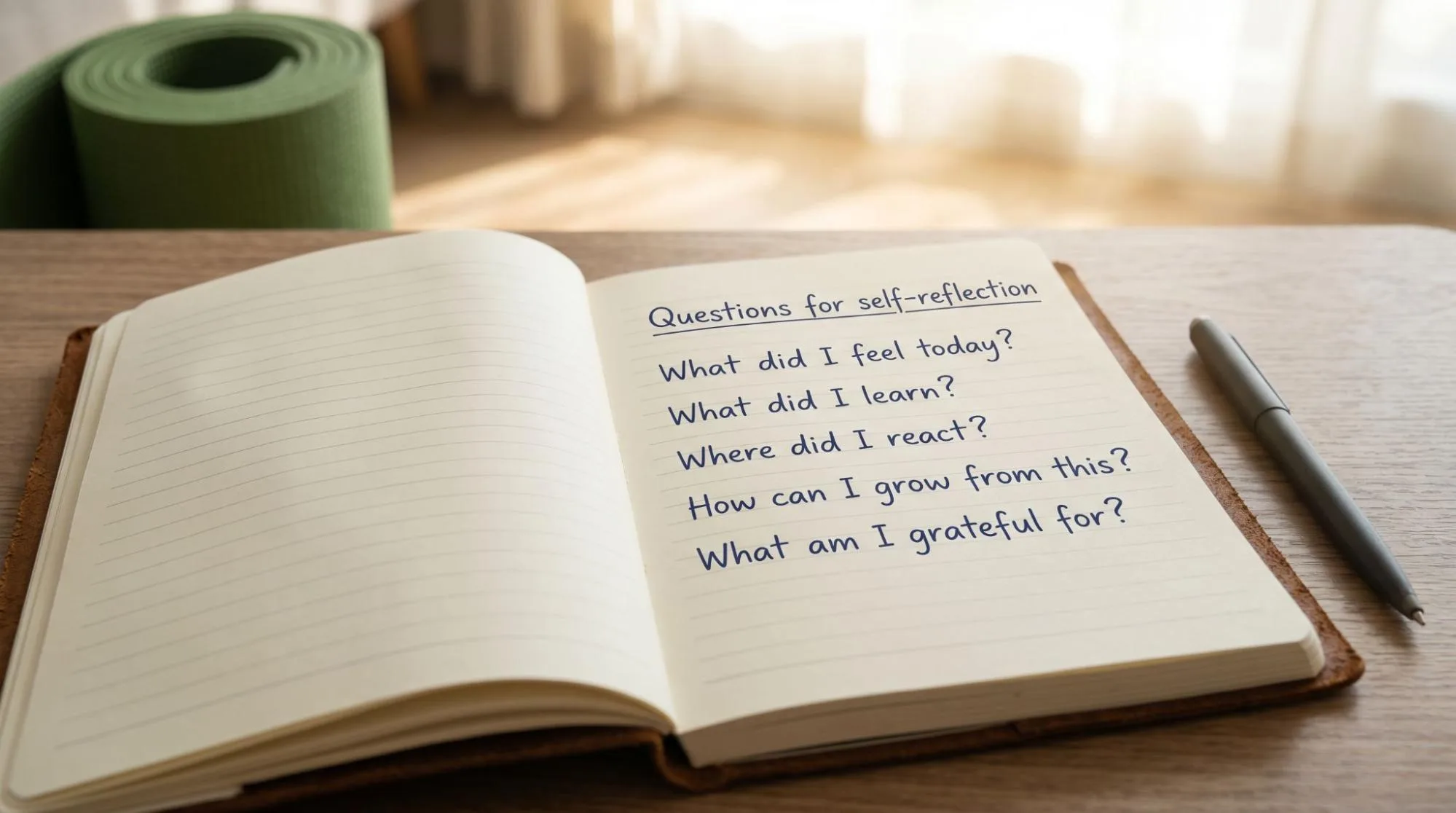
Simple Svadhyaya Questions for Self-Reflection
Here are a few gentle questions you can use in journaling, meditation, or quiet reflection:
- What emotion visited me most today?
- What did I learn about myself this week?
- Where did I react instead of respond?
- What habit is asking for my attention?
- What thought pattern keeps repeating?
- What am I avoiding?
- What helped me feel calm?
- Where did I act from ego?
- What quality do I want to practice tomorrow?
- What is my yoga practice teaching me right now?
You do not need to answer all of them at once. Choose one question and sit with it honestly.
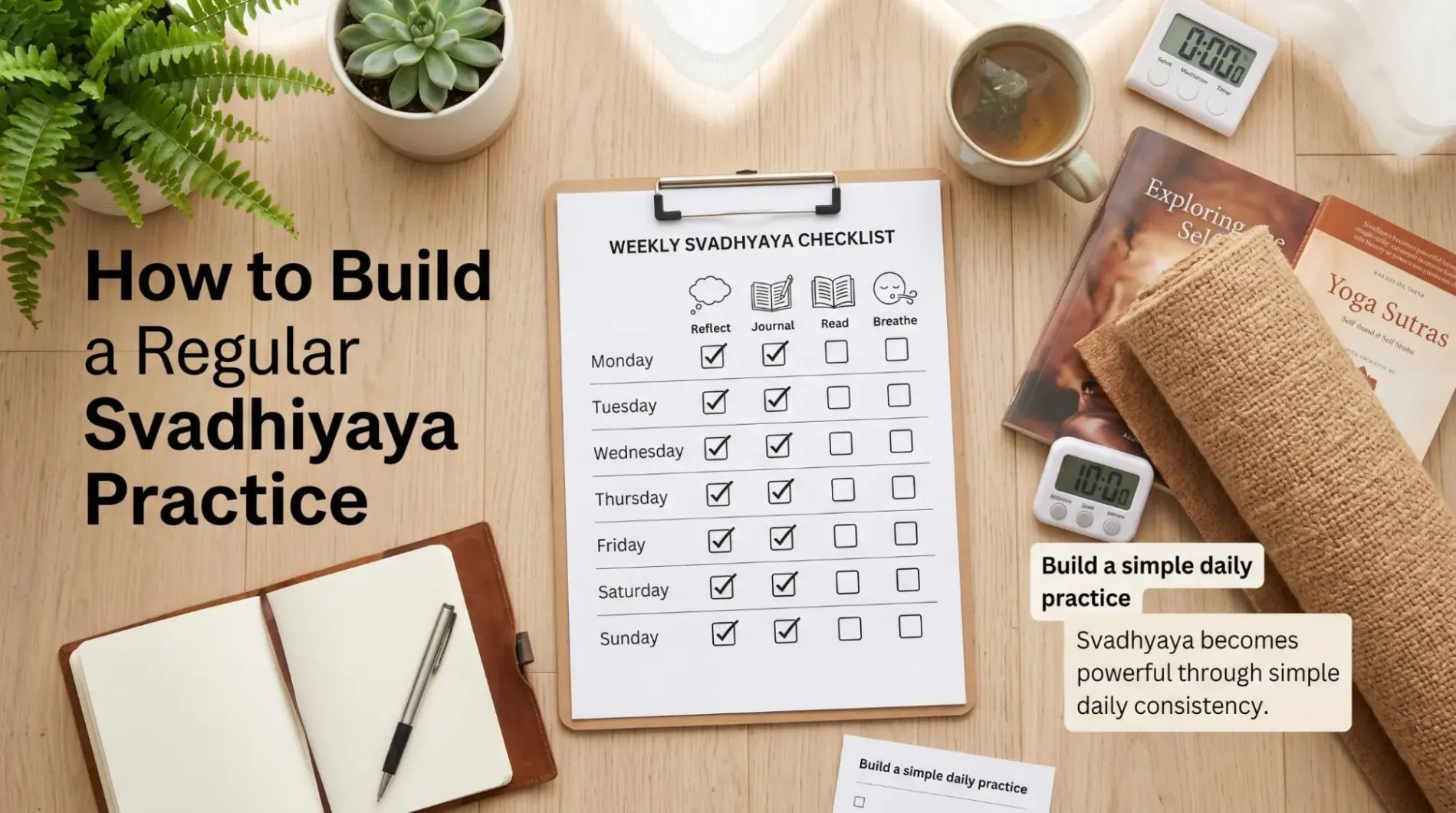
How to Build a Regular Svadhyaya Practice
Start small. A regular svadhyaya practice is more useful than an intense practice that disappears after two days.
You can begin with:
- 5 minutes of quiet reflection in the morning
- One journal question at night
- One short passage from a sacred text each week
- A mindful check-in after yoga practice
- A few minutes of mantra chanting
- A pause before reacting during stressful moments
Keep it simple enough that you can actually continue. Svadhyaya grows through consistency, not pressure.
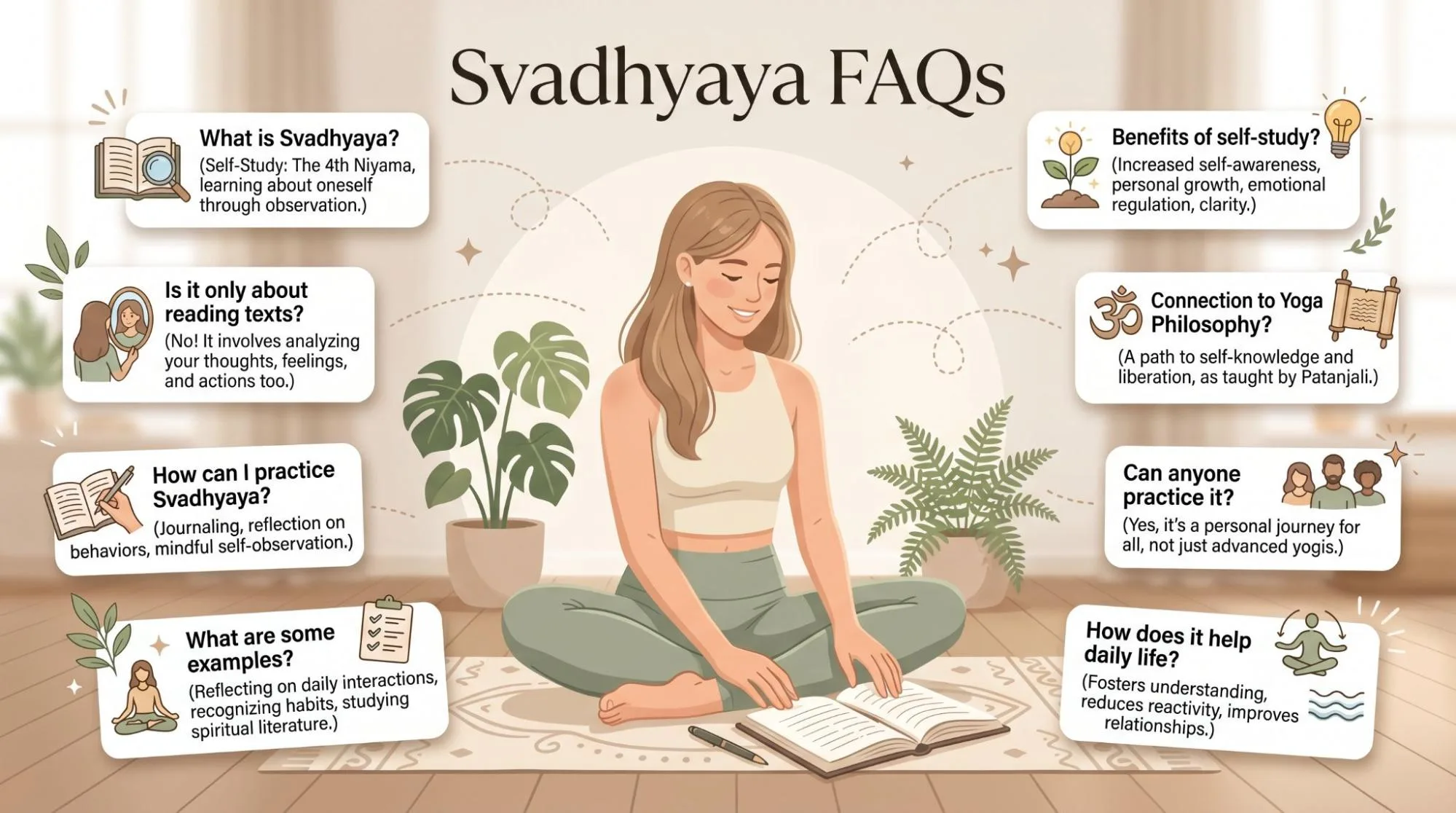
FAQs About Svadhyaya
What is the meaning of svadhyaya self study yoga?
The svadhyaya self study yoga meaning is the practice of observing and understanding yourself through reflection, awareness, sacred texts, mantra, and mindful daily living.
Is svadhyaya only about reading sacred texts?
No. Sacred texts are part of svadhyaya, but the practice also includes introspection, journaling, mantra chanting, and observing your thoughts and actions.
Why is svadhyaya called the fourth niyama?
Svadhyaya is the fourth niyama in Patanjali’s Yoga Sutras. It is one of the personal practices that support inner discipline and spiritual growth.
Can beginners practice svadhyaya?
Yes. Beginners can practice svadhyaya by paying attention to their thoughts, writing in a journal, or noticing reactions during yoga practice.
How do I practice svadhyaya on the mat?
During yoga, observe your breath, body, thoughts, and emotions. Notice whether you are forcing, comparing, resisting, or moving with awareness.
How can I practice svadhyaya in daily life?
You can practice it by pausing before reacting, journaling, reflecting on your habits, reading yoga philosophy, and noticing emotional patterns.
Does svadhyaya help with stress?
Yes, it can help. By understanding your thoughts and reactions better, you may respond to stress with more calm and awareness.
What texts are used for svadhyaya?
Common texts include Patanjali’s Yoga Sutras and the Bhagavad Gita. Many people also study other trusted yoga philosophy writings.
Is svadhyaya a spiritual practice?
Yes, but it can also be practical. It supports spiritual growth while helping with emotional awareness, relationships, and daily choices.
How often should I practice svadhyaya?
A few minutes daily is enough to begin. Regular reflection is more helpful than occasional deep self-analysis.
Learn More : Body Scan Meditation Benefits: A Simple Guide to Relaxing the Mind and Body
Final Thoughts on Svadhyaya
Svadhyaya is a gentle but powerful part of yoga. It teaches you to study yourself with honesty, patience, and care.
Through reflection, journaling, sacred texts, mantra, and mindful yoga practice, you begin to understand your inner patterns more clearly. You notice the fluctuations of the mind without being completely ruled by them.
Practice does not ask you to become perfect. It simply asks you to become more aware. And that awareness, practiced in small daily ways, can slowly change how you move, speak, think, and live.
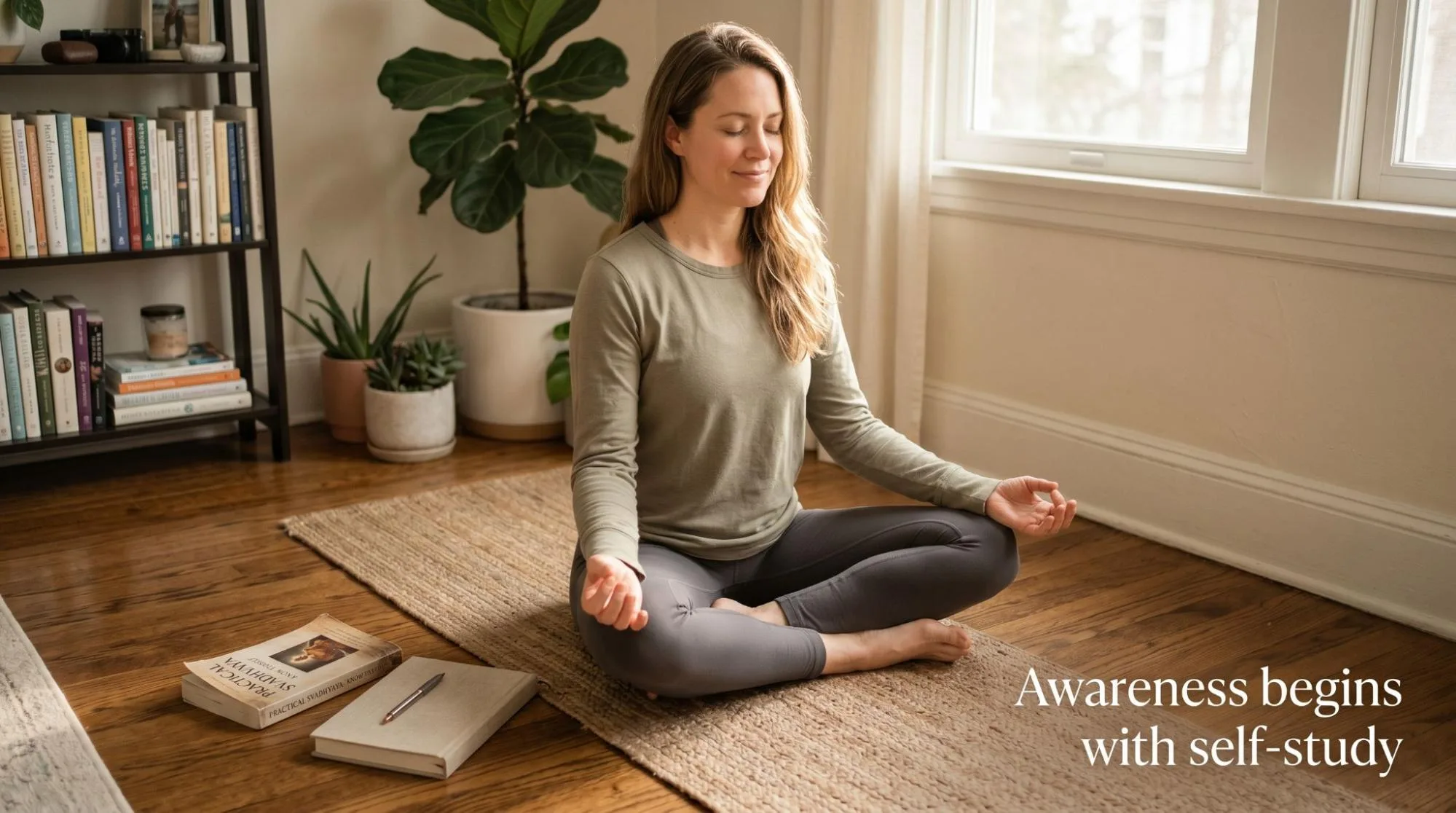
Frequently Asked Questions
What does Svadhyaya mean in yoga?
Svadhyaya means self-study. It involves observing your thoughts, habits, emotions, and actions with honesty, curiosity, and kindness.
Is Svadhyaya only reading yoga books?
No. Reading trusted yoga philosophy is one part of the practice. Journaling, mindful observation, mantra, and noticing reactions during yoga can also support Svadhyaya.
How can beginners practise Svadhyaya?
Begin with five minutes of reflection or one journal question each day. Notice what you feel without immediately judging or trying to fix it.
Can Svadhyaya reduce stress?
It may help you recognise stress patterns and create a pause before reacting. However, persistent or severe distress should be discussed with a qualified professional.
