
Quick answer: Tapas is the yoga principle of steady, mindful effort and self-discipline. It supports consistent practice and personal growth, but it should never mean punishment, extreme restriction, or pushing through sharp pain.
Safety and Balance
Healthy discipline includes rest, nourishment, flexibility, and self-compassion. During yoga, ease out of any pose that causes sharp pain, numbness, dizziness, or breathing difficulty. If you have an injury or medical condition, ask a qualified professional for personalised guidance.
Introduction
The phrase tapas yoga meaning self discipline describes one of the most practical teachings in yoga. Tapas is the steady inner effort that helps you keep going when your mind wants comfort, delay, or distraction. It is the quiet strength behind regular yoga practice, better habits, and personal growth.
Tapas does not mean being hard on yourself. It does not mean forcing your body, ignoring your emotions, or living without joy. At its heart, tapas is the inner fire that helps you choose what is good for you, even when it is not the easiest choice.
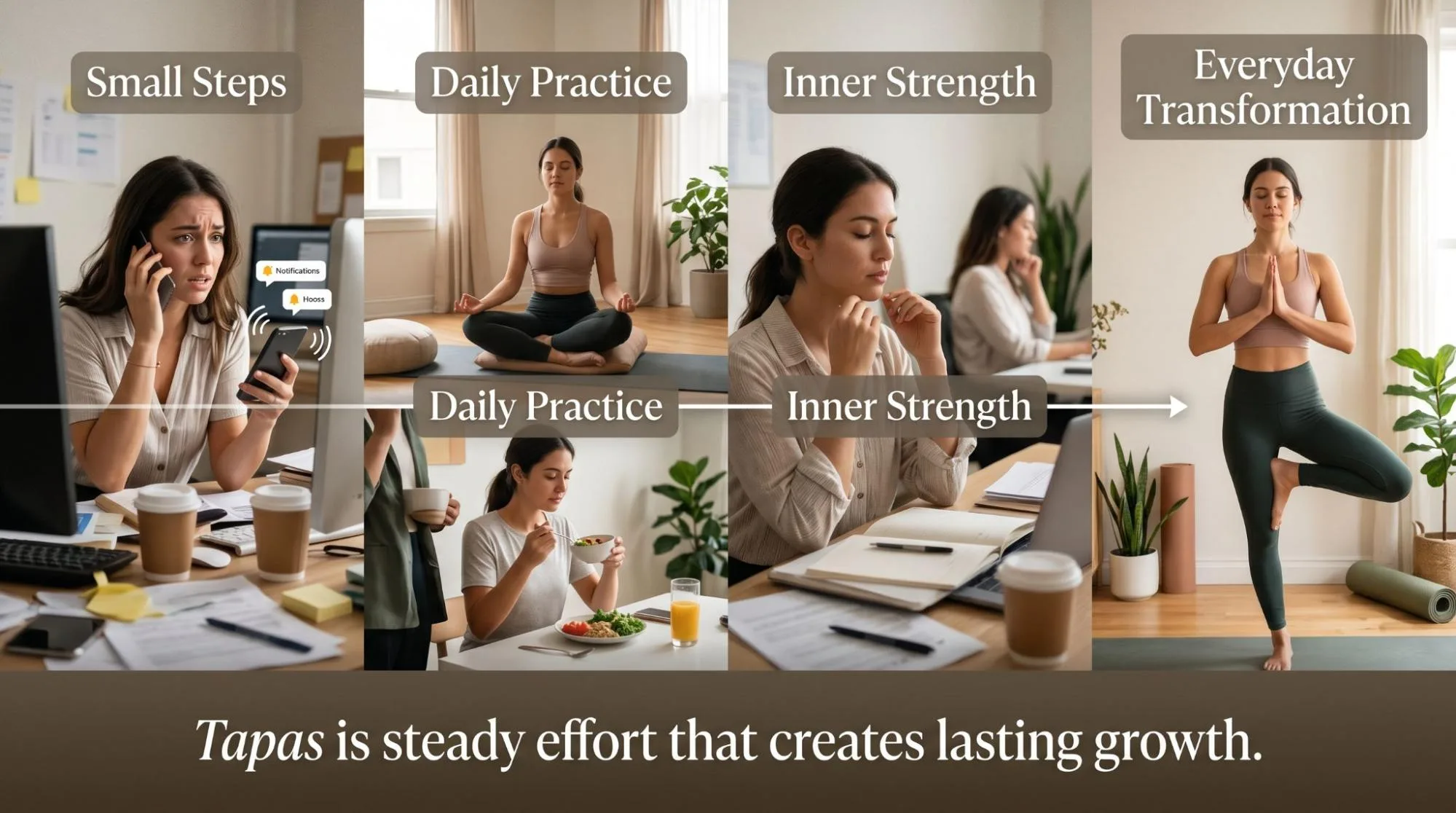
In daily life, tapas can look very simple. It may be waking up earlier, holding a yoga pose with patience, breathing through discomfort, or keeping a promise you made to yourself. These small steps may not feel dramatic, but over time, they shape your body, mind, and spiritual path.
What Does Tapas Mean in Yoga?
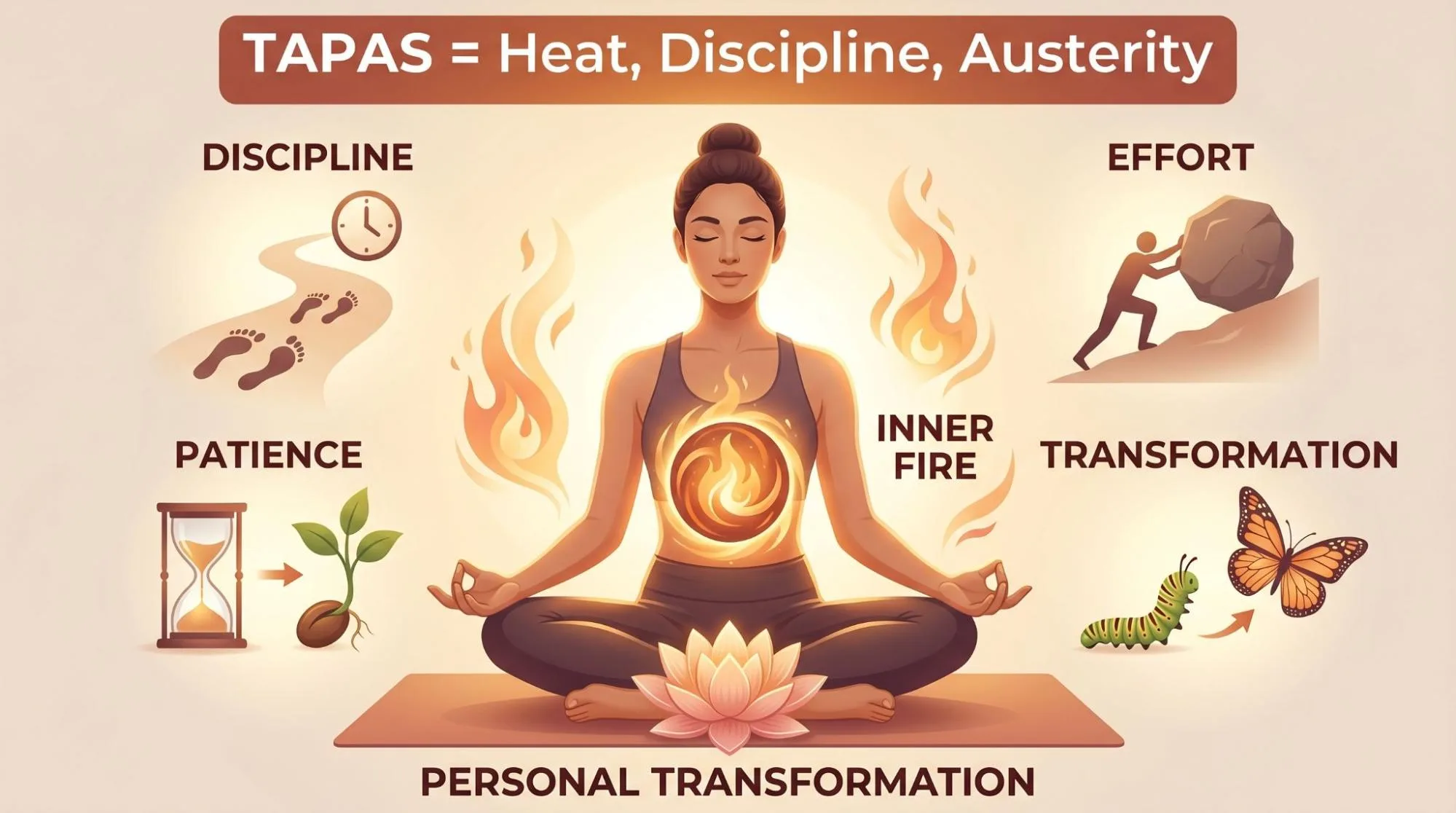
Tapas is a Sanskrit word often translated as “heat,” “discipline,” or “austerity.” In yoga, this heat is not only physical. It is the inner energy created through effort, patience, and commitment.
Literal Meaning of Tapas
The literal meaning of tapas is connected with burning or creating heat. In yogic thought, this heat helps burn away laziness, weak habits, and mental resistance.
It is not a harsh fire. It is a refining fire. Just as heat can purify metal, tapas helps refine your actions, thoughts, and choices.
Tapas as Inner Fire
Tapas is often called the inner fire of yoga. It is the part of you that says, “I will keep practicing,” even when you do not feel fully motivated.
This inner fire helps you return to your mat, breathe through a difficult moment, and make choices that support your well-being.
Tapas as Personal Transformation
Real change usually happens slowly. Tapas teaches that transformation comes through repeated effort.
Think of it like writing a book. One page may not seem like much, but if you write a little every day, the book slowly takes shape. In the same way, one short yoga practice, one mindful breath, or one healthy decision can become part of long-term personal growth.
Where Tapas Fits in Yogic Philosophy
Tapas is not just a fitness idea. It belongs to the deeper system of yoga philosophy.
Tapas as the Third Niyama
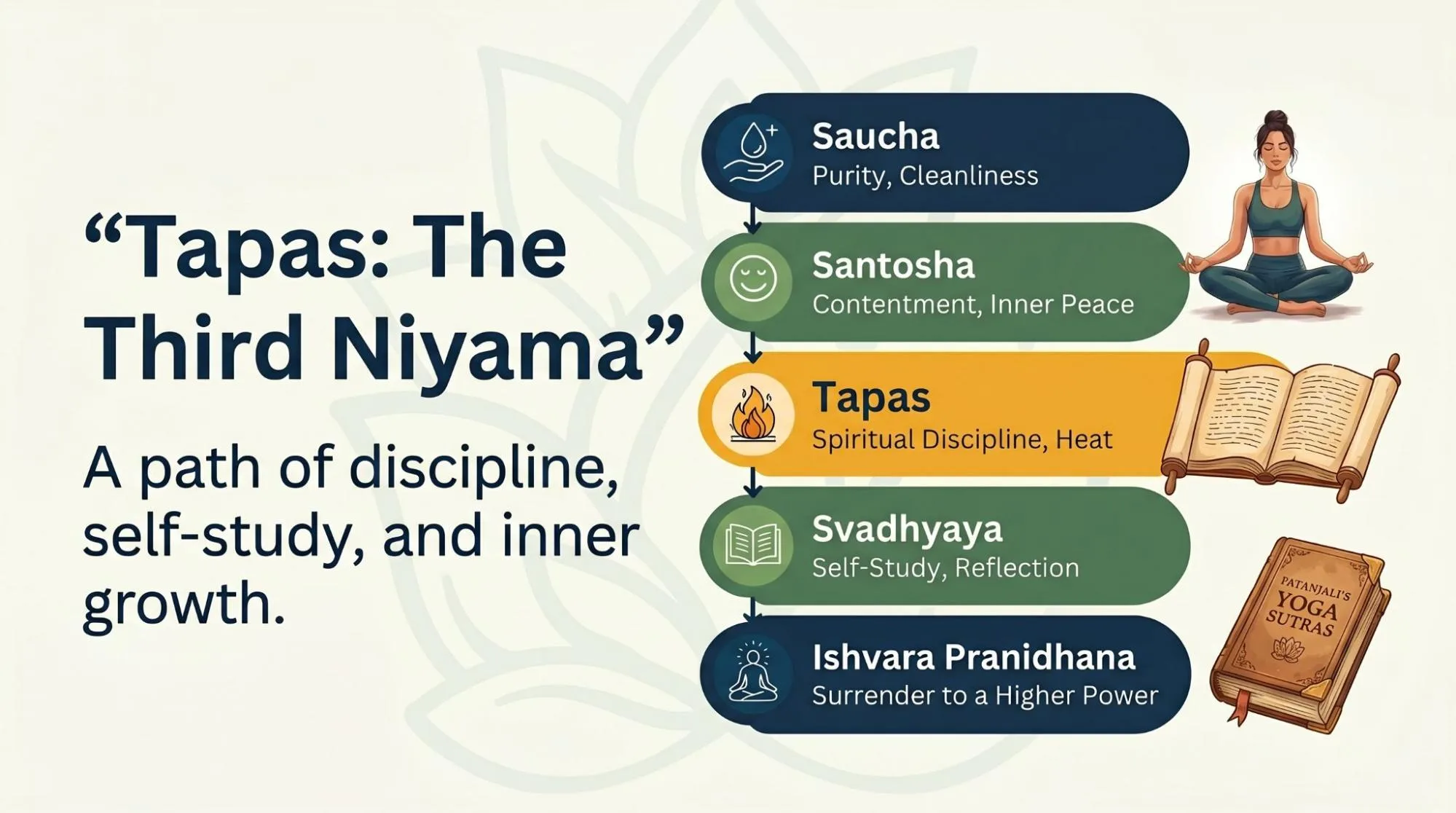
Tapas is the third niyama. The niyamas are personal observances that guide how we care for ourselves, our habits, and our inner life.
The yamas and niyamas work together. Yamas guide behavior toward others, while niyamas guide personal discipline and self-development.
Tapas in Patanjali’s Yoga Sutras
In Patanjali’s Yoga Sutras, tapas are connected with disciplined practice and inner purification. It works closely with self-study and surrender.
This means tapas is not only about doing more. It is about becoming more aware of your habits, reactions, excuses, and strengths.
Learn More : Yama and Niyama: Meaning, Principles, Benefits, and Daily Practice
Why Tapas Is Important in Yoga Practice
Without tapas, yoga can remain only an idea. With tapas, yoga becomes something you live.
Tapas Is Not Punishment or Harsh Suffering
Some people think tapas means making life uncomfortable on purpose. That is not a healthy understanding.
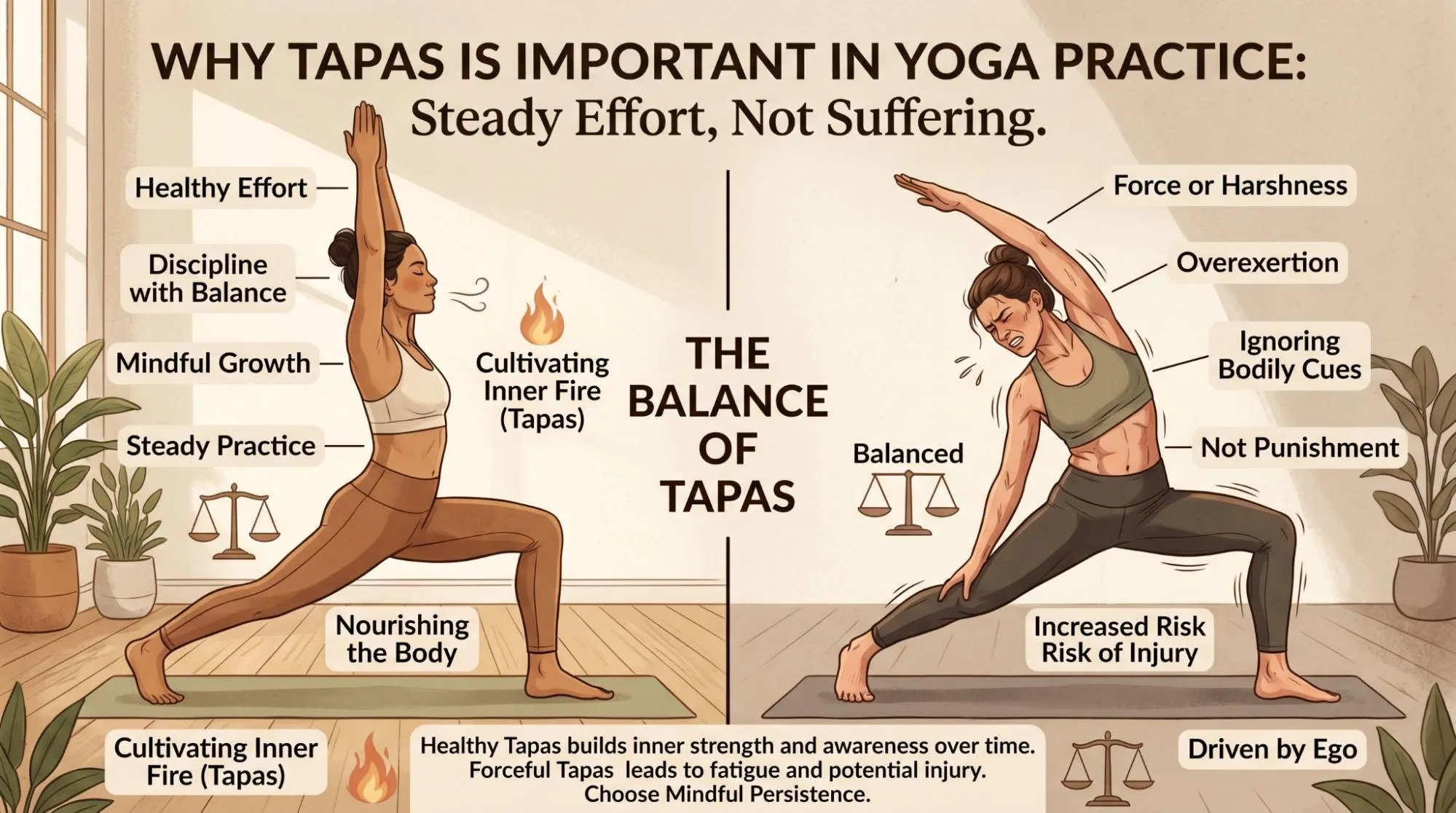
Tapas self discipline should never feel like punishment. It is not about hurting the body or proving how strong you are. It is about choosing steady effort with respect and awareness.
The Balanced Meaning of Discipline
Discipline in yoga is not harsh. It is balanced.
Healthy discipline helps you practice regularly, eat with care, sleep better, speak more mindfully, and stay committed to your values. It gives structure to your daily lives without making life feel heavy.
Difference Between Healthy Effort and Force
There is a clear difference between effort and force.
Healthy effort feels focused and honest. Force feels tense, aggressive, and ego-driven.
Holding a yoga pose while breathing calmly can be tapas. Pushing into pain just to look advanced is not tapas.
How Tapas Supports Mindful Growth
Tapas helps you grow because it trains you to stay present when things are not easy.
You learn to pause instead of quitting. You learn to breathe instead of reacting. You learn to keep going without becoming harsh.
How to Practice Tapas on the Yoga Mat
The yoga mat is one of the best places to understand tapas because the body shows us our habits clearly.
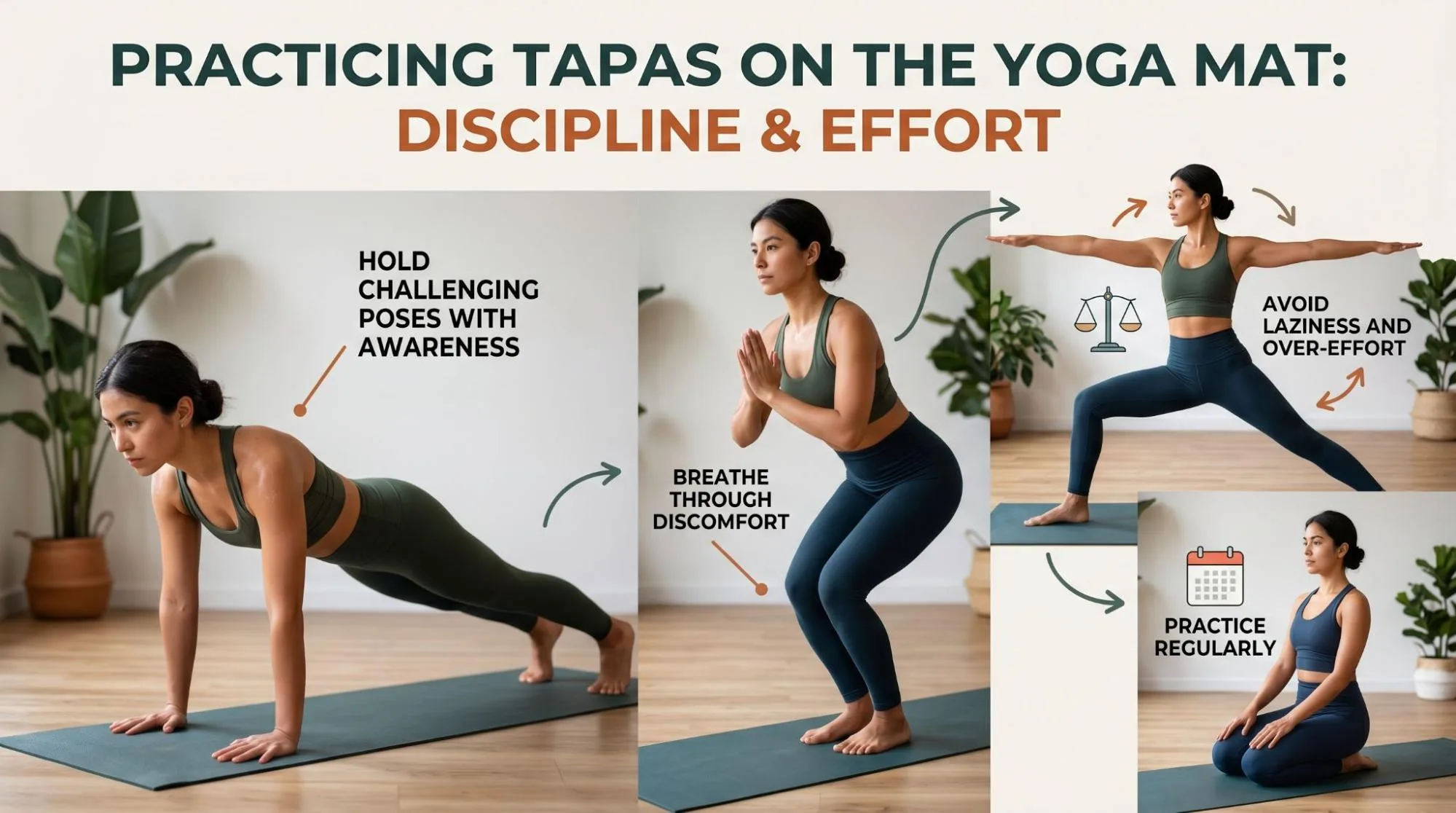
Hold Challenging Yoga Poses with Awareness
A simple way to practice tapas is to stay in a challenging pose for a few steady breaths.
This could be plank pose, chair pose, warrior pose, or any posture that requires focus. The aim is not to suffer. The aim is to remain aware.
Ask yourself:
- Can I breathe calmly here?
- Am I forcing or practicing?
- Can I stay present without tension?
Practice Yoga Regularly
A regular yoga practice builds tapas better than occasional intense effort.
Even 10 minutes a day can be powerful when done consistently. A short daily practice teaches discipline, patience, and honesty.
Breathe Through Discomfort
Discomfort is part of growth, but it must be understood wisely.
Mild discomfort may appear when muscles stretch or strength is being built. Slow breathing helps you stay calm. But sharp pain is a signal to stop or adjust.
Avoid Laziness and Over-Effort
Tapas sits between two extremes. One extreme is laziness. The other is over-effort.
A balanced practice respects both discipline and rest.
How to Practice Tapas in Daily Life
Tapas is not limited to yoga poses. It becomes more useful when you bring it into ordinary life.
Wake Up with Purpose
Your first action in the morning can set the tone for the day.
Waking up with purpose does not mean creating a perfect routine. It may simply mean getting out of bed without scrolling your phone for too long, drinking water, stretching, or sitting quietly for a minute.
Choose Healthy Habits
Tapas can appear in small health choices.
You may choose a nourishing meal, take a walk, reduce sugar, sleep on time, or practice breathing before reacting. These simple habits build self-respect.
Keep Promises to Yourself
Self-discipline grows when you keep small promises.
For example:
- “I will practice yoga for 10 minutes.”
- “I will finish this task before checking my phone.”
- “I will speak calmly even if I feel upset.”
- “I will read one page before sleeping.”
Every kept promise strengthens trust in yourself.
Face Difficult Conversations Calmly
Tapas is also an emotional discipline.
Sometimes the real practice is not on the mat. It is staying calm in a hard conversation, listening instead of interrupting, or telling the truth without being rude.
Reduce Instant Gratification
Modern life makes quick pleasure very easy. Food, shopping, entertainment, and social media are always available.
Tapas helps you pause. You do not have to reject comfort completely, but you learn not to be controlled by it.

Learn More : Svadhyaya: The Yoga Practice of Self-Study and Inner Reflection
Tapas and Self-Discipline in Modern Life
The meaning of tapas is especially useful today because distraction has become normal.
Building Focus in a Distracted World
Many people want focus, but they train distraction all day. Tapas helps reverse that pattern.
You can start with small steps: one task at a time, a short meditation, a daily walk, or a phone-free morning routine.
Using Discipline Without Losing Balance
Discipline should make you feel clearer, not more anxious.
If your routine makes you angry, guilty, or exhausted, it may need adjustment. True tapas is firm, but not cruel.
Turning Small Actions into Long-Term Growth
Big change often begins with small, repeated actions.
A few minutes of practice each day can become strength. One mindful pause can become emotional control. One honest habit can become a better life direction.

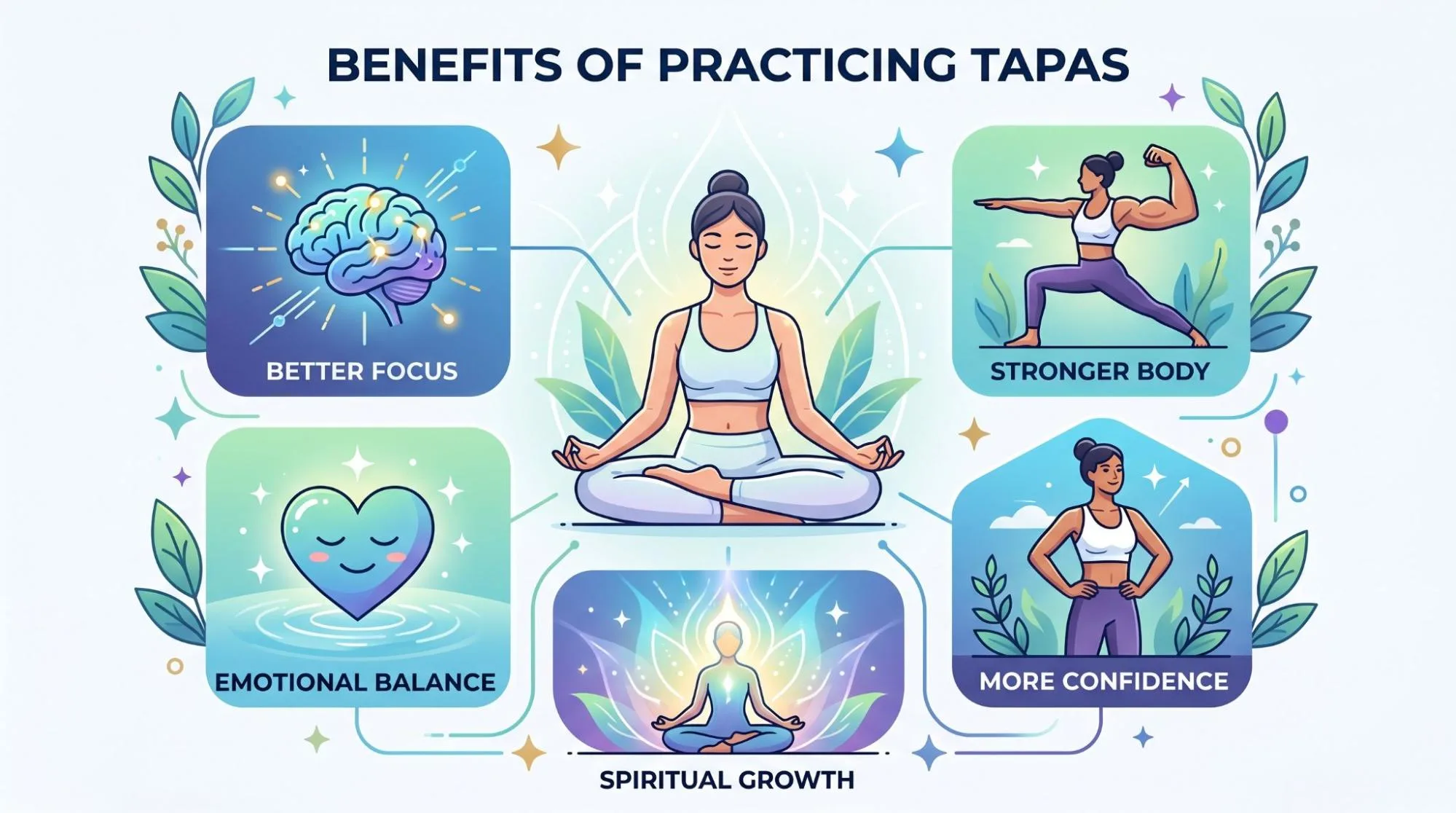
Benefits of Practicing Tapas
Better Focus
Tapas trains the mind to stay with one thing. This can help in yoga, work, study, meditation, and creative projects.
Stronger Body
Regular yoga practice builds strength, balance, flexibility, and stamina. Tapas helps you stay consistent enough to feel real improvement.
Emotional Balance
When you practice tapas, you become better at staying steady during discomfort. You learn to breathe, pause, and respond.
More Confidence
Confidence grows when you prove to yourself that you can follow through. Even small daily commitments can build strong inner confidence.
Spiritual Growth
On the spiritual path, tapas help remove habits that cloud awareness. It supports discipline, purity, self-study, and devotion.
Tapas and Other Niyamas
Tapas becomes more meaningful when understood with the other niyamas.
Tapas and Saucha
Saucha means cleanliness or purity. Tapas supports saucha by helping you choose habits that keep your body, mind, and environment clearer.
Tapas and Santosha
Santosha means contentment. Tapas gives effort, while santosha teaches peace with the present moment. Together, they create balanced growth.
Tapas and Svadhyaya
Svadhyaya means self-study. Tapas gives you the discipline to observe yourself honestly, even when the truth is uncomfortable.
Tapas and Ishvara Pranidhana
Ishvara Pranidhana means surrender to a higher reality. Tapas teaches you to do your part. Surrender teaches you to release the need to control every result.

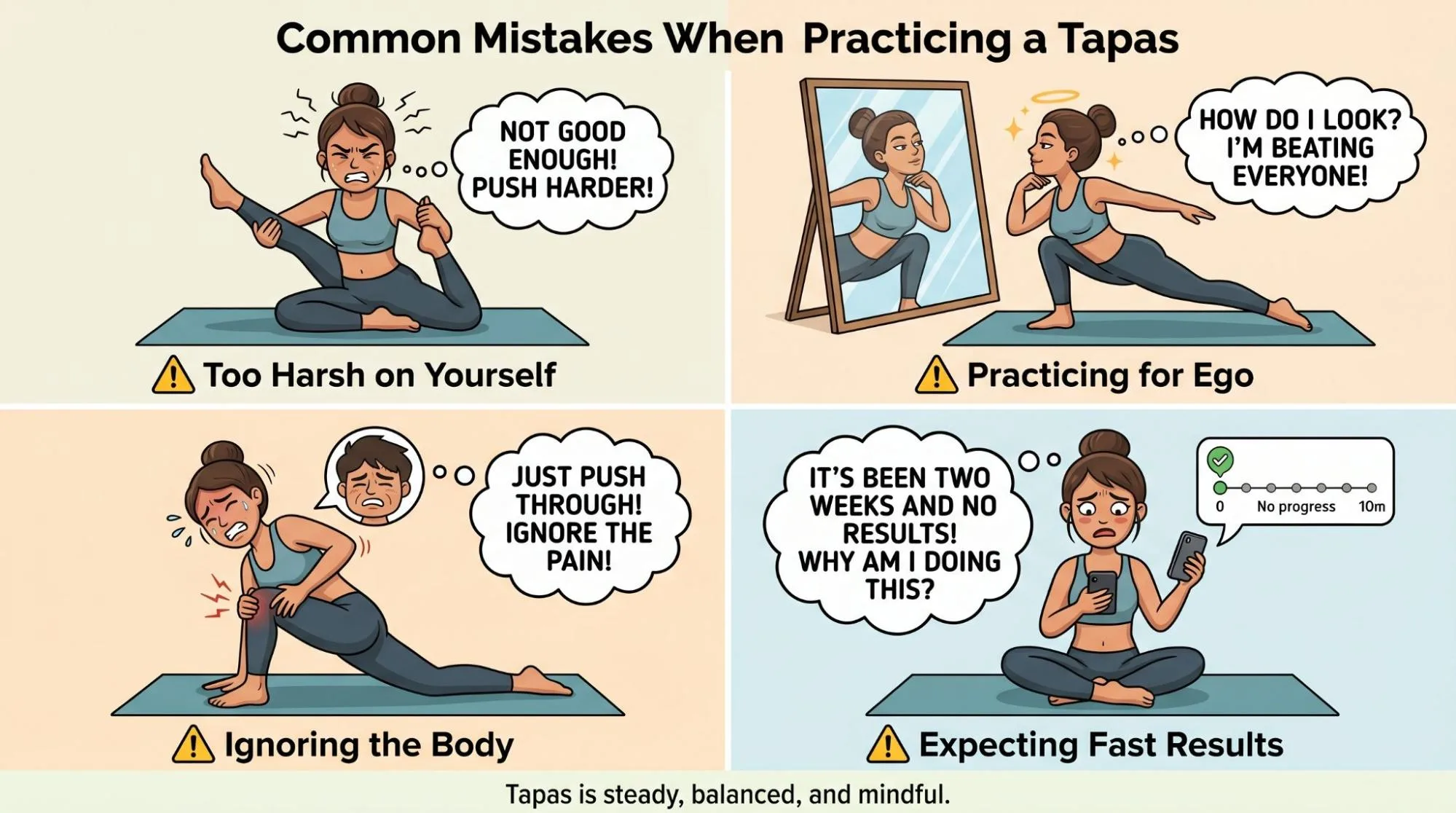
Common Mistakes When Practicing Tapas
Becoming Too Harsh with Yourself
Discipline should not become self-criticism. Missing one day does not mean you failed. Begin again calmly.
Practicing for Ego
If you practice only to impress others, tapas lose their deeper value. The real work is internal.
Ignoring the Body
Pain is not a badge of honour. A wise yoga student listens to the body and adjusts when needed.
Expecting Fast Results
Tapas work slowly. It builds strength, patience, and awareness over time. Fast results are less important than steady progress.
Simple Tapas Practice for Beginners
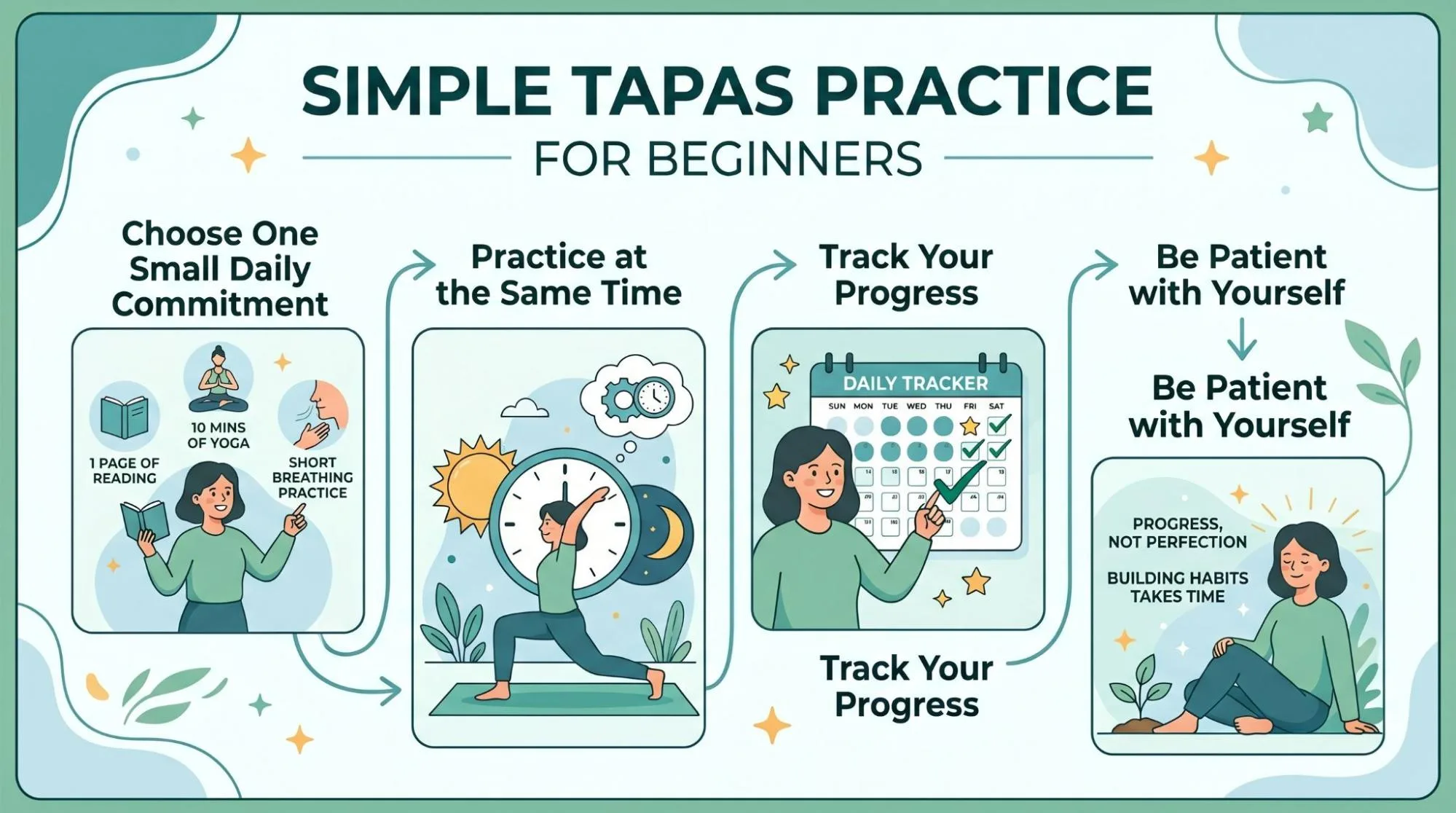
If you are new to tapas, keep it simple. Do not start with a strict routine that you cannot maintain.
Choose One Small Daily Commitment
Pick one habit that feels realistic.
You might choose:
- 5 minutes of breathing
- 10 minutes of yoga
- One page of reading
- A short evening walk
- No phone for the first 15 minutes after waking
Practice at the Same Time
Doing your practice at the same time each day makes it easier to remember. Morning is helpful for many people, but choose a time that fits your life.
Track Your Progress
A simple checkmark on a calendar can help. Do not turn tracking into pressure. Use it only as a reminder.
Be Patient with Yourself
Some days will feel easy. Some days will feel slow. That is normal.
Tapas is not about perfection. It is about returning again and again.
Tapas Yoga Meaning Self Discipline in Everyday Transformation
The deeper tapas yoga meaning self discipline is about becoming steady from within.
It teaches you to choose growth in small daily moments. You practice when you feel lazy. You breathe when you feel reactive. You keep a promise when distraction pulls you away.
This is not a dramatic kind of transformation. It is practical, quiet, and real.
FAQs About Tapas Yoga Meaning Self Discipline
What Is Tapas in Yoga?
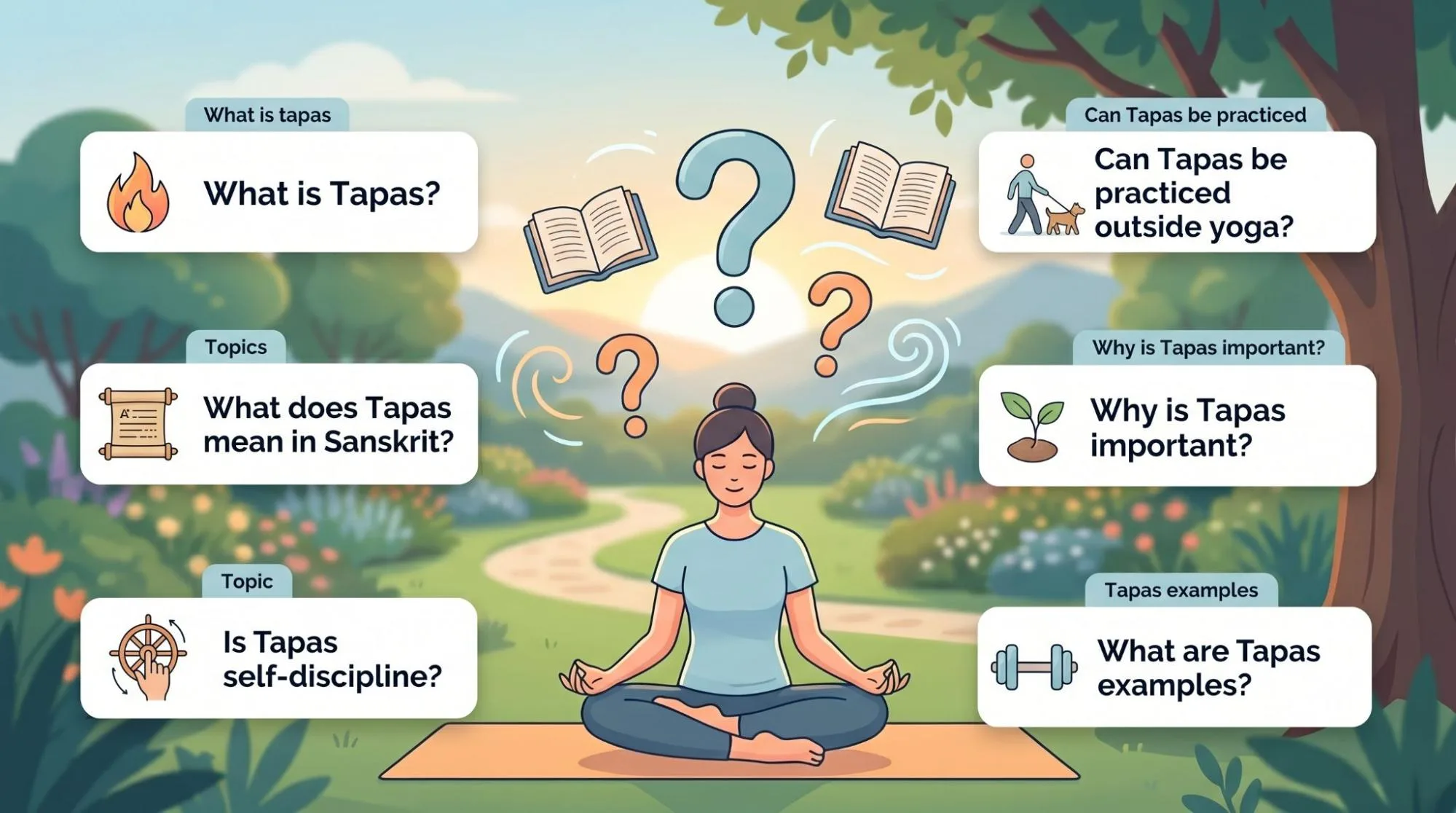
Tapas in yoga means disciplined effort. It is the inner strength that helps you stay committed to practice and growth.
What Does Tapas Mean in Sanskrit?
Tapas is a Sanskrit word often translated as heat, discipline, or austerity. In yoga, it refers to the inner fire of transformation.
Why Is Tapas Important in Yoga?
Tapas is important because it helps build consistency, focus, patience, and self-awareness in yoga practice and daily life.
Is Tapas the Same as Self-Discipline?
Tapas includes self-discipline, but it also means inner purification, mindful effort, and spiritual growth.
How Can Beginners Practice Tapas?
Beginners can practice tapas by choosing one small daily habit, such as short yoga practice, breathing, journaling, or mindful movement.
Is Tapas About Punishing Yourself?
No. Tapas is not punishment. It is a healthy discipline practiced with awareness, kindness, and balance.
How Does Tapas Help Personal Growth?
Tapas helps personal growth by turning intention into action. It teaches you to stay steady even when growth feels uncomfortable.
Can Tapas Be Practiced Outside Yoga?
Yes. Tapas can be practiced in work, relationships, study, health habits, and daily choices.
What Is an Example of Tapas in Daily Life?
Waking up early for practice, reducing phone use, eating healthier, or staying calm in a difficult conversation are simple examples of tapas.
How Is Tapas Related to the Niyamas?
Tapas is the third niyama in the yamas and niyamas system. It guides personal discipline, inner growth, and committed practice.
Learn More : What Is Ahimsa in Yoga? A Simple Guide to Non-Violence, Kindness, and Daily Practice
Conclusion
Tapas is the inner fire that supports yoga practice, personal growth, and spiritual discipline. It helps you build focus, strength, patience, and confidence without becoming harsh or extreme.
Start small. Stay consistent. Respect your body. Keep returning to your practice.
That is the real practice of tapas: steady effort, honest awareness, and growth one step at a time.

Frequently Asked Questions
What does Tapas mean in yoga?
Tapas means disciplined, intentional effort. It is the steady commitment that helps a person practise and grow without becoming harsh or extreme.
Is Tapas the same as punishment?
No. Tapas is not self-punishment or suffering. It is balanced effort supported by awareness, rest, and respect for the body.
How can beginners practise Tapas?
Choose one realistic habit, such as ten minutes of yoga, a short breathing practice, or a phone-free morning. Repeat it consistently and adjust it when your needs change.
Can Tapas include rest?
Yes. Rest is part of sustainable discipline. A balanced practice alternates effort with recovery instead of demanding maximum intensity every day.
