
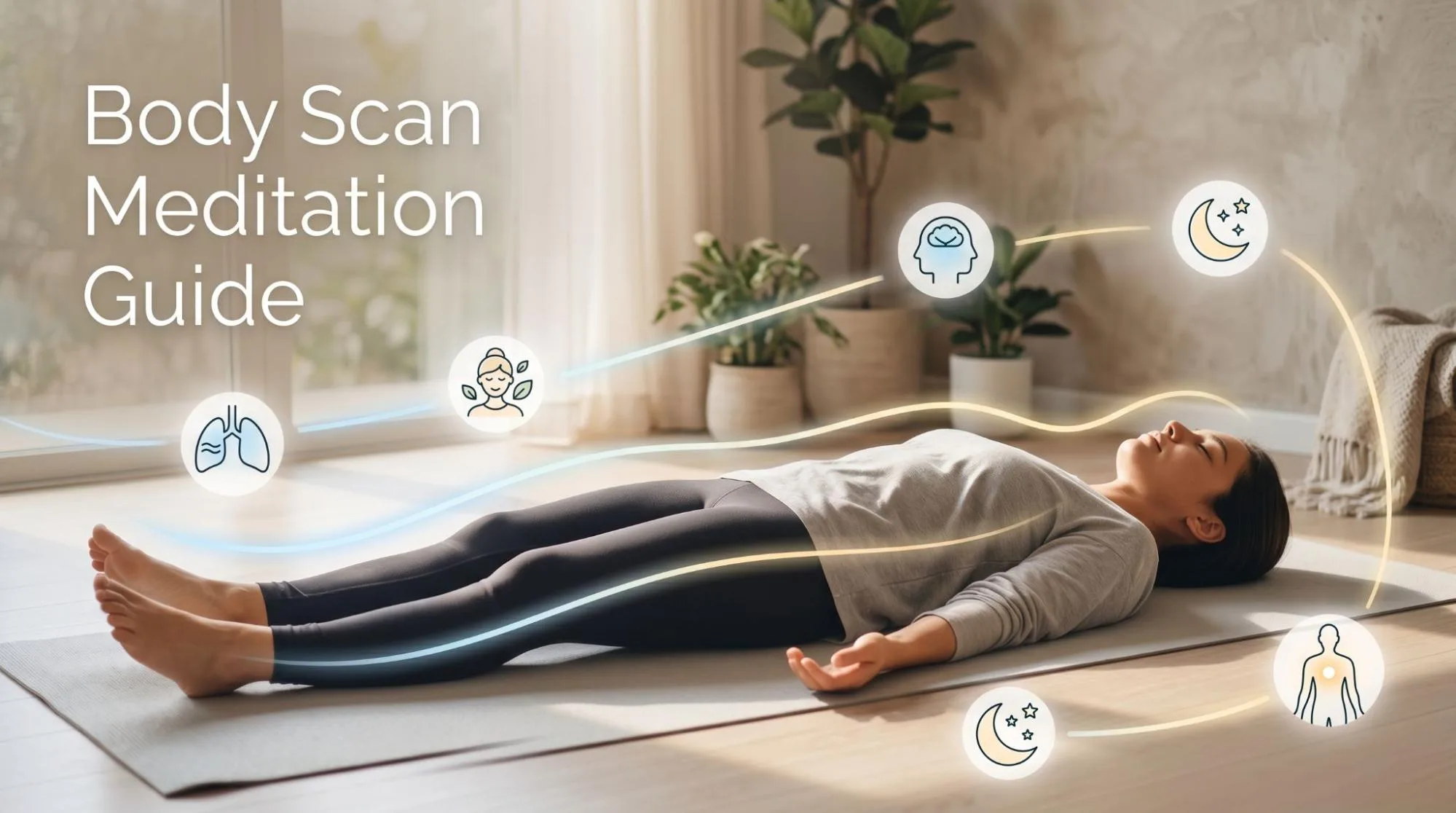
Body scan meditation is one of the simplest mindfulness practices for helping you notice thoughts and physical sensations, and reconnecting with the body. You do not need special equipment, advanced meditation experience, or a perfect quiet room. You simply bring awareness to each part of your body, notice what is there, and allow yourself to soften.
Many people try body scan meditation benefits for stress and anxiety, sleep support, emotional balance, and better body awareness. It can also be helpful for people living with chronic pain, because it teaches you to notice sensations with less fear and resistance. With regular meditation, this practice can become a gentle daily reset for both the mind and body. Body scan meditation benefits include stress relief, better sleep, improved body awareness, and a calmer response to daily tension.
 alt=”Body scan meditation lying comfortably” title=”Body scan meditation lying comfortably”
Quick answer: Body scan meditation is a mindfulness practice in which you move attention slowly through different areas of the body. You do not need to change every sensation; noticing with patience is the practice.
Practical note: If focusing on a painful area feels overwhelming, keep your attention on the feet, hands, or sounds in the room. You can pause, open your eyes, or stop at any time.
What Is Body Scan Meditation?
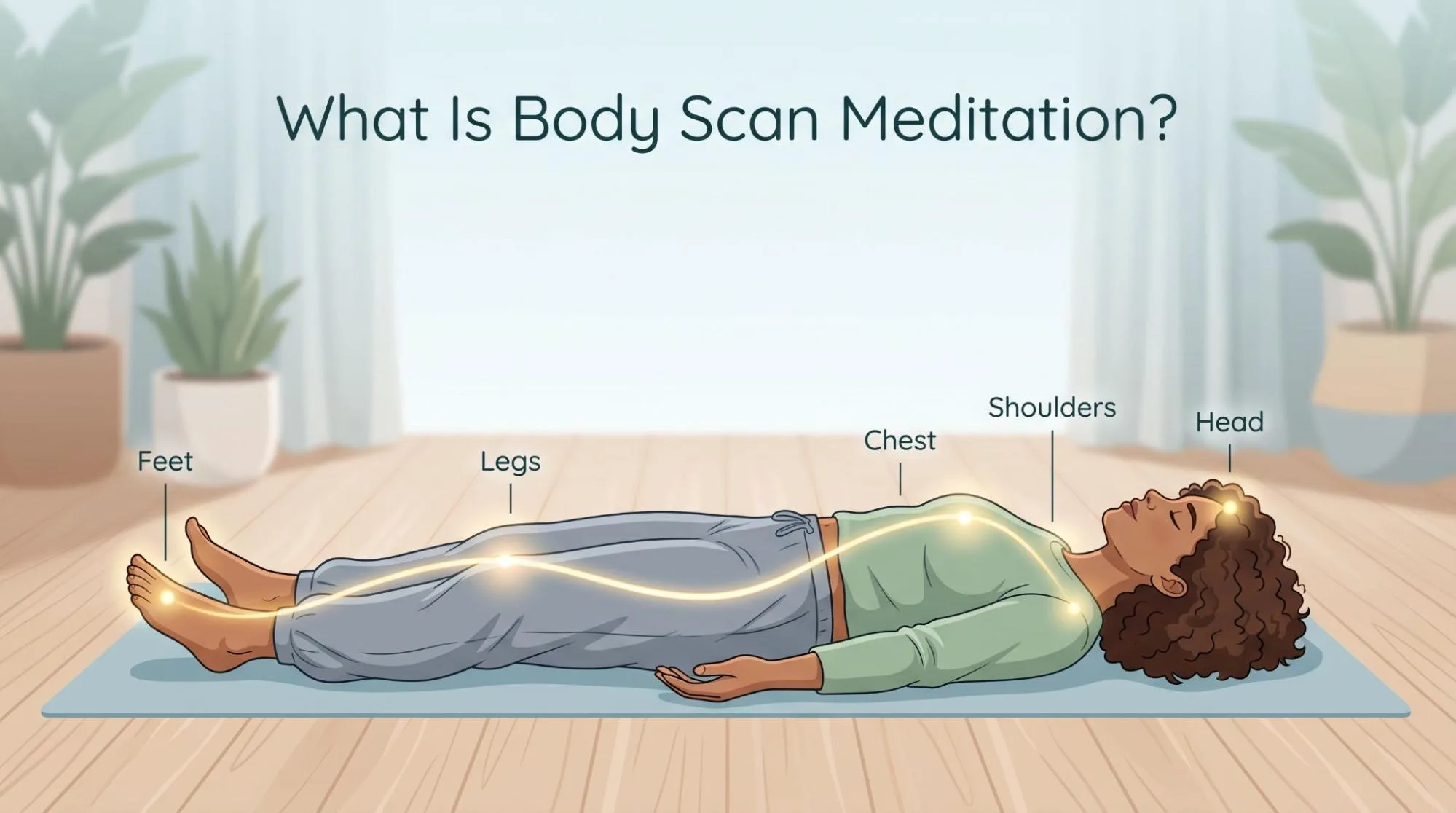
One reason body scan meditation benefits are so useful is that the practice is simple, gentle, and easy for beginners to follow. Body scan meditation is a mindfulness meditation technique where you slowly move your attention through the body, usually from the toes to the top of your head. As you focus on each part of your body, you notice sensations such as warmth, tightness, pressure, tingling, heaviness, or even numbness.
The goal is not to force relaxation. The goal is to observe.
You may practice body scan practice while lying down, sitting comfortably, or listening to a guided meditation. Some people use a long session before sleep, while others prefer a short body scan during a busy day.
 alt=”Mindfulness attention on the feet” title=”Mindfulness attention on the feet”
How body scan practice Works
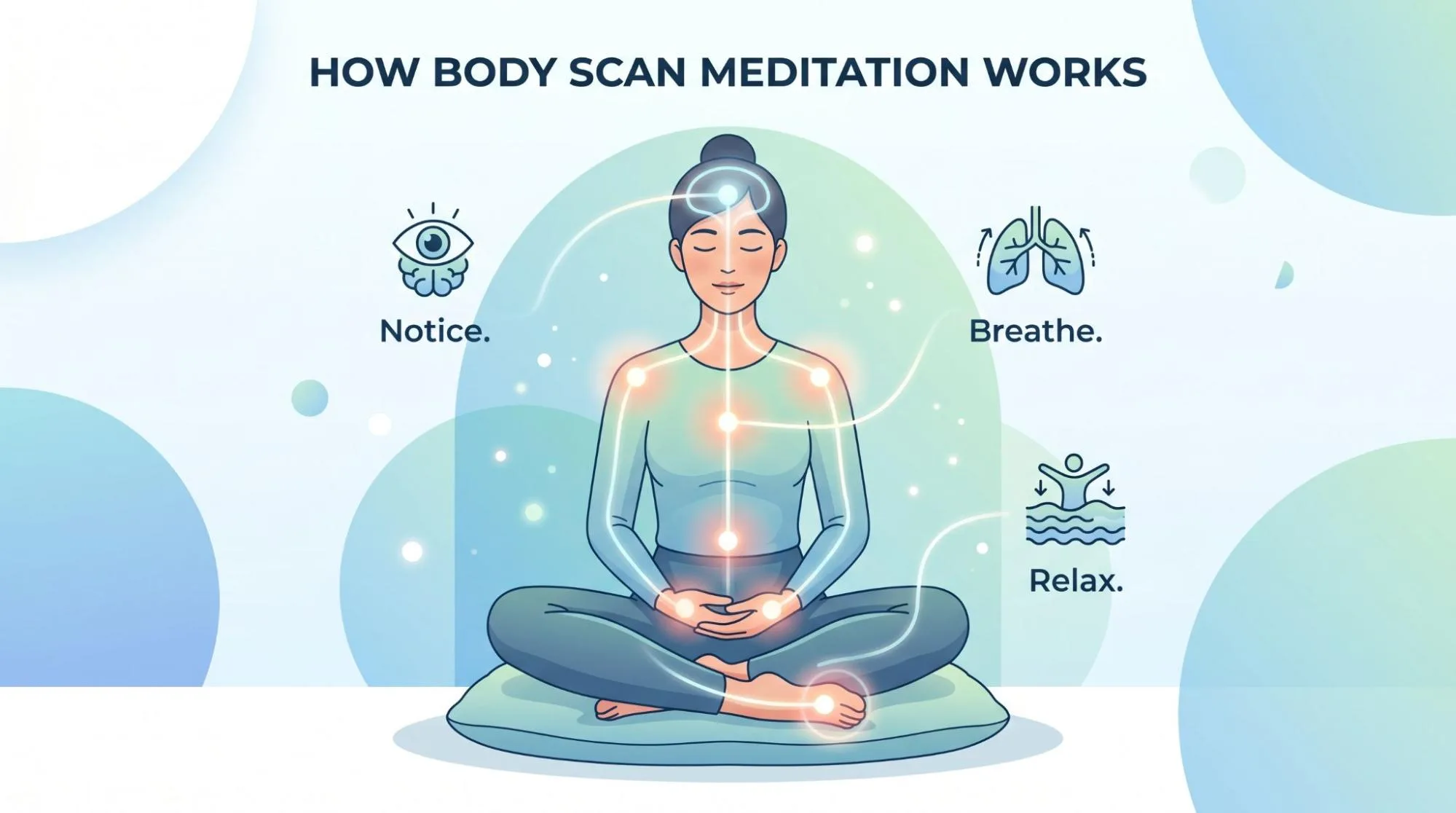
body scan practice works by helping your attention move away from racing thoughts and back into physical awareness. Instead of staying caught in worry, planning, or mental noise, you gently return to the present moment.
Mind and Body Connection
The mind and body are closely connected. When you feel stressed, your shoulders may tighten, your jaw may clench, or your breathing may become shallow. body scan practice helps you notice these patterns earlier.
By paying attention to physical sensations, you begin to understand how emotions show up in the body. This makes it easier to respond calmly instead of reacting automatically.
Relaxation Response
When you slow down, take deep breaths, and release tension, your body may shift into a calmer state. This can support the parasympathetic nervous system, which is often linked with rest, digestion, and recovery.
This is one reason body scan practices are often used before sleep or after stressful situations. They help calm the mind while encouraging the body to soften.
 alt=”Body scan practice with relaxed breathing” title=”Body scan practice with relaxed breathing”
Learn More : Moon Water Benefits and How to Make It
Key Benefits of body scan practice
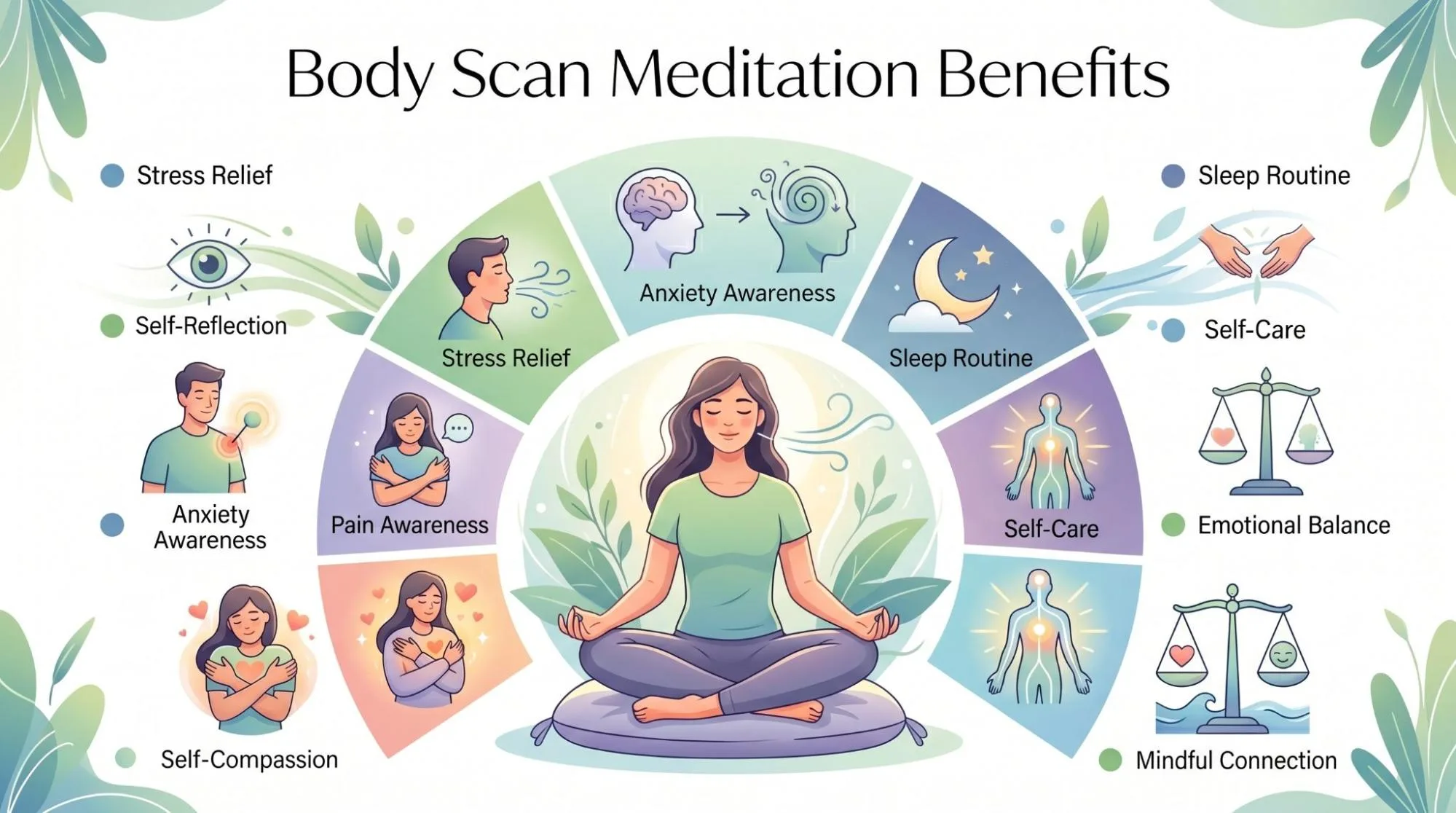
The main body scan practice benefits come from slowing down, noticing sensations, and allowing the nervous system to relax. The benefits of body scan practice are practical and easy to feel over time. Some people notice results quickly, while others experience gradual changes with regular practice.
Helps Reduce Stress
body scan practice can help reduce stress by guiding your attention away from mental overload. When you bring awareness to the body, you create space between yourself and your thoughts.
You may notice tight shoulders, a tense stomach, or shallow breathing. Once you notice these signs, you can gently release tension instead of carrying it all day.
Supports Anxiety Management
For many people, anxiety feels like a mix of thoughts and body sensations. A racing heart, tight chest, or restless muscles can make anxious thoughts feel even stronger.
body scan practice does not “remove” anxiety instantly, but it can help you sit with sensations in a calmer way. This makes it useful alongside other mindfulness practices and healthy coping habits.
May Help With Chronic Pain Awareness
People living with chronic pain often feel trapped in a cycle of fear, tension, and discomfort. body scan practice may help by changing the way you relate to pain.
Instead of fighting every sensation, you learn to observe it more gently. You might notice that pain shifts, changes, spreads, or softens at different times. This awareness can reduce the emotional struggle around discomfort.
Improves Sleep Routine
One of the most common body scan practice benefits is better sleep preparation. When practiced before bed, it can help slow racing thoughts and relax the body.
A simple guided meditation or short body scan can become a calming signal that tells your body it is time to rest.
Builds Better Body Awareness
Many people move through the day without noticing their bodies until something hurts. body scan practice teaches you to check in earlier.
You may begin to notice when you are sitting too stiffly, holding your breath, or clenching your hands. This awareness can help you make small changes before tension builds.
Encourages Emotional Regulation
Emotions often appear in the body before we fully understand them. Anger may feel hot. Sadness may feel heavy. Fear may feel tight.
When you practice body scan practice, you learn to notice these signals without immediately reacting. This can support emotional regulation in daily life.
Supports Self-Compassion
body scan practice encourages a kinder relationship with yourself. You are not judging your body for feeling tired, tense, or uncomfortable. You are simply listening.
Over time, this can support self-compassion, especially if you often criticize yourself or push through discomfort without rest.
 alt=”Guided awareness of the legs and hips” title=”Guided awareness of the legs and hips”
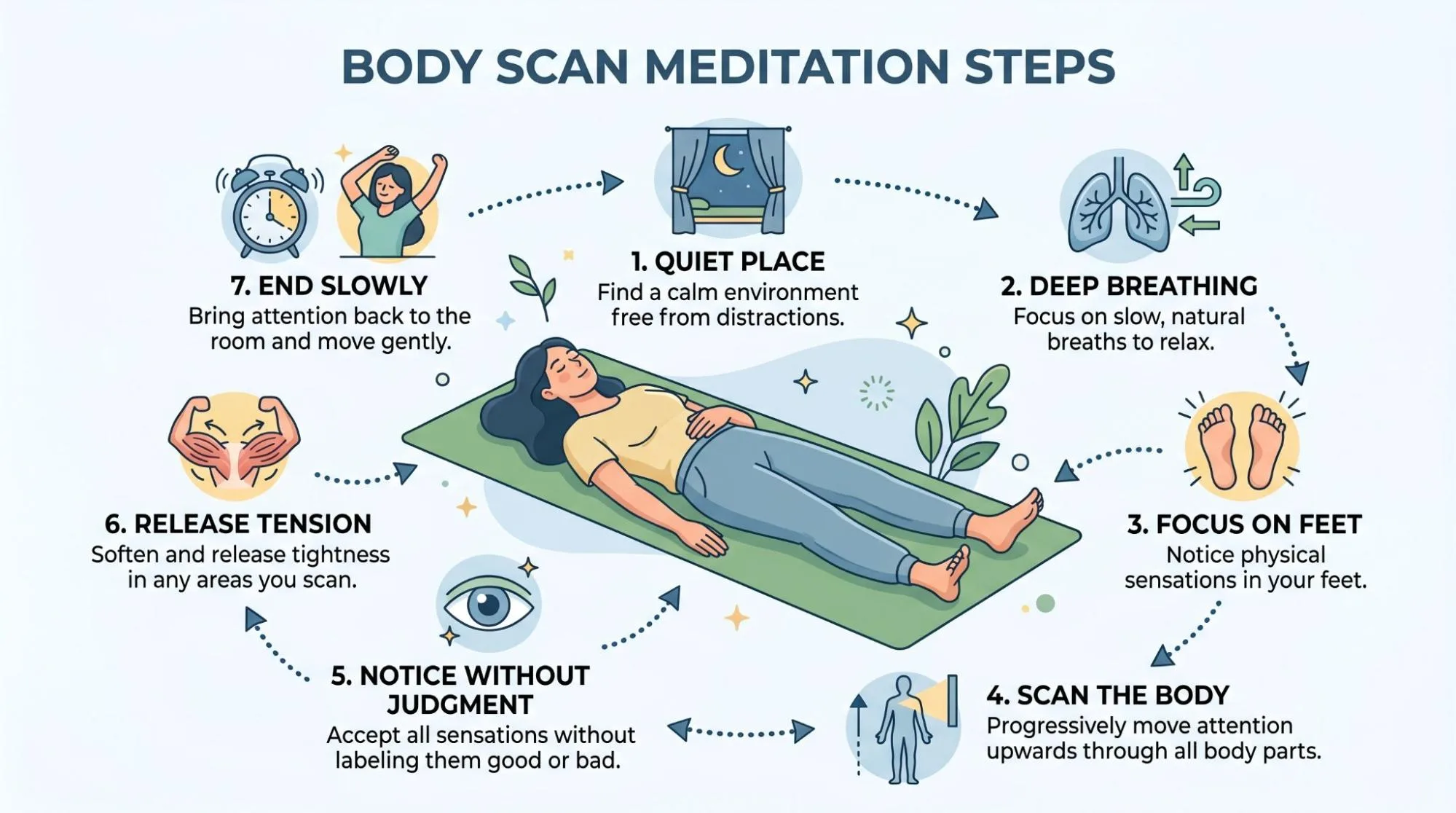
How to Practice body scan practice Step by Step
You can practice body scan practice in a simple way. There is no need to get it perfect.
Step 1: Find a Quiet Place
Choose a place where you can sit or lie down comfortably. It does not have to be completely silent, but fewer distractions can help.
Step 2: Start With Breathing
Close your eyes if that feels comfortable. Take a few deep breaths. Let your breathing become slow and natural.
Notice the feeling of air moving in and out of your body.
Step 3: Focus on Your Toes and Feet
Bring awareness to your toes, feet, and ankles. Notice any sensations. Maybe there is warmth, pressure, tingling, or nothing at all.
Nothing is also something to notice.
Step 4: Move Slowly Through the Body
Now move your attention upward. Notice your calves, knees, thighs, hips, stomach, chest, back, shoulders, arms, hands, neck, face, and the top of your head.
Spend a few moments with each part of your body.
Step 5: Notice Without Judgment
Try not to label sensations as good or bad. If you feel tightness, simply notice tightness. If you feel comfort, notice comfort.
This gentle awareness is the heart of mindfulness meditation.
Step 6: Release Tension With Each Exhale
As you breathe out, imagine softening the area you are focusing on. You can also visualize the tension leaving your body with each exhale.
Do not force it. Just allow a small release if it happens.
Step 7: End Slowly
When you reach the top of your head, take a few full breaths. Notice your whole body as one complete experience.
Open your eyes slowly. Move your fingers and toes before getting up.
 alt=”Mindful attention to the abdomen and chest” title=”Mindful attention to the abdomen and chest”
 alt=”Mindful attention to the abdomen and chest” title=”Mindful attention to the abdomen and chest”
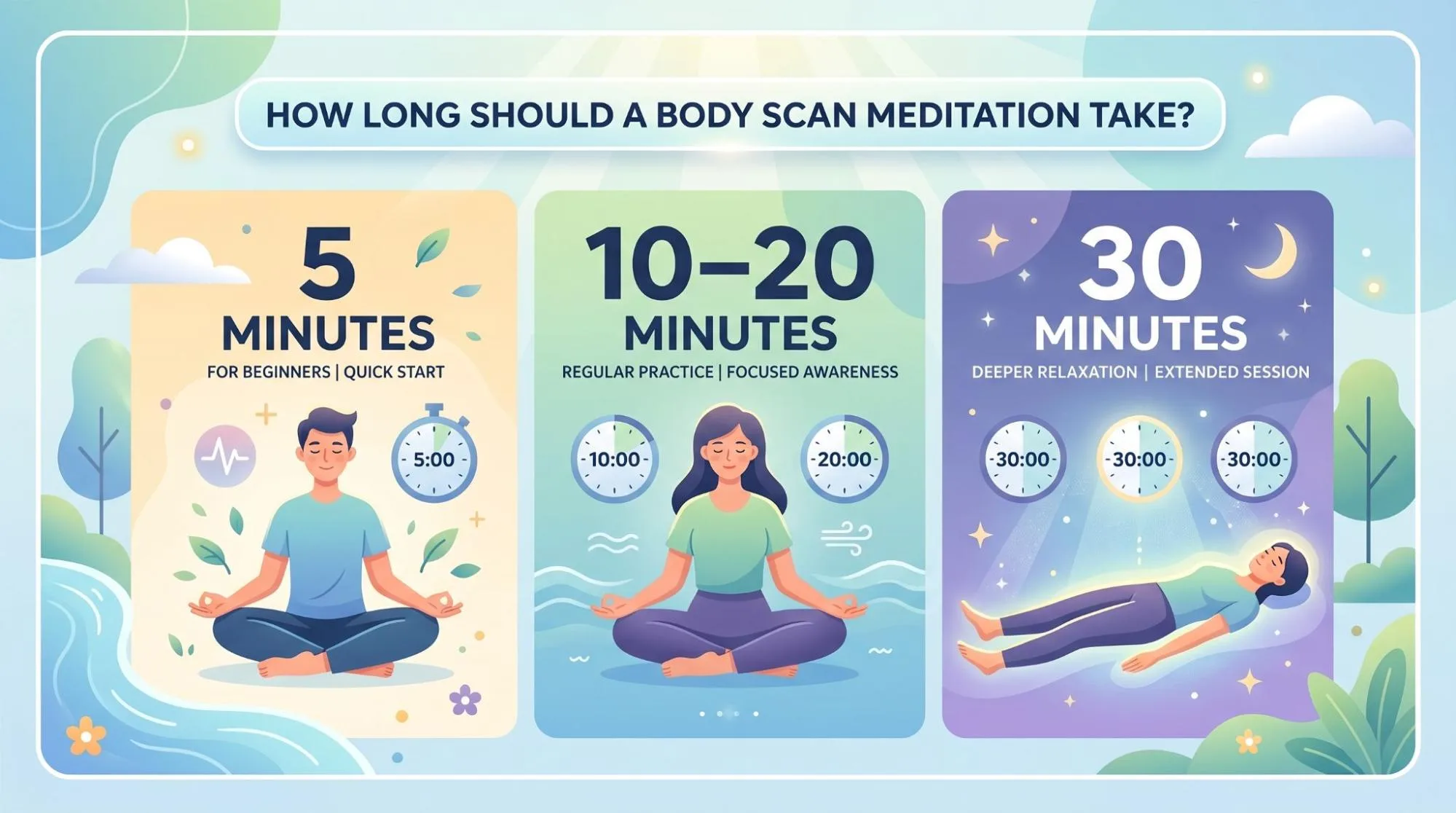
How Long Should a body scan practice Take?
- A body scan practice can take anywhere from 3 minutes to 45 minutes.
- For beginners, 5 to 10 minutes is enough. A short body scan can still calm the mind and bring awareness to the body.
- Longer sessions may be useful before sleep, after yoga, or during deeper meditation practices. The best length is the one you can practice consistently.
 alt=”Body scan meditation in a seated position” title=”Body scan meditation in a seated position”
Learn More : Legs Up the Wall Pose Benefits: A Simple Guide to Viparita Karani
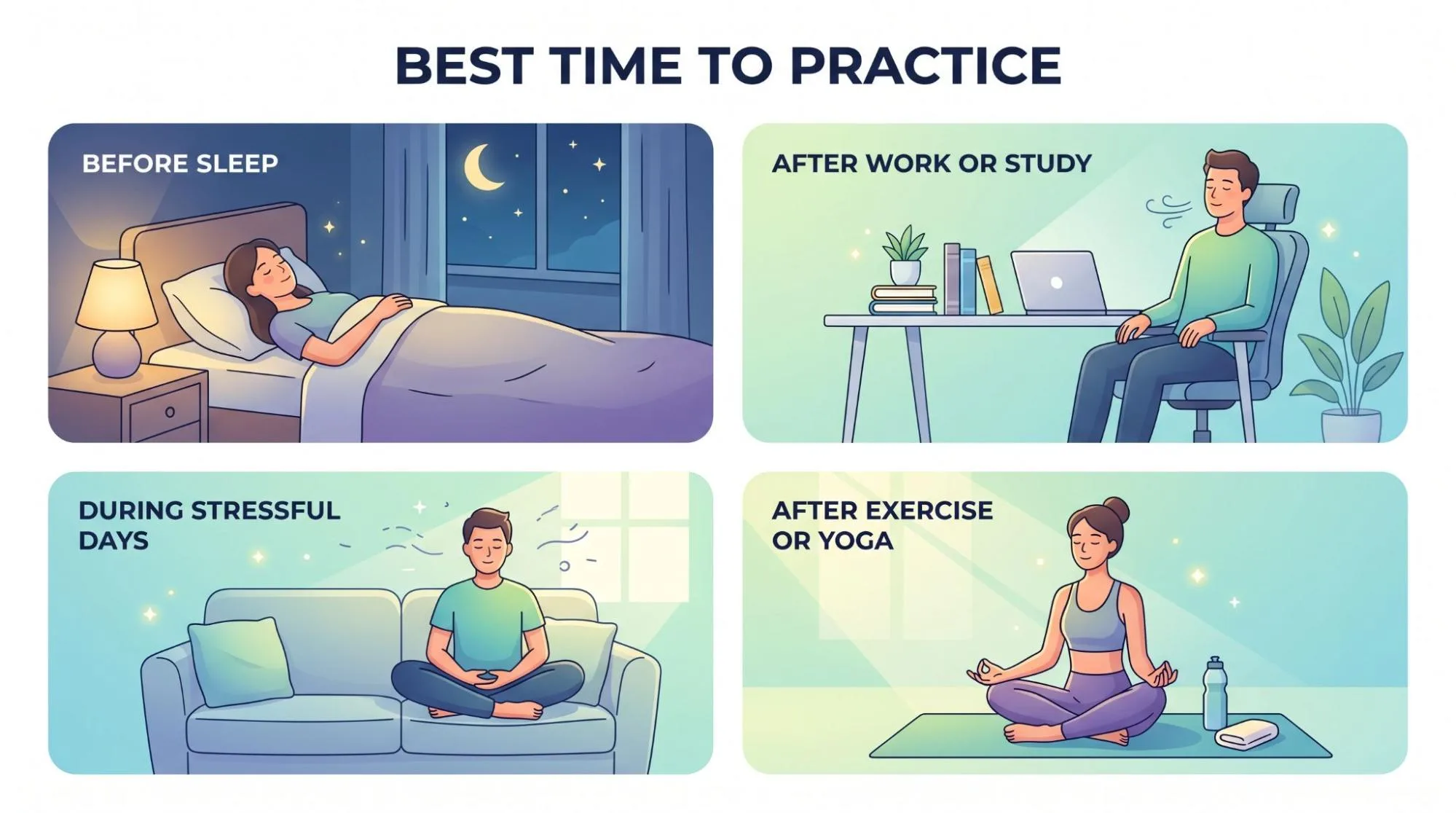
Best Time to Practice body scan practice
There is no single perfect time. The best time depends on your routine and why you are practicing.
Before Sleep
body scan practice before bed can help release tension and prepare the body for rest. This is especially useful if your mind becomes active at night. For many beginners, body scan practice benefits are most noticeable at night because the practice helps release tension before sleep.
After Work or Study
After long hours of work or study, your body may hold stress without you realizing it. A short session can help reset your nervous system.
During Stressful Days
On difficult days, even a 5-minute body scan can create a pause. You can use it between tasks, after a tense conversation, or during a break.
After Exercise or Yoga
body scan practice works well after exercise or yoga because the body is already more noticeable. It can help you observe soreness, relaxation, and energy levels.
 alt=”Noticing shoulder and neck sensations” title=”Noticing shoulder and neck sensations”
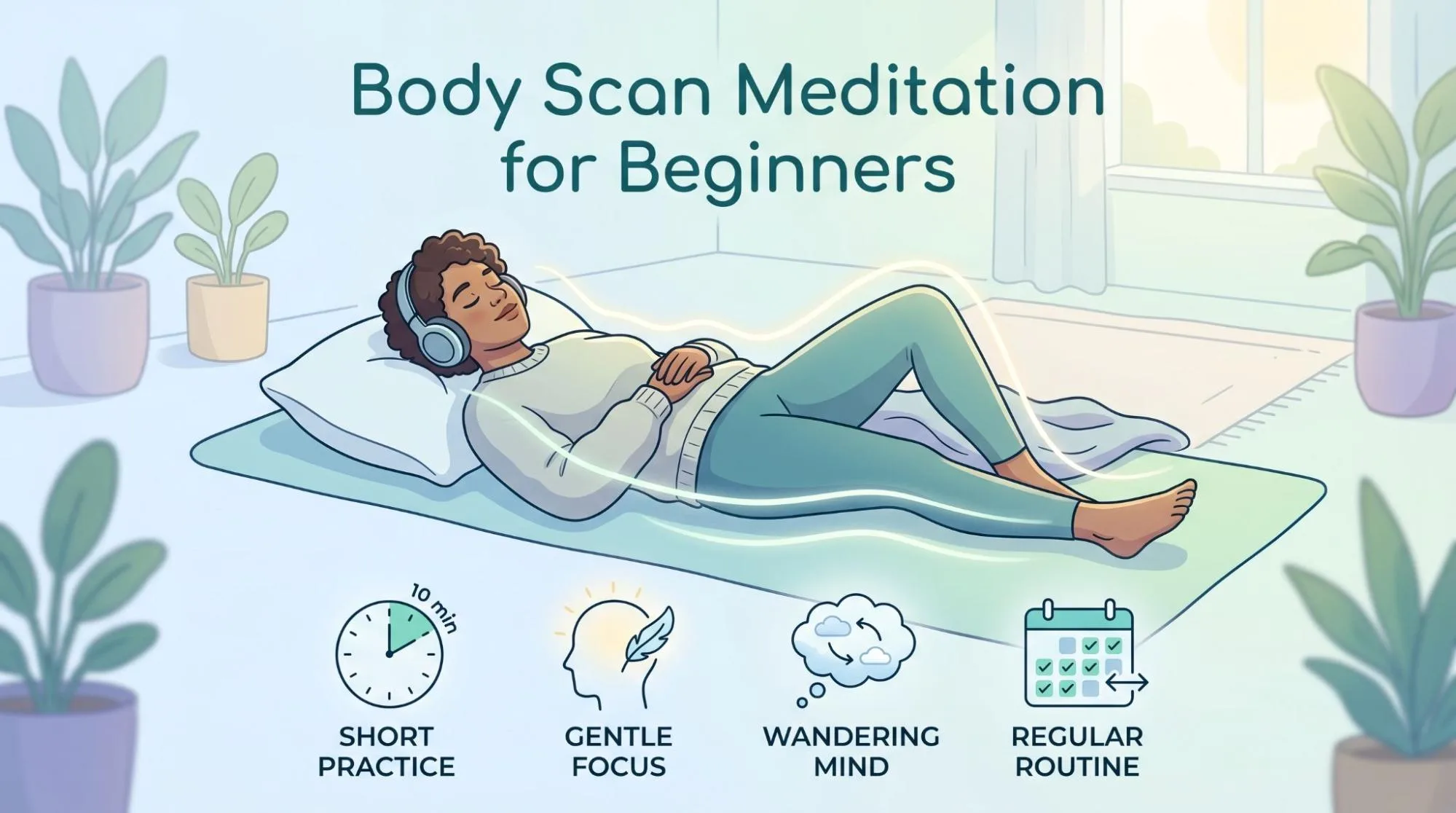
body scan practice for Beginners
body scan practice is beginner-friendly because it gives your mind something clear to focus on. Instead of trying to “empty your mind,” you simply move attention through the body.
A few beginner tips:
- Start with short sessions.
- Use a guided meditation if silence feels difficult.
- Practice at the same time each day if possible.
- Do not worry if your mind wanders.
- Gently return to the part of your body you were noticing.
Mind wandering is normal. Returning your attention is part of the practice.
 alt=”Calm body scan practice before sleep” title=”Calm body scan practice before sleep”
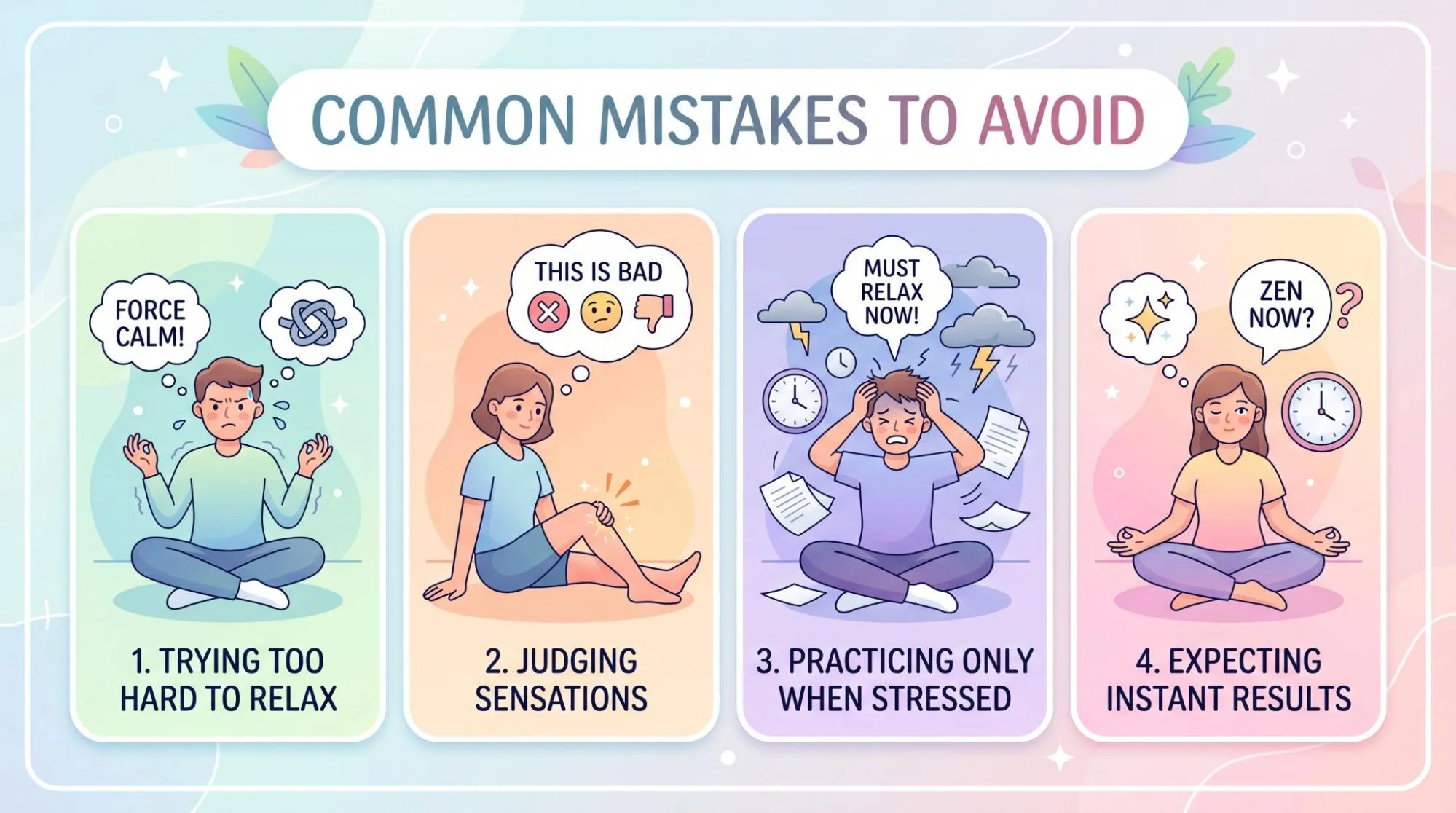
Common Mistakes to Avoid
body scan practice is simple, but a few common habits can make it feel harder than it needs to be.
Trying Too Hard to Relax
Relaxation often happens naturally when you stop forcing it. If you keep checking whether you feel calm yet, the practice may become frustrating.
Let the body respond in its own time.
Judging Sensations
You may notice pain, tightness, restlessness, or numbness. Try not to judge these sensations. The practice is about awareness, not criticism.
Practicing Only When Stressed
body scan practice is useful during stress, but it works better when practiced regularly. Regular meditation builds familiarity, so it becomes easier to use when life feels difficult.
Expecting Instant Results
Some sessions feel peaceful. Others feel distracted or uncomfortable. Both are normal.
The benefits of body scan practice often grow through steady practice, not one perfect session.
 alt=”Mindfulness of hands and arms” title=”Mindfulness of hands and arms”
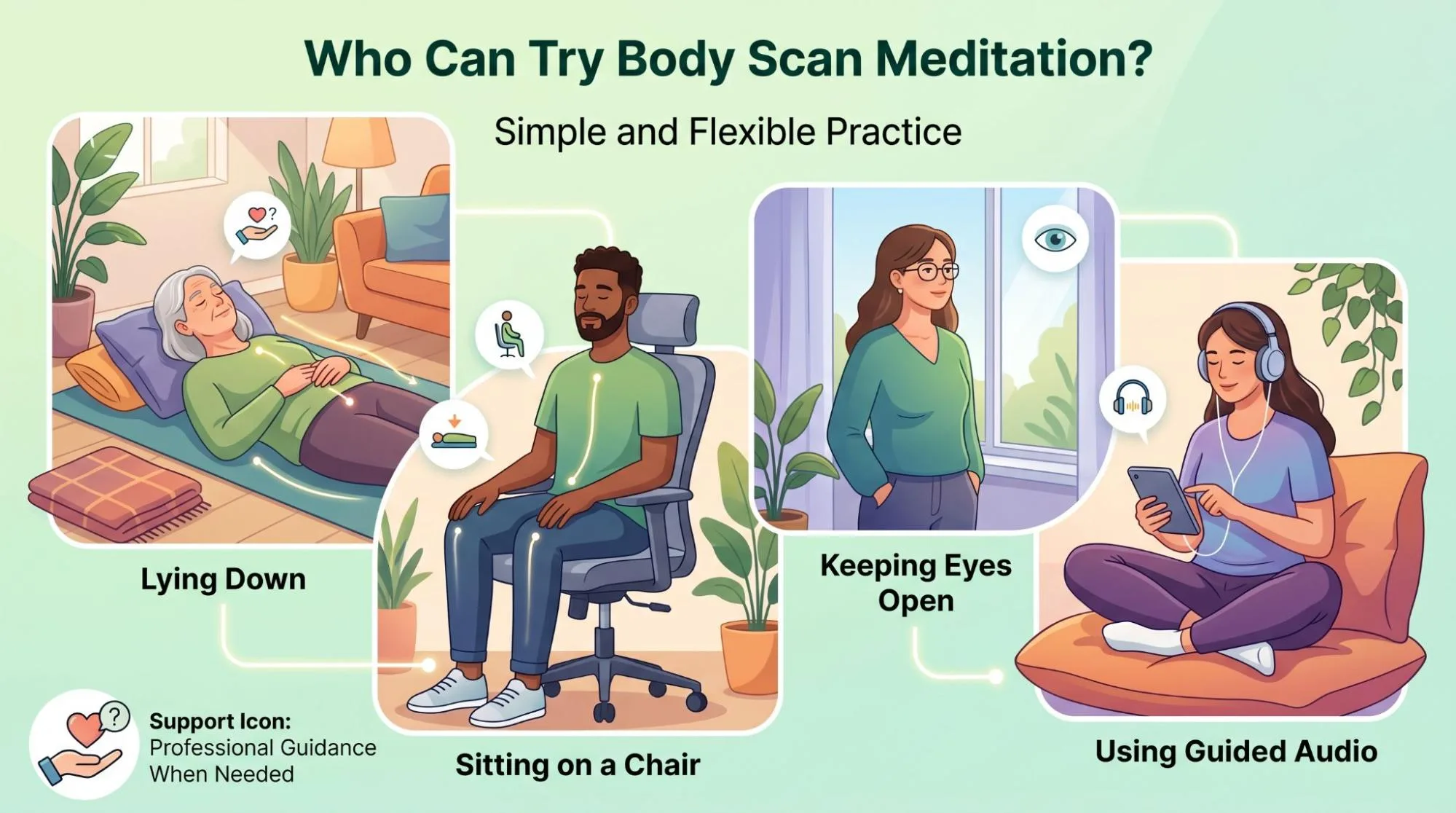
Who Can Try body scan practice?
Most people can try body scan practice. It may be helpful for beginners, students, busy professionals, older adults, people dealing with stress and anxiety, and those wanting better sleep routines.
People living with chronic pain may also find it useful, especially when practiced gently. However, if focusing on the body brings up strong distress, trauma memories, or panic, it may be better to practice with guidance from a trained professional.
 alt=”Grounding with sounds during body scan” title=”Grounding with sounds during body scan”
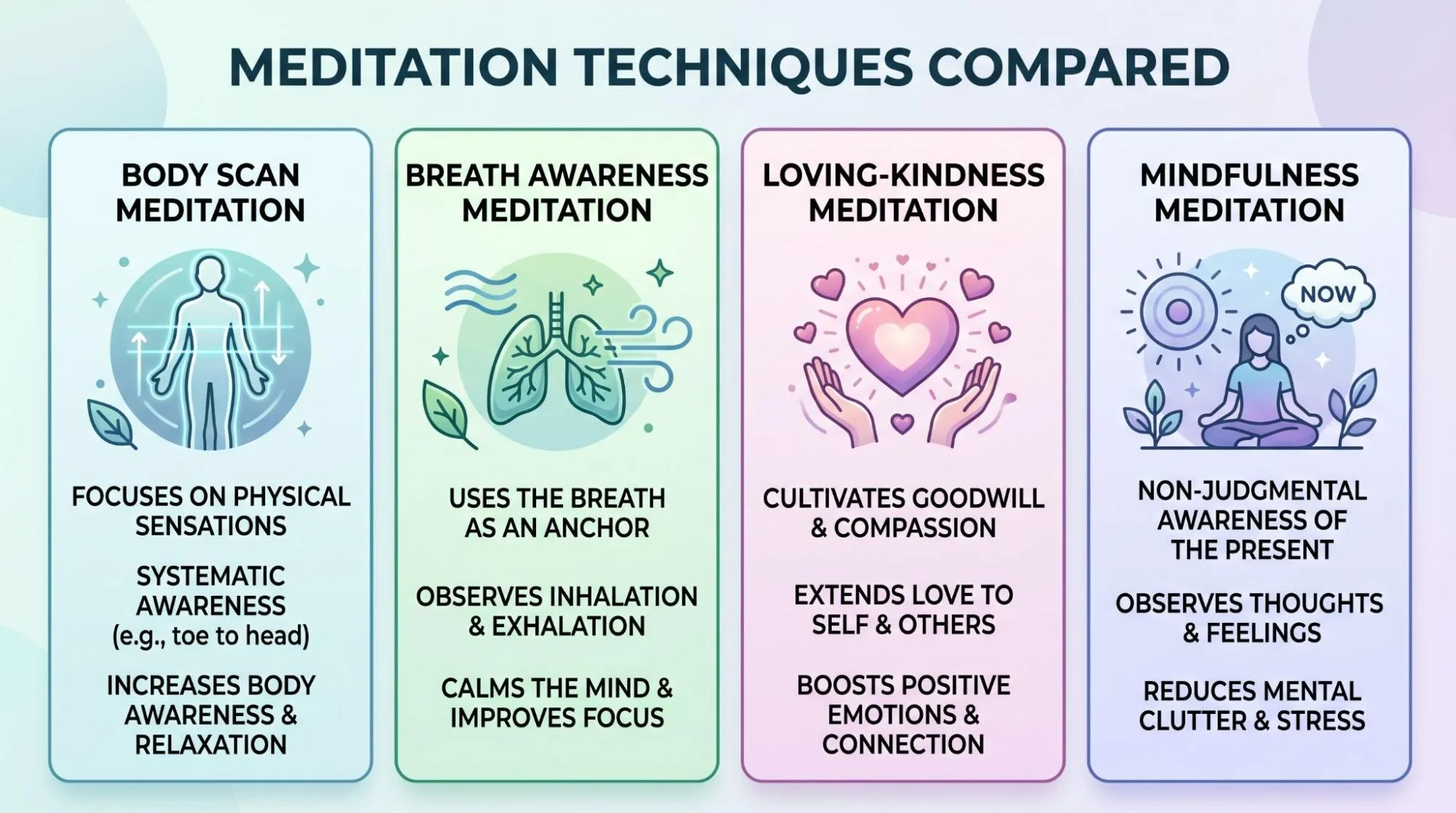
body scan practice vs Other Meditation Techniques
Different meditation practices work in different ways. body scan practice is only one option, but it is a very practical one.
body scan practice
body scan practice focuses on noticing each part of your body. It is especially helpful for stress relief, sleep, tension awareness, and reconnecting with physical sensations.
Breath Awareness Meditation
Breath awareness meditation focuses mainly on breathing. You notice each inhale and exhale without trying to control them too much.
Loving-Kindness Meditation
Loving-kindness meditation focuses on sending kind thoughts to yourself and others. It may support compassion, patience, and emotional healing.
Mindfulness Meditation
Mindfulness meditation is a broader practice. It may include awareness of breath, thoughts, emotions, sounds, and body sensations. body scan practice is often considered one form of mindfulness practice.
 alt=”Body scan with eyes open modification” title=”Body scan with eyes open modification”
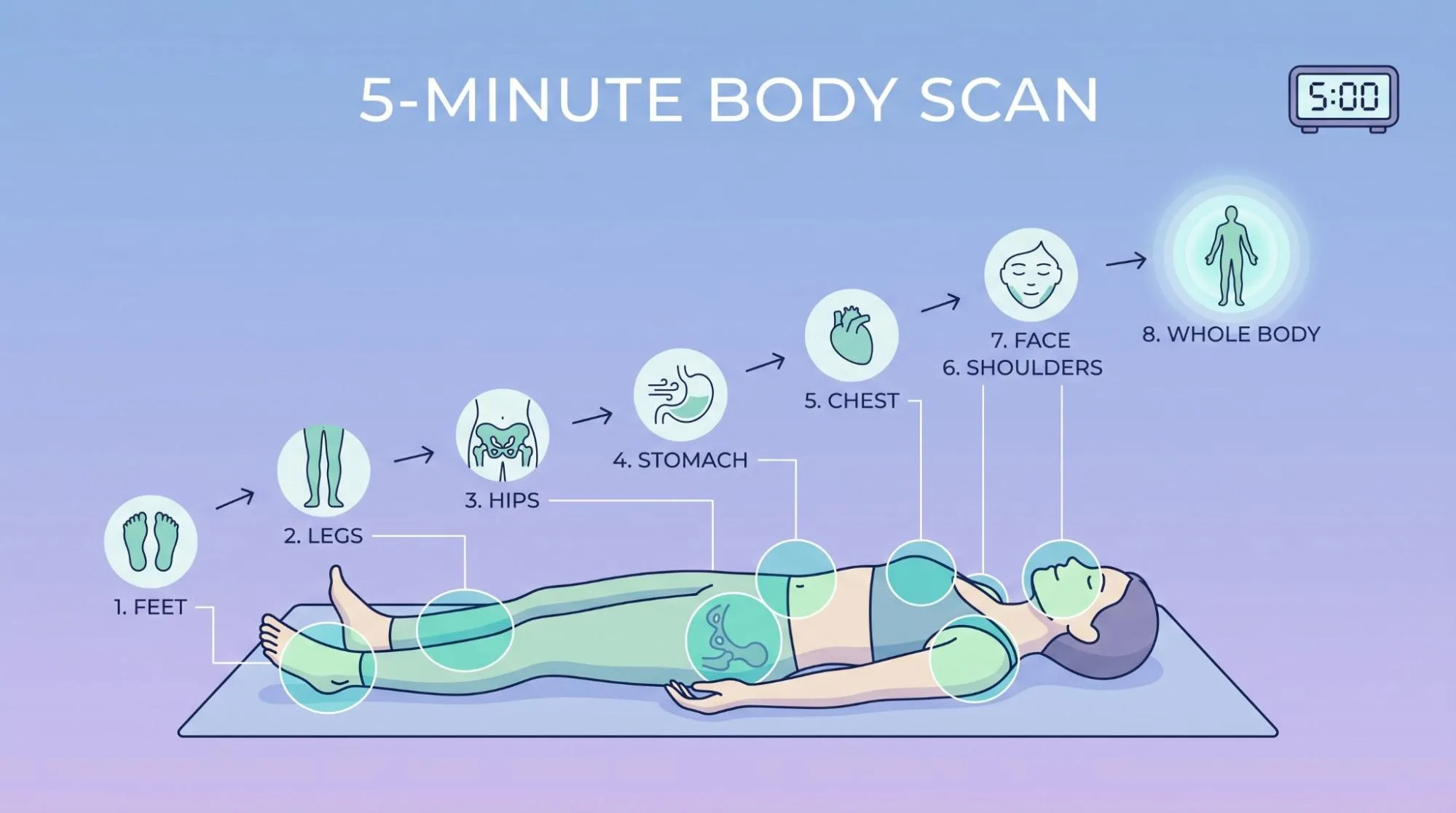
Simple 5-Minute body scan practice Script
- Sit or lie down comfortably.
- Close your eyes if you feel safe doing so.
- Take three deep breaths. Breathe in slowly. Breathe out gently.
- Bring awareness to your feet. Notice your toes, soles, heels, and ankles. Let them soften.
- Move your attention to your legs. Notice your calves, knees, and thighs. If there is tension, breathe into that area and release tension as you exhale.
- Now notice your hips, stomach, and lower back. Let your belly relax. There is no need to hold anything tightly.
- Bring awareness to your chest, upper back, and shoulders. Notice if the shoulders are lifted or tense. With your next exhale, allow them to drop slightly.
- Now focus on your arms, hands, and fingers. Notice any warmth, pressure, or stillness.
- Move to your neck, jaw, face, and forehead. Let your jaw loosen. Let the space around your eyes soften.
- Finally, bring awareness to the top of your head. Take one slow breath in and one slow breath out.
- Notice your whole body resting here.
- When you are ready, gently open your eyes.
 alt=”Relaxed breathing and body awareness” title=”Relaxed breathing and body awareness”
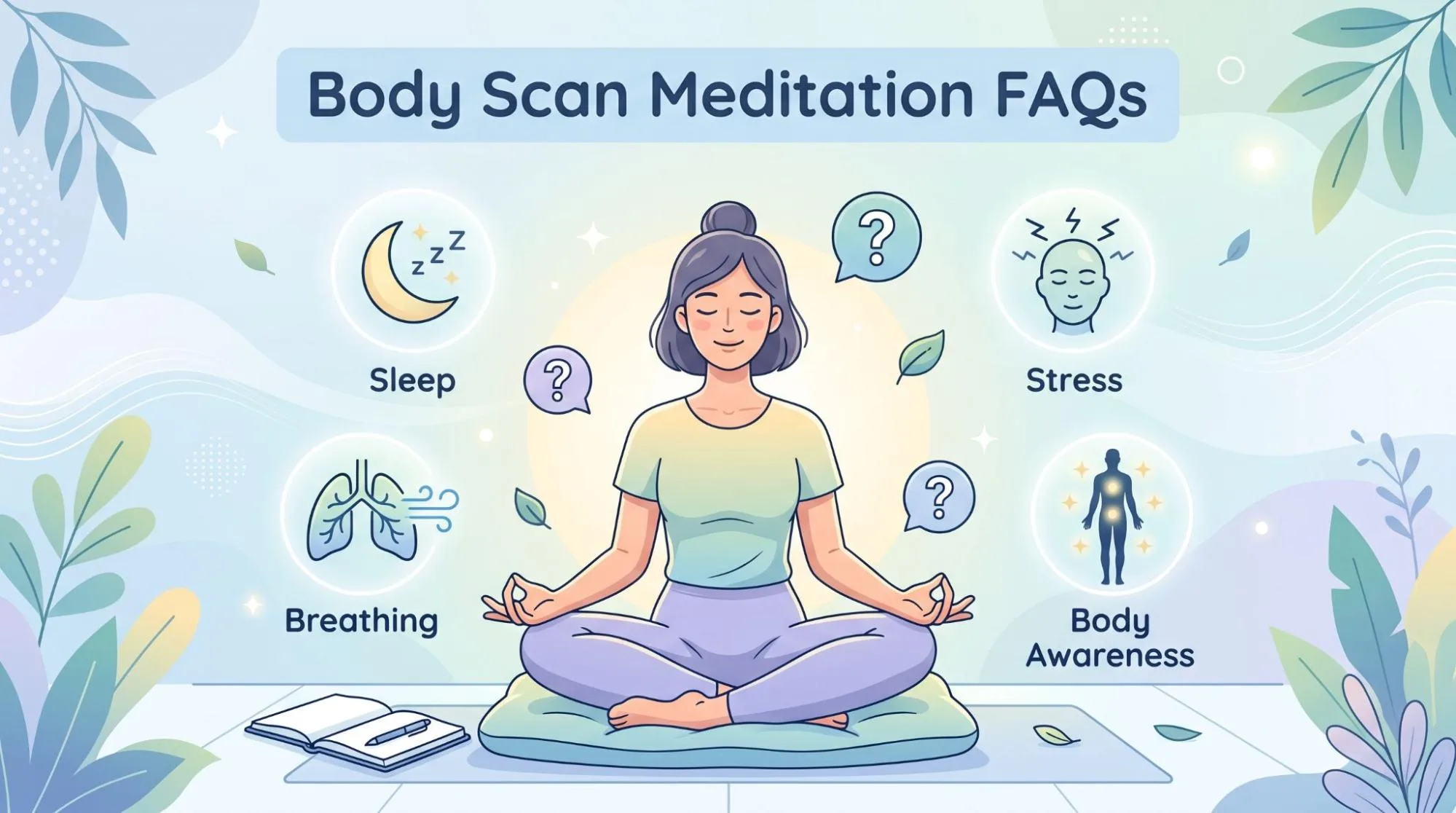
Frequently Asked Questions
What is body scan practice?
body scan practice is a mindfulness practice where you slowly bring awareness to each part of your body, usually from the feet to the top of your head.
How do you do a body scan practice?
You sit or lie down, take deep breaths, and slowly focus on different body areas. You notice sensations without judgment and gently release tension as you breathe out.
Is body scan practice good for beginners?
Yes, body scan practice is excellent for beginners because it gives the mind a clear focus. You do not need previous meditation experience.
How long should I practice body scan practice?
Beginners can start with 5 to 10 minutes. A short body scan is enough to begin. Longer sessions can be used for sleep or deeper relaxation.
Can body scan practice help with sleep?
Yes, many people use body scan practices before sleep because they help calm the mind and relax the body.
Can a body scan practice reduce stress?
body scan practice may reduce stress by helping you notice tension, slow your breathing, and activate a calmer body response.
Should I sit or lie down for body scan practice?
Both are fine. Lying down is helpful before sleep, while sitting may be better if you want to stay alert.
What if I feel nothing during body scan practice?
That is normal. Feeling nothing does not mean you are doing it wrong. Simply notice the absence of strong sensation and continue.
Can I do body scan practice every day?
Yes, you can practice body scan practice every day. Regular meditation often makes the practice feel more natural and useful over time.
Is body scan practice the same as mindfulness meditation?
body scan practice is a type of mindfulness meditation. It focuses specifically on body awareness, while mindfulness meditation can include thoughts, breath, emotions, and sounds.
 alt=”Ending a body scan meditation” title=”Ending a body scan meditation”
Learn More: Supine Spinal Twist Benefits Explained
Final Thoughts
body scan practice is a gentle practice, but it can be surprisingly powerful. It helps you slow down, listen to your body, and notice what you may have been carrying all day. The body scan practice benefits are not about becoming perfectly relaxed every time. They are about building awareness, softening tension, and creating a healthier relationship with your body and mind. Start small. Try five minutes today. Let the practice be simple, steady, and kind. The best body scan practice benefits often appear with regular practice, even if you only spend five minutes a day.
 alt=”Quiet mindfulness practice on a yoga mat” title=”Quiet mindfulness practice on a yoga mat”
Further reading: For general information about meditation and mindfulness, see NCCIH: Meditation and Mindfulness.
