
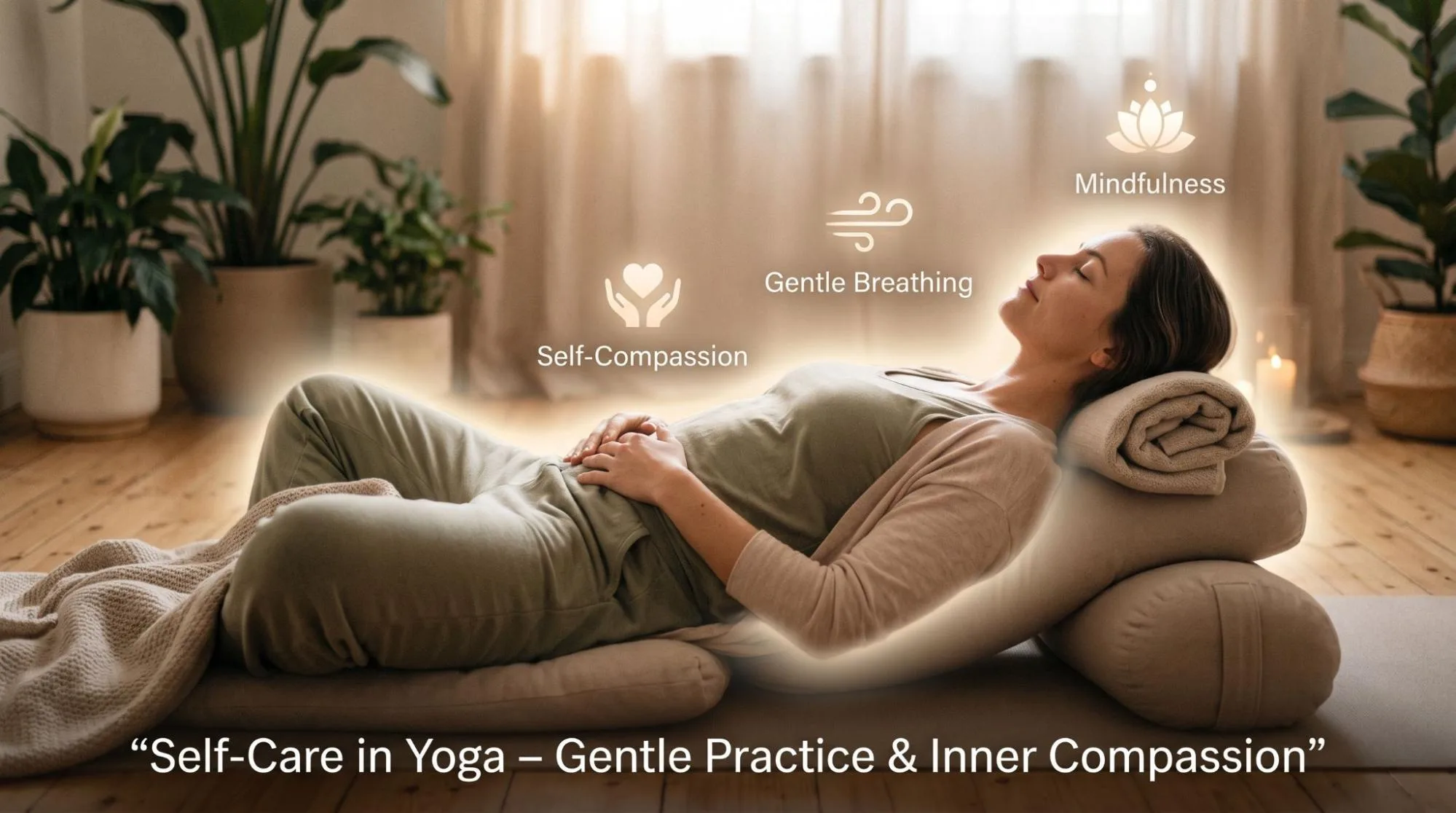
Quick answer: Legs Up the Wall, or Viparita Karani, is a supported restorative pose in which the legs rest against a wall. It may encourage relaxation and gentle circulation awareness, but it is not a treatment for swelling, blood-pressure problems, or other medical conditions.
Important Safety Note
Come out slowly and stop for dizziness, headache, numbness, pain, or breathing difficulty. Avoid the pose or ask a qualified professional first if you have glaucoma or serious eye-pressure concerns, uncontrolled blood pressure, blood-clot risk, recent surgery, or pregnancy-related limitations.
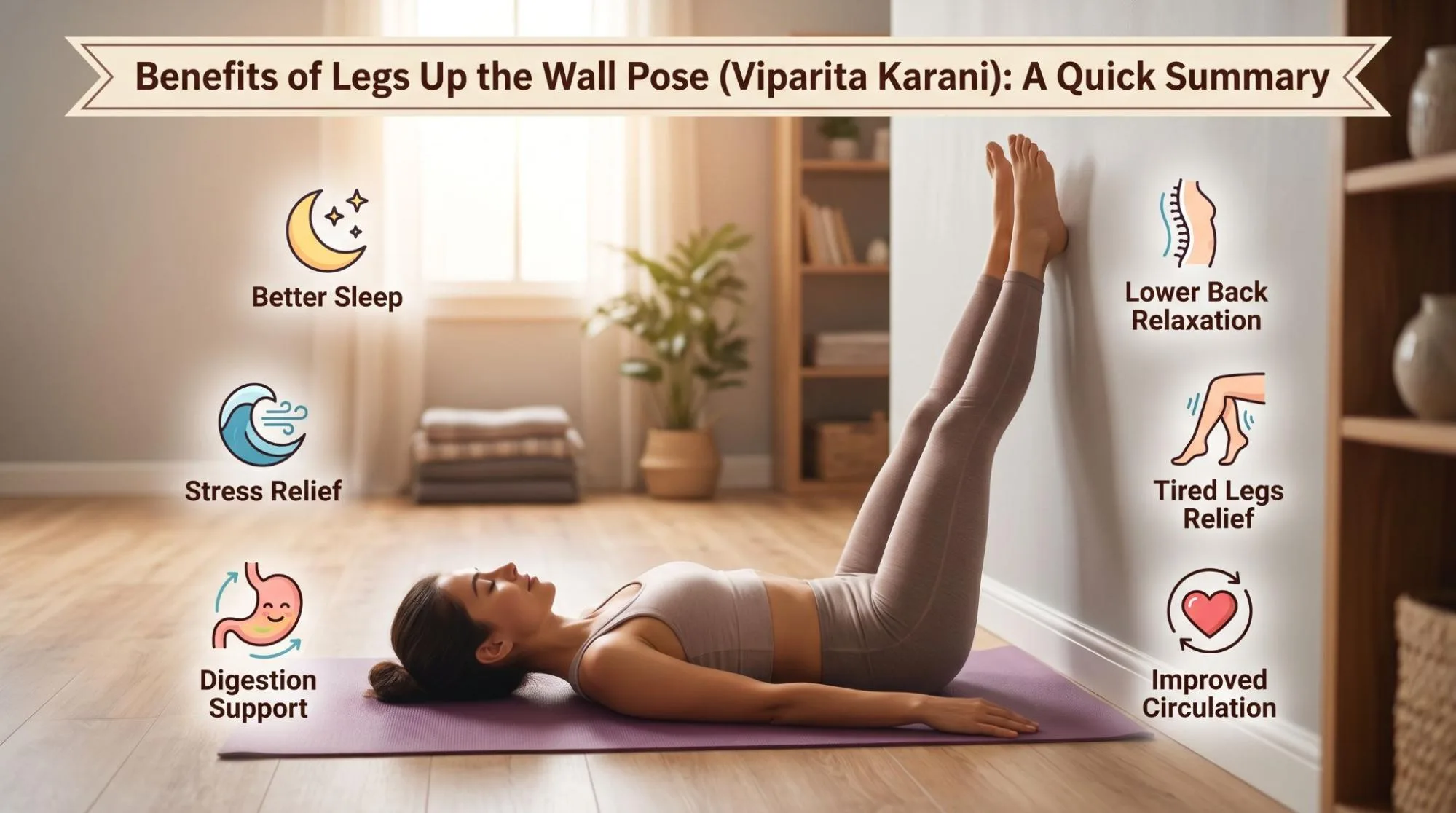
Legs up the wall pose benefits include better circulation, relief from tired legs, mild swelling support, lower back relaxation, and a calmer nervous system. Also known as Viparita Karani, this simple restorative yoga pose is easy for beginners and can be practiced at home with just a wall and a quiet space.
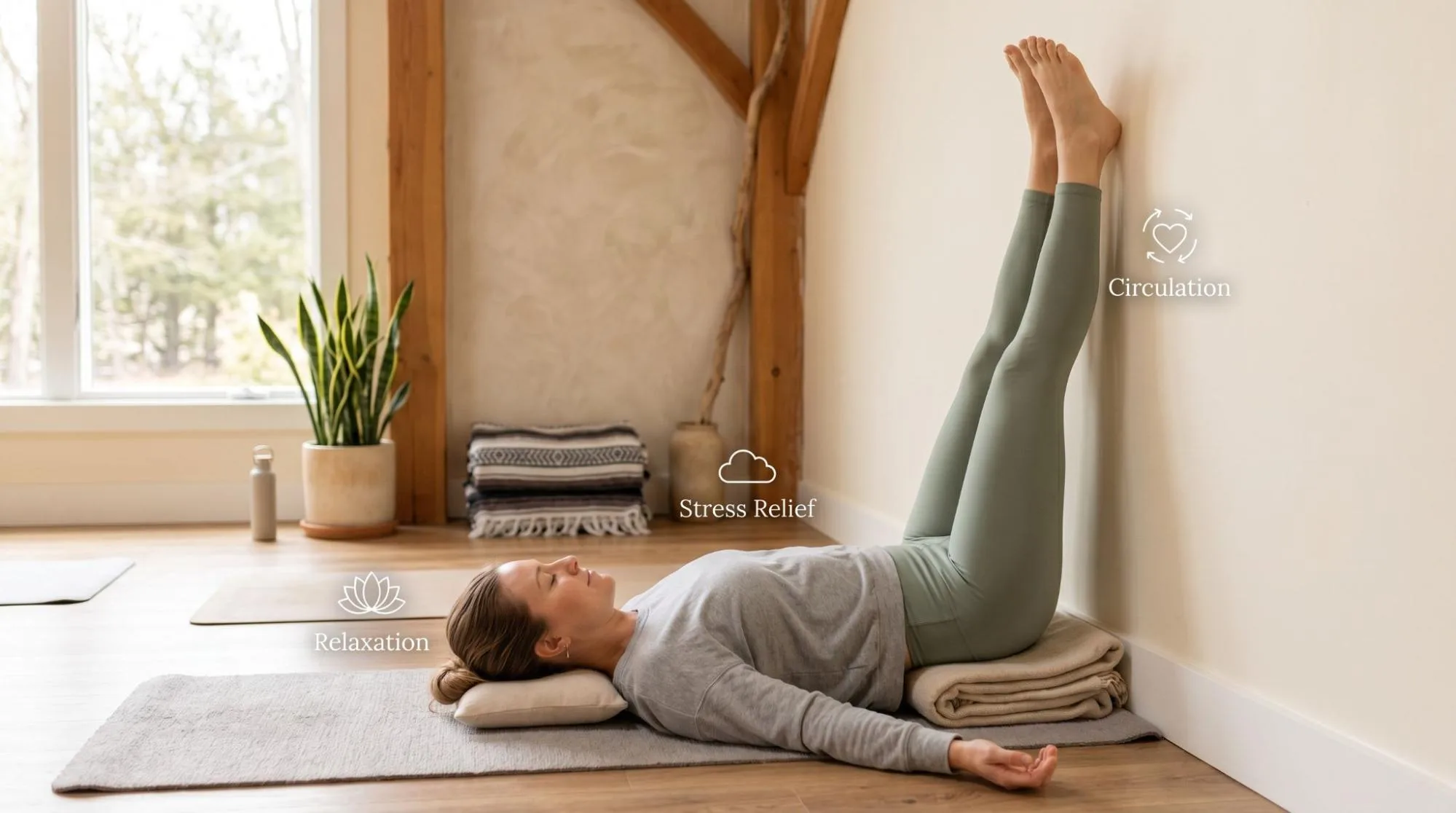 alt=”Legs Up the Wall Pose with hips near a wall” title=”Legs Up the Wall Pose with hips near a wall”
What Is Legs Up the Wall Pose?
Legs Up the Wall Pose is a gentle restorative yoga pose where you lie flat on your back and place your legs up against a wall. In yoga, it is known as Viparita Karani. The word viparita means inverted, and this pose is often called a gentle or restorative inversion. The main legs up the wall pose benefits come from gentle elevation, stillness, and slow breathing. When you lie flat and put your feet against the wall, your body gets a chance to rest without pressure or strain.
Unlike strong inversions such as headstand or shoulder stand, this yoga pose does not require balance, strength, or advanced flexibility. You simply lie down, put your feet up the wall, and allow your body to settle.
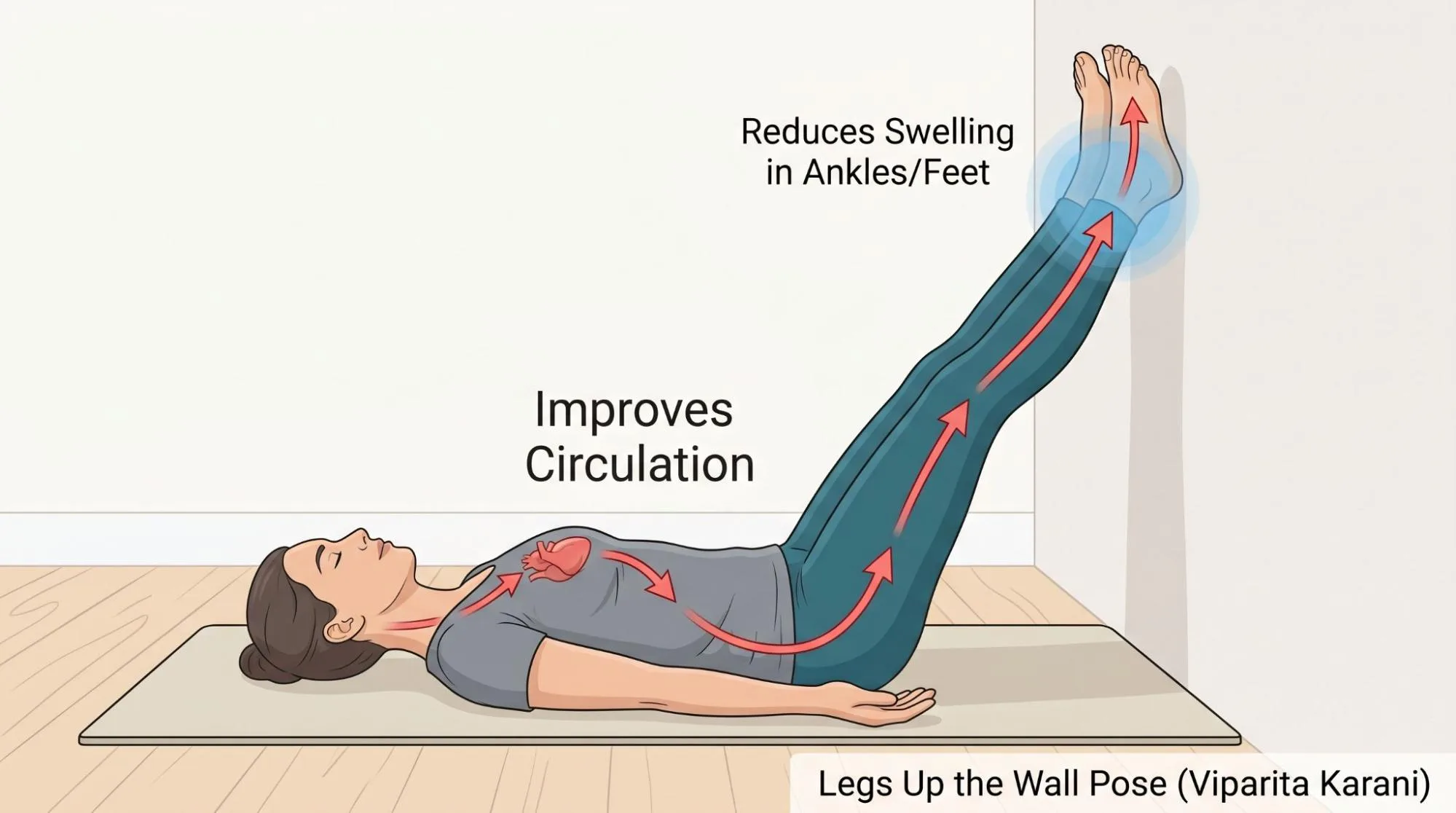
That is one reason many yoga instructors recommend it for beginners, tired legs, stress relief, and evening relaxation. Cleveland Clinic notes that Legs Up the Wall can support the return of blood flow from the legs and may reduce lower-leg swelling after long periods of sitting or standing.
 alt=”Viparita Karani supported relaxation pose” title=”Viparita Karani supported relaxation pose”
Key Health Benefits of supported inversion Pose
The benefits of supported inversion pose are mostly connected to rest, circulation, and nervous system relaxation. It is not a cure for medical problems, but it can be a helpful daily habit for many people.
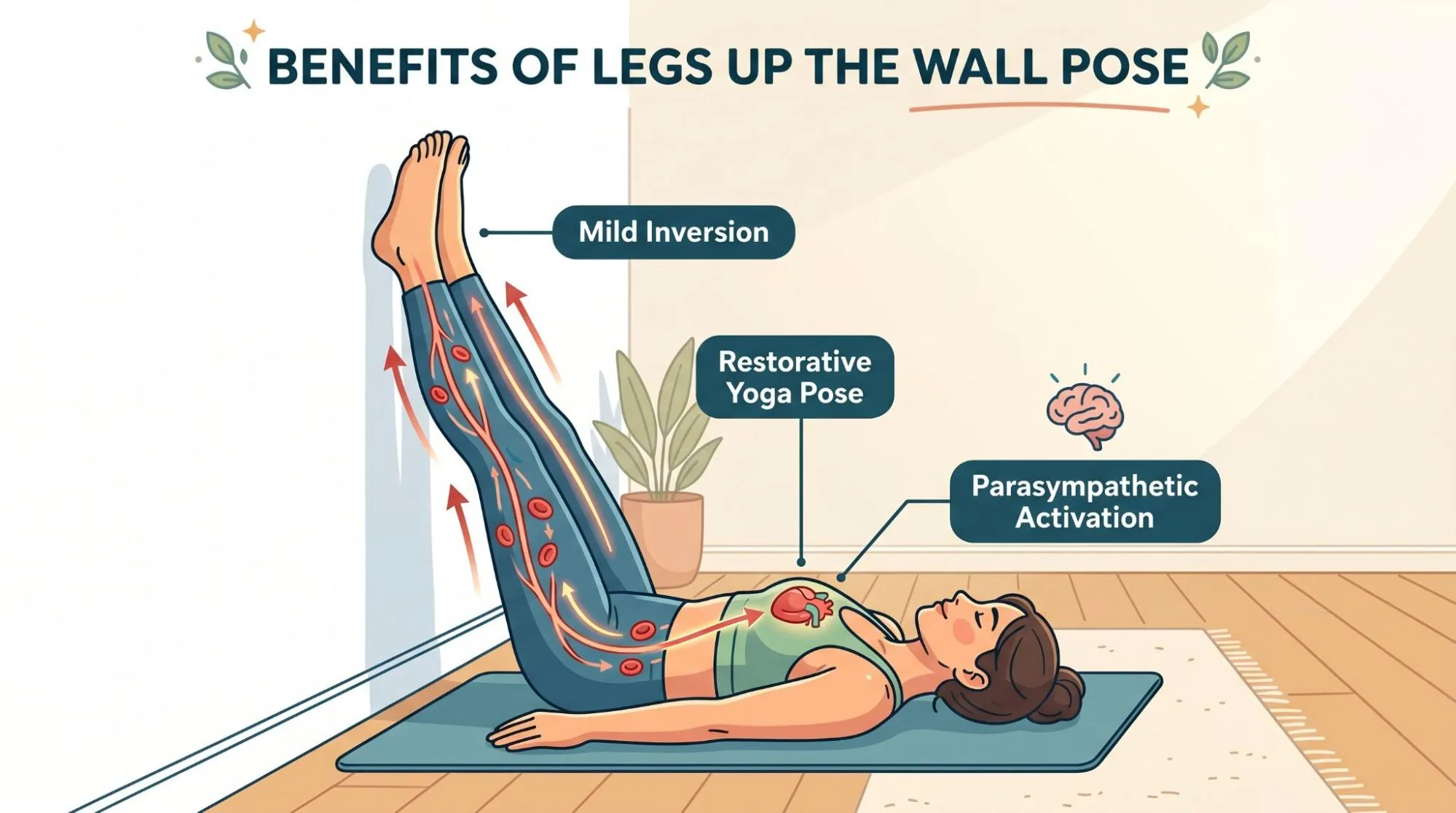
Improves Circulation and Reduces Swelling
One of the most common supported inversion pose benefits is better circulation in the lower body. When your legs are raised, gravity helps move fluid from the legs and feet back toward the upper body.
This can be useful after:
- Standing for many hours
- Sitting at a desk all day
- Traveling for a long time
- Feeling puffiness in the ankles or feet
- Light exercise or walking fatigue
Mayo Clinic also recommends raising an affected arm or leg higher than the heart for mild edema, along with other measures when needed. One of the most helpful supported inversion pose benefits is that it supports healthy blood flow from the legs and feet back toward the upper body.
 alt=”Legs resting against a wall on a yoga mat” title=”Legs resting against a wall on a yoga mat”
Learn More : Supine Spinal Twist Benefits Explained
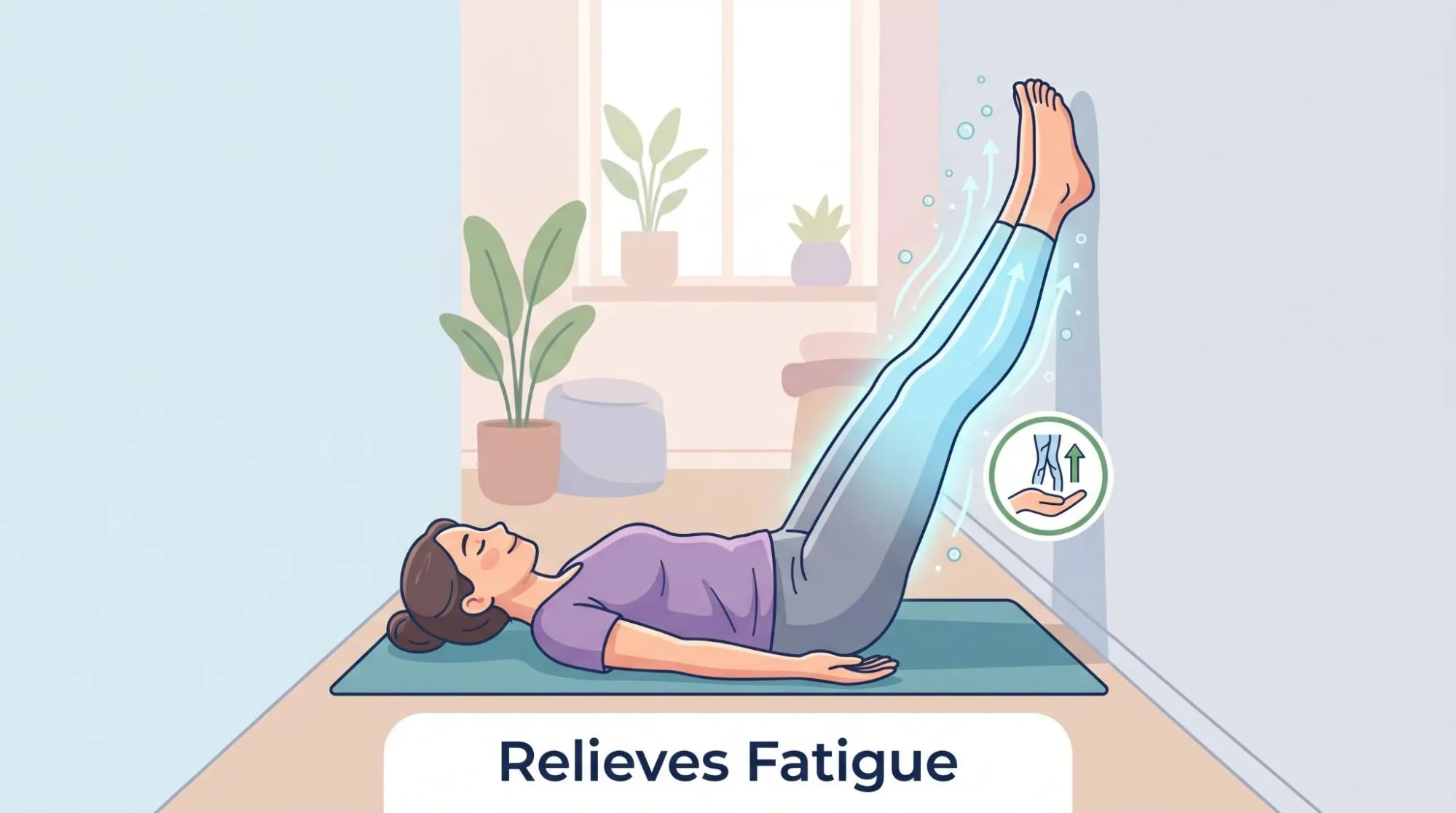
Relieves Tired and Heavy Legs
If your legs feel heavy at the end of the day, this pose can feel surprisingly relieving. You do not have to stretch hard. You do not have to force anything. Just let the wall support your legs. For people who stand, walk, or sit for long hours, supported inversion pose benefits may include lighter legs, less heaviness, and a more relaxed feeling at the end of the day.
People who walk a lot, work in retail, teach, travel, or spend long hours on their feet often find this pose comfortable. The gentle elevation helps the legs and feet feel lighter.
 alt=”Legs Up the Wall with folded blanket support” title=”Legs Up the Wall with folded blanket support”
 alt=”Legs Up the Wall with folded blanket support” title=”Legs Up the Wall with folded blanket support”
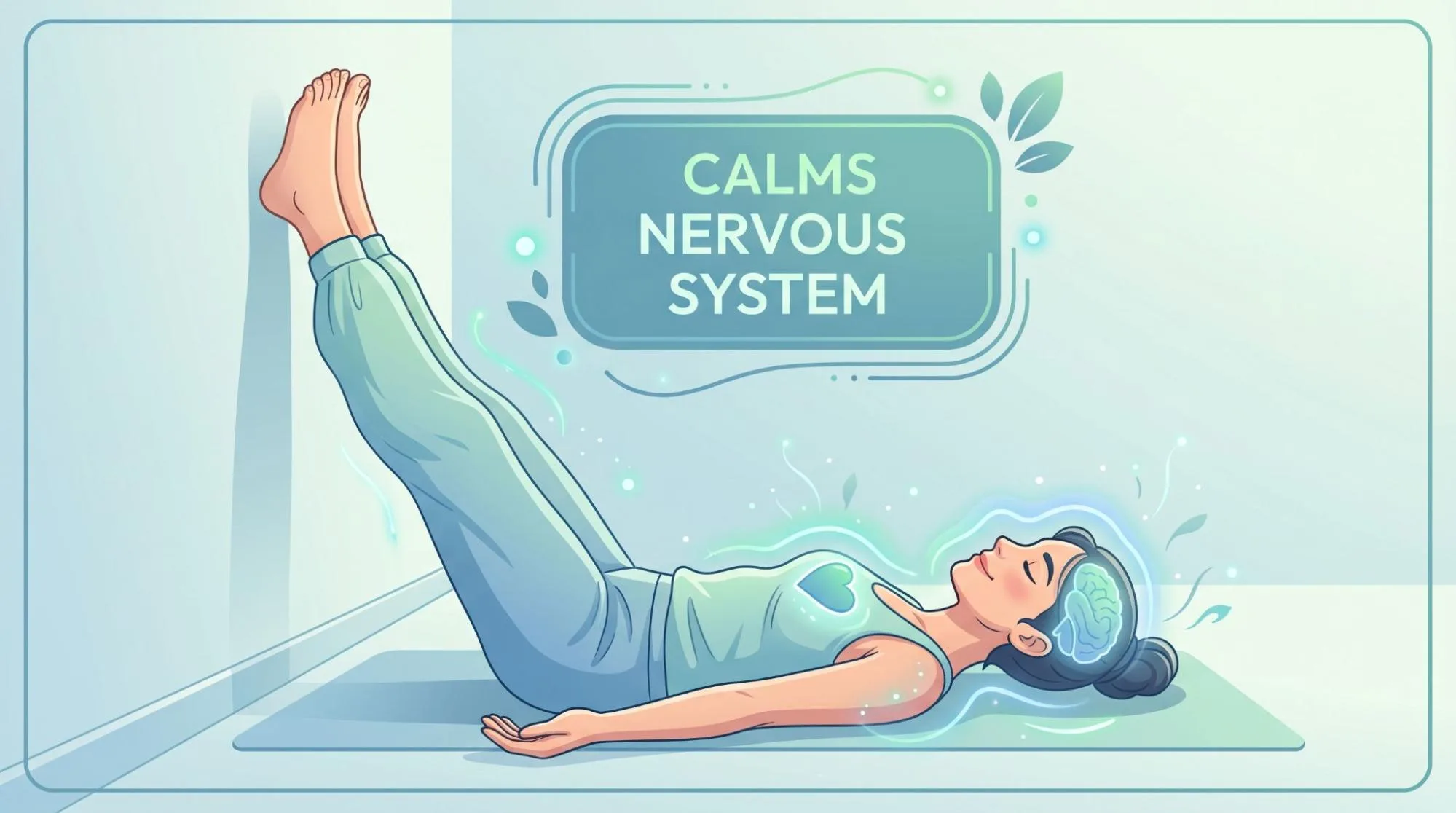
Calms the Nervous System
- Viparita Karani is part of restorative yoga, which means the purpose is not to build strength or burn calories. The purpose is to help the body slow down. Another reason people love this pose is that supported inversion pose benefits are not only physical. The pose also calms the nervous system and helps the mind slow down.
- When you lie still, breathe slowly, and keep the body supported, the nervous system gets a signal that it is safe to relax. Cleveland Clinic describes restorative yoga poses like supported inversion as practices that may guide the body into a state of relaxation.
- This is why many people use the pose when they feel mentally overloaded, anxious, or restless.
 alt=”Gentle restorative pose with relaxed breathing” title=”Gentle restorative pose with relaxed breathing”
Enhances Sleep Quality
- supported inversion Pose can be a useful part of a bedtime routine. It does not “knock you out,” but it may help your body shift from busy mode to rest mode. If you struggle to relax before bed, supported inversion pose benefits may support better sleep by helping your body shift into a calmer state.
- The National Center for Complementary and Integrative Health notes that yoga may support sleep, stress management, and mental well-being.
- Try it for 5 to 10 minutes before bed with dim lights and slow breathing. Keep your phone away if possible. That small detail matters more than people think.
 alt=”Side view of Viparita Karani setup” title=”Side view of Viparita Karani setup”
Relieves Lower Back Tension
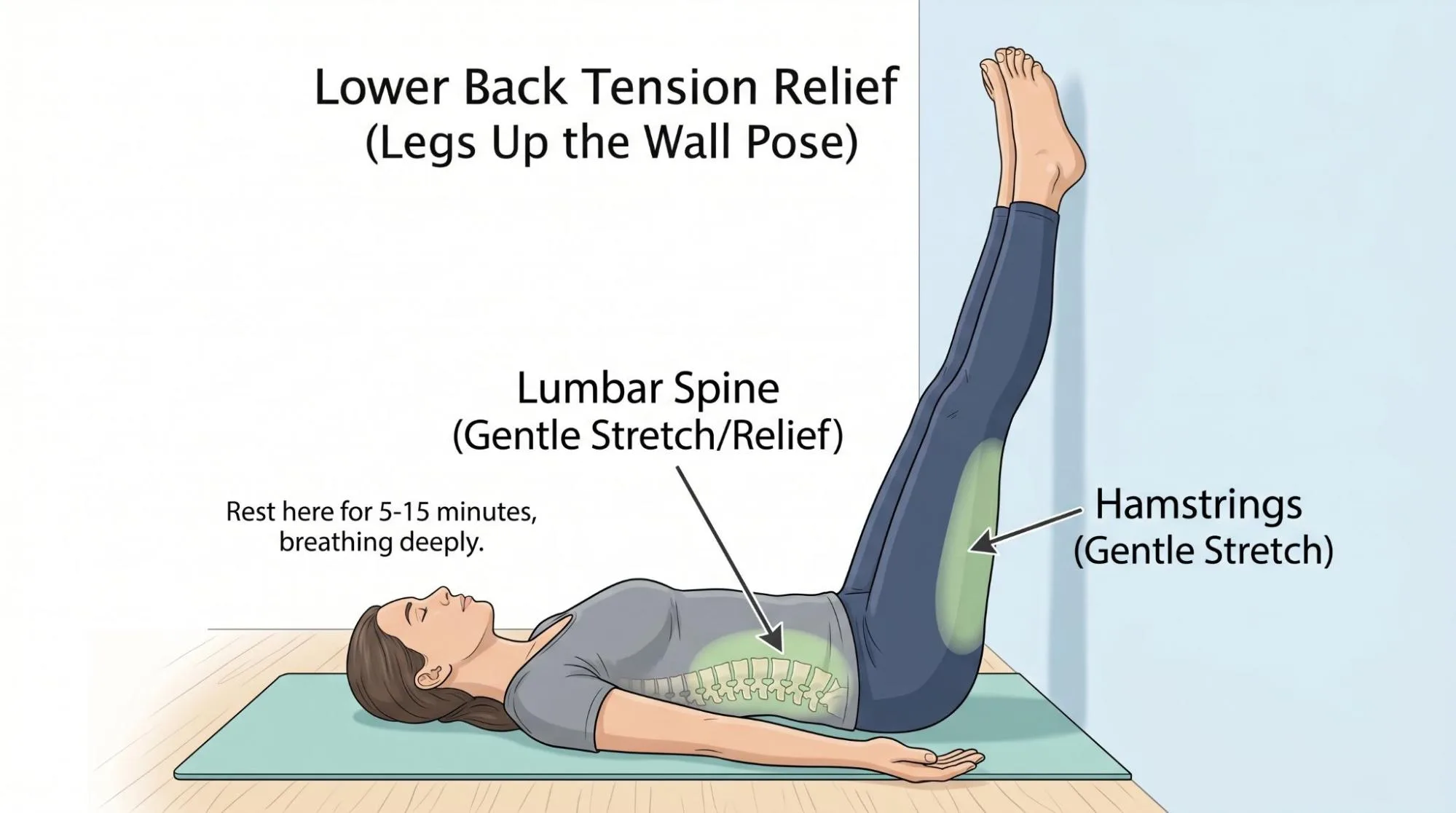
- Many people feel mild lower back tension after sitting for long hours. supported inversion can help because the floor supports your spine while the legs rest vertically.
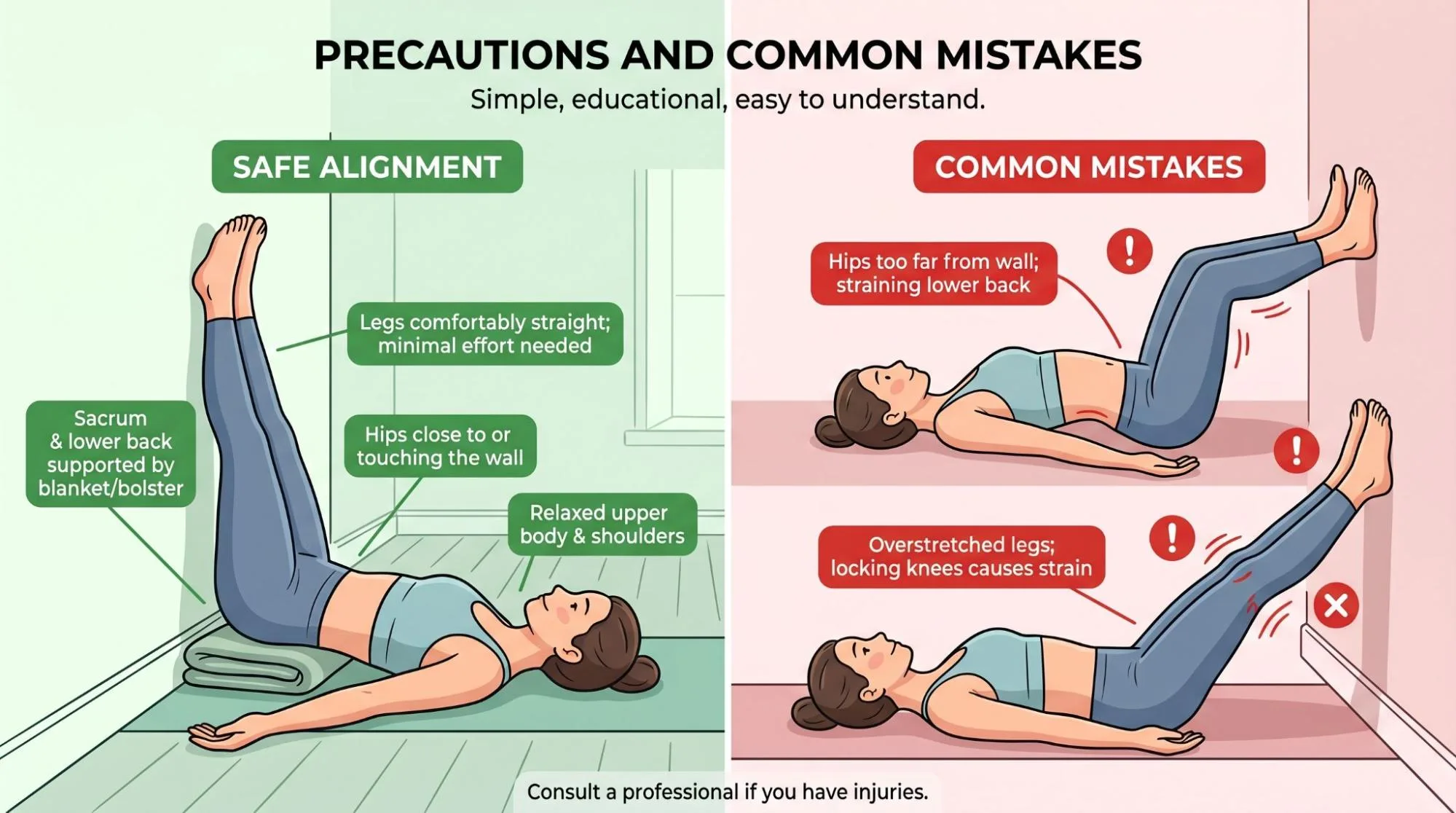
- For comfort, keep your hips slightly away from the wall. If your hamstrings are tight, bend your knees a little. You should not feel a strong pull behind the thighs.
- Yoga Journal lists lower-back pain relief among the commonly described benefits of Viparita Karani, though the pose should still be practiced gently and modified when needed.
- Some supported inversion pose benefits are also connected with lower back comfort, especially when the pose is done with proper support and relaxed breathing.
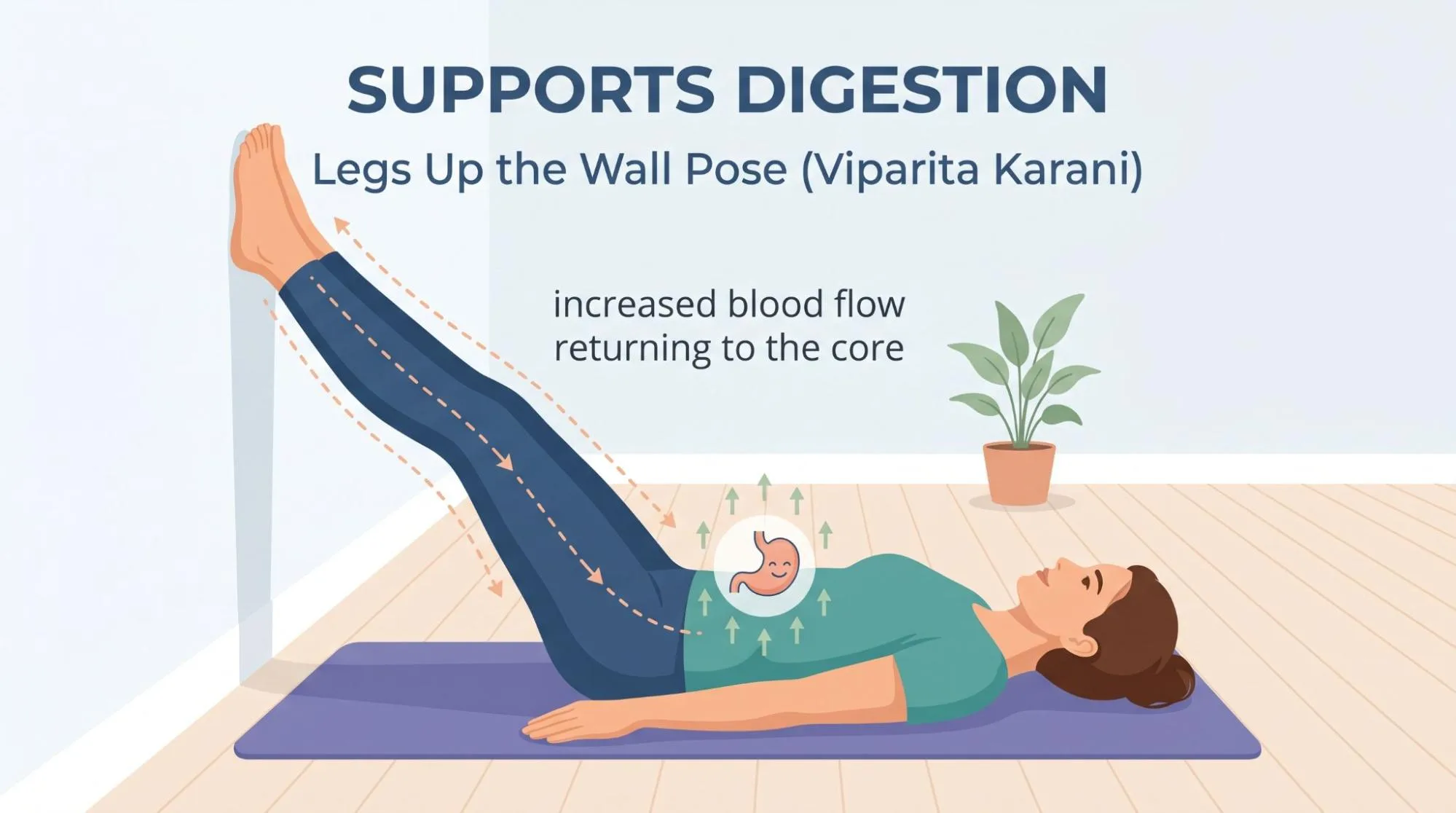
Supports Digestion
- This pose may help the body relax, and relaxation can support comfortable digestion for some people. It is not a direct treatment for digestive disease, but it can be useful after a stressful day when your body feels tense.
- Avoid practicing right after a heavy meal. Give yourself some time before lying flat.
- The best thing about supported inversion pose benefits is that they come from a very simple practice. You do not need advanced yoga skills, only a few quiet minutes and a comfortable wall space.
 alt=”Legs Up the Wall beginner modification” title=”Legs Up the Wall beginner modification”
Learn More : Plow Pose Halasana Step by Step Guide
Step-by-Step Guide to Practicing supported inversion Pose
Preparation and Set-Up
Choose a quiet wall space where you can lie down comfortably. A yoga mat, blanket, or carpet works well.
You may need:
- A folded blanket
- A pillow for your head
- A bolster under your hips
- A light eye pillow
- A strap if your legs keep falling apart
Wear comfortable clothing. Tight waistbands can make the pose less relaxing.
Proper Positioning
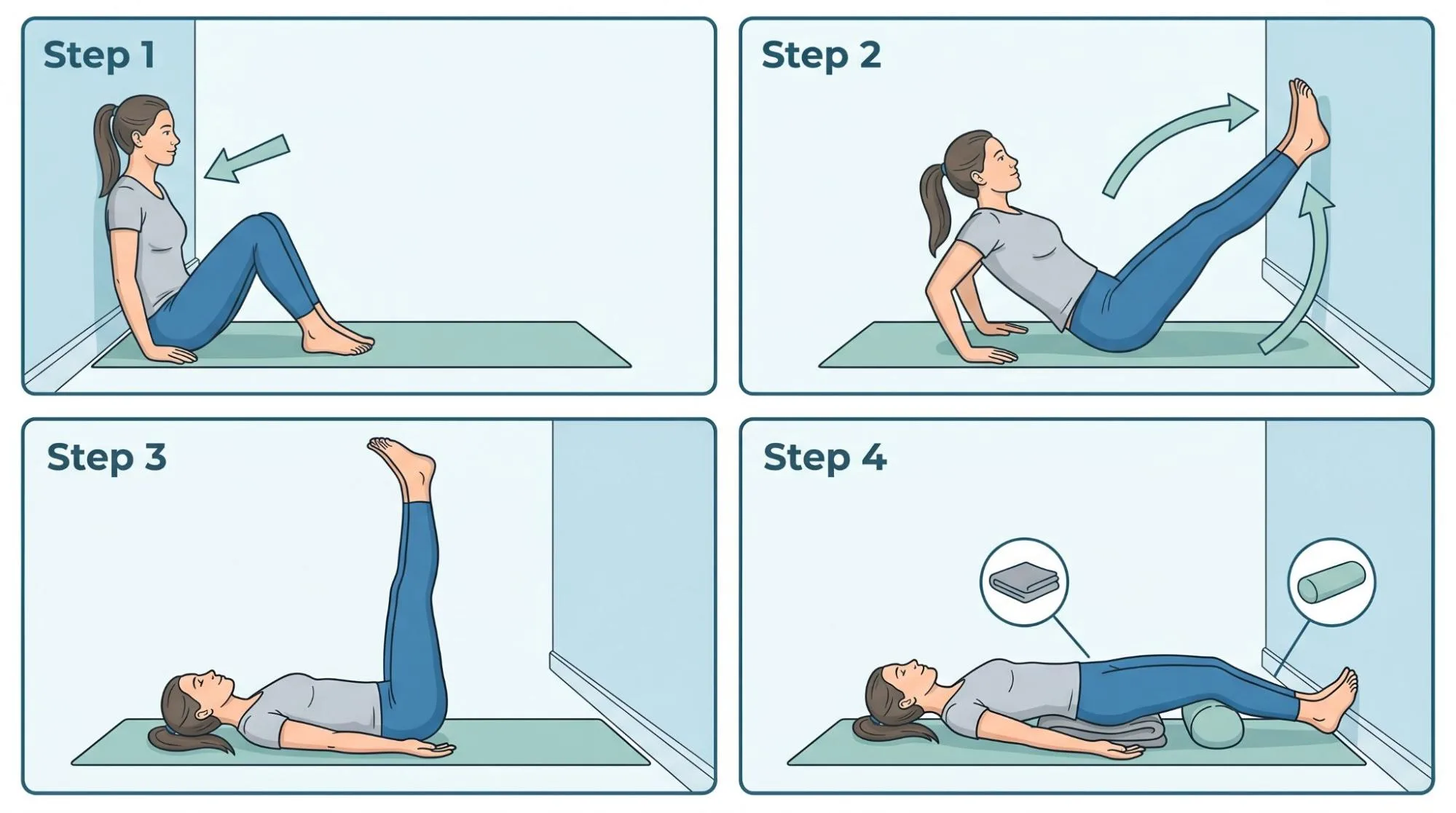
Follow these simple steps:
- Sit sideways next to the wall.
- Bend your knees and bring your hip close to the wall.
- Slowly turn your body as you swing your legs up.
- Lie flat on your back.
- Put your feet and legs against the wall.
- Rest your arms by your sides or on your belly.
- Relax your jaw, shoulders, and stomach.
Your hips can touch the wall, but they do not have to. If your legs feel strained, move your hips a few inches away.
Duration and Frequency
Beginners can start with 2 to 5 minutes. Once it feels comfortable, you can stay longer.
Many people practice for:
- 5 minutes for a quick reset
- 10 minutes after work
- 15 minutes before sleep
- Up to 20 minutes if fully comfortable
Healthline notes that the pose is commonly held for 2 to 20 minutes, depending on comfort.
Do not stay so long that your legs go numb. If you feel tingling, bend your knees, slide away from the wall, and rest.
Using Props for Comfort
Props make the pose easier, especially if your back or hips feel uncomfortable.
Try these adjustments:
- Place a folded blanket under your hips.
- Put a pillow under your head.
- Bend your knees slightly if your hamstrings feel tight.
- Keep a blanket over your body if you feel cold.
- Use a yoga strap around the thighs if the legs keep sliding apart.
The goal is comfort, not perfect alignment.
alt=”Supported inversion with comfortable neck” title=”Supported inversion with comfortable neck”
 alt=”Supported inversion with comfortable neck” title=”Supported inversion with comfortable neck”
Precautions and Safety Tips
supported inversion Pose is gentle, but it is still an inversion. Some people should be careful.
Speak with a healthcare professional or qualified yoga instructor first if you have:
- High blood pressure
- Glaucoma or eye pressure problems
- Serious neck, spine, or back issues
- Heart-related conditions
- Recent surgery
- Pregnancy concerns
- Pain when lying flat
Yoga Journal lists glaucoma, hypertension, and hernia as contraindications for Viparita Karani. Healthline also notes that inversion poses may increase pressure in the head and eyes, which can be a concern for people with glaucoma or similar conditions.
This pose should feel restful. If it causes pressure, dizziness, pain, or discomfort, come out of it slowly.
Common Mistakes to Avoid
Forcing the Hips Too Close to the Wall
Many beginners think the hips must touch the wall. Not true. If your legs feel tight, move back.
Holding the Pose Too Long
More time is not always better. If 5 minutes feels good, stay with 5 minutes.
Locking the Knees
Keep the legs relaxed. A soft bend is fine.
Practicing After a Heavy Meal
This can feel uncomfortable. Wait before practicing.
Ignoring Numbness or Tingling
If your legs and feet fall asleep, change position. Bend your knees and slowly roll to one side before sitting up.
 alt=”Restorative pose exit and transition” title=”Restorative pose exit and transition”
How to Integrate supported inversion Pose into Your Routine
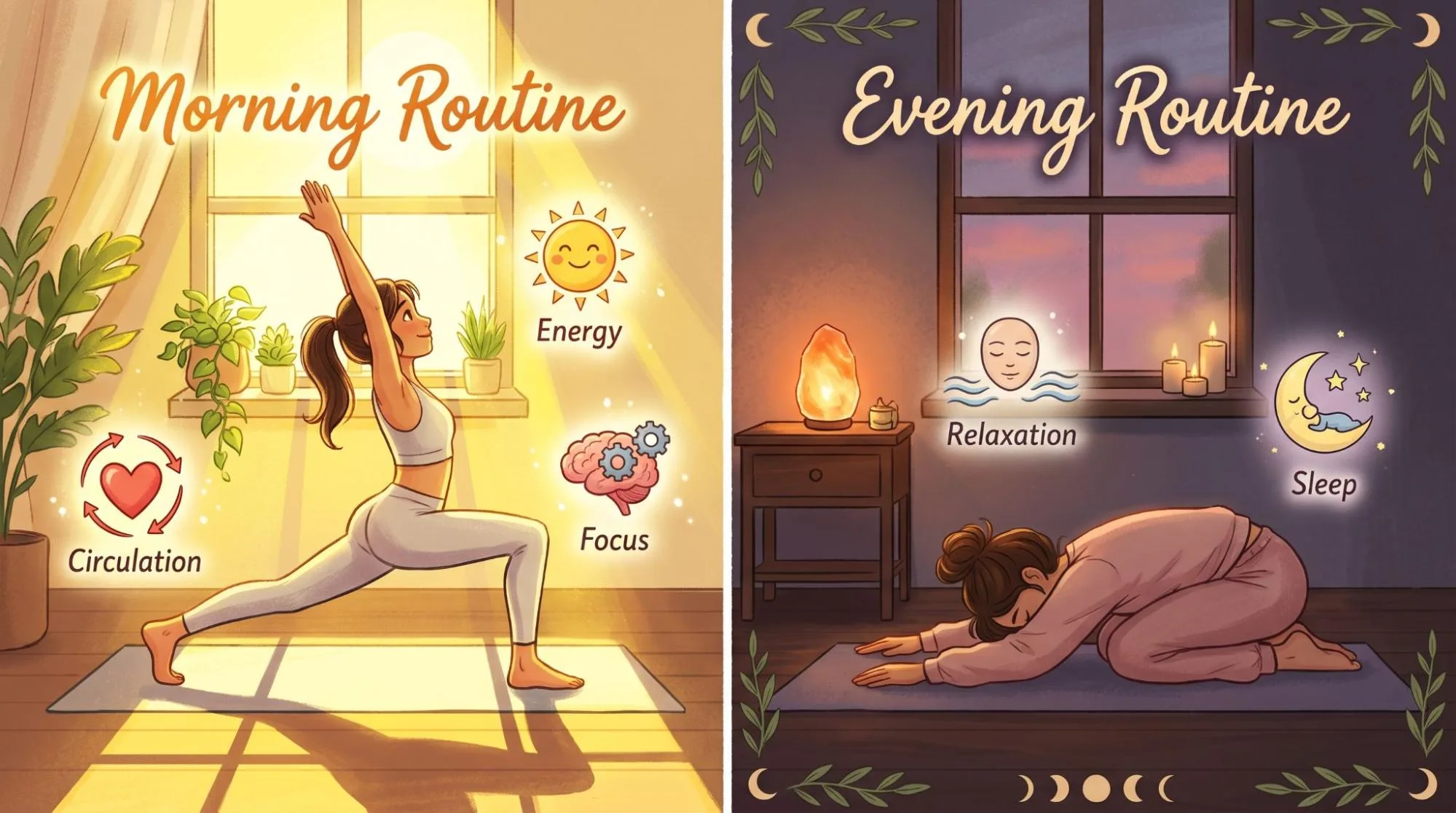
Morning Practice
Morning practice can help if you wake up feeling stiff or sluggish. Keep it short.
Try this:
- 3 to 5 minutes supported inversion
- Slow breathing
- Gentle ankle circles
- One minute seated breathing afterward
This is a calm way to begin the day without rushing.
Evening Practice
Evening is probably the best time for most people. After work, study, travel, or house chores, this pose gives your body a clear rest signal.
Try this simple routine:
- Dim the lights
- Lie flat with supported inversion
- Breathe slowly through the nose
- Stay for 5 to 15 minutes
- Roll to one side before sitting up
It works especially well before sleep.
Combination with Other Restorative Poses
You can combine pose Viparita Karani with other restorative yoga poses for a deeper relaxation session.
A simple sequence:
- Child’s Pose — 1 to 2 minutes
- Reclined Butterfly Pose — 3 minutes
- supported inversion Pose — 10 minutes
- Savasana — 3 to 5 minutes
Keep everything gentle. Restorative yoga is not about pushing the body.
 alt=”Calm breathing in Legs Up the Wall” title=”Calm breathing in Legs Up the Wall”
FAQs About supported inversion Pose
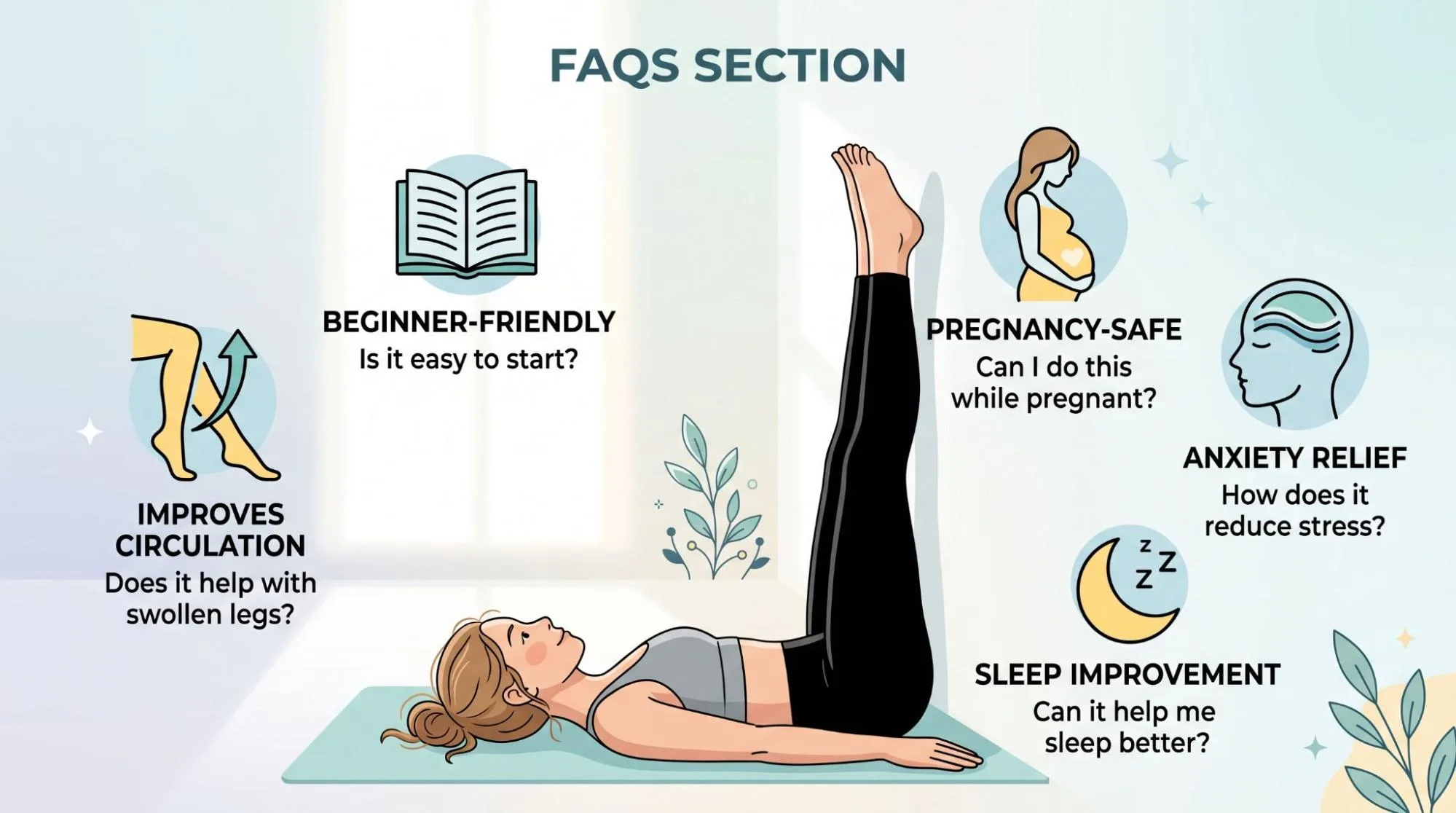
What are the main supported inversion pose benefits?
The main benefits include improved circulation, reduced leg heaviness, relaxation, stress relief, better sleep support, and mild lower back comfort.
Is Viparita Karani good for beginners?
Yes, it is one of the easiest restorative yoga poses for beginners. Use props and keep your hips away from the wall if needed.
How long should I hold supported inversion Pose?
Start with 2 to 5 minutes. If it feels good, you can gradually increase to 10, 15, or 20 minutes.
Can I do supported inversion every day?
Many people can practice it daily, especially as a relaxation pose. If you have medical conditions, ask a healthcare professional first.
Should my hips touch the wall?
Not always. If your legs feel tight, keep your hips a few inches away from the wall.
Can supported inversion help swollen feet?
It may help mild swelling linked to long sitting or standing. Persistent or painful swelling should be checked by a doctor.
Is it safe with high blood pressure?
Some people with controlled blood pressure may tolerate it, but high blood pressure is often listed as a caution for inversions. Ask your doctor or yoga instructor before practicing.
Can I do this pose before bed?
Yes, many people use it before bed because it helps the body relax and settle.
What should I do if my legs go numb?
Bend your knees, slide your feet down the wall, and slowly come out of the pose. Do not force yourself to stay.
Do I need a yoga mat?
No. A mat is helpful, but a carpet, blanket, or soft floor space can also work.
 alt=”Wall-supported pose for relaxation” title=”Wall-supported pose for relaxation”
Learn More : Reclining Bound Angle Pose Benefits
Final Thoughts on supported inversion Pose Benefits
supported inversion Pose is simple, quiet, and useful. That is its strength. You do not need special flexibility, expensive equipment, or a long yoga routine.
Practice it gently. Keep your body comfortable. Breathe slowly. If you use it regularly, especially after long sitting, standing, or stressful days, this small restorative inversion can become one of the easiest ways to help your legs feel lighter and your mind feel calmer.
 alt=”Viparita Karani with cushion under hips” title=”Viparita Karani with cushion under hips”
Frequently Asked Questions
How long should beginners stay in supported inversion?
Start with five to ten comfortable minutes. Leave the pose sooner if you feel pressure, dizziness, tingling, or discomfort.
Can supported inversion treat swelling or varicose veins?
No. It may feel restful for some people, but it should not replace medical evaluation or treatment for swelling, vein problems, or circulation symptoms.
How do I come out safely?
Bend the knees, roll gently onto one side, pause, and then use your hands to sit up. Avoid moving quickly from the pose.
Further reading: For general yoga safety information, see NCCIH: Yoga—What You Need To Know.
