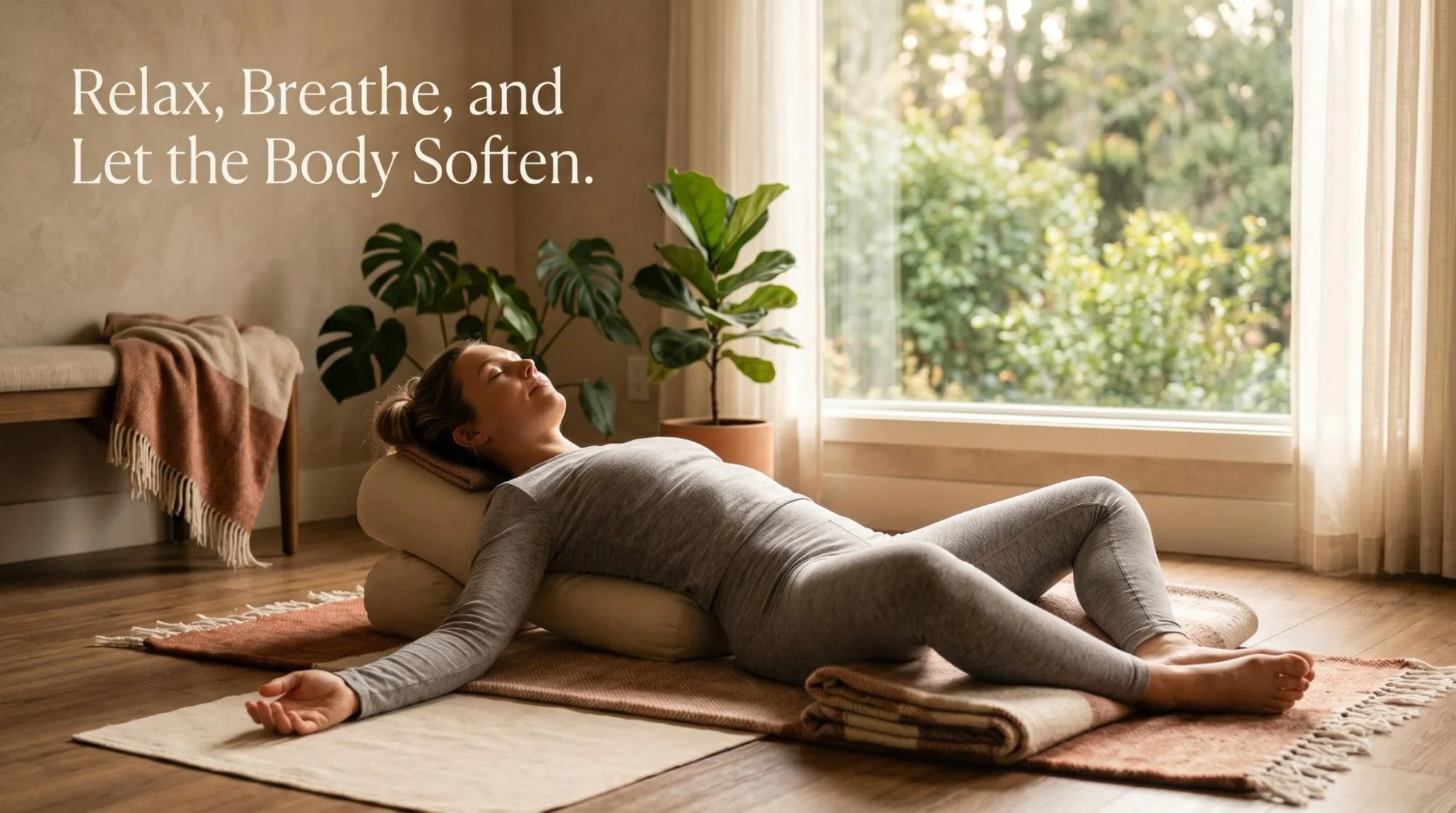
Reclining Bound Angle Pose is one of those yoga poses that looks simple, but feels deeply calming when you settle into it properly. Also known as Supta Baddha Konasana, this gentle posture is often used in restorative yoga because it helps the body soften without forcing a deep stretch.
When people search for reclining bound angle pose benefits yoga, they are usually looking for a pose that can open the hips, relax the body, calm the mind, and support easier breathing. This pose does all of that in a quiet, steady way.
You lie on your back, bring the soles of your feet together, let your knees open out to the sides, and breathe. That is the basic shape. But the real benefit comes from how you support your body, how patiently you breathe, and how gently you allow the hips and chest to release. This guide explains the main reclining bound angle pose benefits yoga students can expect, along with safe steps, useful modifications, and simple breathing tips.
What Is Reclining Bound Angle Pose?
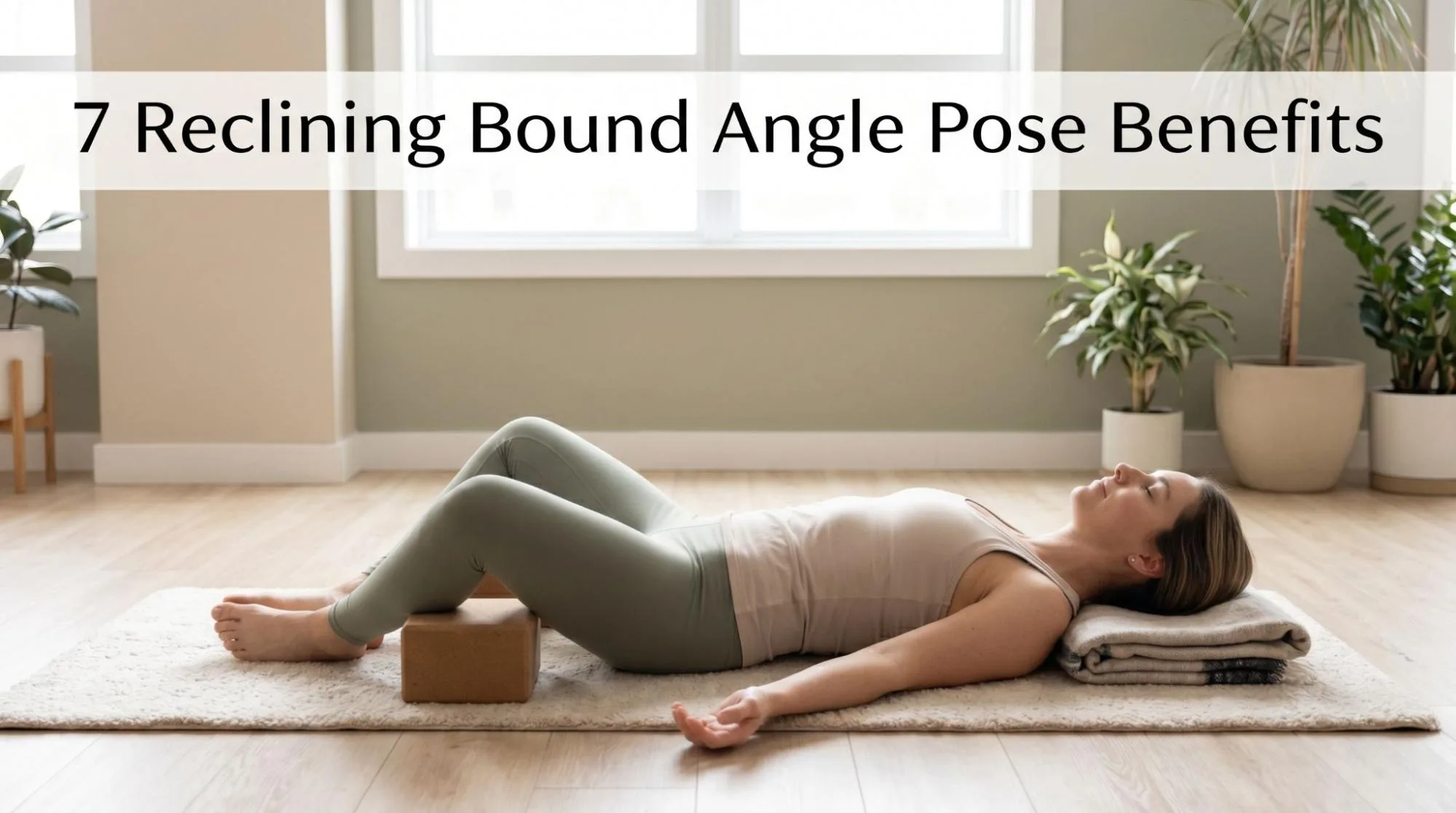
Reclining Bound Angle Pose is a resting yoga posture where you lie down with the soles of your feet touching and your knees falling outward. In Sanskrit, it is called Supta Baddha Konasana.
The pose is commonly practiced in restorative yoga, gentle yoga, prenatal yoga, and evening relaxation routines. It is not about pushing flexibility. It is more about letting the body open naturally.
This pose mainly works on the hips, inner thighs, groins, lower belly, chest, and breathing pattern. With the right support, it can feel comfortable even for beginners.
Why Reclining Bound Angle Pose Is Important in Yoga
Reclining Bound Angle Pose is important because it teaches the body how to relax while staying open. Many yoga poses ask you to build strength or balance. This one asks you to soften.
That makes it useful for people who carry tension in the hips, belly, chest, or lower back. It also gives the nervous system a chance to slow down.
In many yoga classes, this pose is used near the end of practice. It helps the body absorb the effects of movement and brings the mind into a quieter state.
Reclining Bound Angle Pose Benefits Yoga
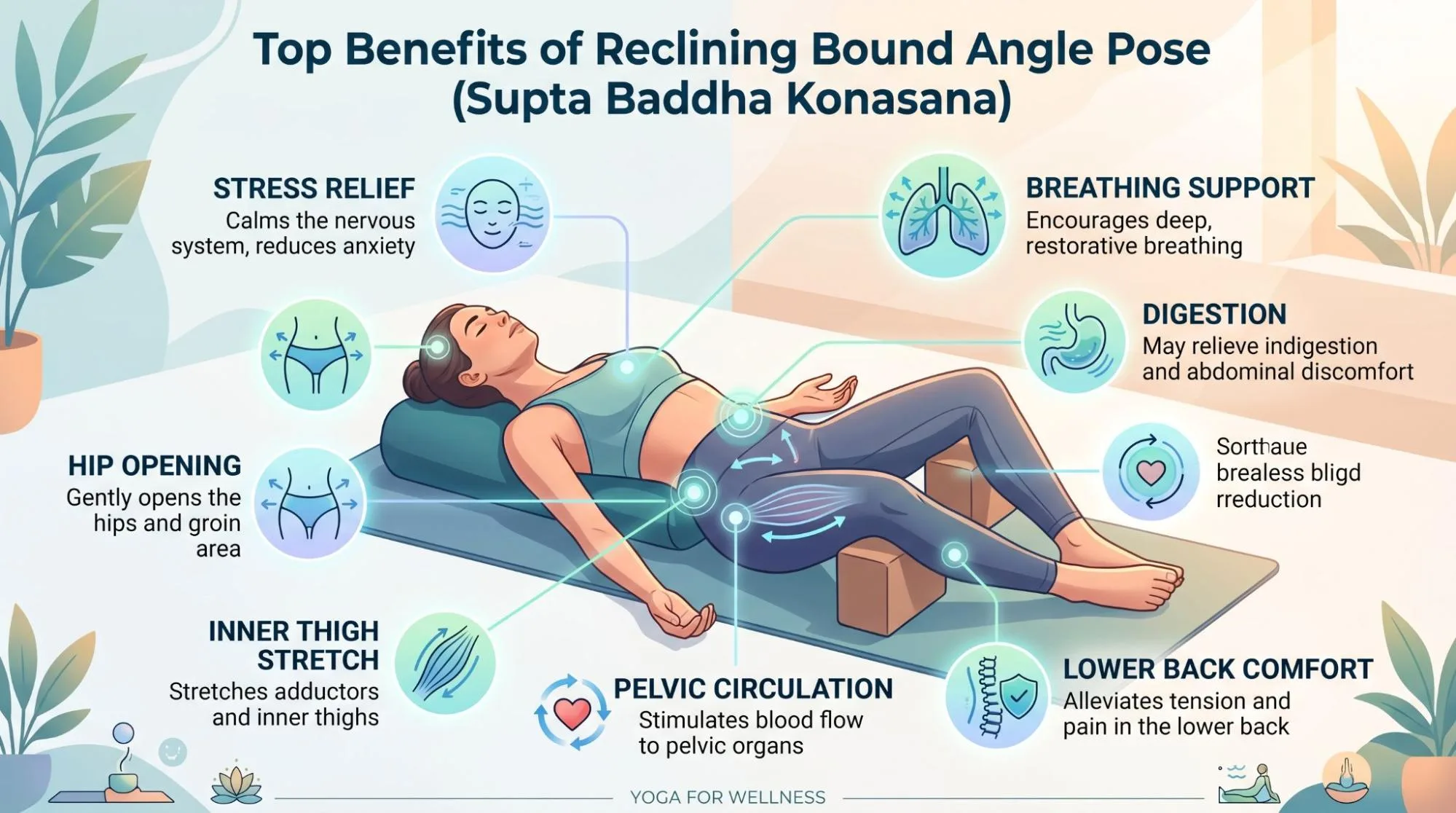
The benefits of this pose are both physical and calming. It can help with flexibility, breathing, stress, pelvic comfort, and general body awareness. The main reclining bound angle pose benefits yoga practitioners notice are physical ease, mental calm, better breathing, and gentle hip opening.
Deep Relaxation and Stress Relief
One of the most noticeable benefits of Reclining Bound Angle Pose is deep relaxation. When the body is fully supported, the pose encourages the nervous system to slow down.
This can help relieve the symptoms of stress, mild tension, fatigue, and emotional heaviness. Some people also find it helpful when dealing with symptoms of stress, mild depression, menstruation, or general restlessness.
The key is not to force stillness. Just breathe, settle, and let the body gradually relax.
Gentle Hip Opening
This pose gently opens the hips without requiring active effort. Since gravity does most of the work, the hips can release slowly.
For people who sit for long hours, this can feel especially helpful. Tight hips often come from desk work, driving, or lack of movement. Reclining Bound Angle Pose gives that area a calm, supported stretch.
Inner Thigh and Groin Stretch
Reclining Bound Angle Pose stretches the inner thighs, groins, and knees in a passive way. You may feel a soft opening along the inner legs.
The stretch should never feel sharp. If the knees feel strained or the groins feel too pulled, support the legs with blocks, pillows, or folded blankets.
A good stretch feels spacious. A bad stretch feels like your body is warning you.
Supports Pelvic Circulation
Because the hips open and the lower body relaxes, this pose may support better circulation around the pelvis.
This is one reason it is often used in gentle yoga for pelvic comfort, menstrual support, and relaxation around the lower abdomen. It creates space in an area where many people unknowingly hold tension.
May Ease Menstrual Discomfort
Many people use Supta Baddha Konasana during menstruation because it can help soften the lower belly, hips, and inner thighs.
It may help ease mild cramps, pelvic heaviness, and lower back discomfort. The pose can feel even better with a bolster under the spine and support under both knees.
During menstruation, avoid forcing the knees down. Comfort matters more than depth.
Opens the Chest and Improves Breathing
When you recline in this pose, the chest gently opens. This can make breathing feel easier and fuller.
If you use a bolster under the spine, the chest lift becomes more noticeable. The front body opens, the shoulders soften, and the breath naturally has more room.
This is helpful for people who spend much of the day leaning forward over phones, laptops, or desks.
Supports Digestion and Abdominal Relaxation
Reclining Bound Angle Pose may also support digestion because it relaxes the belly and gently stimulates abdominal organs.
This does not mean the pose “fixes” digestion by itself. But it can help reduce abdominal gripping and encourage a softer breathing pattern, which may support better digestive comfort.
Try practicing it after gentle yoga, not immediately after a heavy meal.
Helps Release Lower Back Tension
If done with proper support, this pose can help release lower back tension. The hips open, the belly relaxes, and the spine rests against the floor.
But if your lower back arches too much, the pose may become uncomfortable. In that case, move your feet farther away from the pelvis or place a folded blanket under the outer thighs.
The lower back should feel settled, not compressed.
Learn More : Reclined Pigeon Pose for Hip Pain
How to Practice Reclining Bound Angle Pose
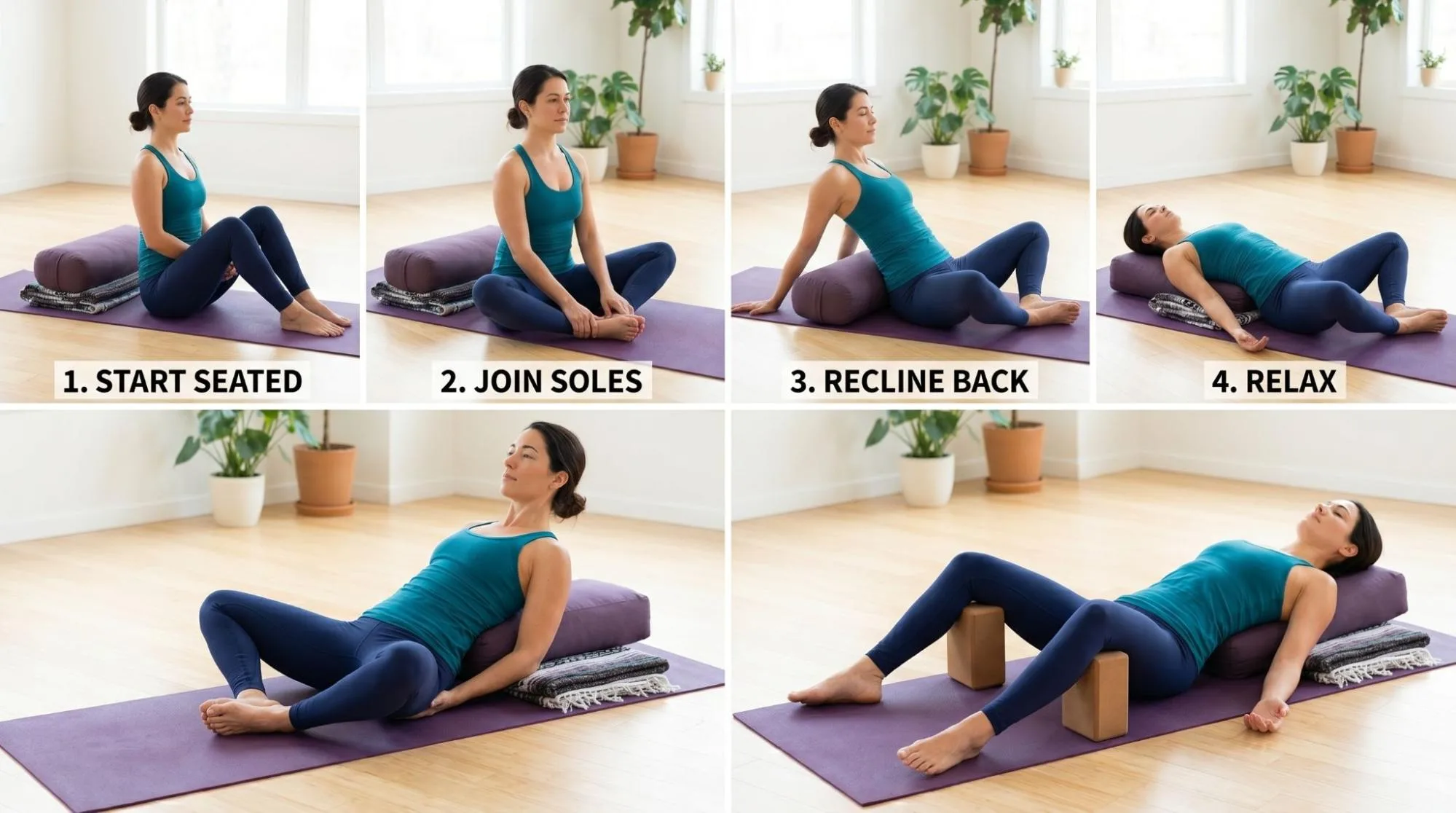
Move slowly into this pose. The slower you enter, the easier it is to notice what your body needs.
Sit Comfortably on Your Mat
Start by sitting on your yoga mat with your legs bent. Keep your spine tall and your shoulders relaxed.
You can sit on a folded blanket if your hips feel tight.
Bring the Soles of Your Feet Together
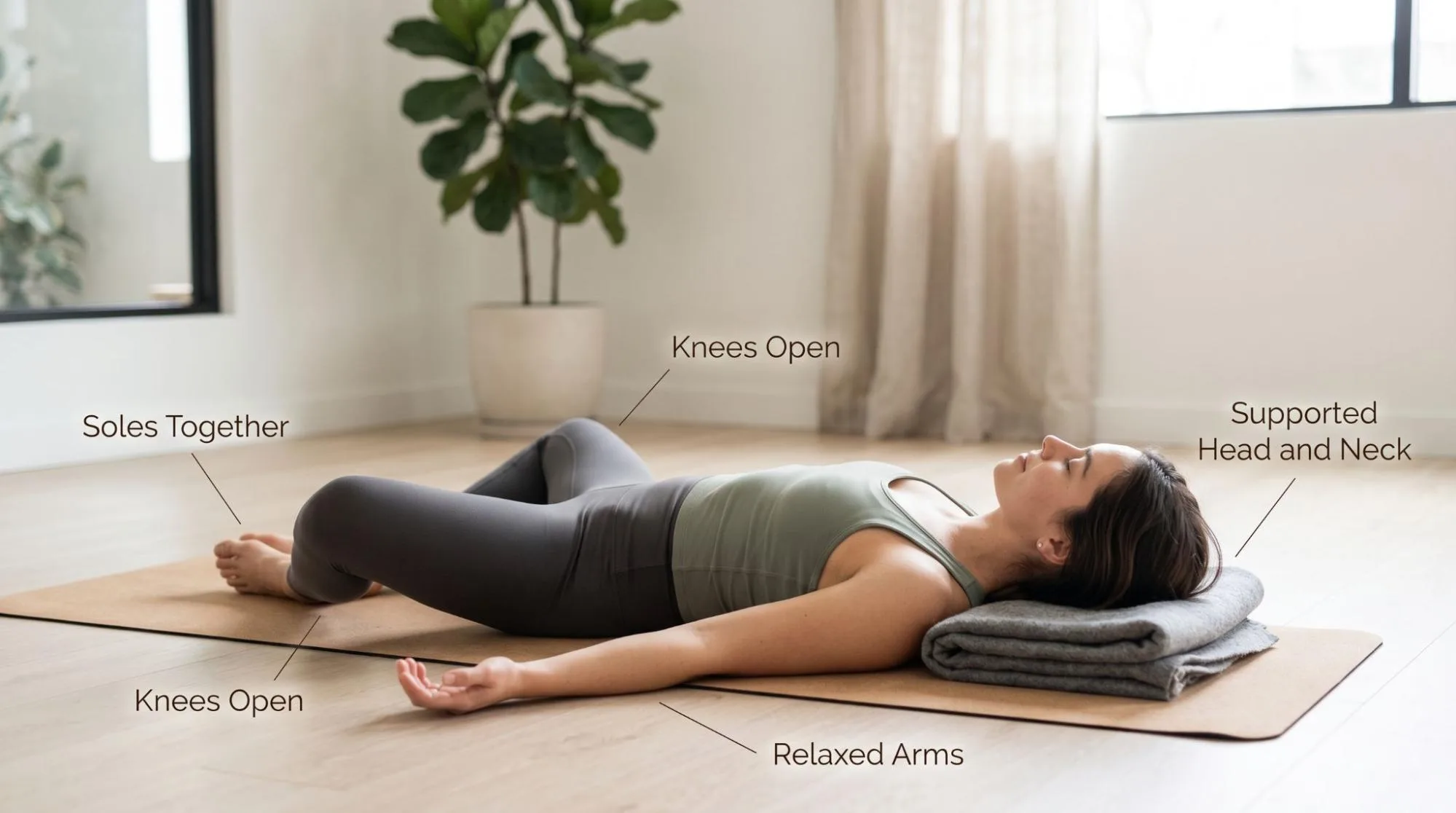
Bring the soles of your feet together and let your knees open to the sides.
Your feet do not need to be close to the pelvis. Beginners often feel better when the feet are a little farther away.
Slowly Recline onto Your Back
Use your hands and elbows for support as you lower your body down.
Lie back gently. Keep your spine comfortable and your face relaxed. Make sure your head and neck feel supported. If your chin lifts too high, place a folded blanket under your head.
Relax Your Arms
Let your arms rest beside your body. Your palms can face up if that feels open and relaxed.
You can also place one hand on your belly and one hand on your chest to feel the breath.
Breathe and Hold the Pose
Stay for 1 to 5 minutes if you are a beginner. In restorative yoga, people may stay longer with proper support.
Keep your breathing slow and natural. Let the knees be heavy, but do not push them down.
Helpful Modifications for Reclining Bound Angle Pose
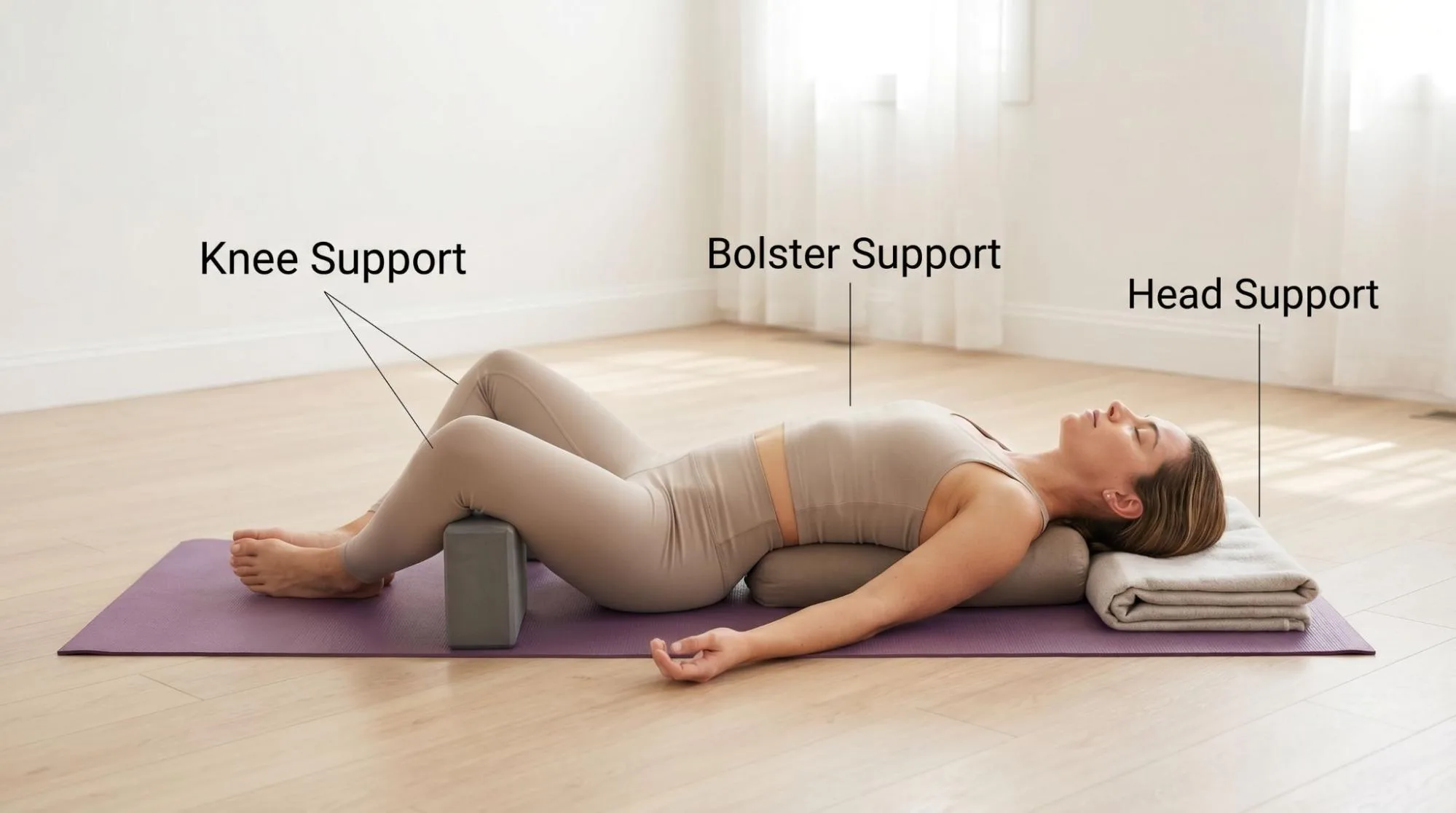
Modifications make this pose much more comfortable. In fact, support is often what turns this pose from a stretch into true relaxation.
Use Blocks or Blankets Under the Knees
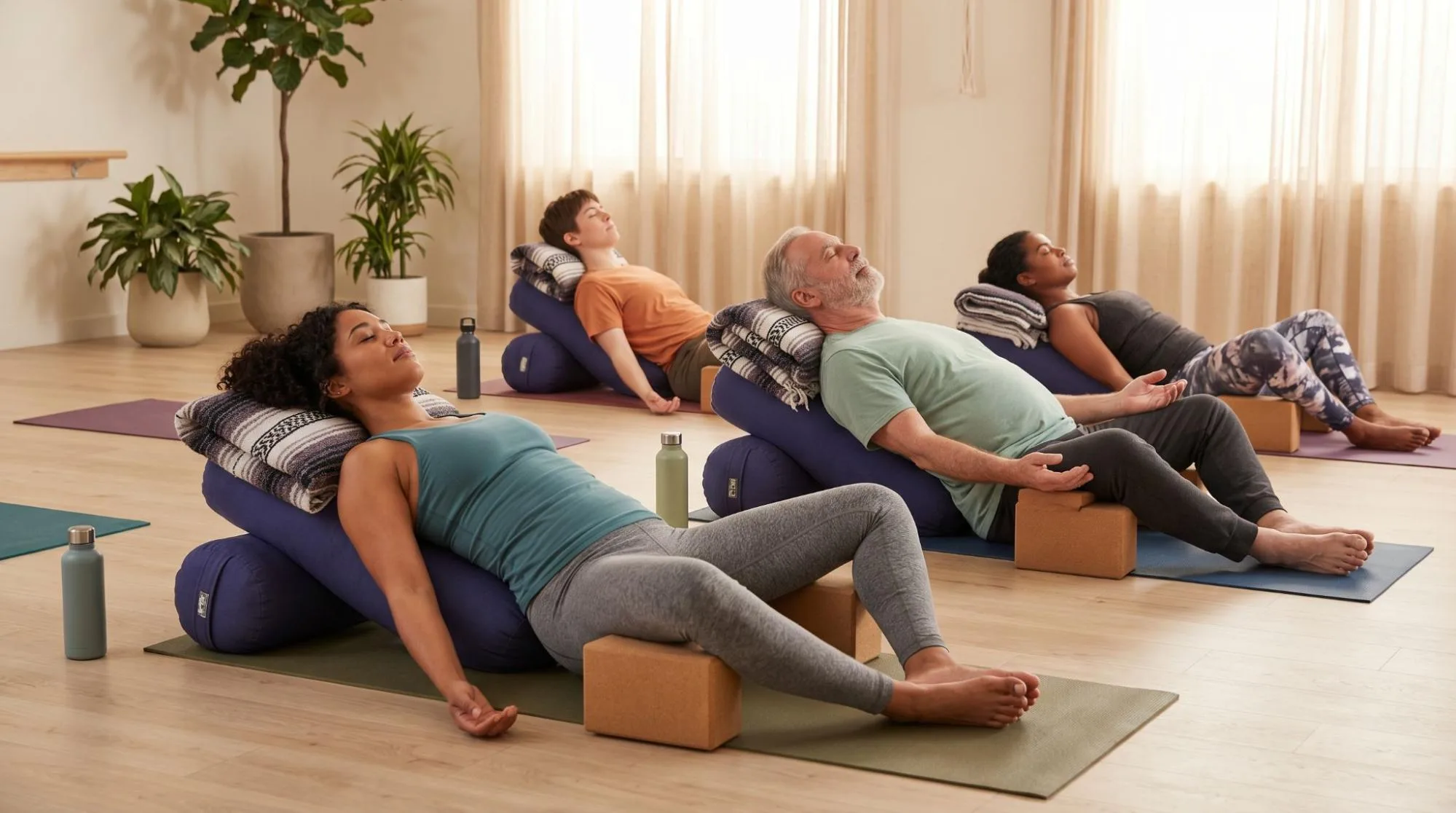
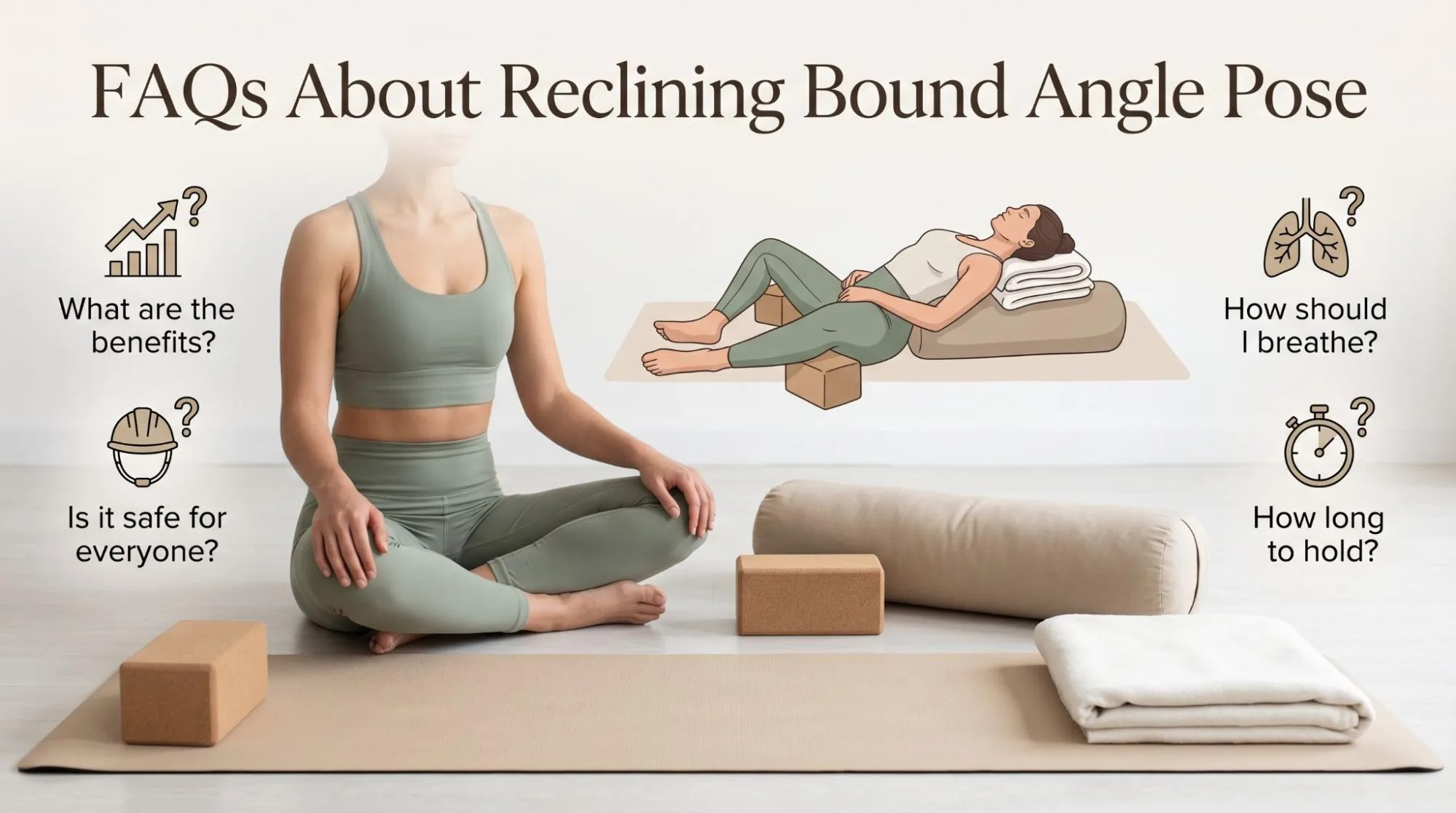
Place yoga blocks, pillows, or folded blankets under each knee.
This is one of the best ways to protect the hips and knees. It reduces strain and allows the inner thighs to soften gradually.
Use a Bolster Under the Spine
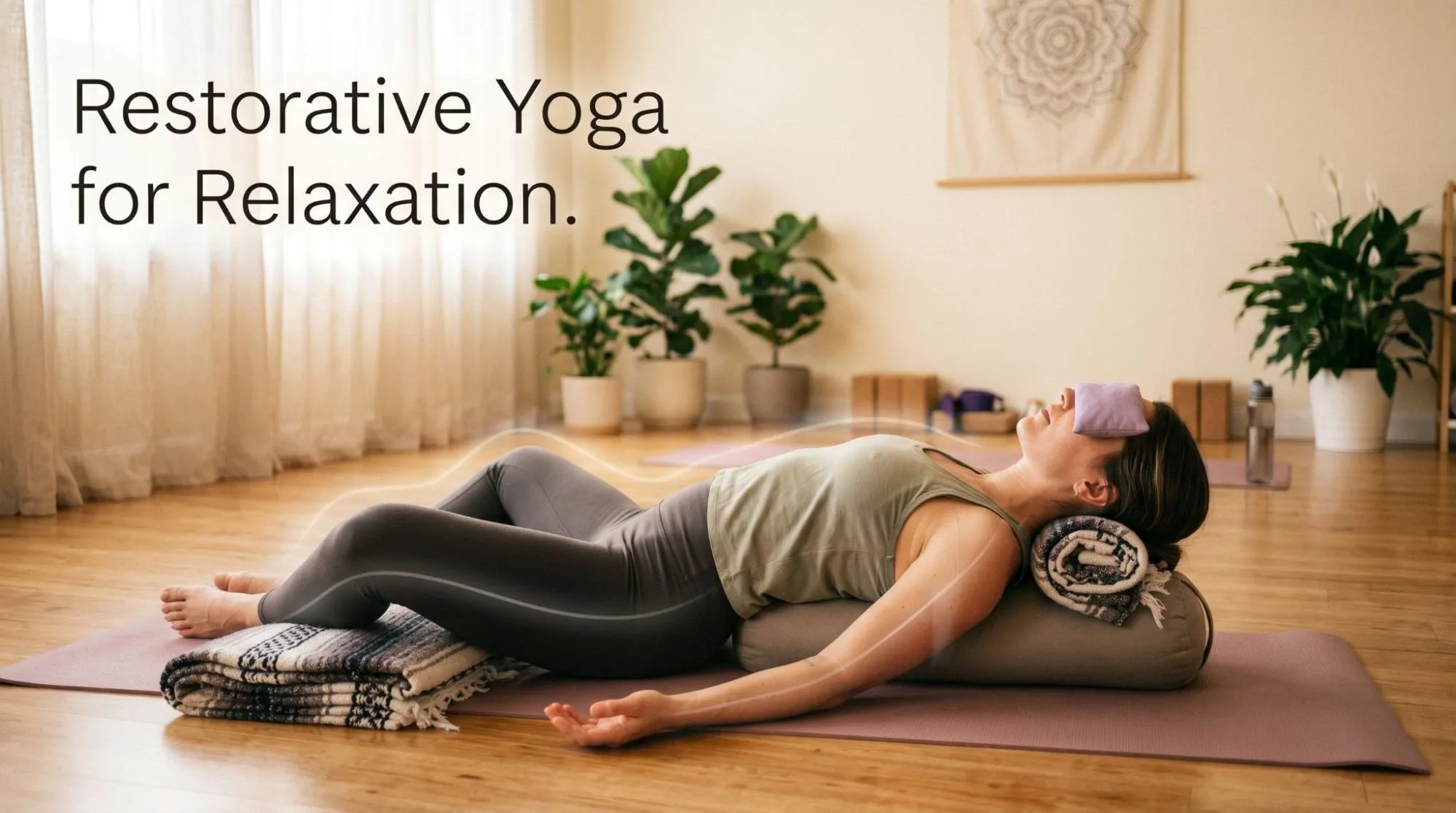
Place a bolster lengthwise behind your back and recline over it.
This variation opens the chest more deeply and supports fuller breathing. It is especially helpful after a long day of sitting.
Place a Blanket Under the Head
If the neck feels tight or the chin points upward, place a folded blanket under the head.
Good support for the head and neck helps the whole body relax.
Move the Feet Farther Away
If the hips or knees feel strained, slide the feet farther away from the pelvis.
This makes the shape less intense and more beginner-friendly. You still get the benefits, but with less pressure.
Common Mistakes to Avoid
This pose is gentle, but small mistakes can make it uncomfortable.
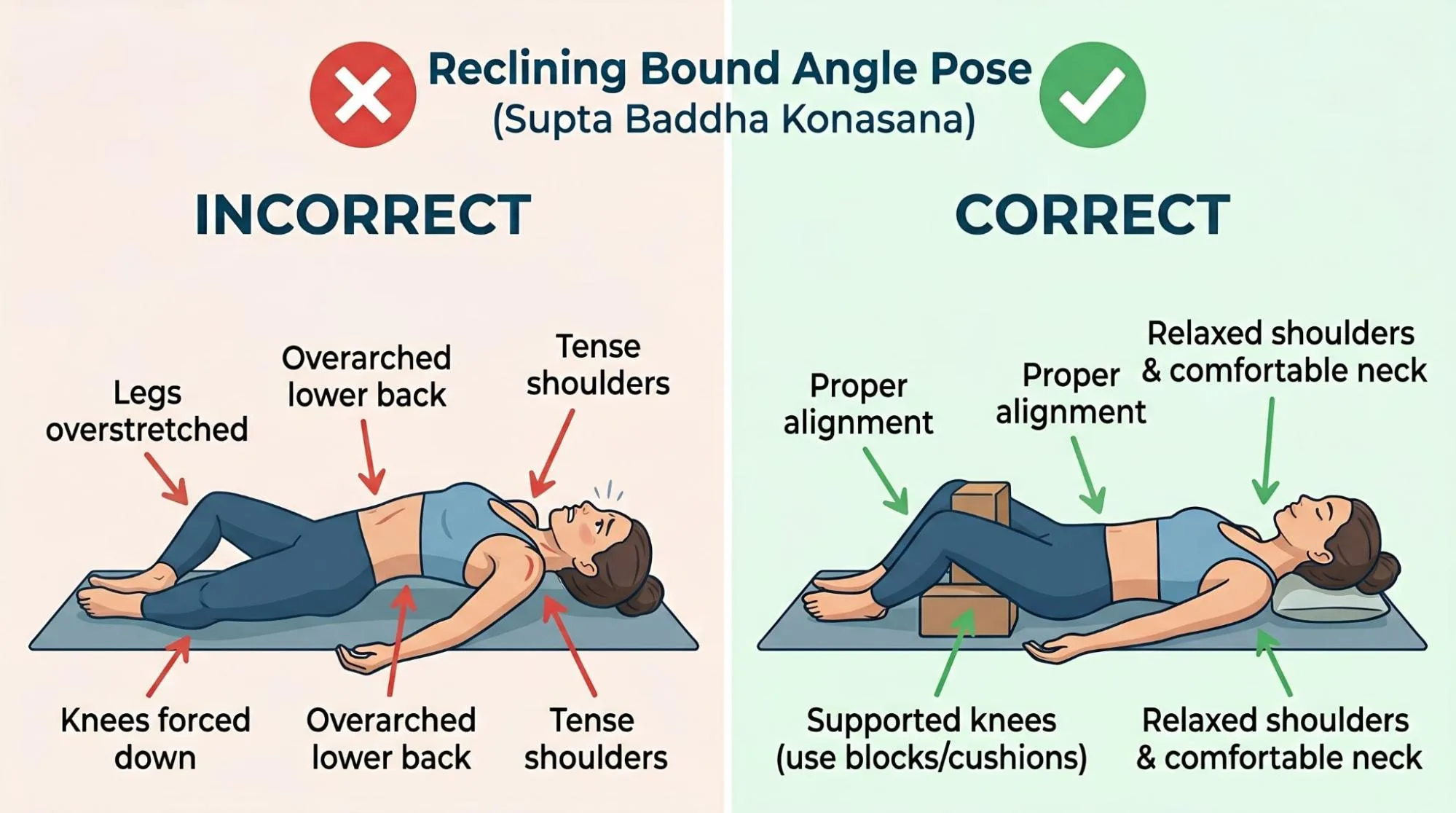
Forcing the Knees Down
Never press your knees toward the floor. That can strain the hips, groins, or knees.
Let gravity do the work. Use support if the legs feel too heavy or stretched.
Overarching the Lower Back
Some people create too much curve in the lower back when lying down.
If this happens, move the feet forward or place support under the thighs. The lower back should feel easy and grounded.
Holding the Pose Through Pain
Mild stretching is fine. Pain is not.
If you feel sharpness in the knees, hips, groins, or lower back, come out of the pose and add support before trying again.
Forgetting to Breathe
Because the pose is quiet, it is easy to hold tension without noticing.
Keep returning to the breath. You do not need fancy breathing. Just steady, relaxed breathing is enough.
Who Should Practice Reclining Bound Angle Pose?
The reclining bound angle pose benefits yoga beginners often appreciate include gentle stretching, stress relief, and a safe way to relax the hips after long sitting hours.
It may be useful for people who want to:
- Open tight hips gently
- Relax after a stressful day
- Stretch the inner thighs and groins
- Support menstrual comfort
- Improve breathing awareness
- Release mild lower back tension
- Add a restorative pose to yoga practice
People with serious knee, hip, pelvic, or lower back conditions should practice with guidance from a qualified yoga teacher or healthcare professional.
Learn More : Body Scan Meditation Benefits: A Simple Guide to Relaxing the Mind and Body
Best Time to Practice Reclining Bound Angle Pose
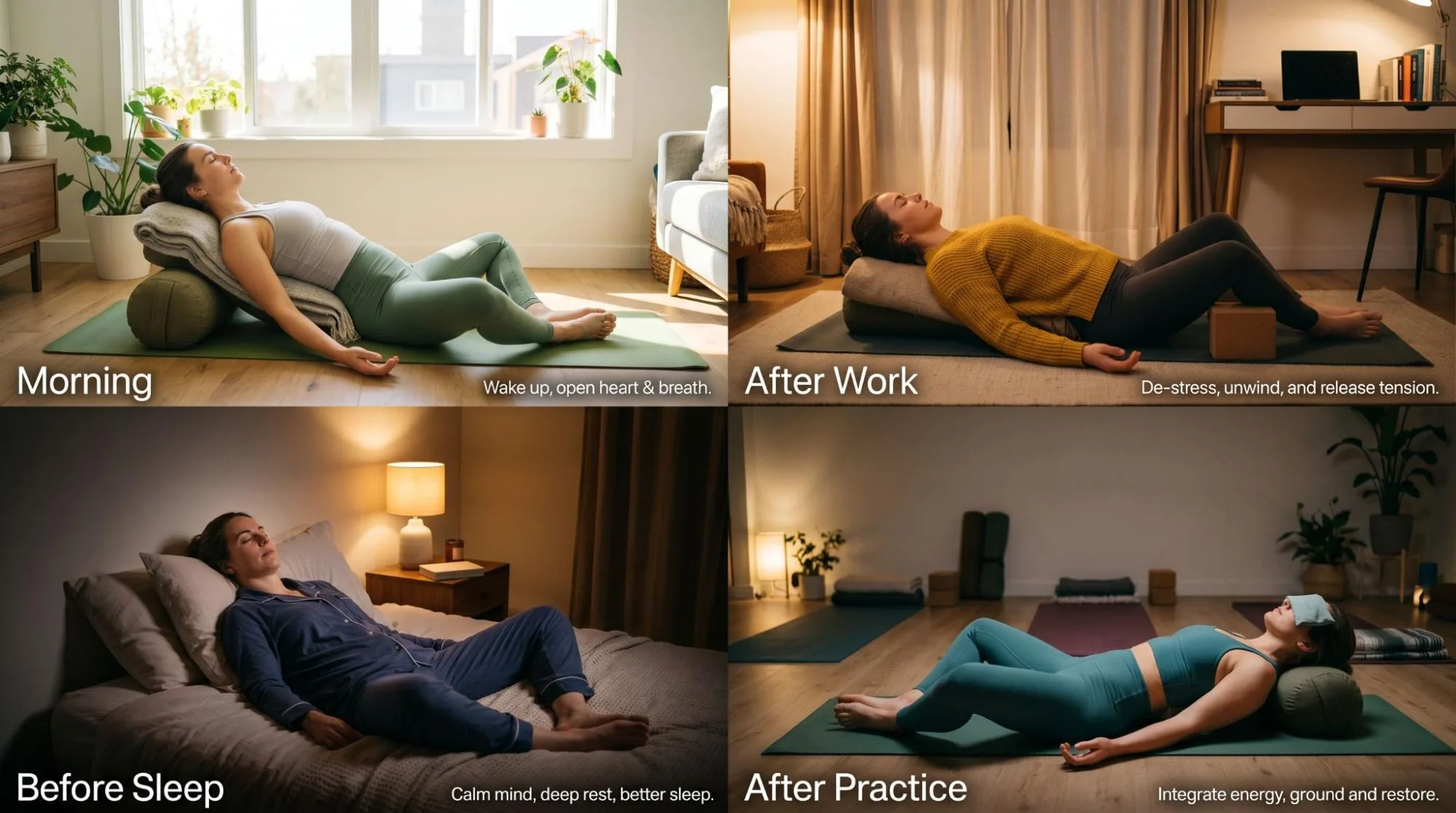
You can practice this pose at different times of the day, depending on your goal.
In the Morning
In the morning, this pose can help you start gently. It opens the hips and chest without demanding too much effort.
Try it for 2 to 3 minutes with slow breathing.
After Work
After work, it can help release tension from sitting, driving, or standing for long hours.
Use props so your body does not feel like it has to “hold” the pose.
Before Sleep
This is one of the best times to practice Reclining Bound Angle Pose.
The quiet shape, open chest, and relaxed belly can help prepare the body for rest. Keep the lights low and breathe slowly.
After Yoga Practice
After a stronger yoga session, this pose helps the body settle. It is a nice bridge between active movement and final relaxation.
Breathing Tips for Deeper Relaxation
Your breath can change the whole experience of this pose. Keep it simple.
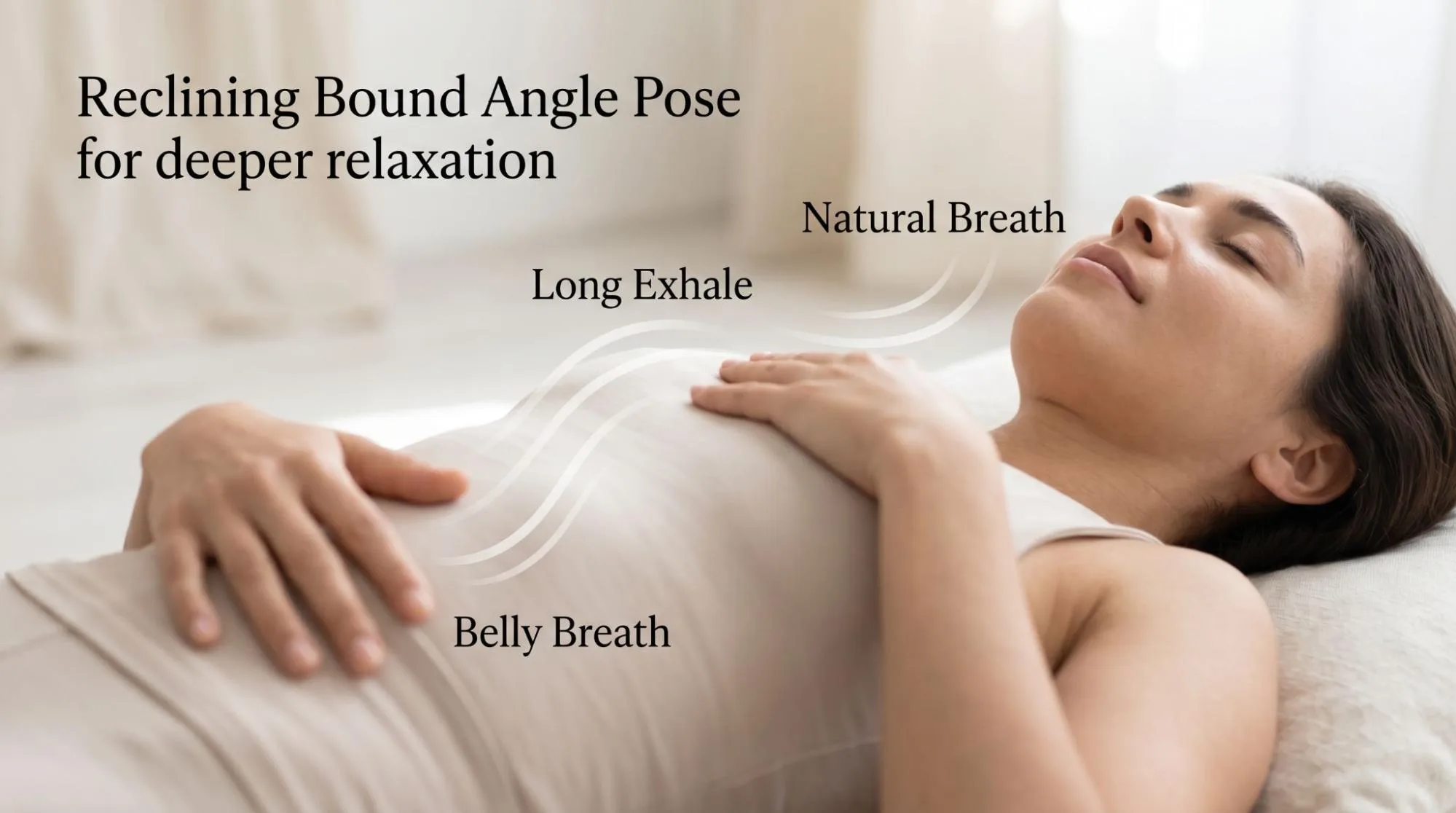
Breathe Into the Belly
Let the belly rise gently as you inhale and soften as you exhale.
This helps relax the abdominal area and encourages the body to feel safe.
Lengthen the Exhale
Try making your exhale slightly longer than your inhale.
For example, inhale for 3 counts and exhale for 4 or 5 counts. This can help calm the nervous system.
Keep the Breath Natural
Do not force deep breathing. If long breaths feel uncomfortable, return to a natural rhythm.
The goal is ease, not performance.
Safety Tips for Reclining Bound Angle Pose
This pose should feel supportive and calm. Use these tips to stay safe.
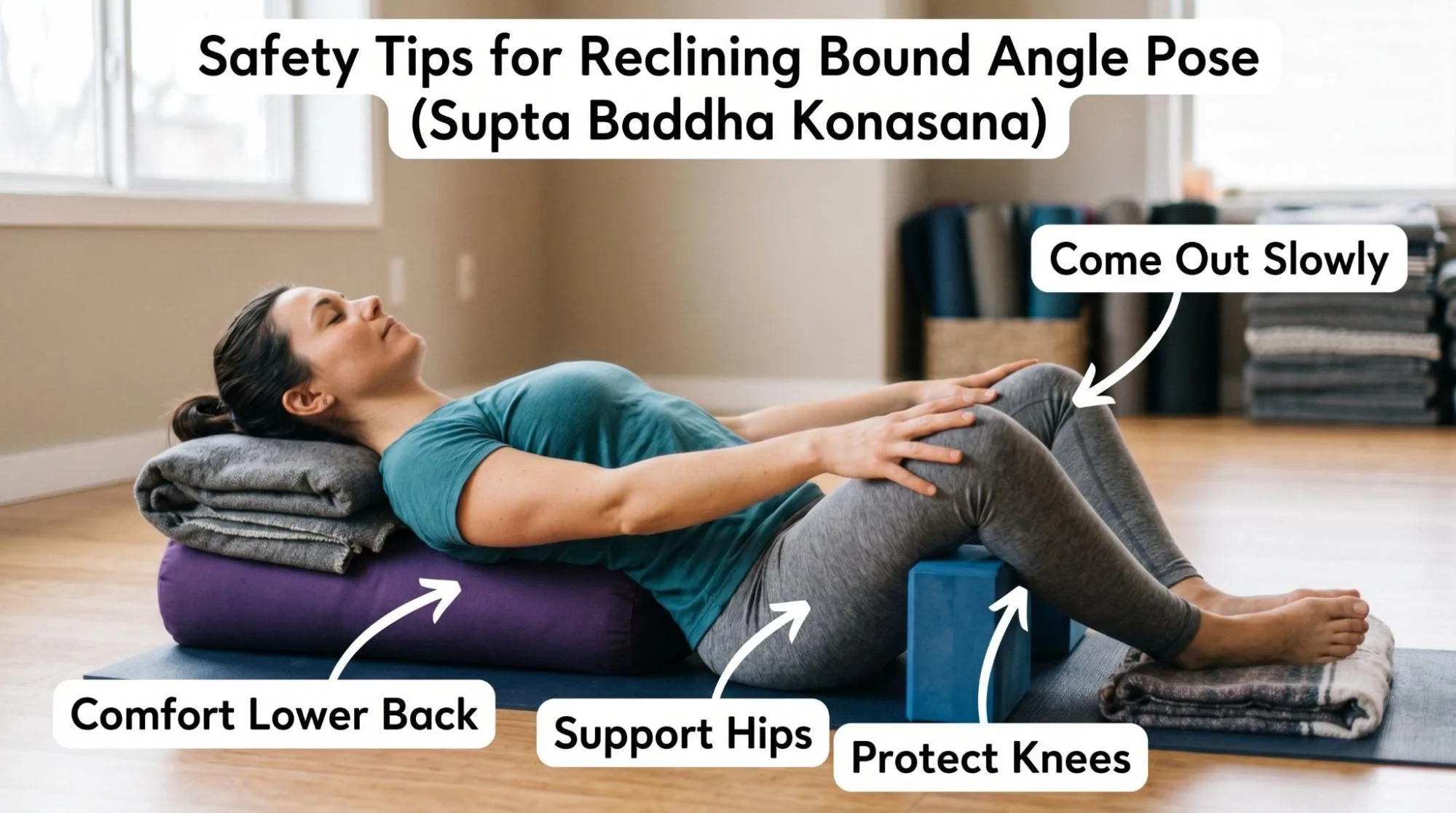
Support Tight Hips
If your hips feel tight, place support under the knees. This prevents overstretching and makes the pose more relaxing.
Protect the Knees
Knee discomfort usually means the legs need more support or the feet need to move farther away.
Never use your hands to push the knees down.
Keep the Lower Back Comfortable
If the lower back feels pinched, adjust the legs or place a small folded blanket under the outer thighs.
You can also practice with the spine flat on the floor instead of using a bolster.
Come Out Slowly
To come out, use your hands to guide the knees together. Roll gently to one side and pause before sitting up.
Coming out too quickly can feel uncomfortable, especially after holding the pose for several minutes.
FAQs About Reclining Bound Angle Pose
What is Reclining Bound Angle Pose good for?
Reclining Bound Angle Pose is good for gentle hip opening, inner thigh stretching, chest opening, relaxation, and stress relief. It may also support pelvic comfort, easier breathing, and lower back release when practiced with proper support.
Is Reclining Bound Angle Pose good for beginners?
Yes, it is beginner-friendly when supported properly. Beginners can use pillows, blankets, or yoga blocks under the knees to reduce strain and make the pose more comfortable.
How long should I hold a Reclining Bound Angle Pose?
Beginners can hold it for 1 to 3 minutes. With more comfort and support, you can stay for 5 to 10 minutes in a restorative practice.
Can Reclining Bound Angle Pose help with stress?
Yes, this pose can help calm the body and mind. The reclined position, open chest, and slow breathing may help relieve the symptoms of stress and mild tension.
Is Supta Baddha Konasana the same as Reclining Bound Angle Pose?
Yes. Supta Baddha Konasana is the Sanskrit name for Reclining Bound Angle Pose.
Why do my knees hurt in Reclining Bound Angle Pose?
Knee pain often happens when the hips are tight or the legs are unsupported. Place blocks, pillows, or folded blankets under the knees and move the feet farther away from the body.
Should my knees touch the floor?
No. Your knees do not need to touch the floor. For many people, forcing the knees down can cause strain. Support them instead.
Can I do Reclining Bound Angle Pose before bed?
Yes, it is a good pose before sleep. It helps the body relax, softens the breath, and may calm the nervous system.
Does Reclining Bound Angle Pose stretch the groin?
Yes, it gently stretches the groins and inner thighs. The stretch should feel mild and comfortable, not sharp or forced.
Who should avoid Reclining Bound Angle Pose?
People with recent hip, knee, groin, pelvic, or lower back injuries should be careful. It is best to use props or ask a qualified teacher for guidance.
What are the main reclining bound angle pose benefits yoga beginners should know?
The main reclining bound angle pose benefits yoga beginners should know are hip opening, inner thigh stretching, chest relaxation, calmer breathing, lower back comfort, and deep relaxation.
Learn More : Lotus Pose Benefits: Padmasana Steps, Safety, and Beginner Tips
Conclusion
Reclining Bound Angle Pose is a quiet but powerful yoga posture. It does not ask you to push, balance, or perform. It simply gives your body space to soften.
When practiced with care, the reclining bound angle pose benefits yoga students experience can include open hips, relaxed inner thighs and groins, a softer belly, easier breathing, and a calmer mind. Use support generously, breathe naturally, and come out slowly. That is where the real benefit begins.