
Quick answer: Reclined pigeon pose is a gentle floor stretch that may target the outer hip and glute area. It can support mobility for some people, but it is not a diagnosis or guaranteed treatment for hip pain.
Important Safety Note
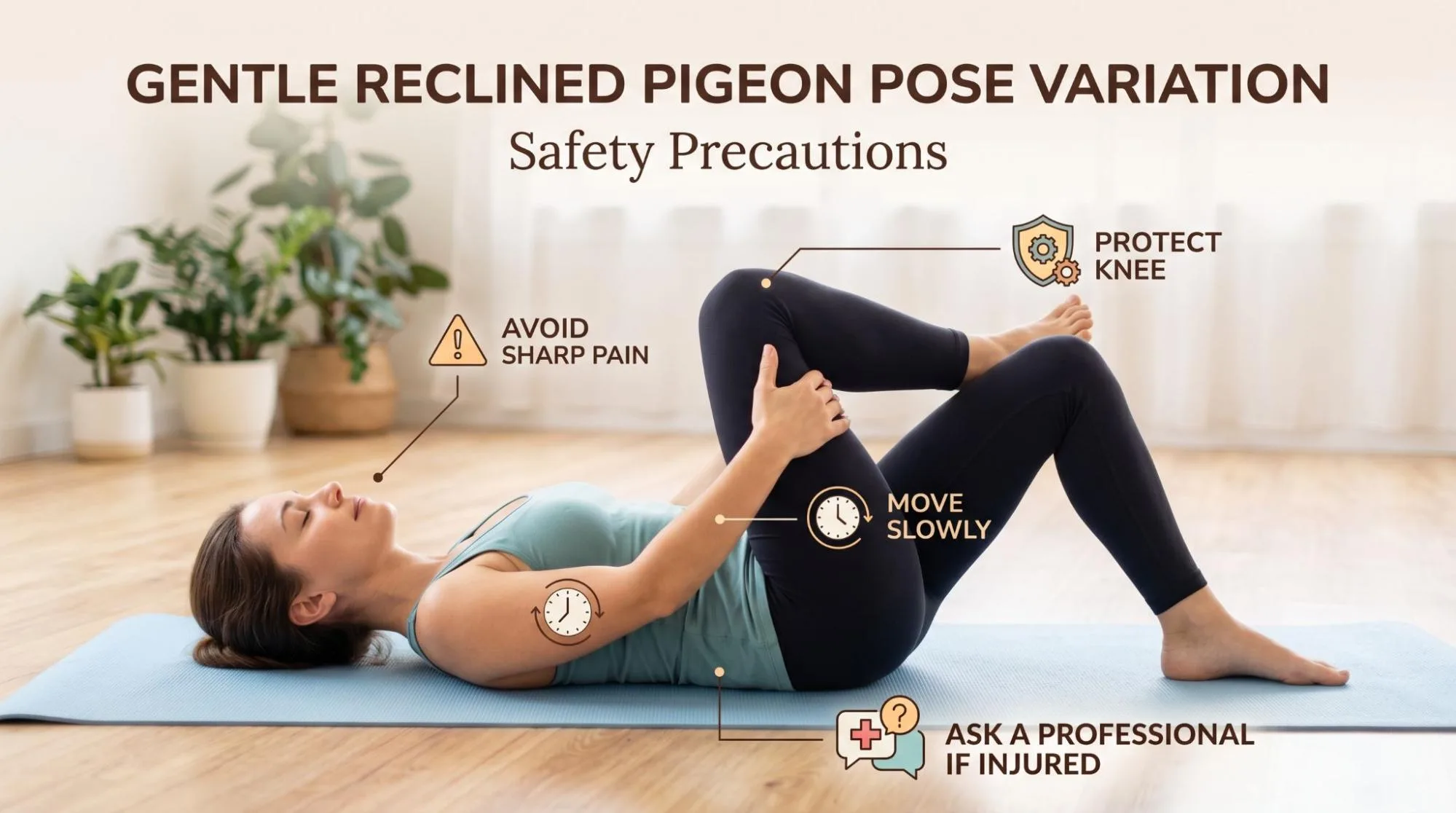
Move slowly and keep the stretch mild. Stop for sharp pain, numbness, tingling, knee discomfort, or symptoms that travel down the leg. People with recent hip or knee injuries, surgery, pregnancy-related concerns, or persistent pain should ask a qualified professional before practicing.
The reclined pigeon pose for hip pain is helpful because it targets the glutes and outer hip without forcing the knee. Hip pain can make everyday movement feel harder than it should. Getting up from a chair, walking after sitting too long, or even lying comfortably at night can become uncomfortable when the hips and glutes are tight. One gentle stretch many people find helpful is the reclined pigeon pose for hip pain.
This pose is also known as the figure-four stretch. It is done while lying on your back, so your spine stays supported and you can control how deep the stretch feels. Compared with a traditional pigeon pose, the reclined version is usually easier on the knees and lower back.
If your hips feel stiff from sitting, exercise, driving, or general lack of mobility, this simple hip opener can be a useful part of your stretching routine. Reclined pigeon pose for hip pain is best when you keep the stretch gentle and controlled.
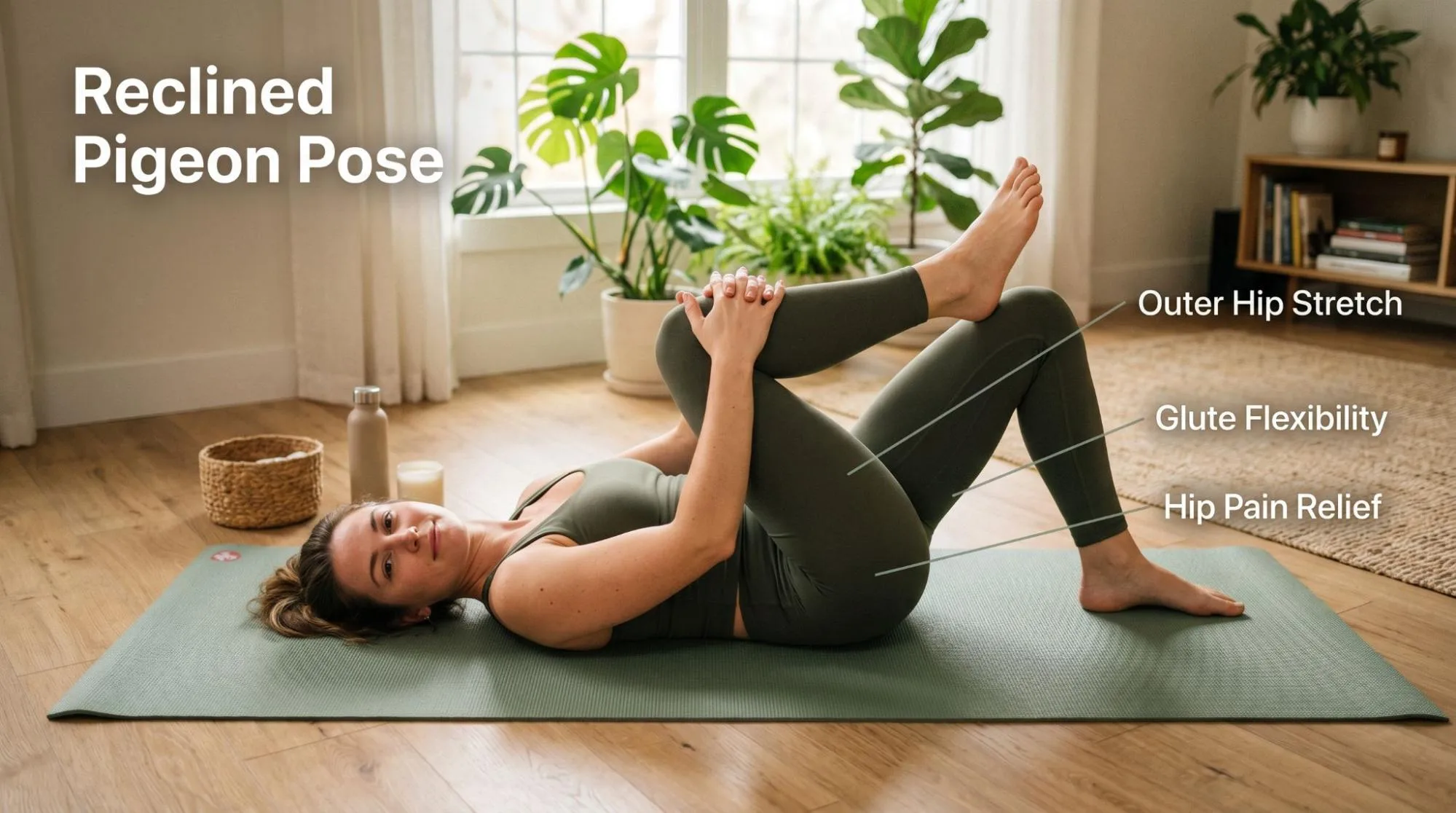 alt=”Reclined pigeon pose with ankle over knee” title=”Reclined pigeon pose with ankle over knee”
What Is a Reclined Pigeon Pose?
Reclined pigeon pose is a gentle hip opening stretch performed on your back. One ankle crosses over the opposite thigh, creating a shape that looks like the number four. That is why many people call it the figure-four stretch.
In a regular pigeon pose, your body weight comes forward over the front leg. That can feel intense, especially if you have tight hips or sensitive knees. reclined hip stretch pose gives you more control. You can decide how much stretch you want by pulling the leg closer or keeping it farther away.
This makes it a good option for beginners, desk workers, older adults, athletes, and anyone who wants to stretch the outer hip without forcing the body.
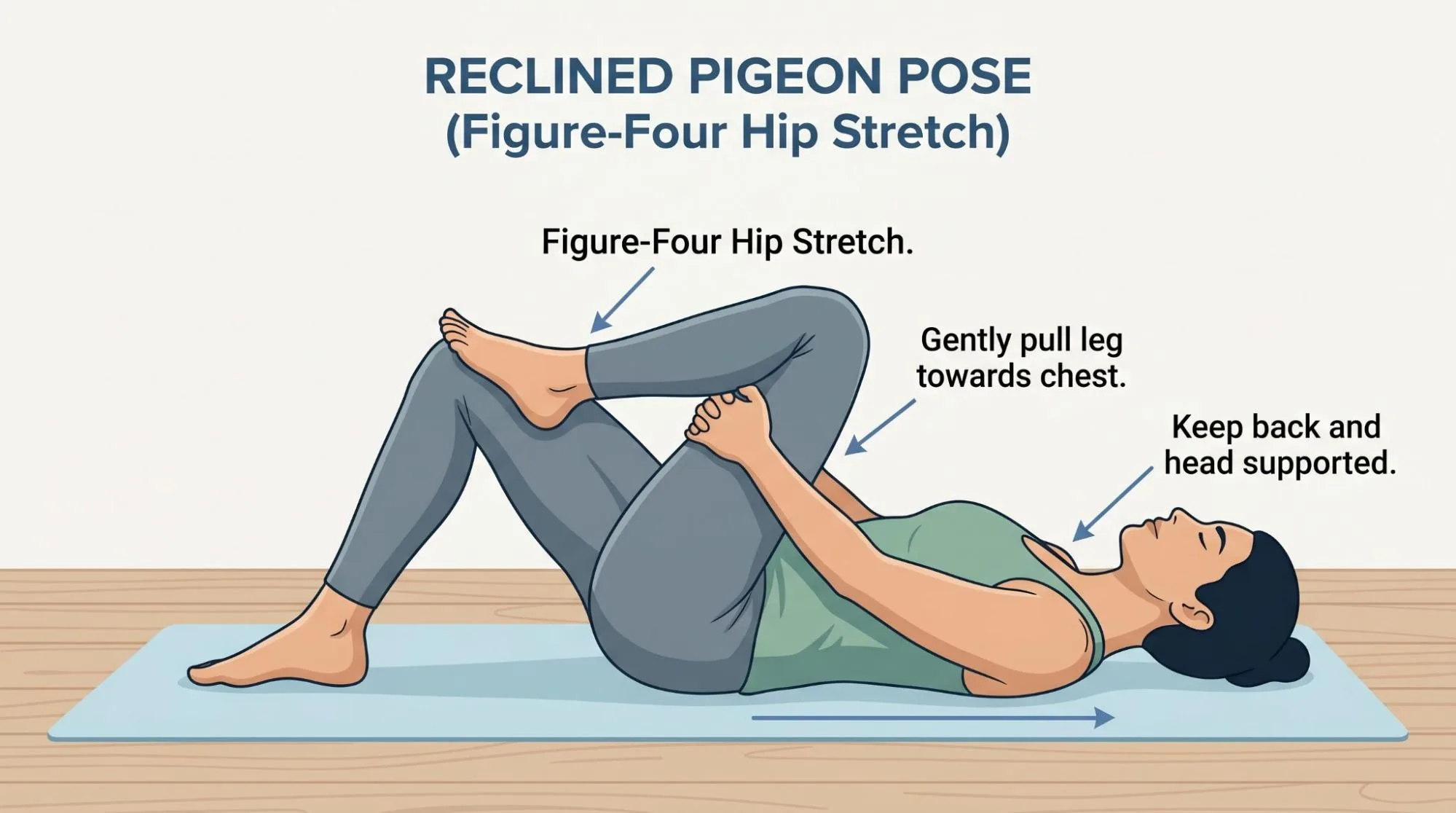 alt=”Figure-four stretch lying on a yoga mat” title=”Figure-four stretch lying on a yoga mat”
reclined hip stretch Pose for Hip Pain: Why It Helps
A tight hip often comes from sitting for long hours, weak glutes, poor posture, or repetitive movement. When the hip muscles become stiff, other areas may start working harder. The lower back, pelvis, and knees can all feel the effect.
reclined hip stretch pose helps because it gently stretches the deep glute area and the muscles around the outside of the hip. These areas often hold tension without people realizing it.
You may feel this stretch most when:
- You sit for many hours each day
- Your hips feel stiff after walking or workouts
- Your glutes feel tight
- Your lower back feels tense
- One side of your hip feels tighter than the other
The best part is that the stretch can be adjusted easily. You do not need to force your leg into a deep position. A mild stretch is enough.
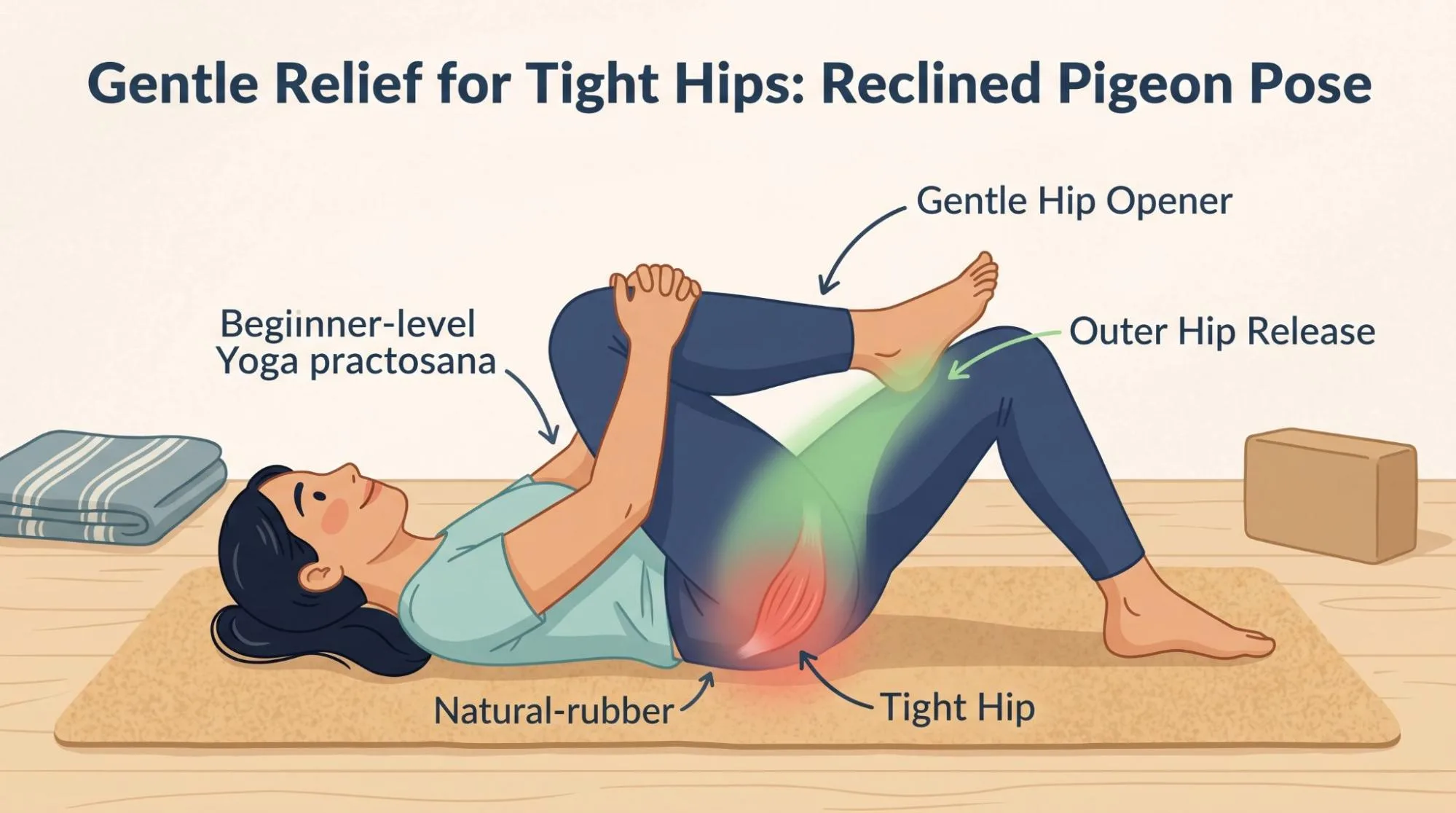 alt=”Reclined pigeon knee position” title=”Reclined pigeon knee position”
Learn More : Lizard Pose: Benefits, Steps, Modifications, and Safety Tips
Muscles Targeted by reclined hip stretch Pose
reclined hip stretch pose mainly targets the glutes, piriformis, and outer hip muscles. It does not directly stretch the hip flexors as much as a lunge stretch would, but it can still support better hip comfort by reducing tension around the back and side of the hip.
Piriformis Muscle
The piriformis is a small muscle deep in the buttock area. It helps rotate the hip and supports movement of the leg. When this muscle becomes tight, it may create discomfort around the buttock, hip, or lower back area.
reclined hip stretch pose gently lengthens this muscle without placing heavy pressure on the knee.
Glute Muscles
The glutes are large muscles that help with standing, walking, climbing stairs, and stabilizing the pelvis. If the glutes are tight or overworked, the hips can feel restricted.
This stretch helps release the glute area, especially around the side and back of the hip.
Outer Hip Muscles
The outer hip includes muscles that help control leg movement and hip stability. These muscles can become tight from sitting, running, strength training, or poor movement habits.
reclined hip stretch pose gives these muscles a steady, controlled stretch.
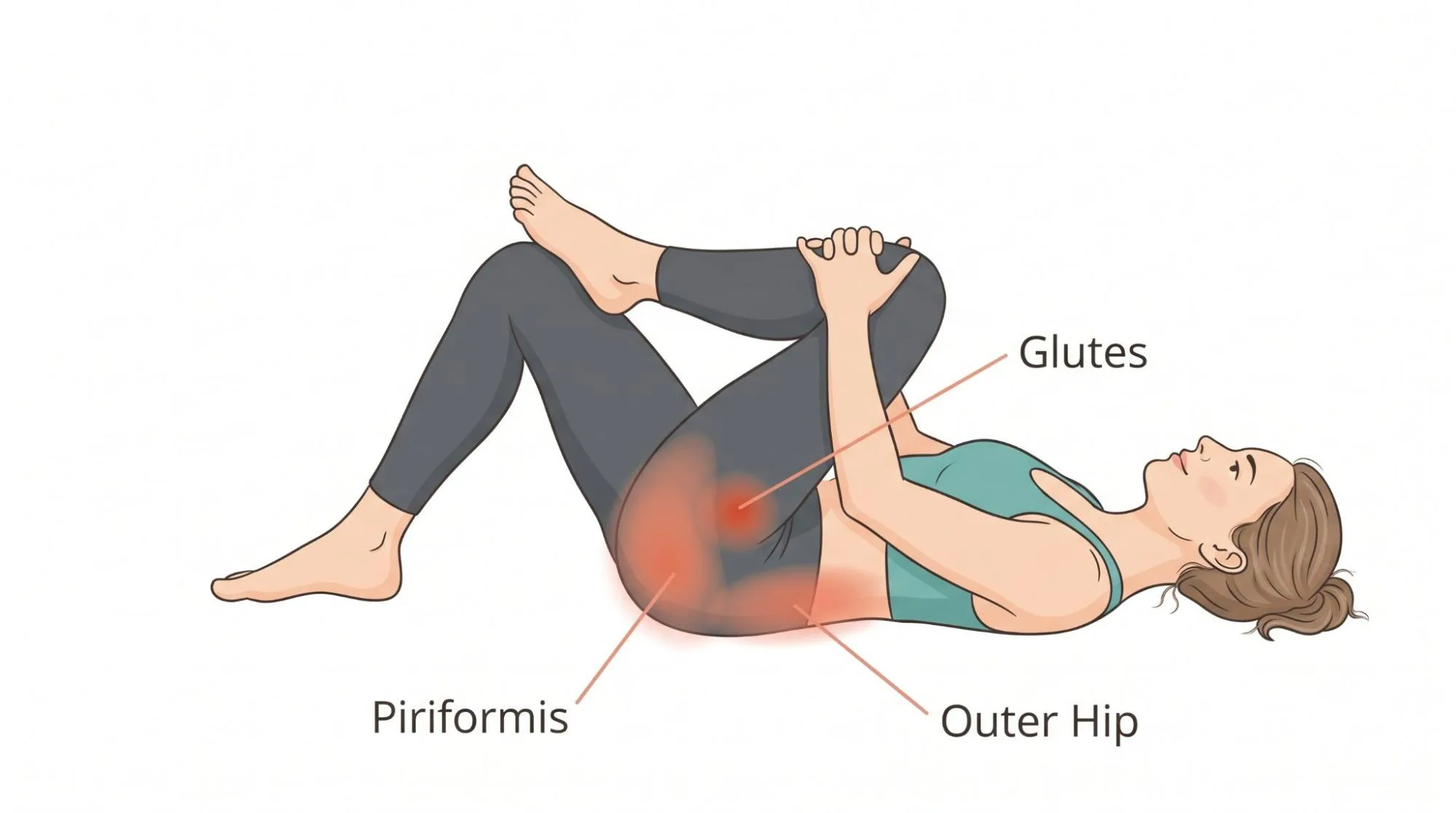 alt=”Gentle outer-hip stretch with back supported” title=”Gentle outer-hip stretch with back supported”
Benefits of reclined hip stretch Pose for Hip Pain
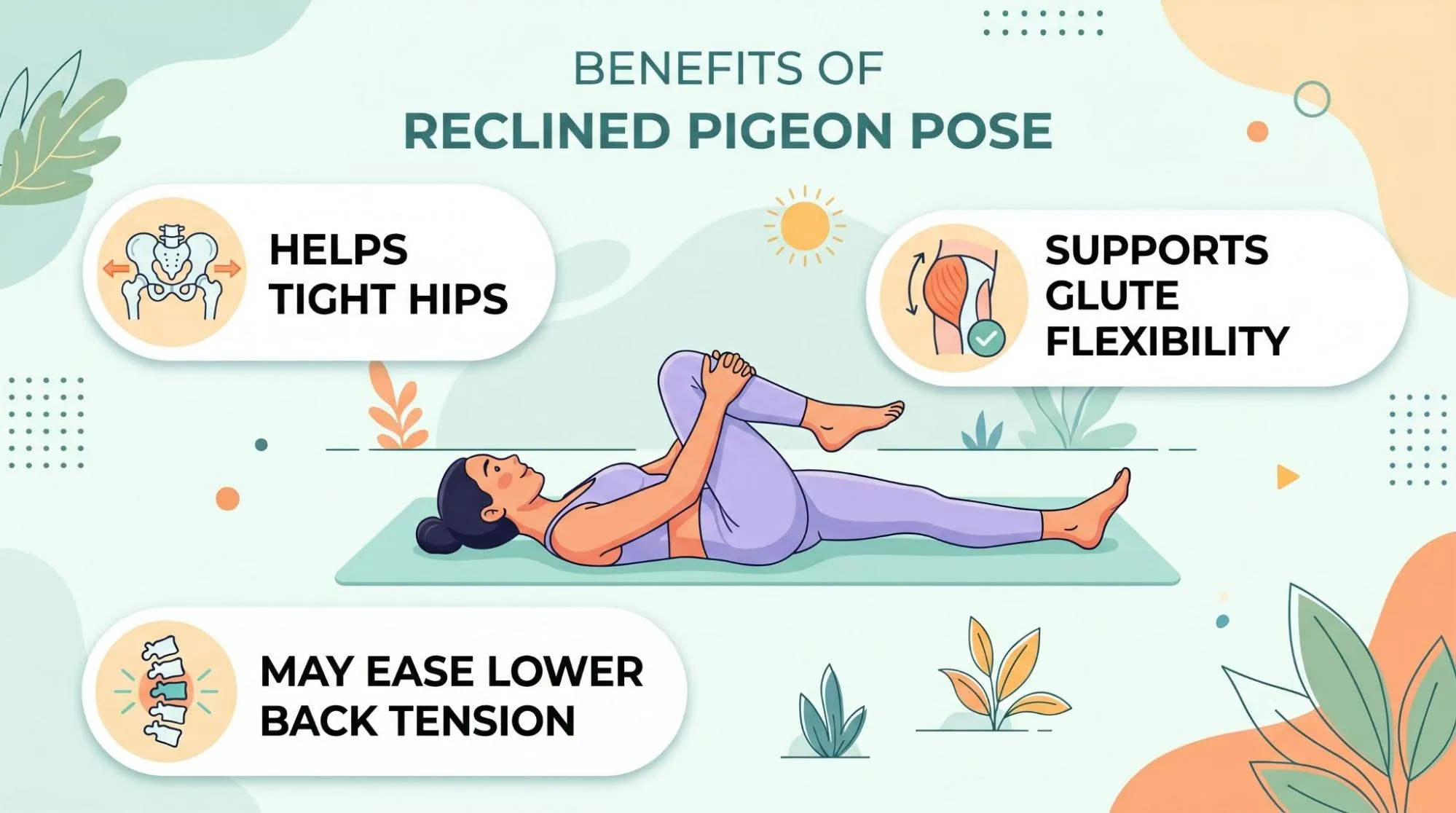
Helps Relieve Tight Hips
One of the main reasons people practice reclined hip stretch pose is to ease tight hips. The stretch opens the hip area gently and helps reduce the feeling of stiffness.
If you sit at a desk, drive often, or spend long hours with your hips bent, this stretch may feel especially useful.
Supports Glute Flexibility
Tight glutes can limit hip movement and make the lower body feel heavy or stiff. reclined hip stretch pose helps improve glute flexibility over time.
Better glute flexibility may also make simple movements feel easier, such as bending, squatting, walking, and getting up from the floor.
May Reduce Lower Back Discomfort
Sometimes lower back discomfort is connected to tight hips and glutes. When the muscles around the pelvis are restricted, the lower back may take extra stress.
reclined hip stretch pose may help reduce mild lower back tension by relaxing the muscles that attach around the pelvis and hip. It should feel comfortable, not painful.
Easier Than Traditional Pigeon Pose
Traditional pigeon pose can be difficult for people with tight hips. It may also place pressure on the front knee if the hip is not ready for that position.
The reclined version is safer for many people because the floor supports the back and the stretch can be controlled with the hands.
Good for Beginners
You do not need advanced flexibility to do this pose. You can keep the stretch light and slowly increase it as your hips become more comfortable.
 alt=”Reclined pigeon using hands behind thigh” title=”Reclined pigeon using hands behind thigh”
How to Perform reclined hip stretch Pose for Hip Pain
Move slowly through each step. The goal is not to force your body into a perfect shape. The goal is to feel a safe, steady stretch in the hip and glute area.
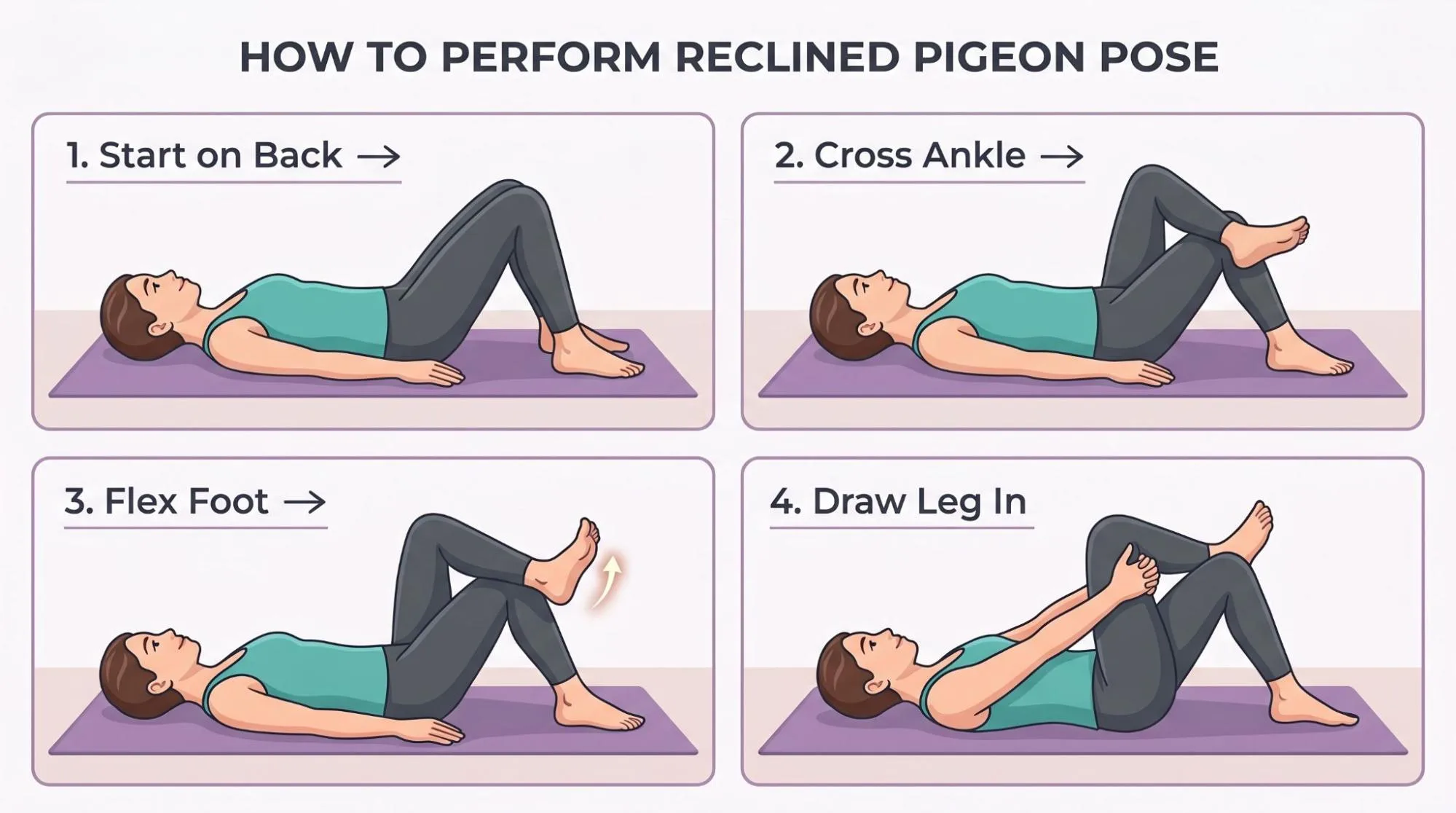
Start on Your Back
Lie on your back on a yoga mat, carpet, or firm surface. Bend both knees and place your feet flat on the floor.
Keep your head relaxed. Your shoulders should rest comfortably on the ground.
Cross Your Ankle
Lift your right foot and place your right ankle across your left thigh, just above the knee. Your legs should now look like a figure-four shape.
Try to keep your right knee moving slightly away from your body, but do not push it forcefully.
Flex Your Foot
Flex your right foot by pulling your toes gently back toward your shin. This helps protect the knee and keeps the stretch focused on the hip.
This step matters. If the foot is loose, the knee may take more pressure.
Draw the Leg Toward Your Chest
Lift your left foot off the floor and bring your left thigh toward your chest. Place your hands behind the left thigh or around the left shin.
Pull gently until you feel a stretch in the right glute or outer hip.
Hold the stretch for 30 seconds to 1 minute. Breathe slowly. Then lower the legs and repeat on the other side.
 alt=”Modified figure-four stretch for beginners” title=”Modified figure-four stretch for beginners”
Learn More : Supine Spinal Twist Benefits Explained
Tips for reclined hip stretch Pose for Hip Pain
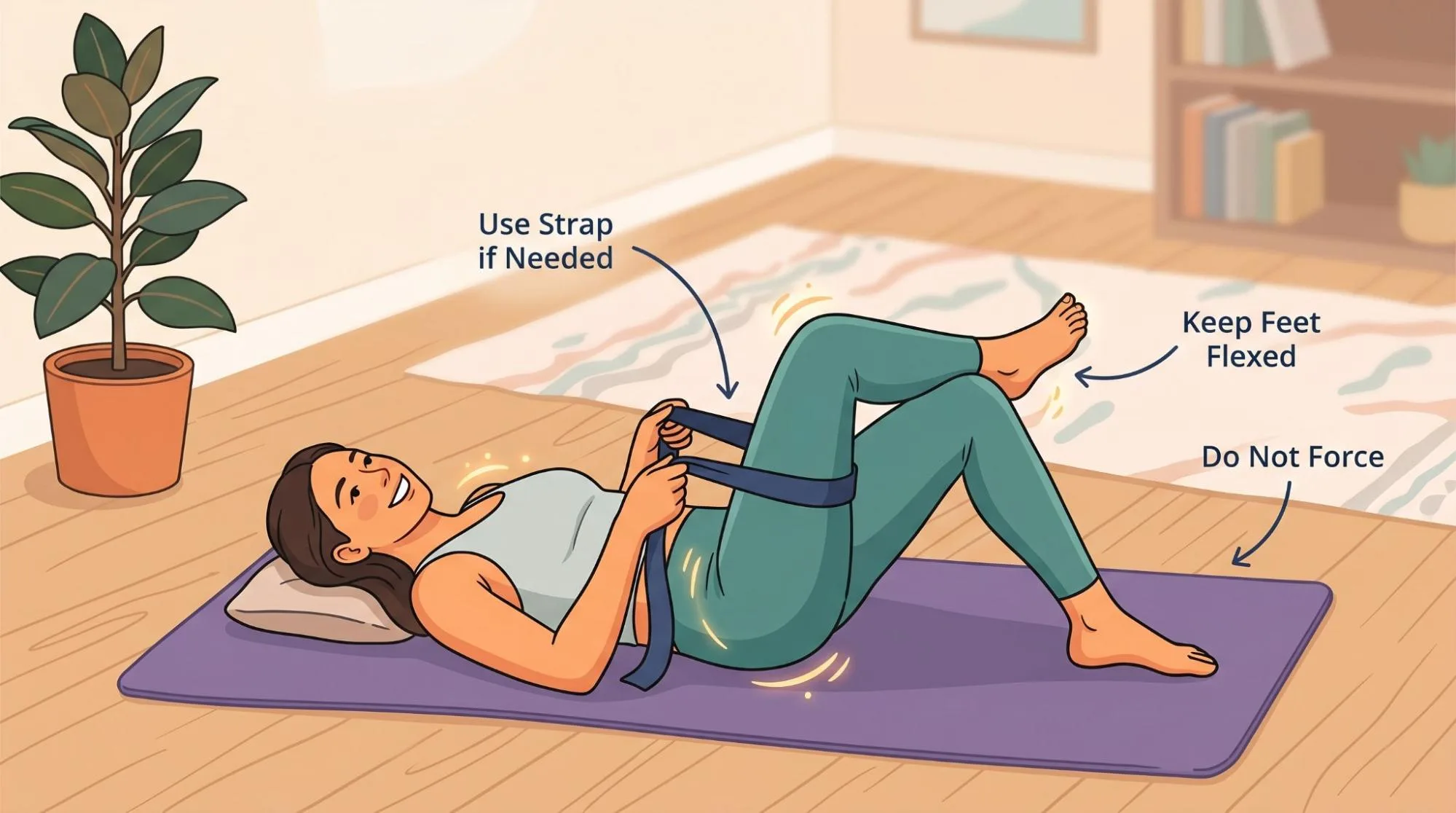
Do Not Force the Stretch
A strong stretch is not always a better stretch. If you pull too hard, the body may tighten instead of relax.
You should feel a gentle to moderate stretch. Sharp pain, pinching, burning, or knee discomfort is a sign to stop.
Use a Towel or Yoga Strap
If you cannot comfortably reach your thigh, use a towel or yoga strap behind the leg. This helps you keep your neck and shoulders relaxed.
A strap is also helpful if you are new to stretching or have limited mobility.
Keep Both Feet Flexed
Keeping both feet flexed helps protect the knees and keeps the legs active. This small detail makes the stretch safer and more controlled.
Keep the Lower Back Relaxed
Your lower back should not arch strongly off the floor. If it does, ease the stretch slightly. The pose should feel supported.
Try a Gentler Version
If the full stretch feels too strong, keep the bottom foot on the floor instead of pulling the leg toward your chest. You can also keep the lower leg straight on the floor for a lighter variation.
 alt=”Breathing during a reclined hip stretch” title=”Breathing during a reclined hip stretch”
Common Mistakes to Avoid
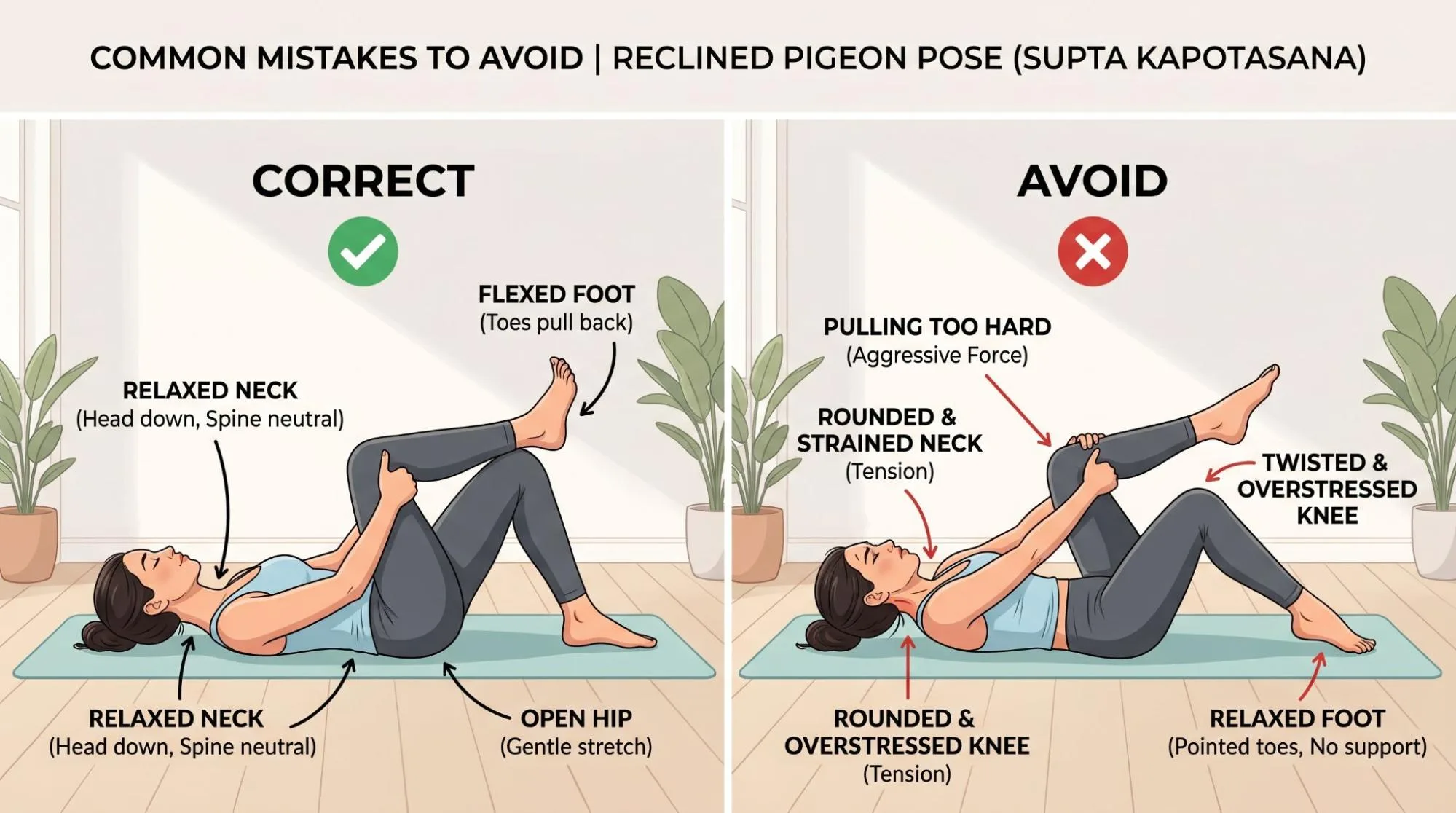
Pulling Too Hard
Many people think they need to pull the leg as close as possible. That is not necessary. Pull only until you feel a comfortable stretch.
Forcing the stretch can irritate the hip, knee, or lower back.
Letting the Knee Twist
The crossed knee should not feel strained. The movement should come from the hip, not from twisting the knee.
If your knee feels uncomfortable, reduce the stretch or adjust your foot position.
Lifting the Neck and Shoulders
Try not to curl your head and shoulders off the floor. This creates tension in the neck and upper back.
If you are lifting your shoulders to reach the leg, use a strap or towel.
Holding Your Breath
Breathing helps the muscles relax. Take slow, steady breaths while holding the pose. If you cannot breathe comfortably, the stretch may be too intense.
 alt=”Reclined pigeon with strap support” title=”Reclined pigeon with strap support”
Precautions Before Doing reclined hip stretch Pose
reclined hip stretch pose is gentle for many people, but it is not right for everyone. Be careful if you have a recent hip, knee, or lower back injury.
Avoid the pose or ask a qualified healthcare professional first if you have:
- Sharp hip pain
- Recent knee injury
- Severe lower back pain
- Hip replacement history
- Strong sciatic symptoms
- Pain that travels down the leg
- Numbness or tingling
This stretch should feel like a release, not a warning sign. If pain increases, stop.
 alt=”Safe knee alignment in figure-four pose” title=”Safe knee alignment in figure-four pose”
How Often Should You Do reclined hip stretch Pose?
For general tightness, you can practice this stretch most days. Start with 30 seconds on each side. If your body responds well, increase to 1 or 2 minutes.
A simple routine could look like this:
- 30 to 60 seconds on the right side
- 30 to 60 seconds on the left side
- Repeat once if needed
You may find it helpful after sitting for a long time, after walking, after a workout, or before bed.
reclined hip stretch Pose vs Regular Pigeon Pose
Both stretches can work as a hip opener, but they feel very different.
Regular pigeon pose is deeper and more intense. It requires more hip mobility and can place pressure on the front knee if done incorrectly.
reclined hip stretch pose is usually better if you want a safer, more controlled stretch. It is especially useful for beginners or people who feel discomfort in traditional pigeon pose.
FAQs
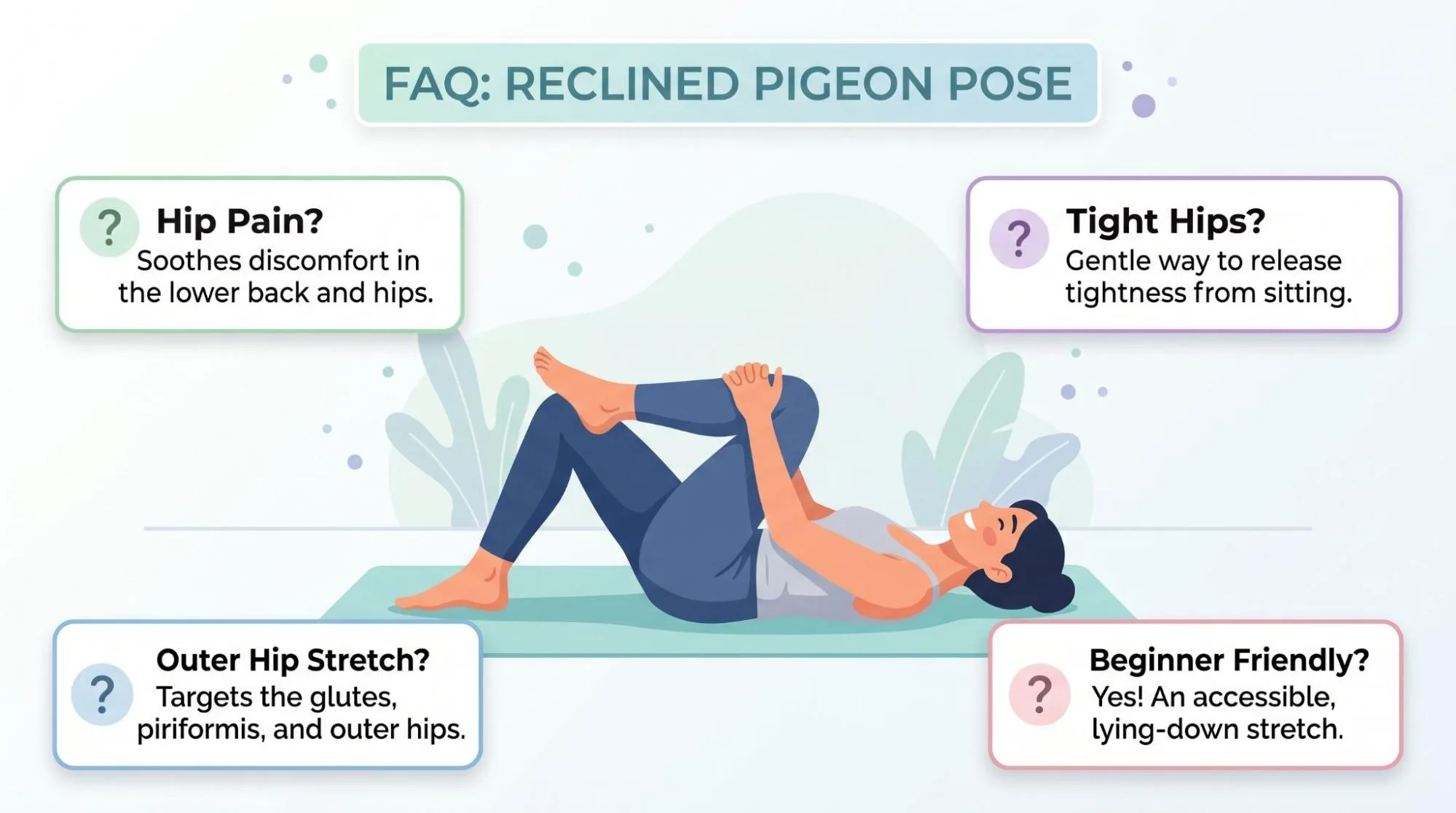
Is reclined hip stretch pose good for hip pain?
reclined hip stretch pose may help with mild hip pain related to tight glutes, piriformis tension, or outer hip stiffness. It should not be used to push through sharp or unexplained pain.
Where should I feel the reclined hip stretch pose?
You should mostly feel it in the glute area, outer hip, or deep buttock area of the crossed leg. You should not feel sharp pain in the knee.
Is reclined hip stretch pose the same as figure-four stretch?
Yes, reclined hip stretch pose is often called the figure-four stretch because of the shape the legs make during the pose.
Does reclined hip stretch pose stretch the hip flexors?
Not directly. It mainly stretches the glutes, piriformis, and outer hip. If you want to stretch the hip flexors, a low lunge or couch stretch may be better.
Can beginners do reclined hip stretch pose for hip pain?
Yes. It is one of the more beginner-friendly hip stretches because your back stays supported on the floor.
How long should I hold the stretch?
Start with 30 seconds per side. If it feels good, hold for 1 to 2 minutes while breathing slowly.
What if I cannot pull my leg toward my chest?
Use a towel or yoga strap behind your thigh. You can also keep the bottom foot on the floor and stay with a lighter stretch.
Can I do a reclined hip stretch pose every day?
Yes, if it feels comfortable. Keep the stretch gentle and avoid forcing your body into the position.
 alt=”Relaxed reclined pigeon setup” title=”Relaxed reclined pigeon setup”
Learn More: Yoga Pigeon Pose: Benefits, Steps, Mistakes, and Safe Modifications
Final Thoughts
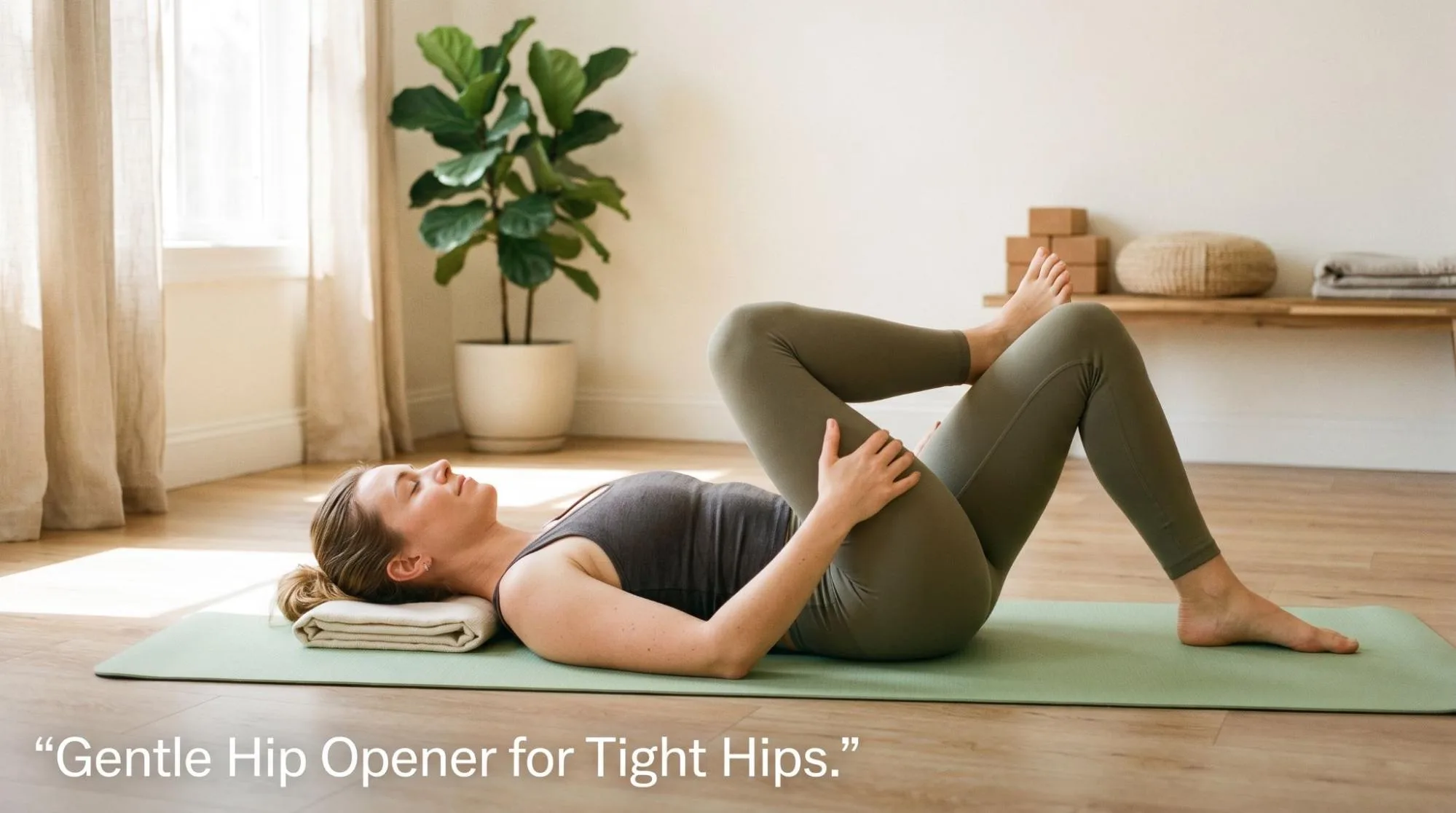
reclined hip stretch pose is a simple and practical stretch for tight hips, glutes, and the outer hip area. It is less intense than traditional pigeon pose, which makes it a safer choice for many beginners. For beginners, reclined hip stretch pose for hip pain is a gentle way to improve hip comfort and reduce tightness over time.
The key is to move slowly. Keep the foot flexed, protect the knee, and stop if anything feels sharp or uncomfortable. With regular practice, this gentle hip opening stretch can help your hips feel looser, your glutes feel more relaxed, and your lower body move with less stiffness. You can practice reclined hip stretch pose for hip pain regularly as long as it feels comfortable and pain-free.
 alt=”Beginner hip stretch with legs supported” title=”Beginner hip stretch with legs supported”
Frequently Asked Questions
Is reclined hip stretch pose suitable for beginners?
Many beginners can try a supported version with a small range of motion, but flexibility varies. Use a cushion or strap and never force the knee.
Where should I feel this stretch?
You may feel a mild stretch in the outer hip or glute area. Sharp pain or symptoms down the leg are signs to stop.
Can it replace treatment for hip pain?
No. It may be part of a gentle mobility routine, but ongoing, severe, or worsening pain should be assessed by a qualified professional.
Further reading: For general yoga safety information, see NCCIH: Yoga—What You Need To Know.
