
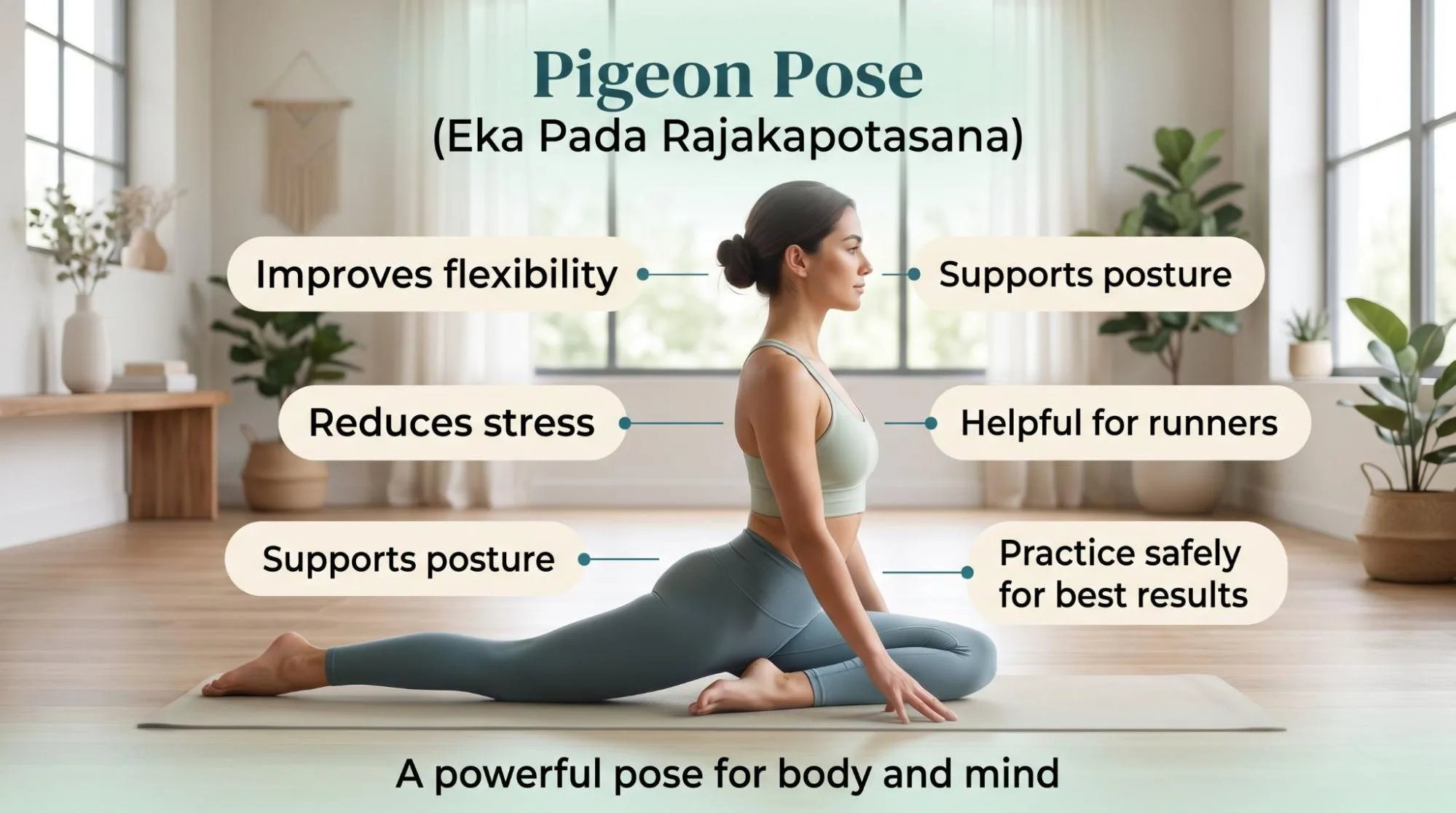
The yoga pigeon pose is one of those stretches that can feel intense at first, especially if your hips are tight from sitting, running, or long hours at a desk. Yet once your body starts to relax into it, the pose may feel relieving for some people. Many people notice less stiffness in the hips, lower back, and legs after practicing it regularly.
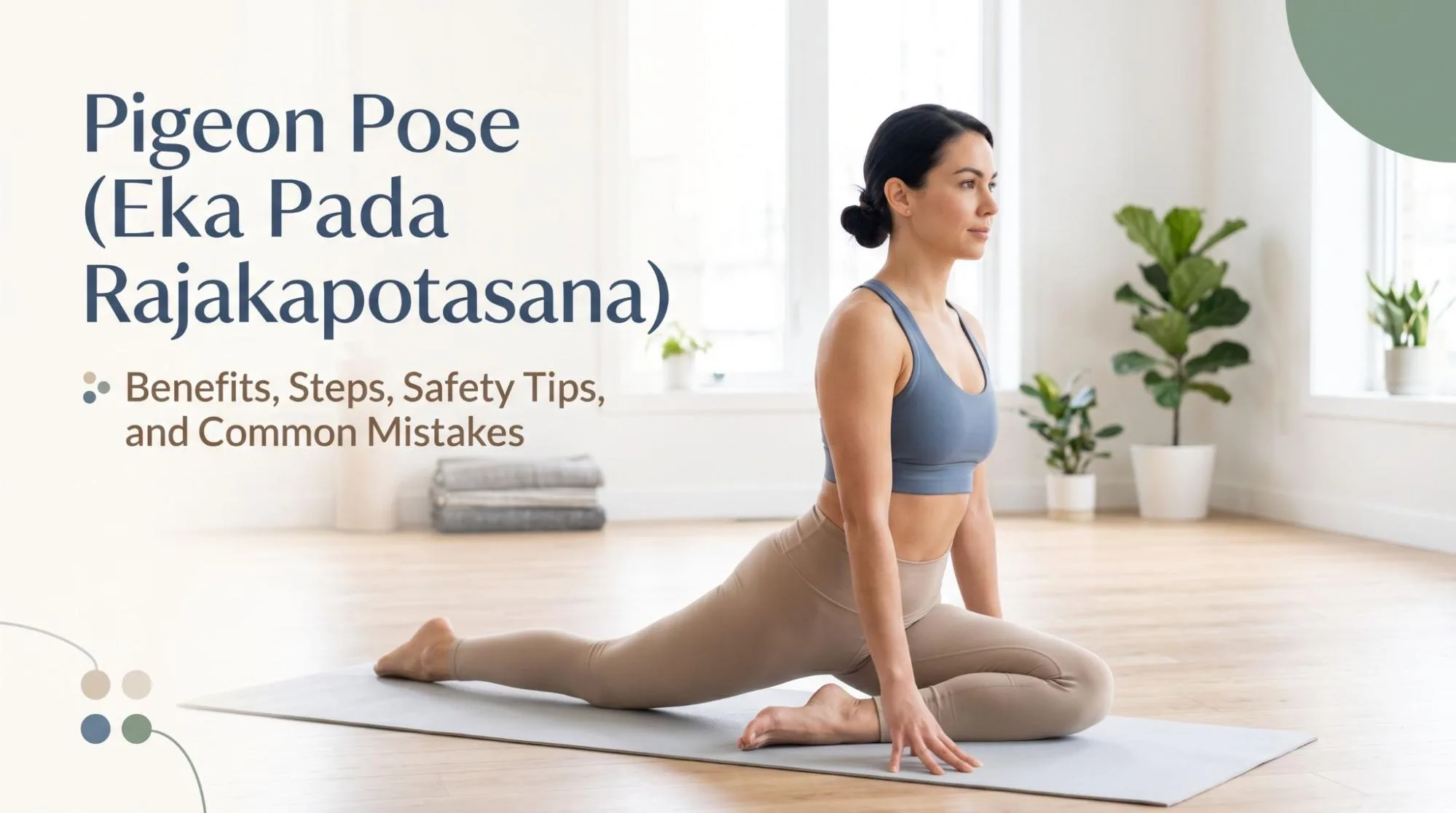
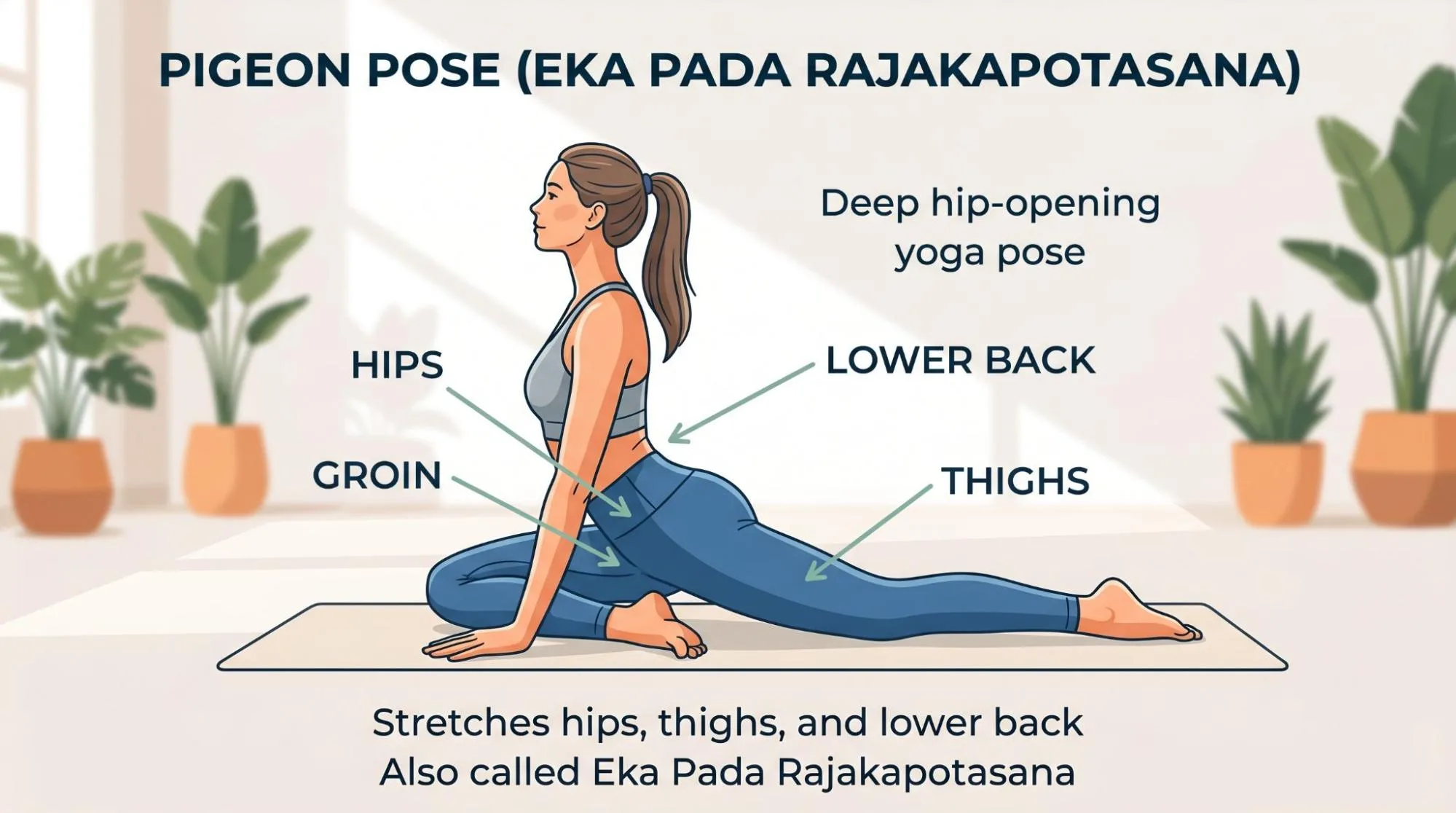
The yoga pigeon pose is especially helpful when your hips feel stiff after sitting, walking, or exercise. Known traditionally as Eka Pada Rajakapotasana, pigeon pose is a deep hip-opening posture commonly practiced in yoga classes of all levels. It targets the outer hips, glutes, hip flexors, and lower body while encouraging slower breathing and mental calmness. Whether you are new to yoga or already comfortable with hip-opening postures, learning proper alignment makes a huge difference in how the pose feels.
 alt=”Pigeon Pose with front hip supported by a blanket” title=”Pigeon Pose with front hip supported by a blanket”
Quick answer: Pigeon Pose is a deep hip-focused stretch that can be intense. Use a folded blanket, keep the front foot closer to the pelvis, or choose a reclined figure-four variation instead of forcing the front shin parallel to the mat.
Practical note: The front knee should feel supported, not twisted. If the sensation is sharp or concentrated in the knee, come out and choose a smaller range; a gentler variation is still useful practice.
What is Pigeon Pose (Eka Pada Rajakapotasana)?
Pigeon pose is a seated forward-bending yoga posture designed to open the hips and stretch the lower body. In the traditional version, one leg folds in front of the body while the other leg extends straight behind you. The front shin usually rests at an angle that feels comfortable for your flexibility level.
The pose may look simple, but it works deeply into muscles that often hold tension. Tight hips can develop from inactivity, repetitive movement, or intense exercise. This is one reason pigeon pose appears so often in yoga routines focused on mobility and recovery.
In Sanskrit, Eka Pada Rajakapotasana translates to “One-Legged King Pigeon Pose.” Advanced versions include deeper backbends and chest opening, while beginner-friendly variations keep the body supported and relaxed.
 alt=”Eka Pada Rajakapotasana beginner setup” title=”Eka Pada Rajakapotasana beginner setup”
Learn More : Reclining Bound Angle Pose Benefits
Benefits of Pigeon Pose
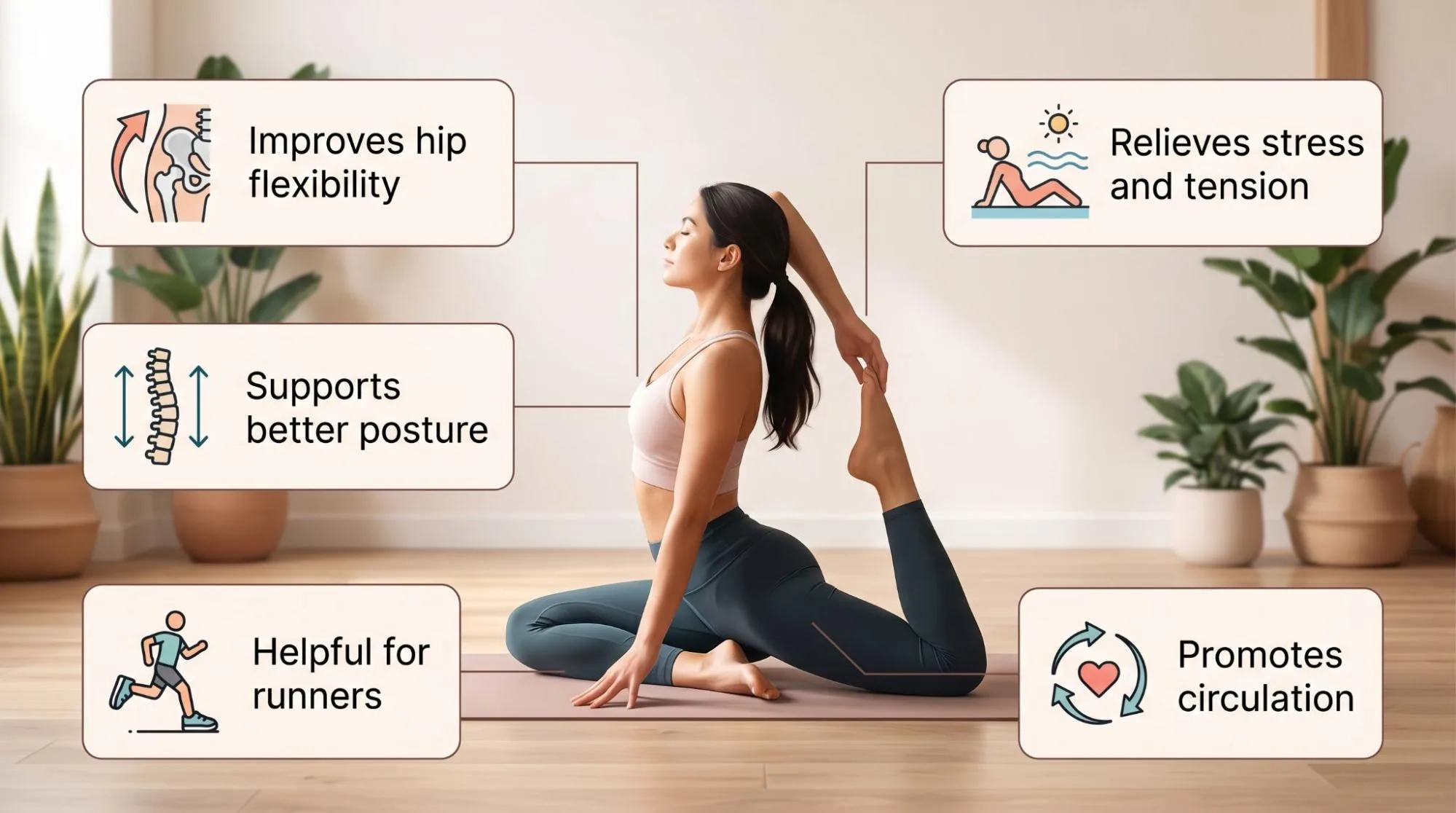
Regularly practicing pigeon pose can support flexibility, posture, recovery, and relaxation. The benefits tend to build gradually over time rather than instantly. With regular practice, the pigeon variation can support better hip mobility and lower-body comfort.
 alt=”Pigeon variation with front foot closer to pelvis” title=”Pigeon variation with front foot closer to pelvis”
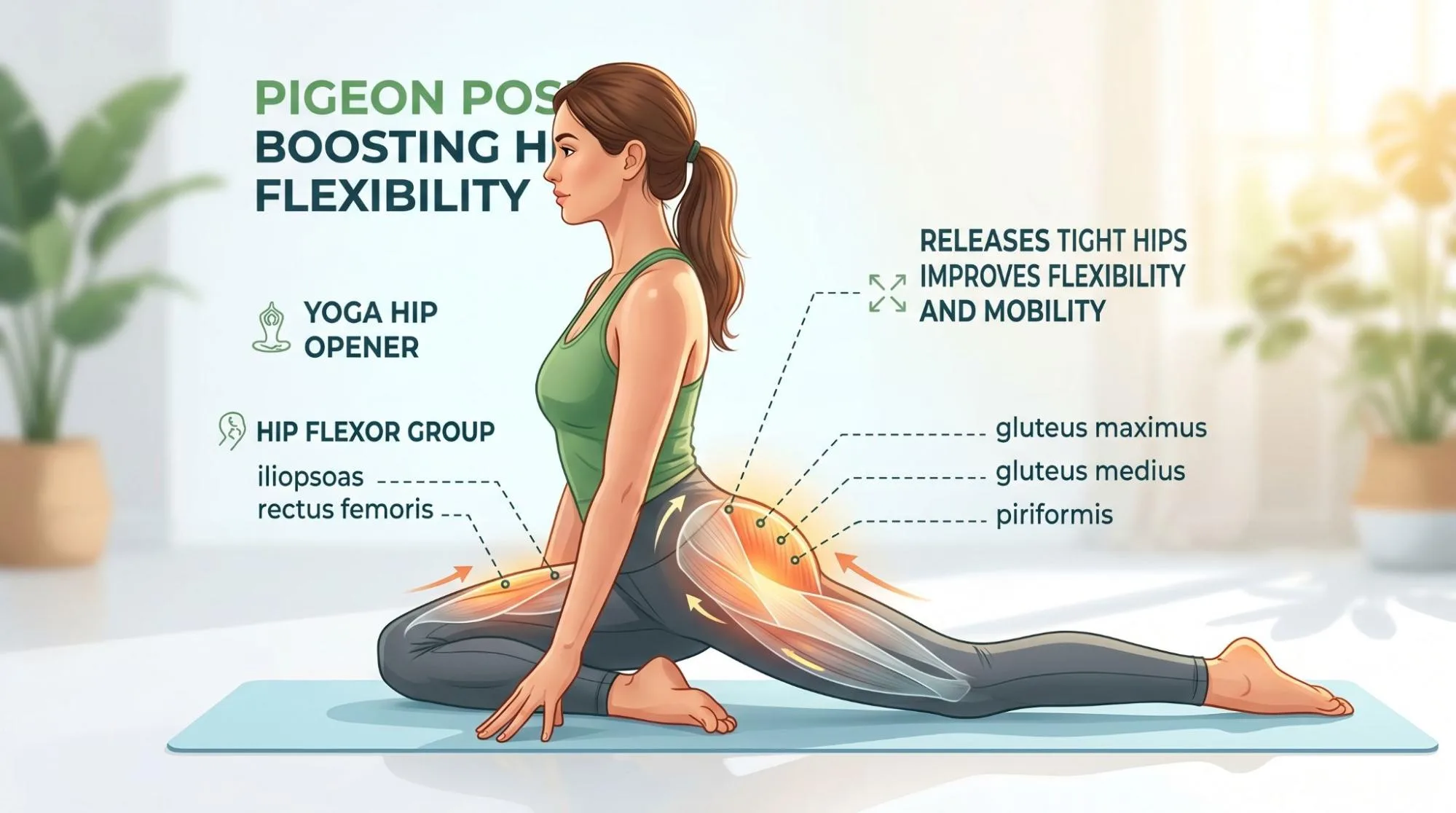
Improving Hip Flexibility with Pigeon Pose
The biggest reason many people practice the pigeon variation is to improve hip mobility. The posture stretches the outer hip, glutes, and hip flexors, areas that commonly become tight from sitting or exercise.
For some people, even a gentle version creates a noticeable stretch around the hips and thighs. Over time, the body may feel less restricted during walking, squatting, or other yoga poses.
 alt=”Reclined figure-four alternative to Pigeon Pose” title=”Reclined figure-four alternative to Pigeon Pose”
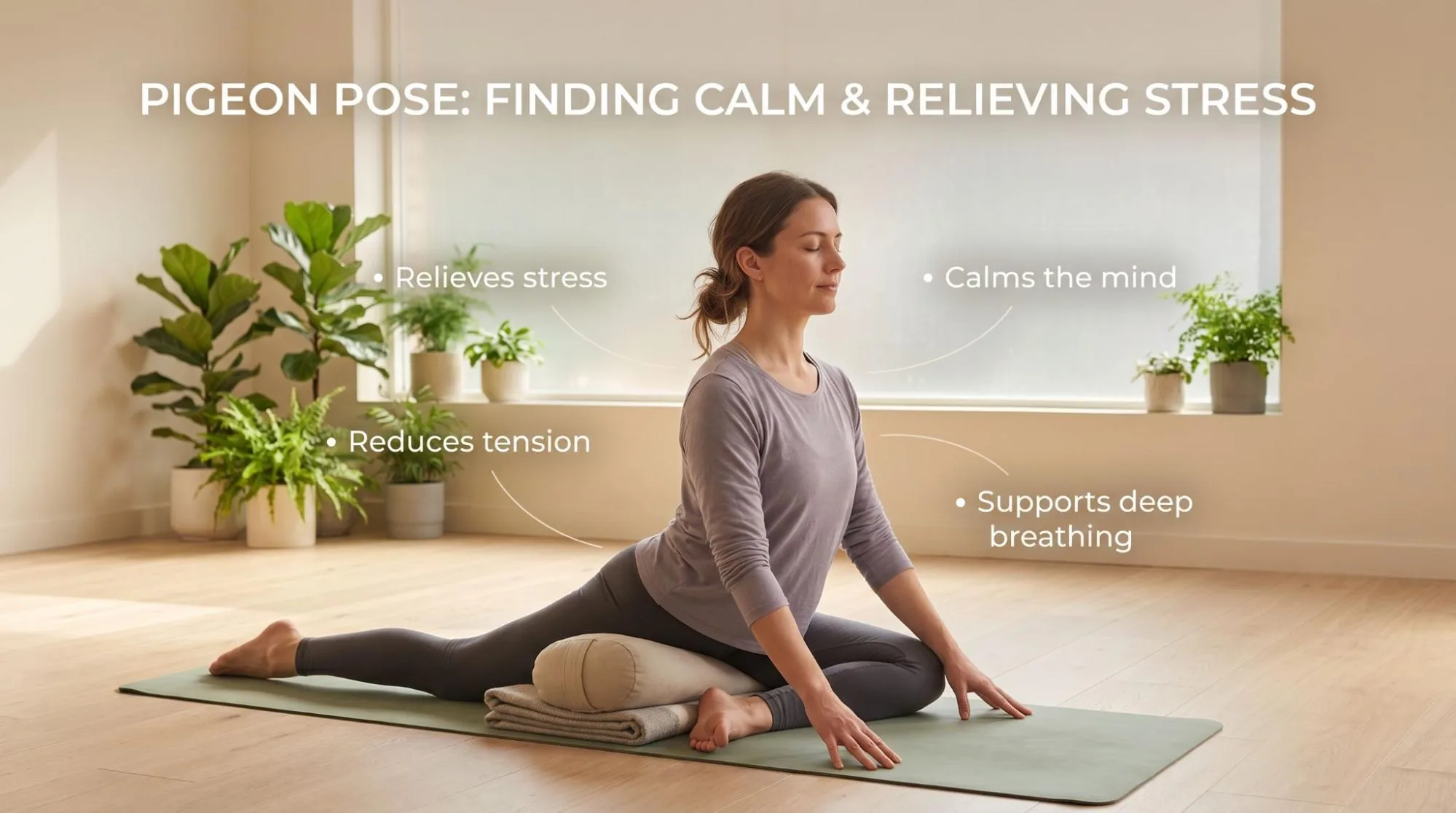
Reducing Stress and Enhancing Relaxation
Pigeon pose naturally encourages slower breathing and stillness. Once you settle into the position, your nervous system often begins to calm down.
Many yoga teachers include this posture near the end of a session because it promotes relaxation. Holding the pose for several breaths can help release physical tension that builds throughout the day.
 alt=”Pigeon Pose knee alignment from the side” title=”Pigeon Pose knee alignment from the side”
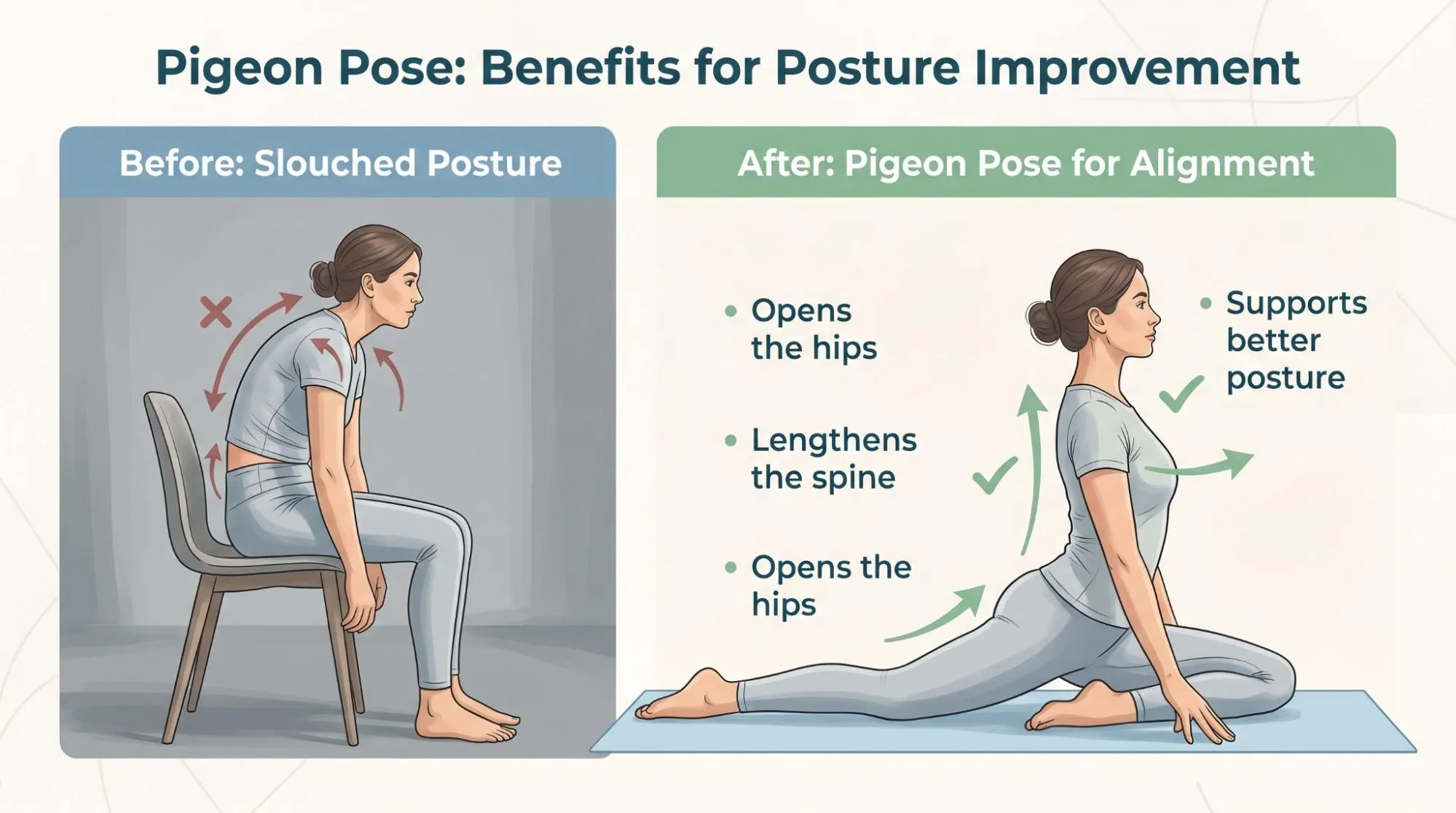
Improving Posture with Pigeon Pose
Tight hips sometimes affect posture more than people realize. When the lower body feels restricted, the pelvis and spine may compensate. By opening the hips and lengthening the lower body, pigeon pose can support better alignment through the back and pelvis. Keeping the spine long during the pose also helps strengthen body awareness.
 alt=”Supported pigeon stretch with upright torso” title=”Supported pigeon stretch with upright torso”
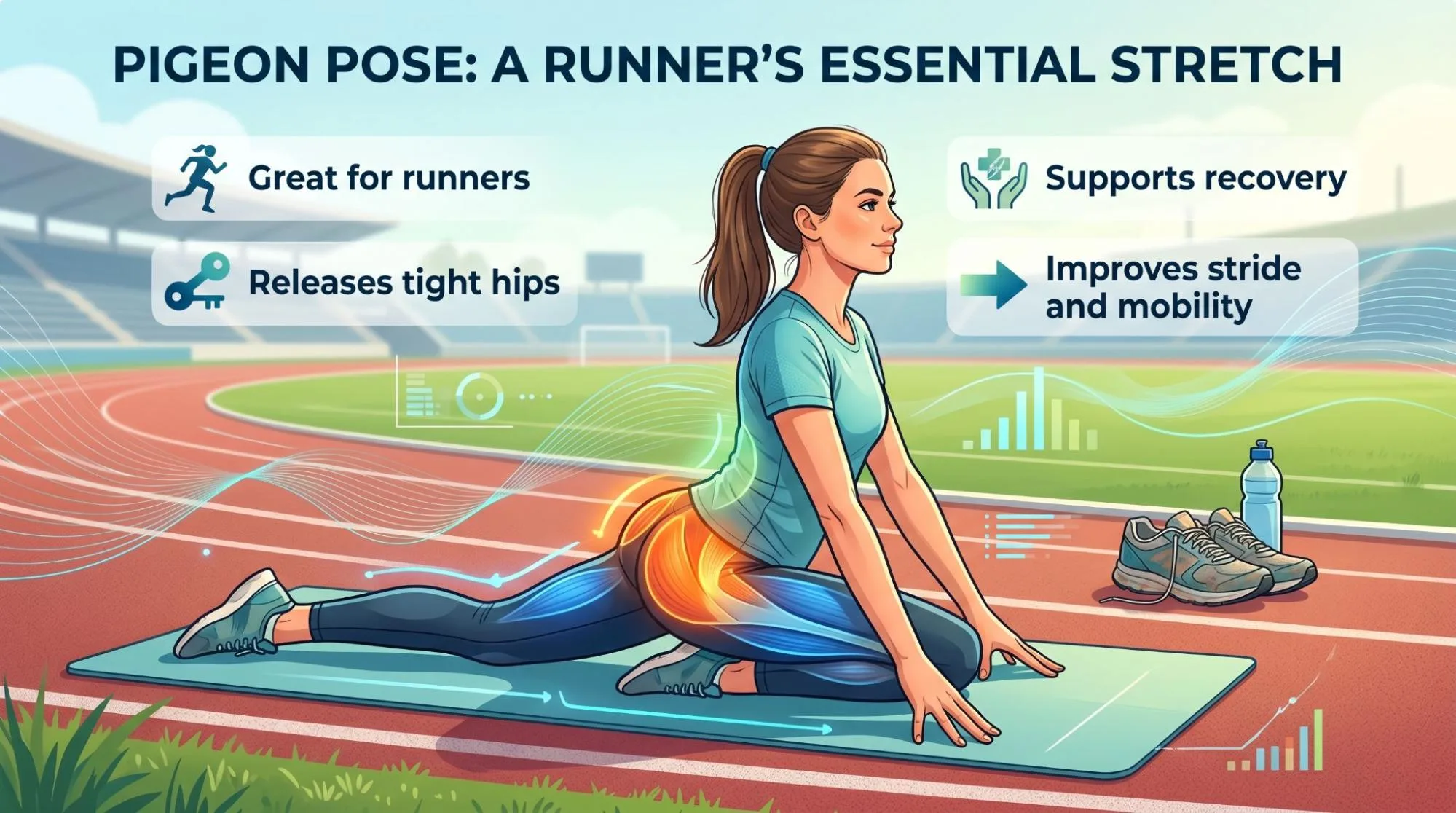
Pigeon Pose for Runners
Runners often develop tight hips and glutes from repetitive motion. This is why pigeon pose is especially popular among athletes and active individuals.
 alt=”Low lunge preparation for a hip stretch” title=”Low lunge preparation for a hip stretch”
Promoting Circulation and Muscle Recovery
After long runs or workouts, pigeon pose may help encourage blood flow through the hips and legs. Gentle stretching can reduce feelings of stiffness and support muscle recovery.
Many runners practice the pose after training sessions because it targets areas that commonly feel overworked, including the glutes, hamstrings, and hip flexors.
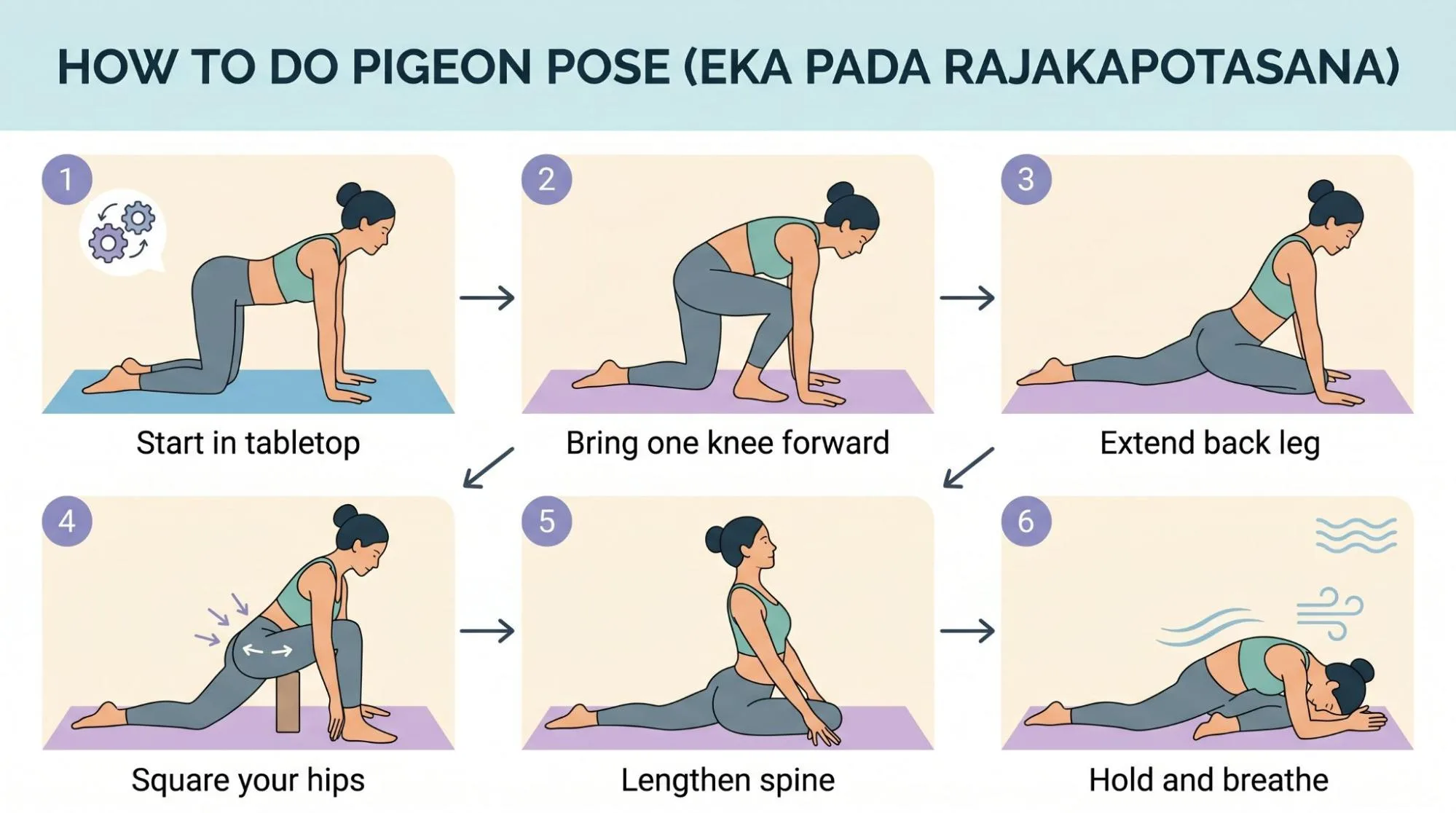
How to Do Pigeon Pose
Learning the setup carefully matters more than forcing a deep stretch. Move into the pigeon variation slowly, especially if your hips or knees feel tight.
Start in a Tabletop Position
- Begin on your hands and knees with your shoulders stacked over your wrists and hips above your knees.
- From here, you can briefly move through Downward-Facing Dog, often called facing dog, to warm the body before entering the pose.
Bring One Knee Forward
- Slide your right knee toward your right wrist. Your shin does not need to be perfectly parallel to the front of the mat. Your left leg should begin extending behind you as you position the front leg comfortably.
- Keep the left knee and thigh pointing toward the floor.
Extend the Back Leg
- Stretch the back leg behind you with the top of the foot resting on the mat.
- Keep the hips facing forward as much as possible rather than rolling heavily to one side. The left foot stays relaxed while the back leg remains active and long.
Lengthen Your Spine
- Instead of collapsing forward immediately, sit tall first. Imagine lifting through the chest and gently engaging your core.
- Your left hand and right hand can press lightly into the floor for balance. Keep the spine long and avoid dumping weight into the lower back.
Hold the Pose and Breathe
- Stay in the pose for several slow breaths. You can remain upright or fold forward for a deeper stretch if it feels comfortable.
- After finishing one side, return carefully and repeat with the opposite leg forward.
 alt=”Pigeon Pose with folded blanket support” title=”Pigeon Pose with folded blanket support”
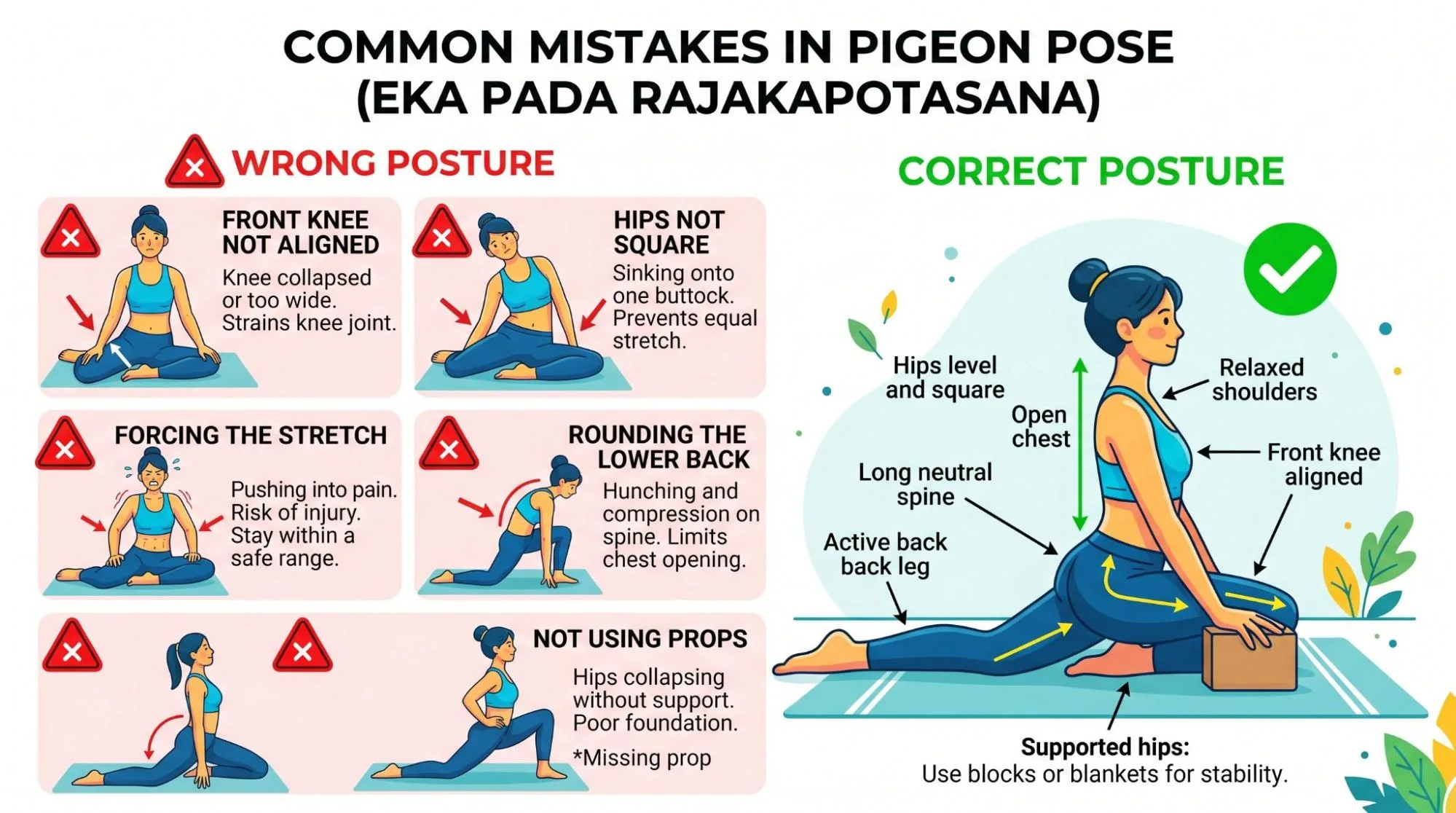
Common Mistakes to Avoid
Pigeon pose can become uncomfortable quickly when alignment is ignored. These common mistakes are worth watching carefully.
Not Aligning the Front Knee Properly
- Avoid placing too much pressure directly on the front knee. The shin angle does not need to be perfect. Comfort matters more than appearance.
- If the knee feels strained, reduce the angle of the front leg and bring the heel closer toward the body.
Allowing the Hips to Tilt
- One hip often lifts off the floor, especially when flexibility is limited. While some unevenness is normal, try not to collapse completely to one side.
- A folded blanket or yoga block under the lifted hip can help create better support.
Forcing the Stretch
- Trying to push aggressively into the pose usually creates tension instead of release. Pigeon pose should feel steady, not painful.
- Ease into the posture gradually, especially if you are new to practicing pigeon regularly.
Rounding the Lower Back
- Many people fold forward too quickly and lose length through the spine. Keep the chest gently extended rather than collapsing heavily.
- Maintaining spinal length helps distribute the stretch more evenly through the hips.
 alt=”Gentle breathing in a hip-opening pose” title=”Gentle breathing in a hip-opening pose”
Learn More : Reclined Pigeon Pose for Hip Pain
Modifications for Beginners and Advanced Practitioners
Not every body experiences pigeon pose the same way. Adjustments can make the posture more accessible or more challenging depending on your level.
Modifications for Beginners
Beginners often benefit from extra support and gentler positioning.
Helpful beginner options include:
- Place a yoga block under the hip
- Keep the torso upright instead of folding forward
- Use a folded blanket under the hips
- Practice reclining figure-four stretches first
- Try a gentler standing figure variation before floor-based pigeon pose
If the hips feel extremely tight, keeping the front heel closer to the body usually reduces strain.
Modifications for Advanced Practitioners
Advanced yogis may explore deeper versions once they have enough flexibility and control.
This can include:
- Folding fully forward over the front leg
- Reaching back for the rear foot
- Practicing king pigeon pose
- Exploring longer holds for deeper hip opening
- Working with different variations of pigeon pose
Advanced versions should still feel controlled rather than forced.
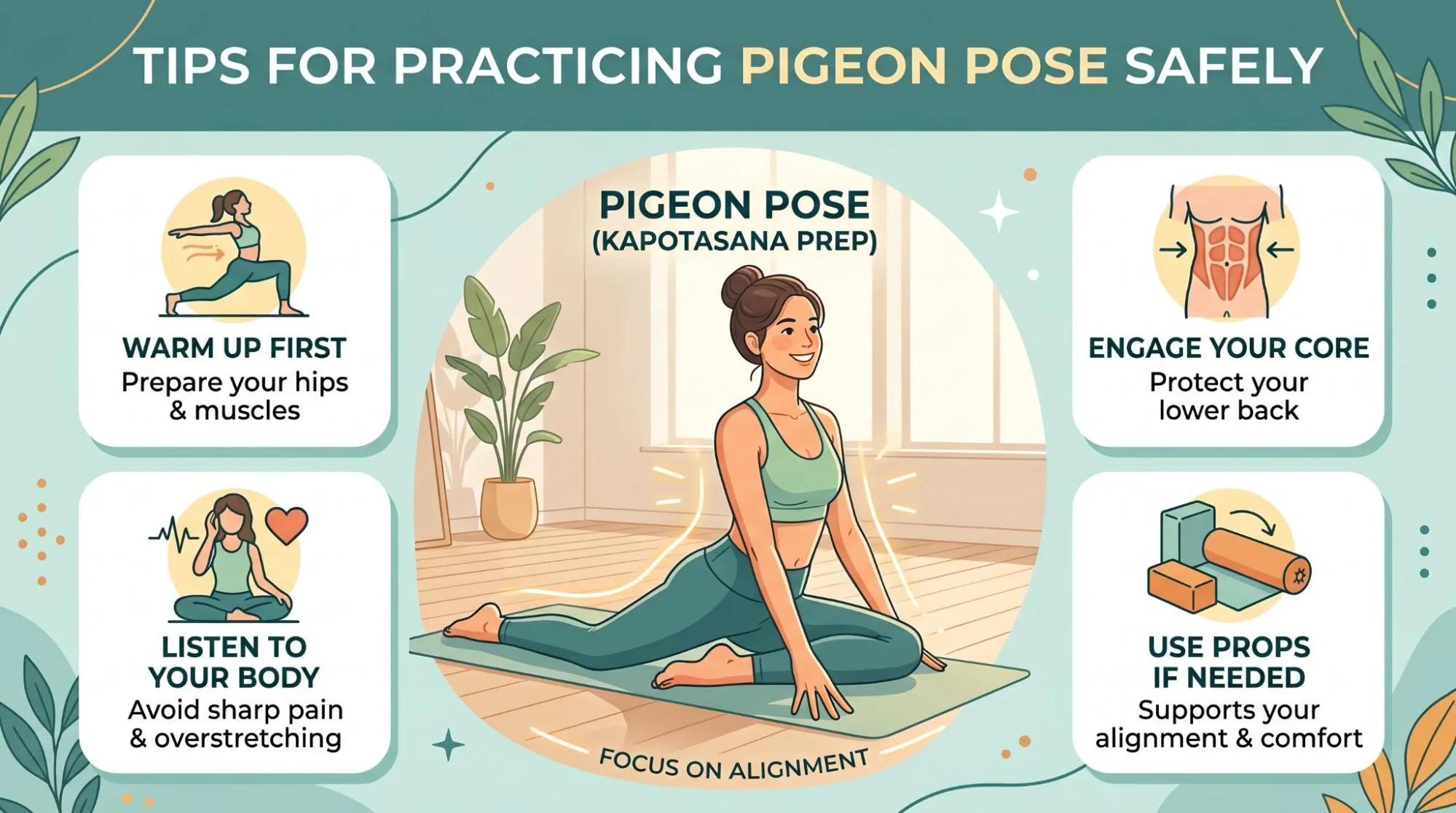
Tips for Practicing Pigeon Pose Safely
A few simple habits can make the pose feel safer and more effective. When practicing the pigeon variation, never force your front knee or lower back into discomfort.
Warm Up Properly
- Never jump straight into deep hip stretches with a cold body.
- Gentle movement beforehand helps prepare the muscles. Sun salutations, lunges, and light hip openers work well before pigeon pose.
Engage Your Core
- A small amount of core engagement helps stabilize the pelvis and lower back. This often prevents collapsing into the hips.
- The goal is support, not tension.
Listen to Your Body
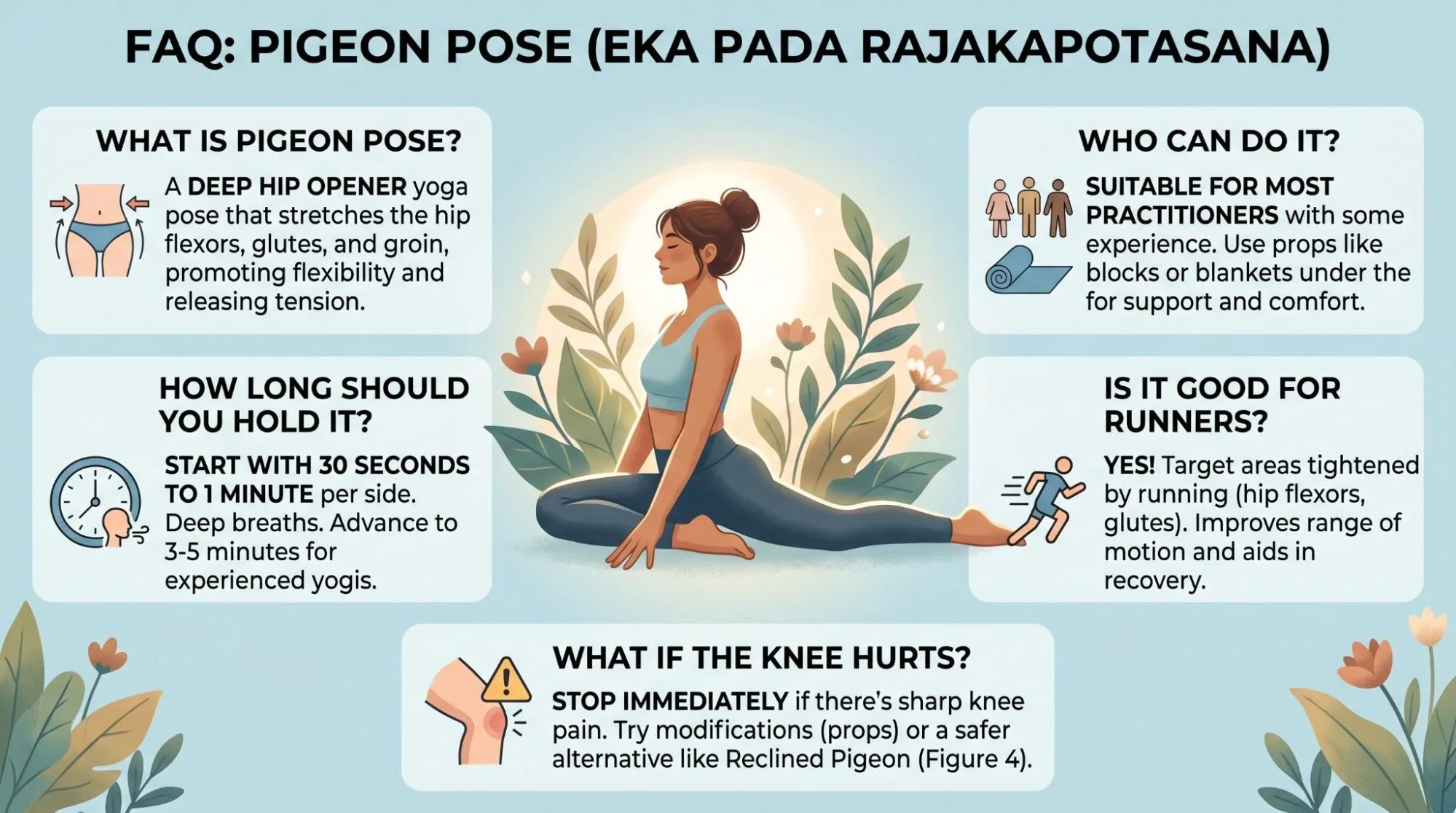
- Sharp pain, especially in the knees, is a signal to stop or adjust.
- Yoga should challenge the body gently without creating joint discomfort.
Use Props
- Props are not shortcuts. They help improve alignment and comfort.
- Blocks, blankets, and bolsters can make the pose more sustainable, especially during longer holds.
 alt=”Pigeon Pose modification for tight hips” title=”Pigeon Pose modification for tight hips”
Pigeon Pose for Runners
Many runners struggle with tight glutes, hip flexors, and restricted mobility through the lower body. Pigeon pose targets these areas directly.
After repetitive impact from running, the hips often need gentle opening work. Practicing pigeon pose after training sessions may help reduce stiffness and improve recovery.
Runners sometimes notice better stride comfort and less lower-body tension when hip mobility improves consistently over time.For runners, the pigeon variation can be a useful post-run stretch for the glutes and hip flexors.
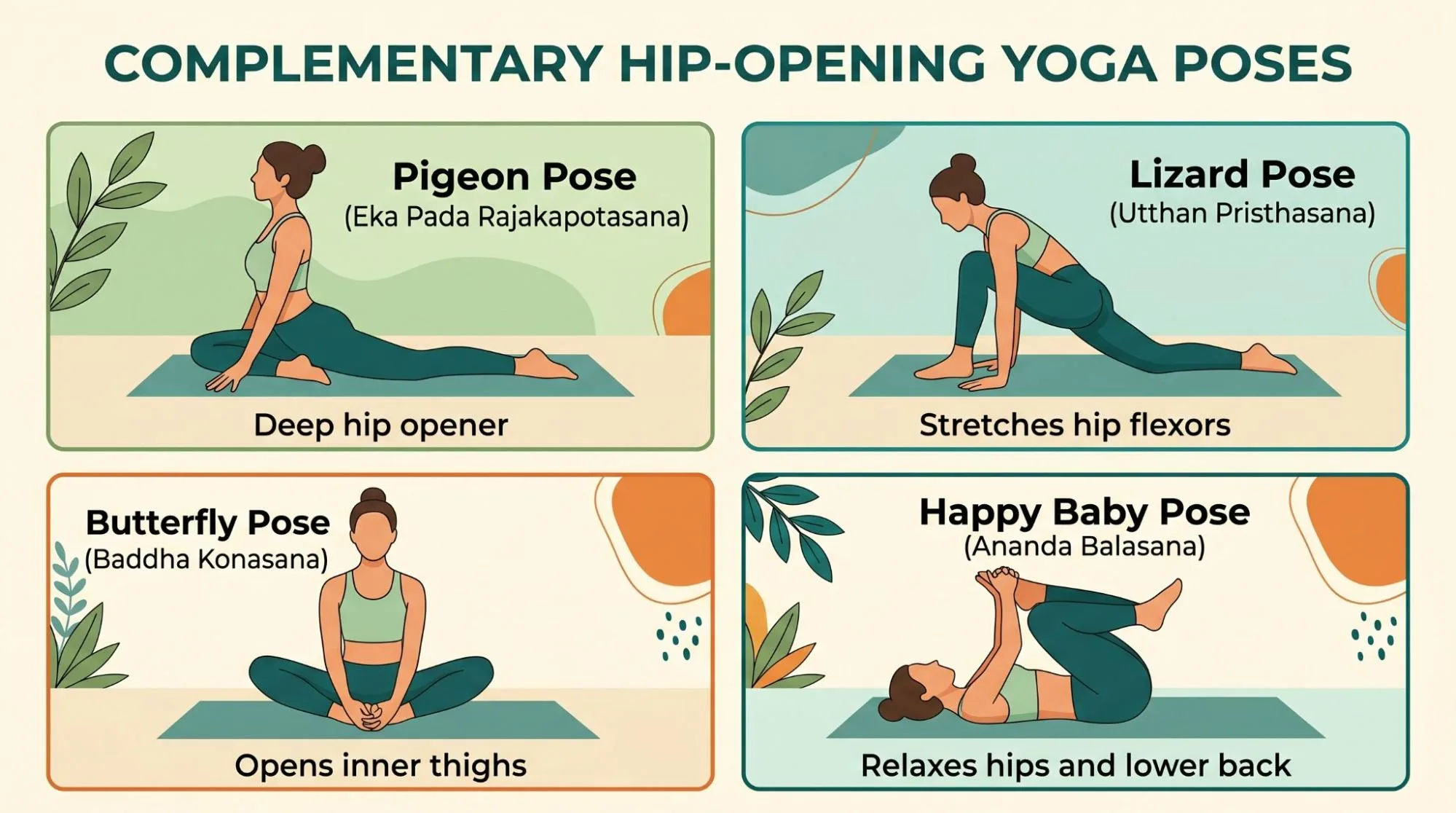
Complementary Hip-Opening Yoga Poses
Pairing pigeon pose with other hip-opening postures creates a more balanced practice.
Lizard Pose
Lizard Pose deeply stretches the hips, groin, and hamstrings. It works well before pigeon pose because it prepares the hip flexors and inner thighs.
Butterfly Pose
Butterfly Pose is a gentler seated stretch that helps open the hips without putting heavy pressure on the knees.
Happy Baby Pose
Happy Baby Pose relaxes the hips and lower back while encouraging gentle mobility through the pelvis and legs.
 alt=”Safe exit from a pigeon variation” title=”Safe exit from a pigeon variation”
FAQs About Pigeon Pose
Is pigeon pose safe for beginners?
Yes, but beginners should use props and avoid forcing the stretch. A supported version is often more comfortable and effective.
Why does pigeon pose feel so intense?
The pose targets deep hip muscles that commonly hold tension. Tightness in the glutes and hips can make the stretch feel strong at first.
How long should you hold pigeon pose?
Many people hold the pose between 30 seconds and 2 minutes per side depending on comfort and experience level.
Can pigeon pose help with tight hips?
Yes. Regular practice may improve hip mobility and reduce stiffness over time.
What if my hips do not touch the floor?
That is completely normal. Use a folded blanket or yoga block under the hips for support.
 alt=”Resting after a supported hip stretch” title=”Resting after a supported hip stretch”
Learn More : Seated Forward Fold Yoga Step by Step
Conclusion
The pigeon variation can be both challenging and deeply relaxing at the same time. It stretches areas of the body that often become tight from sitting, running, exercise, or daily stress. With steady practice and careful alignment, the pose may help improve hip flexibility, posture, mobility, and recovery.
The most important thing is not how deep the pose looks. What matters is whether your body feels supported and steady while breathing comfortably. Start gently, use props when needed, and allow flexibility to develop naturally over time. Keep the pigeon variation gentle, supported, and steady so your body can relax into the stretch naturally.
Further reading: For general yoga safety information, see NCCIH: Yoga—What You Need To Know.
