
Quick answer: A yoga wheel may help some people explore gentle spinal extension, chest opening, and mobility, but it is not a guaranteed treatment for back pain. Choose a stable wheel, move slowly, and stop if symptoms worsen.
Important Safety Note
Do not use a yoga wheel over an acute injury or severe pain without professional advice. Avoid forceful rolling or deep backbends if you have osteoporosis, recent surgery, numbness, weakness, radiating pain, balance problems, or a diagnosed spinal condition. Stop immediately for sharp pain, tingling, dizziness, or loss of control.
Back pain can quietly affect your whole day, from how you sit and walk to how well you sleep. A yoga wheel is a simple but powerful tool that can help release tight muscles, open the chest and shoulders, support the spine, and improve posture with gentle movement. The main yoga wheel benefits for back pain come from using the wheel to stretch safely, reduce stiffness around the shoulder blades, and build better body control through beginner-friendly yoga wheel exercises.
The yoga wheel benefits for back pain are mostly linked to mobility, posture, chest opening, and relaxation of tight muscles. It is not a cure for serious back problems, but it can support a healthy movement routine and make stretching feel easier for beginners. The main yoga wheel benefits for back pain come from gentle support, better spinal movement, and relaxing tight muscles without forcing the body.
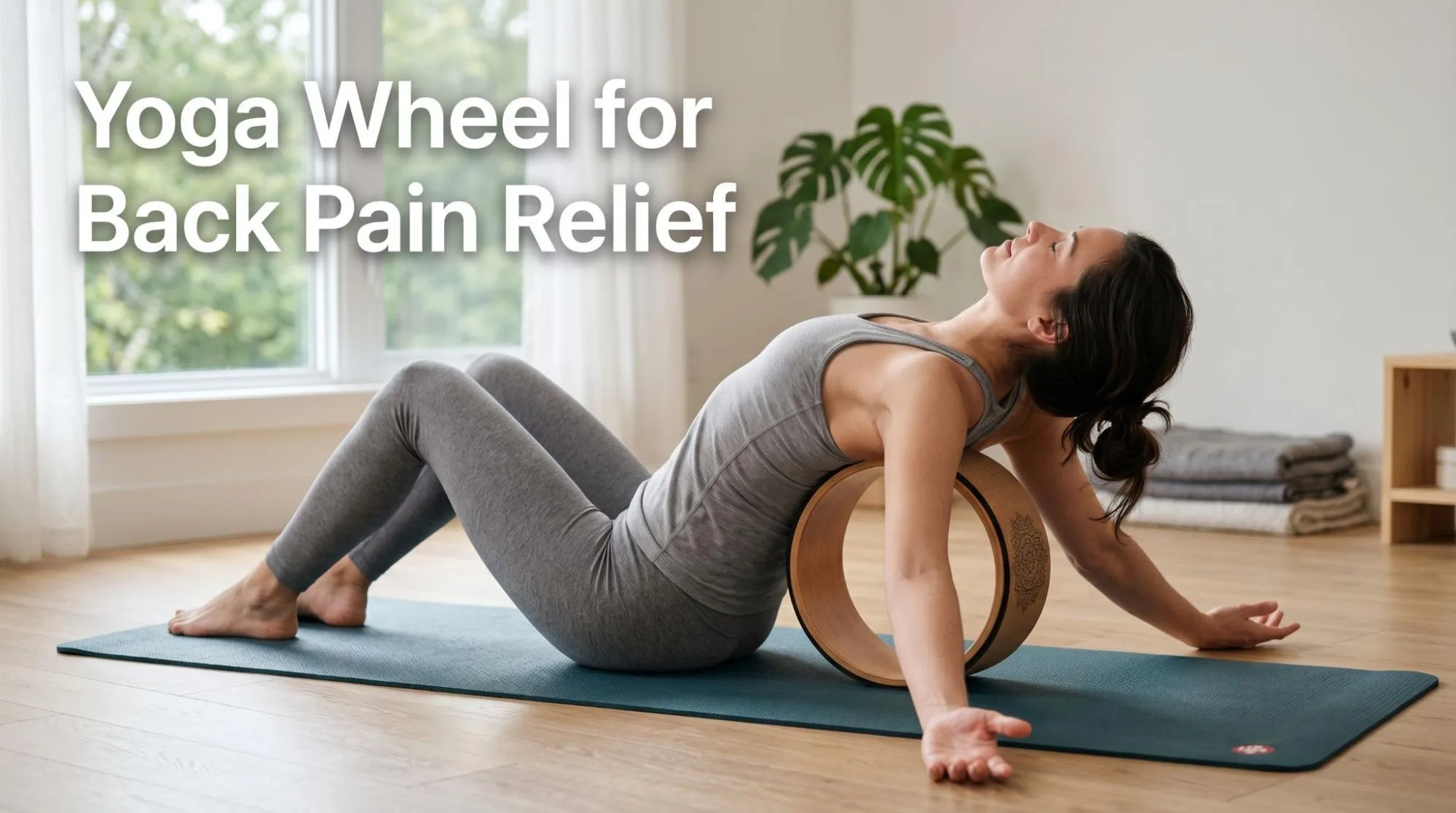 alt=”Yoga wheel supported backbend with feet grounded” title=”Yoga wheel supported backbend with feet grounded”
What Is a support wheel?
A support wheel is a round, sturdy prop used in yoga and stretching routines. It usually has a firm inner frame with a padded outer layer, so it can support your body while still feeling comfortable against the back.
People often use it to support backbends, stretch the chest, open the shoulders, massage tight muscles, and improve balance. You can think of it as a mix between a yoga prop and a gentle foam roller, but with a shape that works especially well for the spine and chest area.
Unlike a flat yoga block, the wheel moves with your body. This makes it useful for controlled stretching and slow rolling movements.
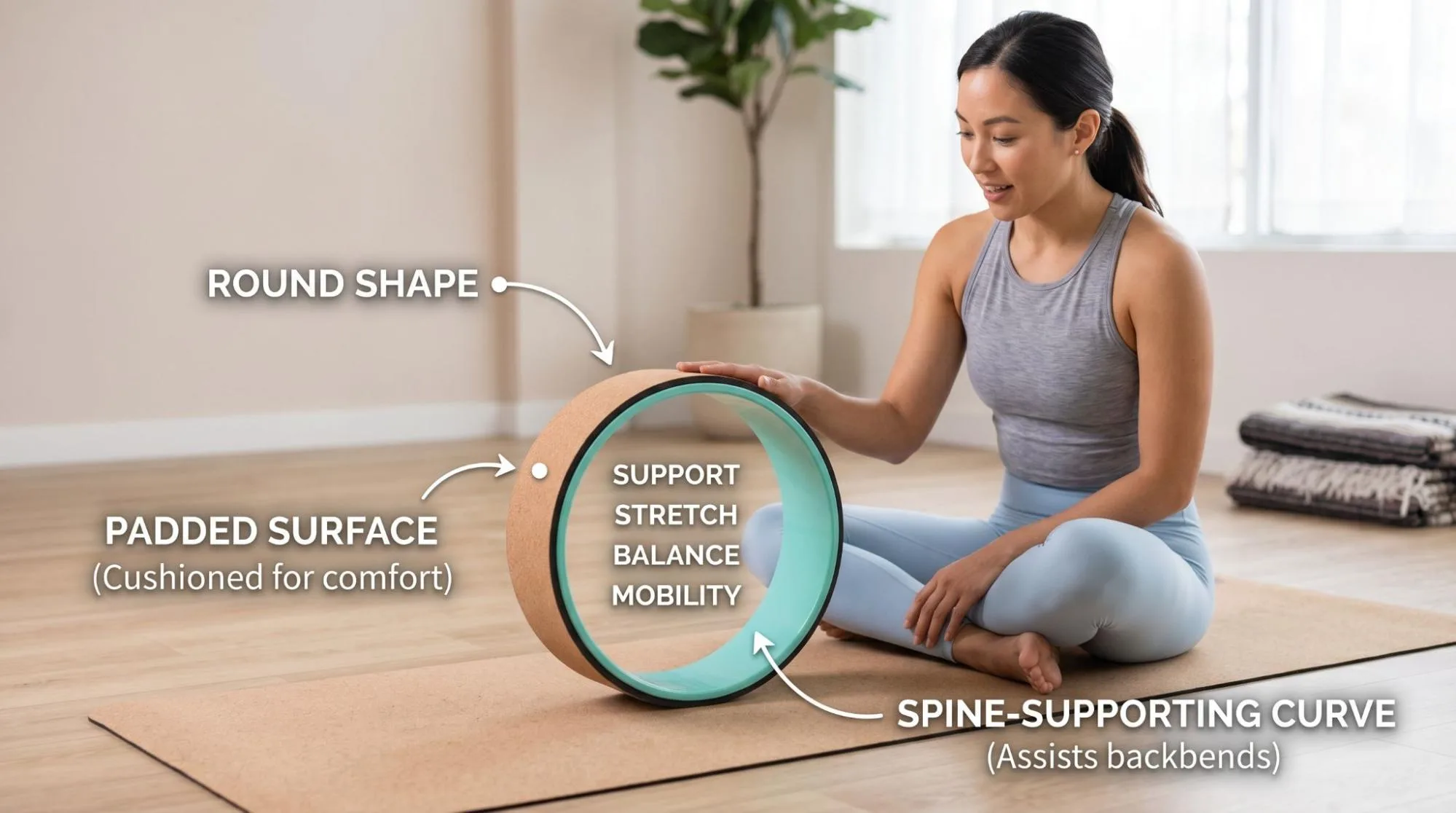 alt=”Beginner yoga wheel setup on a mat” title=”Beginner yoga wheel setup on a mat”
How a support wheel Helps with Back Pain
A support wheel may help with back discomfort by supporting the natural curve of the spine. When you lie back over the wheel, it can gently open the front of the body and reduce stiffness around the upper back, shoulders, and chest. One of the biggest support wheel benefits for back pain is that it helps open stiff areas of the back in a slow and supported way.
Many people with back pain also have tight hip flexors, weak core muscles, or poor posture from long sitting hours. A support wheel can support gentle movement in these areas.
It may help by:
- Releasing tension around the upper and mid-back
- Opening the chest and shoulder blades
- Supporting gentle spinal extension
- Encouraging better posture awareness
- Helping with stretching tight muscles
- Adding variety to a safe exercise regimen
For best results, use it slowly and listen to your body. Back pain is personal, and what feels good for one person may not feel right for another.
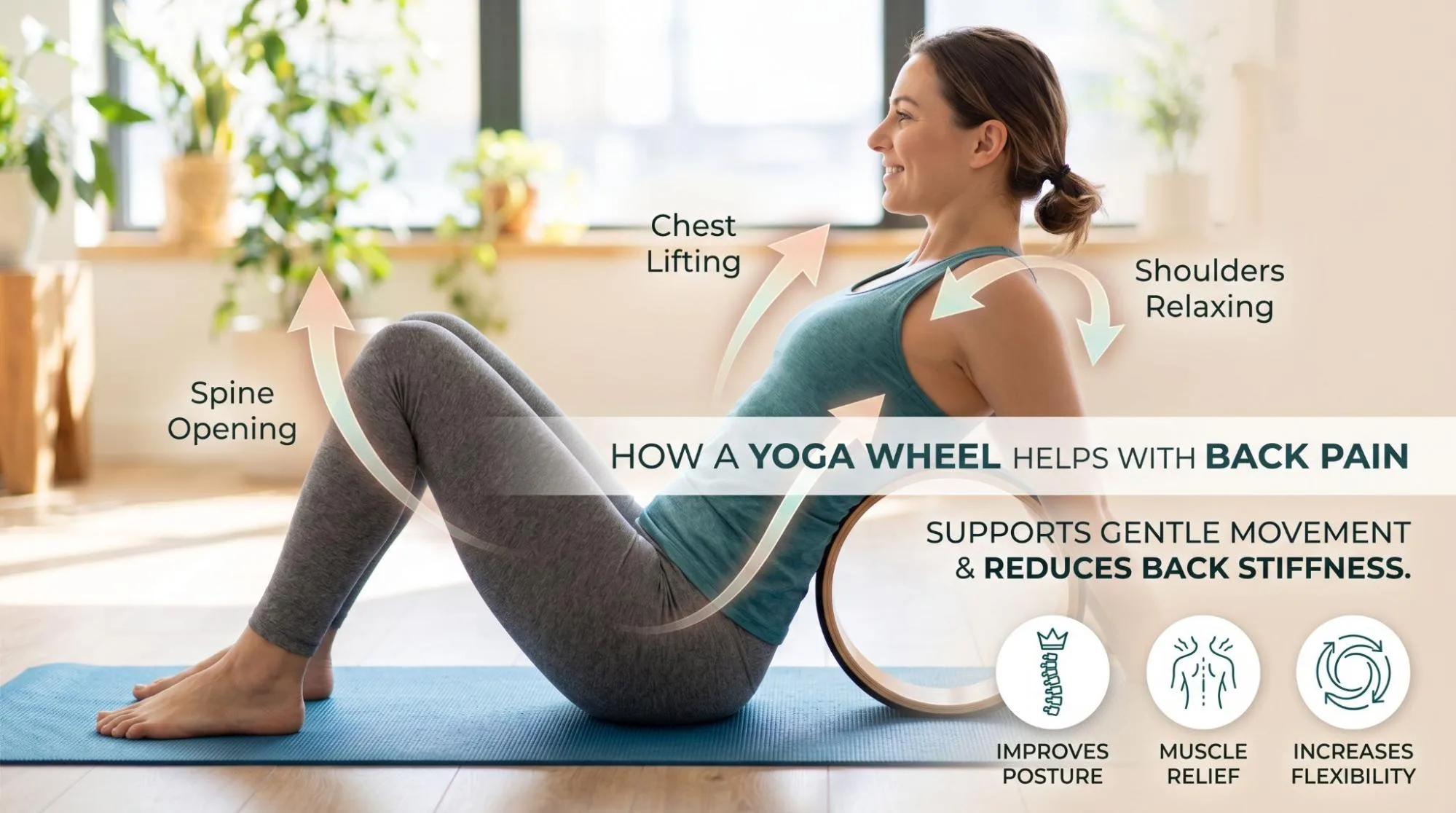 alt=”Yoga wheel behind the upper back for gentle extension” title=”Yoga wheel behind the upper back for gentle extension”
Learn More : Supported Bridge Pose Block Benefits
Key Benefits of a support wheel for Back Pain Relief
Deepens Backbends
- One of the most common support wheel benefits for back pain is its ability to support backbends. A backbend can feel difficult or unsafe when done without support, especially for beginners. These support wheel benefits for back pain are especially helpful for people who sit for long hours or feel tension around the shoulder blades.
- The wheel gives your spine something to rest on. Instead of forcing your back into a deep bend, you can let the wheel support your movement gradually.
- This is helpful because many people carry stiffness in the upper back from sitting, typing, or looking down at a phone. A supported backbend can gently stretch the front body while encouraging better spinal movement.
Provides Muscular Relief and Self-Massage
- A support wheel can work like a gentle self-massage tool. When you slowly roll your back over it, the pressure can help release tight muscles around the spine.
- This is especially useful for the upper back area near the shoulder blades. Many people feel knots or tension there after long workdays. Slow rolling may help relax the muscles and improving blood flow to the area.
- The key is gentle pressure. You are not trying to crush the muscles. You are simply giving them space to soften.
Opens the Chest and Shoulders
- Poor posture often comes from rounded shoulders and a tight chest. This is common for people who sit for long hours or work on laptops.
- A support wheel helps open the chest by allowing the arms and shoulders to relax backward. This can reduce tightness across the front of the body and make breathing feel easier.
- When the chest opens, the shoulders often feel less crowded. This may also help improve posture over time.
Enhances Spinal Mobility
- A stiff spine can contribute to discomfort, especially when movement feels limited. The support wheel encourages gentle extension and controlled movement through the back.
- You can use it to slowly move along the spine, from the upper back to the mid-back. This may help the body feel less rigid.
- Spinal mobility is not about bending as far as possible. It is about moving with control, comfort, and awareness.
Targets Tight Hip Flexors
- Tight hip flexors can pull the pelvis forward and increase pressure on the lower back. This is one reason some people feel lower back discomfort after sitting for a long time.
- Certain support wheel exercises can help stretch the front of the hips. For example, placing one foot forward with the back knee bent and using the wheel for support can make the stretch feel more controlled.
- When the hips feel more open, the lower back may feel less strained.
Strengthens the Core
- A support wheel is not only for stretching. It can also help with strengthening your core.
- Your core muscles support the spine. When they are weak, the lower back may take more stress during daily movement. Simple support wheel core exercises can improve stability and body control.
- Movements like rolling planks or bridge variations require balance and control. These exercises should be done slowly, especially if you are new to the wheel.
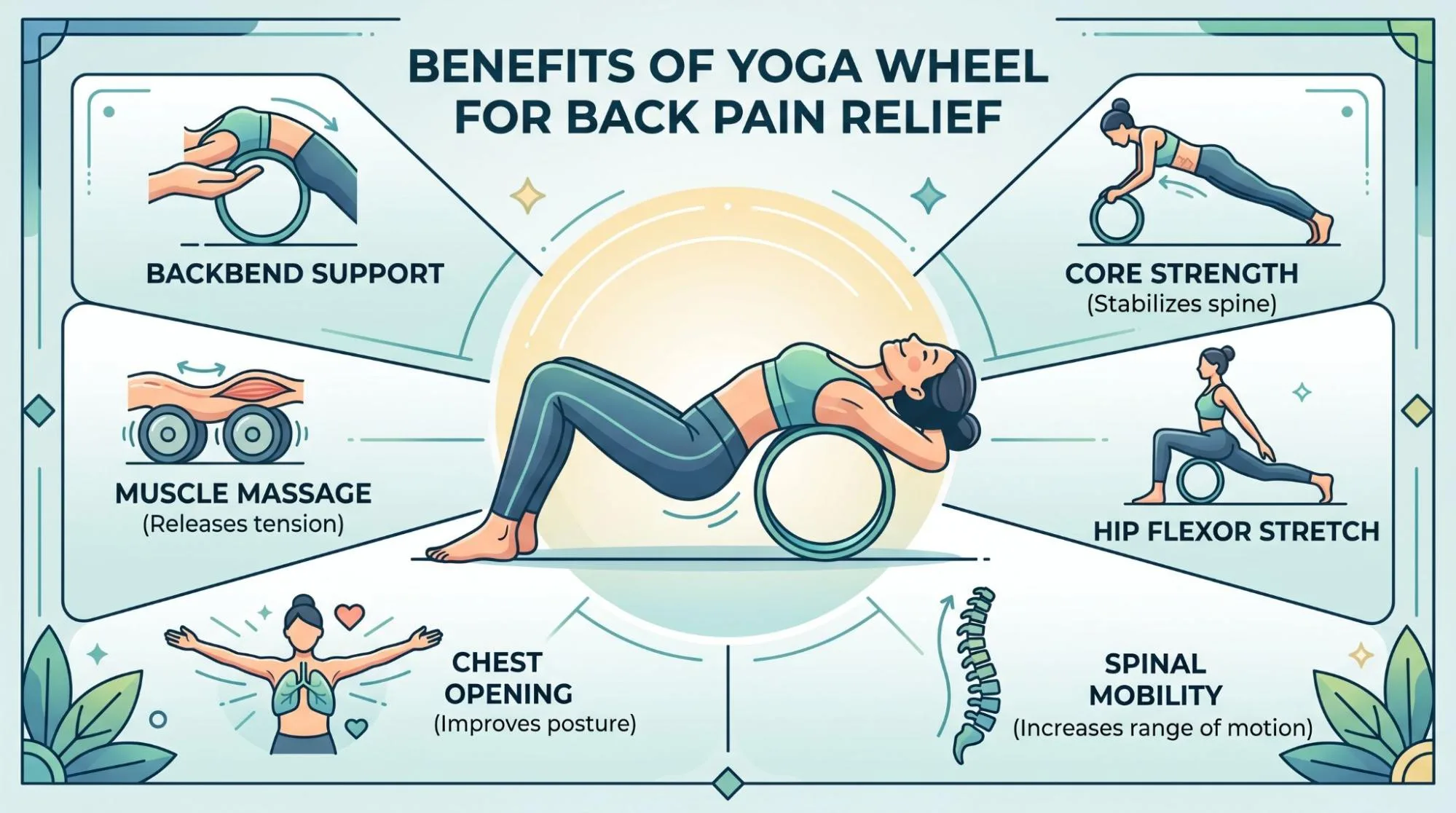 alt=”Yoga wheel chest opening with hands supported” title=”Yoga wheel chest opening with hands supported”
How to Use a support wheel for Back Pain Relief
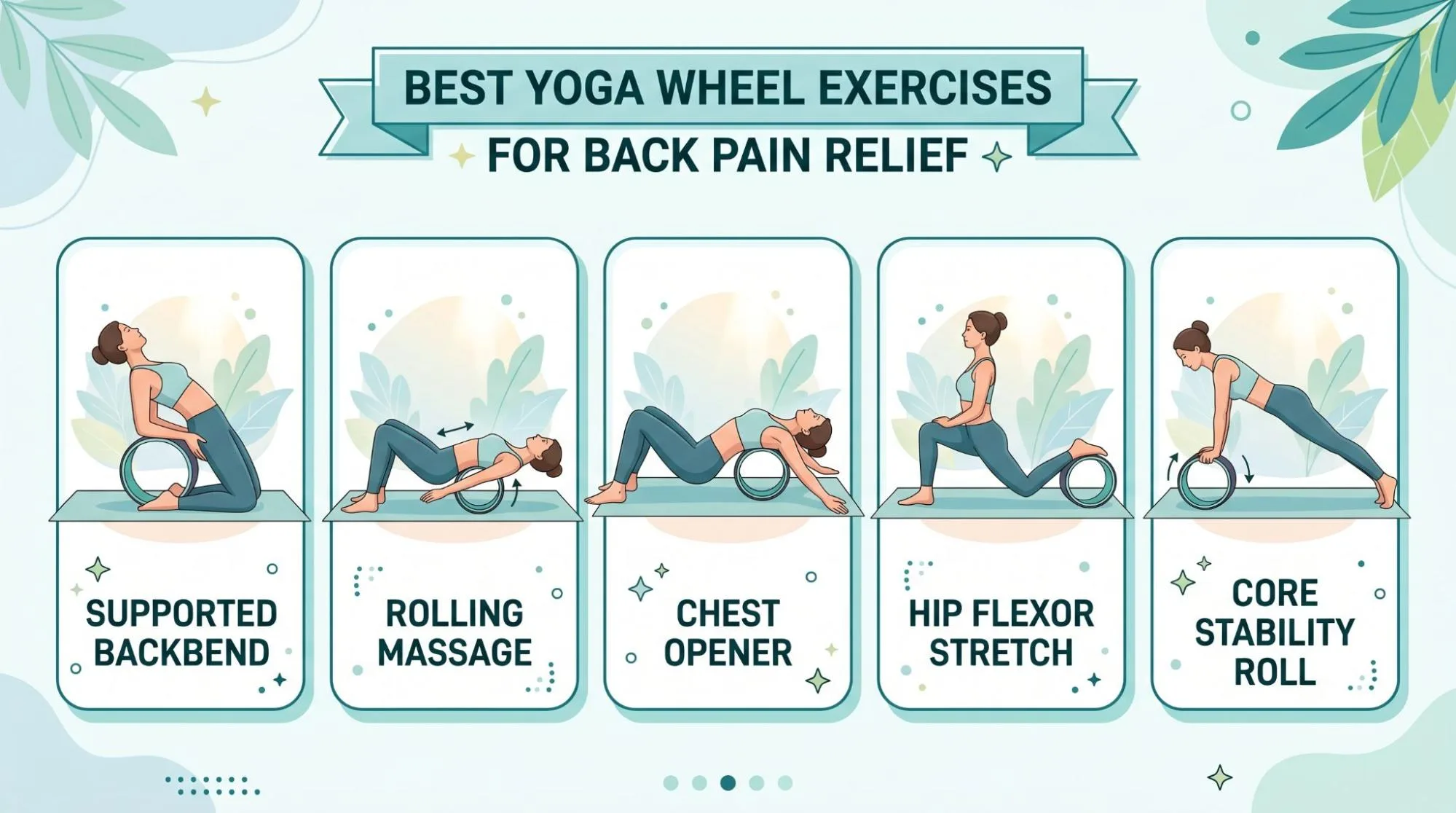
Supported Backbend
This is one of the easiest beginner-friendly ways to use a support wheel. This simple stretch is one of the most beginner-friendly ways to experience support wheel benefits for back pain.
Sit on your yoga mat with the wheel behind your back. Place it around your mid-back area. Slowly lean back onto the wheel and let your spine rest against it. Keep your knees bent and feet flat on the floor.
You can keep your hands on the floor for support or gently reach your arms overhead if it feels comfortable.
Stay for a few breaths. Do not force the stretch. Let the wheel support you.
Rolling Massage
For a gentle rolling massage, sit with the wheel behind you. Lean back carefully so your upper back rests on the wheel. Keep your feet grounded and knees bent. A rolling massage can improve comfort and show real support wheel benefits for back pain by easing tight muscles in the upper and middle back.
Slowly roll up and down over the upper and mid-back. Avoid rolling directly onto the lower spine with heavy pressure.
This movement may help release tight muscles around the shoulder blades and upper back.
Chest Opener
Place the support wheel lengthwise behind your spine. Sit in front of it, then slowly lie back so the wheel supports your upper back.
Let your arms open out to the sides or rest overhead. Keep your breathing slow and natural.
This stretch is useful for rounded shoulders, tight chest muscles, and posture support.
Hip Flexor Stretch
Start in a low lunge position with one foot forward and the back knee on the mat. Keep the front knee bent and place the wheel nearby for balance if needed.
You can also place the back foot or shin near the wheel depending on your flexibility. Keep the movement gentle.
This stretch should be felt in the front of the hip, not as sharp pain in the lower back.
Core Stability Exercise
Start in a plank position with your hands on the floor and your feet or shins resting on the support wheel.
Engage your core muscles and keep your body steady. For a more active version, slowly roll the wheel forward and back by moving your legs.
You can also try a bridge variation by lying on your back, placing your feet on the wheel, and slowly lifting your hips. Keep control as you lift and lower.
This helps with core strength, balance, and lower body control.
 alt=”Safe foot placement during wheel practice” title=”Safe foot placement during wheel practice”
Learn More : Plow Pose Halasana Step by Step Guide
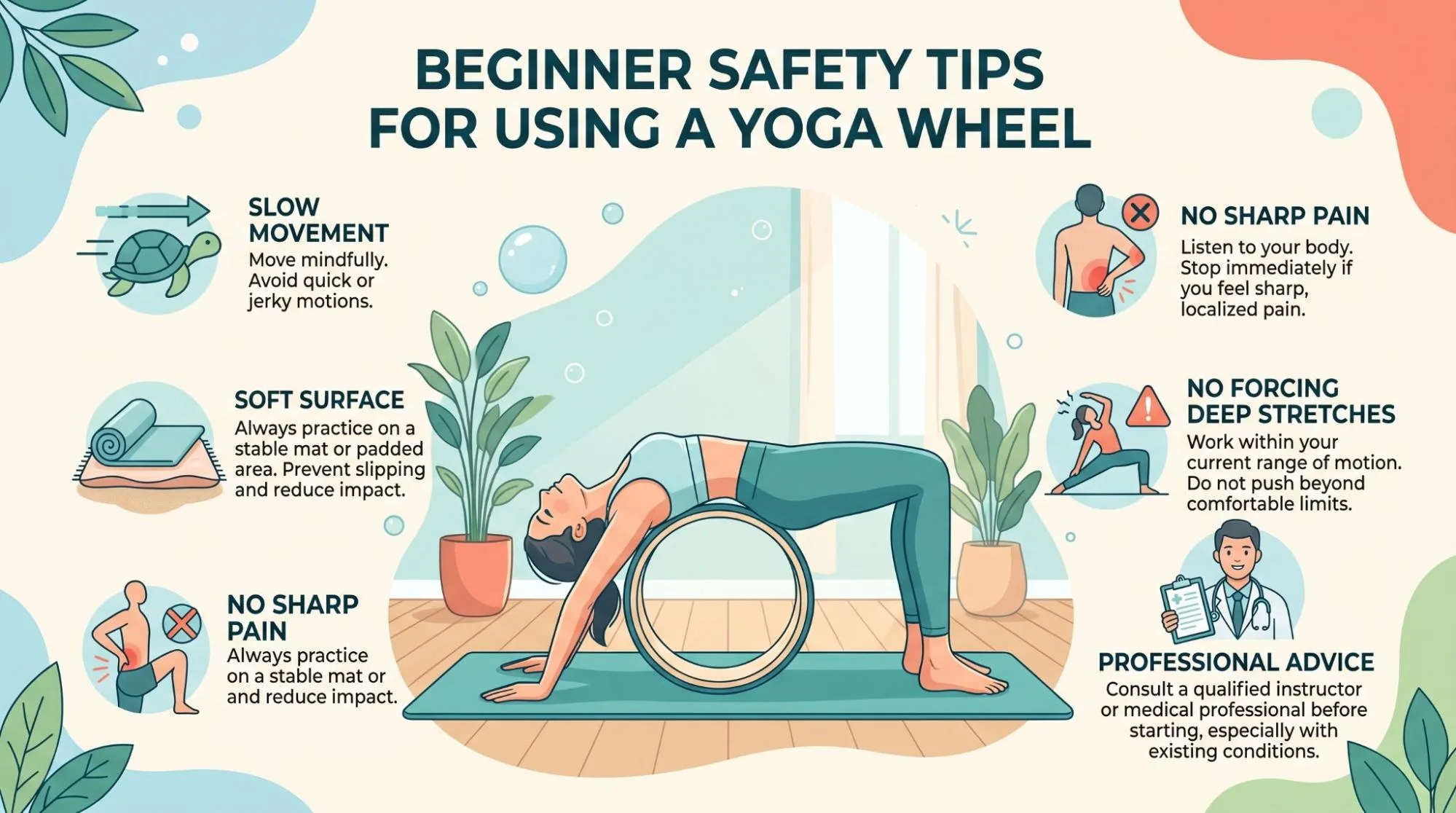
Beginner Safety Tips
Start Slowly
The support wheel can feel intense at first. Begin with short sessions and simple movements.
You do not need to hold a deep stretch for a long time. A few slow breaths are enough when you are learning.
Use a Yoga Mat
A yoga mat gives grip and cushioning. This makes the wheel more stable and helps prevent slipping.
Avoid using the wheel on a very smooth floor, especially when trying rolling movements.
Avoid Sharp Pain
Stretching may feel slightly intense, but it should not feel sharp, burning, or painful.
If you feel sudden pain, stop right away. Back pain should never be pushed through.
Do Not Force Deep Stretches
A support wheel can make deep stretches easier, but that does not mean you should go as far as possible.
Stay within a comfortable range. Your body will open gradually with regular practice.
Ask a Professional When Needed
If you have a slipped disc, spinal injury, severe back pain, surgery history, osteoporosis, or nerve symptoms, speak with a doctor or physical therapist first.
A support wheel can support pain relief for some people, but it should not replace medical care.
 alt=”Yoga wheel modification with wall support” title=”Yoga wheel modification with wall support”
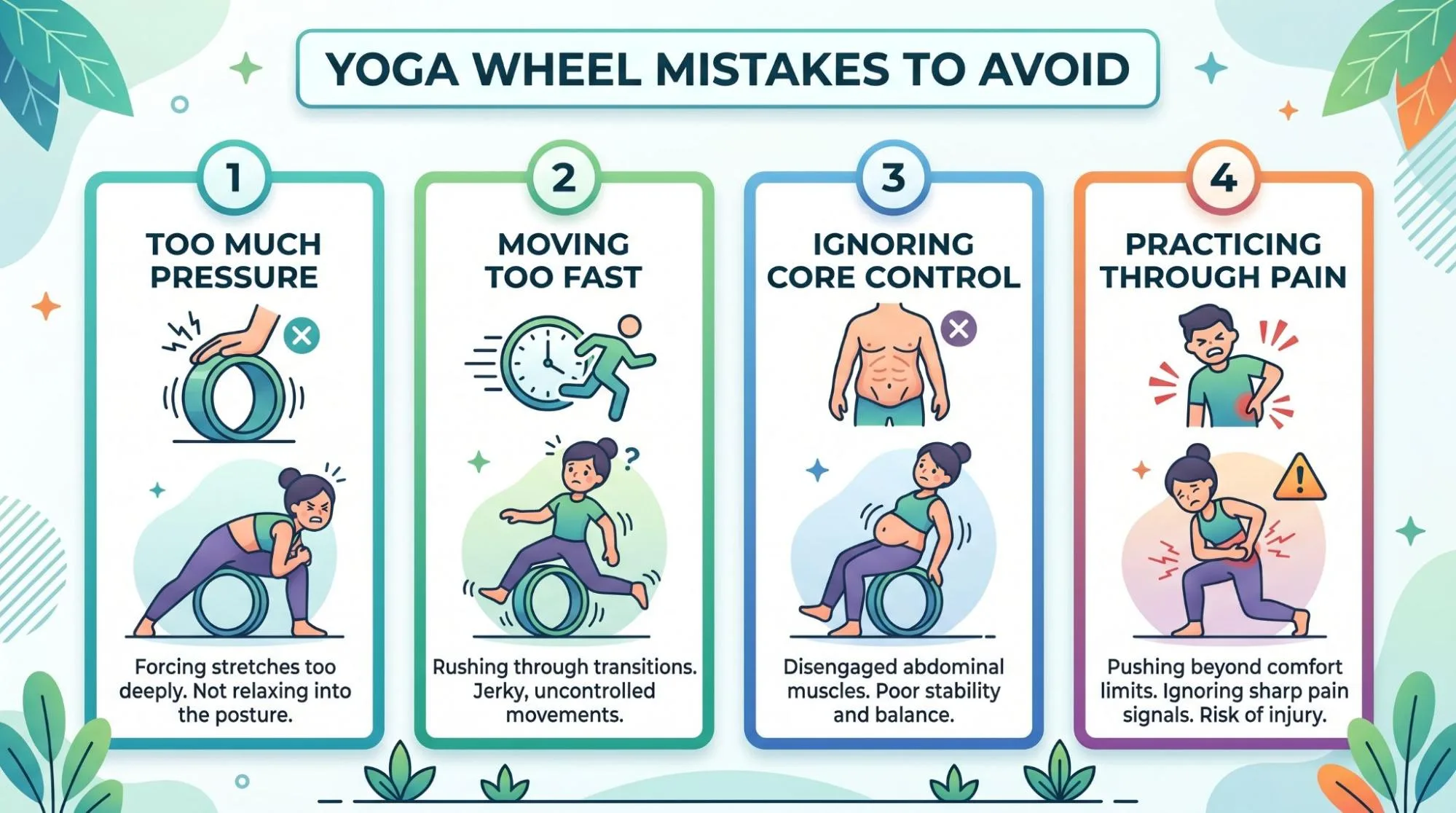
Common Mistakes to Avoid
Using Too Much Pressure
Pressing too hard into the wheel can irritate the back instead of helping it. Start with light pressure and increase only if your body feels comfortable.
Moving Too Fast
Fast rolling can make the movement less controlled. Slow movement gives your muscles time to relax.
Ignoring Core Control
Even during stretching, your core matters. Lightly engage your core muscles to protect the spine and avoid collapsing into the lower back.
Practicing Through Pain
Pain is a warning sign. If a yoga pose feels wrong, stop and adjust. You can try a smaller movement or choose a different exercise.
 alt=”Gentle spinal mobility using a support wheel” title=”Gentle spinal mobility using a support wheel”
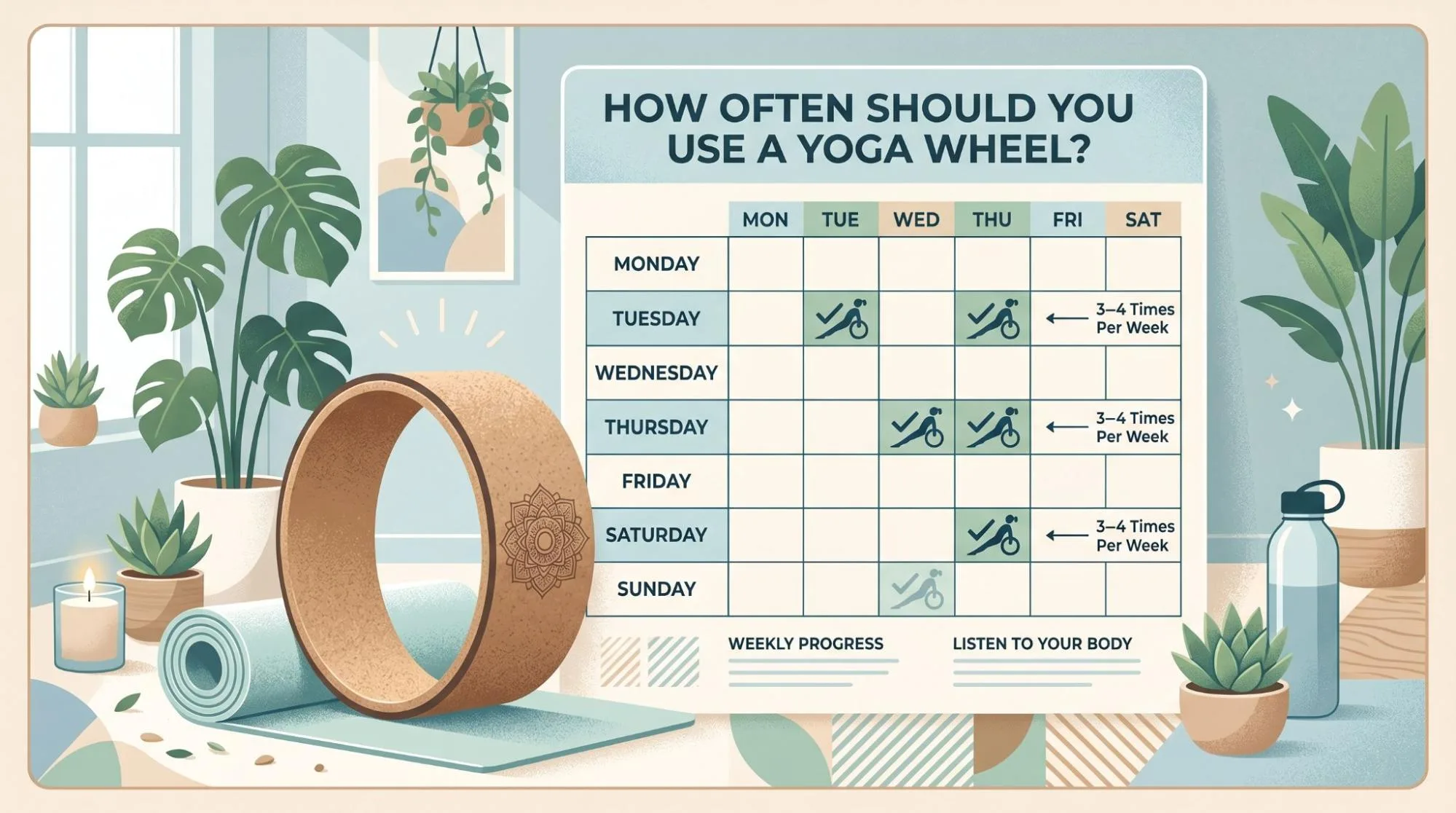
How Often Should You Use a support wheel?
For beginners, using a support wheel 2 to 4 times per week is usually enough. Start with 5 to 10 minutes per session.
A simple routine could include:
- 1 to 2 minutes of supported backbend
- 1 to 2 minutes of rolling massage
- 1 minute of chest opening
- 1 minute of hip flexor stretching on each side
- 1 to 2 gentle core exercises
You do not need a long routine. Consistency matters more than intensity. For steady support wheel benefits for back pain, short sessions a few times per week are better than one long, intense session.
 alt=”Yoga wheel preparation before backbend” title=”Yoga wheel preparation before backbend”
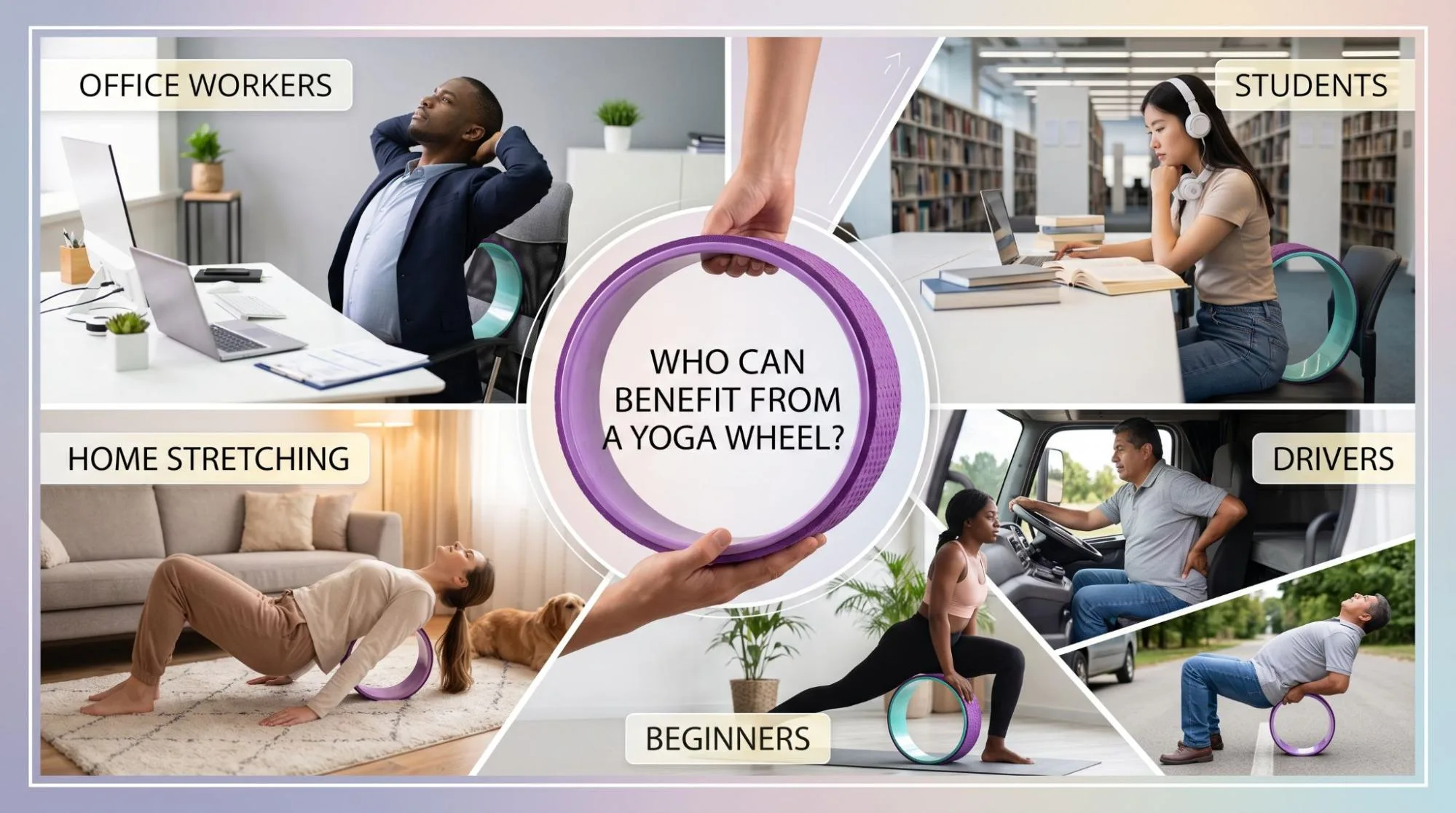
Who Can Benefit from a support wheel?
A support wheel may be helpful for people who:
- Sit for long hours
- Have tight shoulders or chest muscles
- Feel stiffness in the upper back
- Want to improve posture
- Practice yoga and want support in backbends
- Need gentle support wheel exercises for mobility
- Want to add stretching to their exercise regimen
It may not be suitable for everyone. People with serious spinal conditions, recent injuries, balance problems, or severe pain should get professional advice first.
 alt=”Supported bridge variation with a yoga wheel” title=”Supported bridge variation with a yoga wheel”
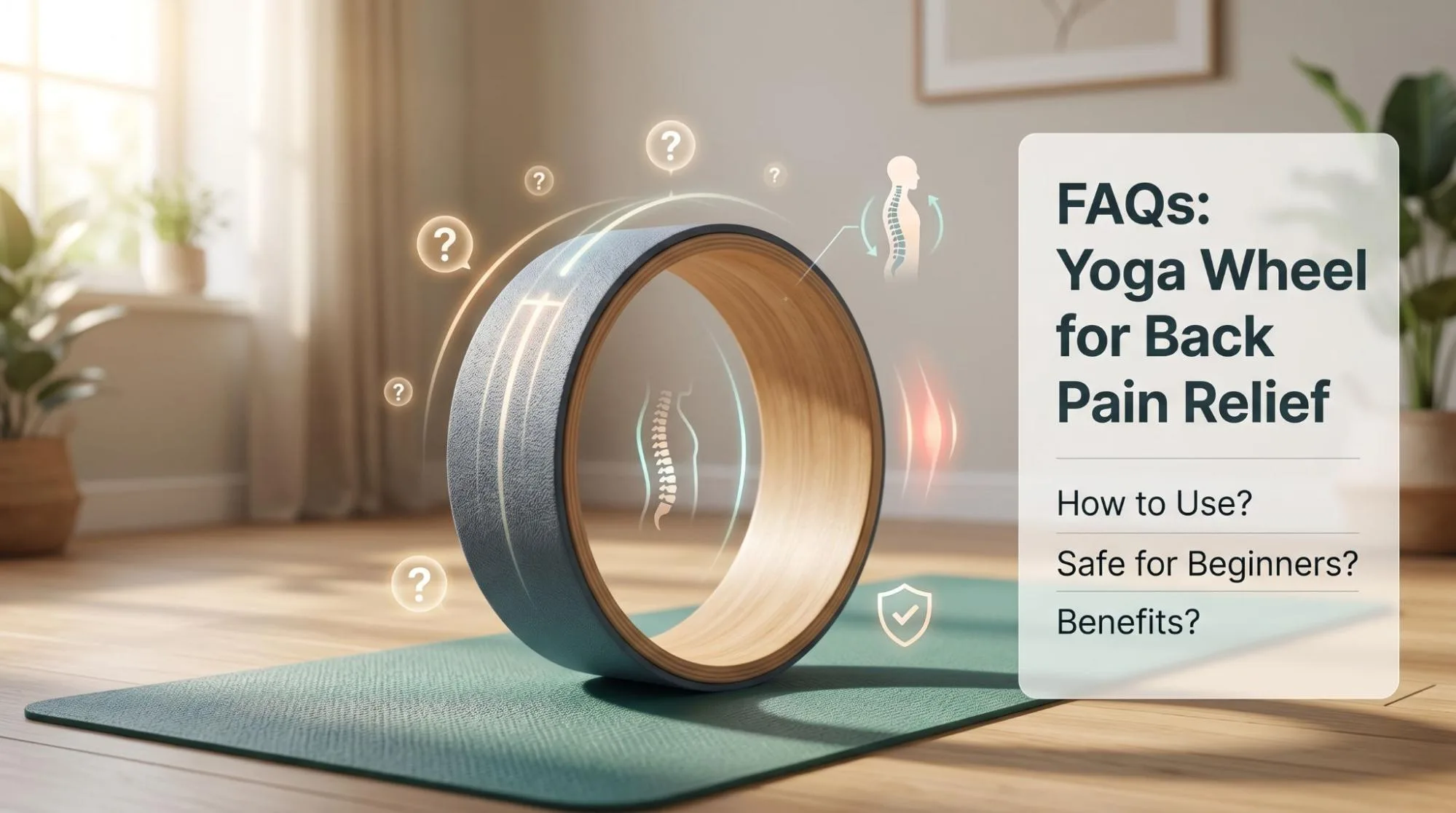
Frequently Asked Questions
What is a support wheel used for?
A support wheel is used for stretching, backbends, chest opening, balance practice, self-massage, and core exercises. It supports the body during movement and helps make certain stretches more accessible. Yes, the support wheel benefits for back pain include pain relief, improved posture, better spinal mobility, and support for tight muscles.
Can a support wheel help with back pain relief?
Yes, a support wheel may help with back pain relief by reducing stiffness, opening the chest, improving spinal mobility, and releasing tight muscles. It works best when used gently and consistently.
Is a support wheel safe for beginners?
A support wheel can be safe for beginners when used slowly and correctly. Start with basic supported stretches and avoid deep backbends until your body feels ready.
How often should I use a support wheel for back pain?
Most beginners can start with 2 to 4 short sessions per week. Keep each session around 5 to 10 minutes and focus on comfort, not intensity.
Can I use a support wheel for lower back pain?
You can use a support wheel for lower back support, but be careful. Avoid heavy pressure directly on the lower spine. Focus more on upper back mobility, hip flexor stretching, and core strengthening.
Does a support wheel improve posture?
A support wheel may help improve posture by opening the chest, stretching the shoulders, and encouraging better spinal awareness. It works best alongside core strengthening and regular movement breaks.
What is the best support wheel exercise for back pain relief?
A supported backbend is one of the best beginner exercises. It gently supports the spine, opens the chest, and helps release tension around the upper back and shoulder blades.
Can a support wheel replace medical treatment?
No. A support wheel should not replace medical treatment. It can be part of a healthy movement routine, but serious or ongoing back pain should be checked by a qualified professional.
Why does my back hurt when using a support wheel?
Your back may hurt if you are using too much pressure, moving too fast, forcing a deep stretch, or placing the wheel in an uncomfortable position. Stop and adjust. Pain is not something to push through.
Who should avoid using a support wheel?
People with recent spine injuries, severe back pain, slipped discs, osteoporosis, balance issues, or post-surgery restrictions should avoid using a support wheel unless cleared by a healthcare professional.
 alt=”Yoga wheel exit and resting position” title=”Yoga wheel exit and resting position”
Learn More : Supine Spinal Twist Benefits Explained
Conclusion
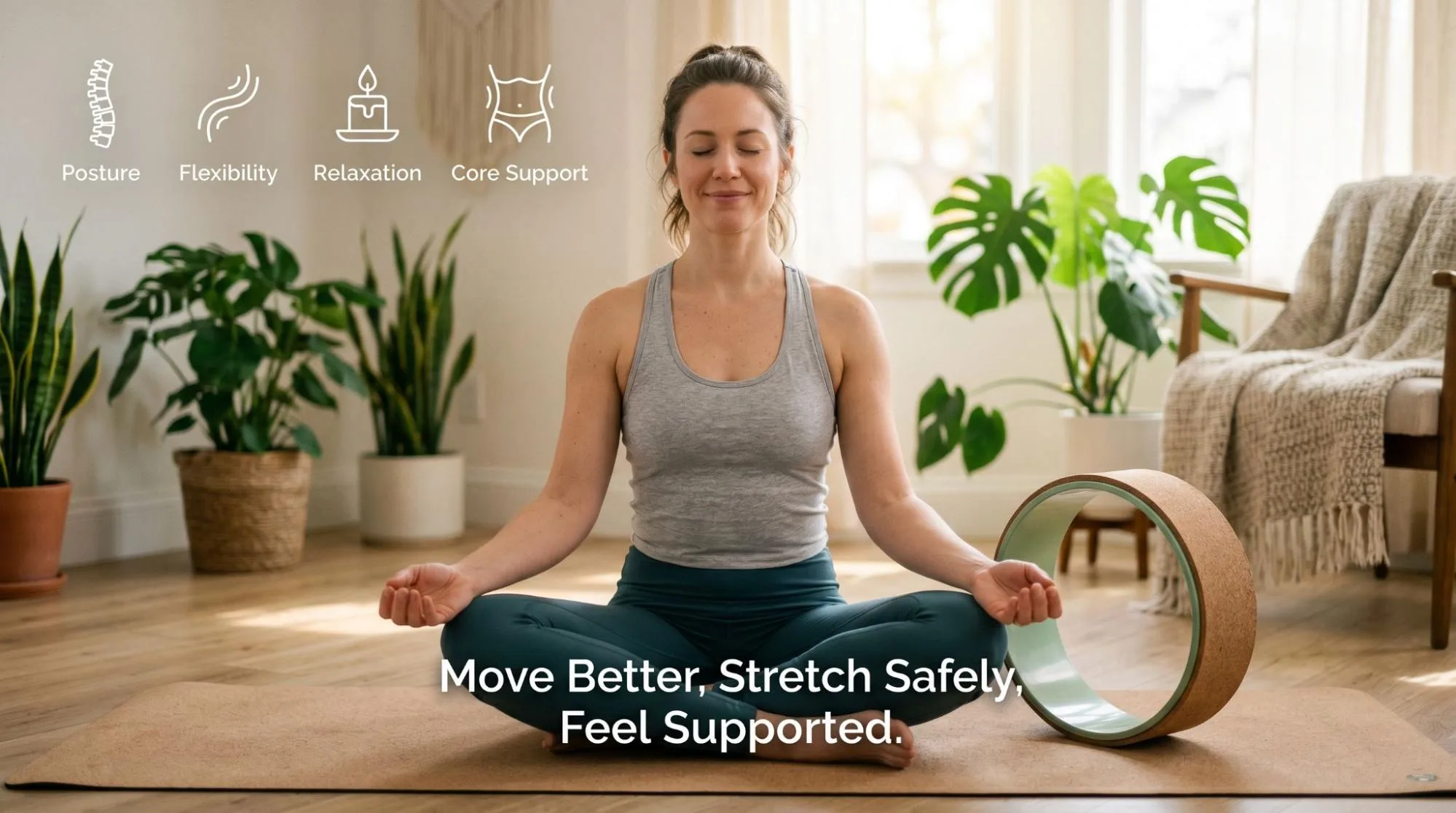
A support wheel can be a useful tool for gentle stretching, posture support, muscular relief, and better spinal mobility. The main support wheel benefits for back pain come from slow, supported movement rather than forceful stretching.
Start with simple exercises. Keep your knees bent when needed, use a mat for support, and move with control. As your body becomes more comfortable, you can slowly add more support wheel exercises for core strength, hip mobility, and posture.
Used wisely, the support wheel can become a calm and practical part of your back-care routine. The best support wheel benefits for back pain appear when you use the wheel gently, stay consistent, and avoid forcing deep stretches.
 alt=”Beginner backbend practice with controlled movement” title=”Beginner backbend practice with controlled movement”
Frequently Asked Questions
Is a support wheel safe for back pain?
It may be suitable for some people when used gently, but it is not appropriate for every type of back pain. Get professional guidance for persistent, severe, or radiating symptoms.
How long should beginners use a support wheel?
Start with a few slow movements and short holds. Focus on control and comfort rather than forcing a deeper stretch.
When should I avoid a support wheel?
Avoid it after an acute injury, during severe pain, or if you have numbness, weakness, balance problems, or recent spinal surgery unless a qualified professional has cleared the activity.
Further reading: For general yoga safety information, see NCCIH: Yoga—What You Need To Know.
