
Half Moon Pose yoga is a strong standing balance pose that improves focus, strengthens the legs, opens the hips, and helps your body feel more stable and controlled. Also known as Ardha Chandrasana, this pose may look difficult at first, but it becomes much easier when you use a yoga block, move slowly, and keep your attention on balance instead of perfection.
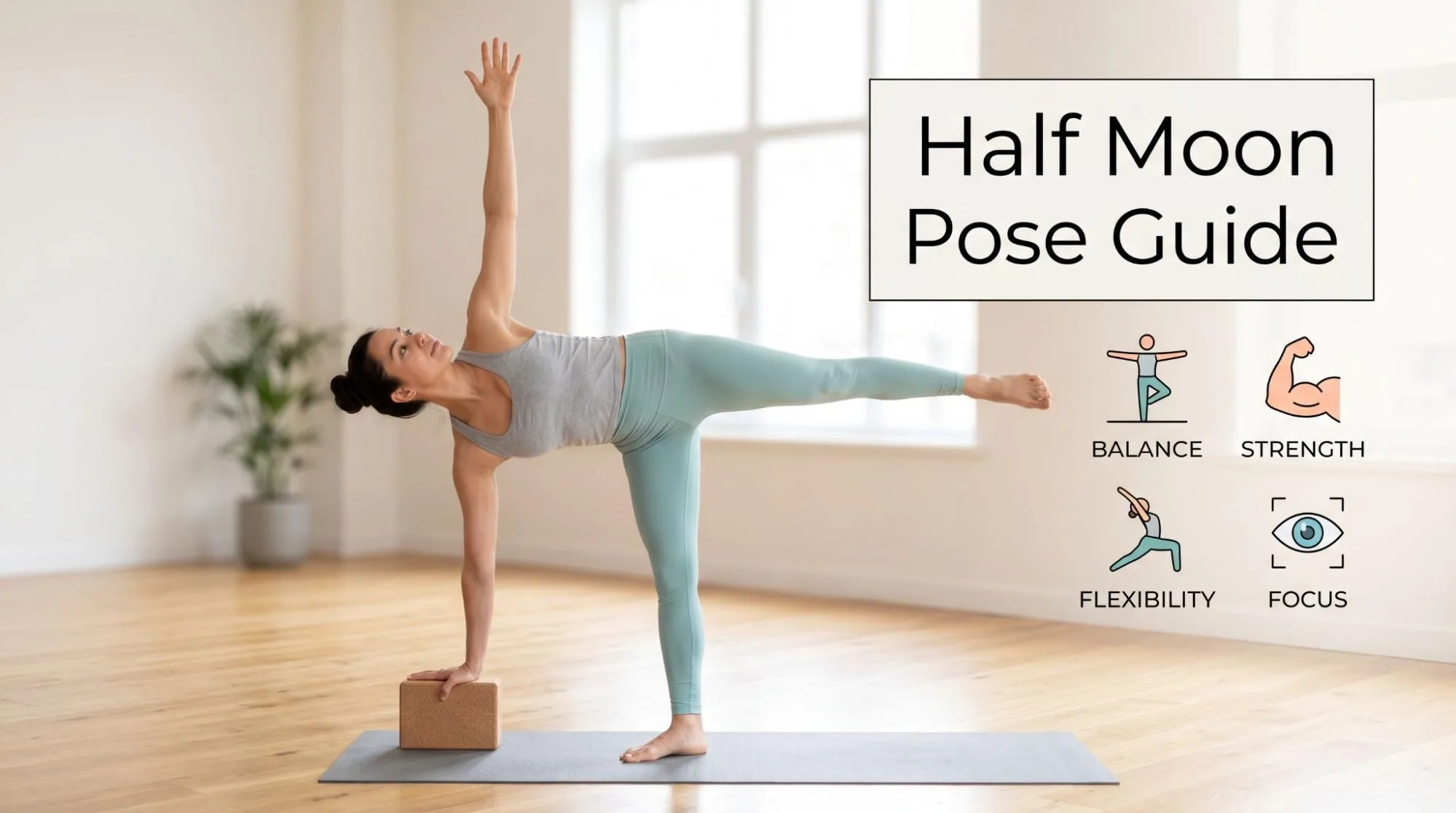 alt=”Half Moon Pose with hand supported on a yoga block” title=”Half Moon Pose with hand supported on a yoga block”
Quick answer: Half Moon Pose, or Ardha Chandrasana, is a standing balance pose with one leg supporting the body and the other reaching back. Use a block and a wall while learning; stable breathing matters more than lifting the leg high.
Practical note: Turning the standing foot and placing the hand on a block can make the pose feel far less rushed. Build the balance in stages instead of trying to open the chest fully on the first attempt.
What Is Half Moon Pose Yoga?
Half Moon Pose yoga is a standing pose where one foot stays on the mat while the other leg lifts behind you. One hand reaches toward the floor or rests on a block, and the other arm reaches upward.
This pose is often practiced from Triangle Pose because both poses open the hips, stretch the legs, and expand the chest. The main difference is that Half Moon Pose adds balance and more core control.
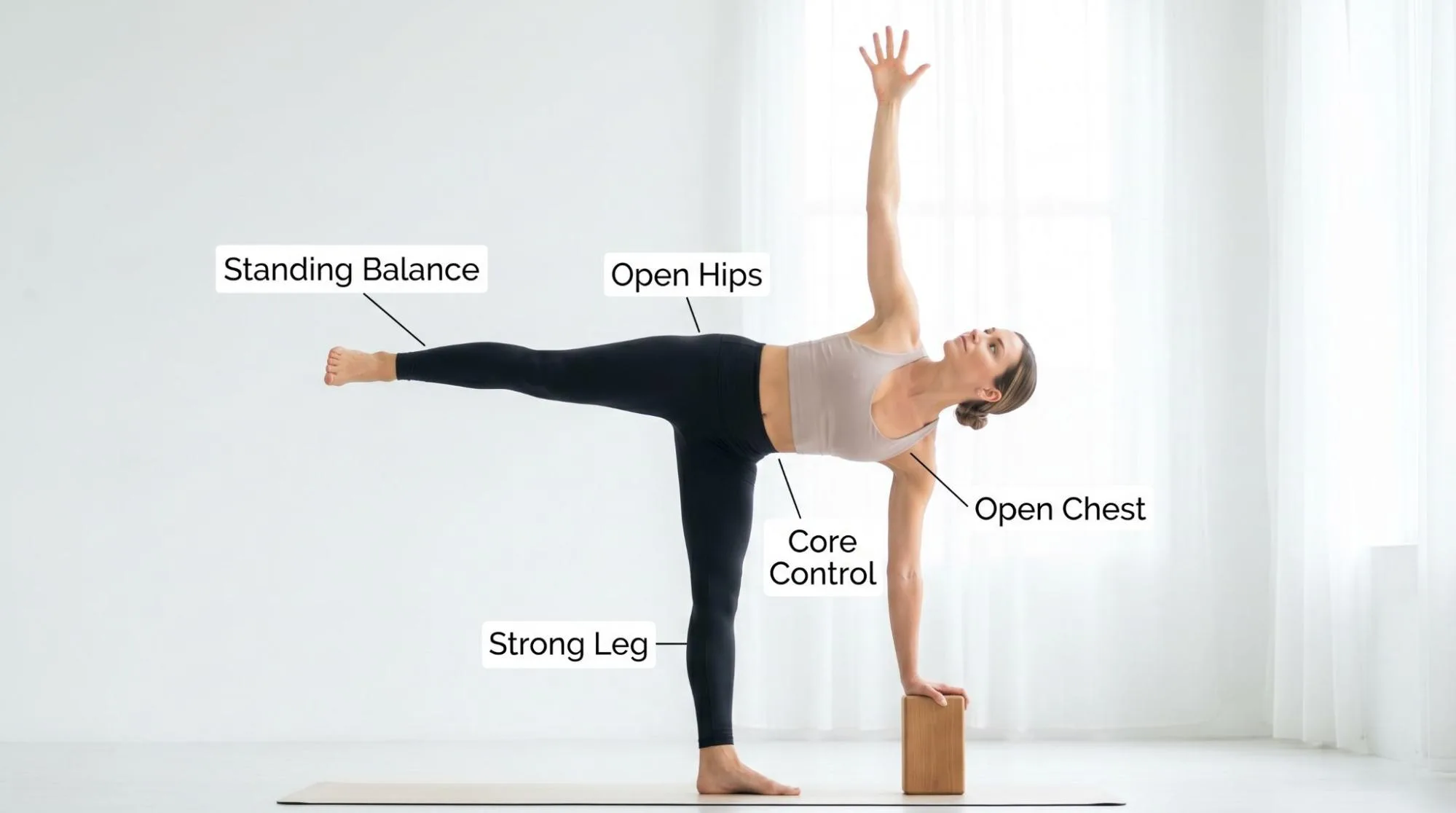 alt=”Ardha Chandrasana standing balance side view” title=”Ardha Chandrasana standing balance side view”
Meaning of Ardha Chandrasana
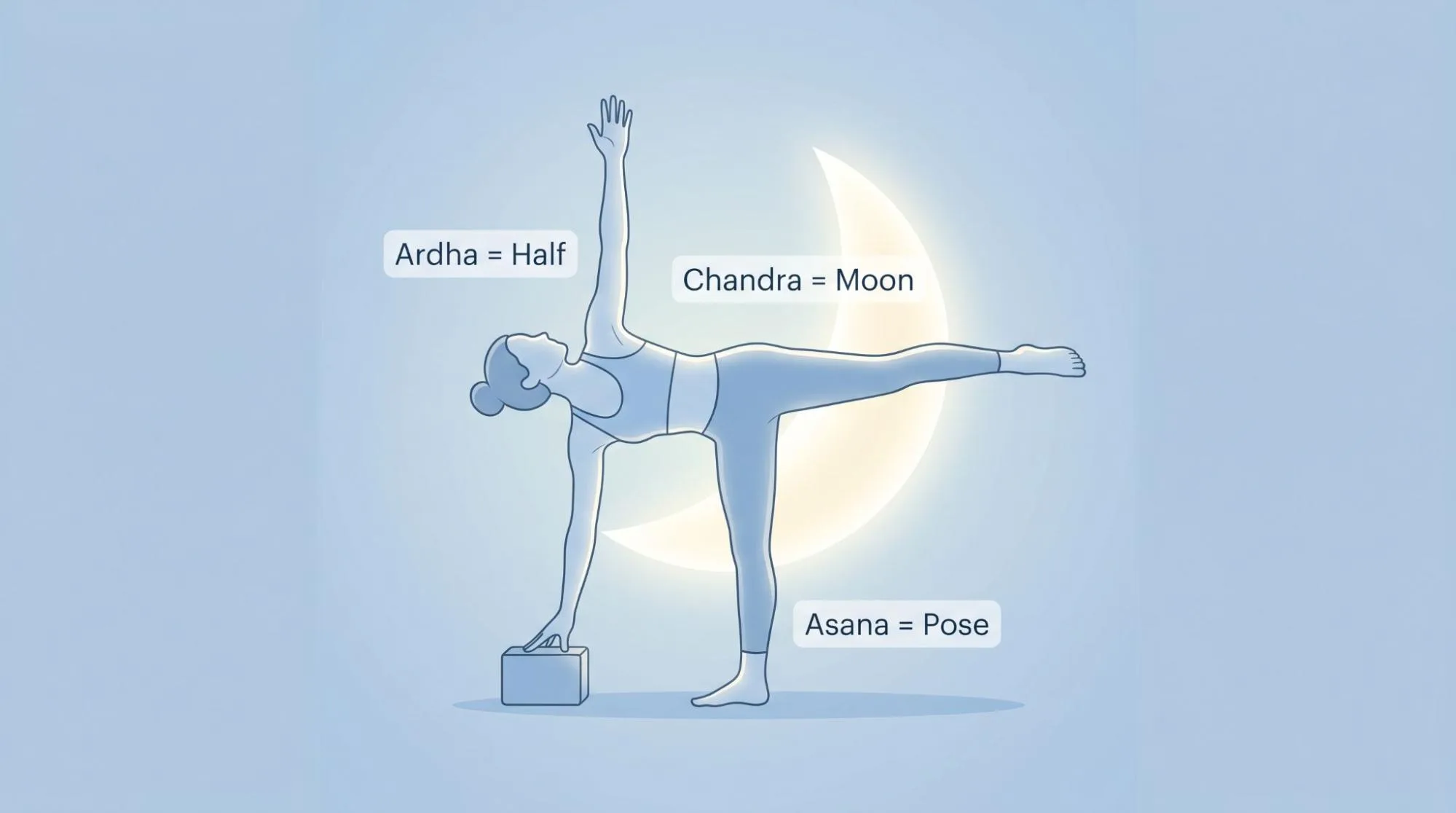
The Sanskrit name for Half Moon Pose is Ardha Chandrasana.
- Ardha means half
- Chandra means moon
- Asana means pose
So, Ardha Chandrasana means Half Moon Pose. The body creates a wide, open shape that looks like a half moon.
 alt=”Half Moon Pose beginner wall modification” title=”Half Moon Pose beginner wall modification”
Learn More : Warrior 1 Pose: Benefits, Steps, Alignment, and Beginner Tips
Why Practice Half Moon Pose?
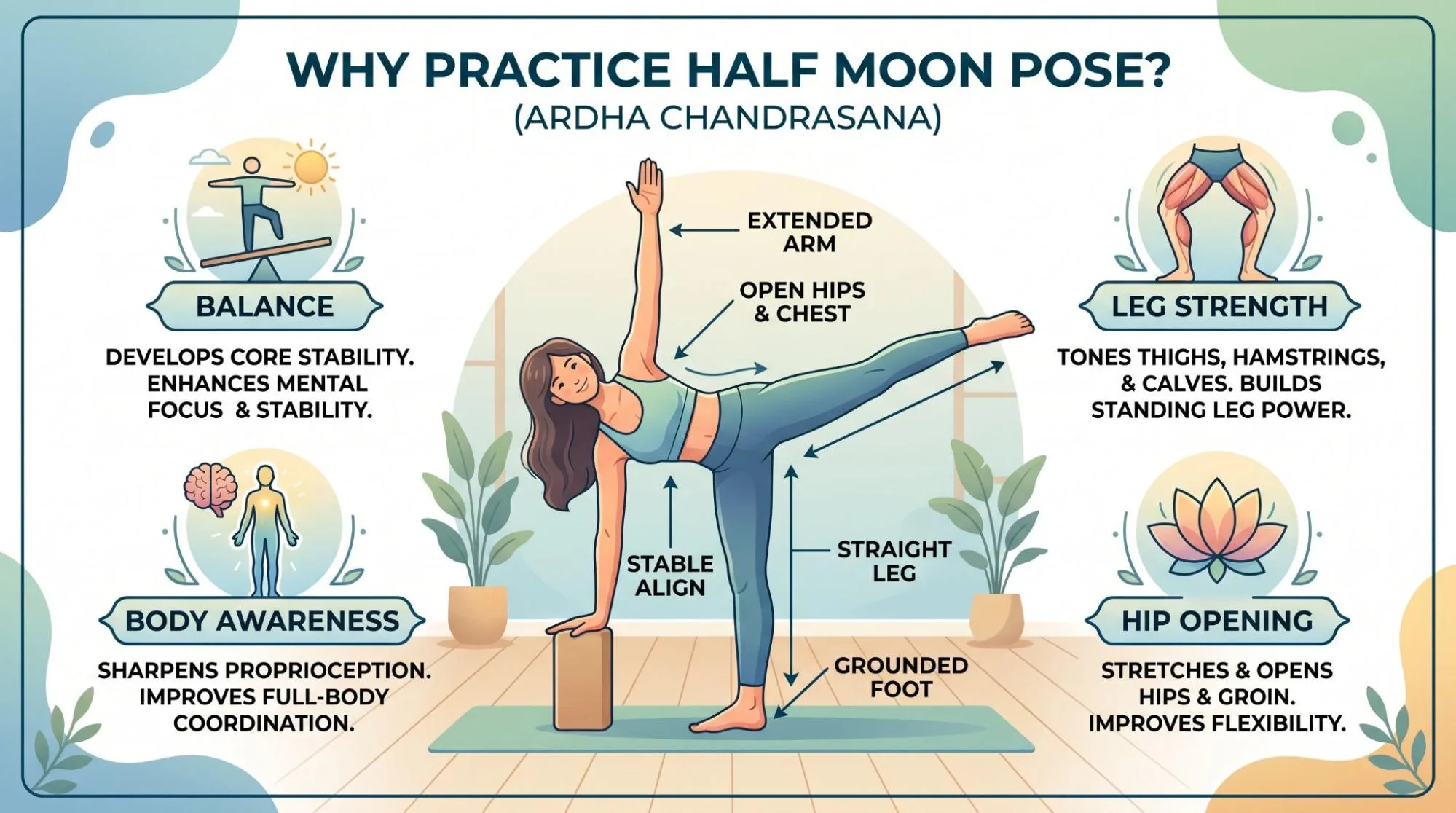
You should practice Half Moon Pose because it trains strength, balance, flexibility, and focus at the same time. It is not only a stretching pose. It teaches your whole body to stay active while remaining calm.
This pose is helpful if you already practice yoga poses like Triangle Pose, Tree Pose, Warrior II, or Side Plank.
 alt=”Standing leg alignment in Half Moon Pose” title=”Standing leg alignment in Half Moon Pose”
Half Moon Pose Benefits
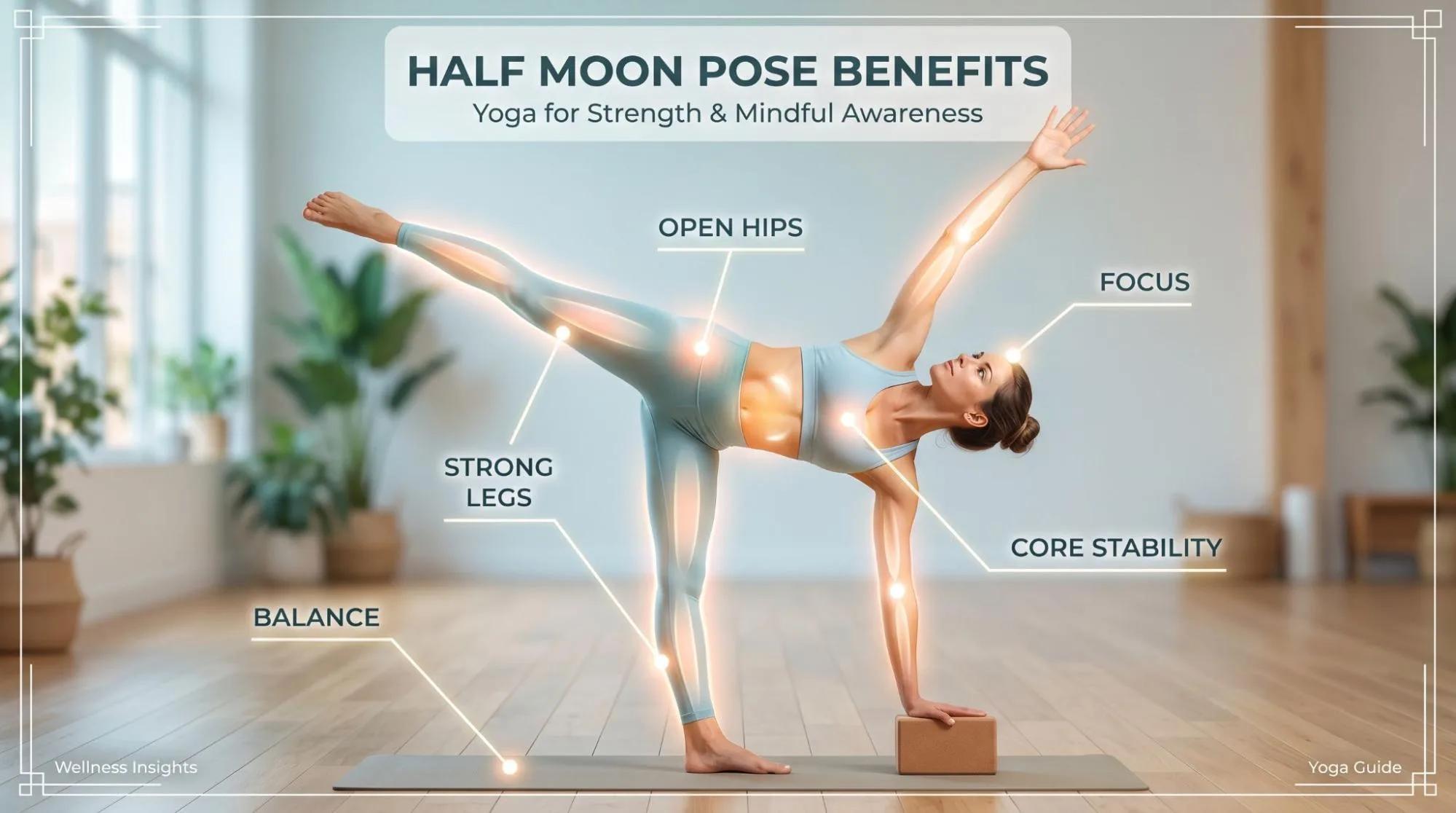
May Improve Balance
Half Moon Pose challenges your balance because most of your body weight is supported by the standing leg. Your foot, ankle, knee, hip, and core all work together to keep you steady.
Strengthens the Legs
The standing leg becomes stronger as it supports your body. The lifted top leg also stays active when you press through the heel instead of letting the leg drop.
Opens the Hips and Chest
As you rotate the hips and chest open, the body moves out of a closed position. This can feel helpful if you sit for long hours or feel tight through the front body.
Supports Core Stability
Your core helps control the pose. Without core engagement, the body may collapse forward or lose balance.
Stretches the Hamstrings and Calves
The standing leg gets a strong stretch through the hamstrings and calves. If your muscles feel tight, keep your hand on a block instead of forcing the hand to the floor.
Builds Focus and Confidence
Half Moon Pose teaches you to breathe, adjust, and stay steady. Even a little wobbling can help you build better body awareness.
 alt=”Lifted leg and hip position in Ardha Chandrasana” title=”Lifted leg and hip position in Ardha Chandrasana”
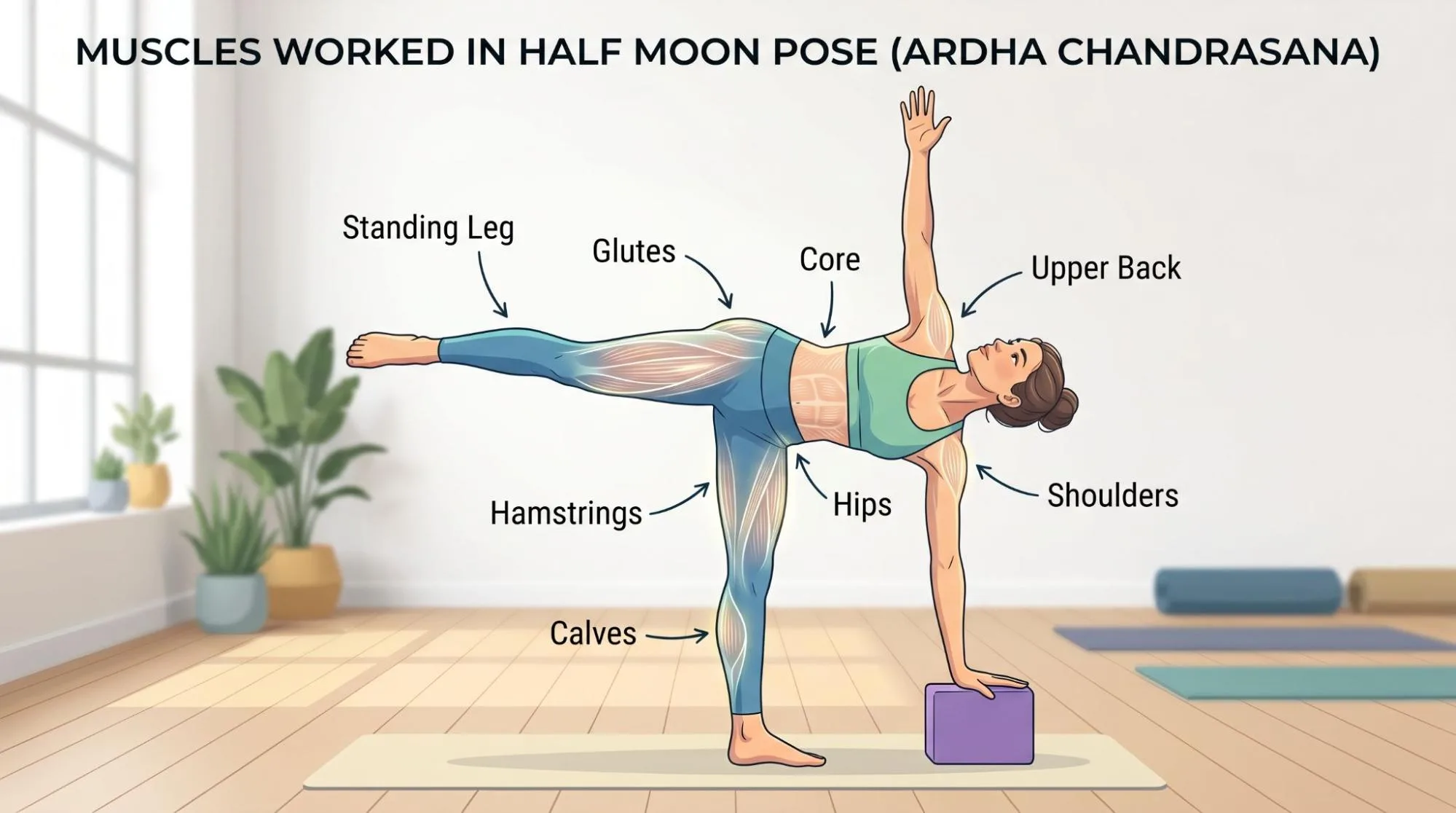
Muscles Worked in Half Moon Pose
Standing Leg Muscles
The standing leg works the thighs, calves, ankle, and foot muscles. These muscles help you stay grounded.
Glutes
The glutes support the lifted leg and help keep the hips stable.
Core Muscles
The abdominal muscles and side waist keep your torso controlled.
Hamstrings
The hamstrings stretch in the standing leg and support the lifted leg.
Calves
The calves help you balance through the standing foot.
Hip Muscles
The hip muscles stabilize the pelvis and help open the body sideways.
Shoulders and Upper Back
The shoulders and upper back help keep the chest open and the arms extended.
 alt=”Half Moon Pose arm reach and steady gaze” title=”Half Moon Pose arm reach and steady gaze”
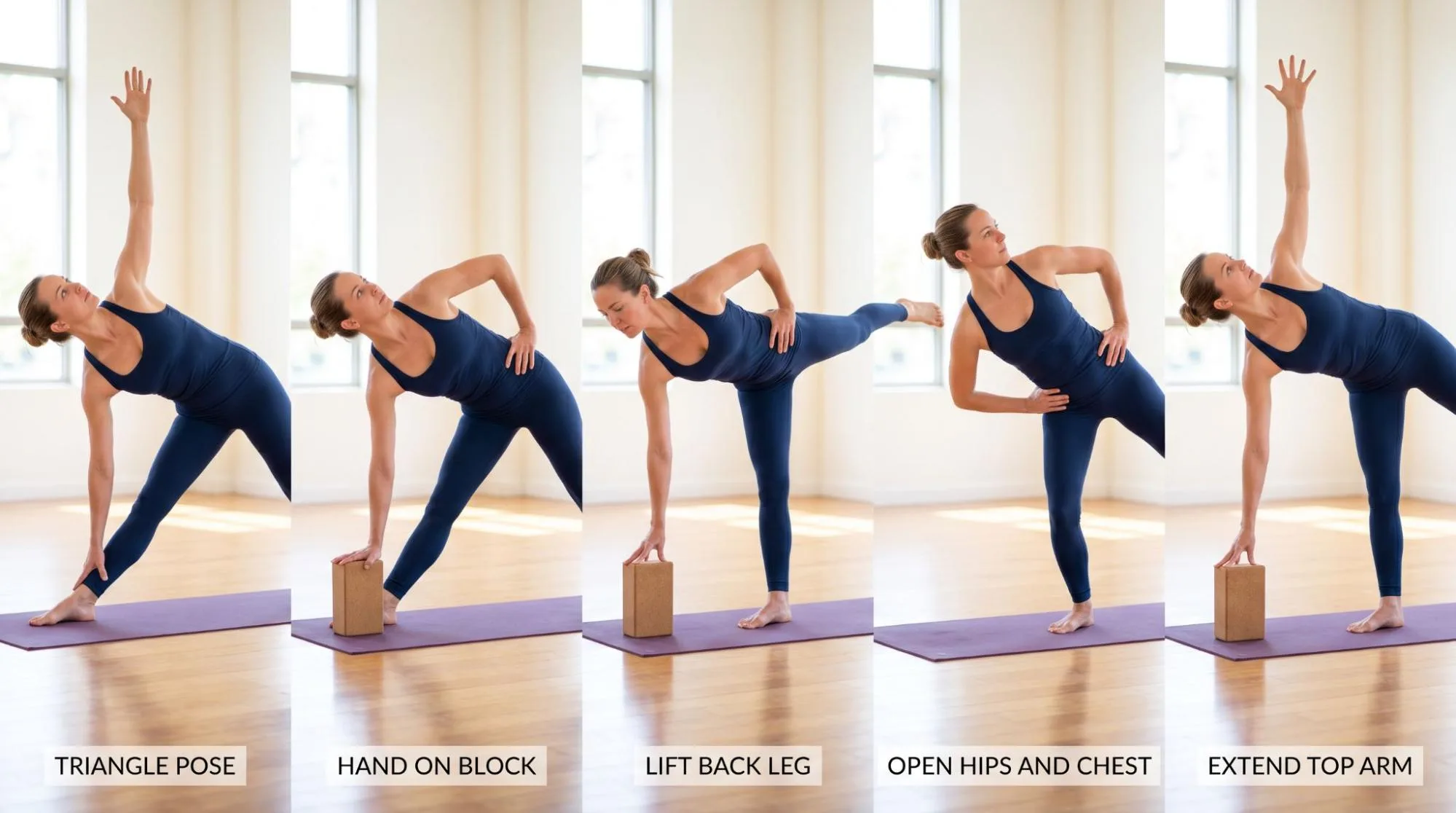
How to Do Half Moon Pose Step by Step
Step 1: Start in Triangle Pose
Begin in Triangle Pose with your right foot forward. Keep your front foot grounded and both legs active.
Step 2: Place Your Bottom Hand
Bend the front knee slightly and place your bottom hand on the floor or a yoga block. Keep the hand slightly in front of the front foot.
Step 3: Lift the Back Leg
Shift your weight into the front foot and slowly lift the back leg. Keep the lifted leg strong and press through the heel.
Step 4: Open the Hips
Gently rotate the top hip upward. Do not force the hips to stack if your body feels unstable.
Step 5: Extend the Top Arm
Reach your top hand toward the ceiling. Keep the shoulders open but relaxed.
Step 6: Choose Your Gaze
Look down first if you are a beginner. Later, you can look forward or up toward the top hand.
Step 7: Hold and Exit Slowly
Hold for a few breaths. To come out, bend the standing knee slightly, lower the lifted leg, and return to Triangle Pose.
Repeat on the other side with the left foot forward.
 alt=”Using a block for balance in Half Moon Pose” title=”Using a block for balance in Half Moon Pose”
learn More : Triangle Pose Yoga Common Mistakes and How to Fix Them
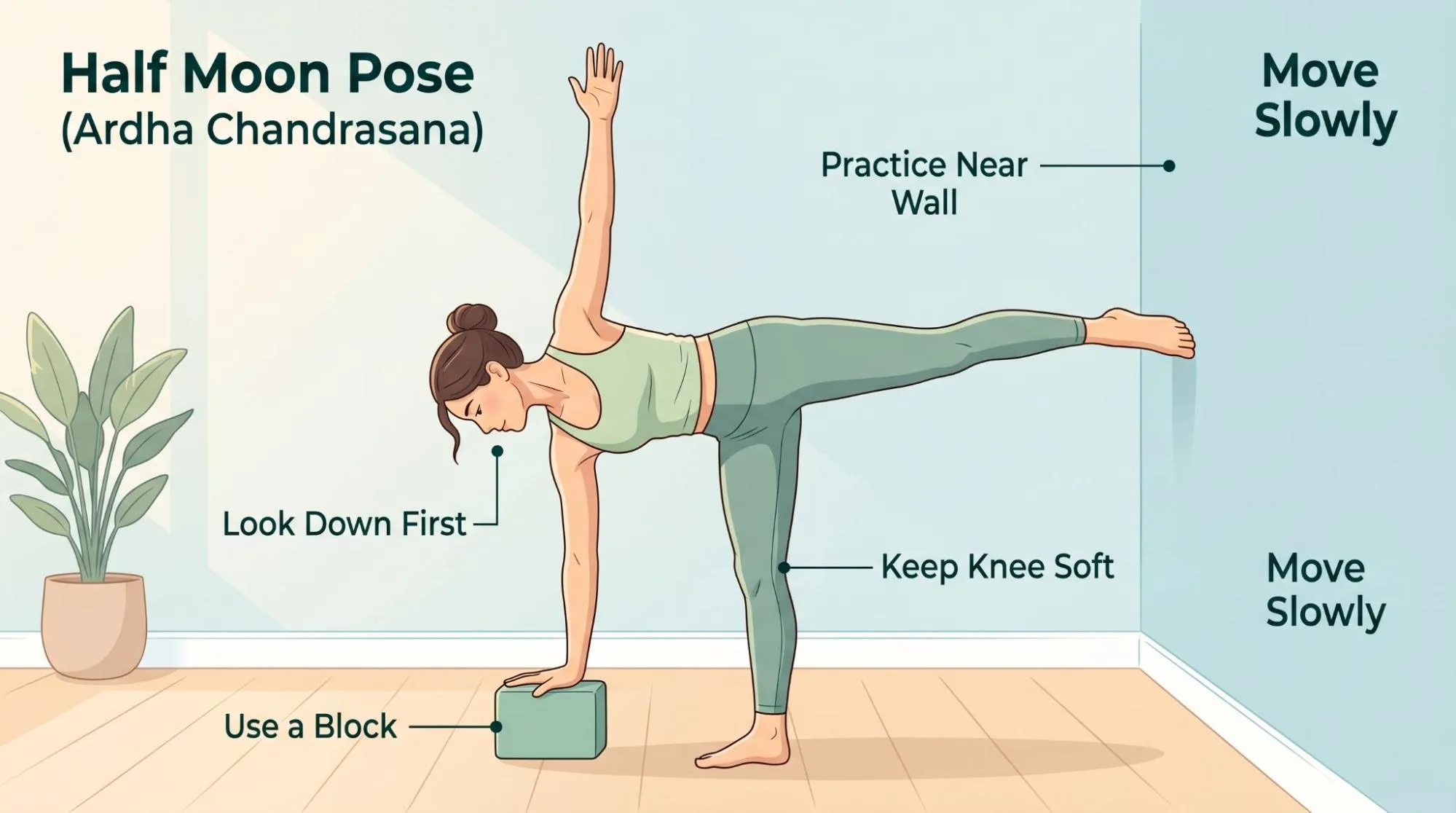
Beginner Tips for Half Moon Pose
Use a Yoga Block
A block makes Half Moon Pose safer and more stable. Place it under your bottom hand so you do not have to round your back.
Keep a Slight Bend in the Standing Knee
Do not lock the standing knee. A soft bend protects the joint and helps you balance better.
Practice Near a Wall
A wall gives support and helps you understand the correct shape of the pose.
Look Down First
Looking up can make the pose harder. Keep your gaze down until your balance improves.
Move Slowly
Rushing makes balance difficult. Move slowly and breathe naturally.
 alt=”Half Moon Pose preparation from Triangle Pose” title=”Half Moon Pose preparation from Triangle Pose”
Common Mistakes to Avoid
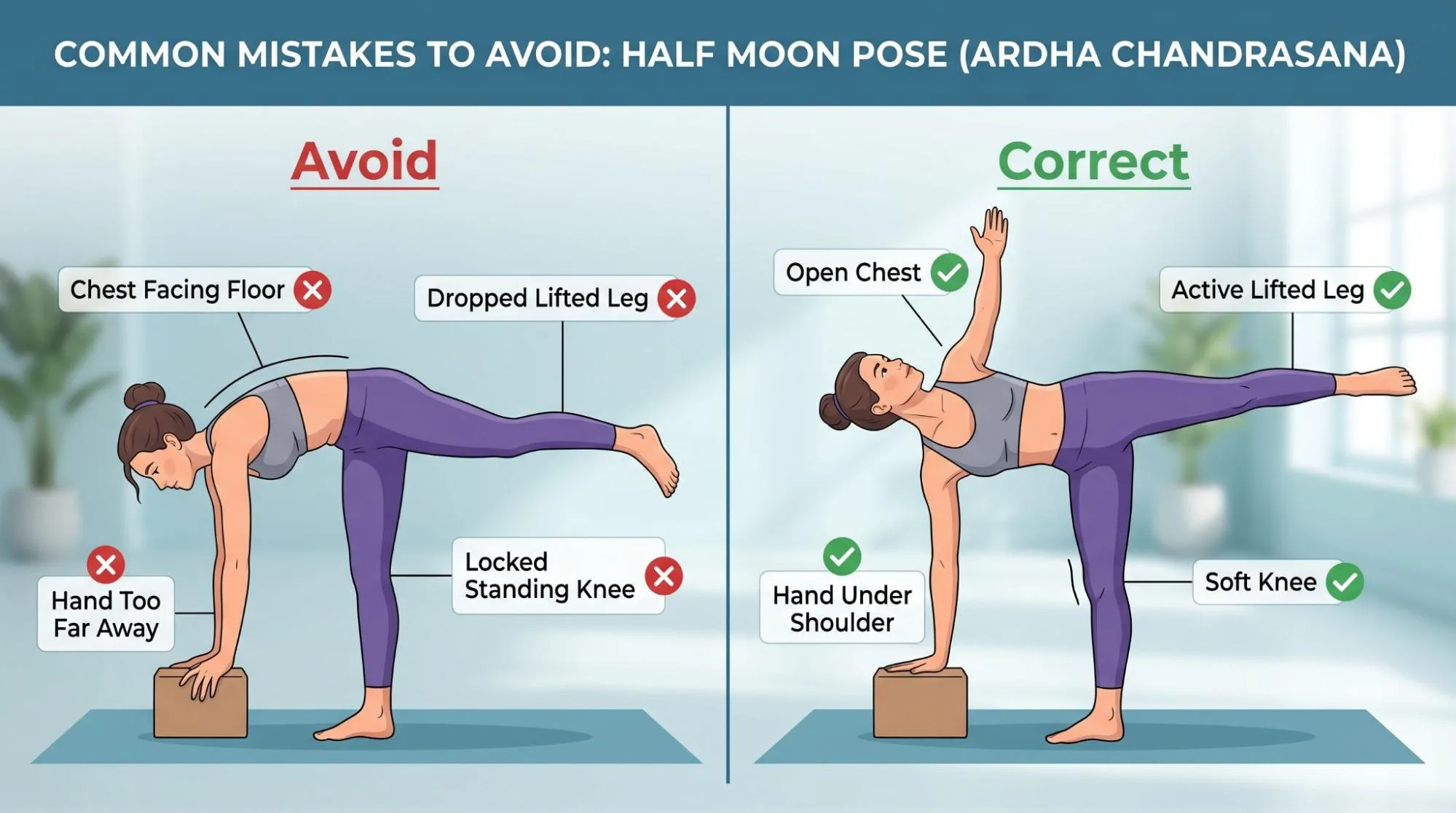
Placing the Bottom Hand Too Far Away
If the bottom hand is too far from the standing foot, the body may collapse. Keep it slightly in front of the foot.
Letting the Chest Face the Floor
Half Moon Pose should open the chest sideways. Try not to let the chest drop toward the floor.
Dropping the Lifted Leg
Keep the top leg active by pressing through the heel.
Locking the Standing Knee
A locked knee can create pressure. Keep the standing knee soft.
Forcing the Gaze Upward
Do not look up if it makes you lose balance. Looking down is completely fine.
 alt=”Bent-knee modification for Half Moon Pose” title=”Bent-knee modification for Half Moon Pose”
Half Moon Pose Alignment Tips
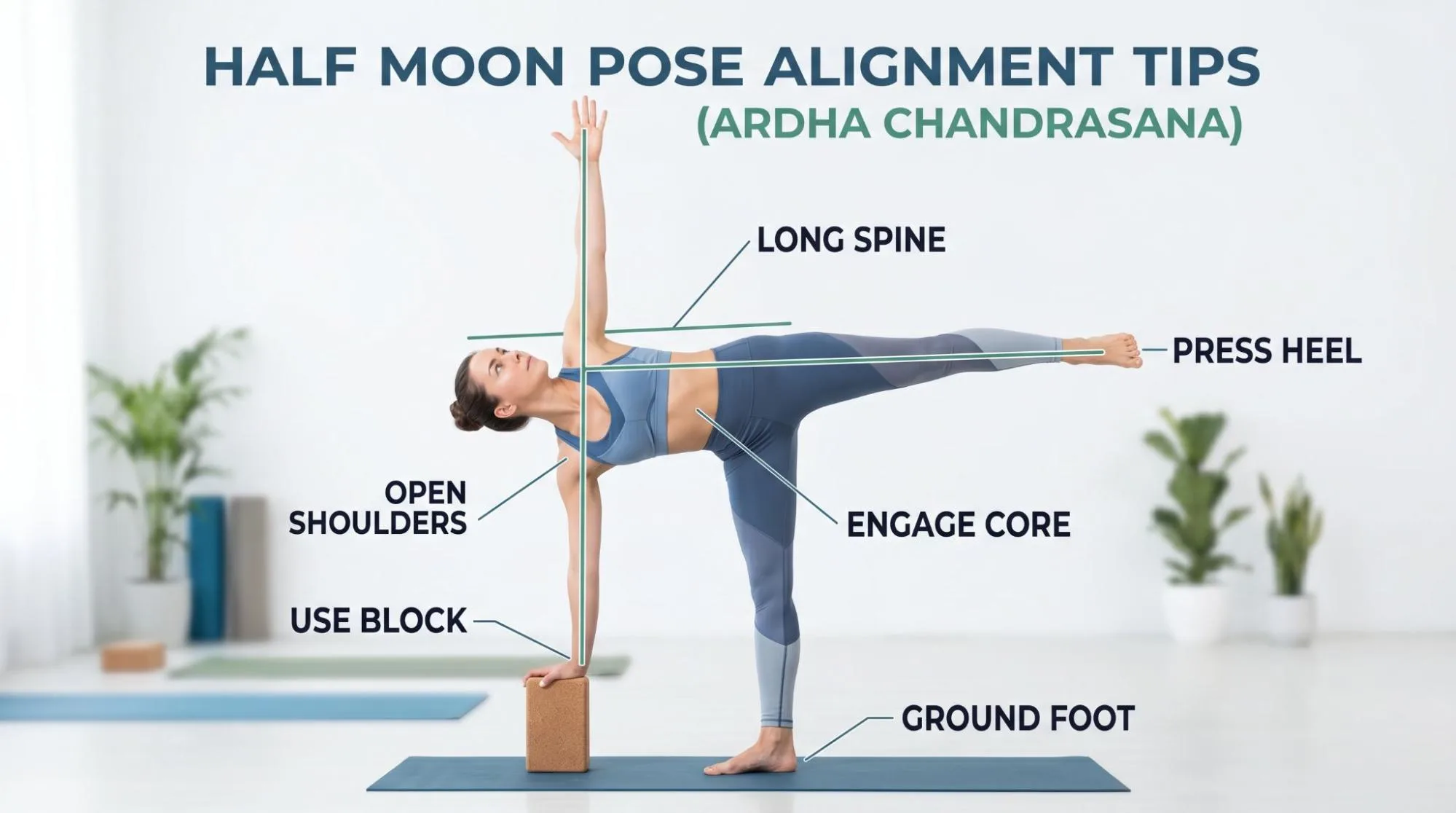
Keep the Standing Foot Grounded
Press evenly through the heel, big toe mound, and little toe mound.
Press Through the Lifted Heel
This keeps the lifted leg strong and helps activate the glutes.
Stack the Hips Gently
Open the hips slowly without forcing the body.
Keep the Spine Long
Lengthen from the top of the head through the lifted heel.
Engage the Core
Gently draw the lower belly in to support the lower back.
Keep the Shoulders Open
Reach through both arms without tensing your neck.
Use a Block if the Floor Feels Too Far Away
Using a block is not cheating. It often improves alignment and makes the pose more useful.
 alt=”Half Moon Pose with wall support” title=”Half Moon Pose with wall support”
Safety Tips and Precautions
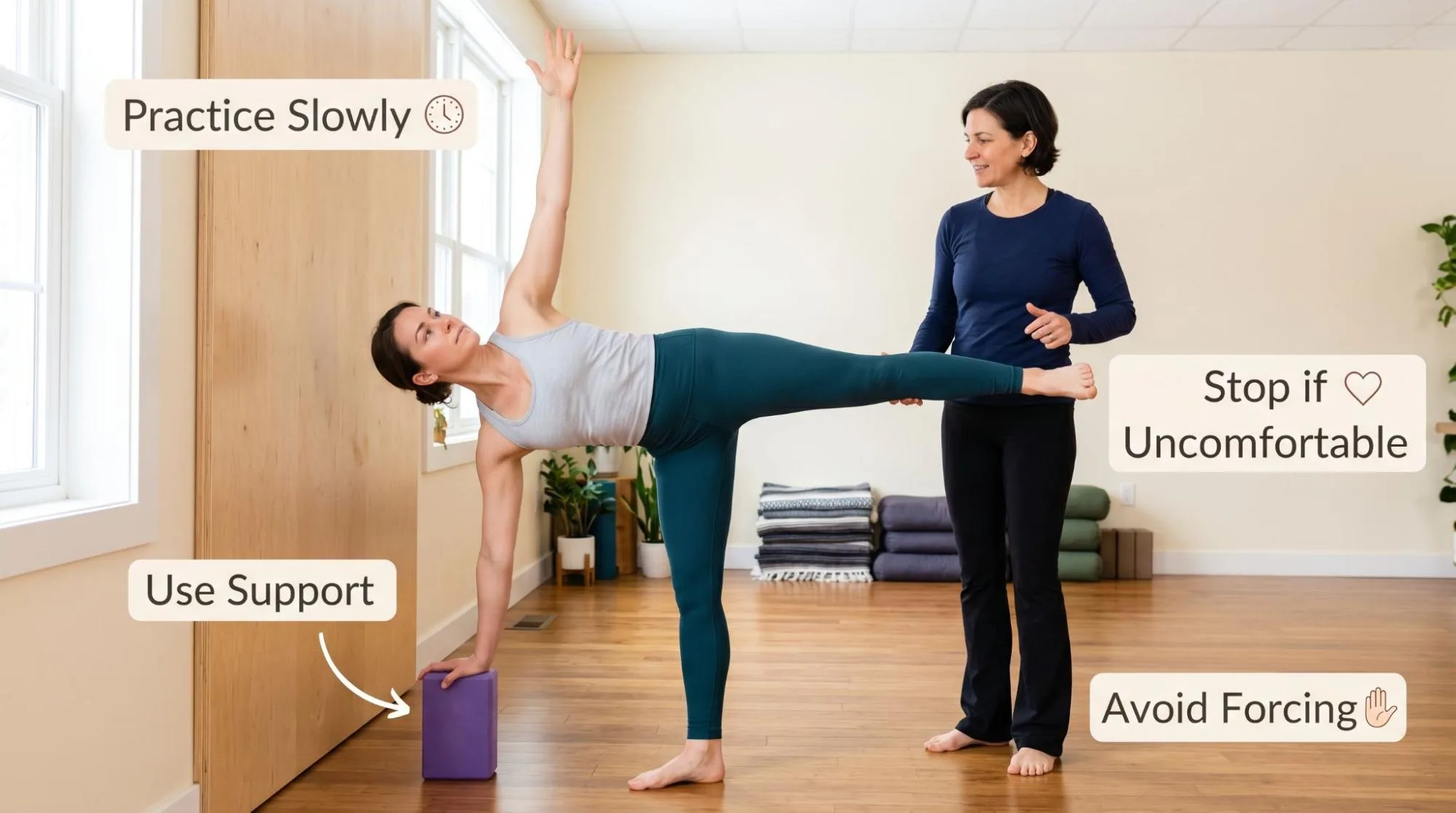
Warm up before practicing Half Moon Pose. Use a block or wall if your balance feels weak. Avoid forcing your hips, knees, neck, or lower back.
Stop if you feel sharp pain, dizziness, or joint pressure. The pose should feel challenging, but not unsafe.
 alt=”Safe foot placement in a standing balance” title=”Safe foot placement in a standing balance”
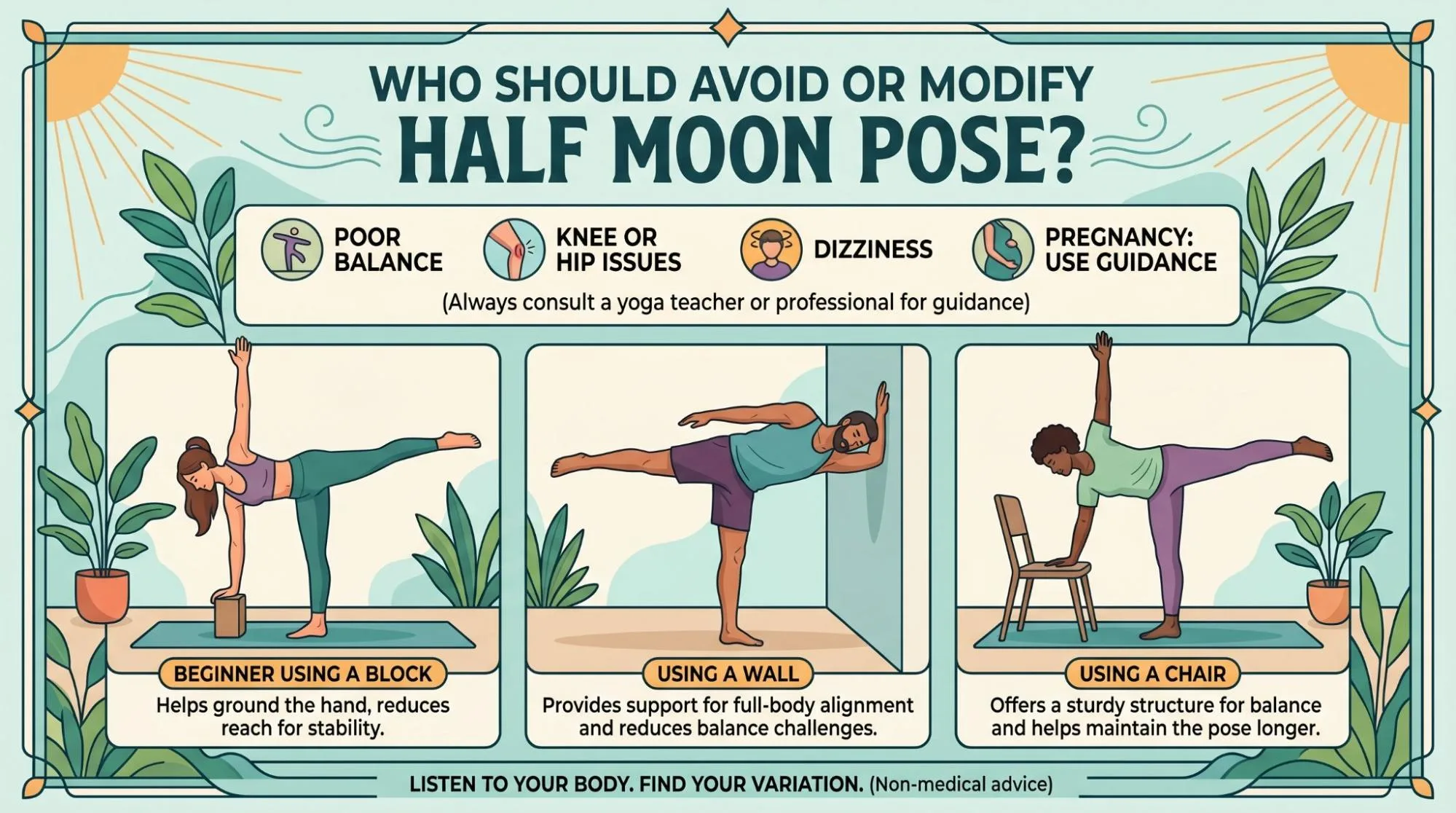
Who Should Avoid or Modify Half Moon Pose?
Beginners with Poor Balance
Use a wall, chair, or block for support.
People with Knee, Hip, or Ankle Issues
Keep the pose smaller and avoid putting too much pressure on the standing leg.
People with Dizziness or Vertigo
Keep the gaze down and avoid turning the head upward.
Pregnant Practitioners
Use wall support and avoid any version that feels unstable or compressed.
 alt=”Breathing during Ardha Chandrasana” title=”Breathing during Ardha Chandrasana”
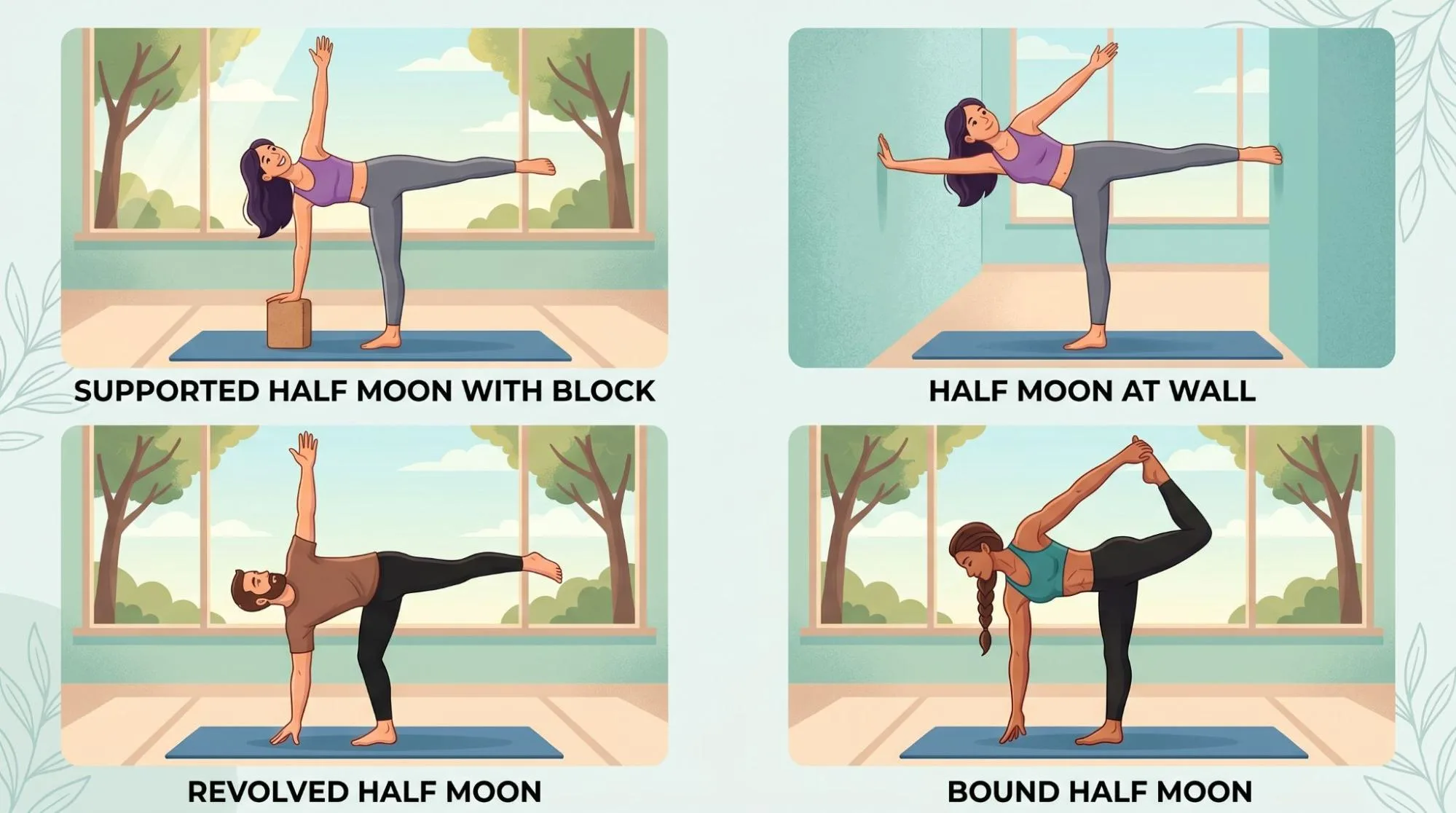
Half Moon Pose Variations
Supported Half Moon Pose with a Block
This is the best variation of Half Moon for beginners. Place your bottom hand on a block and focus on control.
Half Moon Pose at the Wall
Practice with your back or lifted foot near a wall for extra support.
Revolved Half Moon Pose
This version adds a twist and is more challenging for balance and core strength.
Bound Half Moon Pose
This advanced variation bends the lifted leg and may include holding the foot with the top hand.
 alt=”Half Moon Pose chest opening without forcing” title=”Half Moon Pose chest opening without forcing”
Half Moon Pose for Beginners
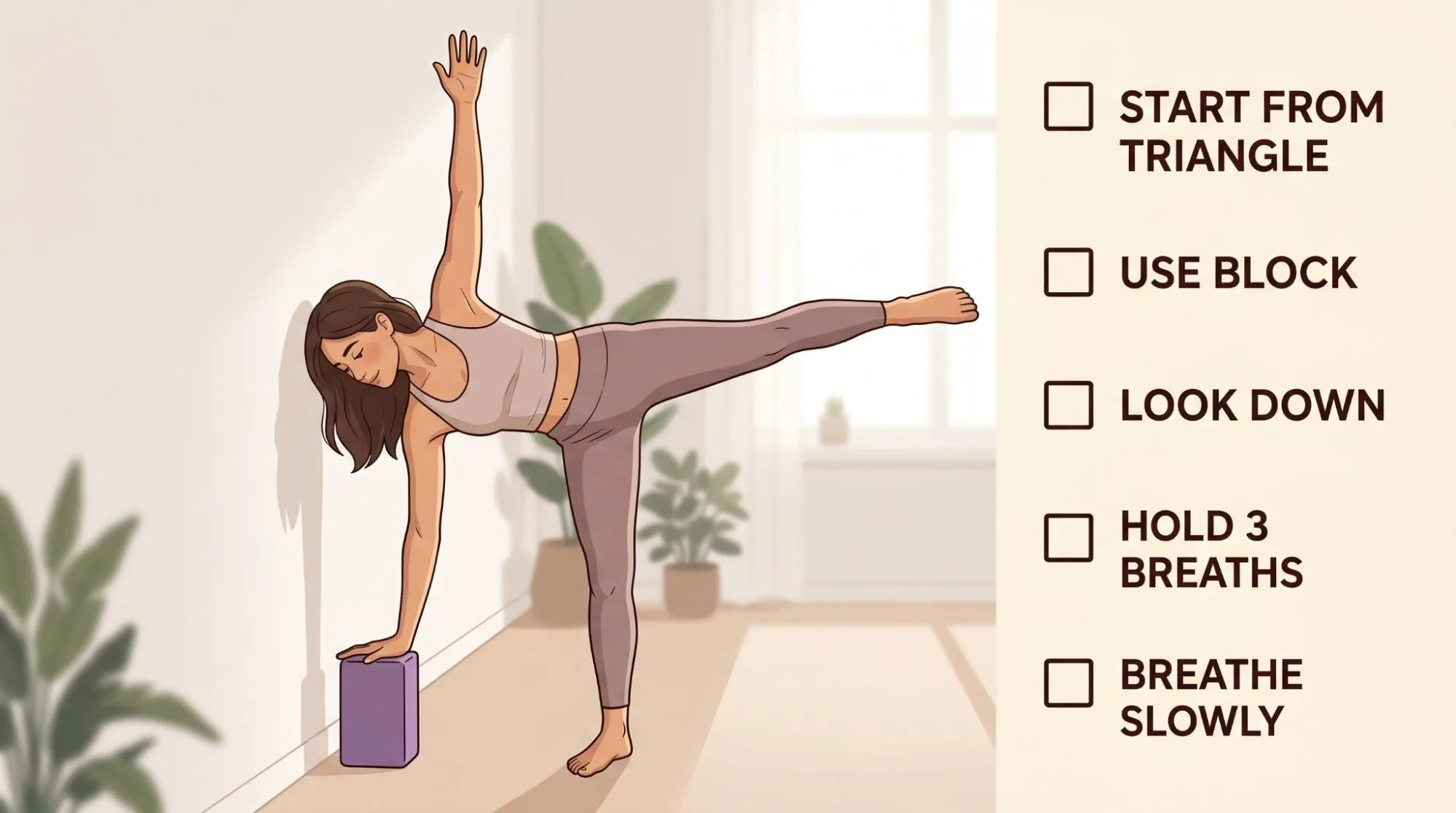
Half Moon Pose for beginners should be simple and supported. Use a block, keep the standing knee slightly bent, look down, and avoid lifting the leg too high.
The goal is not to create a perfect shape. The goal is to feel steady, safe, and aware of your body.
 alt=”Beginner balance practice on a yoga mat” title=”Beginner balance practice on a yoga mat”
Half Moon Pose vs Triangle Pose
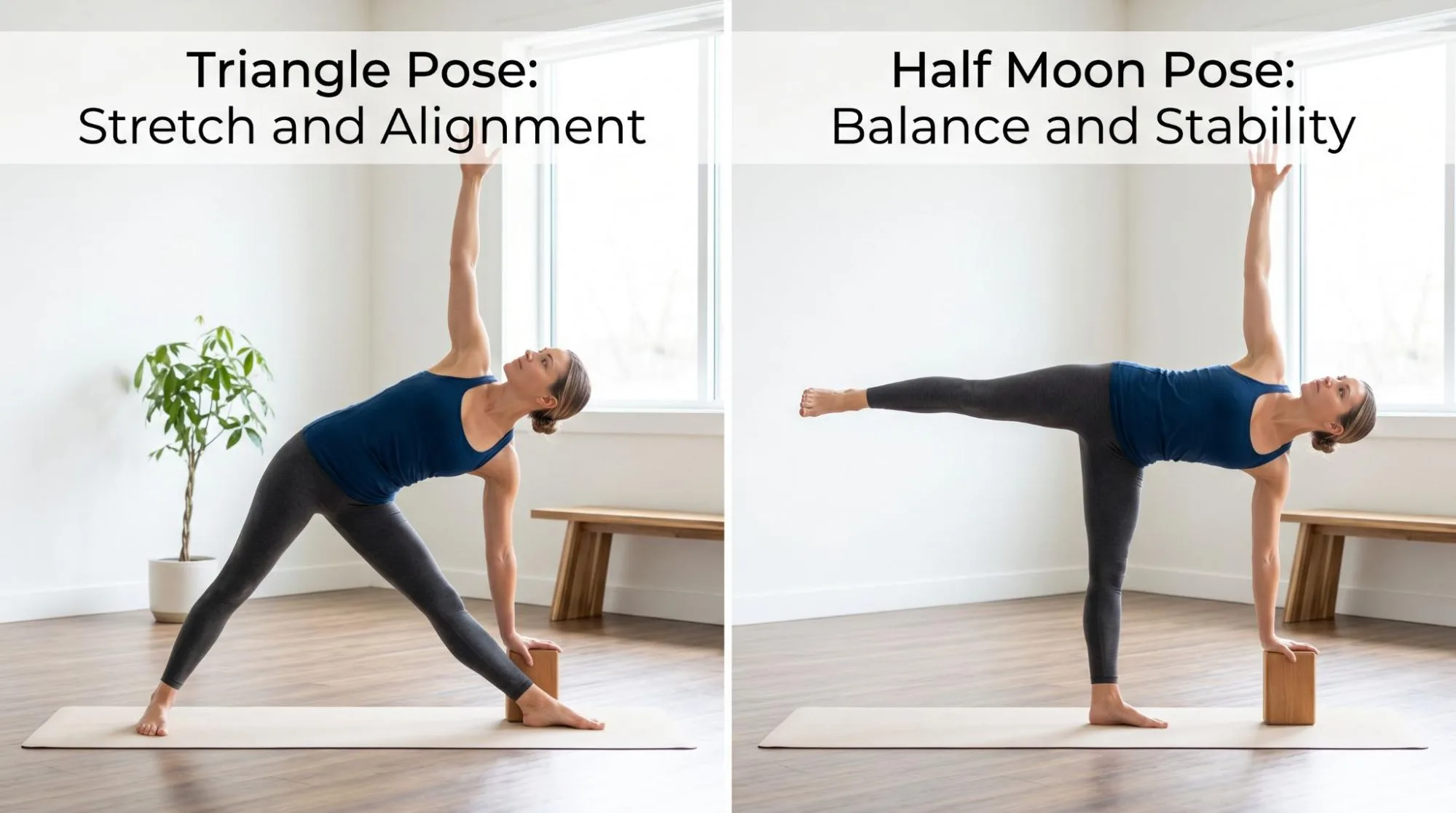
Triangle Pose keeps both feet on the floor. It focuses on stretching the legs, opening the hips, and rotating the chest.
Half Moon Pose lifts one leg and adds balance, core stability, and more standing leg strength.
Triangle Pose is usually easier, so it is a good preparation before you practice Half Moon Pose.
 alt=”Half Moon Pose transition and exit” title=”Half Moon Pose transition and exit”
 alt=”Half Moon Pose transition and exit” title=”Half Moon Pose transition and exit”
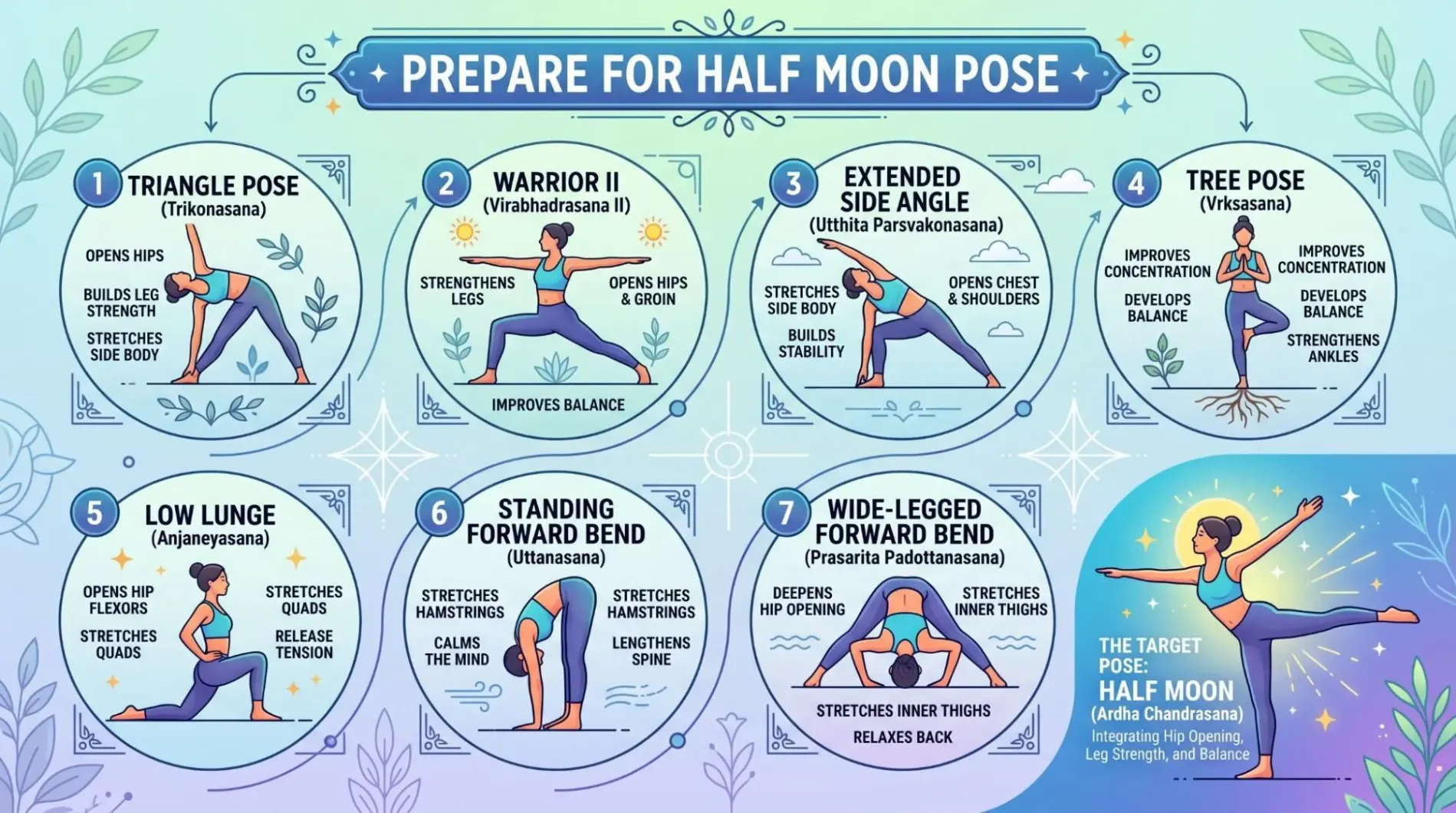
Best Preparatory Poses for Half Moon Pose
Triangle Pose
Prepares the hips, legs, and chest.
Warrior II
Builds leg strength and improves grounding.
Extended Side Angle Pose
Opens the side body and strengthens the lower body.
Tree Pose
Improves one-leg balance.
Low Lunge
Opens the hips and hip flexors.
Standing Forward Bend
Stretches the hamstrings and calves.
Wide-Legged Forward Bend
Opens the inner thighs, hips, and back legs.
 alt=”Hip alignment in Half Moon Pose” title=”Hip alignment in Half Moon Pose”
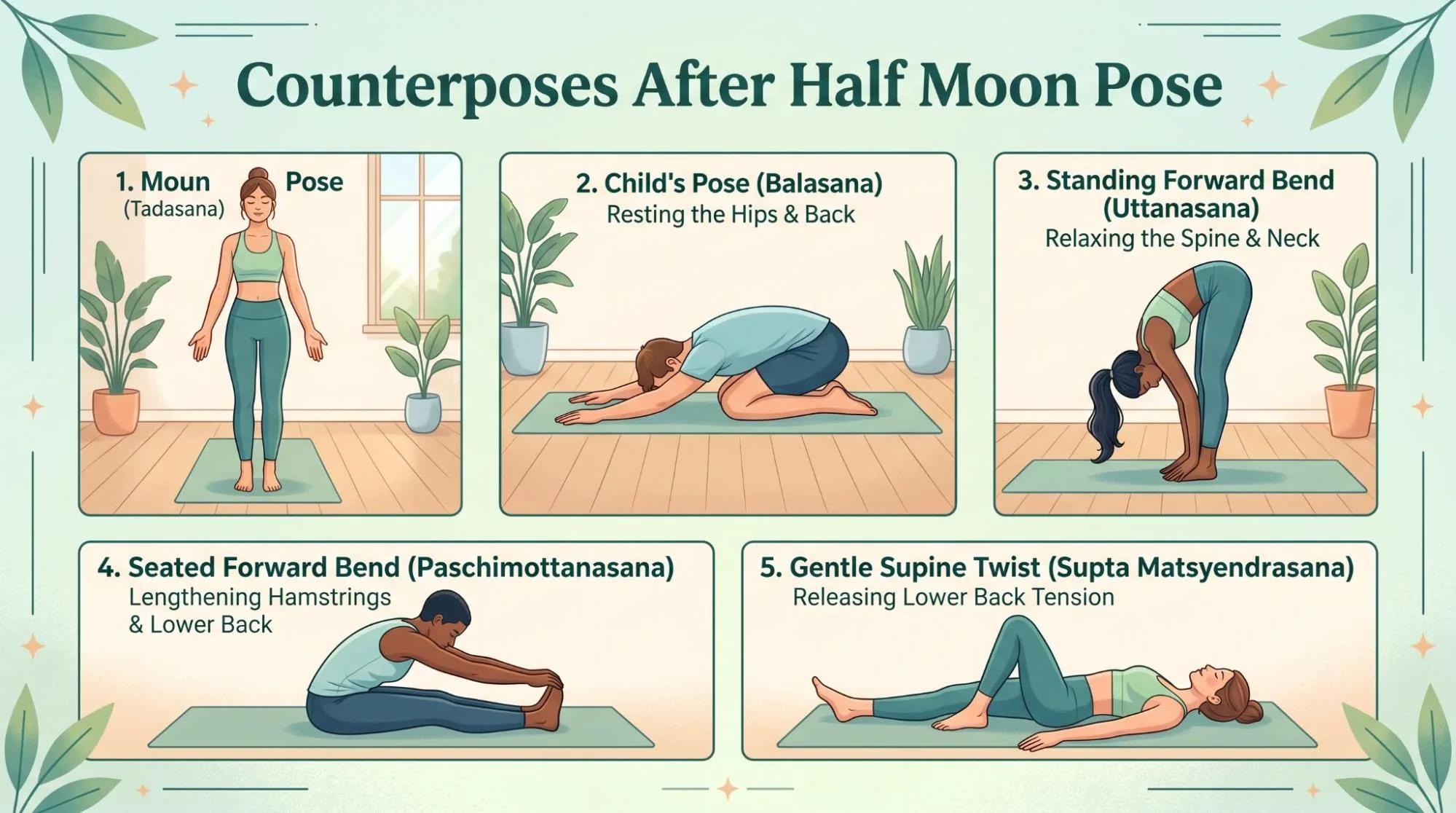
Counterposes After Half Moon Pose
Mountain Pose
Brings the body back to balance.
Child’s Pose
Relaxes the back, hips, and shoulders.
Standing Forward Bend
Releases the hamstrings and lower back.
Seated Forward Bend
Gently stretches the back body.
Gentle Supine Twist
Helps relax the spine and hips after standing poses.
 alt=”Half Moon Pose with shorter range” title=”Half Moon Pose with shorter range”
How Long Should You Hold Half Moon Pose?
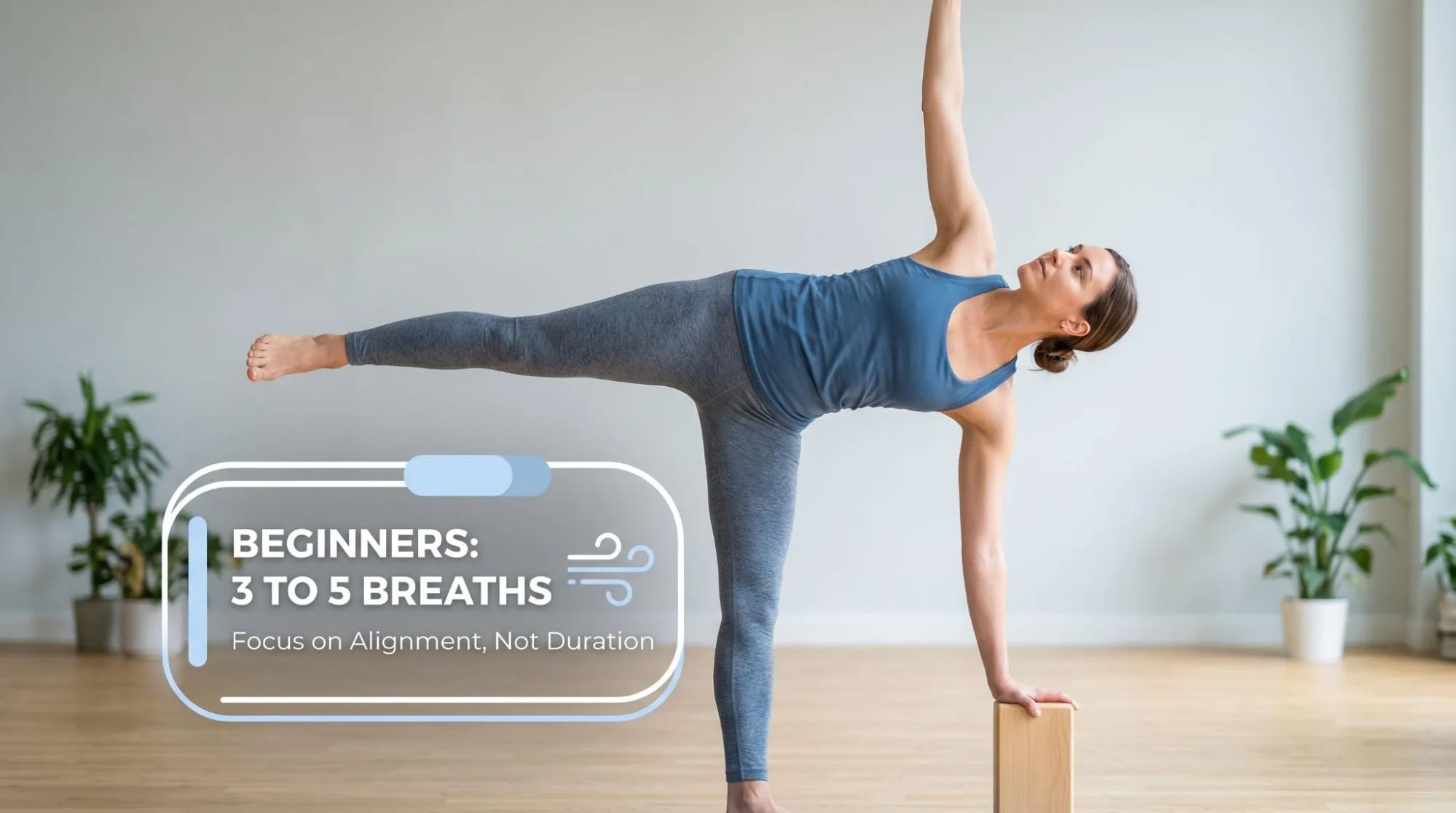
Beginners can hold Half Moon Pose for 2 to 3 breaths on each side. With practice, you can hold it for 5 to 8 breaths.
Do not stay longer if your alignment starts to collapse. A short, steady hold is better than a long, strained one.
 alt=”Supported standing balance modification” title=”Supported standing balance modification”
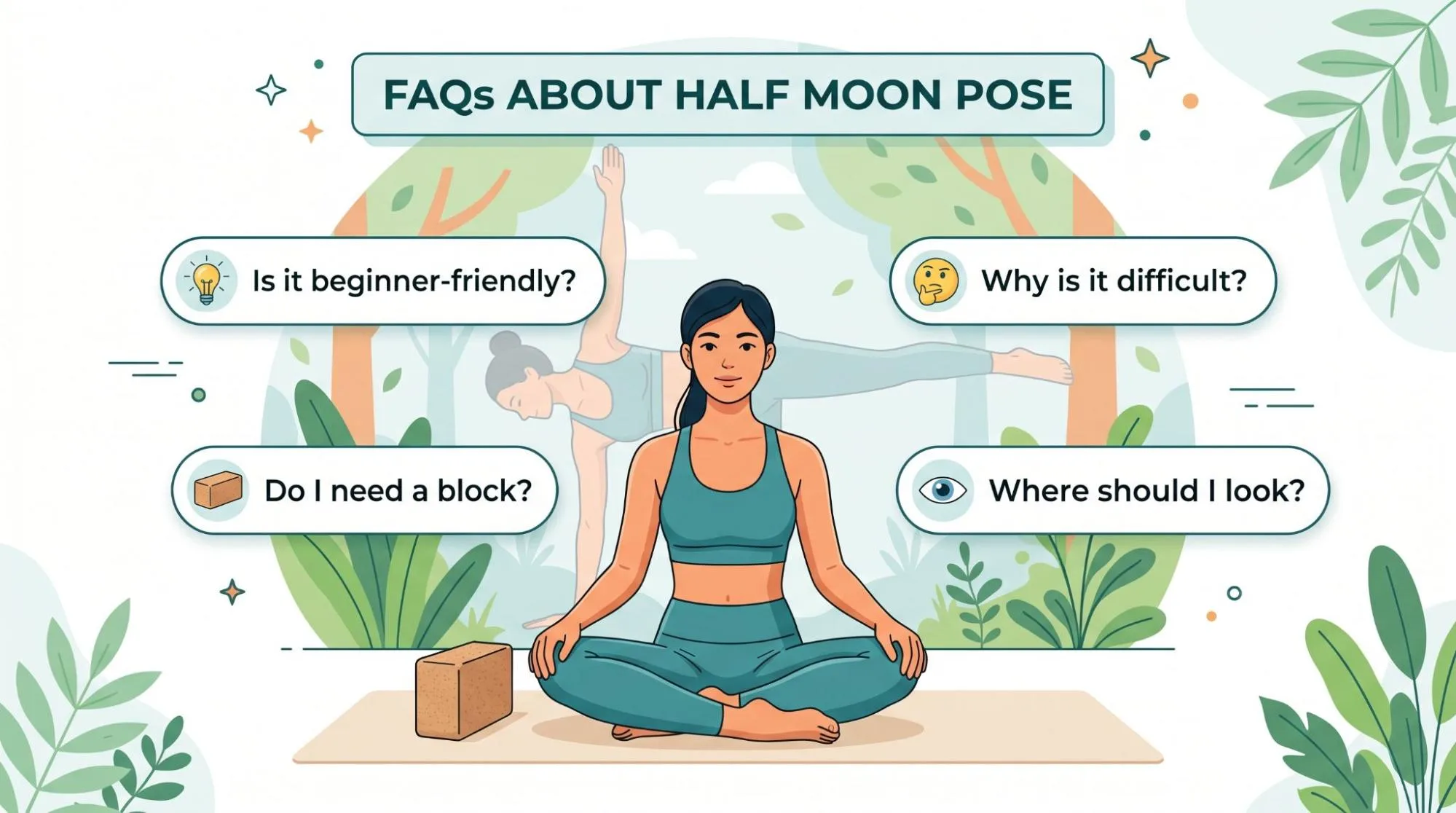
FAQs About Half Moon Pose
Is Half Moon Pose good for beginners?
Yes, it can be good for beginners when practiced with a block, wall, or chair for support.
What is Half Moon Pose good for?
It is good for balance, leg strength, hip opening, core stability, hamstring stretching, and focus.
Why is Half Moon Pose difficult?
It is difficult because it combines balance, strength, flexibility, and coordination in one standing pose.
Can I do Half Moon Pose without a block?
Yes, but only if your hand reaches the floor without rounding your spine or closing your chest.
Where should I look in Half Moon Pose?
Look down first. Once stable, you may look forward or up toward the top hand.
What is the difference between Half Moon Pose and Revolved Half Moon Pose?
Half Moon Pose opens the chest and hips to the side. Revolved Half Moon Pose adds a twist, making it more challenging.
 alt=”Resting after Half Moon Pose” title=”Resting after Half Moon Pose”
Learn More : Extended Side Angle Pose Benefits
Conclusion
Half Moon Pose is a strong and graceful pose that improves balance, strengthens the legs, opens the hips, and builds steady focus. It may feel difficult at first, but that is part of the practice.
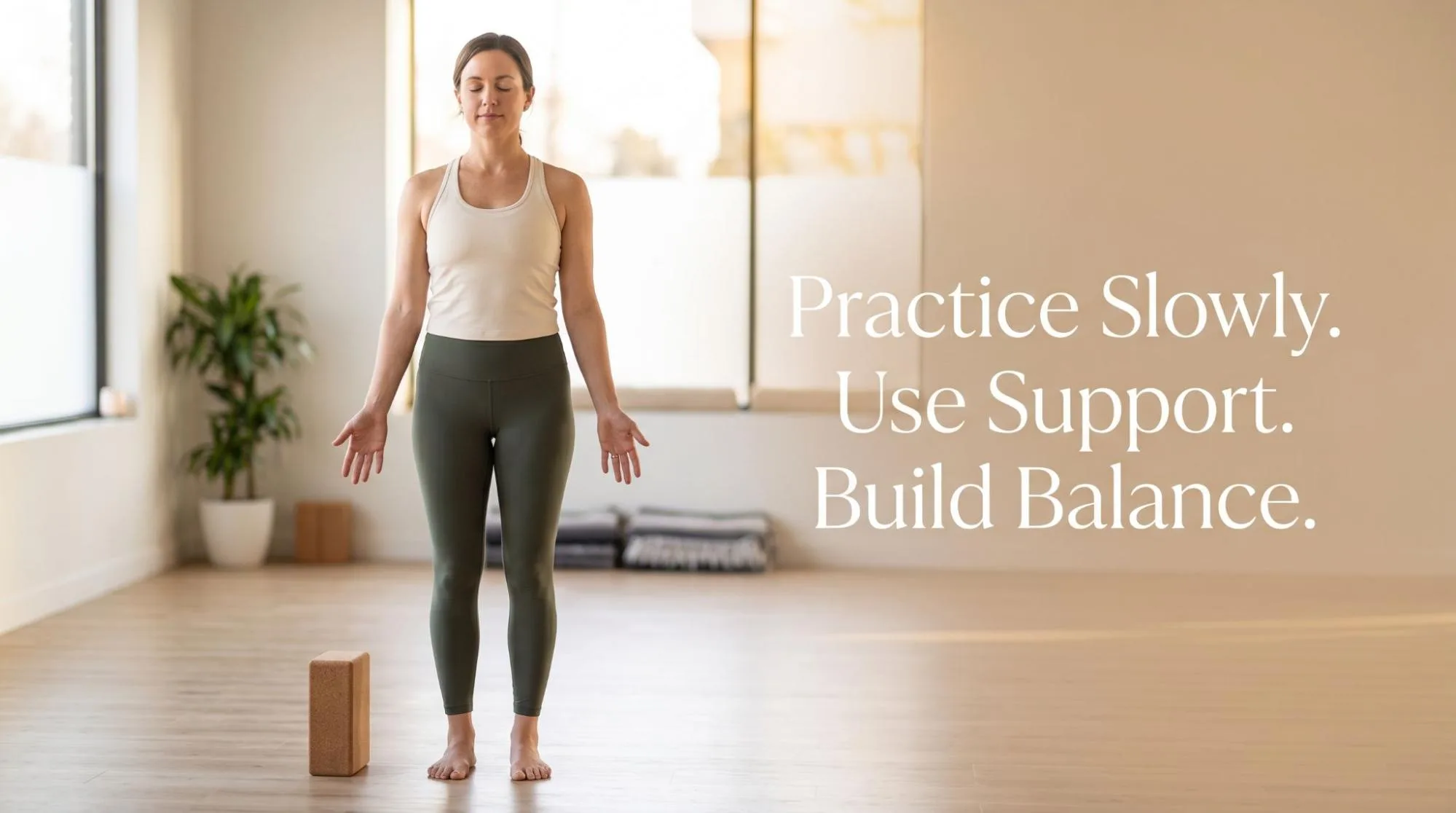
Use a block. Keep your standing knee soft. Look down if needed. Move slowly and let the pose develop with time.
With regular practice, Half Moon Pose can become one of the most useful yoga poses for strength, stability, and confidence.
 alt=”Side view of stable Ardha Chandrasana” title=”Side view of stable Ardha Chandrasana”
Further reading: For general yoga safety information, see NCCIH: Yoga—What You Need To Know.
