
Quick answer: Triangle Pose, or Trikonasana, is a standing posture that combines a side stretch, leg stability, and spinal length. Use a block and a shorter stance when needed; alignment and comfortable breathing matter more than reaching the floor.
Important Safety Note
Do not lock the knees, collapse the torso, or force the neck to turn. Stop for sharp pain, dizziness, numbness, or loss of balance. Use modifications for recent hip, knee, hamstring, or spinal injuries, and seek qualified guidance for pregnancy or blood-pressure concerns.
Triangle pose yoga common mistakes are usually small alignment issues, but they can make the pose feel uncomfortable, unstable, or less effective. Triangle Pose, also called Trikonasana, looks simple from the outside, yet it asks your legs, hips, spine, shoulders, and breath to work together. Understanding triangle pose yoga common mistakes can help you practice the pose with more confidence and avoid unnecessary strain.
When practiced with proper alignment, this yoga pose can build strength, improve balance, stretch the side body, and help you feel more open through the chest and upper body. The key is not forcing the shape. It is learning how to move into the pose with control, space, and steady breathing.
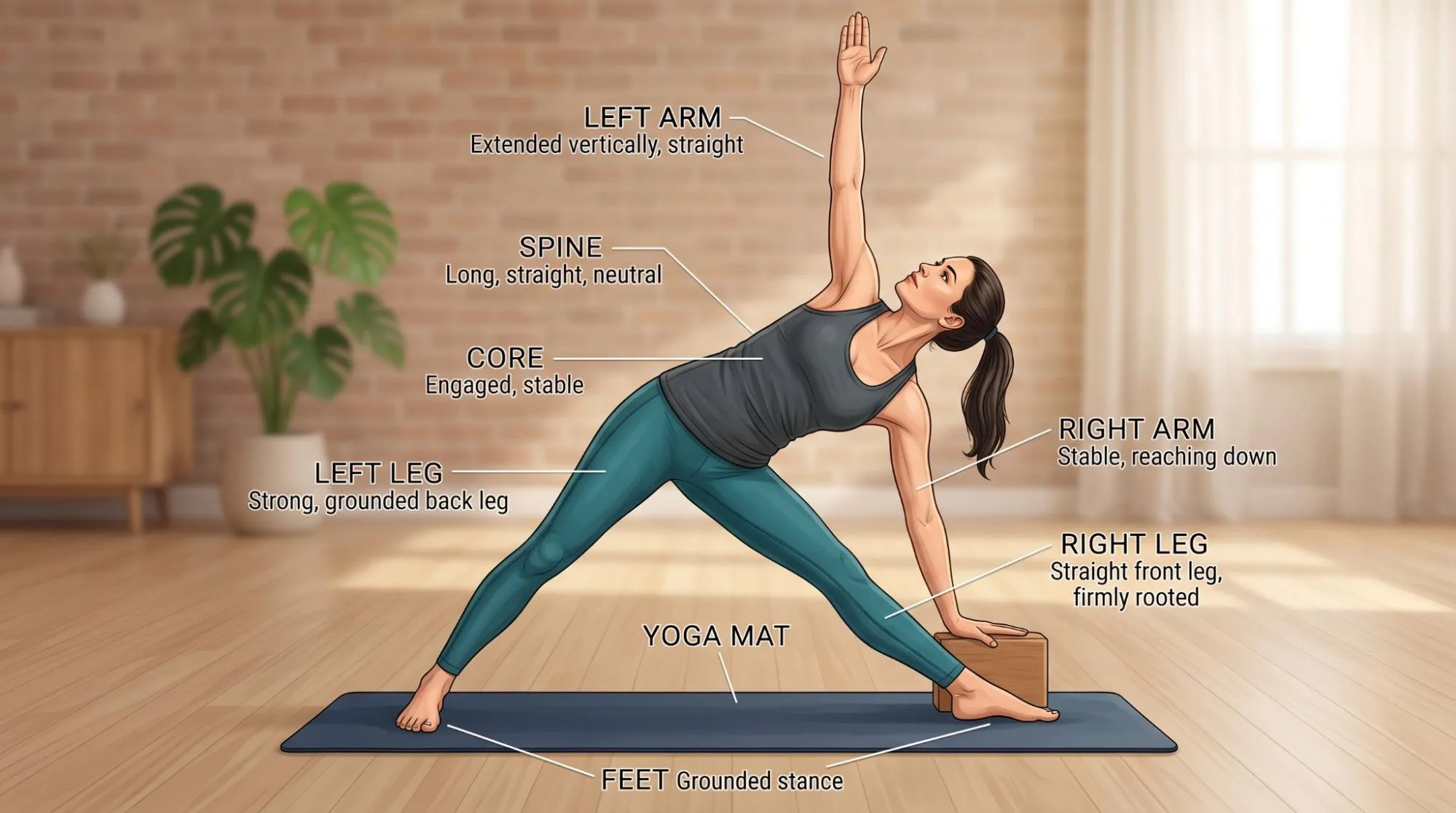 alt=”Triangle Pose with hand supported on a block” title=”Triangle Pose with hand supported on a block”
What Is Triangle Pose Trikonasana?
Definition and Sanskrit Origin
Triangle Pose is a standing yoga posture where the body forms a triangle-like shape. In Sanskrit, it is called Trikonasana. “Tri” means three, “kona” means angle, and “asana” means pose.
In this pose, you step your feet wide apart, extend your arms, hinge from the hip, and place one hand toward the shin, ankle, block, or floor while the top arm reaches upward. Before learning advanced variations, it is helpful to understand triangle pose yoga common mistakes because they often begin with basic foot, hip, and spine alignment.
Muscles Targeted
standing side stretch works and stretches several areas at the same time, including:
- Hamstrings
- Inner thighs
- Hips
- Obliques
- Core muscles
- Back muscles
- Shoulders
- Chest
- Ankles and calves
It is both a strengthening and stretching pose, which is why it appears often in yoga classes.
Role in Yoga Sequences
standing side stretch is commonly used in standing sequences. It often comes after poses like Warrior II because the foot position is similar. It helps prepare the body for deeper side stretches, balance work, and twisting poses.
It is also useful for beginners because it teaches body awareness, proper alignment, and stable breathing.
Step-by-Step Guide to standing side stretch
Many standing side stretch yoga common mistakes happen when students rush into the final shape instead of setting up the feet, legs, and upper body carefully.
Proper Foot Placement
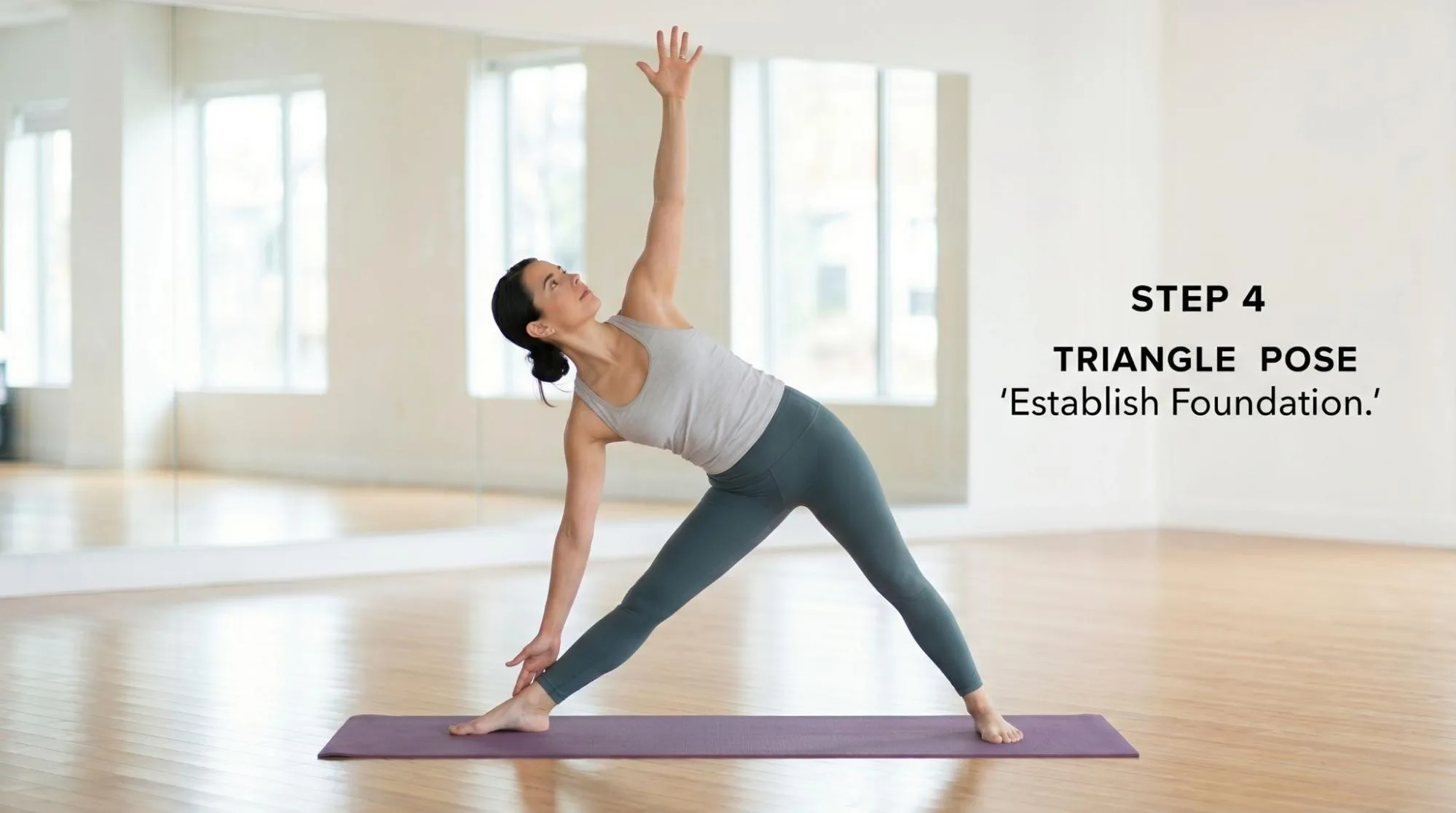
Start standing at the top of your mat. Step your feet wide apart, around three to four feet depending on your height and flexibility.
Turn your right foot out about 90 degrees. Keep your left foot slightly turned inward. Your front heel can line up with the arch or heel of your back foot.
Press firmly through both feet. This helps you stay grounded and steady.
Arm and Shoulder Positioning
Extend your arms out to the sides at shoulder height. Keep your palms facing down.
Reach actively through both fingertips before moving down. This helps create length in the upper body instead of collapsing into the pose.
Torso Alignment
Hinge from your front hip and reach your upper body forward first. Then lower your front hand toward your shin, ankle, block, or floor.
Avoid dropping all your weight into your lower hand. The hand is there for support, not to hold your entire body.
Head and Neck Position
Your head should follow what feels comfortable for your neck. You can look down, straight ahead, or gently up toward the top arm.
Looking up is not required. If your neck feels tight, keep your gaze down or forward.
Breathing Cues
Breathe slowly and evenly.
Inhale to lengthen your spine.
Exhale to soften tension in the shoulders, jaw, and face.
Try to stay for 3 to 5 breaths, then rise back up with control.
 alt=”Trikonasana foot and hip alignment” title=”Trikonasana foot and hip alignment”
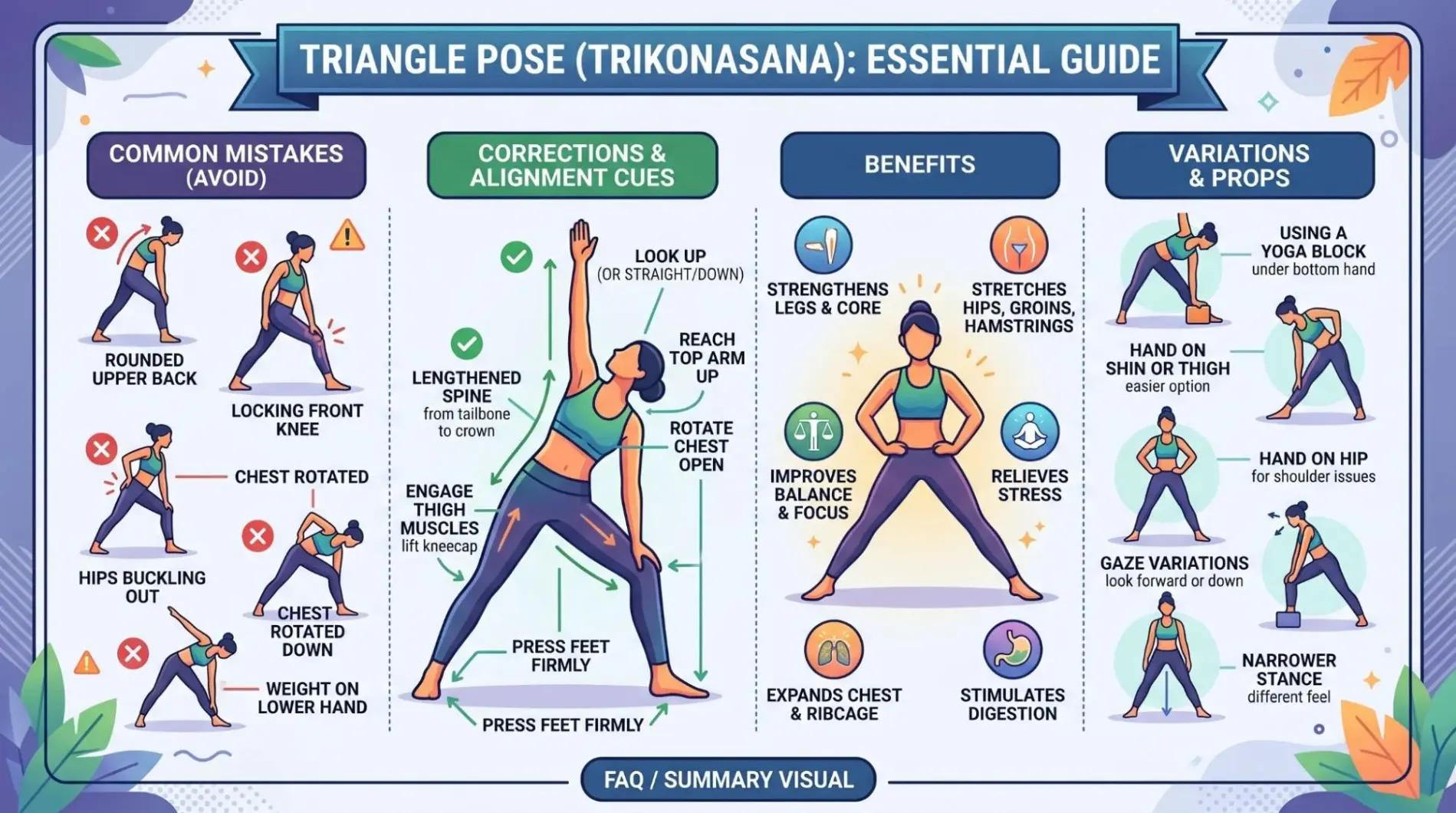
standing side stretch Yoga Common Mistakes You Should Avoid
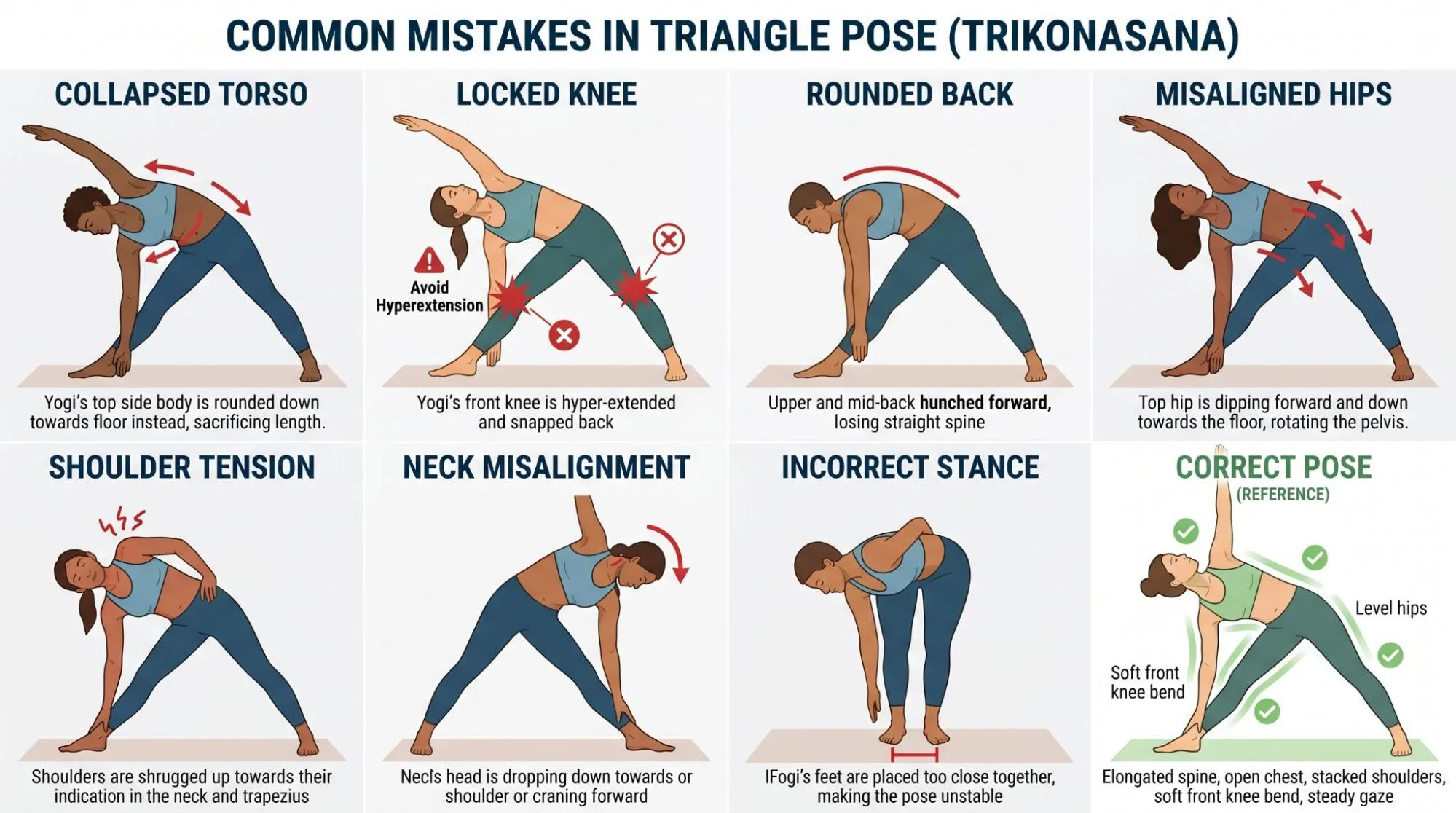
The most common standing side stretch yoga common mistakes usually come from forcing depth, losing balance, or placing the body in a shape it is not ready for yet.
Collapsing the Torso or Side Body
One of the most common mistakes in standing side stretch is shortening the lower side of the waist. This usually happens when someone tries too hard to touch the floor.
The pose is not about how low your hand goes. It is about keeping both sides of the torso long.
Locked Front Knee
Many people lock the front knee because they think a straight leg means better alignment. But locking the knee can place stress on the joint.
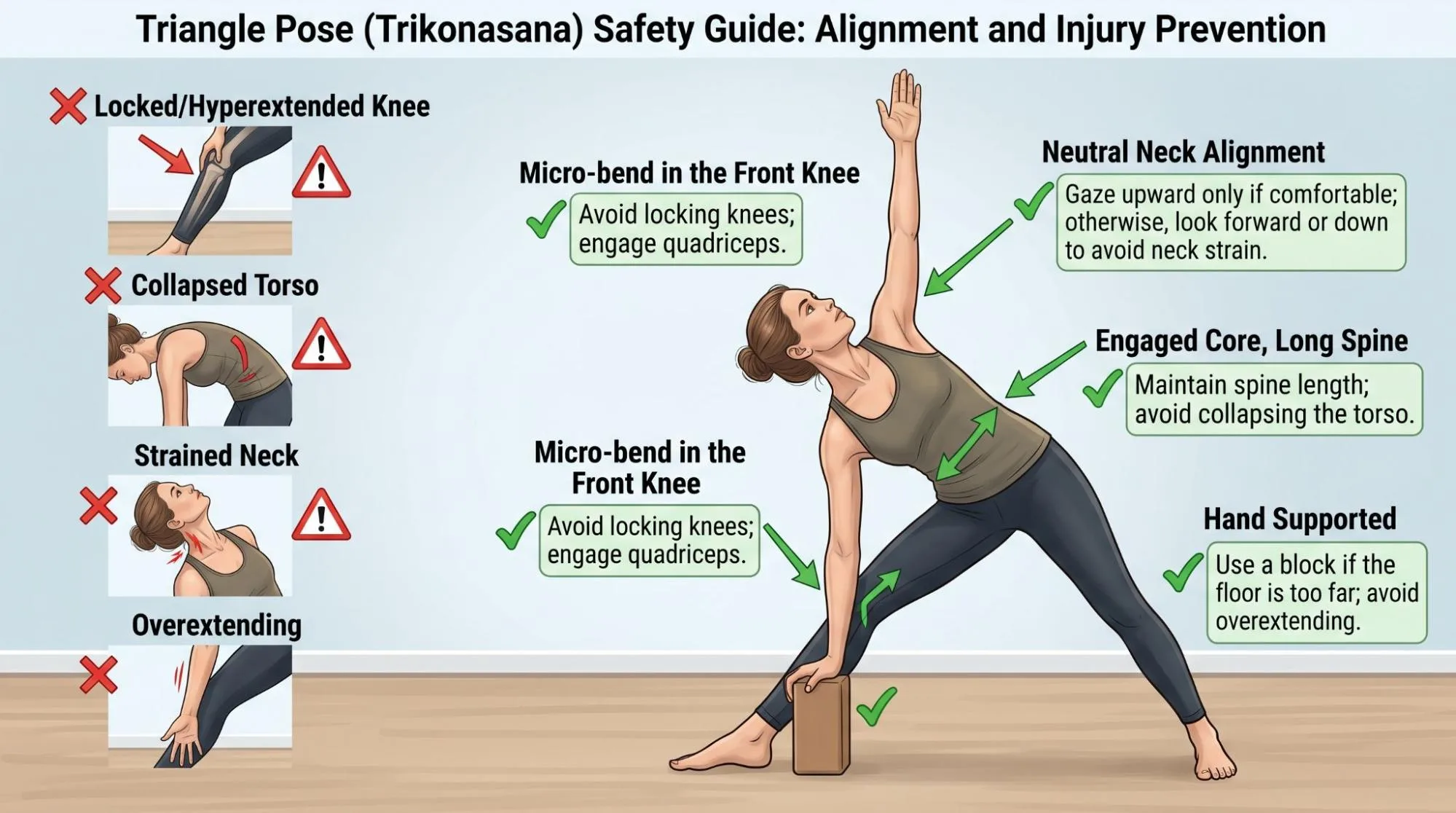
A small micro-bend in the front knee protects the knee and keeps the leg muscles active.
Rounding the Back or Dumping Weight into the Hand
Another common issue is rounding the spine and leaning heavily into the bottom hand. This can reduce core engagement and make the pose feel heavy.
Your lower hand should be light. Your legs and core should do most of the work.
Misaligned Hips
Some students force the hips to stack perfectly, even when the body is not ready. Others let the top hip roll too far forward.
A better approach is to aim for open hips without twisting or straining the lower back.
Shoulder Tension
Shoulders often creep toward the ears in standing side stretch. This creates neck tension and makes breathing harder.
Relax the shoulders away from the ears while keeping the arms active.
Looking Straight Up Prematurely
Looking up toward the top arm can look nice, but it is not always the best choice. If your neck is stiff or your balance feels shaky, looking up may cause discomfort.
Start with your gaze down or forward first.
Incorrect Stance
A stance that is too wide can strain the hamstrings and hips. A stance that is too short can make the pose feel cramped.
Your stance should feel stable, not forced.
 alt=”Triangle Pose side stretch with long spine” title=”Triangle Pose side stretch with long spine”
Learn More : Extended Side Angle Pose Benefits
How to Fix These Mistakes
Fixing standing side stretch yoga common mistakes starts with choosing stability over depth. A supported pose is usually better than a deep but strained one.
Maintain a Long Spine
Think of length before depth. Before lowering your hand, reach your chest and upper body forward.
Keep your spine long from your tailbone to the crown of your head. This one adjustment can improve the whole pose.
Keep a Micro-Bend in the Front Knee
Instead of locking the front knee, soften it slightly. Then press firmly through the front foot and engage the thigh muscles.
This protects the knee and helps build strength in the legs.
Use Yoga Blocks for Support
A yoga block is not a beginner-only tool. It helps you keep proper alignment while reducing strain.
Place a block outside your front foot or beside your shin ankle area. Rest your lower hand on the block instead of reaching too far down.
Keep Hips Stacked Without Forcing
Gently roll the top hip back, but do not overdo it. Your hips should feel open and supported.
If your lower back feels compressed, slightly adjust your stance or use a block.
Relax the Shoulders
Draw your shoulders away from your ears. Keep the collarbones broad.
Your top arm should reach upward, but it should not create tension in your neck.
Adjust Your Neck Position
Choose the gaze that feels best:
- Look down if balance is difficult
- Look forward if the neck feels sensitive
- Look up only if the neck feels relaxed
There is no need to force the full expression of the pose.
Find the Right Stance Distance
If the pose feels unstable, shorten your stance slightly. If it feels too tight, step your feet a little wider.
The best stance lets you press firmly through both feet while keeping your breath steady.
 alt=”Beginner Triangle Pose using a yoga block” title=”Beginner Triangle Pose using a yoga block”
Tips for Improving standing side stretch
The best way to reduce standing side stretch yoga common mistakes is to practice slowly, use props when needed, and check your alignment before going deeper.
Engage Core and Leg Muscles
standing side stretch should not feel like you are hanging from your lower hand. Use your legs and core to support the shape.
Firm the thighs, lift the kneecaps gently, and draw the lower belly in slightly.
Reach Long Through Arms Before Lowering
Before you place your hand down, extend your arms fully from the chest. This creates space across the shoulders and side body.
Reach first. Lower second.
Use Props as Needed
Blocks, straps, and wall support can make standing side stretch safer and more effective.
A block under the lower hand is especially helpful if your hamstrings are tight or your back rounds easily.
Focus on Gradual Improvements
You do not need to master standing side stretch in one session. Small improvements matter.
Maybe today you keep the spine longer. Maybe next week your shoulders feel softer. That is real progress.
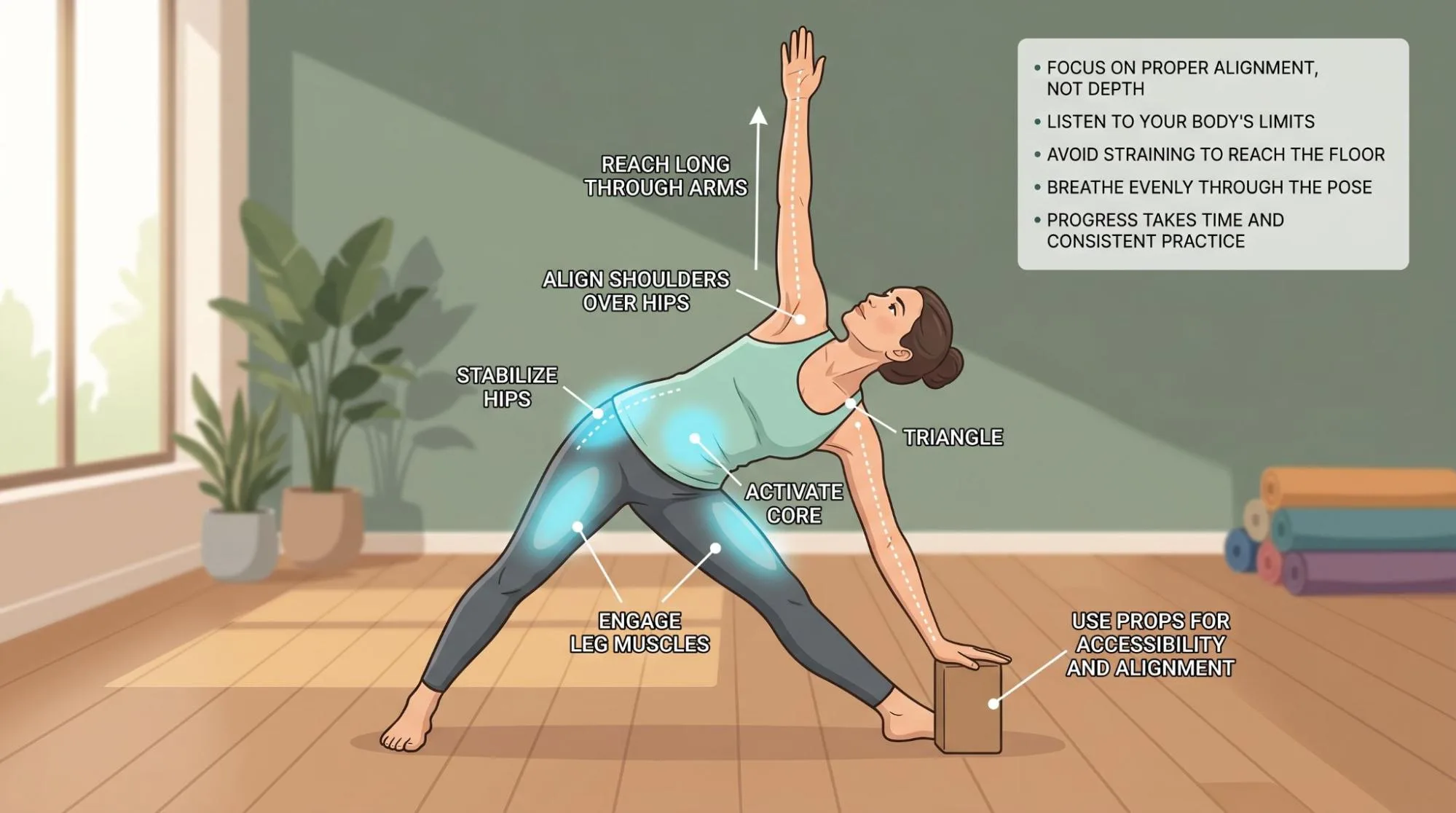 alt=”Front knee and back-leg position in Trikonasana” title=”Front knee and back-leg position in Trikonasana”
Benefits of standing side stretch
Strengthening Legs, Core, and Back
standing side stretch helps build strength in the thighs, calves, core, and back. Since the body has to stay stable while lengthening sideways, many muscles work together.
Improving Flexibility and Balance
This pose stretches the hamstrings, hips, and side body. It also improves balance because both feet must stay grounded while the upper body moves sideways.
Enhancing Posture
standing side stretch opens the chest and encourages a long spine. Practicing it regularly can support better posture, especially if you spend long hours sitting.
Stretching Side Body and Spine
The side waist often gets tight from sitting, driving, or working at a desk. standing side stretch gives that area a deep but manageable stretch.
Relieving Tension and Stress
When practiced slowly, standing side stretch can feel calming. The wide stance, steady breath, and open chest help release physical tension, especially around the shoulders and back.
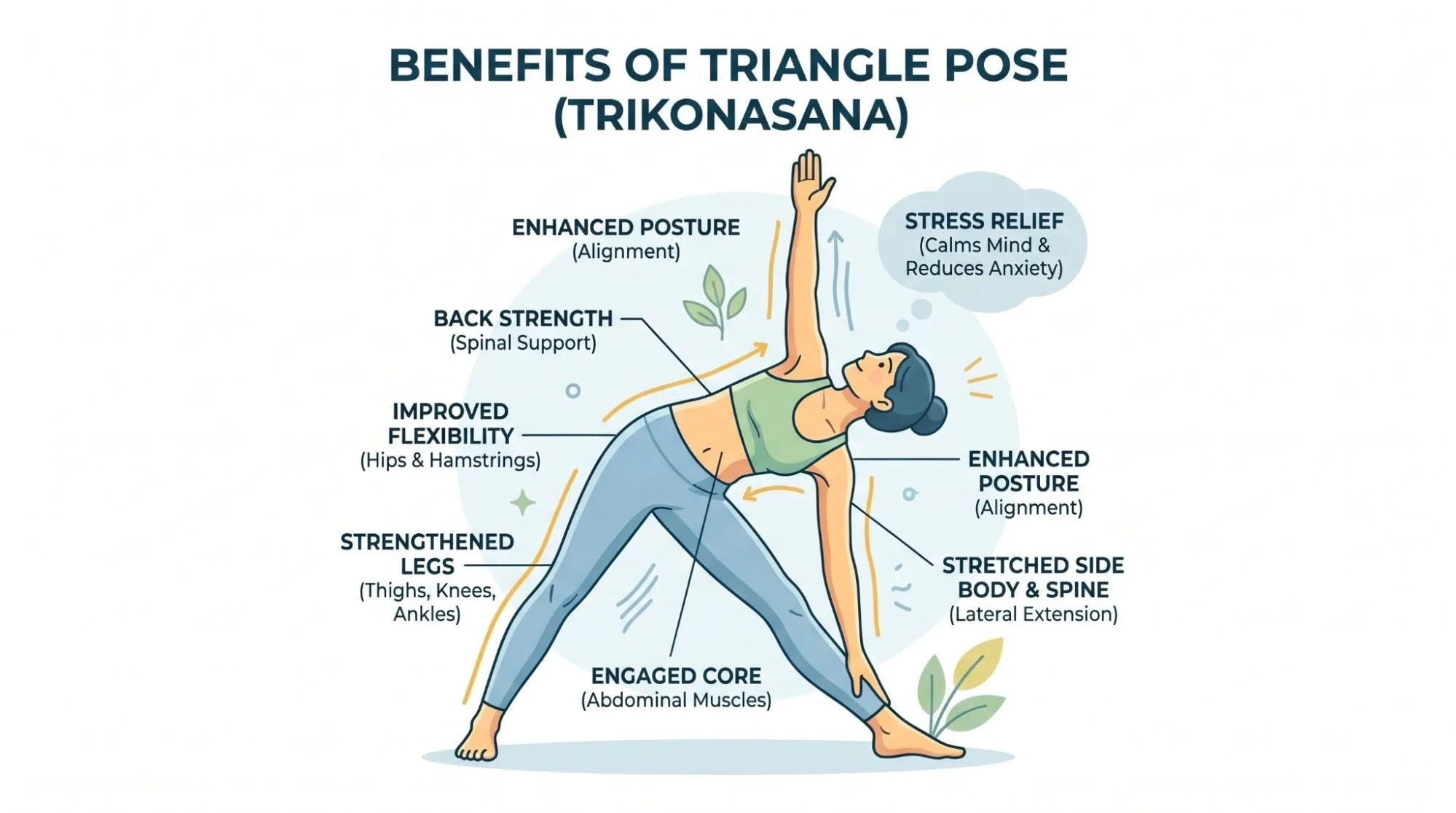 alt=”Triangle Pose arm reach and steady gaze” title=”Triangle Pose arm reach and steady gaze”
Learn More : Warrior 1 Pose: Benefits, Steps, Alignment, and Beginner Tips
Modifications for Beginners or Limited Flexibility
Using Blocks or Straps
Use a yoga block under your lower hand if the floor feels far away. This keeps the spine long and prevents collapsing.
A strap can also help if you are working on shoulder awareness or arm positioning.
Slightly Shorter Stance
Beginners may feel more stable with a shorter stance. You can always widen it later as your balance and flexibility improve.
Optional Hand Placement on Shin
You do not have to touch the floor. Placing your hand on your shin is perfectly fine.
Just avoid pressing too hard into the leg. Keep the hand light and the upper body active.
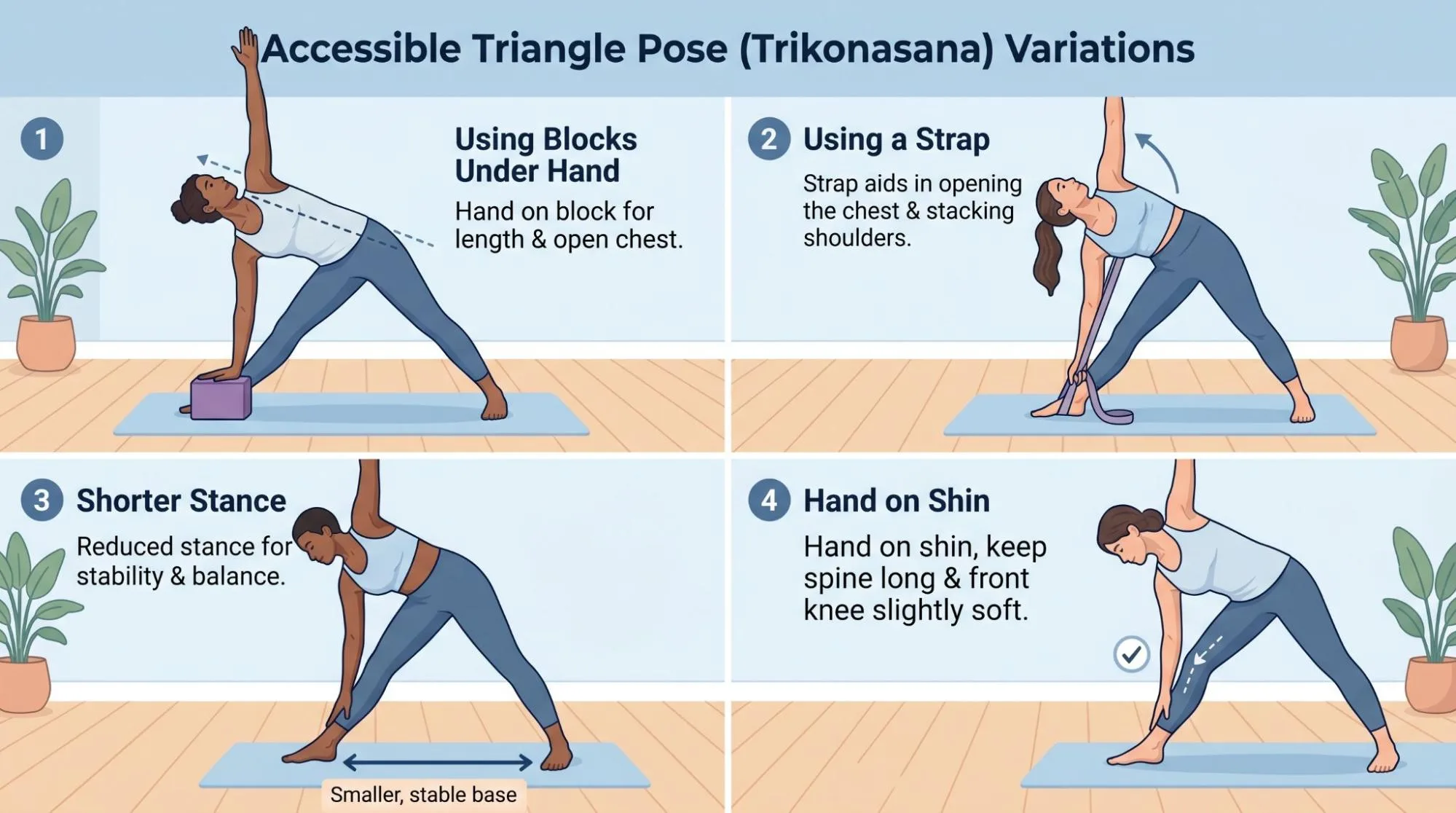 alt=”Side view of safe Triangle Pose alignment” title=”Side view of safe Triangle Pose alignment”
standing side stretch Yoga Common Mistakes You Should Avoid
Extended standing side stretch
Extended Triangle is the classic version most people practice. The legs are straight but not locked, the arms extend in opposite directions, and the torso opens to the side.
Revolved standing side stretch
Revolved Triangle is a deeper twisting variation. It requires more hamstring flexibility, balance, and spinal control.
Beginners should learn the basic standing side stretch first before trying this version.
Supported Triangle Using Props
Supported Triangle uses blocks, a wall, or even a chair. It is a great option for beginners, older adults, or anyone working with tight hips or hamstrings.
This version allows you to focus on alignment without strain.
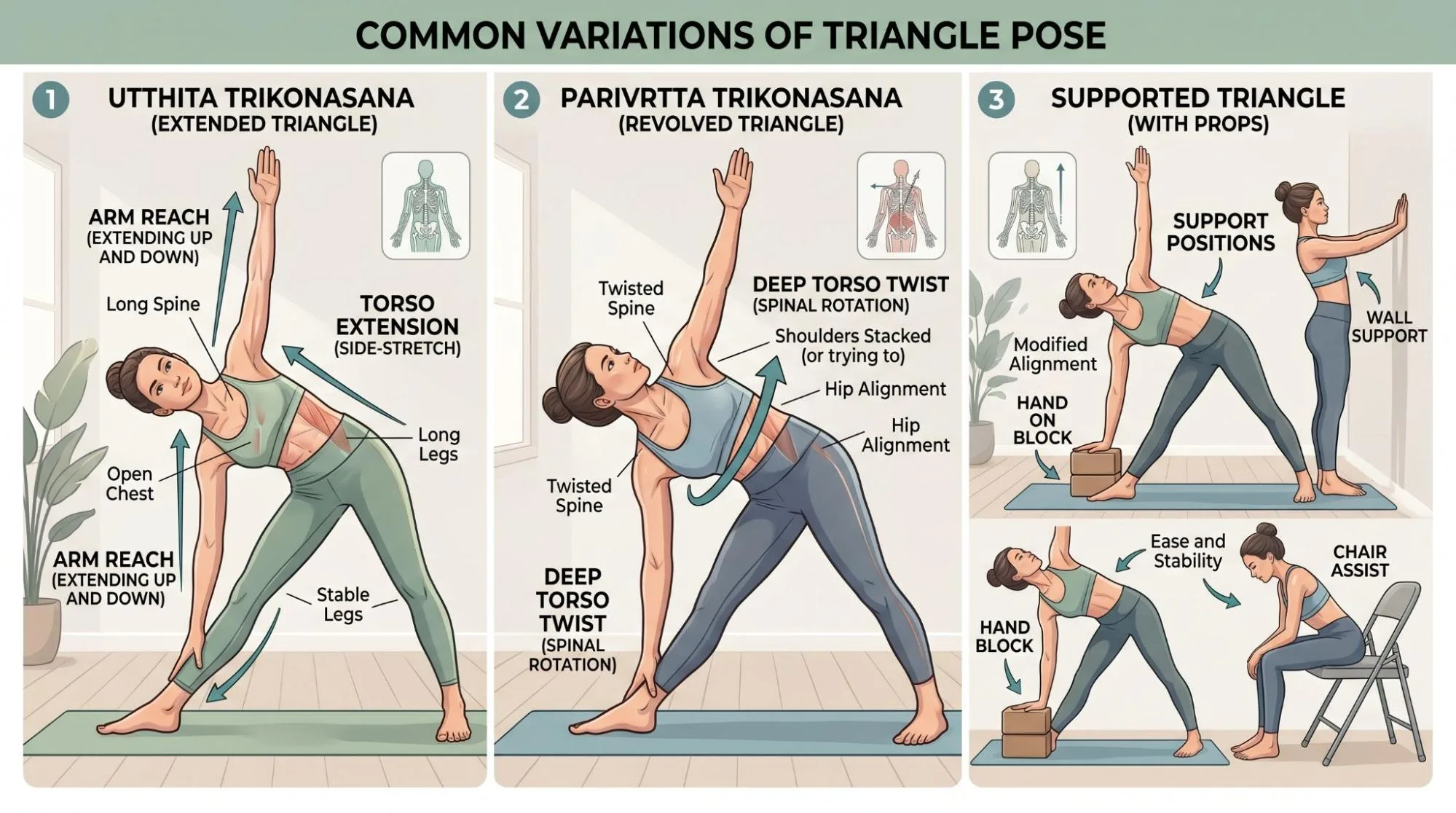 alt=”Modified standing side stretch for beginners” title=”Modified standing side stretch for beginners”
Safety Tips and Precautions
Practice standing side stretch with care if you have:
- Low back pain
- Neck pain
- Knee issues
- Hip injury
- Hamstring strain
- Balance problems
- High or low blood pressure
Keep your gaze down if you feel dizzy. Avoid locking the front knee. Use props when needed.
If you feel sharp pain, come out of the pose. A strong stretch is okay. Pain is not.
alt=”Breathing in Triangle Pose” title=”Breathing in Triangle Pose”
Frequently Asked Questions
What are the most common mistakes in standing side stretch?
The most common mistakes include collapsing the side body, locking the front knee, rounding the back, placing too much weight into the lower hand, and forcing the neck to look upward too soon.
Should my hand touch the floor in standing side stretch?
No. Your hand can rest on your shin, ankle, block, or floor. Proper alignment matters more than reaching the ground.
How do I know if my stance is correct?
Your stance should feel stable. You should be able to press firmly through both feet without feeling strain in the knee, hip, or hamstring.
Should the front knee be completely straight?
The front leg can be straight, but the knee should not be locked. A small micro-bend helps protect the joint and keeps the leg active.
Why does my neck hurt in standing side stretch?
Neck pain often happens when you look up before your body is ready. Try looking down or straight ahead. Also relax your shoulders away from your ears.
Is standing side stretch good for beginners?
Yes, standing side stretch is good for beginners when practiced with props and proper guidance. A block can make the pose much easier and safer.
What does standing side stretch help with?
standing side stretch can improve flexibility, balance, posture, leg strength, core strength, and side-body mobility. It may also help release tension in the back and shoulders.
How can I avoid standing side stretch yoga common mistakes?
You can avoid standing side stretch yoga common mistakes by keeping your spine long, using a yoga block, softening the front knee, and avoiding too much weight in the lower hand.
 alt=”Triangle Pose transition on a yoga mat” title=”Triangle Pose transition on a yoga mat”
Learn More : Half Moon Pose Yoga: Benefits, Steps, Alignment Tips, and Beginner Guide
Final Thoughts
standing side stretch is not about touching the floor or copying a perfect-looking shape. It is about creating length, balance, and steady support through the whole body.
When you avoid the common mistakes and use props when needed, standing side stretch becomes much more useful. Step your feet with care, extend your arms with control, keep your front knee soft, and let the breath guide the pose.
That is where the real benefit begins.
Frequently Asked Questions
Is standing side stretch suitable for beginners?
Yes. Beginners can use a block under the lower hand, keep the stance shorter, and look forward instead of turning the head upward.
Where should the lower hand go?
Place it on a block, shin, or the floor without collapsing weight into the shoulder. Choose the height that lets the chest stay open.
What if standing side stretch causes back or knee pain?
Come out, reduce the range, and check the alignment. Persistent or severe pain should be assessed by a qualified professional.
Further reading: For general yoga safety information, see NCCIH: Yoga—What You Need To Know.
