Extended side angle pose benefits the whole body because it combines strength, flexibility, balance, and breath in one strong standing posture. Also known as Utthita Parsvakonasana, this pose is often practiced from Warrior II and is useful for beginners as well as regular yoga students.
At first, it may look like a simple side stretch. But once you settle into it, you feel how much is working. The legs stay strong, the hips open, the core supports the spine, and the chest expands. It is one of those yoga poses that teaches both effort and ease. Extended side angle pose benefits are not limited to flexibility; the pose also supports strength, posture, balance, breathing, and better body awareness.
What Is Extended Side Angle Pose?
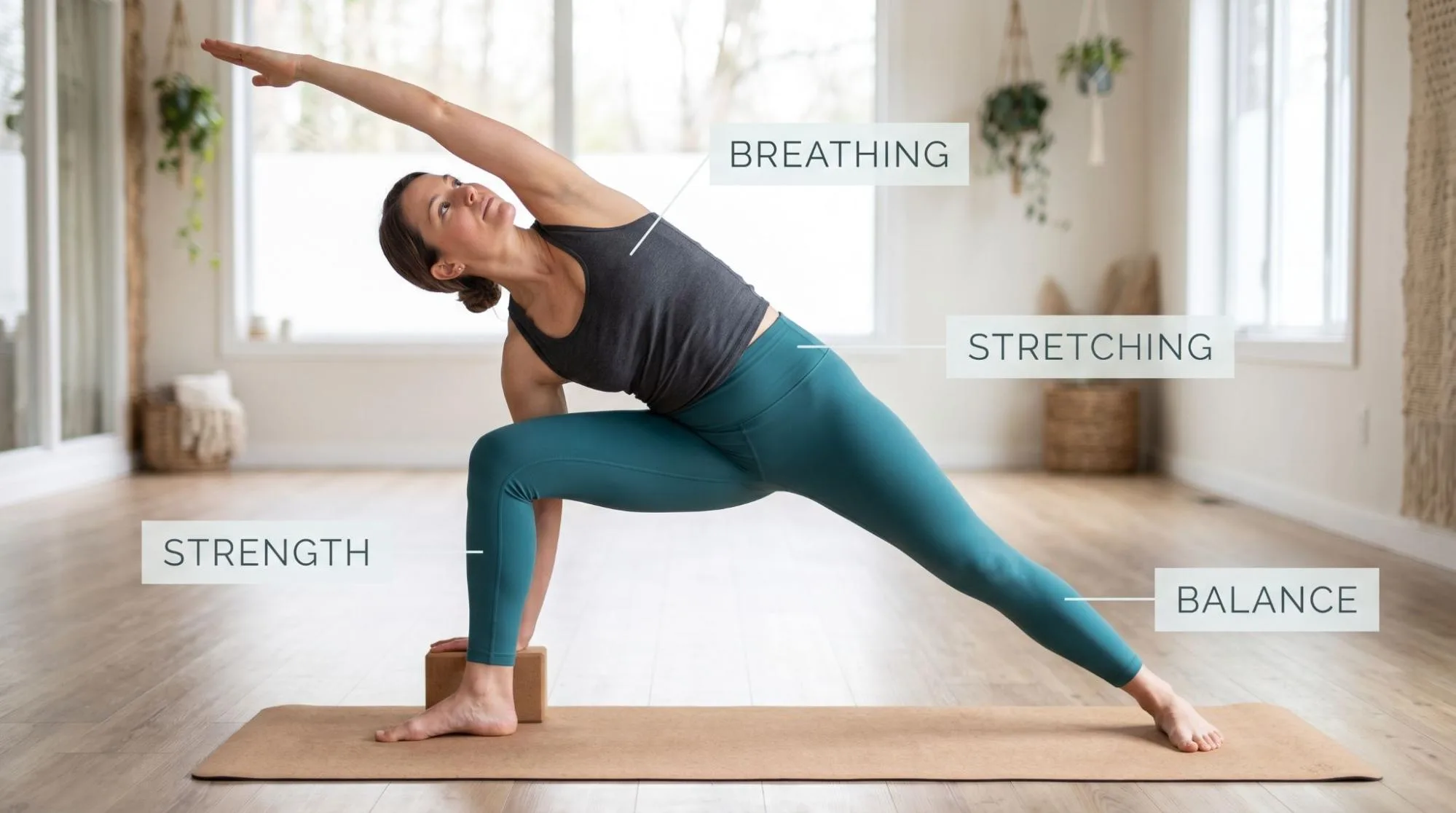
Extended side angle pose is a standing yoga pose where one knee bends deeply while the other leg stays straight and grounded. The torso reaches sideways over the bent leg, and the top arm stretches overhead.
In Sanskrit, it is called Utthita Parsvakonasana:
- Utthita means extended
- Parsva means side
- Kona means angle
- Asana means pose
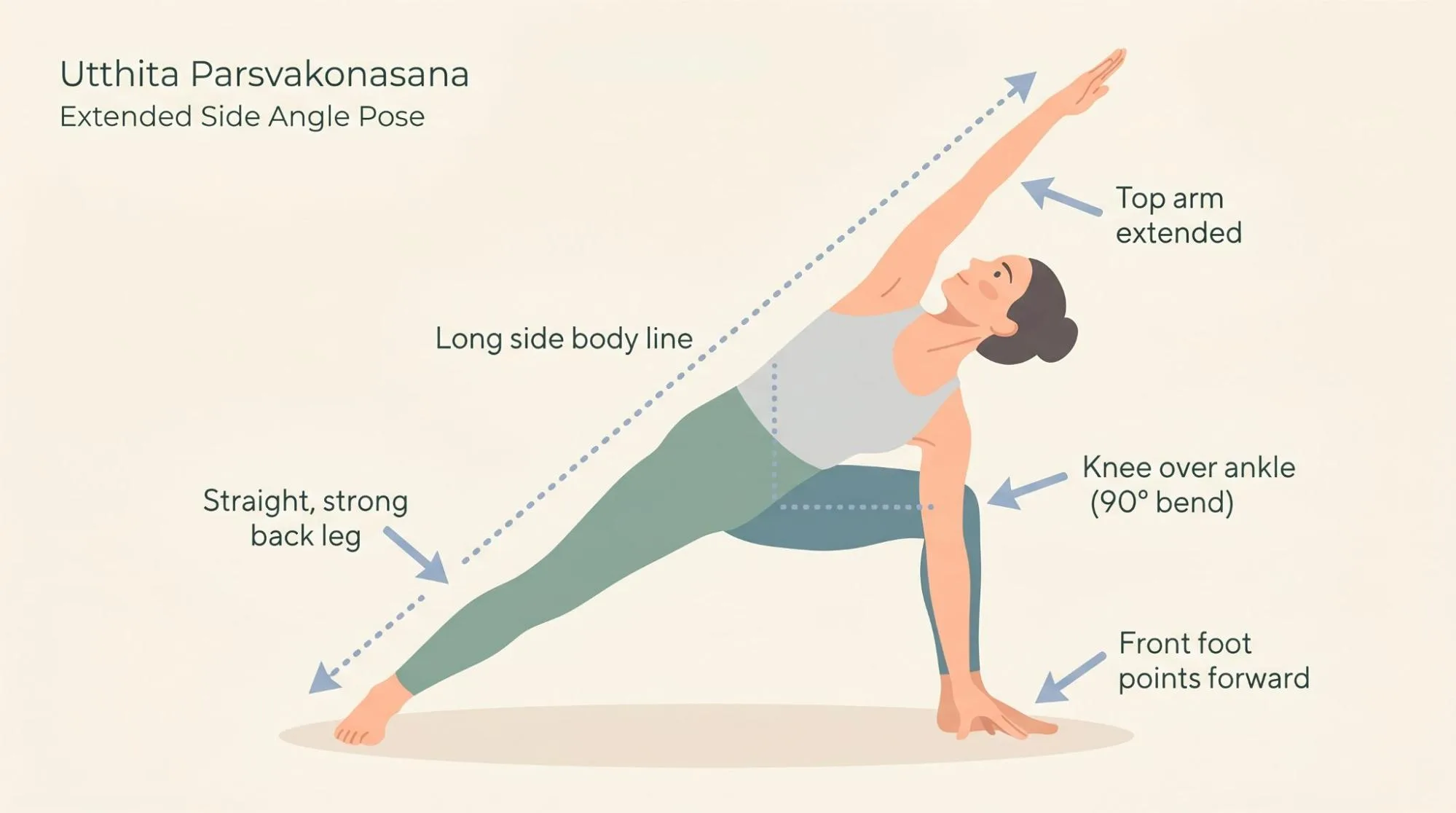
In the full shape, the front knee is usually bent close to 90 degrees, the front foot points forward, and the back foot presses firmly into the mat. The body forms a long diagonal line from the edge of your back foot to the fingertips of the top arm.
Extended Side Angle Pose Benefits Yoga for the Whole Body
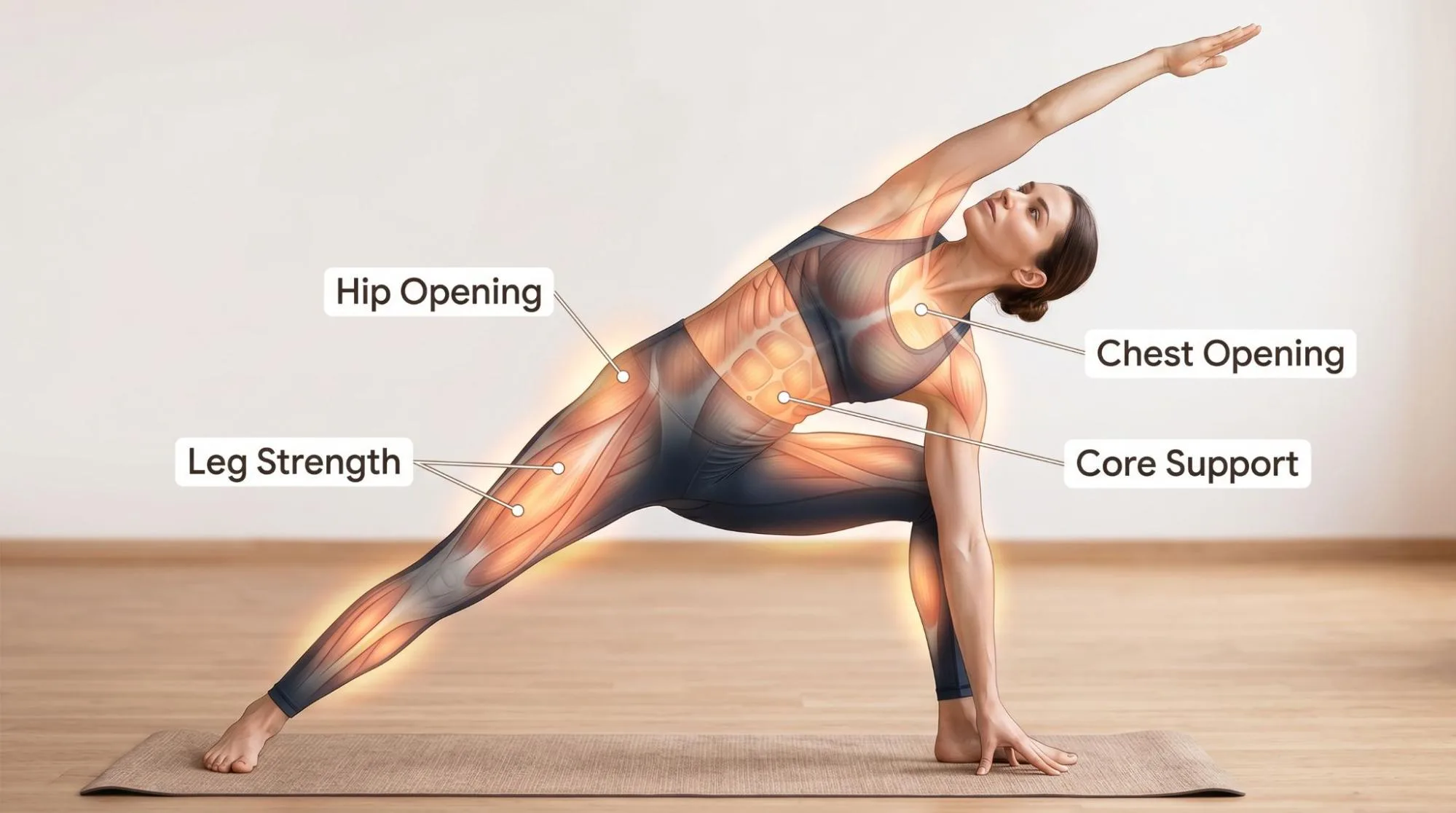
The main value of this pose is that it does many things at once. It strengthens the lower body, stretches the side waist, opens the chest, improves posture, and builds better body awareness.
Unlike passive stretches, extended side angle pose asks you to stay active. You are not just leaning into the shape. You are pressing through the feet, lifting through the chest, engaging the core, and breathing steadily.
That is why this pose is common in many yoga practice sequences. One reason extended side angle pose benefits so many areas is that it combines active leg work with a deep side-body stretch.
Learn More : Triangle Pose Yoga Common Mistakes and How to Fix Them
Physical Benefits of Extended Side Angle Pose
Strengthens the Legs and Lower Body
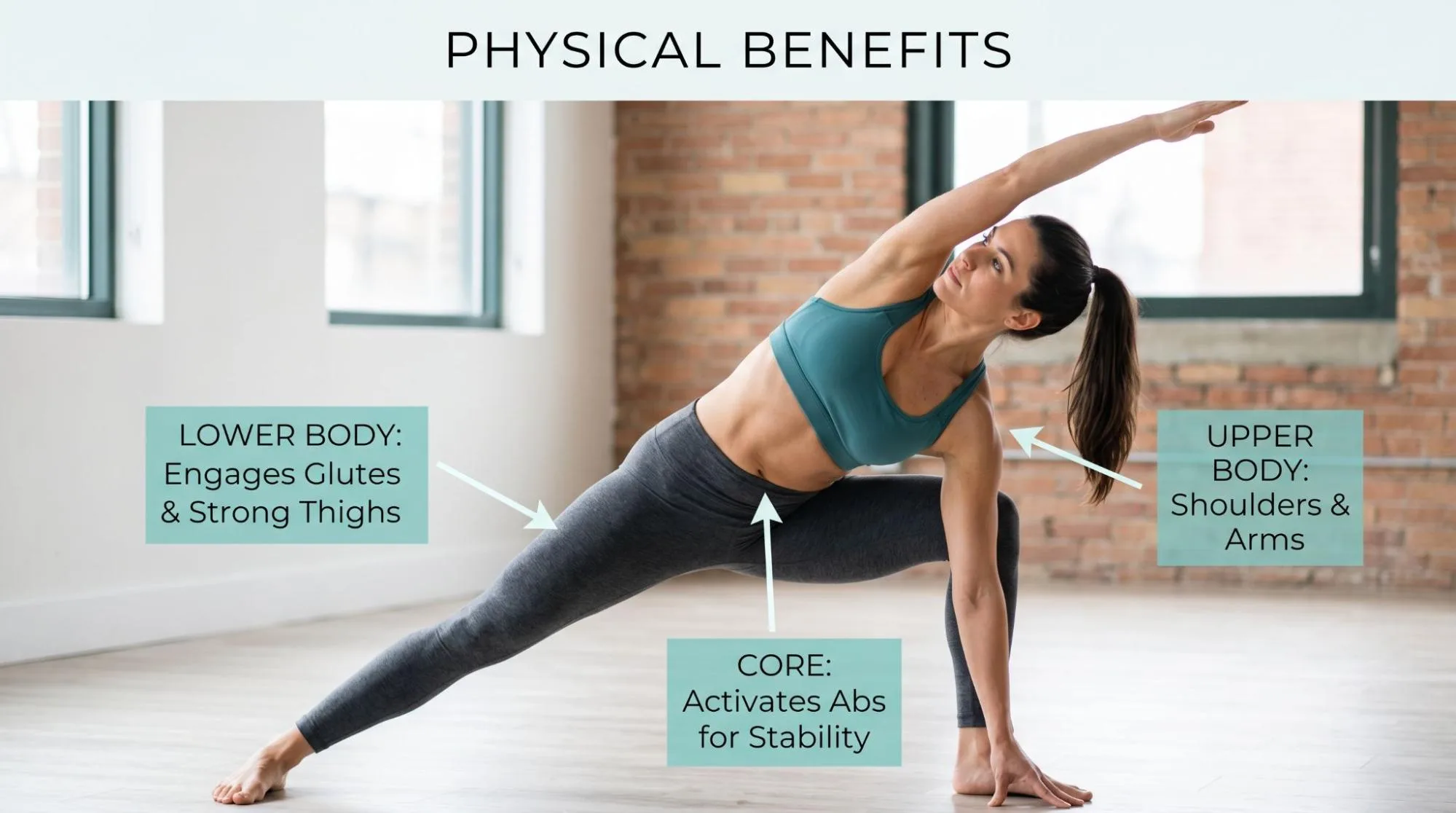
One of the biggest extended side angle pose benefits is stronger legs. When you bend your front knee, the quadriceps, calves, ankles, and hip muscles work to keep you steady.
The back leg also stays active. Pressing through the outer edge of the back foot helps create a stable foundation. Among the most practical extended side angle pose benefits is stronger lower-body control, especially through the front leg, back leg, hips, and ankles.
Tones the Glutes and Hips
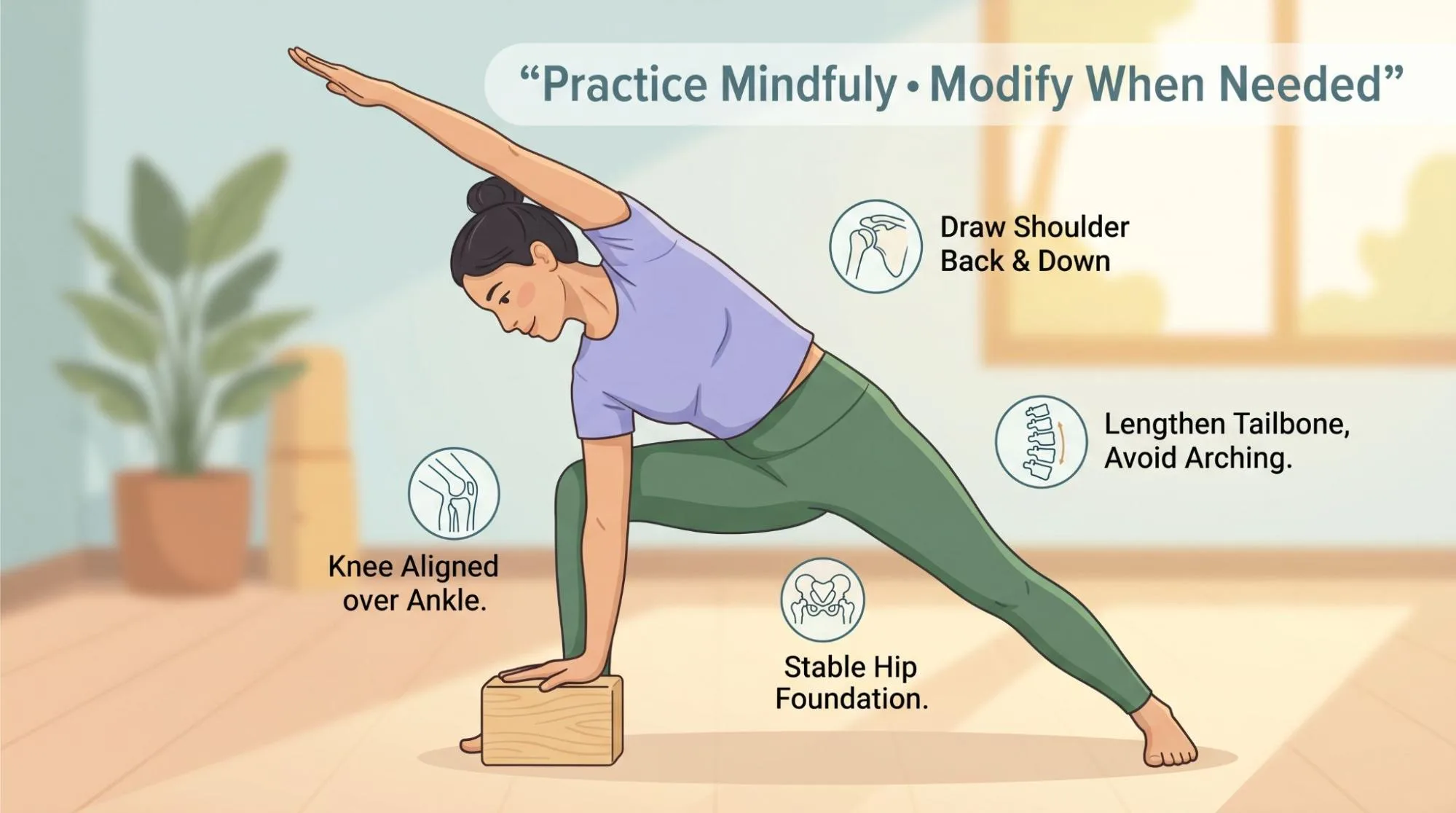
This pose strengthens the glutes while opening the hips. The front hip supports the bent knee, while the back hip lengthens.
With regular practice, this can improve stability in other standing poses too.
Engages the Core Muscles
Your core helps keep the torso long and lifted. Even if your forearm rests on your thigh, the belly and side waist should stay gently active.
This support helps protect the lower back and keeps the pose controlled.
Strengthens the Shoulders and Arms
When the top arm reaches overhead, the shoulder and arm muscles become active. If your lower hand is on a block or the floor, that arm also helps support the pose.
The aim is not to dump weight into the bottom hand. Stay lifted through the chest and waist.
Deep Stretching Benefits of Utthita Parsvakonasana
Stretches the Side Body
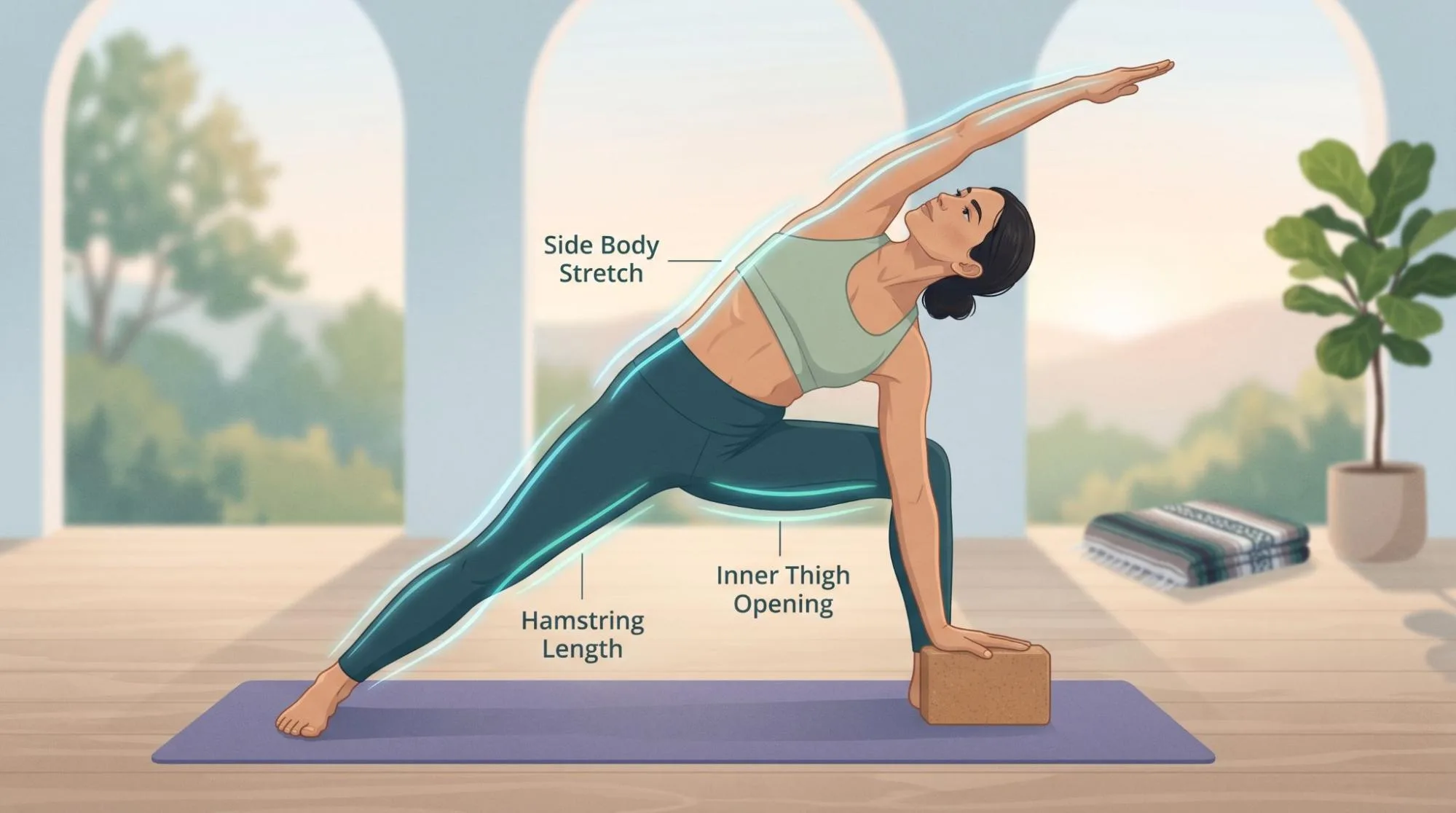
This is one of the clearest benefits of Utthita Parsvakonasana. The pose stretches the side waist, ribs, outer hip, and side chest.
You may feel one long line of stretch from the back foot to the top fingertips.
Opens the Groins and Inner Thighs
Because the stance is wide and the front knee bends, the pose opens the groins and inner thighs. This can feel especially helpful if your hips are tight from sitting or walking a lot.
Lengthens the Hamstrings and Calves
The back leg stays straight, which helps lengthen the hamstrings and calves. Keeping the back heel grounded makes the stretch more effective.
Releases Tension in the Spine
When done with good alignment, extended side angle pose creates space through the spine. The torso extends forward and sideways instead of rounding down.
This can help reduce stiffness around the lower back, ribs, and waist.
Extended Side Angle Pose for Chest and Lung Opening
Opens the Chest
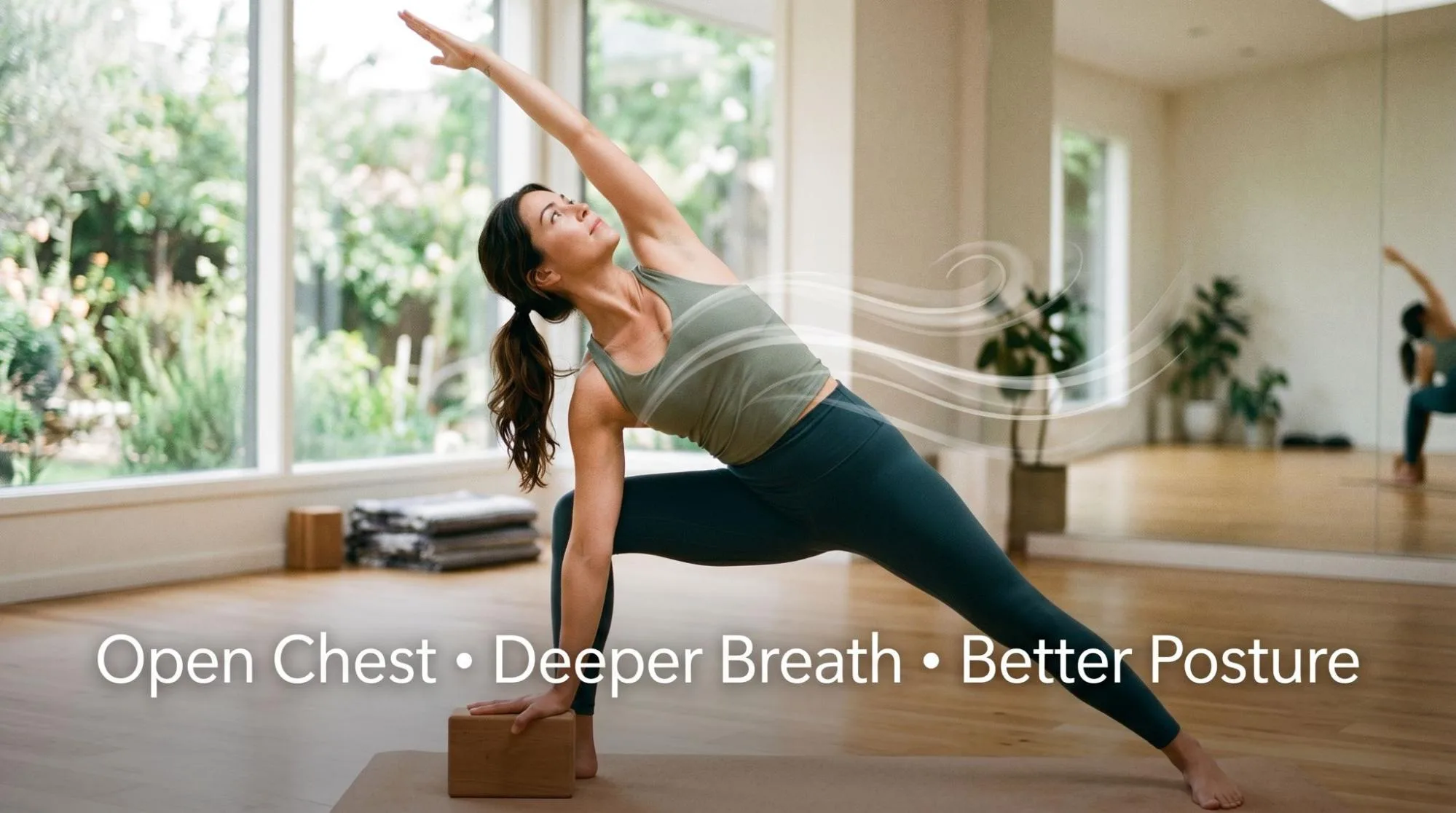
A common mistake is turning the chest toward the floor. Instead, try to rotate the ribs gently upward. Extended side angle pose benefits breathing by creating more space around the ribs and chest, which can make each inhale feel easier and fuller.
This chest opening can feel very good after long hours of sitting, driving, or working on a laptop.
Encourages Deeper Breathing
As the ribs expand, breathing often becomes fuller. The side body stretch gives the lungs more room to move.
Try holding the pose for a few slow breaths instead of rushing through it.
Improves Posture
Because the pose opens the chest and strengthens the legs and core, it may support better posture. It teaches the body to stay grounded, long, and open.
Learn More : Warrior 1 Pose: Benefits, Steps, Alignment, and Beginner Tips
Therapeutic Benefits of Extended Side Angle Pose
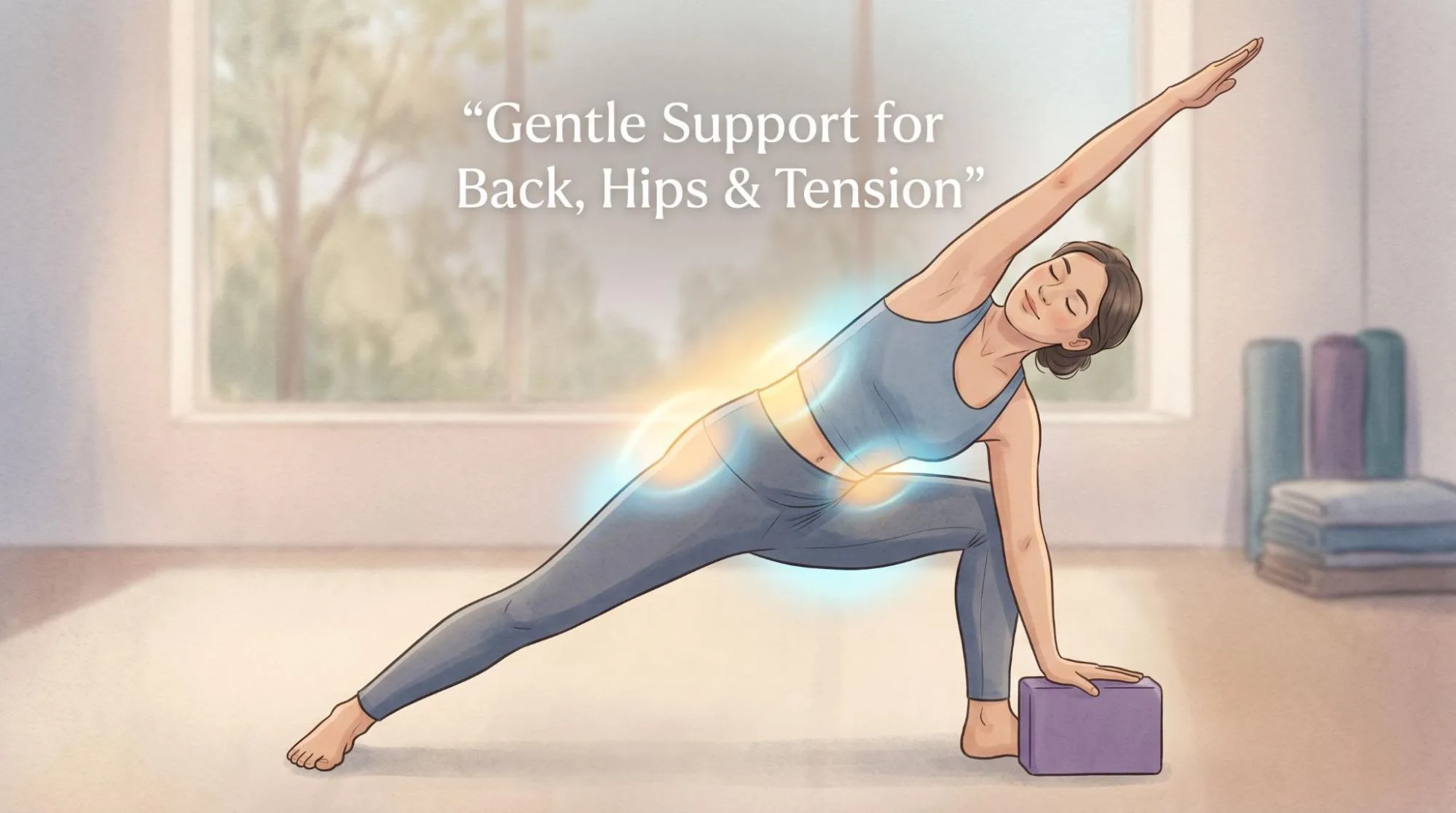
May Help Relieve Mild Lower Back Pain
Extended side angle pose may help mild lower back tension by stretching the hips, side waist, and legs. These areas often become tight and affect the lower back.
Move slowly. Do not force the pose.
May Reduce Sciatica Discomfort
Some people find this pose helpful for sciatica-related tightness because it stretches the hips, hamstrings, and outer leg.
Still, sciatica can have different causes. If the pose increases pain, stop and use a gentler option.
May Ease Menstrual Discomfort
Gentle side stretching and hip opening may help some people feel more comfortable during menstrual discomfort. A supported version, such as forearm on thigh, is usually better than going too deep.
Extended Side Angle Pose for Digestion
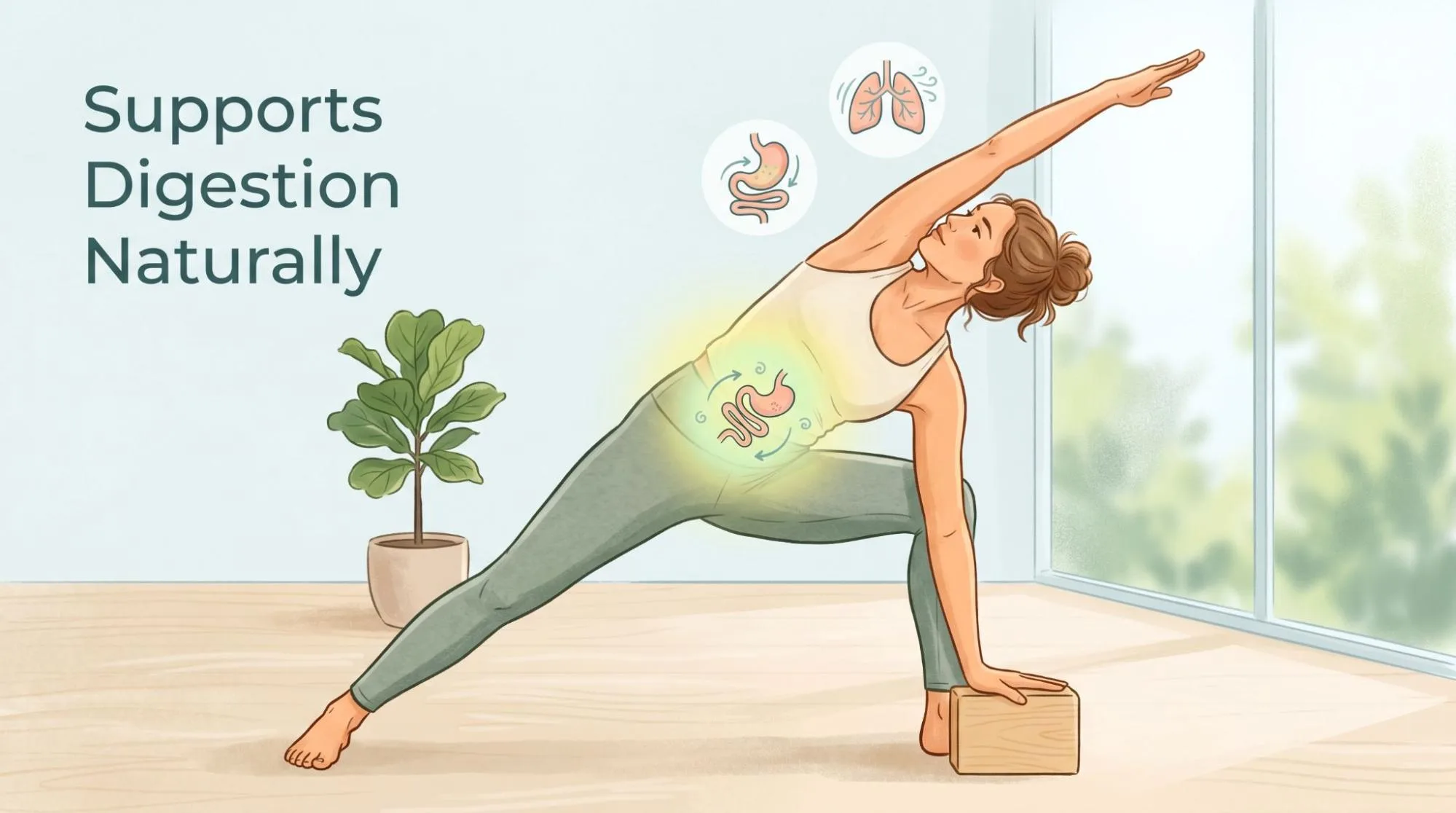
Stimulates Abdominal Organs
The side angle shape gently compresses and stretches the abdominal area. This may support healthy digestive movement.
May Help with Constipation
Because the pose involves abdominal engagement, side bending, and steady breathing, it may help support digestion. It is not a medical treatment, but it can be a useful part of a regular yoga routine.
Extended Side Angle Pose for People Who Sit Too Much
Opens Tight Hips
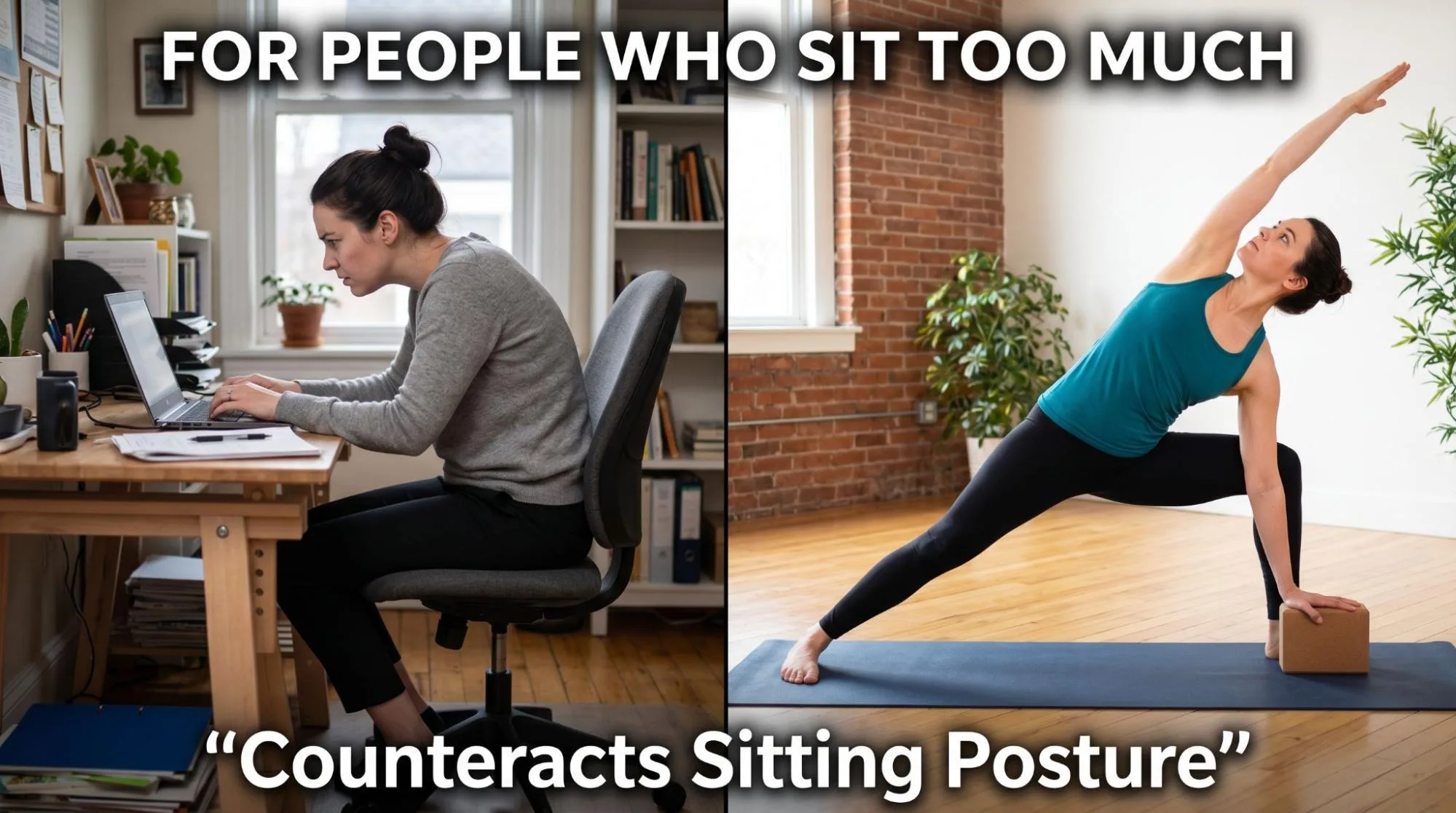
Sitting for long hours can make the hips tight. Extended side angle pose helps open the hips while strengthening the legs at the same time. For desk workers, extended side angle pose benefits tight hips, rounded shoulders, and weak posture habits caused by long sitting hours.
Counteracts Rounded Shoulders
The overhead arm and chest opening help balance the rounded posture many people develop from desk work.
Keep the shoulder relaxed. Do not squeeze it toward your ear.
Improves Body Awareness
This pose teaches you to notice small details. Is the knee falling inward? Is the back foot lifting? Is the chest closing?
That awareness is one of the quiet benefits of yoga practice.
How to Do Extended Side Angle Pose Step by Step
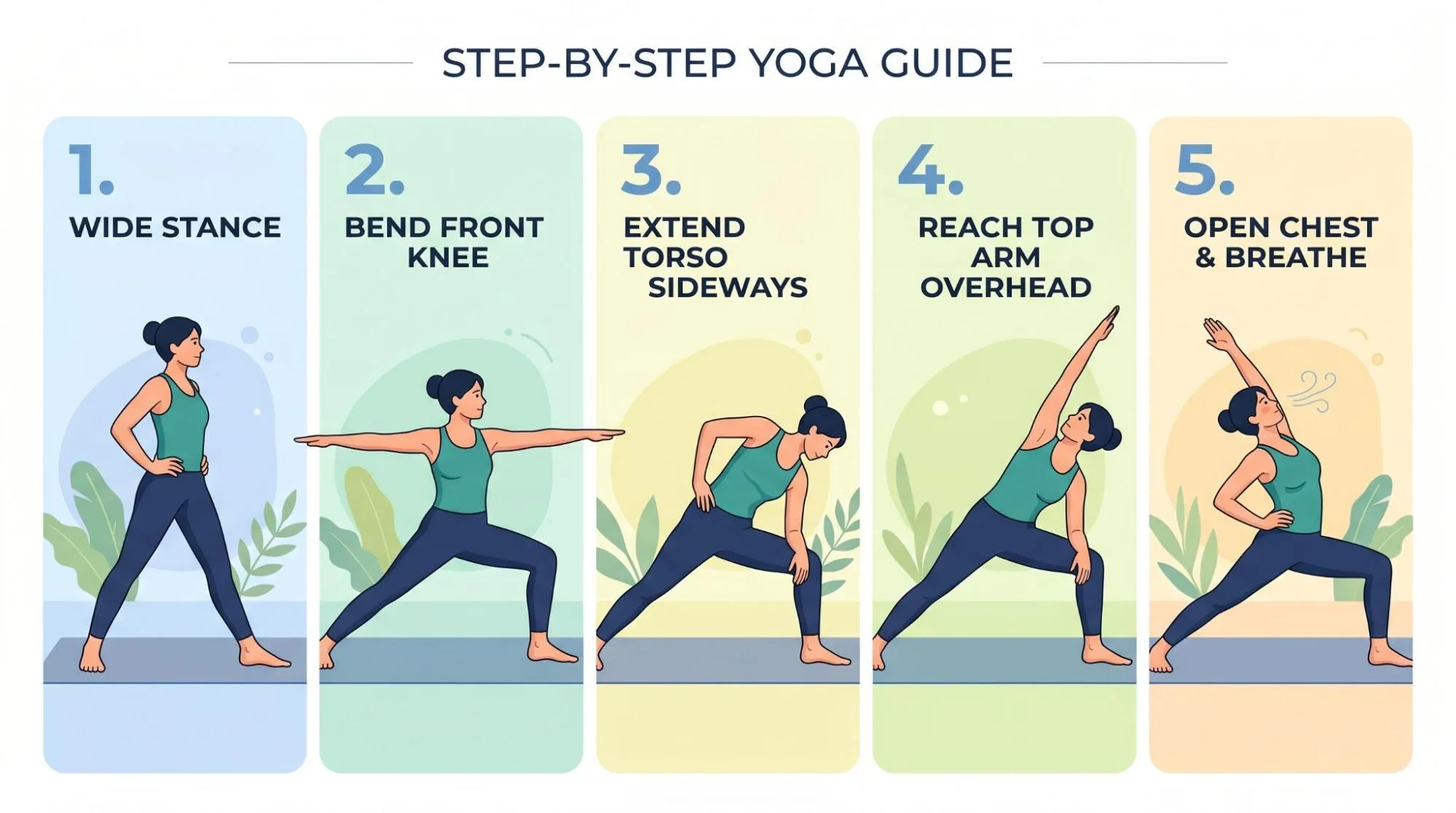
Step 1: Start in a Wide Standing Position
Begin in a wide stance, similar to Warrior II. Turn your right front foot forward and angle the back foot slightly inward.
Press both feet firmly into the mat.
Step 2: Bend the Front Knee
Bend your front knee toward 90 degrees. Keep the knee over the ankle and pointing in the same direction as the toes.
The back leg stays straight and strong.
Step 3: Extend the Torso Sideways
Lengthen your torso over the bent leg. You can place your forearm on your thigh or your hand on a block.
Avoid collapsing into the lower shoulder.
Step 4: Reach the Top Arm Overhead
Reach the top arm over your ear. If your right knee is bent, your left arm reaches overhead.
Try to create one long line from the back foot to the fingertips.
Step 5: Open the Chest and Breathe
Turn the chest slightly upward. Press the outer edge of the back foot down and breathe slowly.
Hold the pose, then repeat on the other side.
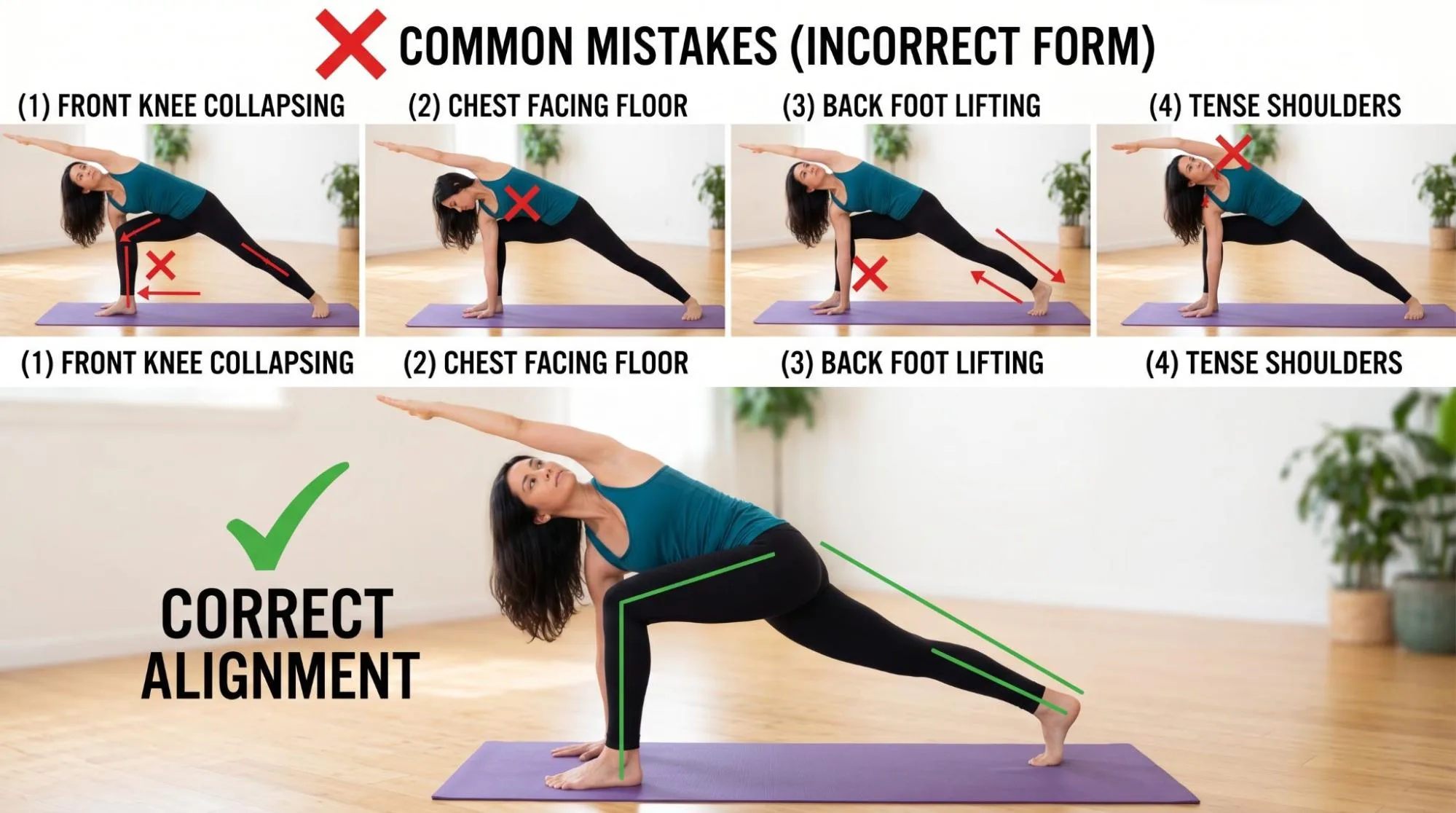
Common Mistakes to Avoid
Letting the Front Knee Collapse Inward
Keep the knee tracking over the toes. This protects the knee and builds better lower-body strength.
Collapsing the Chest Toward the Floor
Do not let the chest drop heavily. Rotate it open and keep the spine long.
Lifting the Back Foot
The back foot gives the pose power. Press through the edge of your back foot to stay grounded.
Holding the Breath
If your breath feels tight, ease out of the pose slightly. Smooth breathing matters more than depth.
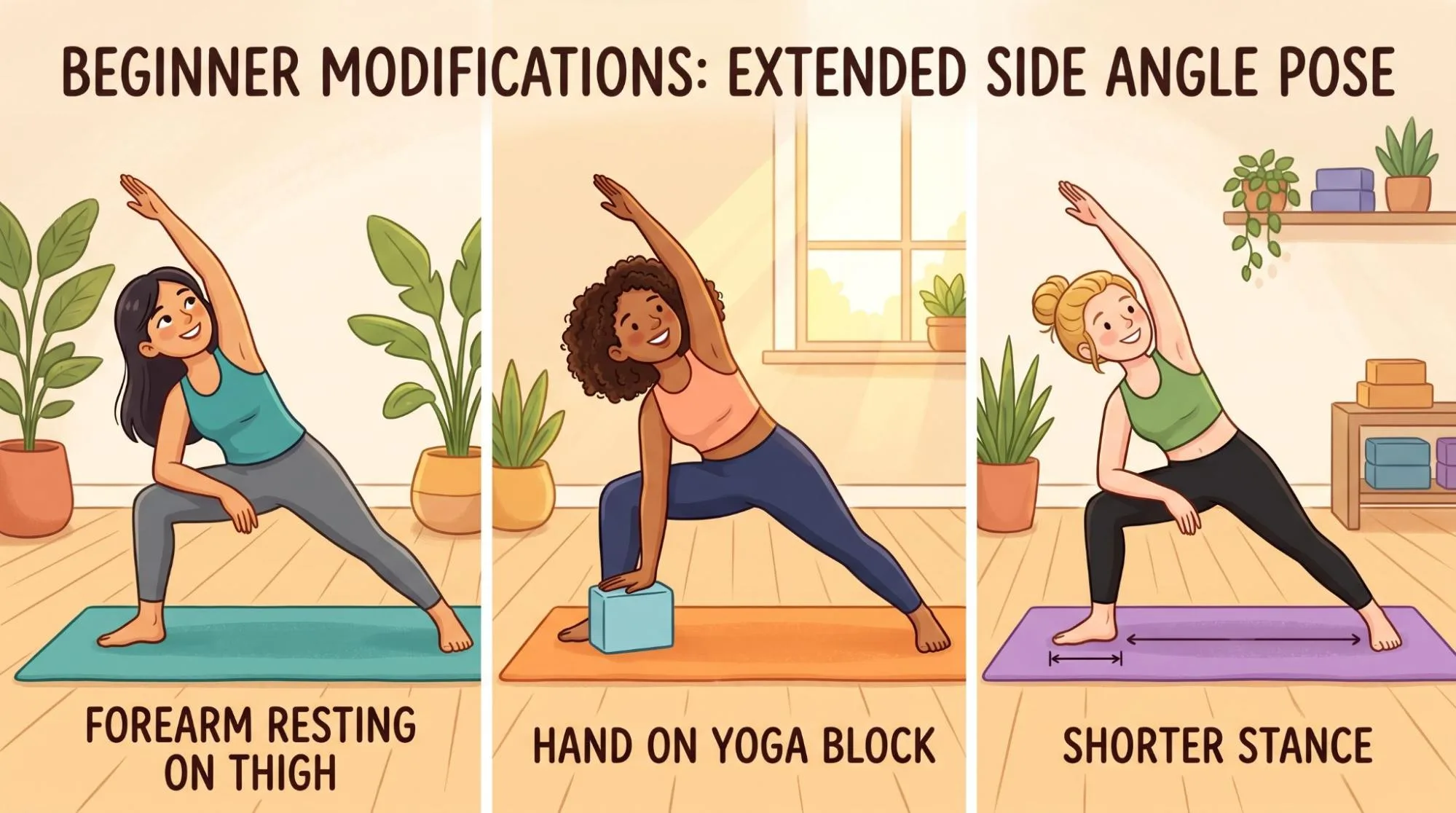
Best Modifications for Beginners
Use a Yoga Block
Place a yoga block under the lower hand. This helps keep the spine long and prevents collapsing.
Rest the Forearm on the Thigh
This is one of the best beginner-friendly options. It gives support while still offering the main extended side angle pose benefits.
Shorten the Stance
A shorter stance can reduce pressure on the hips and knees. As your strength improves, you can slowly widen the stance.
Who Should Be Careful with Extended Side Angle Pose?
Be careful with this pose if you have:
- Knee pain or injury
- Hip injury
- Shoulder pain
- Severe lower back pain
- Balance problems
- Strong groin or hamstring discomfort
Pregnant students should use a wider, supported version and avoid compressing the belly. If you are unsure, practice with a qualified yoga teacher.
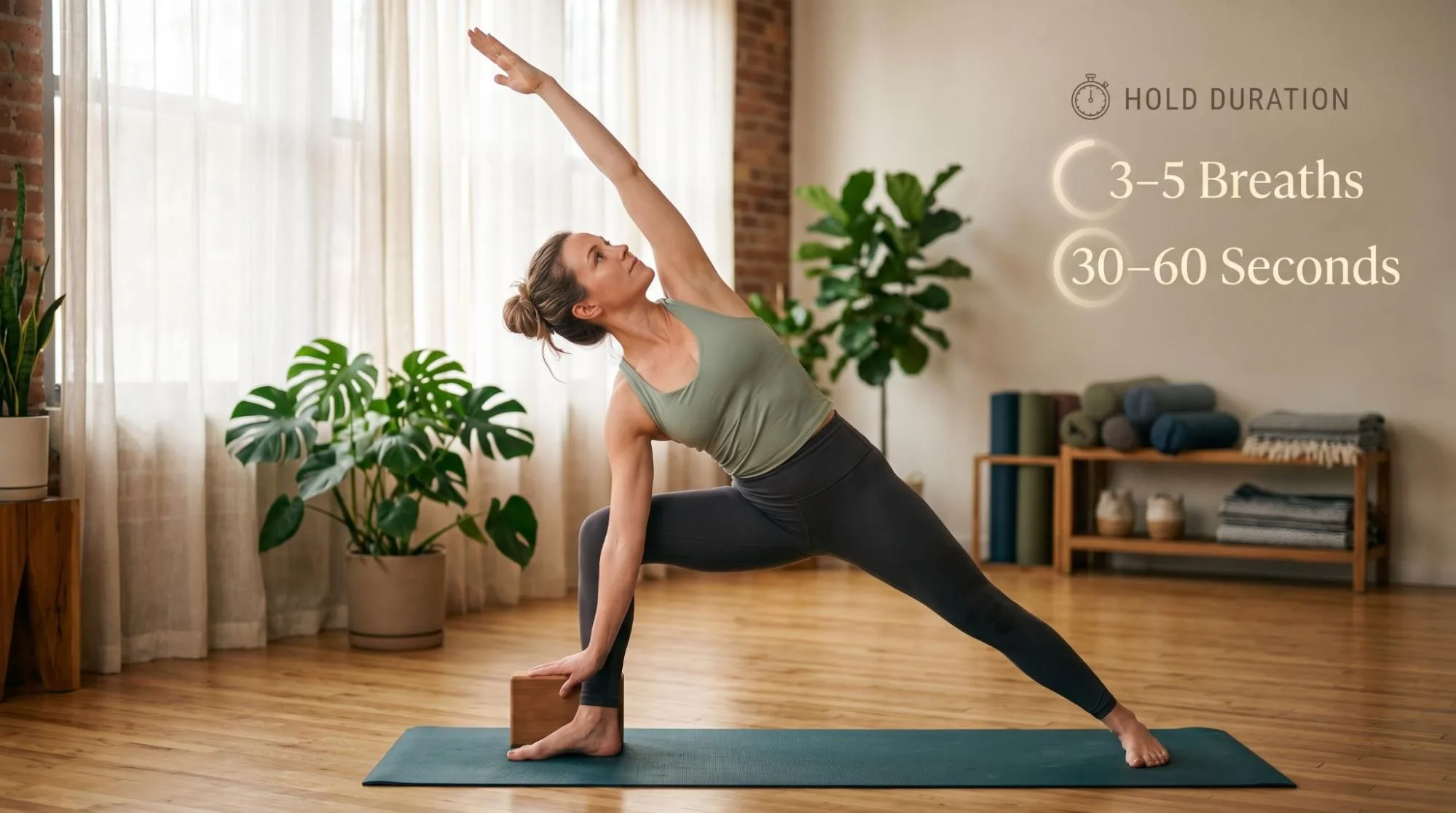
How Long Should You Hold Extended Side Angle Pose?
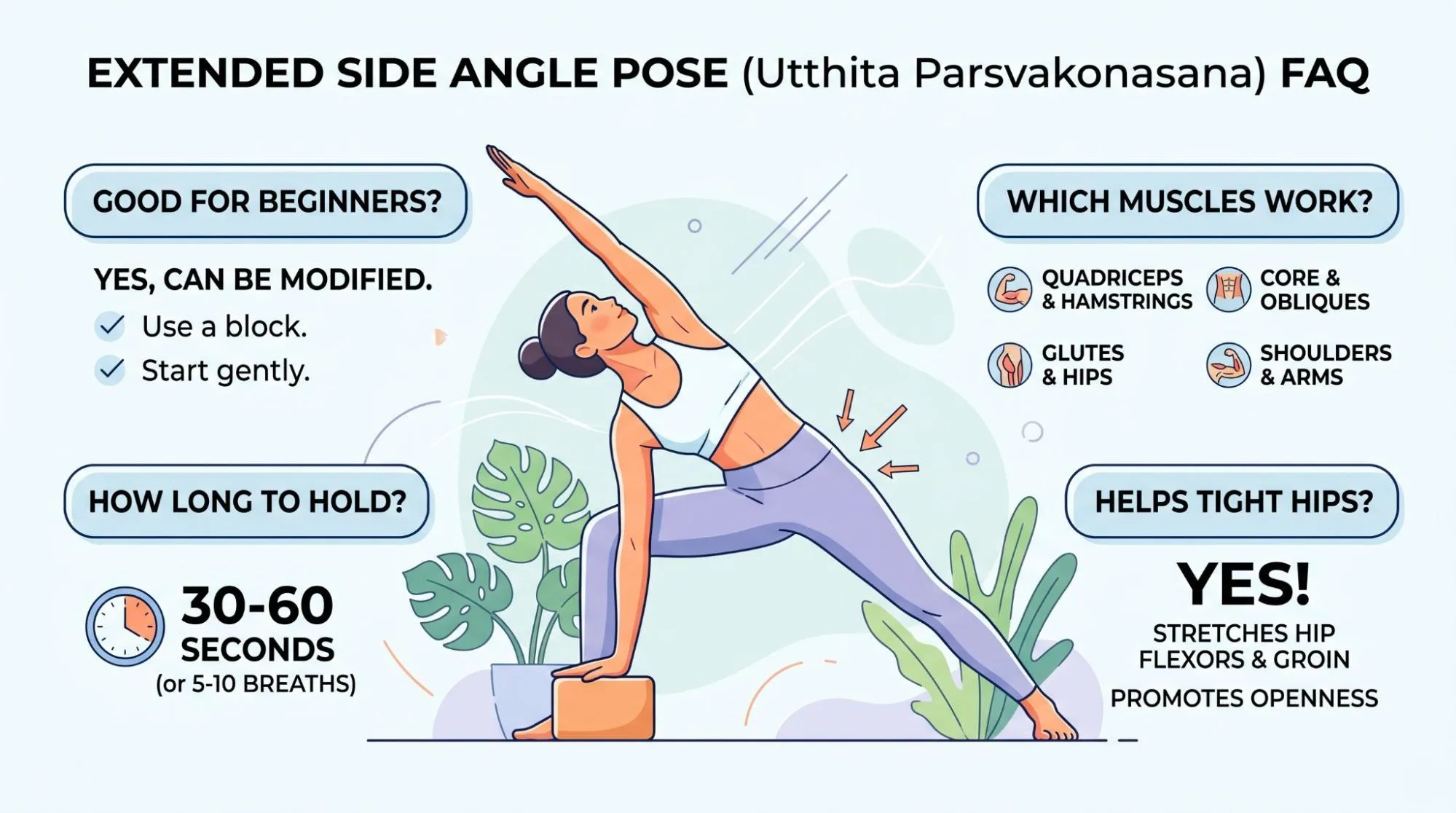
Beginners can hold extended side angle poses for 3 to 5 slow breaths on each side.
More experienced students may hold it for 30 to 60 seconds.
Do not chase time. If your alignment starts to fall apart, come out of the pose and reset.
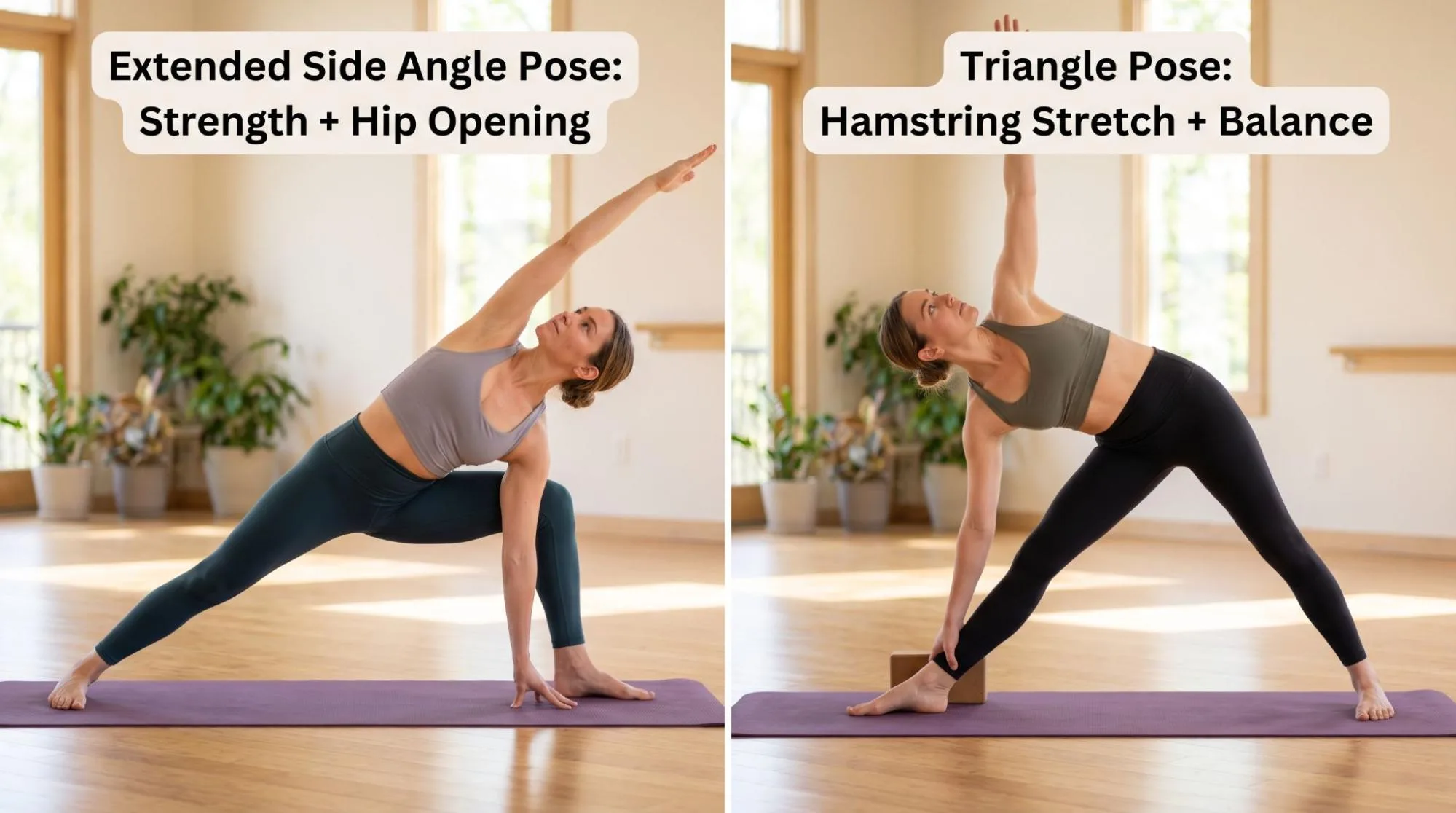
Extended Side Angle Pose vs Triangle Pose
Extended side angle pose and triangle pose look similar, but they are not the same.
| Pose | Front Knee | Main Focus |
| Extended Side Angle Pose | Bent, often near 90 degrees | Strength, hip opening, side stretch |
| Triangle Pose | Straight | Hamstring stretch, balance, spinal length |
Extended side angle pose strengthens the legs more because the front knee stays bent. Triangle pose gives more focus to straight-leg stretching.
FAQs About Extended Side Angle Pose Benefits
What are the main extended side angle pose benefits?
The main extended side angle pose benefits include stronger legs, better hip flexibility, improved balance, deeper breathing, chest opening, and a long stretch through the side body. It also supports better posture and body awareness.
Is extended side angle pose good for beginners?
Yes, extended side angle pose can be good for beginners when modified properly. Beginners can rest the forearm on the thigh or use a yoga block under the lower hand. The goal is to keep the chest open and the spine long, not to reach the floor.
Which muscles does extended side angle pose strengthen?
This pose strengthens the quadriceps, glutes, calves, ankles, core, shoulders, and arms. It also activates the back leg when you press through the outer edge of the back foot.
How is extended side angle pose different from Warrior II?
Warrior II keeps the torso upright with the arms reaching in opposite directions. Extended side angle pose usually starts from Warrior II, but the torso moves sideways over the bent front knee while the top arm reaches overhead.
Should the front knee be at 90 degrees in extended side angle pose?
Ideally, the front knee bends close to 90 degrees, with the knee stacked over the ankle. But beginners do not need to force this depth. A smaller bend is fine if it feels safer for the knee or hip.
Can extended side angle pose help with tight hips?
Yes, this pose can help open tight hips, groins, and inner thighs. It is especially useful for people who sit for long periods because it stretches areas that often become stiff.
How long should I hold an extended side angle pose?
Hold the pose for 3 to 5 slow breaths if you are new to yoga. With more experience, you can hold it for 30 to 60 seconds, as long as your breath stays steady and your alignment feels stable.
Can I do an extended side angle pose every day?
Yes, many people can practice it daily as part of a balanced yoga routine. Keep the movement mindful, avoid pushing into pain, and use modifications when your body feels tired or tight.
Learn More : Half Moon Pose Yoga: Benefits, Steps, Alignment Tips, and Beginner Guide
Final Thoughts
Extended side angle pose benefits the body in a simple but powerful way. It strengthens the legs, opens the hips, stretches the side body, supports posture, and encourages deeper breathing. When practiced with steady breathing and proper alignment, extended side angle pose benefits both beginners and experienced yoga students.
Start with a version that feels steady. Use a block, rest your forearm on your thigh, and focus on your breath. Over time, Utthita Parsvakonasana becomes less about reaching low and more about feeling grounded, open, and strong.