Quick answer: Wide-Legged Forward Fold, or Prasarita Padottanasana, is a standing forward fold with the feet apart. It may support hamstring mobility, balance, and calm breathing when the fold is adjusted to the person’s flexibility.
Important Safety Note
Keep the knees soft and hinge from the hips instead of forcing the head toward the floor. Stop for sharp pain, dizziness, numbness, or strong pulling in the back of the legs. Use a block or chair if needed, and seek qualified guidance for recent injuries, uncontrolled blood pressure, eye-pressure conditions, or pregnancy.
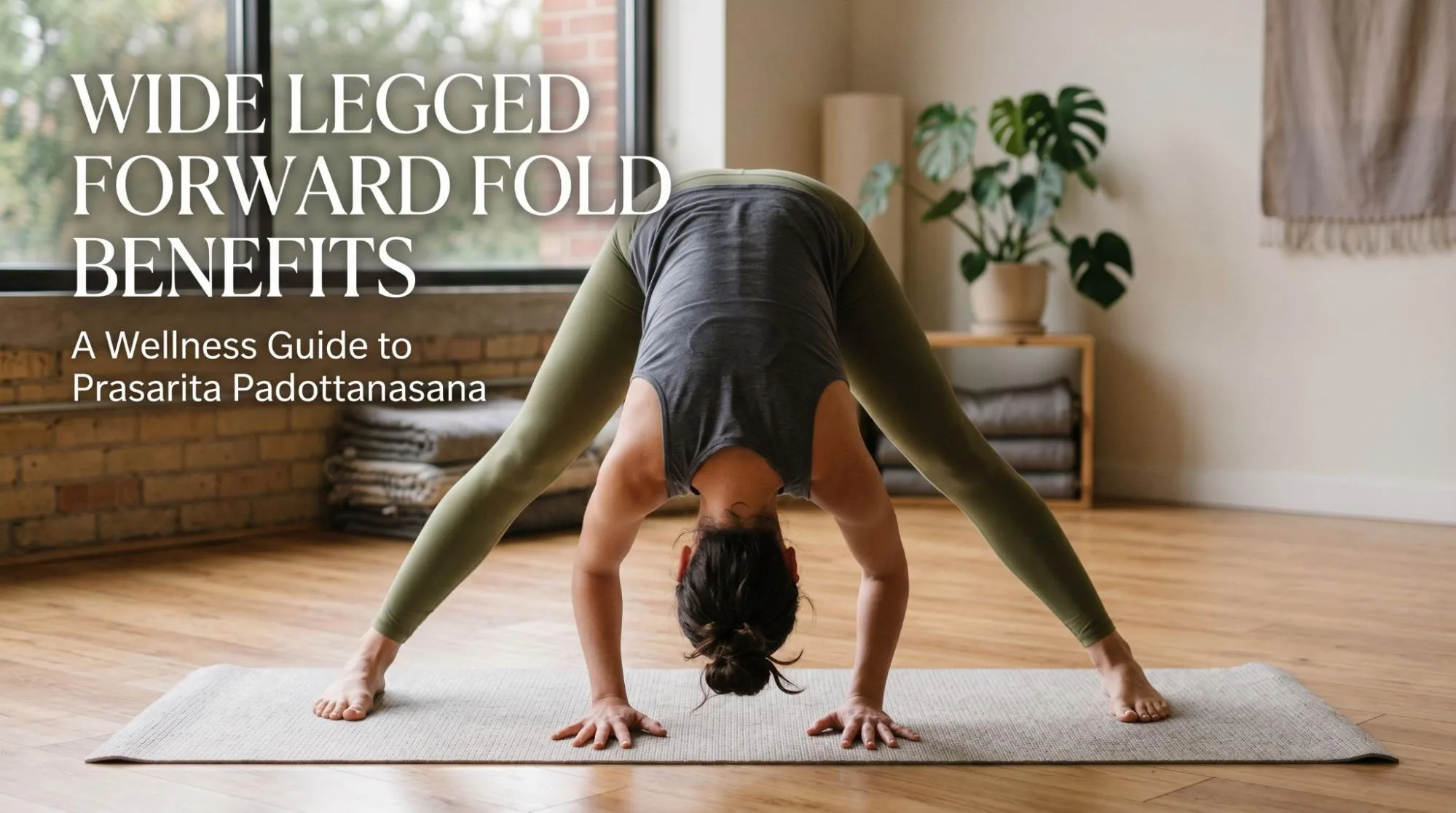
Wide-legged forward fold is a simple-looking yoga pose with surprisingly deep benefits for the whole body. In Sanskrit, it is known as Prasarita Padottanasana. In this pose, you stand with your legs wide, fold forward from the hips, and let the upper body release toward the floor with control. Many people search for wide legged forward fold benefits in yoga because this pose does more than stretch the legs. It helps improve flexibility, opens the hips, lengthens the spine, relaxes the neck, and supports a calmer nervous system when practiced with slow, steady breathing.
When people search for wide legged forward fold benefits yoga, they usually want to know why this pose is used so often in yoga classes. The short answer is it stretches the legs, opens the hips, lengthens the spine, and helps calm the nervous system when practised with steady breathing. When people search for wide legged forward fold benefits yoga, they usually want to understand how this pose supports flexibility, posture, and relaxation.
 alt=”Wide-legged forward fold with feet apart” title=”Wide-legged forward fold with feet apart”
What Is Wide-Legged Forward Fold?
Wide legged forward fold is a standing yoga pose where you take a wide stance and fold the upper body forward. It is similar to a standing forward bend, but the feet are placed farther apart.
In the pose, your hands on the floor may support you, or you can use yoga blocks if the floor feels too far away. Some people bring the head toward the floor, but that is not the main goal. The real purpose is to fold safely, keep the spine long, and breathe with control.
 alt=”Prasarita Padottanasana side view” title=”Prasarita Padottanasana side view”
Why Prasarita Padottanasana Is Important in Yoga
Prasarita Padottanasana is important because it teaches balance between effort and release. Your feet stay grounded, your legs stay active, and your spine gets space to lengthen.
It also helps students understand how to fold from the hips instead of collapsing through the lower back. That makes it especially useful for people with tight hamstrings or stiff hips.
This pose can be energizing when practiced actively and calming when practiced with support. That flexibility makes it useful in many types of yoga sequences.
 alt=”Wide-stance fold with hands on blocks” title=”Wide-stance fold with hands on blocks”
Learn More : Seated Forward Fold Yoga Step by Step
Top Benefits of Wide-Legged Forward Fold
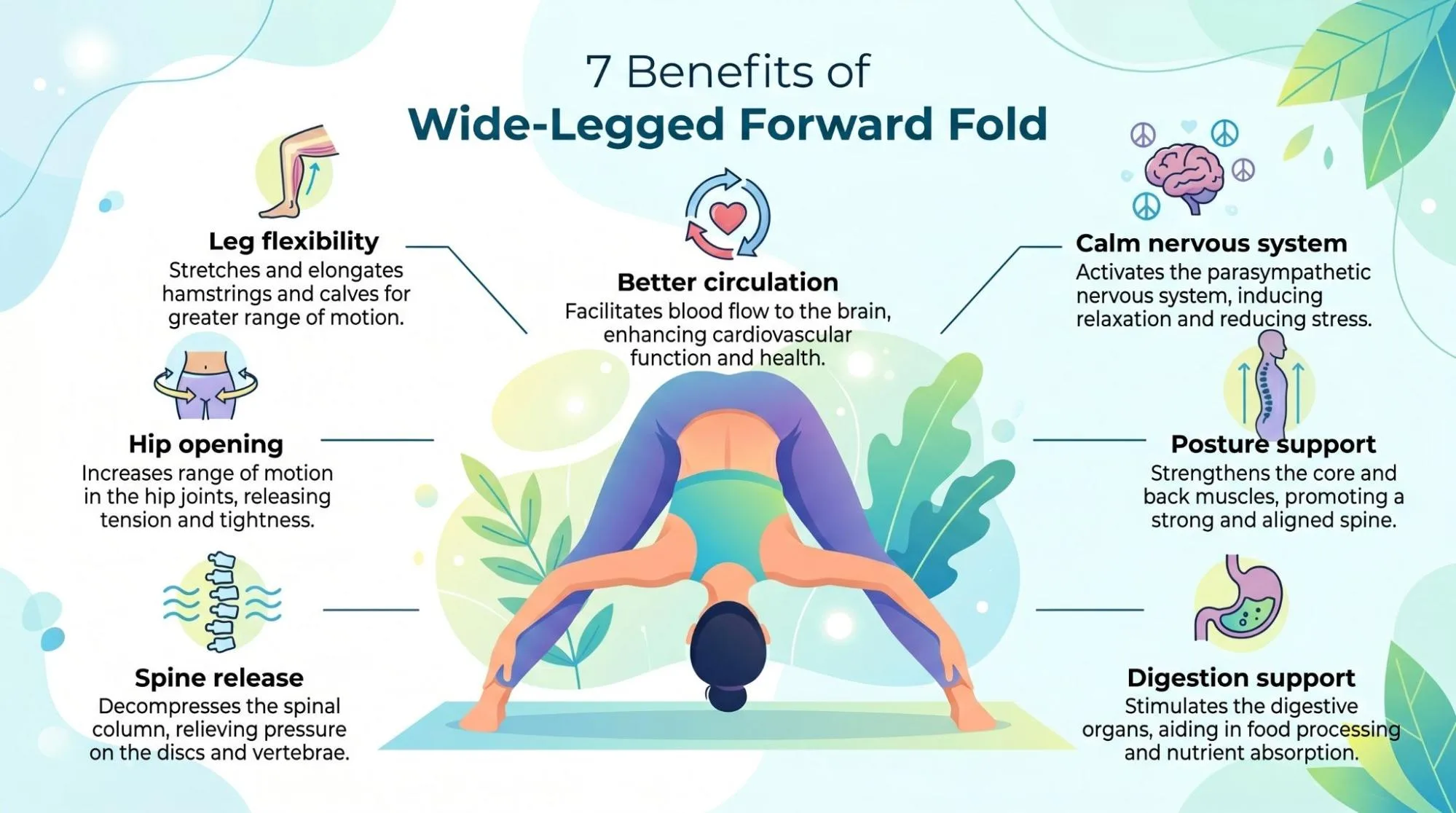
The main benefits of this pose include flexibility, better posture, spinal relief, and a calmer mind. The main reason wide legged forward fold benefits yoga is so popular is that the pose works on several areas at once: hamstrings, hips, spine, posture, and the nervous system.
Deepens Leg Flexibility
This pose gives a strong stretch to the backs of the legs. The hamstrings and calves work deeply, especially if your legs are straight.
If the stretch feels too intense, bend your knees slightly. You will still get the benefit without putting pressure on the lower back.
Opens the Hips
Because the feet are placed wide apart, the hips and inner thighs get more room to open. This can feel helpful if you sit for long hours or feel tight around the pelvis.
Think of your sitting bones moving back and upward as you fold. This small cue can make the pose feel more spacious.
Releases Spinal Tension
A careful wide legged forward bend can help release tension along the spine. As the torso lowers, gravity gently encourages length through the back body.
Try to reach the crown of your head forward first, then down. This helps prevent rounding too much through the lower back.
Improves Blood Circulation
Since the head comes lower than the heart, this pose works like a mild inversion. Many people feel refreshed after holding it for a few breaths.
If you feel dizzy, keep your head higher by using blocks or a chair.
Calms the Nervous System
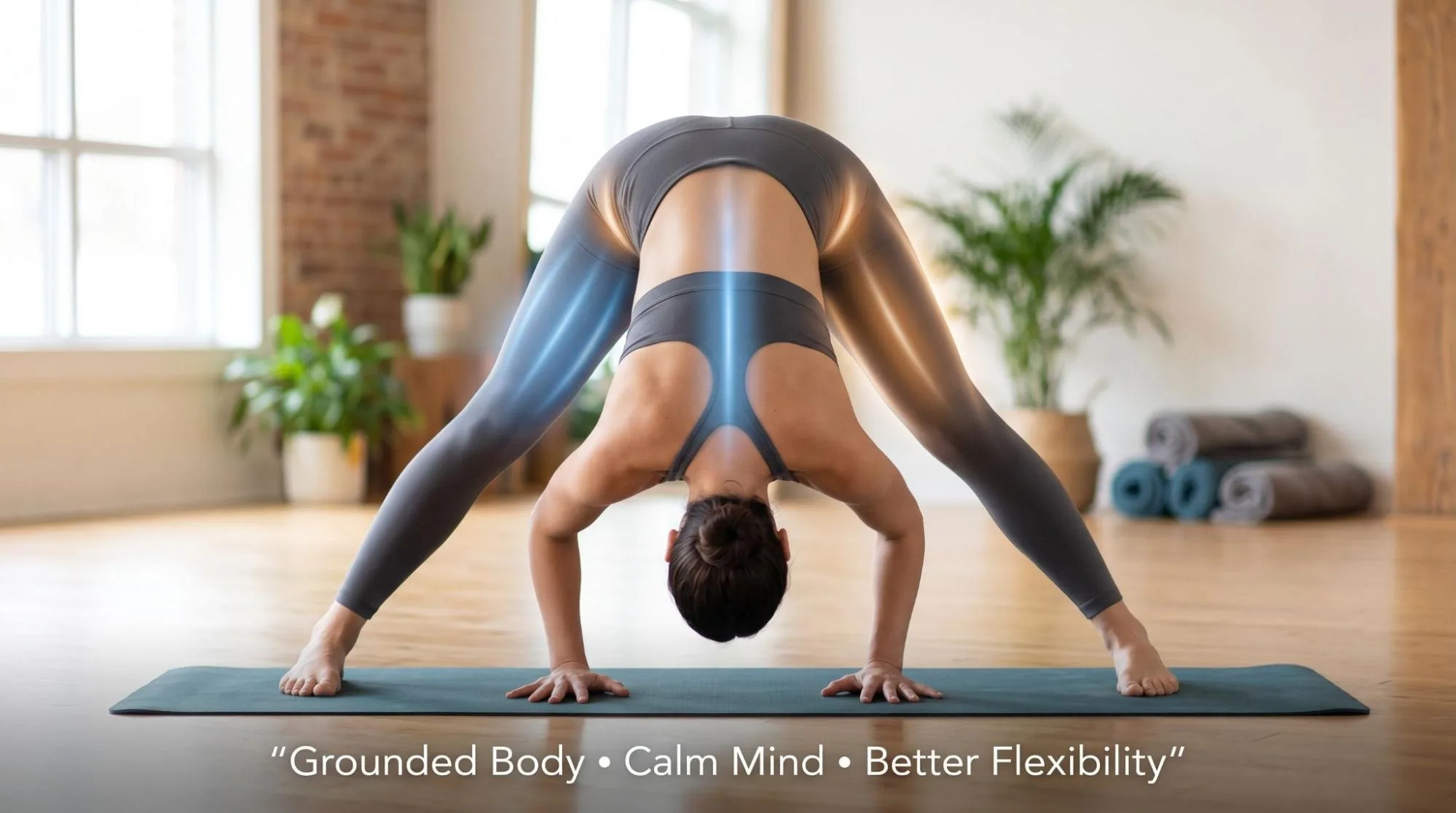
Forward folds often have a quieting effect. When you breathe slowly and let the neck relax, the body may start to feel safer and calmer.
This is one reason yoga teachers often use Prasarita Padottanasana in slower, grounding practices.
Supports Better Posture
This pose builds awareness of the feet, legs, hips, and spine. It helps you notice whether you are rounding, collapsing, or shifting too much weight into one part of the foot.
Over time, that awareness can support better posture outside your yoga mat too.
Aids Digestion
The gentle fold can create light compression around the abdomen. For some people, this supports digestive comfort.
Practice it a few hours after eating, not right after a heavy meal.
 alt=”Hinging from hips in a standing fold” title=”Hinging from hips in a standing fold”
Muscles Stretched in Wide-Legged Forward Fold
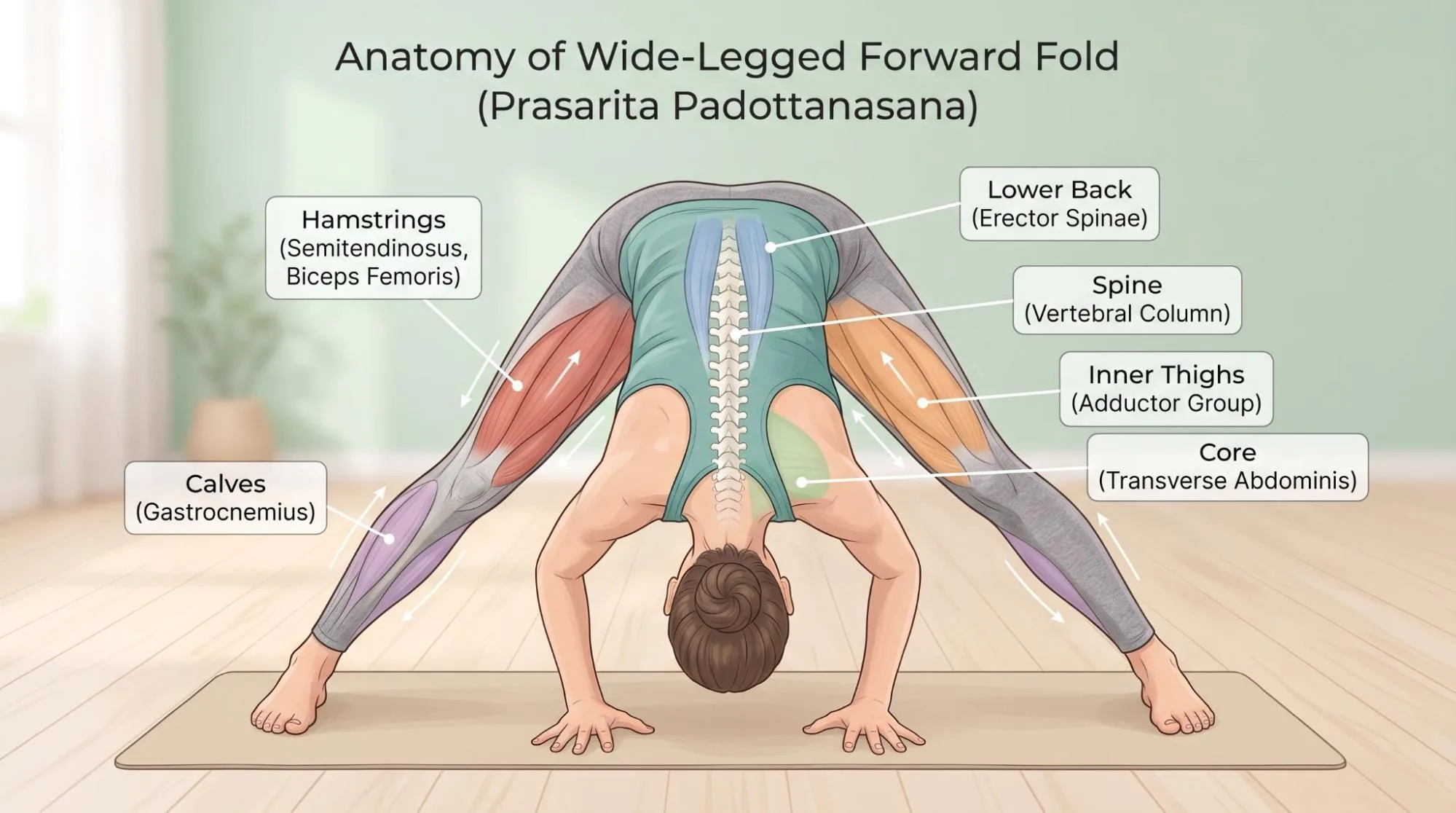
Wide-legged forward fold mainly stretches the back body, but several muscle groups are involved.
Hamstrings
The hamstrings are one of the main areas stretched in this pose. If you have tight hamstrings, use blocks and keep a soft bend in the knees.
Calves
The calves stretch as the feet press into the floor. Ground through the heels, outer feet, and base of the big toe to create better balance.
Inner Thighs
The wide stance stretches the inner thighs, also called the adductors. This is one reason the pose can feel deeper than a regular forward fold.
Lower Back and Spine
The lower back and spine lengthen when the fold comes from the hips. If the lower back feels strained, come up slightly and bend your knees.
Core Muscles
Your core helps control the movement as you fold forward and come back up. This is why you should not drop into the pose quickly.
 alt=”Wide-legged fold with knees softly bent” title=”Wide-legged fold with knees softly bent”
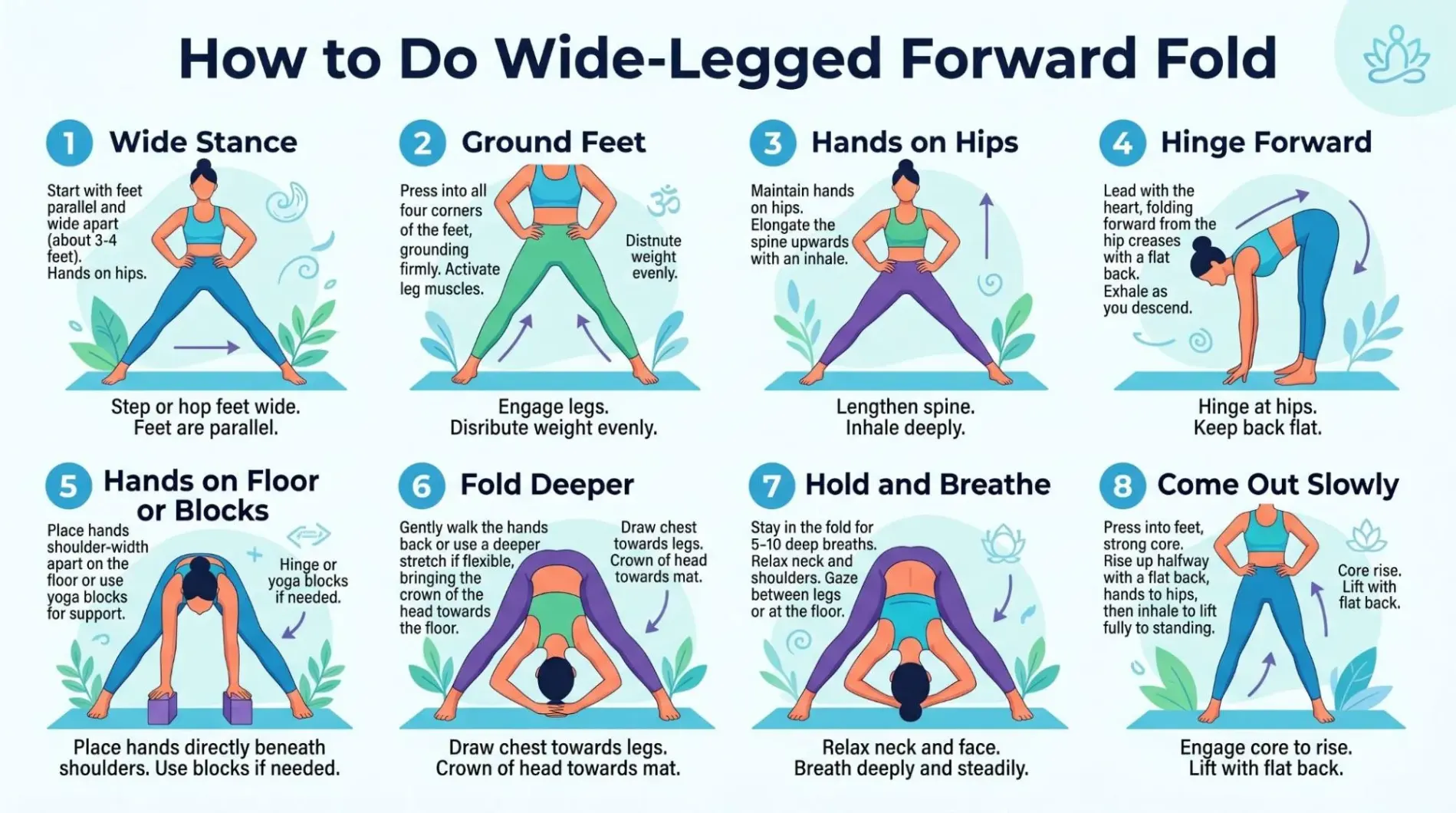
How to Do Wide-Legged Forward Fold Step by Step
Move slowly and pay attention to how your body feels.
Step 1: Stand with a Wide Stance
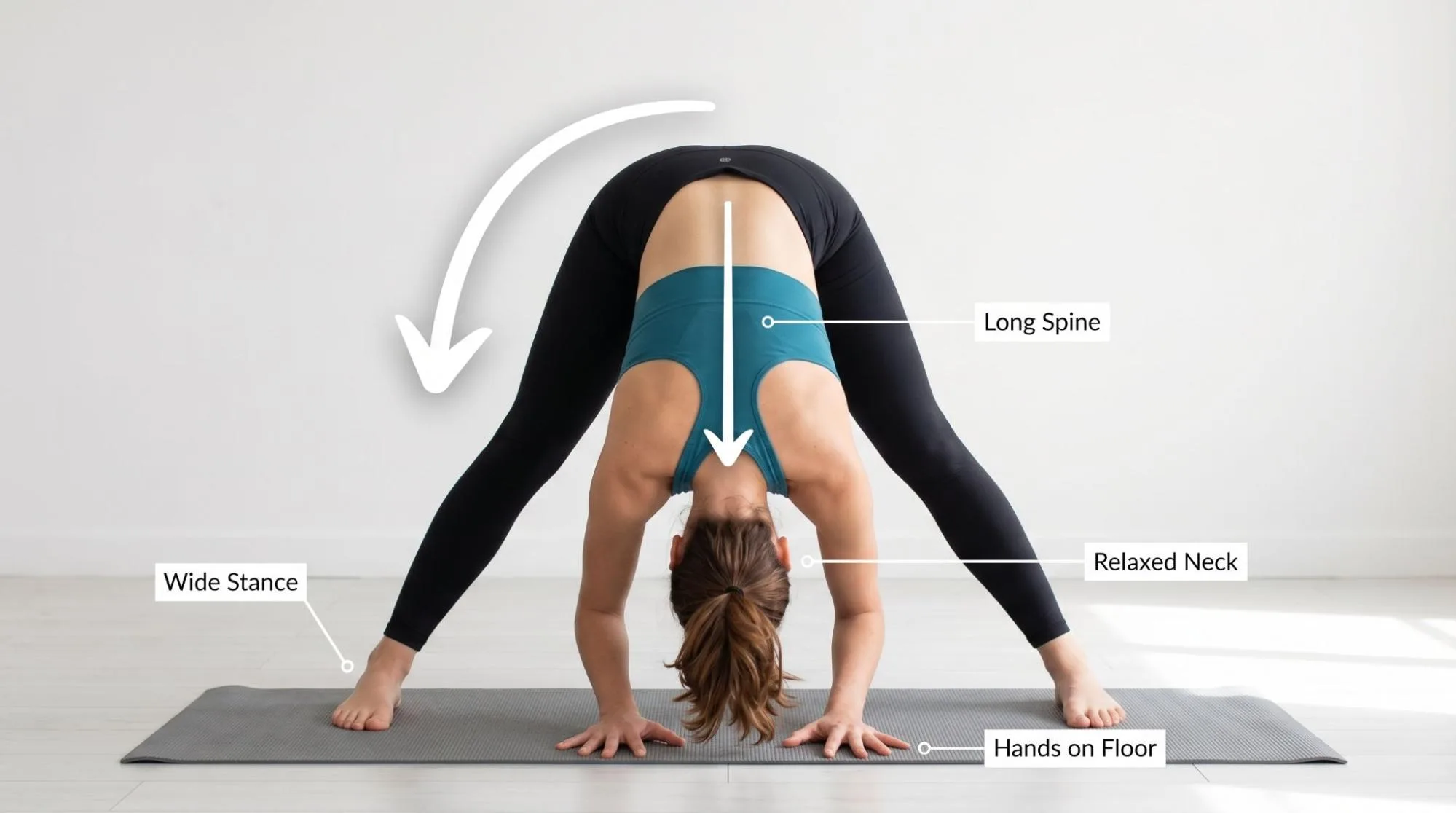
Start standing tall. Then step your feet wide apart, around 3 to 4 feet depending on your height.
Keep your feet parallel or slightly turned inward.
Step 2: Ground Your Feet
Press evenly through both feet. Feel the heels, outer edges, and base of the big toe.
This gives you a stable foundation.
Step 3: Place Your Hands on Your Hips
Bring your hands to your hips. Lift your chest and lengthen your spine.
Take one slow breath before folding.
Step 4: Hinge Forward from the Hips
Begin to fold from the hips, not the waist. Keep the spine long as your upper body moves forward.
Imagine your sitting bones reaching back behind you.
Step 5: Place Your Hands on the Floor or Blocks
Place your hands on the floor under your shoulders. If your hands do not reach comfortably, use yoga blocks.
Blocks help you keep good alignment.
Step 6: Fold Deeper with Control
If your body allows, bend the elbows and let the torso move lower. The head may move toward the floor, but do not force it.
Keep the legs active.
Step 7: Hold and Breathe
Stay for 5 to 10 slow breaths. Relax your jaw, soften your shoulders, and let your neck relax.
Keep breathing evenly.
Step 8: Come Out Slowly
Place your hands on your hips or blocks. Engage your legs and core.
Inhale and rise with a long spine. Pause before stepping your feet together.
 alt=”Beginner modification using a chair” title=”Beginner modification using a chair”
Learn More : Reclining Bound Angle Pose Benefits
Tips for Beginners
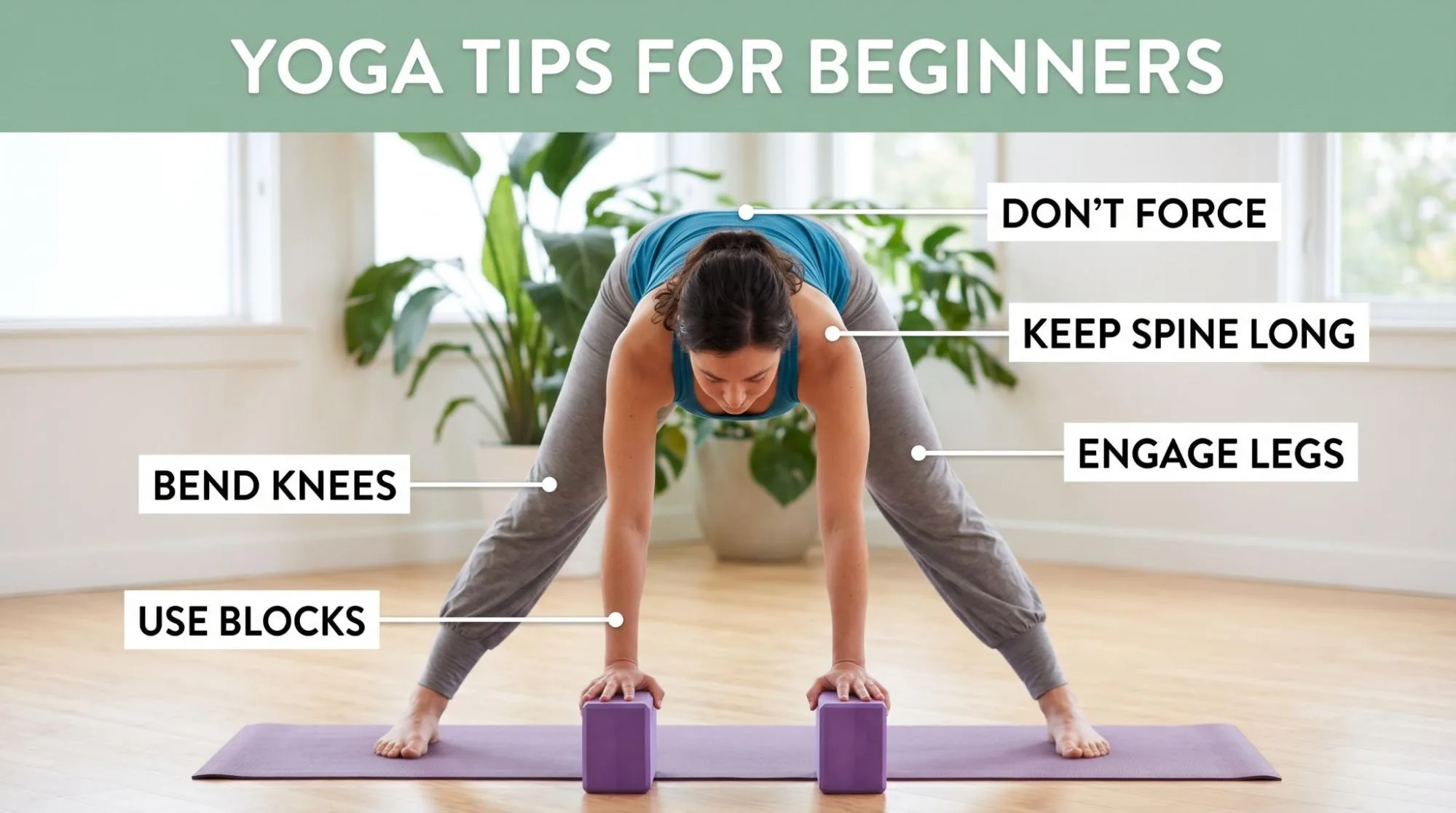
Beginners should focus on comfort, control, and safe alignment. For beginners, understanding wide legged forward fold benefits in yoga starts with practising the pose safely, not trying to force the head toward the floor.
Bend Your Knees
A small bend in the knees can protect the lower back and make the pose easier.
Use yoga blocks.
Blocks bring the floor closer. They are very helpful if your hands cannot reach the mat without rounding your back.
Keep the Spine Long
Think about length before depth. A long spine is more important than getting your head low.
Engage Your Legs
Press the feet down and lift gently through the thighs. Active legs support the fold.
Do Not Force the Pose
Your head does not need to touch the floor. Let the pose develop slowly with practice.
 alt=”Back and neck alignment in wide-stance fold” title=”Back and neck alignment in wide-stance fold”
Common Mistakes to Avoid
These small mistakes can make the pose uncomfortable or less effective.
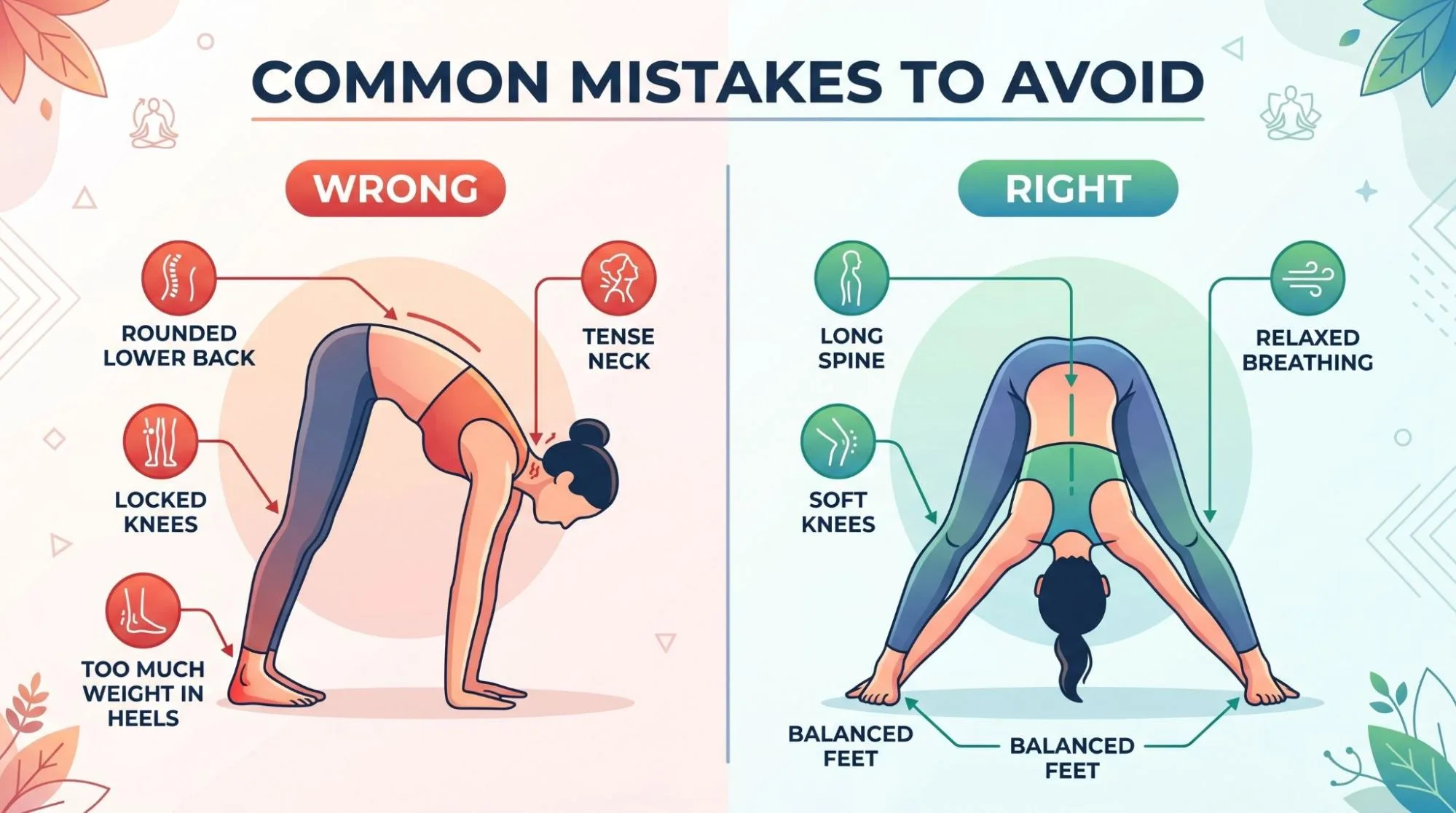
Rounding the Lower Back
Some rounding is natural, but too much can strain the lower back. Fold from the hips and keep the chest reaching forward.
Locking the Knees
Avoid pushing the knees backward. Keep a tiny bend so the joints stay safe.
Putting Too Much Weight in the Heels
Balance your weight through the whole foot. Do not lean too far back into the heels.
Holding the Breath
If you stop breathing, you may be pushing too hard. Ease up and return to steady breathing.
 alt=”Breathing in a wide-legged forward fold” title=”Breathing in a wide-legged forward fold”
Variations of Prasarita Padottanasana
You can adjust the pose depending on your body and experience level.
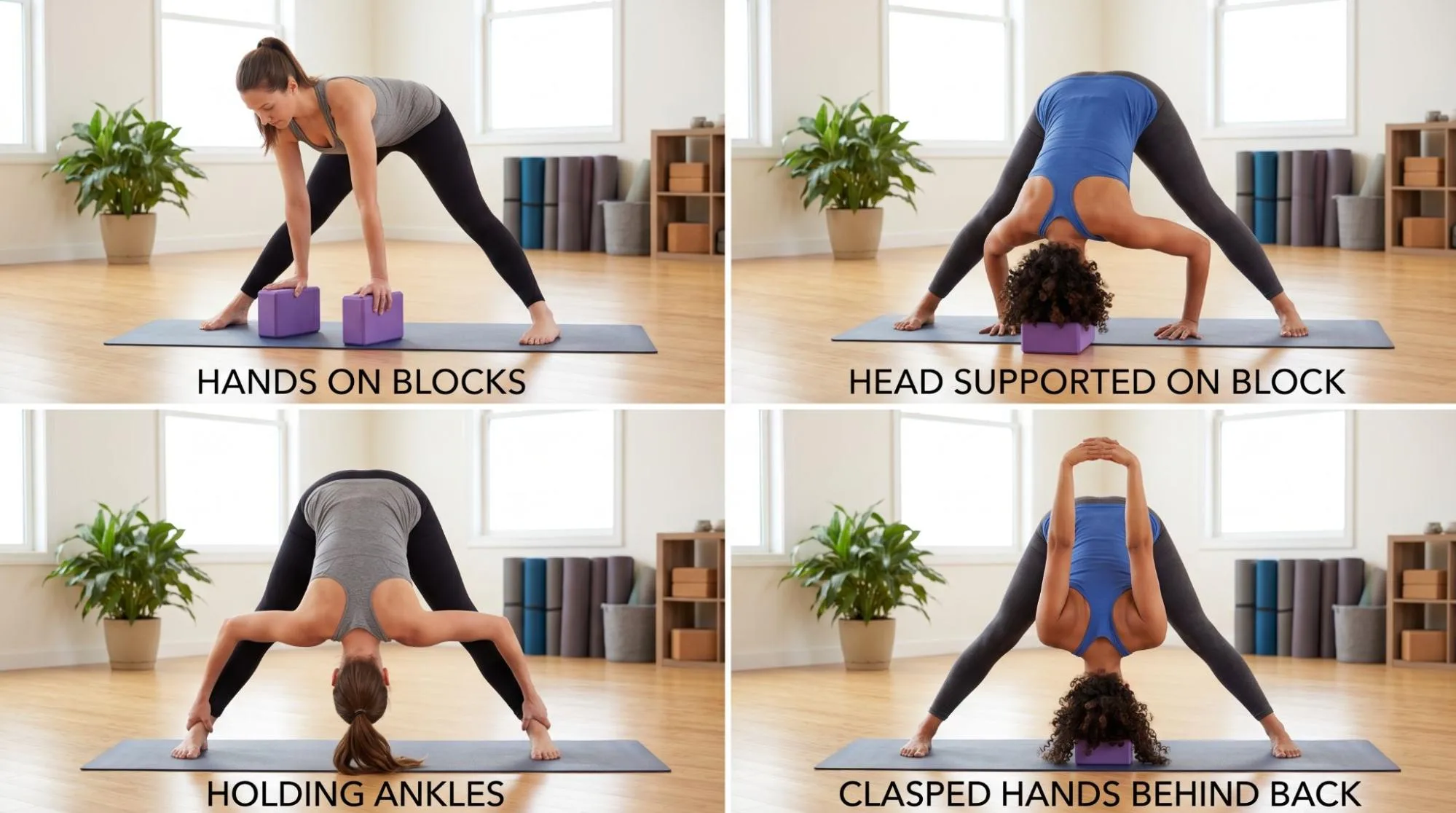
wide-stance fold with Blocks
Place blocks under your hands. This is one of the best options for beginners or anyone with tight hamstrings.
wide-stance fold with Head Support
Rest your head on a block, bolster, or folded blanket. This version feels more calming and supportive.
wide-stance fold Holding Ankles
If you can fold deeper without strain, hold your ankles or outer feet. Keep the pull gentle.
wide-stance fold with Clasped Hands
Clasp your hands behind your back before folding. This adds a shoulder and chest stretch. Move slowly if your shoulders are tight.
 alt=”Hamstring stretch with supported hands” title=”Hamstring stretch with supported hands”
Safety Precautions
A wide-stance fold is helpful for many people, but it should be practiced carefully.
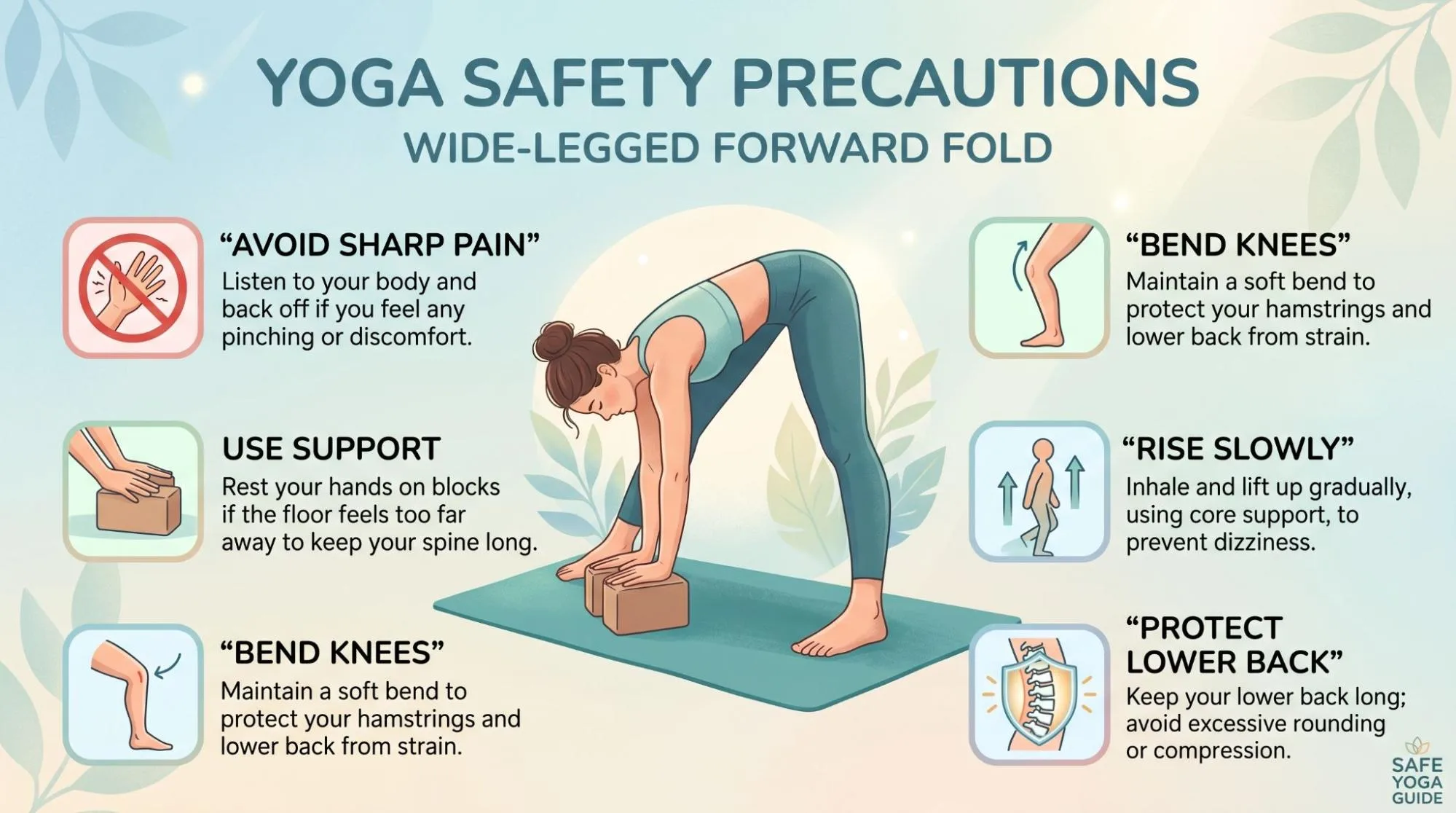
Avoid deep folding or ask a qualified teacher for guidance if you have:
- Lower back injury
- Hamstring strain
- Dizziness or vertigo
- High or very low blood pressure
- Glaucoma or eye pressure issues
- Recent hip, knee, or spine injury
- Pregnancy, unless modified safely
Come out of the pose if you feel sharp pain, numbness, tingling, or strong pressure in the head.
 alt=”Foot placement for Prasarita Padottanasana” title=”Foot placement for Prasarita Padottanasana”
Best Time to Practice wide-stance fold
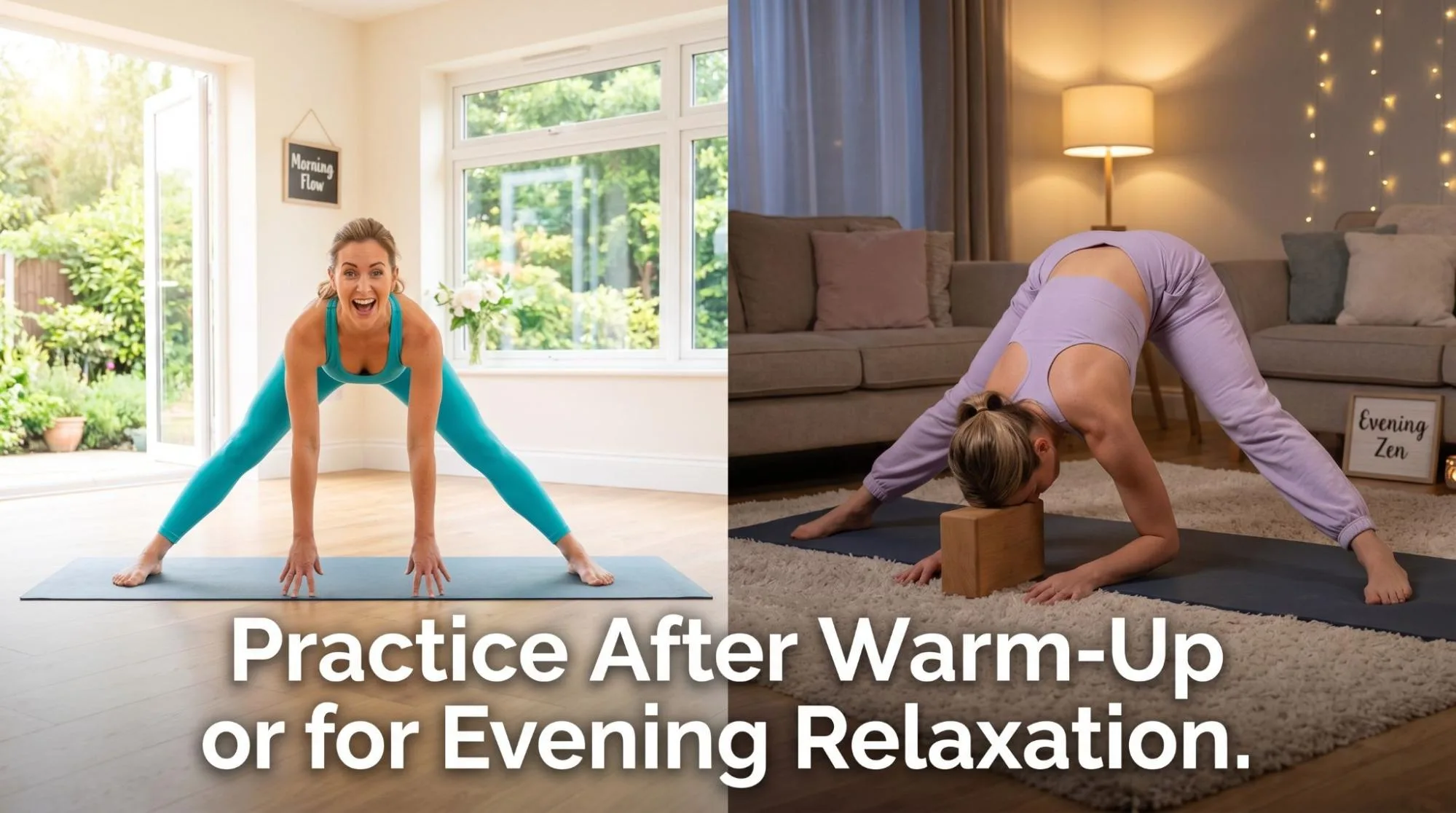
The best time to practise this pose is when your body is already a little warm. It works well after sun salutations, standing poses, or gentle hip openers.
For relaxation, practise a supported version in the evening. Resting the head on a block can make the pose feel more grounding.
Avoid deep folding right after eating because it may feel uncomfortable on the stomach.
 alt=”Wide-stance fold transition” title=”Wide-stance fold transition”
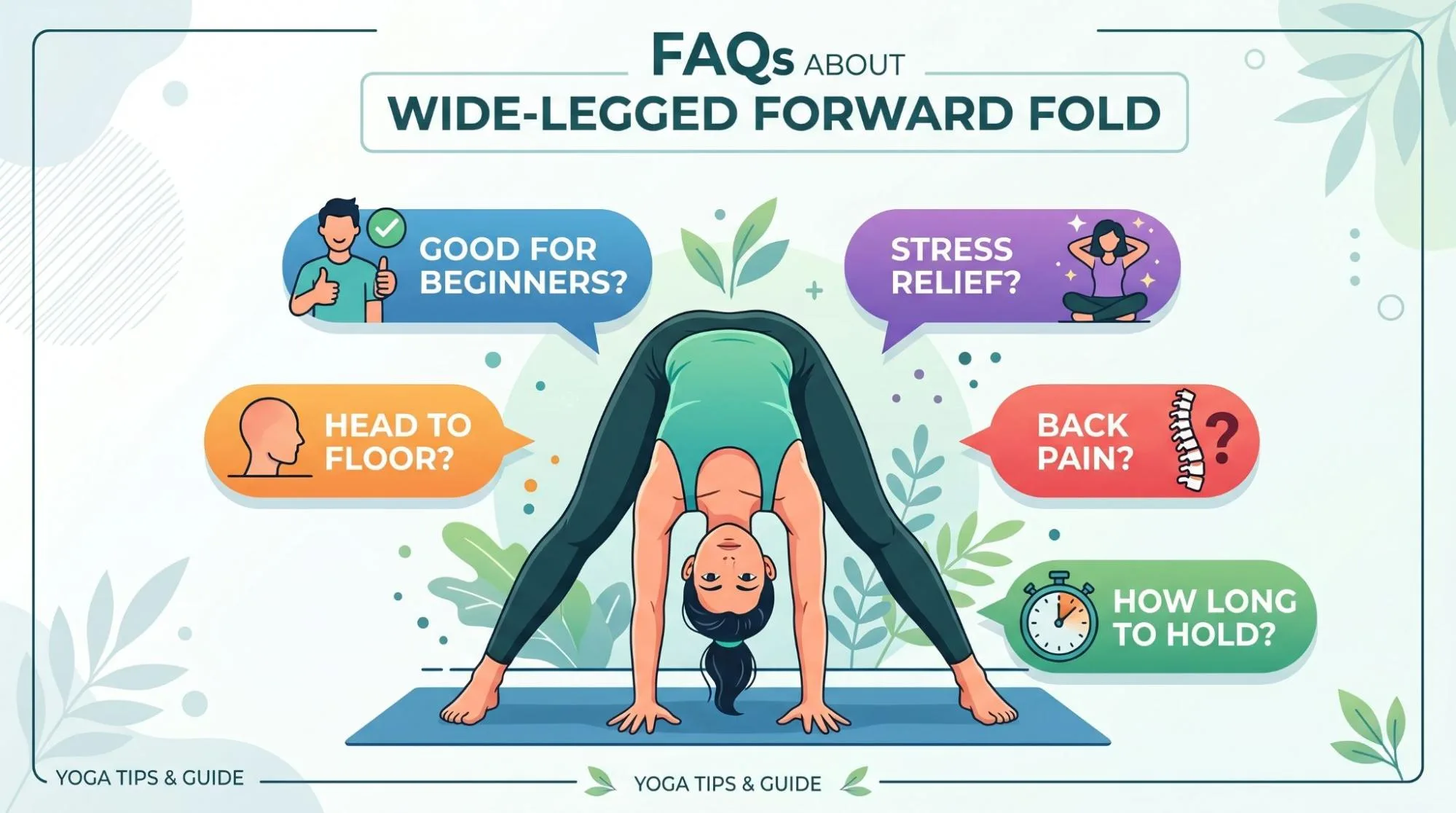
FAQs About wide-stance fold
What is a wide-stance fold good for?
A wide-stance fold is good for stretching the hamstrings, calves, inner thighs, hips, and spine. It can also help calm the nervous system and support better posture awareness.
Is Prasarita Padottanasana good for beginners?
Yes, Prasarita Padottanasana can be good for beginners when modified. Use blocks, bend your knees, and avoid forcing your head toward the floor.
Why does my lower back hurt in a wide-stance fold?
Lower back pain often happens when the spine rounds too much or the hamstrings are very tight. Bend your knees, use blocks, and fold from the hips instead of the waist.
How long should I hold a wide-legged forward bend?
Start with 5 slow breaths. As you become more comfortable, you can hold it for 30 seconds to 1 minute.
Should my head touch the floor in Prasarita Padottanasana?
No, your head does not need to touch the floor. The goal is safe length through the spine and legs, not a perfect shape.
Can a wide-stance fold help with stress?
Yes, it may help reduce stress for many people. The forward fold, slow breathing, and relaxed neck can help the body settle and feel calmer.
What are the main wide legged forward fold benefits yoga students notice?
The main wide legged forward fold benefits yoga students often notice include better leg flexibility, open hips, reduced spinal tension, calmer breathing, and improved posture awareness.
 alt=”Supported standing fold for limited flexibility” title=”Supported standing fold for limited flexibility”
Learn More : Supported Bridge Pose Block Benefits
Conclusion
wide-stance fold is a simple but powerful yoga pose that teaches the body to stretch without force. It opens the legs and hips, lengthens the spine, and gives the mind a chance to slow down. Some days your hands on the floor may feel natural, while other days yoga blocks may give better support. Both are completely fine. Prasarita Padottanasana is not about pushing the head toward the floor or chasing a perfect shape. The real value of wide legged forward fold benefits yoga is learning to stay grounded, breathe steadily, move with control, and create space in the body while listening to what it needs.
 alt=”Resting after a forward fold” title=”Resting after a forward fold”
Frequently Asked Questions
Is wide-stance fold suitable for beginners?
Yes, beginners can use a shorter stance, bend the knees, and rest the hands on blocks or a chair. The supported version is often the best place to start.
Do I need to touch my head to the floor?
No. Depth is not the goal. Keep the spine comfortable and stop at the range where breathing remains easy.
What should I do if I feel dizzy?
Come up slowly with bent knees and pause. If dizziness continues, stop the practice and seek appropriate medical advice.
Further reading: For general yoga safety information, see NCCIH: Yoga—What You Need To Know.
