
Quick answer: Sphinx Pose is a low, supported backbend performed on the forearms. It may help beginners explore gentle spinal extension and chest opening, but it should never create compression or pain in the lower back or neck.
Important Safety Note
Keep the elbows under or slightly ahead of the shoulders and stop for sharp pain, numbness, tingling, or pressure. Use a smaller lift if needed. Seek qualified guidance after back, neck, wrist, or abdominal surgery, or if you have a diagnosed spinal condition.
Sphinx Pose is one of the easiest backbends to start with in yoga because it feels gentle, stable, and supported. Instead of forcing the spine into a deep bend, this pose helps beginners learn how to lift the chest, open the shoulders, and build back awareness with control. Learning Sphinx Pose yoga for beginners is a safe and practical way to understand gentle backbends without putting too much pressure on the lower back.
In Sanskrit, Sphinx Pose is called Salamba Bhujangasana. It looks a little like Cobra Pose, but it is softer because your forearms stay on the mat. This makes it a good starting point for people who want to open the chest, strengthen the back, and prepare the body for deeper backbends.
This guide explains sphinx pose yoga for beginners in a simple way, including benefits, steps, mistakes, modifications, and safety tips.
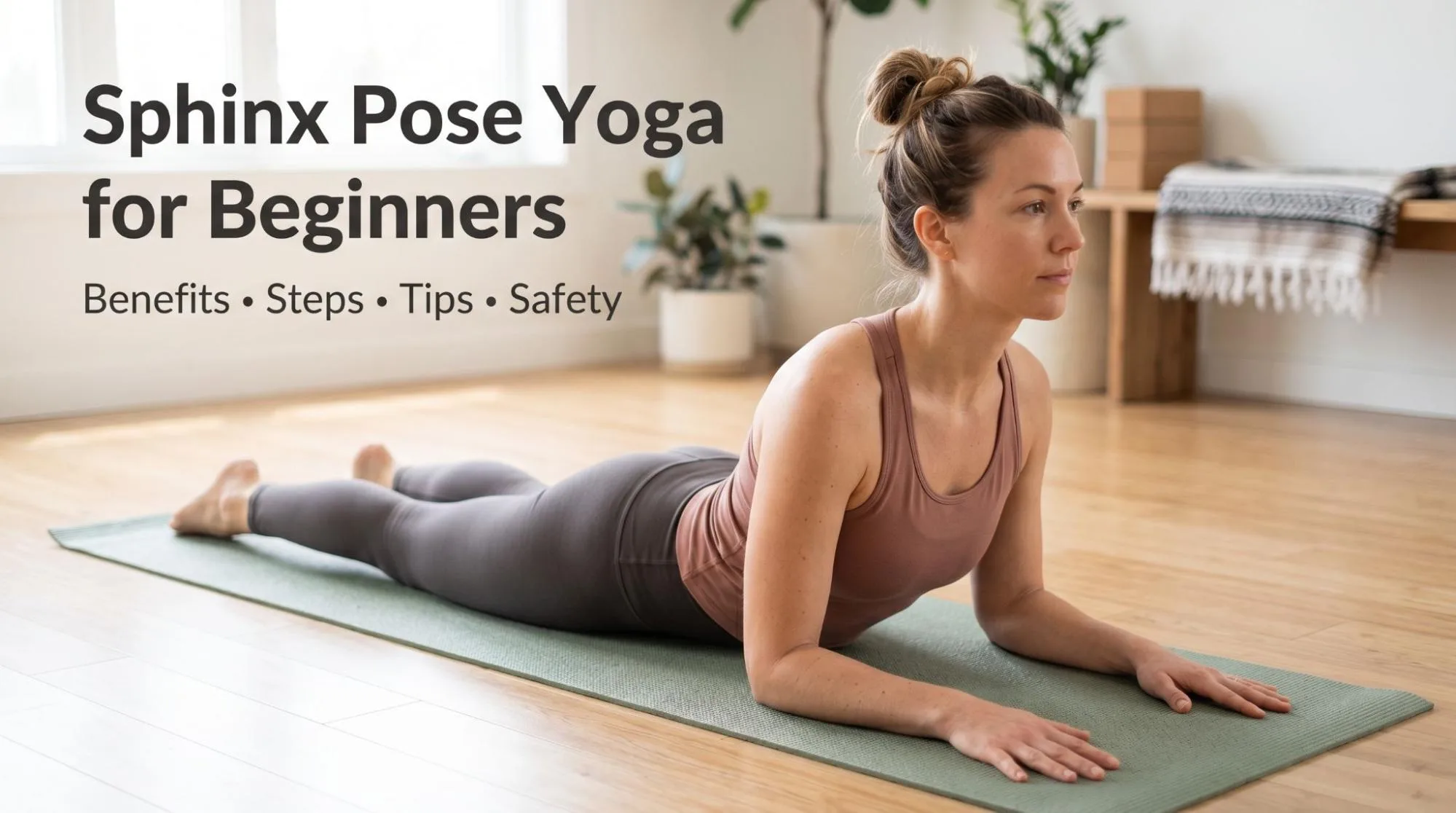 alt=”Sphinx Pose supported backbend on forearms” title=”Sphinx Pose supported backbend on forearms”
What Is Sphinx Pose?
supported backbend is a gentle yoga pose where you lie on your stomach, place your elbows under your shoulders, and slowly lift your chest while keeping your forearms on the floor. supported backbend yoga for beginners is usually taught as a supported backbend because the forearms stay on the mat and help control the lift.
It is a mild backbend, which means it bends the spine backward in a controlled way. Because your arms support you, the pose does not feel as strong as Cobra Pose or Upward Facing Dog.
supported backbend is often used as a preparatory pose before deeper backbends. It helps your body learn how to lift the upper body without forcing the lower back.
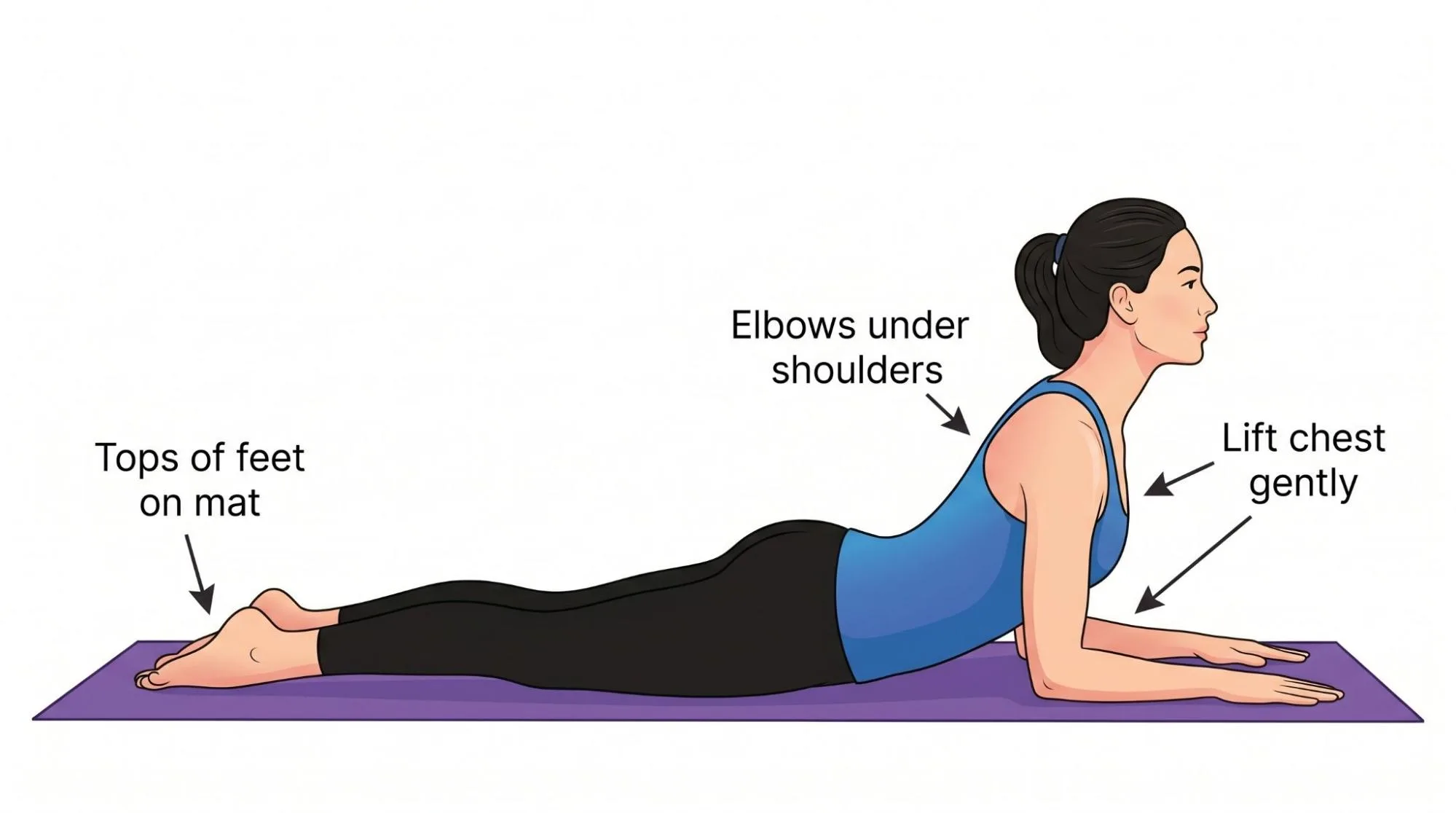 alt=”Sphinx Pose elbow and shoulder alignment” title=”Sphinx Pose elbow and shoulder alignment”
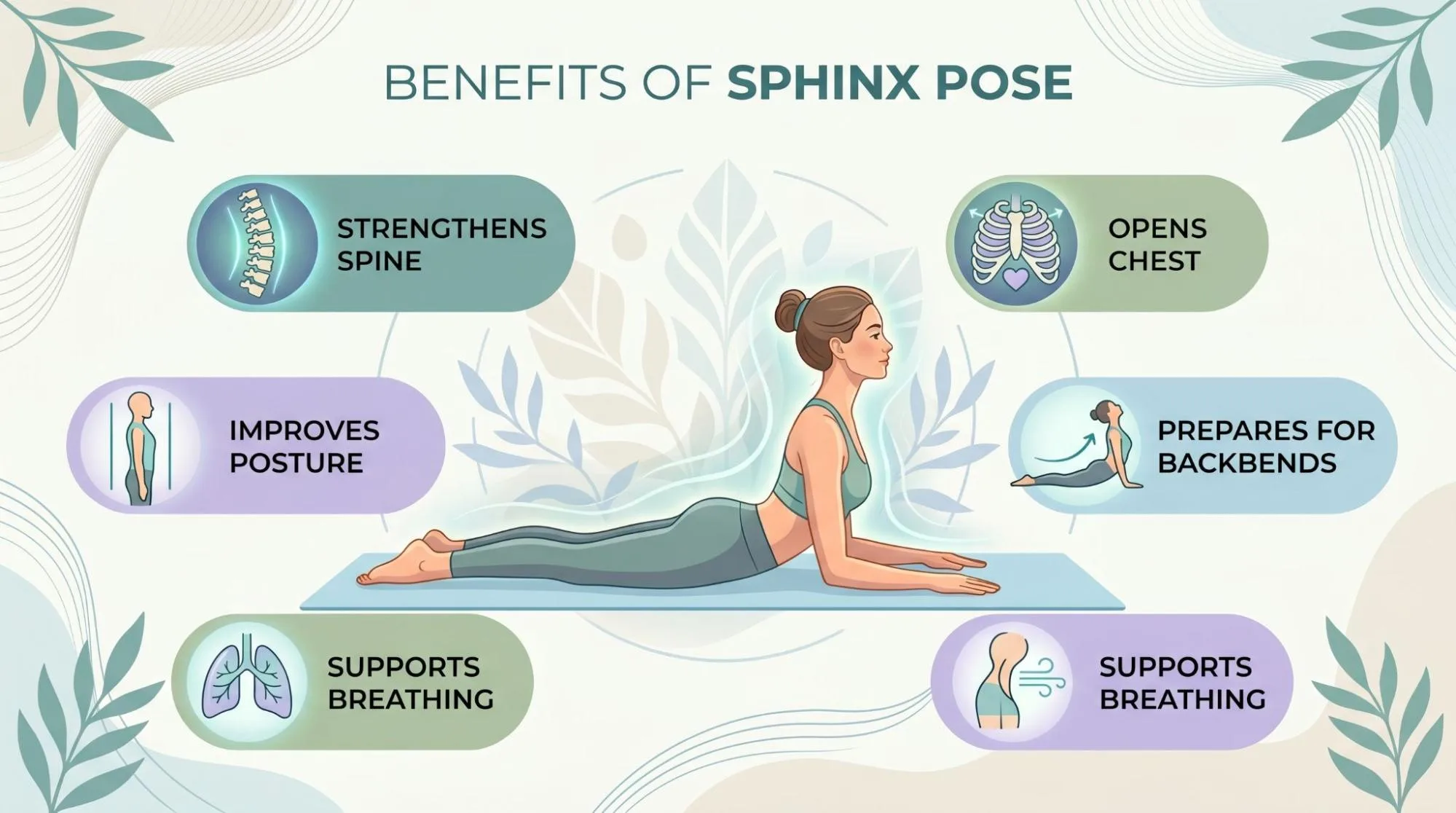
Benefits of supported backbend
Strengthens the Spine
supported backbend gently works the muscles along your back. When you lift your upper body, your spine muscles become active without too much strain.
This can be useful for beginners because the pose teaches control. You are not pushing hard. You are learning how to support your back with awareness.
Opens the Chest and Shoulders
Many people spend hours sitting, using phones, or working at a desk. This often rounds the shoulders forward.
supported backbend helps open the front of the chest. As you press your forearms into the mat and draw your shoulder blades slightly down your back, the chest gets more space.
For more simple beginner poses, you can also read: Beginner Yoga Poses
Stretches the Abdomen
When you come into supported backbend, the front of your body lengthens. You may feel a soft stretch through the abdomen, ribs, and front hips.
This stretch should feel gentle, not sharp. If your belly or lower back feels uncomfortable, lower the chest slightly.
Improves Posture
supported backbend can help improve posture awareness. It reminds you to lift your chest, keep your shoulders away from your ears, and hold the neck long.
This is helpful if you often sit with a rounded back. Practicing the pose regularly may make you more aware of your posture during the day.
Prepares the Body for Deeper Backbends
supported backbend is a good first step before Cobra Pose, Bow Pose, or other deeper backbends.
It teaches your body how to:
- Lengthen the spine
- Keep the shoulders active
- Support the lower back
- Breathe calmly in a backbend
- Avoid pushing too far
Supports Better Breathing
Because supported backbend opens the chest, it may make breathing feel easier and wider. Try slow breaths while holding the pose.
If your breathing becomes tight, that is a sign to reduce the intensity.
 alt=”Gentle Sphinx Pose with relaxed neck” title=”Gentle Sphinx Pose with relaxed neck”
Learn More : Plow Pose Halasana Step by Step Guide
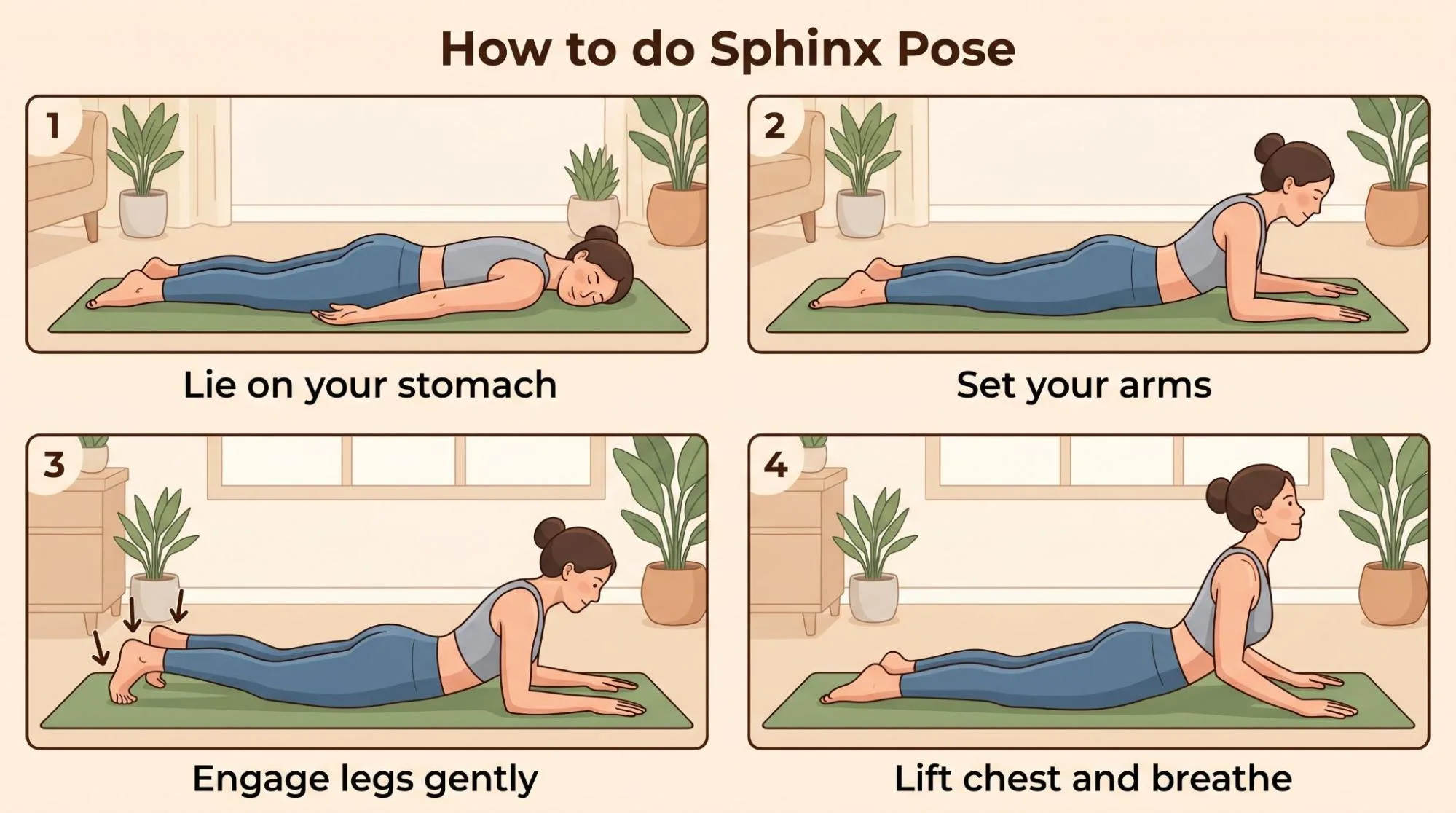
How to Do supported backbend Step by Step
When practicing supported backbend yoga for beginners, move slowly and focus more on comfort than height.
Set Up on Your Mat
Start by lying flat on your belly.
Keep your legs extended behind you. Let the tops of your feet rest on the mat. Your feet can stay hip-width apart, especially if your lower back feels tight.
Relax your face and take one slow breath before lifting.
Align Your Arms Correctly
Place your forearms on the floor with your elbows under your shoulders.
Your forearms should be straight in front of you, roughly parallel. Spread your fingers gently and keep your palms facing down.
This arm position matters. If your elbows move too far back, the lower back may feel pinched.
Engage Your Core and Legs
Before lifting higher, create gentle support.
Lightly draw your lower belly inward. Keep the pubic bone grounded. Then press the tops of your feet into the mat without making the legs too stiff.
The idea is not to tighten the whole body. You only need enough engagement to feel stable.
Lift Your Chest Gently
Press your forearms into the floor and slowly lift your chest forward and up.
Think of your chest moving forward, not just upward. Keep your shoulders relaxed and away from your ears.
Your shoulder blades should move gently down the back. Do not force them together too strongly.
Hold the Pose with Steady Breathing
Stay for 5 to 10 slow breaths.
Keep your neck long. Look slightly forward or down. Avoid throwing your head back.
To come out, slowly lower your chest and head. Rest on your belly for a few breaths. You may turn your head to one side, then switch sides.
 alt=”Beginner Sphinx Pose on a yoga mat” title=”Beginner Sphinx Pose on a yoga mat”
Beginner Tips for supported backbend
The best approach to supported backbend yoga for beginners is to keep the pose gentle, steady, and easy to breathe in.
Reduce the Intensity
If the pose feels strong in your lower back, move your elbows a little forward. This makes the backbend softer.
You can also keep your legs slightly wider. Many beginners find this more comfortable.
Keep the Shoulders Active
Do not sink into your shoulders. Press the forearms down and gently lift through the chest.
A simple cue is: chest forward, shoulders soft, neck long.
Use Support Under the Hips
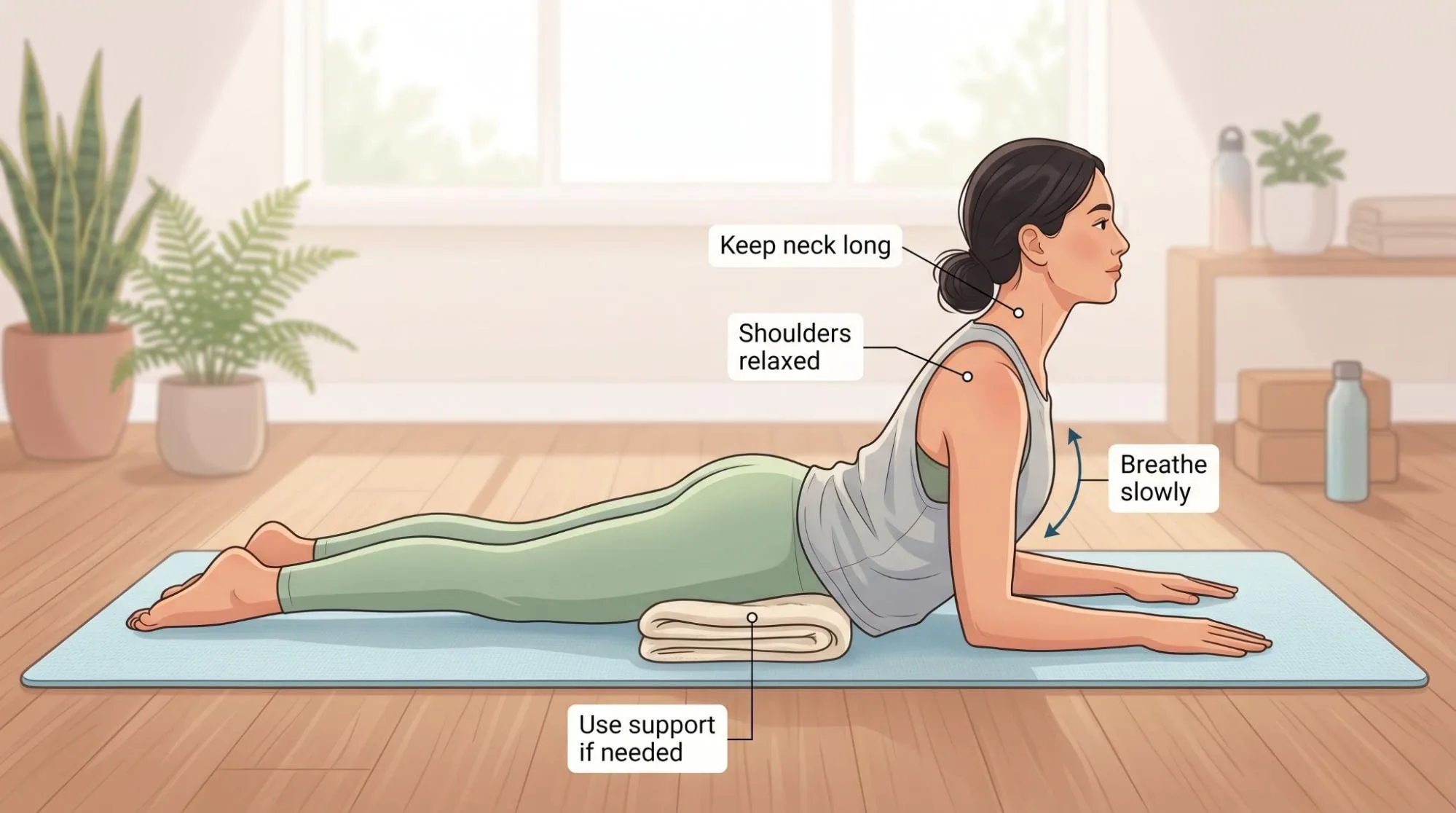
If the floor feels hard, place a folded blanket under your hips or lower ribs. This can make the pose more comfortable.
Support is useful, especially when you are learning proper alignment.
Keep the Neck Long
Do not lift your chin too high. Your neck should follow the natural line of your spine.
If your neck feels tense, lower your gaze.
 alt=”Sphinx Pose lower-back comfort modification” title=”Sphinx Pose lower-back comfort modification”
Common Mistakes to Avoid
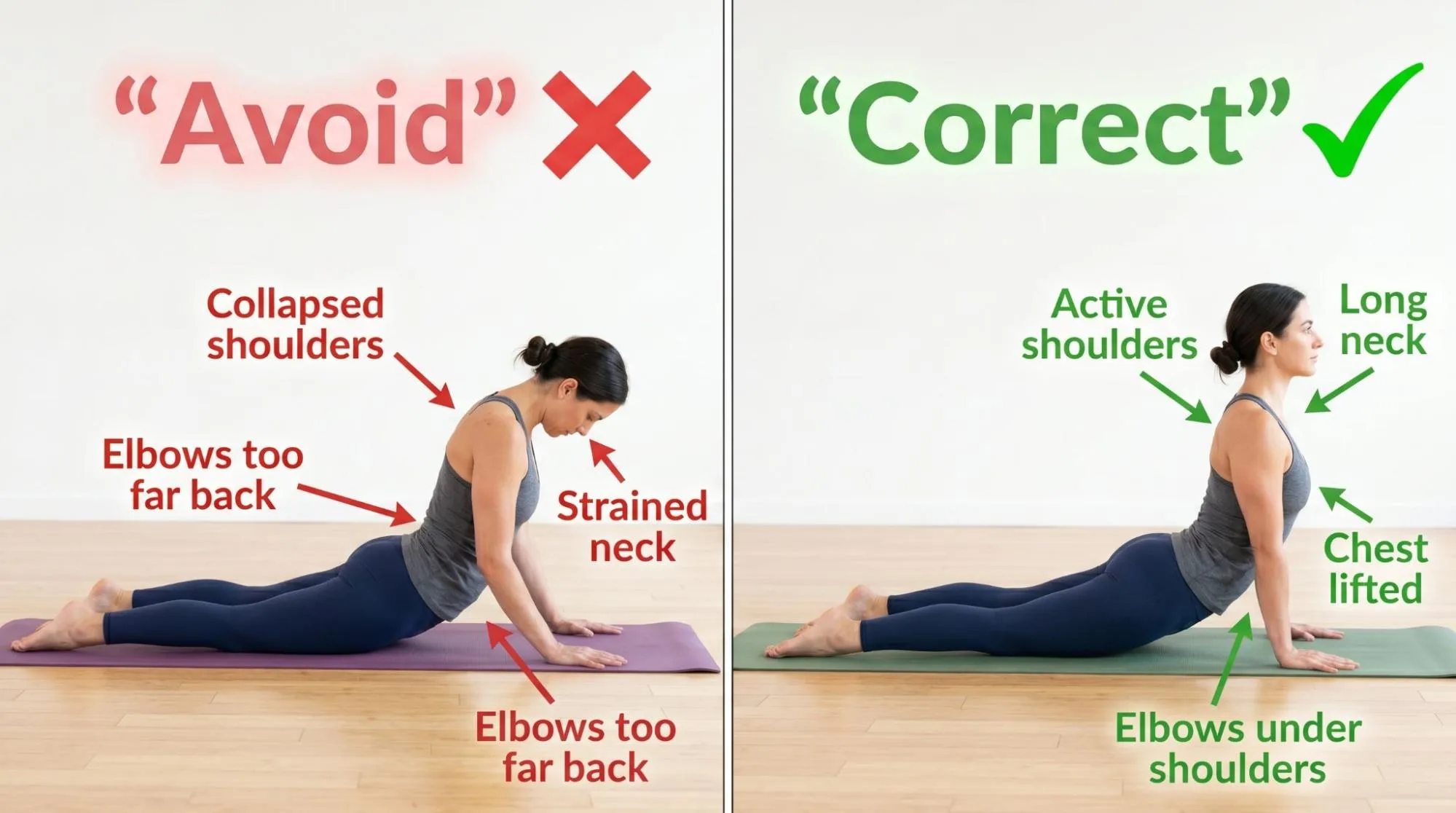
Placing the Elbows Too Far Back
This is one of the most common mistakes. If your elbows are behind your shoulders, your lower back may feel compressed.
Keep the elbows under the shoulders or slightly forward.
Collapsing Into the Shoulders
Some beginners rest heavily into the pose and let the shoulders rise toward the ears.
Instead, press down through the forearms and gently lift the chest.
Over-Squeezing the Glutes
You do not need to strongly squeeze your glutes. Too much squeezing may create pressure in the lower back.
Keep the legs active, but avoid clenching.
Holding the Breath
If you stop breathing, the pose is probably too intense. Lower your chest and return to easy breathing.
 alt=”Breathing in a supported prone backbend” title=”Breathing in a supported prone backbend”
supported backbend Modifications
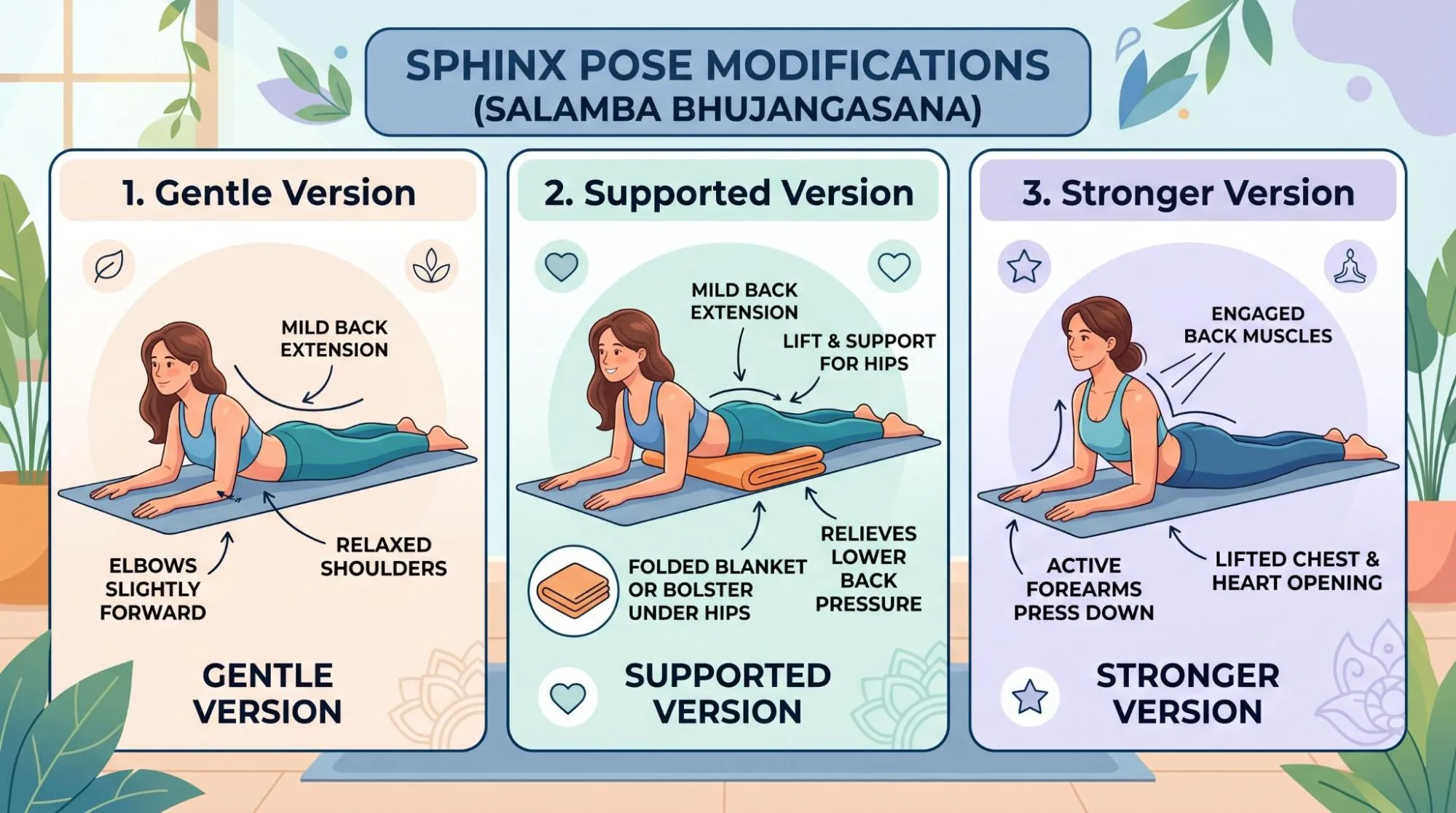
Gentle Version for Sensitive Lower Back
Move your elbows forward, keep your chest lower, and widen your legs slightly.
This version is useful if your lower back feels stiff or sensitive.
Supported Version with a Blanket
Place a folded blanket under your pelvis or lower ribs. This reduces pressure from the floor and can make the pose easier to hold.
Stronger Version for More Engagement
Press your forearms more firmly into the mat and gently pull your chest forward. Keep your legs active and press the tops of your feet down.
This version builds more strength, but keeps it controlled.
 alt=”Sphinx Pose with elbows adjusted forward” title=”Sphinx Pose with elbows adjusted forward”
supported backbend vs Cobra Pose
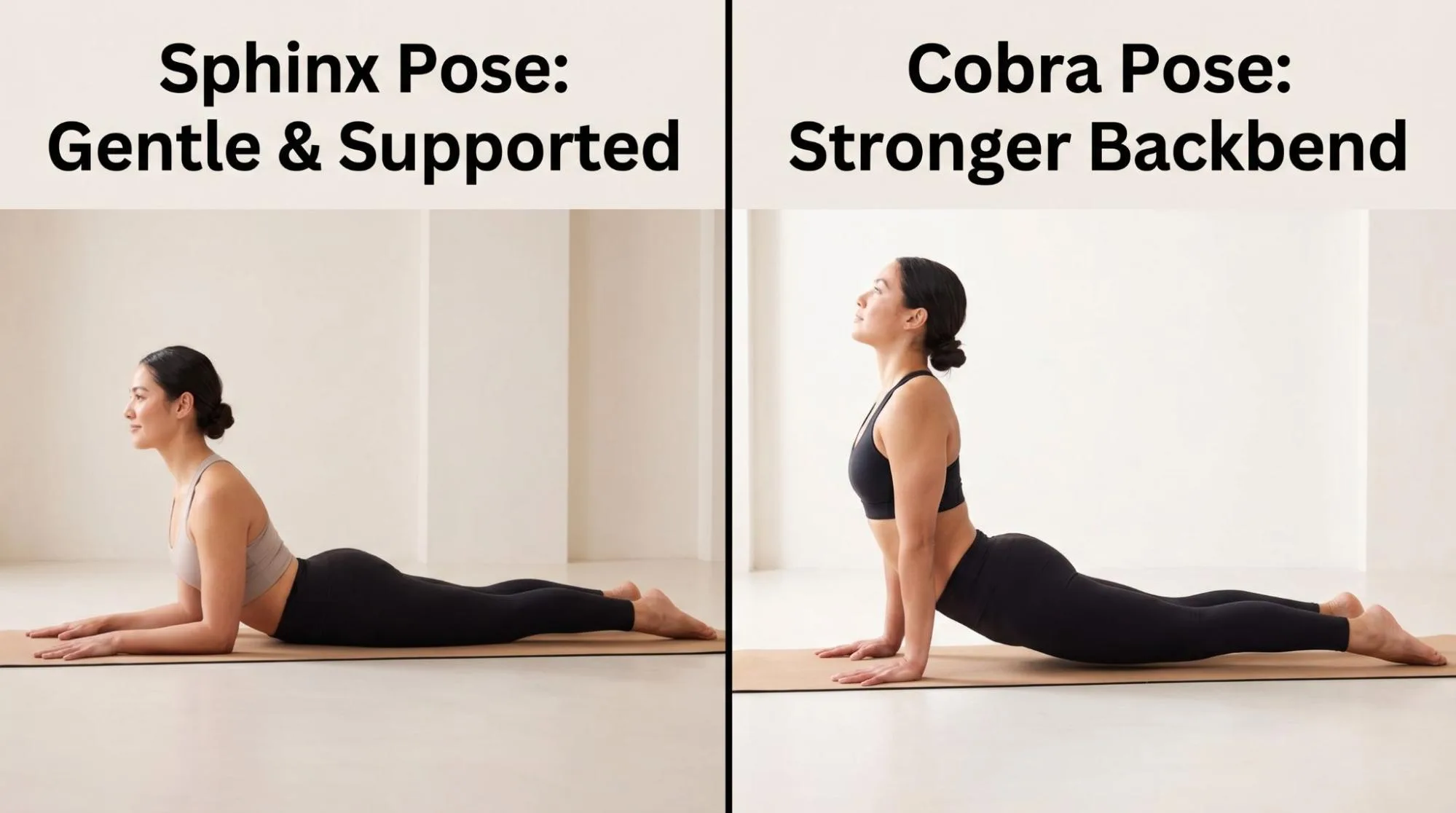
supported backbend and Cobra Pose are both backbends, but they are not the same.
In supported backbend, your forearms stay on the mat. The elbows are usually under the shoulders. The lift is gentle and supported.
In Cobra Pose, the hands are placed near the chest, and the upper body often lifts higher. Cobra Pose usually needs more back strength and control.
For beginners, supported backbend is often the better place to start. Once your body understands the movement, Cobra Pose becomes easier to practice safely.
 alt=”Gentle chest opening in Sphinx Pose” title=”Gentle chest opening in Sphinx Pose”
Learn More : Triangle Pose Yoga Common Mistakes and How to Fix Them
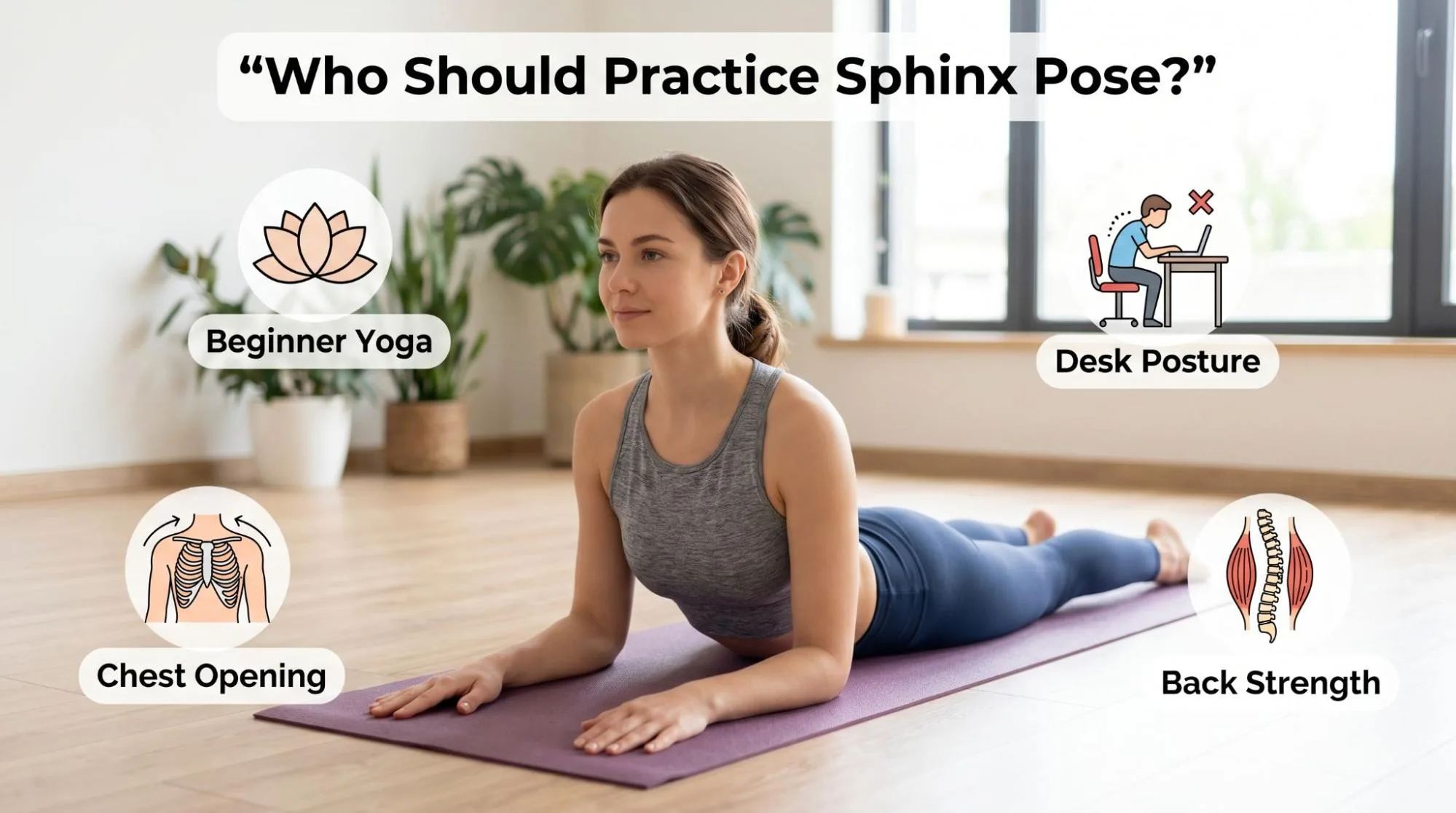
Who Should Practice supported backbend?
supported backbend may be helpful for:
- Yoga beginners
- People with rounded shoulders
- Desk workers
- Students who sit for long hours
- People preparing for deeper backbends
- Anyone wanting a gentle chest opener
Avoid forcing the pose if you have sharp back pain, recent surgery, serious spine issues, or a medical condition. In that case, ask a qualified teacher or healthcare professional first.
 alt=”Sphinx Pose preparation with legs relaxed” title=”Sphinx Pose preparation with legs relaxed”
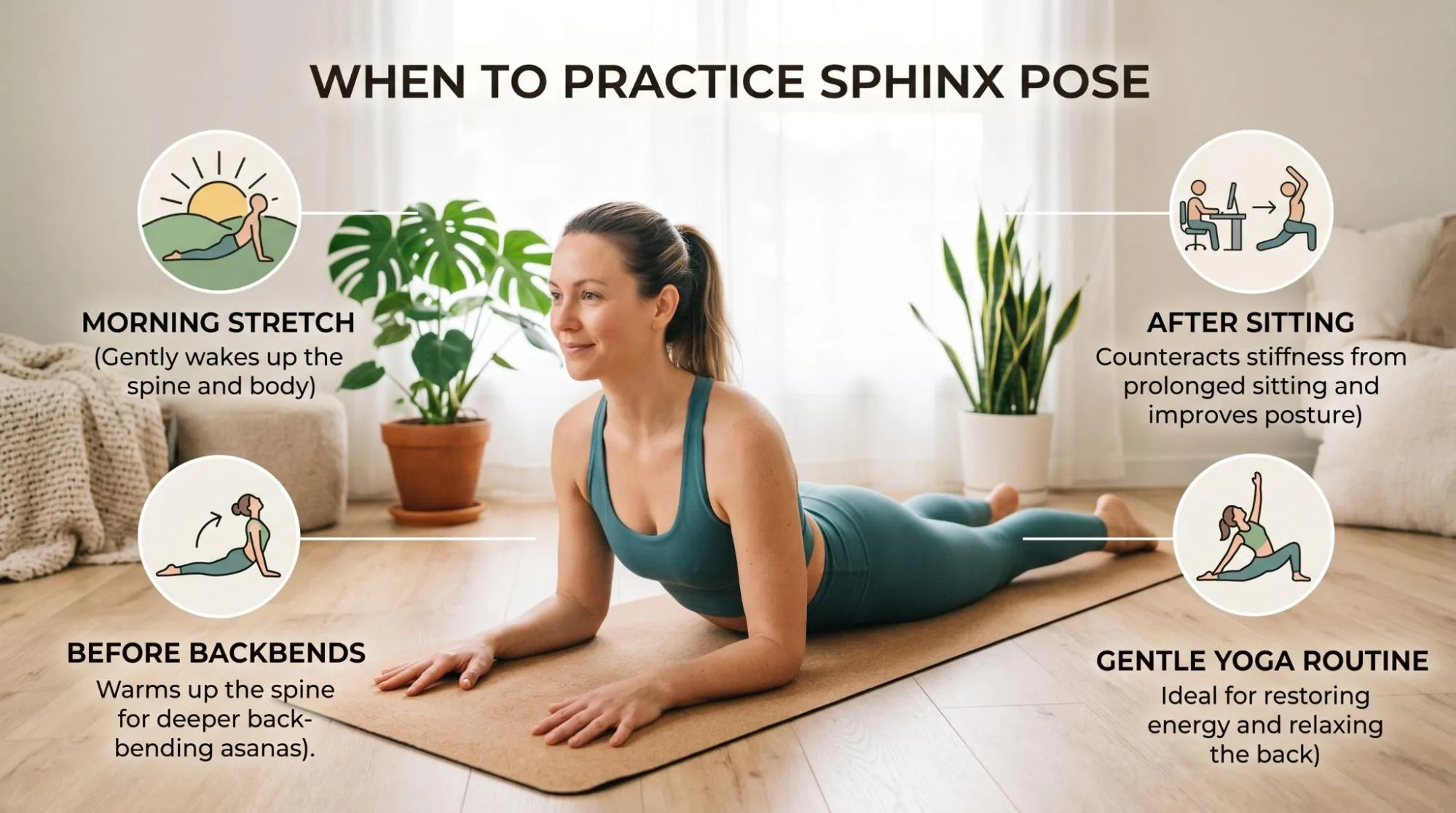
When to Practice supported backbend
You can practice supported backbend in the morning, during a gentle yoga routine, or after a long time.
It also works well before stronger backbends because it warms the spine slowly.
Avoid practicing it right after a heavy meal because lying on your stomach may feel uncomfortable.
 alt=”Safe neck position in a low backbend” title=”Safe neck position in a low backbend”
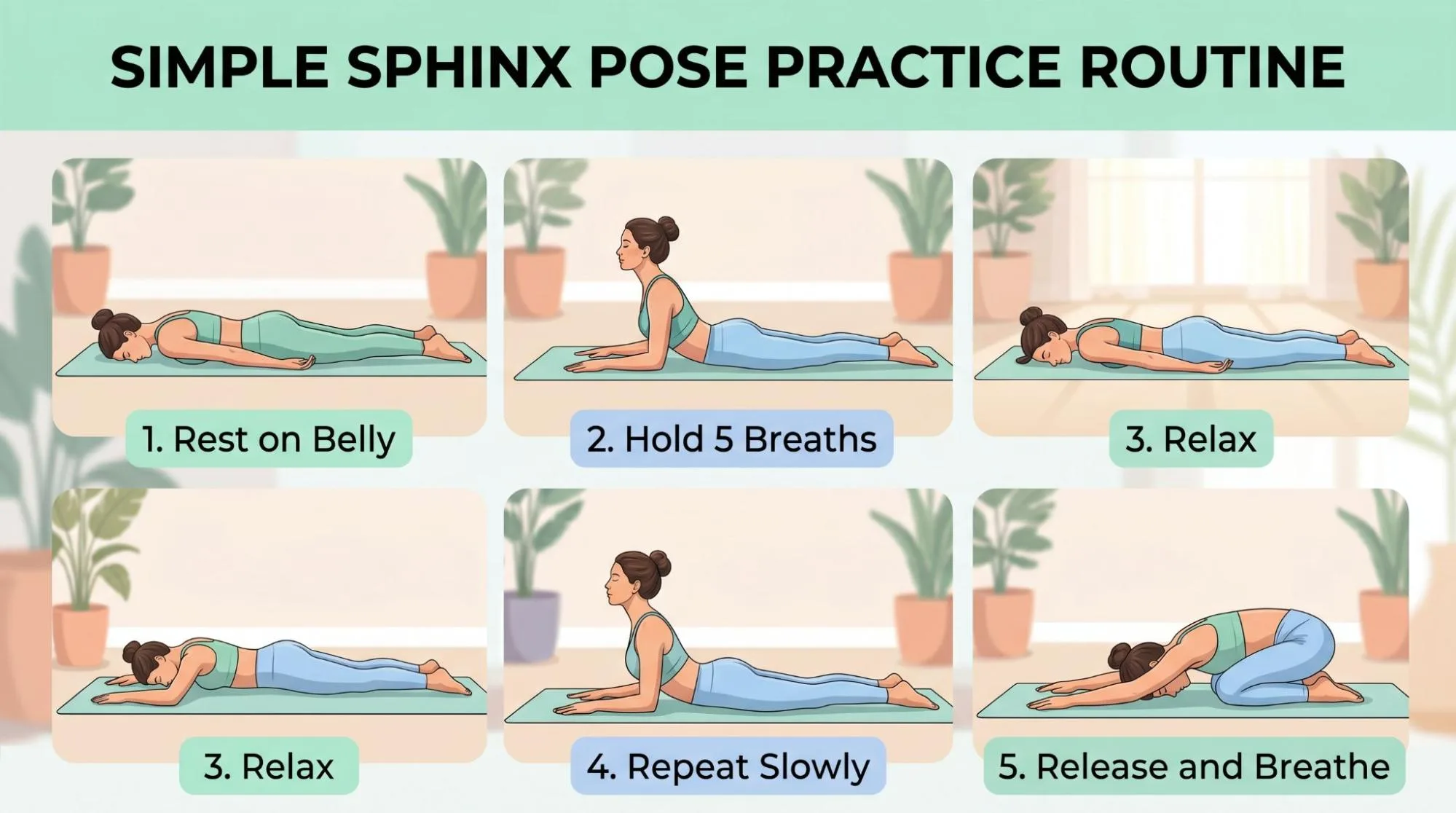
Simple supported backbend Practice Routine
Here is an easy routine for beginners:
- Lie on your stomach and rest for 30 seconds.
- Practice supported backbend for 5 slow breaths.
- Lower down and rest with one cheek on the mat.
- Practice supported backbend again for 5 to 8 breaths.
- Rest in Child’s Pose or lie flat for a few breaths.
This short routine is enough. You do not need long holds to feel the benefits.
 alt=”Sphinx Pose variation for beginners” title=”Sphinx Pose variation for beginners”
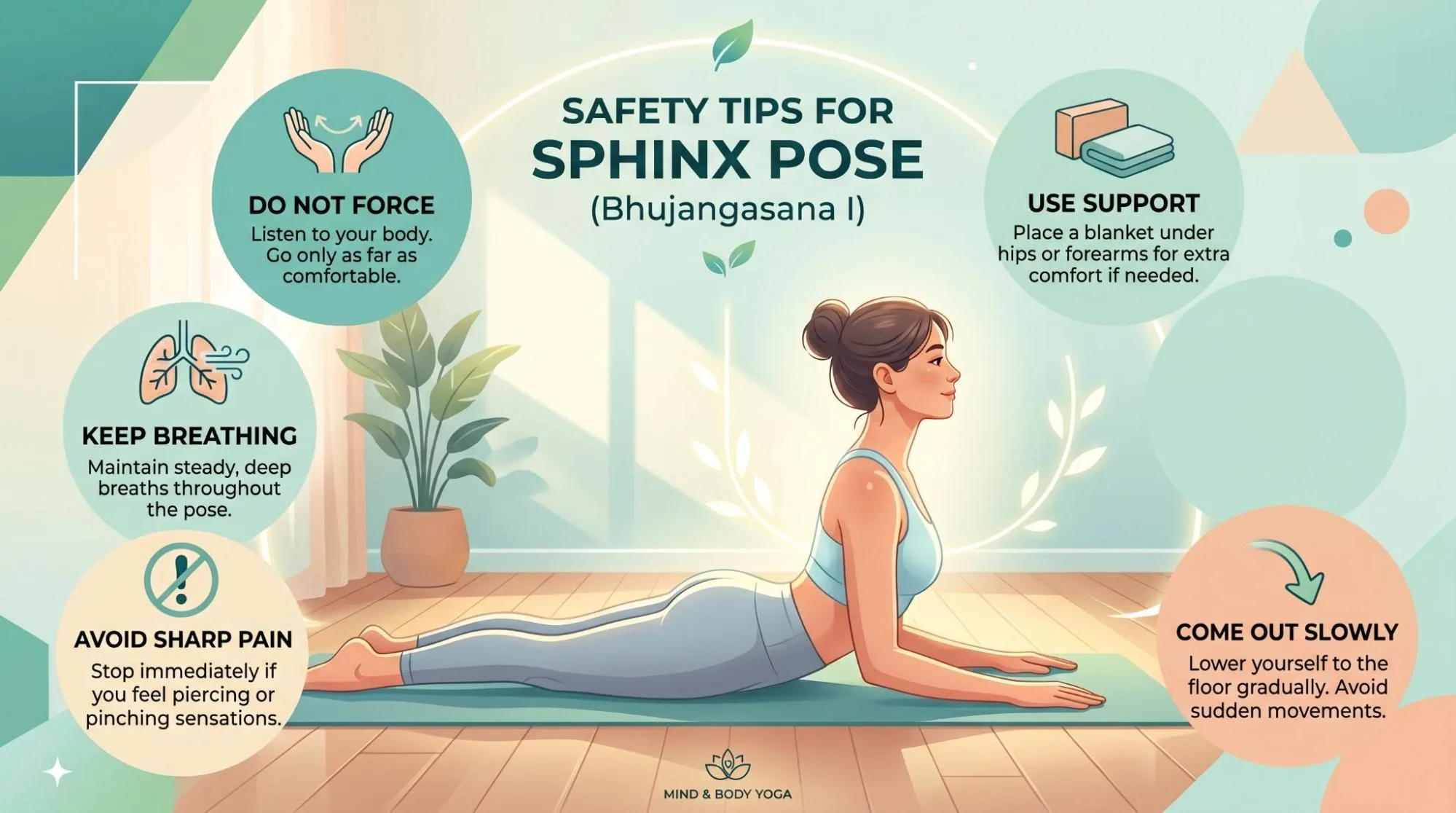
Safety Tips for supported backbend
supported backbend should feel steady and comfortable. A gentle stretch is fine. Sharp pain is not.
Keep these tips in mind:
- Do not push through lower back pain.
- Keep the elbows under your shoulders or slightly forward.
- Keep the neck long.
- Breathe slowly.
- Use a blanket if needed.
- Come out of the pose slowly.
If your lower back feels pinched, reduce the lift or move your elbows forward. For safe supported backbend yoga for beginners, avoid forcing the backbend or pushing through lower back pain.
 alt=”Supported backbend with steady breathing” title=”Supported backbend with steady breathing”
Frequently Asked Questions About supported backbend
Is supported backbend good for beginners?
Yes. supported backbend is very good for beginners because it is supported, gentle, and easy to modify.
What is supported backbend good for?
It is good for opening the chest, strengthening the spine, stretching the abdomen, improving posture awareness, and preparing for deeper backbends.
How long should I hold supported backbend?
Beginners can hold it for 5 to 10 slow breaths. Start with a short hold and increase only if it feels comfortable.
Can supported backbend help with back pain?
It may help some people with mild stiffness from sitting. But it is not a medical treatment. If you have ongoing or sharp back pain, get professional advice first.
What is the difference between supported backbend and Cobra Pose?
supported backbend uses the forearms for support and is gentler. Cobra Pose uses the hands and usually lifts the chest higher, making it stronger.
Why does my lower back hurt in supported backbend?
Your elbows may be too far back, your glutes may be too tight, or you may be lifting too high. Try moving the elbows forward and lowering the chest.
Can I do supported backbend every day?
Yes, many people can practice it daily if it feels good. Keep it gentle and avoid forcing the backbend.
Is supported backbend safe during pregnancy?
Because it requires lying on the stomach, it is usually not suitable later in pregnancy. Ask a prenatal yoga teacher or healthcare provider for safer options.
Should I squeeze my glutes in supported backbend?
No, not strongly. A little natural support is fine, but avoid clenching. Focus on lengthening the spine and grounding the pubic bone.
What should I do after supported backbend?
Rest on your belly, turn your head to one side, or move into Child’s Pose if it feels comfortable.
 alt=”Sphinx Pose alignment from side view” title=”Sphinx Pose alignment from side view”
Helpful next read: Eagle Pose Yoga Benefits and Steps
Conclusion
supported backbend is simple, but it teaches important yoga basics. It helps you lift your chest, open your shoulders, support your spine, and breathe calmly in a gentle backbend. With regular practice, supported backbend yoga for beginners can help build better posture, chest opening, and back awareness.
For anyone learning supported backbend yoga for beginners, the best advice is to keep the pose soft and steady. Do not chase height. Do not push through pain. Practice with patience, and let your body build strength and comfort over time.
 alt=”Resting after Sphinx Pose” title=”Resting after Sphinx Pose”
Frequently Asked Questions
Is supported backbend suitable for beginners?
Yes. It is a low-intensity backbend for many beginners, especially when the forearms and elbows are positioned comfortably. Start with a short hold.
Where should I feel supported backbend?
You may feel gentle opening across the chest and front body. The lower back should not feel pinched or sharply compressed.
Can supported backbend replace treatment for back pain?
No. It can be part of a gentle mobility routine, but persistent, severe, or radiating pain should be assessed by a qualified professional.
Further reading: For general yoga safety information, see NCCIH: Yoga—What You Need To Know.
