
Eagle Pose, also known as Garudasana, is a standing balance yoga pose that works the whole body in a quiet but powerful way. If you are learning eagle pose yoga benefits and steps, this guide will help you understand the pose clearly, practice it safely, and improve your balance with confidence.
The name Garudasana comes from Garuda, a powerful mythical bird in Indian tradition. In yoga practice, the pose reflects strength, focus, balance, and control. It is not only about wrapping one leg around the other. It also teaches you how to stay calm while balancing on one leg.
This guide explains eagle pose yoga benefits and steps in a simple, beginner-friendly way. The best thing about learning Eagle Pose guide is that the pose improves balance, strengthens the lower body, stretches tight shoulders, and helps calm the mind at the same time. Learning Eagle Pose guide properly makes the pose safer, easier, and more useful for daily yoga practice.
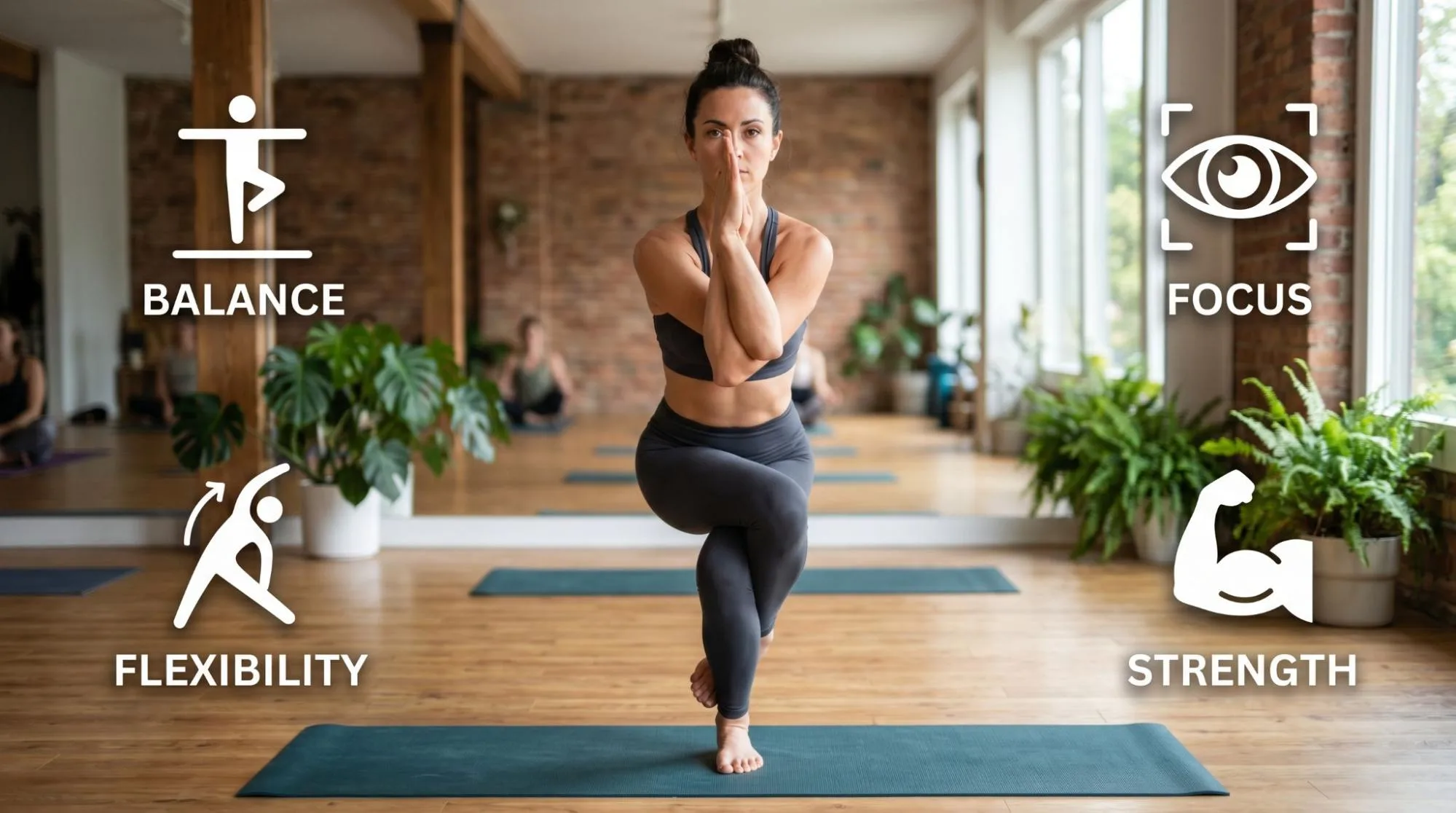 alt=”Eagle Pose standing balance with arms wrapped” title=”Eagle Pose standing balance with arms wrapped”
Quick answer: Eagle Pose, or Garudasana, is a standing balance pose that combines a single-leg stance with wrapped arms and legs. Use a wall or keep the toes lightly on the floor until your balance feels reliable.
Practical note: In real practice, the wrapped leg often matters less than staying calm and keeping the standing foot steady. A smaller wrap is still the pose if it lets you breathe and keep the knee comfortable.
Benefits of Eagle Pose
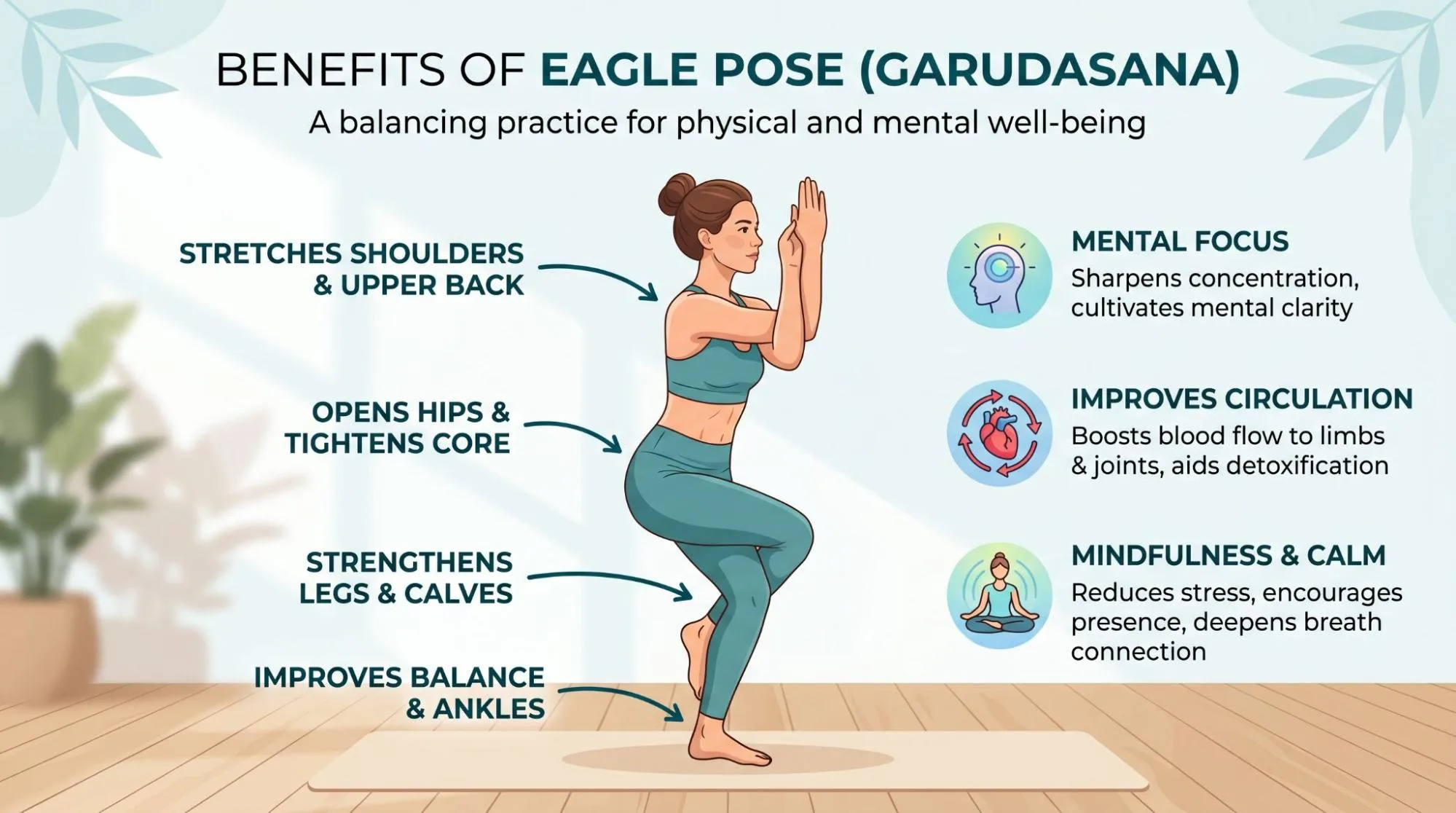
Eagle Pose offers both physical and mental benefits. It improves stability, stretches tight areas, strengthens the legs, and helps train your attention. The main purpose of understanding Eagle Pose guide is to know how this pose supports balance, strength, flexibility, and mental focus.
Enhances Balance and Focus
- One of the main benefits of Garudasana is that it improves balance. Since you are standing on one leg, your body has to work harder to stay steady.
- Your standing leg becomes active, your core engages, and your eyes learn to focus on one point. This makes Eagle Pose a useful standing balance exercise for people who want better body control.
- It can also improve coordination because both sides of the body are working together. Your legs wrap, your arms wrap, and your breathing has to stay steady.
Deep Stretches and Relieves Tension
- Garudasana Eagle Pose gives a deep stretch to the shoulders, upper back, hips, thighs, and calves. Many people carry tension in the shoulders and upper back because of long sitting hours, mobile phone use, or desk work.
- The arm wrap helps open the upper back and shoulder area. The leg wrap gives a mild hip opening effect and stretches the outer thighs.
- If your right leg is wrapped over your left leg, you may feel a stretch around the left calf, outer hip, and thigh. If the full wrap is difficult, you can simply cross the legs without forcing the foot behind the calf.
Strengthens the Lower Body
- Eagle Pose strengthens the thighs, calves, ankles, and feet. The pose may look like a stretch, but your lower body is doing a lot of work.
- When you bend your knees and hold the pose, your thighs stay active. The standing leg becomes stronger because it supports your full body weight.
- This makes Eagle Pose helpful for building stability in the ankles and knees, especially when practiced with proper alignment.
Improves Circulation
- Eagle Pose involves wrapping and then releasing the arms and legs. This gentle compression-and-release action may support better blood flow in the limbs.
- When you release the pose, you may feel a fresh sense of lightness in the arms and legs. Many yoga practitioners describe this as a refreshing feeling, especially after holding the pose for a few breaths.
Mental Benefits
- Eagle Pose needs patience. You cannot rush it. If your mind is scattered, the balance usually becomes shaky.
- That is why this balance pose is helpful for mental focus. It teaches you to slow down, breathe, and stay present. Even if you wobble, the practice itself builds calmness.
- This pose may also help with stress relief because it combines steady breathing, concentration, and controlled movement.
Quick Summary of Benefits
Eagle Pose may help to:
- Improve balance and body awareness
- Strengthen the thighs, calves, ankles, and feet
- Stretch the shoulders, upper back, hips, and outer thighs
- Support better circulation through gentle compression and release
- Improve focus and concentration
- Build patience and steadiness
- Release tension from the upper body
 alt=”Garudasana leg wrap from the side” title=”Garudasana leg wrap from the side”
Step-by-Step Guide to Performing Eagle Pose
Practice slowly. Eagle Pose is not about forcing the body into a perfect shape. It is about control, balance, and steady breathing.
Step 1: Begin in Mountain Pose (Tadasana)
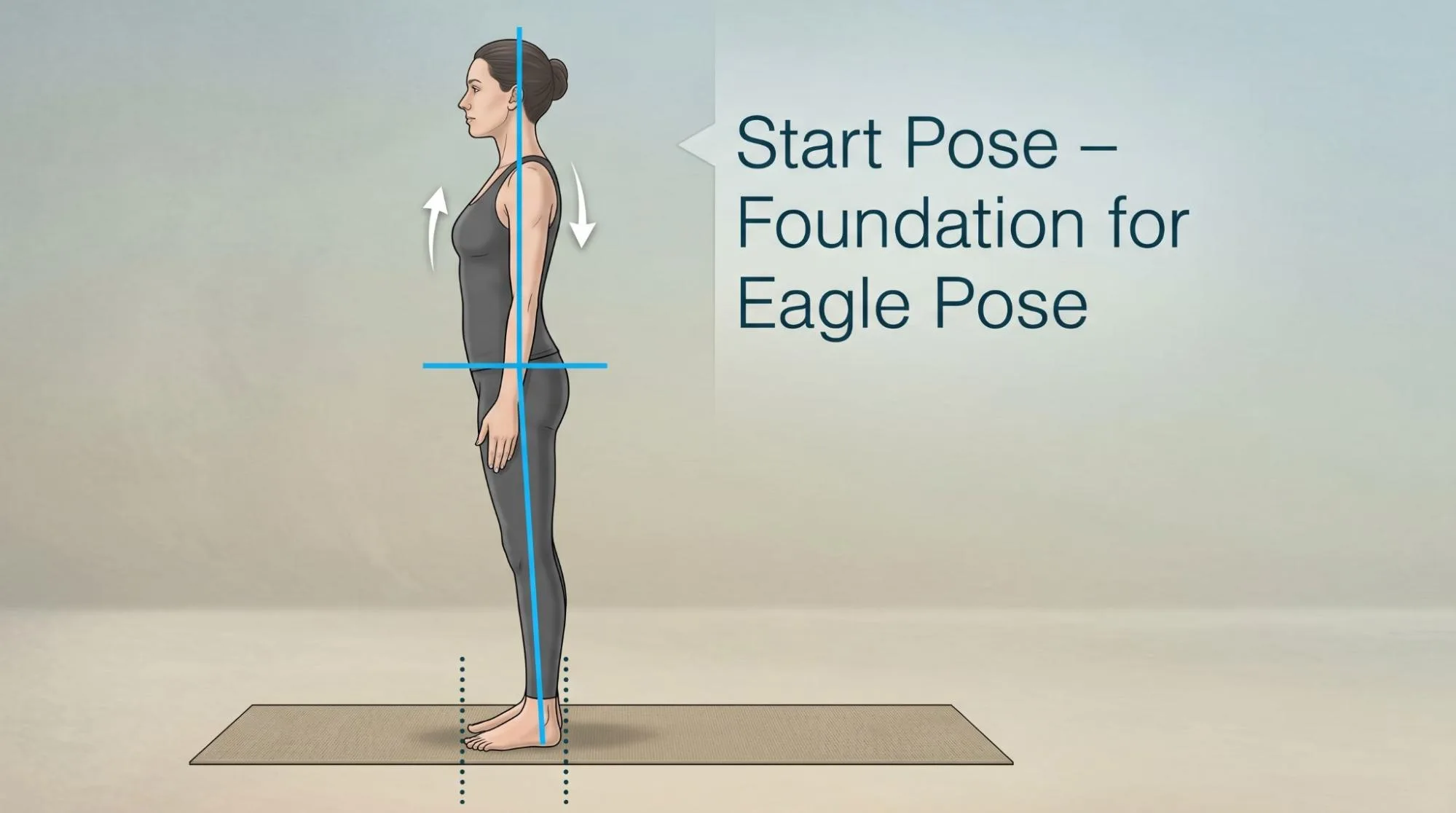
Start in Mountain Pose with both feet together or hip-width apart.
Stand tall. Keep your spine long, shoulders relaxed, and arms beside your body. Spread your weight evenly through both feet.
Take a few natural breaths before moving into the pose.
Before practicing, it helps to understand the correct Eagle Pose guide so you can avoid strain and get better results from the pose.
 alt=”Eagle Pose arm position and shoulder alignment” title=”Eagle Pose arm position and shoulder alignment”
Learn More : Warrior 1 Pose: Benefits, Steps, Alignment, and Beginner Tips
Step 2: Bend Knees Slightly and Shift Weight
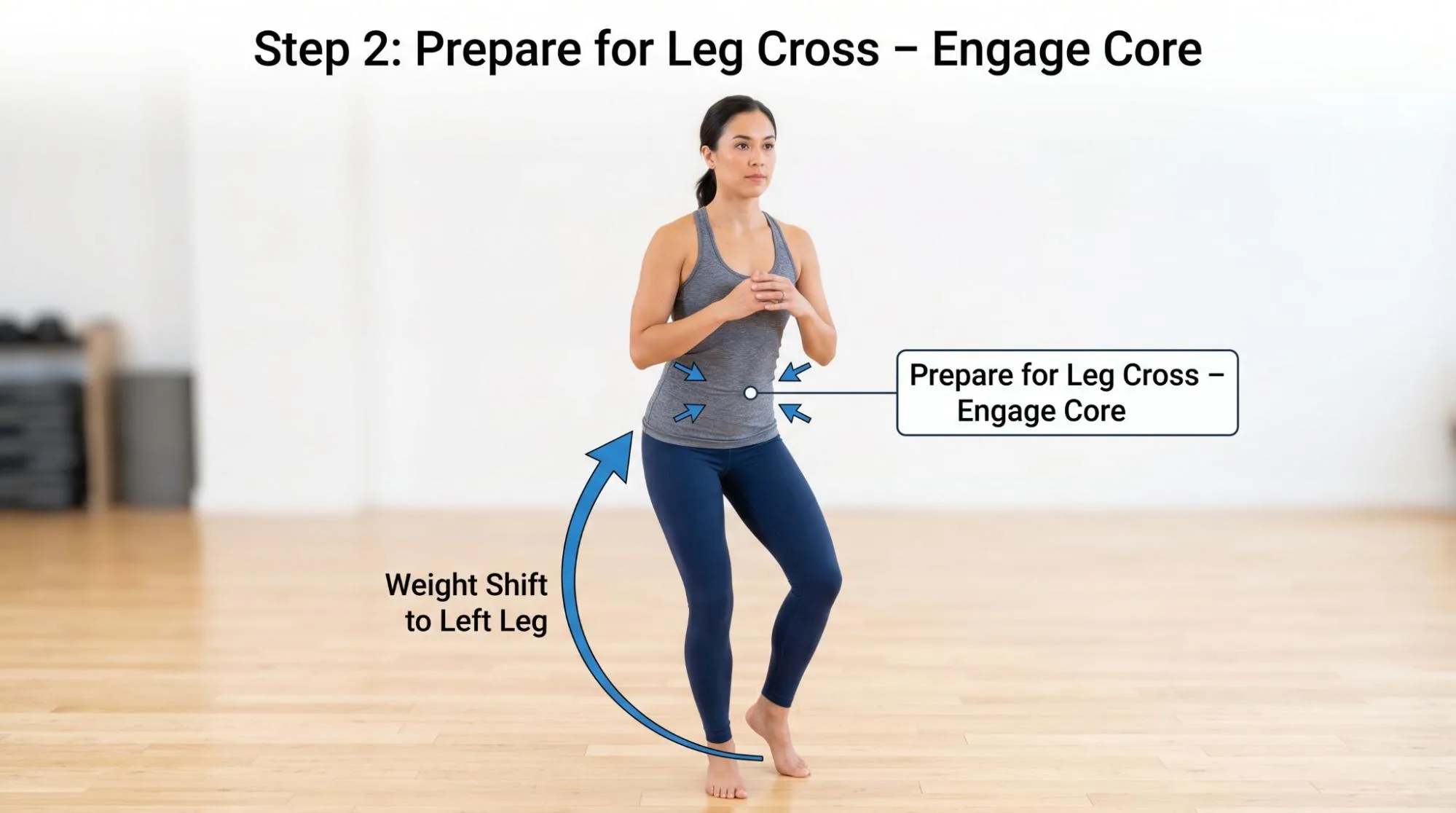
Now gently bend your knees, almost like you are moving toward Chair Pose.
Shift your weight into your left foot. Keep your left leg firm and steady because it will become your standing leg.
Do not lock the knee. Keep it soft and slightly bent.
 alt=”Beginner Eagle Pose using wall support” title=”Beginner Eagle Pose using wall support”
Step 3: Cross the Legs
Lift your right leg and cross it over your left thigh.
Your right thigh becomes the top leg. If possible, wrap your right foot behind your left calf. Some people can hook the foot fully, while others cannot, and that is completely fine.
If you cannot place the foot behind your left calf, keep the toes touching the floor like a kickstand. This is a safer beginner option.
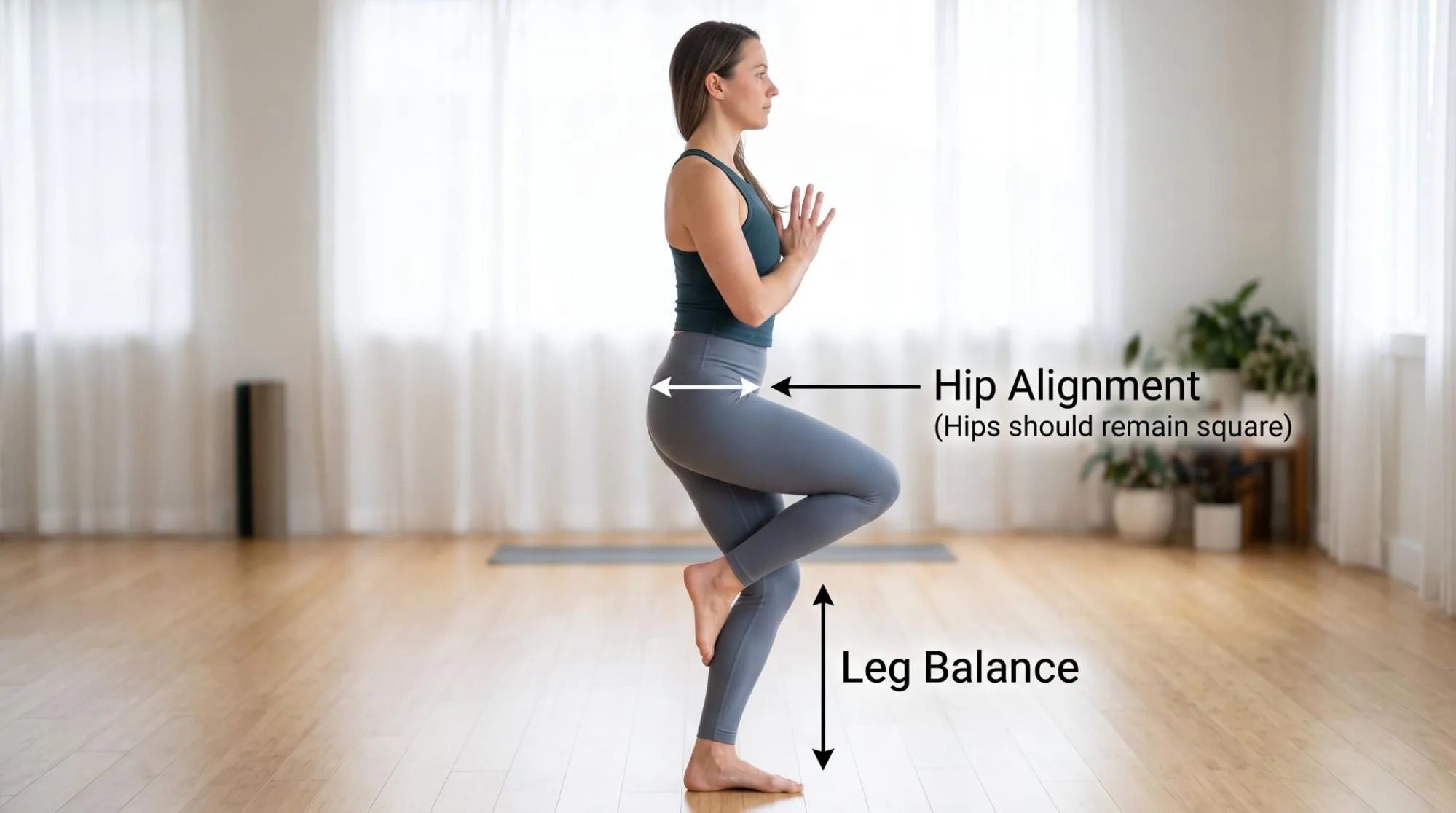 alt=”Eagle Pose with toes lightly touching the floor” title=”Eagle Pose with toes lightly touching the floor”
Step 4: Position the Arms
Bring both arms forward at shoulder height.
Cross your right arm under your left arm. Bend the elbows and try to bring the palms together. If the palms do not touch, press the backs of the hands together instead.
Keep the shoulders relaxed. The arm position should stretch the upper back, not create pain.
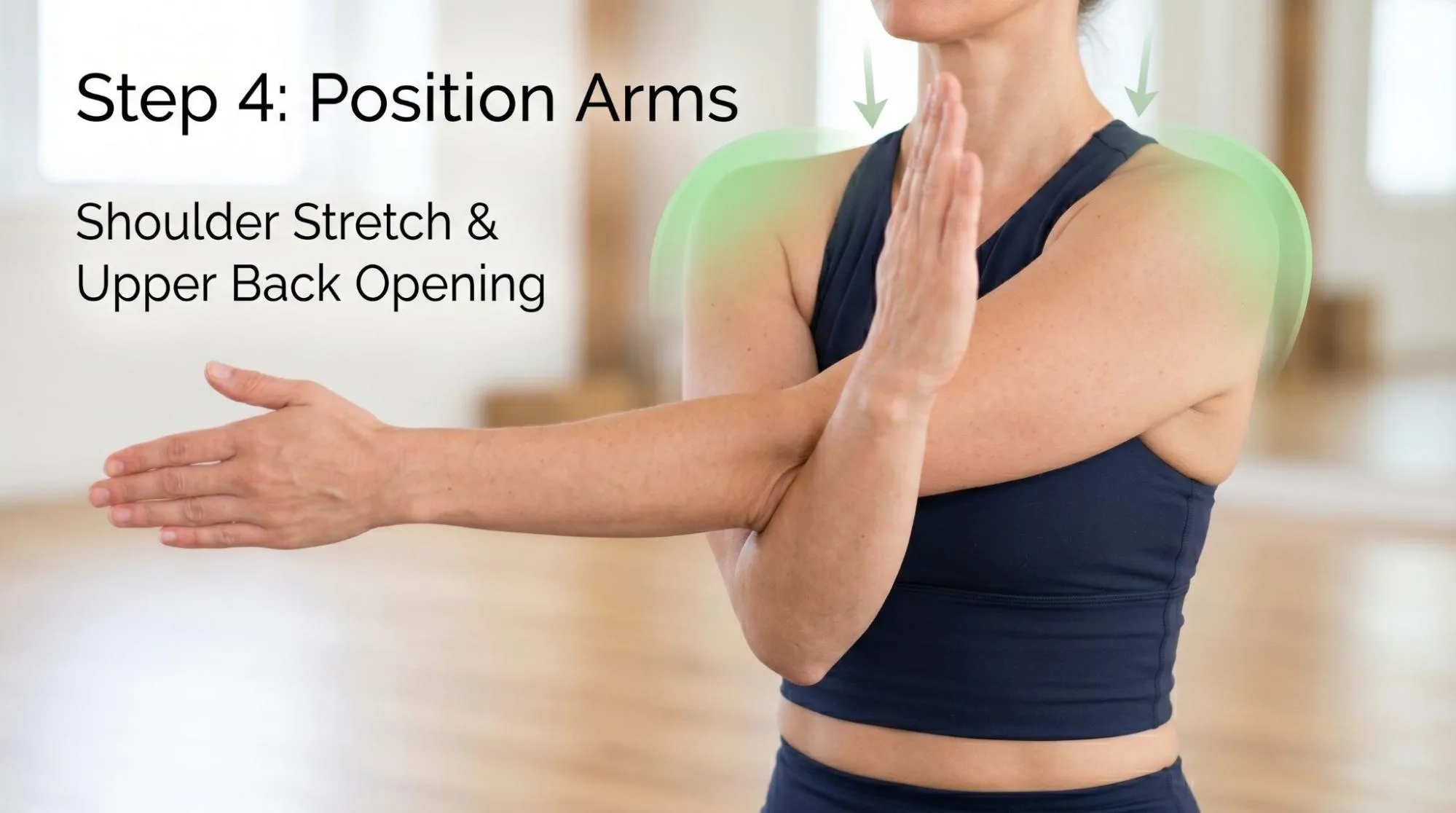 alt=”Standing foot alignment in Garudasana” title=”Standing foot alignment in Garudasana”
Step 5: Lift Elbows and Fix Your Gaze
Gently lift your elbows to shoulder level, but do not raise the shoulders toward the ears.
Choose one still point in front of you and keep your gaze there. This will help you hold the pose without losing balance.
Keep your hips facing forward as much as possible. Breathe slowly.
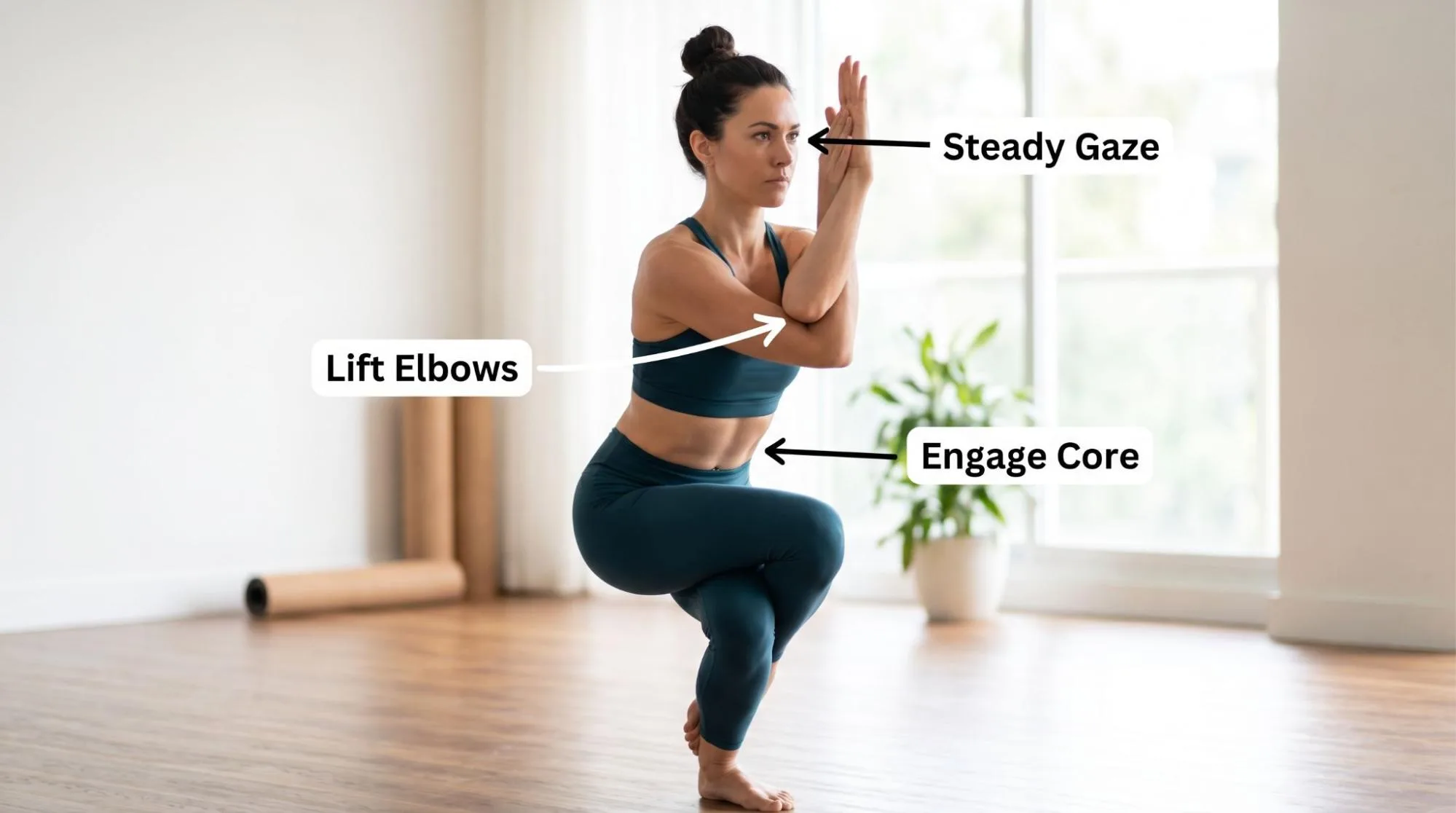 alt=”Eagle Pose balance practice on a yoga mat” title=”Eagle Pose balance practice on a yoga mat”
Step 6: Hold and Release
Hold Eagle Pose for 15 to 30 seconds, or about 3 to 5 steady breaths.
To release, slowly unwrap the arms and legs. Return to Mountain Pose and notice the difference between both sides of the body.
Then repeat on the other side.
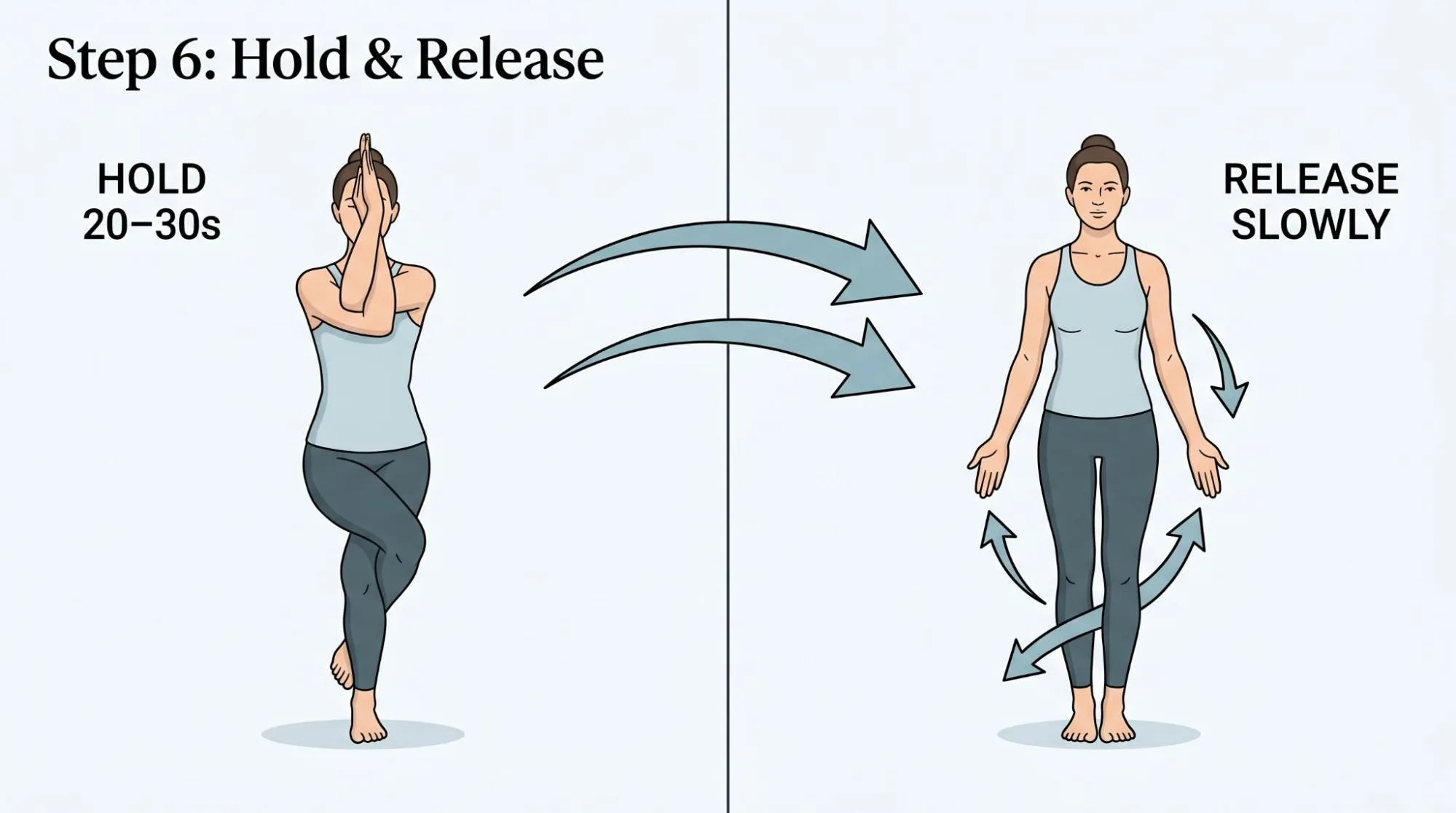 alt=”Wrapped arms variation for Eagle Pose” title=”Wrapped arms variation for Eagle Pose”
Learn More : Half Moon Pose Yoga: Benefits, Steps, Alignment Tips, and Beginner Guide
Common Mistakes to Avoid
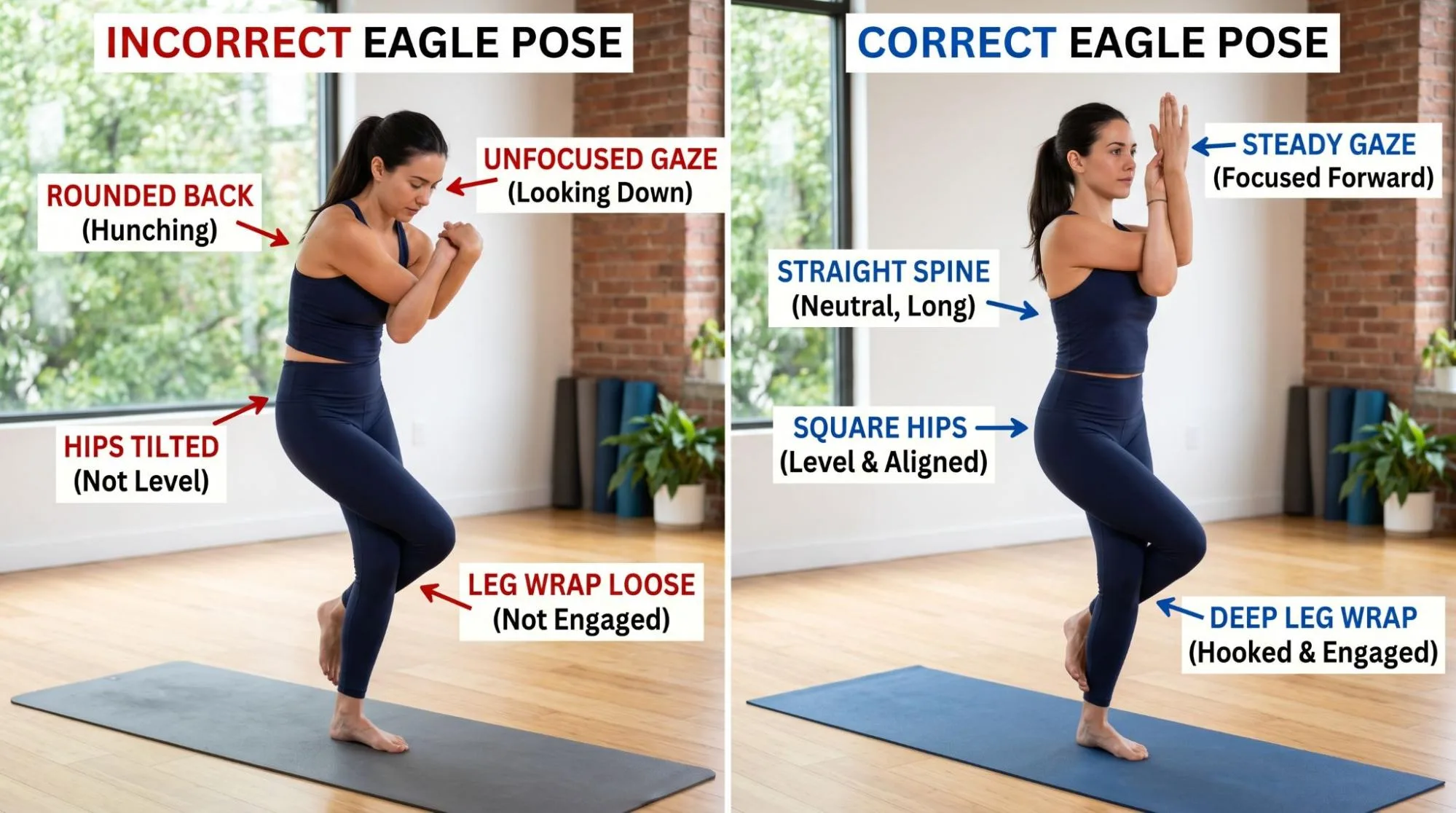
Eagle Pose becomes safer and more effective when alignment is clear. These are the most common mistakes beginners make. When practicing Eagle Pose guide, small alignment mistakes can make the pose feel harder than it actually is.
Collapsing Shoulders or Rounding the Back
Many people round the upper back too much when wrapping the arms. A little upper-back stretch is normal, but collapsing the chest can make breathing uncomfortable.
Keep your chest soft but lifted. Relax the shoulders away from the ears.
Misaligned Hips or Knees
Try not to twist the hips too much to one side. Your hips should face forward as much as your body allows.
Also, do not force the knees together harshly. The knees should bend naturally, and the standing knee should point forward.
If your knees feel strained, reduce the depth of the bend or use a beginner modification.
Losing Focus on the Gaze
Looking around makes balancing harder. Eagle Pose needs a steady gaze.
Pick one point in front of you and keep your eyes there. This simple habit can make a big difference in your balance.
 alt=”Eagle Pose hip and knee position” title=”Eagle Pose hip and knee position”
Variations and Modifications
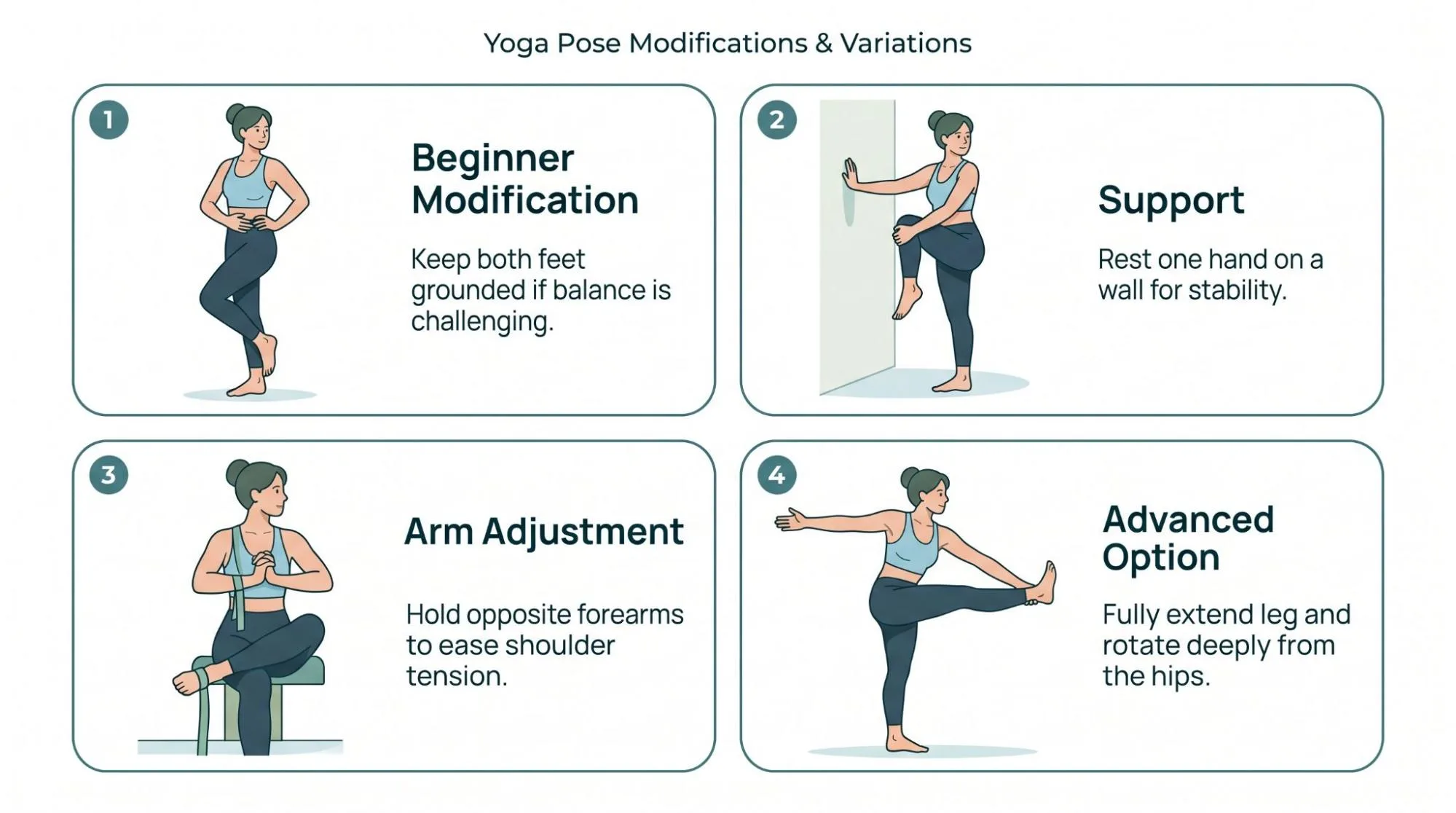
Not everyone needs the full version of Eagle Pose. A good yoga practice meets your body where it is.
For beginners, try these modifications:
- Keep the toes of the top leg on the floor for support
- Cross the thighs without wrapping the foot behind the calf
- Use a wall or chair for balance
- Press the backs of the hands together if palms do not meet
- Practice only the arm position while sitting
- Practice only the leg position first, then add the arms later
You can also practice Eagle Arms in a seated position. This is useful if you have tight shoulders or if standing balance feels difficult.
For a stronger version, sit deeper into the pose like a narrow Chair Pose while keeping the spine long and the breath steady.
 alt=”Modified Garudasana for beginners” title=”Modified Garudasana for beginners”
Tips for Better Practice
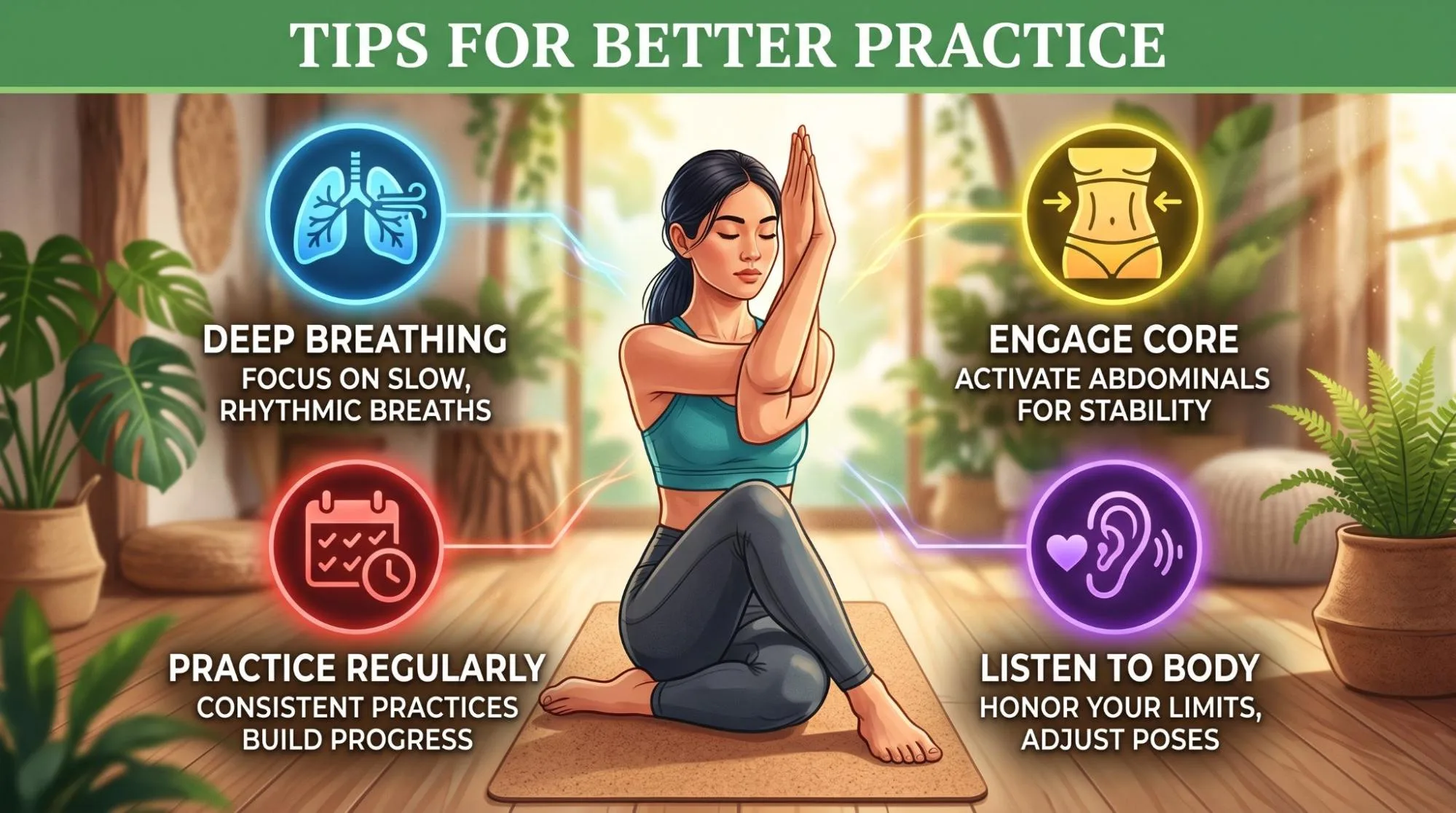
Eagle Pose improves with patience. You do not need to master it in one day.
Here are a few practical tips:
- Warm up with Mountain Pose, Chair Pose, shoulder rolls, and gentle hip openers
- Keep breathing; do not hold your breath
- Focus more on stability than deep wrapping
- Keep the standing foot grounded
- Use a wall if you feel unsteady
- Practice both sides equally
- Come out of the pose slowly
A helpful trick is to start with the legs first. Once your lower body feels stable, then add the arms. Trying to wrap everything at once can make the pose feel confusing. The best way to improve in Eagle Pose guide is to practice with patience, steady breathing, and proper body alignment.
 alt=”Eagle Pose breathing and steady gaze” title=”Eagle Pose breathing and steady gaze”
Who Should Practice Eagle Pose
Eagle Pose is suitable for many yoga students, especially those who want to improve balance, coordination, flexibility, and lower-body strength.
It may be helpful for:
- Beginners learning standing balance
- People with mild shoulder tightness
- Athletes who need better coordination and ankle stability
- Office workers with upper-back stiffness
- Yoga students building focus and body awareness
Precautions
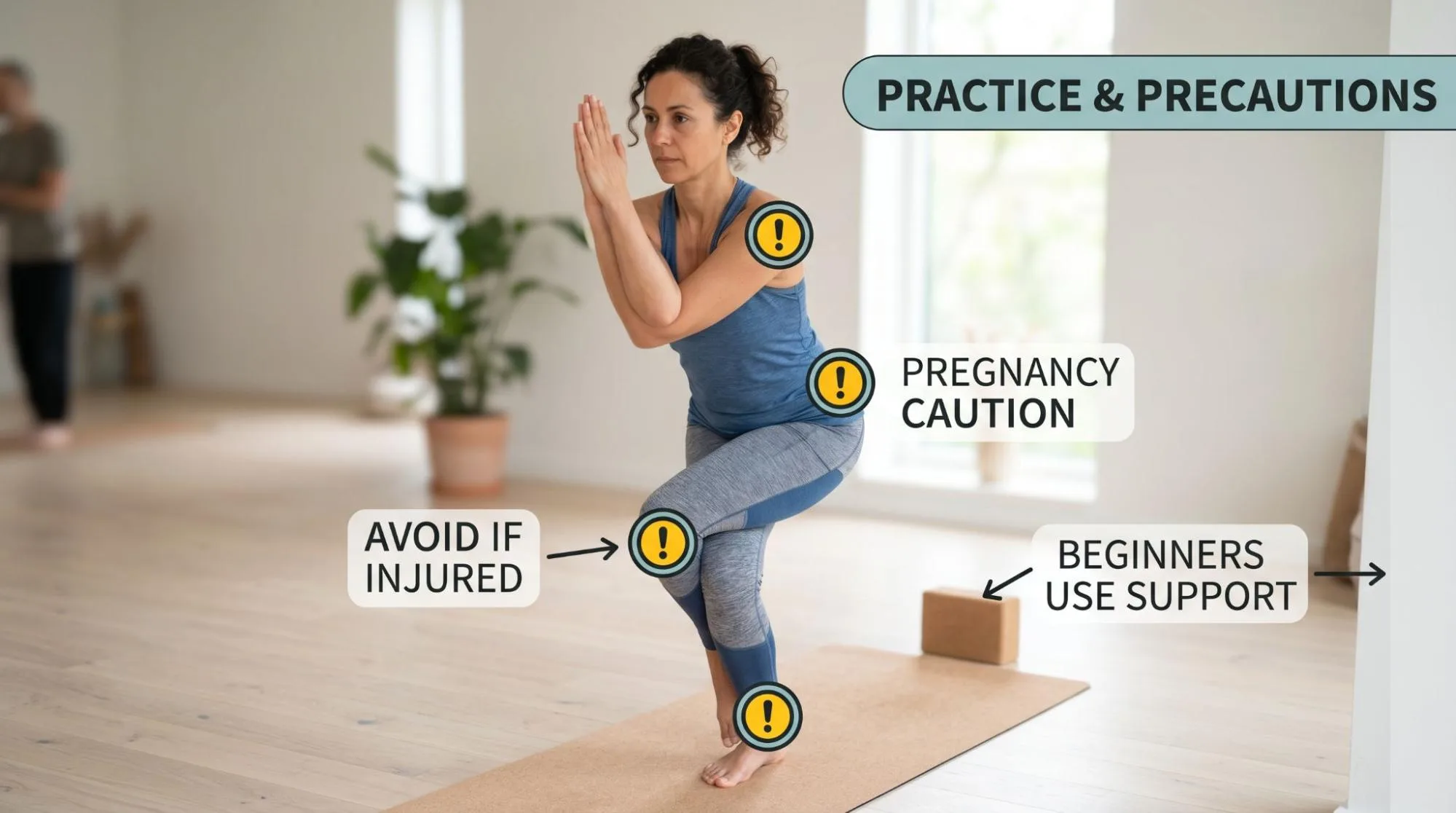
Avoid forcing the pose if you have knee, ankle, hip, or shoulder pain. If you have a recent injury, balance issues, or joint problems, practice with support or ask a qualified yoga teacher for guidance.
Pregnant women should avoid deep balance poses unless guided by a trained instructor. If balance feels unstable, use a wall or skip the leg wrap.
Pain is not a sign of progress. A gentle stretch is fine, but sharp pain means you should come out of the pose. Once you understand Eagle Pose guide, the pose becomes less confusing and more comfortable for regular practice.
 alt=”Uncrossed-leg Eagle Pose modification” title=”Uncrossed-leg Eagle Pose modification”
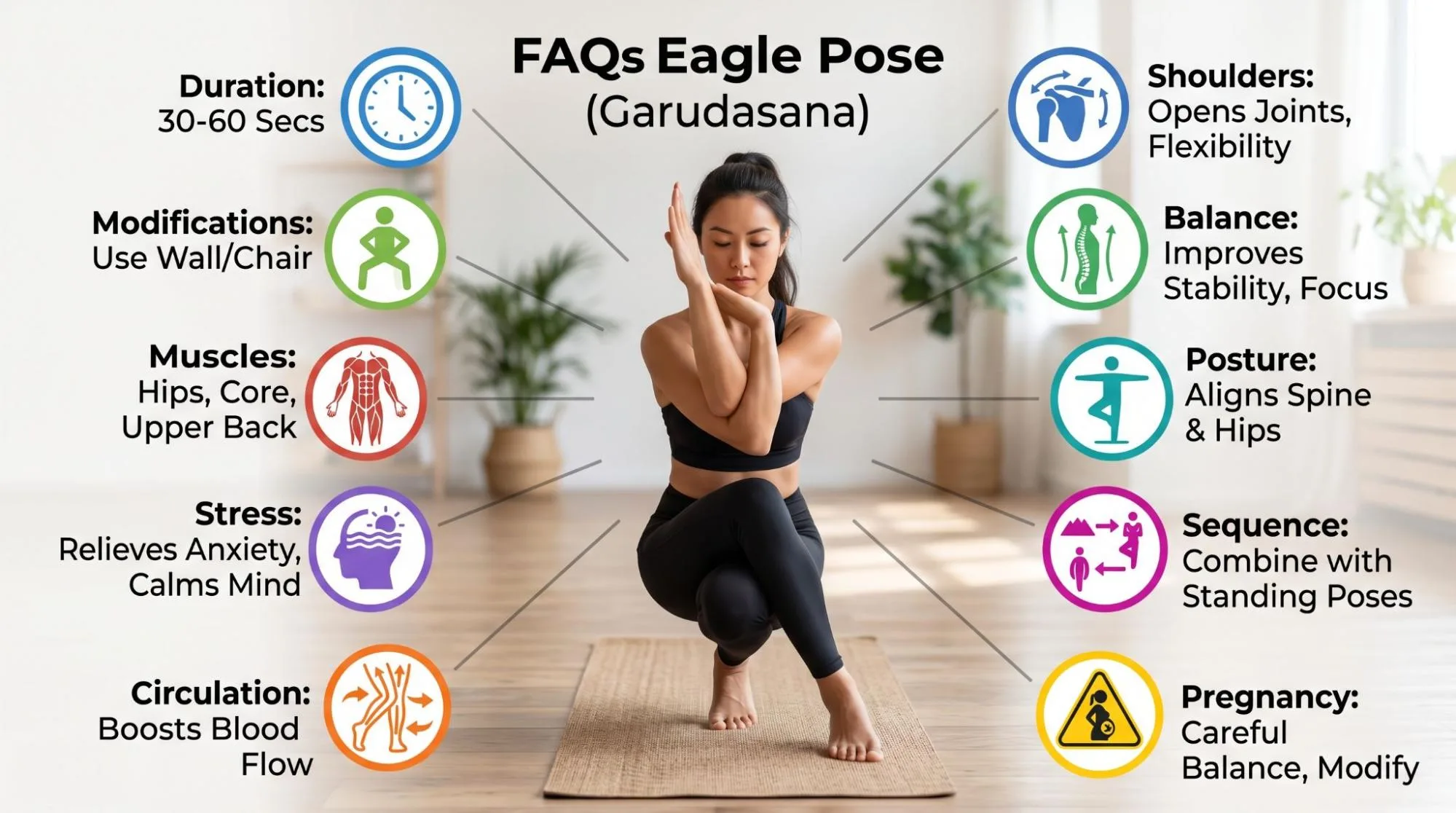
Frequently Asked Questions
How long should I hold Eagle Pose?
Hold Eagle Pose for about 15 to 30 seconds, or 3 to 5 slow breaths. Beginners can start with a shorter hold and increase gradually.
Can beginners do Garudasana?
Yes, beginners can practice Garudasana with modifications. You can keep the toes on the floor, use a wall for support, or practice only the arms first.
What muscles does Eagle Pose work?
Eagle Pose works the thighs, calves, ankles, feet, shoulders, upper back, and core. It also stretches the outer hips and upper back.
Does Eagle Pose help with stress relief?
Yes, it may help with stress relief because it requires steady breathing and focused attention. The pose encourages the mind to slow down and stay present.
How often should I practice Eagle Pose?
You can practice Eagle Pose 3 to 5 times per week, depending on your comfort level. It also fits well into a regular yoga flow.
Is Eagle Pose good for circulation?
Eagle Pose may support circulation through gentle compression and release in the arms and legs. Many people feel refreshed after releasing the pose.
Can I do Eagle Pose if I have tight shoulders?
Yes, but use a modification. If your palms do not touch, press the backs of your hands together or hold opposite shoulders instead.
Does Eagle Pose improve posture?
Eagle Pose can support better posture by strengthening the legs, improving balance, and stretching the upper back and shoulders.
Is Eagle Pose suitable for athletes?
Yes, athletes may benefit from Eagle Pose because it trains balance, ankle stability, hip control, focus, and coordination.
Can Eagle Pose be combined with other yoga poses?
Yes. Eagle Pose works well with Mountain Pose, Chair Pose, Tree Pose, Warrior III, and gentle hip-opening poses. It can be added to a balance-focused yoga sequence.
 alt=”Eagle Pose transition into balance” title=”Eagle Pose transition into balance”
Learn More : Triangle Pose Yoga Common Mistakes and How to Fix Them
Conclusion
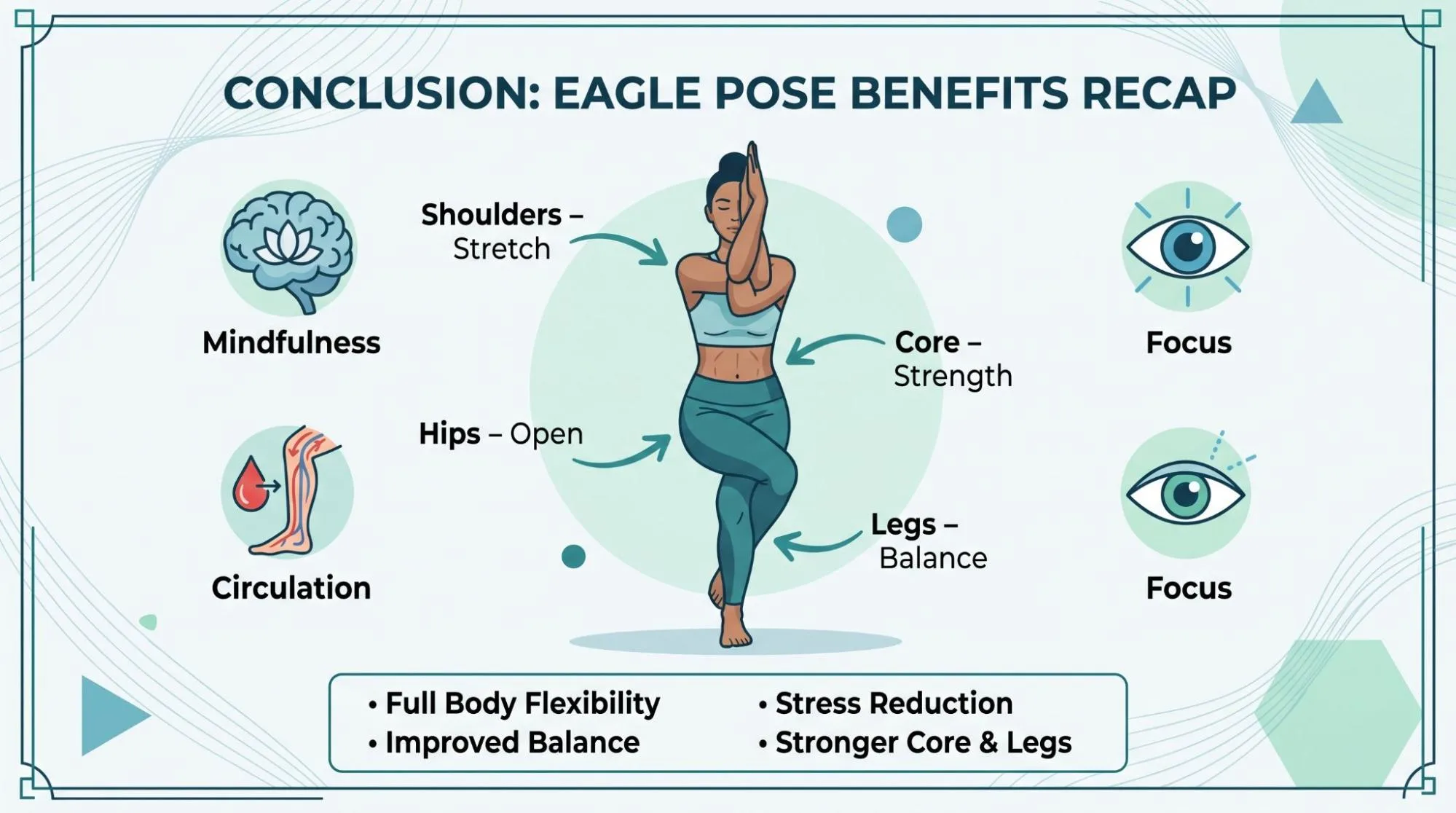
Eagle Pose is a simple-looking yoga pose with surprisingly deep benefits. It strengthens the lower body, stretches the shoulders and hips, improves balance, and trains the mind to stay focused.
The best way to learn it is slowly. Start from Mountain Pose, bend your knees, cross the legs carefully, wrap the arms, fix your gaze, and breathe. Some days you may feel steady, and some days you may wobble. That is normal.
With regular practice, Garudasana Eagle Pose can become a steady, grounding part of your yoga routine. By practicing regularly and following these Eagle Pose guide, you can build better focus, stronger legs, improved flexibility, and more confidence in standing balance poses.
 alt=”Resting after Eagle Pose practice” title=”Resting after Eagle Pose practice”
Further reading: For general yoga safety information, see NCCIH: Yoga—What You Need To Know.
