
Many people think yoga only means physical poses, breathing exercises, or sitting quietly in meditation. But yoga is much wider than that. One of its most practical paths is Karma Yoga, often called the yoga of action. This guide explains what is karma yoga for beginners in a simple, practical way.
So, what is karma yoga for beginners? In simple words, Karma Yoga means doing your actions with honesty, awareness, and care, without becoming too attached to praise, reward, or the final result. It teaches you how to turn daily life into spiritual practice.
You do not need a special place, a yoga mat, or long rituals to begin. Your work, studies, home duties, and small acts of kindness can all become part of Karma Yoga when done with the right attitude.

What Is Karma Yoga for Beginners?
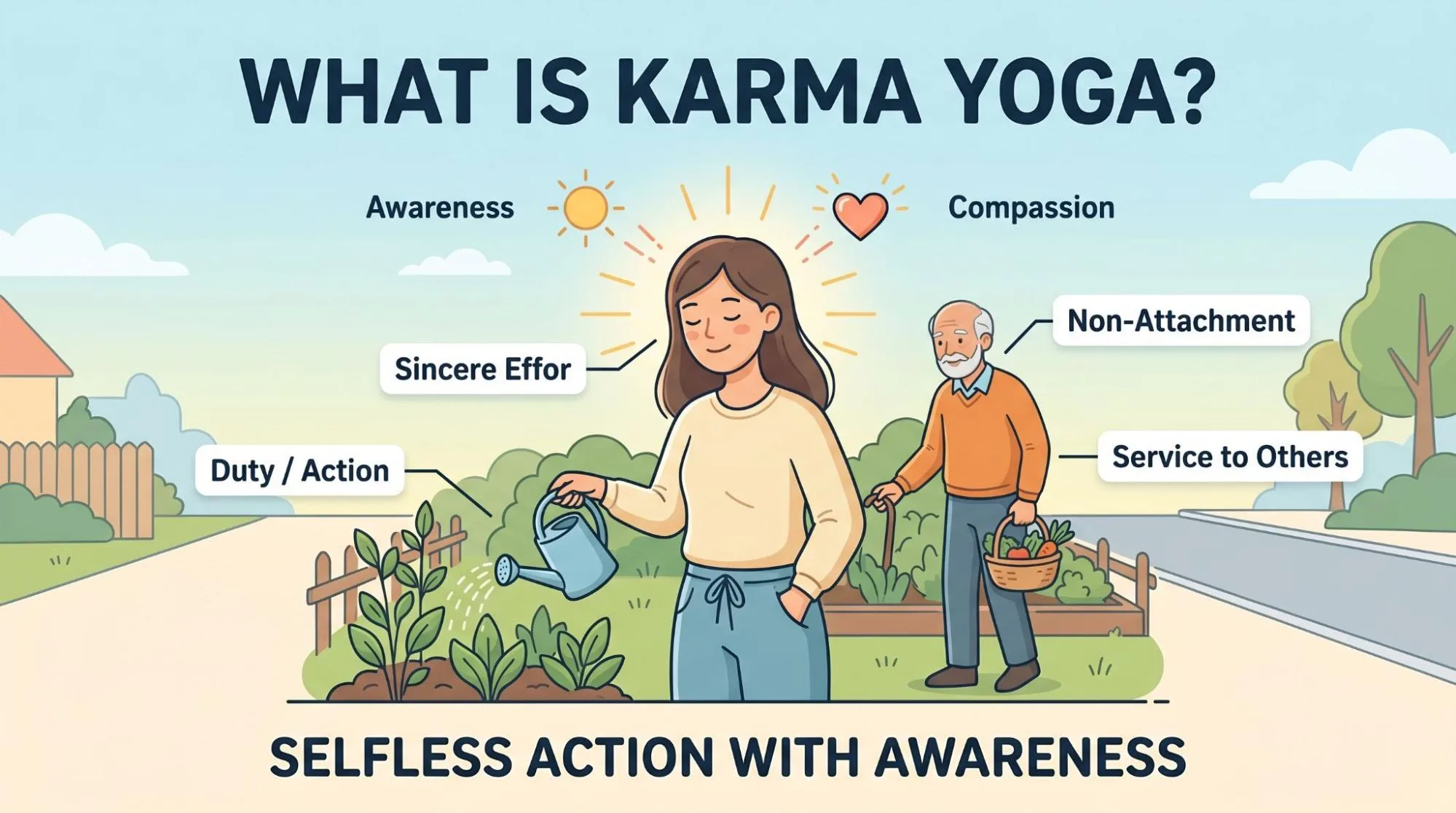
Karma Yoga is the path of selfless action. The word “karma” means action, and “yoga” means union or spiritual discipline. Together, Karma Yoga teaches that every action can help us grow when it is done with sincerity and without selfish attachment.
For beginners, what is karma yoga for beginners means doing the right thing well, without letting your peace depend completely on the result.
Karma Yoga is not about becoming passive. It is not about doing careless work and saying, “Results do not matter.” It means you give your best effort, but you do not allow success, failure, praise, or criticism to control your inner state.
Learn More : Aparigraha: The Yoga Practice of Non-Attachment and Simple Living
The Core Philosophy of Karma Yoga
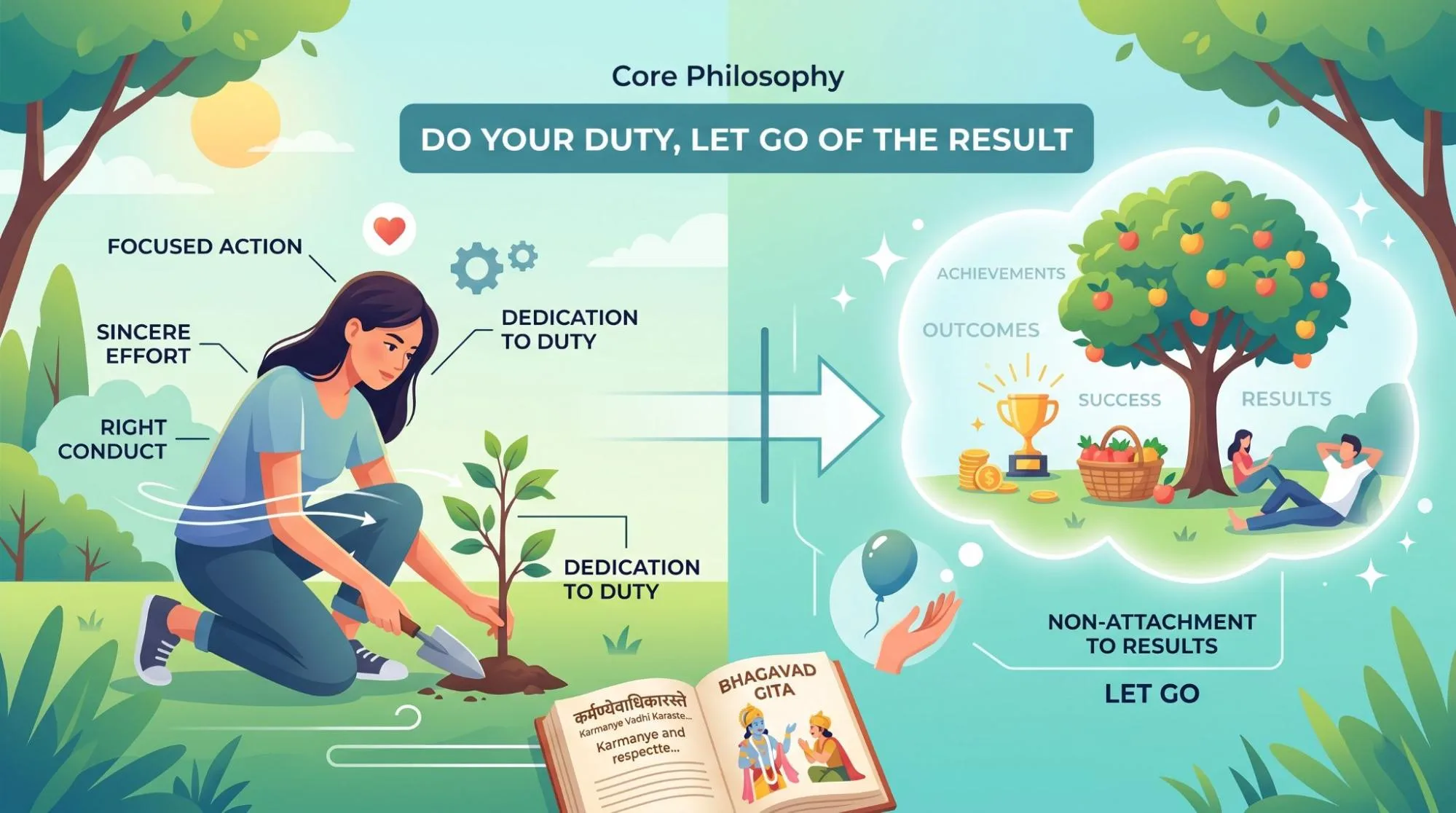
The core philosophy of Karma Yoga comes strongly from the Bhagavad Gita, one of the most important texts in yogic wisdom. In the Bhagavad Gita, Lord Krishna teaches Arjuna to perform his duty without attachment to the fruits of action.
This teaching is practical even today. A student can study sincerely without being destroyed by exam fear. A worker can do their job honestly without chasing constant approval. A parent can serve the family with love without feeling bitter or unseen.
Karma Yoga teaches that action itself can purify the mind when it is done with the right intention.
Karma Yoga and the Yoga of Action
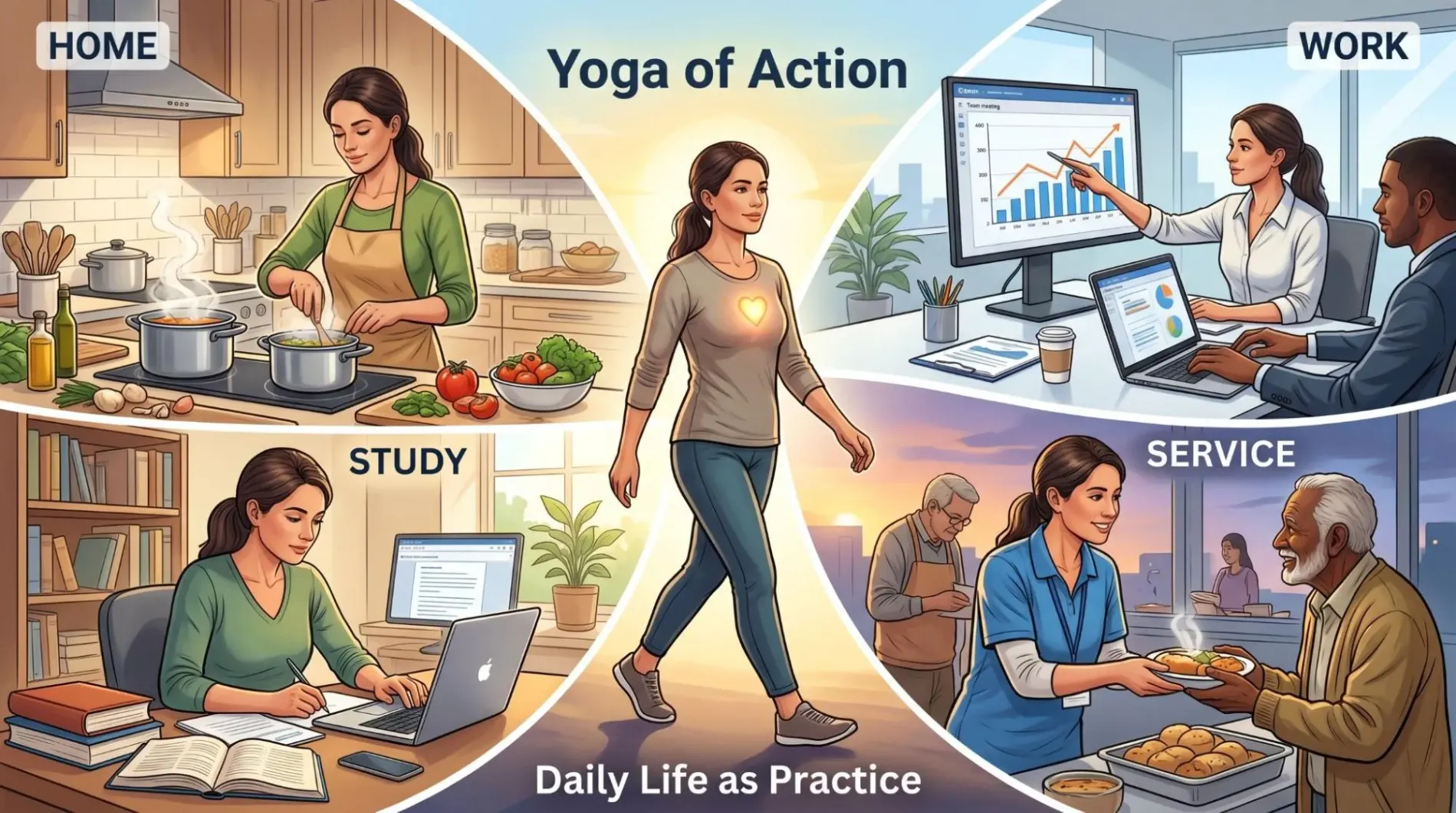
Karma Yoga is called the yoga of action because it uses daily actions as a path to inner growth. Instead of running away from responsibilities, Karma Yoga asks you to face them with awareness.
In Karma Yoga, your office desk, kitchen, classroom, business, and family life can all become places of practice.
Bhakti Yoga focuses more on love and devotion. Karma Yoga focuses more on action and service. Still, both paths can support each other.
How Karma Yoga Helps Beginners
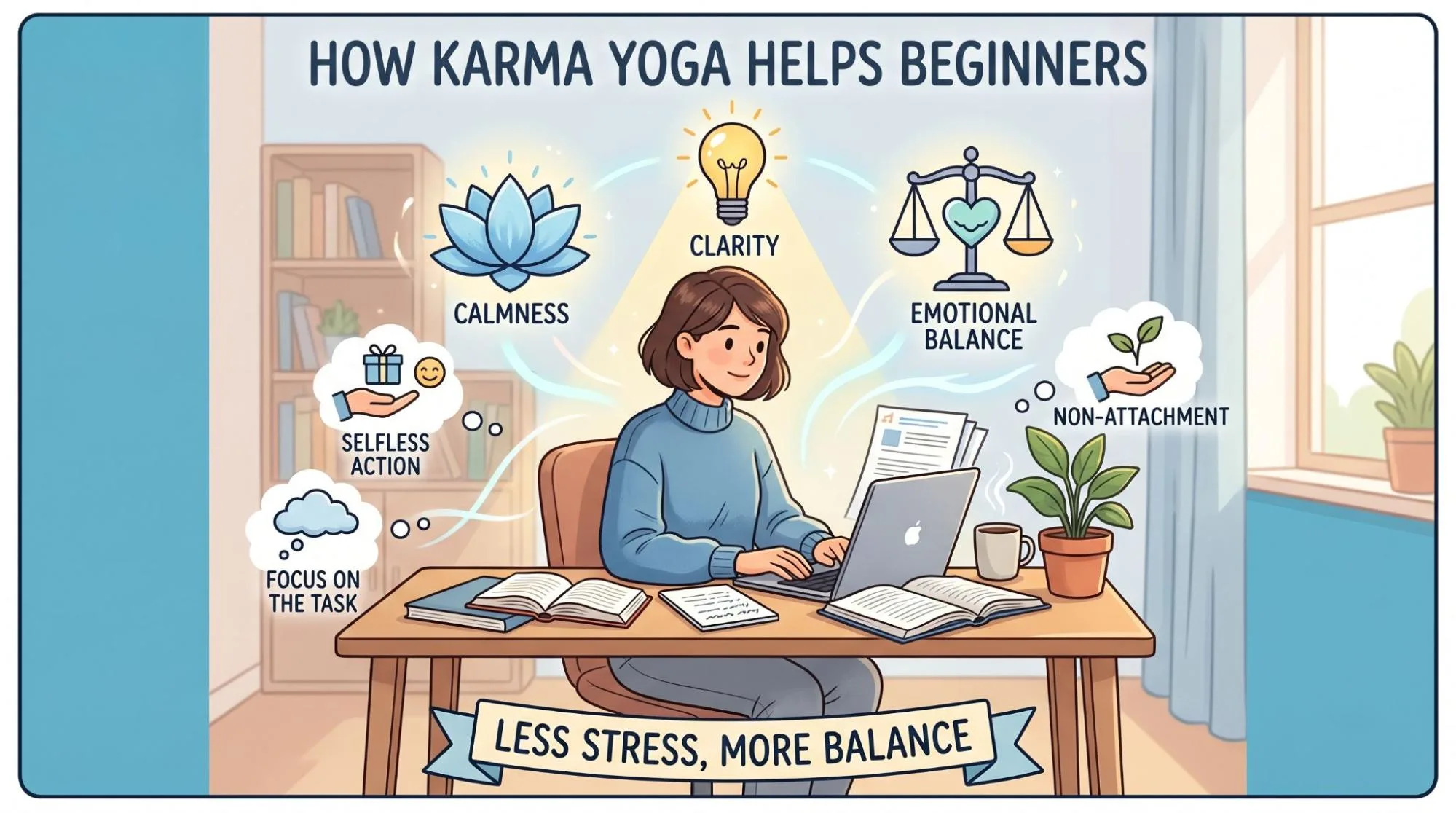
What is karma yoga for beginners? It is a simple practice that does not require complicated techniques. You begin exactly where you are.
If you are working, studying, caring for family, or managing daily pressure, Karma Yoga gives you a calmer way to live. It helps you stop asking only, “What will I get?” and start asking, “How can I do this with honesty and awareness?”
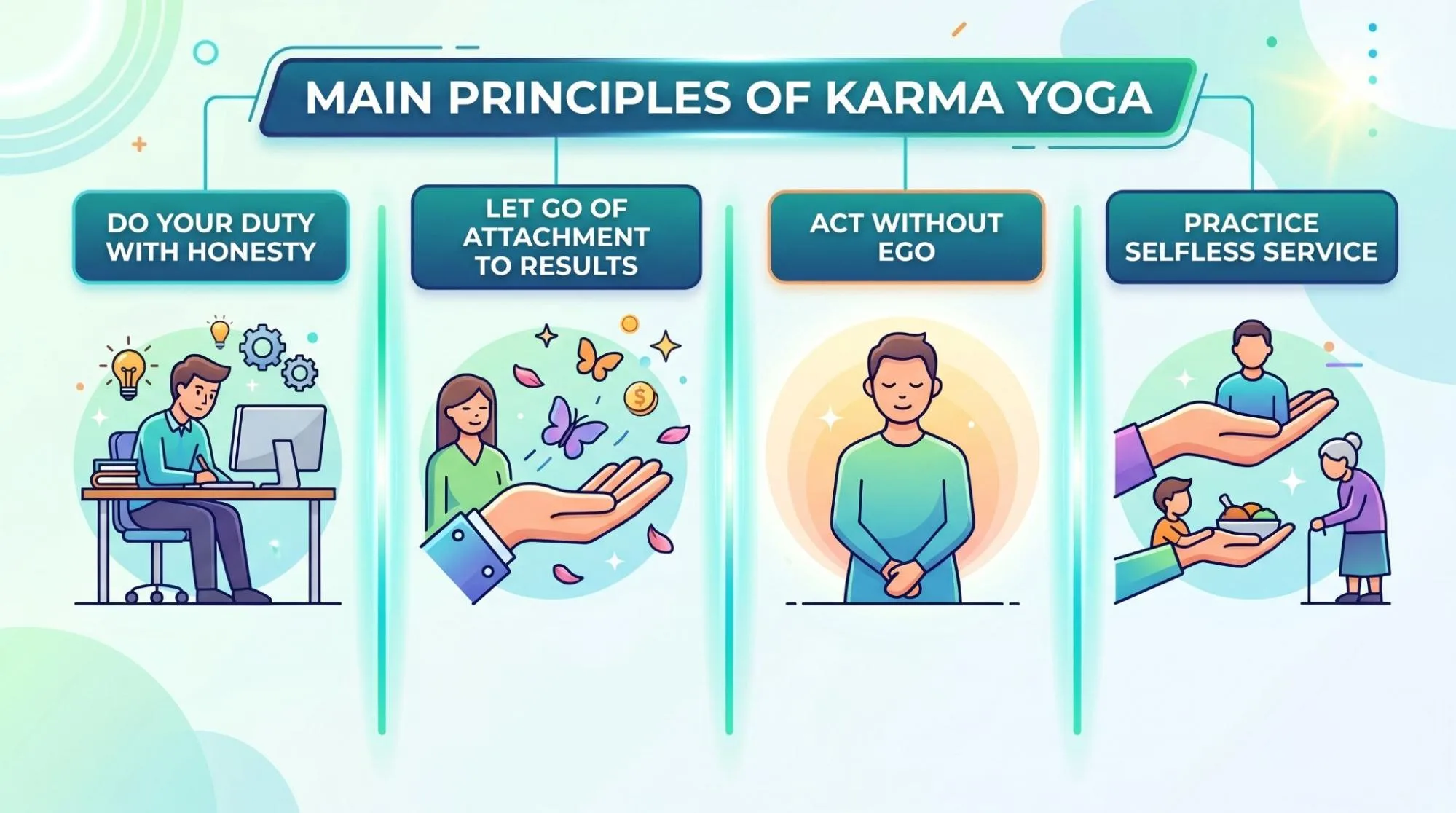
Main Principles of Karma Yoga
Do Your Duty with Honesty
Karma Yoga starts with doing your duty sincerely. This may mean completing your work properly, studying with focus, caring for your family, or keeping your promises.
Honesty matters more than showing off. You do not need to impress everyone. You only need to act with a clear mind and clean intention.
Let Go of Attachment to Results
Letting go of results does not mean ignoring results. It means not becoming emotionally trapped by them.
You prepare well, work hard, and take responsible action. But after that, you accept that some things are not fully in your control. This attitude protects your peace.
Act Without Ego
Ego makes action heavy. It wants recognition, praise, and control. Karma Yoga teaches you to act without constantly thinking, “People should notice me.”
This does not mean you should have no self-respect. It means your action should not be driven only by pride.
Practice Selfless Service
Selfless service means helping without always expecting something back. In yogic language, this is often called seva.
It can be simple. Helping someone carry something, guiding a beginner, feeding someone, volunteering, or supporting a friend without making it about yourself can all become Karma Yoga.
How to Practice Karma Yoga in Daily Life
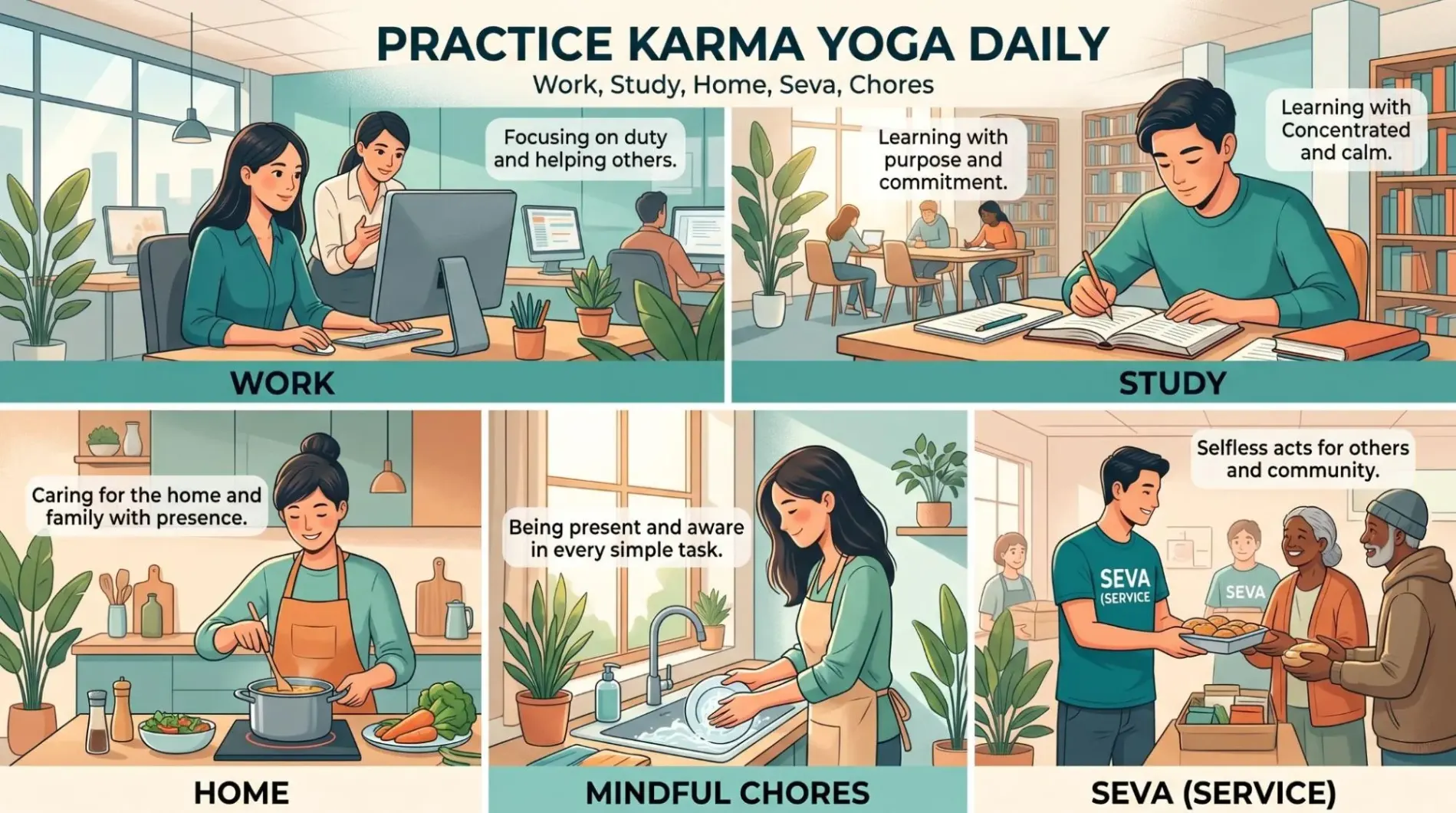
Practice Karma Yoga at Work
At work, Karma Yoga means doing your tasks with focus and fairness. Avoid shortcuts that harm others. Do not work only for praise. Try to bring quality into what you do.
A simple practice is this: before starting work, remind yourself, “I will do this honestly and calmly.”
Practice Karma Yoga in Studies
For students, Karma Yoga can reduce pressure. Study because learning is your present duty, not only because you want marks or approval.
Of course, marks matter. But when fear becomes too strong, learning becomes stressful. Karma Yoga helps students focus on effort first.
Practice Karma Yoga at Home
Home is one of the best places to practice Karma Yoga. Washing dishes, helping parents, cleaning your room, cooking, or caring for children can become meaningful when done without resentment.
Practice Karma Yoga Through Seva
Seva does not always need to be big. You can begin with one small act of service each day.
For example:
- Help someone without announcing it.
- Share knowledge with a beginner.
- Give time to someone who needs support.
- Donate food, clothes, or useful items if possible.
- Speak kindly when someone is struggling.
Practice Karma Yoga with Mindful Chores
Choose one daily chore and do it with full attention. Do not rush. Do not complain in your mind. Just do the action carefully.
This could be making tea, cleaning a table, folding clothes, or watering plants. When the mind stays with the action, even a simple chore becomes a quiet form of meditation.
Learn More : Tapas Yoga Meaning Self Discipline
Benefits of Karma Yoga
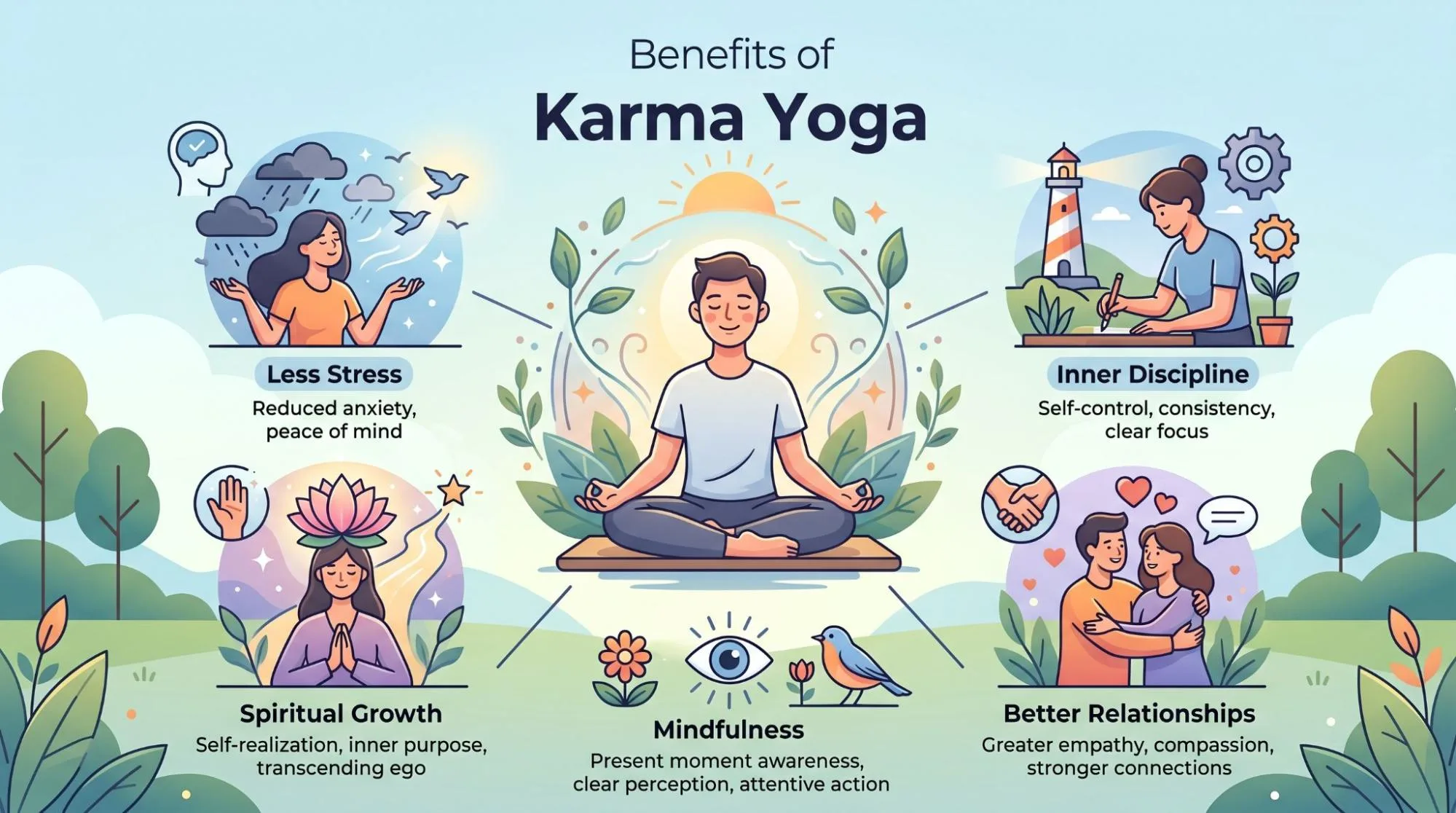
Karma Yoga Reduces Stress
The benefits become easier to understand when you know what is karma yoga for beginners in daily life. Much of our stress comes from wanting total control over outcomes. Karma Yoga helps you focus on effort instead of constant worry.
Karma Yoga Builds Inner Discipline
When you do your duty regularly, even when no one is watching, discipline grows naturally. You become more reliable and steady.
This kind of discipline is not forced. It comes from understanding the value of right action.
Karma Yoga Improves Relationships
Karma Yoga can make relationships softer and less selfish. You begin to serve, listen, and support without always keeping score.
This does not mean you ignore your own needs. Healthy service includes wisdom and balance.
Karma Yoga Deepens Mindfulness
Karma Yoga brings mindfulness into real life. You become more aware of your thoughts, intentions, and reactions while doing normal tasks.
Instead of living on autopilot, you start noticing how you act and why you act.
Karma Yoga Supports Spiritual Growth
Spiritual growth is not only about prayer or meditation. It is also about becoming less selfish, more honest, and more peaceful.
Karma Yoga helps clean the mind through action. Over time, it can reduce ego, anger, jealousy, and attachment.
Common Misunderstandings About Karma Yoga
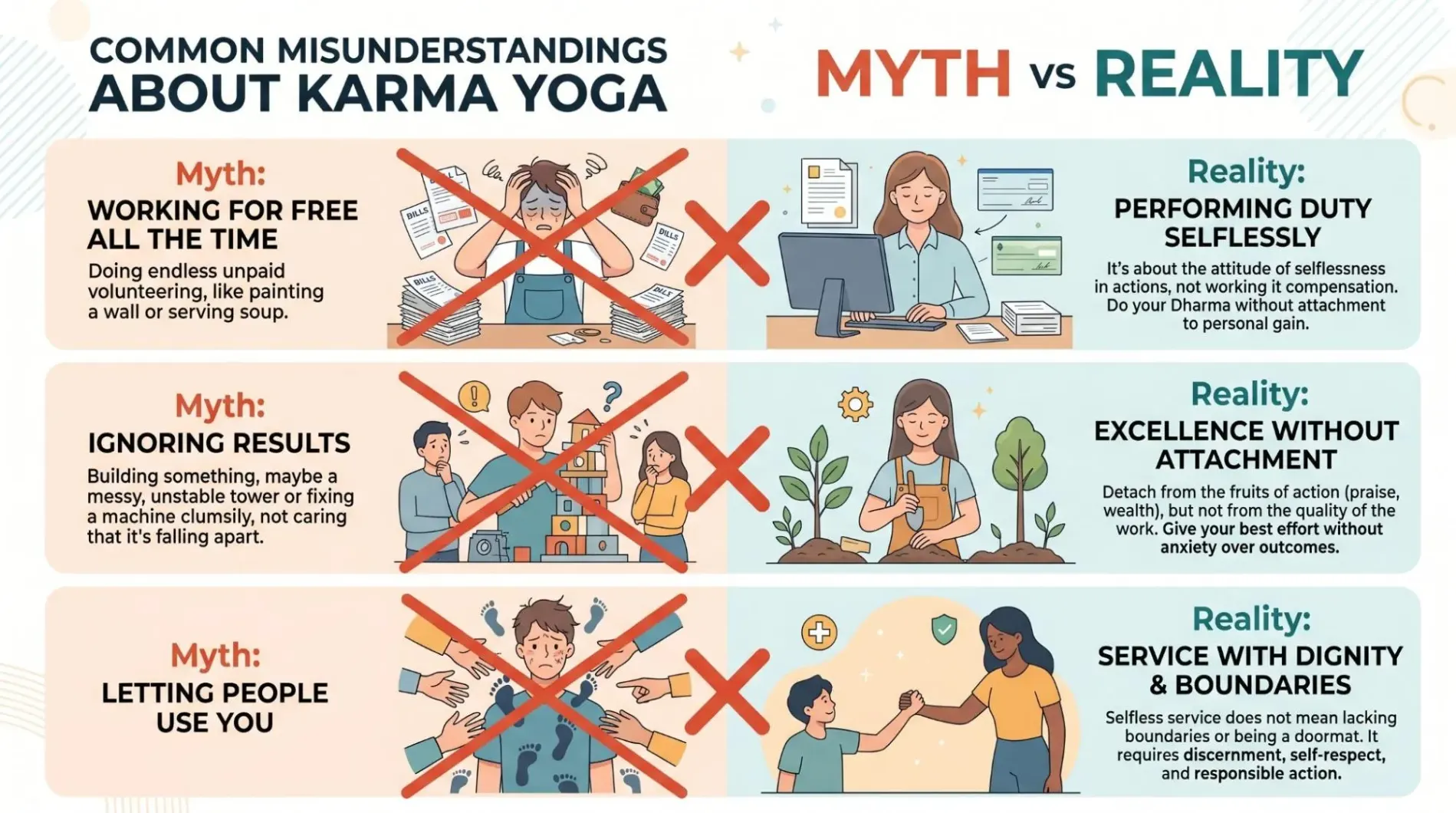
Karma Yoga Does Not Mean Working for Free All the Time
Some people think Karma Yoga means you should never accept money or reward. That is not true.
You can earn money, run a business, take a salary, and still practice Karma Yoga. The key is your intention. Are you acting honestly? Are you serving fairly? Are you controlled by greed, or guided by responsibility?
Karma Yoga Does Not Mean Ignoring Results
Results matter in practical life. A doctor must care about treatment. A teacher must care about students’ learning. A business owner must care about quality.
Karma Yoga simply teaches that you should not become mentally broken when results are different from what you expected.
Karma Yoga Does Not Mean Letting People Use You
Selfless action does not mean having no boundaries. Helping others is good, but allowing people to exploit you is not wisdom.
Karma Yoga includes clear thinking. Serve with kindness, but also protect your energy, time, and dignity.
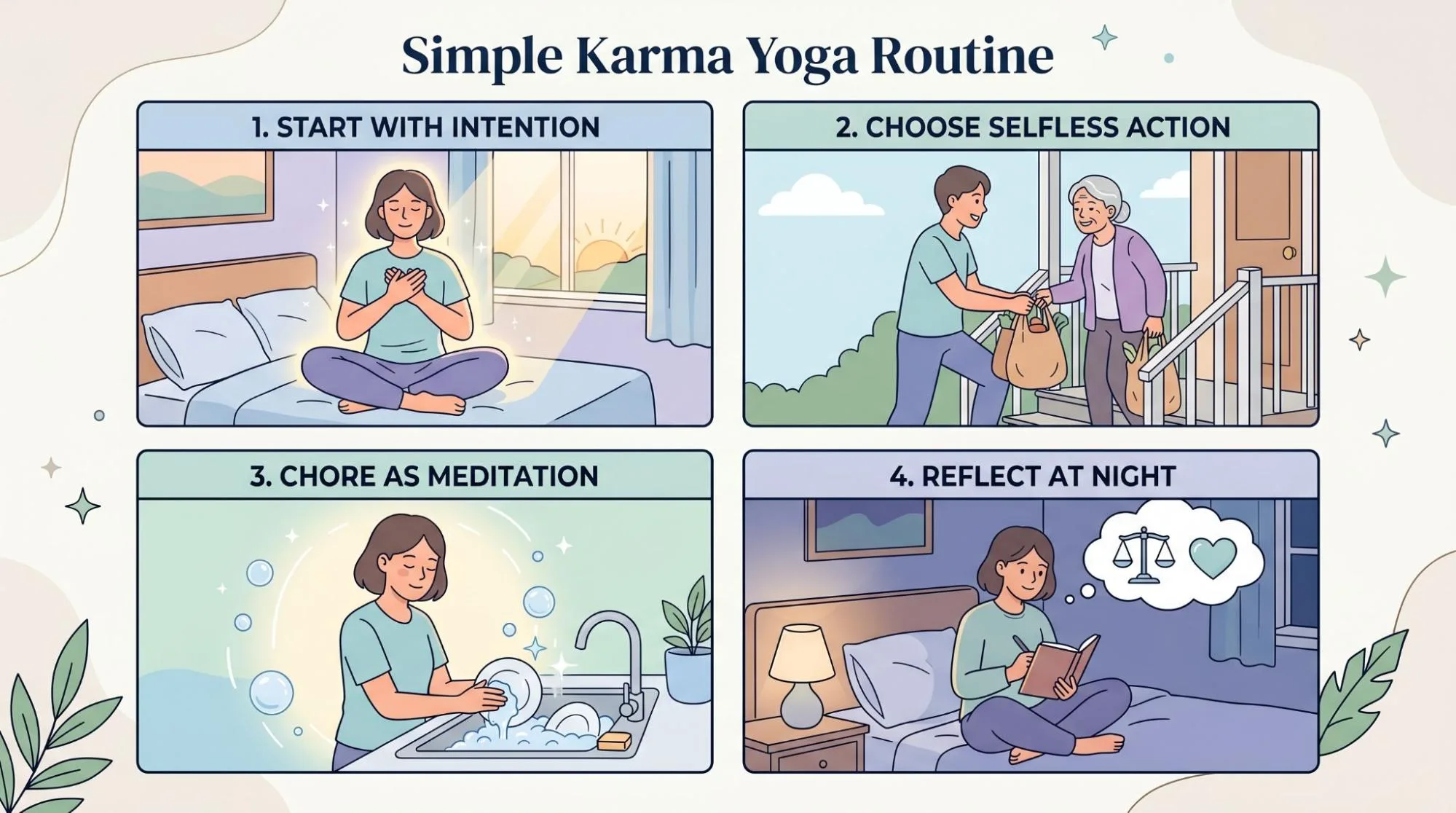
Simple Karma Yoga Routine for Beginners
Start the Day with Intention
Before beginning your day, take a quiet moment and set a simple intention:
“Today, I will do my duties with honesty and calmness.”
Choose One Selfless Action Daily
Pick one small action that benefits someone else. Do it without expecting praise.
It could be helping a colleague, calling a family member, cleaning a shared space, or guiding someone who is confused.
Turn One Chore into Meditation
Choose one chore and do it mindfully. Keep your attention on the task. When your mind complains or rushes, gently bring it back.
This is a simple way to bring Karma Yoga into daily life.
Reflect at Night
At night, ask yourself:
- Did I act honestly today?
- Where did ego control my reaction?
- Did I help someone without expecting anything?
- What can I do better tomorrow?
Karma Yoga in Modern Life
Modern life is full of pressure. People are chasing results, likes, money, status, and approval. What is karma yoga for beginners in modern life? It is a calmer way to live inside all this activity.
It does not ask you to leave your job, studies, family, or goals. It simply asks you to change the way you relate to action.
Work sincerely. Serve where you can. Keep your ego in check. Accept results with maturity.
Even in a busy life, you can practice it through small choices. Reply with patience. Do your work honestly. Help without showing off. Stop turning every action into a transaction.
That is where Karma Yoga becomes real. By now, you should have a clear idea of what is karma yoga for beginners and how to practice it simply.

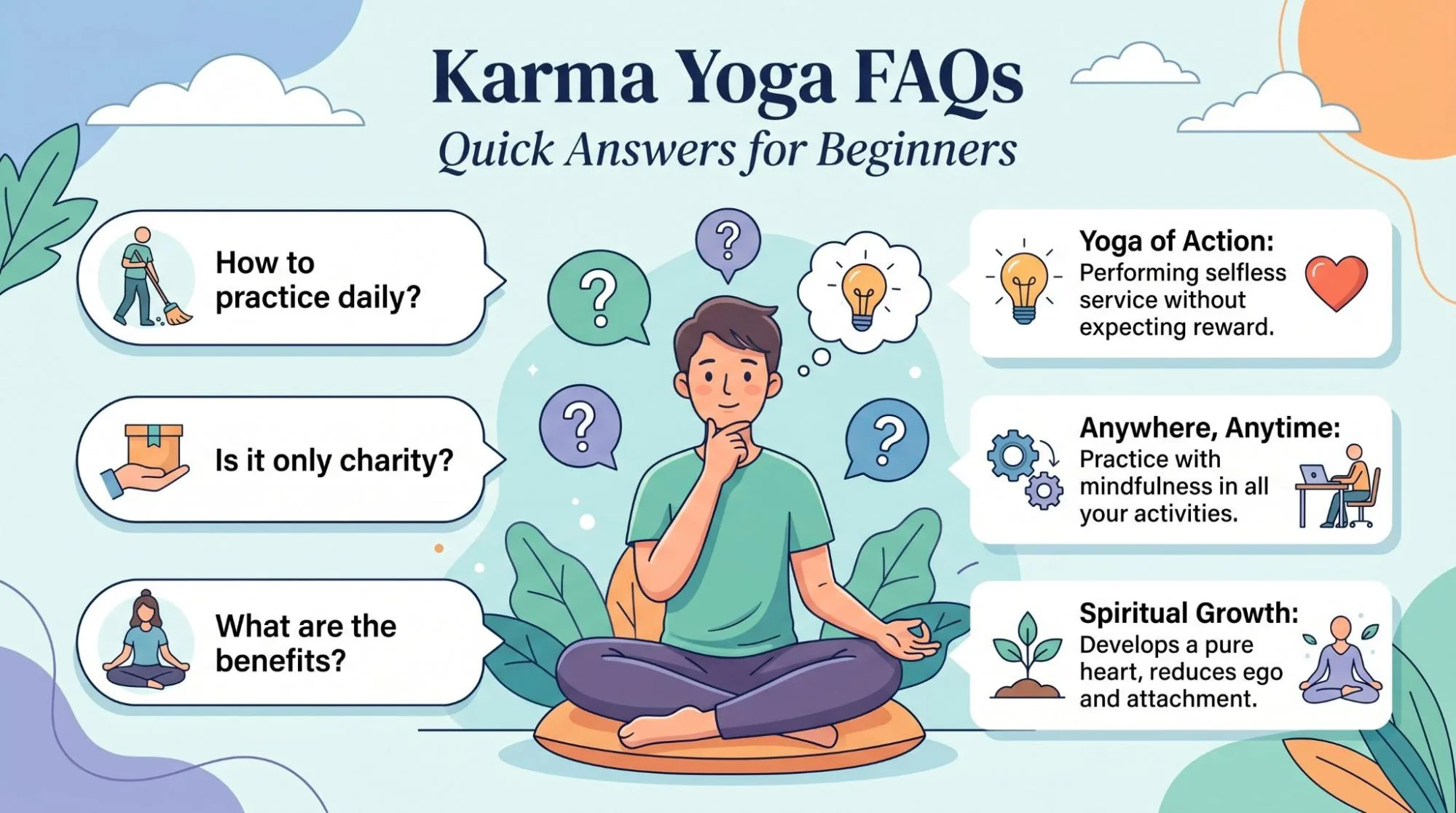
FAQs About Karma Yoga
What is karma yoga for beginners?
What is karma yoga for beginners? It means practicing yoga through daily actions. You do your duties honestly, help others when possible, and try not to become too attached to praise, reward, or results.
Is Karma Yoga mentioned in the Bhagavad Gita?
Yes, Karma Yoga is one of the major teachings of the Bhagavad Gita. It teaches action without selfish attachment and encourages people to perform their duties with wisdom and steadiness.
Is Karma Yoga the same as Bhakti Yoga?
No, they are not exactly the same. Bhakti Yoga is the path of devotion and love, while Karma Yoga is the path of action and selfless service. However, both can work together beautifully.
Can I practice Karma Yoga without being religious?
Yes. Even if you are not religious, you can practice Karma Yoga as a way of living with honesty, responsibility, kindness, and less attachment to outcomes.
Does Karma Yoga mean I should not care about success?
No. Karma Yoga does not tell you to stop caring. It teaches you to work sincerely for success while staying balanced if the result is different from what you hoped.
What is the easiest way to start Karma Yoga?
What is karma yoga for beginners at the easiest level? Choose one daily duty and do it with full attention, honesty, and less complaint.
Learn More : Jnana Yoga Meaning: A Powerful Beginner Guide
Conclusion
Karma Yoga is one of the most practical forms of yoga because it begins with the life you already have. You do not need to wait for perfect peace, extra time, or a special place.
Start with your next action. Do it honestly. Do it with awareness. Do it without making your ego the centre of everything.
For beginners, that is the heart of Karma Yoga. Simple actions, done with the right intention, can slowly make the mind calmer, the heart softer, and daily life more meaningful.