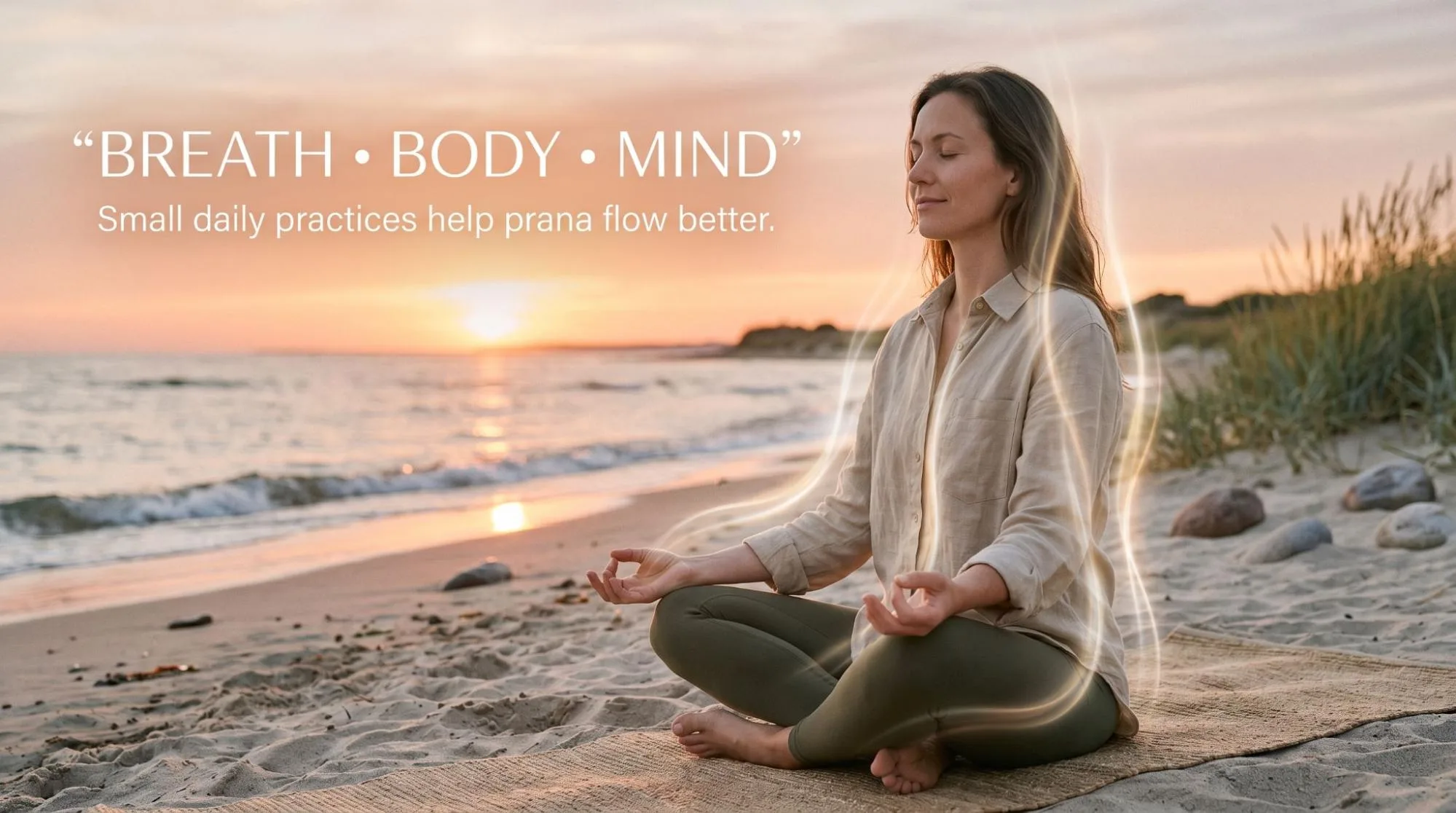
What is prana in yoga and meditation? Prana is the life force energy that supports your breath, body, mind, and inner balance. Prana is one of the most important ideas in yoga, but it is often explained in a way that sounds too complicated. In simple words, prana is the life force energy that keeps the body and mind active, balanced, and alive.
In yoga and meditation, prana is closely connected with breathing, awareness, movement, and inner balance. When you inhale and exhale with awareness, practice pranayama, or sit quietly in meditation, you are not only using your lungs. You are also learning how prana flows through your physical body and affects your state of mind.
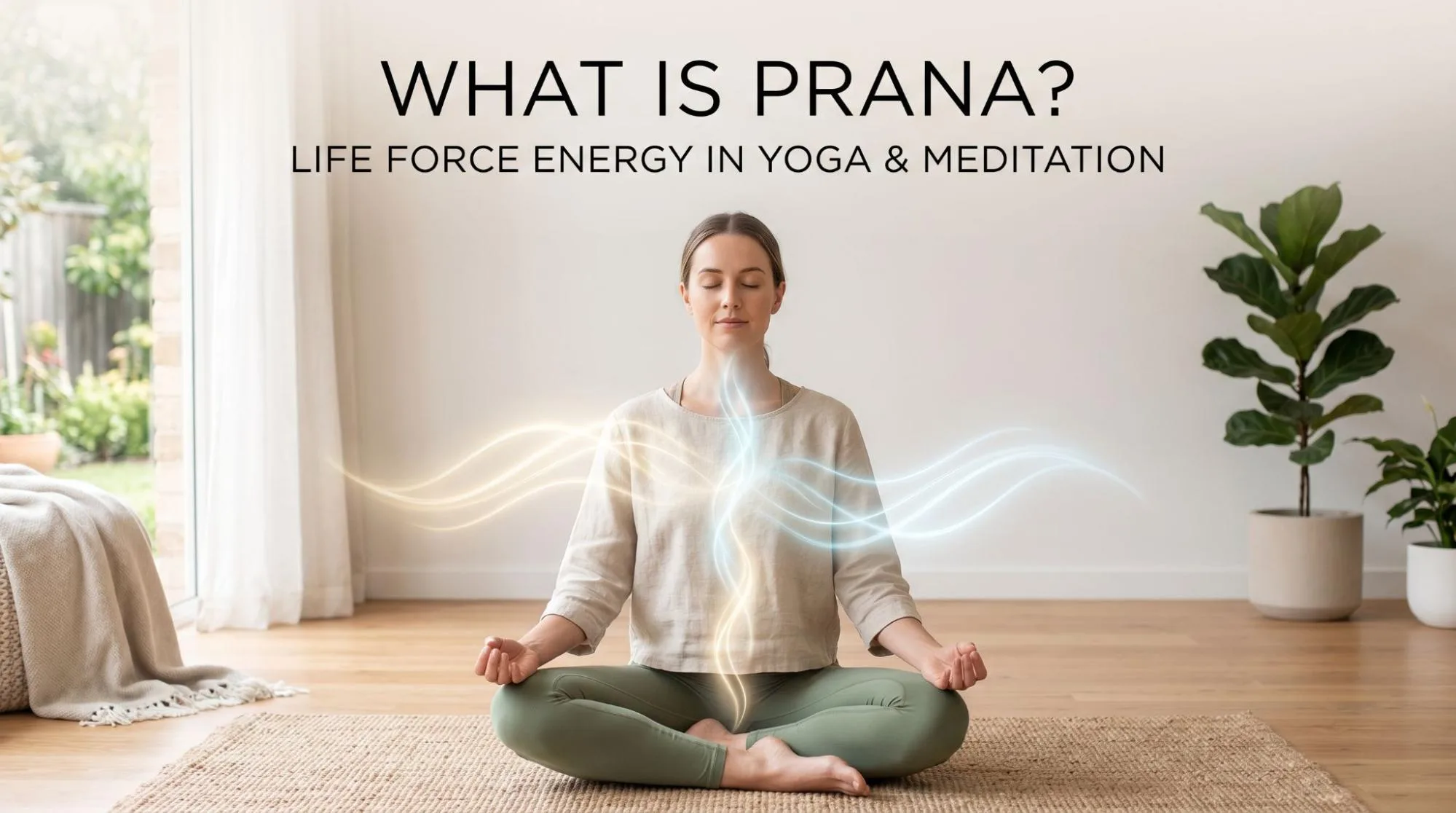
What Is Prana?
Many beginners often ask, “what is prana in yoga and meditation?” Simply put, it is the vital energy that keeps the body alive and the mind balanced. Prana is the vital force or life energy present in all living beings. In yoga, it is believed to move through the body and support physical health, mental clarity, emotions, and spiritual awareness.
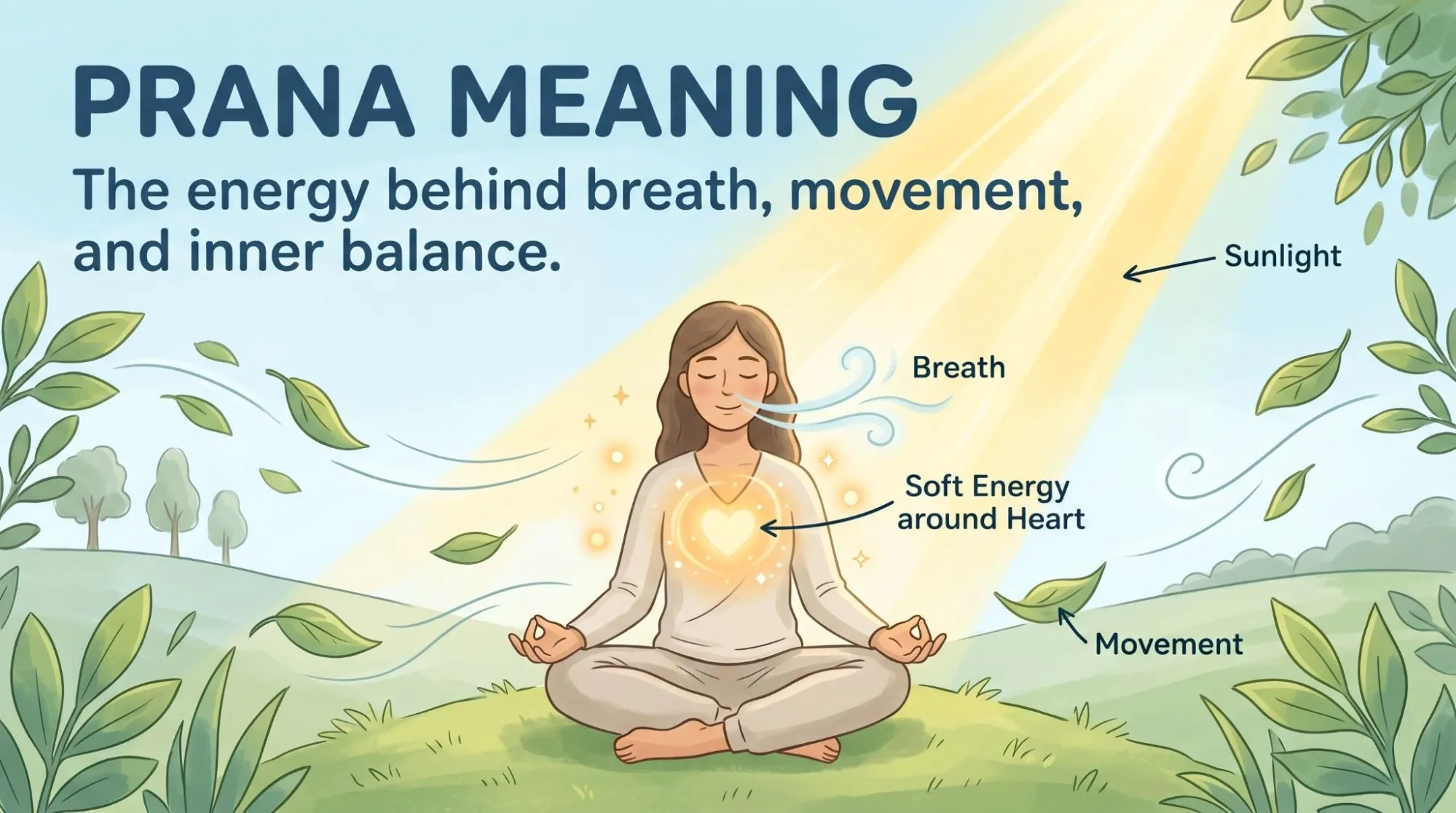
Prana is not just ordinary breath. Breath is one way prana enters and moves through the body. That is why many yoga practices focus on breathing techniques. When the breath becomes calm and steady, the mind also becomes more peaceful.
Prana Meaning in Simple Words
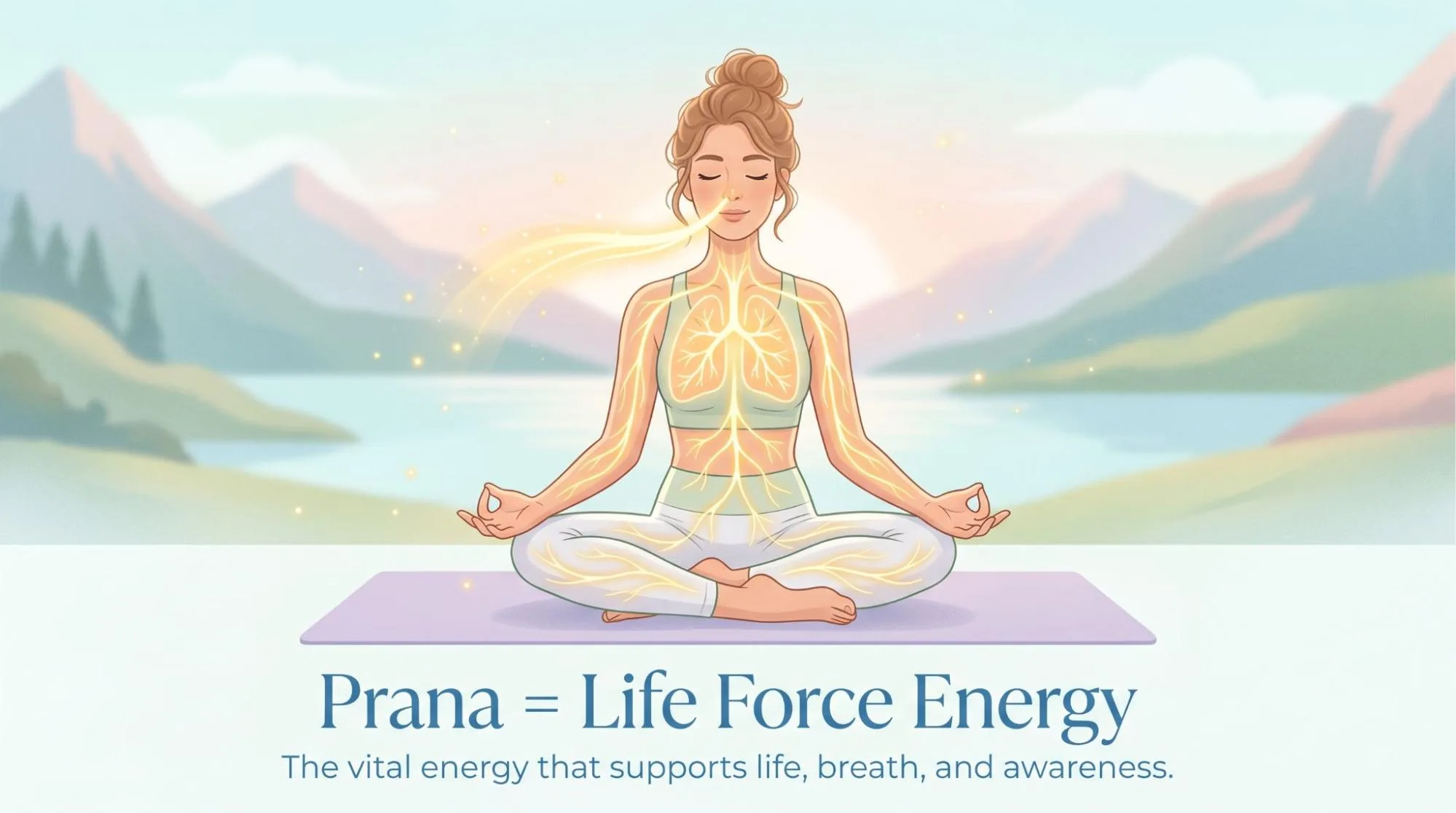
The word “prana” comes from Sanskrit and is often translated as “life force,” “vital energy,” or “breath of life.” Learning what is prana in yoga and meditation helps understand why breath, movement, and energy awareness are connected.
A simple way to understand prana is this:
Prana is the energy that helps you feel alive, awake, focused, and balanced.
When your prana feels strong, you may feel fresh, clear, and emotionally steady. When prana is low or blocked, you may feel tired, heavy, anxious, or disconnected from yourself.
Learn More : Kundalini Yoga Philosophy Explained Simply: 7 Powerful Tips
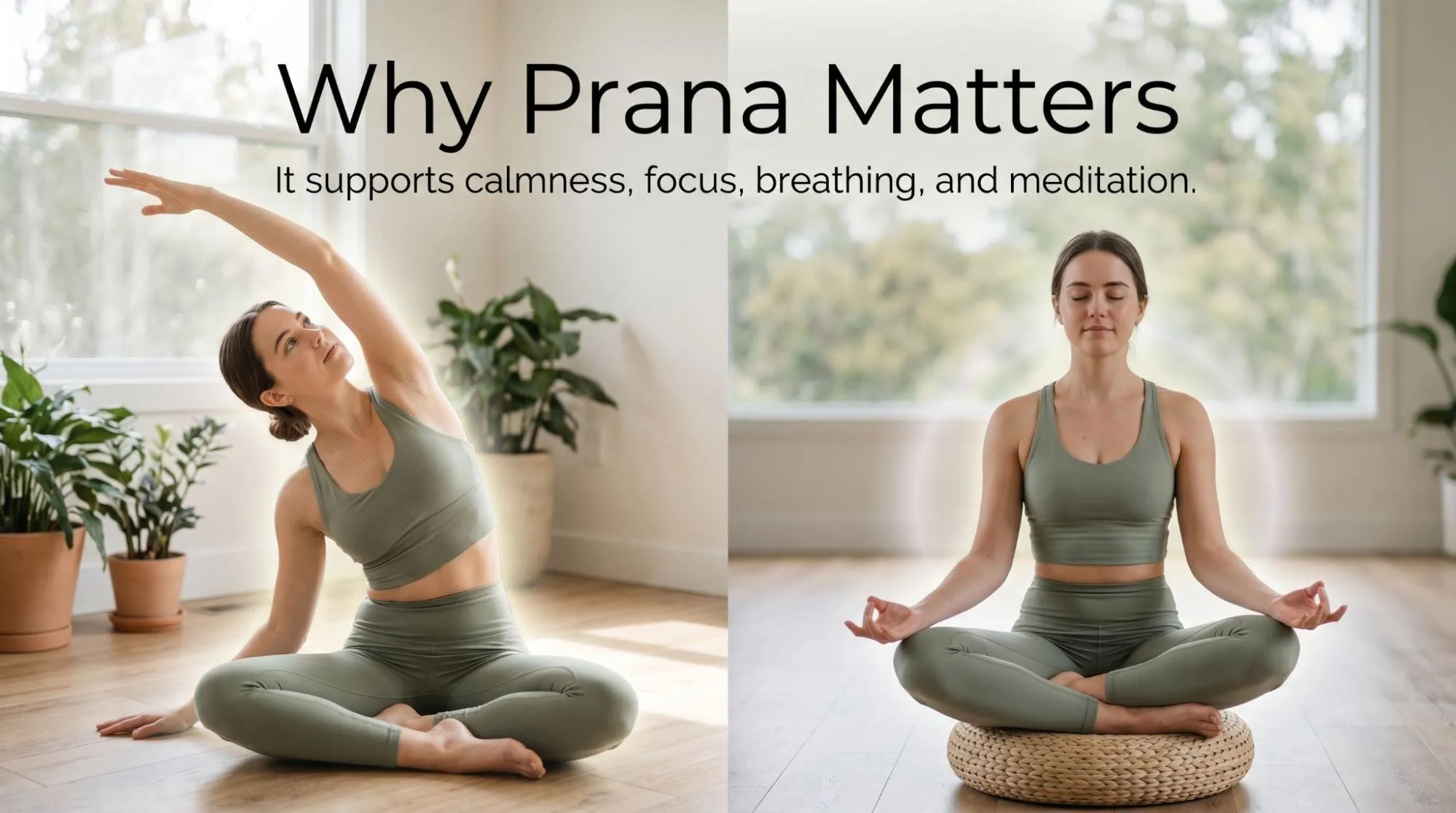
Why Prana Is Important in Yoga and Meditation
Understanding what is prana in yoga and meditation helps you see why breathing techniques and meditation practices are so effective for energy and focus. Prana is important because yoga is not only about stretching the body. Real yoga works with the body and mind together. Knowing what is prana in yoga and meditation shows why proper breathing exercises and yoga practices improve both body and mind.
Through yoga practices, breathing exercises, and meditation, prana becomes more balanced. This can help you:
- Feel calmer
- Improve focus
- Reduce stress
- Support better breathing
- Feel more connected to your body
- Prepare the mind for meditation
Understanding prana also helps explain why slow breathing can change your mood so quickly. A few deep breaths can soften tension, settle the nervous system, and bring prana into a smoother flow.
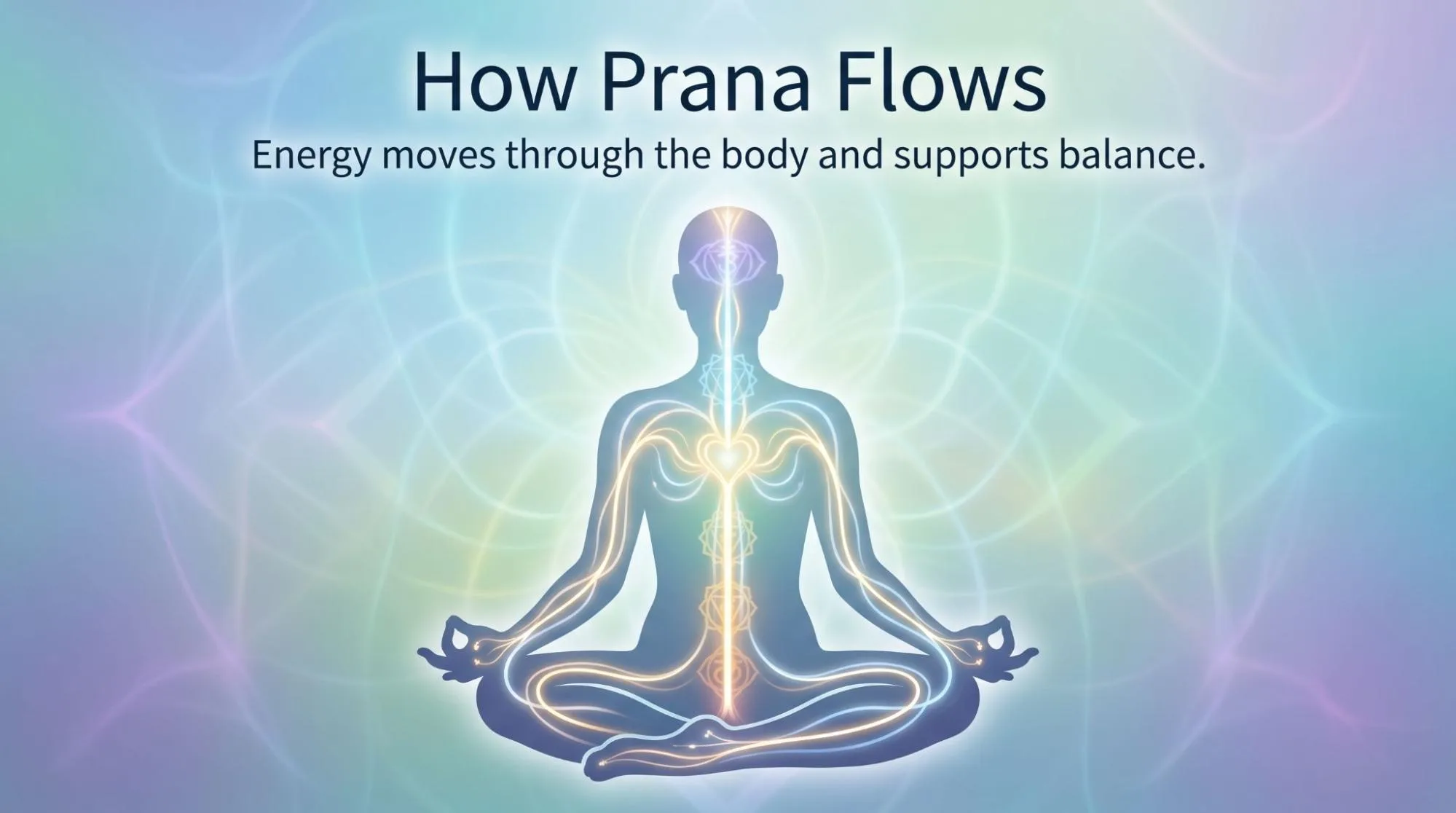
How Prana Moves Through the Body
In yogic tradition, prana moves through subtle pathways in the body. These pathways are not physical nerves or blood vessels, but they are described as energy channels.
When prana flows freely, the body and mind feel balanced. When the flow is disturbed, a person may feel restless, tired, emotionally blocked, or mentally unclear.
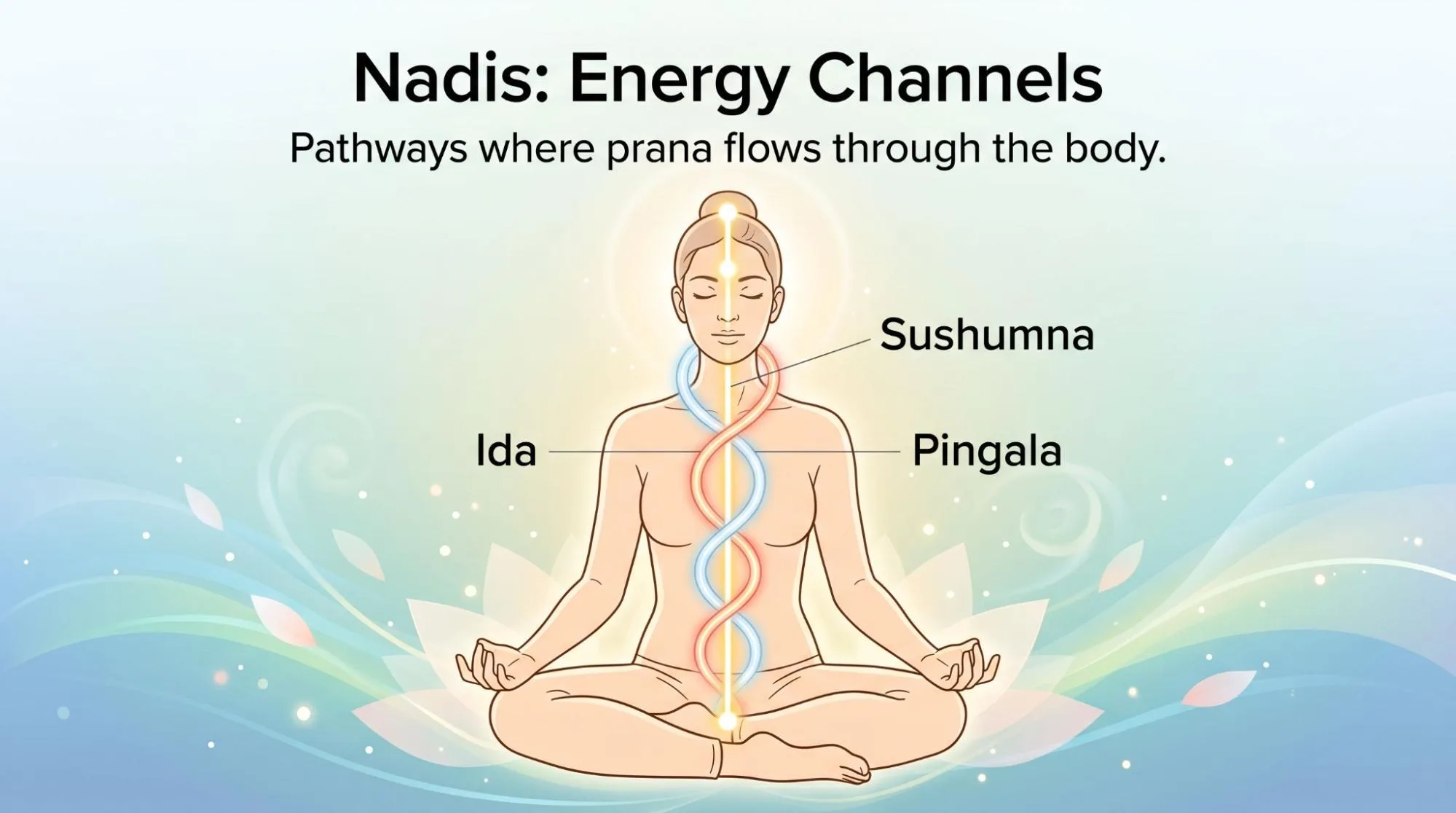
Nadis: The Energy Channels
Nadis are the energy channels through which prana flows. Traditional yoga texts describe thousands of nadis, but three are especially important:
- Ida Nadi: Linked with calmness, cooling energy, and the left side of the body.
- Pingala Nadi: Linked with activity, warmth, and the right side of the body.
- Sushumna Nadi: The central energy channel, often connected with deeper meditation and spiritual awareness.
Practices like alternate nostril breathing are used to balance these energy flows and create a steadier state of mind.
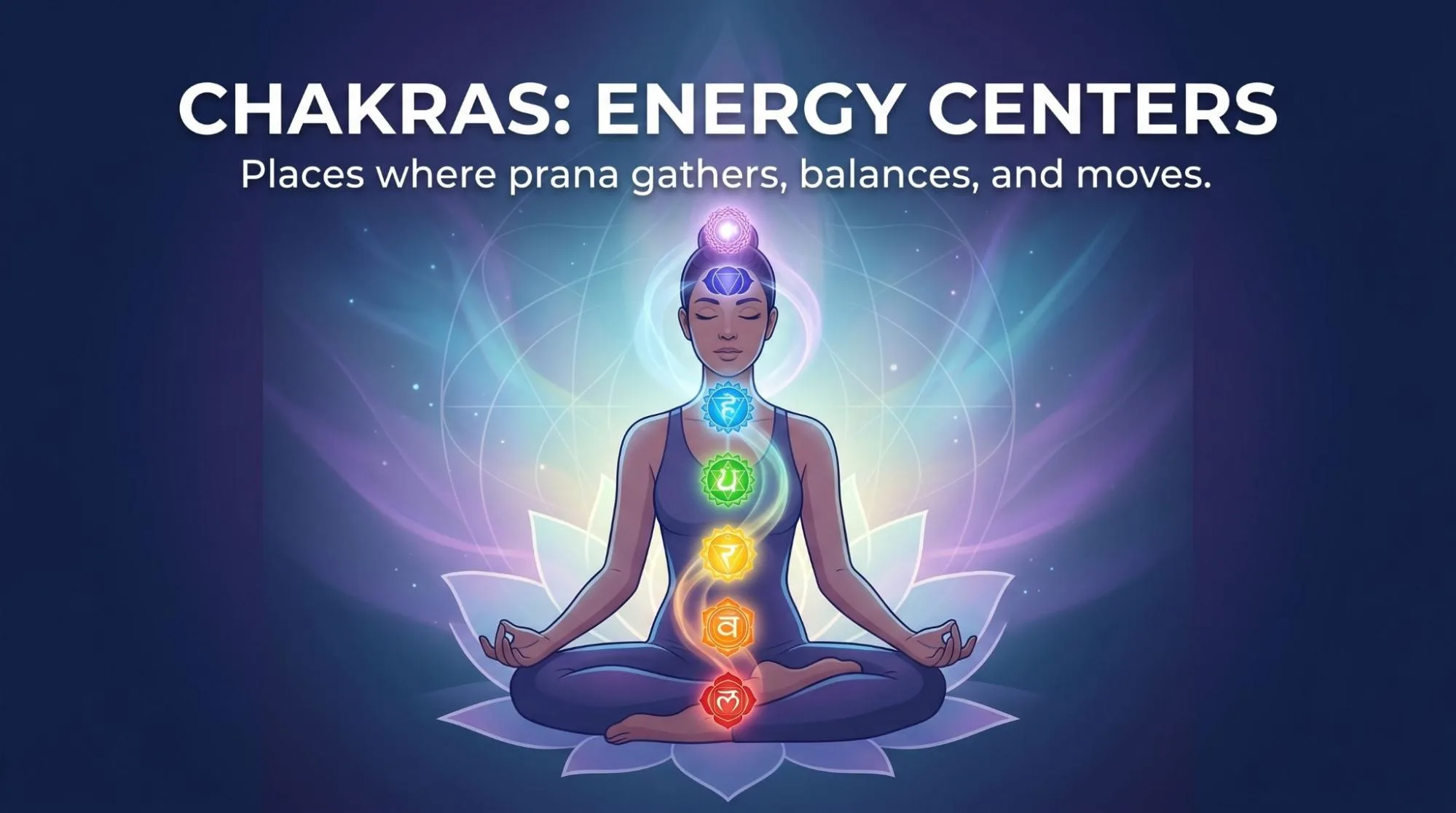
Chakras: The Energy Centres
Chakras are energy centres in the body. They are often described as points where prana collects, moves, and expresses itself.
Each chakra is linked with different qualities, such as stability, creativity, confidence, love, communication, intuition, and inner awareness.
When prana flows smoothly through the chakras, a person may feel more emotionally balanced and mentally clear. When energy feels stuck, yoga and pranayama techniques can help restore balance over time.
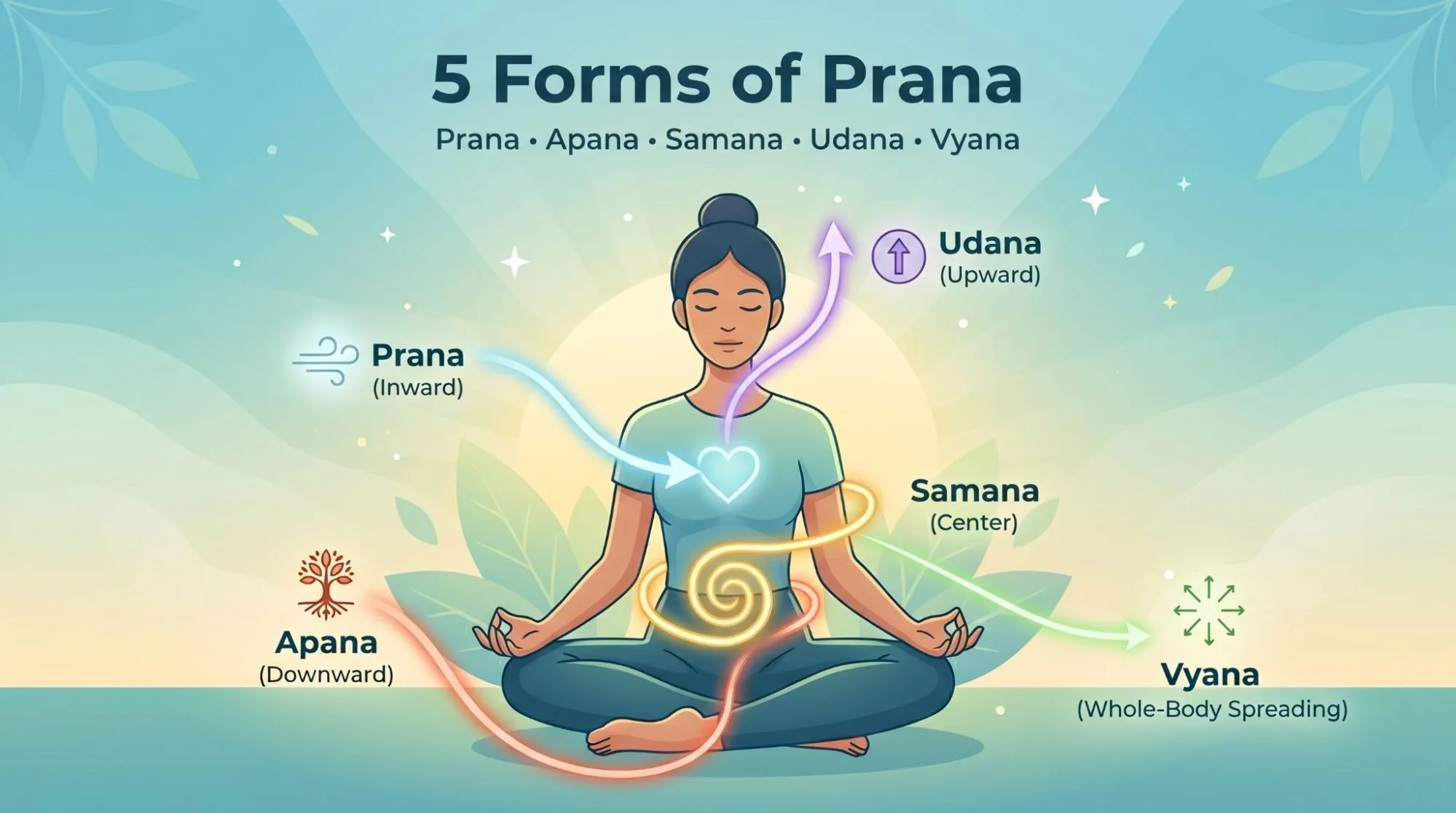
The Five Forms of Prana
In yoga, prana is also explained through five main movements, called the five pranas or five vayus. Each one has a different role in the body.
Prana Vayu
Prana Vayu is the inward-moving energy. It is linked with breathing, receiving energy, and taking in life through the inhale.
It mainly works around the chest, lungs, and heart area. When Prana Vayu is balanced, breathing feels easier, the mind feels alert, and the body feels energized.
Apana Vayu
Apana Vayu is the downward-moving energy. It is connected with elimination, grounding, and releasing what the body no longer needs.
It works mainly in the lower abdomen and pelvic area. Prana and Apana are often discussed together because healthy life depends on both receiving and releasing energy.
Samana Vayu
Samana Vayu is the balancing energy. It is linked with digestion, assimilation, and inner stability.
It works around the navel area. When Samana Vayu is balanced, the body can process food, thoughts, and emotions more smoothly.
Udana Vayu
Udana Vayu is the upward-moving energy. It is connected with speech, expression, growth, and mental clarity.
It works around the throat, head, and upper body. Balanced Udana Vayu may support clear communication, confidence, and a lighter mental state.
Vyana Vayu
Vyana Vayu is the energy that moves throughout the whole body. It supports circulation, movement, coordination, and the connection between different parts of the body.
When Vyana Vayu is balanced, energy feels more evenly spread. The body may feel more open, flexible, and alive.
Learn More : Kriya Cleansing in Yoga
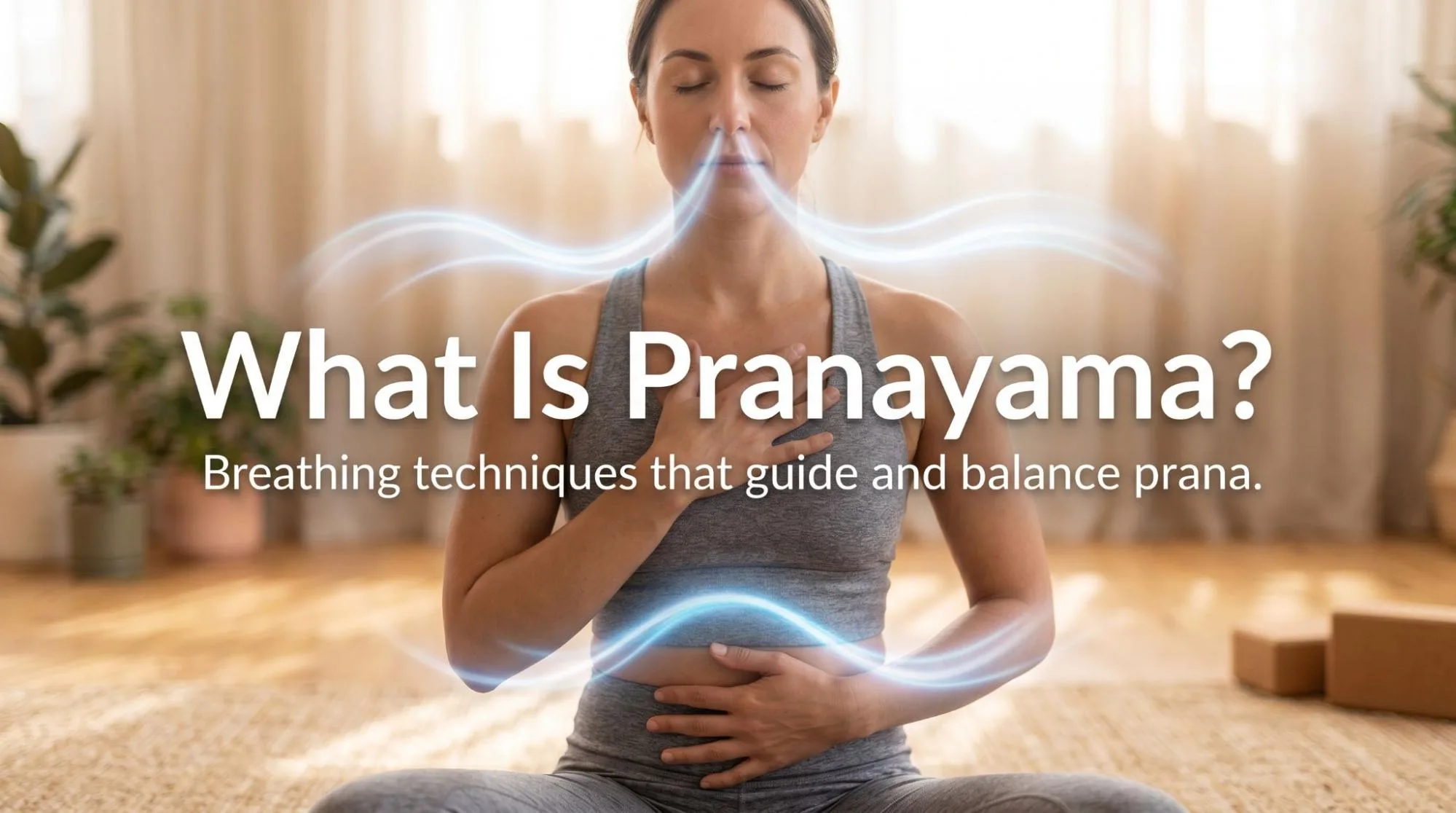
What Is Pranayama?
Pranayama is the practice of working with the breath to guide and balance prana.
The word can be understood as “expansion of life force energy” or “control of prana.” In practical terms, pranayama includes breathing techniques that help regulate the inhale and exhale.
Common pranayama techniques include:
- Deep belly breathing
- Alternate nostril breathing
- Equal breathing
- Ujjayi breathing
- Gentle breath awareness
These breathing exercises are often used before meditation because they help calm the body and mind.
How Pranayama Helps Balance Prana
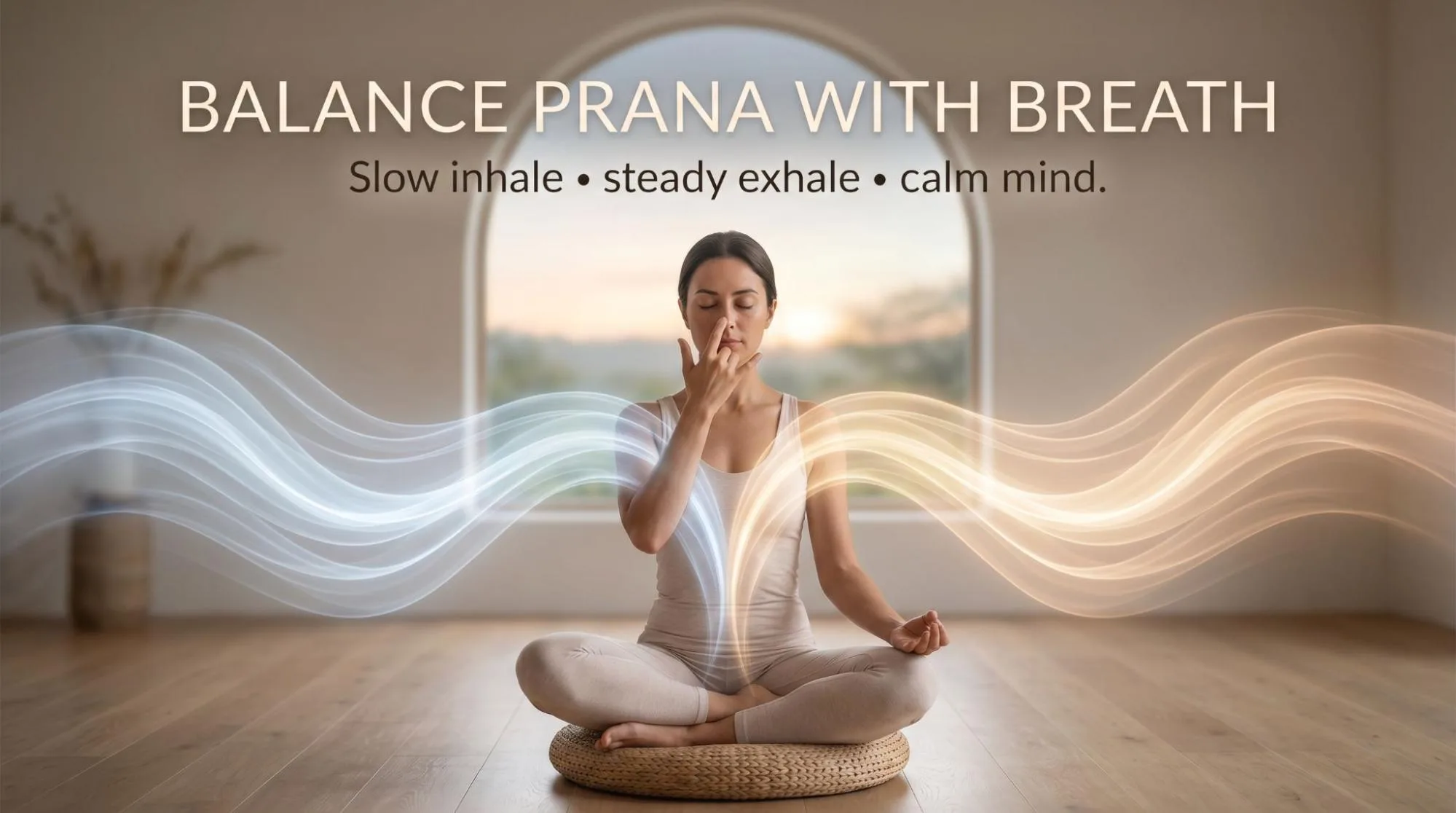
Pranayama helps balance prana by making the breath slower, smoother, and more controlled.
When breathing is shallow or rushed, the mind often feels restless too. When the breath becomes steady, prana flows in a calmer way. This can support relaxation, focus, and emotional balance.
For beginners, even five minutes of gentle breathing can make a noticeable difference. You do not need to force the breath. In fact, soft and natural breathing is usually better than trying too hard.
Role of Prana in Meditation
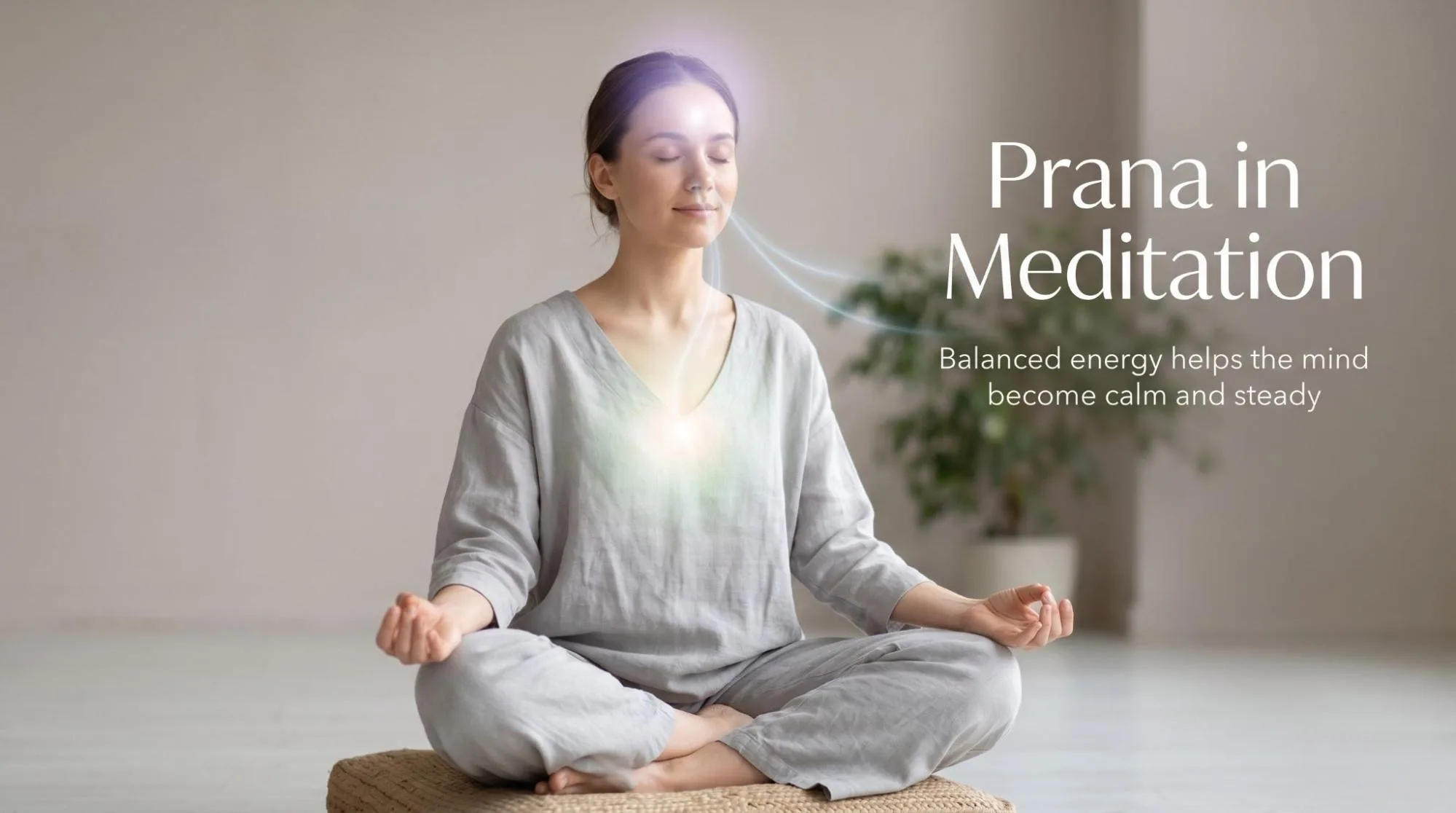
Understanding what is prana in yoga and meditation can help beginners maintain steady focus and calm energy during meditation. Regular practice allows you to connect deeply with what is prana in yoga and meditation, improving the flow of energy through your body and mind. Prana plays a quiet but powerful role in meditation. When prana is disturbed, sitting still can feel difficult. The mind jumps from one thought to another, and the body may feel uncomfortable.
When prana flows smoothly, meditation becomes easier. The breath slows down, the body softens, and attention becomes more stable.
This is why many teachers recommend simple breathing practices before meditation. Bringing prana into balance helps create the right inner condition for stillness.
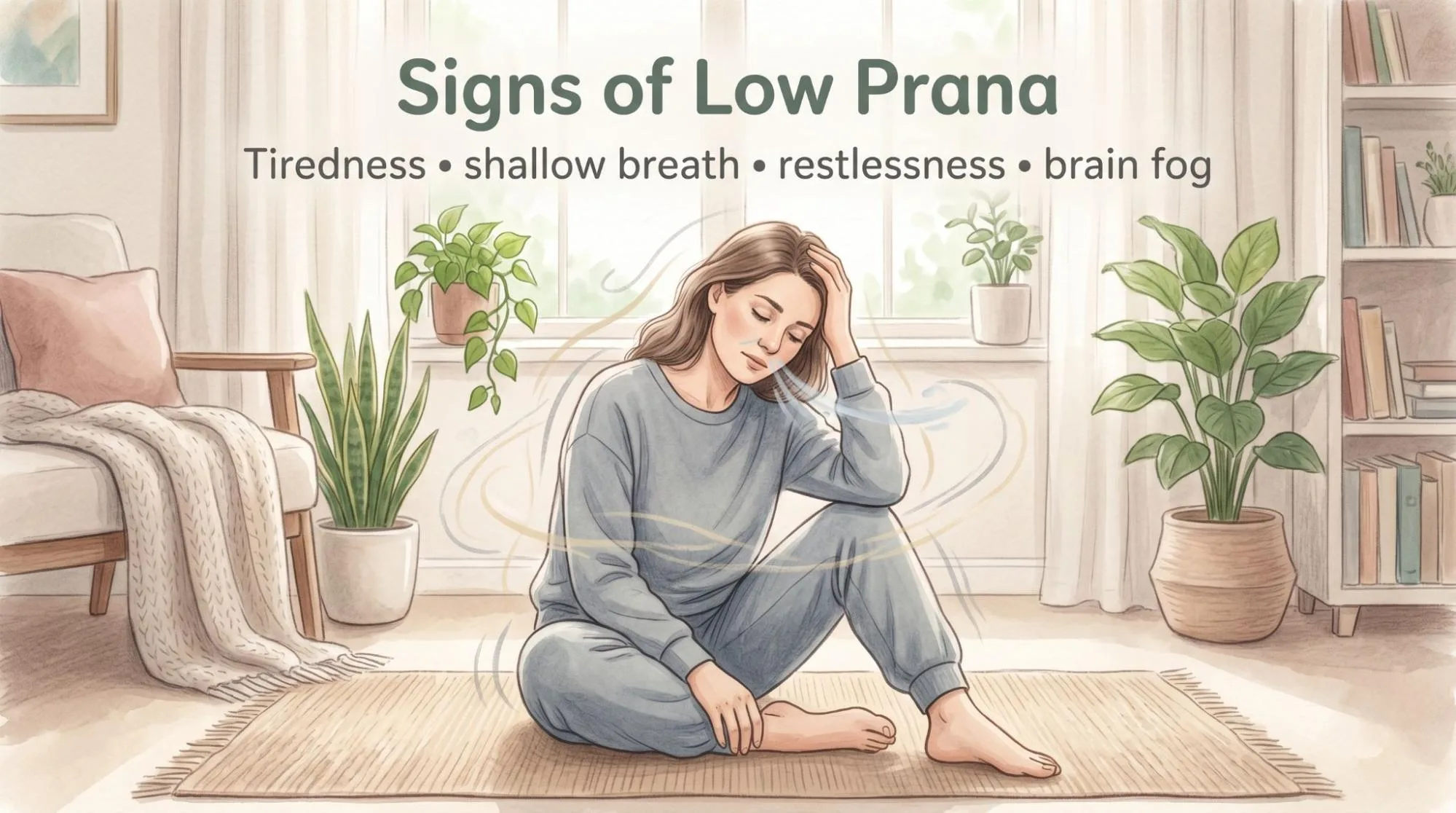
Signs of Blocked or Low Prana
Blocked or low prana can show up in different ways. It may affect the physical body, emotions, or mental state.
Common signs may include:
- Feeling tired without a clear reason
- Shallow breathing
- Low motivation
- Mental fog
- Restlessness
- Feeling emotionally heavy
- Poor focus
- Tension in the body
- Disconnected feeling during yoga or meditation
These signs do not always mean an energy problem only. Physical health, sleep, diet, stress, and lifestyle also matter. But from a yoga perspective, they may suggest that prana needs more balance and care.
How to Improve Prana Flow Naturally
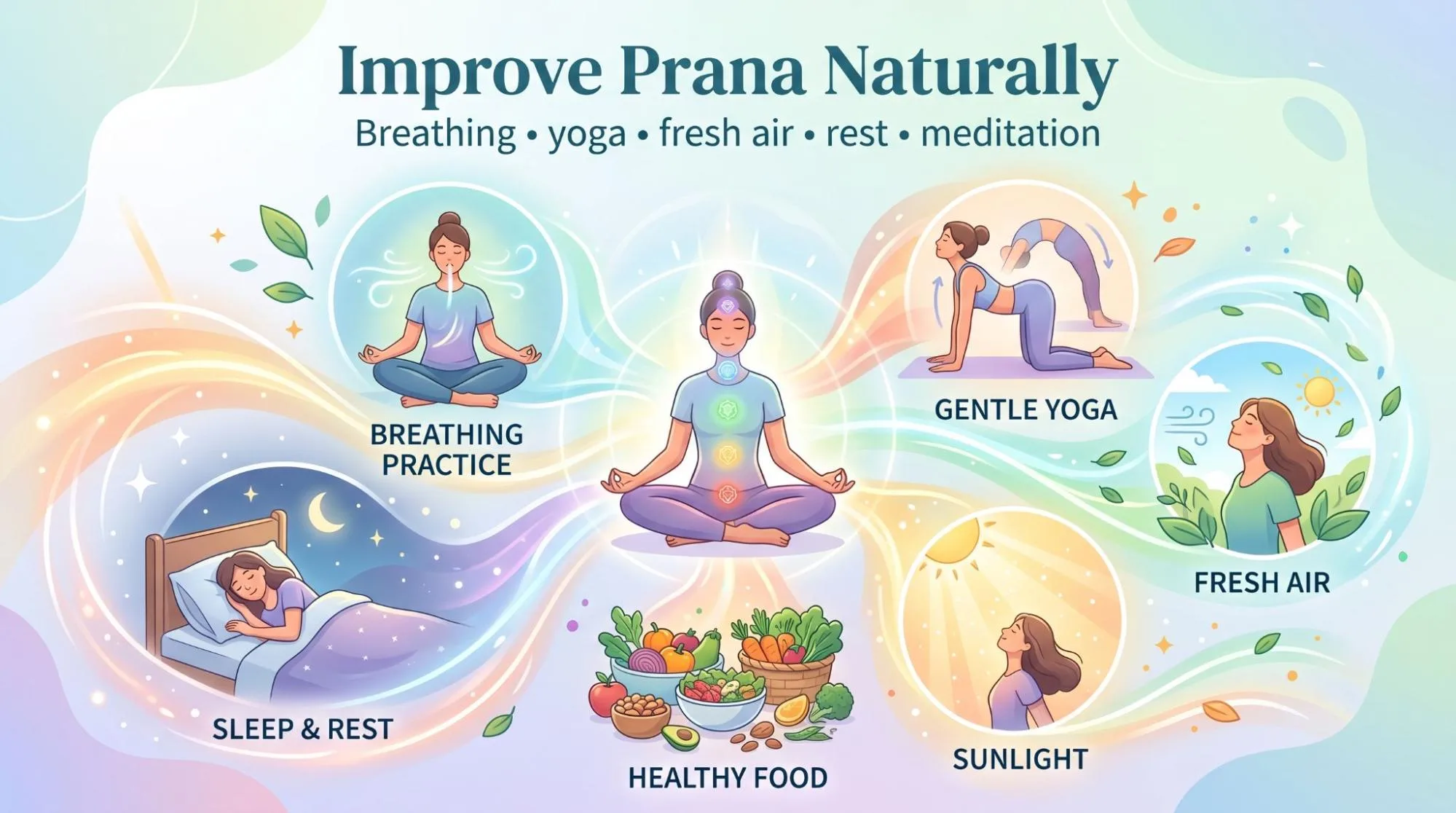
You can improve prana flow through simple daily habits. The goal is not to do everything perfectly. The goal is to create more space, breath, and awareness in your life.
Practice Conscious Breathing
Spend a few minutes each day noticing your inhale and exhale. Let the breath become slow and natural. This is one of the simplest ways of bringing prana into balance.
Try Alternate Nostril Breathing
Alternate nostril breathing is a gentle pranayama practice used to balance energy flows. It may help calm the mind and prepare the body for meditation.
Move Your Body
Simple yoga practices, stretching, walking, and gentle movement can help prana flows become more active and open.
Spend Time in Fresh Air
Fresh air, sunlight, and nature can make the body feel more alive. Even a short walk outside can refresh your energy.
Eat Light and Nourishing Food
Food also affects prana. Fresh, balanced, and natural foods are traditionally considered more supportive for energy than heavy or overly processed meals.
Rest Properly
Sleep is one of the most natural ways to restore prana. If the body is always tired, energy cannot stay balanced for long.
Meditate Regularly
Meditation helps you notice how energy moves inside you. Over time, it can make the mind calmer and the body more sensitive to subtle changes.
Benefits of Balanced Prana
Balanced prana can support both body and mind. Many people experience it as a feeling of calm strength — not excitement, but steady energy.
Possible benefits include:
- Better focus
- Calmer emotions
- More natural breathing
- Improved body awareness
- Greater relaxation
- Better meditation experience
- More balanced energy during the day
- Stronger connection between body and mind
The manifestation of prana is not always dramatic. Sometimes it is simply feeling clear, peaceful, and present.
FAQs About Prana in Yoga and Meditation
What is prana in yoga and meditation?
Prana is the life force energy that supports the body, mind, breath, and inner awareness. In yoga and meditation, prana is balanced through breathing, movement, and mindful practice.
Is prana the same as breath?
Prana is not exactly the same as breath. Breath is one main way prana moves and becomes noticeable in the body.
What are pranas in yoga?
The pranas in yoga usually refer to the five vayus: Prana Vayu, Apana Vayu, Samana Vayu, Udana Vayu, and Vyana Vayu.
What is the difference between prana and apana?
Prana is mainly inward-moving energy connected with receiving and breathing in. Apana is downward-moving energy connected with release, grounding, and elimination.
How can I feel prana?
You may feel prana through warmth, calmness, tingling, lightness, steady breathing, or a sense of inner balance during yoga, pranayama, or meditation.
Which breathing technique is good for balancing prana?
Alternate nostril breathing is commonly used to balance prana. Deep belly breathing and equal breathing are also helpful for beginners.
Can low prana affect the mind?
Yes, low or blocked prana may make the mind feel dull, restless, anxious, or unfocused. Lifestyle factors can also play a role.
Does pranayama improve physical health?
Pranayama may support relaxation, better breathing habits, and stress management. It should be practiced gently, especially by beginners.
How long should beginners practice pranayama?
Beginners can start with 3 to 5 minutes daily. It is better to practice gently and regularly than to force long sessions.
Can meditation increase prana?
Meditation can help balance and conserve prana by calming the mind, relaxing the body, and reducing unnecessary mental tension.
Learn More : Pratyahara Yoga Meaning and Practice: A Simple Guide for Beginners
Final Thoughts
Understanding prana gives yoga and meditation a deeper meaning. It reminds us that practice is not only about poses, flexibility, or sitting quietly. It is about learning how breath, energy, body, and mind work together. Daily practice teaches us what is prana in yoga and meditation, letting prana flow smoothly and supporting balance in life.
Start simply. Notice your breathing. Move gently. Take quiet moments during the day. Over time, these small practices can help prana flow more freely and make your yoga and meditation feel more natural, steady, and alive. Once you understand what is prana in yoga and meditation, pranayama and meditation become easier to practice with awareness.