Most people walk every day, but very few truly notice it. The feet move, the body follows, and the mind stays busy with worries, plans, memories, and endless inner noise. Walking meditation changes that simple habit into a calming practice. Instead of rushing from one place to another, you slow down, breathe naturally, and bring your attention back to each step. If you are wondering walking meditation how to practice in a simple way, this guide will help you begin without pressure.
If sitting meditation feels difficult, walking meditation can feel more natural. It gives your body gentle movement while helping your mind return to the present moment. This guide explains walking meditation how to practice in a simple, beginner-friendly way, so you can use mindful walking to feel calmer, more focused, and more connected to your body.
What Is Walking Meditation?
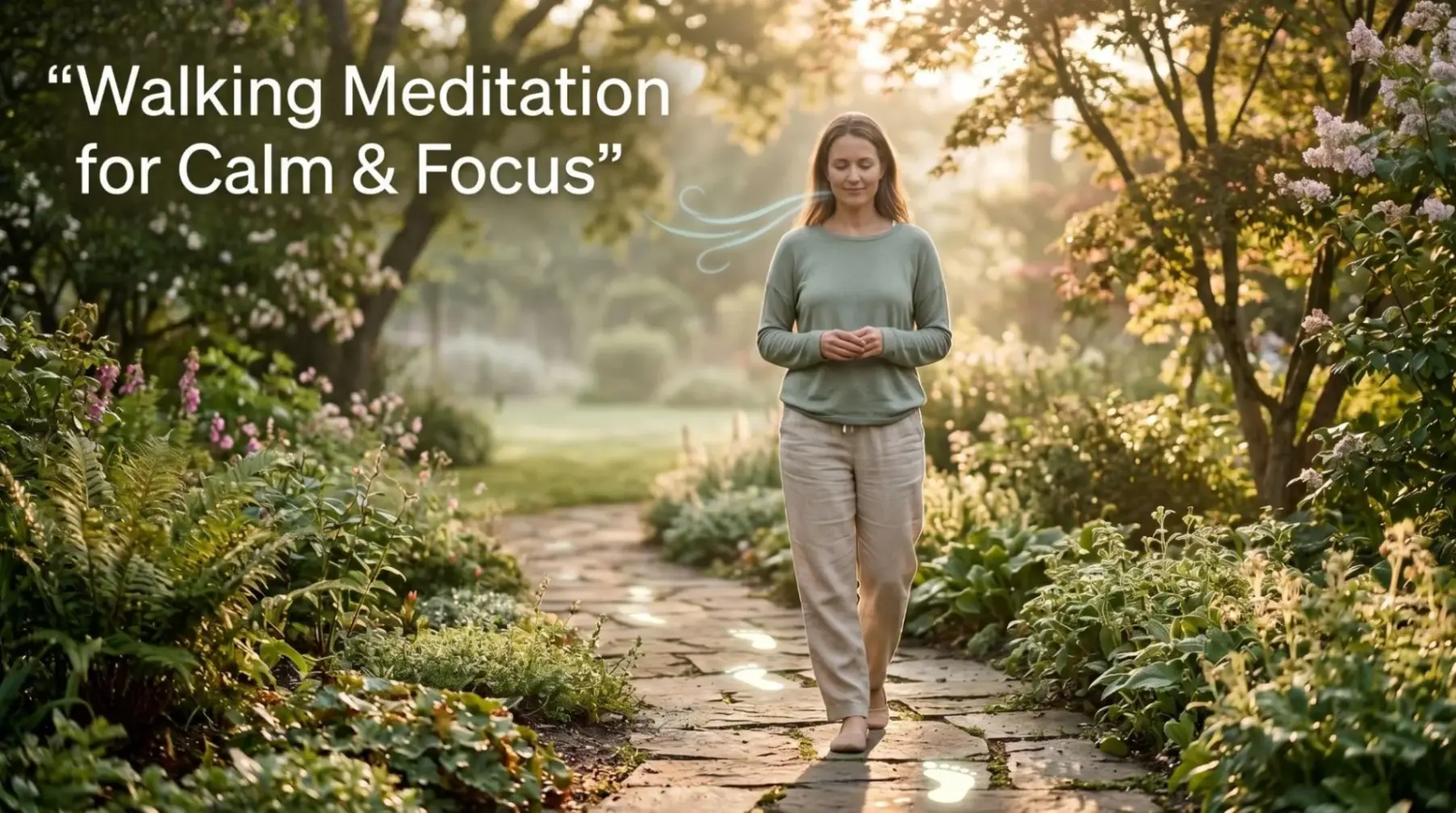
Walking meditation is a simple mindfulness practice where you bring full awareness to the act of walking. Instead of walking on autopilot, you slow down and pay attention to each step, your breathing, your body, and the space around you. Many beginners search for walking meditation how to practice because sitting meditation can feel difficult at first.
It is not about reaching a destination or getting exercise in the usual sense. It is more like a quiet walking exercise for the mind. You are bringing your attention back to the present moment, one step at a time.
Many people find walking meditation easier than seated meditation because the body is gently moving. If sitting still feels difficult, mindful walking can feel more natural and less forced.
Learn More : Body Scan Meditation Benefits: A Simple Guide to Relaxing the Mind and Body
Why Walking Meditation Helps Calm the Mind
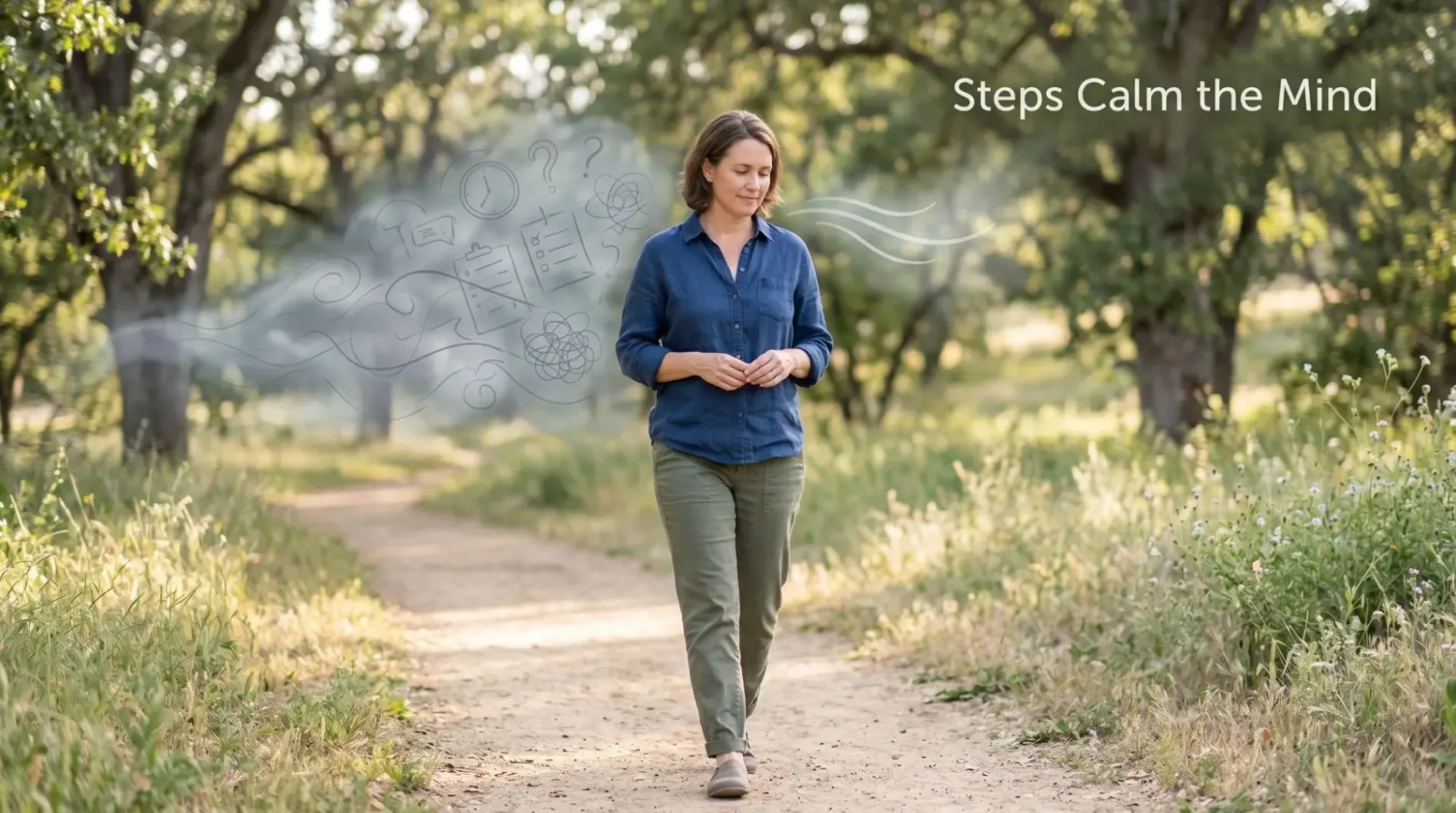
The mind often jumps from one thought to another. You may think about work, family, messages, worries, or things you forgot to do. Walking meditation gives the mind a steady anchor: the movement of your feet. Understanding walking meditation how to practice helps you use each step as a calm anchor for your attention.
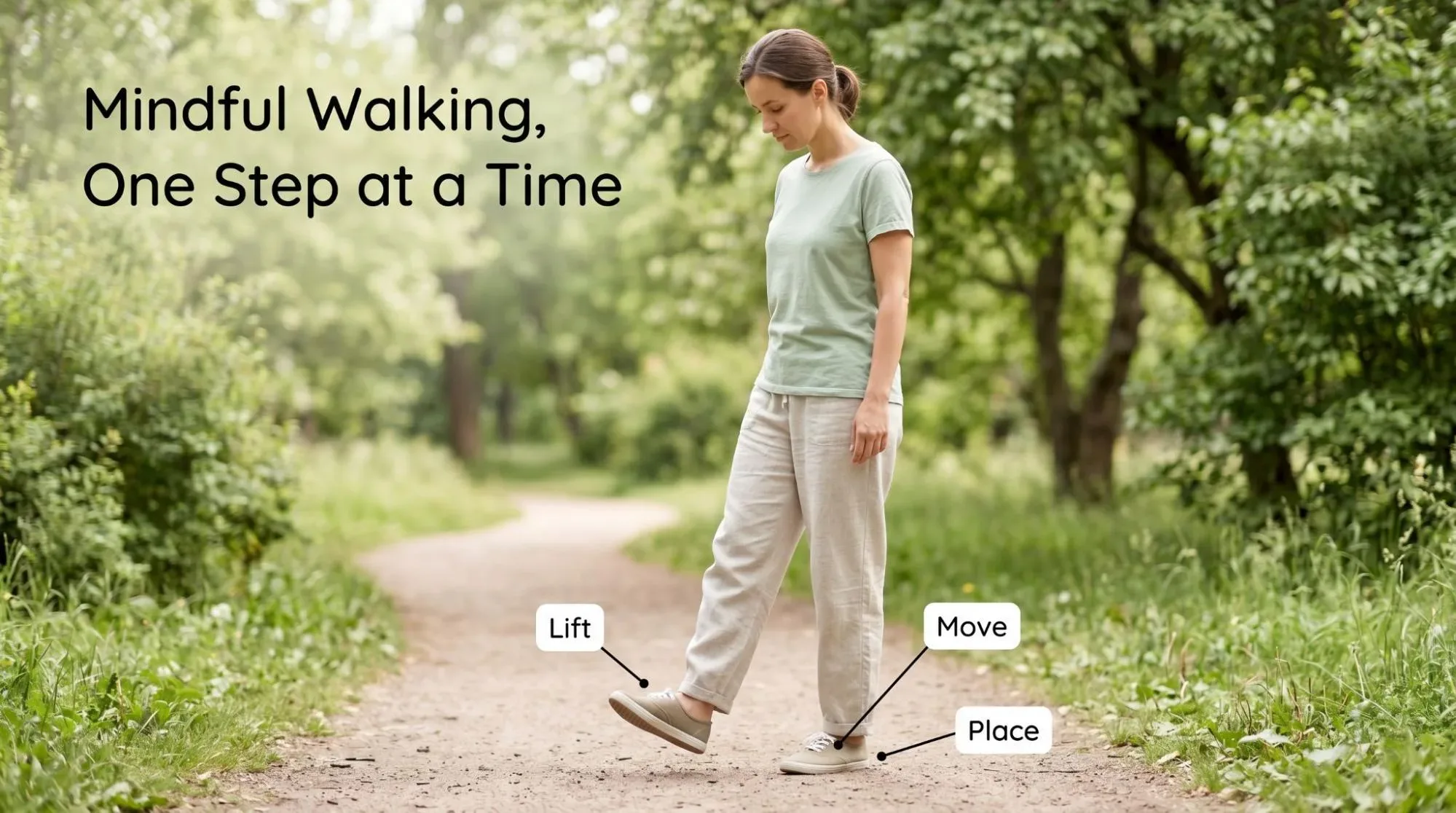
When you pay attention to lifting, moving, and placing each foot, your thoughts usually begin to slow down. You are giving your brain one simple thing to follow.
This does not mean your mind becomes blank. That is not the goal. When the mind wanders, you simply notice it and return to walking. That gentle return is the actual practice.
Walking Meditation Benefits for Daily Life
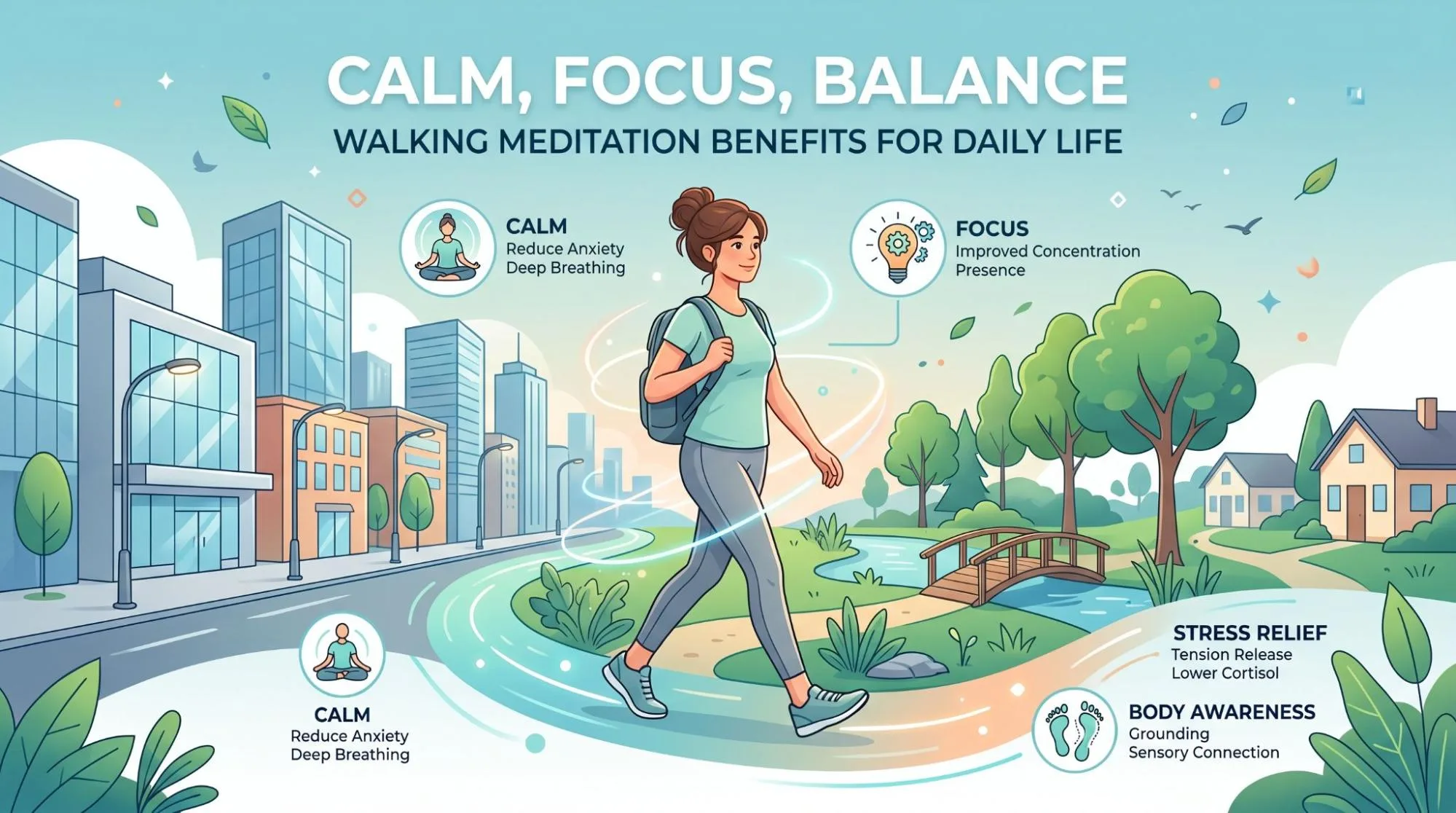
Walking meditation can support daily life in very practical ways. It helps you pause, breathe, and come back to yourself without needing a special room, mat, or long session. Once you learn walking meditation how to practice, you can use mindful walking during stressful or busy moments.
Some common benefits include:
- A calmer nervous system
- Better focus and mental clarity
- Less tension in the body
- More awareness of breathing
- A softer response to stress
- A stronger connection to the present moment
- A simple way to reset during a busy day
It can also help you become more aware of how you move through life. You may start noticing when you rush, hold tension, or walk with your mind somewhere else.
How to Prepare for Walking Meditation
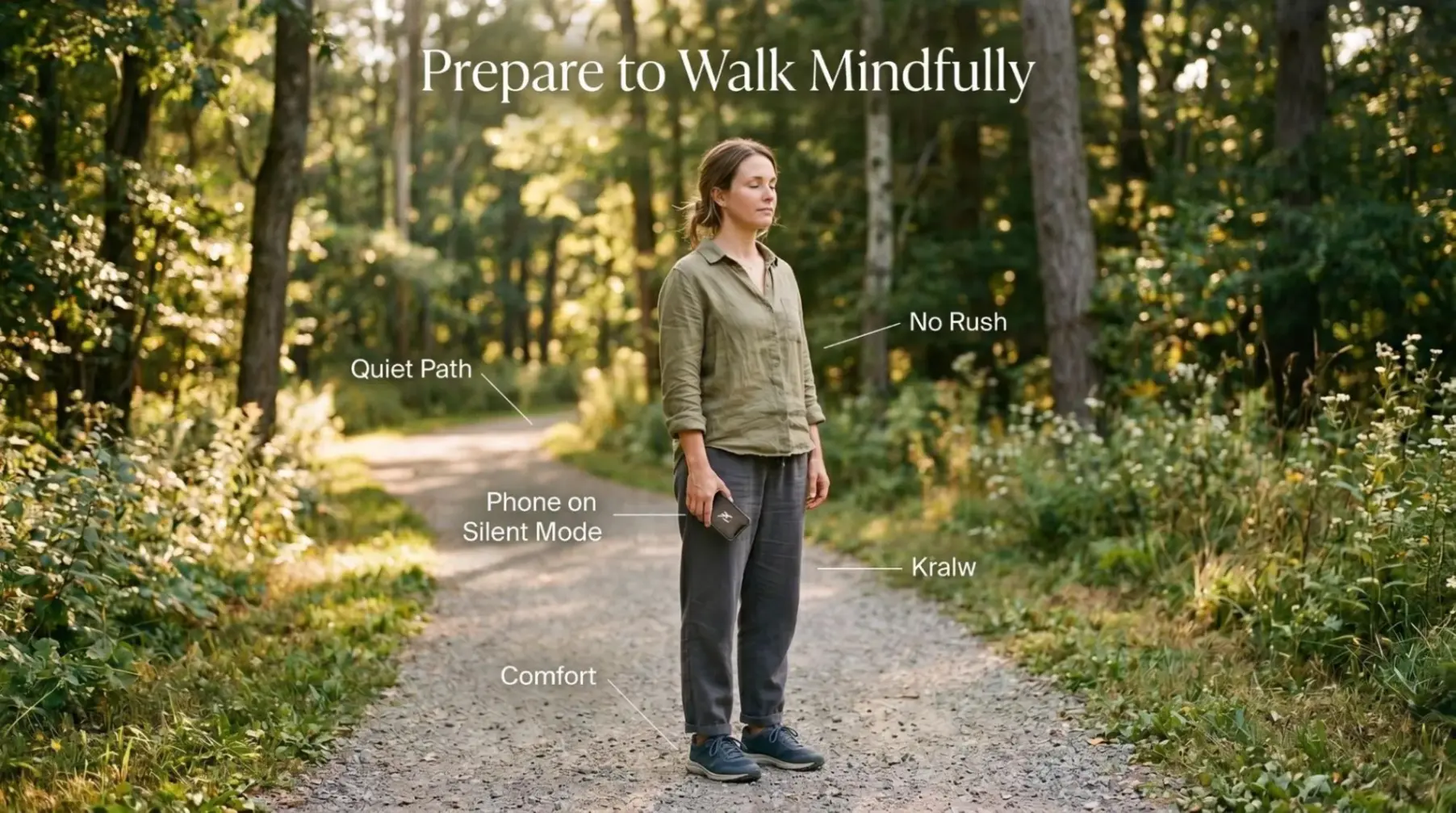
You do not need much preparation. The best setup is simple, quiet, and safe. Choose a place where you can walk slowly without worrying about traffic, noise, or people bumping into you. Before learning walking meditation how to practice, choose a quiet and safe space where you can walk slowly.
Wear comfortable clothes and shoes, or walk barefoot if you are indoors and the floor feels safe. Keep your phone silent if possible. This small step makes the practice feel more intentional.
Before starting, remind yourself that this is not a performance. You are not trying to do it perfectly. You are just practicing awareness while walking freely and gently.
Step-by-Step Walking Meditation Practice
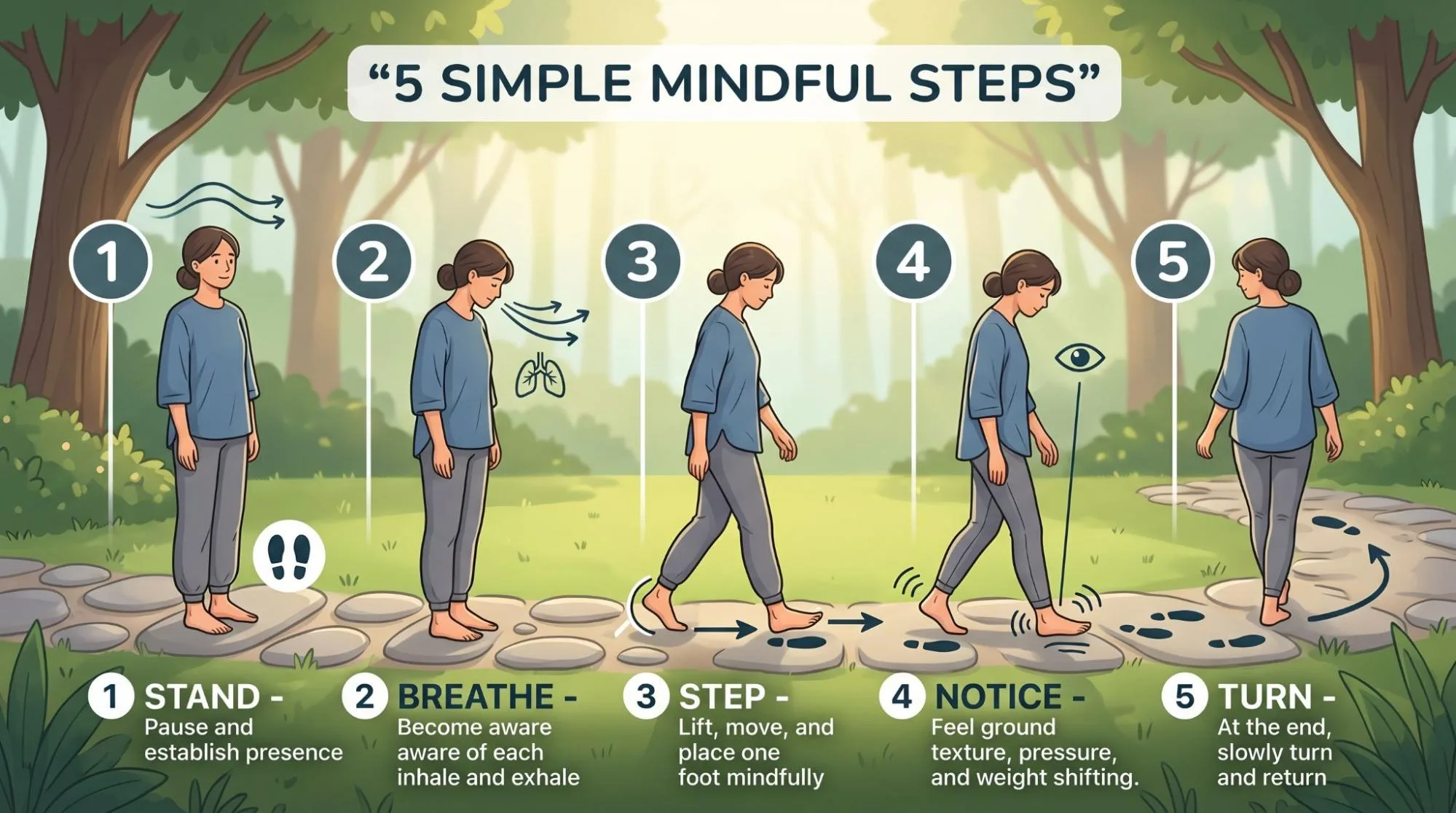
If you are searching for “walking meditation how to practice,” start with a short session of five to ten minutes. That is enough for beginners. The practice becomes easier when the steps are clear and simple. This section explains walking meditation how to practice through simple steps anyone can follow.
Choose a Quiet Path
Pick a short path where you can walk back and forth. It can be a hallway, garden path, balcony, room, or quiet outdoor space. A path of 10 to 20 steps is enough.
The place does not have to be beautiful or silent. It only needs to feel safe enough for you to slow down and pay attention.
Stand and Settle Your Body
Stand still for a moment before walking. Feel your feet touching the ground. Let your shoulders drop naturally and relax your jaw.
Take two or three slow breaths. Notice the weight of your body. This short pause tells your mind that you are shifting from normal walking to walking meditation.
Set a Soft Gaze
Keep your eyes open, but let your gaze rest softly a few feet ahead. You do not need to stare at the ground or look around too much.
A soft gaze helps you stay aware without becoming tense. It also keeps the practice grounded and safe, especially if you are outdoors.
Walk Slowly and Deliberately
Begin walking at a slower pace than usual. Feel one foot lift, move forward, touch the ground, and receive your weight.
You can silently label the movement if it helps: “lifting, moving, placing.” Keep it simple. The point is not to analyze the step, but to feel it.
Match Breathing With Steps
Let your breath stay natural at first. After a minute or two, you may gently match your breathing with your steps.
For example, breathe in for two or three steps, then breathe out for two or three steps. Do not force a pattern. If it feels uncomfortable, return to natural breathing.
Turn Mindfully
When you reach the end of your path, stop for a brief moment. Notice your body standing still. Then turn slowly and begin walking in the other direction.
The turn is part of the meditation too. Try not to rush it. Treat every movement as something worth noticing.
Learn More : Meditation for Sleep and Anxiety: Simple Techniques to Calm Your Mind at Night
How to Handle Distractions During Walking Meditation
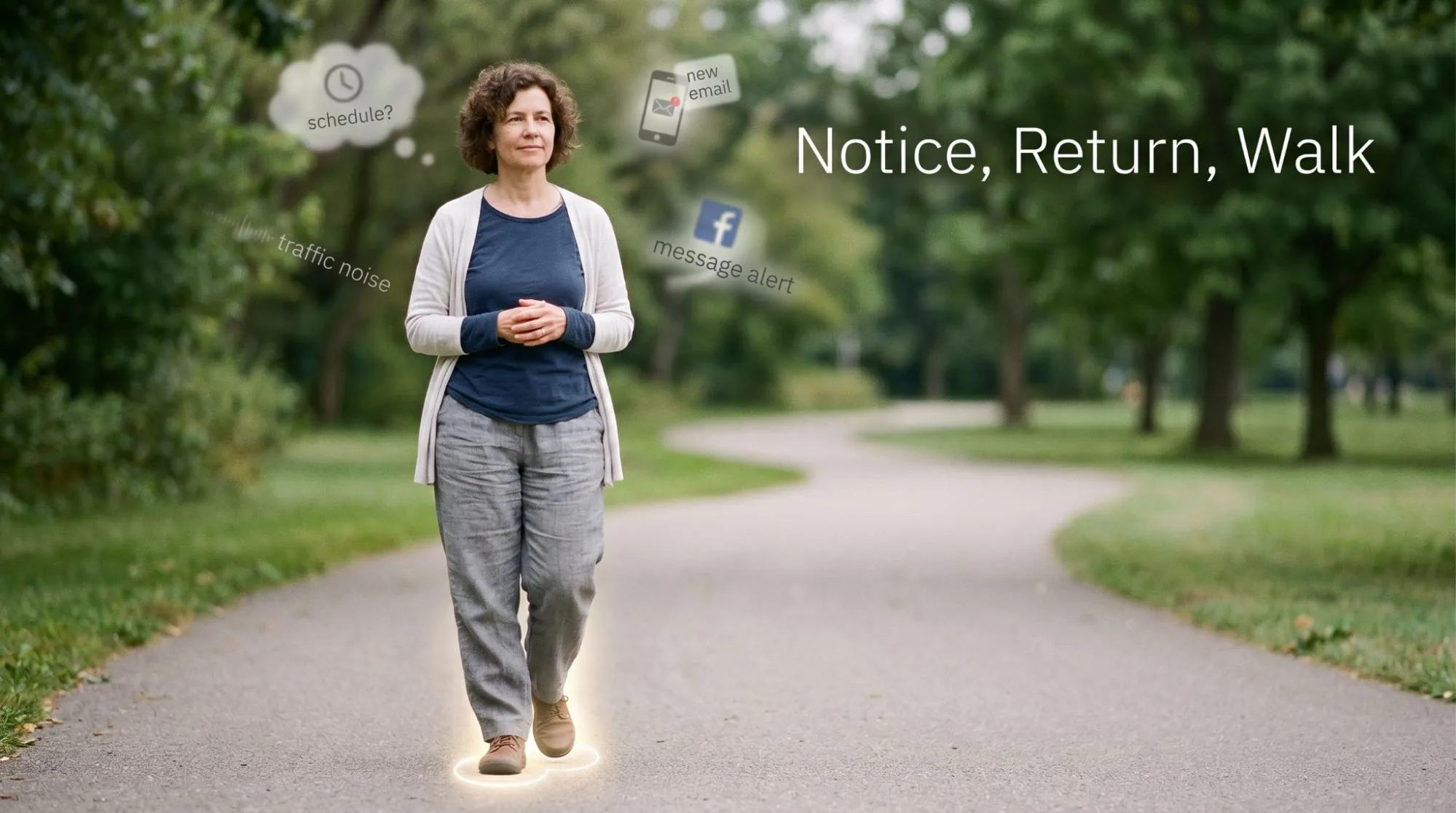
Distractions are normal. Sounds, thoughts, body sensations, and emotions will come and go. You do not need to fight them.
When you notice your mind has wandered, gently name what happened. You might say silently, “thinking,” “planning,” or “hearing.” Then bring attention back to your feet.
The key is kindness. Do not criticize yourself for getting distracted. Every time you return to the step, you are strengthening mindfulness.
Walking Meditation for Anxiety
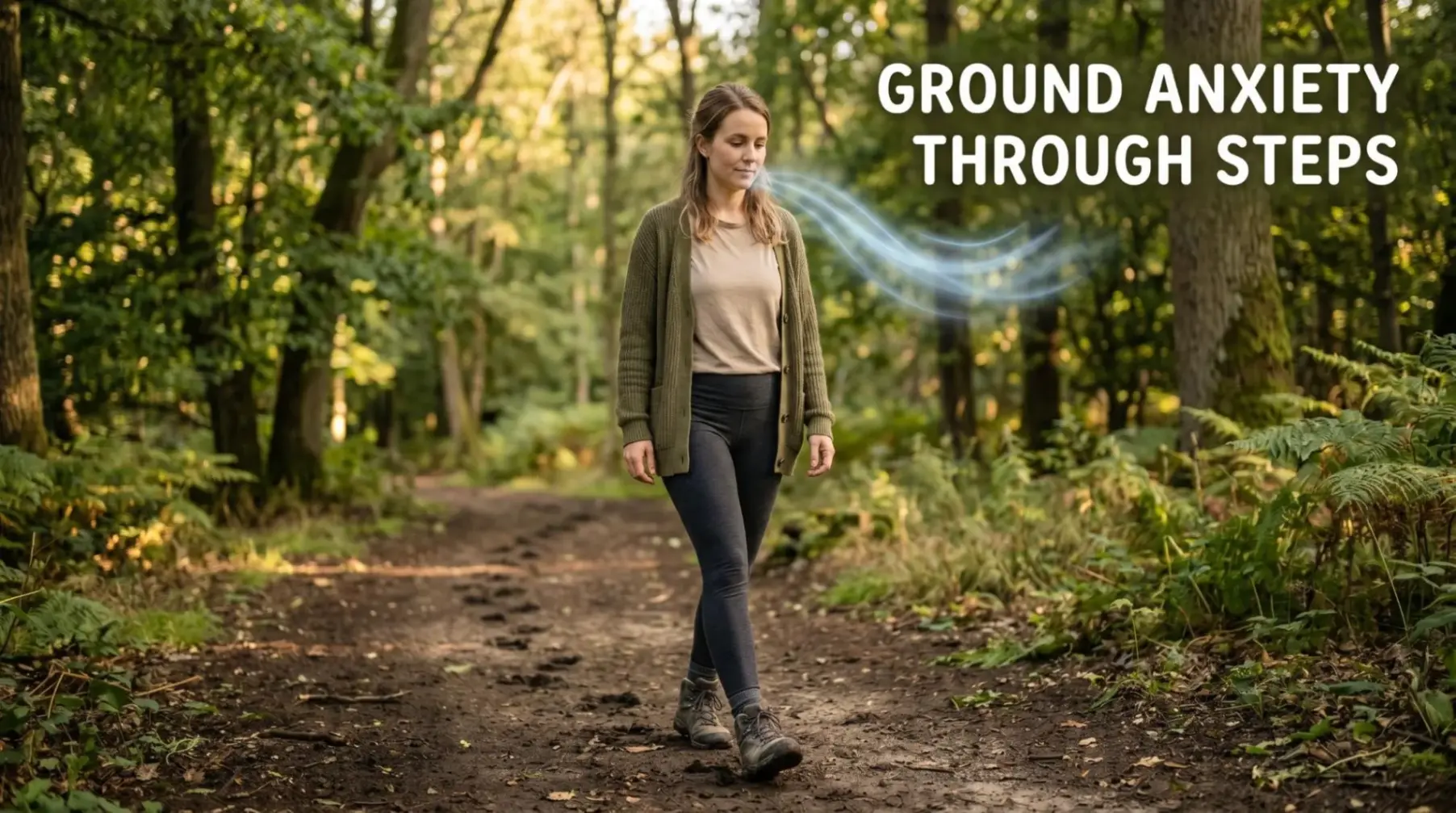
Walking meditation can be helpful when anxiety makes sitting still feel hard. The movement gives restless energy somewhere to go, while the awareness keeps you grounded. For anxiety, walking meditation how to practice means slowing your pace and feeling your feet touch the ground.
If you feel anxious, slow your pace and pay attention to the feeling of your feet meeting the ground. This can remind the body that you are here, now, and safe enough in this moment.
Try this simple practice:
- Walk slowly for five minutes
- Notice each foot touching the floor
- Breathe out a little longer than you breathe in
- When anxious thoughts appear, simply notice them
- Return to the feeling of walking
This is not a cure for serious anxiety, but it can be a useful calming tool. If anxiety feels overwhelming or constant, professional support is always a wise step.
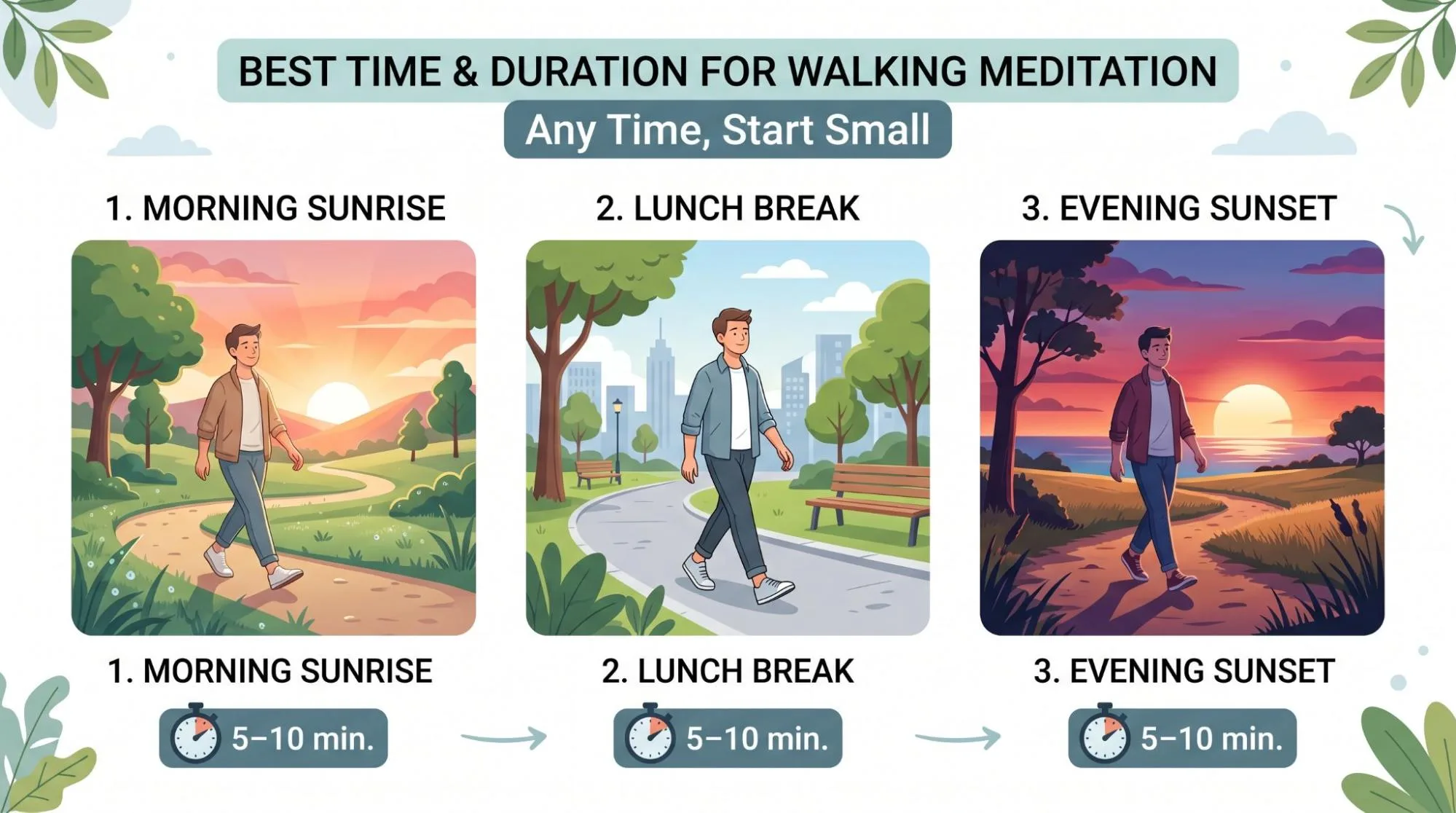
Best Time and Duration for Walking Meditation
The best time is the time you can actually do it. Morning works well for setting a calm tone. Evening can help you release the pressure of the day.
Beginners can start with five minutes. Once it feels comfortable, increase to ten or fifteen minutes. Longer sessions are fine, but they are not required.
You can also practice for one minute between tasks. A short mindful walk from your desk to the kitchen can still help you reset.
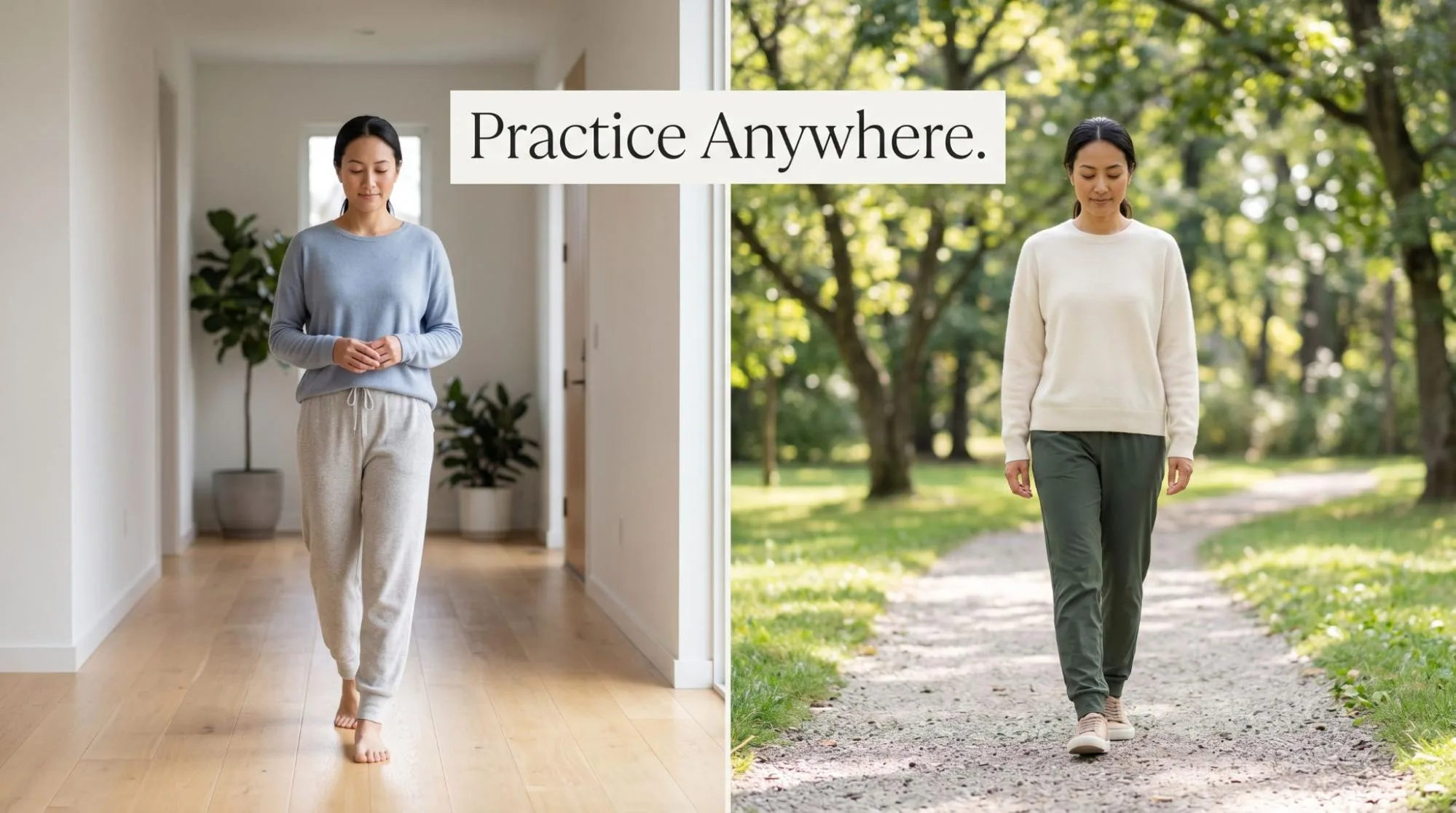
Indoor and Outdoor Walking Meditation
Indoor walking meditation is useful when the weather is bad or you want privacy. A room, hallway, or quiet office corner can work well.
Outdoor walking meditation brings in natural sounds, fresh air, and changing light. A garden, park, or quiet street can make mindful walking feel more open and spacious.
Both options are good. Indoor practice may feel easier for beginners because there are fewer distractions. Outdoor practice can feel more refreshing once you are comfortable.
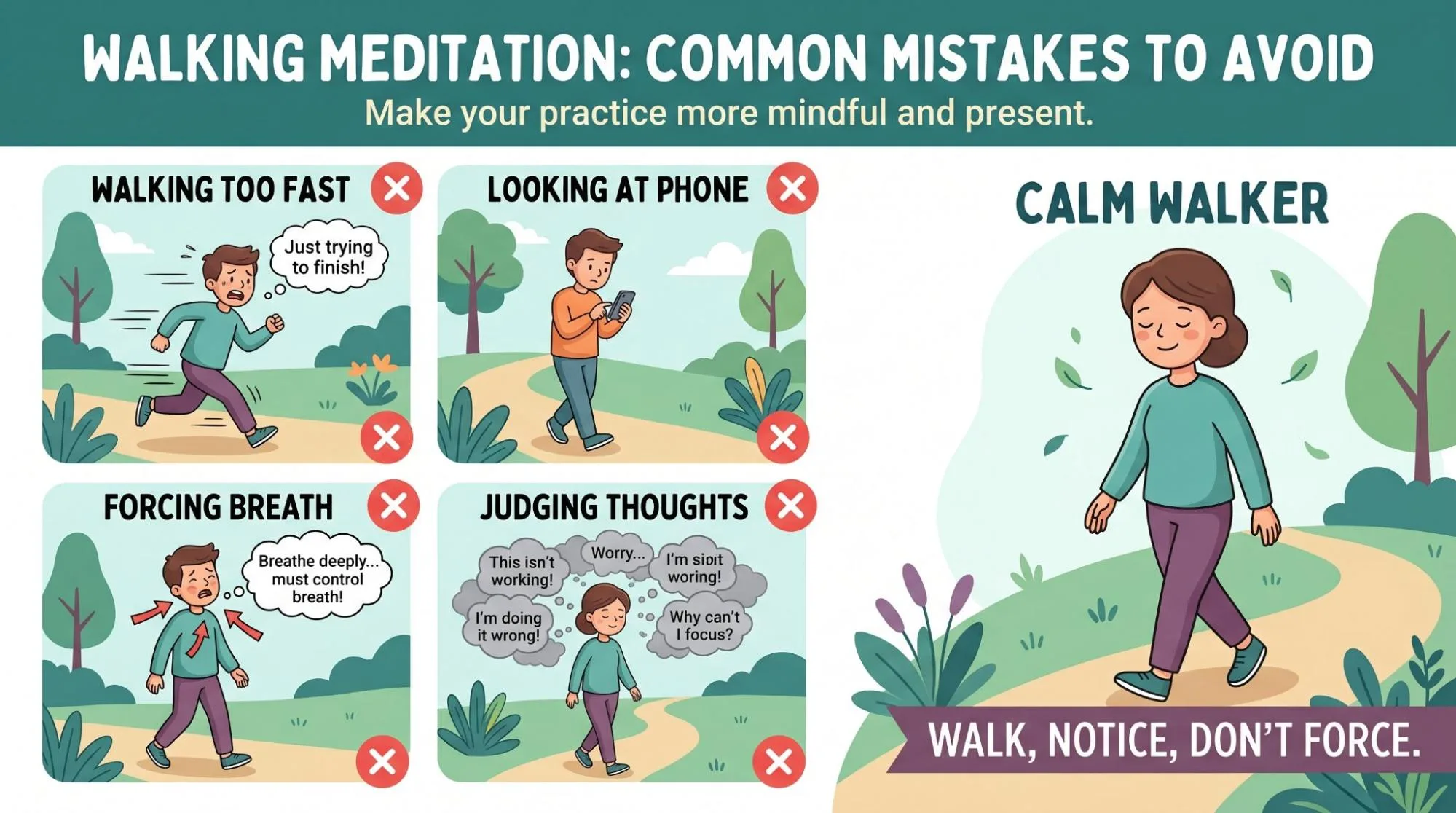
Common Mistakes to Avoid
One common mistake is trying too hard. Walking meditation should not feel stiff or serious. You can walk slowly and still stay relaxed.
Another mistake is expecting instant calm. Some days your mind will feel busy. That does not mean the practice failed.
Avoid these habits:
- Walking too fast
- Looking at your phone
- Forcing your breath
- Judging every distraction
- Trying to empty your mind
- Turning the practice into a task to “finish”
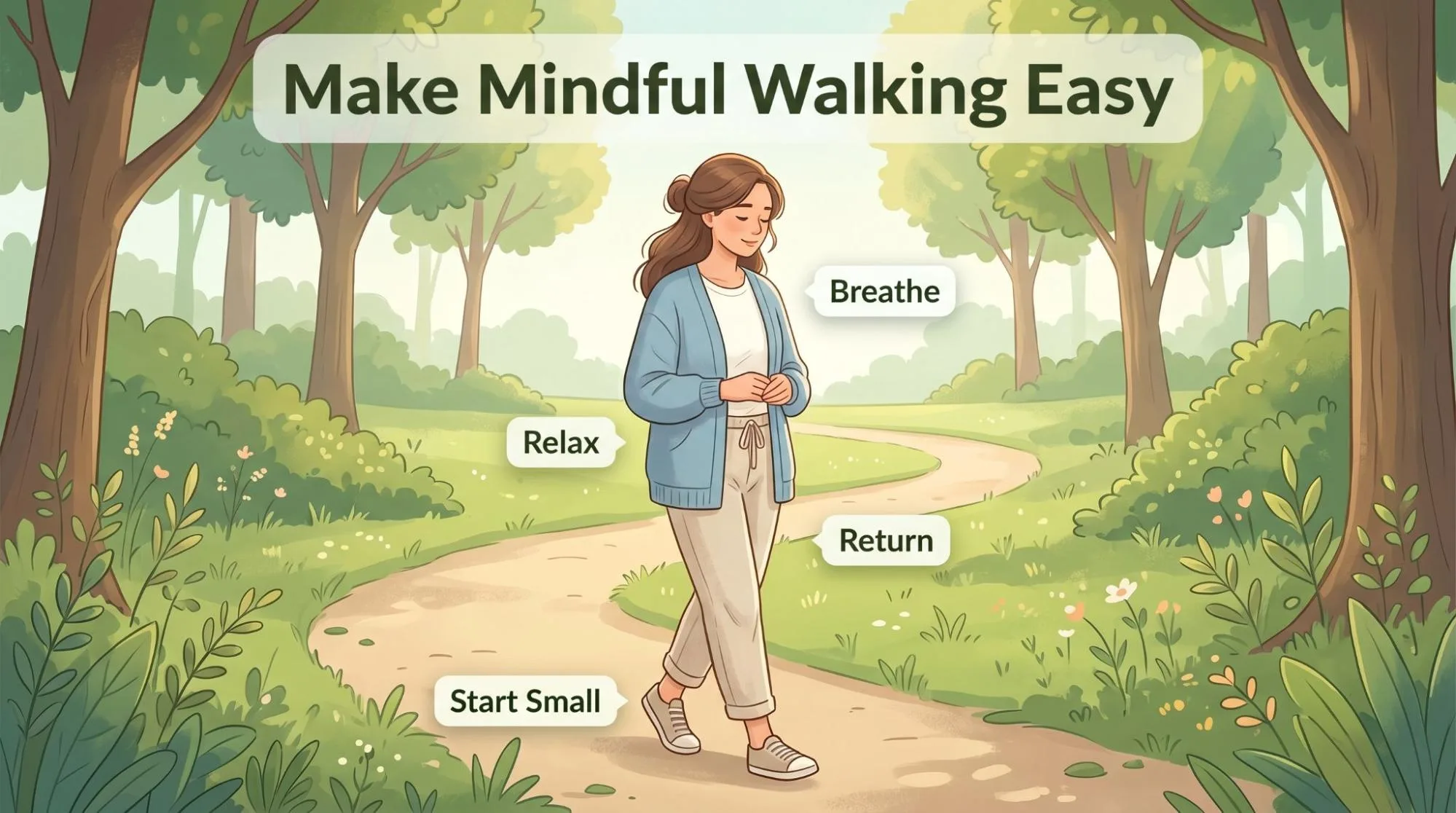
The better approach is simple: walk, notice, return.
Simple Tips to Make Walking Meditation Easier
Start small. Five calm minutes are better than twenty frustrated minutes. Choose a pace that feels slow but not awkward.
You can place one hand on your belly for the first few breaths if it helps you settle. You can also use a short phrase like “here” with one step and “now” with the next.
If you feel self-conscious outdoors, walk at a normal pace but stay aware of your feet and breath. Mindful walking does not always need to look different from regular walking.
How to Add Walking Meditation to Your Daily Routine
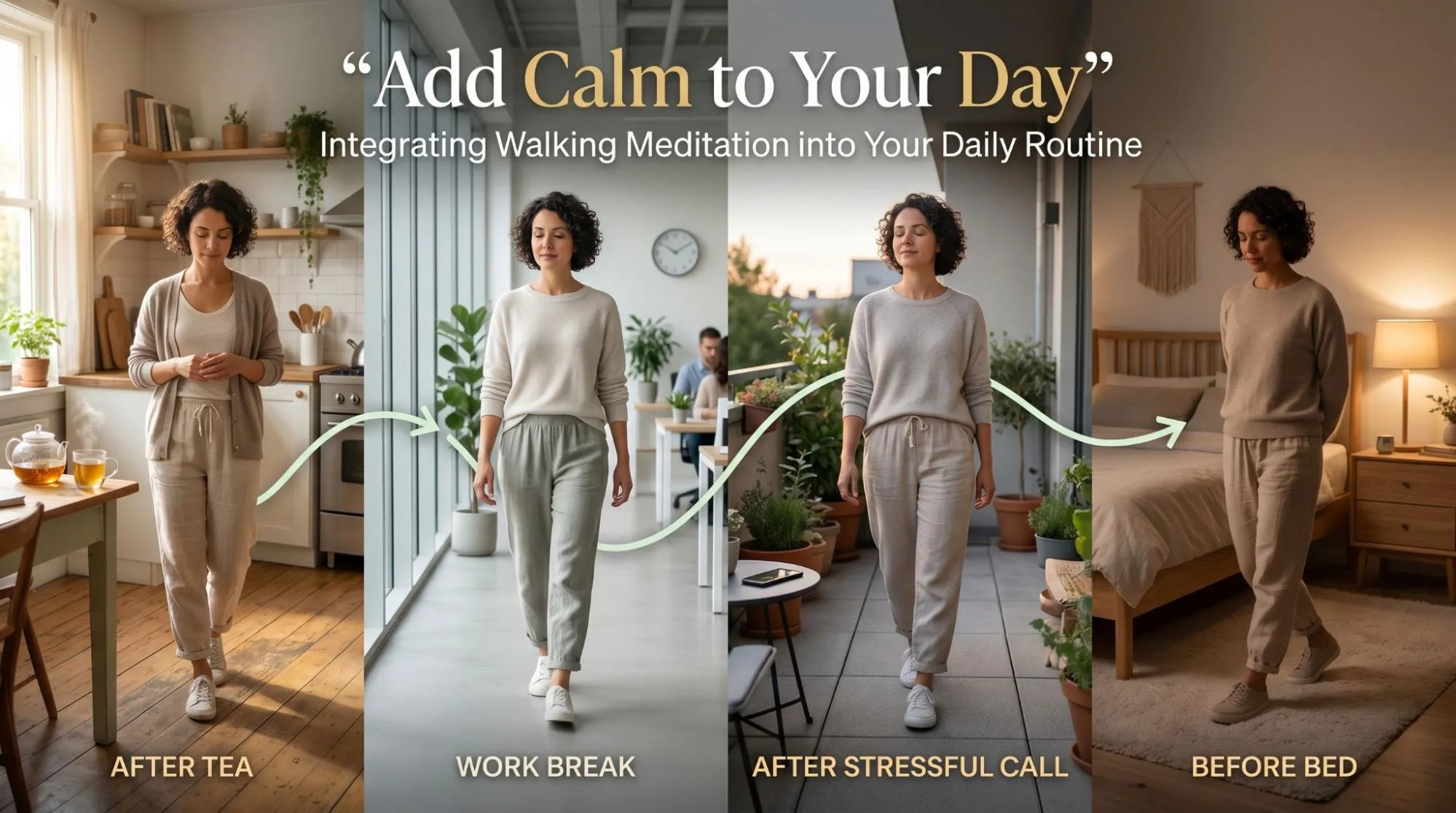
The easiest way to build the habit is to attach it to something you already do. Practice after morning tea, before opening your laptop, during a lunch break, or before bed. The easiest way to remember walking meditation how to practice is to connect it with a daily habit.
You can also use walking meditation during ordinary moments. Walk mindfully to your car. Walk mindfully after a stressful call. Walk mindfully while moving from one room to another.
The practice becomes powerful when it stops feeling separate from life. Little by little, you learn to bring calm attention into normal movement.
Walking Meditation Script for Beginners
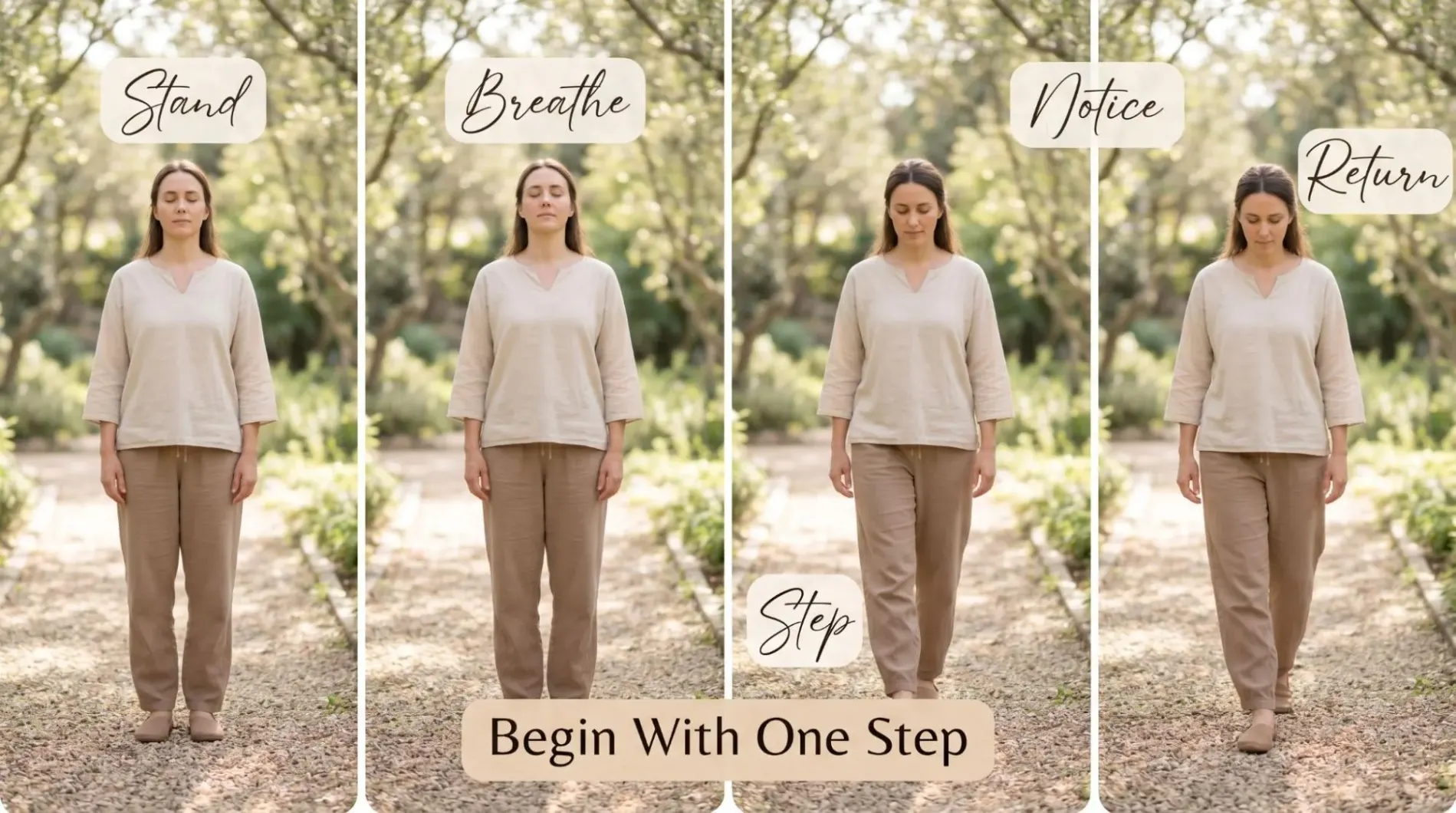
Stand still and feel your feet on the ground. Let your arms rest naturally. Take a slow breath in, then breathe out gently.
Begin walking slowly. Notice your right foot lifting, moving, and touching the ground. Notice your left foot lifting, moving, and touching the ground.
Keep your gaze soft. Feel the rhythm of your steps. If your mind wanders, simply notice where it went. Then bring your attention back to walking.
At the end of your path, pause. Turn slowly. Begin again.
For the next few minutes, there is nowhere else to be. Just this breath. Just this step. Just this present moment.
FAQs
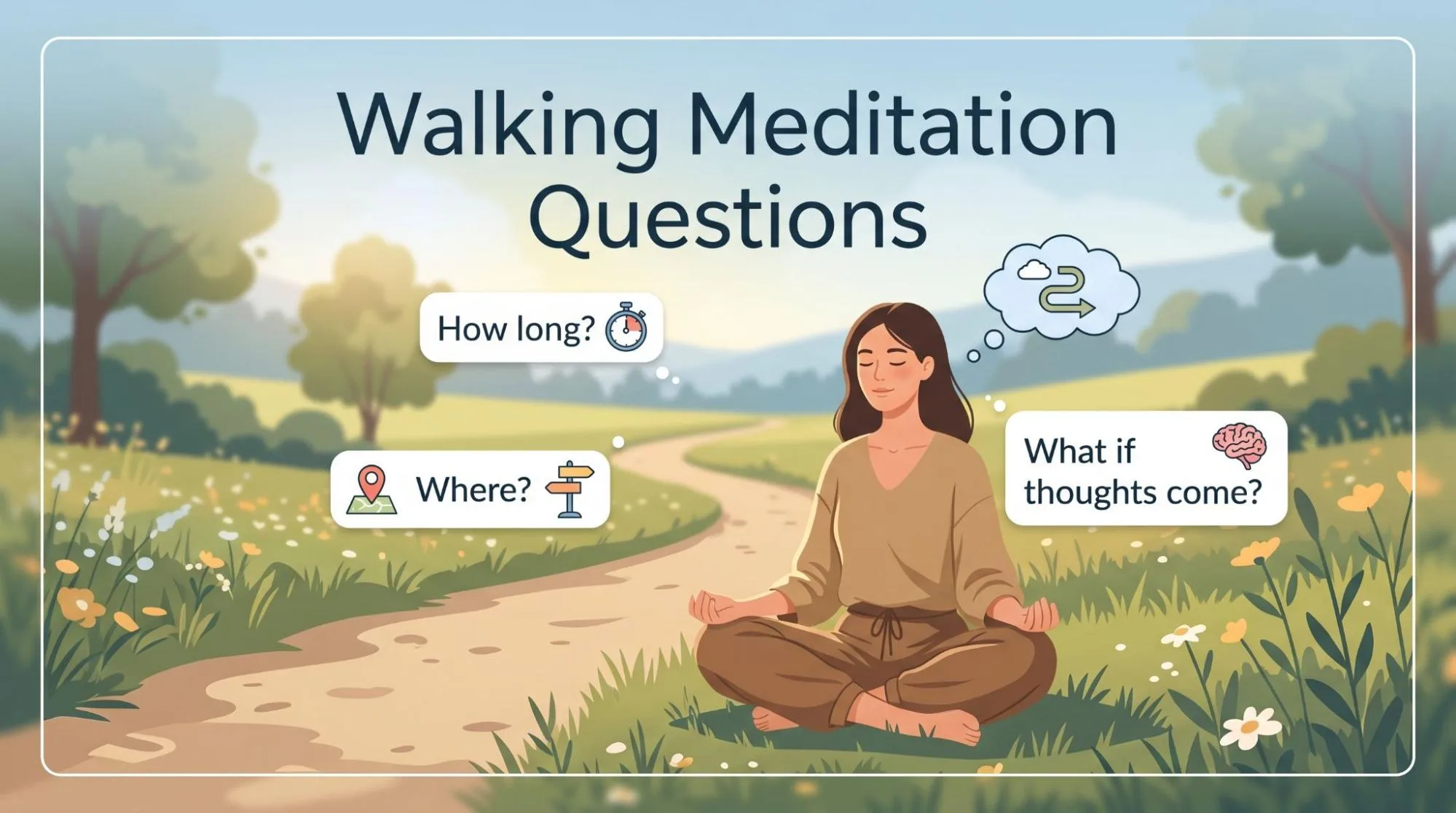
Is walking meditation the same as normal walking?
No. Normal walking is usually automatic, while walking meditation is intentional. You slow down and pay attention to each step, breath, and body sensation.
Can I practice walking meditation outside?
Yes, outdoor walking meditation can be very calming. Choose a safe and quiet place where you can walk without needing to rush or avoid crowds.
How long should beginners practice walking meditation?
Five to ten minutes is enough for beginners. Once the practice feels natural, you can slowly increase the duration.
What should I do when my mind wanders?
Simply notice that your mind has wandered, then gently return attention to your feet or breath. Wandering is normal and part of the practice.
Can walking meditation help with stress?
Yes, it can help reduce stress by grounding your attention in the body and present moment. It gives the mind a simple, steady focus.
Learn More : Yoga Nidra and Sleep: What Is the Real Difference?
Conclusion
Walking meditation is one of the simplest ways to practice mindfulness in daily life. You do not need special equipment, a perfect setting, or a long block of time. With time, walking meditation how to practice becomes less like a technique and more like a peaceful daily habit.
Start with a quiet path, a soft gaze, and a few slow steps. Let the body move naturally. Let the breath settle. When thoughts pull you away, return gently.
With regular practice, mindful walking can become a calm place you carry with you. One step is enough to begin.