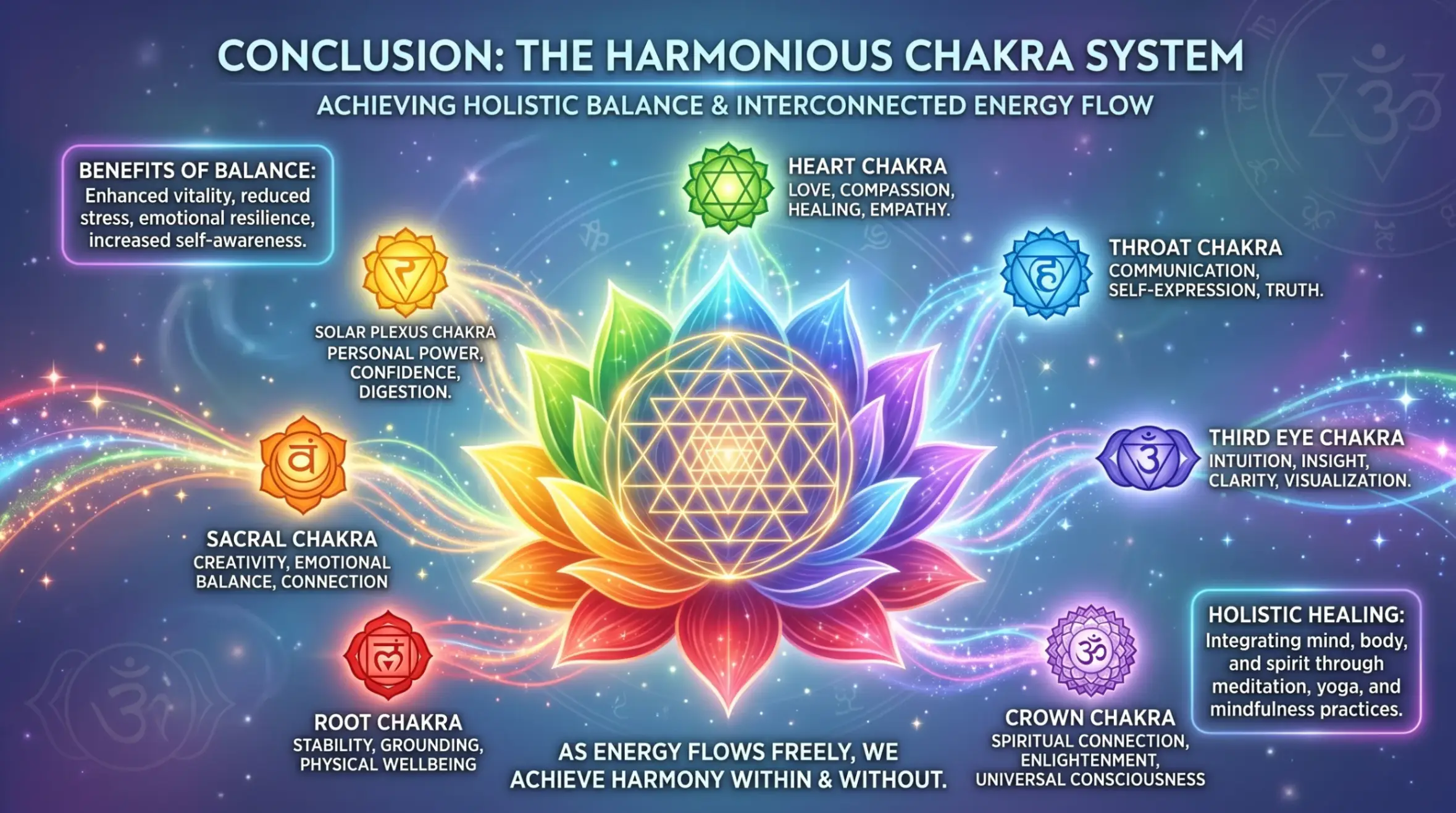
Chakra symbols are more than pretty spiritual designs. Each one carries a deeper meaning connected to energy, awareness, emotion, and inner balance. In many traditional teachings, chakras are energy centers that help explain how the body, mind, and spirit work together.
If you’ve seen a lotus flower design, a triangle, a circle, a pointed star, or Sanskrit letters inside chakra artwork, those details are not random. They each represent something. Some show the direction of energy flow. Some point to personal growth. Others remind you where a chakra is located in the body.
This guide explains chakra symbols in simple language, from their ancient roots to the meaning of the 7 major chakras used today.
Introduction to Chakra Symbols
Chakra symbols are visual signs linked with the body’s energy system. They are often used in yoga, meditation, spiritual healing, jewelry, artwork, and home decor. Each symbol gives a visual meaning to one of the major chakras.
The word “chakra” comes from Sanskrit and is often translated as “wheel” or “circle.” In many chakra systems, these wheels are seen as points where life force energy moves through the body. When the energy flow feels steady, people often describe feeling more grounded, clear, open, and connected.
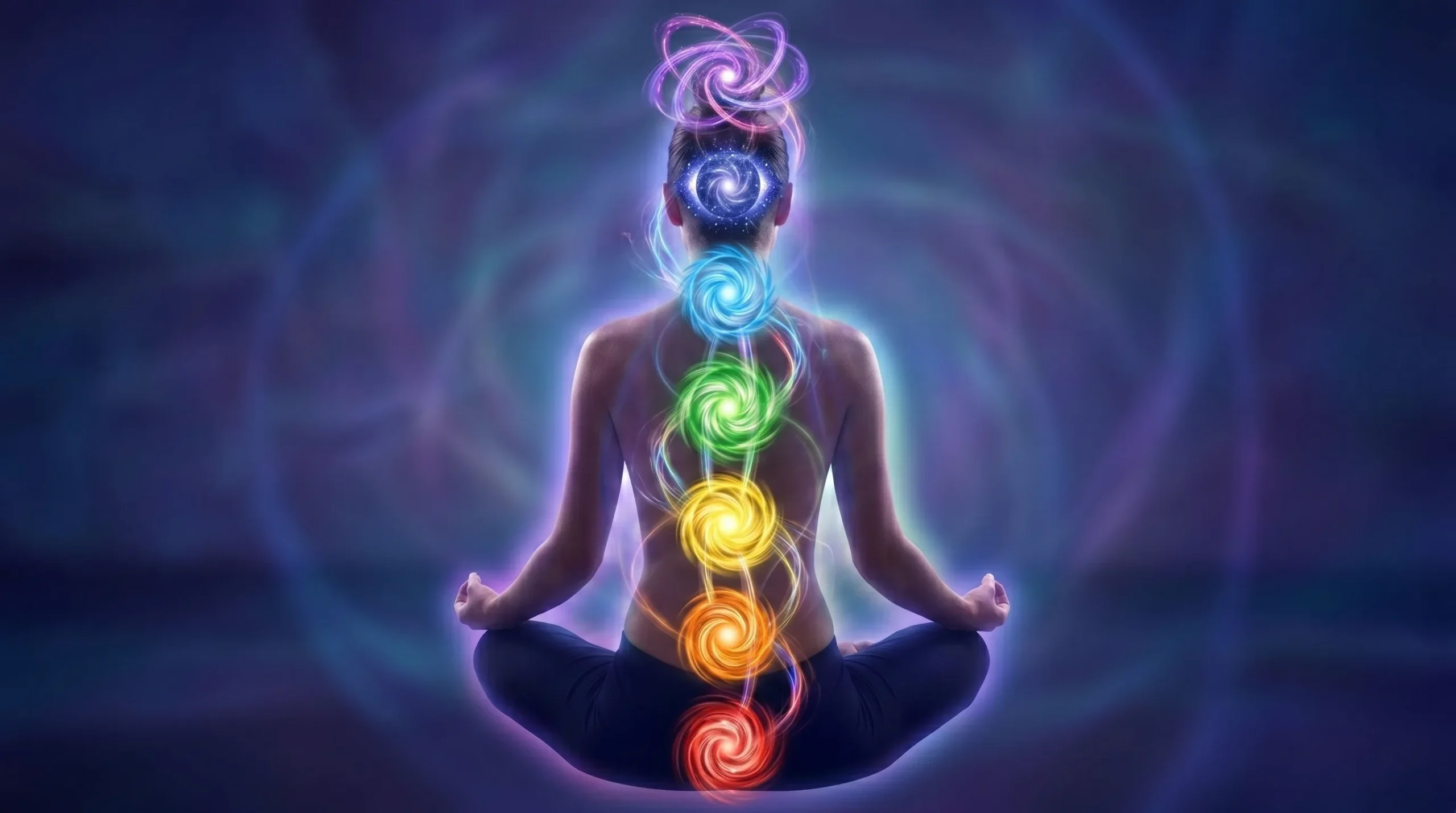
What Are Chakra Symbols?
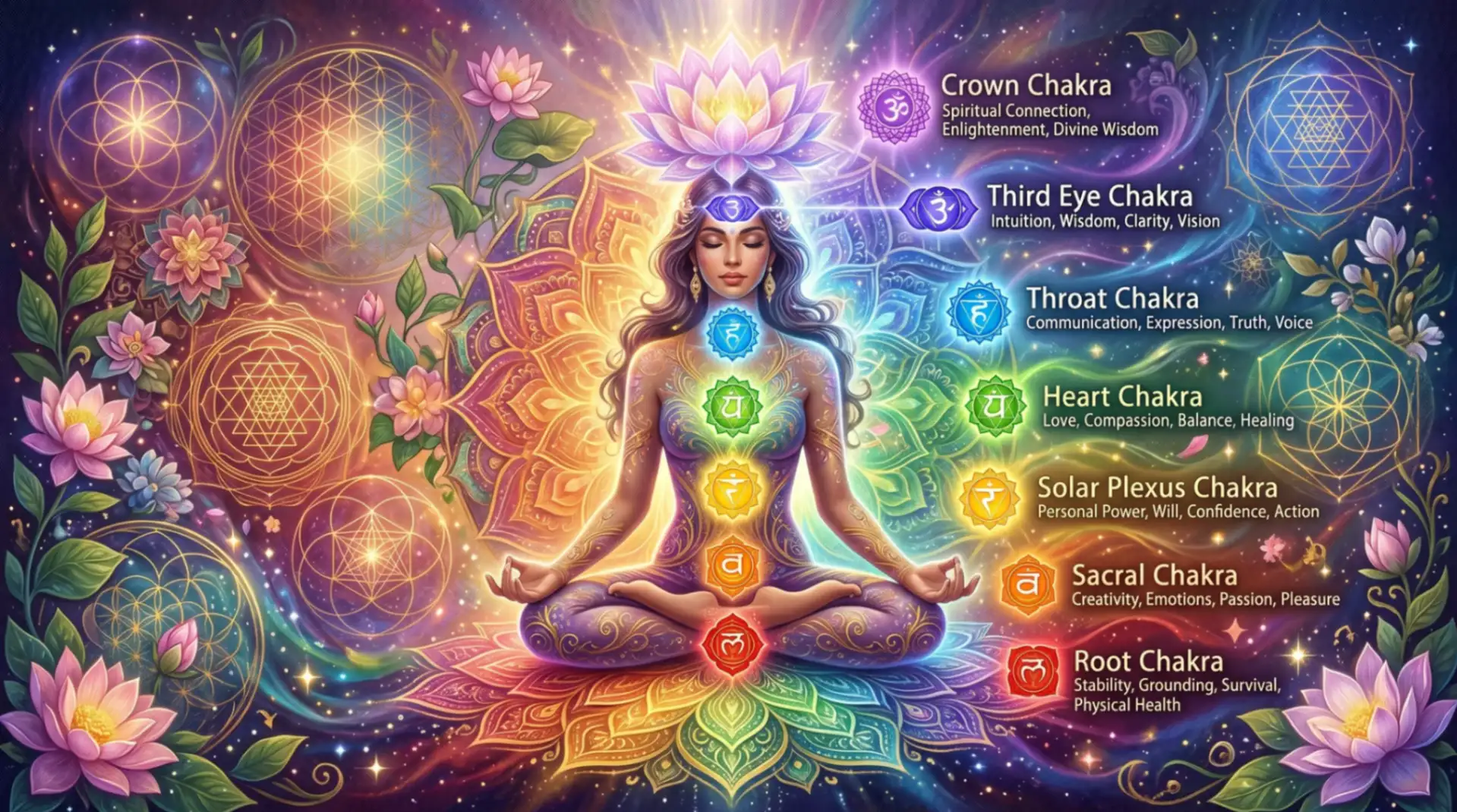
Chakra symbols are traditional or modern spiritual designs used to represent the seven main chakras. Most symbols include a lotus flower, geometric shapes, colors, and sometimes seed mantras. These parts work together to show the nature of each chakra.
For example, the root chakra symbol is linked with grounding and stability, while the crown chakra symbol represents spiritual connection and higher awareness. These symbols help make invisible ideas easier to understand.
Learn More : Crown Chakra: Meaning, Spiritual Awakening, Balance, and Activation
Why Chakra Symbols Matter in Daily Life
Chakra symbols matter because they give people a simple way to reflect on their inner state. You don’t have to be deeply spiritual to use them. Many people use chakra symbols as reminders to pause, breathe, and check in with themselves.
A person feeling anxious may work with the root chakra symbol to feel more stable. Someone struggling to speak honestly may reflect on the throat chakra symbol. These symbols can become gentle visual tools for emotional awareness.
Chakra Symbols and Self-Awareness
One helpful thing about chakra symbols is that they encourage self-awareness. They ask quiet but useful questions: Am I feeling safe? Am I expressing myself clearly? Am I listening to my intuition? Am I open to love?
This kind of reflection can be practical. It helps you notice patterns in your thoughts, emotions, and daily choices. Chakra symbols do not “fix” life for you, but they can help you understand yourself with more honesty.
The Role of Balance in Chakra Energy
Balance is a key idea in chakra teachings. When a chakra feels balanced, its qualities may feel easier to access. When it feels blocked, overactive, or underactive, you may notice emotional, mental, or spiritual discomfort.
This does not mean every bad mood is a chakra problem. Life is more complex than that. Still, many people find chakra symbols useful as a mindful way to explore where they feel strong, stuck, tense, or disconnected.
The Origin of Chakra Symbols
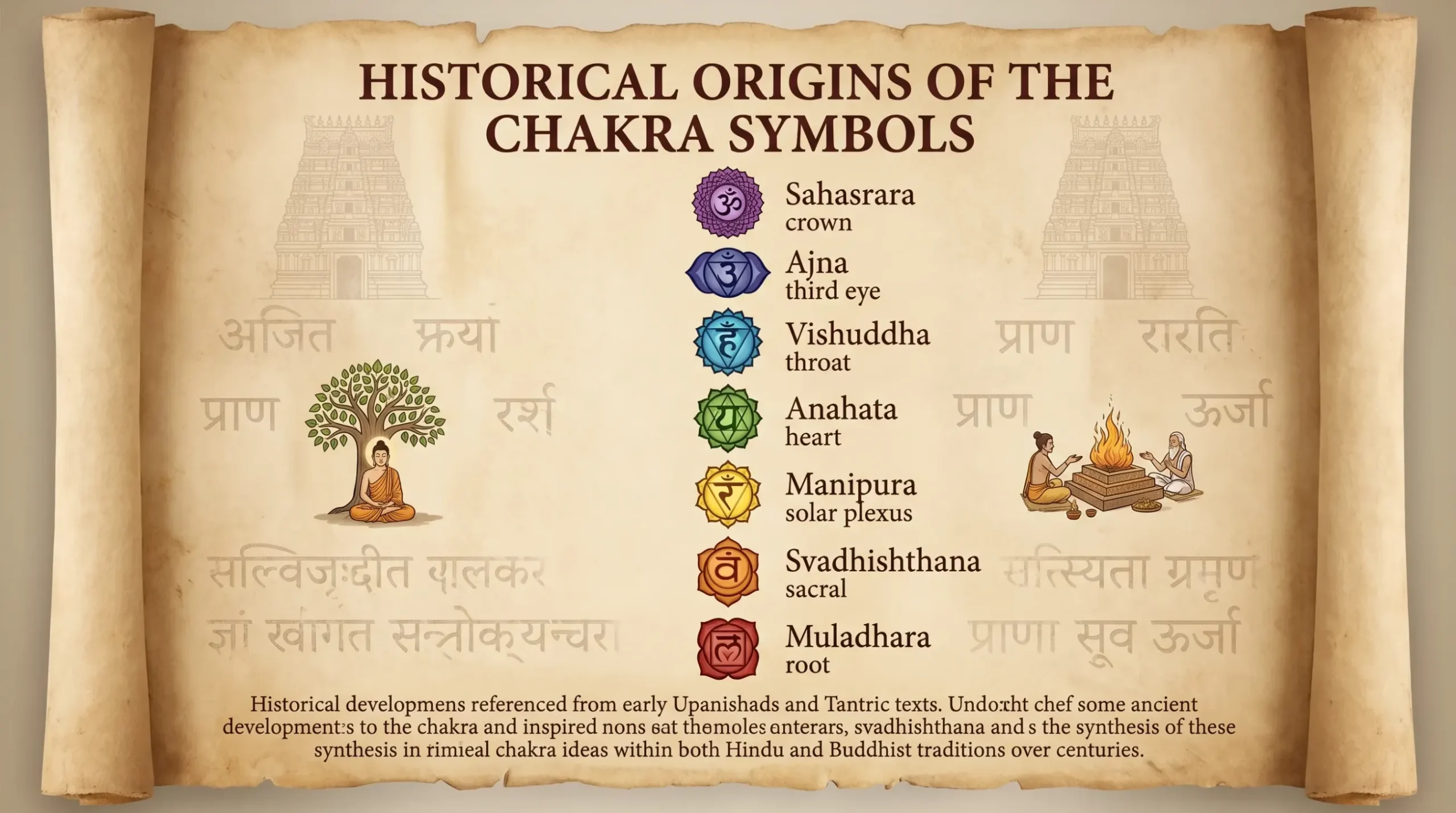
Chakra symbols come from ancient spiritual traditions, especially Hindu and Buddhist systems of thought. Over time, these symbols developed through yogic, tantric, meditative, and modern spiritual practices.
The symbols seen today are often a blend of older teachings and newer interpretations. That is why you may notice slightly different versions of the same chakra symbol depending on the book, teacher, or tradition.
Historical Roots in Hinduism and Buddhism
Chakras are often discussed in Hindu yogic philosophy, especially in relation to subtle body teachings. These teachings describe energy channels, sometimes called nadis, through which life force energy moves.
Buddhist tantric traditions also include energy centers and subtle body practices, though the structure and meaning can differ. So, while modern chakra systems often focus on seven main chakras, older traditions may describe different numbers and arrangements.
How Chakra Symbols Changed Over Time
The chakra symbols used today became more widely known through yoga, meditation, and modern wellness culture. Some details are rooted in Sanskrit texts, while others have been simplified for easier understanding.
For example, the lotus petals, colors, and seed sounds are often used in modern charts. These visuals help beginners understand each chakra quickly. Still, it helps to remember that chakra symbols are spiritual tools, not fixed scientific diagrams.
Understanding the 7 Main Chakra Symbols
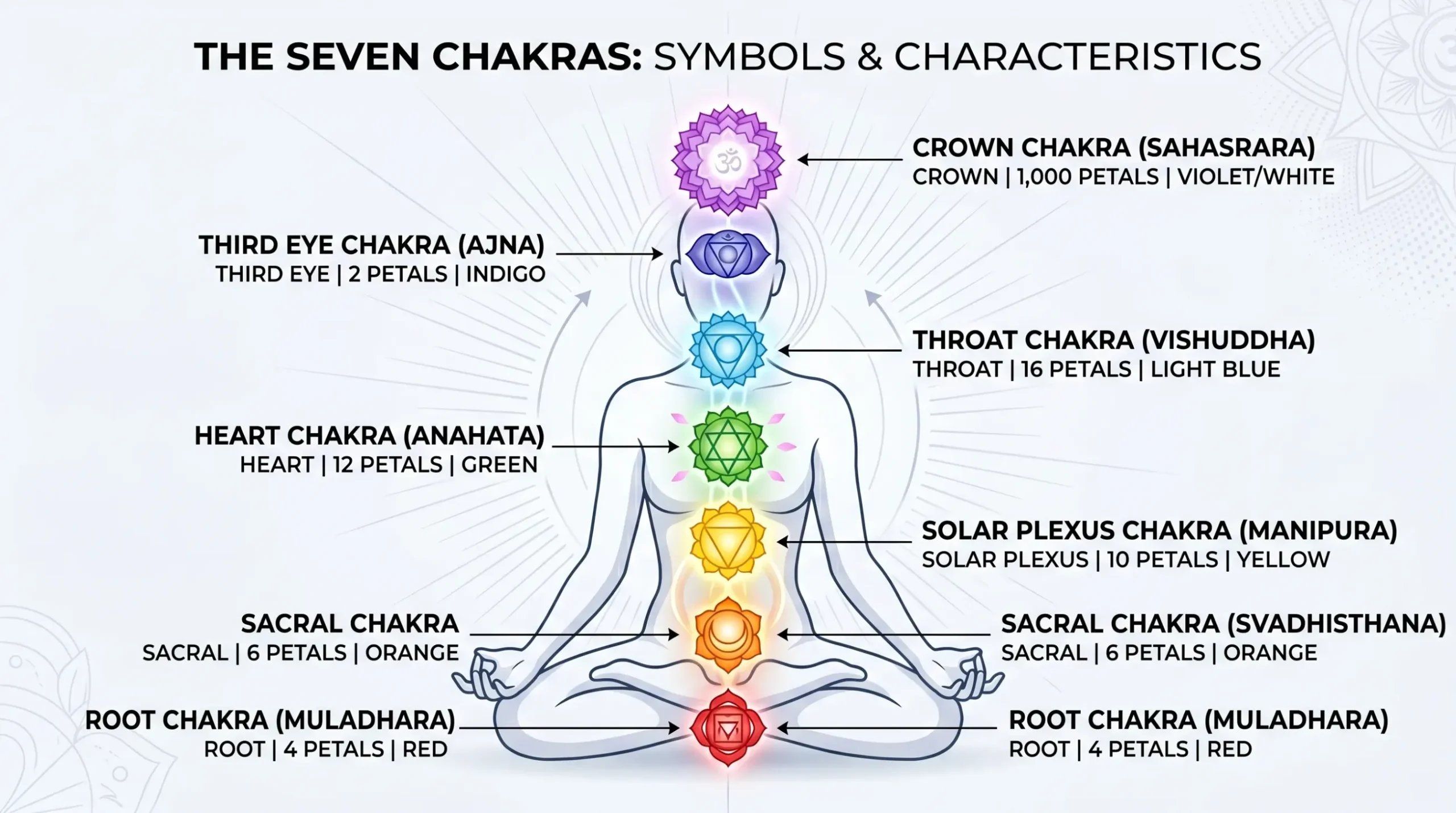
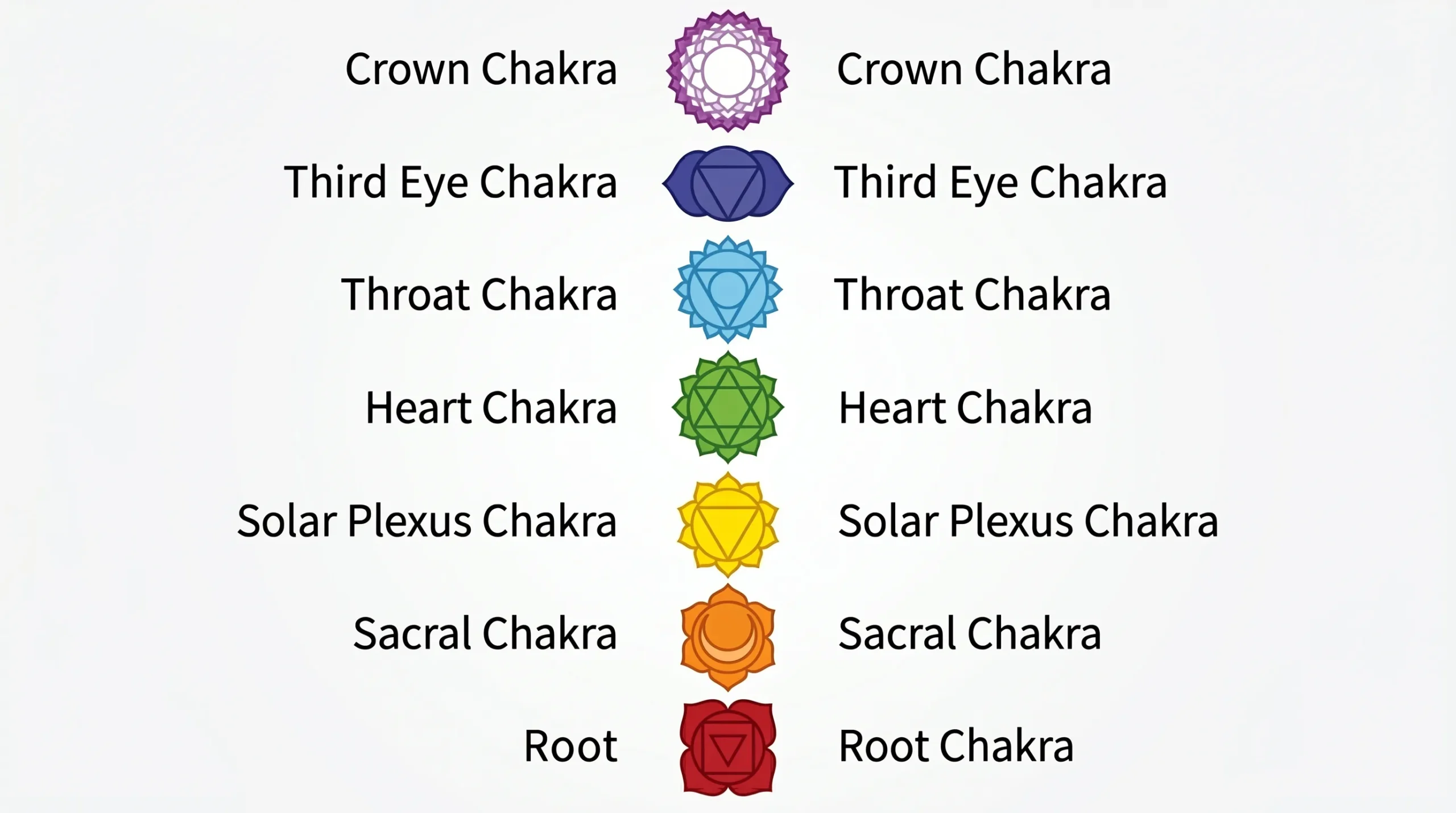
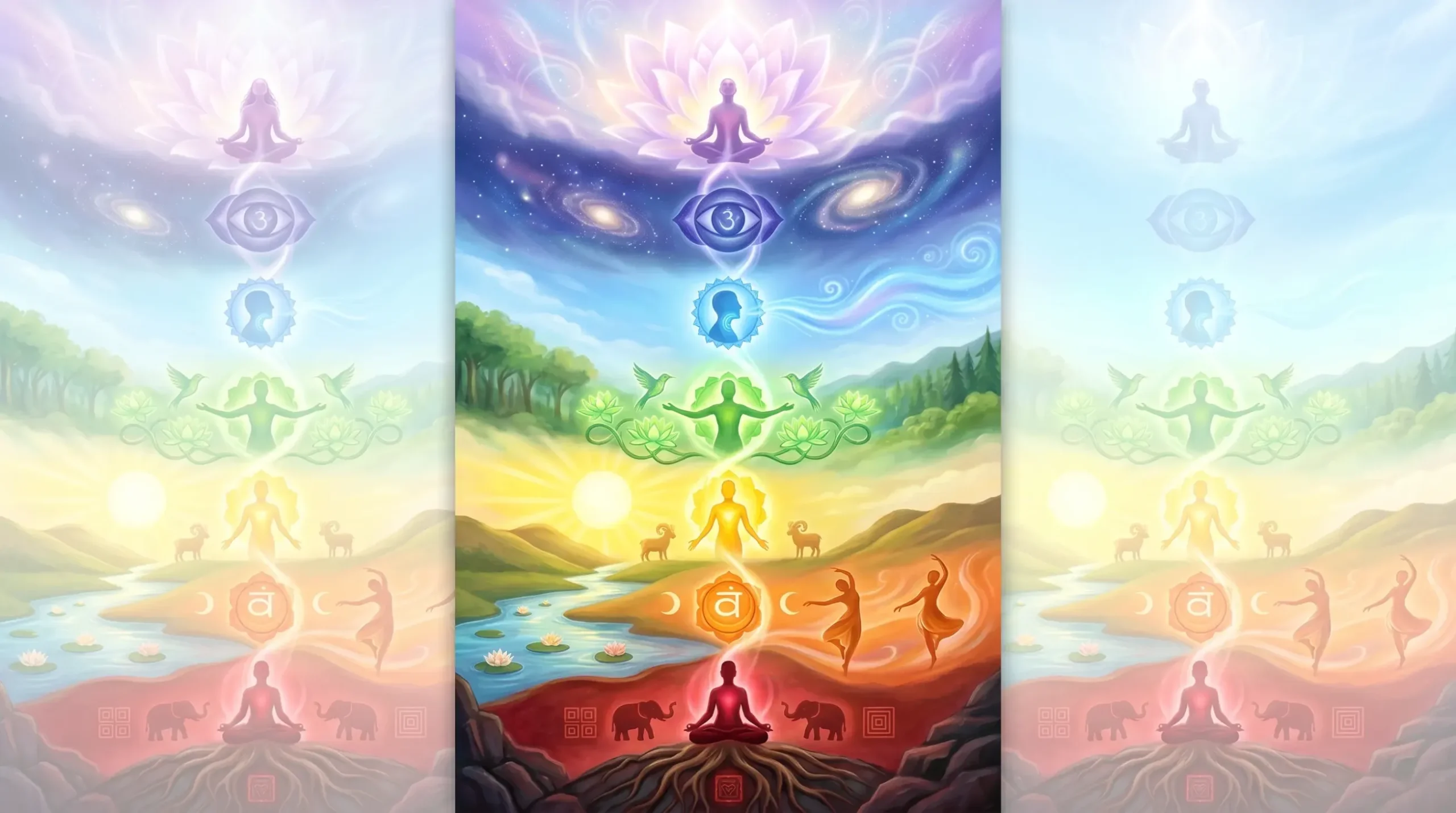
The seven major chakras are usually arranged from the base of the spine to the top of the head. Each chakra is located in a specific area of the body and is connected with certain emotional, mental, and spiritual themes.
Below is a simple explanation of each symbol and what it represents.
Root Chakra Symbol
The root chakra symbol represents safety, grounding, survival, and stability. It is usually connected with the base of the spine. This chakra is often shown in red and may include a four-petaled lotus with a square inside.
The square represents structure and steadiness. The four petals represent the grounded nature of this energy center. When people work with the root chakra symbol, they often focus on feeling safe, present, and connected to the physical world.
Sacral Chakra Symbol
The sacral chakra symbol is linked with creativity, emotion, pleasure, and healthy relationships. This chakra is located in the lower abdomen, below the navel. It is usually shown in orange and often includes a lotus with six petals.
The sacral chakra symbol may also include a crescent shape, which connects with water, movement, and emotional flow. This symbol reminds you that feelings are meant to move, not stay trapped.
Solar Plexus Chakra Symbol
The solar plexus chakra is connected with confidence, personal power, self-respect, and action. It is located around the upper abdomen, near the stomach area. Its color is usually yellow.
The solar plexus chakra symbol often includes a ten-petaled lotus and a downward-facing triangle. The triangle can represent transformation, inner fire, and the ability to act with purpose. This chakra symbol is often used when someone wants to build courage or trust their decisions.
Heart Chakra Symbol
The heart chakra symbol represents love, compassion, forgiveness, and emotional balance. This chakra is located in the center of the chest. It is usually shown in green, though some traditions also connect it with soft pink.
The heart chakra symbol often includes a twelve-petaled lotus and two overlapping triangles. Together, they form a six-pointed star. This pointed star can represent balance between the physical and spiritual, giving and receiving, self-love and love for others.
Throat Chakra Symbol
The throat chakra symbol is connected with communication, truth, listening, and self-expression. This chakra is located at the throat. Its color is usually blue.
The throat chakra symbol often includes a sixteen-petaled lotus and a circle or triangle inside. It reminds you that your words carry energy. Speaking clearly matters, but so does listening with care.
Third Eye Chakra Symbol
The third eye chakra symbol represents intuition, insight, imagination, and inner vision. This is the sixth chakra and is located between the eyebrows. It is often shown in indigo or deep blue.
The eye chakra symbol usually includes two lotus petals. These petals can represent dual awareness, such as the balance between logic and intuition. Many people reflect on this symbol when they want clarity, focus, or a stronger connection with their inner wisdom.
Crown Chakra Symbol
The crown chakra symbol represents spiritual connection, higher consciousness, and unity. This chakra is located at the top of the head. It is often shown in violet, white, or a soft golden-white shade.
The crown chakra symbol is linked with chakra sahasrara, often shown as a lotus with many petals. These petals represent expanded awareness and the connection between personal identity and something greater than the self.

Learn More : What Is Ahimsa in Yoga? A Simple Guide to Non-Violence, Kindness, and Daily Practice
Common Elements Found in Chakra Symbols
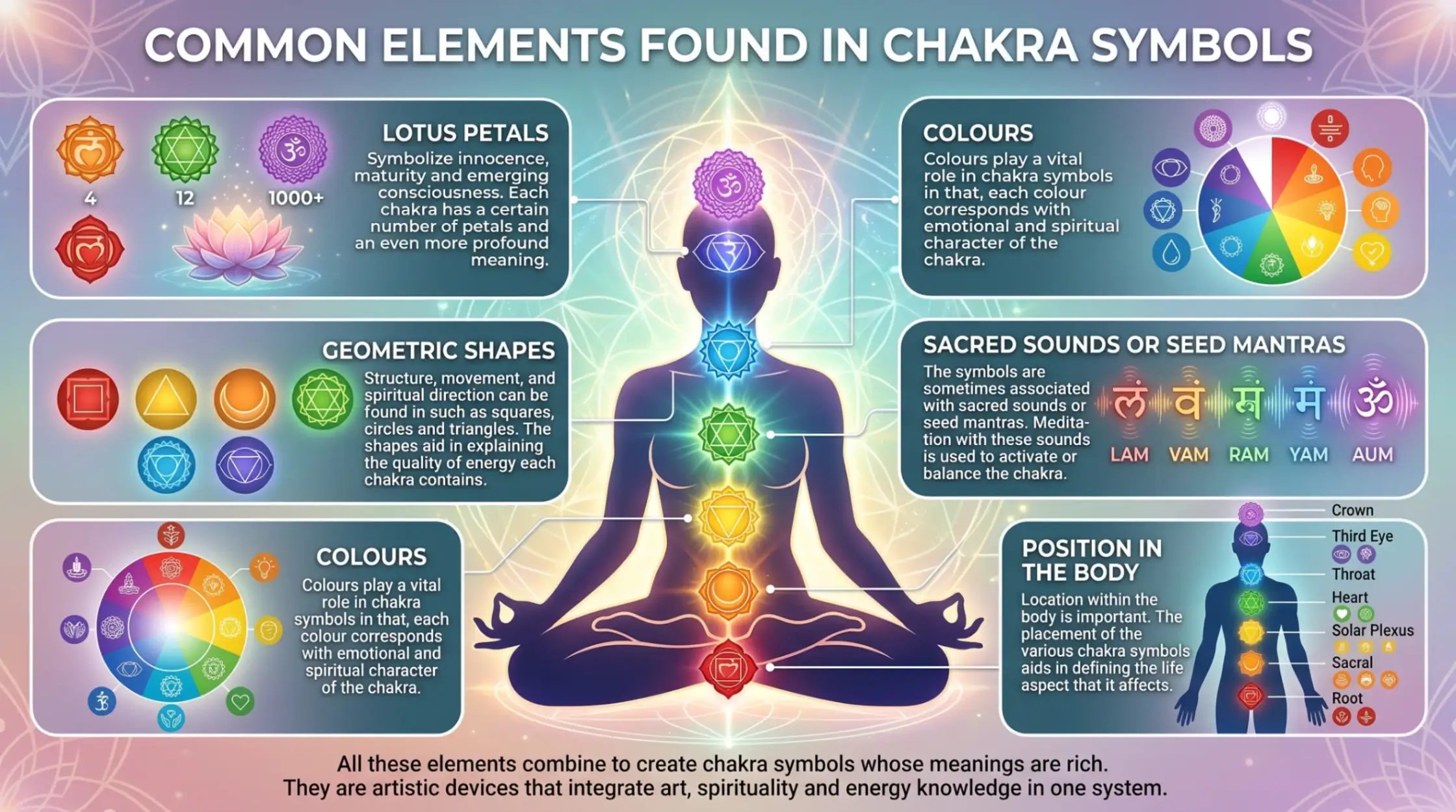
Chakra symbols may look different, but most include a few common parts. Once you understand these elements, the symbols become much easier to read.
Lotus Petals
The lotus flower is one of the most common parts of chakra symbols. In spiritual traditions, the lotus often represents growth, purity, and awakening. It grows from mud but rises above the water, which makes it a powerful symbol of inner development.
In chakra artwork, the petals represent different qualities, energies, or patterns linked with each chakra. Some chakras have four petals, while others have many more. The number is part of the symbol’s meaning.
Geometric Shapes
Geometric shapes are also common in chakra symbols. You may see circles, squares, triangles, or a pointed star. These shapes help explain the energy of each chakra.
A square may represent stability. A triangle may represent movement, fire, or transformation. A circle often suggests wholeness, unity, and continuous energy flow.
Chakra Colors
Each chakra is usually linked with a color. These colors make the symbols easier to recognize and remember.
Common chakra colors include:
- Red for the root chakra
- Orange for the sacral chakra
- Yellow for the solar plexus chakra
- Green for the heart chakra
- Blue for the throat chakra
- Indigo for the third eye chakra
- Violet or white for the crown chakra
These colors are widely used in modern chakra systems, especially in yoga, meditation, and healing practices.
Sacred Sounds and Seed Mantras
Some chakra symbols include Sanskrit seed mantras. These are short sounds linked with each chakra. People may chant or silently repeat them during meditation.
For example, “Lam” is often connected with the root chakra, while “Om” is commonly linked with the third eye or crown area, depending on the teaching. These sounds are used to help focus attention and deepen meditation.
Body Placement
Each chakra is located along the central line of the body, from the base of the spine to the top of the head. This placement helps people understand how chakra energy relates to physical and emotional experiences.
For example, the heart chakra symbol relates to the chest and emotional openness. The throat chakra symbol relates to communication and expression. The body placement makes the meaning easier to connect with daily life.
How Chakra Symbols Are Used Today
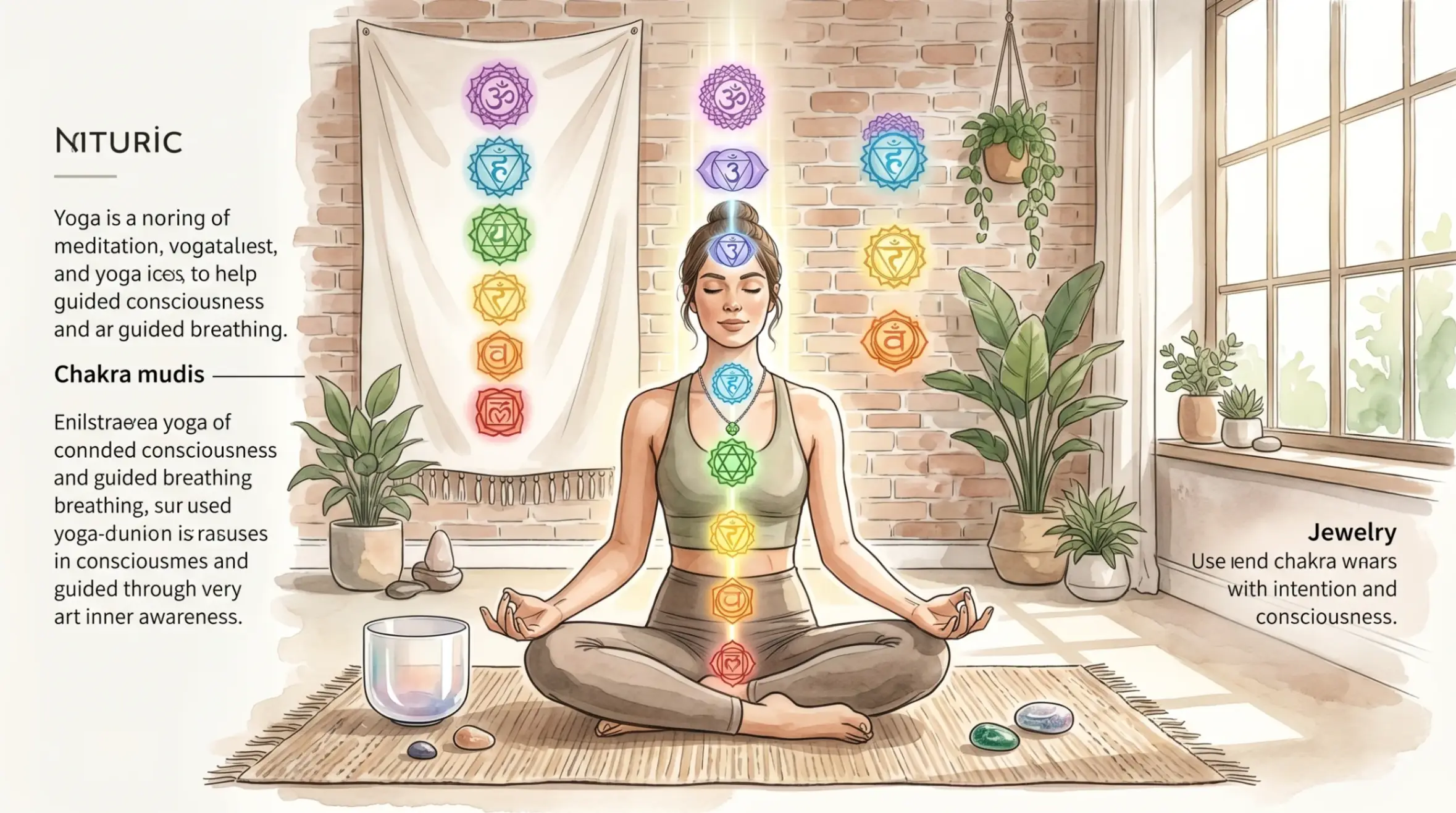
Today, chakra symbols are used in many ways. Some people use them for meditation. Others wear them as jewelry or place them in their homes. The meaning depends on the person’s intention.
The most helpful approach is simple: use the symbol as a reminder, not as a magic solution.
Chakra Symbols in Meditation
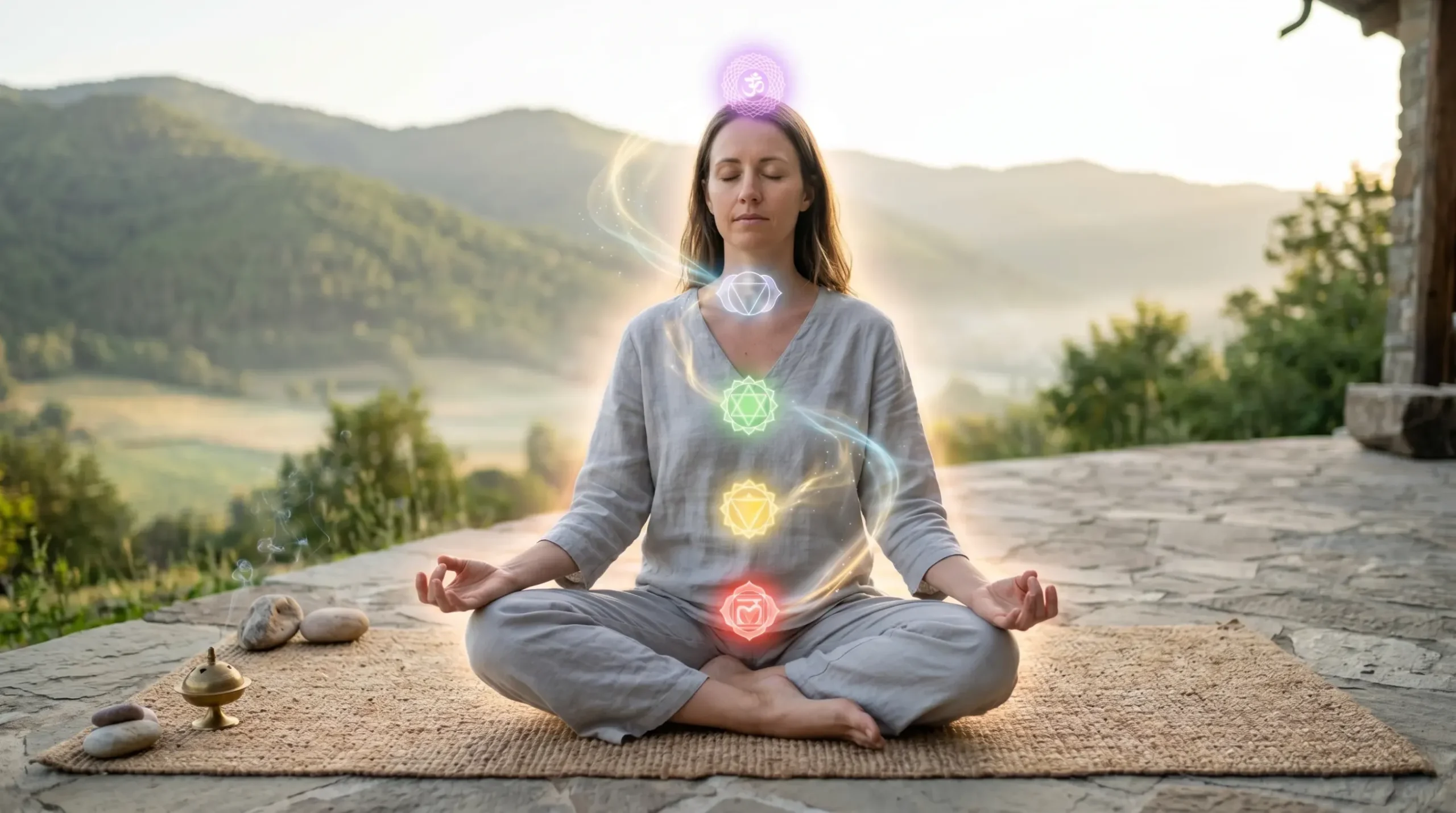
In meditation, chakra symbols can help focus the mind. You might look at one symbol, imagine its color, or place your attention on the area of the body connected with that chakra.
For example, if you are meditating on the heart chakra symbol, you may focus on your chest area and breathe gently while thinking about compassion, forgiveness, or emotional softness.
Chakra Symbols in Yoga
In yoga, chakra symbols are often used to support intention. A yoga teacher may design a class around one chakra, using poses, breathwork, and reflection.
For example, grounding poses may be used with the root chakra symbol. Chest-opening poses may be linked with the heart chakra symbol. Gentle neck and shoulder movements may support awareness of the throat chakra.
Chakra Symbols in Healing Practices
Many energy healing practices use chakra symbols as visual guides. Practitioners may focus on the symbol, color, or body area connected with a specific chakra.
This can feel calming and meaningful for many people. Still, chakra healing should not replace medical or mental health care when professional support is needed.
Chakra Symbols in Jewelry and Home Decor
Chakra symbols are also popular in jewelry, wall art, candles, journals, and home decor. Some people wear chakra jewelry as a personal reminder of balance, protection, or growth.
A simple necklace with the crown chakra symbol may remind someone to stay spiritually connected. A wall print with all seven chakra symbols may create a peaceful meditation space.
Signs That a Chakra May Be Out of Balance
A chakra imbalance is often described as feeling stuck, scattered, closed off, or overwhelmed in a certain area of life. These signs are not a diagnosis. They are better understood as reflection points.
If something feels intense, ongoing, or hard to manage, it is always wise to seek proper support from a qualified professional.
Emotional Signs of Chakra Imbalance
Emotional signs may include fear, insecurity, guilt, anger, sadness, jealousy, or difficulty expressing feelings. For example, someone working with the sacral chakra symbol may notice they feel emotionally blocked or creatively stuck.
A person reflecting on the heart chakra symbol may notice they are holding resentment or avoiding emotional closeness. The symbol becomes a mirror, helping them notice what needs care.
Mental and Spiritual Signs of Chakra Imbalance
Mental and spiritual signs may include confusion, lack of focus, self-doubt, disconnection, or difficulty trusting your inner guidance. For example, imbalance around the third eye area may feel like poor intuition or mental fog.
When working with the crown chakra symbol, someone may reflect on whether they feel disconnected from meaning, purpose, or spiritual trust. Again, the goal is awareness, not self-judgment.
Using Chakra Symbols for Reflection and Healing
Chakra symbols can be used as simple tools for reflection. You do not need a complicated routine. A few quiet minutes can be enough.
You might choose one symbol, sit with it, and ask yourself what it brings up. Does it feel calming? Uncomfortable? Familiar? These small observations can teach you something.
How to Connect With Chakra Symbols
The best way to connect with chakra symbols is to keep the practice simple and honest. Don’t rush through all seven at once. Let each symbol have space.
Start With One Chakra Symbol
Choose one chakra symbol that feels relevant to your current life. If you feel ungrounded, begin with the root chakra symbol. If you struggle to express yourself, begin with the throat chakra symbol.
Look at the symbol for a few moments. Notice its color, shape, and meaning. Then ask yourself: What does this part of me need right now?
Practice From Root to Crown
You can also practice from root to crown. This means starting with the root chakra and slowly moving upward through the sacral, solar plexus, heart, throat, third eye, and crown chakras.
This method helps you move through the major chakras in a steady order. It can feel grounding because you begin with the body before moving into higher awareness.
Use Consistency and Intention
Chakra work becomes more meaningful when it is consistent. You may choose one symbol each week, journal about it, meditate with it, or use it as a quiet reminder during the day.
The intention matters more than the object itself. A printed symbol, a necklace, or a drawing in your journal can all work if they help you slow down and listen inward.
Learn More : Yama and Niyama: Meaning, Principles, Benefits, and Daily Practice