
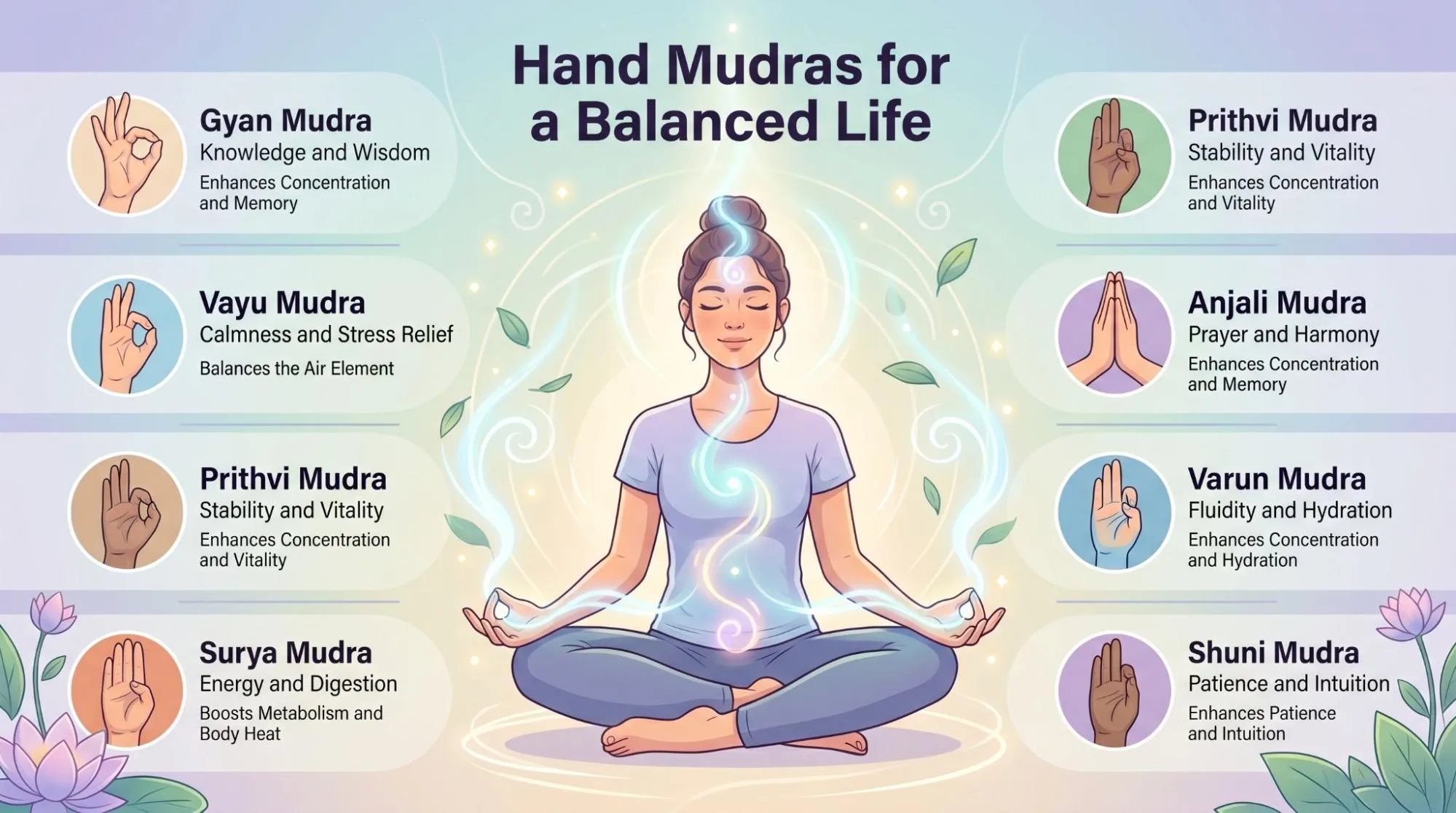
Introduction to Hand Mudras
Hand mudras are simple hand positions used in yoga, meditation, breathing practices, and spiritual traditions. At first, they may look like small gestures, but they carry deeper meaning in yogic practice. A small change in finger placement can help guide attention, settle the mind, and create a stronger connection between body and breath.
Many people use hand mudras because they are easy to practice anywhere. You can use them while sitting in meditation, during a calm breathing session, or even before yoga practice. They do not require equipment, space, or advanced flexibility. All you need is awareness, patience, and relaxed hands.
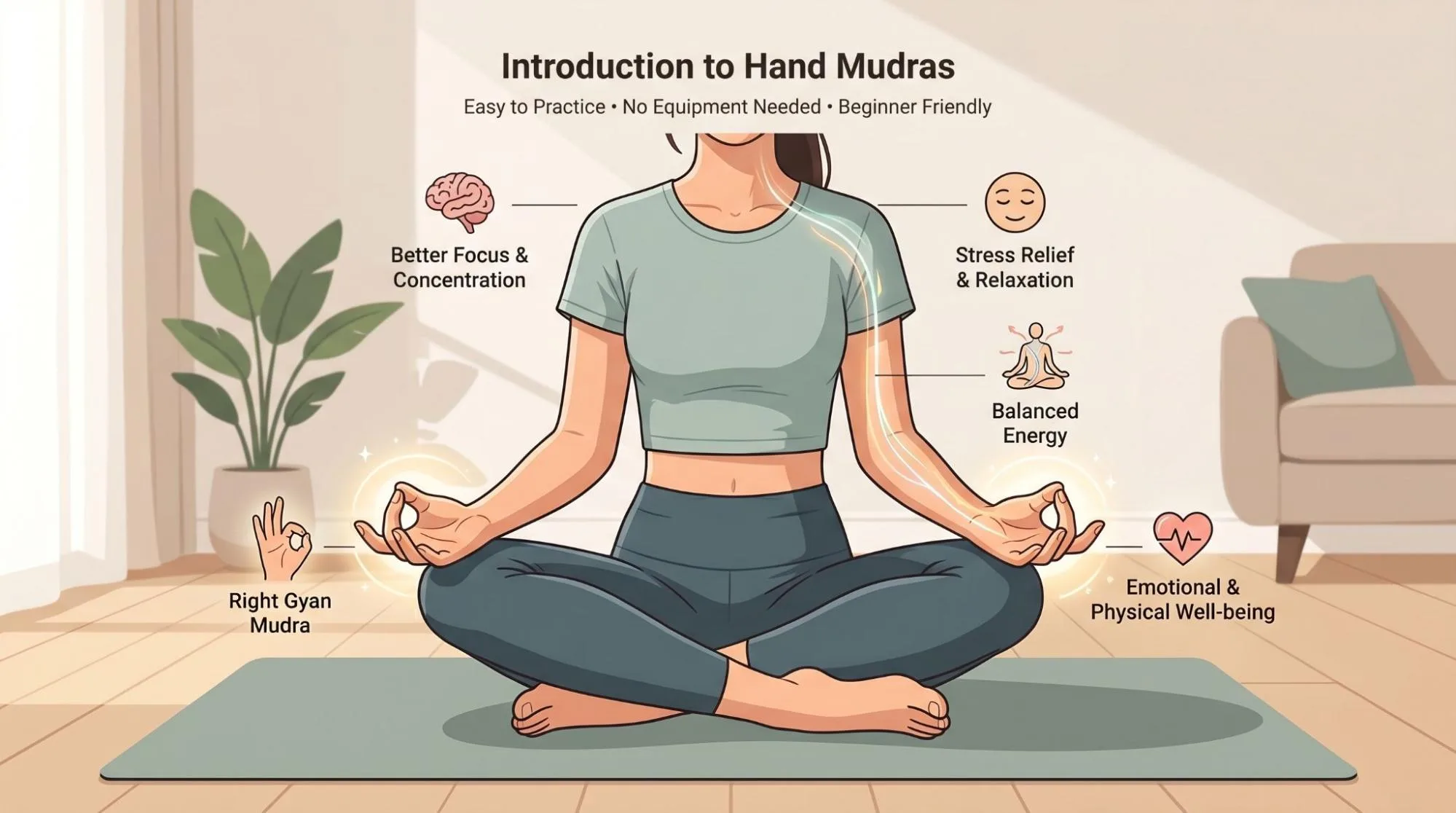
What Are Hand Mudras?
Hand mudras are symbolic hand positions used to support focus, energy balance, and inner awareness. In yoga and meditation, each hand gesture is believed to influence the mind and body in a subtle way.
They are often practiced with breathing, mantra, or stillness. A mudra is not magic, and it does not work like a quick cure. Instead, it acts like a gentle reminder for the body and mind to move into a calm, steady state.
Simple Definition of Hand Mudras
Hand mudras are specific finger and palm positions used during meditation, yoga, and breathing exercises. They help direct attention and may support relaxation, concentration, and emotional balance.
For example, touching the thumb and index finger together forms Gyan Mudra, one of the most common mudras for meditation. This simple position can help the hands feel settled while the mind becomes more focused.
Meaning of the Word Mudra
The word “mudra” comes from Sanskrit and is often translated as “seal,” “gesture,” or “mark.” In yogic tradition, a mudra is seen as a way to seal or guide energy in the body.
This is why hand mudras are more than random hand movements. Each finger placement has meaning, and each mudra is linked with a certain quality, such as calmness, grounding, clarity, or balance.
How Hand Mudras Work with Body Energy
In yoga, the body is believed to have a subtle energy system. This energy is often called prana. The flow of prana is connected with breath, posture, awareness, and mental state.
Hand mudras are believed to influence this flow by connecting different fingers, each linked with an element or energy quality. For example, the ring finger is often connected with the earth element, which is why Prithvi Mudra is used for grounding and stability.
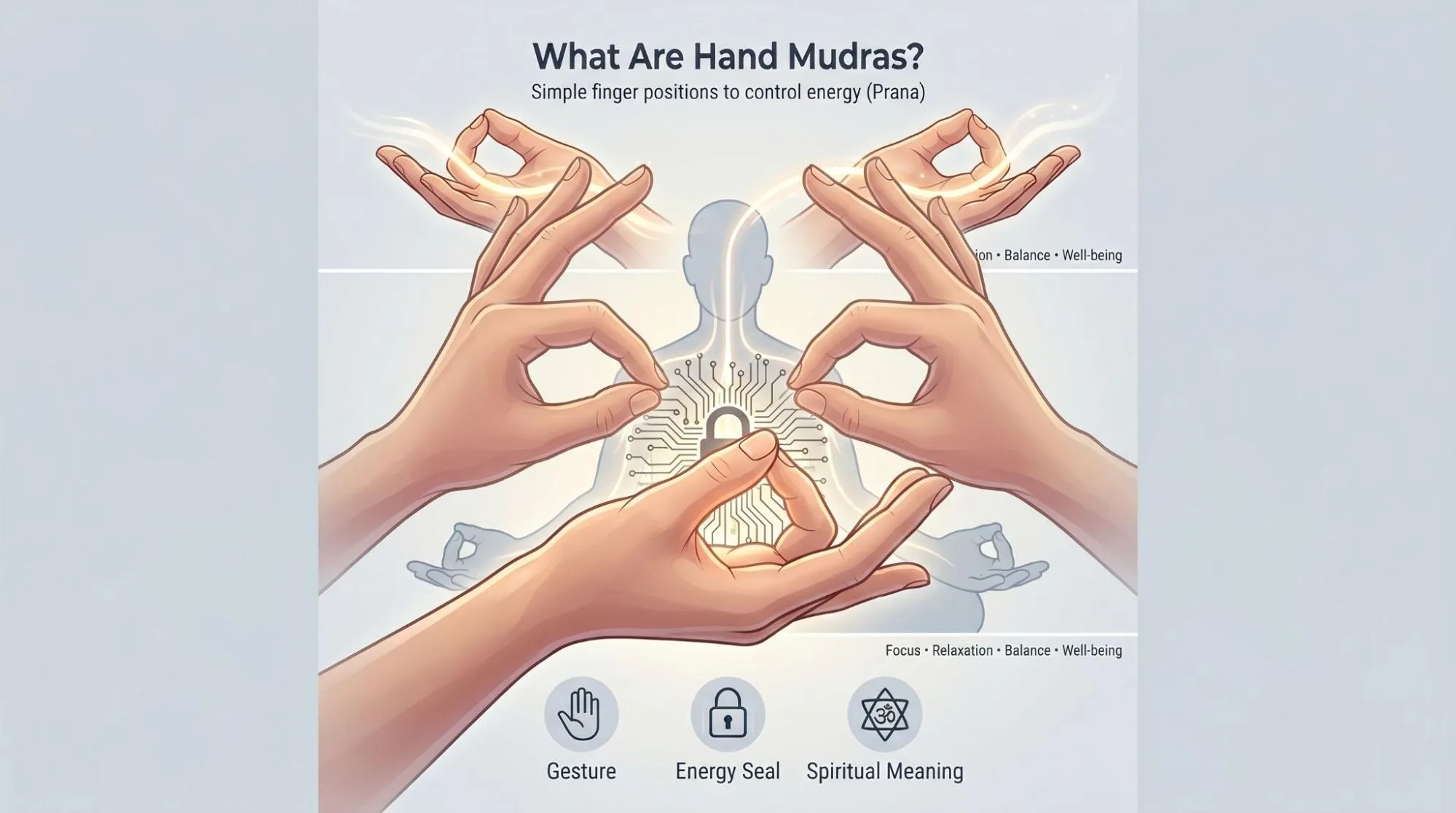
Types of Mudras in Yoga
There are many mudras in yoga, and not all of them use the hands. Some involve the whole body, some use the eyes, and others include breathing techniques or internal awareness.
For beginners, hand mudras are usually the easiest place to start. They are simple, gentle, and can be practiced even if you are new to yoga.
Hand Mudras
Hand mudras, also called hasta mudras, use the fingers, thumbs, and palms. These are the most familiar mudras for most people.
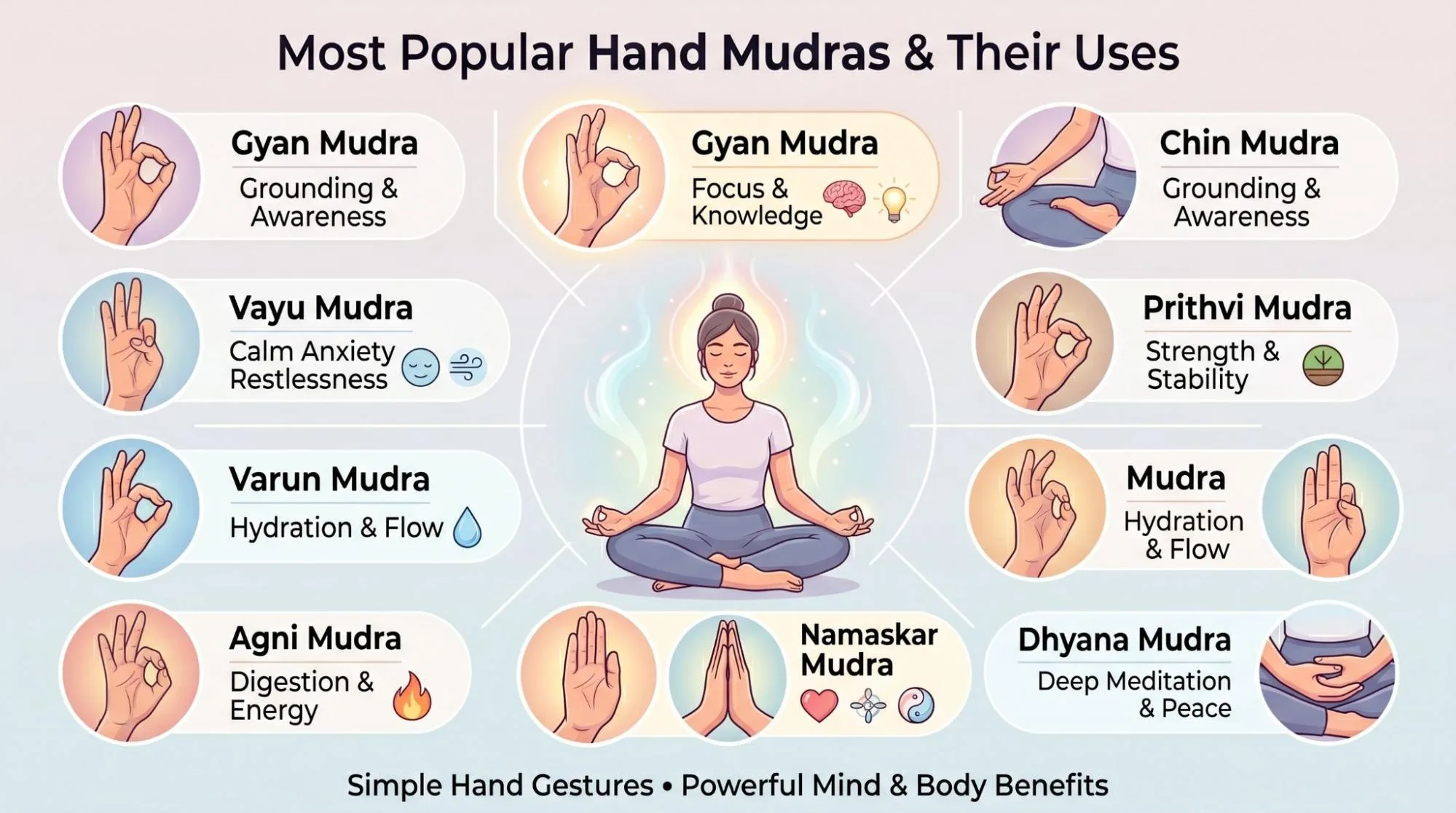
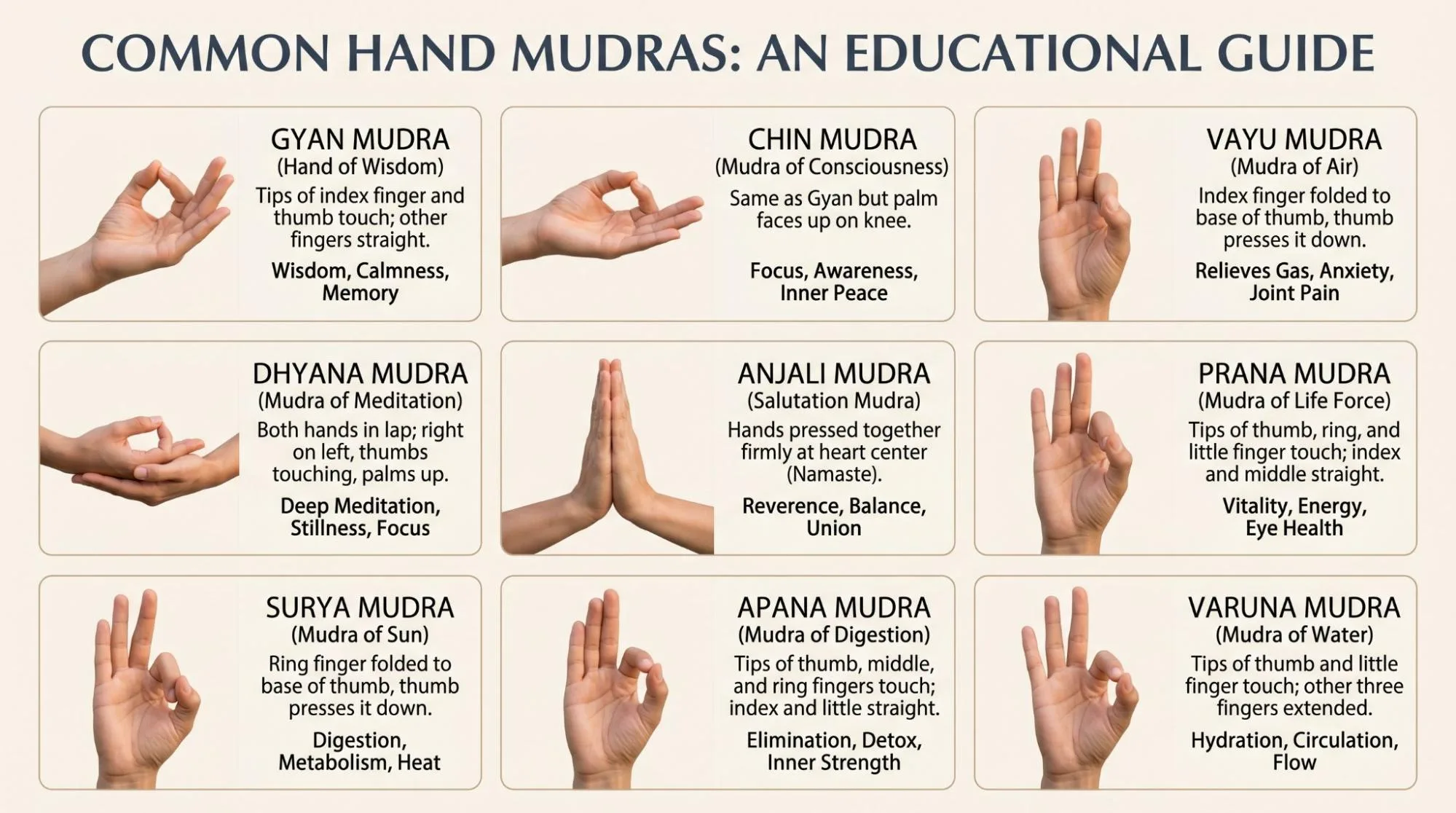
Common examples include Gyan Mudra, Chin Mudra, Vayu Mudra, Prithvi Mudra, Varun Mudra, Agni Mudra, Dhyana Mudra, Namaskar Mudra, and Prana Mudra. Each one has a different purpose and feeling.
Body Mudras
Body mudras use the whole body or larger body positions. They may include posture, breath control, muscle engagement, and focused awareness.
Some body mudras are more advanced and are usually learned under guidance. They may be used in traditional yoga practice to support energy movement, discipline, and deeper concentration.
Difference Between Hand Mudras and Body Mudras
The main difference is how they are performed. Hand mudras use only the hands and fingers, while body mudras involve larger physical positions or internal locks.
Hand mudras are easier for beginners because they are gentle and simple. Body mudras may require more strength, flexibility, and understanding of yogic techniques.
Learn More : Yoni Mudra: Meaning, Benefits, Steps, and Practice Guide
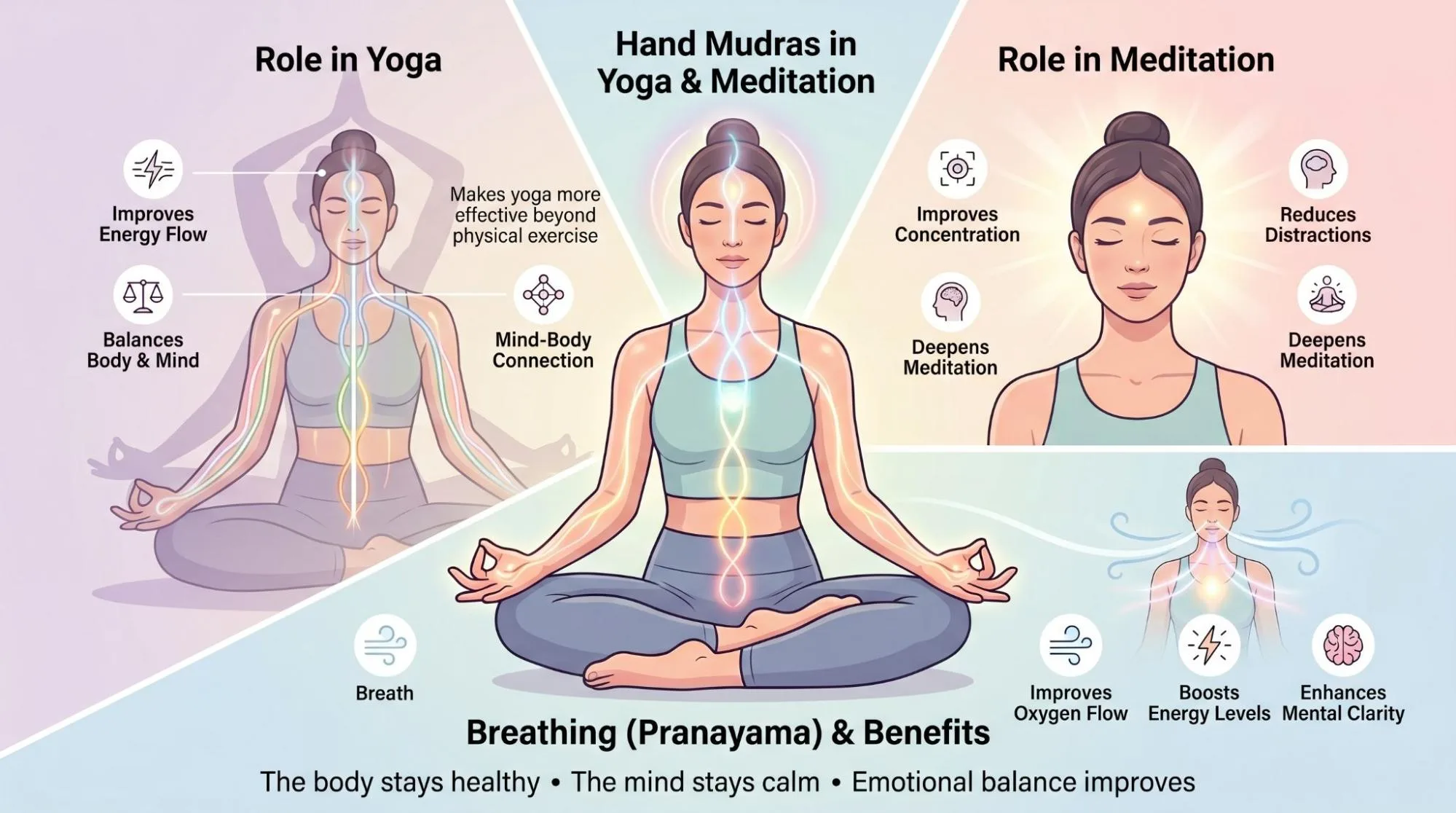
Importance of Hand Mudras in Yoga and Meditation
Hand mudras have a special place in yoga and meditation because they help bring the mind into the present moment. When the hands are placed with intention, the body receives a quiet signal to slow down.
This is why many teachers include hand mudras during breathing, chanting, seated meditation, and relaxation. They give the mind something simple to rest on.
Role of Hand Mudras in Yoga
In yoga practice, hand mudras can support focus, breath awareness, and energy direction. They are often used before, during, or after asanas.
For example, Namaskar Mudra is used at the heart center as a sign of respect and inner balance. Gyan Mudra may be used during seated breathing after physical movement.
Role of Hand Mudras in Meditation
Hand mudras are very common in meditation because they help reduce restlessness in the hands. When the hands are still, the mind often becomes steadier too.
A person practicing seated meditation may use Chin Mudra or Dhyana Mudra to create a calm, grounded feeling. These mudras for meditation are simple but effective for building a steady routine.
Connection Between Mudras and Breathing
Mudras work best when paired with slow breathing. The hand position gives structure, while the breath brings softness and rhythm.
For example, you can sit in Gyan Mudra and take slow breaths through the nose. As the breathing settles, the nervous system may begin to feel calmer, and attention becomes easier to hold.
Top Benefits of Hand Mudras
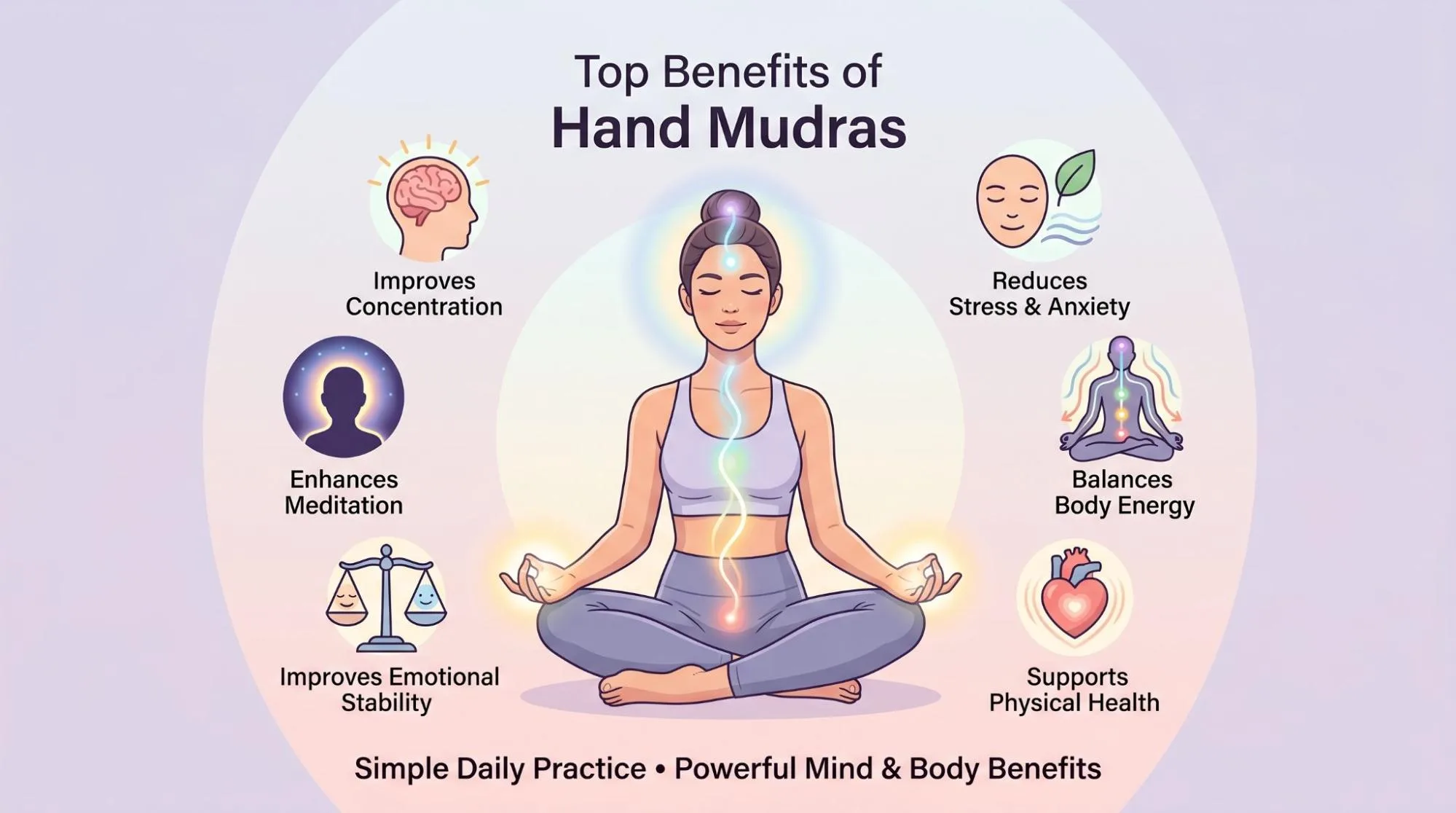
The benefits of hand mudras are often described in both traditional and practical ways. In yoga tradition, mudras support energy balance. In daily life, they can help create calm, focus, and mindfulness.
They are not a replacement for medical care, but they can be a helpful part of a balanced wellness routine.
Improves Concentration
Hand mudras can help improve concentration by giving the mind a clear point of focus. This is especially useful during meditation or breathing practice.
When the fingers are placed carefully, awareness naturally moves toward the hands, breath, and posture. This makes it easier to stay present instead of drifting into scattered thoughts.
Reduces Stress and Anxiety
Some people use hand mudras to feel calmer during stressful moments. The gentle hand position, combined with slow breathing, can help the body shift out of tension.
For example, sitting quietly with Chin Mudra for a few minutes may create a sense of ease. The mudra itself is simple, but the pause it creates can be powerful.
Balances Energy in the Body
In yogic belief, mudras help balance the elements and support the flow of prana. Each finger is connected with a different element, such as air, fire, water, earth, or space.
This is why different mudras are used for different purposes. Prithvi Mudra is linked with grounding, while Varun Mudra is connected with the water element and emotional flow.
Supports Physical Health
Hand mudras are often practiced to support general wellness. Some traditions connect specific mudras with digestion, breathing, circulation, or energy levels.
Still, it is best to keep expectations realistic. Mudras may support relaxation and body awareness, but they should not be used as a substitute for proper medical treatment.
Improves Emotional Stability
Because mudras are often practiced with steady breathing, they can help regulate emotions. When the breath slows, the body often feels safer and more balanced.
This can be useful during emotional stress, overthinking, or low mood. A short practice with a calming mudra can help you pause before reacting.
Enhances Meditation Practice
Many people find meditation easier when using hand mudras. The hands feel settled, the posture becomes more intentional, and the breath becomes easier to follow.
Dhyana Mudra, Chin Mudra, and Gyan Mudra are especially helpful for meditation because they encourage stillness without forcing the body.
Learn More : Svadhyaya: The Yoga Practice of Self-Study and Inner Reflection
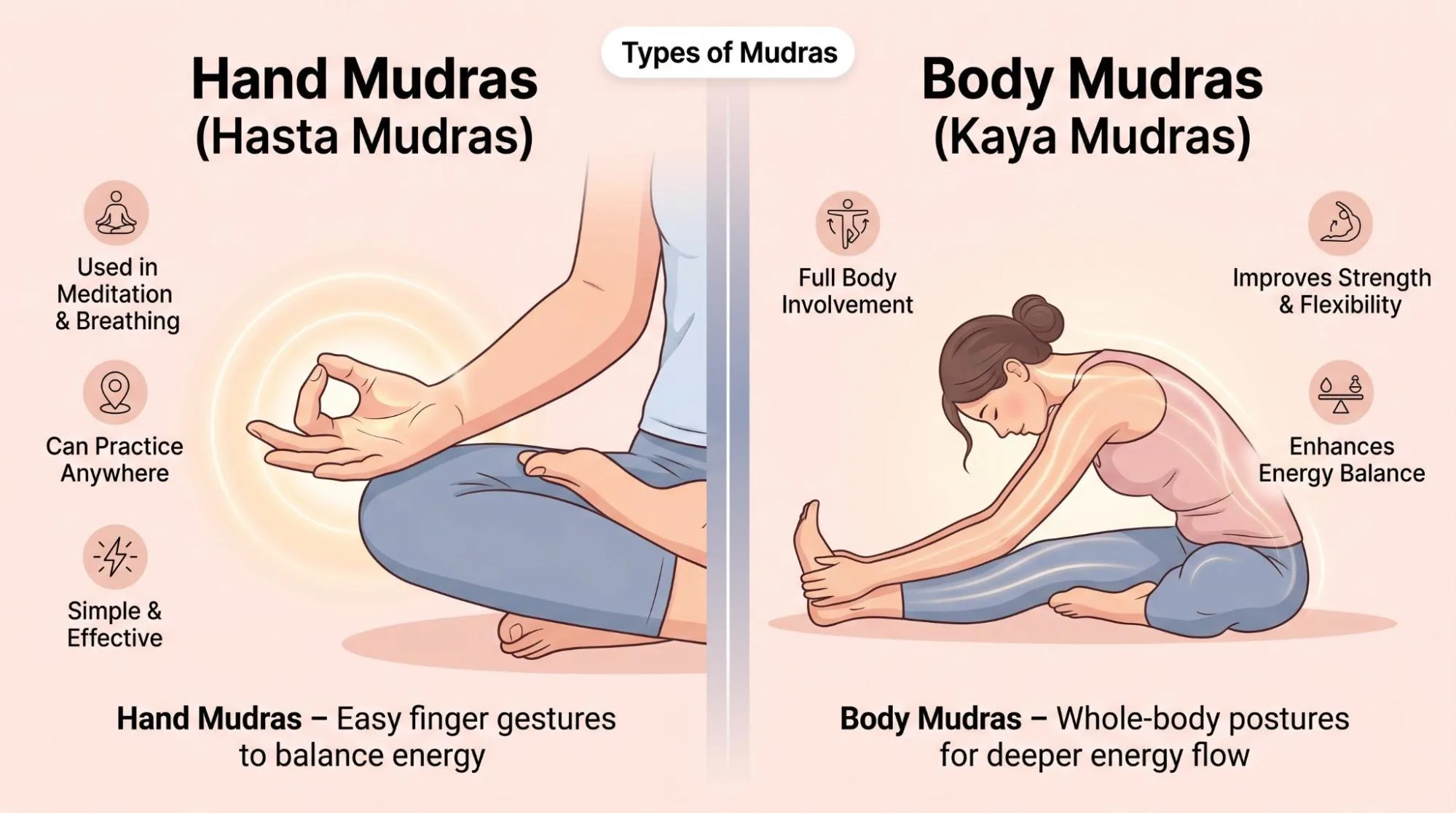
Most Popular Hand Mudras and Their Uses
There are many hand mudras, but a few are especially common in yoga and meditation. These are beginner-friendly and easy to add to a daily routine.
Practice gently. The fingers should touch lightly, not press hard.
Gyan Mudra
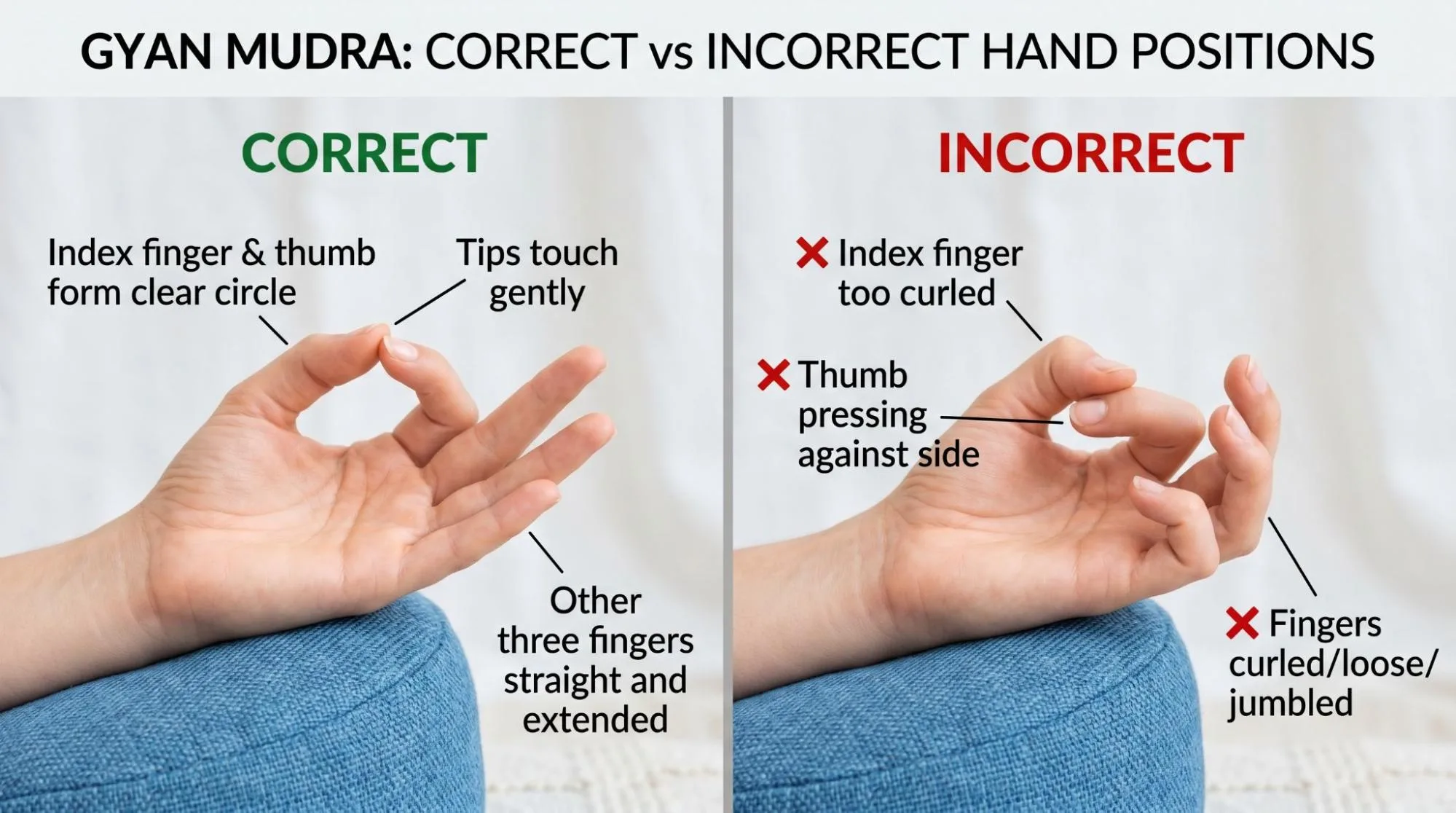
Gyan Mudra is made by touching the tip of the thumb to the tip of the index finger. The other three fingers stay relaxed and extended.
This mudra is often used for wisdom, focus, and mental clarity. It is one of the most common hand mudras for meditation and breathing practice.
Chin Mudra
Chin Mudra looks similar to Gyan Mudra, with the thumb and index finger touching. The palms usually face downward when resting on the knees.
This mudra is often used to create grounding and inner calm. It is helpful during seated meditation, pranayama, or quiet reflection.
Vayu Mudra
Vayu Mudra is connected with the air element. To practice it, fold the index finger toward the base of the thumb and gently place the thumb over it.
Traditionally, this mudra is used to balance excess air energy in the body. It may be practiced when someone feels restless, tense, or mentally scattered.
Prithvi Mudra
Prithvi Mudra is made by touching the tip of the ring finger to the tip of the thumb. The other fingers stay relaxed.
This mudra is linked with the earth element. Many people use it for grounding, stability, patience, and feeling more connected to the body.
Varun Mudra
Varun Mudra is made by touching the tip of the little finger to the tip of the thumb. The remaining fingers stay soft and extended.
It is connected with the water element. In traditional practice, Varun Mudra is used for emotional balance, softness, and inner flow.
Agni Mudra
Agni Mudra is linked with the fire element. It is usually practiced by folding the ring finger toward the palm and placing the thumb gently over it.
This mudra is traditionally connected with warmth, digestion, and inner drive. It should be practiced gently and avoided if it causes discomfort.
Dhyana Mudra
Dhyana Mudra is a classic meditation mudra. Place both hands in the lap, palms facing upward, with the right hand resting on the left. The thumbs may lightly touch.
This mudra creates a peaceful, centered feeling. It is often used during deep meditation because it supports stillness and quiet awareness.
Namaskar Mudra
Namaskar Mudra is made by bringing both palms together at the heart center. It is also known as Anjali Mudra.
This mudra represents respect, gratitude, and balance. In yoga classes, it is often used at the beginning or end of practice.
Hand Mudras for Chakra Balancing
In chakra-based yoga practice, different hand mudras are linked with different energy centers. These connections come from traditional systems, not modern medical science.
You can use these mudras as a mindful practice to support awareness, emotional balance, and inner reflection.
Root Chakra and Prithvi Mudra
The Root Chakra is connected with safety, grounding, and stability. Prithvi Mudra is often used because it relates to the earth element.
To practice, touch the ring finger and thumb together. Sit with a tall spine and breathe slowly, focusing on feeling steady and supported.
Sacral Chakra and Varun Mudra
The Sacral Chakra is connected with emotions, creativity, and flow. Varun Mudra is linked with the water element, making it a natural match.
Use this mudra during quiet breathing when you want to feel softer, more open, or emotionally balanced.
Solar Plexus Chakra and Agni Mudra
The Solar Plexus Chakra is connected with confidence, willpower, and personal strength. Agni Mudra relates to the fire element.
This mudra may be practiced when you want to build motivation or inner warmth. Keep the breath calm and avoid forcing the posture.
Heart Chakra and Vayu Mudra
The Heart Chakra is connected with love, compassion, and emotional openness. Vayu Mudra is often associated with balancing air energy.
Practice it with slow breathing and attention at the heart center. Let the shoulders soften and keep the chest relaxed.
Throat Chakra and Akash Mudra
The Throat Chakra is linked with communication, truth, and expression. Akash Mudra is connected with the space element.
To practice Akash Mudra, touch the tip of the middle finger to the tip of the thumb. This can be used during meditation when reflecting on honest and calm communication.
Third Eye Chakra and Hakini Mudra
The Third Eye Chakra is connected with intuition, focus, and inner seeing. Hakini Mudra is made by touching the fingertips of both hands together.
This mudra is often used for mental clarity and concentration. It works well with slow breathing and gentle attention between the eyebrows.
Crown Chakra and Dhyana Mudra
The Crown Chakra is connected with spiritual awareness and inner stillness. Dhyana Mudra is often used for this chakra because it supports deep meditation.
Place the hands in the lap, palms up, and allow the thumbs to touch lightly. Sit quietly and let the breath become natural.
How to Practice Hand Mudras Correctly
Practicing hand mudras correctly does not mean making the hands stiff or perfect. The goal is comfort, awareness, and consistency.
A relaxed mudra is better than a forced one. Your hands should feel calm, not strained.
Choose a Comfortable Sitting Position
Sit in a position that allows your spine to stay naturally tall. You can sit cross-legged, on a cushion, on a yoga mat, or in a chair.
The posture should feel stable. If your knees, hips, or back feel uncomfortable, adjust your position before starting.
Keep Your Hands Relaxed
The fingers should touch gently. Avoid pressing the fingertips too hard or locking the joints.
Rest the hands on your knees, thighs, or lap depending on the mudra. If your hands become tired, release the position and try again later.
Practice with Slow Breathing
Mudras work best with calm breathing. Breathe through the nose if comfortable, and let the breath move slowly.
You can try this simple pattern:
- Inhale gently for 4 counts
- Pause softly for 1 count
- Exhale slowly for 4 to 6 counts
- Repeat for a few minutes
This helps the body settle into the practice.
Start with Short Sessions
Beginners do not need long sessions. Start with 3 to 5 minutes and notice how you feel.
Over time, you can practice for 10 to 15 minutes. Longer sessions are fine, but only if they feel natural and comfortable.
Tips for Beginners
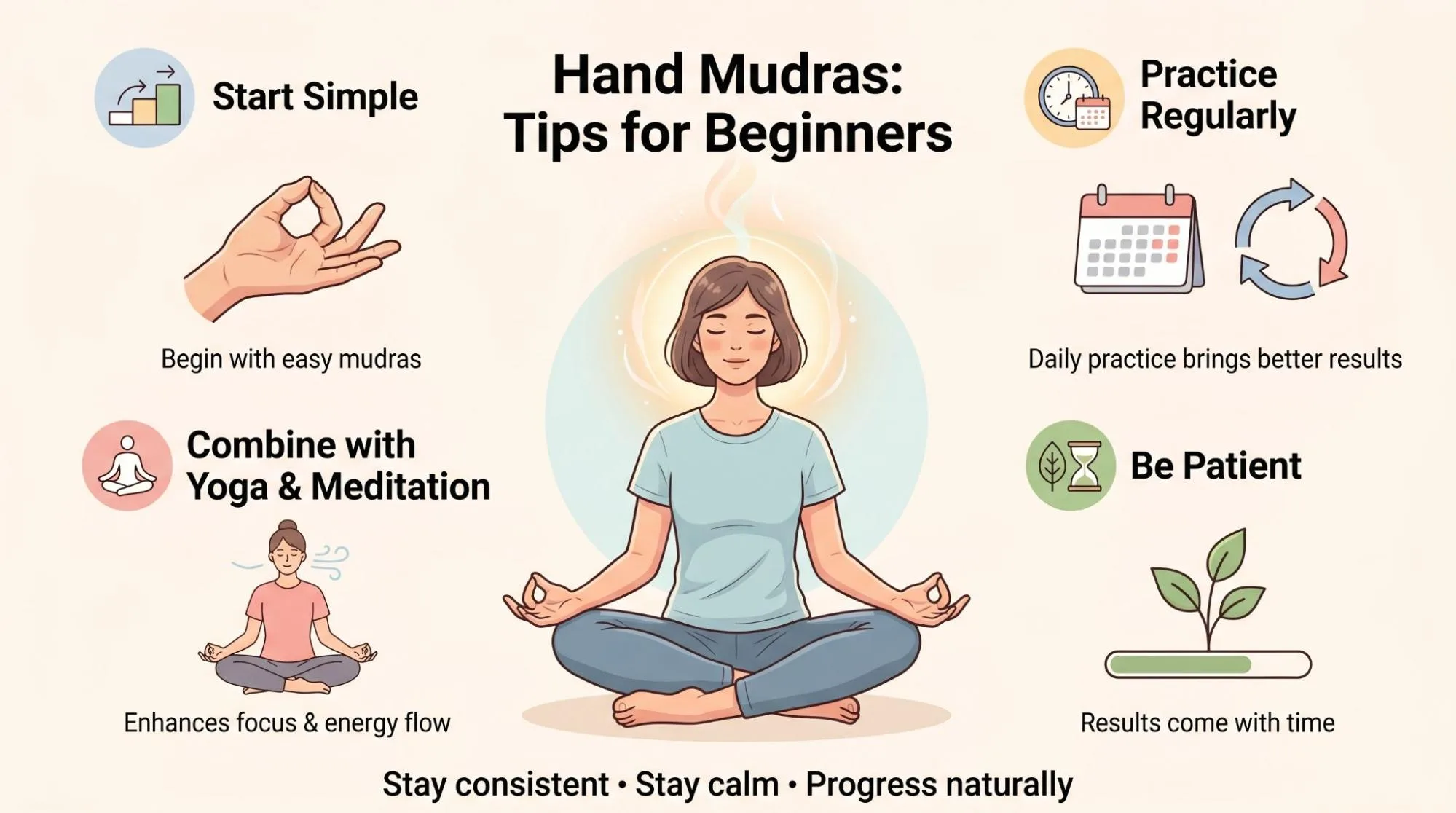
If you are new to hand mudras, keep the practice simple. You do not need to learn every mudra at once.
Start with one or two mudras and use them regularly. Familiarity matters more than variety.
Start with Simple Mudras
Gyan Mudra, Chin Mudra, Dhyana Mudra, and Namaskar Mudra are good choices for beginners.
They are easy to remember and fit naturally into meditation, breathing, and gentle yoga practice.
Practice Regularly
A short daily practice is better than a long session once in a while. Even 5 minutes can be helpful when done with attention.
Try adding a mudra before sleep, after waking up, or after your yoga practice. Linking it with an existing habit makes it easier to continue.
Combine Mudras with Yoga or Meditation
Mudras become more meaningful when paired with meditation, pranayama, or gentle movement.
For example, you can use Gyan Mudra during seated breathing or Prana Mudra after yoga practice to feel more alert and connected.
Be Patient with the Process
Hand mudras are subtle. You may not feel a dramatic change right away, and that is normal.
The benefits often come through regular practice. Over time, the hands, breath, and mind begin to work together more naturally.
Common Mistakes to Avoid
Hand mudras are simple, but a few common mistakes can make the practice less comfortable. The good news is that these mistakes are easy to fix.
The main rule is this: stay gentle.
Wrong Hand Position
Many beginners press the fingers too hard or hold the hands too stiffly. This can create tension instead of calm.
The fingertips should touch lightly. If you are unsure, look at a clear image or learn from a qualified yoga teacher.
Not Practicing Regularly
Practicing once and expecting a big result can lead to disappointment. Mudras work best as a steady habit.
Try choosing one mudra and practicing it for a week. This gives your body and mind time to become familiar with it.
Expecting Instant Results
Hand mudras are not instant solutions. They are supportive tools for awareness, breathing, and relaxation.
Some days you may feel calm quickly. Other days your mind may stay busy. Both experiences are normal.
Are Hand Mudras Scientifically Proven?
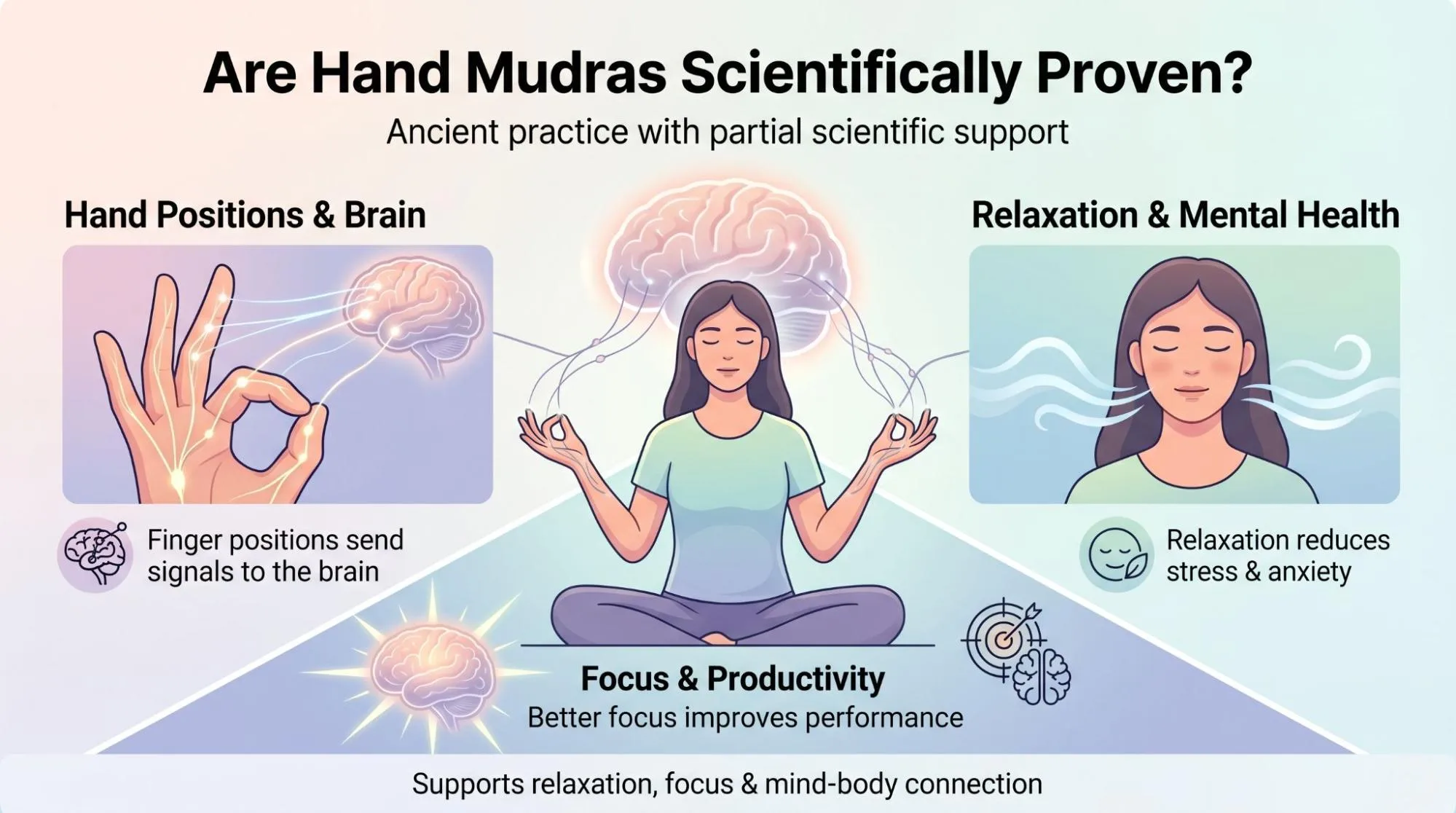
Hand mudras come mainly from traditional yoga, Ayurveda, meditation, and spiritual practice. Modern science has not fully proven every traditional claim about mudras.
Still, many parts of mudra practice connect with ideas that science does understand, such as relaxation, breath awareness, posture, attention, and the mind-body connection.
Modern Scientific View
Modern research on hand mudras is still limited. Some studies explore yoga, meditation, breathing, and relaxation, but mudras alone are not as deeply studied.
This means we should be honest. Mudras may support calmness and focus, but strong medical claims should be avoided.
Mind-Body Connection
Even without proving every traditional belief, hand mudras can support the mind-body connection. When you place your hands with care, you become more aware of your body.
This awareness can help slow racing thoughts, soften tension, and bring attention back to the breath.
Relaxation, Focus, and Mental Health
Hand mudras may help with relaxation and focus because they are often practiced with slow breathing and meditation.
For mental health concerns such as anxiety, depression, or trauma, mudras can be a supportive self-care practice, but they should not replace professional help when it is needed.
Learn More : Crown Chakra: Meaning, Spiritual Awakening, Balance, and Activation
Conclusion
Final Thoughts on Hand Mudras
Hand mudras are simple, meaningful, and easy to practice. They bring the hands, breath, and mind into one gentle rhythm.
Whether you use Gyan Mudra for focus, Prithvi Mudra for grounding, Vayu Mudra for balance, or Dhyana Mudra for meditation, each mudra gives you a small doorway into stillness.
Why You Should Add Mudras to Your Daily Routine
Adding hand mudras to your daily routine does not require much time. A few quiet minutes can help you feel more present, calm, and connected.
Start with one mudra. Sit comfortably. Breathe slowly. Let the practice stay simple. That is often where the real benefit begins.