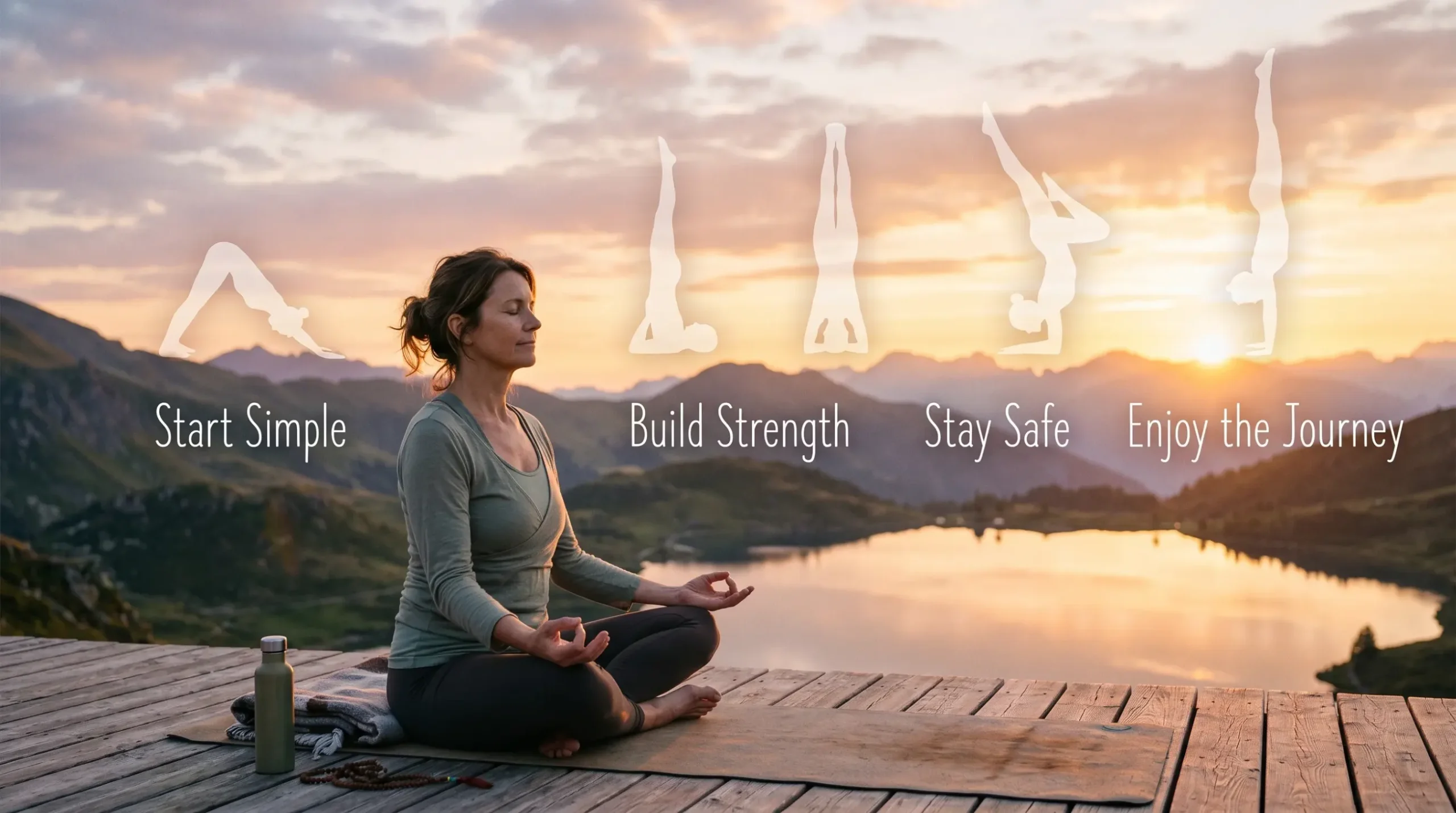
Yoga inversions can look dramatic from the outside, but they are not only about balancing upside down or mastering difficult poses. At their core, inversion variations help you build awareness, strength, patience, and trust in your body.
For some people, an inversion is a full handstand in the middle of the room. For others, it is simply resting in legs up the wall after a tiring day. Both count. That is one of the reasons inversion practice feels so approachable once you understand it properly.
Many beginners hear words like supported headstand, forearm stand, or pincha mayurasana and immediately assume inversions are only for advanced yoga students. In reality, yoga includes many gentle inversion variations that are calm, supported, and beginner-friendly.
Even common poses like downward facing dog, standing forward fold, and bridge pose place the body in a mild inverted position. These poses can help you slowly become comfortable with the feeling of changing your relationship with gravity.
A steady inversion practice is not about forcing the body into shapes. It is about learning control, balance, breathing, and body awareness one step at a time.
What Are Inversion Variations in Yoga?
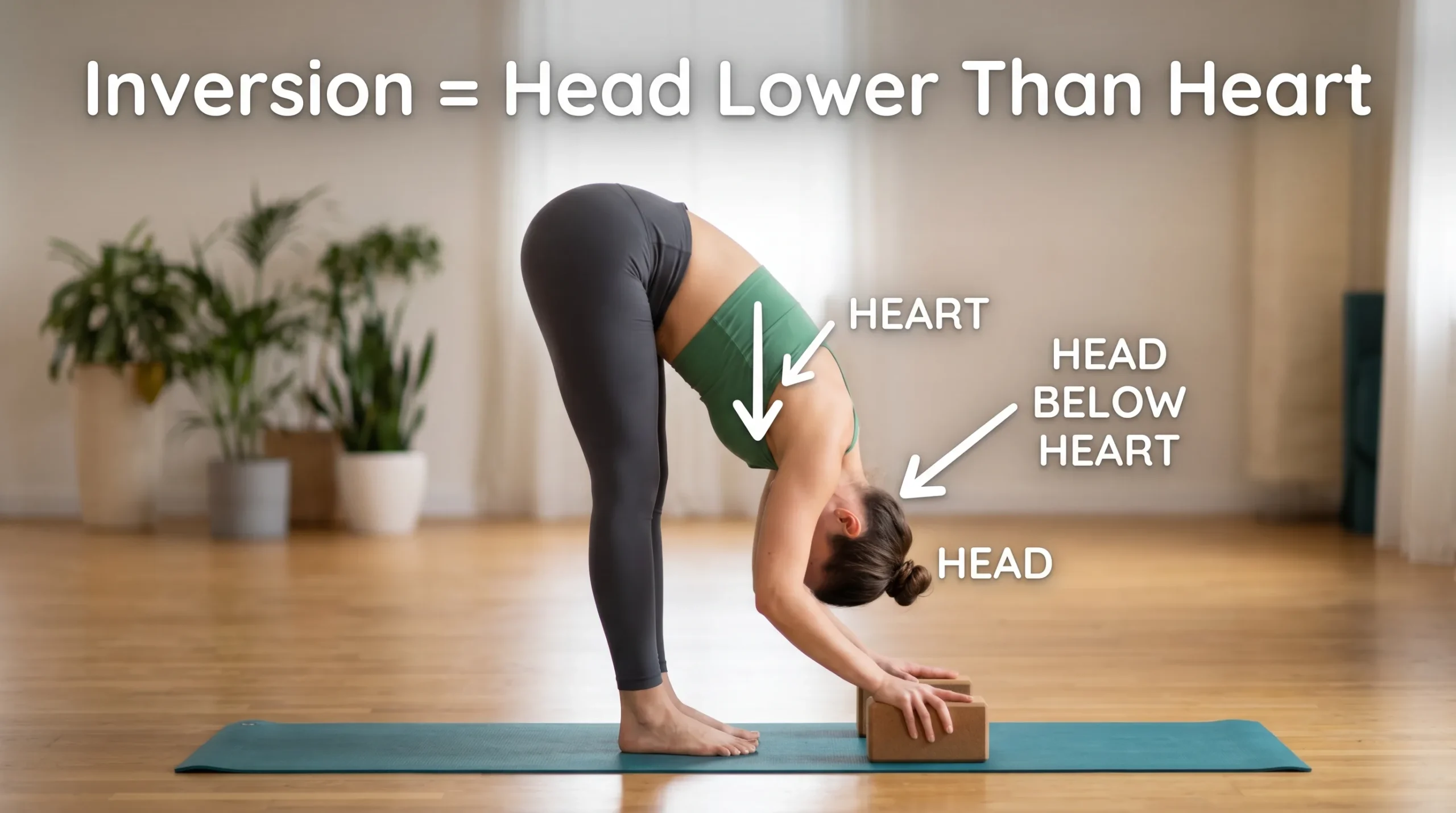
Inversion variations are yoga poses where the head moves below the heart or the body shifts into a partly or fully upside-down position. Some inversions are passive and restorative, while others require serious upper body strength and core stability.
The level of intensity depends on the pose itself.
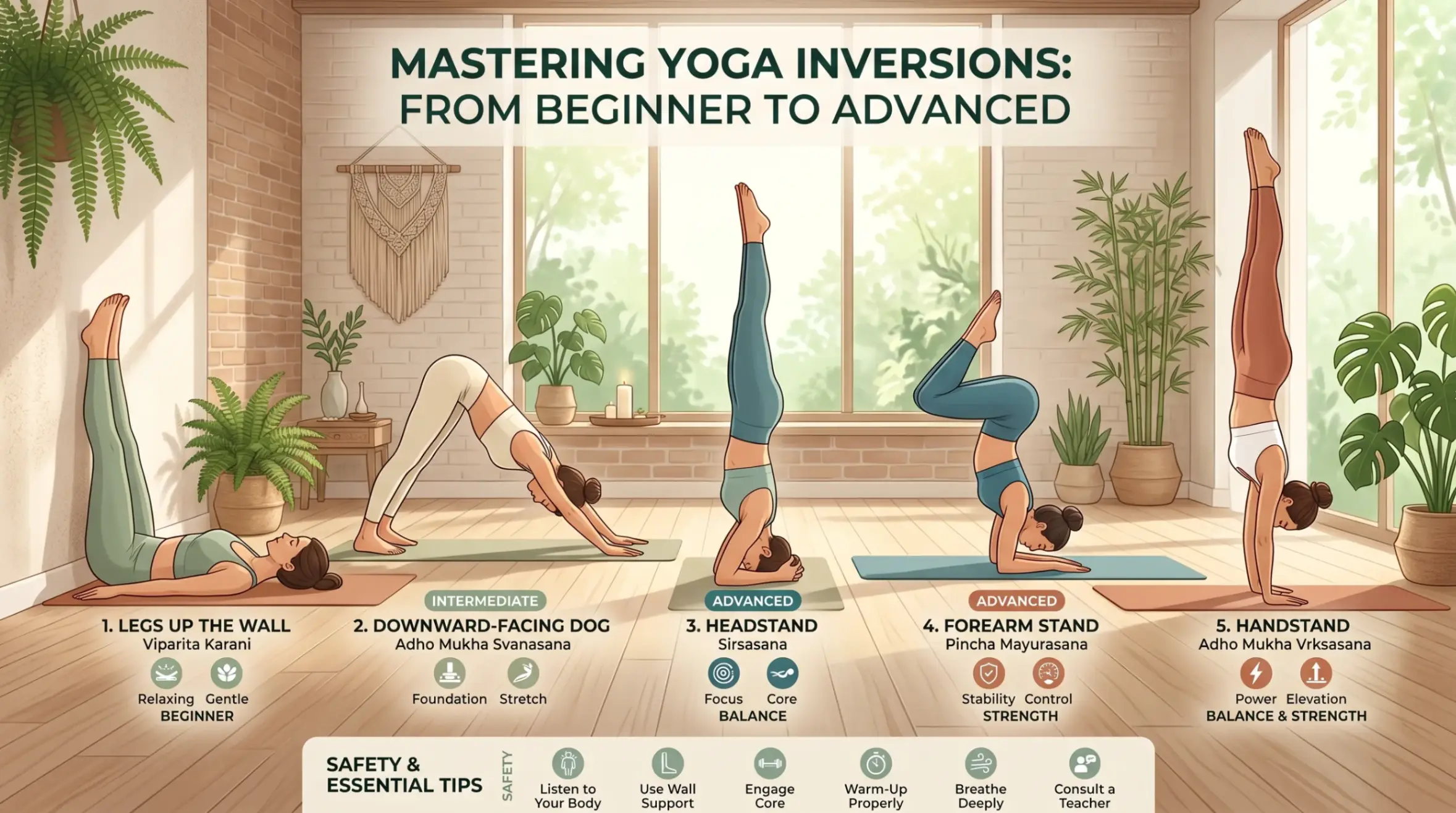
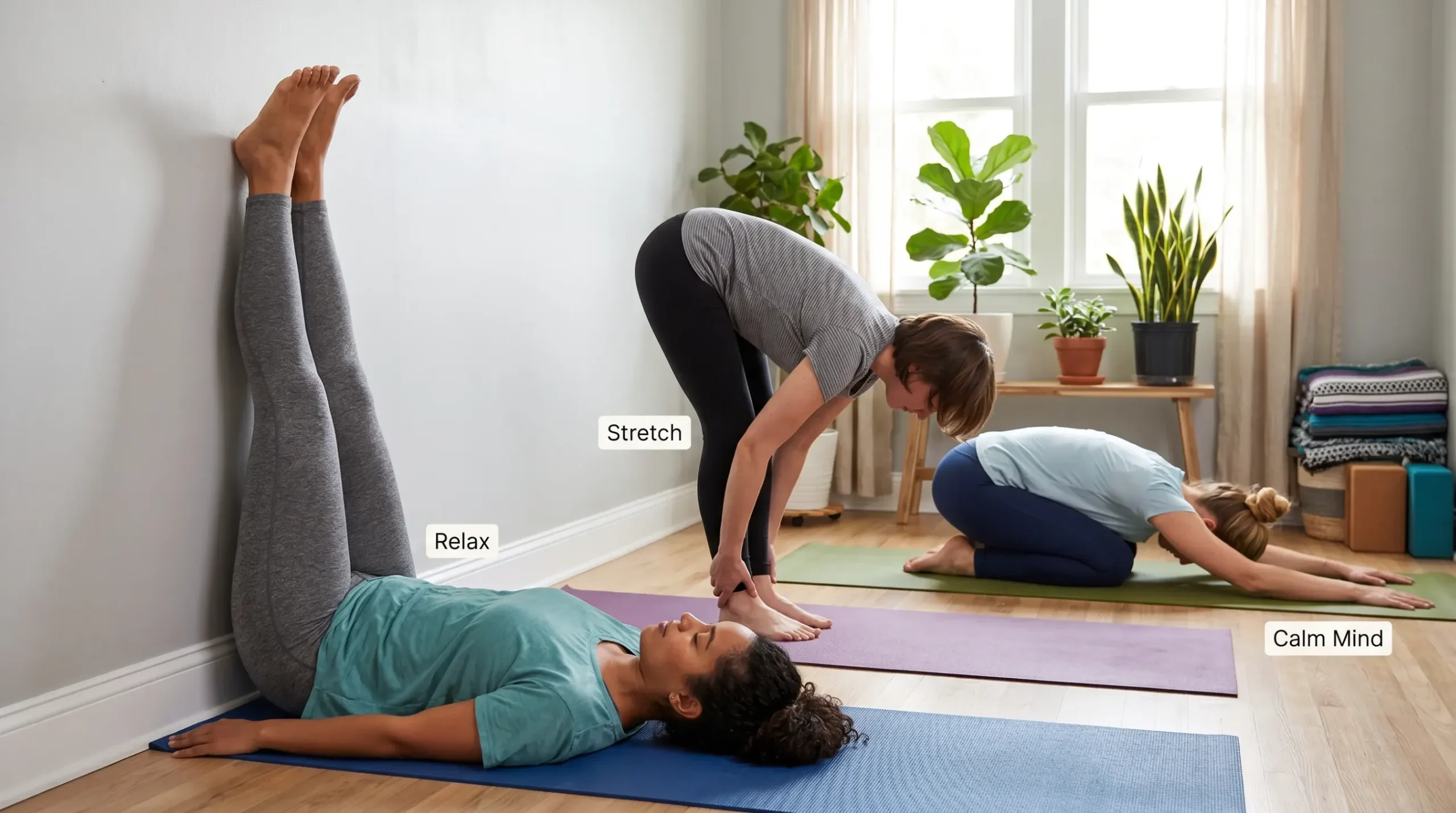
A gentle yoga inversion might look like:
- Legs up the wall
- Standing forward fold
- Child’s pose
- Downward facing dog
More advanced inversion variations include:
- Supported headstand
- Forearm stand
- Pincha mayurasana
- Adho mukha vrksasana
- Scorpion pose
The important thing to remember is that inversions exist on a spectrum. You do not need to jump straight into advanced inversions to experience the benefits of inversion practice.
Why Inversions Matter in Yoga Practice
Inversions challenge the body and mind in a very different way compared to standing poses or seated stretches. When you turn upside down, even slightly, your body has to organize itself differently.
Your shoulders stabilize. Your core strength becomes more active. Your breathing becomes more noticeable. Small alignment mistakes become easier to feel.
That is part of what makes inversion variations so valuable in yoga practice.
They Teach Body Awareness
Inversions demand attention. If your shoulders collapse, your balance shifts immediately. If your breathing becomes tense, the pose feels harder.
This teaches you how to notice subtle changes inside the body.
They Build Mental Focus
Many inversion poses require calm concentration. You cannot rush into a handstand or forearm stand while distracted.
Over time, this focused attention can carry into daily life as well.
They Encourage Patience
Yoga inversions rarely improve overnight. Progress usually happens slowly through repetition, preparation, and consistency.
That process teaches patience in a very practical way.
Learn More : Plow Pose Halasana Step by Step Guide
The Symbolic Side of Yoga Inversions
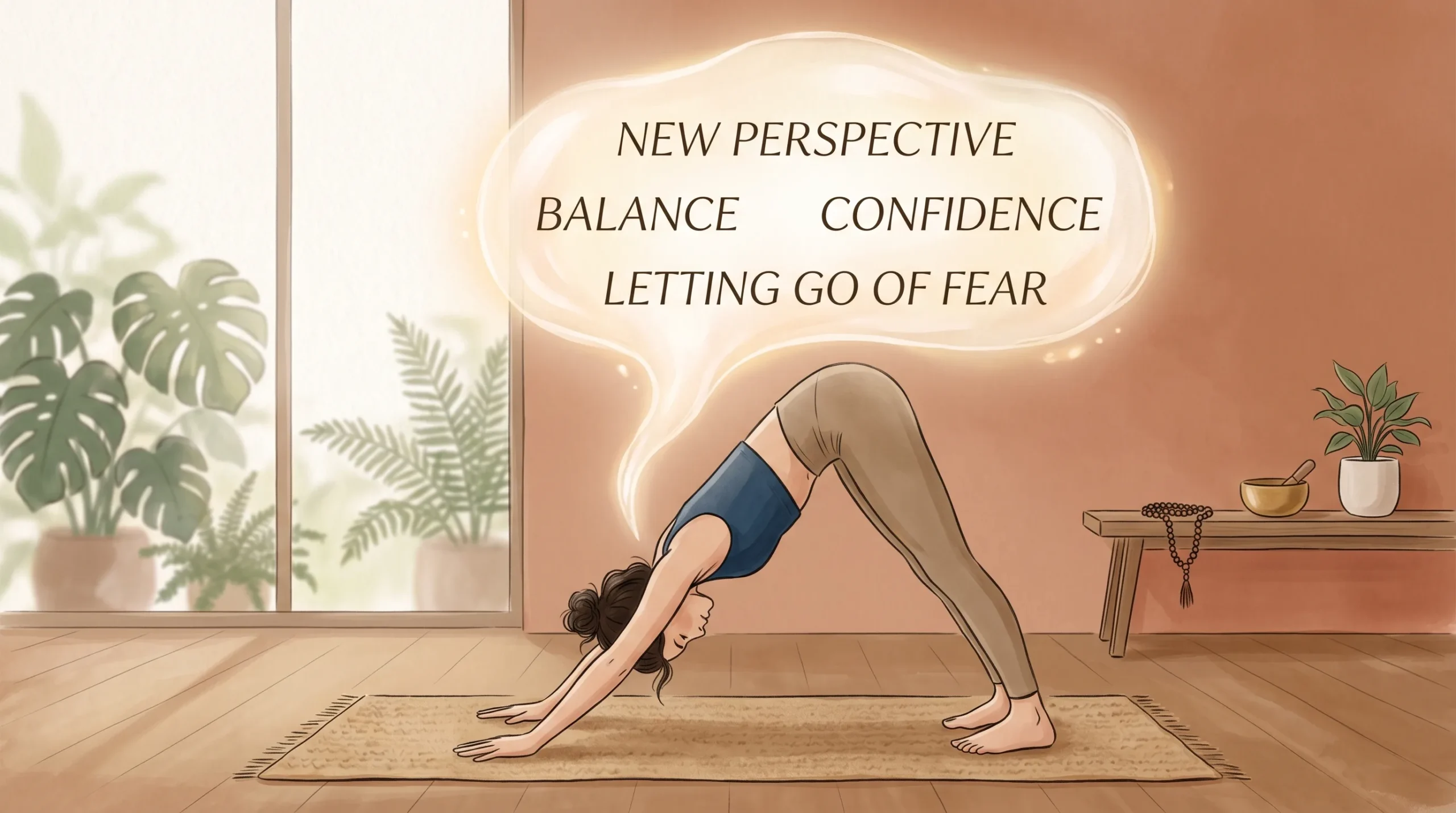
Yoga teachers often describe inversions as a way to change perspective. When your body turns upside down, your environment suddenly feels unfamiliar.
That shift can feel uncomfortable at first, especially for beginners.
But that discomfort also teaches something useful. It reminds you how to stay calm when things feel uncertain.
Learning to Work With Fear
Fear is extremely common in inversion practice. Many students worry about falling, losing balance, or hurting themselves.
That fear is not a weakness. It is simply part of learning.
The goal is not to remove fear completely. The goal is to approach inversions carefully enough that the body begins to feel safe.
Using a wall, yoga blocks, or a teacher’s guidance can make a huge difference here.
Trusting the Body More
As inversion practice develops, many people notice a gradual increase in confidence.
First, you learn where to place your hands. Then you learn how to stabilize your shoulders. Eventually, your body begins to understand balance in a more natural way.
That trust grows slowly, which is exactly how it should happen.
Beginner-Friendly Inversion Variations
Beginners should always start with simpler inversions before moving toward advanced poses. Gentle inversions help the body understand positioning without placing too much pressure on the neck, wrists, or shoulders.
Legs Up the Wall
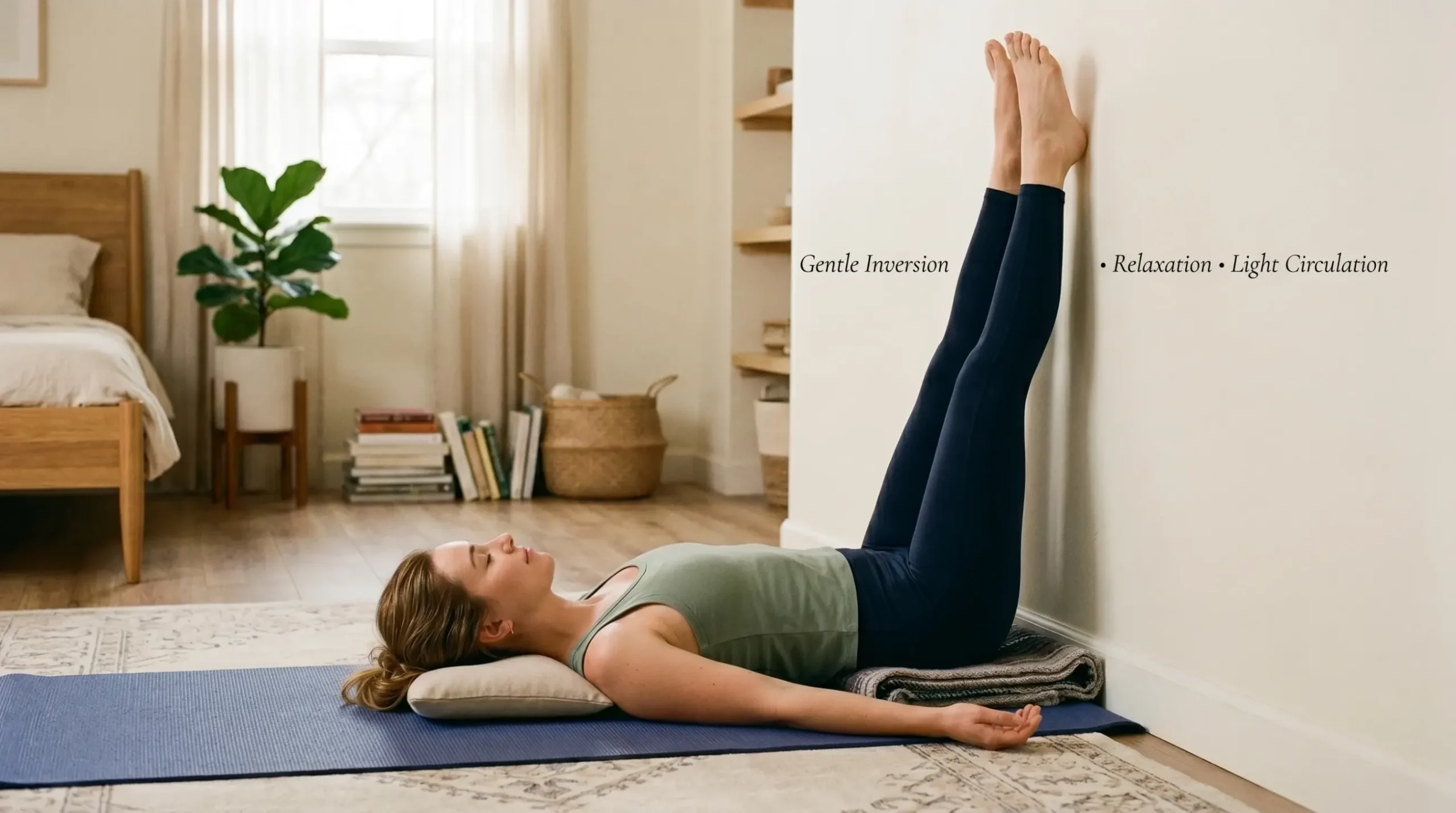
Legs up the wall is one of the safest and most calming inversion variations for beginners.
In this pose, you lie on your back with the legs resting vertically against a wall. The body stays supported while the legs relax upward.
Many people use this pose after long workdays, travel, or extended standing because it feels deeply restful.
Benefits of Legs Up the Wall
- Gentle support for blood flow
- Relaxation for tired legs
- Reduced physical tension
- Quiet breathing and nervous system support
You can stay here for several minutes comfortably.
Downward Facing Dog
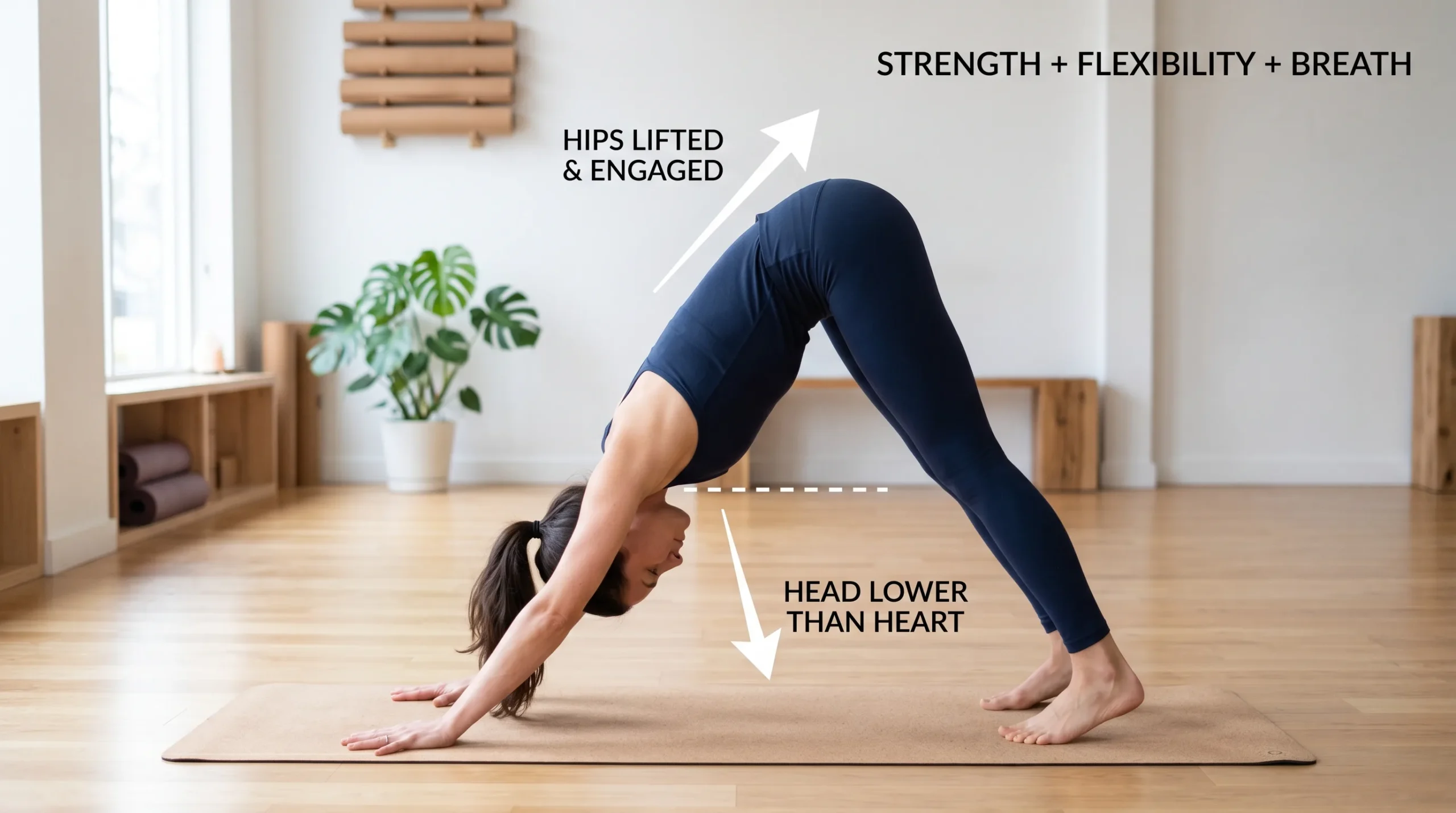
Downward facing dog is technically an inversion because the head lowers below the heart.
It may not look dramatic, but this pose teaches many important skills needed for stronger inversions later.
What It Helps Develop
- Shoulder stability
- Upper body strength
- Core activation
- Spinal lengthening
- Hand pressure awareness
Beginners often think their heels must touch the floor here, but bent knees are completely acceptable.
Learn More : Shoulder Stand Yoga Pose: Benefits, Steps, Safety Tips & Beginner Guide
Standing Forward Fold
Standing forward fold is another beginner-friendly inversion that introduces the feeling of lowering the head beneath the heart.
The knees can stay bent while the upper body relaxes downward.
A wide legged standing forward fold may feel more stable for people with tight hamstrings or lower back tension.
Helpful Beginner Tip
Do not force flexibility here. The goal is not to reach the floor. The goal is to relax the spine and breathe steadily.
Child’s Pose With Head Lowered
Child’s pose is one of the gentlest inversion variations in yoga.
The forehead rests on the floor, a block, or a folded blanket while the hips sink back toward the heels.
This pose often feels grounding and calming, especially after stronger movements.
It is also useful between advanced inversions because it allows the breath to settle.
Intermediate Inversion Variations
Intermediate inversion poses place more demand on the shoulders, upper body strength, and core control.
Before attempting these poses, beginners should already feel comfortable with simpler inversions.
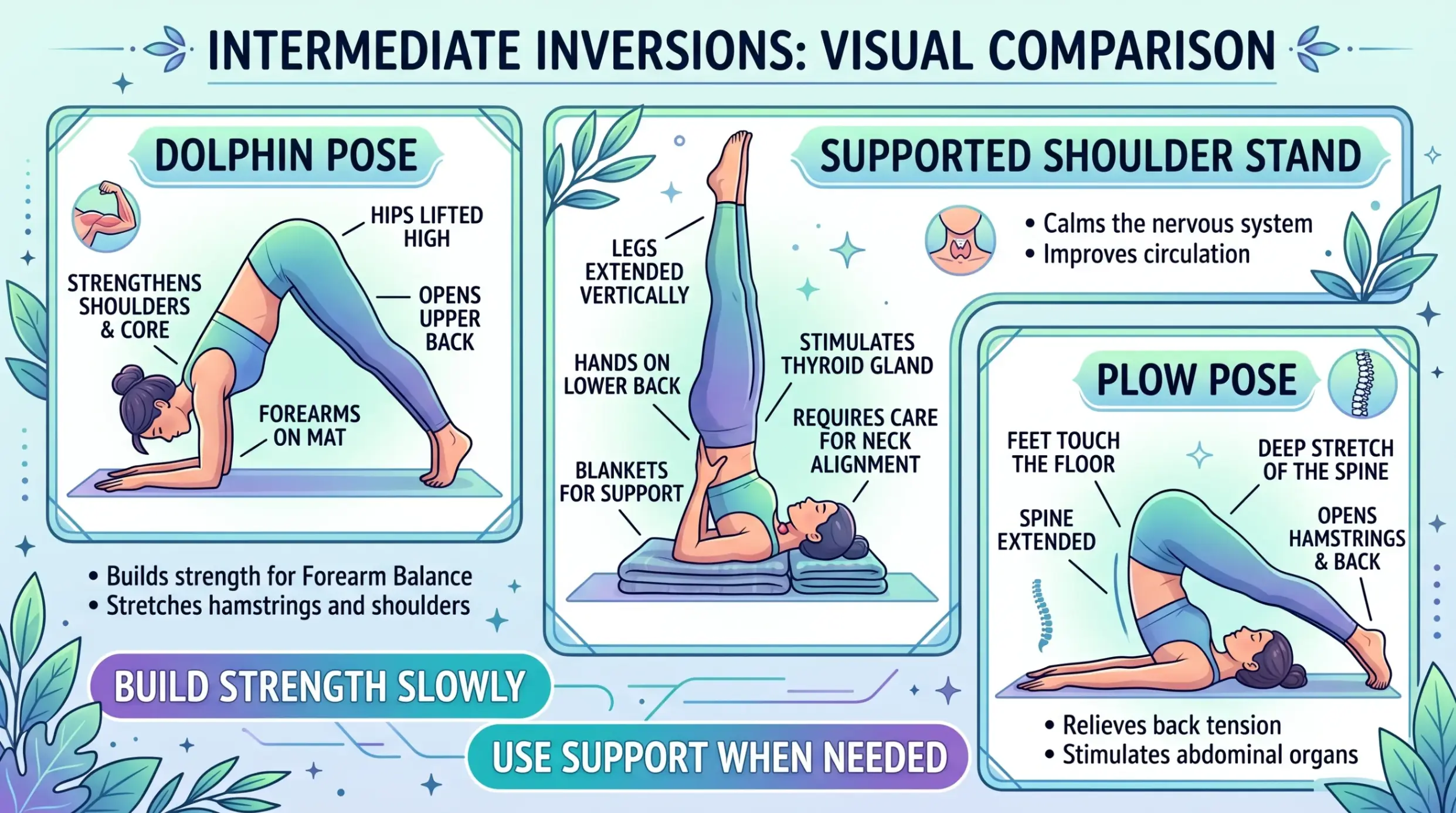
Dolphin Pose
Dolphin pose is one of the best preparation poses for forearm stand and pincha mayurasana.
Instead of balancing on the hands, the forearms stay grounded while the hips lift upward.
Why Dolphin Pose Matters
This pose strengthens:
- Shoulders
- Upper back
- Arms
- Core muscles
It also teaches shoulder stability without requiring full balance.
Supported Shoulder Stand
Supported shoulder stand is a traditional yoga inversion where the legs lift vertically while the body rests mostly on the shoulders and upper arms.
The neck should never carry heavy pressure in this pose.
Important Safety Note
Many yoga teachers recommend using folded blankets beneath the shoulders to reduce strain on the cervical spine.
People with neck problems or uncontrolled high blood pressure should avoid this pose unless cleared by a professional.
Plow Pose
Plow pose often follows shoulder stand.
The legs move overhead toward the floor behind the body, creating a deep spinal bend.
This pose can feel intense for beginners and is not suitable for everyone.
Avoid Plow Pose If:
- The neck feels compressed
- Breathing becomes difficult
- The lower back feels strained
- There is existing cervical spine discomfort
Advanced Inversion Variations in Yoga
Advanced inversions require preparation, patience, mobility, and strong body control. These poses should ideally be learned with qualified instruction.
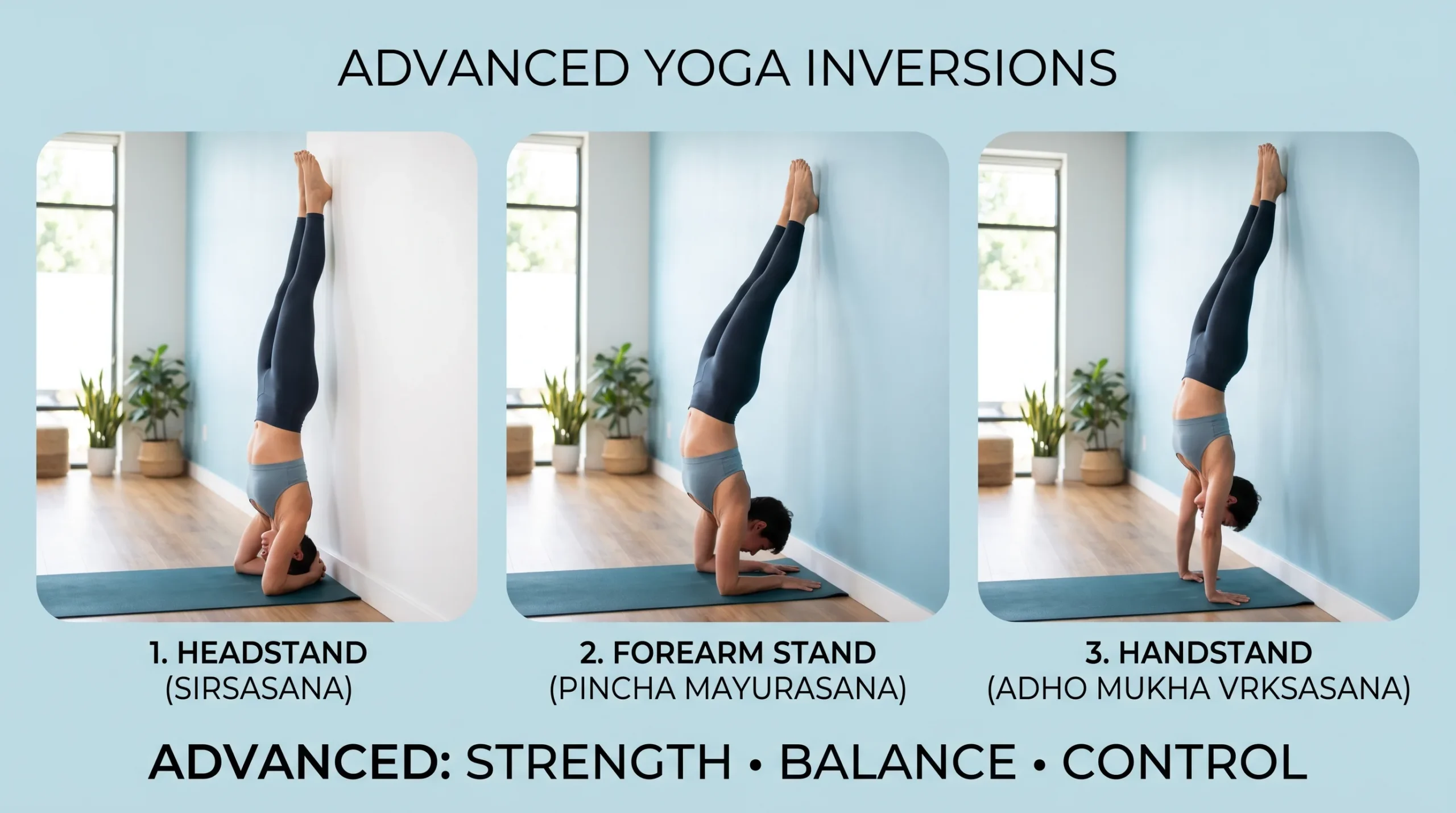
Supported Headstand
Supported headstand is one of the most recognized yoga inversion poses.
In a proper supported headstand, the forearms and shoulders actively support the body while the head remains relatively light.
Common Beginner Mistake
Many students accidentally dump too much weight into the skull and neck instead of activating the shoulders.
That is why proper setup matters so much.
People with neck injuries, glaucoma, dizziness, or uncontrolled high blood pressure should avoid headstand.
Forearm Stand (Pincha Mayurasana)
Pincha mayurasana, or forearm stand, balances the body on the forearms instead of the hands.
This pose combines shoulder stability with strong core engagement.
Dolphin pose is one of the best preparation exercises for forearm stand because it teaches similar shoulder positioning.
Scorpion Pose
Scorpion pose is an advanced backbend inversion usually entered from forearm stand.
The spine arches deeply while the feet move toward the head.
This pose requires:
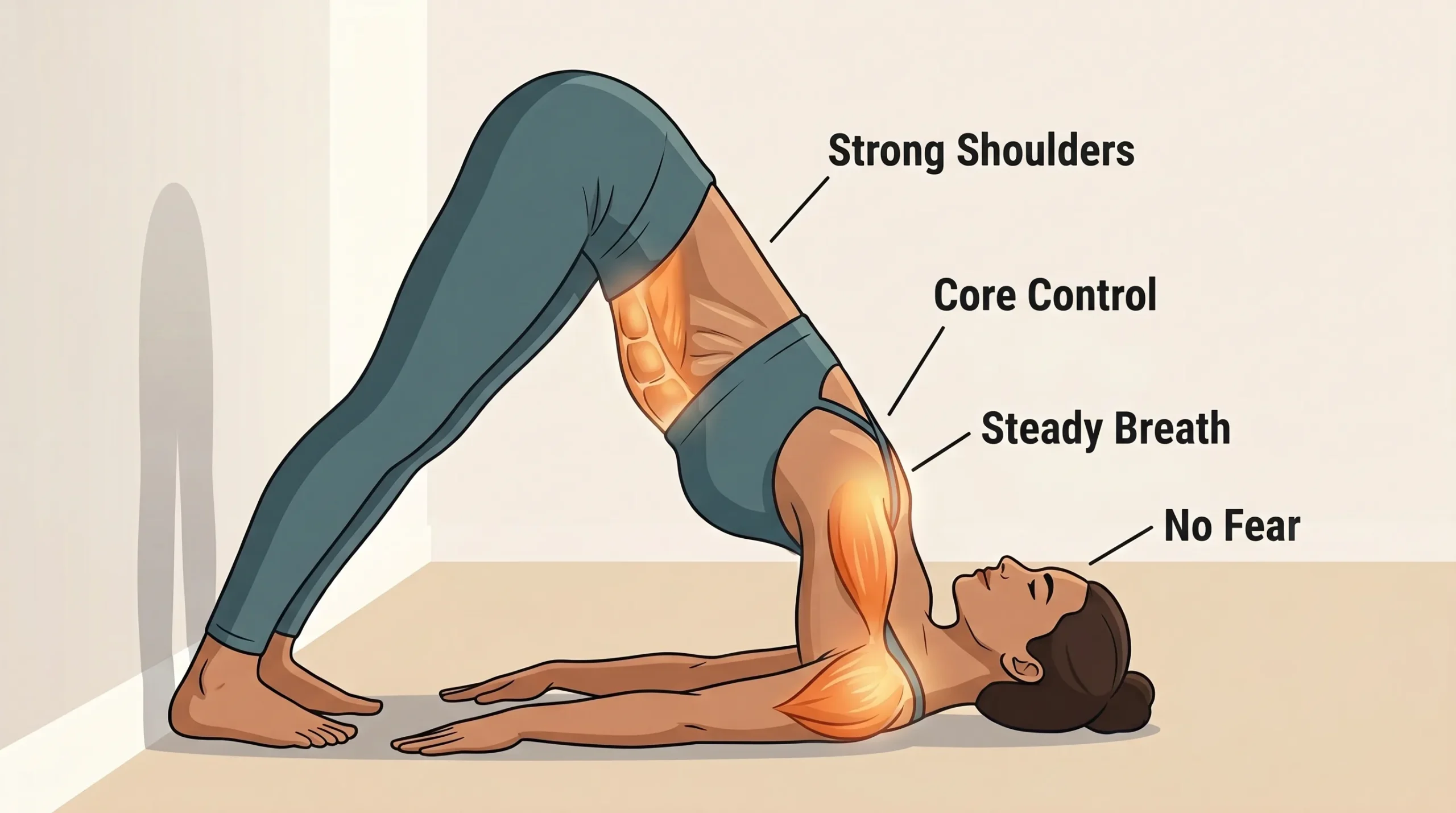
- Strong shoulders
- Flexible spine
- Core control
- Balance awareness
It should never be rushed.
Benefits of Inversion Variations in Yoga
Different inversion variations provide different benefits depending on the pose and how safely it is practiced.
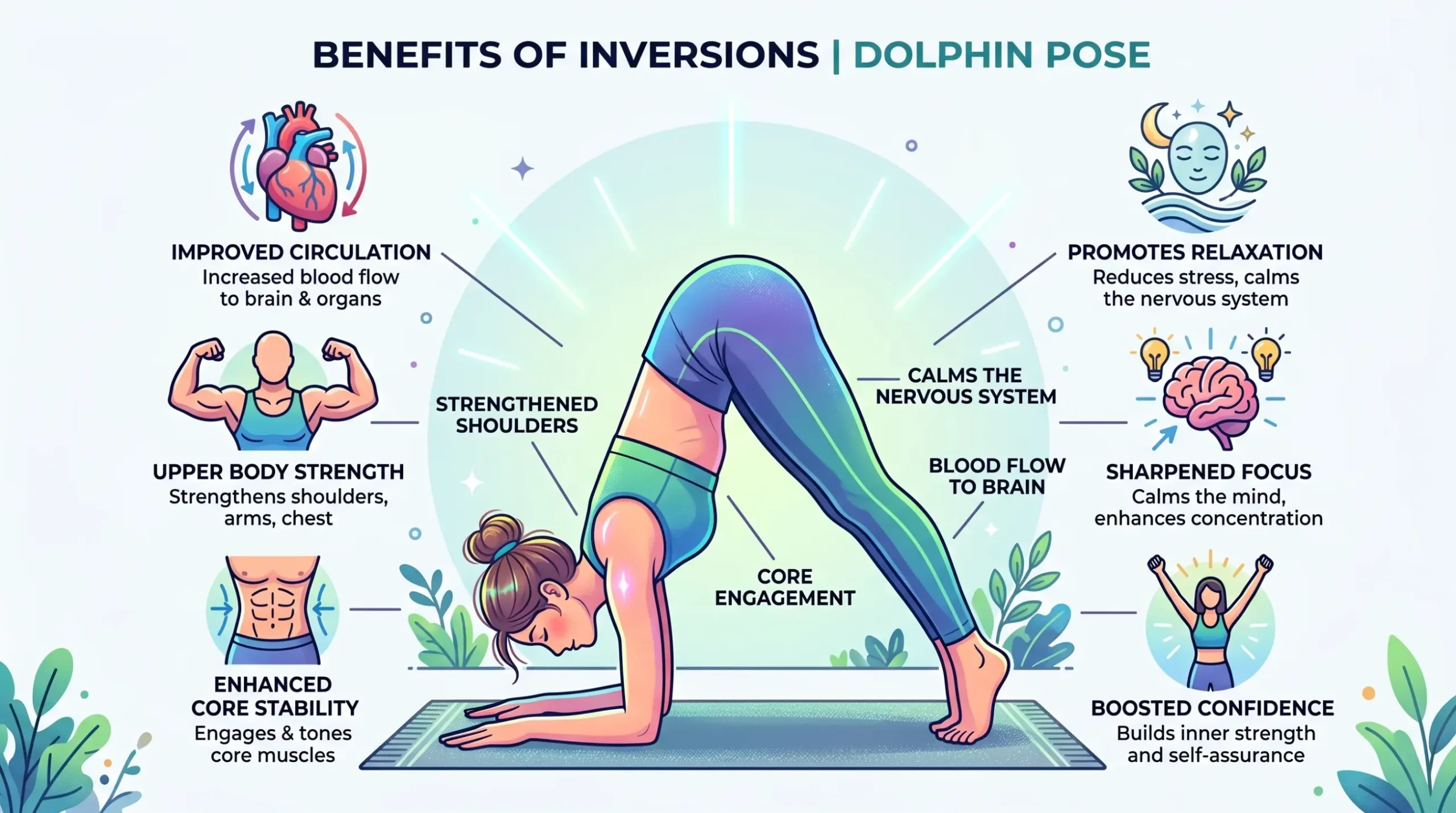
Improved Upper Body Strength
Many inversions strengthen the:
- Shoulders
- Arms
- Chest
- Upper back
- Wrists
Poses like dolphin pose, downward facing dog, handstand, and forearm stand gradually build strength through weight-bearing.
Better Core Stability
Core strength is essential for safe inversions.
Without proper core engagement, the lower back may overarch and balance becomes harder to control.
A strong core helps stabilize the entire body.
Increased Focus
Balancing upside down naturally sharpens concentration.
During inversions, attention shifts toward breathing, hand placement, shoulder engagement, and balance.
This focused attention can feel mentally refreshing.
Confidence Building
Fear often appears when learning inversions.
Working through that fear slowly can create a stronger sense of confidence over time.
Even small wins matter here.
Gentle Stress Relief
Not every inversion is intense.
Calming poses like:
- Legs up the wall
- Supported bridge pose
- Child’s pose
can help the body slow down and relax after a stressful day.
Signs Your Body Is Ready for Inversions
Before moving toward advanced inversions, your body should show certain signs of readiness.
You Have Shoulder Stability
If your shoulders collapse in downward facing dog or dolphin pose, stronger inversions may feel unsafe.
Shoulder control matters more than ambition.
You Can Activate Your Core
A connected core helps protect the spine during inversion practice.
You should feel able to lightly engage the belly without holding tension everywhere else.
You Can Breathe Calmly
Breath is one of the clearest signals in yoga.
If you constantly hold your breath during inversions, the body may not feel fully ready yet.
You Feel Comfortable Upside Down
Comfort develops gradually.
If mild inversions already feel overwhelming, stay with beginner poses longer. There is no need to rush.
How to Prepare for Inversion Practice
Preparation matters more than most people realize.
Strong inversions begin with careful warm-ups and smart progression.
Warm Up the Wrists
The wrists handle significant pressure during hand-balancing poses.
Helpful warm-up movements include:
- Wrist circles
- Palm stretches
- Tabletop rocking
- Finger activation drills
Activate the Shoulders
Dolphin pose, plank, and wall drills are excellent for building shoulder stability.
Think about pushing the floor away instead of collapsing into the shoulders.
Strengthen the Core
Core work does not have to be extreme.
Simple exercises like:
- Forearm plank
- Boat pose
- Slow leg lifts
- Hollow holds
can support inversion progress.
Use a Wall
The wall is one of the best inversion tools available.
It helps reduce fear while teaching alignment and body control.
Using support is smart, not weak.
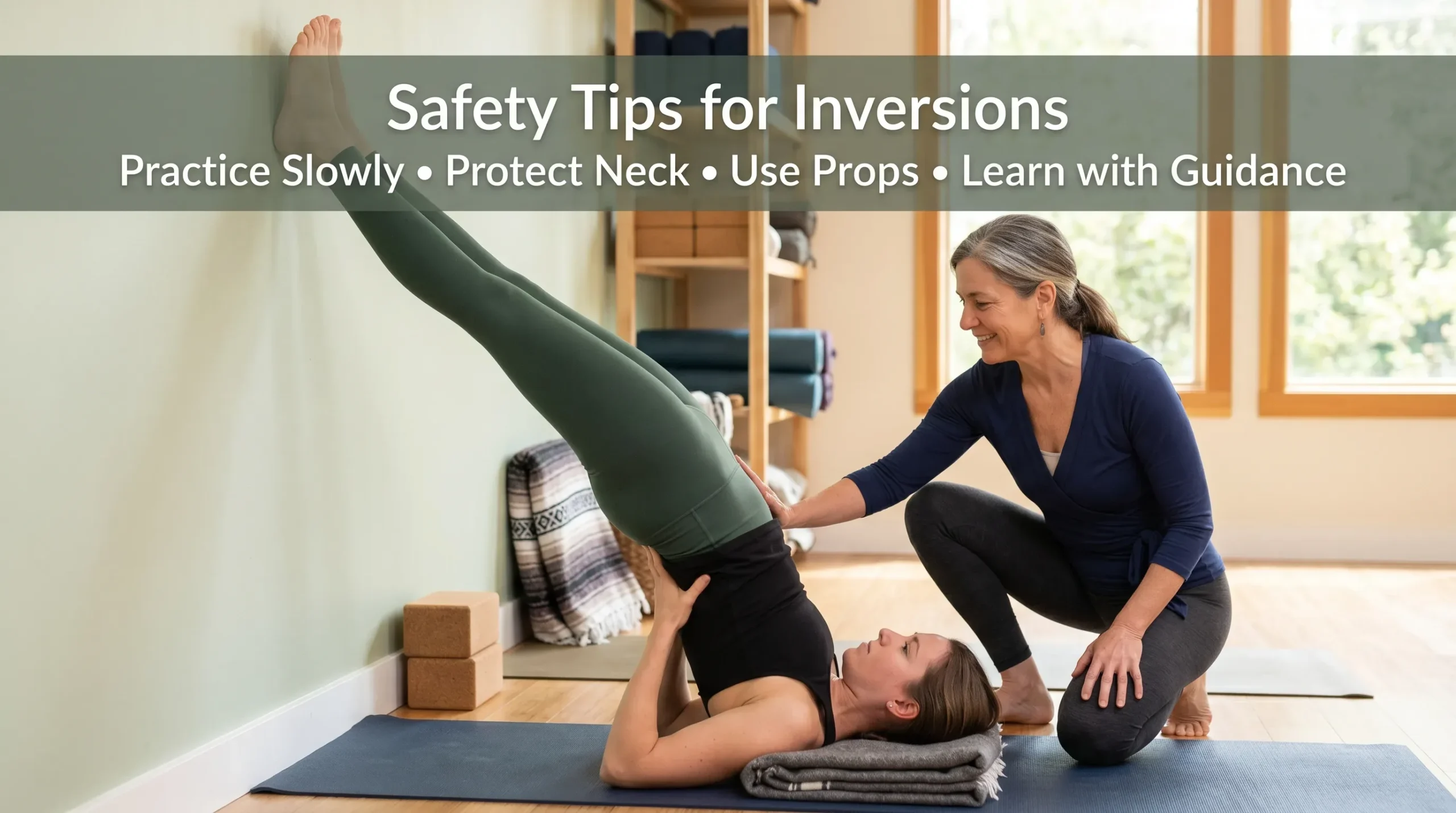
Important Safety Tips for Yoga Inversions
Inversions can be helpful, but they should always be practiced carefully.
Protect the Neck
Neck safety is critical in supported headstand, shoulder stand, and plow pose.
If the neck feels compressed, come out immediately.
Never Force a Pose
A forced inversion is not a successful inversion.
Pain, dizziness, numbness, or sharp pressure are all signs to stop.
Use Props When Needed
Helpful yoga props include:
- Blankets
- Blocks
- Bolsters
- Straps
- Walls
These tools make inversion practice safer and more accessible.
Learn Advanced Poses With Guidance
A qualified yoga teacher can spot alignment mistakes that are difficult to notice alone.
This is especially important for advanced inversions like:
- Headstand
- Pincha mayurasana
- Forearm stand
- Handstand
- Scorpion pose
Common Inversion Mistakes
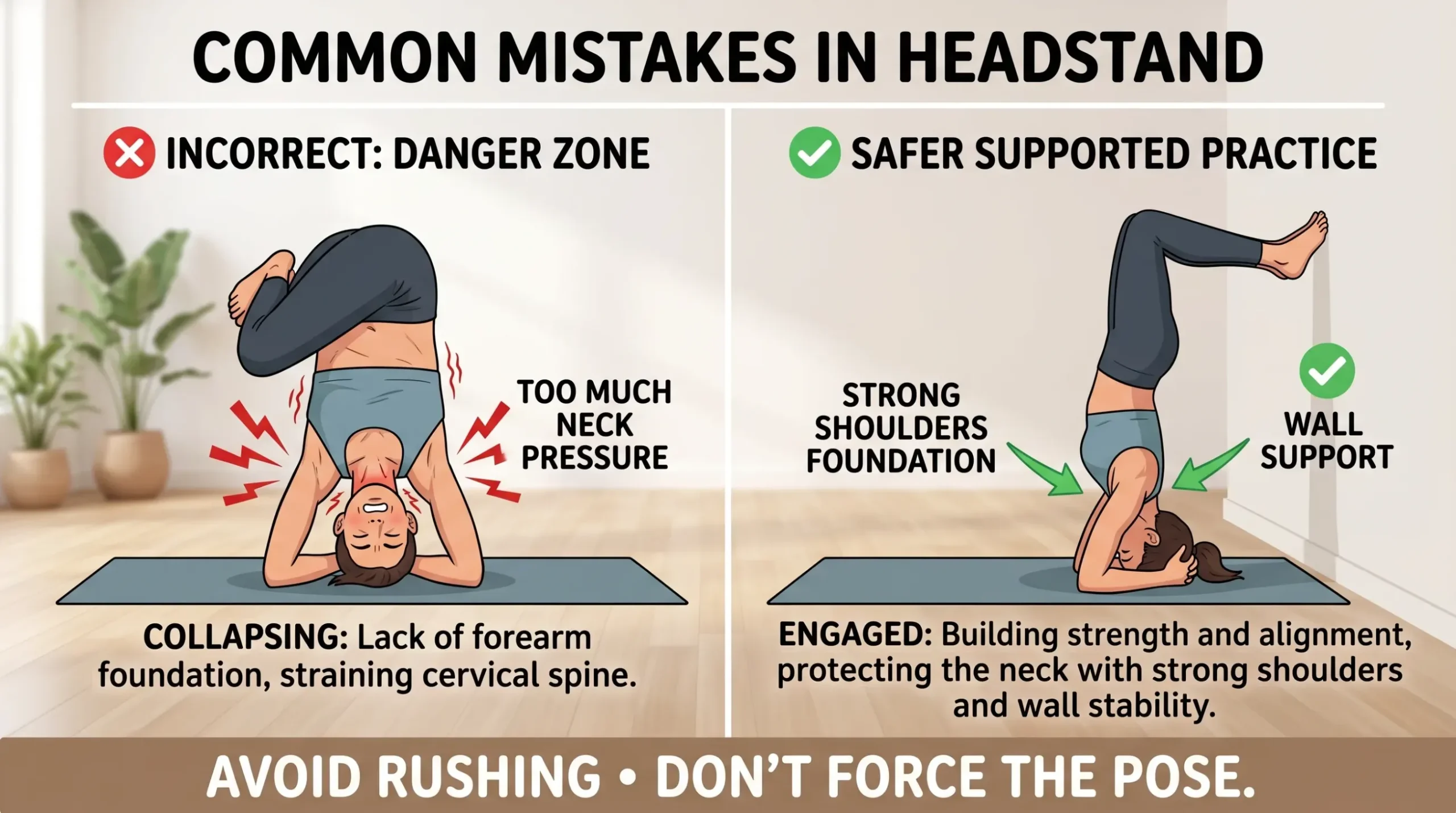
Many inversion injuries happen because students move too fast.
Rushing Into Advanced Poses
Skipping foundational strength work often leads to strain and instability.
Beginner poses exist for a reason.
Dumping Weight Into the Head
In supported headstand, the shoulders and arms should stay active.
Too much pressure on the skull can stress the neck.
Holding the Breath
Breath-holding usually creates more tension and less balance.
Steady breathing helps the body stay organized.
Ignoring Pain Signals
Pain is not progress.
Sharp discomfort, tingling, dizziness, or neck pressure should never be ignored.
Simple Beginner Inversion Sequence
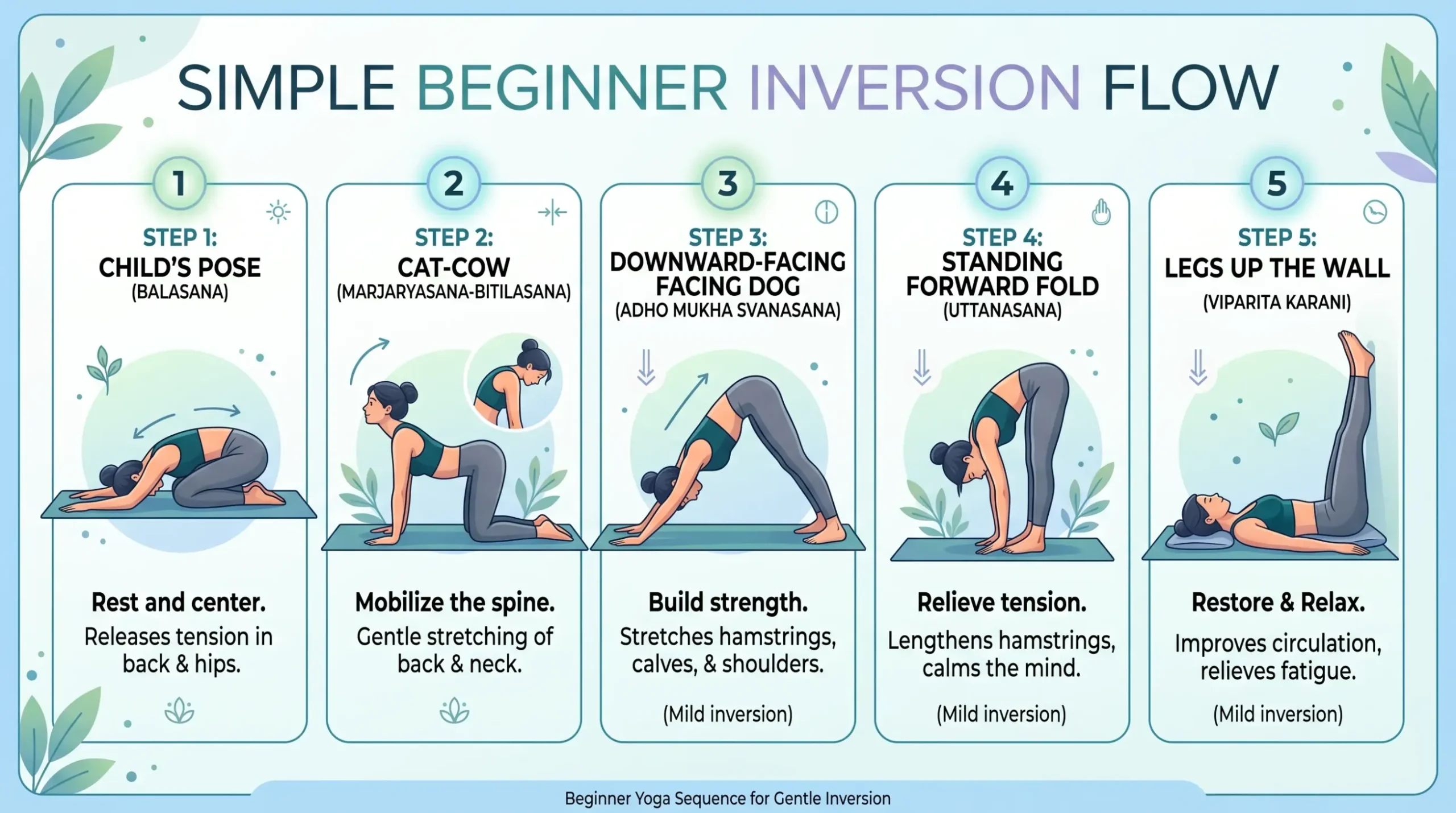
If you are new to inversion variations, this sequence is a safe place to begin.
1. Child’s Pose
Stay for 5 slow breaths.
2. Cat-Cow Stretch
Move slowly between cat pose and cow pose for several rounds.
3. Downward Facing Dog
Hold for 3 to 5 breaths while lengthening the spine.
4. Standing Forward Fold
Keep the knees soft and relax the neck.
5. Legs Up the Wall
Rest comfortably for several minutes.
Who Should Be Careful With Inversions?
Certain people should approach inversions carefully or avoid advanced poses completely without medical guidance.
Be cautious if you have:
- High blood pressure
- Glaucoma
- Serious neck problems
- Heart conditions
- Vertigo
- Recent surgery
- Shoulder injuries
- Wrist injuries
- Pregnancy without qualified prenatal guidance
Gentle inversions may still be appropriate in some situations, but advanced inversions require extra care.
FAQs About Inversion Variations in Yoga
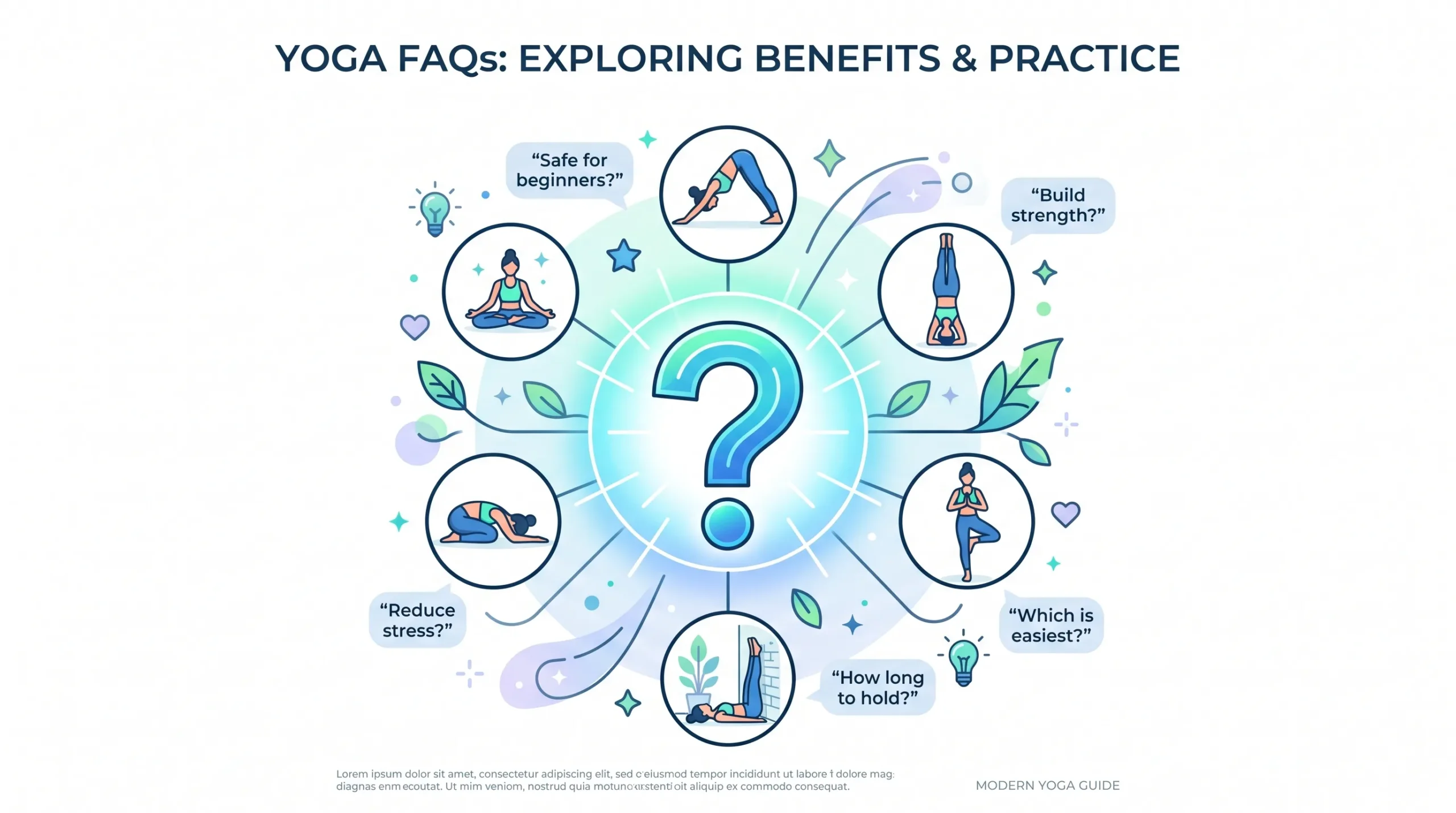
What are inversion variations in yoga?
Inversion Variations are yoga poses where the head is lower than the heart or the body moves into an upside-down position. They can be gentle, like legs up the wall, or advanced, like handstand, forearm stand, and supported headstand.
Are yoga inversion poses safe for beginners?
Some yoga inversion poses are safe for beginners when practiced correctly. Legs up the wall, downward facing dog, child’s pose with the head lowered, and standing forward fold are usually better starting points than headstand or shoulder stand.
What is the easiest yoga inversion pose?
Legs up the wall is usually the easiest yoga inversion pose. It is supported, calming, and does not require upper body strength or balance.
Which inversion variations in yoga are best for strength?
Downward facing dog, dolphin pose, handstand, forearm stand, pincha mayurasana, and supported headstand are useful for building strength. These poses work the shoulders, arms, wrists, upper back, and core.
How long should you hold yoga inversion poses?
Beginners can hold gentle inversions for a few breaths or a few minutes, depending on the pose. For stronger inversions, start with short holds. Quality matters more than time.
Who should avoid advanced yoga inversions?
People with uncontrolled high blood pressure, serious neck issues, glaucoma, heart conditions, dizziness, or recent surgery should avoid advanced inversions unless cleared by a healthcare professional. Headstand, shoulder stand, handstand, and forearm stand require extra care.
Can inversion variations in yoga help with stress?
Gentle Inversion Variations such as legs up the wall, supported bridge pose, and child’s pose may help the body relax. They encourage slower breathing and a quieter pace, which can support stress relief.
Do inversions improve balance?
Yes, many inversions can improve balance because they train body awareness, core control, shoulder stability, and focus. Start with supported poses before trying advanced inversions.
Learn More : Legs Up the Wall Pose Benefits: A Simple Guide to Viparita Karani