
Quick answer: Brahmacharya is a yoga principle commonly understood as wise use and moderation of energy. Depending on the tradition, it may include celibacy or mindful sexuality, but it should never be taught through shame, coercion, fear, or denial of healthy personal boundaries.
Important Context
Practise Brahmacharya in a way that respects consent, adult autonomy, health, relationships, rest, and professional responsibilities. It is not a medical treatment, and extreme restriction or guilt is not a healthy measure of spiritual progress. Seek qualified support for compulsive behaviour, relationship distress, or mental-health concerns.
Brahmacharya is one of those yoga teachings that can sound strict at first, especially when it is translated only as celibacy. But when you look deeper, the idea is much more practical and useful for modern life. Brahmacharya in Yoga Philosophy is not only about celibacy; it is mainly about using your energy with awareness and purpose.
In yoga philosophy, Brahmacharya is about how we use our energy. It asks a simple question: are you spending your life force wisely, or are you constantly giving it away to distractions, habits, people, and desires that leave you drained?
This does not mean rejecting pleasure or living without relationships. It means learning moderation, self-awareness, and purpose. In a world full of screens, noise, overwork, and emotional pressure, Brahmacharya can become a very grounded practice for protecting your focus, peace, and inner strength.

What Is Brahmacharya in Yoga Philosophy?
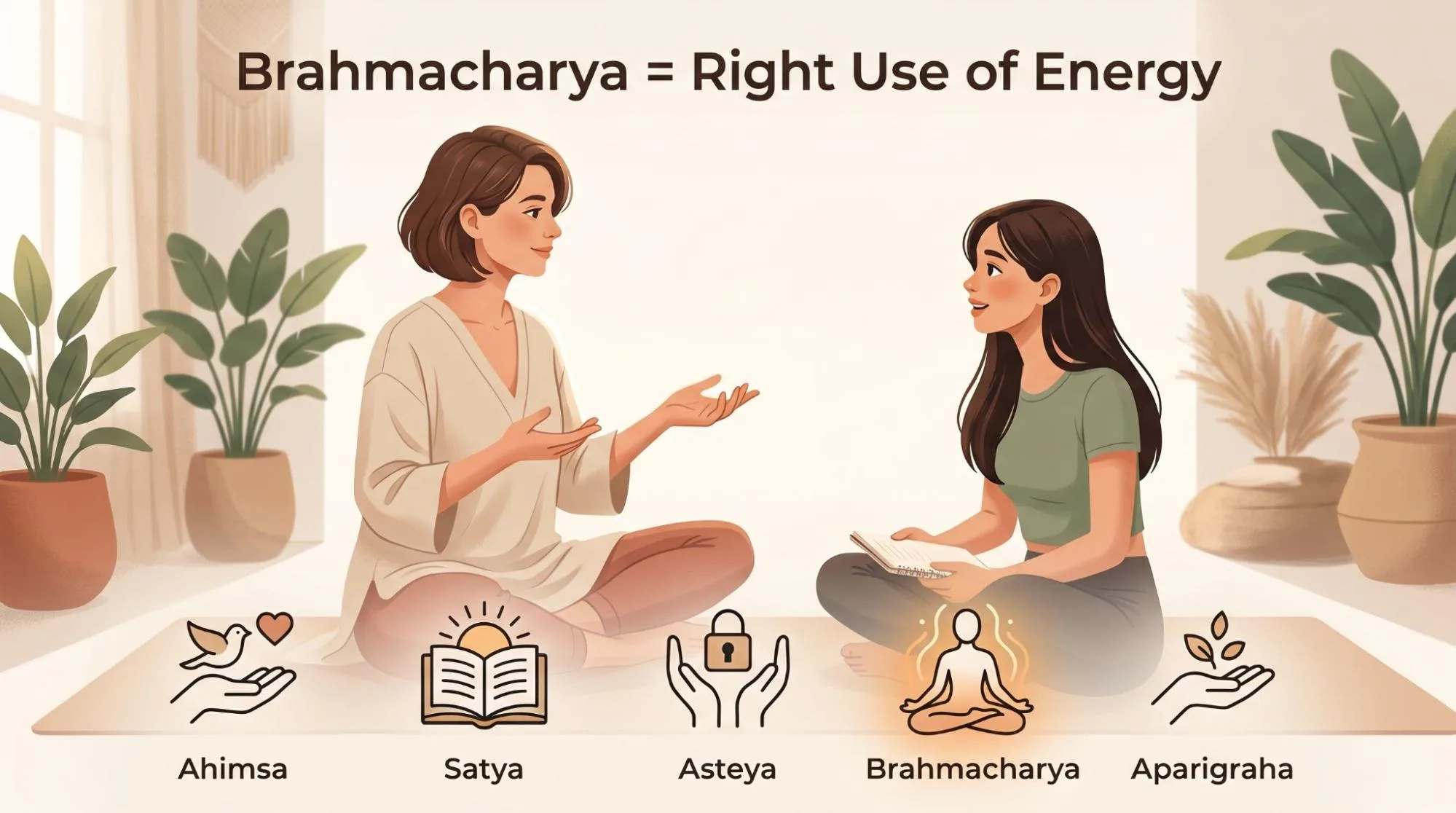
Brahmacharya in Yoga Philosophy teaches that self-control is not punishment, but a way to protect your focus, peace, and inner strength. Brahmacharya is the fourth Yama in Patanjali’s Eight Limbs of Yoga. The Yamas are ethical guidelines that help a person live with more awareness, discipline, and harmony.
The word Brahmacharya is often understood as “right use of energy.” Traditionally, it was linked with celibacy and spiritual discipline. But at its heart, Brahmacharya teaches restraint, balance, and mindful living.
It is not only about sexual energy. It is also about mental energy, emotional energy, physical energy, and spiritual energy.
When practiced properly, Brahmacharya helps you stop wasting energy on things that weaken you and start directing that energy toward what truly matters.
Traditional Meaning of Brahmacharya
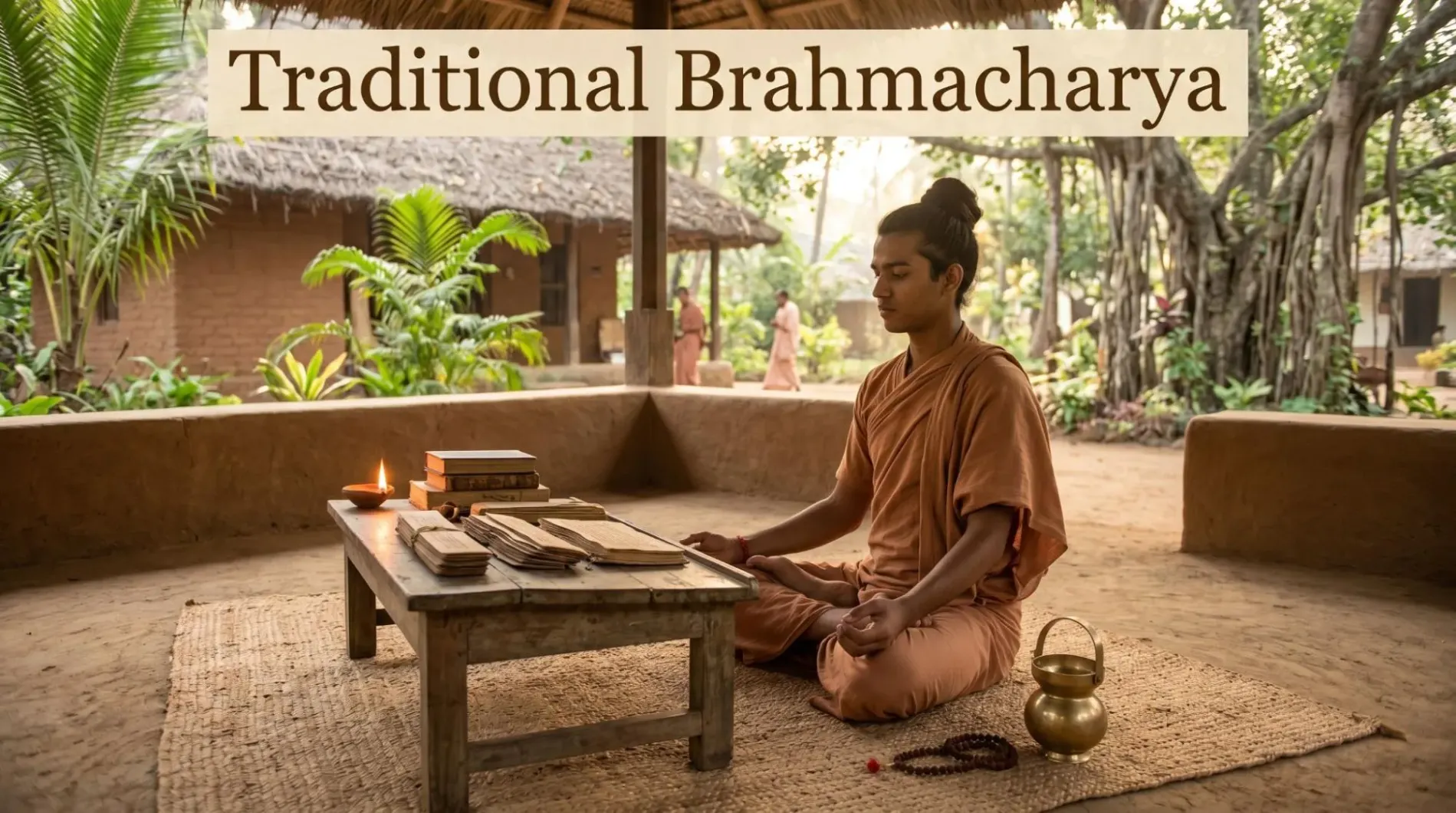
Traditionally, Brahmacharya was closely connected with celibacy. In ancient yogic and monastic life, students and spiritual seekers were encouraged to conserve sexual energy so they could focus fully on study, meditation, and self-realization.
This made sense in that context. A life dedicated to spiritual practice required simplicity, discipline, and fewer distractions.
For monks, sages, and serious seekers, Brahmacharya meant complete control over desire. It was seen as a way to preserve prana, strengthen the mind, and move closer to higher consciousness.
But yoga philosophy is not frozen in the past. The deeper wisdom behind Brahmacharya can still be applied today, even for people living normal family, work, and social lives.
Learn More : Yama and Niyama: Meaning, Principles, Benefits, and Daily Practice
Modern Meaning of Brahmacharya
In modern life, Brahmacharya in Yoga Philosophy can be understood as conscious energy management.
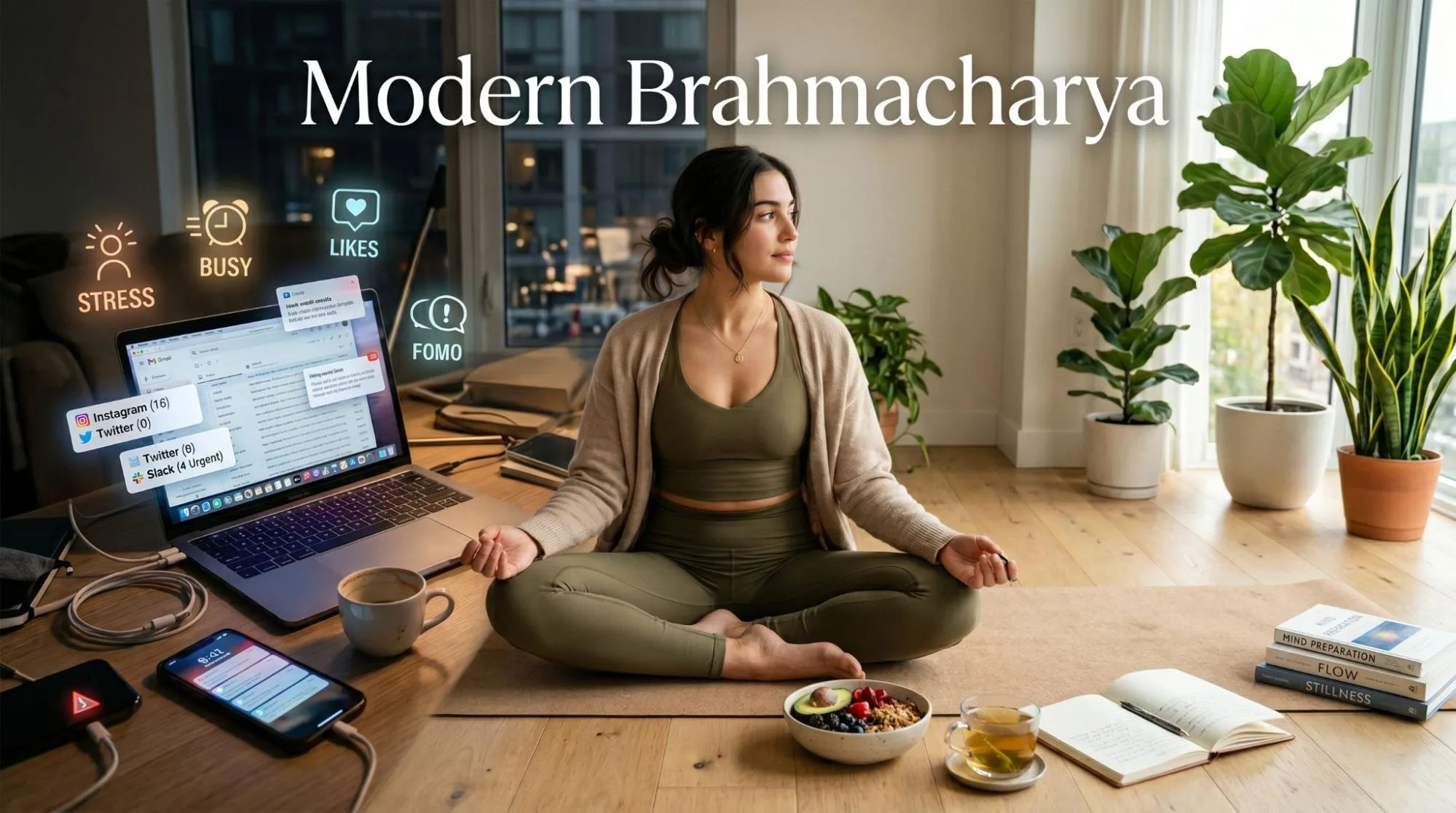
It means being mindful of where your attention, time, emotions, and body energy are going. You do not have to live like a monk to practice it. You simply begin noticing what drains you and what nourishes you.
Modern Brahmacharya may include:
- Using social media with limits
- Avoiding unhealthy emotional attachments
- Practicing moderation in food, entertainment, and intimacy
- Resting before burnout
- Choosing meaningful work over endless distraction
- Building relationships based on respect rather than neediness
So, Brahmacharya today is not about denying life. It is about living with more clarity.
Brahmacharya and Conscious Energy Management
Every person has a limited amount of energy each day. You may call it focus, attention, willpower, emotional capacity, or prana. Whatever name you use, you can feel when it is gone.
You feel tired after too much scrolling. You feel heavy after a toxic conversation. You feel scattered after jumping from one distraction to another.
Brahmacharya teaches you to protect that energy.
Instead of reacting to every urge, message, desire, or demand, you pause and choose. That small pause is powerful. It helps you decide whether something is worth your energy or not.
This is why Brahmacharya is deeply connected with self-respect. You stop treating your energy as something cheap.
Why Brahmacharya Is Important in Modern Life
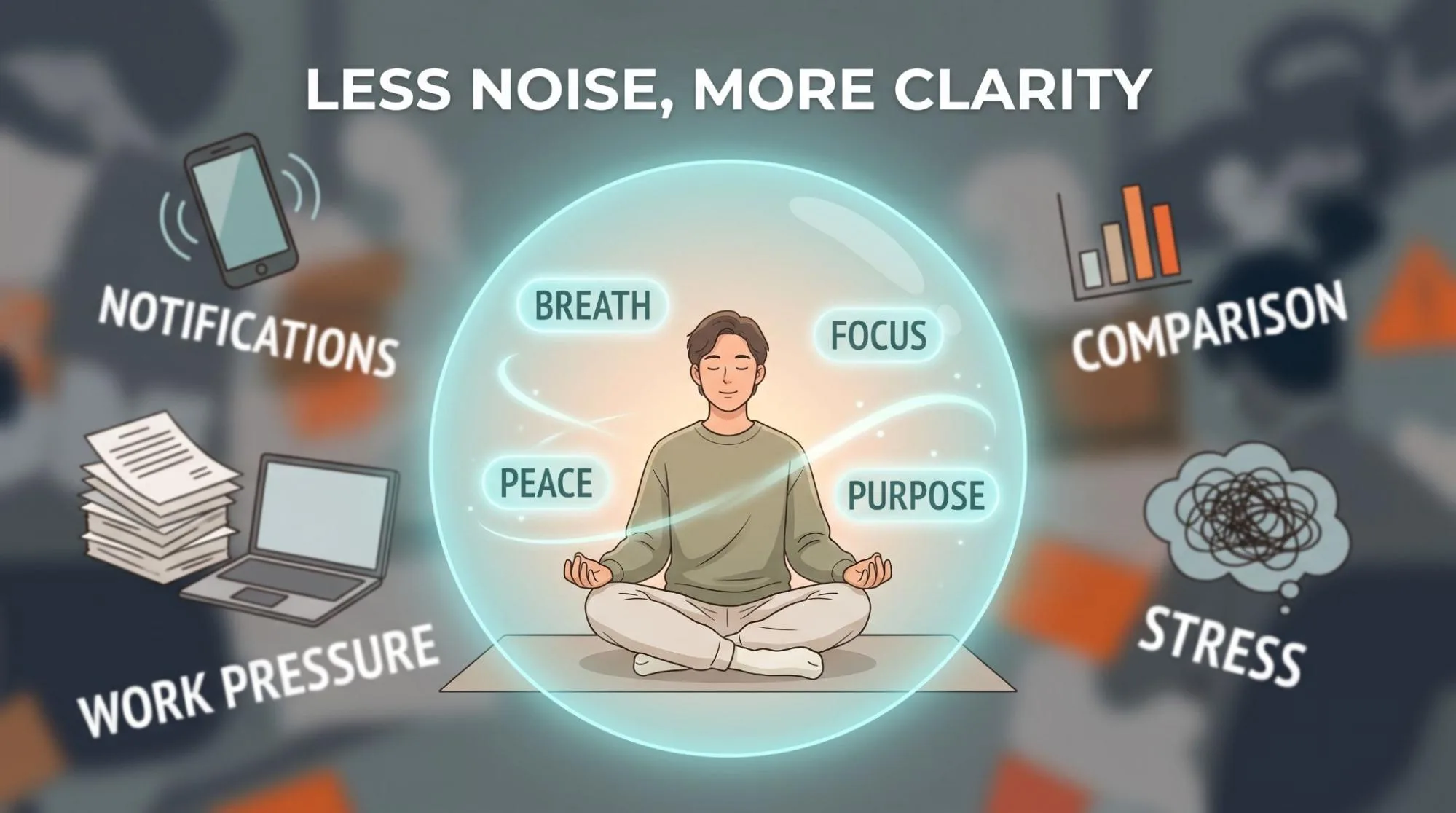
Modern life pulls the mind in too many directions. Notifications, entertainment, comparison, stress, work pressure, and relationship drama can keep a person mentally tired all the time.
Brahmacharya gives you a way to step back.
It helps you create space between your desires and your actions. You become less controlled by impulse. You start asking, “Will this support my peace, health, and purpose?”
This practice is especially useful for people who feel:
- Mentally scattered
- Emotionally drained
- Addicted to screens
- Stuck in unhealthy patterns
- Burned out from overwork
- Disconnected from spiritual practice
Brahmacharya brings your energy back home.
Learn More : Aparigraha: The Yoga Practice of Non-Attachment and Simple Living
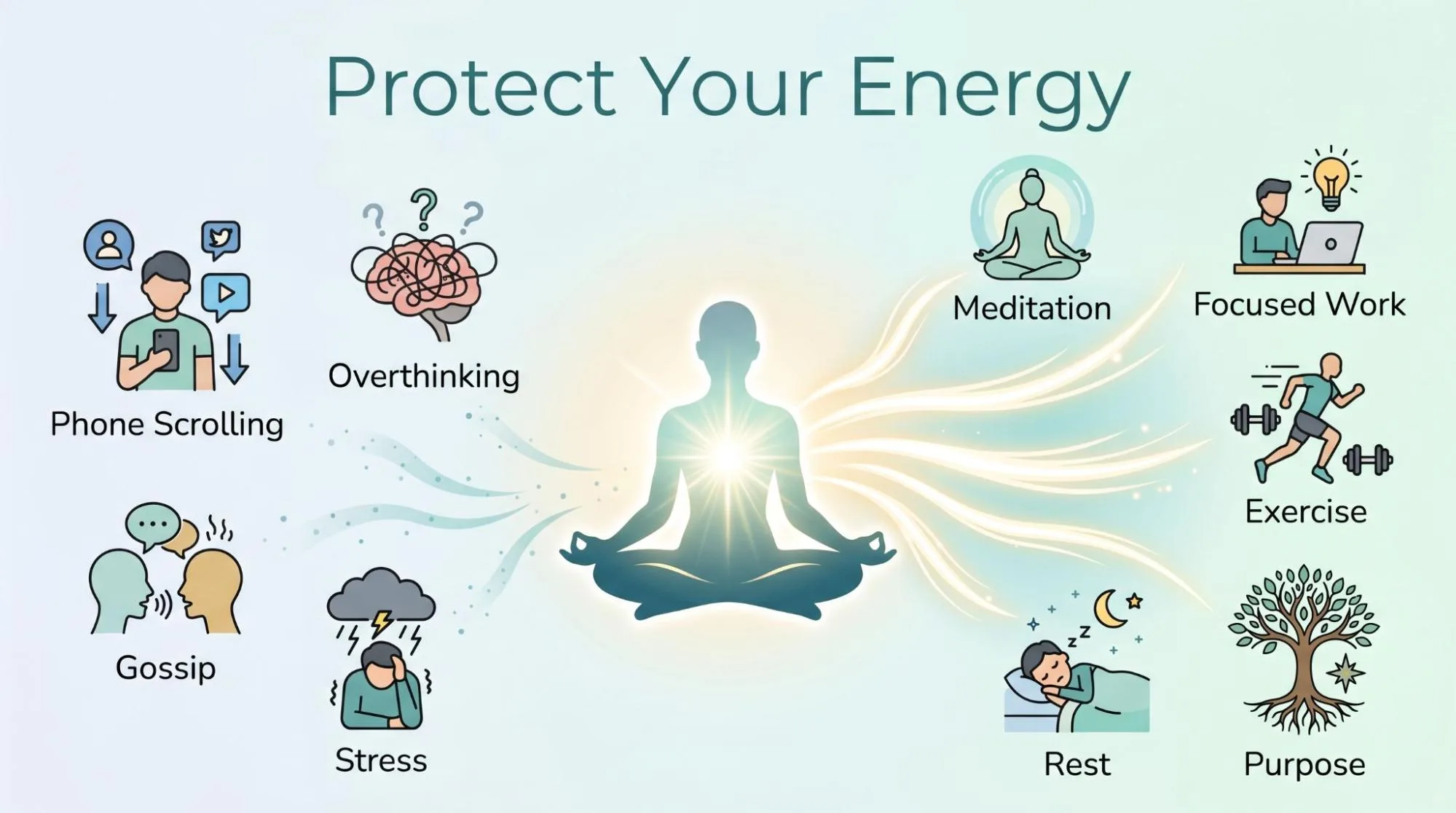
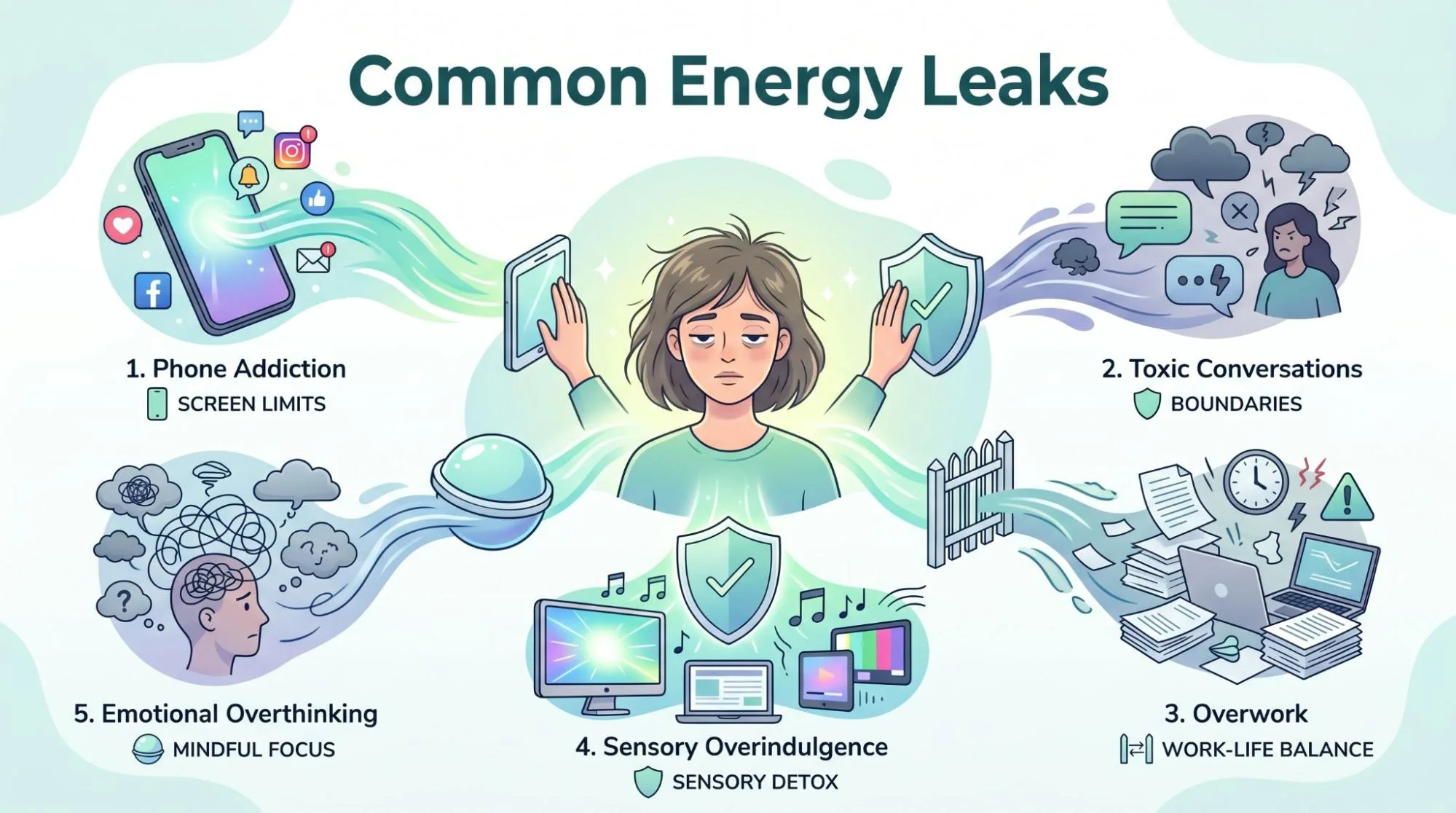
Common Energy Leaks Brahmacharya Helps You Avoid
Energy leaks are the habits and patterns that quietly drain your strength. Some are obvious. Others feel normal because everyone around you is doing them too.
Digital Overconsumption
Too much screen time is one of the biggest modern energy leaks. Endless scrolling, short videos, notifications, and online arguments can leave the mind restless.
Brahmacharya does not mean rejecting technology. It means using it with awareness. You control the screen instead of letting the screen control your attention.
Toxic Relationships
Some relationships leave you peaceful. Others leave you confused, guilty, anxious, or emotionally empty.
Brahmacharya encourages you to notice how people affect your energy. Healthy relationships include respect, honesty, and balance. If a connection constantly drains you, boundaries may be needed.
Overworking
Working hard is not the problem. Losing yourself in work is.
Many people use productivity as a way to avoid rest, emotions, or inner silence. Brahmacharya reminds you that your body and mind are not machines. Real discipline includes recovery.
Sensory Overindulgence
Food, entertainment, shopping, pleasure, and comfort are not bad. The problem begins when they become escape routes.
When the senses are overstimulated all the time, the mind becomes dull or restless. Brahmacharya brings moderation, so pleasure stays healthy instead of becoming dependency.
Emotional Overthinking
Overthinking also wastes energy. Replaying old conversations, imagining worst-case scenarios, or worrying about what others think can drain your prana quickly.
Brahmacharya helps you return to the present moment. Not every thought deserves your full attention.
How to Practice Brahmacharya Today
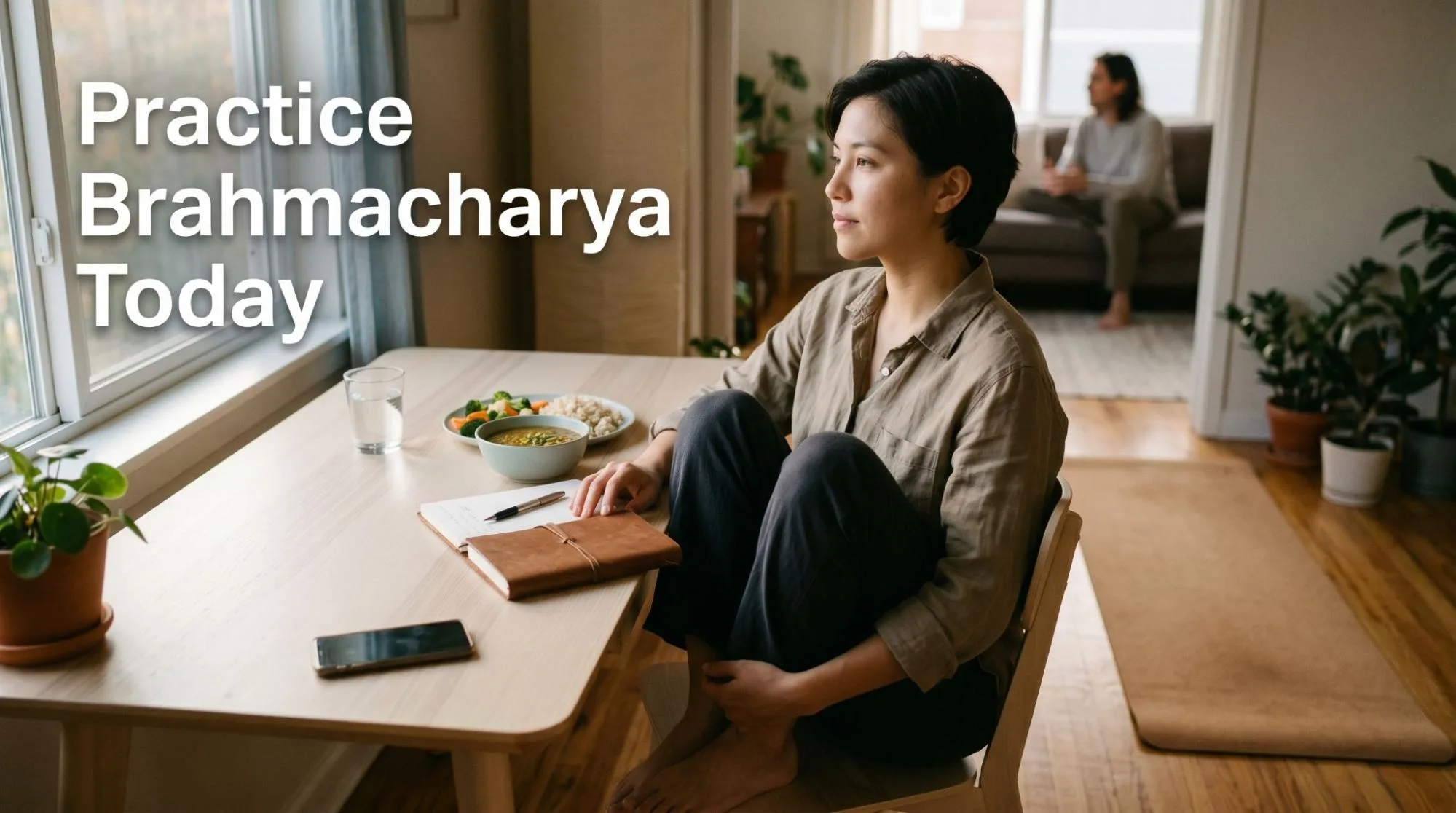
Practicing Brahmacharya does not require extreme rules. Small daily choices matter more than dramatic lifestyle changes.
Set Digital Boundaries
Start with simple limits. Keep your phone away during meals. Avoid checking messages first thing in the morning. Take short breaks from social media when your mind feels crowded.
Even one hour of screen-free time can make a difference.
Manage Energy in Relationships
Notice which people make you feel calm, honest, and respected. Also notice which conversations leave you tense or emotionally tired.
You do not need to cut everyone off. Sometimes, you only need better boundaries. Speak clearly. Give wisely. Do not make yourself emotionally available to every situation.
Practice Physical Moderation
Brahmacharya also includes care for the body. Eat enough, but not mindlessly. Exercise, but do not punish yourself. Rest before your body forces you to stop.
Moderation is not weakness. It is intelligent self-care.
Practice Intentional Intimacy
In modern life, Brahmacharya does not have to mean complete celibacy. For many people, it means bringing respect, awareness, and emotional maturity into intimacy.
This includes avoiding impulsive behaviour, using intimacy as an escape, or treating people as objects of desire. Intentional intimacy is honest, respectful, and connected.
Choose Purpose Over Distraction
One of the clearest ways to practice Brahmacharya is to ask: “What am I giving my best energy to?”
If your best energy goes only to scrolling, gossip, stress, or comparison, your deeper goals will suffer. But when you choose purpose, your energy becomes more focused.
Brahmacharya and Prana
In yoga, prana is the vital life force that supports the body, mind, and spirit. It moves through breath, attention, food, rest, emotions, and lifestyle.
When your prana is strong, you feel clear, steady, and alive. When it is weak or scattered, you may feel tired, anxious, dull, or unfocused.
Brahmacharya protects prana.
It stops energy from leaking through excess desire, overstimulation, and unconscious habits. This is why many yoga teachers connect Brahmacharya with mental clarity and spiritual strength.
You do not need to see prana as something mysterious. You can understand it through your own experience. Notice how you feel after a peaceful walk, deep breathing, honest rest, or meaningful work. Then compare that with how you feel after hours of scrolling or emotional drama. The difference is real.
Brahmacharya Is Not Repression
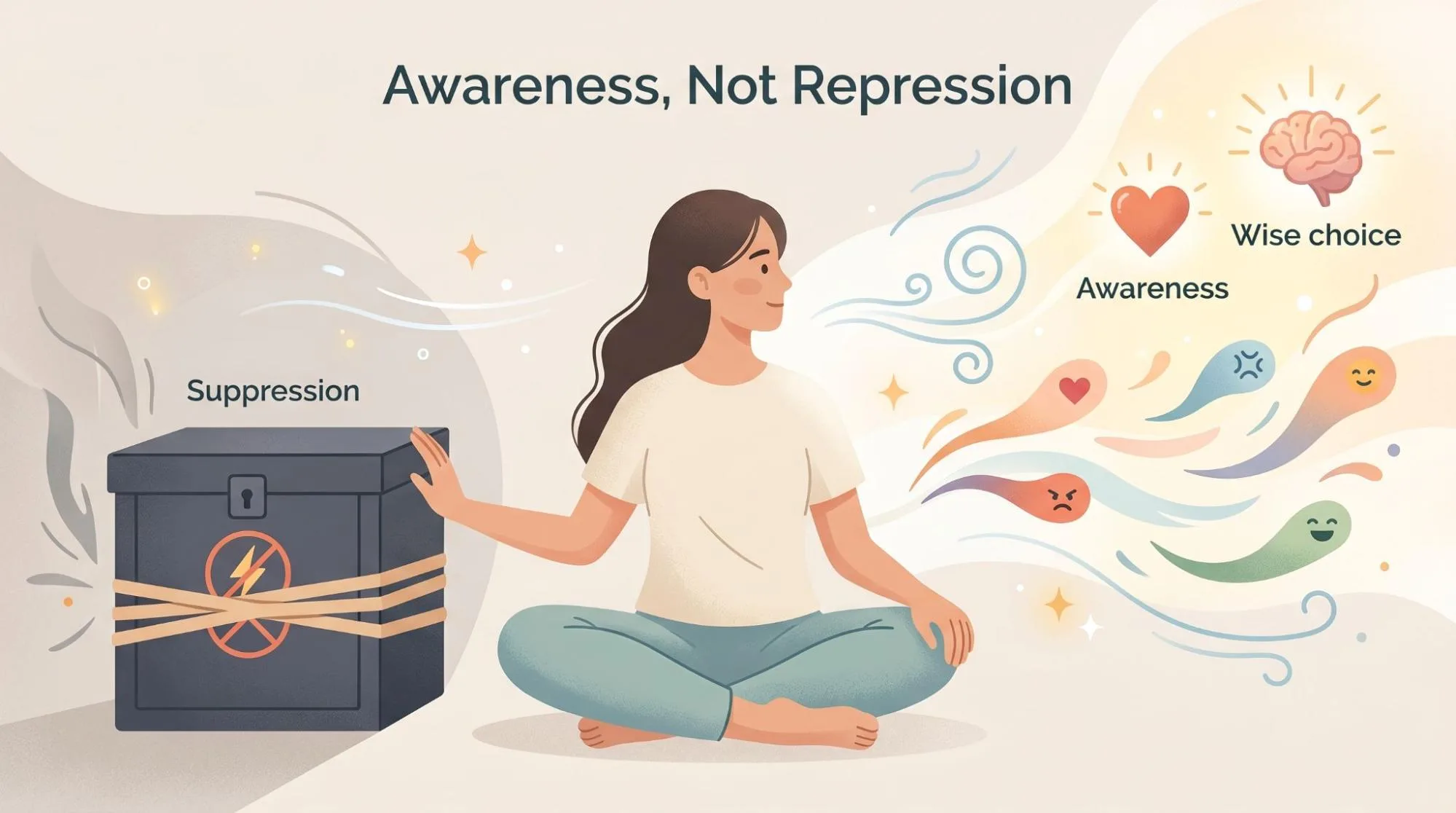
This point matters. Brahmacharya is not about shame, fear, or suppressing natural human desires.
Repression means pushing something down without understanding it. Brahmacharya means seeing desire clearly and choosing wisely.
There is a big difference.
A repressed person may feel guilty for having desires. A mindful person accepts that desire exists but does not become ruled by it.
Brahmacharya asks for awareness, not self-hatred. It teaches you to build a healthier relationship with your body, emotions, senses, and choices.

Benefits of Practicing Brahmacharya
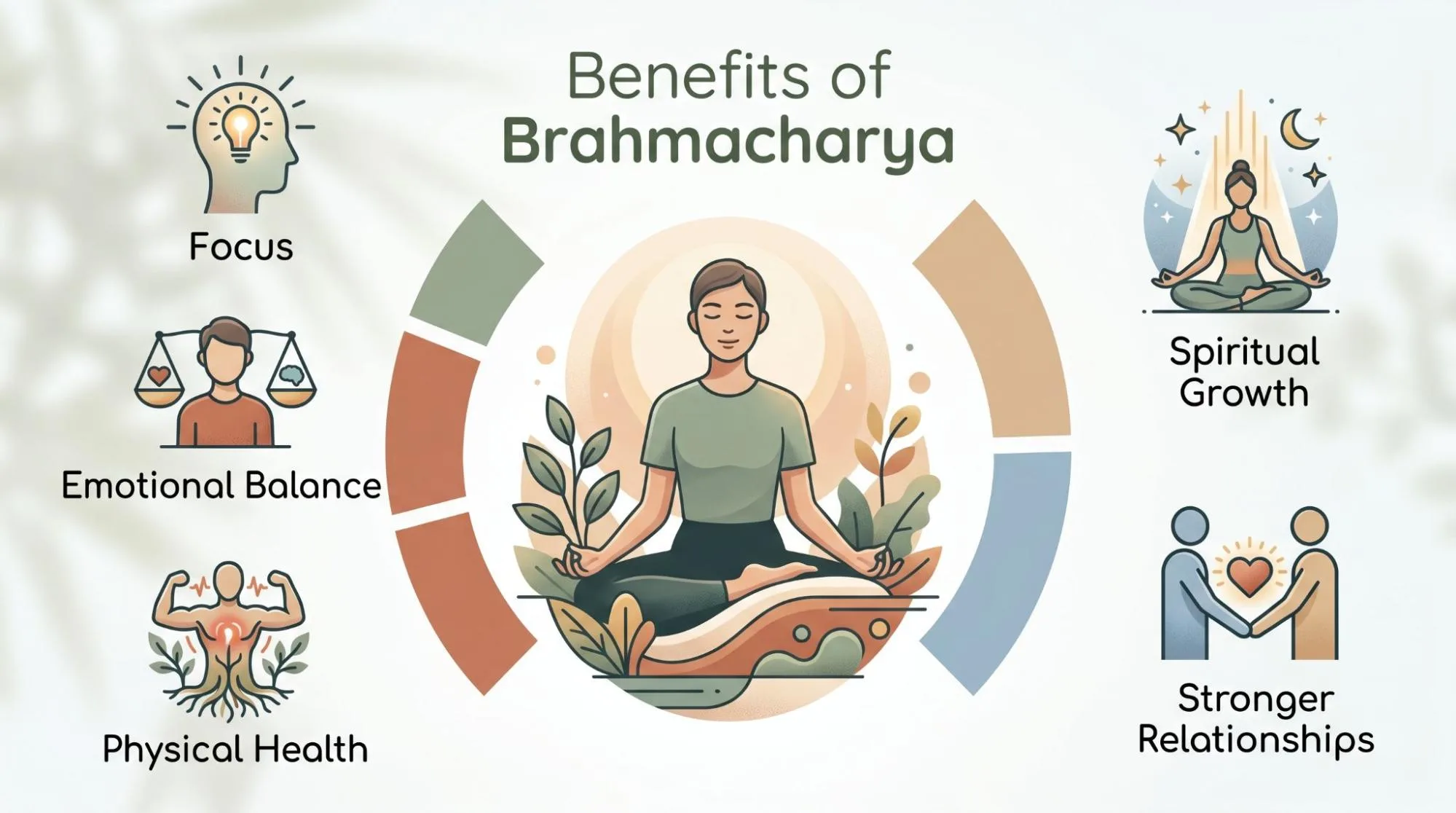
The benefits of Brahmacharya are not always dramatic at first. They often appear quietly. You may notice that you feel less scattered, less reactive, and more in control of your day. The benefits of Brahmacharya in Yoga Philosophy become clear when a person feels more focused, balanced, and emotionally steady.
Better Focus
When your energy is not constantly leaking into distractions, your focus improves. You can study, work, meditate, or create with more depth.
More Emotional Balance
Brahmacharya helps reduce emotional extremes. You become less dependent on outside stimulation and more connected to your inner stability.
Improved Physical Health
Moderation supports better sleep, digestion, movement, and recovery. When you stop pushing the body into excess, it naturally begins to feel more balanced.
Stronger Relationships
Healthy boundaries make relationships stronger. You give from a place of fullness instead of exhaustion. You also become more respectful of your own needs and the needs of others.
Deeper Spiritual Growth
Brahmacharya supports meditation, self-discipline, and inner awareness. When the mind is less distracted by cravings and noise, spiritual practice becomes more natural.
Simple Daily Brahmacharya Practice
You can begin with a very simple daily practice.
Each morning, ask yourself:
“What deserves my energy today?”
Then choose one small boundary. It could be:
- No phone for the first 30 minutes after waking
- Eating one meal without distraction
- Taking a short walk instead of scrolling
- Saying no to one unnecessary demand
- Sitting quietly for five minutes
- Avoiding gossip or emotional arguments
At night, reflect gently:
“Where did my energy go today?”
No judgment is needed. Just notice. Awareness is the beginning of change.
Brahmacharya in Yoga Practice
On the yoga mat, Brahmacharya means practicing with respect for your body.
You do not force a pose to impress others. You do not push through pain just to feel advanced. You do not turn yoga into another performance.
Instead, you move with awareness. You breathe. You listen. You save energy where needed and use effort wisely.
This can change your entire practice. Yoga becomes less about doing more and more about being present.
Brahmacharya also supports meditation and pranayama. When the body is calm and the senses are not overstimulated, the breath becomes steadier. The mind becomes easier to guide.
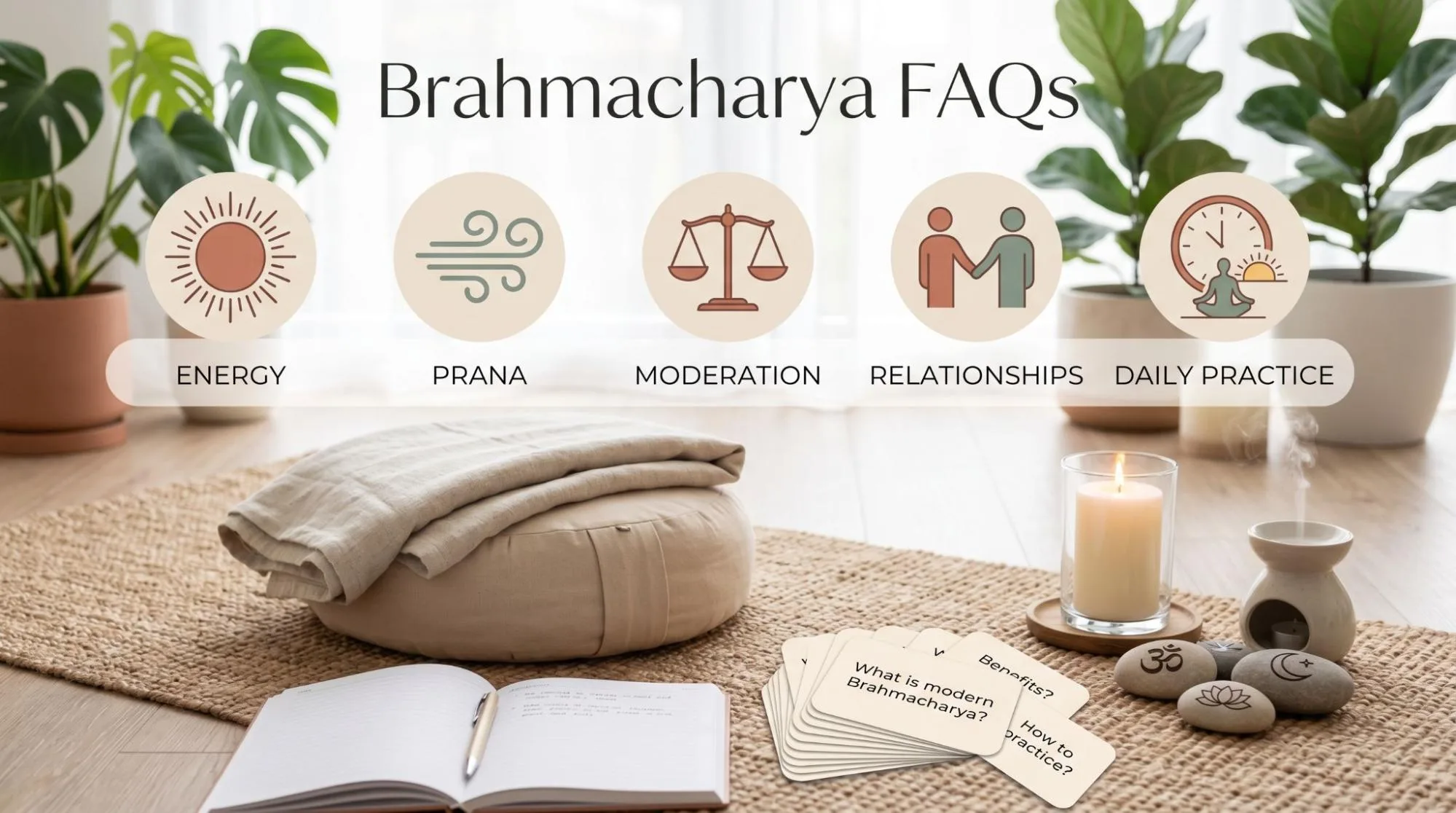
FAQs
What is Brahmacharya in simple words?
Brahmacharya means using your energy wisely. It is the practice of avoiding excess and directing your physical, mental, emotional, and spiritual energy toward meaningful living.
Does Brahmacharya only mean celibacy?
Traditionally, Brahmacharya was linked with celibacy. In modern life, it is often understood as moderation, self-control, and conscious energy management.
Can married people practice Brahmacharya?
Yes. Married people can practice Brahmacharya by bringing respect, awareness, moderation, and emotional maturity into their relationship and daily life.
Is Brahmacharya against pleasure?
No. Brahmacharya is not against pleasure. It teaches balance, so pleasure does not become addiction, distraction, or emotional dependency.
How can beginners practice Brahmacharya?
Beginners can start by setting small boundaries around screen time, food, work, relationships, and rest. The goal is not perfection. The goal is awareness.
Why is Brahmacharya useful today?
Brahmacharya is useful because modern life constantly drains attention and energy. This practice helps protect focus, emotional balance, health, and inner peace.
Learn More : Santosha: The Yoga Practice of Complete Contentment and Inner Peace
Conclusion
Brahmacharya is not an outdated rule meant only for monks or ancient yogis. It is a practical guide for anyone who wants to live with more clarity and less inner noise.
At its deepest level, Brahmacharya asks you to respect your energy. Not every desire needs to be followed. Not every distraction deserves your attention. Not every relationship, habit, or routine is worth the cost it takes from your peace.
Practiced gently, Brahmacharya can help you feel more focused, balanced, and connected to your purpose. You do not have to change your whole life overnight. Start with one boundary, one mindful choice, one honest question: “Is this helping me become the person I want to be?”
That is where the real practice begins.

Frequently Asked Questions
What does Brahmacharya mean in yoga?
Brahmacharya is often translated as conduct aligned with a higher purpose and is commonly explained as moderation or wise use of energy. Some traditions emphasise celibacy, while others apply it more broadly.
Does Brahmacharya mean celibacy for everyone?
Not necessarily. Interpretations vary. A modern approach may focus on mindful choices, consent, balanced relationships, and avoiding compulsive habits rather than imposing one rule on every person.
How can beginners practise Brahmacharya?
Start with balanced sleep, realistic commitments, mindful technology use, nourishing routines, and honest attention to how activities affect your energy and wellbeing.
Is Brahmacharya about suppressing desire?
It is better understood as relating to desire consciously rather than being controlled by it. Shame and forced suppression are not the same as healthy self-discipline.
