
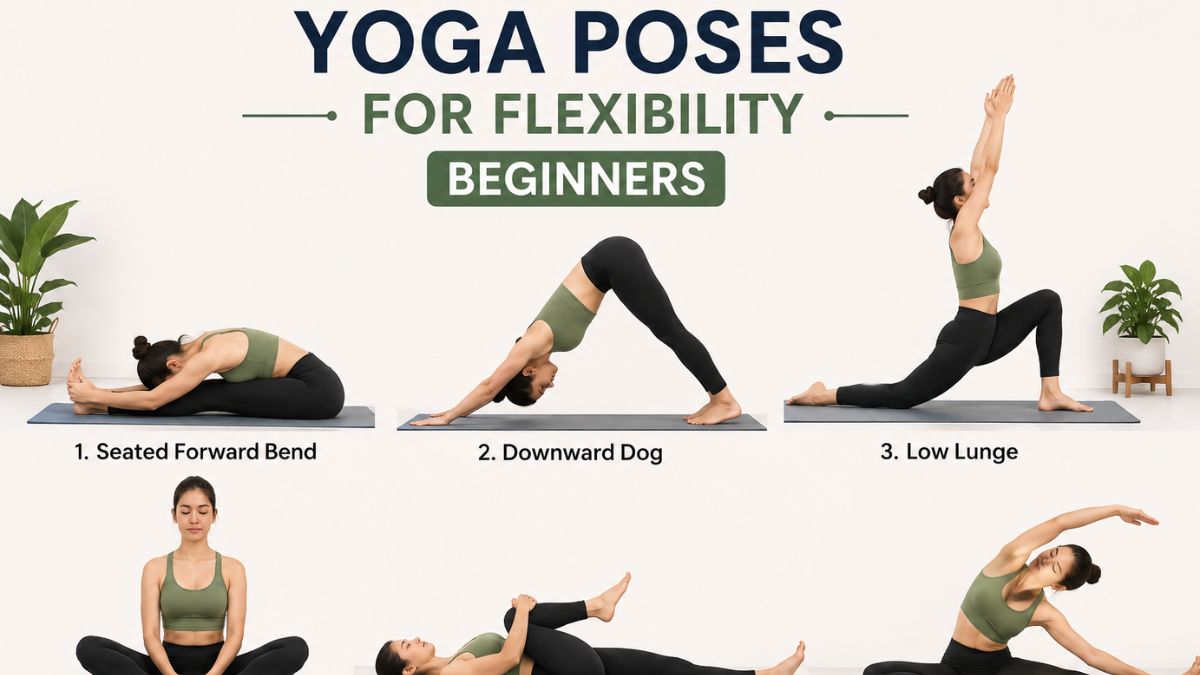
Quick answer: Yoga poses for flexibility beginners should focus on a comfortable range, steady breathing, and gradual progress. Flexibility differs from person to person, so forcing a stretch is not necessary.
Important Safety Note
Move slowly and never force a joint or bounce into a stretch. Stop for sharp pain, numbness, dizziness, or joint pinching. Use props and a smaller range when needed. Seek qualified guidance for injuries, recent surgery, pregnancy concerns, or persistent pain.
Starting yoga can be a great way to move your body and become more flexible. yoga poses for flexibility beginners are designed to help new students stretch safely without feeling overwhelmed. You do not need to touch your toes or hold difficult poses on your first day. With a simple beginner flexibility exercises plan and regular practice, you can slowly improve how your body moves.
Why Try Yoga Poses for Flexibility Beginners?
The best thing about yoga poses for flexibility beginners is that you can start at your own level. A slow flexibility yoga routine can gently stretch tight muscles and help your body feel more comfortable. You can practice at home, in a class, or in a quiet outdoor space. The key is to stay patient and avoid forcing your body into a deep stretch.
Start With a Simple Beginner Stretching Routine
A beginner stretching routine should feel easy and controlled. Start with slow neck movements, shoulder rolls, and gentle side bends. Then move into simple yoga positions that stretch your legs and back. These yoga poses for flexibility beginners can help you build a safe habit. Take slow breaths during each pose and leave enough time to move from one position to another.
Seated Forward Fold
A seated forward fold is a simple pose for people who want better flexibility. Sit with your legs in front of you and keep your back as straight as possible. Slowly reach toward your feet without forcing the movement. This pose can be included in stretching for beginners because you can bend your knees if your hamstrings feel tight. Over time, regular practice may make the movement easier.
Cat-Cow Stretch
Cat-Cow is another useful movement for yoga poses for flexibility beginners. Start on your hands and knees. Slowly round your back as you breathe out, then gently lift your chest as you breathe in. This movement can support comfortable spinal motion. It also works well in gentle yoga stretches because you can control the range of movement and move at a pace that feels right for you.
Use Full Body Stretching for Better Movement
A good yoga practice should not focus on only one part of the body. full body stretching can help you work on your shoulders, back, hips, legs, and ankles. When practicing yoga poses for flexibility beginners, choose movements that cover different muscle groups. This gives your body a balanced session and can make everyday movements feel easier.
Standing Side Stretch
Stand with your feet comfortably apart and raise one arm overhead. Slowly lean toward the opposite side while keeping your body relaxed. Return to the center and switch sides. This gentle pose can become part of your beginner yoga routine. Do not push your body too far. A comfortable stretch is enough for beginners.
Hip Flexibility Exercises for Beginners
Tight hips are common, especially if you spend many hours sitting. Simple hip flexibility exercises can help you work on comfortable hip movement. Try a low lunge with your hands on the floor or on yoga blocks. Keep your front knee in a comfortable position and slowly lower your hips. These movements can be included in yoga poses for flexibility beginners without requiring advanced skills.
Butterfly Pose
Sit on the floor and bring the soles of your feet together. Hold your feet gently and allow your knees to move toward the floor naturally. Do not push your knees down. Butterfly pose is useful for beginners who want to add lower body stretches to their routine. Stay relaxed and breathe slowly while holding the position.
Hamstring Stretches for Better Leg Flexibility
The hamstrings are located at the back of your thighs. Tight hamstrings can make simple movements feel difficult. Gentle hamstring stretches can be added to yoga poses for flexibility beginners to gradually improve leg movement. A standing forward fold is one option. Keep your knees slightly bent if needed. The goal is to feel a mild stretch, not pain.
Reclined Leg Stretch
Lie on your back and lift one leg toward the ceiling. Hold behind your thigh or use a yoga strap around your foot. Slowly straighten the leg only as far as comfortable. Lower it and repeat on the other side. This is one of the gentle stretching exercises that beginners can use without putting too much pressure on the lower back.
Try a Morning Flexibility Routine
Starting your day with a morning flexibility routine can help you wake up your body. You can spend five to ten minutes doing simple movements such as Cat-Cow, a standing side stretch, and a gentle forward fold. These yoga poses for flexibility beginners can help you create a calm start to your day. Move slowly after waking up because your muscles may feel stiff.
Mobility Exercises for Beginners
Flexibility and mobility are related, but they are not exactly the same. Flexibility is about how much a muscle can stretch, while mobility involves how well a joint can move. mobility exercises for beginners can include ankle circles, hip movements, shoulder circles, and controlled leg movements. Adding these exercises to yoga poses for flexibility beginners can help create a more complete movement practice.
How Often Should You Practice?
Consistency matters more than doing a very long session once a week. A short daily stretching routine can be easier to maintain than a difficult workout. Start with 10 to 15 minutes several days a week. As your body becomes more comfortable, you can practice longer. Your yoga poses for flexibility beginners should always match your current ability rather than someone else’s level.
How to Improve Flexibility Safely
If you want to improve flexibility, give your body time to adapt. Never bounce while holding a stretch or force a joint into an uncomfortable position. Breathe normally and relax the muscles you are stretching. Your yoga poses for flexibility beginners should create gentle tension rather than sharp pain. Using blocks, straps, or a folded towel can also make certain poses easier.
A Simple Beginner Yoga Plan
A simple plan can make your practice easier to follow. Start with two minutes of light movement, followed by Cat-Cow and standing stretches. Add hip movements, hamstring stretches, and a seated forward fold. Finish with a few minutes of relaxed breathing. This beginner flexibility exercises plan can become part of your weekly routine and help you stay consistent with yoga poses for flexibility beginners.
Common Mistakes to Avoid
One common mistake is trying to copy advanced yoga students. Everyone has a different body and starting point. When practicing yoga poses for flexibility beginners, focus on your own comfort. Another mistake is skipping warm-up movements. Start with gentle yoga stretches before deeper positions. You should also avoid holding your breath or pushing through pain. Slow progress is still progress.
Conclusion
At YogaPoints Yoga poses for flexibility beginners can provide a simple way to stretch, move, and become more comfortable with your body. You do not need advanced skills to begin. A regular beginner stretching routine, full body stretching session, or short morning flexibility routine can help you build a healthy habit. Stay patient, breathe slowly, and practice within your comfort level. With regular effort, you can gradually improve flexibility and enjoy better movement in daily life.
FAQs
1. Are yoga poses for flexibility beginners suitable for complete beginners?
Yes. yoga poses for flexibility beginners can be adapted for people with little or no yoga experience. Start with simple movements and avoid forcing deep stretches.
2. How long should beginners stretch?
Beginners can start with 10 to 15 minutes. A short daily stretching routine is often easier to maintain than a long session once a week.
3. Can yoga help improve leg flexibility?
Yes. Poses that include hamstring stretches and lower body stretches can help you work on comfortable leg movement when practiced regularly.
4. What should I do if I cannot reach my toes?
That is completely normal. Bend your knees during forward folds and use a yoga block if needed. Stretching for beginners should focus on comfort rather than reaching a certain position.
5. Is morning yoga good for flexibility?
A short morning flexibility routine can be a good way to start your day. Begin with gentle movements because your body may feel stiff after sleeping.
6. How often should I practice yoga for flexibility?
Try practicing several times each week. If comfortable, you can include gentle mobility exercises for beginners and stretching in a daily stretching routine.
7. Can beginners improve flexibility quickly?
Flexibility develops at different speeds. Regular practice is more important than fast results. Continue with gentle stretching exercises and increase the range slowly as your body becomes more comfortable.
Frequently Asked Questions
How often should beginners practise flexibility?
Two or three gentle sessions per week can be a practical start. Leave room for recovery and adjust to how your body feels.
Should stretching feel painful?
No. Mild tension can be normal, but sharp pain, numbness, or joint pinching means you should stop or reduce the range.
Do I need to touch my toes?
No. Use props and keep the spine comfortable. Progress is measured by control and ease, not by reaching a particular shape.
