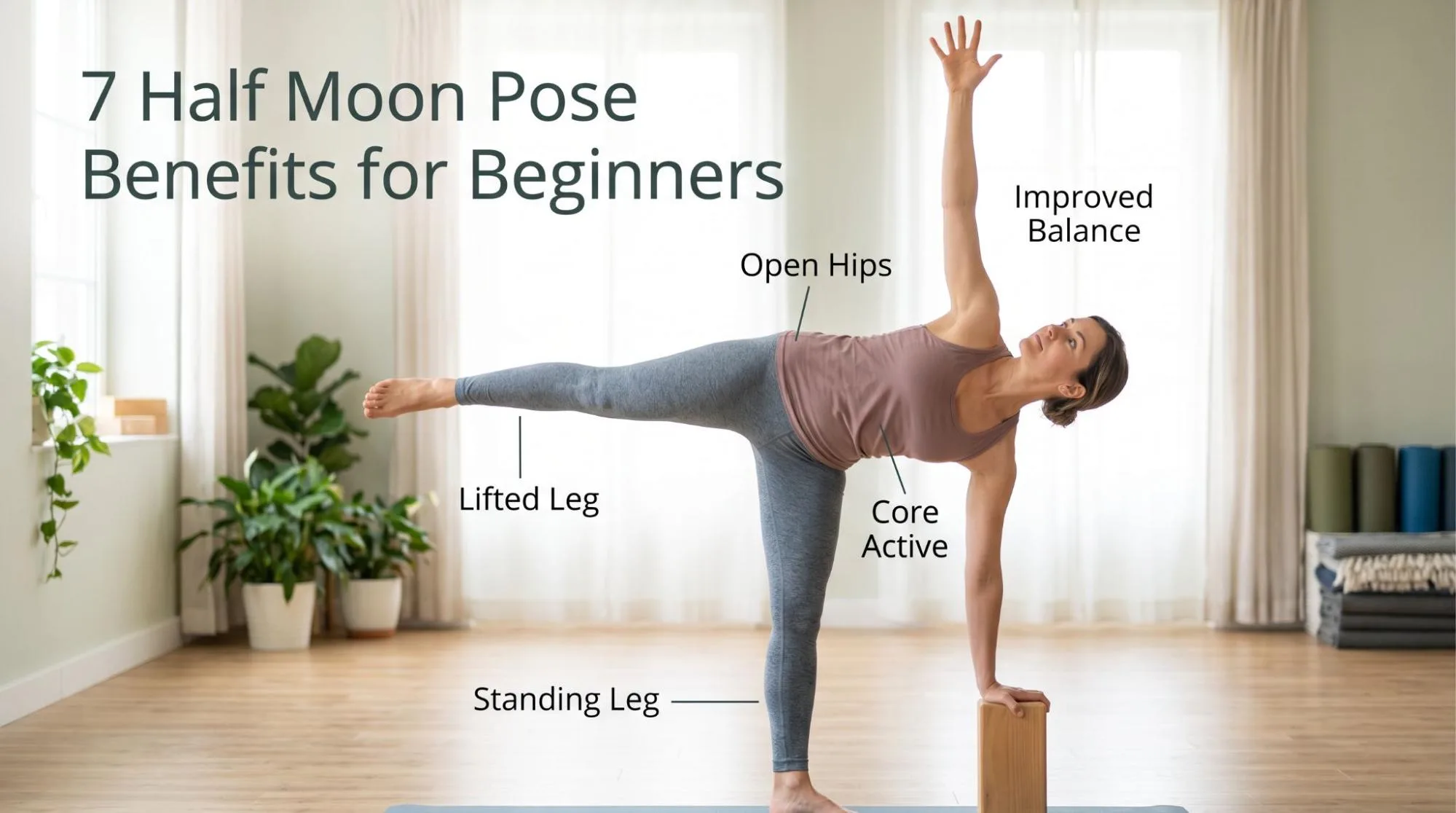
Half Moon Pose, also known as Ardha Chandrasana, is a standing balance pose that builds strength, focus, flexibility, and body awareness. It may look difficult at first, but beginners can practice it safely with a yoga block, wall support, and a little patience.
The main half moon pose benefits for beginners include stronger legs, better balance, open hips, improved posture, and a calmer mind. This pose teaches you how to stay steady while your body opens in different directions.
You do not need to be very flexible to begin. You only need to move slowly, use support, and listen to your body. The half moon pose benefits for beginners include better balance, stronger legs, open hips, improved posture, and a calmer mind.
What Is Half Moon Pose?
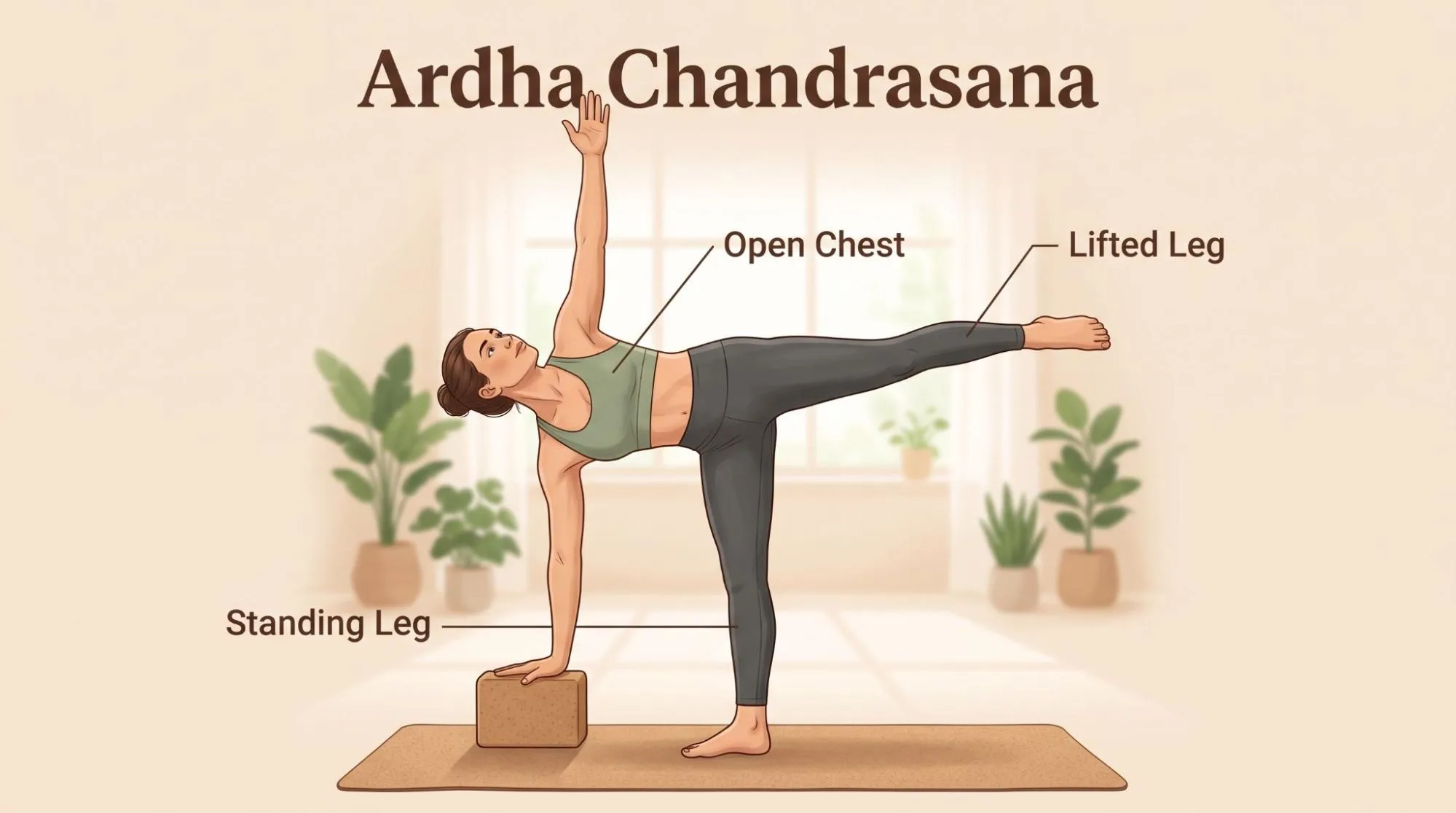
Half Moon Pose is a standing yoga pose where one leg supports the body while the other leg lifts behind you. One hand reaches toward the floor or a yoga block, while the chest and hips open to the side.
In Sanskrit, the pose is called Ardha Chandrasana:
- Ardha means half
- Chandra means moon
- Asana means pose
The body forms a wide, open shape that looks light and balanced, like a half moon.
Many yoga teachers introduce this pose from Triangle Pose because triangle pose prepares the legs, hips, and side body. It also gives beginners a clear starting point before moving into balance. Understanding the basic shape of Ardha Chandrasana makes the half moon pose benefits for beginners easier to feel during practice.
Why Half Moon Pose Is Good for Beginners
- Half Moon Pose is helpful for beginners because it teaches several important yoga skills at once. You learn how to balance, strengthen the legs, activate the core, open the hips, and keep the breath steady.
- At first, the pose may feel wobbly. That is completely normal. Balance improves through small adjustments, not through forcing the body to stay still.
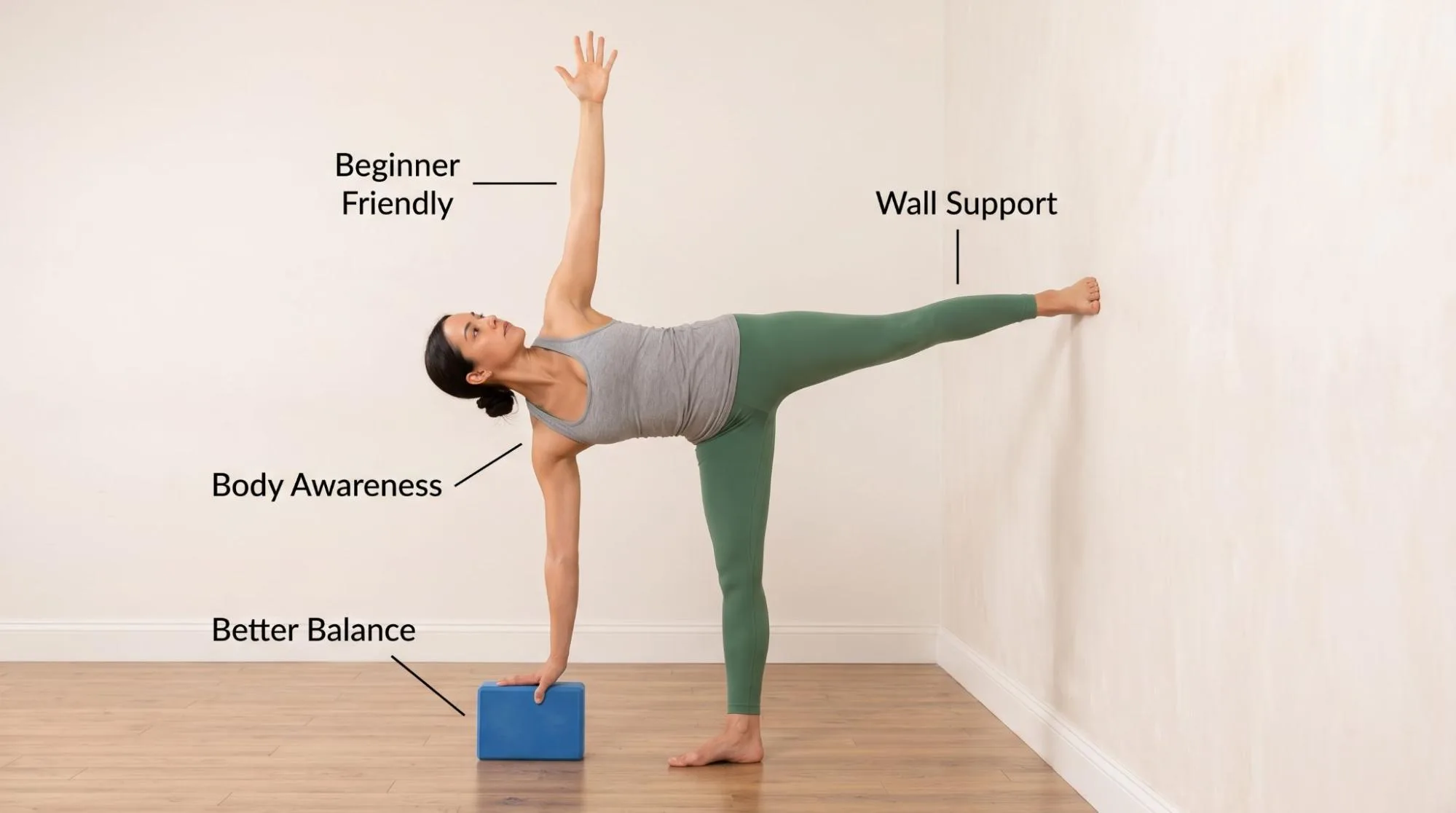
- When you practice a half moon pose with a block or wall, it becomes much easier to understand. You can focus on alignment instead of worrying about falling.
- One of the biggest half moon pose benefits for beginners is that it teaches strength, balance, and focus in one simple standing pose.
Top Benefits of Half Moon Pose
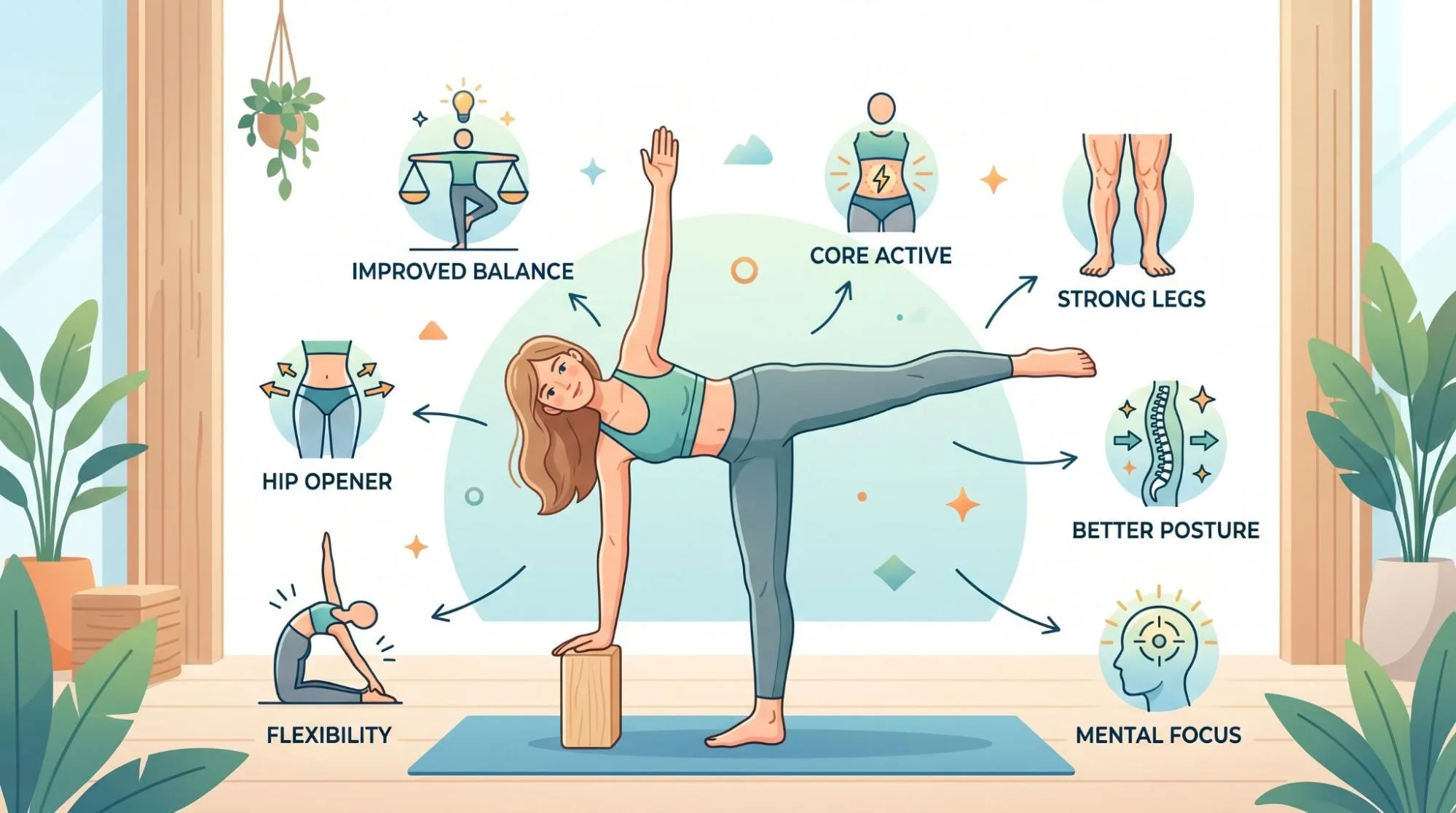
The half moon pose benefits for beginners go beyond flexibility. This pose works the whole body and also trains the mind to stay focused.
Builds Lower-Body Strength
The half moon pose benefits for beginners are not limited to flexibility; this pose also builds control, stability, and body awareness. Half Moon Pose strengthens the standing leg, especially the thigh, glutes, ankle, and foot.
When you balance on one leg, your muscles work hard to keep the body stable. The standing foot presses into the mat, the knee stays controlled, and the hip supports the pelvis.
Your lifted leg also becomes stronger. When you keep the back leg active and close to parallel to the floor, the glutes and hamstrings turn on naturally.
This makes the pose useful for building real, functional lower-body strength.
Enhances Balance and Proprioception
Balance is one of the biggest benefits of practicing half moon pose.
The pose improves proprioception, which means your body’s ability to sense where it is in space. Beginners often notice tiny movements in the foot, ankle, and hip while trying to stay steady.
These small movements are not mistakes. They are your body learning.
With regular practice, Half Moon Pose can support improved balance in yoga and daily movement.
Improves Flexibility
Half Moon Pose stretches the hamstrings, hips, groin, chest, shoulders, and side body.
If your hamstrings feel tight, do not force your hand to the floor. Place your lower hand on a yoga block instead. This keeps the spine longer and makes the pose safer.
The goal is not to reach low. The goal is to create space.
Opens the Chest and Hips
Half Moon Pose works as a gentle but strong hip opener.
As your lifted leg reaches back and your top hip opens, the front of the body begins to expand. The chest opens too, which can feel helpful if you sit for long hours or often round your shoulders forward.
Move slowly here. Opening the chest too quickly is one of the most common mistakes in this pose.
Strengthens the Core
Half Moon Pose naturally activates your core because the body has to stay stable while balancing on one leg.
You do not need to squeeze the belly hard. A light engagement is enough. Think of gently drawing the lower belly in and keeping both sides of the waist long.
A steady core helps protect the lower back and makes the pose feel lighter.
Improves Posture
This pose encourages better posture by teaching the spine to stay long while the chest opens.
Many beginners collapse forward because they are trying to reach the floor. Using a block helps prevent this. When the spine stays long, the body learns better alignment.
Over time, this can improve the way you stand, sit, and move.
Calms the Mind and Builds Focus
Half Moon Pose requires attention. You have to focus on your standing foot, your breath, and your body position.
Because of this, the pose can help calm the mind. It gives your attention one clear place to land.
Even if you wobble, the practice teaches patience. You learn to breathe, adjust, and try again.
Learn More : Moon Water Benefits and How to Make It
How to Practice Half Moon Pose Step by Step
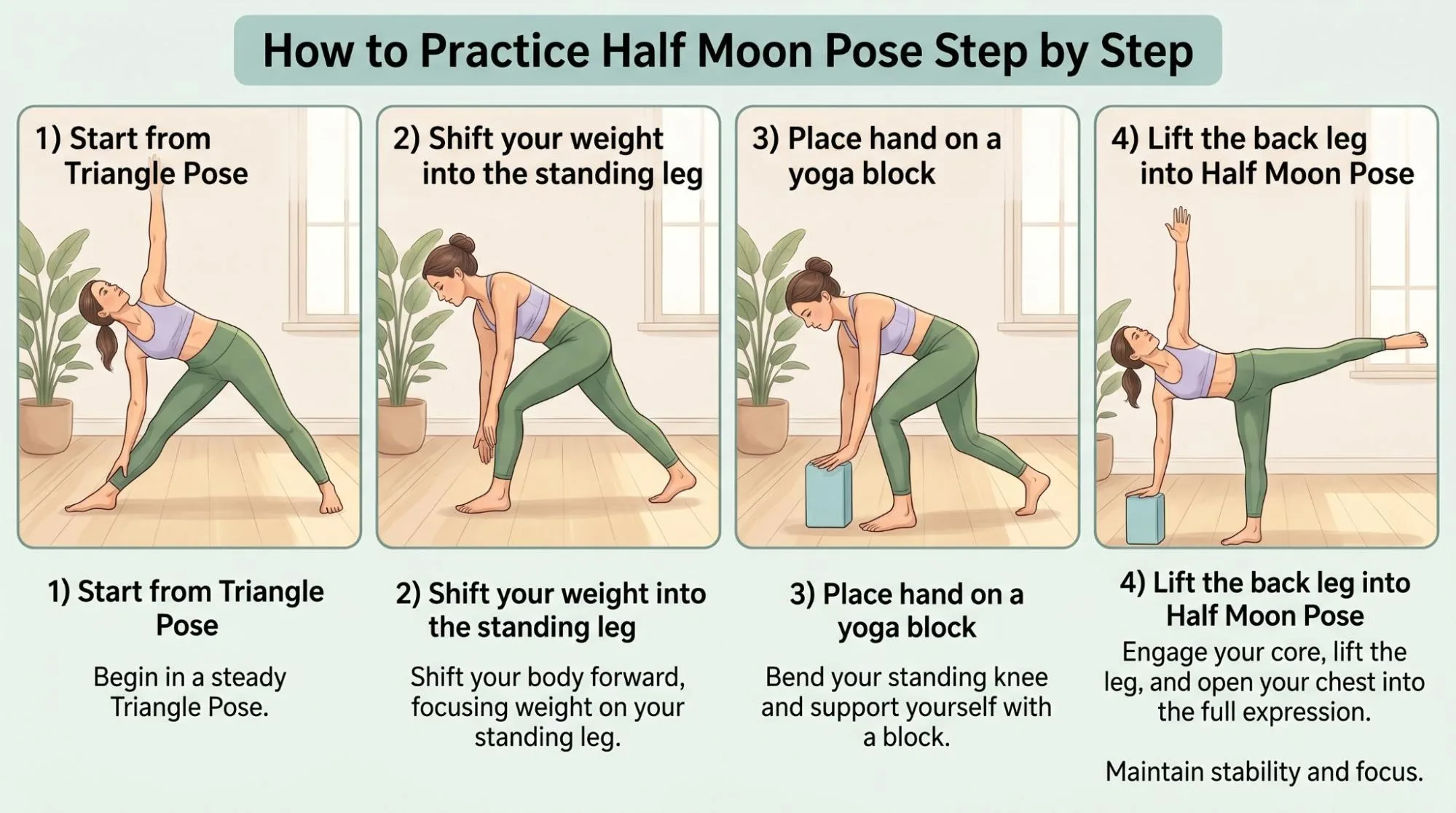
Move slowly when learning Half Moon Pose. A yoga block is strongly recommended for beginners. To enjoy the half moon pose benefits for beginners, move slowly and use support instead of forcing the full pose.
Start from Triangle Pose
Begin in Triangle Pose with your right foot forward and your left leg back.
Place your right hand on your shin, ankle, block, or the floor. Keep your spine long and your chest open.
This starting position prepares the legs and hips before you move into balance.
Shift Weight into the Standing Leg
Slowly shift your weight into your front foot. This front foot becomes your standing leg.
Press down through the heel, big toe, and outer edge of the foot. Keep the leg active but not stiff.
Avoid jumping into the pose. Move with control.
Place Your Lower Hand on a Block
Place your lower hand on a yoga block about one foot in front of your standing foot.
For example, if your right leg is the standing leg, your right hand goes on the block. Keep the block slightly to the outside of the foot so your chest has room to open.
This makes the pose more stable and beginner-friendly.
Lift the Back Leg
Begin to lift the back leg slowly.
If your left leg is behind you, gently lift your left leg until it feels long and active. Try to bring it near parallel to the floor, but do not force it higher than your body can control.
The lifted leg should feel strong, not loose.
Open the Hips and Chest
Once the standing leg feels steady, slowly open the top hip.
Let the chest turn slightly to the side. Do this gradually. If you open too fast, you may lose balance or twist through the lower back.
Keep the movement smooth and controlled.
Extend the Top Arm
When you feel stable, extend the top arm upward.
If your left leg is lifted, your left arm may reach toward the ceiling. Keep the arm long but relaxed.
If reaching up feels too much, keep your top hand on your hip. That is still a good version of the pose.
Keep the Gaze Downward First
Beginners should keep their gaze down at first.
Looking up too soon can make the pose unstable. Once your balance improves, you can slowly turn your head and look sideways or upward.
There is no rush.
Hold and Breathe
Hold the pose for 3 to 5 slow breaths.
Keep breathing naturally. If your breath becomes tight, come out of the pose and rest.
Then repeat on the other side.
Beginner Tips for Success
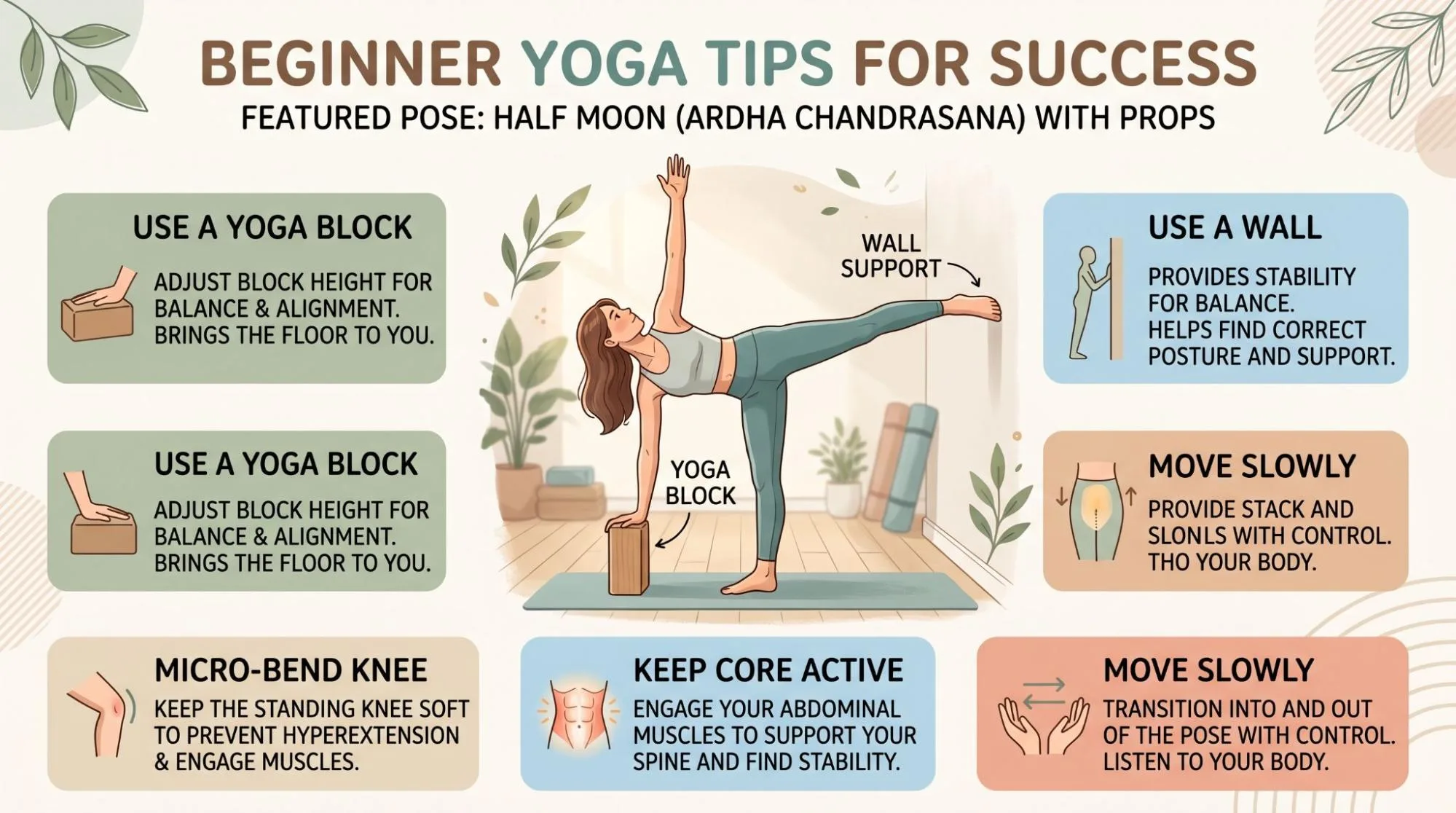
Small adjustments can make Half Moon Pose much easier and safer. These simple tips help beginners experience the half moon pose benefits for beginners without strain or poor alignment.
Use a Yoga Block
A yoga block is one of the best tools for beginners.
It brings the floor closer and helps you keep the spine long. You can place the block on its tallest setting at first, then lower it later if your body feels ready.
Using a block is not a shortcut. It is smart practice.
Use a Wall for Support
A wall can help you learn the shape of the pose without fear.
Practice with your back close to the wall. Let your lifted heel, hip, or back lightly touch the wall for support.
This is also a helpful way to explore simple variations of half moon pose.
Keep the Standing Leg Micro-Bent
Do not lock the standing knee.
Keep a tiny bend in the knee so the leg muscles stay active. This protects the joint and helps you balance better.
A strong leg is not the same as a stiff leg.
Keep the Core Active
Let the belly gently support the spine.
When the core is active, the pose feels more stable. It also helps stop the lower back from doing too much work.
Keep the breath soft while the core supports you.
Do Not Rush the Pose
Half Moon Pose works best when practiced slowly.
First, find your standing foot. Then lift the back leg. Then open the hips and chest. Then reach the top arm if you are ready.
Slow practice builds confidence.
Common Mistakes to Avoid in Half Moon Pose
These common mistakes are easy to fix once you notice them.
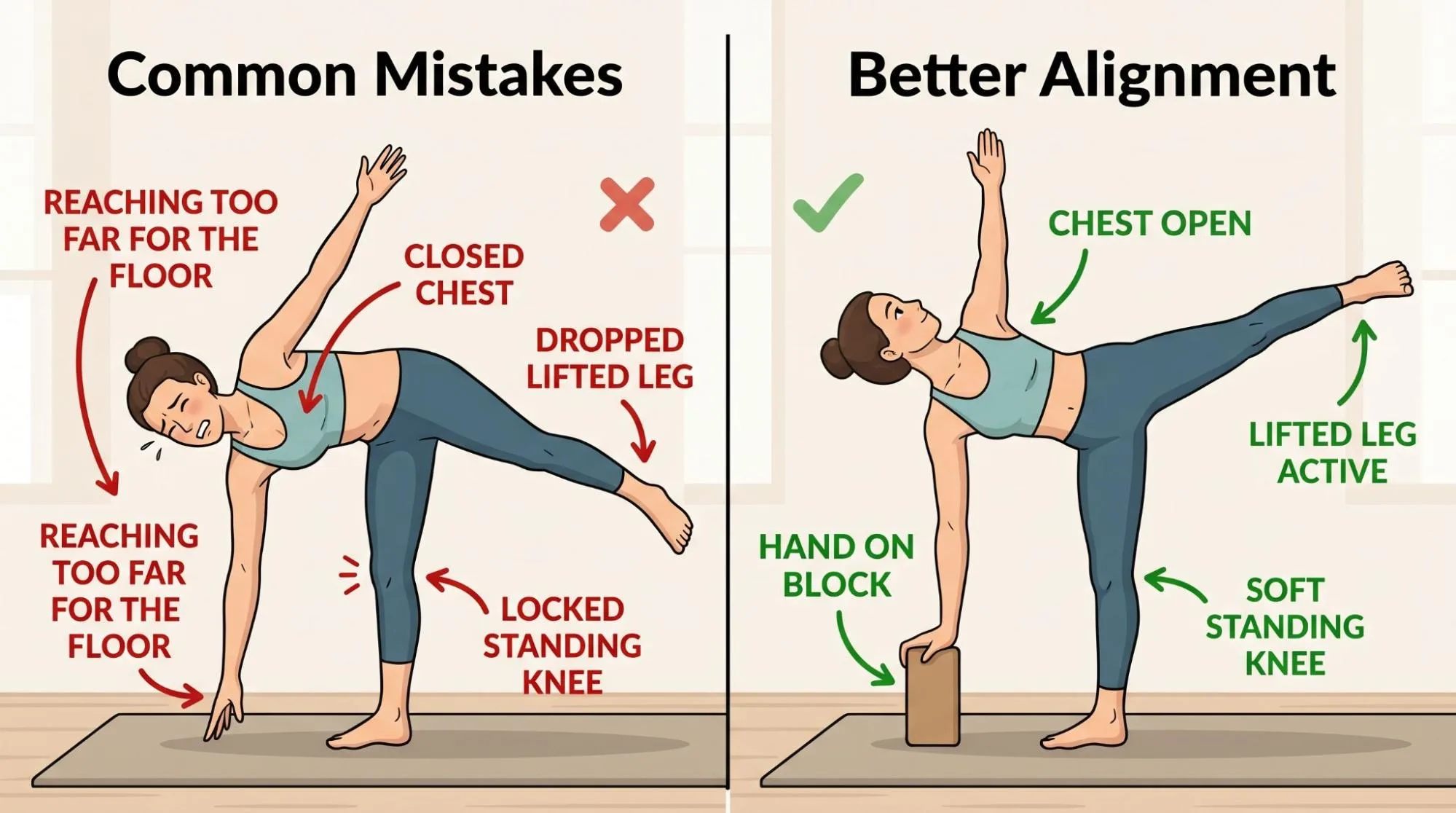
Reaching Too Far for the Floor
Many beginners try to touch the floor before they are ready.
This often rounds the spine and closes the chest. Use a block instead. Your body will feel more open and balanced.
Locking the Standing Knee
Locking the standing knee may feel stable for a moment, but it puts extra pressure on the joint.
Keep a small bend in the knee. This keeps the muscles working and protects the leg.
Letting the Lifted Leg Drop
The lifted leg should stay active.
Press back through the heel and keep the leg long. If the lifted leg drops, the hips may collapse and the pose can feel heavy.
Turning the Chest Too Quickly
Opening the chest too fast can disturb your balance.
Start with the chest slightly facing down. Then open slowly as your body becomes steadier.
Forgetting to Breathe
Beginners sometimes hold their breath while trying to balance.
Keep breathing. Your breath helps your body stay calm and controlled.
Learn More : October 2025 New Moon Meaning
Safety Tips for Half Moon Pose
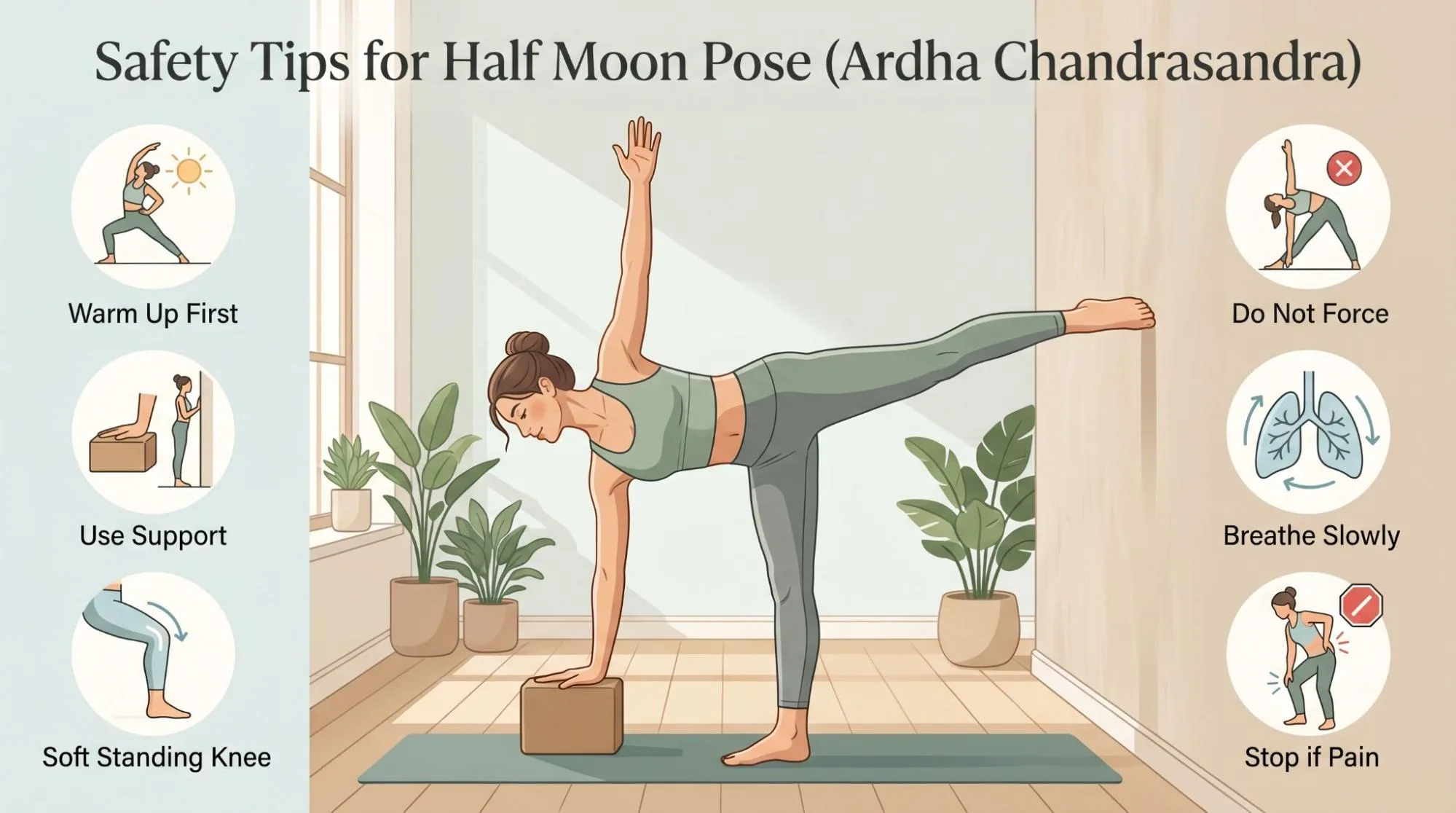
Half Moon Pose is safe for many beginners when practiced with care. Still, it is a balanced pose, so support matters.
Keep these tips in mind:
- Warm up before practicing.
- Use a yoga block under your lower hand.
- Practice near a wall if you feel unsteady.
- Keep the standing knee slightly bent.
- Do not force the lifted leg too high.
- Keep the neck relaxed.
- Come out of the pose if you feel sharp pain.
- Breathe slowly and steadily.
If you have knee, ankle, hip, or lower back pain, use a modified version or practice with a qualified yoga teacher.
Who Should Avoid or Modify Half Moon Pose?
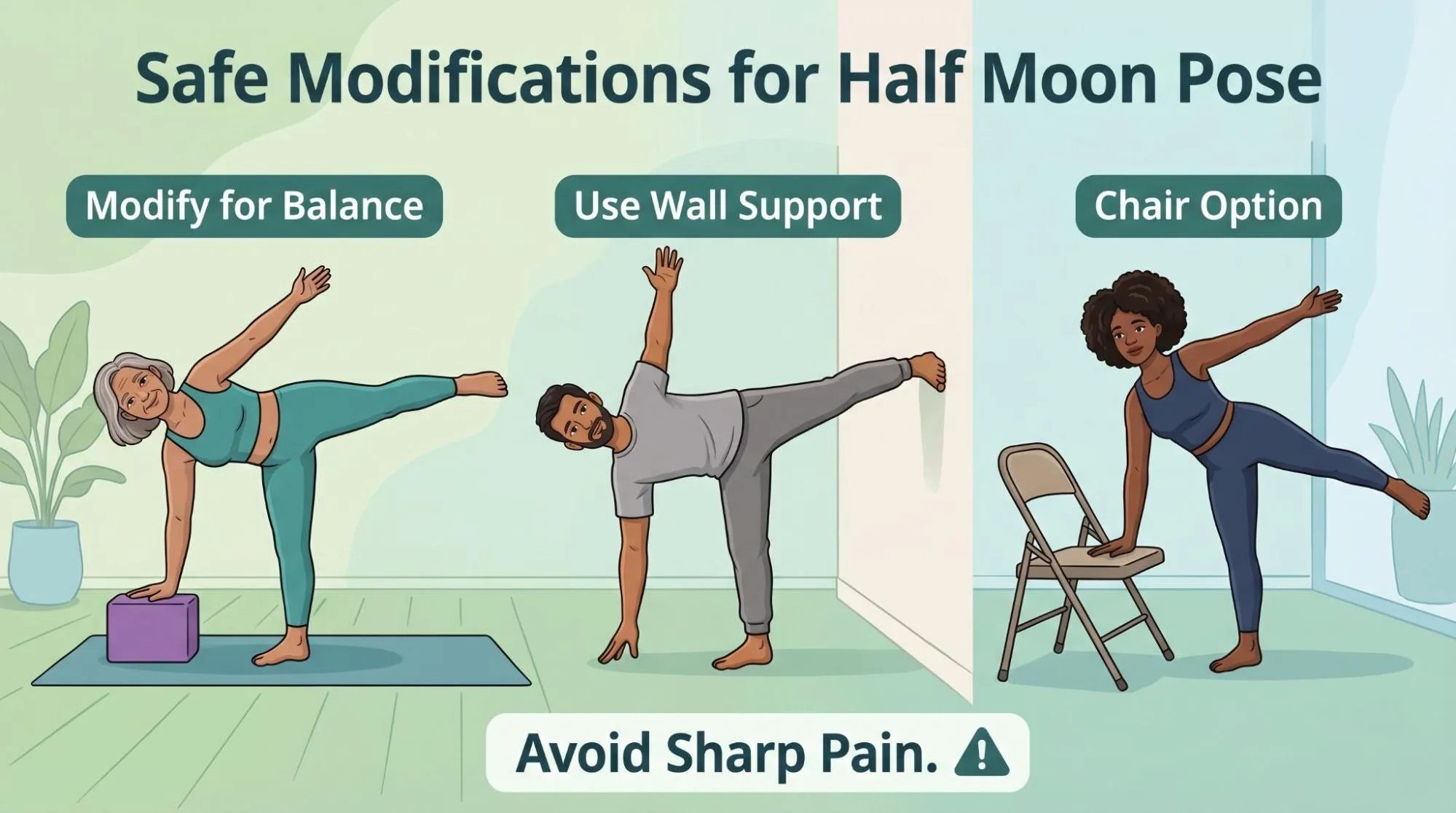
Some people may need to avoid or modify Half Moon Pose.
You may need extra support if you have:
- Recent ankle, knee, hip, or back injury
- Dizziness or vertigo
- Serious balance problems
- Uncontrolled high blood pressure
- Pain while standing on one leg
- Pregnancy-related balance changes
A wall-supported version or chair-supported version may be safer. The right version is the one where you can stay steady, breathe comfortably, and avoid strain.
How Often Should Beginners Practice Half Moon Pose?
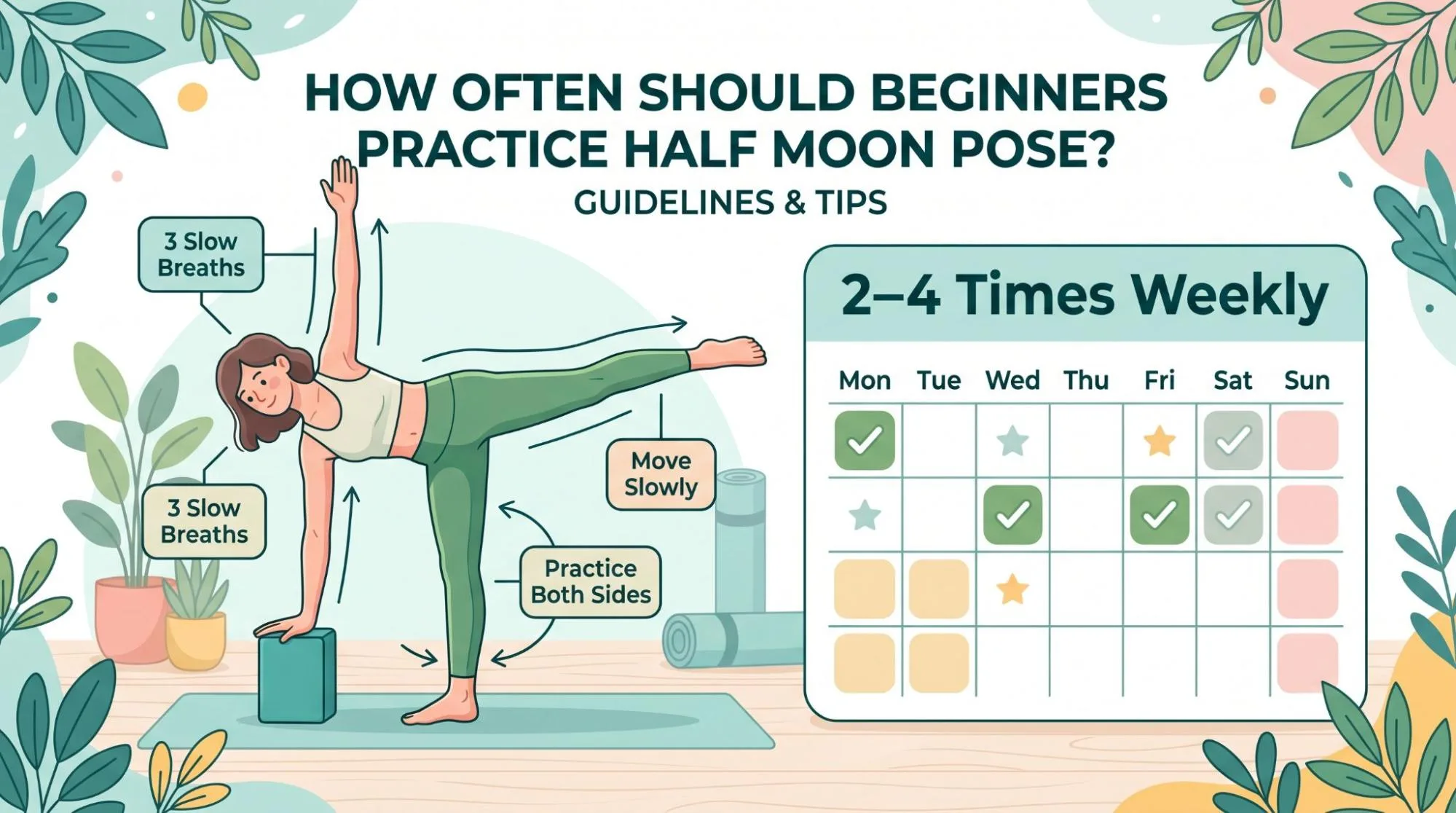
Beginners can practice Half Moon Pose 2 to 4 times per week.
You do not need long holds. Start with 3 slow breaths on each side. Repeat once if your body feels steady.
A simple beginner routine can look like this:
- Warm up the legs and hips.
- Practice Triangle Pose first.
- Move into Half Moon with a block.
- Hold for 3 breaths.
- Rest and switch sides.
- Use a wall if needed.
With time, you can hold the pose longer or try gentle variations.
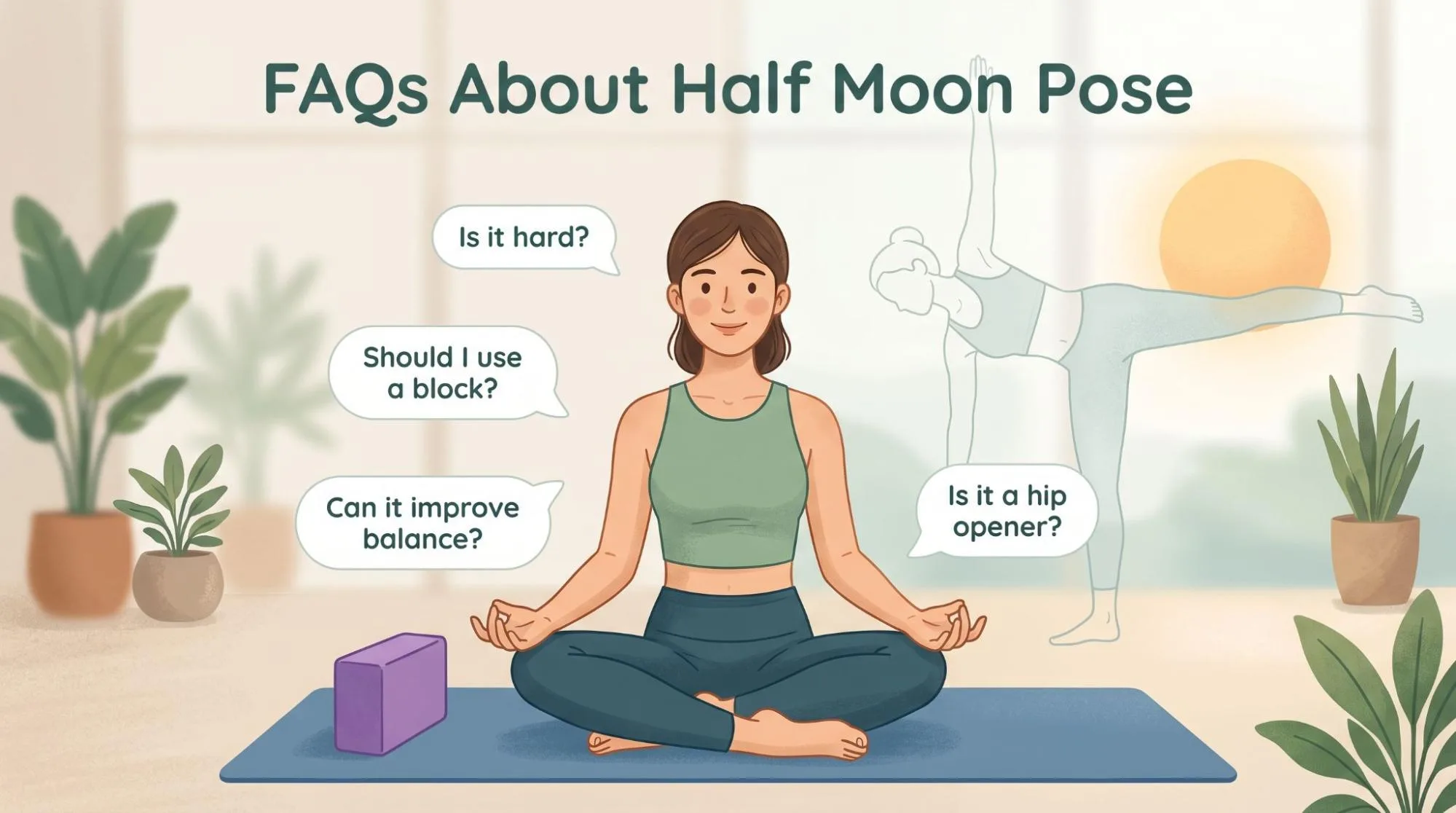
FAQs About Half Moon Pose
What are the main half moon pose benefits for beginners?
The main half moon pose benefits for beginners include stronger legs, better balance, improved flexibility, open hips, stronger core support, better posture, and improved focus. It is a full-body pose that teaches strength and control at the same time.
Is Half Moon Pose hard for beginners?
Half Moon Pose can feel hard at first because it involves balance and hip opening. But with a yoga block and wall support, beginners can practice it safely. You do not need to master the full pose right away.
Should I use a yoga block for Half Moon Pose?
Yes, most beginners should use a yoga block. It helps keep the spine long, supports balance, and stops you from reaching too far toward the floor. A block makes the pose cleaner and safer.
Which leg is the standing leg in Half Moon Pose?
The standing leg is the leg that stays on the floor and supports your body. If your right foot is on the mat, your right leg is the standing leg. If your left foot is on the mat, your left leg becomes the standing leg.
Should the lifted leg be parallel to the floor?
The lifted leg can move parallel to the floor, but beginners should not force it. It is better to keep the leg active and controlled than to lift it too high and lose alignment.
Can Half Moon Pose improve balance?
Yes, Half Moon Pose can support improved balance because it trains the feet, ankles, legs, hips, and core to work together. Regular practice helps your body make small corrections more naturally.
Is Half Moon Pose a hip opener?
Yes, Half Moon Pose is a strong hip opener. It opens the outer hips, inner thighs, and front body when practiced with good alignment. Beginners should open the hips slowly instead of twisting too fast.
What is the safest way to practice Half Moon Pose?
The safest way is to use a block, keep the standing knee slightly bent, practice near a wall, and keep your gaze downward at first. Move slowly and come out of the pose if you feel pain.
Can I practice Half Moon Pose every day?
You can practice Half Moon Pose often if your body feels good, but beginners usually do well with 2 to 4 times per week. Give your legs and hips time to adjust, especially when you are still learning the pose.
What should I do if I keep falling out of Half Moon Pose?
Use a wall and a higher block. Keep your gaze down, bend the standing knee slightly, and focus on your breath. Falling out is normal in balanced poses. The practice is in returning calmly.
Learn More : Half Moon Pose Yoga: Benefits, Steps, Alignment Tips, and Beginner Guide
Final Thoughts
Half Moon Pose is not about looking perfect. It is about learning how to stay steady, strong, and open at the same time. With patient practice, the half moon pose benefits for beginners become easier to notice in both yoga practice and daily movement.
For beginners, the best approach is simple: use support, move slowly, and let the pose build over time. A block, a wall, and a soft standing knee can make a big difference. The real value of Ardha Chandrasana comes from what it teaches your body. Stronger legs. Better posture. More open hips. A steadier core. A calmer mind.
That is why the half moon poses benefits for beginners that are worth exploring. With patient practice, this pose becomes less about balancing perfectly and more about feeling grounded, focused, and confident in your own body.