
Aparigraha is one of those yoga ideas that sounds simple at first, but becomes deeper the more you live with it. It is often explained as non-attachment, non-possessiveness, or non-greed. In plain words, aparigraha teaches us not to hold on too tightly to things, people, results, opinions, or even old versions of ourselves.
The simple aparigraha yoga non attachment meaning is this: take what you need, care for what you have, and let go of what no longer serves your peace.
This does not mean living without goals or avoiding comfort. It means learning to live with more awareness and less grasping. Whether you are in a yoga class, sitting at home, working, shopping, or dealing with relationships, aparigraha can quietly guide you toward a lighter and more balanced life.
What Is Aparigraha?
Aparigraha is a Sanskrit word commonly translated as non-attachment, non-possessiveness, or non-hoarding. It asks us to notice where we are clinging too much.
Sometimes we cling to material possessions. Sometimes we cling to control, praise, success, habits, memories, or expectations. The practice of aparigraha helps us see these patterns clearly.
At its heart, aparigraha is not about forcefully rejecting life. It is about using things without being controlled by them. You can enjoy your home, clothes, career, family, and yoga practice without making your happiness depend completely on them.
That is the real beauty of this teaching.
Aparigraha as the Fifth Yama
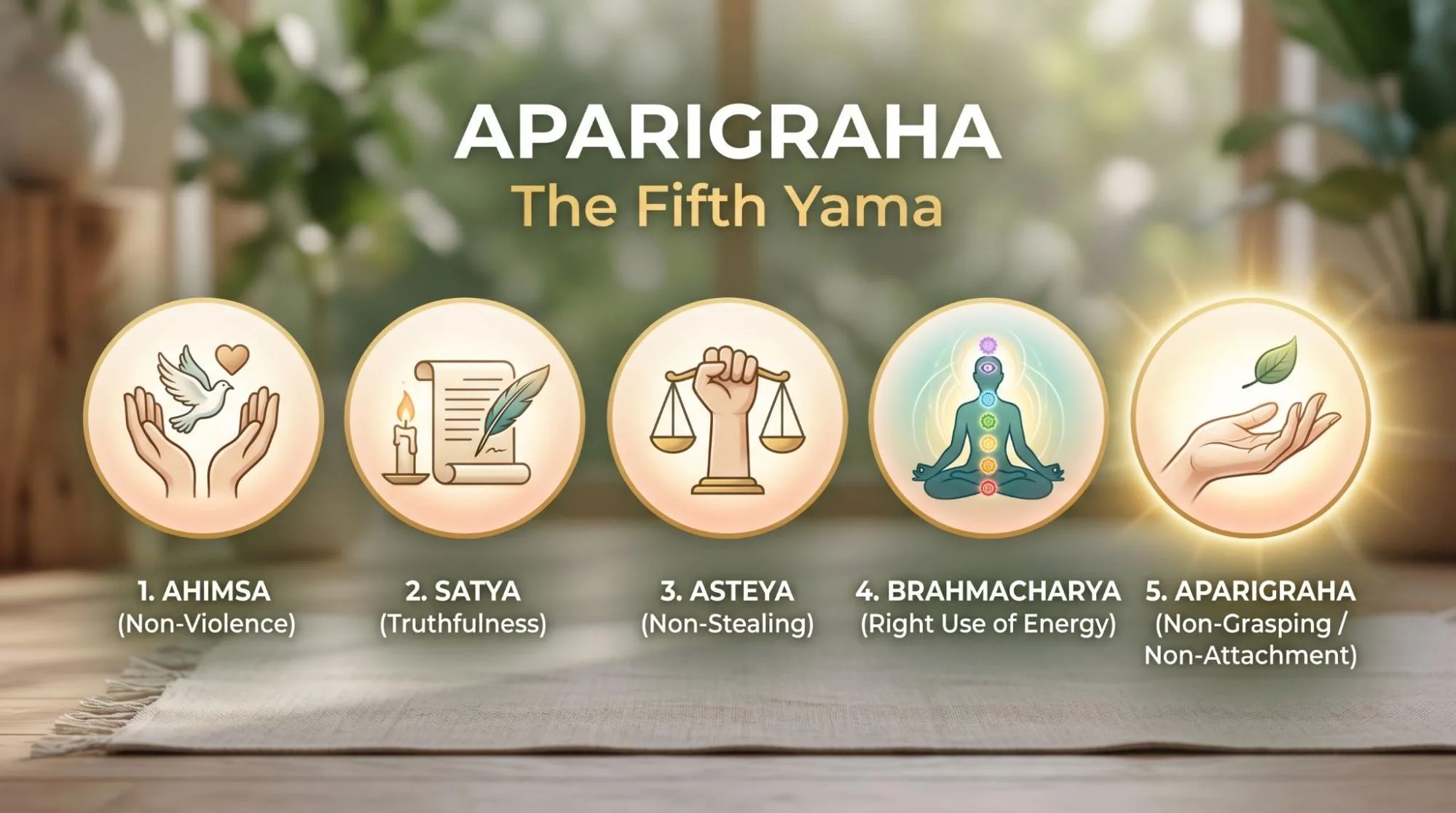
In the Yoga Sutras of Patanjali, aparigraha is the fifth Yama. The Yamas are ethical guidelines that shape how we live with others and with the world around us.
The five Yamas are:
- Ahimsa: non-violence
- Satya: truthfulness
- Asteya: non-stealing
- Brahmacharya: wise use of energy
- Aparigraha: non-attachment and non-greed
As the fifth Yama, aparigraha brings the earlier teachings into daily life in a very practical way. If we are not greedy, we naturally cause less harm. If we are not possessive, we become more honest in our relationships. If we stop taking more than we need, we also stop stealing space, time, energy, and resources from others.
Practicing aparigraha is not only spiritual. It is also deeply practical.
Learn More : Yama and Niyama: Meaning, Principles, Benefits, and Daily Practice
Why Aparigraha Matters in Modern Life
Modern life constantly tells us to want more. More clothes, more money, more followers, more praise, more productivity, more perfect results. After a while, the mind becomes tired from chasing.
Aparigraha offers a softer way to live.
It helps us ask simple questions:
- Do I really need this?
- Am I holding on because it supports me, or because I am afraid?
- Is this desire coming from peace or comparison?
- What would feel lighter right now?
These questions are not meant to create guilt. They simply help us pay attention.
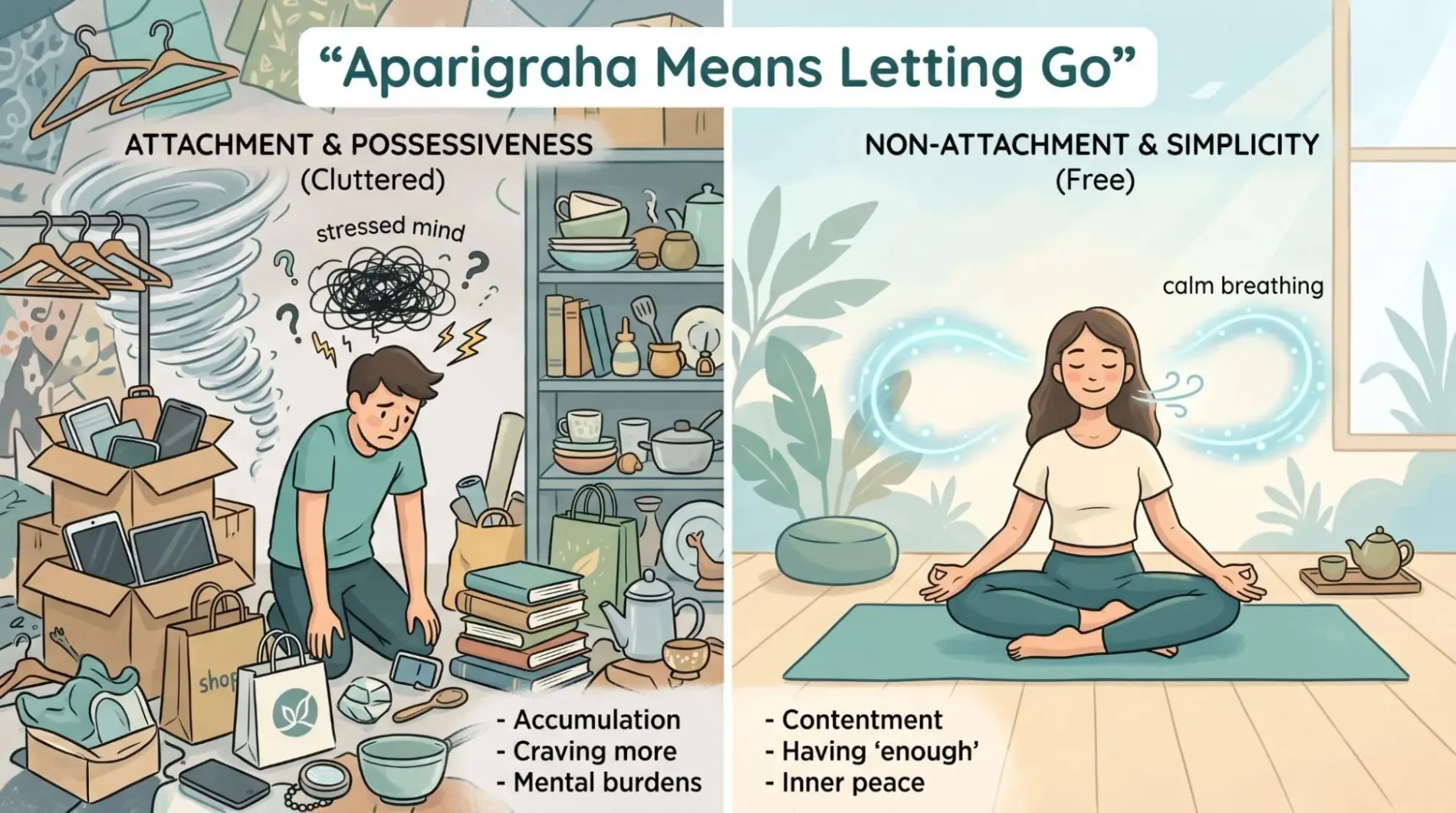
Aparigraha matters because many people today are not only physically cluttered. They are mentally cluttered too. A person may have a full room, full schedule, full phone, and full mind, yet still feel empty inside.
Non-attachment creates space. And sometimes space is exactly what we need.

How Aparigraha Manifests in Life
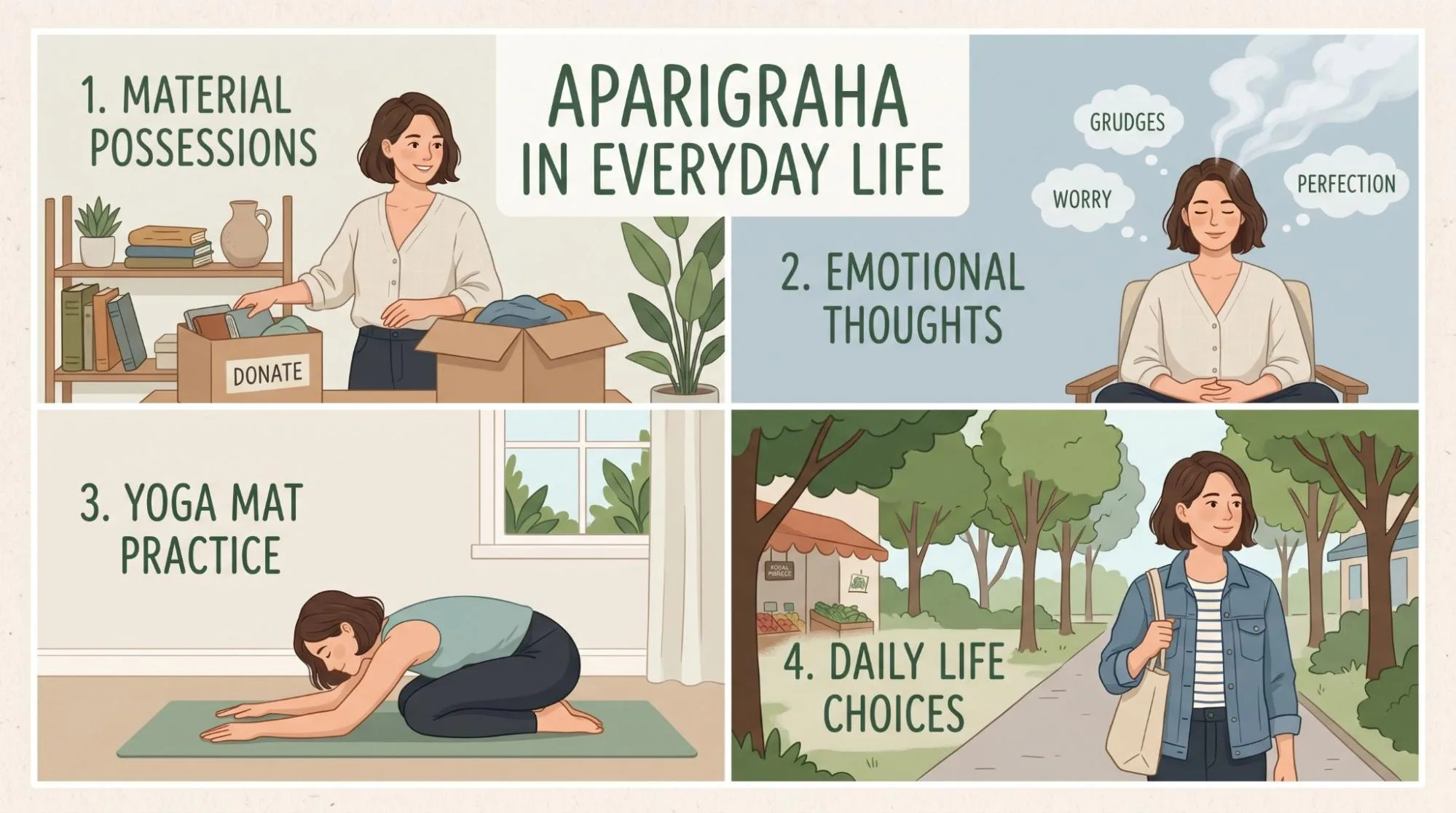
Aparigraha does not show up in only one area. It touches how we own things, think, move, love, work, and react.
Material Possessions
This is the most obvious form of aparigraha. It asks us to look at our material possessions honestly.
Do we keep things because we use them? Or because we fear not having enough?
Aparigraha does not mean throwing everything away. It means creating a healthier relationship with what we own. A clean space often gives the mind more room to breathe.
You may begin by noticing:
- Clothes you never wear
- Items kept only out of guilt
- Things bought because of comparison
- Objects that no longer serve your present life
Letting go of excess can feel uncomfortable at first. But slowly, it becomes freeing.
Emotional and Mental Blocks
Aparigraha is not only about physical clutter. Many people carry emotional clutter too.
Old resentment. Fear of change. The need to be right. The desire to control every outcome. These can be heavier than any object in a room.
Practicing aparigraha means noticing when the mind is gripping too tightly. Maybe you are replaying an old conversation again and again. Maybe you are attached to how life “should” look. Maybe you are holding on to a version of yourself that no longer fits.
Letting go does not mean pretending something did not hurt. It means choosing not to carry it forever.
On the Yoga Mat
Aparigraha on the mat is very real. In asana practice, it appears when we stop forcing the body to perform.
Many people compare their poses with others in a yoga class. They want deeper stretches, better balance, or a more flexible body. But yoga practice is not a competition.
Aparigraha reminds you to meet your body honestly.
Some days your body feels open. Some days it feels stiff. Both are part of practice. When you stop grabbing for the “perfect” pose, your yoga mat becomes a place of listening instead of pressure.
That is when the practice becomes more peaceful.
In Daily Life
In daily life, aparigraha can be practiced in small ways.
You may pause before buying something. You may let someone have the last word. You may stop checking your phone for approval. You may accept that a plan changed without letting it ruin your whole day.
These are ordinary moments, but they matter.
Aparigraha is not always dramatic. Often, it is just a quiet choice to loosen your grip.
Aparigraha and Non-Greed
Non-greed is a key part of aparigraha. Greed is not only about money. It can also appear as wanting too much attention, control, praise, comfort, or certainty.
A person can have very little and still be greedy in the mind. Another person can have enough resources and still live with generosity and balance.
The point is not the amount. The point is the attachment.
Aparigraha asks us to notice when desire becomes restless. Wanting something is natural. But when wanting controls our mood, choices, and self-worth, it becomes a problem.
Non-greed helps us return to enough.

Learn More : What Is Ahimsa in Yoga? A Simple Guide to Non-Violence, Kindness, and Daily Practice
Aparigraha and Non-Possessiveness in Relationships
Relationships often show us where we are attached. Love can be healthy and warm, but possessiveness can make it heavy.
Aparigraha in relationships means allowing people to be themselves. It means loving without controlling. It means caring without trying to own another person’s choices, time, or identity.
This does not mean accepting disrespect. Boundaries are still important. In fact, healthy non-attachment often creates better boundaries.
You can love someone deeply and still give them space. You can support someone without managing every decision. You can be close without becoming dependent on their every mood.
This is not easy, but it is mature love.

Common Signs You May Need Aparigraha
You may benefit from practicing aparigraha if you notice these patterns:
- You feel anxious when plans change
- You buy things to feel better, but the relief does not last
- You compare your life with others often
- You struggle to let go of old items, memories, or identities
- You feel jealous or controlling in relationships
- You push too hard in asana practice
- You are attached to perfect results
- You feel restless even when you already have enough
These signs do not mean something is wrong with you. They simply show where more awareness may help.

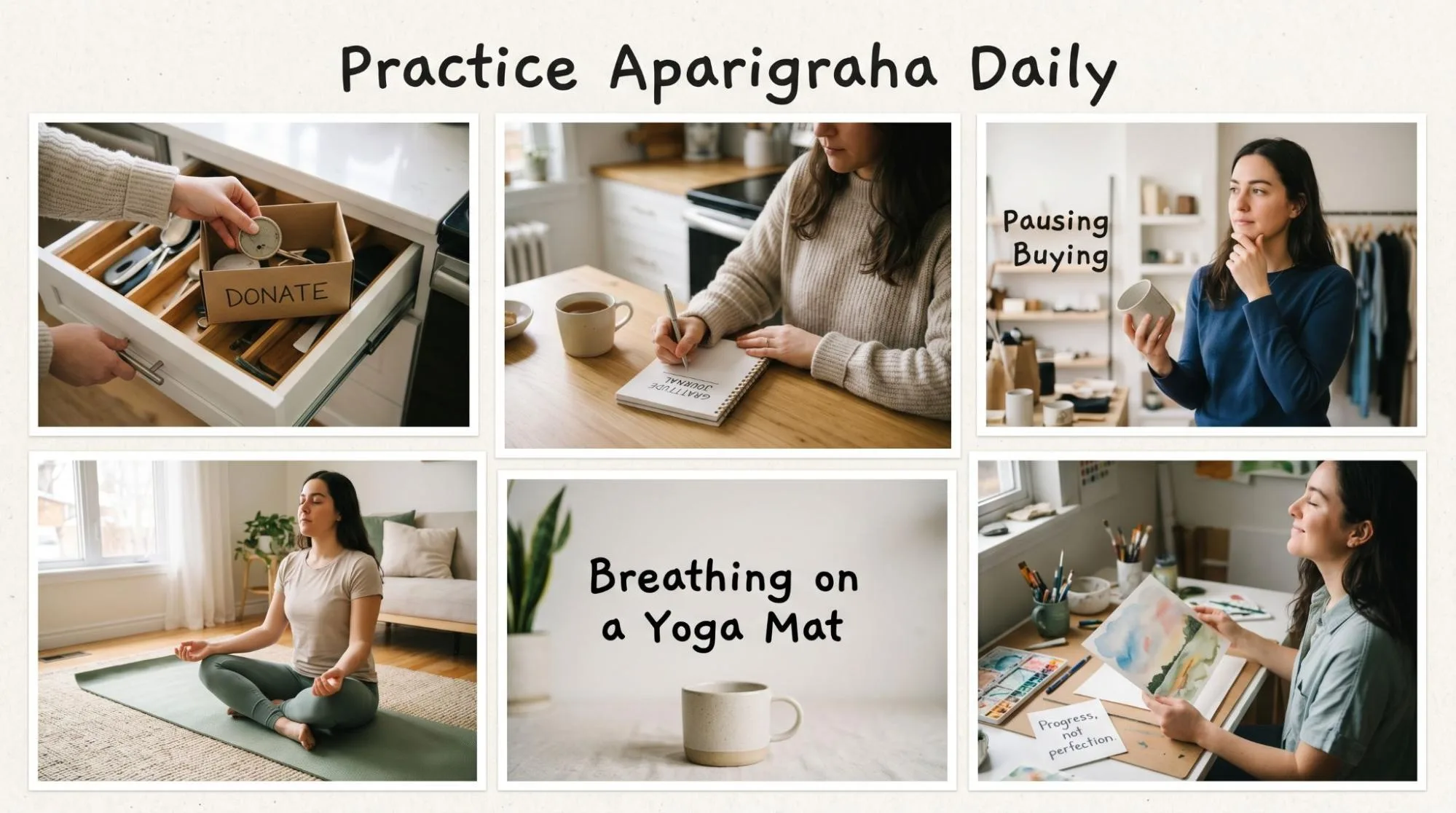
How to Practice Aparigraha Every Day
Aparigraha becomes meaningful when it is practiced in real life. Small actions are enough. You do not need to change everything overnight.
Declutter Your Space
Start with one drawer, one shelf, or one corner of your room. Choose items that are useful, meaningful, or truly needed. Let go of things that no longer serves your life.
Do it gently. Decluttering should not become another form of pressure.
Ask yourself:
- Do I use this?
- Do I still need this?
- Does this support my present life?
- Am I keeping this from fear or guilt?
A lighter space can make daily life feel calmer.
Notice Your Desires
Desire is not bad. It becomes useful when we observe it clearly.
Before buying something or chasing a result, pause for a moment. Notice what is behind the desire. Are you looking for comfort, approval, status, security, or distraction?
Sometimes you may still choose to buy or pursue something. That is fine. The practice is not about strict denial. It is about awareness.
Practice Gratitude
Gratitude helps balance the mind’s habit of wanting more. It brings attention back to what is already present.
You can keep it simple. Each day, name three things you appreciate. They do not have to be big.
A peaceful morning. A warm cup of tea. A helpful friend. A body that carried you through the day.
Gratitude makes “enough” easier to feel.
Let Go of Perfect Results
Many people suffer because they are attached to how things should turn out. Aparigraha teaches effort without obsession.
Do your work sincerely. Prepare well. Show up fully. Then allow the result to unfold.
This is useful in study, business, relationships, creativity, and yoga practice. You still care, but you stop letting the outcome control your inner state.
That one shift can reduce a lot of stress.
Practice Mindful Yoga
On your yoga mat, pay attention to your breath, body, and reactions.
Notice when you force a pose. Notice when you compare yourself. Notice when you judge your flexibility or strength.
Aparigraha on the mat may look like taking a gentler variation, resting in child’s pose, or accepting that today’s practice is different from yesterday’s.
This is not weakness. It is wisdom.
Benefits of Practicing Aparigraha
The benefits of aparigraha are simple but powerful.
It can help you feel:
- Less controlled by material possessions
- More peaceful in daily life
- More patient with yourself and others
- Less jealous or possessive in relationships
- More present during yoga practice
- Less attached to comparison
- More grateful for what you already have
- More comfortable with change
Aparigraha also supports mental clarity. When you are not constantly grabbing, chasing, or fearing loss, the mind becomes quieter.
Life may not become perfect. But it can feel lighter.

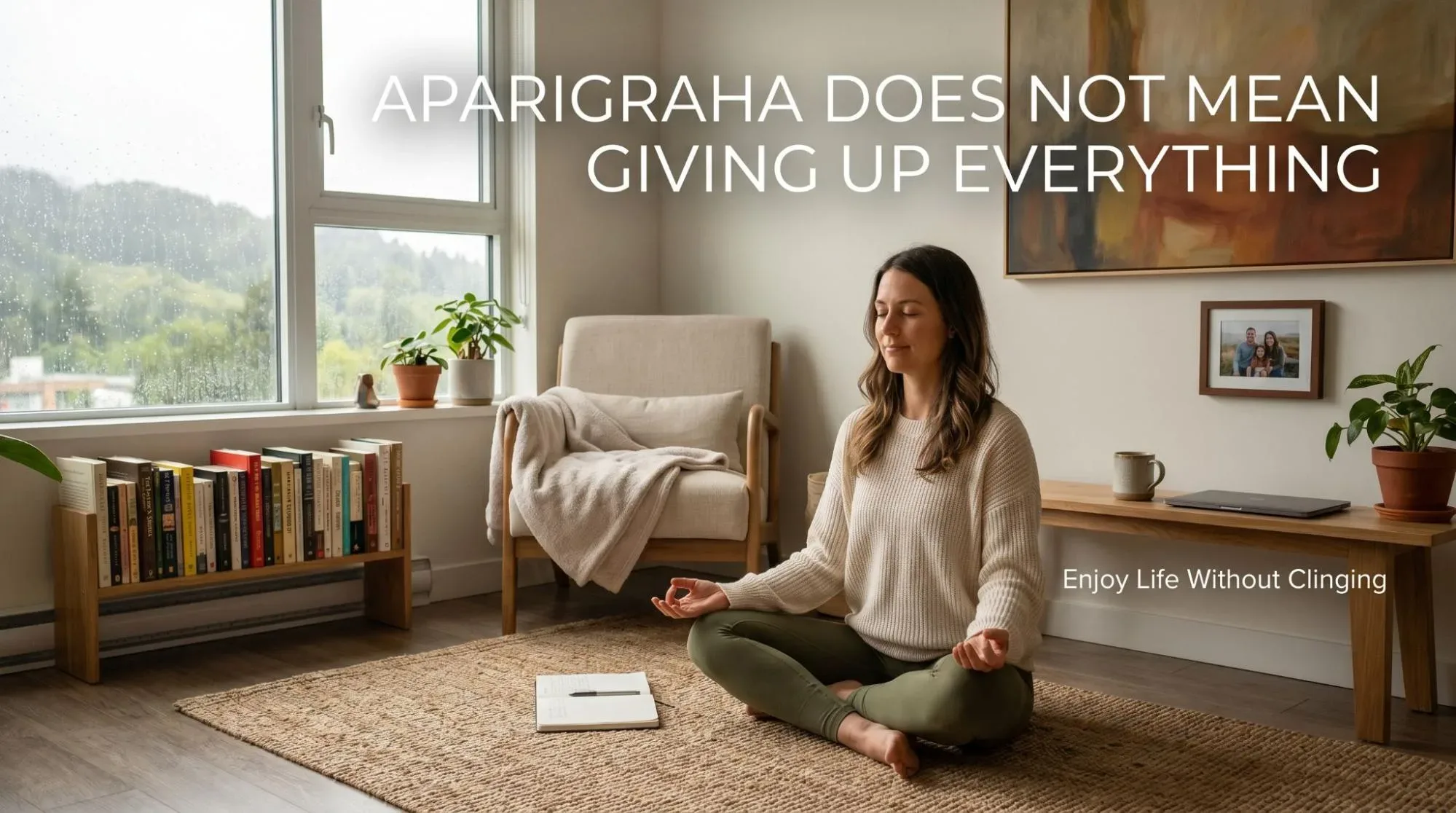
Aparigraha Does Not Mean Giving Up Everything
A common misunderstanding is that aparigraha means you must give up all comfort, ambition, or belongings. That is not true.
You can have a home, a career, a family, goals, and beautiful things. Aparigraha simply asks you not to become trapped by them.
You can work hard without becoming obsessed. You can enjoy possessions without hoarding. You can love deeply without controlling. You can practice yoga seriously without turning it into performance.
Aparigraha is not about having nothing.
It is about not being owned by what you have.
FAQs
What is the meaning of aparigraha in yoga?
Aparigraha means non-attachment, non-possessiveness, and non-greed. In yoga, it teaches us to take only what we need and let go of what creates unnecessary stress or attachment.
What is the simple aparigraha yoga non attachment meaning?
The simple meaning is learning to live with less grasping. It means enjoying life, people, and possessions without depending on them completely for peace and happiness.
How is aparigraha connected to the Yoga Sutras?
Aparigraha is the fifth Yama in Patanjali’s Yoga Sutras. The Yamas are ethical guidelines that help shape a balanced and mindful life.
How can I practice aparigraha in daily life?
You can practice it by decluttering, buying mindfully, letting go of perfect results, being less controlling in relationships, and noticing when desire is creating stress.
What does aparigraha on the mat mean?
Aparigraha on the mat means not forcing your body during yoga practice. It means accepting your limits, avoiding comparison, and practicing with awareness instead of ego.
Is aparigraha the same as minimalism?
They are related, but not exactly the same. Minimalism often focuses on owning less. Aparigraha goes deeper by looking at attachment, greed, control, and emotional clinging.
Does aparigraha mean I should stop wanting things?
No. Wanting is natural. Aparigraha means you notice your desires and do not let them control your peace, choices, or self-worth.
Can aparigraha help relationships?
Yes. It can help reduce jealousy, control, and emotional dependence. It supports healthier love, better boundaries, and more trust.
Is aparigraha only for advanced yoga students?
No. Anyone can practice aparigraha. You do not need years of yoga experience. It can begin with one mindful choice in daily life.
How does aparigraha reduce stress?
It reduces stress by helping you stop clinging to things you cannot fully control. When you release the need to own, force, or perfect everything, the mind becomes calmer.
Learn More : Santosha: Practice Complete Inner Peace
Conclusion
Aparigraha is a quiet but powerful yoga practice. It teaches you to live with awareness, use what you need, and let go of what makes life heavier.
You do not have to leave everything behind or become a different person. Start small. Clear one space. Notice one desire. Release one expectation. Breathe through one moment of comparison on your yoga mat.
Over time, practicing aparigraha can help you feel more grounded, less controlled by outside things, and more at ease with life as it changes.
That is simple living in the real sense: not empty, not forced, but lighter, clearer, and more peaceful.