
Asteya is one of the most practical teachings in yoga. In simple words, asteya meaning yoga non stealing refers to the practice of not taking what does not belong to us. But yoga looks at this idea in a much deeper way.
Asteya is not only about avoiding physical theft. It is also about not stealing time, attention, ideas, peace, energy, or even your own well-being. When practiced honestly, asteya helps us live with more respect, contentment, and inner peace.
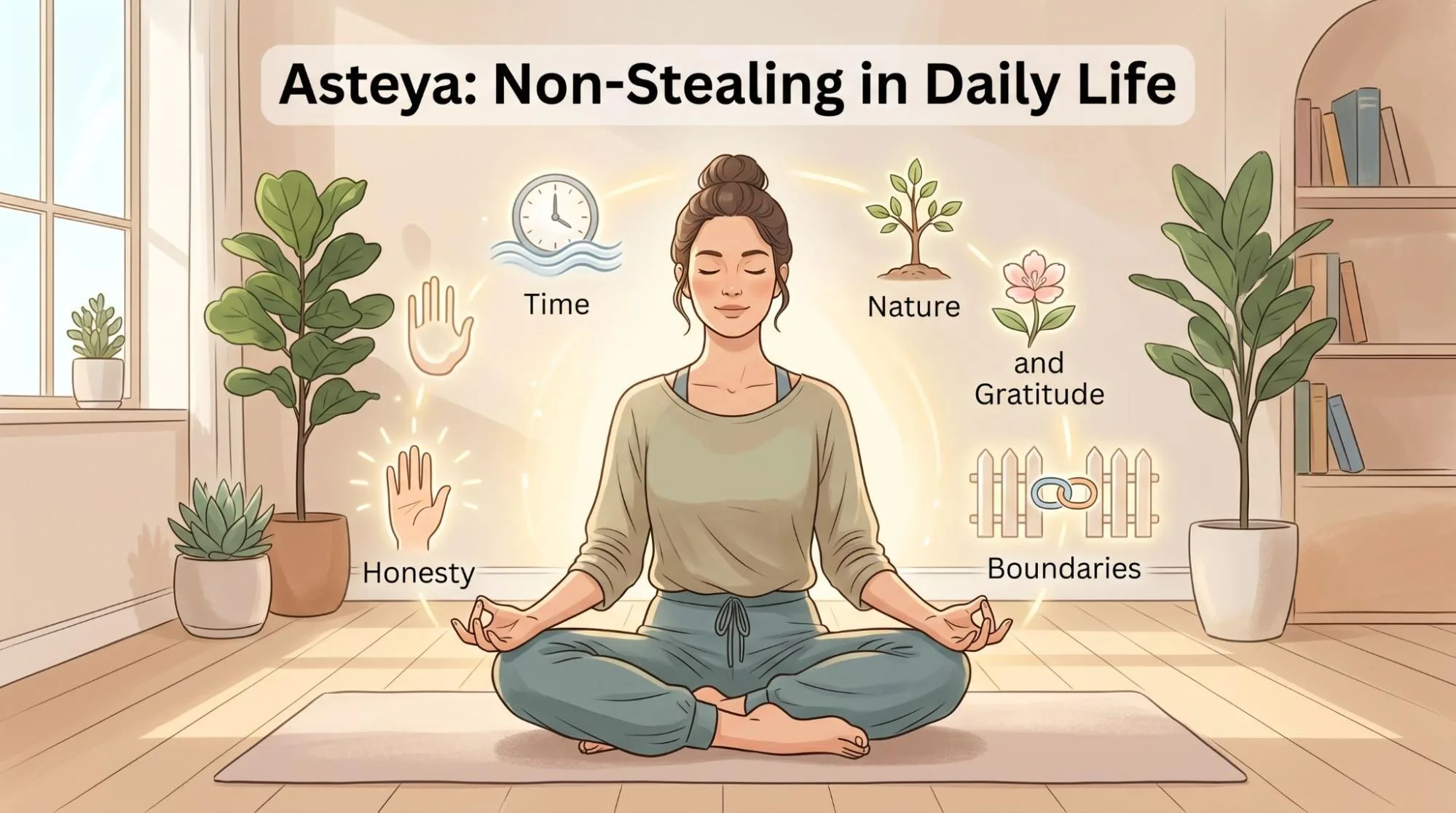
Asteya Meaning Yoga Non Stealing in Simple Words
Asteya comes from Sanskrit and means “non-stealing.” It is one of the five Yamas mentioned in the Yoga Sutras of Patanjali. The Yamas are ethical guidelines that help a person live with awareness, kindness, and self-control.
In daily life, asteya non stealing means we do not take anything that is not freely given. This includes material things, credit, opportunities, emotional energy, and personal space.
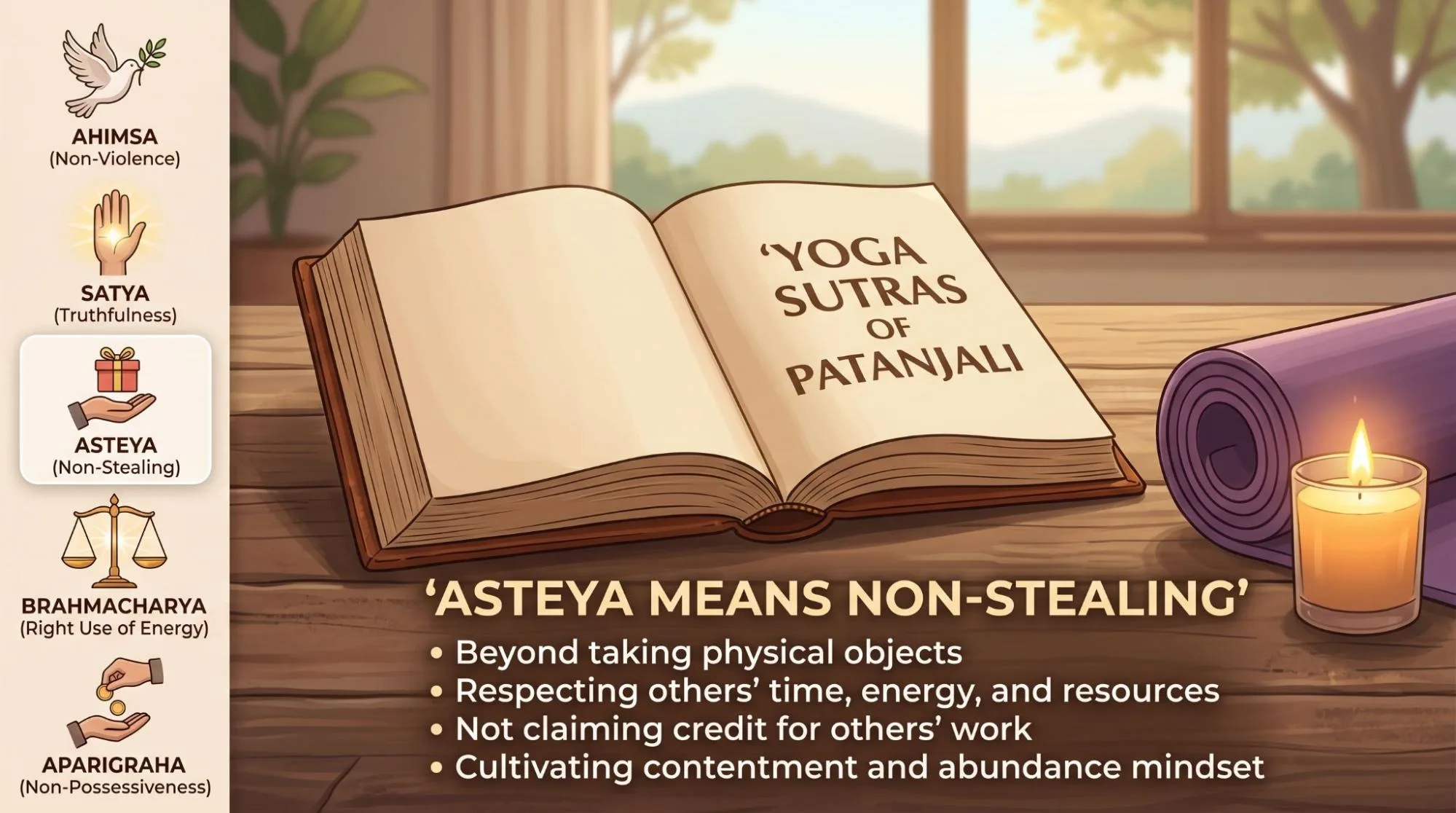
The Deeper Meaning of Non-Stealing
At its root, stealing often comes from a sense of lack. We may feel we do not have enough money, success, attention, love, beauty, or respect. This feeling can push us to take more than we need or compare ourselves with others.
Asteya teaches us to move from scarcity to trust. It reminds us that we can live honestly without grabbing, forcing, or taking from others.

Learn More : Svadhyaya: The Yoga Practice of Self-Study and Inner Reflection
Physical Theft: Respecting What Belongs to Others
The most obvious meaning of asteya is not taking physical things. This includes money, belongings, food, tools, or anything owned by another person.
Respecting ownership is a basic part of ethical living. Even small actions matter, such as returning borrowed items, not using someone’s things without permission, and being honest in shared spaces.
Intellectual Property and Ethical Ownership
Asteya also applies to ideas. Copying someone’s writing, design, research, images, or creative work without permission is a form of stealing.
Giving credit is a simple but powerful way of practicing asteya. Whether at school, work, or online, ethical ownership builds trust.

Stealing Time and Energy
Not all stealing is visible. Sometimes we steal time and energy without realizing it.
Respecting Other People’s Time
Being late, cancelling repeatedly, wasting meeting time, or expecting instant replies can affect others. Practicing asteya means valuing people’s time as much as our own.
Simple habits help:
- Arrive on time
- Keep promises
- Communicate clearly
- Do not stretch conversations unnecessarily
Respecting Emotional Energy
We can also take emotional energy by constantly complaining, demanding attention, or ignoring someone’s boundaries.
This does not mean we should never seek support. It means we should be mindful. Healthy relationships work best when care flows both ways.

Asteya and the Environment
Asteya also connects with how we treat nature. When we overuse resources, waste food, buy more than we need, or damage the environment, we are taking from the earth and future generations.
Mindful Consumption and Sustainability
Practicing asteya means using resources with awareness. It can be as simple as saving water, reducing waste, reusing items, and buying only what is necessary.
This is not about living perfectly. It is about living more responsibly.
Stealing From Yourself
Asteya also asks us to notice how we take from ourselves.
Overworking and Self-Neglect
When we ignore rest, push through exhaustion, skip meals, or overload our schedule, we steal from our own health and peace.
Hard work is good, but constant self-neglect is not strength. It slowly takes away energy, focus, and joy.
The Impact of Self-Comparison
Comparison is another subtle form of stealing from yourself. When you keep measuring your life against others, you lose the present moment.
You steal your own confidence by believing someone else’s path is better than yours. Asteya invites you back to your own journey.

Asteya on the Yoga Mat
Asteya is very useful during a yoga class. Many people compare their flexibility, strength, or balance with others.
Practicing Non-Stealing During Yoga Practice
On the mat, asteya means not stealing peace from your body. Do not force a pose just because someone else can do it. Do not push beyond your safe limit.
A good yoga practice is honest. You listen to your body, breathe, and stay present.
Asteya in Relationships
Relationships need trust, respect, and space. Asteya helps protect all three.
Respecting Boundaries and Independence
We practice asteya in relationships when we do not control, pressure, or emotionally manipulate others.
Respecting boundaries means allowing people to have their own thoughts, time, friendships, and decisions. Love should not feel like ownership.
Asteya at Work and in Business
Asteya is also important in professional life. A workplace becomes healthier when people act fairly.
Ethical Conduct in the Workplace
Taking credit for someone else’s work, wasting company time, using office resources dishonestly, or hiding mistakes can all go against asteya.
A fair worker gives credit, works honestly, and respects the efforts of others.
Fairness in Business Practices
In business, asteya means honest pricing, clear communication, fair treatment of customers, and no false claims.
A business built on trust may grow slower, but it grows stronger.

Asteya and Digital Life
Digital life has made asteya more relevant than ever.
Digital Content and Intellectual Property
Copying blogs, images, videos, designs, or social media content without credit is still stealing. The internet may make content easy to access, but that does not mean it is free to take.
Ethical digital behavior means asking permission, linking properly, and respecting creators.
Respecting Attention in the Online World
Attention is valuable. Spamming people, sending unnecessary messages, clickbaiting, or forcing engagement can steal mental space.
Practicing asteya online means being thoughtful with what we share and how we communicate.
Practicing Asteya Through Gratitude
Gratitude is one of the easiest ways to begin practicing asteya.
How Gratitude Reduces Scarcity Thinking
When we notice what we already have, the sense of lack becomes weaker. Gratitude helps us stop chasing everything others have.
It gently reminds us: “I have enough to begin from here.”
Practicing Asteya Through Boundaries
Boundaries protect both you and others.
Creating Healthy Personal Boundaries
When you set boundaries, you stop stealing from your own peace. When you respect other people’s boundaries, you stop taking from their emotional space.
Healthy boundaries are not selfish. They make relationships cleaner and kinder.
Practicing Asteya Through Contentment
Contentment is closely connected to asteya.
The Connection Between Contentment and Non-Stealing
A content person does not feel the same urge to take, copy, compare, or compete unfairly. Contentment does not mean you stop growing. It means you grow without greed.

Learn More : Santosha: Practice Complete Inner Peace
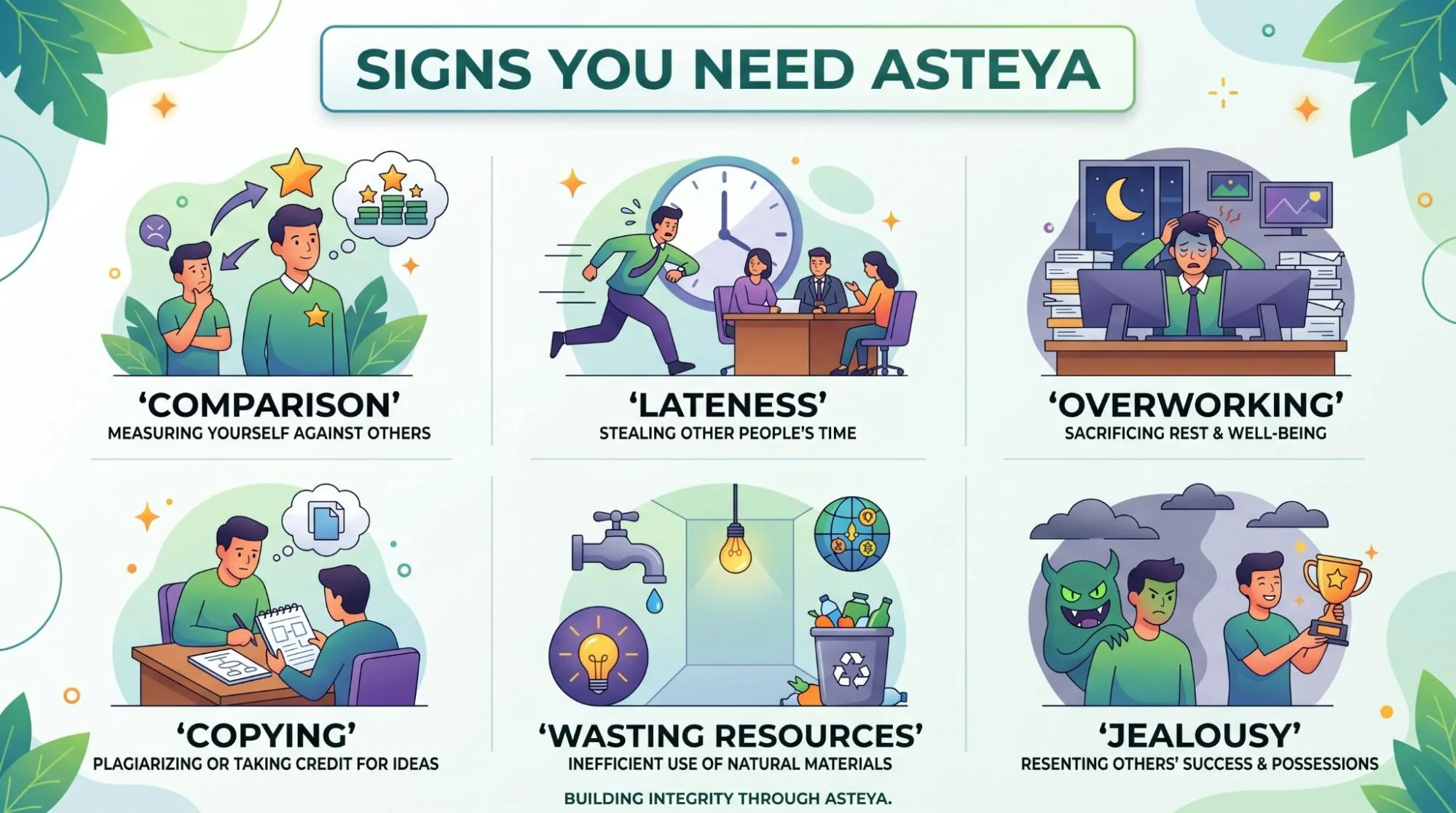
Signs You May Need to Practice Asteya More
You may need more asteya in your life if you often:
- Compare your success with others
- Take too much of someone’s time
- Feel jealous of what others have
- Use content without giving credit
- Overwork and ignore your body
- Buy more than you need
- Struggle to respect boundaries
- Feel restless when others succeed
These signs are not meant to create guilt. They are simply invitations to become more aware.
Simple Ways to Practice Asteya Every Day
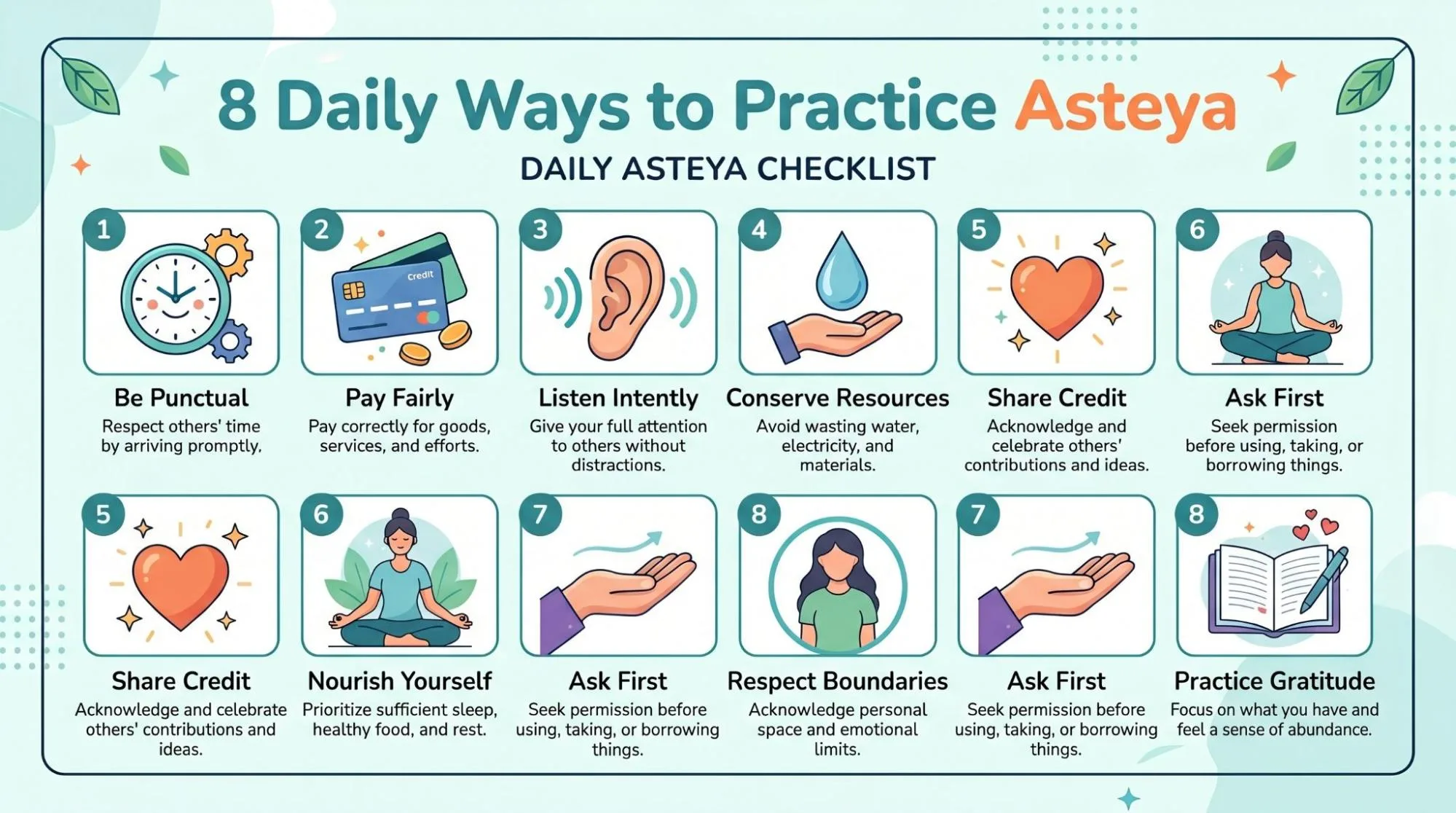
Asteya becomes powerful when practiced in small daily actions.
Be on Time
Respect other people’s schedules. Time is one of the most valuable things we share.
Give Credit Where It Is Due
Mention the person who gave the idea, wrote the content, or helped with the work.
Listen Fully
Do not steal a conversation by interrupting or making everything about yourself.
Use Only What You Need
Whether it is food, water, money, or space, take what is enough.
Avoid Comparison
Your path does not need to look like anyone else’s.
Respect Your Body
Rest when needed. Do not force your body to perform beyond its capacity.
Ask Before Taking
Whether it is a physical object, an idea, or someone’s time, ask first.
Practice Gratitude Daily
Notice three things you already have. This simple habit softens the feeling of lack.
Why Asteya Creates Inner Peace
Asteya creates peace because it removes the pressure to take, prove, compete, or possess. When you stop living from lack, your mind becomes quieter.
You begin to trust your own timing. You respect others more naturally. You stop chasing what was never yours and start caring for what is already in your hands.
That is the quiet beauty of asteya.
FAQs
What does asteya mean in yoga?
Asteya means non-stealing. In yoga, it refers to not taking anything that is not freely given, including objects, time, energy, ideas, and attention.
Is asteya only about physical stealing?
No. Asteya also includes subtle forms of stealing, such as taking credit, wasting someone’s time, copying content, ignoring boundaries, or pushing your body too hard.
How can I practice asteya in daily life?
You can practice asteya by being on time, giving credit, using only what you need, respecting boundaries, avoiding comparison, and staying grateful.
How does asteya help in yoga class?
In yoga class, asteya helps you avoid comparison and forcing poses. It teaches you to respect your body and stay present in your own practice.
What is the connection between asteya and contentment?
Contentment reduces the feeling that you lack something. When you feel enough within yourself, you are less likely to take, copy, or compare unfairly.

Learn More : Aparigraha: The Yoga Practice of Non-Attachment and Simple Living
Conclusion
Asteya is a simple teaching, but it reaches every part of life. It teaches us to respect what belongs to others, protect our own energy, use resources wisely, and live with honesty.
The more we practice asteya, the less we feel driven by lack. We become more present, more grateful, and more peaceful in the way we move through the world.