
Jnana Yoga Meaning for Beginners is simple: it is the yoga of knowledge, self-inquiry, and inner wisdom. This path helps you look beyond the body, thoughts, emotions, and ego to understand your true self in a deeper and clearer way.
For beginners, Jnana Yoga is not about complicated philosophy or memorizing spiritual ideas. It is a simple but deep practice of questioning, observing, and slowly discovering the inner wisdom that already exists within you.
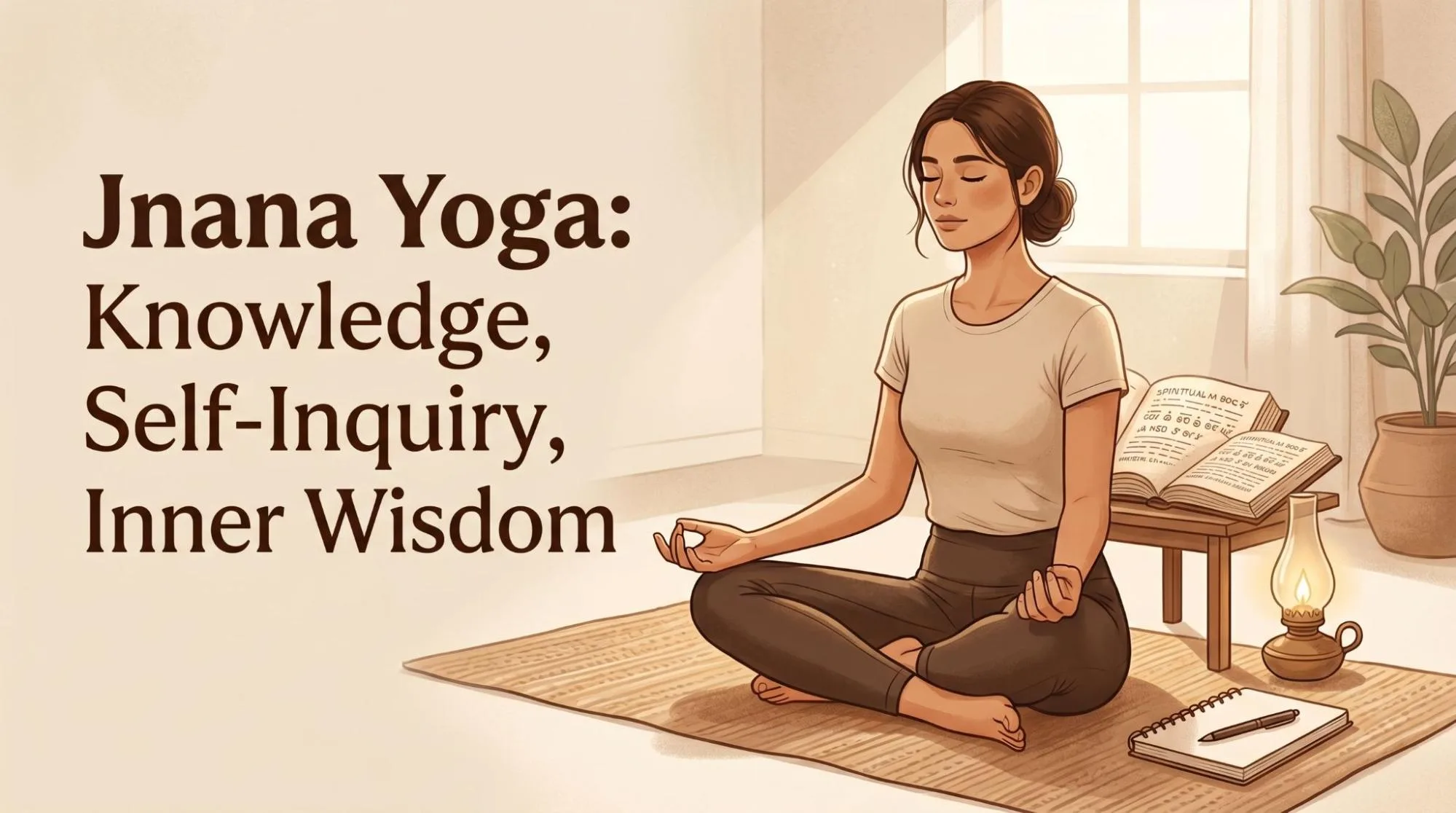
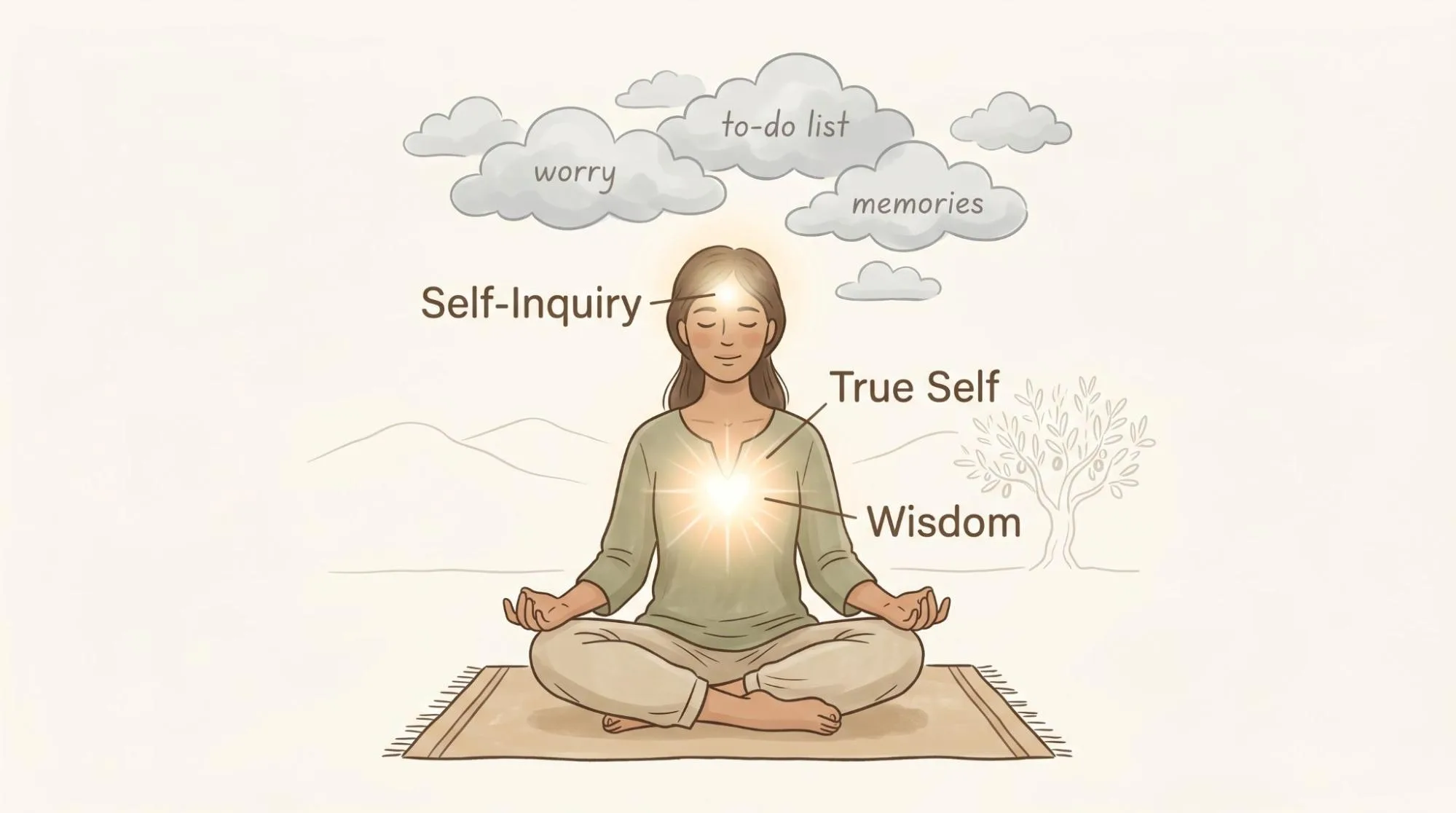
Jnana Yoga Meaning for Beginners: What It Really Means
Jnana Yoga is the yoga of knowledge, wisdom, and self-inquiry. The word “Jnana” means knowledge, but not ordinary book knowledge. It points to a deeper understanding of the self, life, truth, and reality.
For beginners, the simplest meaning of Jnana Yoga is this: it is a spiritual path where you question who you really are beyond your body, thoughts, emotions, name, job, and social identity.
In classical yoga, Jnana Yoga is known as the path of knowledge. It is one of the major types of yoga, along with bhakti yoga, karma yoga, and raja yoga. While bhakti yoga focuses on devotion, karma yoga focuses on selfless action, and raja yoga focuses on meditation and discipline, Jnana Yoga focuses on wisdom and clear seeing.
This path is not about collecting spiritual information. It is about removing confusion.
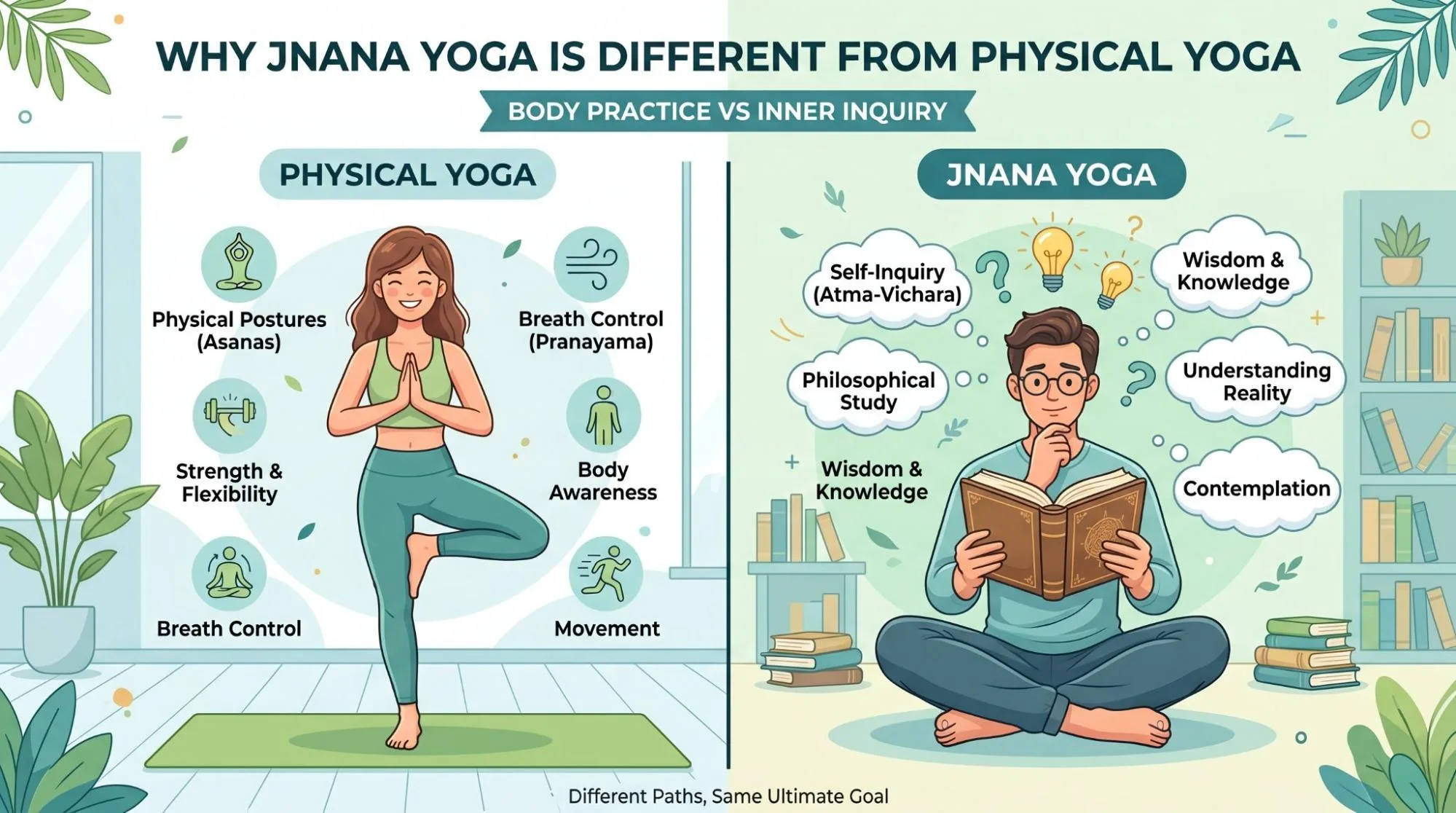
Why Jnana Yoga Is Different from Physical Yoga
Most people hear the word yoga and think of stretching, poses, breathing exercises, or fitness classes. That is one part of yoga, but Jnana Yoga is different. For new learners, Jnana Yoga Meaning for Beginners is easier to understand when we compare it with physical yoga, because this path focuses more on wisdom than body movement.
Jnana Yoga is not mainly physical. You do not need a yoga mat, special clothes, or advanced flexibility. Instead, you need honesty, patience, and a willingness to look within.
Physical yoga works strongly with the body. Raja yoga works with the mind through meditation and discipline. Jnana Yoga works through self-inquiry, reflection, and wisdom. such as :
- Who am I beneath my thoughts?
- What part of me changes, and what part simply observes?
- Am I only this body and mind, or is there something deeper?
- What is temporary, and what is truly real?
These questions are simple to read, but they can change the way a person sees life.
learn More : Svadhyaya: The Yoga Practice of Self-Study and Inner Reflection
The Main Goal of Jnana Yoga
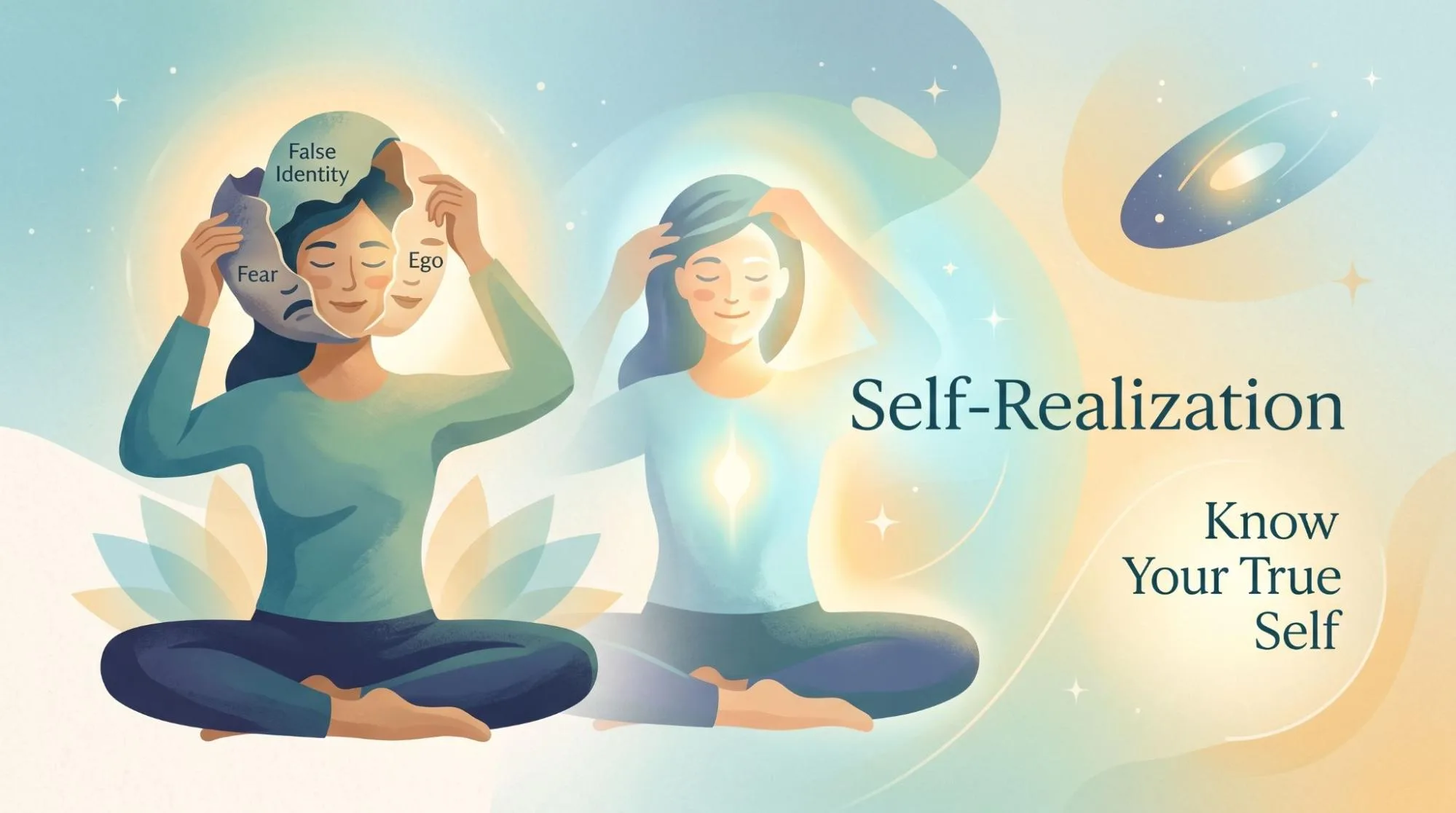
The main goal of Jnana Yoga is self-realization. This means recognizing your true nature beyond the ego and the changing mind. For many readers, Jnana Yoga Meaning for Beginners becomes clearer when they understand that its main goal is self-realization, not physical performance.
In daily life, we often identify with temporary things. We say, “I am stressed,” “I am successful,” “I am a failure,” or “I am my past.” Jnana Yoga gently challenges this. It asks: are you really those changing experiences, or are you the awareness that notices them?
The goal is not to reject life or become emotionless. It is to stop being controlled by false identity. When you see clearly, you suffer less from fear, comparison, pride, and attachment.
That is why Jnana Yoga is called the path of knowledge. It brings freedom through understanding.
The Three Core Practices of Jnana Yoga
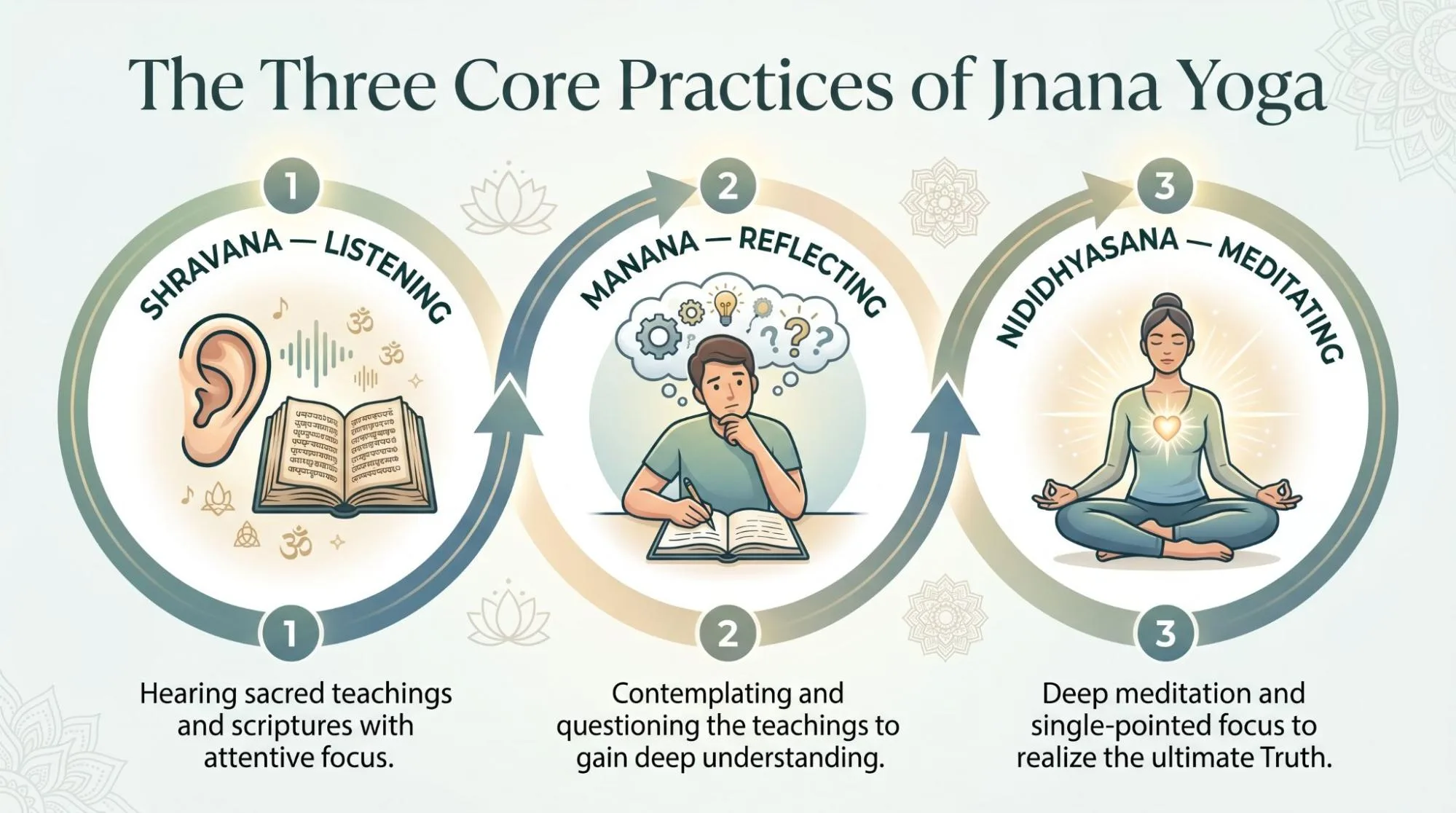
Jnana Yoga Meaning for Beginners becomes more practical through these three steps: listening, reflecting, and meditating on truth. Traditional Jnana Yoga is often explained through three core practices: Shravana, Manana, and Nididhyasana. These are not complicated, but they do require consistency.
Shravana: Listening to Wisdom
Shravana means listening. In Jnana Yoga, this means listening to spiritual teachings from trusted sources.
This can include:
- Reading the Bhagavad Gita
- Studying the Upanishads
- Listening to a wise teacher
- Reading classical yoga philosophy
- Reflecting on teachings about the true self
For beginners, Shravana should be simple. Do not rush into too many books at once. Choose one reliable text or teacher and study slowly. The aim is not to impress anyone. The aim is to understand.
Manana: Reflecting on What You Learn
Manana means reflection. After listening or reading, you think deeply about what you have learned.
This is where Jnana Yoga becomes personal.
For example, if you read that you are not merely the body or mind, do not accept it blindly. Sit with it. Watch your thoughts. Notice how your body changes, moods change, opinions change, yet something in you remains aware of all these changes.
Reflection turns borrowed knowledge into personal insight.
Nididhyasana: Meditating on Truth
Nididhyasana means deep meditation on truth. It comes after listening and reflection.
This is not meditation for relaxation only. It is meditation for direct understanding. You sit quietly and rest your attention on what you have understood. This practice takes time. Some days feel clear. Some days feel ordinary. That is normal. Jnana Yoga is not a quick mental trick. It is a steady inner discipline.
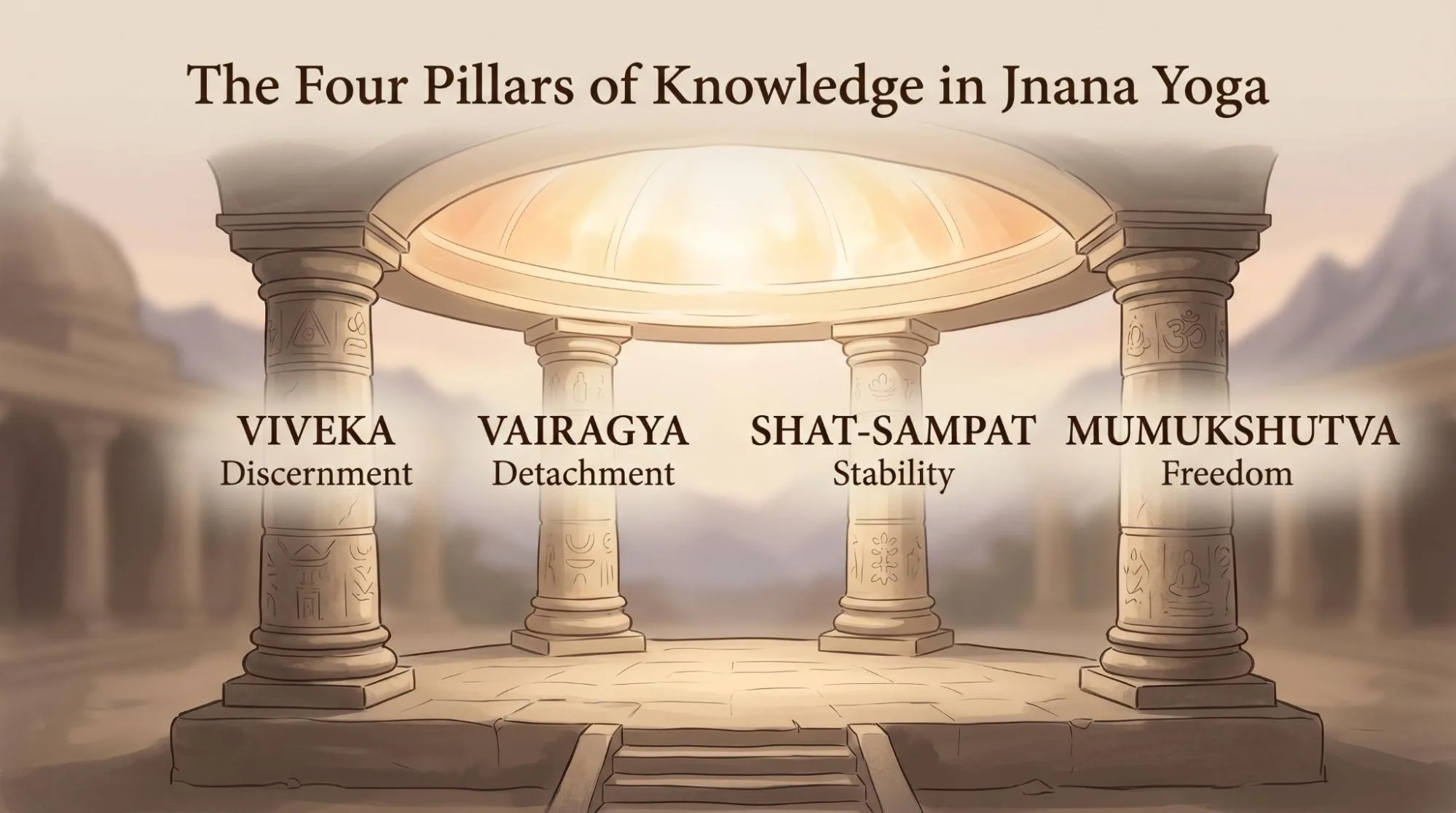
The Four Pillars of Knowledge in Jnana Yoga
These four pillars make Jnana Yoga Meaning for Beginners more complete because they prepare the mind for deeper self-inquiry. Classical Jnana Yoga also speaks about four qualities needed for deep wisdom. These are often called the four pillars of knowledge.
Viveka: Discernment Between Real and Temporary
- Viveka means discernment. It is the ability to see the difference between what is temporary and what is lasting.
- Praise and criticism come and go. Even strong emotions lose their force with time.
- Viveka helps you ask, “Is this permanent, or is it passing?”
- This does not mean you ignore life. You still work, love, care, and take responsibility. But you do not build your whole identity on things that are always changing.
Vairagya: Detachment from External Control
- Vairagya means detachment. Many beginners misunderstand this word. Detachment does not mean becoming cold, careless, or disconnected from people.
- It means you stop depending completely on external things for your inner peace.
- You can face difficulty without feeling destroyed. You can love people without trying to control everything.
- Vairagya makes the mind lighter. It gives space between you and your reactions.
Shat-Sampat: Six Virtues for Mental Stability
Shat-Sampat refers to six inner qualities that help the mind become steady. These qualities support anyone who wants to practice Jnana Yoga seriously.
They include:
- Calmness of mind
- Control of the senses
- Withdrawal from unnecessary distractions
- Patience during difficulty
- Faith in the path and teachings
- Deep concentration
These virtues are practical. A restless, distracted, and reactive mind cannot easily understand subtle truth. Mental stability makes self-inquiry clearer.
Mumukshutva: Strong Desire for Freedom
Mumukshutva means a strong desire for liberation or inner freedom.
This is the sincere wish to know the truth, not just as an idea, but as lived experience. Without this desire, Jnana Yoga becomes only philosophy. With it, the practice becomes alive. Maybe you feel tired of repeating the same emotional patterns. Maybe success alone does not feel enough. Maybe you want peace that is not dependent on outside situations.
That honest longing is the beginning of Jnana Yoga.
Learn More : Patanjali Yoga Sutras for Beginners
How Beginners Can Practice Jnana Yoga Today
You do not need to leave your normal life to practice Jnana Yoga. You can begin where you are. A practical way to understand Jnana Yoga Meaning for Beginners is to begin with small daily habits like self-questioning, reading, reflection, and quiet observation.
Ask “Who Am I?”
The question “Who am I?” is one of the most powerful practices in Jnana Yoga.
Do not answer too quickly. The point is not to say your name, profession, religion, personality type, or life story. The practice is to look deeper.
Try this for a few minutes:
Sit quietly. Notice a thought. Ask, “Who is aware of this thought?”
Notice an emotion. Ask, “Who is aware of this emotion?”
Notice the body. Ask, “Who is aware of this body?”
This is not about forcing an answer. It is about turning attention inward.
Study the Bhagavad Gita and Upanishads
The Bhagavad Gita and Upanishads are among the most respected texts connected with the path of knowledge. Beginners should approach them slowly and respectfully.
Start with a simple translation or commentary. Read a small section, then pause. One meaningful paragraph is better than ten pages read without attention.
You can also compare Jnana Yoga with other paths. Bhakti yoga may help soften the heart. Karma yoga may make daily work more selfless. Raja yoga may strengthen meditation. Together, these paths support a more balanced spiritual life.
Practice Radical Self-Observation
Self-observation means watching your thoughts, reactions, desires, and fears without instantly judging them.
For example, when someone criticizes you, watch what happens inside. Does the ego become defensive? Does the mind create a story? Does the body tighten?
This kind of observation is very useful. It shows you how identity is formed moment by moment.
You can practice during ordinary life:
- While talking to someone
- During stress at work
- When scrolling social media
- When feeling jealous or proud
- When making decisions
Jnana Yoga is not only for quiet rooms. It can be practiced in daily situations.

Benefits of Jnana Yoga
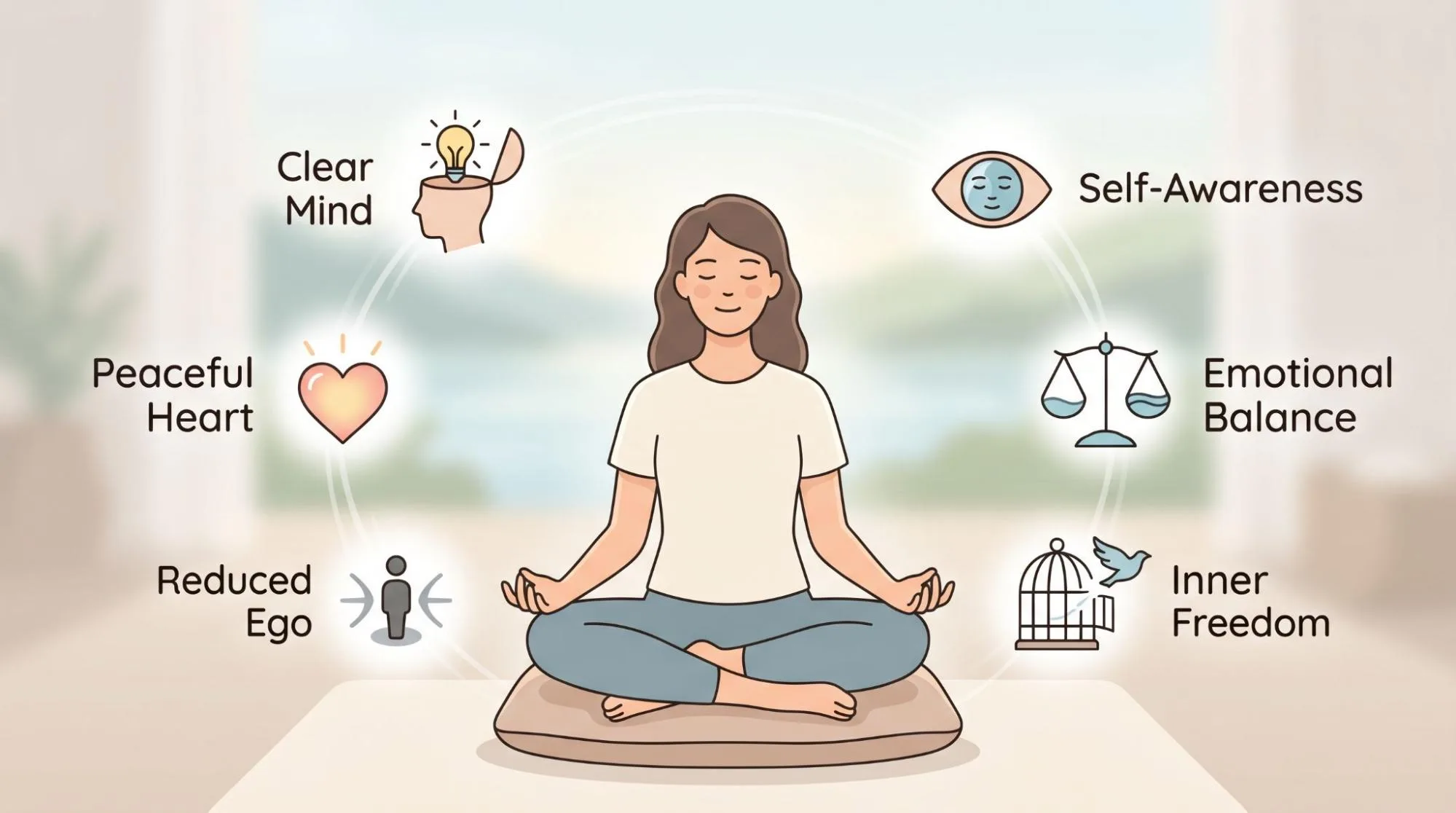
The benefits of Jnana Yoga are subtle but powerful. They may not appear as quickly as physical results from exercise, but they can change the quality of your life. The real value of Jnana Yoga Meaning for Beginners is that it helps new learners build self-awareness, mental clarity, and inner peace step by step.
Common benefits include:
- Better self-awareness
- Less attachment to ego and external approval
- Clearer thinking
- Deeper emotional maturity
- More inner peace during change
- Stronger ability to question limiting beliefs
- A calmer relationship with fear, success, and failure
Bhakti yoga becomes less sentimental and more sincere. Karma yoga becomes less ego-driven. Raja yoga becomes more focused.
The real benefit is not becoming “spiritual-looking.” It is becoming more truthful with yourself.
Common Mistakes Beginners Should Avoid
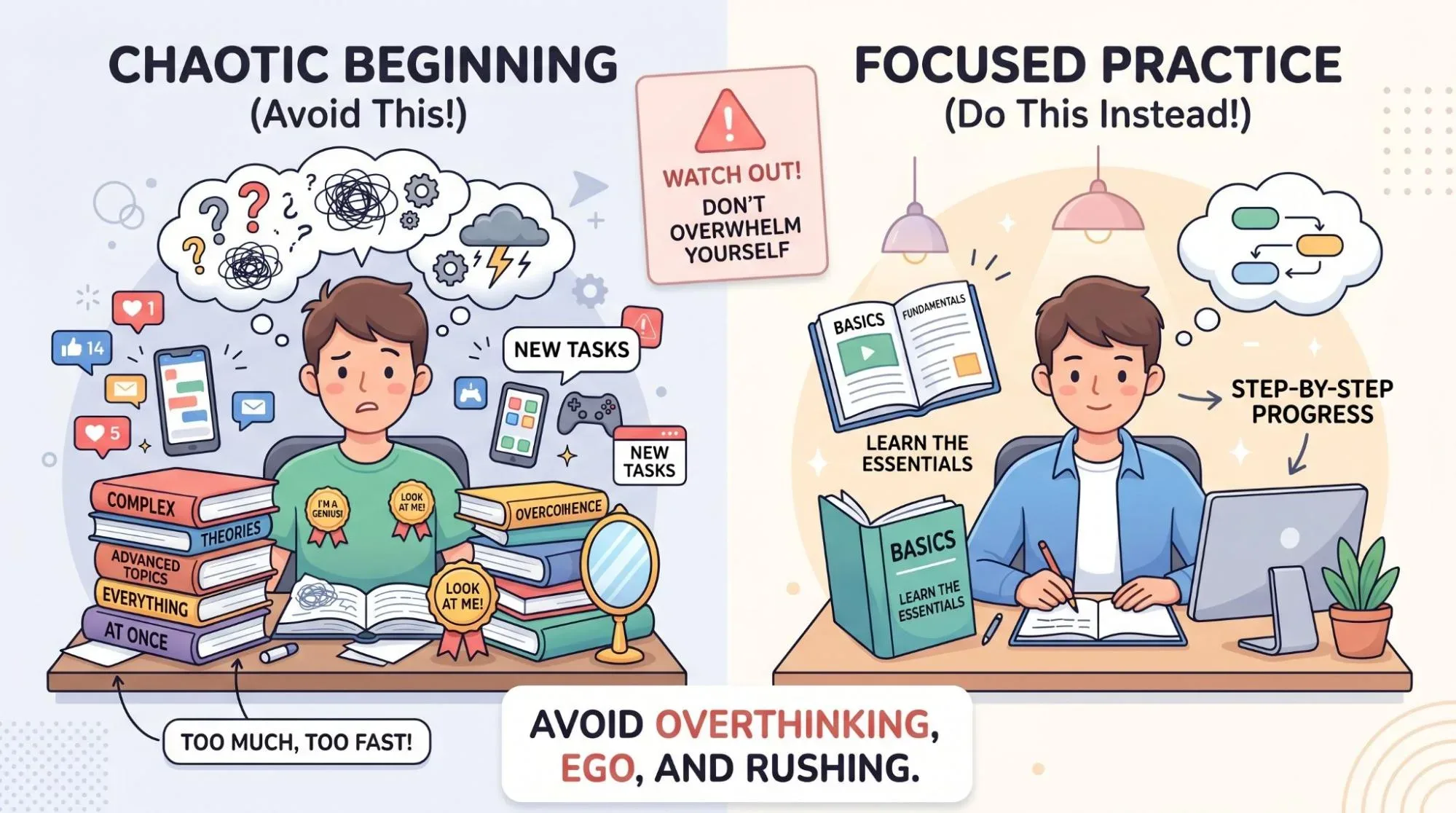
Jnana Yoga is simple in concept, but beginners can easily turn it into a mental game. Here are a few mistakes to watch for. One common mistake in Jnana Yoga Meaning for Beginners is treating it like only book knowledge instead of a lived inner practice.
Treating Jnana Yoga as Only Intellectual Knowledge
Reading many books does not automatically bring wisdom. You can know spiritual words and still react from ego, fear, or pride.
Knowledge must be reflected on, tested, and lived.
Rejecting the Body or Emotions
Jnana Yoga does not teach hatred of the body or denial of emotions. The body has value. Emotions carry information. The practice is to stop mistaking them for your complete identity.
Becoming Arrogant About “Knowing”
This is a quiet trap. A person may learn spiritual concepts and begin to feel superior. That is not wisdom. Real understanding usually makes a person more humble, not more proud.
Skipping Basic Discipline
A scattered lifestyle makes deep inquiry difficult. Sleep, ethical behaviour, mindful speech, and emotional honesty all support the path.
Expecting Instant Realization
Jnana Yoga is not a weekend technique. Some insights may come quickly, but deep transformation takes patience. Stay steady and simple.
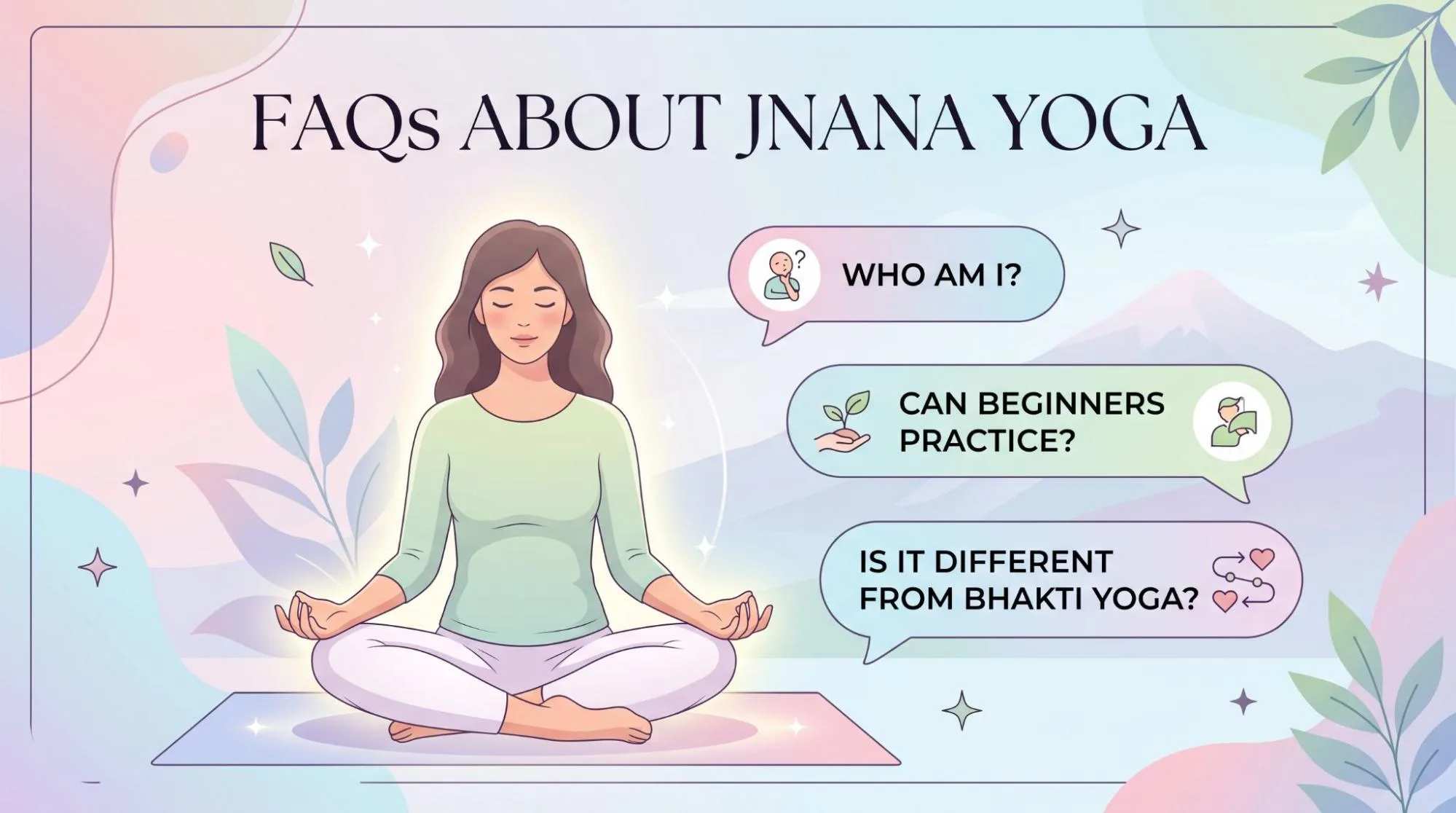
FAQs About Jnana Yoga
What is the simple meaning of Jnana Yoga for beginners?
Jnana Yoga means the yoga of knowledge and self-inquiry. For beginners, it is the practice of asking who you truly are beyond the body, thoughts, emotions, and ego. That is the simplest way to understand Jnana Yoga Meaning for Beginners without making the topic confusing.
Is Jnana Yoga better than bhakti yoga or karma yoga?
No path is automatically better. Jnana Yoga suits people drawn to wisdom and inquiry. Bhakti yoga suits devotion, karma yoga suits selfless action, and raja yoga suits meditation and discipline. Many people benefit from combining them.
Can I practice Jnana Yoga without a teacher?
You can begin with self-study, reflection, and meditation. A good teacher or reliable commentary can help prevent confusion, especially when studying deeper texts like the Upanishads or Bhagavad Gita.
Do I need to be religious to practice Jnana Yoga?
Not necessarily. Jnana Yoga can be approached spiritually, philosophically, or as a path of deep self-understanding. What matters most is sincerity, reflection, and a desire to know the truth.
How long does it take to understand Jnana Yoga?
Basic understanding can begin quickly, but deep realization takes time. It depends on your consistency, honesty, mental discipline, and willingness to question false identity.
Learn More : Samadhi: Yoga’s Final Spiritual Union
Final Thoughts on Jnana Yoga
Jnana Yoga is a quiet but powerful path. It does not ask you to perform difficult postures or believe blindly. It asks you to look carefully, question deeply, and live with more awareness. In simple words, Jnana Yoga Meaning for Beginners teaches that true wisdom starts when you honestly ask who you are beyond the noise of the mind.
For beginners, the best way to start is simple: read a little, reflect honestly, sit quietly, and observe yourself during daily life. Ask “Who am I?” not as a slogan, but as a real inner search.