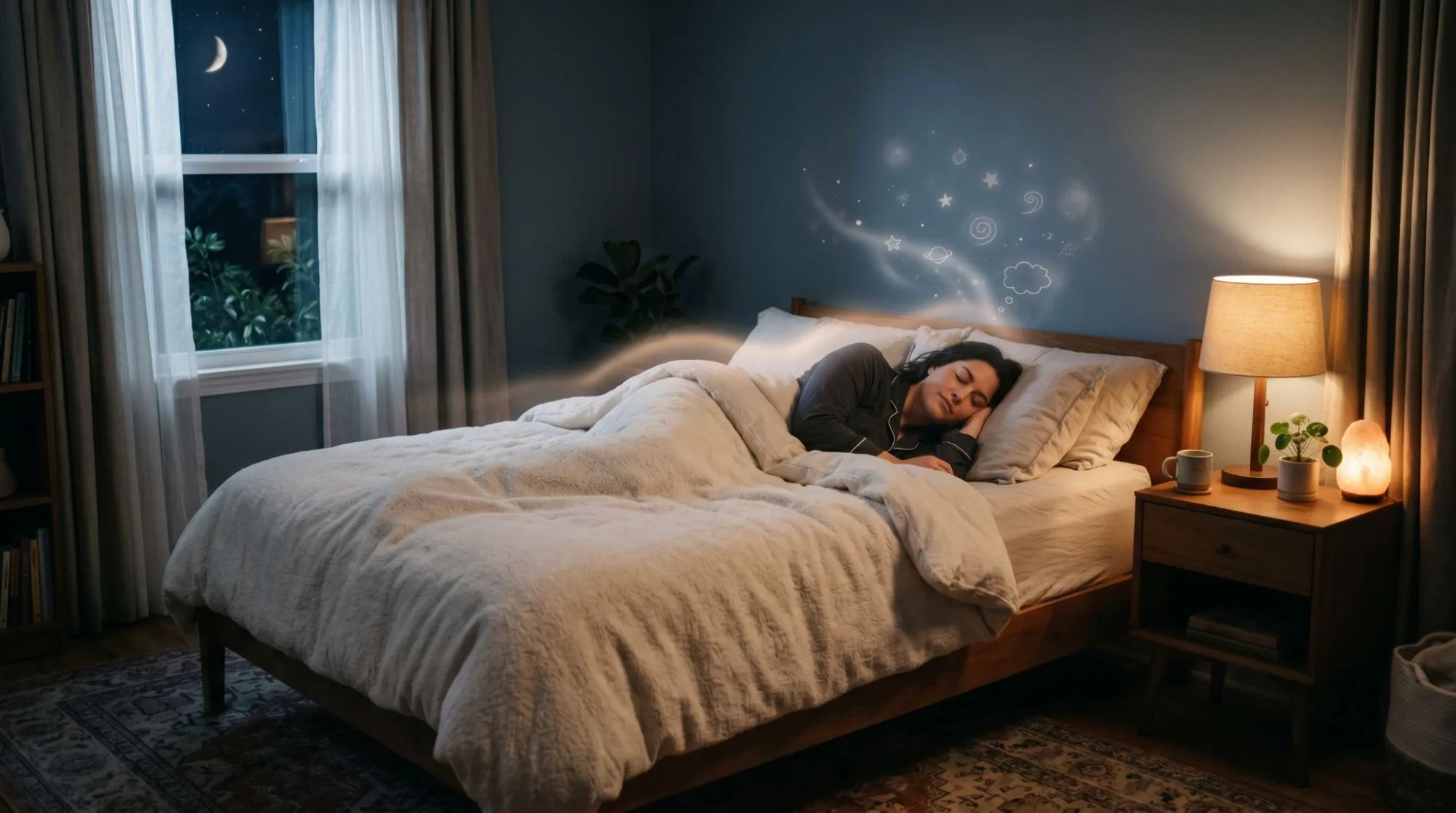
Some nights, your body is tired, but your mind refuses to slow down. You lie in bed thinking about tomorrow, replaying conversations, or worrying about things you cannot fix at midnight. That restless loop can make sleep feel harder the more you chase it.
Meditation for sleep and anxiety gives your mind something gentle to rest on. It does not force sleep. Instead, it helps your body feel safer, your breathing slow down, and your thoughts become less urgent. With practice, bedtime can begin to feel calmer again.
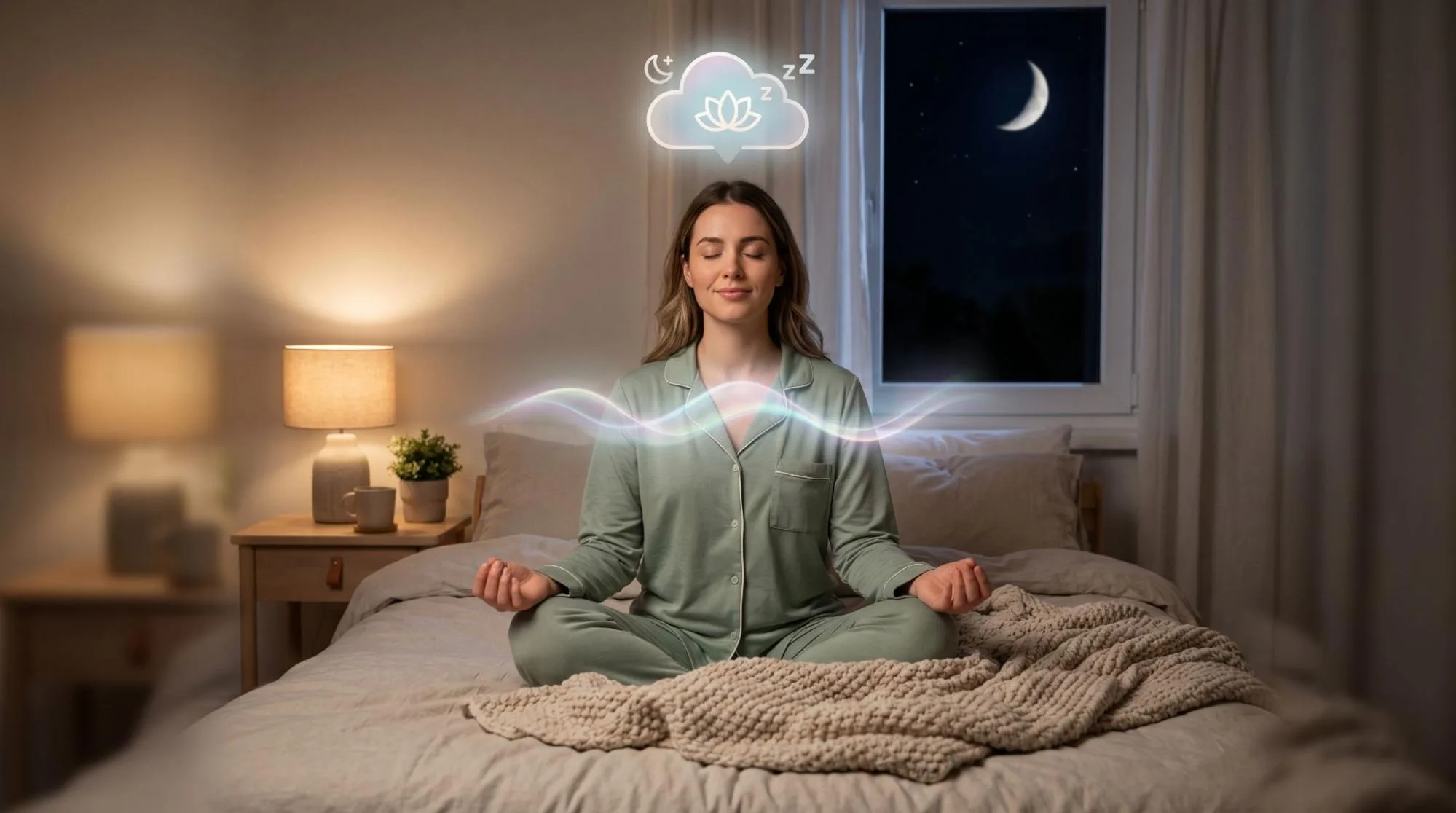
Why Sleep Anxiety Happens at Night
Sleep anxiety often becomes stronger at night because everything gets quiet. There are fewer distractions, fewer tasks, and less noise from the day. That gives your mind more space to bring worries forward.
This does not mean something is wrong with you. It simply means your nervous system may still be alert when your body is ready for rest.
Racing Thoughts Before Bed
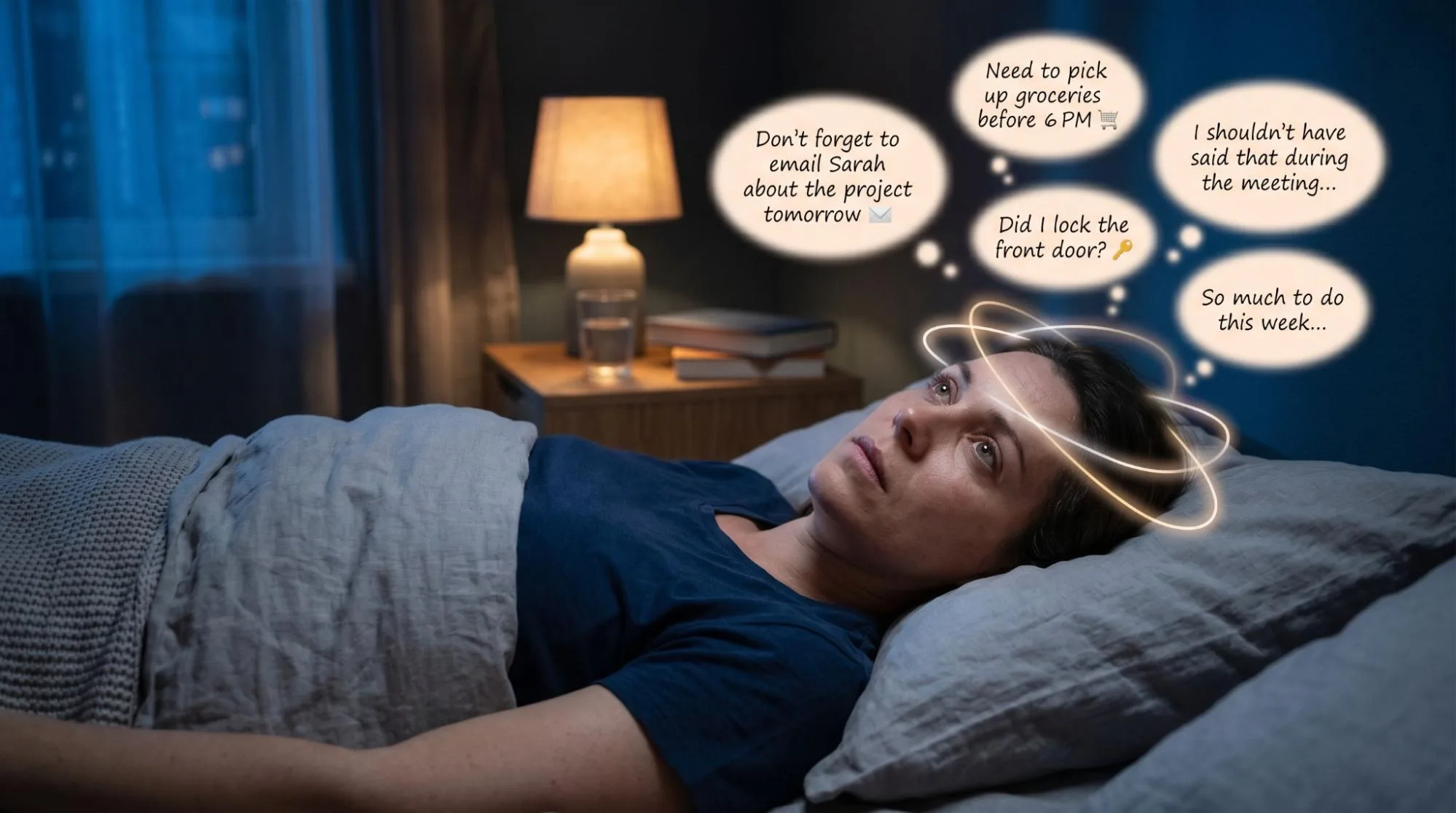
Racing thoughts can feel like a mental checklist that will not close. You may think about work, family, health, money, or unfinished tasks. The more you try to stop the thoughts, the louder they may seem.
A helpful first step is to stop treating thoughts like enemies. Thoughts are mental events, not commands. Meditation helps you notice them without following every one.
Physical Tension and Restlessness
Anxiety is not only mental. It often shows up in the jaw, shoulders, chest, stomach, hands, or legs. You may feel tight, jumpy, or uncomfortable without knowing why.
At night, this tension can make your body feel awake. Gentle relaxation practices help send the opposite message: you are safe enough to soften.
Learn More : Nadi Shodhana Pranayama Benefits: How It Works and How to Practice It Safely
How Meditation Helps Sleep and Anxiety
Meditation helps by creating a small pause between you and your stress response. You are not trying to become perfectly peaceful. You are teaching your body to shift out of alert mode, one breath at a time.
That is why meditation for sleep and anxiety works best when practiced gently. A few quiet minutes each night can be more helpful than one long session done only when you feel desperate.
A Calmer Nervous System
Slow breathing, body awareness, and relaxation can help your nervous system settle. Your heart rate may slow, your muscles may loosen, and your breathing may become smoother.
This relaxed state makes sleep more likely. You are not pushing your body into sleep. You are giving it better conditions.
A Better Relationship With Thoughts
Meditation also changes how you respond to thoughts. Instead of arguing with every worry, you learn to notice it, name it, and let it pass.
This is useful at night because bedtime thoughts often feel bigger than they really are. A calm response keeps them from growing into a full stress cycle.
The 4-7-8 Breathing Technique
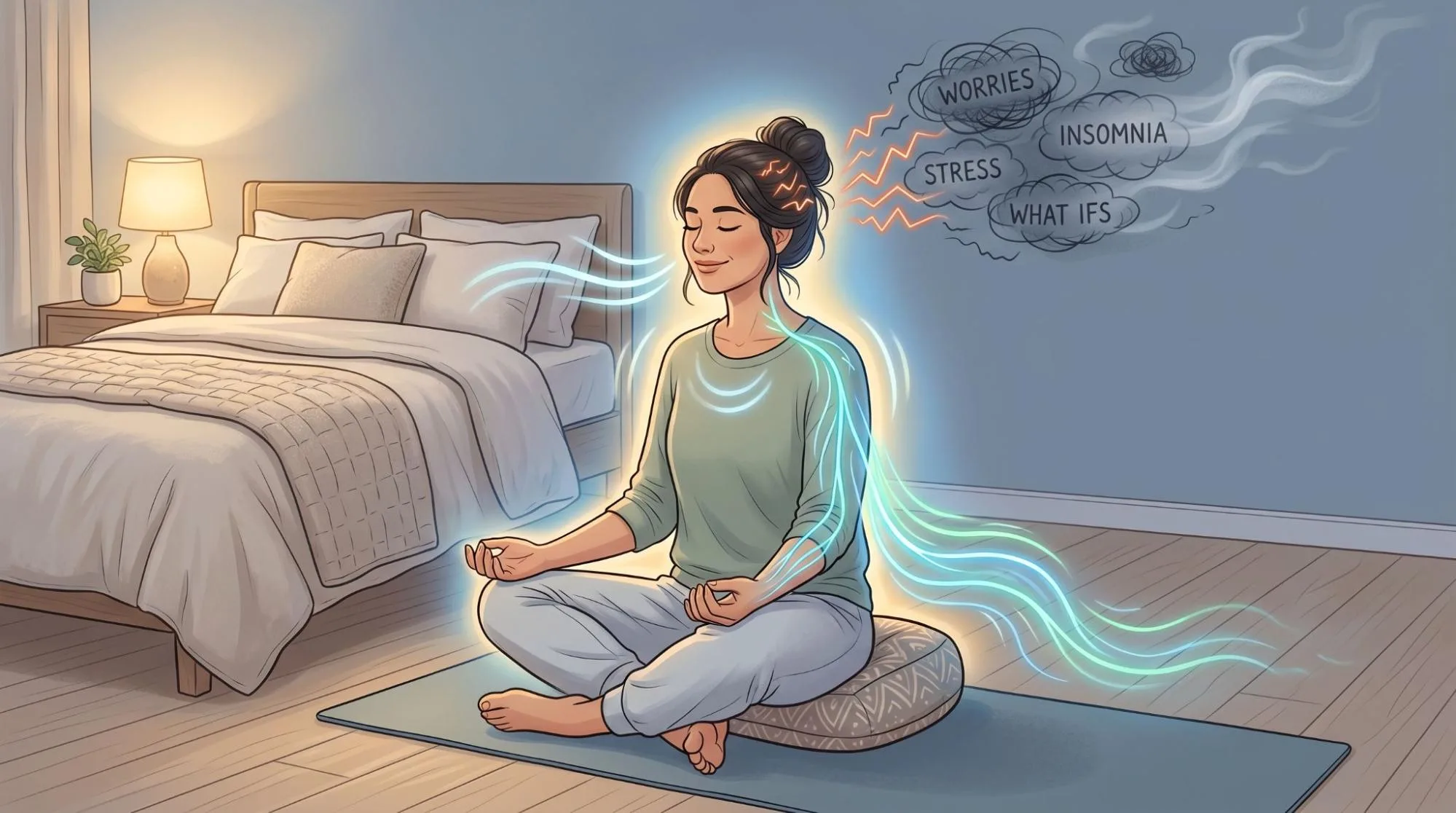
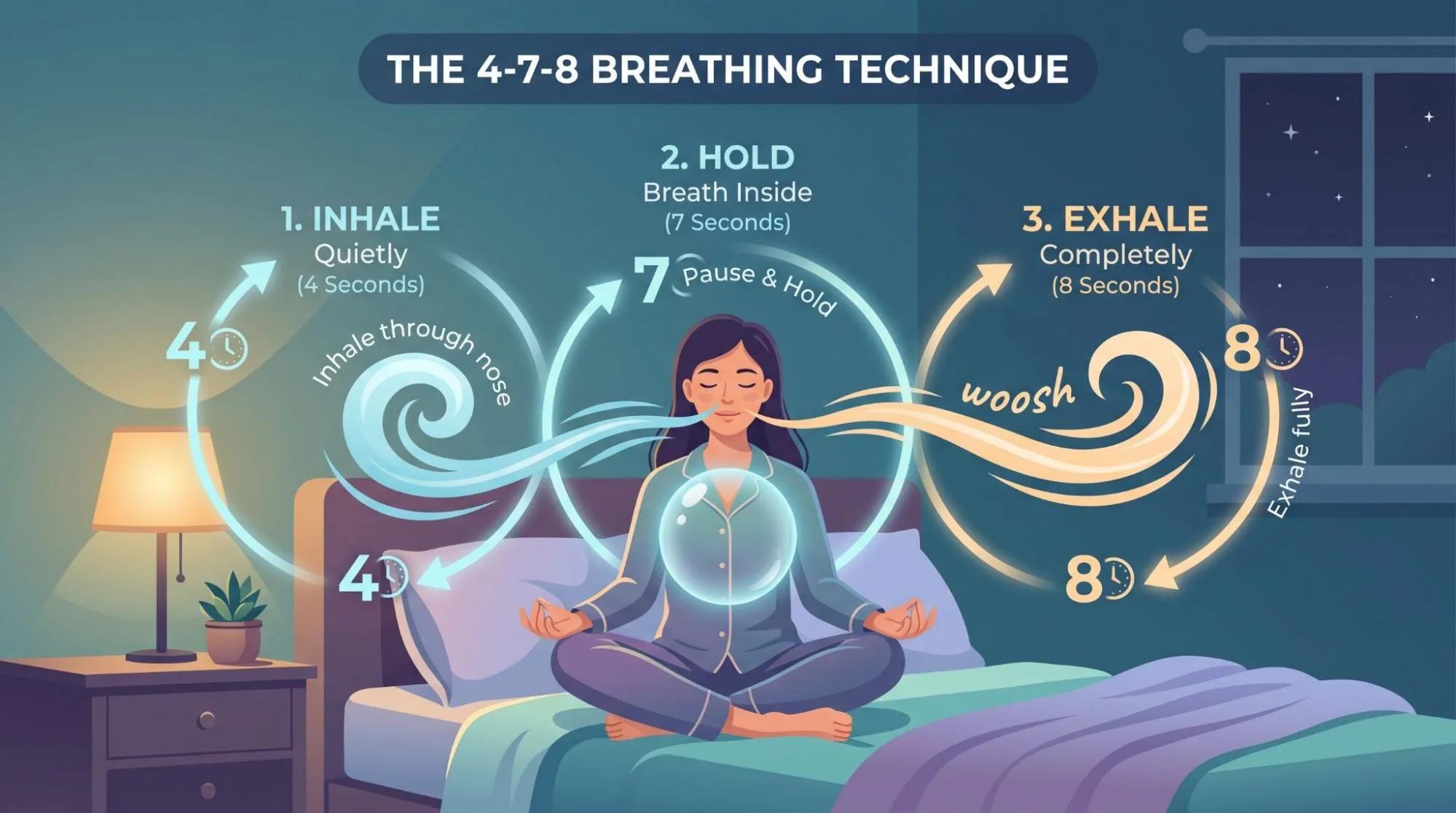
The 4-7-8 breathing technique is simple and easy to remember. You inhale for 4 seconds, hold for 7 seconds, and exhale for 8 seconds.
Try it while lying comfortably in bed. Keep your face soft, your shoulders relaxed, and your breath gentle. Do not strain.
Why This Breathing Exercise Works
Longer exhales can help the body move toward relaxation. The counting also gives your mind a clear focus, which can reduce the pull of anxious thoughts.
The goal is not to breathe perfectly. The goal is to give your mind a steady rhythm when it feels scattered.
Tips for Practicing 4-7-8 Breathing
Start with three or four rounds. If holding your breath feels uncomfortable, shorten the count. For example, try 3-3-6 until it feels natural.
Keep the breath quiet and easy. For sleep, soft breathing usually works better than dramatic deep breathing.
Progressive Muscle Relaxation
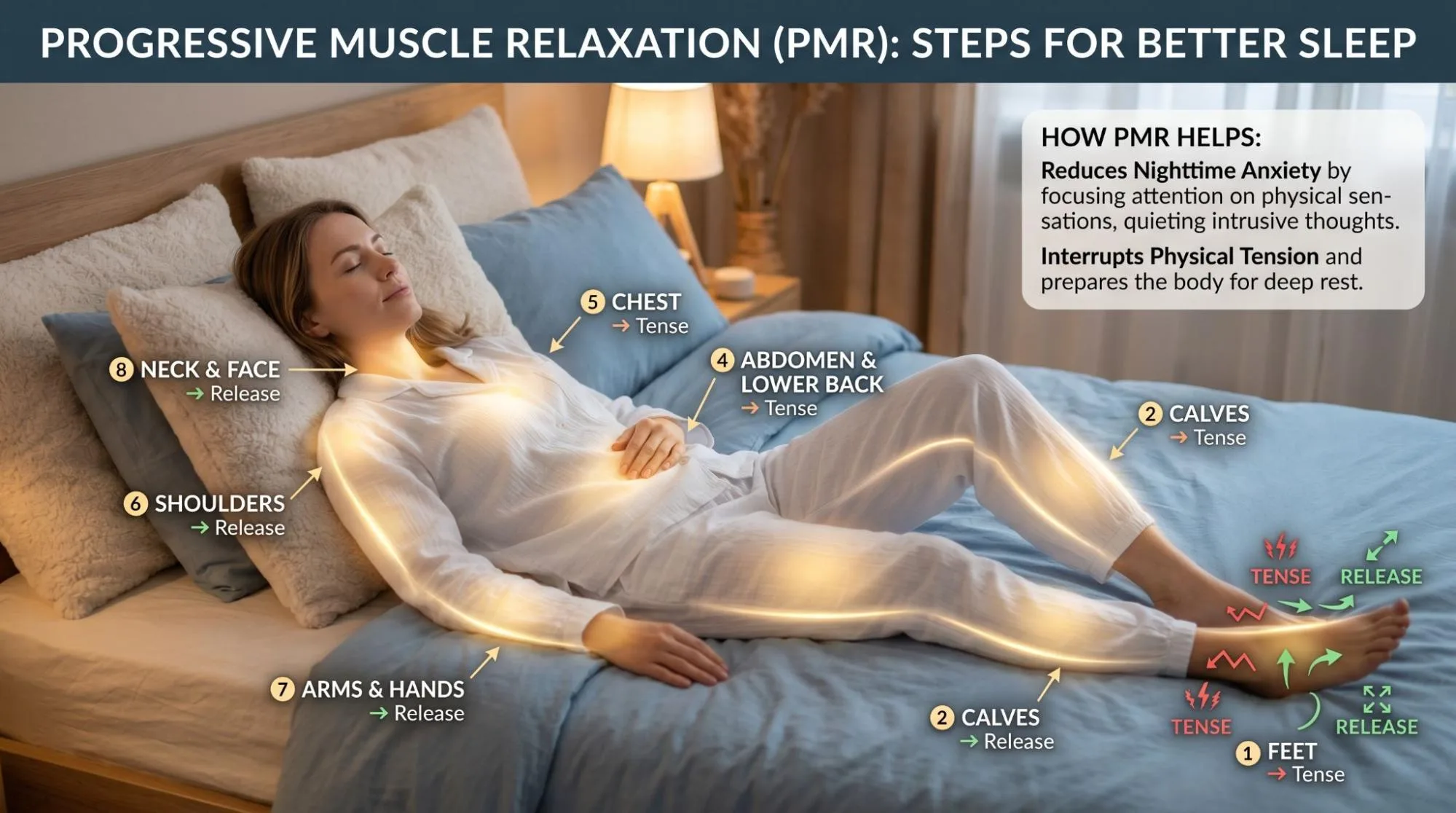
Progressive muscle relaxation means gently tensing and releasing different muscle groups. It helps you notice where tension is hiding.
Start with your feet and move slowly upward. Tense each area for about five seconds, then release it fully as you exhale.
Why Muscle Relaxation Helps Anxiety
Anxiety often keeps the body braced. You may not notice how tight your shoulders, jaw, or stomach have become.
This technique teaches your body the difference between tension and release. That contrast can make relaxation easier to feel.
How to Make It More Effective
Move slowly. Do not rush through the body like a task. Let each release last longer than each tense moment.
You can silently say, “soften” or “let go” as each area relaxes. Simple words can help guide the body without overthinking.
Learn More : Mantra Meditation: A Complete Guide for Mind, Body, and Spirit
Thought-Labeling Mindfulness
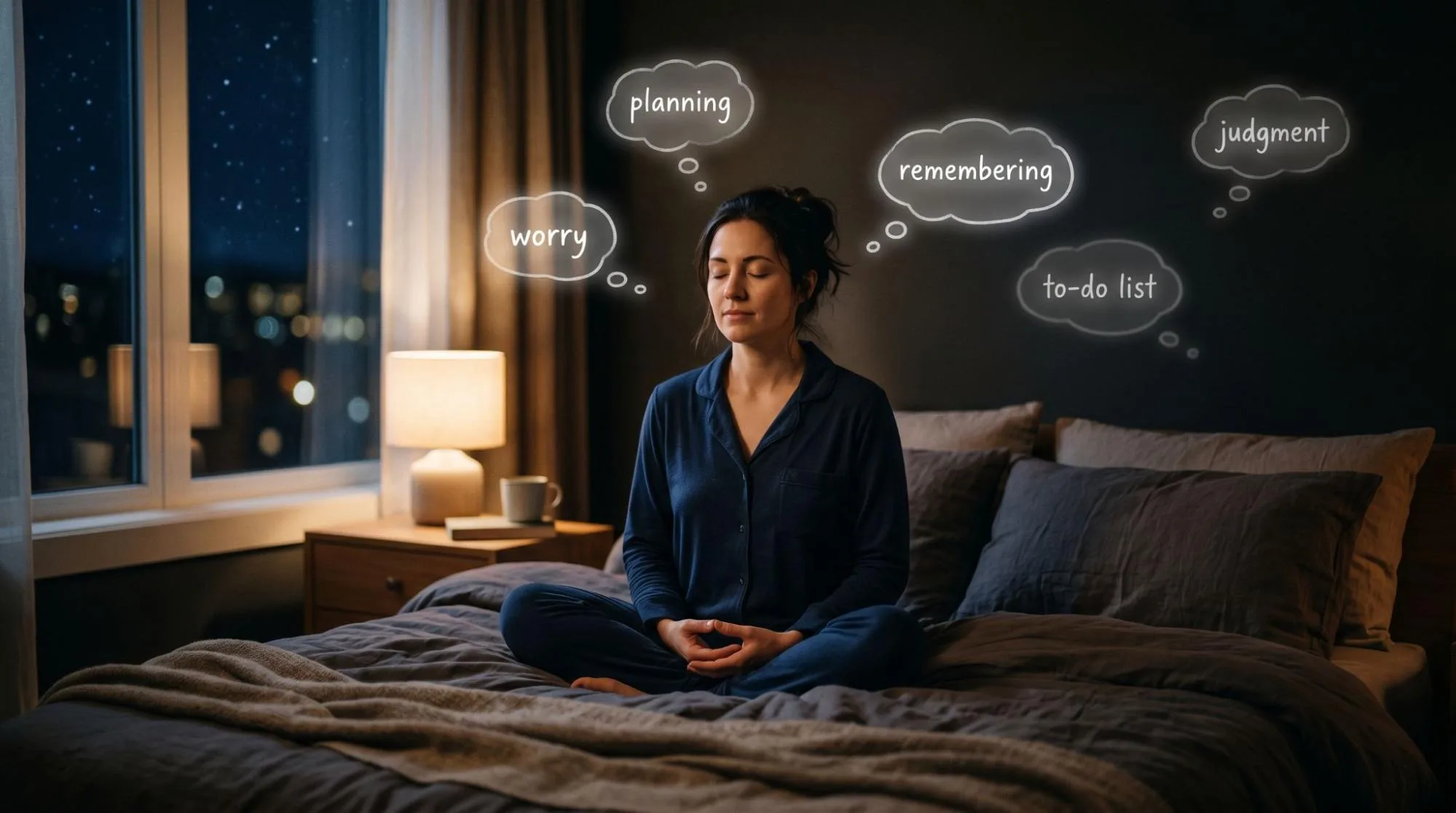
Thought-labeling is a gentle mindfulness practice. Instead of getting pulled into a thought, you label it briefly and return to your breath.
For example, when a worry appears, you might say, “planning,” “remembering,” “worrying,” or “thinking.”
How to Label Thoughts at Night
Keep labels short and neutral. Do not judge the thought. Do not analyze it. Just name it and come back to your breathing.
If the same thought returns, label it again. That is not failure. That is the practice.
Why You Do Not Need a Clear Mind
Many beginners think meditation means having no thoughts. That idea creates pressure, especially at bedtime.
A clear mind is not required. You only need a softer relationship with the thoughts that appear. That alone can reduce night time anxiety.
Guided Sleep Meditation
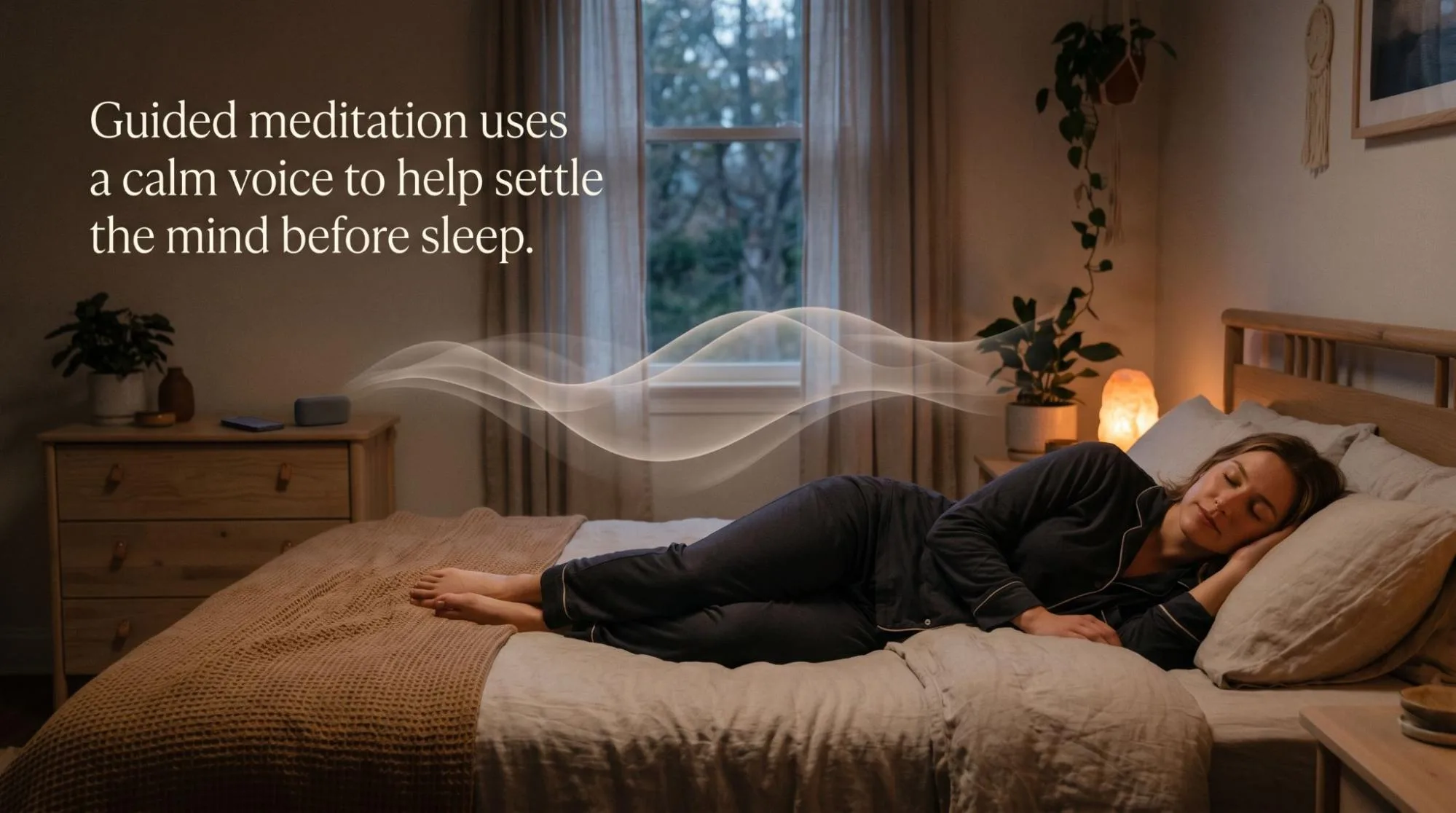
Guided meditation can be helpful when your mind feels too busy to meditate alone. A calm voice gives you structure, direction, and reassurance.
This can be especially useful for beginners. You simply listen and follow along without needing to decide what to do next.
Choosing the Right Guided Meditation
Choose a guided meditation with a slow pace, soft tone, and simple instructions. Avoid recordings that feel too dramatic, emotional, or distracting.
Shorter sessions are often better at first. Ten to twenty minutes is enough for most people starting out.
When Guided Meditation Works Best
Guided meditation works well when you feel mentally tired but emotionally restless. It can also help when silence makes your thoughts louder.
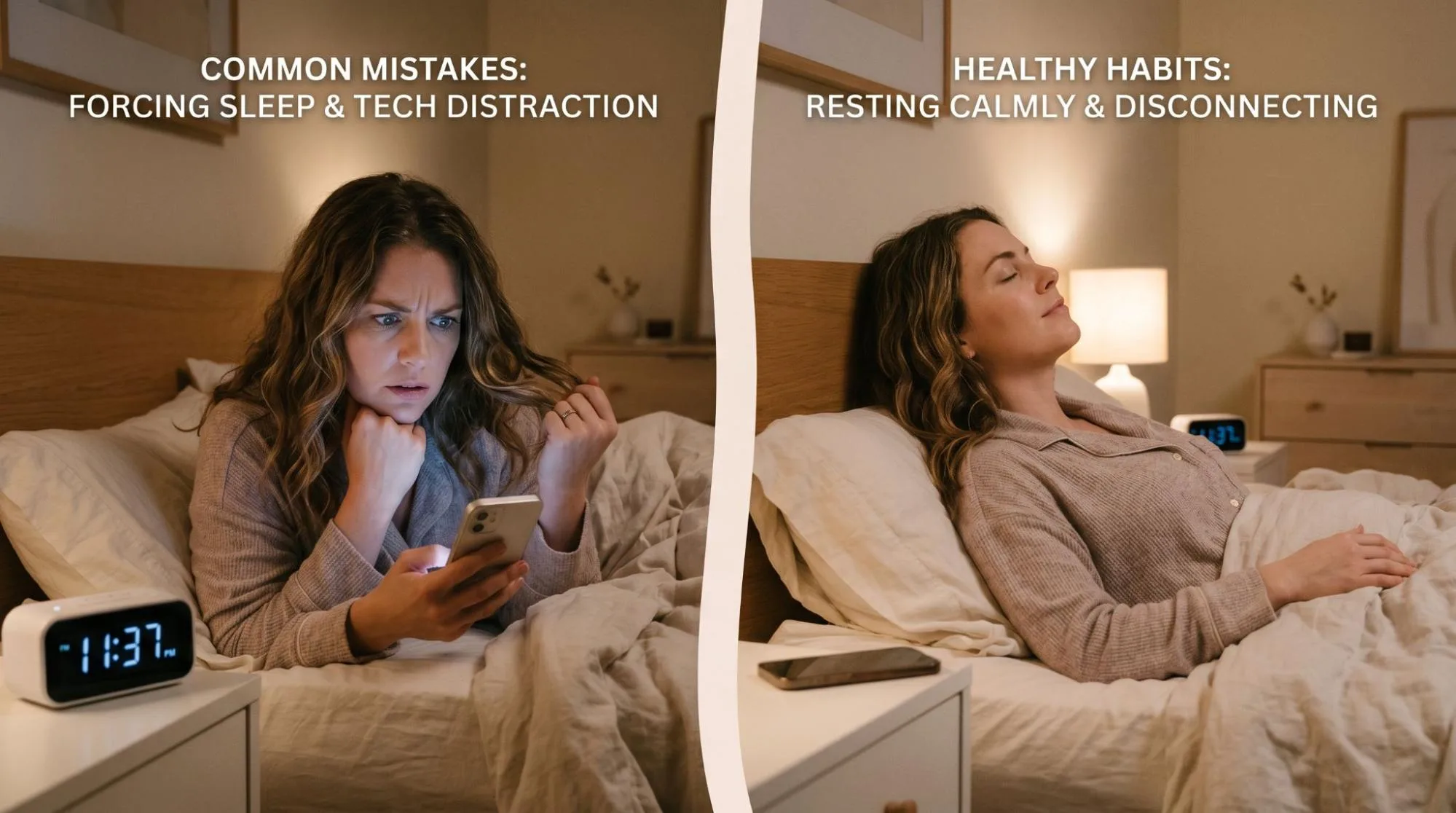
Keep your screen dim or turned away if you use your phone. The meditation should support sleep, not pull you back into scrolling.
Visualization for Deep Relaxation
Visualization uses imagination to create a peaceful inner scene. Your mind responds to images, not just words.
A gentle scene can help shift attention away from worry. It gives your brain somewhere calm to land.
Why Visualization Helps Sleep
Anxious thoughts often create mental pictures of problems. Visualization does the opposite. It gives your mind safe, steady images.
This can reduce mental noise without forcing yourself to “stop thinking.”
Simple Sleep Visualization Example
Imagine walking slowly beside a quiet lake at dusk. The air is cool. The water is still. Each step feels slower than the last.
With every exhale, picture the lake becoming smoother. Let your body feel as quiet as the water.

Body Scan Meditation
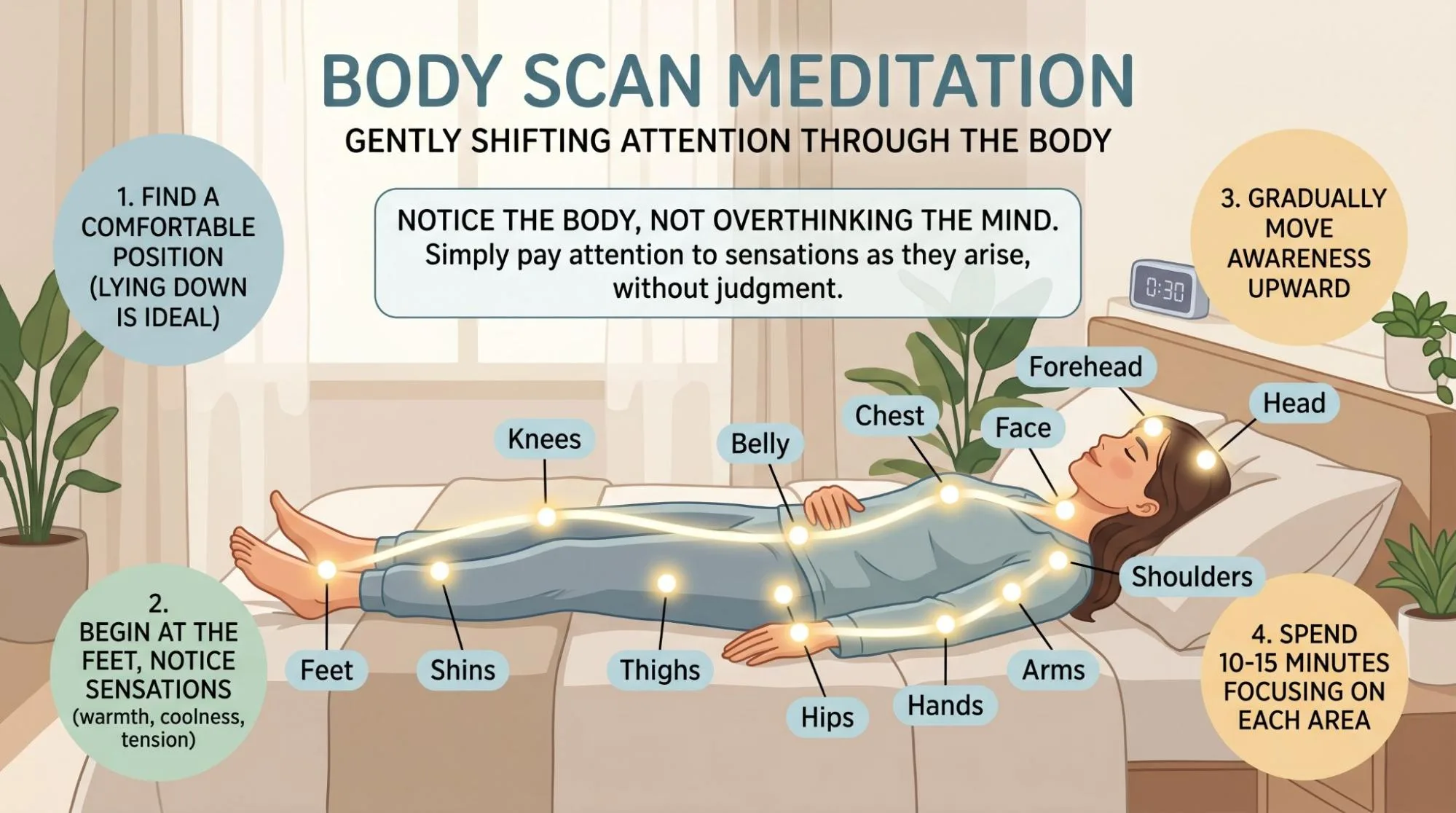
A body scan is one of the easiest forms of meditation for sleep and anxiety. You slowly move attention through the body, noticing sensations without trying to fix them.
You can begin at your feet and move upward, or start at your head and move downward. Either direction is fine.
How Body Scanning Reduces Overthinking
Overthinking keeps attention in the head. A body scan brings awareness back into physical sensation.
This helps ground you in the present moment. Instead of solving problems, you notice warmth, pressure, heaviness, or softness.
A Beginner-Friendly Body Scan
Lie down and take a slow breath. Notice your feet, ankles, calves, knees, thighs, hips, stomach, chest, shoulders, arms, hands, neck, jaw, and face.
Pause at each area. If you find tension, breathe gently into that space and let it soften as much as it can.
Creating a Bedtime Meditation Routine
A routine helps your brain recognize that the day is ending. The routine does not need to be complicated.
The best bedtime meditation routine is simple enough to repeat even when you are tired.
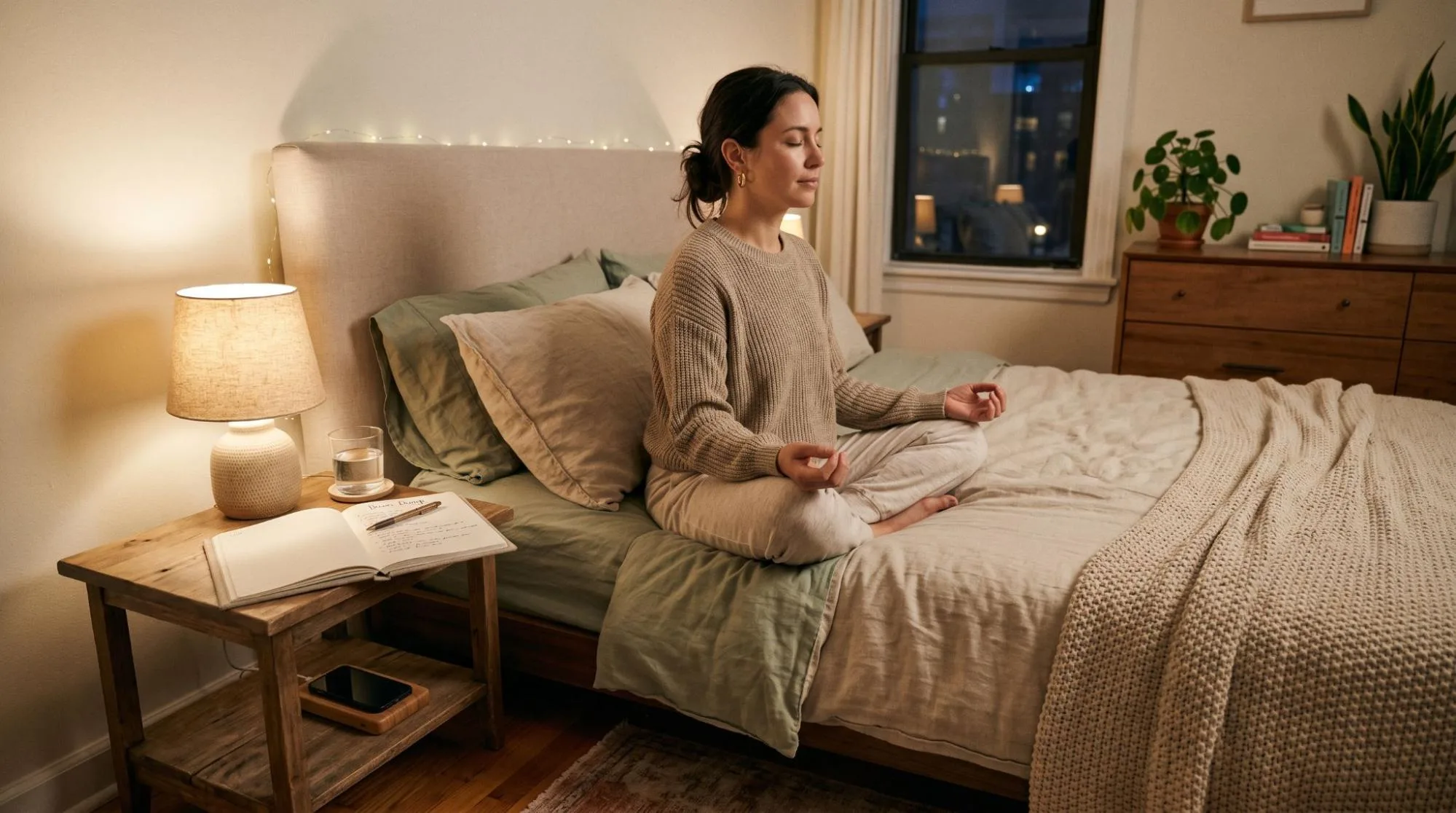
Prepare Your Sleep Environment
Lower the lights, reduce noise, and make the room comfortable. Put your phone away or keep it out of easy reach.
Small cues matter. A quiet room, cool temperature, and familiar routine can help your body relax before meditation begins.
Use a Brain Dump Before Meditation
If your mind feels full, write down your thoughts before getting into bed. Include tasks, worries, reminders, and anything you keep replaying.
This tells your brain, “I have saved this for tomorrow.” Then meditation becomes easier because your mind is not trying to remember everything.
Common Mistakes to Avoid
Meditation is simple, but bedtime pressure can make it feel harder than it needs to be. The biggest mistake is trying too hard.
Sleep comes more easily when you create calm conditions and then let go of the outcome.
Forcing Yourself to Sleep
Do not use meditation as a test you must pass. If you think, “This has to work tonight,” your body may become more tense.
Instead, treat meditation as rest. Even if sleep takes time, quiet breathing and relaxation still support your body.
Practicing Only During Crisis
Meditation works better when it becomes familiar. If you only practice during panic or sleepless nights, your brain may connect meditation with stress.
Try practicing for a few minutes during calm evenings too. This builds trust in the routine.
When to Seek Extra Support
Meditation can be helpful, but it is not a replacement for professional care when anxiety or insomnia becomes severe.
Consider speaking with a qualified healthcare professional if sleep problems last for weeks, anxiety feels unmanageable, or night time panic becomes frequent.
Combining Meditation With Healthy Sleep Habits
Meditation works best alongside basic sleep habits. Keep a steady sleep schedule, limit late caffeine, reduce evening screen time, and avoid heavy meals close to bed.
These habits support the same goal as meditation: helping your body understand that night time is safe for rest.
Building Patience With the Process
Some people feel calmer after one session. Others need a few weeks. Both are normal.
Think of meditation like training a pathway. Each calm breath makes it a little easier for your body to return to rest next time.

FAQs
What is the best meditation for sleep and anxiety?
The best meditation for sleep and anxiety is usually the one you can practice consistently. Many beginners do well with body scan meditation, 4-7-8 breathing, or guided meditation because these techniques give the mind a clear focus.
Can meditation stop racing thoughts at night?
Meditation may not stop thoughts completely, but it can reduce how strongly you react to them. Thought-labeling, breathing, and body scanning help you notice thoughts without getting pulled into every worry.
How long should I meditate before bed?
Start with 5 to 10 minutes. If that feels comfortable, you can increase to 15 or 20 minutes. A short, consistent practice is usually more helpful than a long session you rarely do.
Is guided meditation good for beginners?
Yes, guided meditation is often helpful for beginners because it gives simple instructions and keeps the mind gently focused. Choose a calm recording with a slow voice and minimal background noise.
What should I do if meditation makes me more aware of anxiety?
This can happen at first. Try shorter sessions, keep your eyes open slightly, or focus on grounding sensations like the weight of your body on the bed. If anxiety feels intense or persistent, seek professional support.
Learn More : Chakra Meditation for Beginners Guide: Balance Your Energy and Calm Your Mind
Conclusion
Meditation does not need to be perfect to be useful. You do not have to clear your mind, breathe flawlessly, or fall asleep within minutes. The real goal is softer: help your body feel less threatened by the night.
Start small. Try one technique for a few evenings, such as 4-7-8 breathing or a body scan. Let it become familiar. Over time, meditation for sleep and anxiety can become a quiet signal that the day is done, your body can soften, and rest is allowed.