
Quick answer: Mantra meditation uses the repeated sound, word, or phrase as an anchor for attention. It can support calm and concentration when practised comfortably, but it is not a medical treatment.
Important Safety Note
Keep breathing natural and choose a comfortable posture. Stop if you feel dizzy, distressed, or physically uncomfortable. Do not use mantra meditation to replace prescribed care or professional support for anxiety, sleep problems, blood pressure, or other health conditions.
Many people begin meditation looking for a simple way to quiet a busy mind. One practice that has stood the test of time is mantra meditation. It is straightforward, accessible, and suitable for beginners as well as experienced meditators. If you wonder what is mantra meditation, this guide explains it simply.
If you’ve ever wondered what mantra meditation is, the answer is simpler than most people expect. It involves repeating a sound, word or phrase, or sacred mantra to help focus attention and create a calmer mental state. Over time, this practice can support emotional well-being, concentration, relaxation, and a deeper sense of inner awareness.
In this guide, you’ll learn what mantra meditation is, how it works, popular mantras, proven benefits, and how to practice mantra meditation effectively. You will learn what is mantra meditation and how beginners can start.
What is mantra meditation?
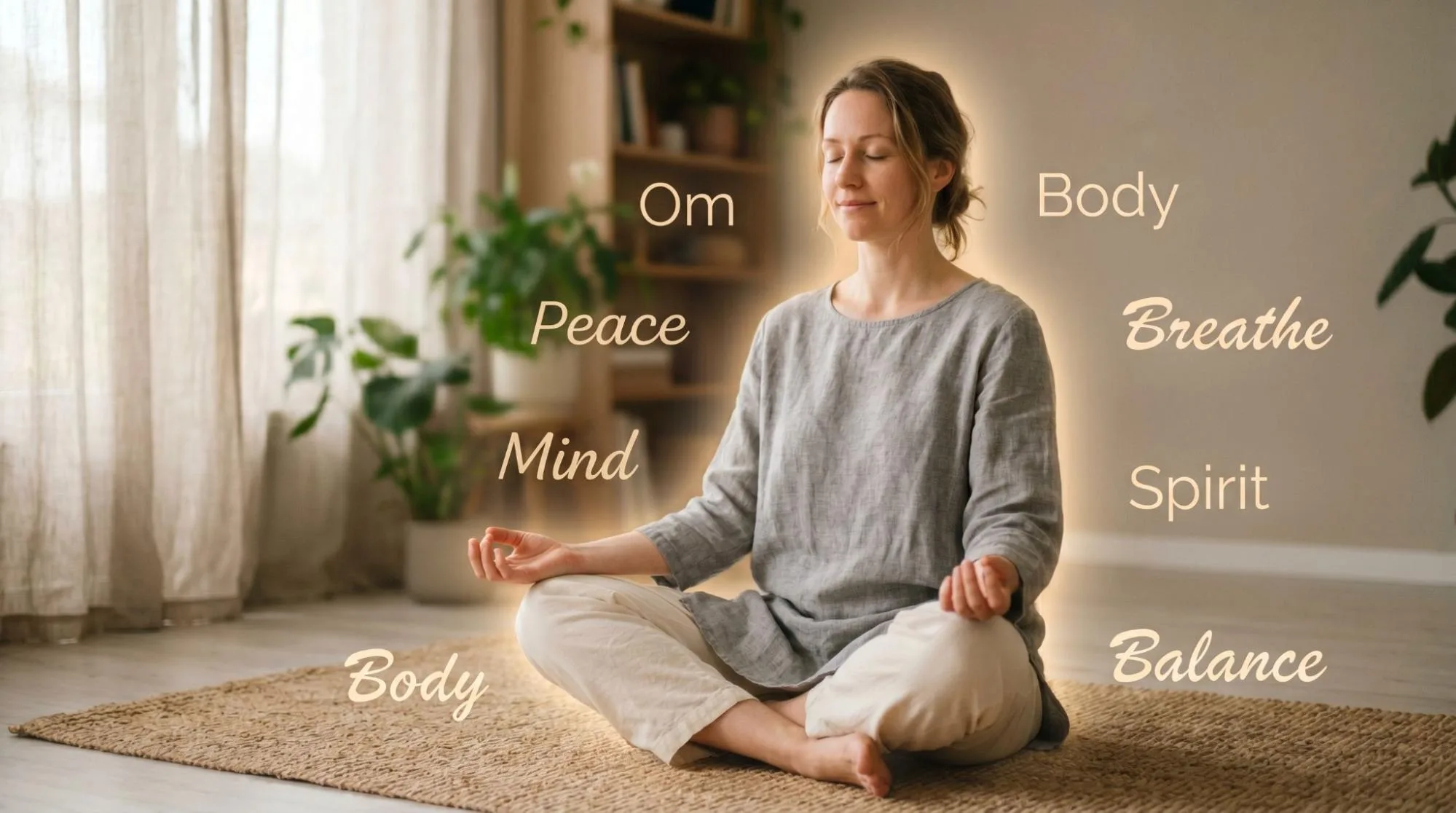
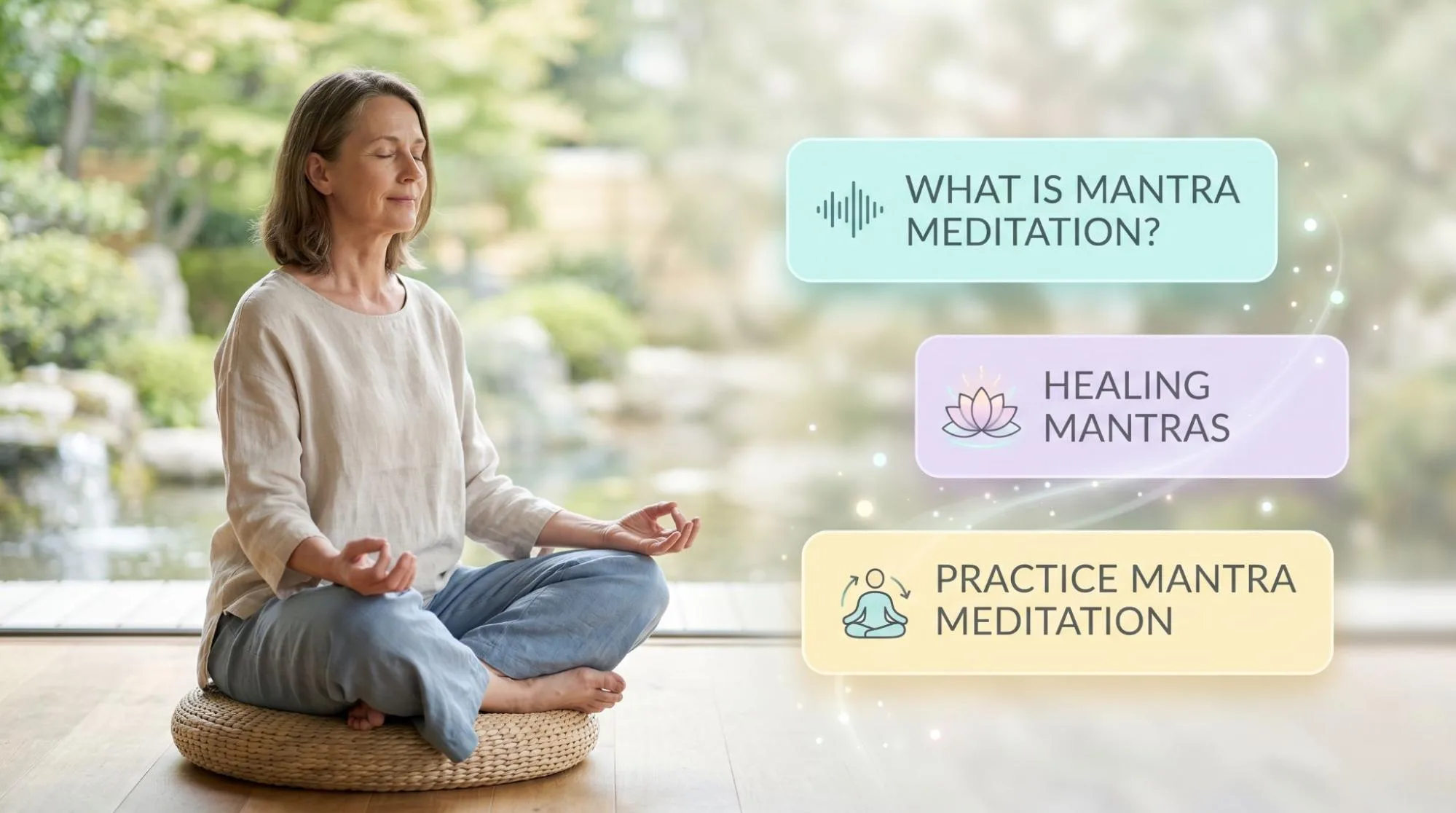
What is mantra meditation? It is the practice of repeating a mantra to focus the mind. Mantra meditation is a meditation technique that uses the repetition of a specific sound, word, or phrase to focus the mind. Instead of concentrating on the breath alone, your attention stays connected to a chosen mantra.
The repeated sound acts as an anchor. Whenever the mind drifts into thoughts, worries, or distractions, the mantra provides a simple point of return. This helps create mental clarity and a more peaceful state of awareness.
People from many spiritual traditions have used mantras for thousands of years. Today, mantra meditation is practiced worldwide for both spiritual growth and stress management.
Meaning of mantra
The word “mantra” comes from Sanskrit. It combines two root words:
- Man meaning mind
- Tra meaning tool or instrument
Together, mantras can be understood as a tool for the mind.
Traditionally, mantras were sacred sounds believed to carry spiritual significance. Modern practitioners may use traditional Sanskrit mantras, healing mantras, positive affirmations, or personal phrases that inspire calm and focus.
How mantra meditation works
When you repeat a mantra continuously, your attention becomes centred on a single point. This reduces mental chatter and helps prevent the mind from jumping between thoughts.
The process works through repetition. Whether the mantra is spoken aloud, whispered, or repeated silently, the rhythmic pattern encourages relaxation and mindfulness.
As you continue to practice mantra meditation, the nervous system often shifts into a calmer state, making it easier to experience stillness and inner balance.
Learn More : Walking Meditation: A Simple Guide to Mindful Walking for Calm and Focus
Popular mantras used in meditation
Different traditions use different types of mantras. Some are spiritual, while others focus on personal growth and emotional well-being.
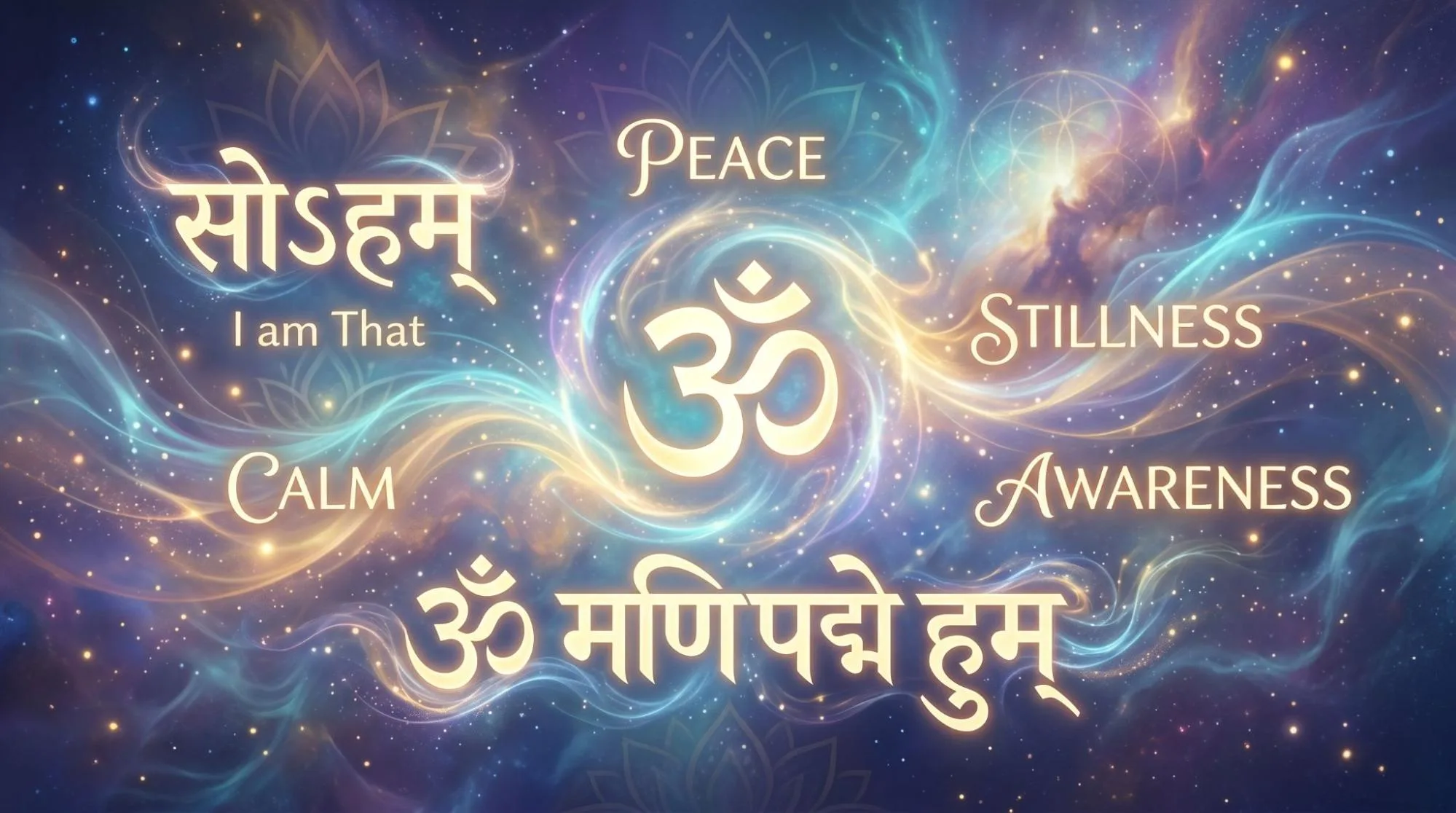
Om or Aum
“Om” or “Aum” is one of the most recognized meditation mantras in the world.
In many Eastern traditions, Om represents the universal sound of creation. Practitioners often chant it at the beginning or end of meditation sessions. The vibration created by chanting Om can produce a deep sense of calm and presence.
So Hum
“So Hum” is a simple Sanskrit mantra often translated as “I am that.”
Many meditators naturally synchronize this mantra with breathing:
- Inhale: “So”
- Exhale: “Hum”
This connection between breath and sound creates a steady rhythm that supports concentration and relaxation.
Om Mani Padme Hum
This famous Buddhist mantra is associated with compassion, wisdom, and spiritual growth.
Many practitioners use it to cultivate kindness toward themselves and others. The repetition encourages a more compassionate mindset while supporting deeper meditation.
Everyday affirmation mantras
Not all mantras need to be ancient or spiritual.
Simple affirmations can work equally well, such as:
- Peace
- Calm
- Let go
- I am enough
- I am strong
- I choose gratitude
These everyday mantras help direct attention toward positive mental patterns while making meditation more personal and meaningful.
Benefits of mantra meditation
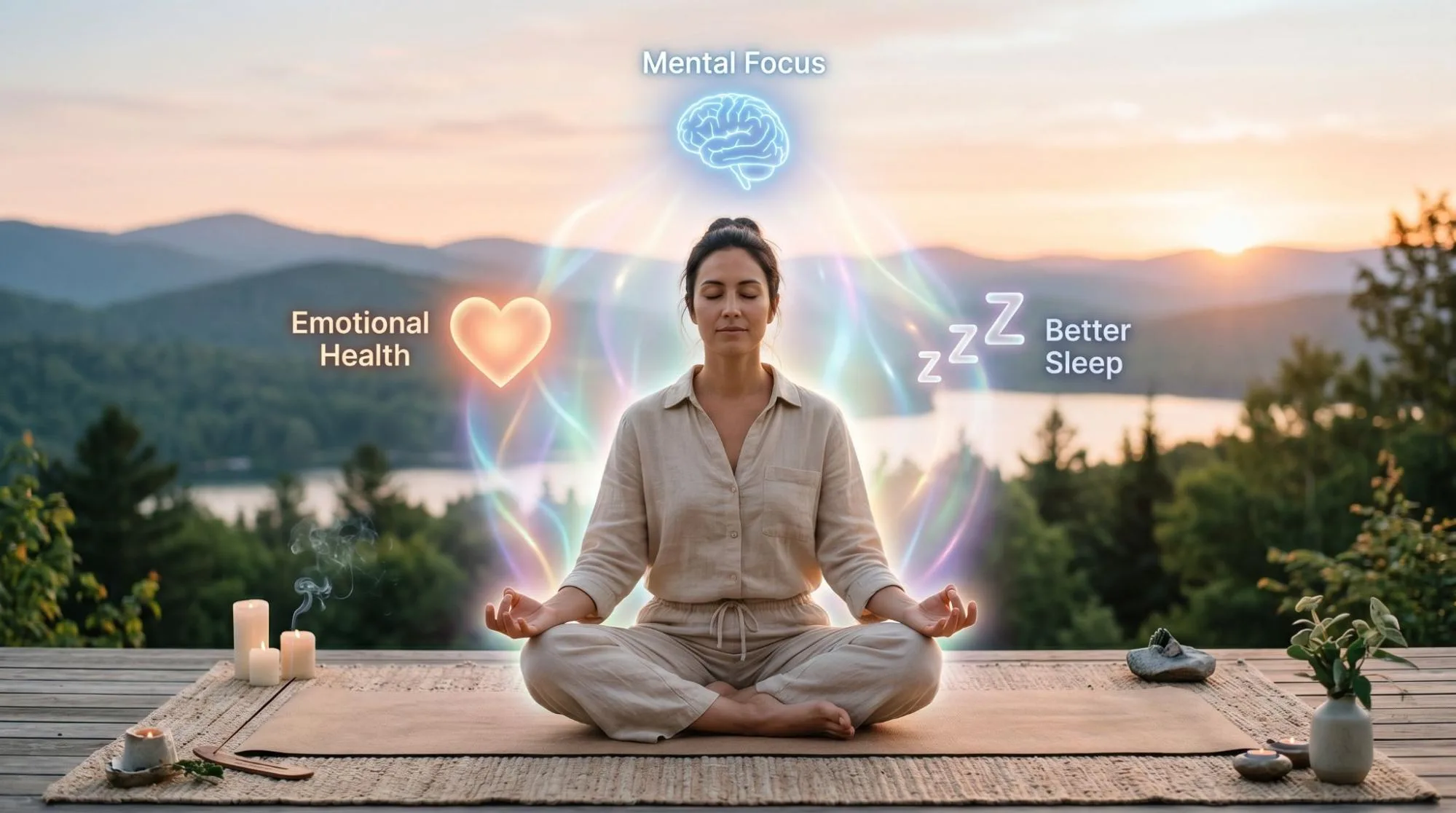
Knowing what is mantra meditation helps you understand its calming benefits. Research and personal experience suggest that mantra meditation may offer a variety of mental, emotional, and physical benefits.
Reduces stress and anxiety
One of the most recognized benefits of mantra meditation is stress reduction.
The repetitive nature of the practice helps calm racing thoughts and encourages relaxation. Many people notice that they feel less overwhelmed after even a short meditation session.
Regular practice may also help reduce symptoms associated with everyday anxiety and mental tension.
Improves focus and concentration
Modern life constantly competes for our attention.
Mantra meditation trains the mind to return to a single point of focus repeatedly. This mental exercise strengthens attention skills over time and may improve concentration during daily activities.
Students, professionals, and athletes often use meditation practices to support mental performance.
Supports better sleep
Many people struggle to quiet their minds before bedtime.
Repeating a calming mantra can help shift attention away from worries and promote relaxation. This may make it easier to fall asleep and improve overall sleep quality.
A short evening meditation session can become a helpful addition to a healthy bedtime routine.
Helps emotional balance
Emotions naturally rise and fall throughout the day.
Mantra meditation creates a space between emotional reactions and conscious responses. Instead of immediately reacting to stress, frustration, or sadness, practitioners often develop greater emotional awareness and stability.
Over time, this can contribute to a more balanced outlook on life.
may support relaxation
Some studies suggest meditation practices may contribute to healthier cardiovascular function.
By promoting relaxation and reducing stress levels, mantra meditation may help support healthy blood pressure levels as part of a broader wellness routine.
It should not replace medical treatment but can complement healthy lifestyle habits.
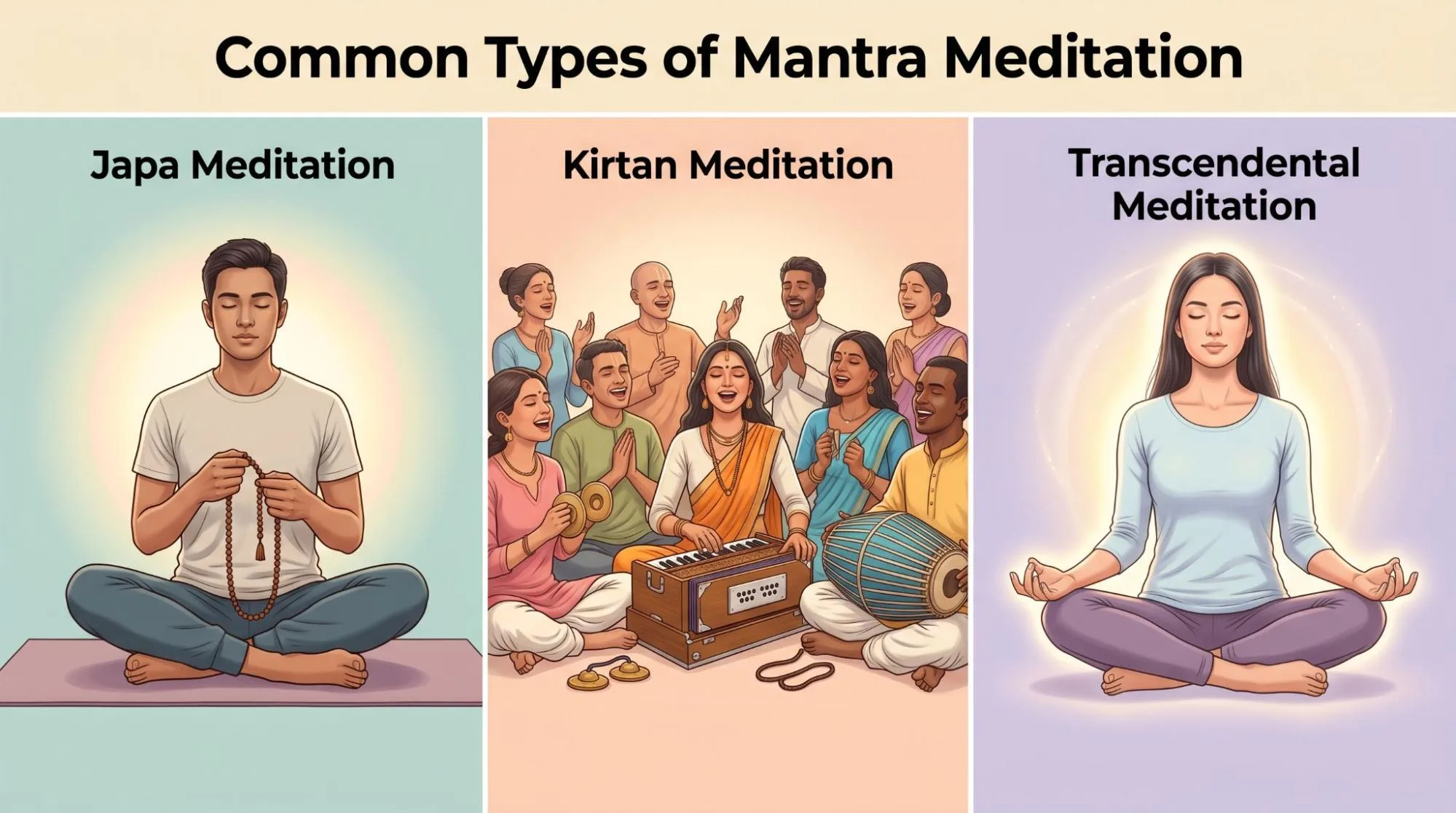
Common types of mantra meditation
Several meditation styles use mantras in different ways.
Japa meditation
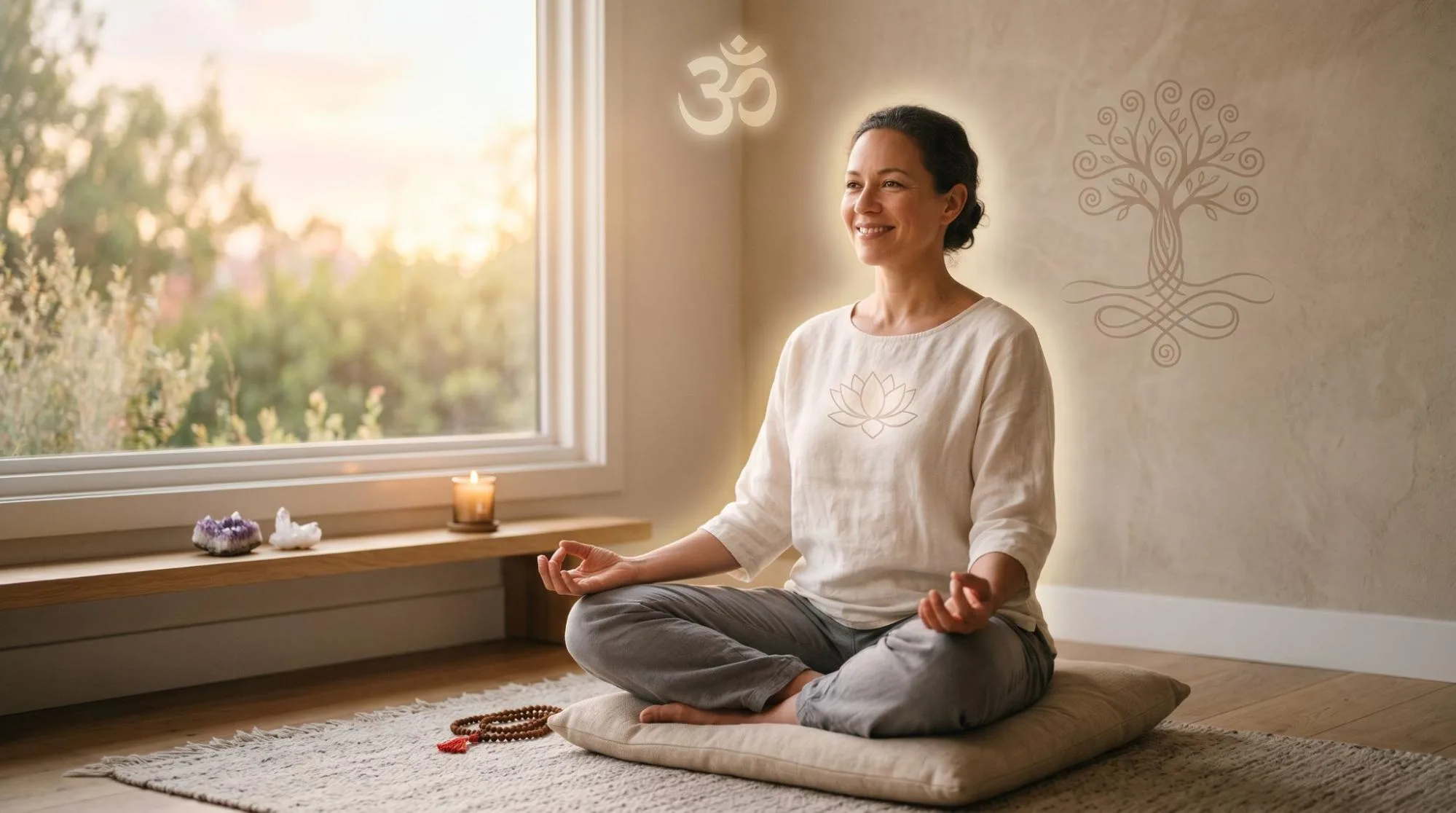
Japa meditation involves repeating a mantra multiple times, often using a string of prayer beads called a mala.
Each bead helps track repetitions while keeping attention focused on the mantra. This method is widely practiced in Hindu and yogic traditions.
Kirtan meditation
Kirtan meditation uses chanting, singing, and music.
Rather than silently repeating a mantra, participants chant together, often accompanied by instruments. Many people find this form of meditation uplifting and emotionally engaging.
Transcendental meditation
Transcendental Meditation is a structured meditation method that involves silently repeating a personalized mantra.
Practitioners typically meditate twice daily for about twenty minutes. The technique is known for its simplicity and focus on effortless awareness.
How to practice mantra meditation
Learning how to practice mantra meditation does not require special equipment or advanced skills. Once you understand what is mantra meditation, you can choose a simple mantra.
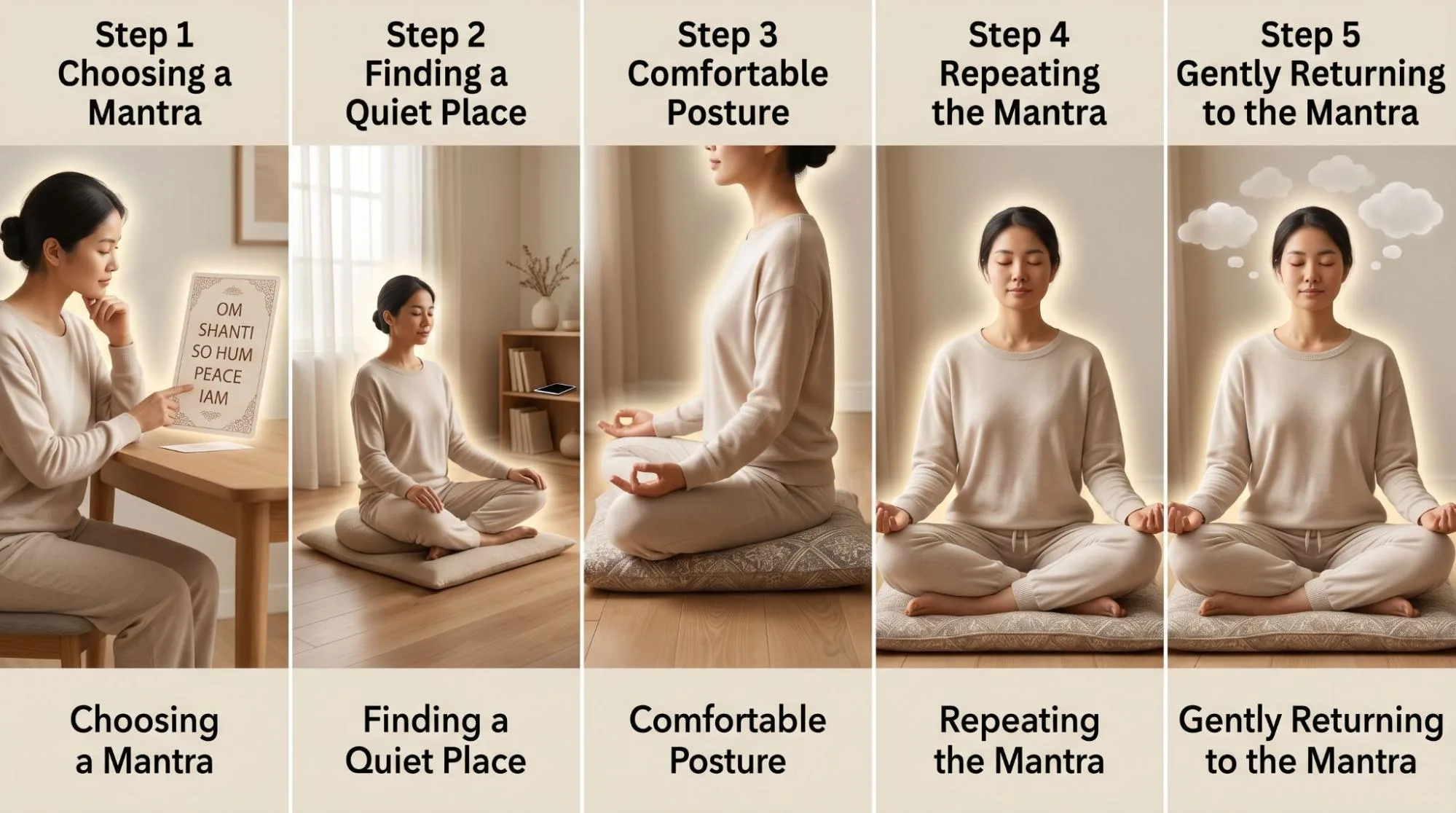
Choose a simple mantra
Start by choosing a mantra that feels comfortable and meaningful.
Beginners often benefit from simple options such as:
- Om
- So Hum
- Peace
- Calm
- Let go
The best mantra is one that feels natural rather than forced.
Find a quiet place
Try to find a quiet environment where interruptions are minimal.
A peaceful corner of your home, a garden, or a calm room can work well. Complete silence is not required, but fewer distractions make it easier to focus.
Sit in a comfortable posture
Comfort matters more than perfection.
You can sit on a chair, meditation cushion, or the floor. Keep your spine naturally upright while allowing your body to remain relaxed.
The goal is to stay alert without creating unnecessary physical tension.
Repeat the mantra with your breath
Begin breathing naturally and repeat the mantra.
Some people repeat the mantra silently. Others whisper it softly or say it aloud. You may also coordinate the mantra with your breathing rhythm if that feels comfortable.
Maintain a gentle pace rather than rushing through the repetition.
Bring your mind back gently
Your mind will wander. That is completely normal.
When you notice thoughts pulling your attention away, simply return to the mantra without frustration or self-criticism. This gentle return is an essential part of the practice itself.
Learn More : Nadi Shodhana Pranayama Benefits: How It Works and How to Practice It Safely
Mantra meditation for beginners
Beginners often assume they need special knowledge to start meditating. In reality, consistency matters far more than perfection. For beginners asking what is mantra meditation, short daily practice is best.
Best beginner mantras
Good beginner mantras include:
- Om
- So Hum
- Peace
- Relax
- Let go
- I am calm
- I am present
These options are easy to remember and naturally support relaxation.
How long to practice
Starting small often leads to better long-term success.
A daily session of 5 to 10 minutes is enough for beginners. As comfort grows, sessions can gradually increase to 15, 20, or 30 minutes.
How often to practice
Consistency produces better results than occasional long sessions.
Most people benefit from practicing once or twice daily. Even a few minutes each day can help establish a lasting meditation habit.
Common mistakes to avoid
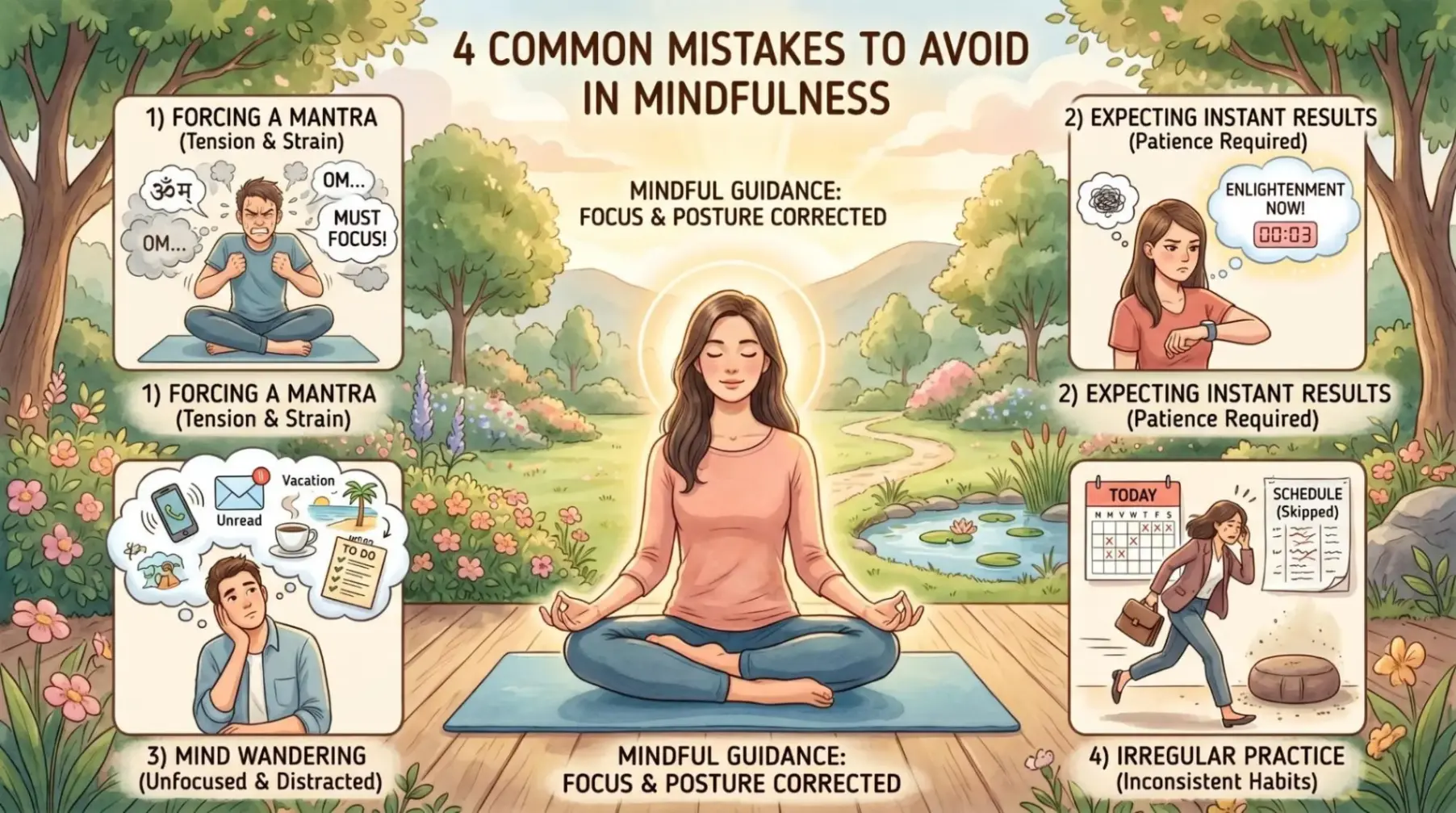
Many beginners face similar challenges when starting mantra meditation.
Choosing a mantra that feels forced
Not every mantra resonates with every person.
If a mantra feels awkward or disconnected, try another one. The practice should feel comfortable and supportive rather than unnatural.
Expecting instant results
Meditation is a skill that develops gradually.
Some sessions may feel peaceful, while others may feel distracted. Progress usually appears through consistent practice rather than dramatic overnight changes.
Fighting wandering thoughts
Many people assume meditation means eliminating thoughts entirely.
In reality, thoughts will continue to appear. The goal is simply to notice them and return attention to the mantra without judgment.
Practicing without consistency
One long meditation session rarely creates lasting benefits.
Regular daily practice, even for a short period, generally produces better results than meditating only occasionally.
FAQs
What is mantra meditation in simple words?
Mantra meditation is a meditation practice that involves repeating a sound, word, or phrase to focus the mind and promote calmness.
How do I practice mantra meditation as a beginner?
Choose a simple mantra, sit comfortably, focus on your breathing, repeat the mantra, and gently return to it whenever your mind wanders.
How long should I practice mantra meditation daily?
Beginners can start with 5–10 minutes daily. As the habit develops, sessions can gradually increase.
Are healing mantras effective?
Many people use healing mantras to support relaxation, emotional well-being, and mindfulness. Their effectiveness often comes from consistent practice and focused attention.
Can mantra meditation help with anxiety?
Yes. Regular mantra meditation may help reduce stress and anxiety by calming mental activity and encouraging relaxation.
What is mantra meditation in simple words?
What is mantra meditation? It is repeating a sound, word, or phrase for focus and calm.
Learn More : Box Breathing Benefits for Mind and Body
Conclusion
Understanding what is mantra meditation is the first step toward building a simple and meaningful meditation practice. By repeating a carefully chosen mantra, you create a steady point of focus that helps quiet mental noise and cultivate greater awareness. Understanding what is mantra meditation can help you build a peaceful daily habit.
Whether you choose traditional chakra mantras, deity mantras, affirmation-based phrases, or other types of mantras, the key is consistency. Start small, stay patient, and allow the practice to develop naturally. Over time, many people find that mantra meditation becomes a reliable tool for greater calm, focus, emotional balance, and inner well-being.
Frequently Asked Questions
What is mantra meditation in simple words?
It is a practice of repeating a sound, word, or phrase to give the mind a steady focus.
How long should a beginner practise?
Start with five to ten minutes. A short, regular session is usually more practical than an occasional long session.
What if my mind keeps wandering?
That is normal. Notice the distraction and gently return to the mantra without judging yourself.