
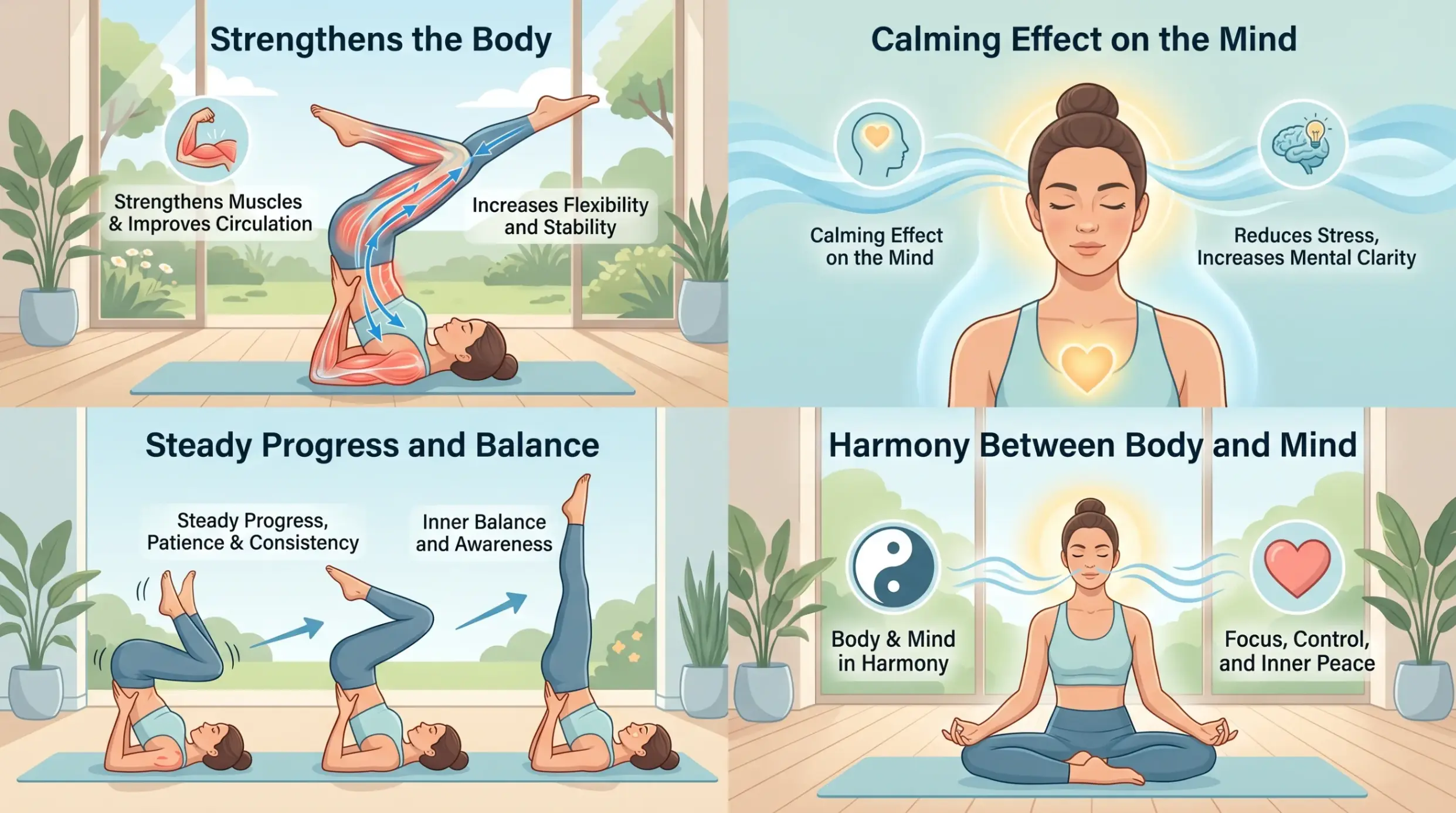
Shoulder stand is one of the classic inverted yoga poses where your body lifts upward while your shoulders, upper arms, and back of the head stay on the mat. In Sanskrit, it is commonly known as Sarvangasana, which means “whole body pose.”
This pose looks simple from the outside, but it needs care. Your legs go upward, your hips lift, and your body becomes almost perpendicular to the floor. When done with good support and calm breathing, shoulder stand can feel steady, cooling, and deeply relaxing.
At the same time, it is not a pose to rush. Because it places weight around the neck and shoulder area, beginners should learn slowly, use support, and avoid forcing the body into position.
What Is Shoulder Stand Yoga Pose?
Shoulder stand is an inversion where you lie on your back, lift your legs, raise your hips, support your back with your hands, and extend your legs upward. Your weight should rest mainly on the shoulders and upper arms, not on the neck.
In a clean shoulder stand, the shoulder blades stay grounded, the chest gently moves toward the chin, and the legs straight upward create a long line from shoulders to toes. The pose is often practiced near the end of a yoga practice, after the body is warm.
It is called a “stand pose” because the body is standing upward, but instead of standing on the feet, you are supported by the shoulders and upper back.
Why Shoulder Stand Is Called the Queen of Yoga Poses
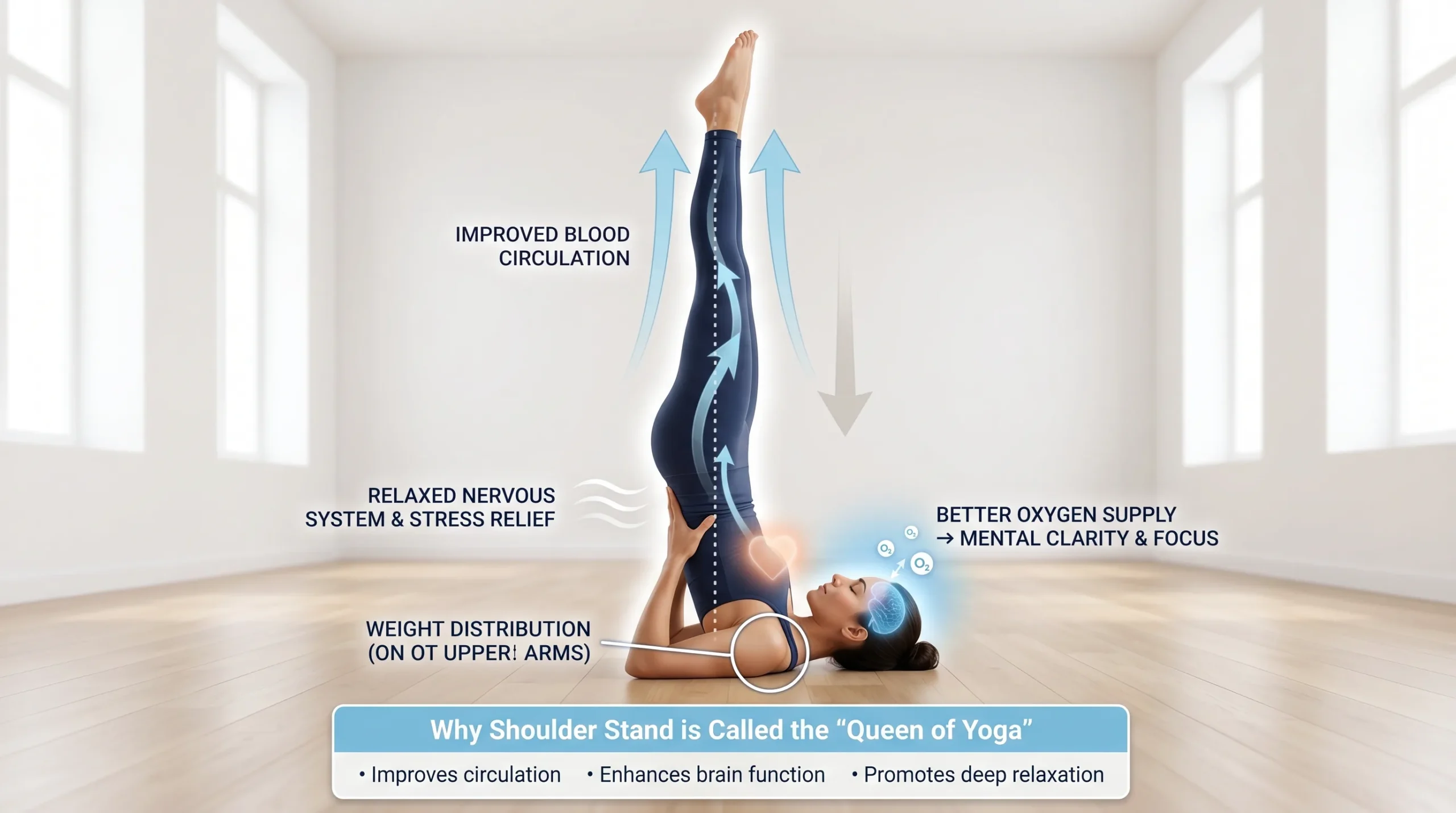
Shoulder stand is often called the “Queen of Yoga Poses” because it affects many parts of the body at once. Traditional yoga teaching values it for its calming effect, its full-body engagement, and its gentle influence on the throat area.
It works the shoulders and upper back, supports core control, stretches the back body, and encourages quiet breathing. Some yoga traditions also say it stimulates the thyroid area because the chin moves close to the chest, but it should never be treated as a medical cure or replacement for thyroid care. Inversions such as shoulder stand also need extra caution for people with glaucoma, high blood pressure, heart concerns, or neck problems.
Learn More : Plow Pose Halasana Step by Step Guide
Main Benefits of Shoulder Stand
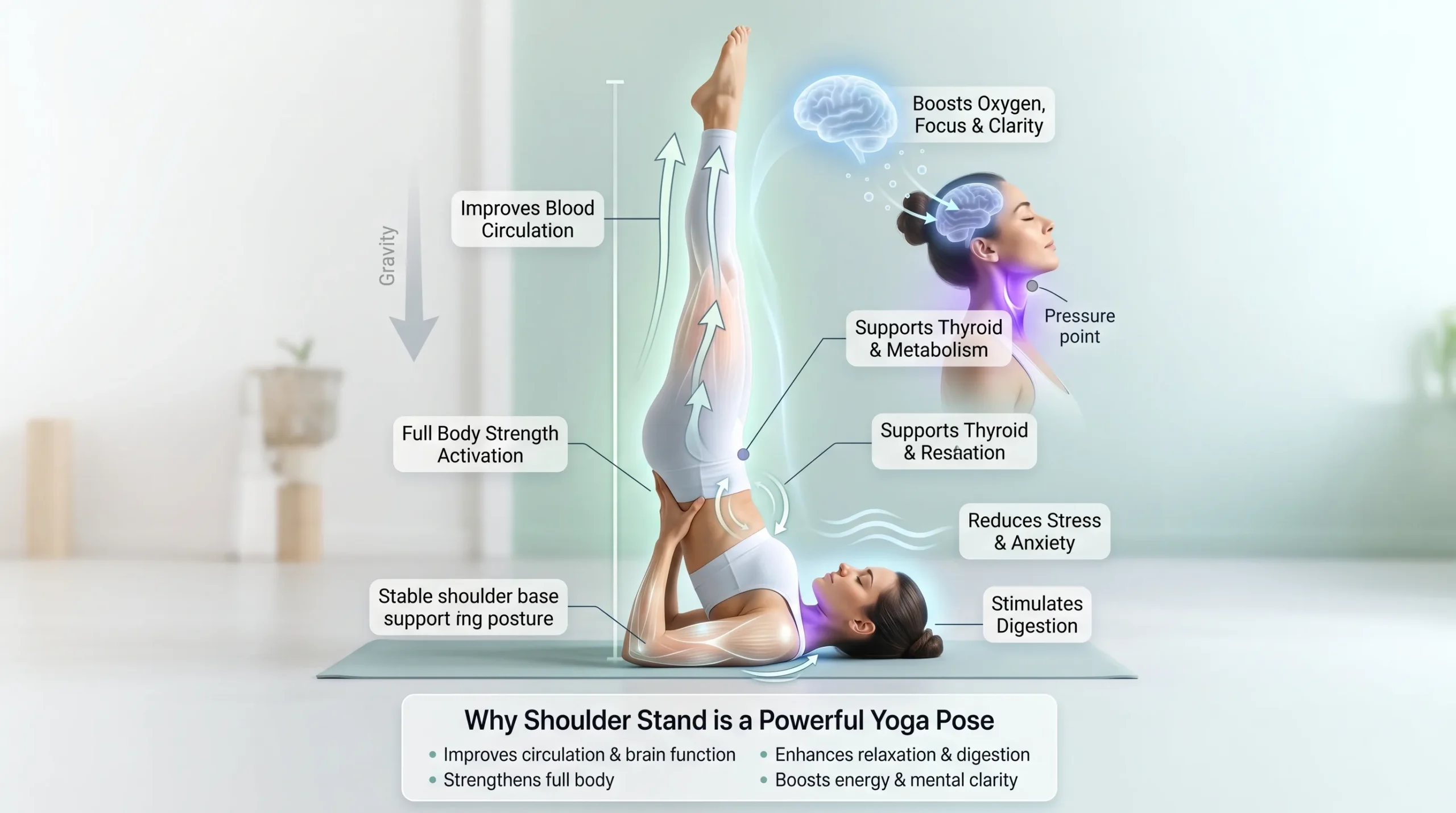
Shoulder stand can offer several physical and mental benefits when practiced safely. The key is proper alignment, soft breathing, and no strain in the neck.
Improves Blood Circulation
Because shoulder stand is an inverted pose, it changes the usual direction of the body. Many people feel a light, refreshed sensation after practicing it because the legs are raised and the upper body receives more attention.
This does not mean the pose “fixes” circulation problems. It simply supports healthy movement and body awareness when used as part of a balanced yoga routine.
Supports Better Oxygen Flow to the Brain
Slow breathing during shoulder stand may help you feel clearer and calmer. When the breath becomes steady, the mind often settles too.
The benefit comes less from forcing the pose and more from staying relaxed while the body is lifted. If you feel pressure in the head, dizziness, or discomfort, come down immediately.
Calms the Nervous System
A well-supported shoulder stand can feel quiet and grounding. The tucked chin, steady breath, and stillness may help calm the nervous system after active movement.
This is why many yoga teachers place shoulder stand near the end of practice rather than at the beginning. The body is warm, and the mind is more ready to slow down.
Supports Thyroid and Hormonal Balance
Traditional yoga often connects shoulder stand with the throat area and thyroid gland. The pose gently compresses the front of the throat because the chest moves toward the chin.
Still, this should be understood carefully. Shoulder stand is not a treatment for thyroid disease or hormonal imbalance. Anyone with thyroid problems should ask a qualified health professional before practicing it.
Helps the Body’s Natural Detox Process
Yoga does not “detox” the body in a magical way. Your liver, kidneys, lungs, skin, and digestive system already handle that work.
What shoulder stand may do is support relaxation, breathing, and circulation, which can help the body function better as a whole. Think of it as support, not a shortcut.
Strengthens the Shoulders, Arms, Core, and Legs
Shoulder stand is not only a relaxing pose. It also builds strength.
Your upper arms press into the floor, your hands support the back, your core keeps the hips lifted, and your legs stay active. To keep the legs straight, you need steady control from the thighs and lower belly.
Improves Digestion and Reduces Bloating
Some people feel lighter in the abdomen after inverted or restorative yoga poses. Shoulder stand may support digestion indirectly by relaxing the body and reducing stress.
For bloating, it is better to practice on an empty stomach. Avoid shoulder stand right after eating, as the position can feel uncomfortable.
Boosts Energy, Focus, and Mental Clarity
Shoulder stand has an interesting effect. It can feel calming, but it may also leave you refreshed.
After holding the pose with slow breathing, many people feel more focused. This makes it useful near the end of a yoga practice, especially when followed by quiet rest.
How to Prepare Before Doing Shoulder Stand
Preparation matters. A safer shoulder stand starts before you even lift your legs.
Use a Non-Slip Yoga Mat
Practice on a stable yoga mat so your elbows and shoulders do not slide. A slippery surface can make your arms move outward, which may place extra pressure on the neck.
A firm mat is usually better than a very soft one. Too much softness can make balance harder.
Place a Folded Blanket Under Your Shoulders
A folded blanket under the shoulders can help protect the neck by giving the shoulders a little height. Your head stays on the mat while your shoulders rest on the blanket.
This small setup helps reduce sharp bending in the upper spine and neck. Many teachers recommend blanket support for beginners, especially in supported shoulder stand.
Keep Your Neck Relaxed and Still
Once you are in shoulder stand, do not turn your head. Keep your gaze upward or toward your chest.
Turning the head while the body is lifted can strain the neck. If you need to look around, come out of the pose first.
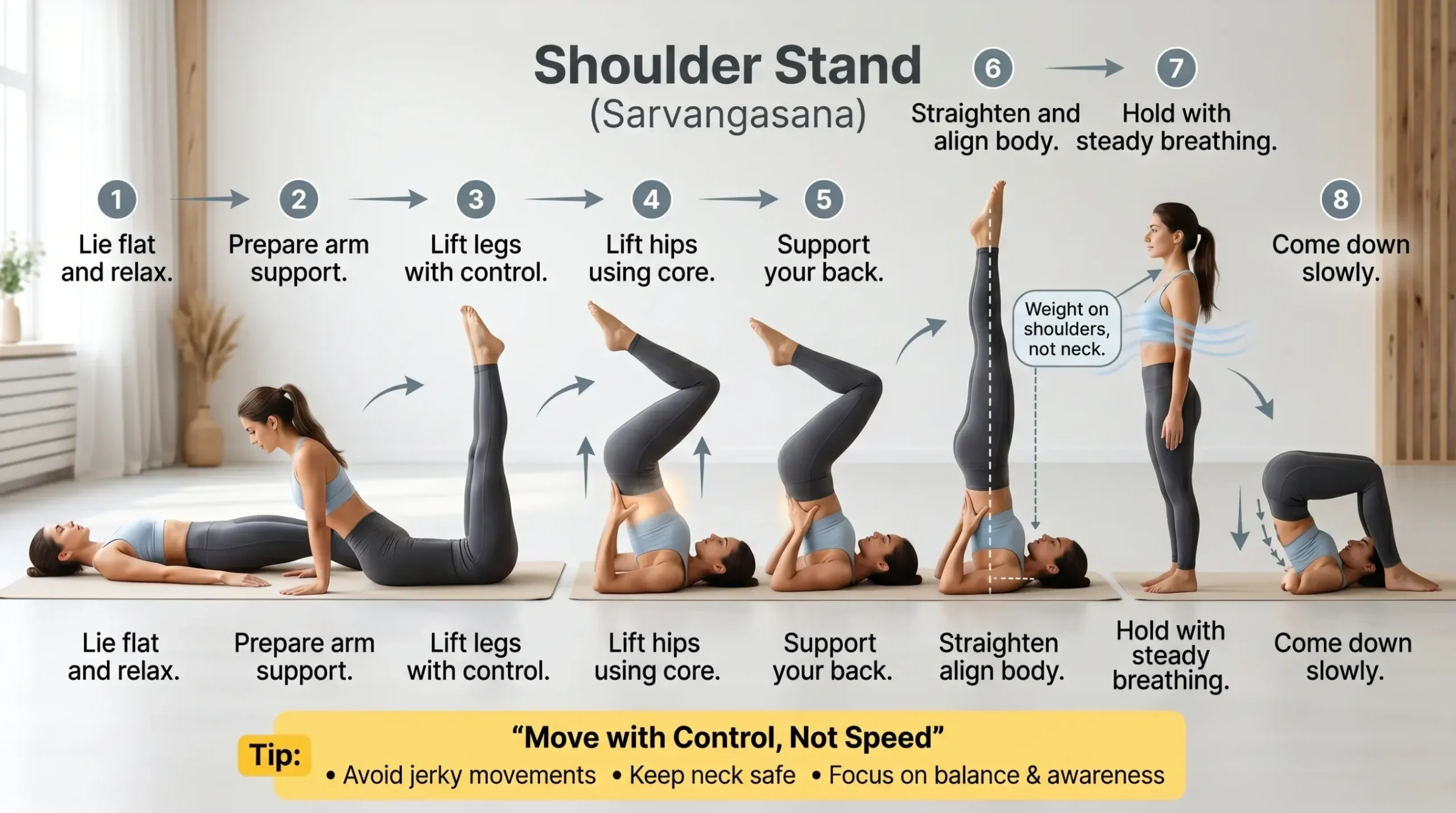
How to Do Shoulder Stand Step by Step
Move slowly. Shoulder stand should feel controlled, not like a kick-up.
Lie Flat on Your Back
Start by lying on your back with your legs extended and arms resting beside your body. Keep the shoulders relaxed.
Take a few slow breaths before you begin. Let your back settle into the mat.
Keep Your Arms Close to Your Body
Place your arms close to your sides with the palms facing down. Press your arms gently into the floor.
This gives you support before you lift your hips.
Lift Your Legs to 90 Degrees
Now slowly lift your legs until they are at a 90-degree angle. Keep the movement smooth.
Do not swing the legs. Use your lower belly and steady control.
Raise Your Hips Slowly
Press your palms into the mat and begin to lift your hips off the floor. Your lower back will rise as your legs move slightly over your head.
At this stage, your body may pass through a position similar to the beginning of plow pose. Keep your neck still.
Support Your Back with Your Hands
Bend your elbows and place your hands on your back. Try to bring your hands closer to the shoulder blades rather than low on the hips.
Your elbows should stay close enough to give support. If they slide wide, the pose becomes unstable.
Straighten Your Legs Toward the Ceiling
Once your back feels supported, slowly extend your legs upward. Aim to make your body long and steady.
Your legs do not need to look perfect at first. Over time, work toward keeping the legs straight and the body more perpendicular to the floor.
Hold the Pose with Steady Breathing
Stay in the pose only as long as you can breathe comfortably. Keep your face soft, your jaw relaxed, and your neck still.
The weight should feel supported by the shoulders and upper arms, not crushed into the neck.
Come Down Slowly and Safely
To come down, lower your legs slightly toward your head, release your hands to the floor, and roll the spine down slowly.
Do not drop the hips suddenly. After coming down, rest on your back for a few breaths.
Learn More : Inversion Variations in Yoga: Benefits, Types, Safety, and Beginner Guide
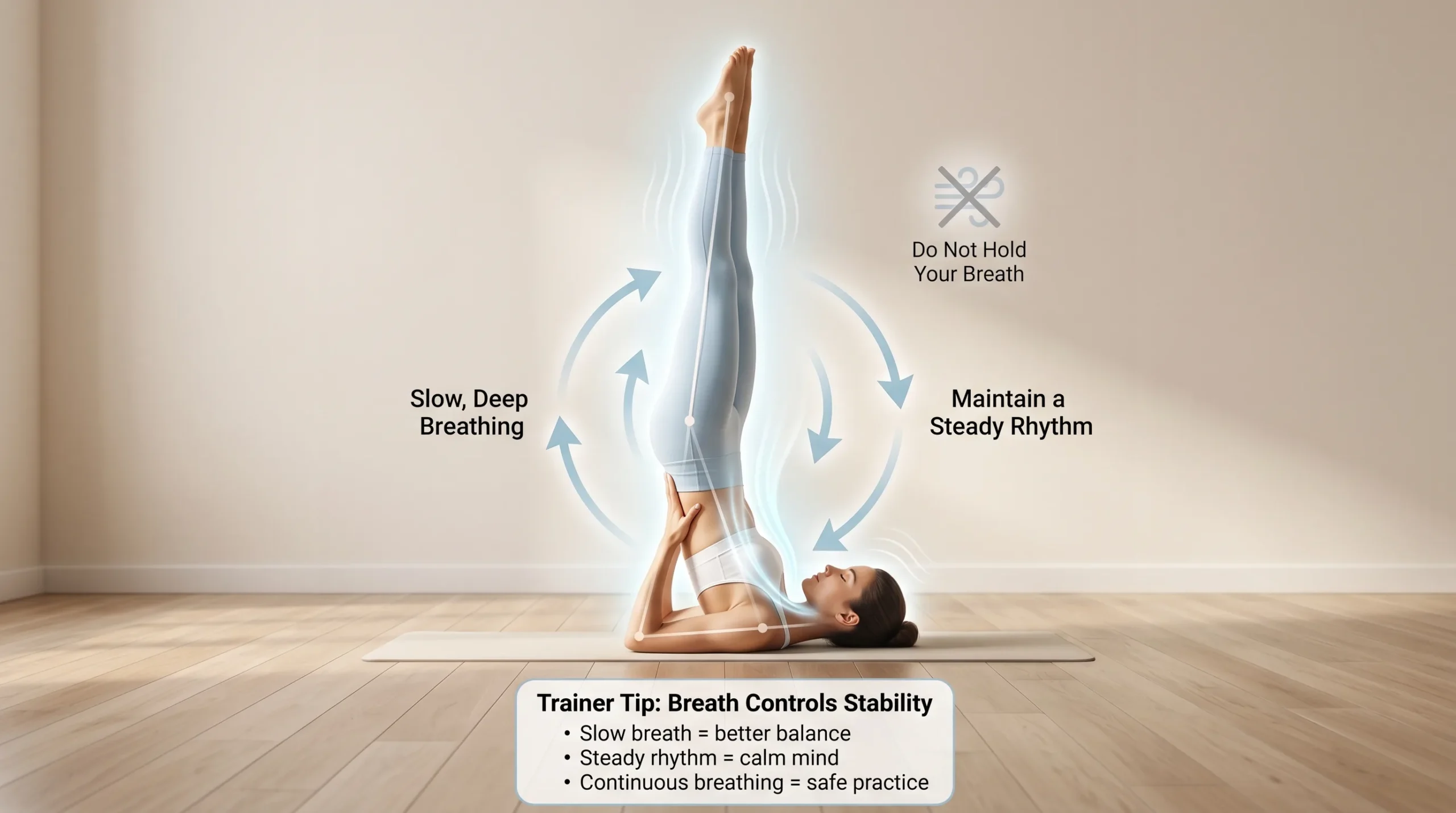
How to Breathe During Shoulder Stand
Breathing is one of the best ways to know whether your shoulder stand is safe and steady.
Breathe Slowly and Deeply
Use slow nasal breathing if possible. Let the breath feel smooth, not forced.
If deep breathing feels difficult, come out of the pose.
Keep a Steady Breathing Rhythm
Try to keep the inhale and exhale even. A simple rhythm works well: breathe in gently, breathe out gently.
The pose should feel quiet, not tense.
Do Not Hold Your Breath
Holding the breath creates pressure in the body. It can also make the face, neck, and shoulders tighten.
If you catch yourself holding your breath, lower down and rest.
Stay Relaxed and Focused
Keep your attention on the breath and the support under your shoulders. A focused mind helps the body stay stable.
Shoulder stand is not about pushing harder. It is about staying lifted without strain.
How Long Should You Hold Shoulder Stand?
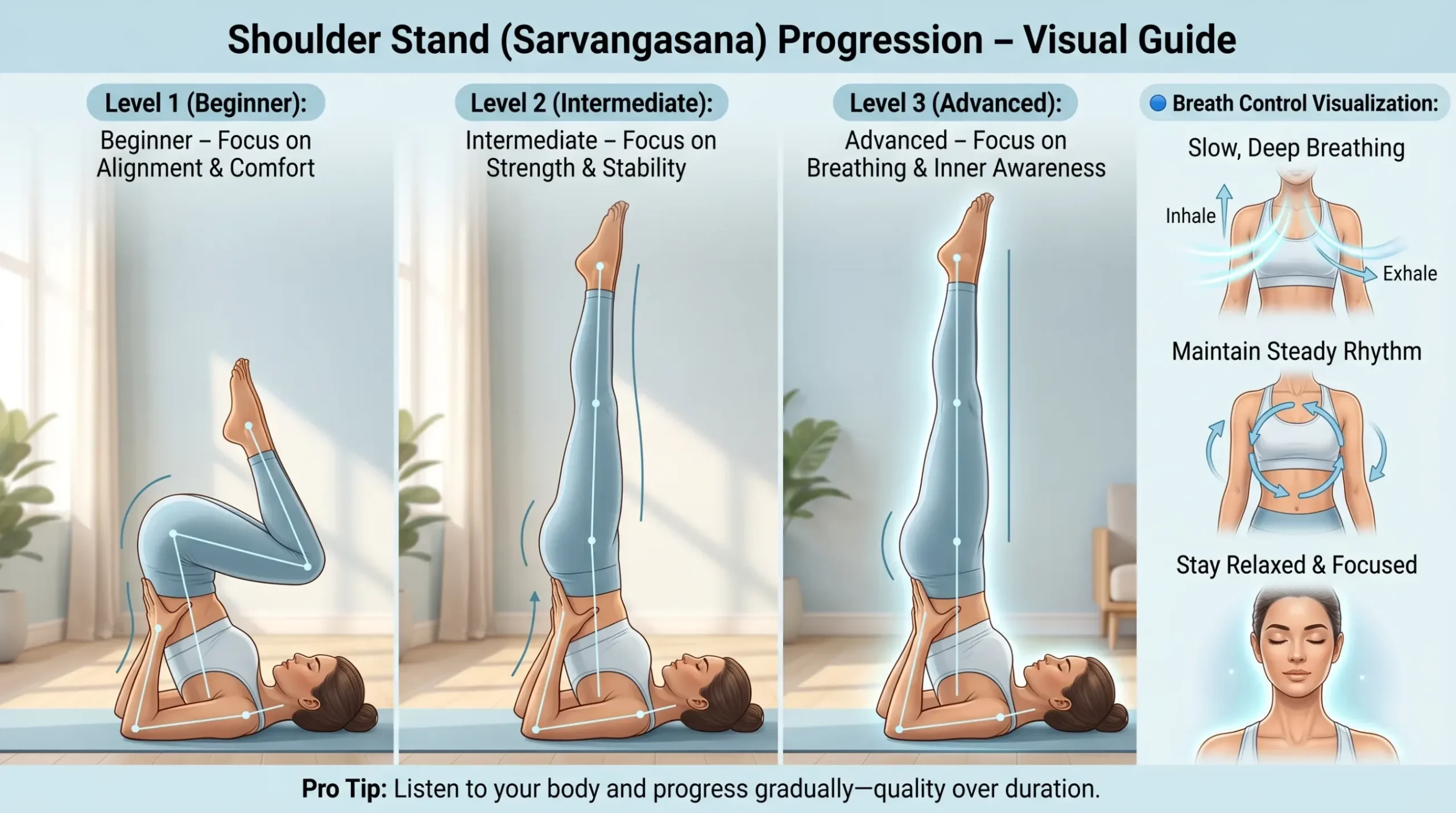
The right time depends on your level, comfort, and health.
Beginner Level: 15 to 30 Seconds
Beginners should start small. Even 15 seconds is enough if the pose is new.
Focus on learning safe support before increasing time.
Intermediate Level: 1 to 2 Minutes
Once the pose feels stable, you may hold it for 1 to 2 minutes.
Your breath should stay relaxed the whole time.
Advanced Level: 3 to 5 Minutes
Experienced practitioners may hold shoulder stand longer, but only with strong alignment and no neck pressure.
Long holds are not necessary for everyone. Quality matters more than time.
Common Shoulder Stand Mistakes to Avoid
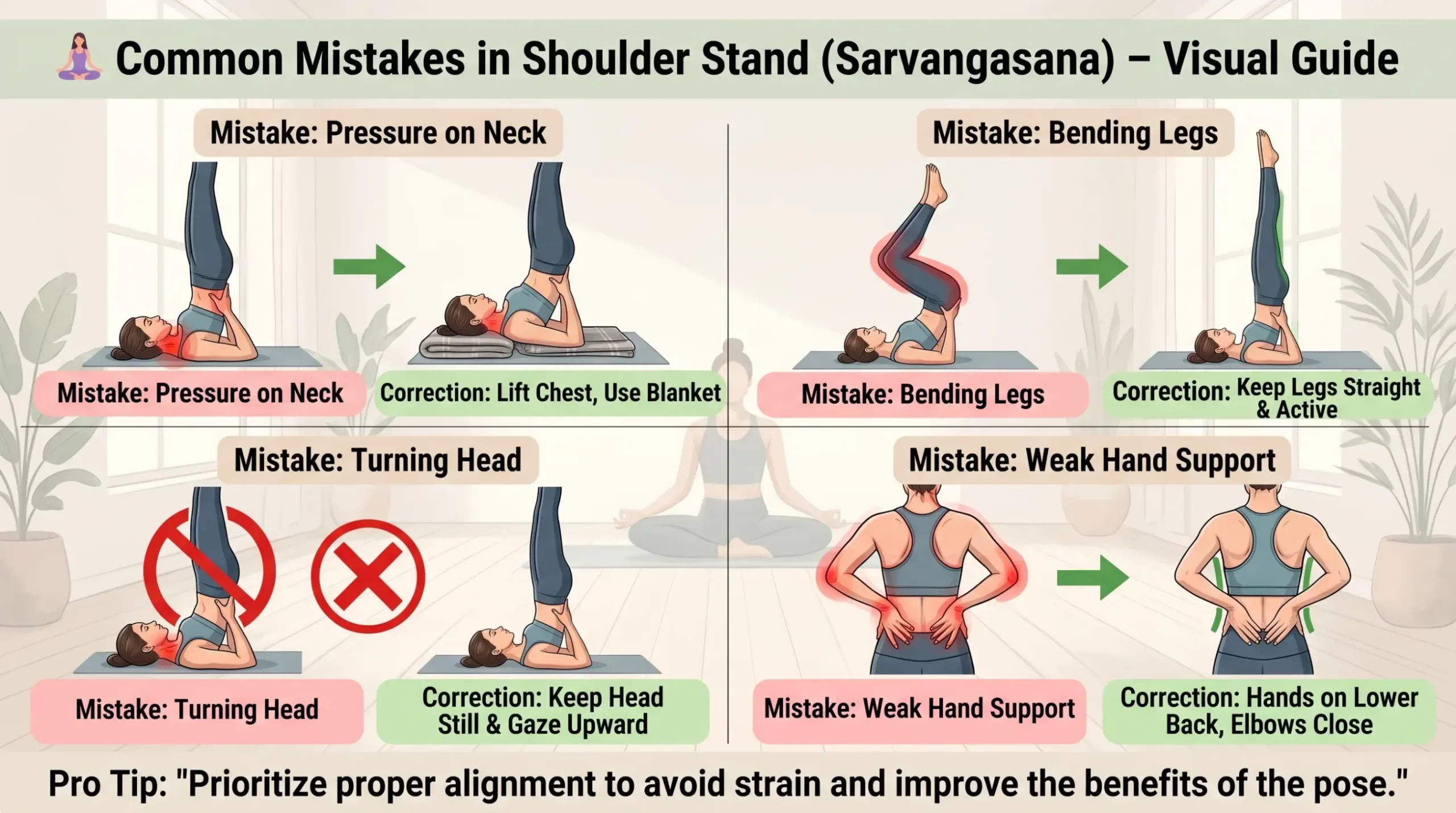
Small mistakes can make shoulder stand uncomfortable or risky. Watch for these common problems.
Putting Too Much Pressure on the Neck
This is the biggest mistake. Your neck should not feel crushed.
Use your shoulders, upper arms, and hands for support. If the neck feels strained, come down.
Bending the Legs
Bent legs are common in the beginning, but they can pull the body out of line.
Work slowly toward keeping the legs straight and active. Do not force the knees locked.
Turning the Head During the Pose
Never turn your head while you stay in the pose. This can irritate the neck.
Keep your head centered until you come down.
Using Weak or Incorrect Hand Support
If your hands are too low on the back, the pose may collapse. Try to walk the hands higher toward the shoulder blades.
Strong hand support helps the chest lift and keeps the body steady.
Safety Tips for Beginners
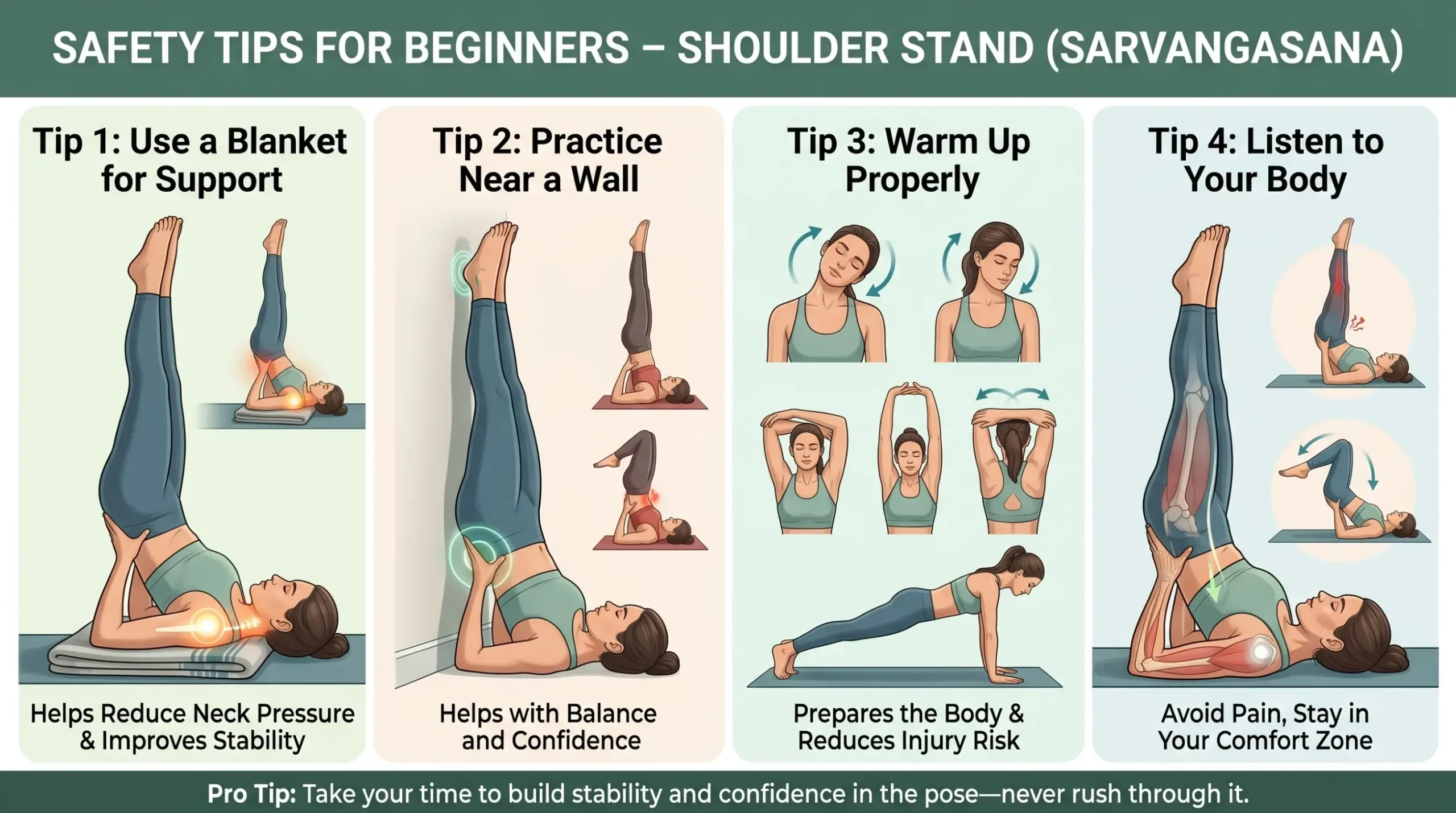
Shoulder stand can be useful, but it needs respect. Beginners should treat it as a careful practice, not a quick trick.
Use a Blanket for Neck Support
A folded blanket can make the pose feel safer and more comfortable. Keep the shoulders on the blanket and the head on the floor.
This setup helps reduce pressure on the neck.
Practice Near a Wall
A wall can help you learn balance. You can practice lifting the legs up near the wall or try easier variations first.
This is especially helpful if you feel nervous about falling backward.
Warm Up Before Starting
Warm up with gentle yoga poses like cat-cow, bridge pose, gentle twists, and hamstring stretches.
Bridge pose is especially useful because it opens the chest and prepares the shoulders and upper back.
Listen to Your Body
Pain is not part of good yoga practice. If you feel neck pain, pressure in the eyes, dizziness, numbness, or sharp discomfort, stop.
Shoulder stand should feel steady and supported, not aggressive.
Who Should Avoid Shoulder Stand?
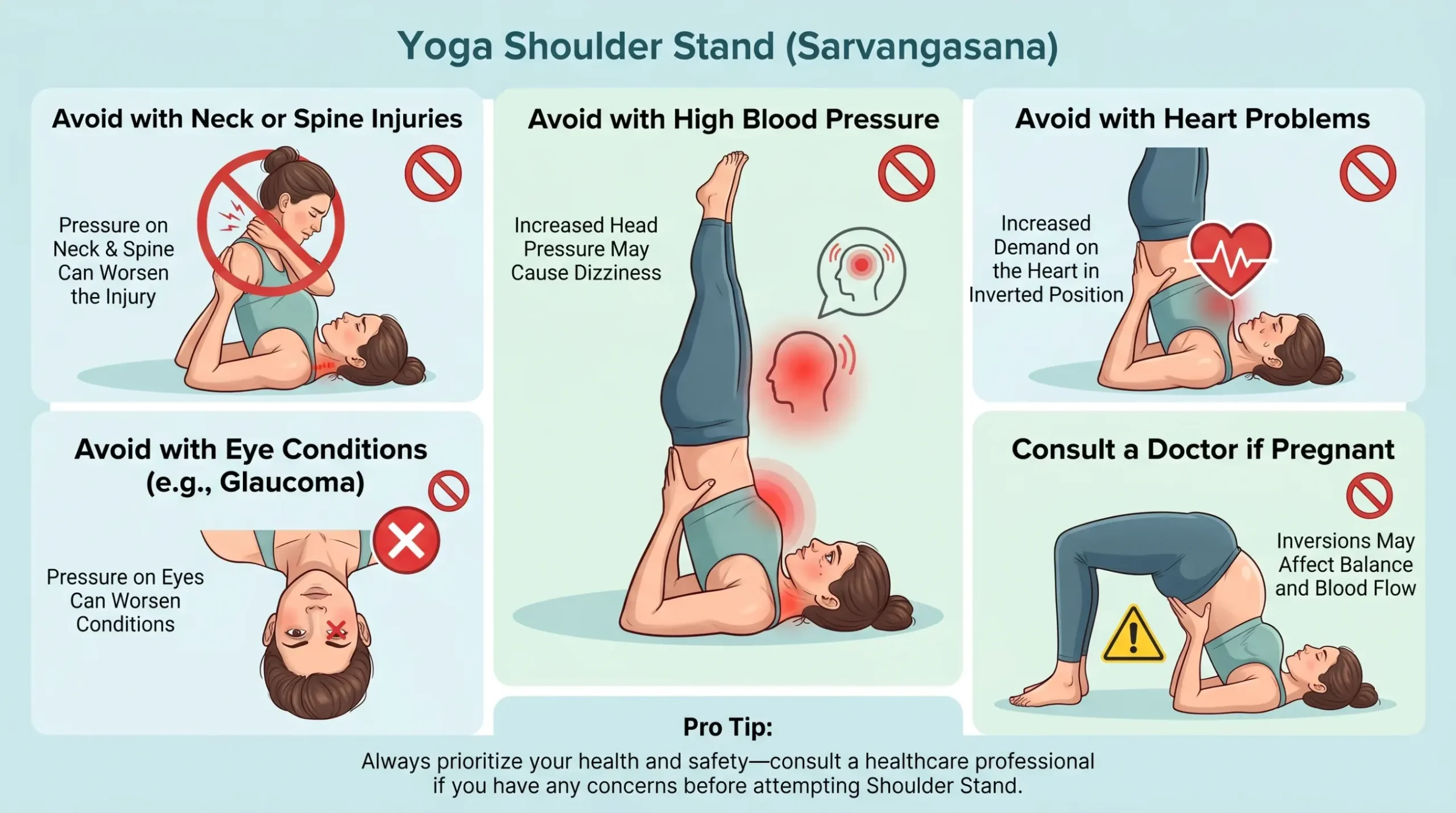
Some people should avoid shoulder stand unless they have medical clearance and expert guidance. This includes people with neck injury, spine problems, uncontrolled high blood pressure, heart problems, glaucoma or eye pressure issues, and pregnancy without medical advice.
People with Neck or Spine Injuries
Avoid shoulder stand if you have a neck injury, disc issue, severe neck pain, or serious upper spine problem.
The pose places direct load near the neck and shoulders, so it may make these conditions worse.
People with High Blood Pressure
People with high blood pressure should be cautious with inversions. If blood pressure is uncontrolled, shoulder stand is usually not recommended.
Choose gentler poses and speak with a doctor or experienced yoga teacher first.
People with Heart Problems
Heart conditions need extra care in yoga, especially with inversions.
If you have a heart condition, avoid shoulder stand unless a qualified professional says it is safe for you.
People with Glaucoma or Eye Pressure Issues
Inverted poses can increase pressure around the head and eyes. People with glaucoma or eye pressure concerns are often advised to avoid inversions.
Legs-up-the-wall may also need caution depending on the condition, so ask your healthcare provider.
Pregnant Women Without Medical Advice
Pregnancy changes balance, pressure, breathing, and body comfort. Do not begin shoulder stand during pregnancy without medical guidance.
If you already had a strong shoulder stand practice before pregnancy, work only with professional advice.
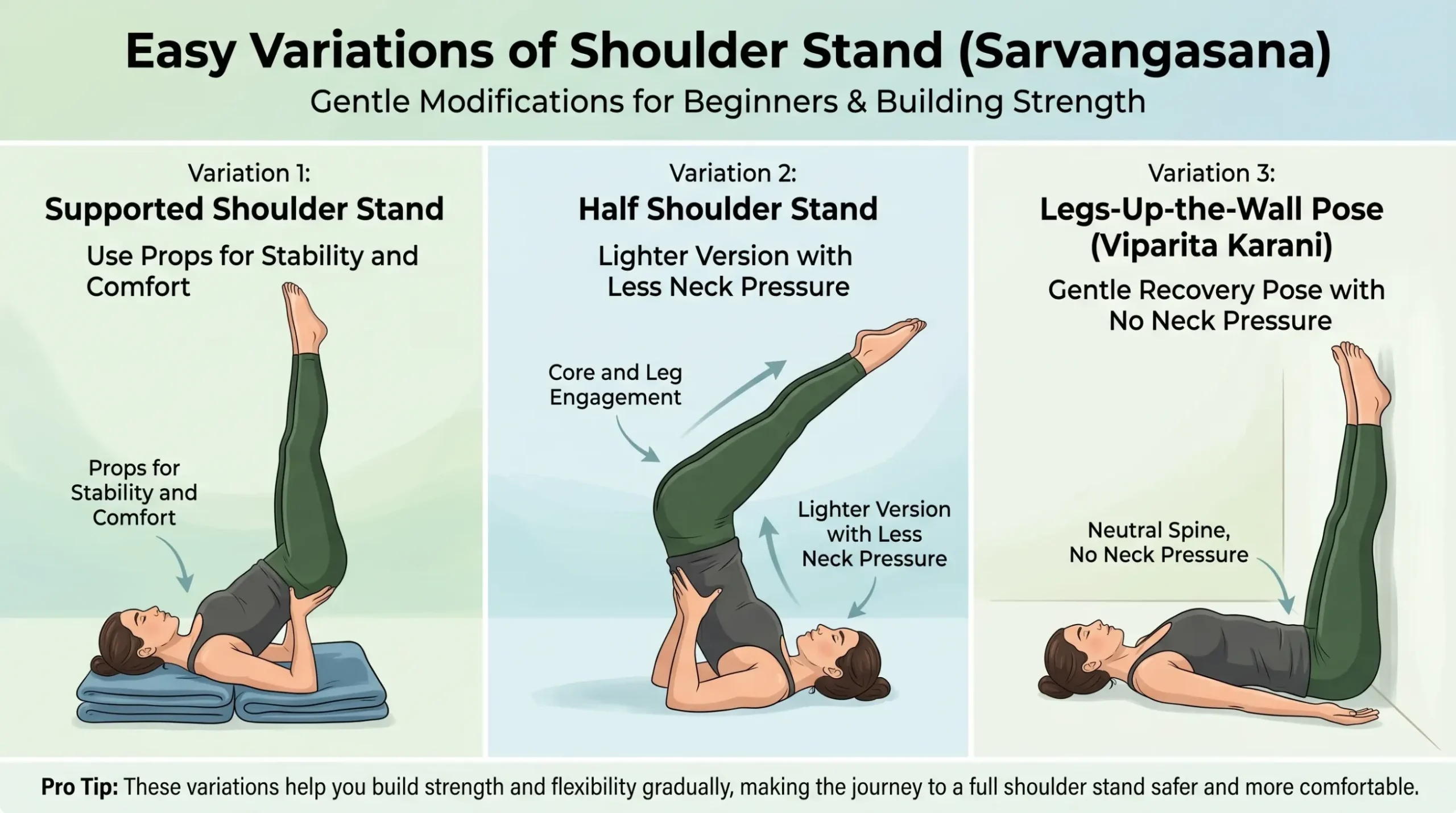
Easy Shoulder Stand Variations for Beginners
You do not have to do the full pose right away. These beginner-friendly options help build confidence.
Supported Shoulder Stand
In supported shoulder stand, you use blankets, wall support, or both. This reduces strain and helps you understand the shape of the pose.
It is often the best starting point for beginners.
Half Shoulder Stand
In half shoulder stand, the hips lift, but the body does not become fully vertical. The knees may stay slightly bent, and the legs may angle over the face.
This version helps you practice lifting the hips and supporting the back.
Legs-Up-the-Wall Pose
Legs-up-the-wall is a gentle alternative. You lie on your back with your legs resting up a wall.
It gives a soft inverted feeling without putting weight on the neck and shoulder area.
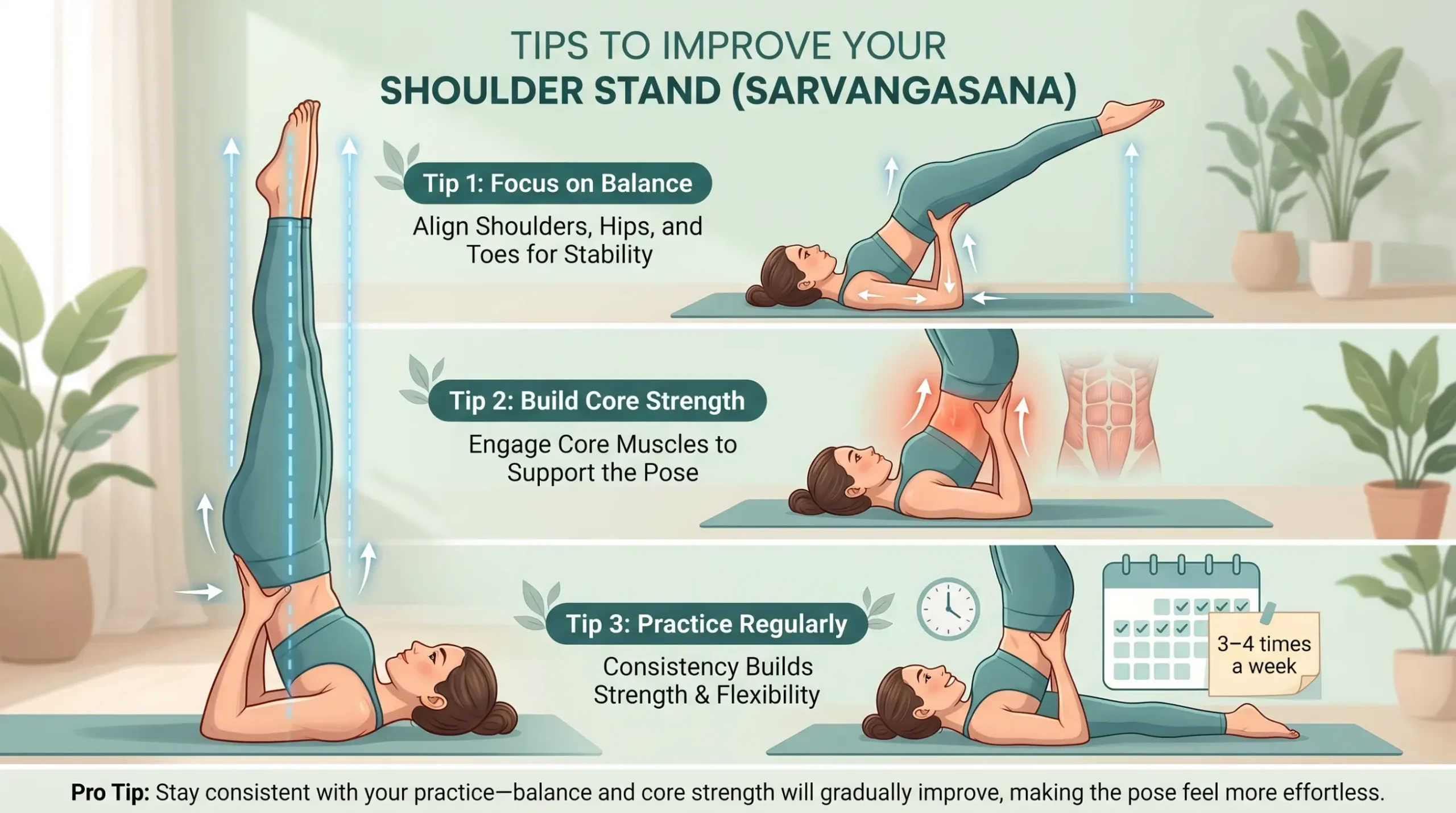
Tips to Improve Your Shoulder Stand
Improvement comes from patience. Do not chase a picture-perfect pose too soon.
Focus on Balance
Balance in shoulder stand comes from the whole body. Press through the upper arms, keep the chest lifted, and use your core to stay steady.
Avoid wobbling by moving slowly.
Build Core Strength
A stronger core helps you lift your hips without kicking or swinging. Practice simple core work, bridge pose, and controlled leg lifts.
This makes shoulder stand safer and smoother.
Practice Regularly
You do not need to practice shoulder stand every day. A few careful sessions each week can help.
Regular practice builds confidence, but rest is also part of progress.
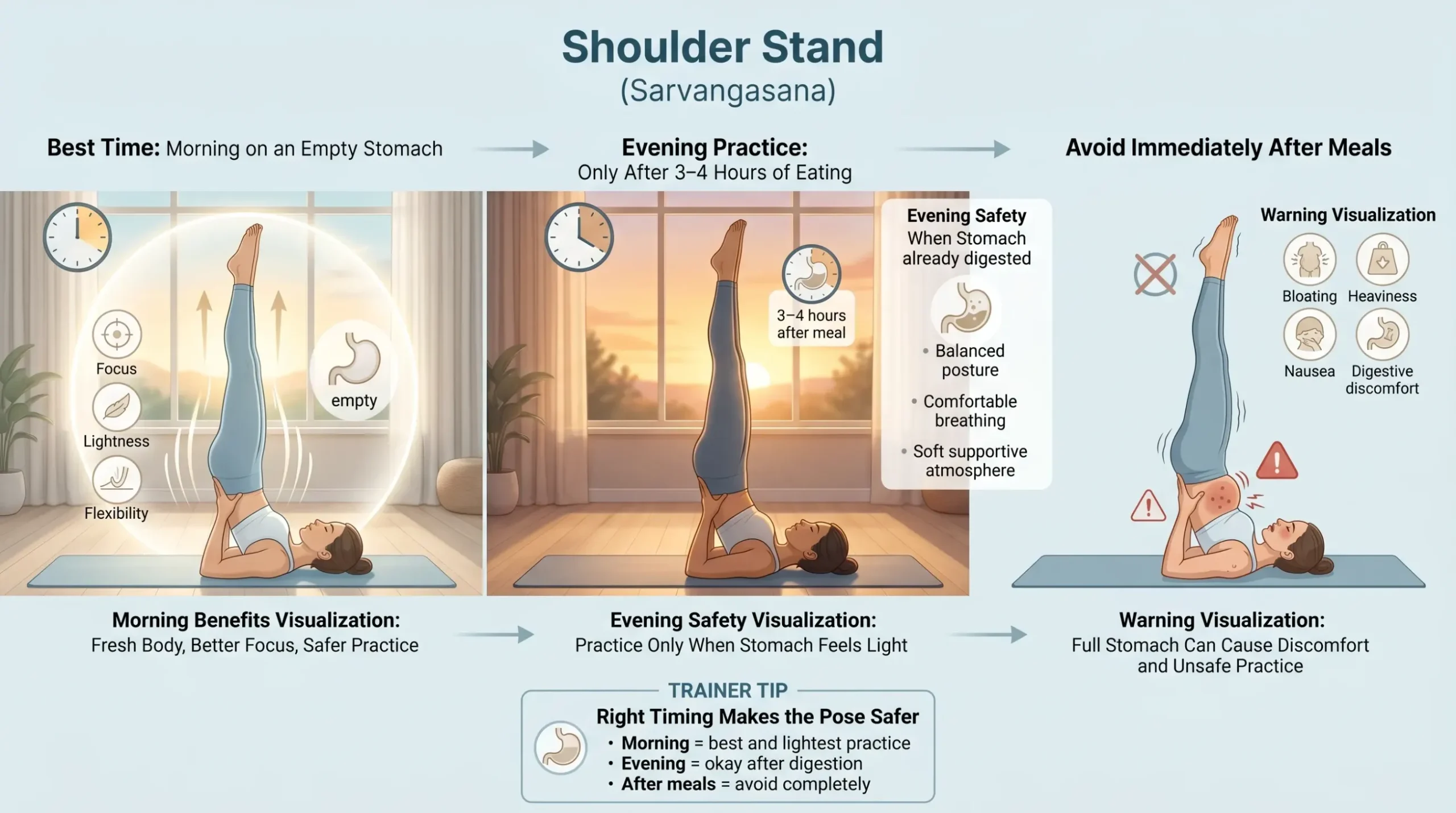
Best Time to Practice Shoulder Stand
Timing can make shoulder stand feel much better.
Morning on an Empty Stomach
Morning practice works well because the stomach is usually empty. The body may feel lighter, and the mind may feel clearer.
Warm up first, especially if your body feels stiff.
Evening After Digestion
Evening practice can also be calming. Make sure you have digested your food properly.
A slow evening shoulder stand may help you shift into a more relaxed state.
Avoid Practicing Right After Meals
Do not practice shoulder stand right after eating. The upside-down position can feel heavy and uncomfortable.
Wait at least a few hours after a full meal.
How to Add Shoulder Stand to a Yoga Routine
Shoulder stand works best when placed thoughtfully in your routine.
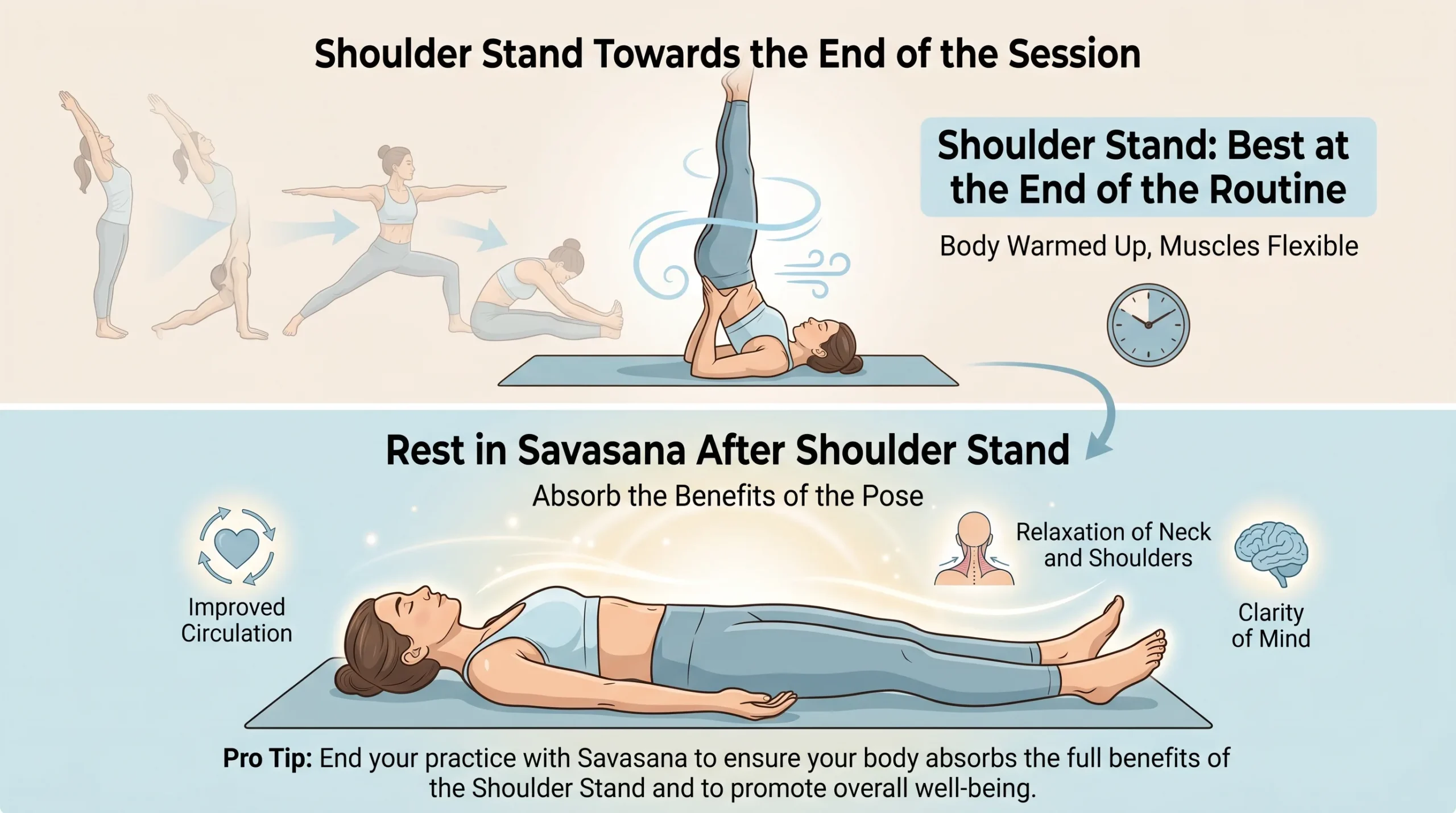
Practice It Near the End of Your Session
Add shoulder stand after your body is warm. It can come after standing poses, gentle backbends, bridge pose, or core work.
Some yoga sequences place shoulder stand before plow pose, but beginners should only try plow pose with proper guidance because it also affects the neck and upper spine.
Rest in Savasana After the Pose
After you come down, rest. Let your back, shoulders, and neck settle.
Savasana helps the body absorb the practice and gives the nervous system time to quiet down.
Mental and Emotional Benefits of Shoulder Stand
Shoulder stand is often loved for the way it affects the mind. When practiced safely, it can feel peaceful and centering.
Improves Focus
The pose asks for attention. You cannot rush it or look around.
That steady focus can train the mind to stay present.
Calms the Mind
The stillness of shoulder stand may help reduce mental noise. The breath slows, the body becomes quiet, and the mind often follows.
This is one reason many people enjoy practicing shoulder stand near the end of yoga.
Supports a Better Mood
A calm body often supports a calmer mood. Shoulder stand may help you feel refreshed, steady, and more balanced after practice.
It is not a cure for stress or emotional struggles, but it can be a helpful part of a gentle wellness routine.
Mental and Emotional Benefits of Shoulder Stand (Sarvangasana)
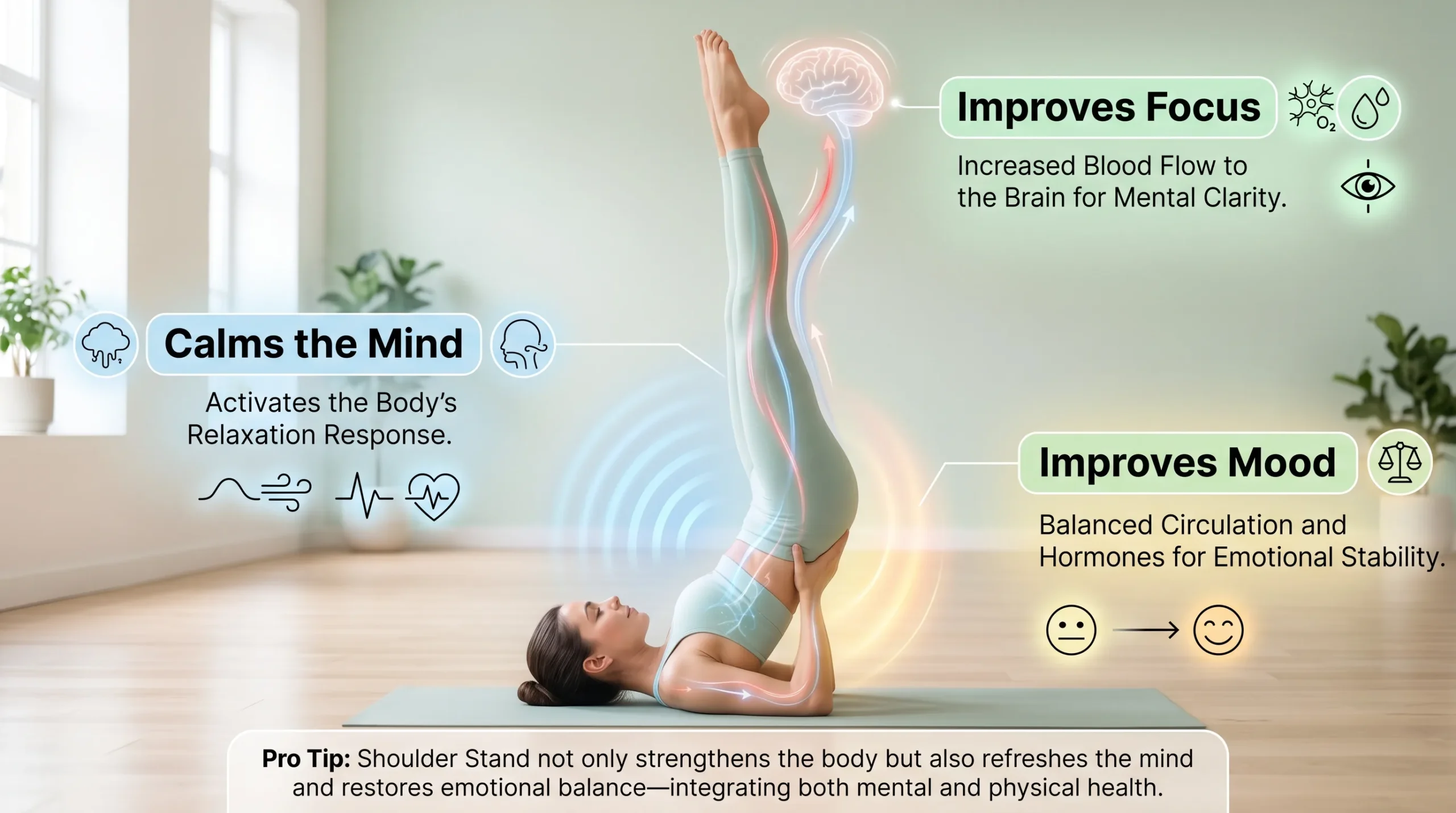
A shoulder stand is not only a physical pose—it also has a strong impact on your mind and emotions. Because it improves blood flow and relaxes the nervous system, it helps create mental clarity and emotional balance.
1. Improves Focus
The higher blood flows to the brain when you practice shoulder stand. Such increased circulation supplies the brain cells with increased oxygen and food.
Consequently, your mind is clearer and your mind becomes more active and alert. Through practising, one finds it easier to remain focused, concentrate on tasks and not be distracted with life.
2. Calms the Mind
This position is relaxing to the nervous system. It aids in the activation of relaxation response of the body, which eases mental stress and tension.
As you maintain the pose with constant breathing, your mind works less intensively and calms down. With time, it can assist in the alleviation of anxiety, overthinking, and mental fatigue, making you feel innermost calm.
3. Improves Mood
Shoulder stand can have a positive impact on your mood. With the improvement of blood circulation and equilibrium of hormones, the body becomes more refreshed and balanced.
This may result in a better mood, emotional stability and happiness. A more relaxed attitude towards daily stress and less irritability is also observed by many people.
Learn More : Legs Up the Wall Pose Benefits: A Simple Guide to Viparita Karani
Final Thoughts on Shoulder Stand Yoga Pose
Shoulder stand is a powerful stand pose that can support strength, balance, calm breathing, and better body awareness. It works the shoulders, upper arms, core, legs, and mind all at once.
The safest way to practice shoulder stand is to go slowly. Use a blanket. Keep the neck still. Support your back well. Breathe naturally. Come down if anything feels wrong.
If you are new, start with supported shoulder stand, half shoulder stand, or legs-up-the-wall pose. With steady practice and good alignment, this classic yoga pose can become a calm and valuable part of your yoga routine.