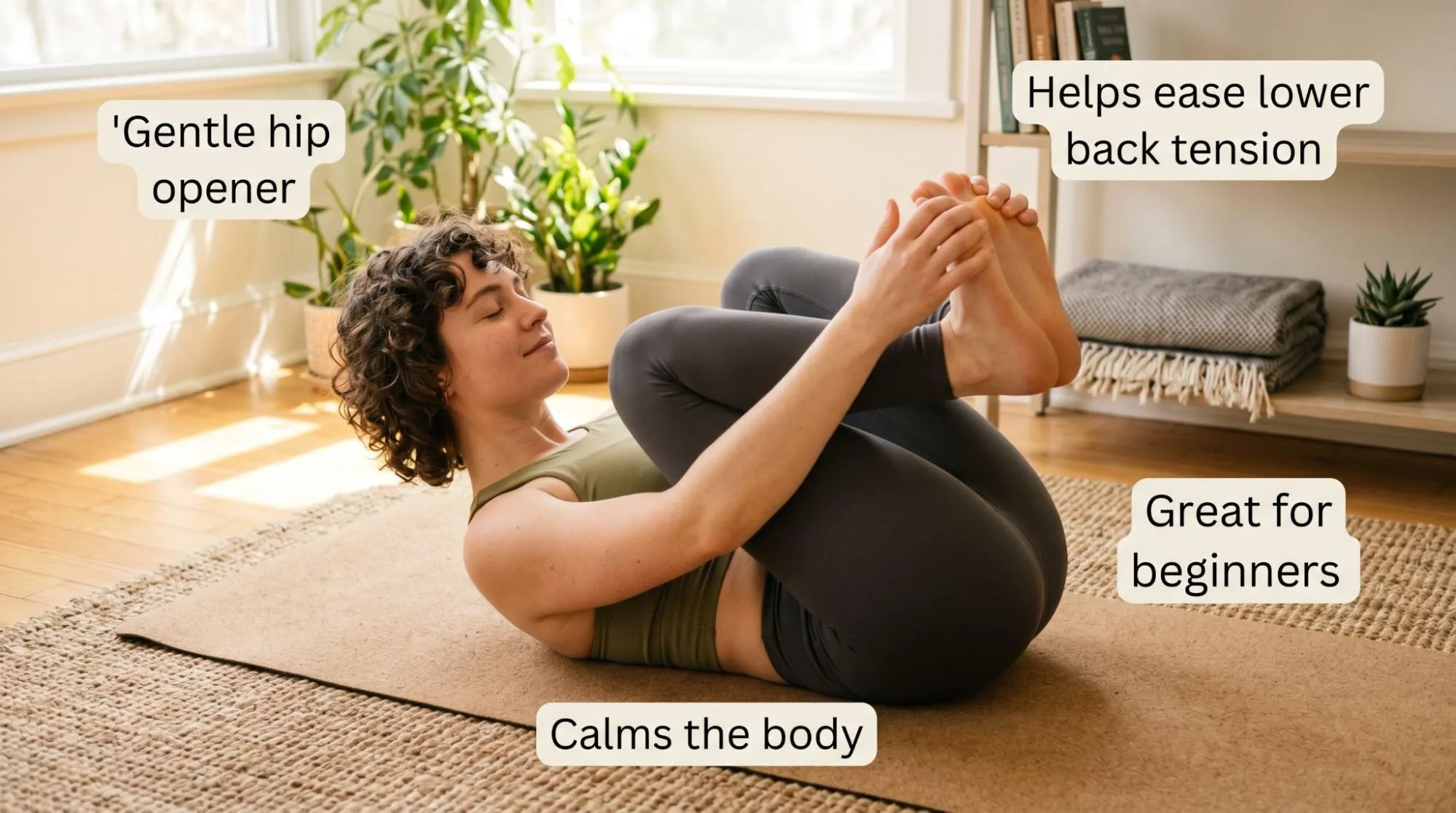
Happy Baby Pose is simple, but the happy baby pose yoga benefits make it useful for beginners who want gentle hip opening, lower back relief, and relaxation. Happy Baby Pose is one of those yoga poses that looks simple but feels surprisingly good when done with patience. It is gentle, relaxing, and often used near the end of a yoga class to release tight hips, ease the lower back, and calm the body.
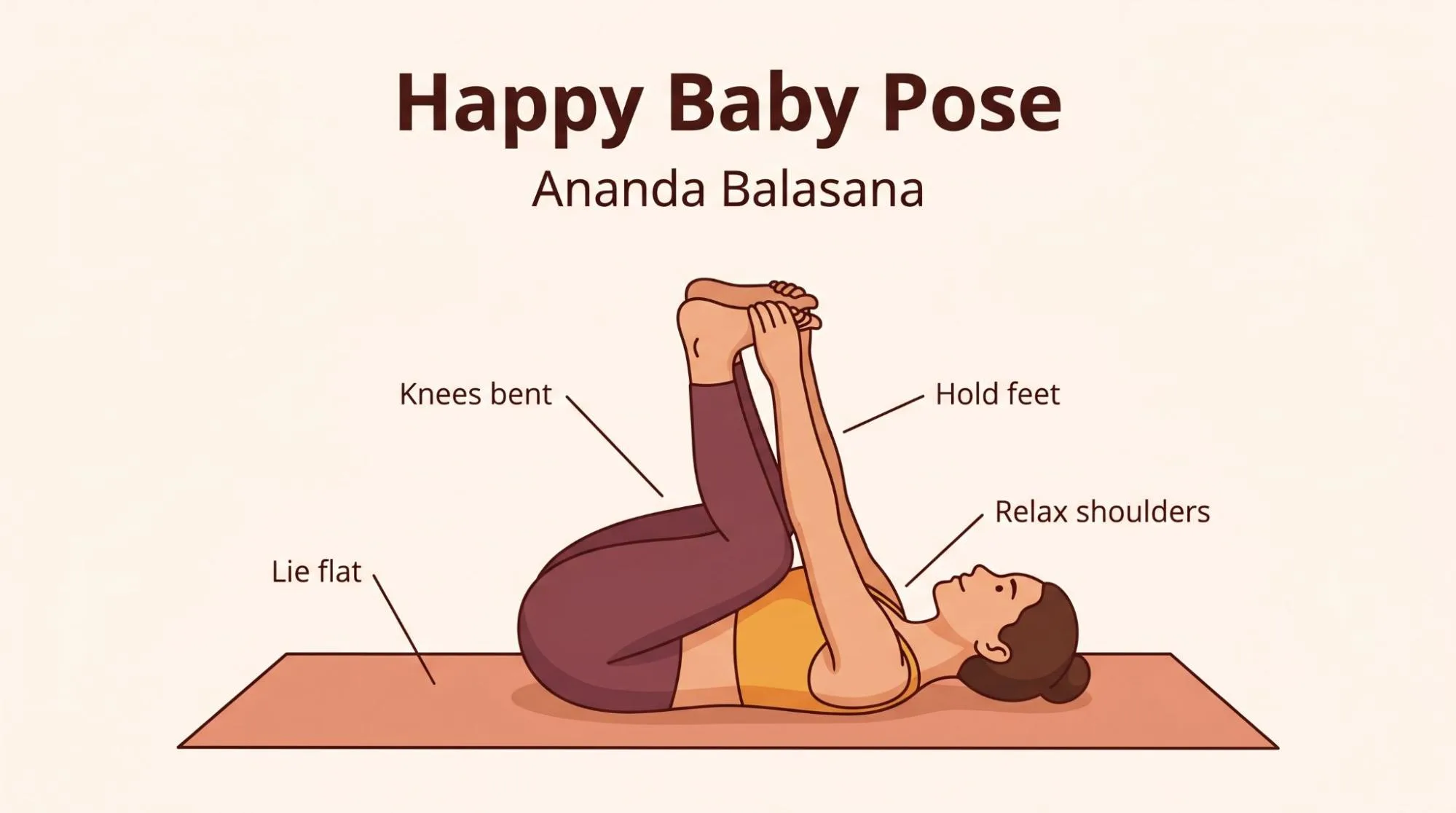
In Sanskrit, the Happy Baby Pose is called Ananda Balasana. You practise it while lying on your back with your knees bent and your feet lifted. From there, you hold your feet or legs and let the hips soften toward the mat.
The best part is that you do not need to be flexible to start. You only need to move slowly, breathe, and avoid forcing the position. Let’s look at the main happy baby pose yoga benefits, how to do the pose safely, and the small adjustments that make it easier for beginners.
What Is a Happy Baby Pose?
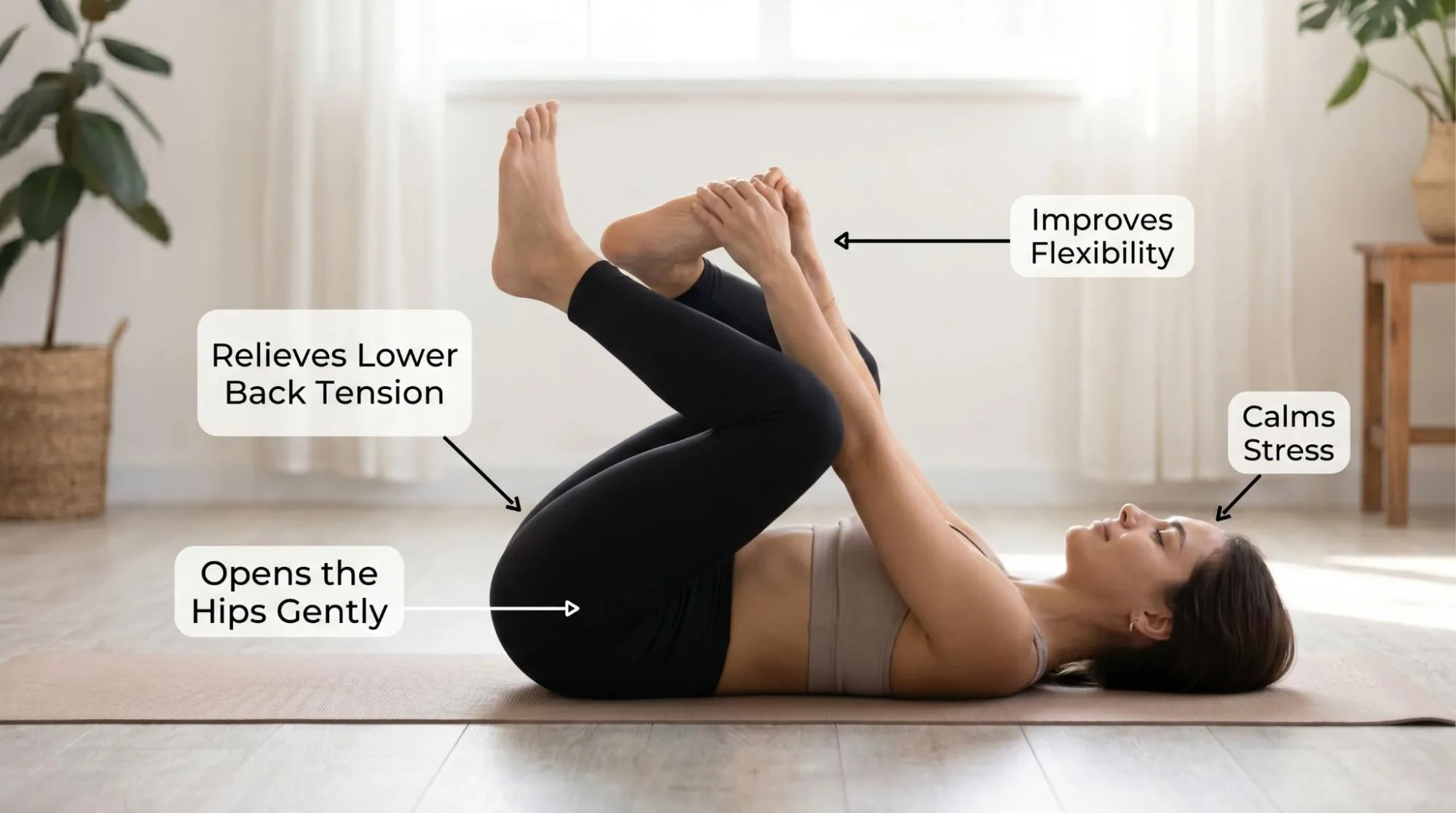
Happy Baby Pose is a gentle floor-based yoga posture. To practice it, you lie flat on your back, bring your knees toward your chest, hold your feet or legs, and allow your knees to move toward your armpits.
It is commonly practised as a hip opener, lower-back release, and calming pose. Many people enjoy it because it feels playful and grounding at the same time. You may also gently rock side to side, which can massage the lower back and help the body relax.
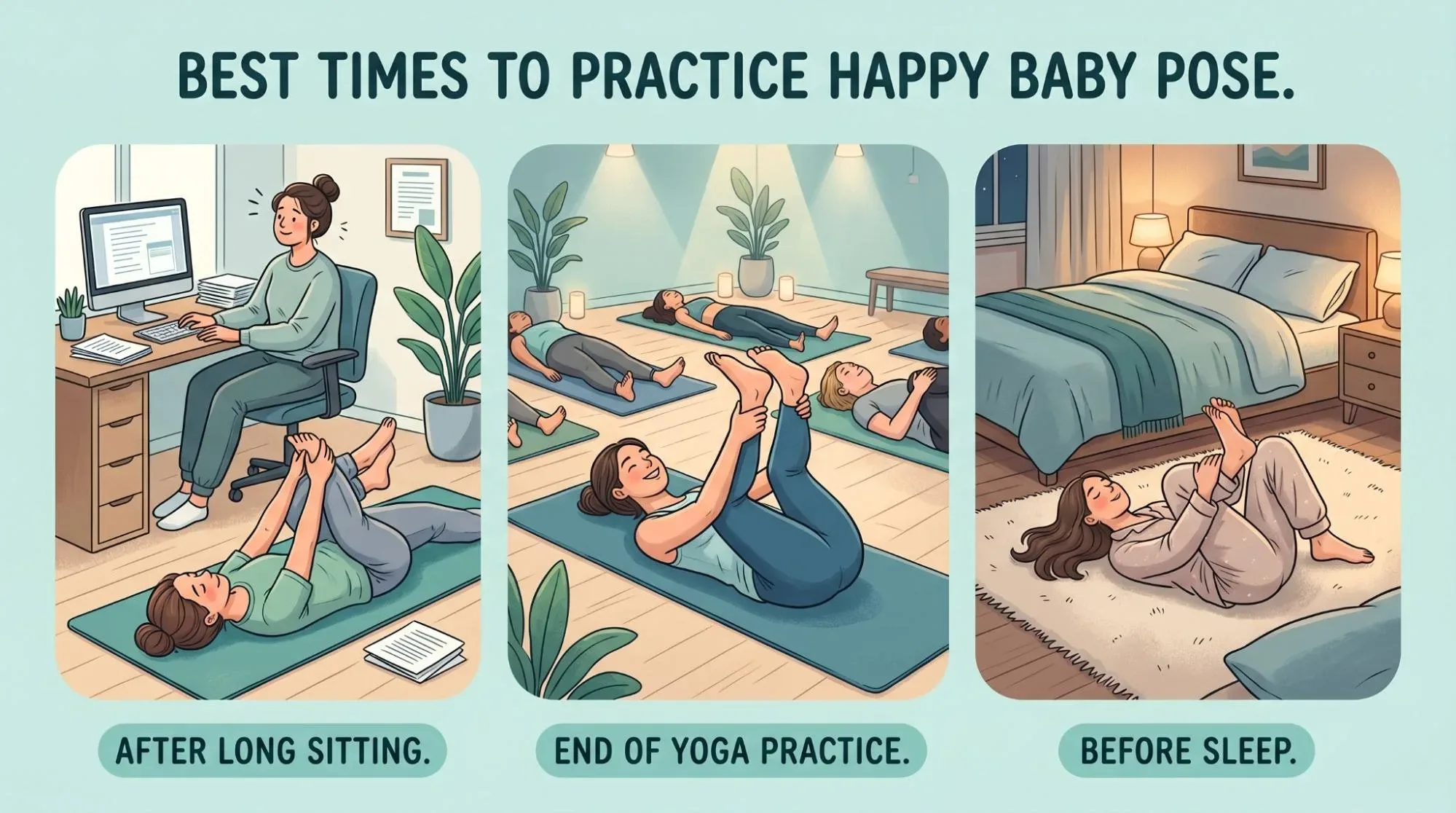
Happy Baby Pose is usually done near the end of a yoga session, but it can also be useful after sitting for many hours or before sleep.
Happy Baby Pose Benefits
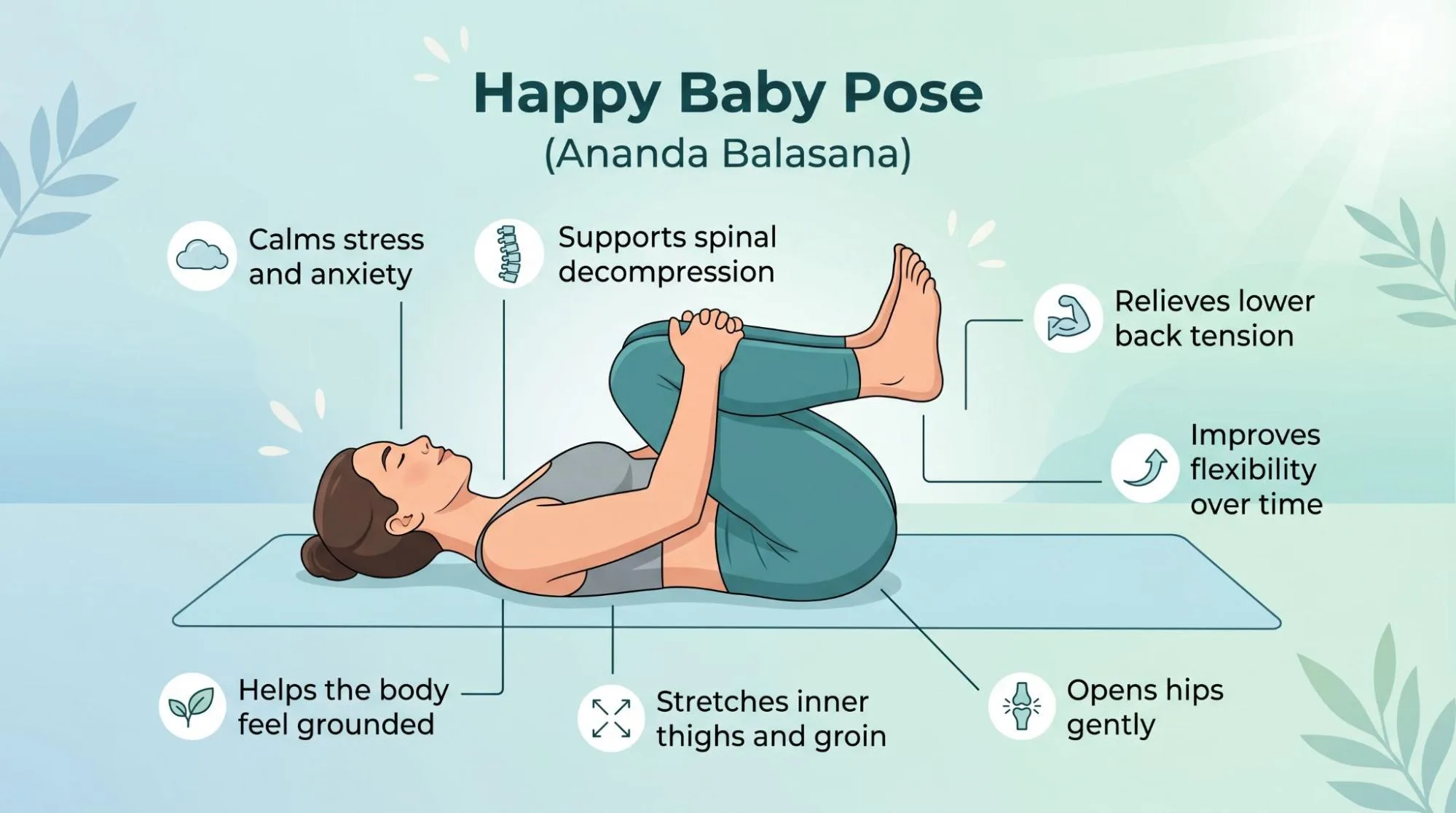
Happy Baby Pose may look small, but it can support several areas of the body when practised correctly. The main happy baby pose yoga benefits come from the way this posture supports the spine, hips, inner thighs, and nervous system at the same time.
Relieves Lower Back Tension
One of the most common happy baby pose yoga benefits is lower back relief. When your knees come toward your chest and your spine rests on the floor, the muscles around the lower back can soften.
This is especially helpful after:
- Long hours of sitting
- Standing for too long
- Driving
- Heavy lower-body workouts
- Feeling stiffness around the hips and back
The key is not to pull aggressively. Let the floor support your back while your breath helps the muscles release.
Opens the Hips Gently
Happy Baby Pose is a gentle hip opener. It encourages the hips to move outward without needing a deep stretch like a squat or pigeon pose.
Because the body is supported by the floor, many beginners find this pose easier than standing hip stretches. You can control the intensity by holding your feet, ankles, calves, or thighs.
Stretches the Inner Thighs and Groin
As the knees move wide, the inner thighs and groin area receive a mild stretch. This can feel useful if your hips feel tight from sitting or if your legs feel heavy after walking or exercise.
Do not push the knees down with force. A soft, steady stretch is enough.
Supports Spinal Decompression
When you relax into Happy Baby Pose, the spine gets a chance to rest. The lower back spreads gently across the mat, and the tailbone can release downward.
Some people like to gently rock from side to side in this pose. This movement can feel like a small massage along the back body.
Calms Stress and Anxiety
Happy Baby Pose is often used as a calming posture because the body is close to the ground and fully supported. The position naturally encourages slower breathing.
When the breath becomes steady, the nervous system may begin to settle. That is why this pose is often practised before savasana or bedtime.
Improves Flexibility Over Time
You may not feel very open in the pose at first, and that is completely normal. With regular practice, Happy Baby Pose can gradually improve flexibility in the hips, hamstrings, inner thighs, and lower back.
Progress comes from consistency, not force.
Helps the Body Feel Grounded
Because your back is on the mat, Happy Baby Pose gives a strong sense of support. It can help you feel more connected to your body, especially after a busy or stressful day.
This grounded feeling is one reason many yoga teachers include Ananda Balasana near the end of practice.
Learn More: Cat and Cow Pose: Benefits, Steps, Tips, and Beginner Guide
How to Do Happy Baby Pose Step by Step
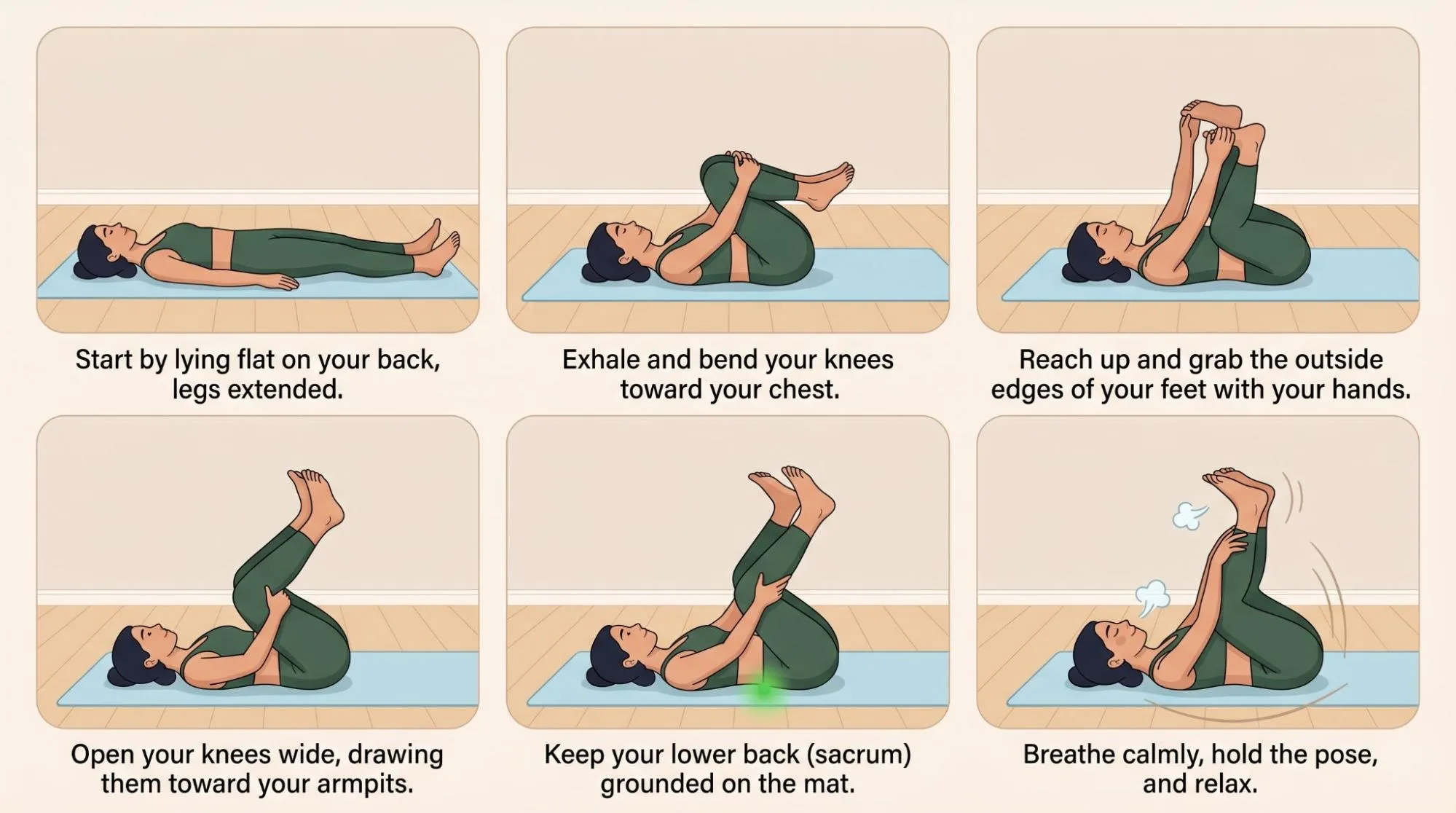
Move slowly into the pose. The goal is comfort, not how far your knees can go. To feel the full happy baby pose yoga benefits, keep the movement soft and avoid pulling your feet too hard.
Start by Lying on Your Back
Lie flat on a yoga mat or comfortable surface. Keep your head, shoulders, and back relaxed.
Let your arms rest by your sides for a moment and take a few easy breaths.
Bend Your Knees Toward Your Chest
Bring your knees bent toward your chest. Keep your lower back relaxed on the floor.
Do not rush this step. Let the hips soften naturally.
Hold the Outside Edges of Your Feet
Reach for the outside edges of your feet. If that feels difficult, hold your ankles, calves, or behind your thighs.
Your feet should point upward, with the soles facing the ceiling.
Draw Your Knees Toward Your Armpits
Gently draw your knees wide and slightly down toward your armpits. Your shins may be close to vertical, but they do not have to look perfect.
Keep the movement light and controlled.
Keep Your Lower Back Grounded
Try to keep your lower back and tailbone connected to the mat as much as possible. If your hips lift too much, reduce the pull or hold behind your thighs instead.
Comfort matters more than depth.
Breathe and Relax
Stay for 5 to 10 slow breaths. You can remain still or gently rock side to side if that feels good.
Let your face, jaw, and shoulders relax.
Common Mistakes in Happy Baby Pose
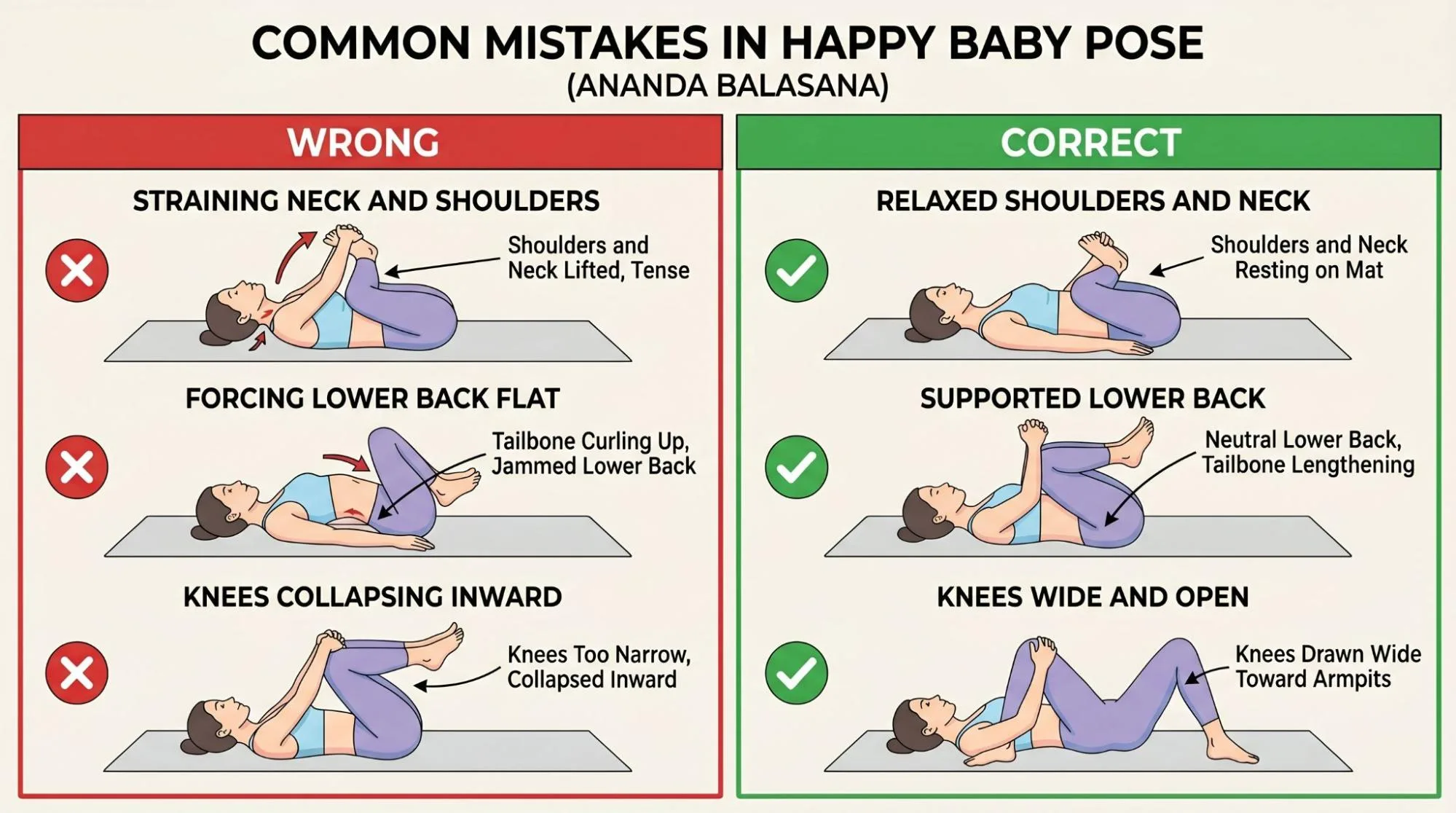
Small mistakes can make this pose feel uncomfortable. Here are the main ones to watch for.
Pulling Too Hard on the Feet
This is probably the most common mistake. Pulling hard can strain the hips, knees, or hamstrings.
Use your hands only as gentle support. Let gravity do most of the work.
Lifting the Neck and Shoulders
Some people lift their head or shoulders while trying to reach the feet. This can create neck tension.
Keep the head resting on the mat. If your neck feels tight, place a folded blanket under your head.
Letting the Knees Collapse Inward
The knees should move wide, not collapse toward each other. If your knees keep falling inward, hold behind your thighs and reduce the stretch.
Forcing the Lower Back Flat
Your back should feel grounded, but do not force it harshly into the floor. The spine has natural curves. Let the body settle instead of pressing aggressively.
Happy Baby Pose Modifications for Beginners
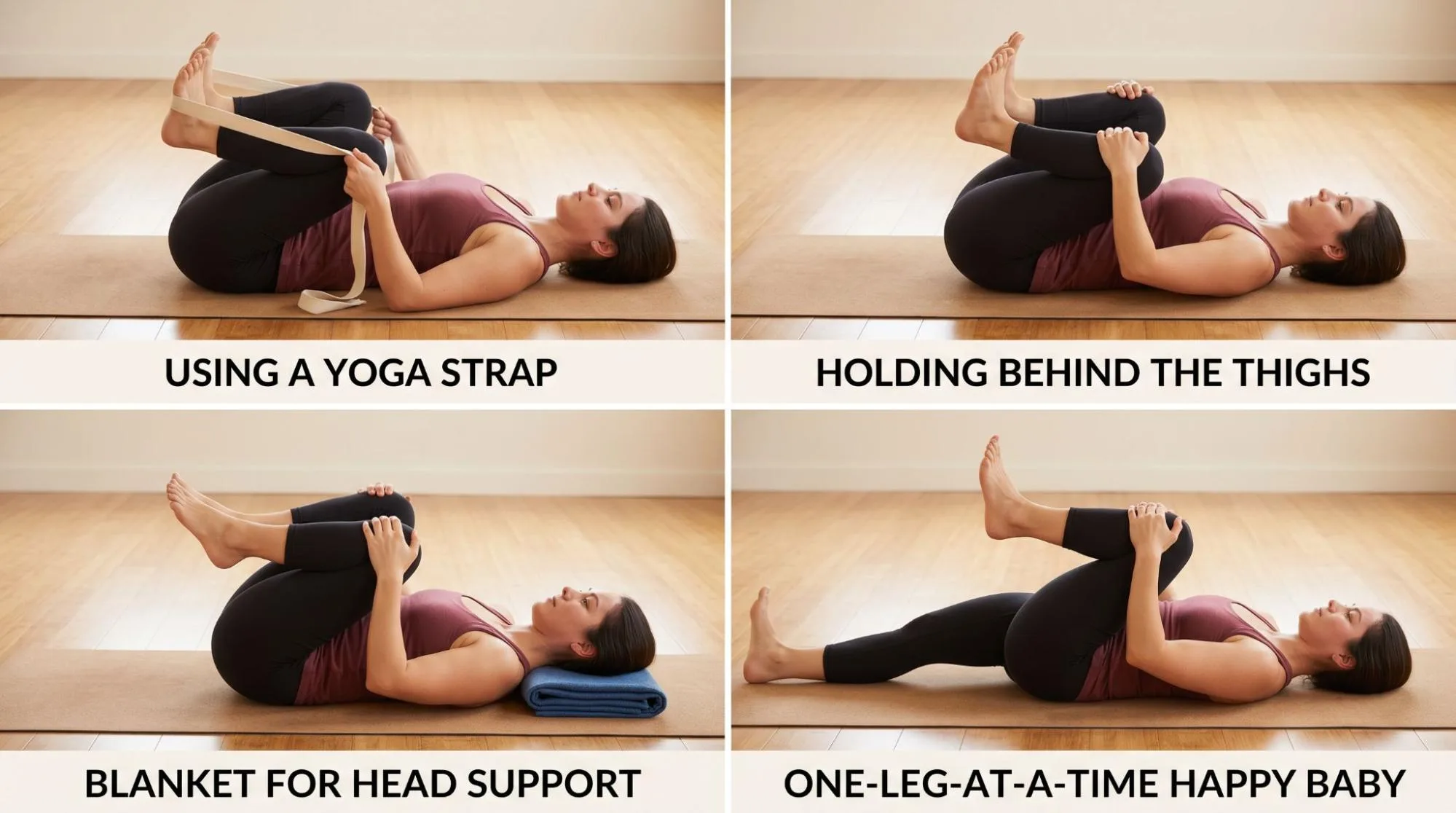
If Happy Baby Pose feels difficult, use a modification. Props are not a weakness. They help you practice better.
Use a Yoga Strap
Place a yoga strap around the arches of your feet and hold one end in each hand. This gives you extra reach without lifting your shoulders.
A towel or belt can also work.
Hold Behind the Thighs
If holding your feet feels too intense, hold behind your thighs. This is one of the easiest beginner options and still gives many benefits.
Place a Blanket Under the Head
If your chin lifts or your neck feels strained, place a folded blanket under your head. This keeps the neck more relaxed.
Practice One Leg at a Time
Try Half Happy Baby Pose by keeping one foot on the floor while holding the other foot or thigh. This reduces pressure and helps you focus on one hip at a time.
Learn More : Seated Forward Fold Yoga Step by Step
Happy Baby Pose Variations
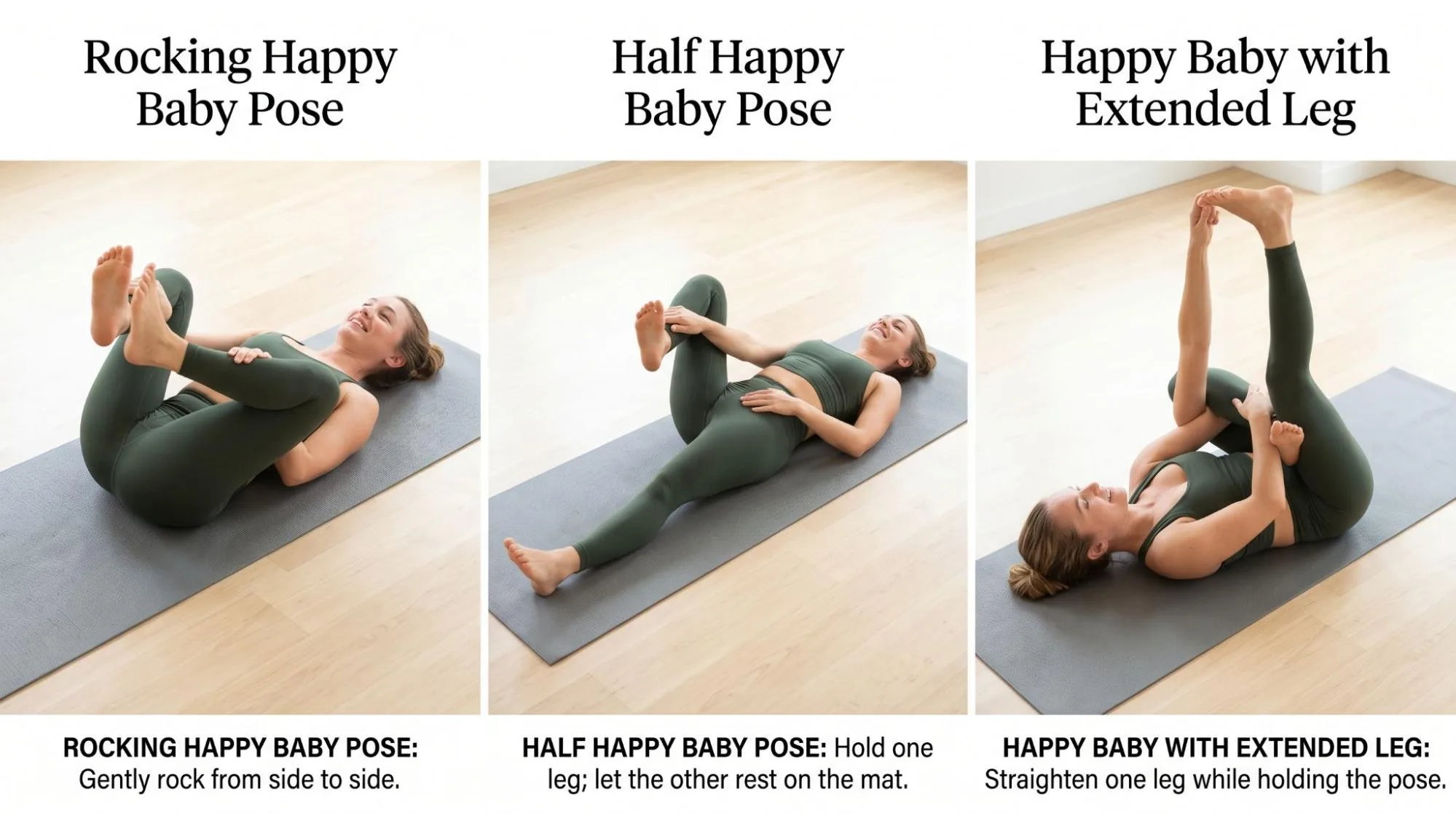
Once the basic pose feels comfortable, you can try simple variations.
Rocking Happy Baby Pose
From the regular pose, gently rock side to side. Keep the movement slow and easy.
This variation can help massage the lower back and make the pose feel more relaxing.
Half Happy Baby Pose
Lie on your back, keep one knee bent with the foot on the floor, and bring the other knee toward your armpit. Hold the foot, ankle, or thigh.
This is useful for beginners or anyone with tight hips.
Happy Baby with Extended Leg
From Happy Baby Pose, slowly extend one leg out to the side while keeping the other knee bent. This gives a deeper stretch to the hamstring and inner thigh.
Only try this if it feels safe and controlled.
When to Practice Happy Baby Pose
Happy Baby Pose can fit into your day in different ways.
After Long Sitting
If you sit at a desk, study for long hours, or drive often, this pose can help release the hips and lower back.
Even one minute can feel refreshing.
At the End of Yoga Practice
Happy Baby Pose works well near the end of a yoga session because the body is already warm. It pairs nicely with gentle twists, bridge pose, or savasana.
Before Sleep
Because it is calming and low effort, Happy Baby Pose can be useful before bed. Keep the stretch soft and focus on slow breathing.
Who Should Be Careful with Happy Baby Pose?
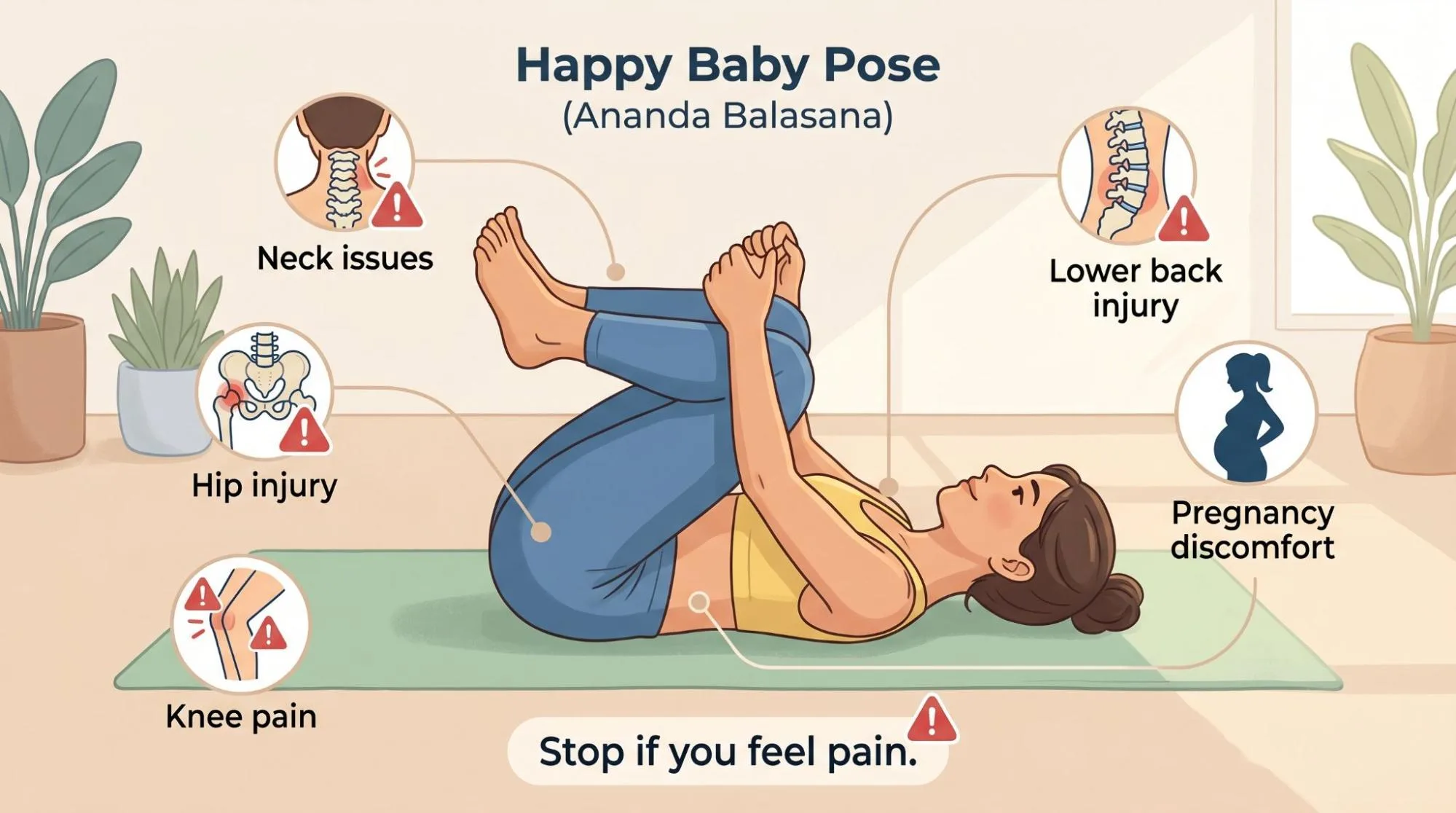
Happy Baby Pose is gentle for many people, but it is not right for everyone.
Be careful or avoid the pose if you have:
- Recent hip, knee, neck, or lower back injury
- Severe sciatica or sharp nerve pain
- Pregnancy discomfort, especially later stages
- Pain when the knees move wide
- Any medical condition where deep hip opening is not advised
If you feel sharp pain, numbness, or pressure in the joints, come out of the pose. A mild stretch is fine. Pain is not.
Tips to Get the Best Results
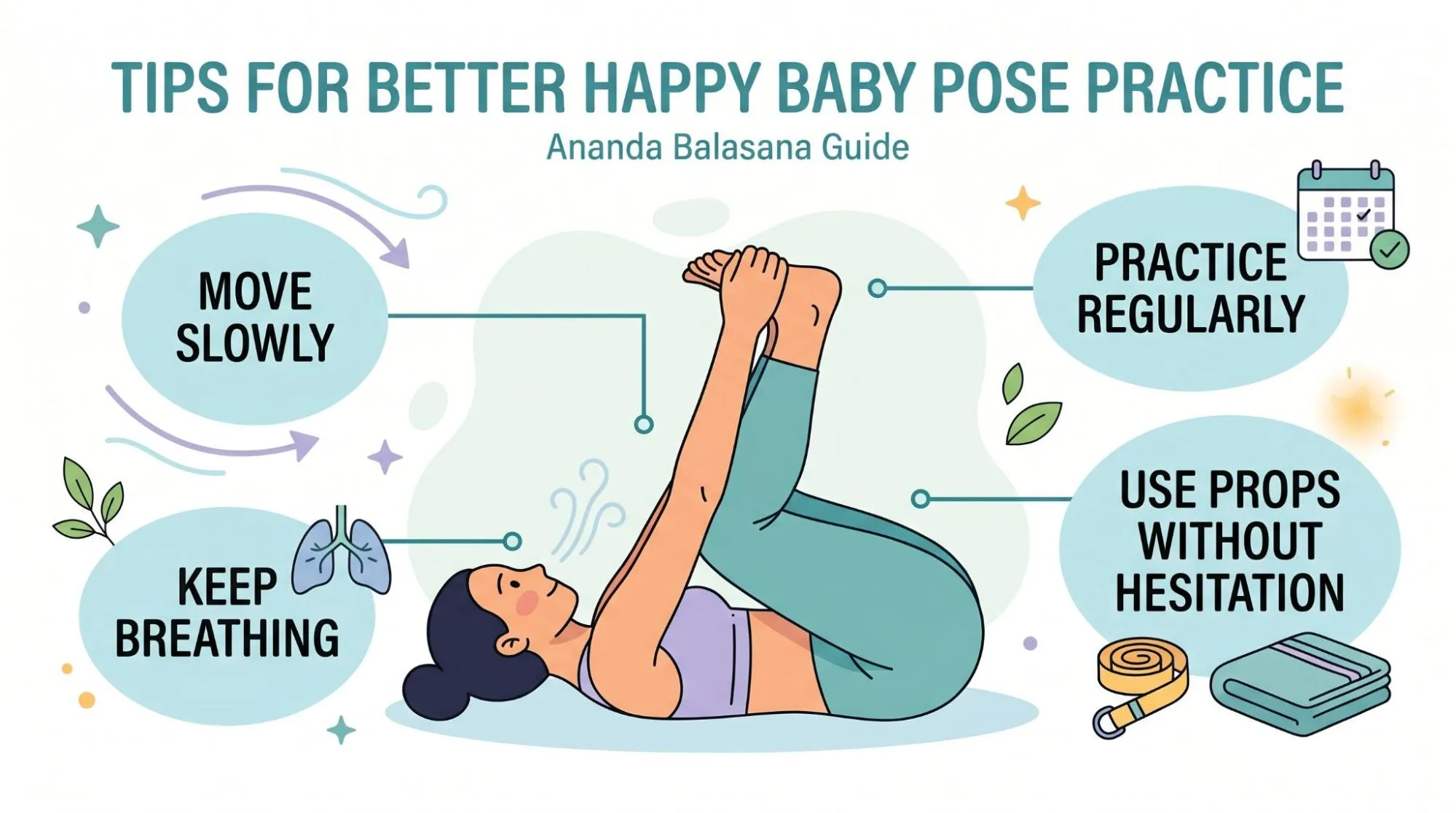
Move Slowly
Do not drop into the pose quickly. Enter and exit with control so the hips and back feel safe. You will notice the happy baby pose yoga benefits more clearly when you practice slowly, breathe deeply, and stay relaxed in the pose.
Keep Breathing
Breath makes a big difference. Slow breathing helps the muscles soften naturally.
Use Props Without Hesitation
A strap, blanket, or folded towel can make the pose more comfortable. Good yoga is not about forcing your body into a shape.
Practice Regularly
A little practice often works better than one long stretch once in a while. Try holding Happy Baby Pose for 30 to 60 seconds a few times a week.
FAQs About Happy Baby Pose
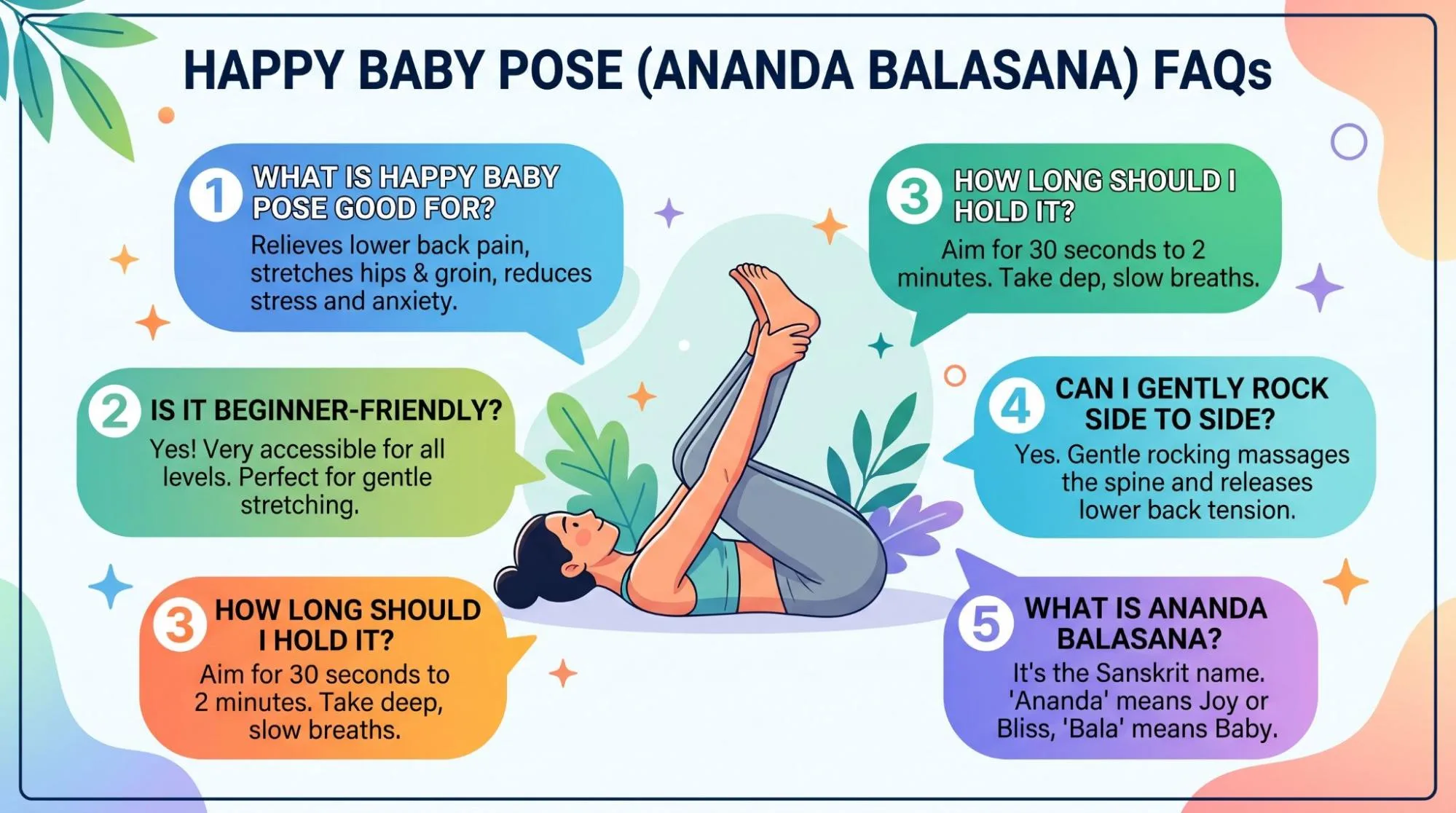
What is Happy Baby Pose good for?
Happy Baby Pose is good for gently opening the hips, releasing lower back tension, stretching the inner thighs, and calming the body.
Is Happy Baby Pose good for beginners?
Yes, it can be beginner-friendly when modified. Beginners can hold behind the thighs or use a yoga strap instead of holding the feet.
How long should I hold Happy Baby Pose?
Most people can hold it for 30 seconds to 1 minute. You can stay longer if it feels comfortable and your breathing remains relaxed.
Should my lower back stay on the floor?
Yes, your lower back should feel supported, but do not force it flat. If your hips lift too much, reduce the stretch.
Can I rock side to side in Happy Baby Pose?
Yes, you can gently rock side to side if it feels comfortable. This can help relax the lower back and make the pose feel more soothing.
What is the Sanskrit name for Happy Baby Pose?
The Sanskrit name is Ananda Balasana.
Learn More : Supported Bridge Pose Block Benefits
Final Thoughts on Happy Baby Pose Yoga Benefits
Happy Baby Pose is simple, but it can be deeply useful when practised with care. It helps release the lower back, opens the hips, stretches the inner thighs, and gives the body a calm, grounded feeling. The best happy baby pose yoga benefits are felt when the pose is practiced gently, without forcing the hips or lower back.
The best approach is to keep it soft. Lie flat, keep your knees bent, breathe slowly, and use props when needed. Over time, this pose can become one of the easiest ways to relax your body after sitting, yoga practice, or a long day.