Shape Your Balance, Shape Your Life

Plow Pose Benefits, Steps and Halasana Guide | Yoga Points

Plow Pose Benefits and Halasana Guide

Halasana or The Plow Pose is among the best poses in yoga and is transformative. It is an inverted posture that can make your body to stretch in a manner that most of the yoga poses fail to achieve. The benefits of this pose are myriad, improving not only flexibility, but also helping facilitate the digestive process, and even mental relaxation. In the article, we will discuss all the advantages of the Plow Pose and play a detailed guide on how to practice it properly. At the end of it all, you will know everything about this pose and why it is important in yoga.

What is Plow Pose (Halasana)?

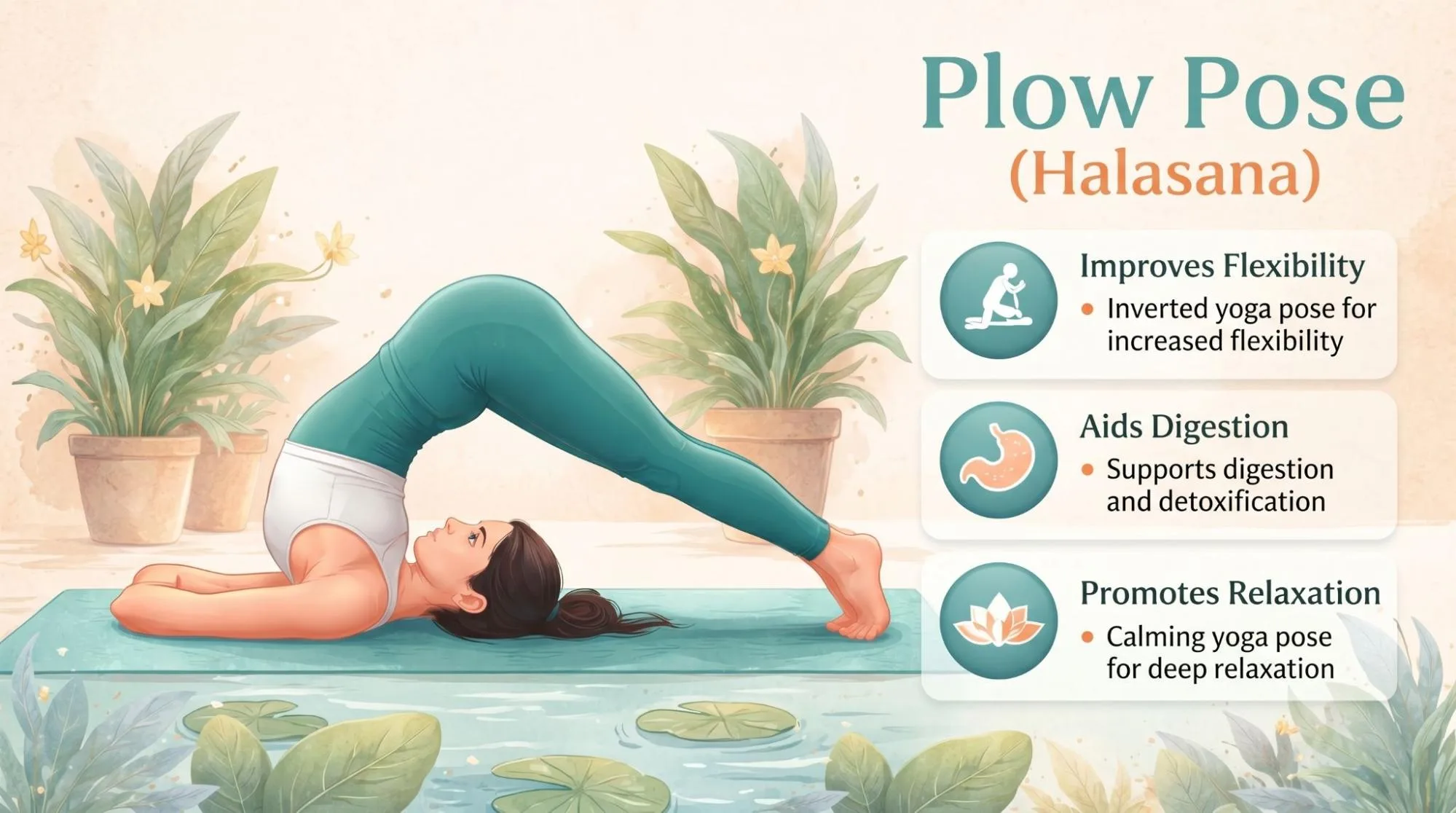
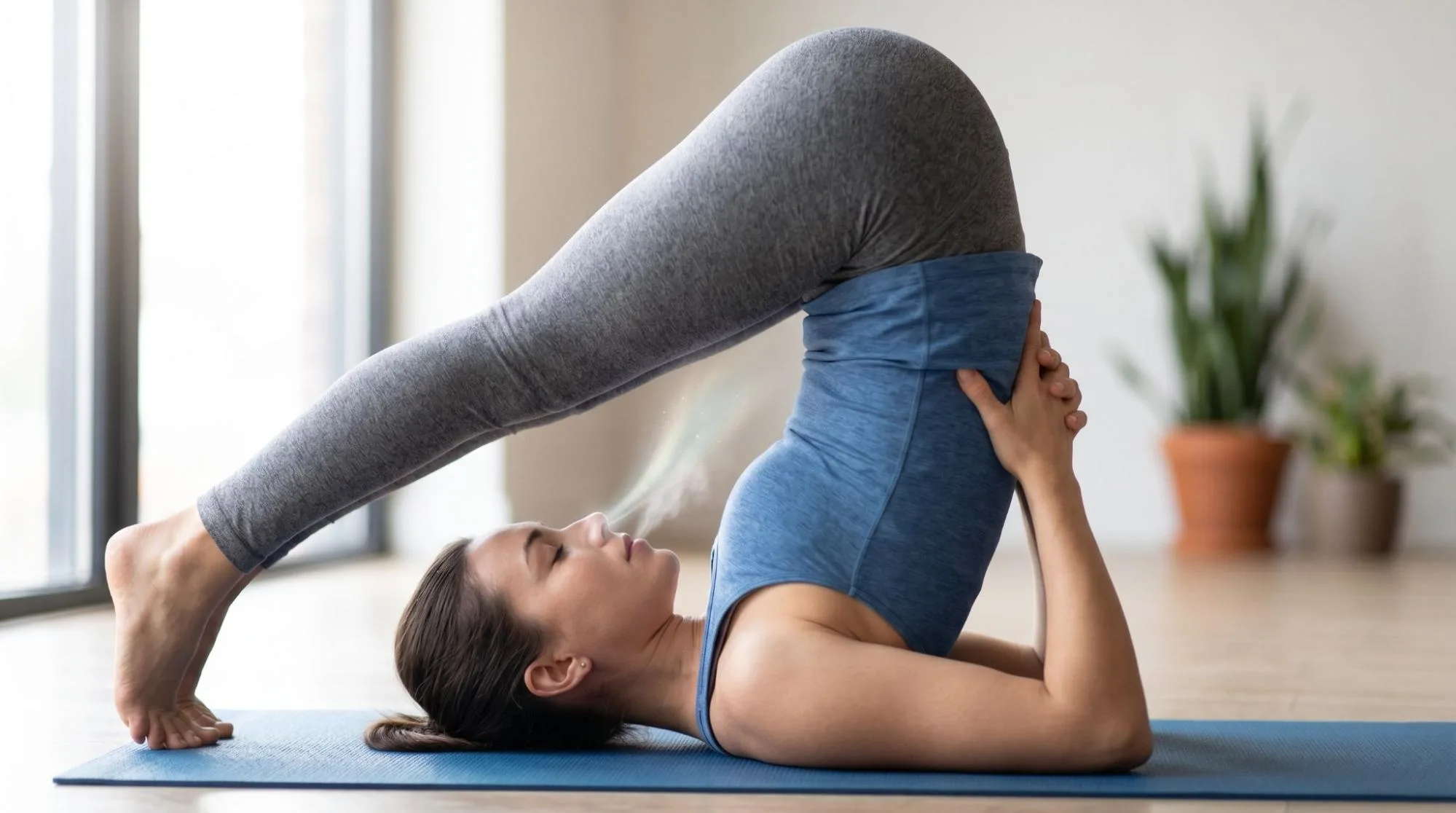
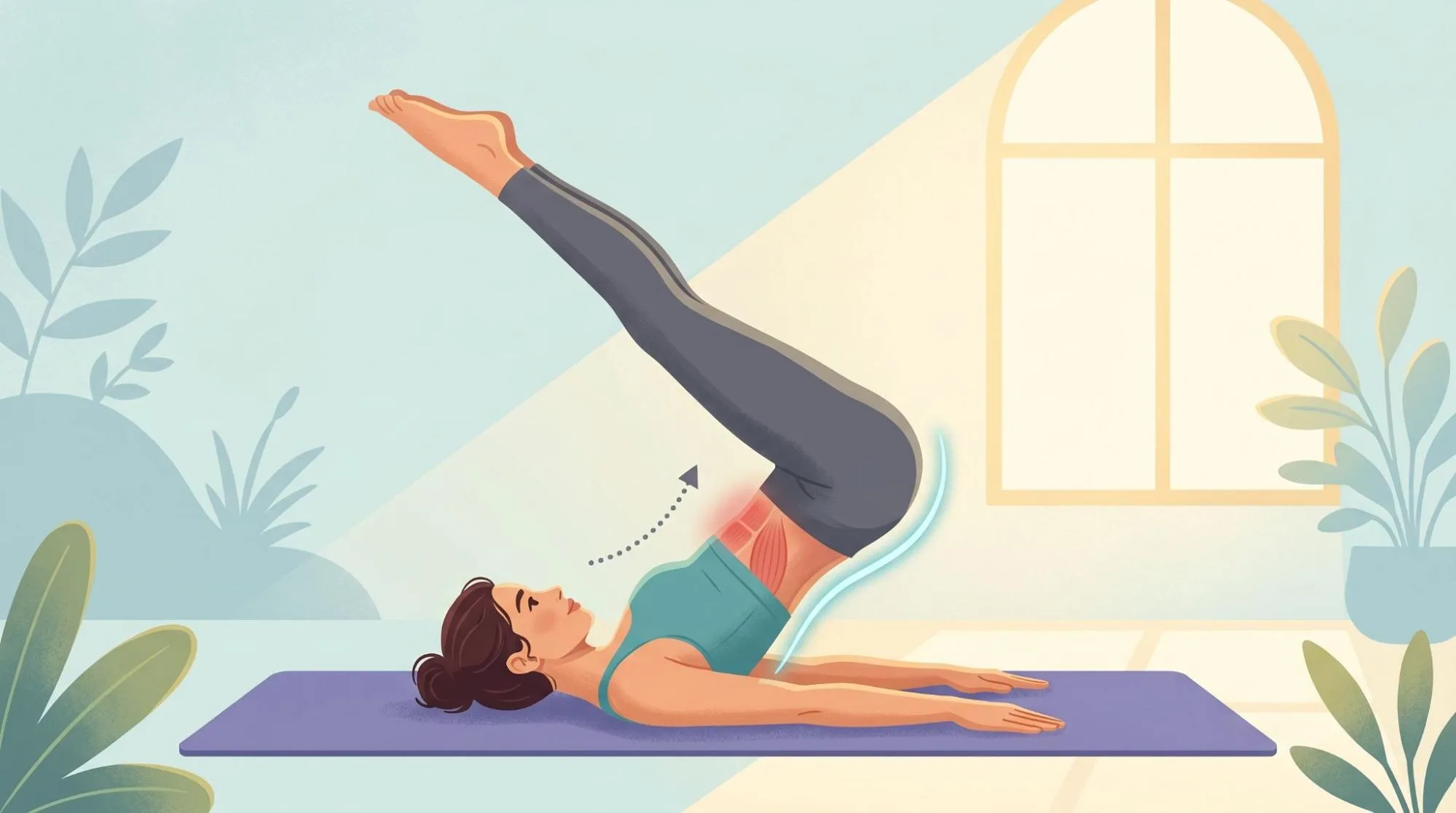
Plow Pose (Halasana) is an inverted yoga pose which enshrines lying on your back, lifting your legs and head high and subsequently sticking them to the ground behind you with your arms remaining on the ground. It is one of the most famous yoga asanas as it has a tremendous scope of benefits to both body and the mind.

The major feature of Halasana is the inversion. Made with the head below the heart, inversions have numerous physical and mental advantages, including better circulation and decreased stress. The benefits of practicing Halasana are that it stretches the spine, stiffens legs, and opens up the chest and shoulders. It is also effective in deep relaxation and hence a worthy aspect of a yoga practice.


Why is Plow Pose Called “Halasana”?

Halasana was named after the Sanskrit word “Hala,” which translates to plow and asana, which translates to pose. This position is named Halasana since your body is like plow with legs curved like a hand which imitates the plow used in farming. Bring your legs over your head and maintain it straight and the pose appears as the blade of a plow that turns soil.

Key Benefits of Practicing Plow Pose (Halasana)

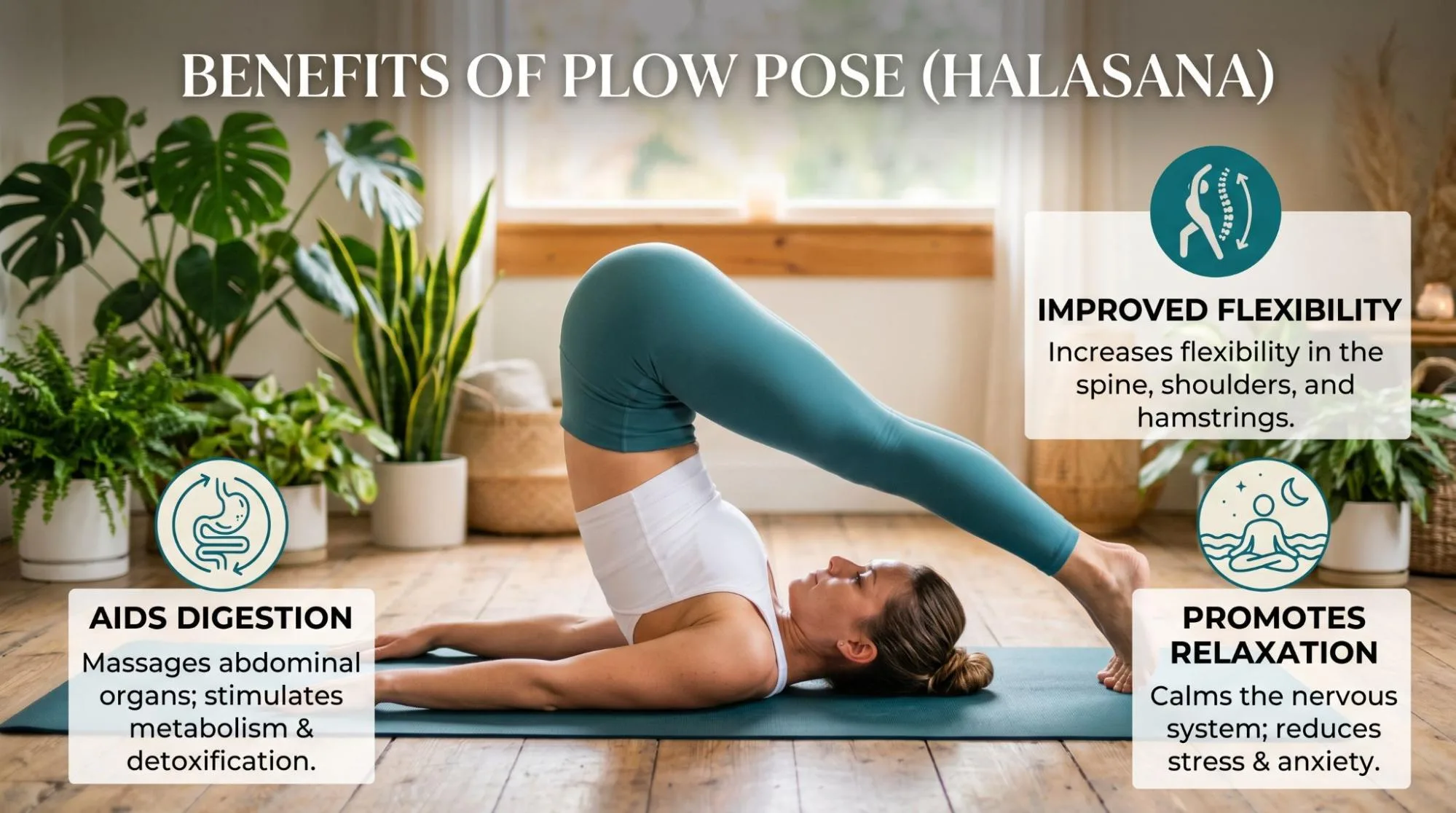
Plow Pose is beneficial in numerous ways to your body and the mind. The following are the key factors why practicing Halasana can be a game-changer in your yoga practice:
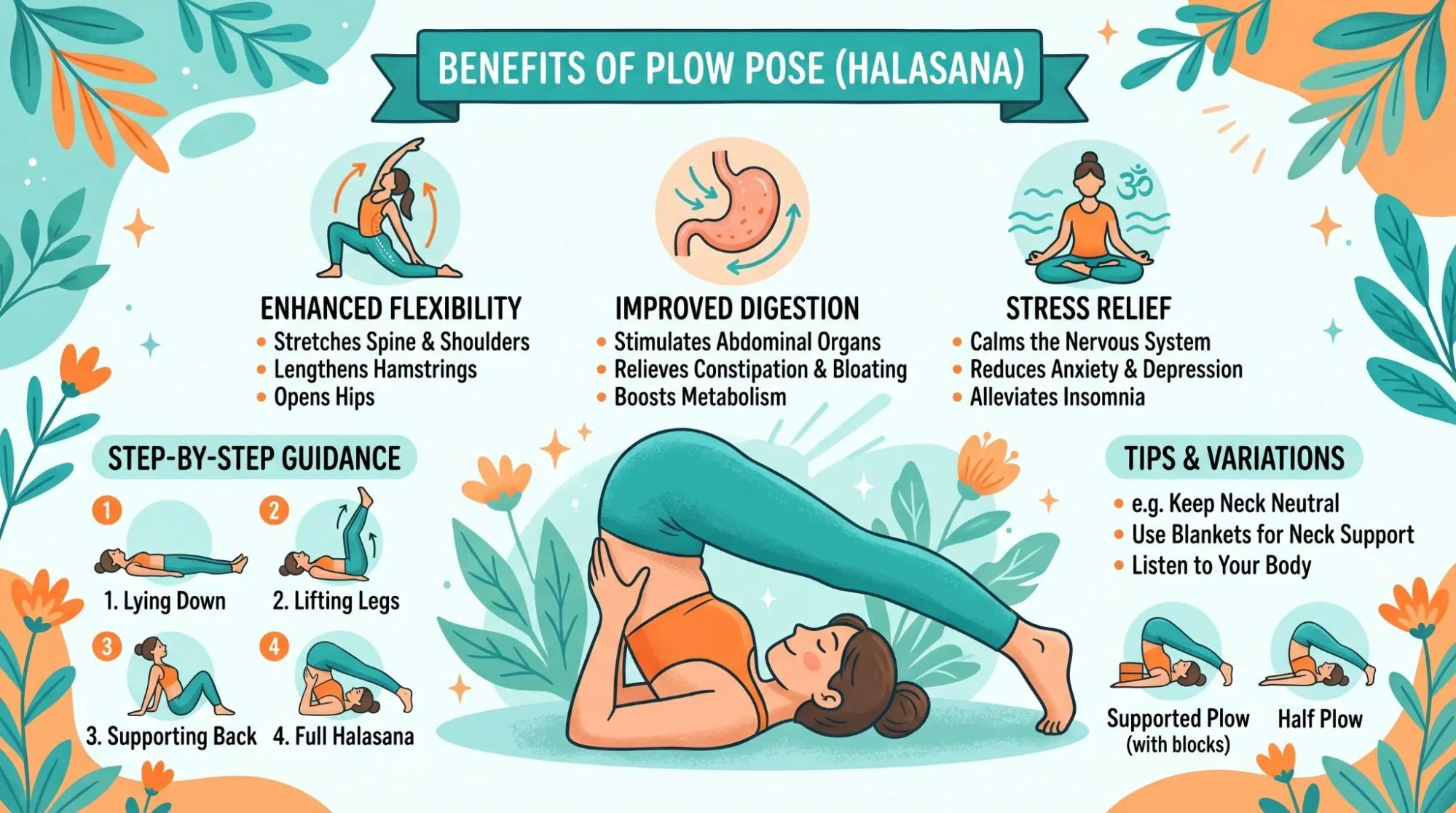


Improves Flexibility

Among the principal reasons why people love Plow Pose is that it helps enhance flexibility especially around the spine, legs and shoulders. In Halasana, your body deep folds forward that enhances stretch along the back, hamstrings and calves.

How it works:

  • The다칭 of your spinal-column gives it more elasticity and might actually serve to relieve back pain.
  • Until the extension in your hamstrings may make them longer and loosened, which is typical to long sitters.
  • The shoulders and chest area is opened which is most useful to individuals who experience poor posture or tightness on their shoulders and chest.

With continued practice of Halasana, the back, leg and shoulders will become more flexible thereby assisting you in doing other yoga positions, which will involve more movement levels.


Aids Digestion

Supporting digestion is yet another Halasana boon. This pose is known to improve the digestive system because of the compression of the abdominal organs, and may treat common digestive problems like bloating and constipation.

How it works:

  • The squeezing of the abdomen in this inversion of the body massages the intestines and the digestive organs, and makes them work more effectively.
  • Halasana enhances nutrient absorption by increasing blood circulation to the digestive system, and may aid in getting rid of waste.
  • The posture of your body stimulates the flow of food in intestines and that can help in solving the problems such as constipation and bloating.

To people with problems in their digestion, Plow Pose can be effective and can improve digestion in general and relieve the unpleasant situation.


Promotes Mental Calmness and Stress Relief

Yoga has been associated with having the capacity to alleviate stress and Halasana is not an exception. It is a very relaxing posture and would be an excellent way to relax after an exhausting stressful day. With Halasana, you engage your parasympathetic nervous system, a process that helps you to relax and stop being stressed.

How it works:

  • The calming effect of blood going downwards towards the brain and clearing of mental clutter is an effect of inversion.
  • Halasana promotes deep breathing, and it brings a natural relaxation of the mind and alleviates a feeling of anxiety.
  • The inverted bend of the back and the chest has the power to relax the body as well, making one seem more stable and comfortable.

Halasana practice on a regular basis might help to improve emotional states, such as these related to stress levels and anxiety.


Strengthens Core Muscles

Although one might believe that Plow Pose is entirely a stretch, it involves the major involvement of core muscles as well. When lifting your legs over your head, your abdominal muscles come into play and, therefore, need to stabilize your body and hold the pose.

How it works:

  • Internally used muscles (abdominal and lower back muscles) are utilized to assist in maintaining the balance and keeping the legs stretched.
  • This exercise tightens the abdominal muscles which are fundamental to good posture and general strength of the core.

In addition to the fact that a stronger core can be applied to enhance your performance in sustaining yoga, it also helps to increase the overall body stability and control of movement.


Relieves Back and Neck Tension

The halasana can be so instrumental in taking some of the tension off of the neck and back. This pose may also serve to enhance posture and relieve the pain associated with long-term sitting, by flexing the spine in the spine and relieving the muscles around the neck.

How it works:

  • When you extend your back and shoulders into this position, you will relieve your spine of tension and this could help in relieving back pain.
  • The inversion also offers a relaxing massage to the neck, which can relax tension that usually accumulates due to bad posture or anxiety.
  • The position assists in lining the spine, enhancing general posture and decreasing the chances of experiencing neck and back pain in future.

Halasana will give you a lot of relief in case you experience tightness in your neck or lower back.


How to Perform Plow Pose (Halasana)

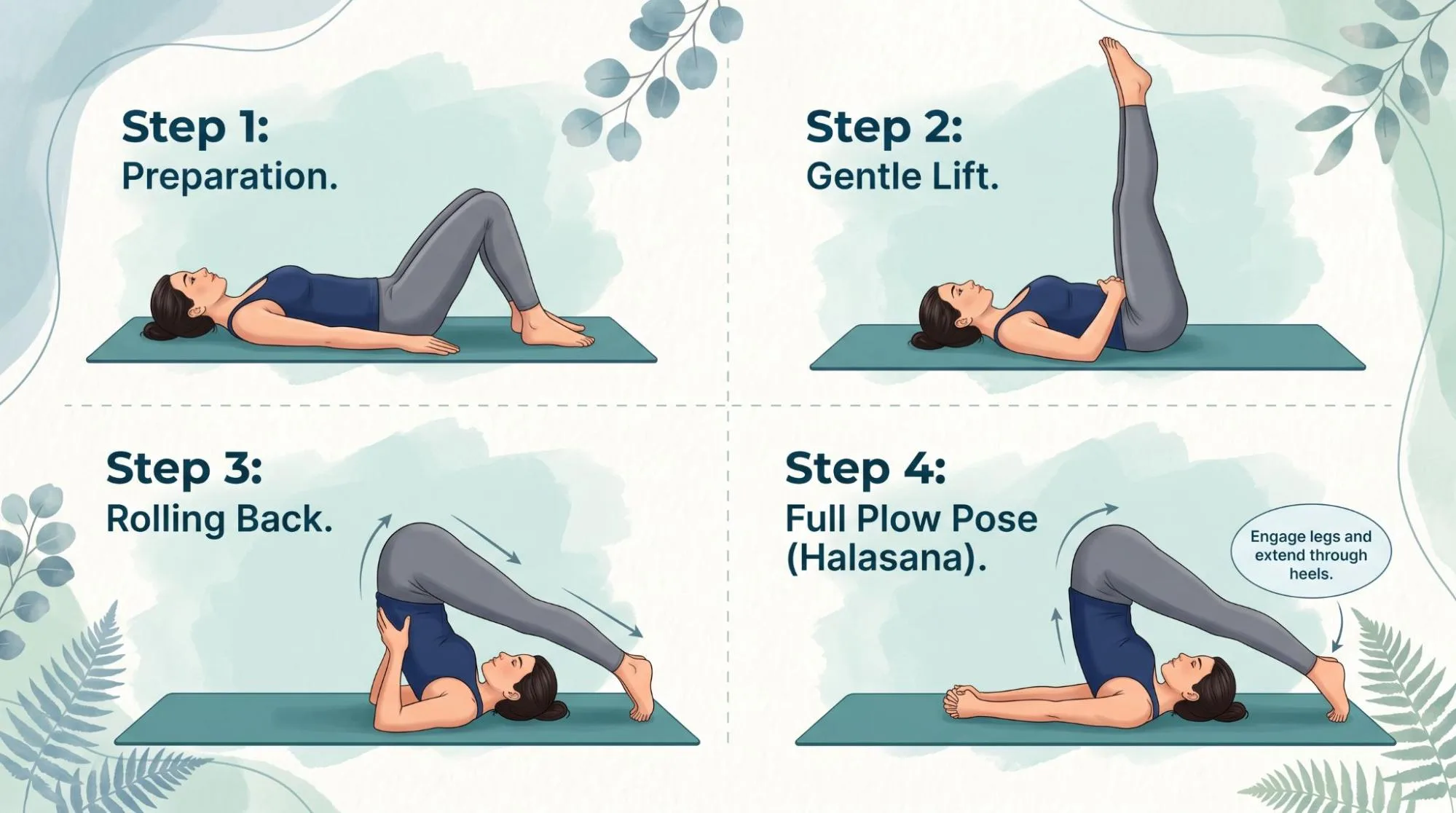
Plow Pose (Halasana) represents a very challenging pose in yoga, which consists of numerous steps of motion. It can include some initial struggles, but, with time, it evolves into a highly rewarding pose, that can enhance flexibility, digestion, and offer mental relaxation. The following is a step-by-step to do Halasana, instructions, and some advice of getting the perfect pose and alignment.

Step-by-Step Instructions to Perform Plow Pose (Halasana)

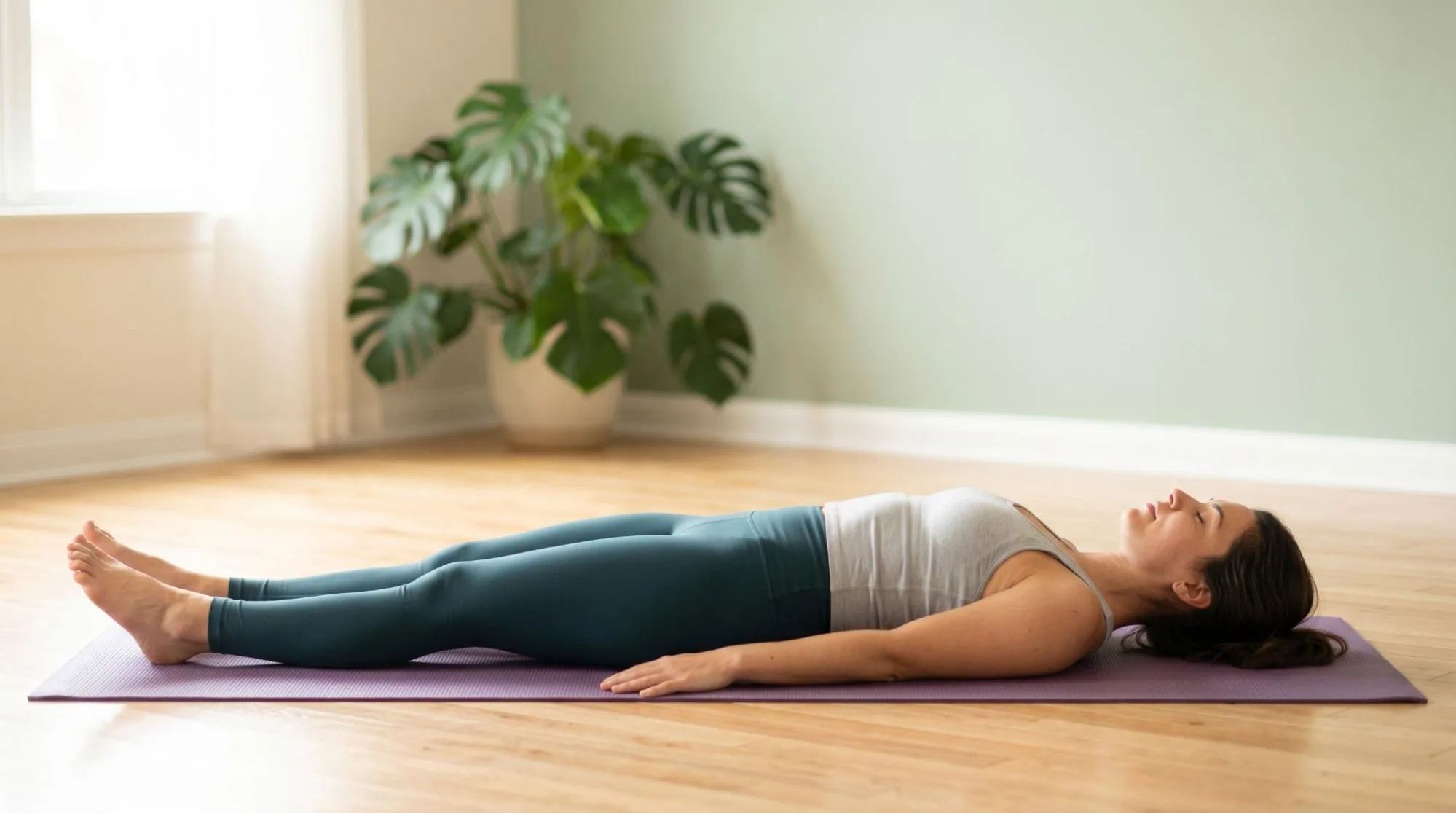
Step 1: Start in a Supine Position (Lie on Your Back)

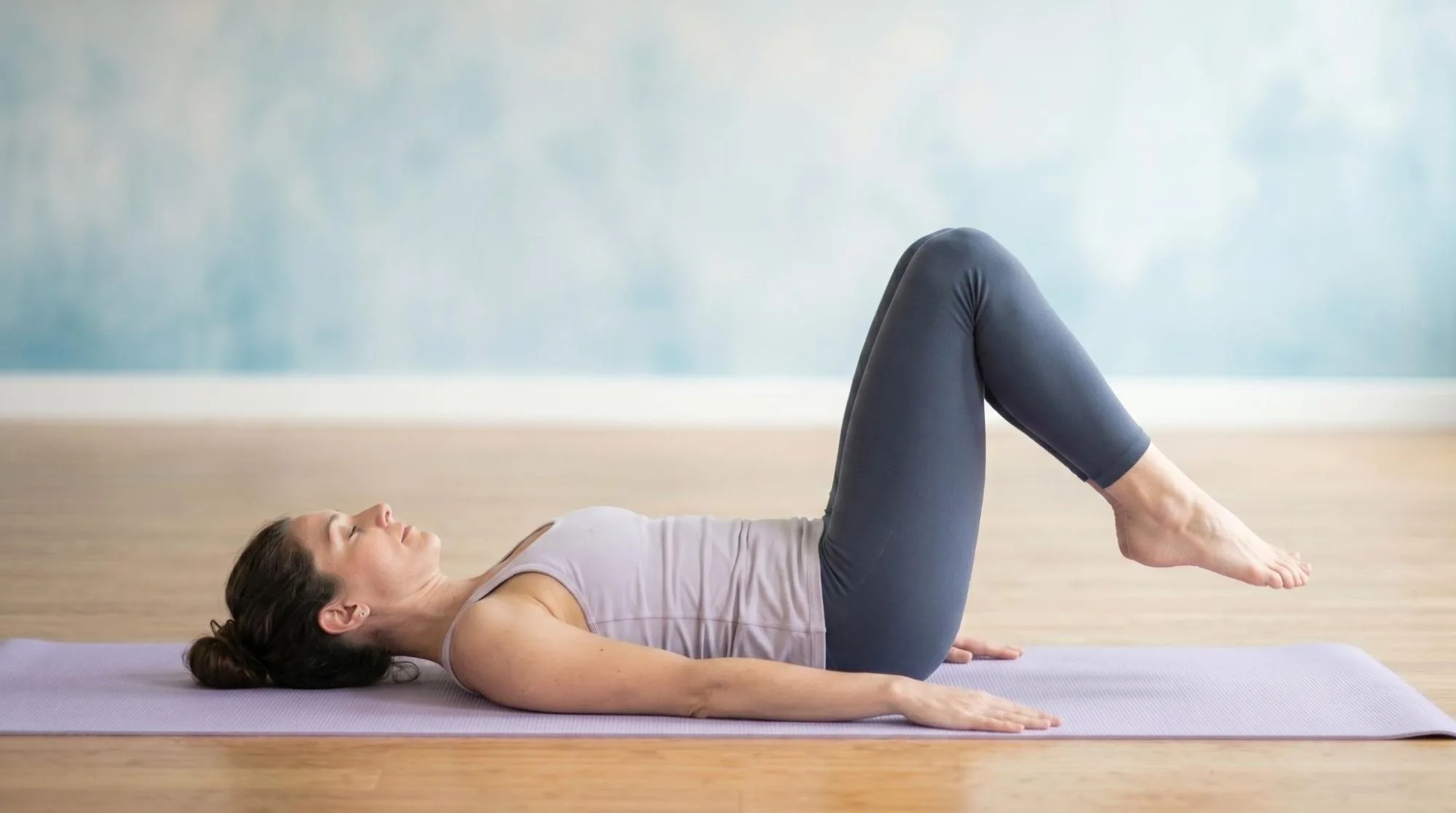
Find a comfortable position to start with by lying down on back with a yoga mat. Be relaxed and straight with your arms by your side. Get your feet together and make sure that your legs are stretched out.

  • Why it matters: This initial posture is important because it will assist you to get your body ready to respect the following movements. The flat position will enable your spine to relax and the core muscles to move in a light manner preparing the inversion.


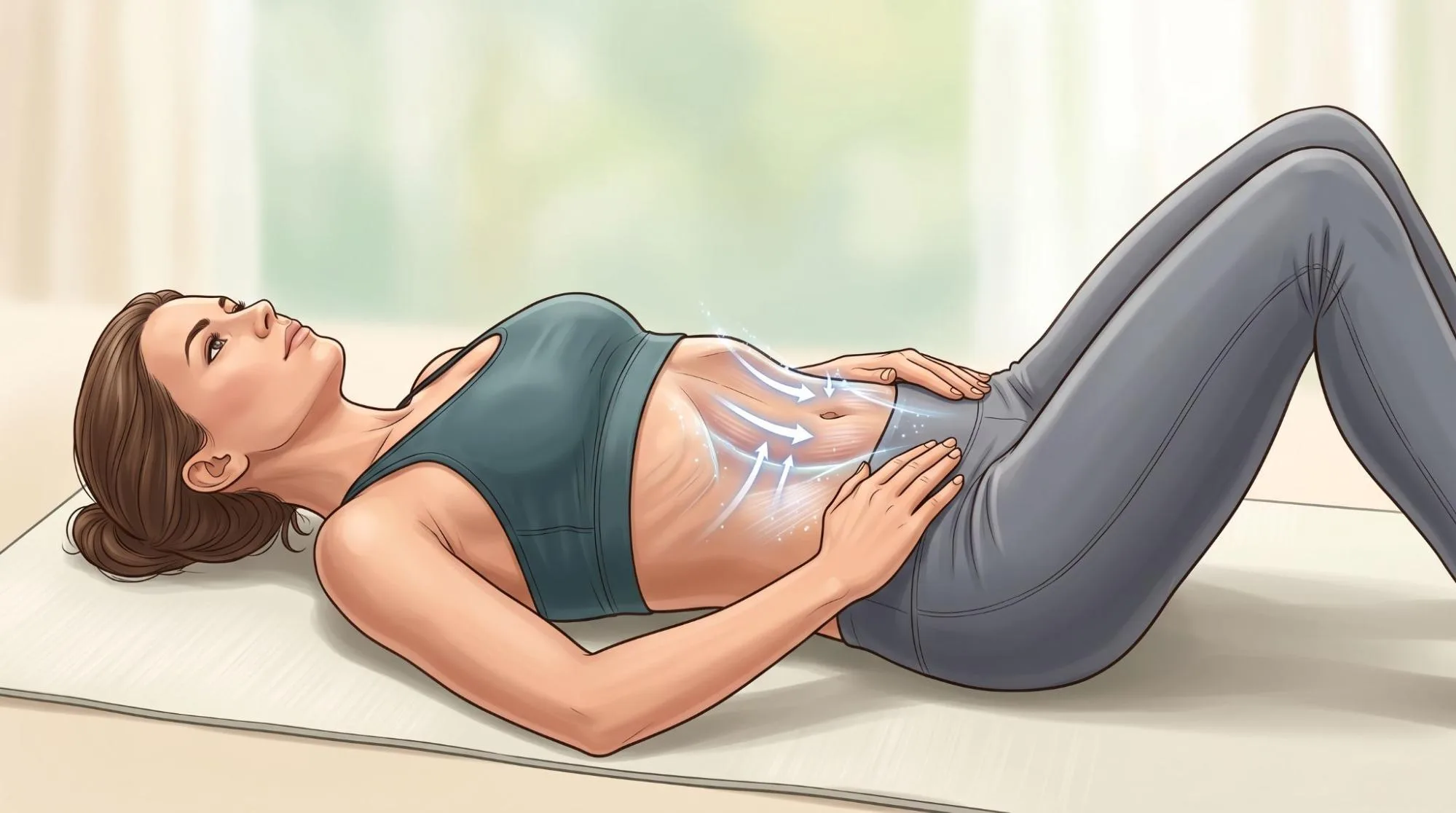
Step 2: Activate the Core Muscles

Use your abdominal muscles before hopping your legs upwards. Pull your belly button towards your backbone and squeeze your belly.

  • Why it matters: Involving the core prevents injuries to the lower back by making it stable and supported as you progress in lifting your legs over your head. This central involvement plays a critical role in managing the motion and is the balance in the pose.
Engage the Core Muscles

It is important to use your abdomen before starting pulling up your legs into Plow Pose (Halasana). This is a primordial stage towards safeguarding your body and proper form. In order to accomplish the same, pull your belly button toward the backbone, and squeeze the muscles which form your stomach. You could imagine this as zipping up a pair of tight jeans or doing a belly button in. It aids in the use of deep core muscles that make your torso stable.

Why Engaging the Core Matters:
  • Protects the Lower Back: You must work your core first prior to bringing the legs up since this would stabilize your lower back. Unless the core is used properly, the lower back can counter-act the movement that might result in possible strain or discomfort. When the core is involved, it removes the pressure on the spine and makes it easier to more evenly distribute the movement in your body.
  • Stabilizes the PelvisPulling in the core will also assist in stabilizing your pelvis as you go into the inversion. This helps to maintain the correct alignment of the spine and proper tilt of the pelvis. The pelvis is very important in ensuring that one maintains good posture and avoids more than adequate strain on the back.
  • Facilitates ControlThe process of basics activity is essential in managing the actions of your legs as it move around your head. The motion will be guided by lifting your legs with the assistance of your abdominal muscles in a smooth and controlled motion, which is not only vital in terms of your safety but also in the process of stretching. This means that using your core can prevent sudden or sharp movements, which can result in muscle tension.
  • Balances the Body: When you start to draw up your legs, good core will assist you in maintaining balance. The activation of core muscles stabilizes the other muscles of the body, making it easier to hold on during the posture. This will allow you to have a place to lean on and not just absorb your body by using your arms or legs, but rather with your internal strength to keep you in position.
  • Promotes Proper Alignment: Correct core activation offers good rotation of spine and legs as well. Losing this activity, the body may become misaligned almost readily, giving rise to and even causing discomfort, not to mention long-term damage. There is a solid core to make sure that the spine is straight and legs move in a symmetric way.


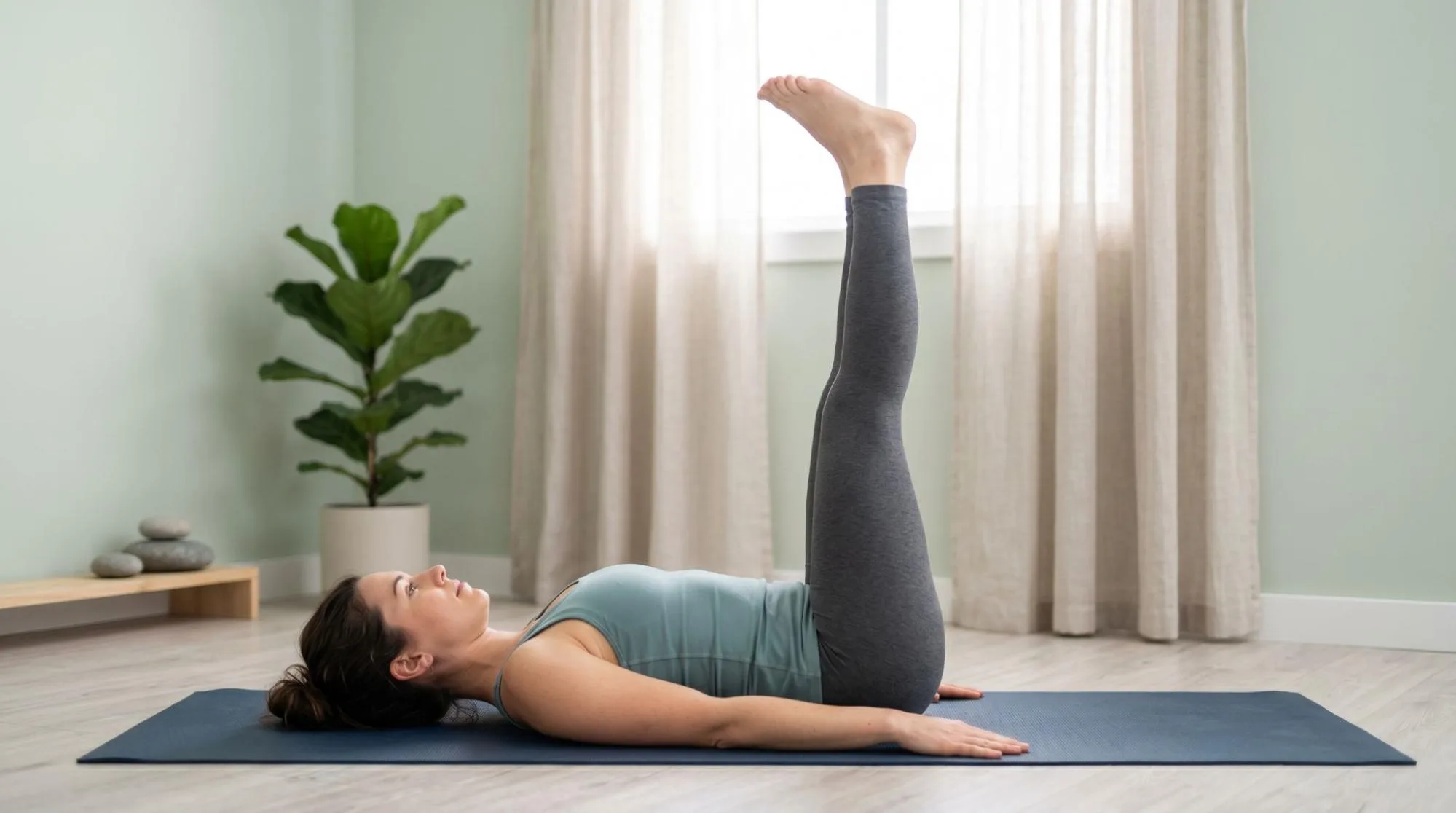
Step 3: Lift Your Legs Towards the Ceiling

Ease out and with the breath, gradually start the lifting up of your legs toward the ceiling. Your legs ought to be straight and together, and your feet ought to be bent.

  • Why it matters:Raising leg gradually assists keeping in control of the movement and involve use of leg muscles. By flexing your feet, you stretch out the hamstrings and have a more active angle to your legs. This must be conscious and progressive movement, which preconditions the inversion.
Lift Your Legs Toward the Ceiling

With the sigh start lifting your legs up-at-the-ceiling. Keep your legs straight and together and flex your feet on lifting them. Lifting should be done and the movement is done gradually, and attention should be on the stability of the process.


Why Lifting the Legs Slowly and Mindfully Matters:
  • Controlled Movement and Muscle Engagement: Raising your legs gradually will enable you to have control over the movement and use more of the muscles in your legs. This is a movement that you have stopped and are taking control of so you are not moving on inertia but still the power of your legs and midsection is implementing the movement. It uses the quadriceps, ham strings and hip flexors to produce a more purposeful and stronger lift.
  • Prevents Strain and Injury: Unforeseen or sharp movements may cause unwanted strain to the lower back and hamstring. This way, you can walk at a slow pace and prevent the danger of tripping in the inversion. The smooth, controlled lift can also make sure that the muscles are engaged and strained correctly enabling a better alignment and reducing the possibility of muscle strain or overstretching.
  • Engages the Leg Muscles: What happens is that when you slowly then you lift your legs, all the leg muscles are activated. Consciously working with the quadriceps, hamstrings and calves, you are training these muscles to gain strength. The more active your legs are, the more balanced and controlled will be the pose, assisting you to attain a higher degree of alignment and balance in the pose.
  • Flexing the Feet for Better Stretch: When pulling up your legs, flexing your feet makes your hamstrings and calves even more stretched. Flexing the feet is an activity that lengthens the hamstrings and hence results in a deeper and more effective stretch. It is especially crucial to enhance the flexion of hamstrings which in most yoga postures is a restricting element. Flexed feet also assist in stimulating the muscles in the legs so as to keep the legs engaged and in the correct position.
  • Mindful Preparation for the Inversion: This squeaky gradual elevation movement of the body is not merely concerned with the physical movement but it has the effect of mentally preparing you to the inversion. By passing into Plow Pose, the lift speed lets you listen to your body, so that you do not jump into the inversion and go through a misalignment or injuring experience. It is also important to be mindful in this stage by concentrating on your breathing, muscle engagement, and alignment, which are some of the points that are important in a safe and successful inversion.
  • Increases Stability: Your legs must be raised slowly and calmly so as to make your core and legs work together. By paying attention to regulating the movement, you enhance your general body consciousness, which is converted to more stability and balance in the posture. This control assists you to smoothe out into the full expression of the pose and keep your body straight and at the center.
  • Gradual Adjustment to the Inversion: Raising your legs gradually is an easy complication that you are trying your body to. An abrupt change in the inversion changes may leave the body disoriented and thus taking things in slow steps to get your position will make the transition comfortable and normal. It also helps avoid discomfort or even dizziness that may get when entering an inversion too fast.


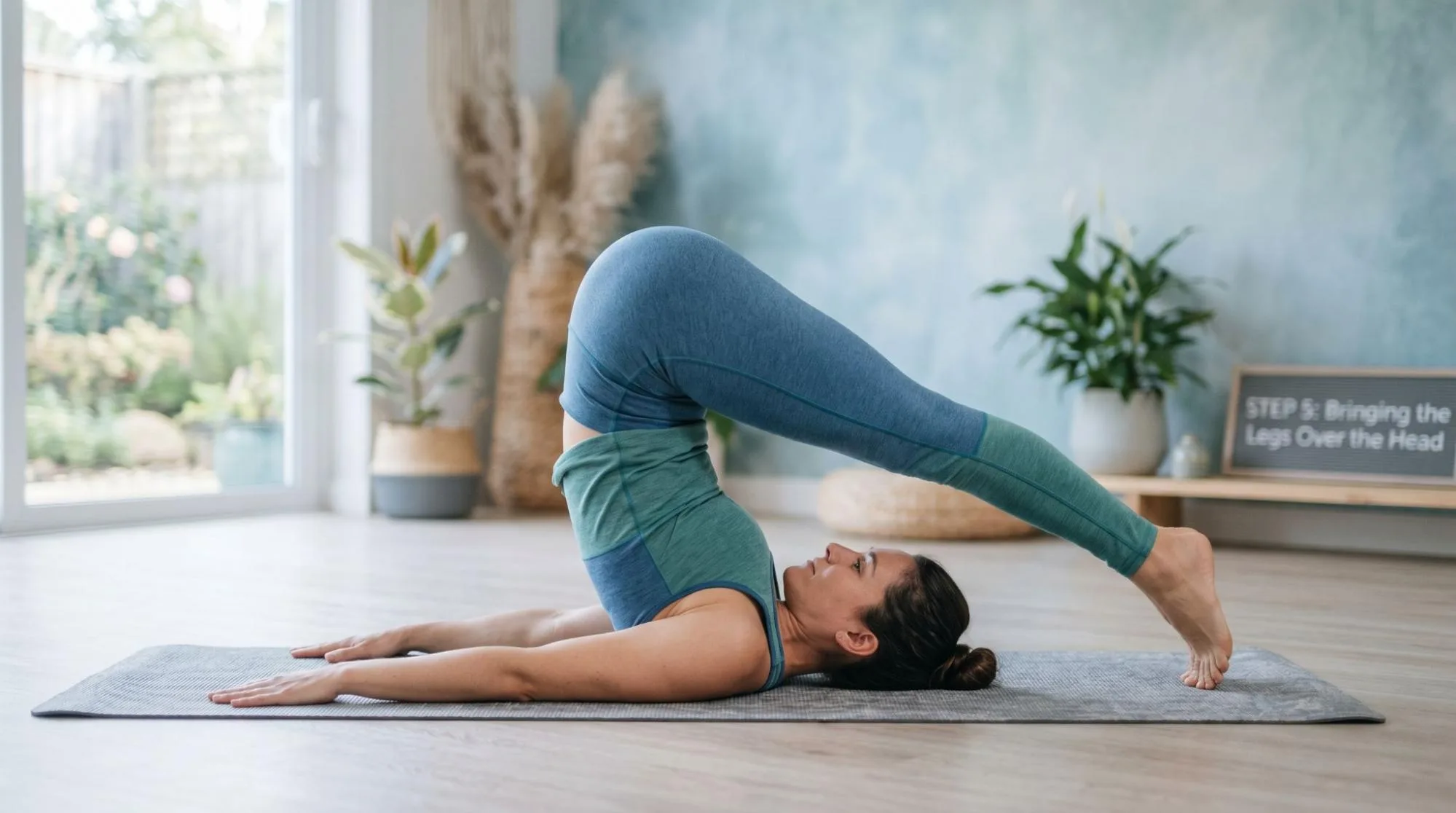
Step 4: Begin to Roll Your Spine Off the Ground

Begin to roll your hips and spine out of the floor, as you elevate your legs. Push with your legs, engage your lower back muscles. The aim is to pull your hips up to the extent of getting your legs over your head.

  • Why it matters: Turning your spine slowly is a way of making sure that the movement moves slowly without causing any tension to the back. Involving the lower back muscles is important in this case as it enables you to raise the hips off the floor without straining your neck or head.
Roll Your Hips and Spine Off the Floor

Keep on lifting your legs but now start rolling your hips and spine up off the ground. Use your lower back muscles to make the movement, pushing your legs actively through. The idea is to raise your hips upwards with the aim of enabling your legs to pass comfortably over your head.

Why Rolling the Spine and Engaging the Lower Back Matters:
Prevents Strain on the Neck and Head

It is important to roll the spine gradually and not with a lot of force to avoid causing undue stress to your neck and head. It is natural to attempt to push the legs beyond the head without thinking about the movement of the spine and this can cause the spine to put pressure on the neck. Incorporating the lower back muscles will lift the hips in a manner that leaves the work to the core and the legs, and leave the neck in the neutral position.

Maintains a Smooth Transition

Varying with your spine and hips in a gentle movement will provide a gradual process to the full embodiment of the pose. The liquid motion that is produced using the hip first, then the spine rolling technique minimizes the chances of jerking and sudden movements. This assists in maintaining the stability of the posture, and to progressively extend the stretch further, instead of pushing the body into the posture too fast.

Strengthens the Lower Back

It is very important to engage your lower back muscles as this would provide strength and stability in the region. By lifting up your hips you work the erector spinae ( muscles length your spine ) and the gluteal muscles, which give you the strength needed to maintain the movement. This enhances the strength of your lower back and the generally makes it more resilient, which is necessary to safely do inversions.

Supports the Pelvis and Core

Tilting the hips out of the floor with your core fixed stabilizes your pelvis and makes sure that the movement is focused. Your activation of the core and pressing of your legs assists in keeping a straight straight line between your pelvis and the feet which is paramount in alignment. Good core and active hips means that you have a strong foundation to the inversion and that as a result it will be easy to cross your legs over your head easily without much effort.

Prevents Overloading the Lower Back

Raising the hips in a controlled way, without using only your arms or legs, will make the lower back engaged in a proper way not overloading it. Such a well-balanced activity prevents overstrain on the spine especially in the lumbar spine. You should push your hips up with your legs and core, which enables the lower back muscles to work together with other parts of your bodies resulting in a more stable and safe inversion.

Promotes Proper Spinal Alignment

Your rather raised spine is gently rolling making the movement right at the right place. When lifting the hips, your spine would follow making a natural curve which will support the inversion. This assists in maintaining the body in good positioning to avoid misalignment that may cause pain or harm.

Enhances Flexibility and Mobility

The back and forth movement also extends the spine and expands the chest, rather helpful in enhancing the flexibility and mobility. You make space by lifting your hips and rolling the spine off the floor, this can help to make the back less tight. This too works the muscles of the shoulders and neck enabling them to ease and stretch in which case it is essential to get the maximum out of the pose.

Builds Mind-Body Connection

The conscious, mindfulness in rolling the spine off the floor strengthens your body consciousness. The more you concentrate on each aspect of the movement, the more you grow to be more attached to your mind and body. This awareness is crucial not just to this pose, but to enhance your overall yoga practice and to make sure that you are moving safely and efficiently.


Step 6: Support Your Body with Your Arms

When you have your legs above your head, flatten your arms into the mat to support you. Hold your elbows and your arms shoulder-wide. Shoulders should not be tense, but should be placed far away ears, and no neck pressure.

  • Why it matters: The arms support yourself, which offers stability in the position and allows evenly dispersing weight over your body. Having the shoulders relaxed is also so that you do not end up straining your neck and the upper back which can occur when the shoulders contain up towards the ears.
Distributes the Weight Evenly Across the Body:

When you lie down on the mat by putting your arms, you in fact spread the weight of the pose all over your upper body. This does not leave your neck and lower back straining under the weight which might strain or be uncomfortable. The arms give you a good base upon which you can balance and have a stable posture which makes the pose a more comfortable and sustainable one. Using the arms also alleviates extra tension, making the burden carried by the whole body and keeping the body still.

Prevents Neck and Upper Back Strain

Another important point to consider in prevention of injury in Plow Pose is to make sure that the neck or upper back is not under pressure. This can be achieved by maintaining the shoulders loose and no near the ears so that the weight the arms and shoulders carry and not the cervical spine. Drawing in your shoulders or pressing on your neck could cause tension, pain or even damage. The best way to avoid these problems is to relax the shoulders and involve the arms, and, with no danger, you can extend the stretch even further.

Improves Upper Body Strength and Endurance

Planting your arms into the mat is an active activity that involves the use of your shoulders, arms, and upper back muscles. This practice assists in developing the upper body strength and that is necessary in holding of inversions as Plow Pose. The more you do so, the stronger your shoulders and arms and the better your ability to have a pose under more control and stability. Even better posture and alignment in other yoga poses are aided by strengthening these areas.


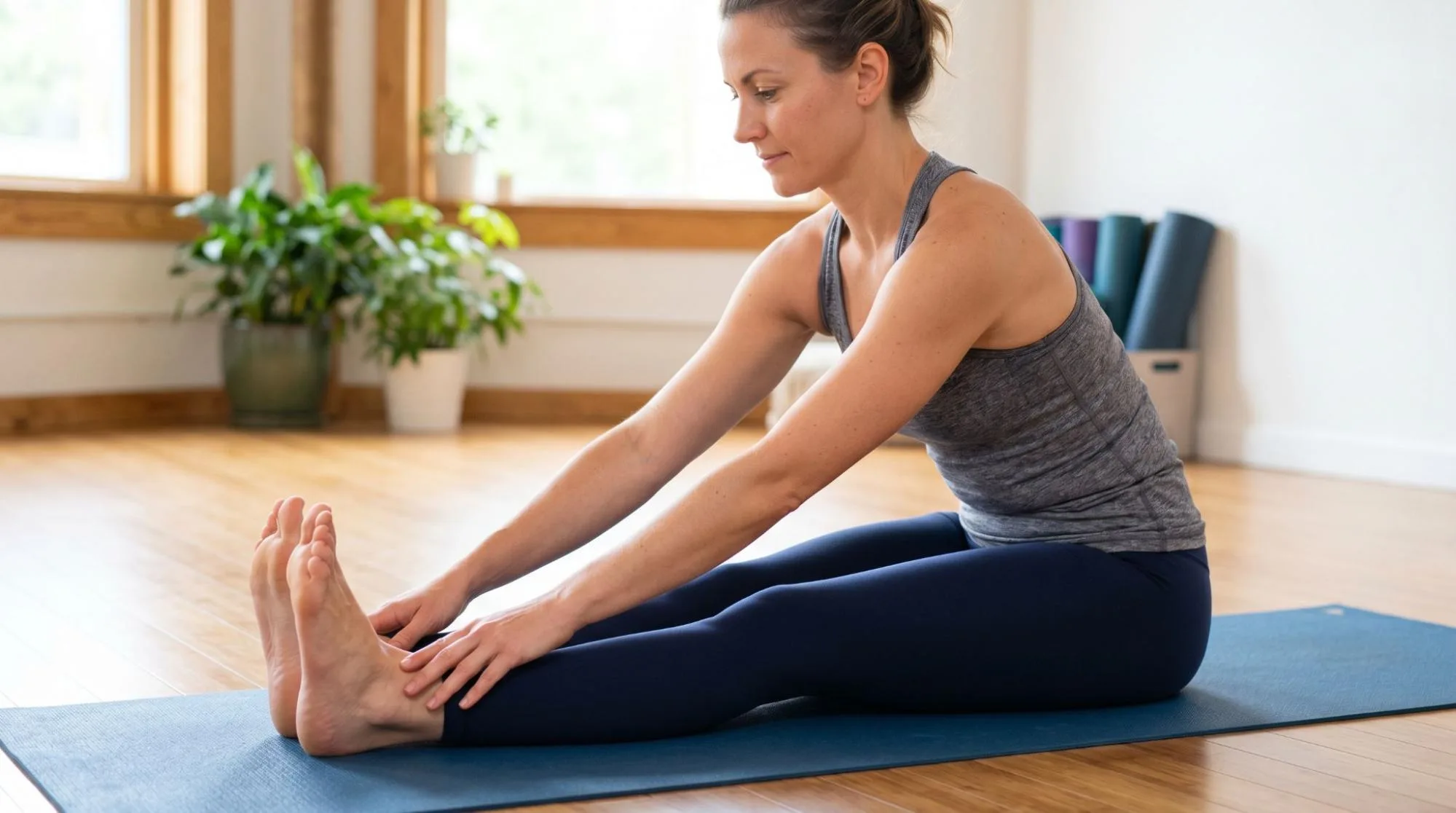
Step 7: Engage Your Thighs and Keep the Legs Straight

Activate the muscles in your thighs to maintain straightness and activity of your legs. Tilch up your feet and push the energy towards your foot soles as though you were trying to touch your toes behind.

  • Why it matters: To stretch and stretch the back and hamstring, flexing the feet will keep the legs at work. The active legs will also assist you to remain balanced and avoid sagging in the pose. Using the thighs will assist in keeping your body on track and assist your other body parts as you support the posture.
  • Maximizes the Stretch in the Hamstrings and BackThe back and forth motion of your feet increases the length of the hamstrings, thereby making your legs and back more flexible. This position will stretch the area at the back of your body- the heels of your feet all the way to your spine by directing the energy at the soles of your feet. This not only assists you in reaching a deeper extension, but also enables to achieve a better posture and alignment of the spine which is crucial to enjoy the maximum benefits of the pose.
  • Helps Maintain Stability and Prevents Sagging: The presence of active legs helps to ensure that the body does not gravitate or be sucked into the pose. When you use the thighs, you can offer the needed power to the rest of your body supporting the inversion. This will eliminate the possibility of a lower body body droping thus compromising your alignment and stability. Raising the legs keeps you very strong and engaged all through the pose and allows you to stretch more effectively and in control.
  • Improves Alignment and Body Awareness:   The involvement of the thighs will assist you in keeping the legs and spine in the proper position. By involving your thighs you keep your knees straight, the legs straight, so that your whole body is straight, starting at the toes and continuing up to the hips. Such practice will help you become more conscious of your body and concentrate on straightening your legs, engaging the core and aligning the back. It also helps you have a closer association with the movement and helps you have better control of the pose.


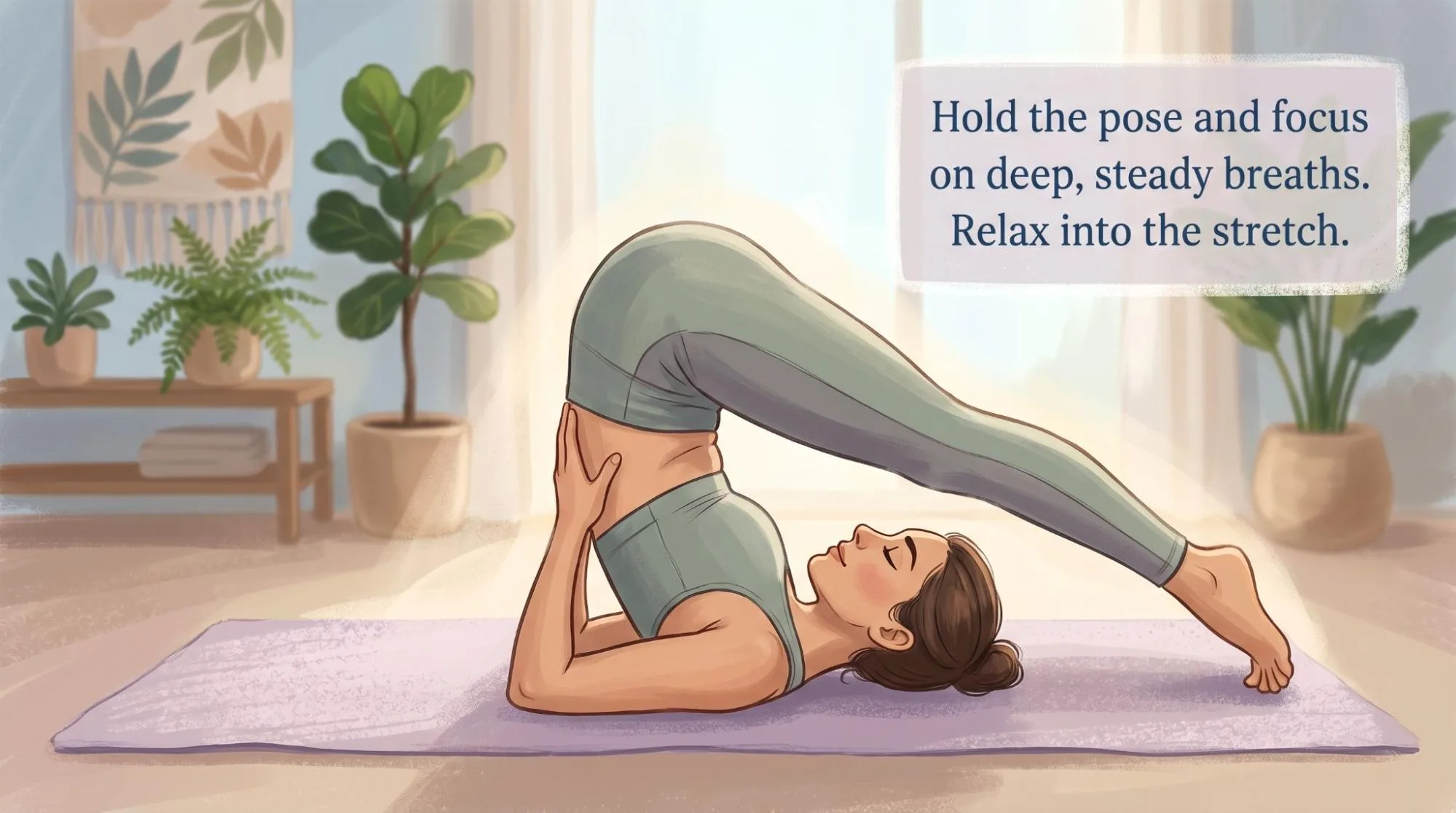
Step 8: Hold the Pose and Breathe

Remain in Plow Pose approximately 5-10 breaths. Ensure that you are breathing steadily and deeply. Breath in with the nose and compress your lungs to their full capacity and get out all tension by breathing out through the mouth.

  • Why it matters: By maintaining the pose a few breaths will enable your body to stretch further into a pose to enhance flexibility and will enable your mind to relax. Deep breathing also contributes to activating the parasympathetic nervous system, which contributes to a calm and stressful feeling.
  • Deepens the Stretch and Increases Flexibility: A few breaths of the Plow Pose will enable your body to open into the extension, slowly increasing the range of your spine, hamstring and shoulders. The muscles are allowed to stretch and get rid of the tension and this provides a better stretch as you hold the pose. The longer you can stay in the position with a deep breath the more your body will be used to the stretch and with time, you will notice a gain in flexing.
  • Activates the Parasympathetic Nervous System for Relaxation: By emphasizing on deep breathing and maintaining the position, the body will engage a rather slower nervous system called the parasympathetic- the rest and digest system. This system aids in soothing the body and mind and reversing the stress reaction. Inhaling deeply allows you to relax and stay in your senses and present moment. The deep breathing supplies oxygen to the body and the exhaling eliminates stress and tension and consequently, the pose is physically healthy, as well as mentally replenishing.
  • Enhances Mental Focus and Mindfulness: When holding the pose, a steady mindful breathing improves your mental focus. This process of breathing in and out, consciously, will ensure that your attention is focused in the present moment and your mind does not go drifting elsewhere. This consciousness will create a greater sensitivity of what your body is experiencing in the stretch. By concentrating on your breath you establish a deeper relationship with your body and mind, improving the gains of the pose and ensuring general well up being.


Step 9: Release the Pose Slowly and Mindfully

To leave the pose, carefully just start rolling your spine back to the mat in some vertebra at a time. Slowly bring your legs back on the floor. Hold your arms at your side.

  • Why it mattersThe way out of the pose is as significant and as getting into it. Slow rolling helps in protecting your spine, and makes sure that you do not strain any muscles. The positive effect is facilitated by the soft release, which allows you to absorb advantages of the pose.
  • Protects the Spine and Prevents Strain: Slowly lifting your legs will also keep your spine safeguarded when you resume a neutral pose. Sudden drops of the pose may strain the lower back and neck without the intention of the former, making both of them strain. One vertebra at a time is a gentle exercise whereby you lengthen your back, rolling it downwards, until back to its natural position, which lessens the chances of pain or injury. This slow downward spiral enables your muscles to relax in a natural and non-overstretching and damaging way.
  • Helps Your Body Integrate the Benefits: The manner in which you get out of the pose is equally important as the manner of entering it. Whenever you are in the stretch, you have to do this very slowly and carefully so that your body can digest and incorporate the benefits of the stretch. Through slowing down to roll, your muscles will be able to adapt slowly to it, so the consequences of the deep stretch will not be wasted. This gradual release also makes your body time to make a transition to the position change and this gives your nervous system a chance to revert to a state of calm without any sudden shocks. It improves the sense of well-being and relaxation as a whole, aiding in an improved yoga session.


Step 10: Relax in a Supine Position

After going back to the mat lie down on your back with your arms by your sides. Close; make few deep breaths and then have your body at ease.

  • Why it matters: Once you have performed an inversion, then you should allow your body time to relax. This aids in blocking the nervous system and enables the body to take advantage of the medicinal properties of the pose.

Tips for Proper Alignment and Safety

These are just some of the other points that will assist in keeping you well adjusted and in removing the chance of falling off Plow Pose:

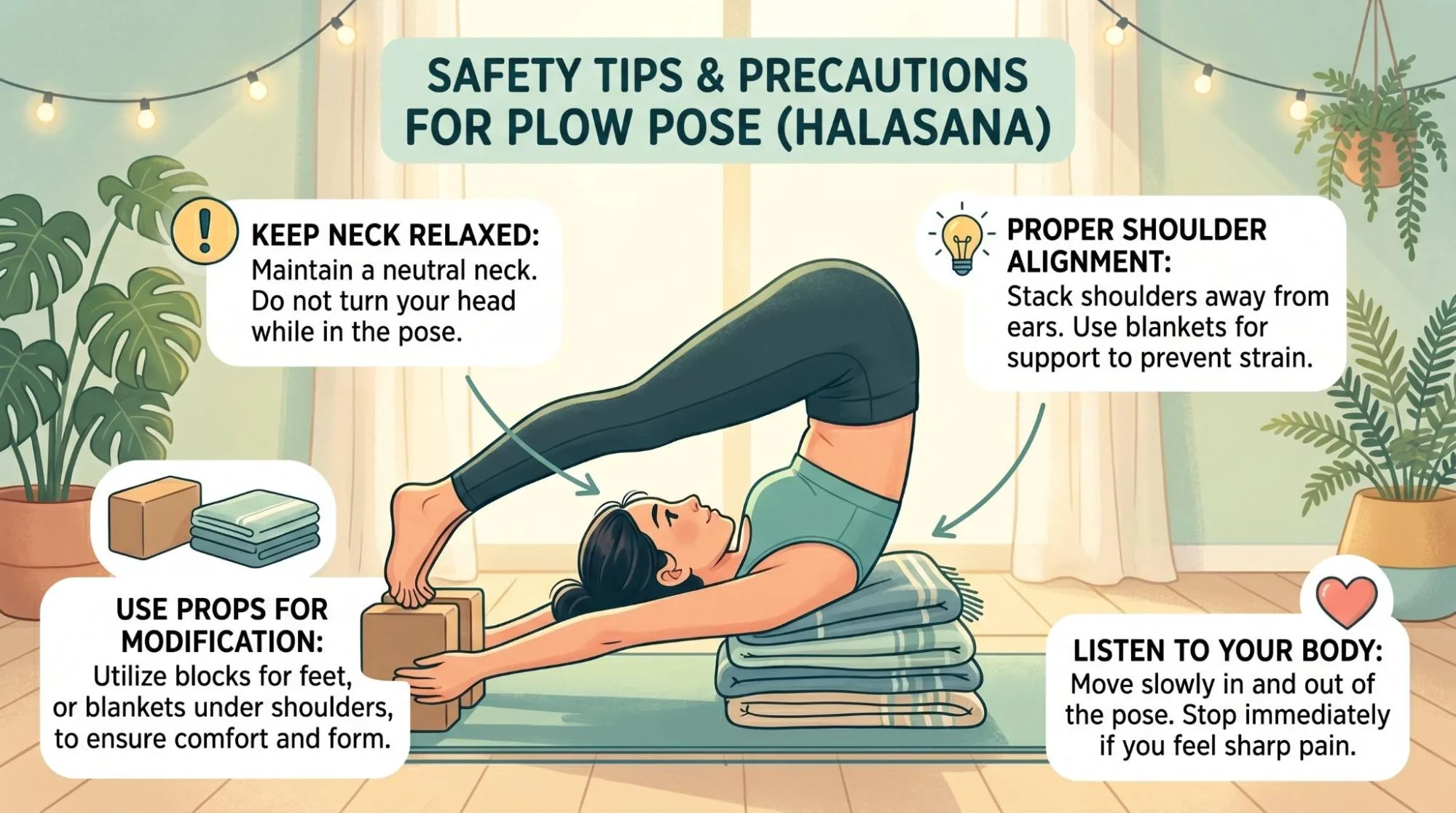
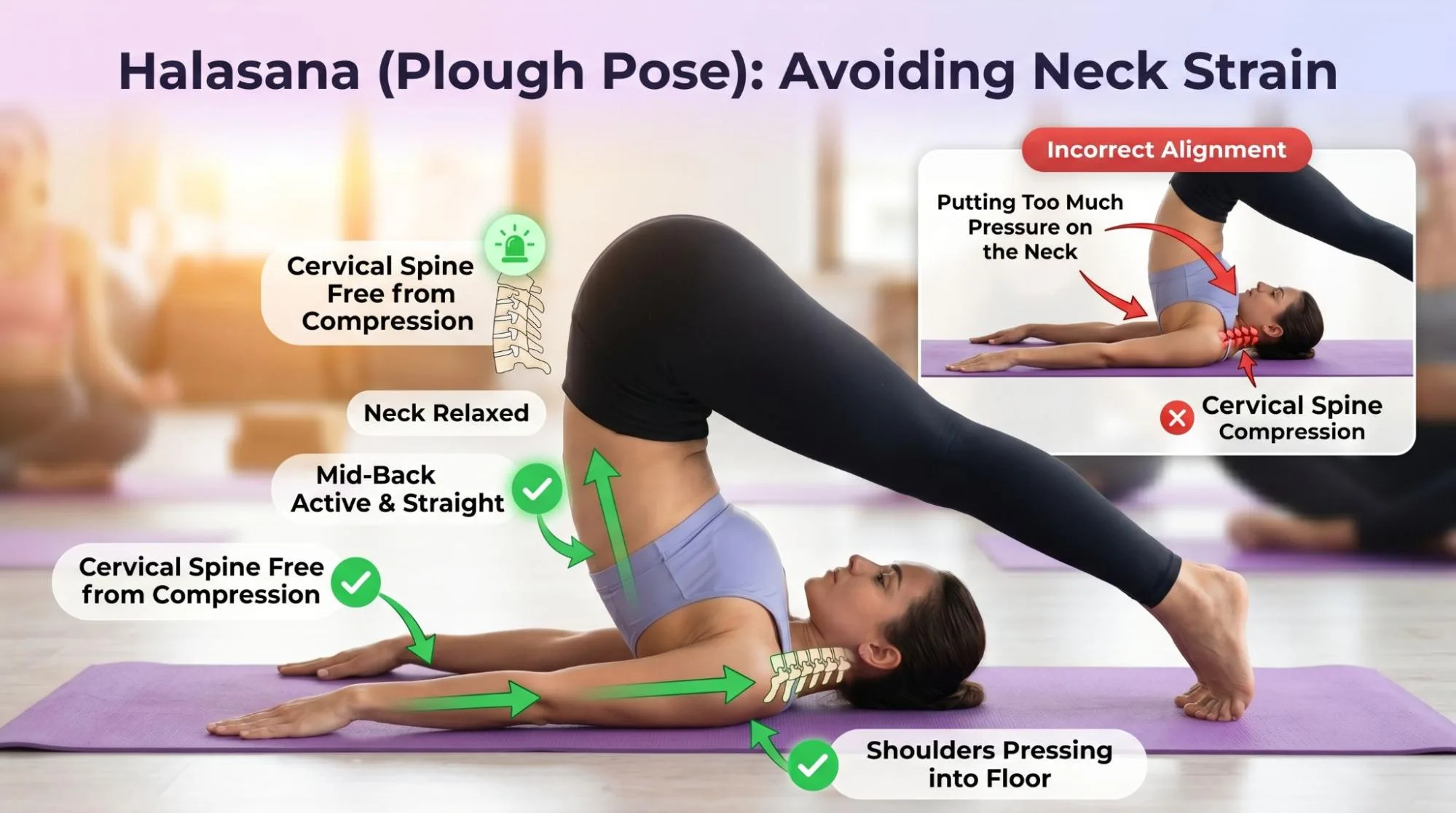
  • Neck AlignmentAlignment of the neck is the most important consideration made when carrying out the Halasana. Do not put too much weight on your neck or head. Majority of your weight should be held up in the arms and shoulders, not the neck. This will cushion your neck and avoids strain or injury.
  • Shoulder Positioning: Have your shoulders loose and distanced out of your ears. The shoulders should be straight and not to hunch but should be open and pressing against the mat to stabilize.
  • Leg Engagement: Maintain straightness of legs and use your thighs and hamstrings during the pose. This not only will tighten the stretch but will also aid in preserving your lower back.
  • Flexibility Awareness: Don’t push your feet as far as the floor, supplied you can get them there because you are not ready yet. Rather, concentrate on extending the spine, and engaging your legs. Your feet can always be supported with a prop, say a block, or cushion.
  • Breath Control: Concentrate on the deep and normal breathing during the pose. You can inhale with a deep breath to give energy to your body, and exhale to stretch the body. This will allow you to stay focused and get into the pose.


Modifications for Beginners

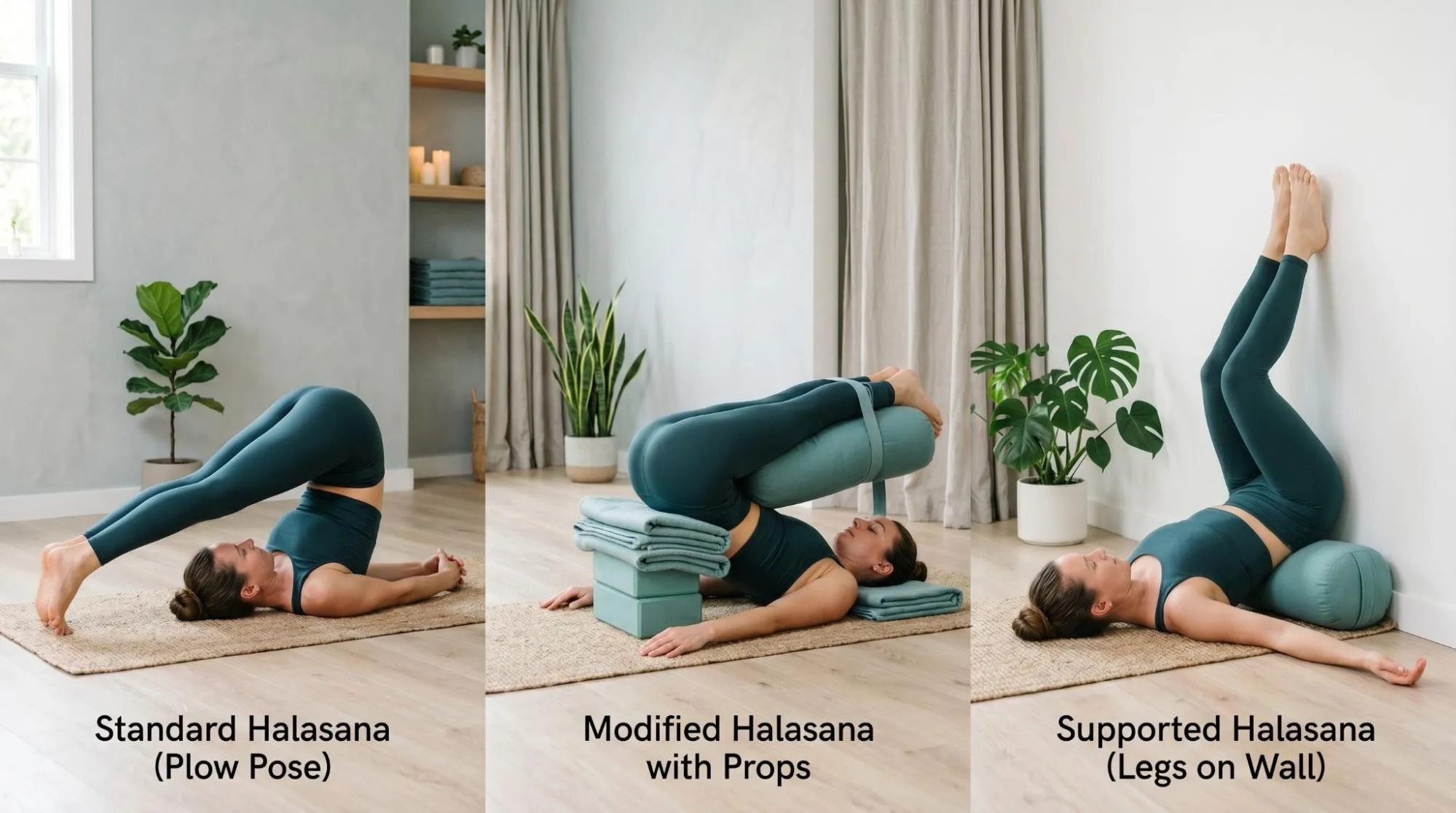
Some of the adjustments that can be made to ensure you can practice safely and effectively are listed below should you be new to inversion or practicing Plow Pose:
 

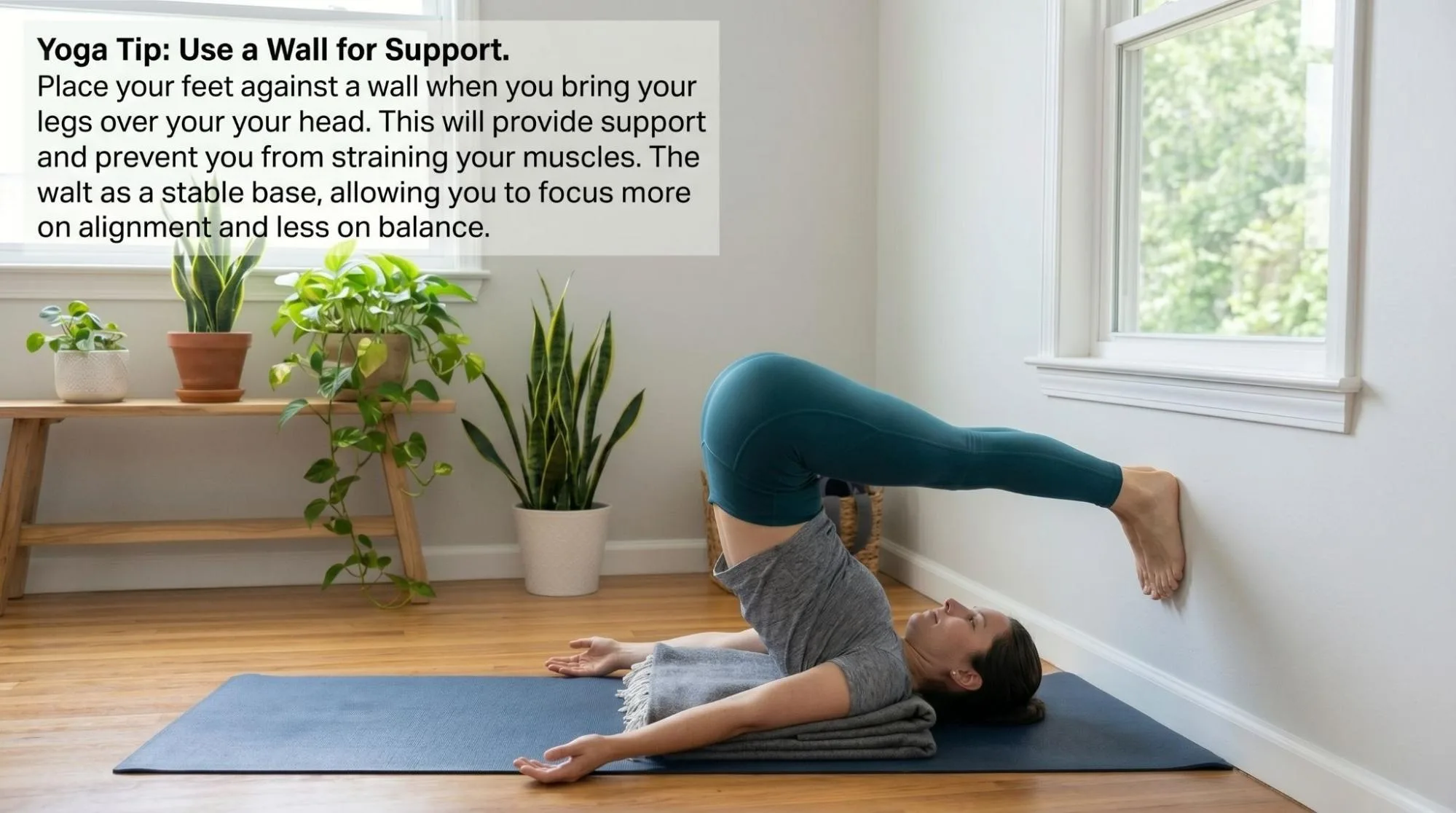
1. Use a Wall for Support

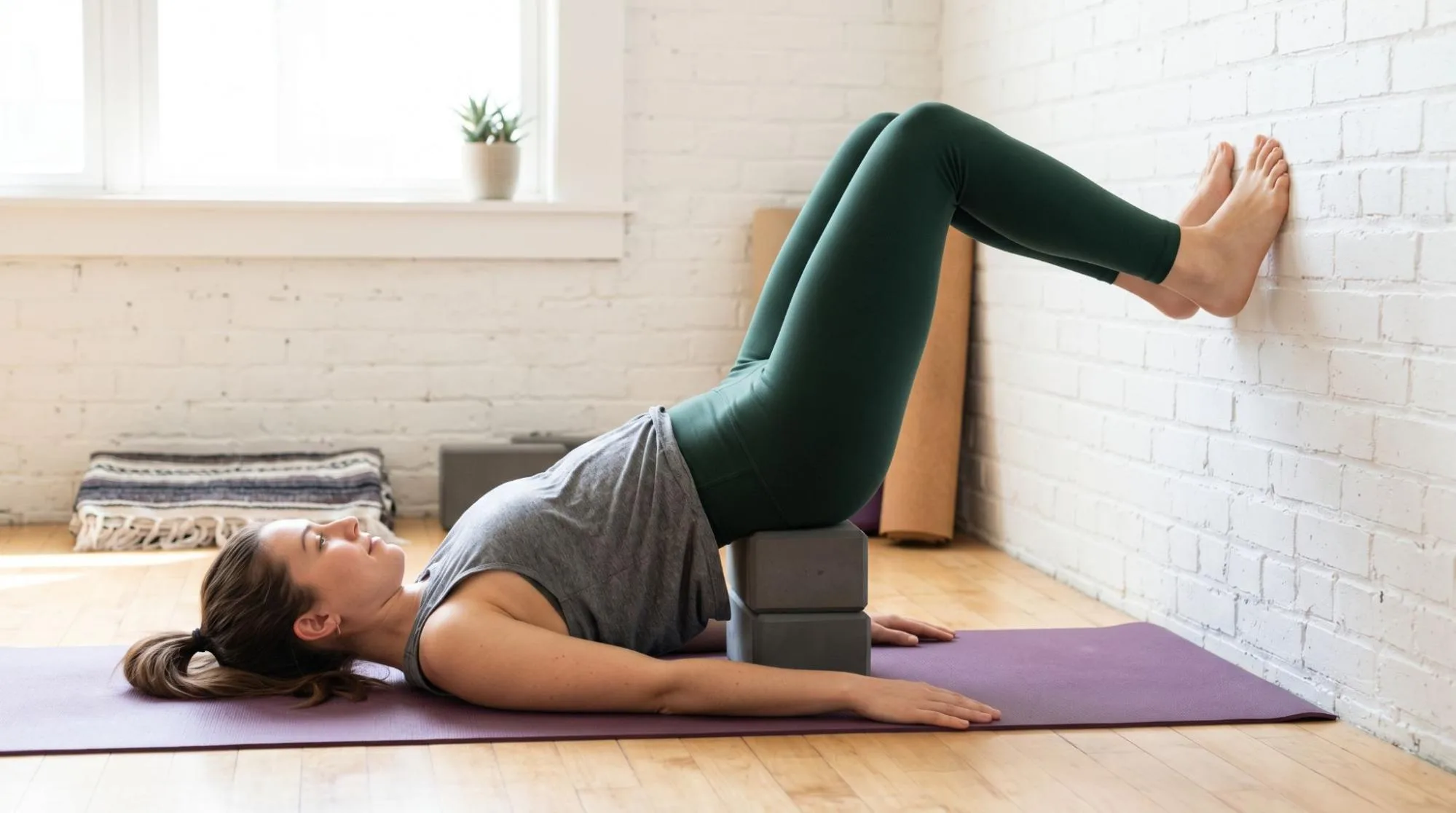
Bring your legs over your head with your legs against a wall. This will save you the burden and you will have no need to further strain your muscles. The wall will provide a solid foundation, so that you can think more about alignment, and less about balance.

Provides Stability and Reduces Effort

With the wall as support, you can concentrate on obtaining proper positioning in Plow Pose without concern of balance or falling. The inclusion of the wall will support your legs and hips, which makes the position more approachable, particularly by the beginners. This extra support allows you to place less pressure on your legs and core and practice the pose with greater comfort and confidence because you know that you have a steadfast support to lean on.


2. Bend the Knees

In case you are unable to hold your legs straight, it is alright. It is all right to narrow the curve of your legs as you bring them on top of your head. This alteration makes the stretch less intense, more easily reachable and provides numerous of the advantages of the pose.

Reduces Strain While Maintaining Flexibility Benefits:

Kneeling will reduce the tension in the hamstring and lower back muscles and is particularly beneficial when you are continuing to develop flexibility. It is this adjustment that enables you to use the muscles in your legs and core without having to put your body in an awkward pose. It also enables you to get the stretch of the back and spine which helps enhance flexibility with time. By doing so, you will be able to train the pose in a safe way and not to overstretch your existing scope of movements.


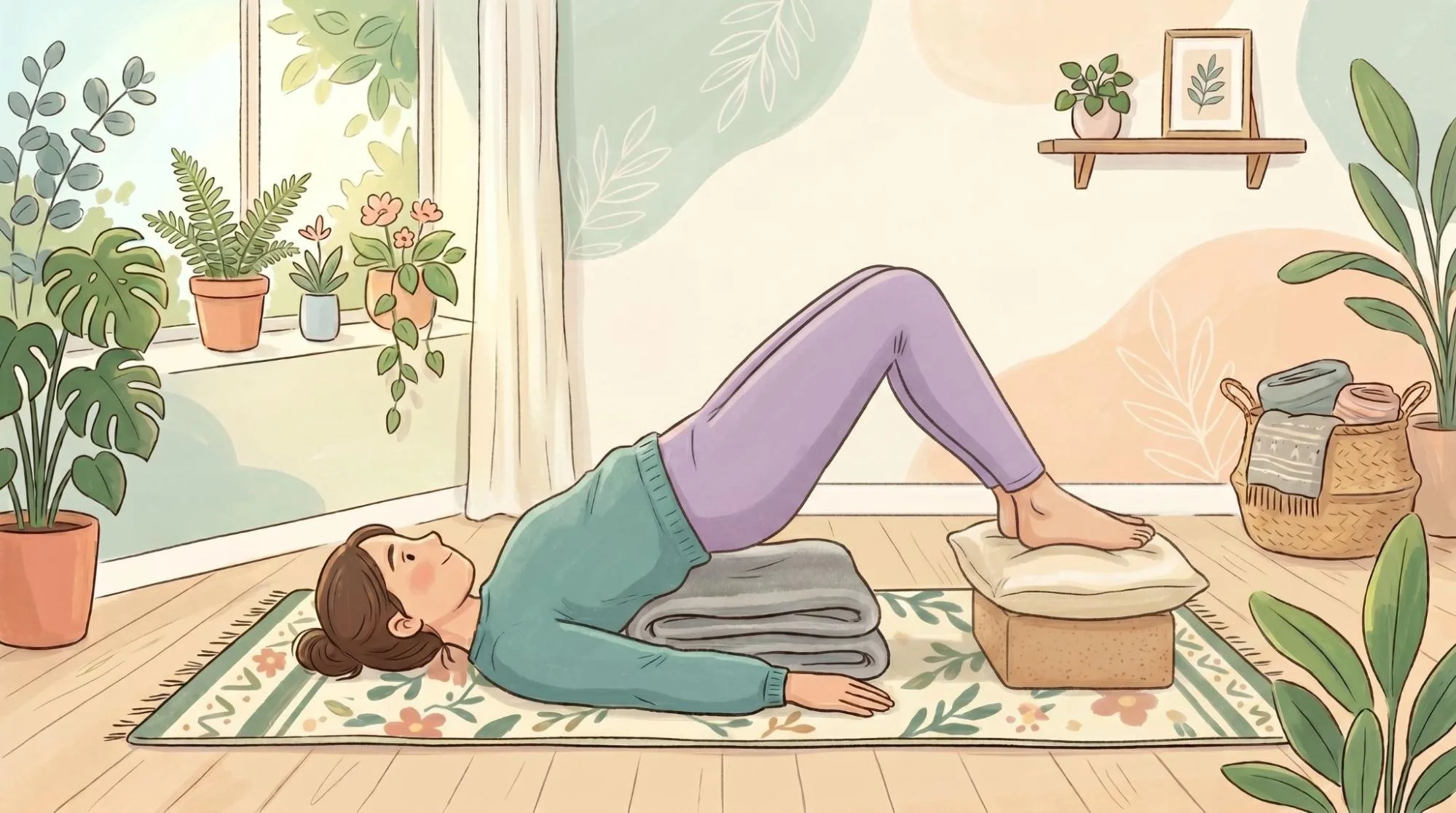
3. Use a Prop

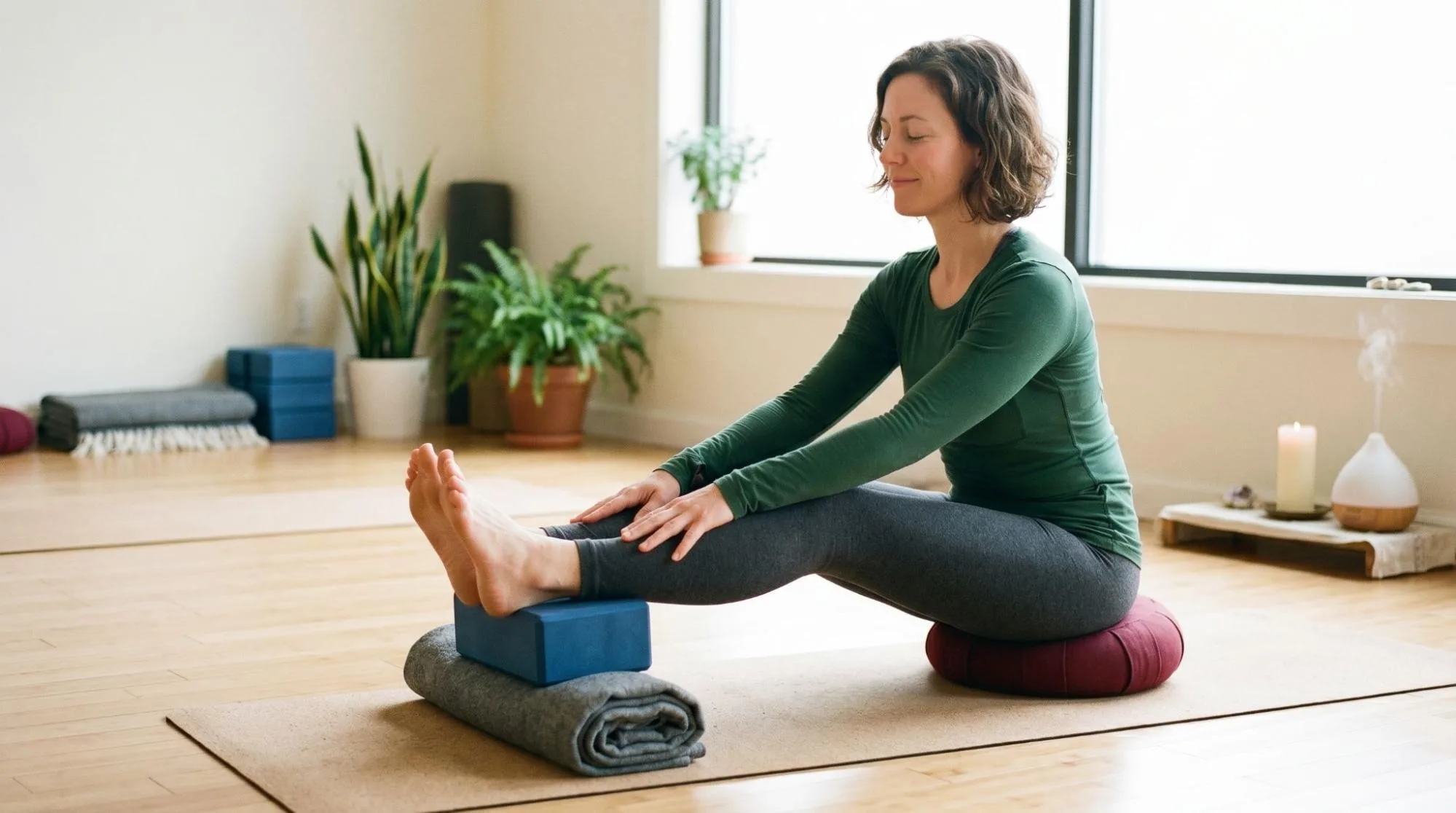
In case your feet fall short of the floor then use cushion, block or bolster under your feet. This will support you but will not overwork you as you continue enjoying the benefits of the pose.

Enhances Comfort and Prevents Strain:

Prop under feet can be used so that you do not have to strain your body or force it to an awkward situation. It enables you to be properly aligned and straight in the legs keeping the pose grounded. The prop offers stability, takes stress off the lower back and hamstrings, to enable you stretch further without the threat of hurting yourself. It also assists you in being more in control of your proper alignment and breathing instead of being preoccupied on getting your feet to the floor.


Common Mistakes to Avoid in Plow Pose

Here are some common mistakes people make in Plow Pose and how to avoid them:

1. Putting Too Much Pressure on the Neck

Experience One of the greatest sins of Halasana is to put excessive weight on the neck. Always ensure that your shoulders are flattened on the floor and your arms are used to hold the weight. The cervical spine should not be compressed, and your neck should be in a relaxed position.

Prevents Neck Injury and Strain:

Being overweight or putting excessive stress on the neck may cause the strain on the cervical spine or even be injurious. The neck is very sensitive and pushing weight on it may result in discomfort, pinched nerves or long-term complications. You keep the neck free so that the shoulders and arms bear the weight, and not the neck, through this means you preserve the spine, and avoid the needless straining of the neck. Neck relaxation can also ensure that the stretch is deepened without posing any threat of damaging the soft parts of the upper body.


2. Overextending the Legs

Although you are supposed to maintain a straight posture of the legs, do not strain to come into contact with the floor unless your body is prepared. Straightening your legs excessively may put a stretch on the lower back and hamstrings. Rather, practice gradually increasing the stretch with time.

Ensures Gradual Flexibility and Avoids Overstretching:

Pushing the legs down before the body when they are not prepared, may be overstretched which will cause muscle strain or injury especially to the hamstring and lower back. Letting your body enter the stretch slowly will allow your muscles to adapt and release tension safely by time. This gradual process will assist you to become more flexible without jeopardizing the safety of your body and also long-term progress which will not put your body at risk of an injury.


3. Collapsing the Chest

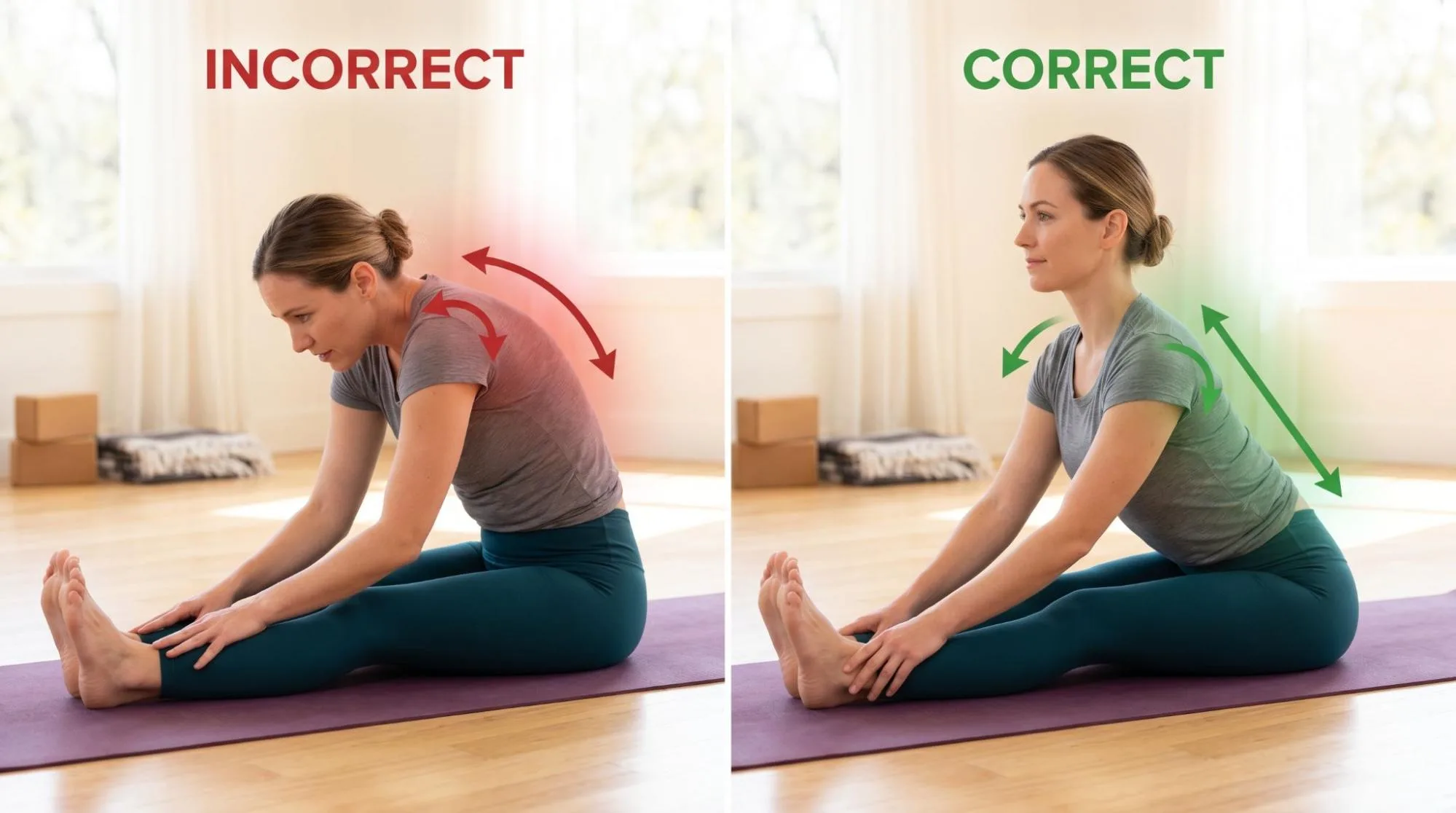
The other error is the collapsing of the chest or rounding the upper back. Always maintain the chest open and the shoulders apart the ears. This will enable you to put the maximum stretch on and prevent any unneeded strain in the back and shoulders.

Maintains Proper Posture and Prevents Back and Shoulder Strain:

Chest crushing or rounding of the upper back not only reduces the efficiency of the stretch, but also unduly stresses the spine and shoulders. When the ears are kept away by keeping the shoulders relaxed and keeping the chest open, be sure that you are properly aligned to get even deeper more beneficial stretch along the back and the chest. This position is great to avoid tension and discomfort in the shoulders and upper back which is essential to both avoiding the injury and overall stability of the body during the pose.


Conclusion

Plow Pose (Halasana) is a powerful and highly rewarding posture that improves flexibility, encourages digestion and can leave one feeling calm in the mind. With the tips and steps given above you can practice Halasana safely and effectively.

Keep in mind, as is the case with any yoga pose, Halasana needs to be practiced and tolerant. This inversion will eventually bring you the physical and psychological perks, and you will incorporate it into your yoga regime. Plow Pose, no matter your level of experience or expertise, can be incredibly rewarding and a great way to further your flexibility and relaxation.

Subscribe For Updates And Tips

At YogaPoints, we believe in mindful living through knowledge and consistency. Explore yoga practices, wellness ideas, and short visual guidance crafted to support your daily routine