
Quick answer: Supine Spinal Twist is a lying-down rotation that may support gentle movement through the spine, hips, and shoulders. Keep both shoulders relaxed, move within a comfortable range, and avoid forcing the knees toward the floor.
Important Safety Note
Stop for sharp pain, numbness, tingling, dizziness, or symptoms that travel down the leg. Use a smaller range or a pillow between the knees if needed. Seek qualified guidance after spinal, hip, or abdominal surgery, or if you have persistent or severe back pain.
The supine spinal twist yoga benefits go beyond a simple back stretch. This gentle lying-down yoga pose helps release lower back tension, loosen tight hips and glutes, open the chest, support relaxed breathing, and calm the nervous system.
It is especially helpful if your body feels stiff after sitting, working at a desk, driving, or carrying stress through the shoulders and back.
The best part is that you do not need advanced flexibility to practice it. You lie on your back, let your knees move softly to one side, open your arms, and breathe deeply. With patience, the pose gives your spine, muscles, and mind a quiet chance to reset.
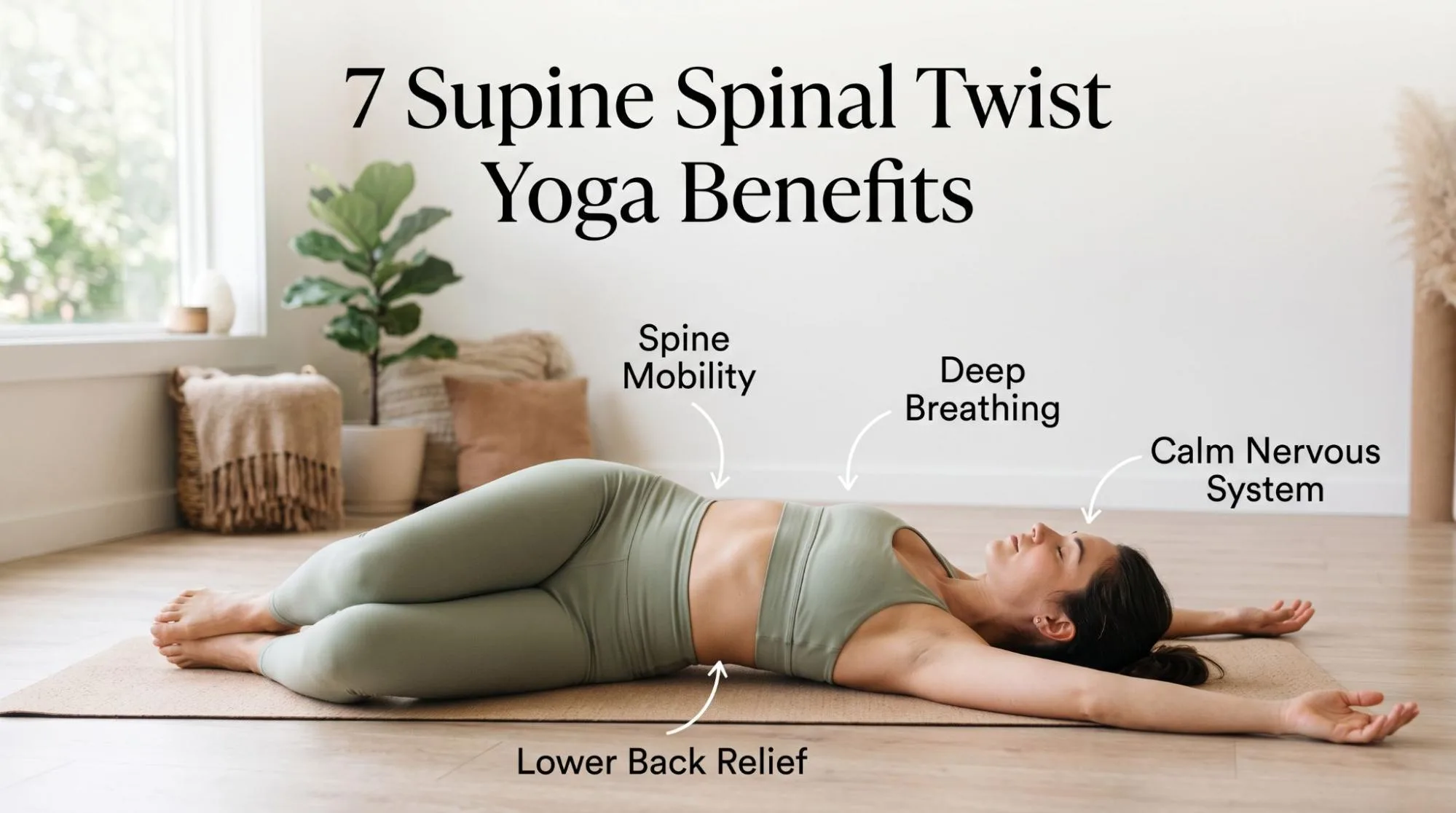 alt=”Supine spinal twist with knees supported” title=”Supine spinal twist with knees supported”
What Is Supine Spinal Twist Yoga?
Supine spinal twist yoga is a lying-down twisting pose. In yoga, it is often called Supta Matsyendrasana. “Supine” means lying on your back, and “spinal twist” means the spine gently rotates while the body stays supported by the floor.
This pose is often practiced near the end of a yoga session because it helps the body relax. It can also be done on its own after sitting for many hours, before bed, or anytime your back feels stiff.
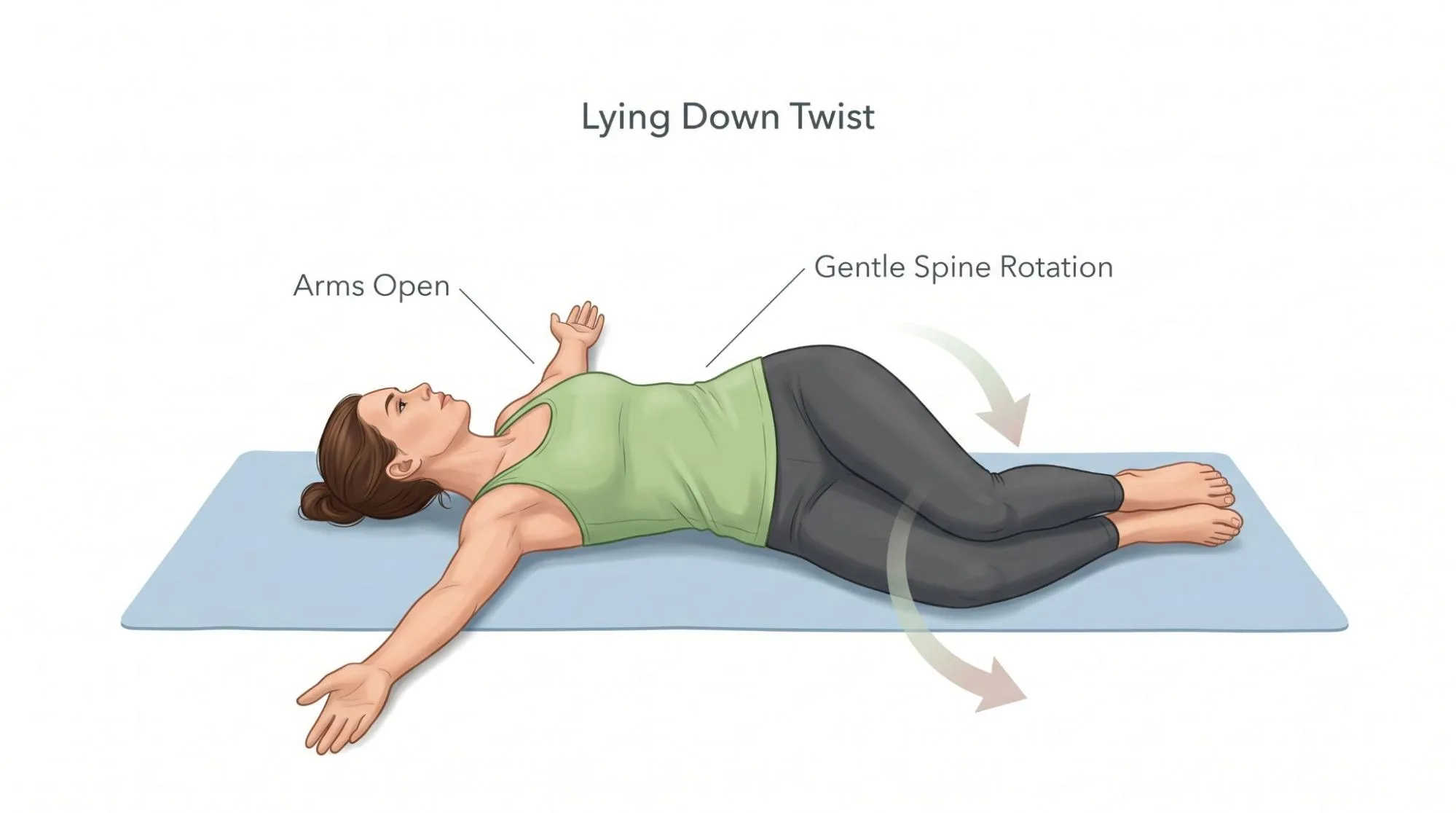 alt=”Gentle lying spinal rotation on a yoga mat” title=”Gentle lying spinal rotation on a yoga mat”
Why Supine Spinal Twist Yoga Benefits the Body
lying spinal rotation yoga benefits the body because it combines stretching, stillness, breath, and gentle rotation. It does not demand strength or balance, which makes it beginner-friendly. The main lying spinal rotation yoga benefits come from gentle rotation, relaxed breathing, and the support of lying on the floor.
The floor supports your body, so your muscles can release without much effort. That is why this pose is useful for the spine, lower back, hips, chest, belly, and mind.
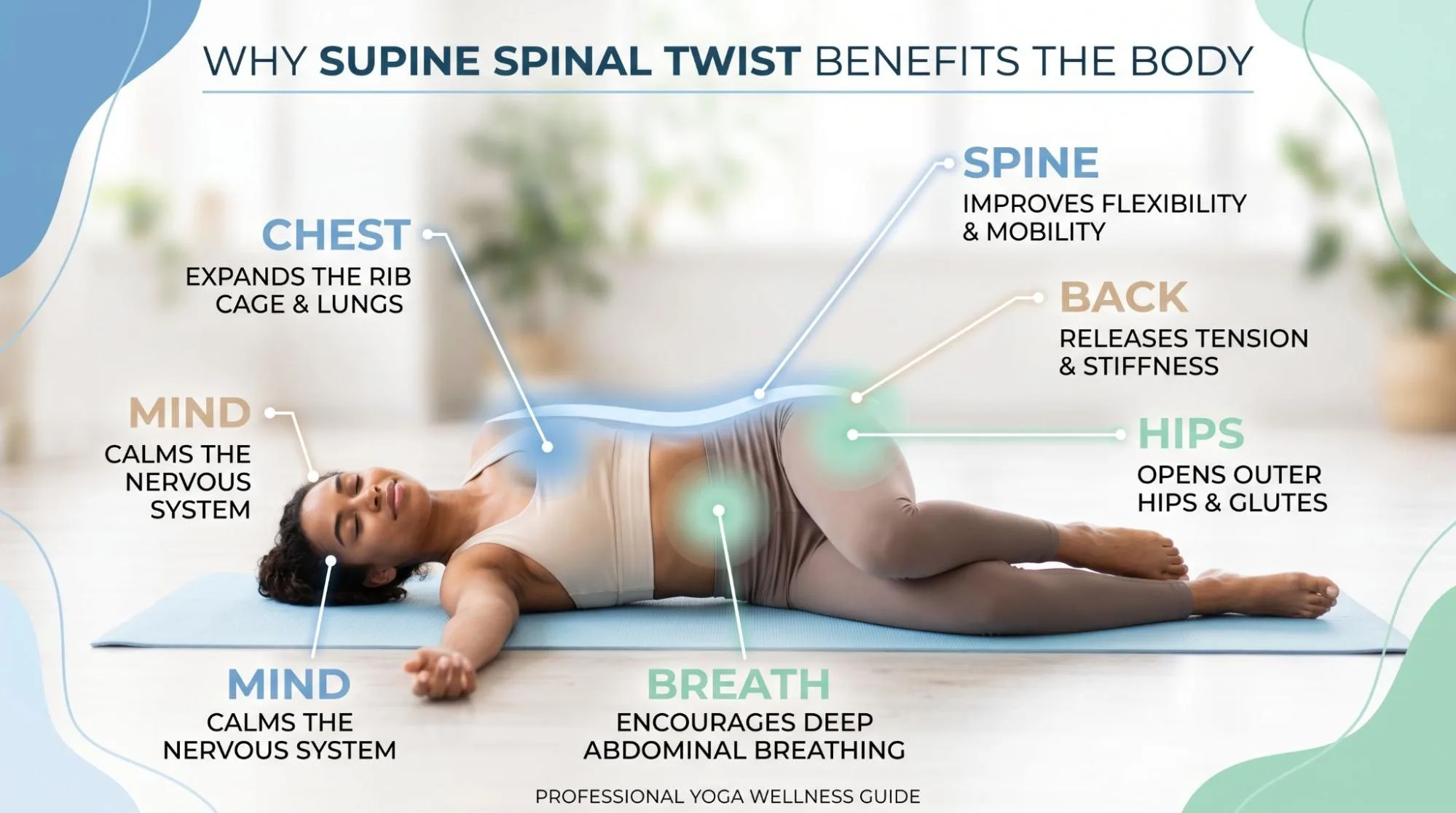 alt=”Supine twist shoulder alignment” title=”Supine twist shoulder alignment”
Spinal Health and Mobility
Improves Rotational Mobility
The spine is made to move in different directions, including rotation. Many people lose some of that natural movement because they sit for long hours, drive often, or work at a computer.
A gentle spinal twist helps bring movement back into the spine without forcing it. When practiced regularly, it can make the back feel less locked and more mobile.
Reduces Back Stiffness
Back stiffness often builds slowly during the day. You may feel it after standing up from a chair, waking up in the morning, or bending forward.
lying spinal rotation can ease that stiff feeling by gently stretching the muscles along the back. Because you are lying down, the body does not have to work hard to stay upright, so the stretch feels softer and safer.
Encourages Better Spinal Alignment
This pose can help you notice how your body holds tension. One shoulder may lift more than the other, or one side of the back may feel tighter.
That awareness is useful. It helps you adjust your posture and movement more gently instead of forcing the body into a shape it is not ready for.
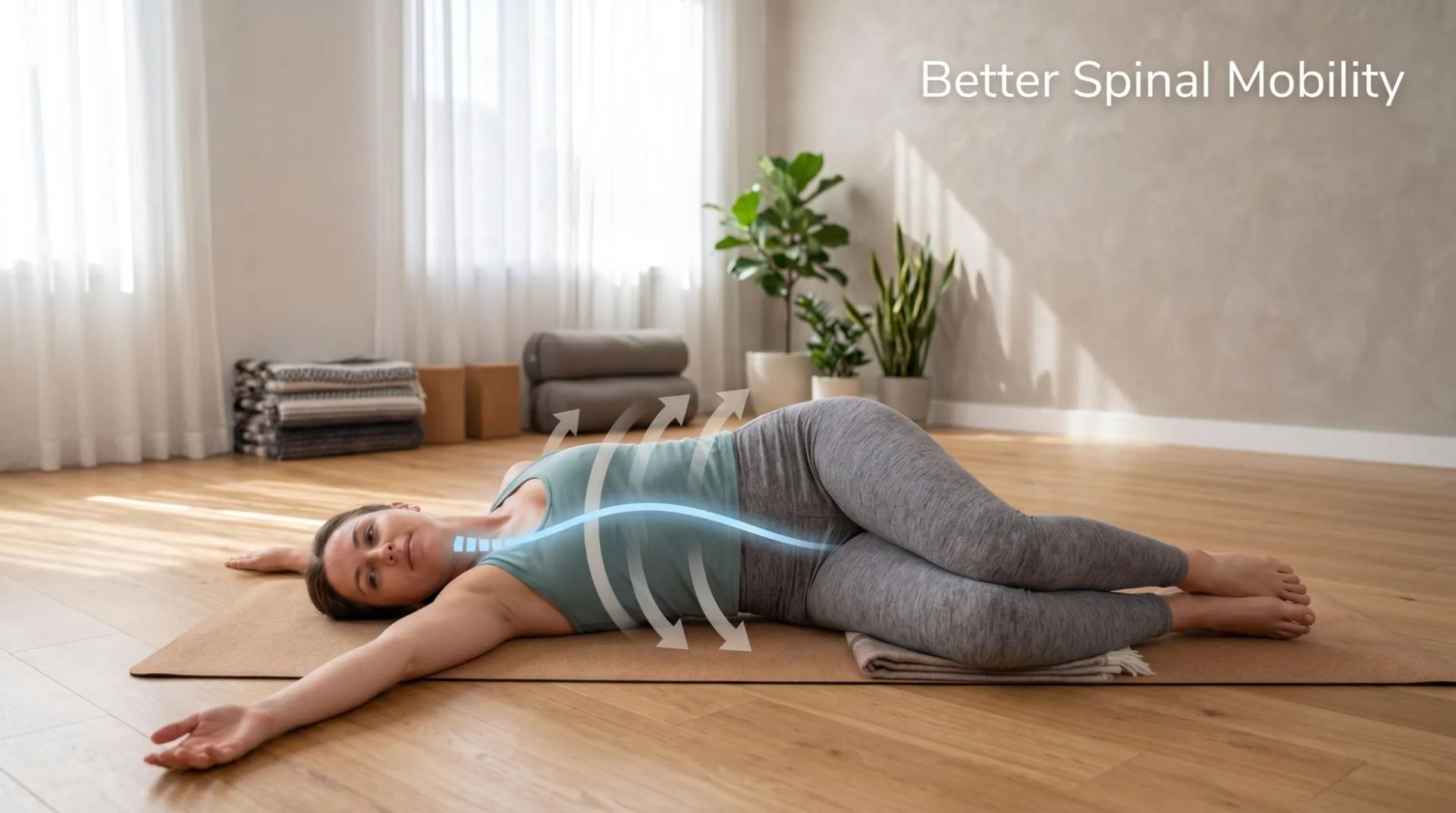 alt=”Supine twist with pillow modification” title=”Supine twist with pillow modification”
Learn More : Reclined Pigeon Pose for Hip Pain
Lower Back Tension Relief
One of the most practical lying spinal rotation yoga benefits is the way it helps release mild lower back tension without requiring force.
Stretches the Lower Back Muscles
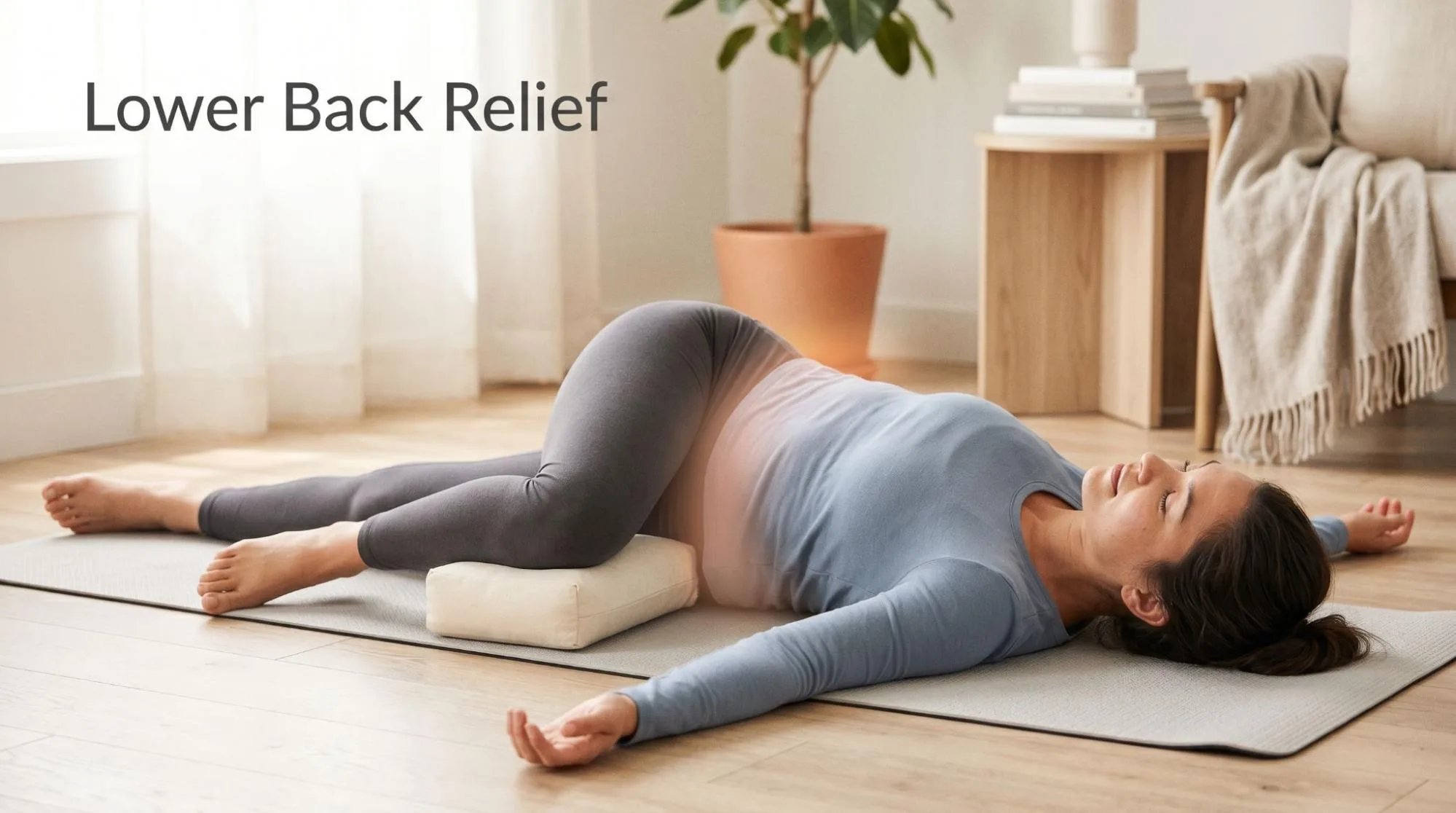
One of the biggest reasons people practice this pose is lower back relief. When the knees fall to one side, the lower back muscles receive a mild stretch.
The stretch should feel comfortable, not sharp. If your knees do not reach the floor, use a pillow or folded blanket underneath them. Support often makes the pose more relaxing.
Releases Hip and Glute Tightness
Tight hips and glutes can add pressure to the lower back. This is common for people who sit for long periods or train hard without enough stretching.
A lying spinal rotation can stretch the outer hip, glute area, and sometimes the piriformis muscle. If one side feels tighter, move slowly and avoid pushing the knee down.
Helps the Body Unwind After Sitting
After a long workday, your body may feel compressed. The hips get tight, the lower back feels heavy, and the chest may collapse forward.
This pose helps reverse that pattern gently. It opens the body, softens the back, and gives your muscles a chance to relax after sitting.
 alt=”Knee position in a supported spinal twist” title=”Knee position in a supported spinal twist”
Chest, Shoulder, and Side Body Stretch
Opens the Chest
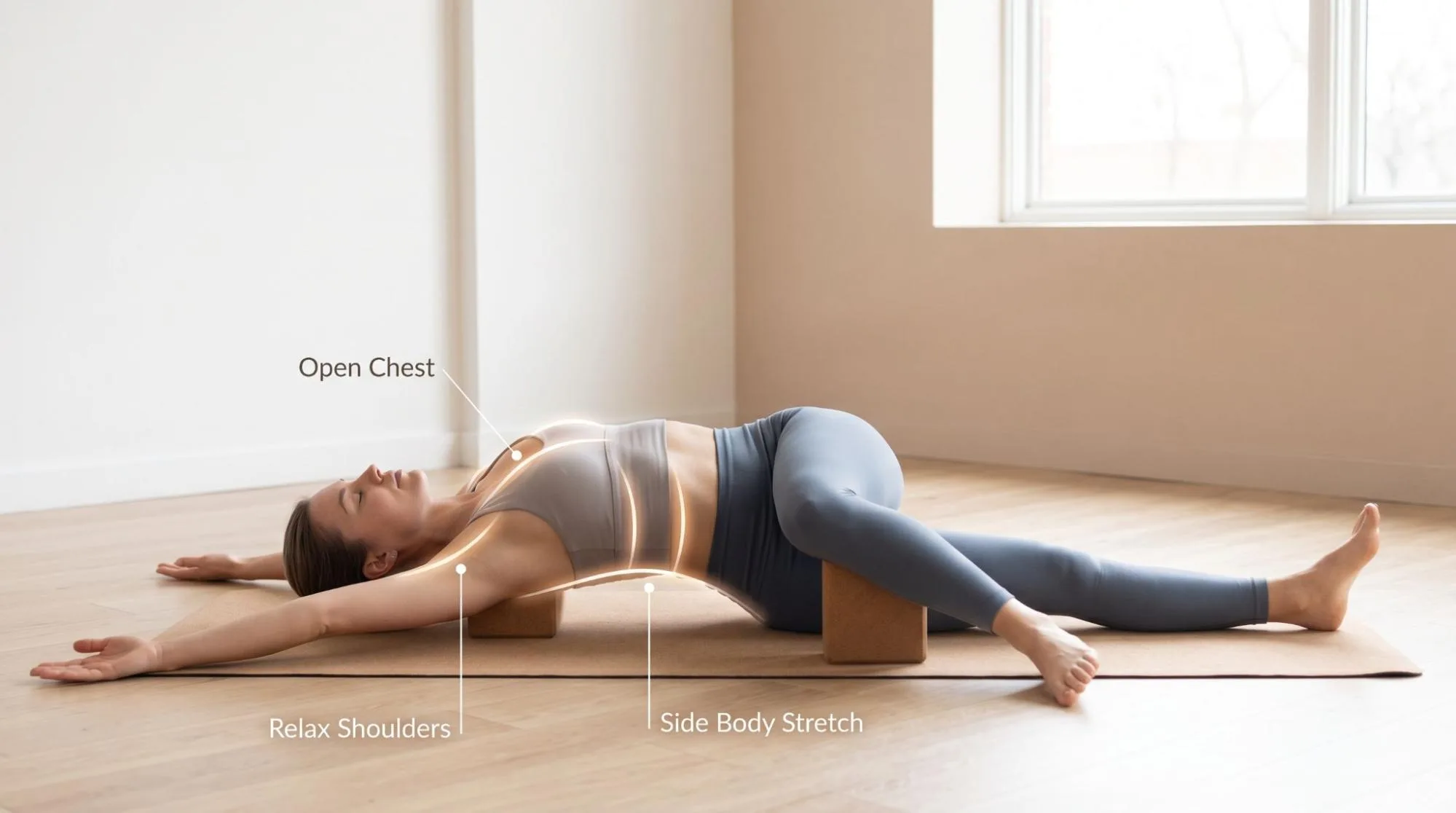
When you open your arms to the sides, the chest naturally expands. This feels especially helpful if you spend a lot of time typing, texting, or driving.
A more open chest can also make breathing feel easier. You do not need to force the shoulders down; just let them become heavy with each exhale.
Stretches the Shoulders
lying spinal rotation can create a gentle stretch across the shoulders and upper chest. If your shoulder lifts from the floor, that does not mean you are doing it wrong.
Keep the pose comfortable. You can reduce the twist or place support under your knees to help the upper body relax more easily.
Lengthens the Side Body
The side body includes the ribs, waist, and side muscles. These areas often become tight from poor posture or repetitive movement.
As your knees fall to one side and your arms open, the side body gets a gentle lengthening effect. This can make the breath feel wider and more relaxed.
 alt=”Breathing during a lying spinal rotation” title=”Breathing during a lying spinal rotation”
Digestive Support
Gentle Abdominal Massage
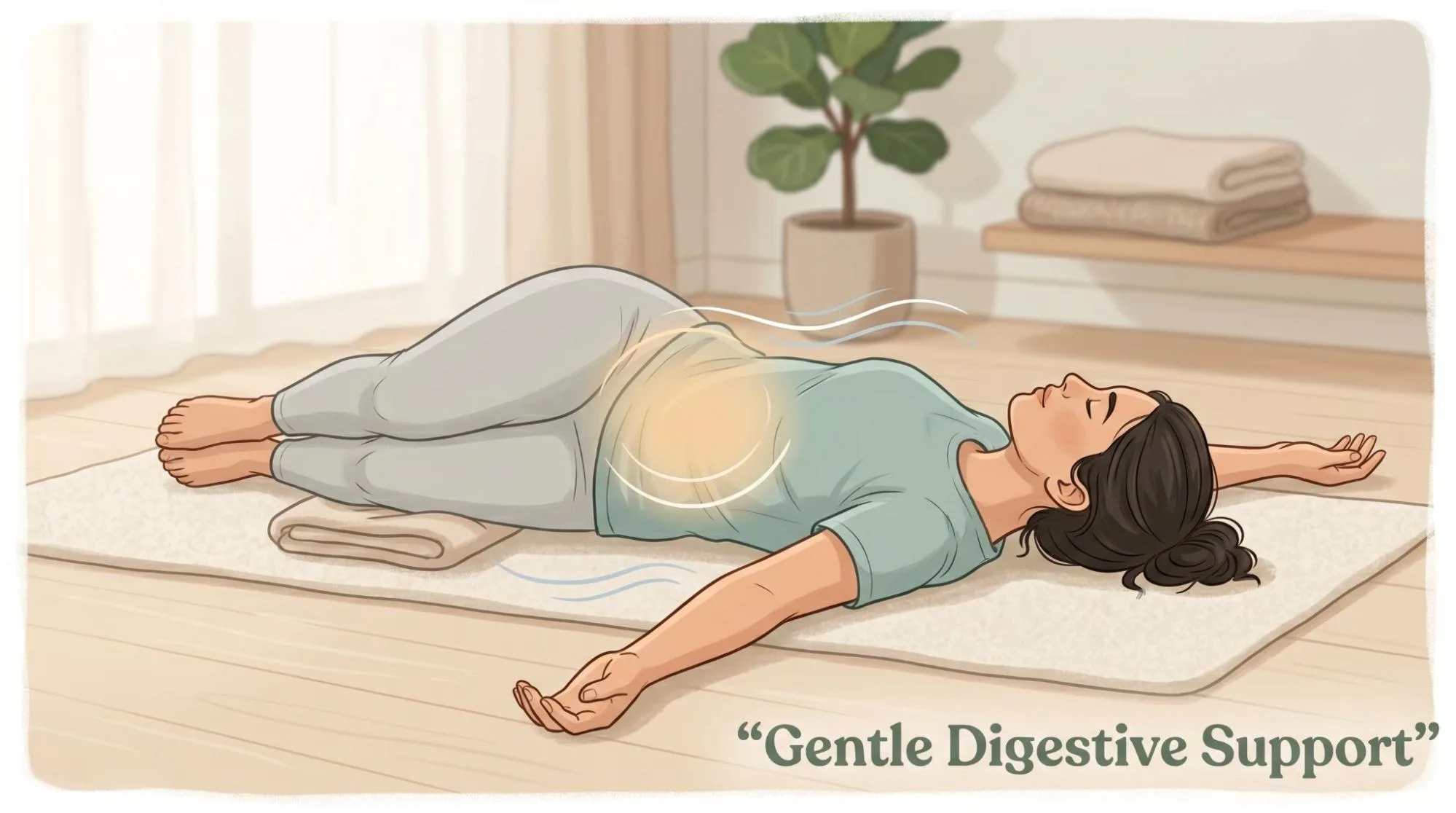
Twisting poses are often used in yoga to support digestion. In lying spinal rotation, the belly receives a soft squeeze and release.
This may help the abdomen feel more relaxed, especially when paired with slow breathing. It is not a cure for digestive issues, but it can feel soothing when the body feels tight or bloated.
Supports Relaxation Around the Belly
Many people hold stress in the belly without noticing it. The stomach may feel tight, the breath may become shallow, or the body may stay slightly tense.
In this pose, allow the belly to soften. Let your breath move naturally instead of pulling the stomach in.
Encourages Mindful Breathing
This pose works best when you stay aware of your breath. As you inhale, feel the ribs expand. As you exhale, let the knees, shoulders, and face soften.
Breathing deeply helps the pose become calmer and more effective. It also stops you from pushing too hard.
 alt=”Beginner supine twist setup” title=”Beginner supine twist setup”
Learn More : Seated Forward Fold Yoga Step by Step
Nervous System Regulation
Calms the Body
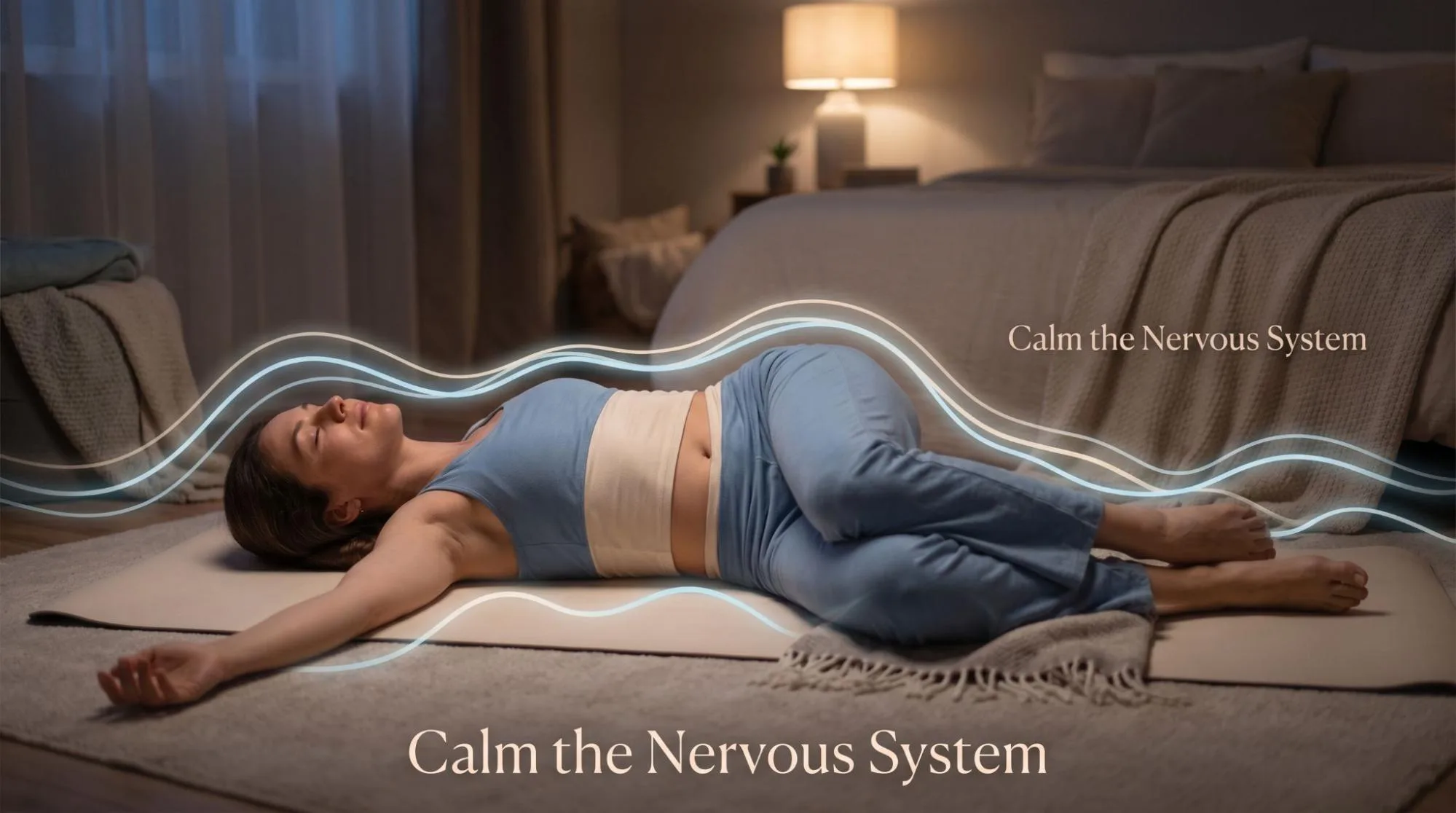
The nervous system responds well to slow movement, stillness, and steady breathing. lying spinal rotation offers all three. Among the quieter lying spinal rotation yoga benefits, nervous system relaxation is one of the most valuable.
Because the body is supported by the floor, it can feel safe enough to relax. This is one reason the pose is often used near the end of yoga practice.
Helps Lower Stress
Stress often shows up as tight shoulders, shallow breathing, a clenched jaw, or a stiff back. This pose helps release those patterns slowly.
When you stay still and breathe, the body gets a signal that it does not need to stay tense. Even a short hold can feel grounding.
Supports Better Sleep
Practicing this pose before bed may help your body settle. It releases the back and hips while encouraging slower breathing.
If your mind feels busy at night, try holding the pose gently on each side for a few breaths. Keep the room quiet and avoid forcing the stretch.
 alt=”Supine twist hip comfort modification” title=”Supine twist hip comfort modification”
How to Practice lying spinal rotation Yoga
Step-by-Step Practice
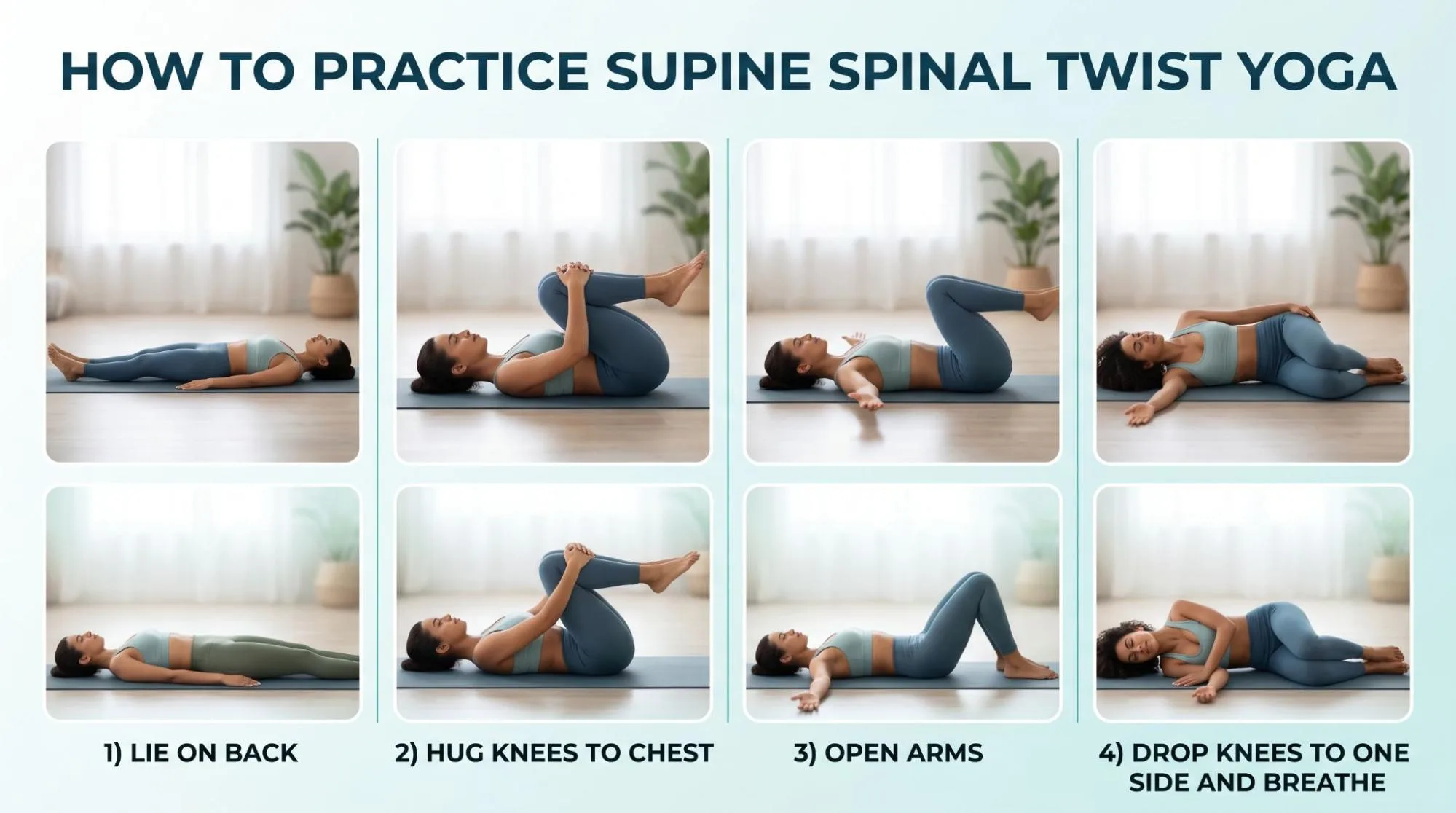
Lie on your back on a mat or firm surface. Hug your knees into your chest and take a slow breath. Open your arms out to the sides in a T-shape or cactus shape.
Let both knees drop gently to the right side. You may turn your head to the left if your neck feels comfortable. Hold the pose and keep breathing deeply. Then bring the knees back to center and switch sides.
Breathing During the Pose
The breath should stay slow and easy. If you notice yourself holding the breath, reduce the twist.
Try breathing into the ribs and belly. With every exhale, let the body become heavier instead of trying to stretch more.
 alt=”Legs supported during a spinal rotation” title=”Legs supported during a spinal rotation”
lying spinal rotation Variations
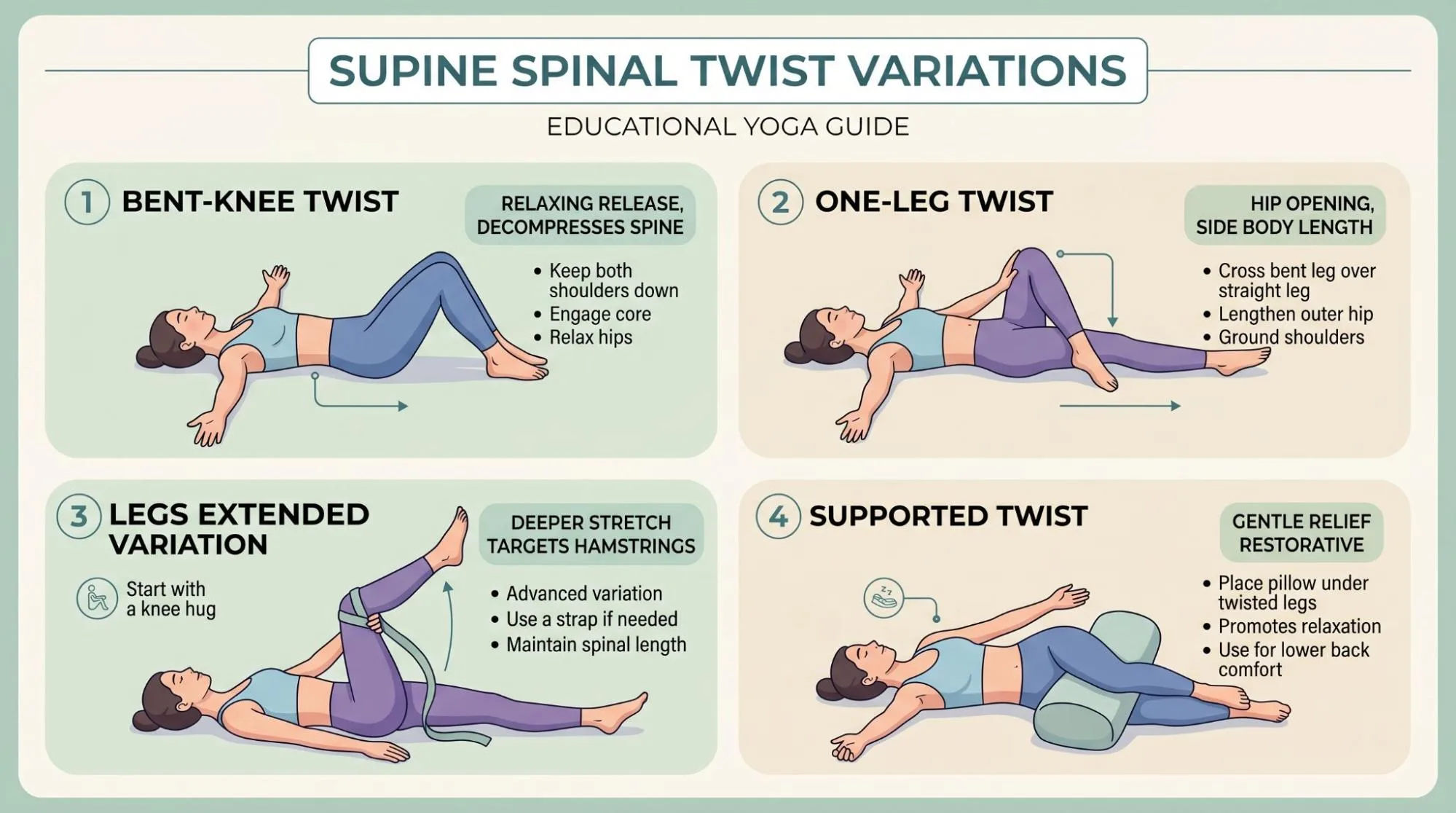
Bent-Knee lying spinal rotation
This is the most common version and the best place to start. Both knees stay bent and move together to one side.
It gives a gentle stretch to the lower back and hips. If the knees feel unsupported, place a pillow underneath them.
One-Leg lying spinal rotation
In this version, one leg stays straight while the other crosses over the body. For example, you can keep the right leg long and guide the left leg across to the right side.
This variation gives a deeper stretch through the outer hip, lower back, and side body. Move slowly and keep both shoulders relaxed.
Legs Extended Variation
The leg extended variation is stronger than the bent-knee version. It can stretch the hamstrings, outer hips, and lower back more deeply.
This is better for people who already feel comfortable with the basic pose. If it feels too intense, return to the bent-knee version.
Supported Supine Twist
A supported twist uses a pillow, bolster, or folded blanket under the knees. This makes the pose softer and more restful.
It is a good choice before sleep, after a tiring day, or when your lower back feels sensitive.
 alt=”Relaxed shoulders in supine twist” title=”Relaxed shoulders in supine twist”
Common Mistakes to Avoid
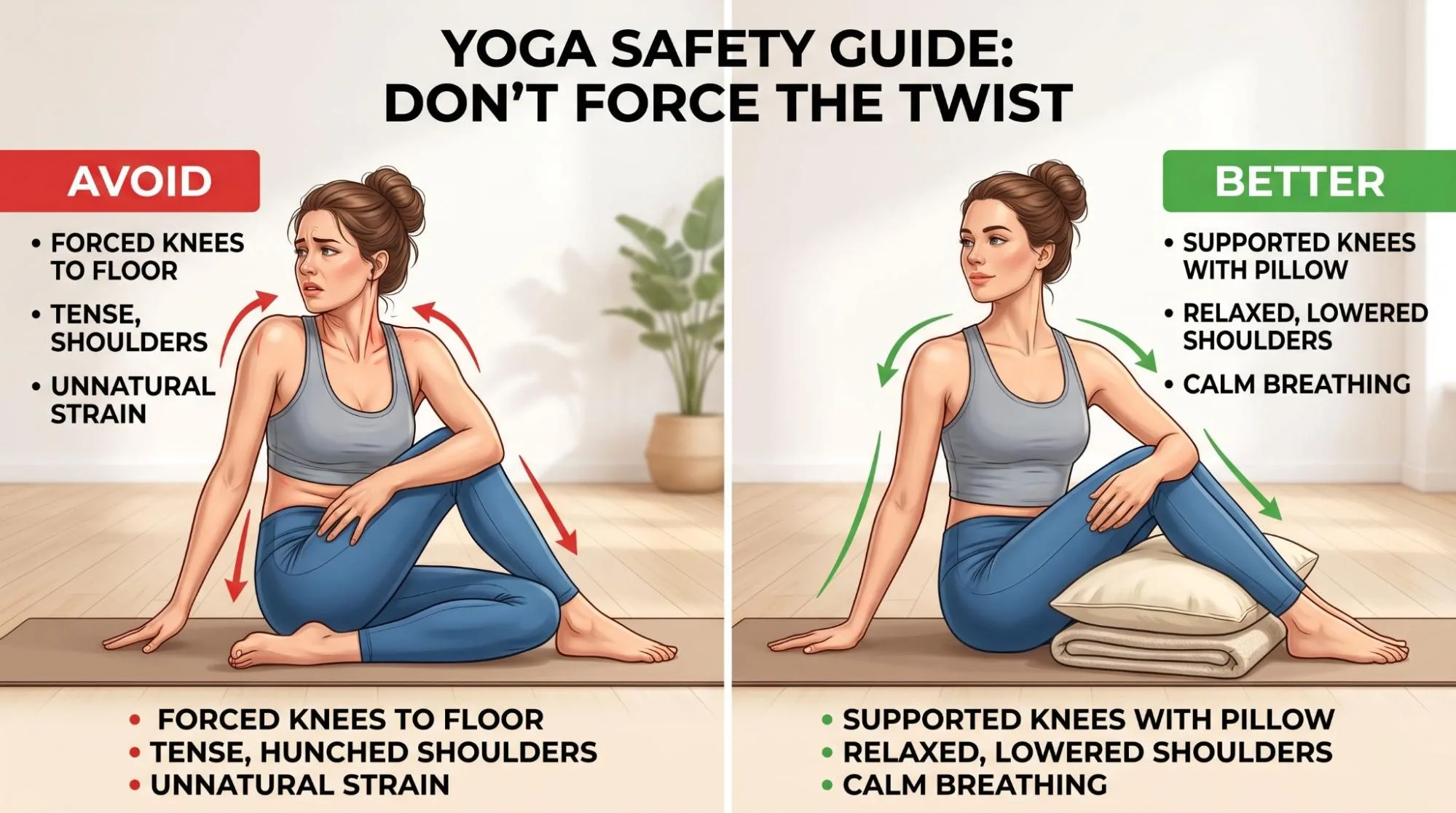
Forcing the Knees to the Floor
Your knees do not have to touch the floor. Forcing them down can strain the lower back or hips.
Use support instead. A pillow under the knees can make the pose more comfortable and still give you the benefits.
Lifting the Shoulders Too Much
Try to keep the shoulders relaxed, but do not fight your body. If one shoulder lifts slightly, reduce the depth of the twist.
The pose should feel balanced. Comfort matters more than how deep the shape looks.
Holding the Breath
Holding the breath creates tension. It also makes the body resist the stretch.
Use deep breathing throughout the pose. If breathing becomes difficult, come out slightly.
Twisting Too Quickly
Move into and out of the pose slowly. Fast twisting can make the back and hips tighten.
Think of this pose as a slow release, not a workout move.
 alt=”Safe range of motion in a lying twist” title=”Safe range of motion in a lying twist”
Who Should Be Careful With This Pose?
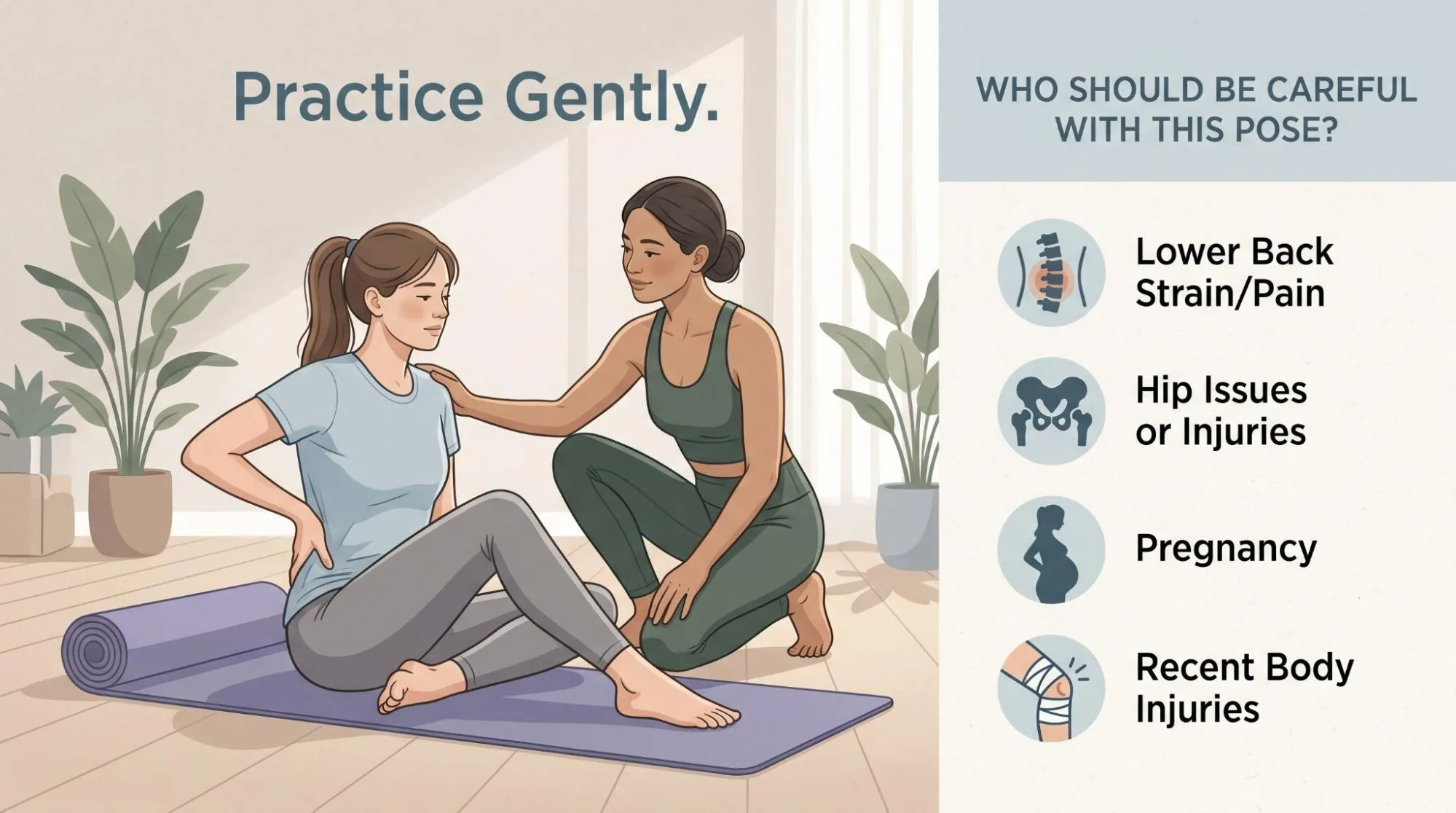
lying spinal rotation is gentle, but some people need extra care. Avoid forcing the pose if you have a recent back injury, hip injury, abdominal surgery, severe sciatica, or serious disc problems.
Pregnant people should also practice with guidance, especially later in pregnancy. If you feel sharp pain, numbness, tingling, or pressure that feels wrong, stop the pose.
 alt=”Supine twist preparation” title=”Supine twist preparation”
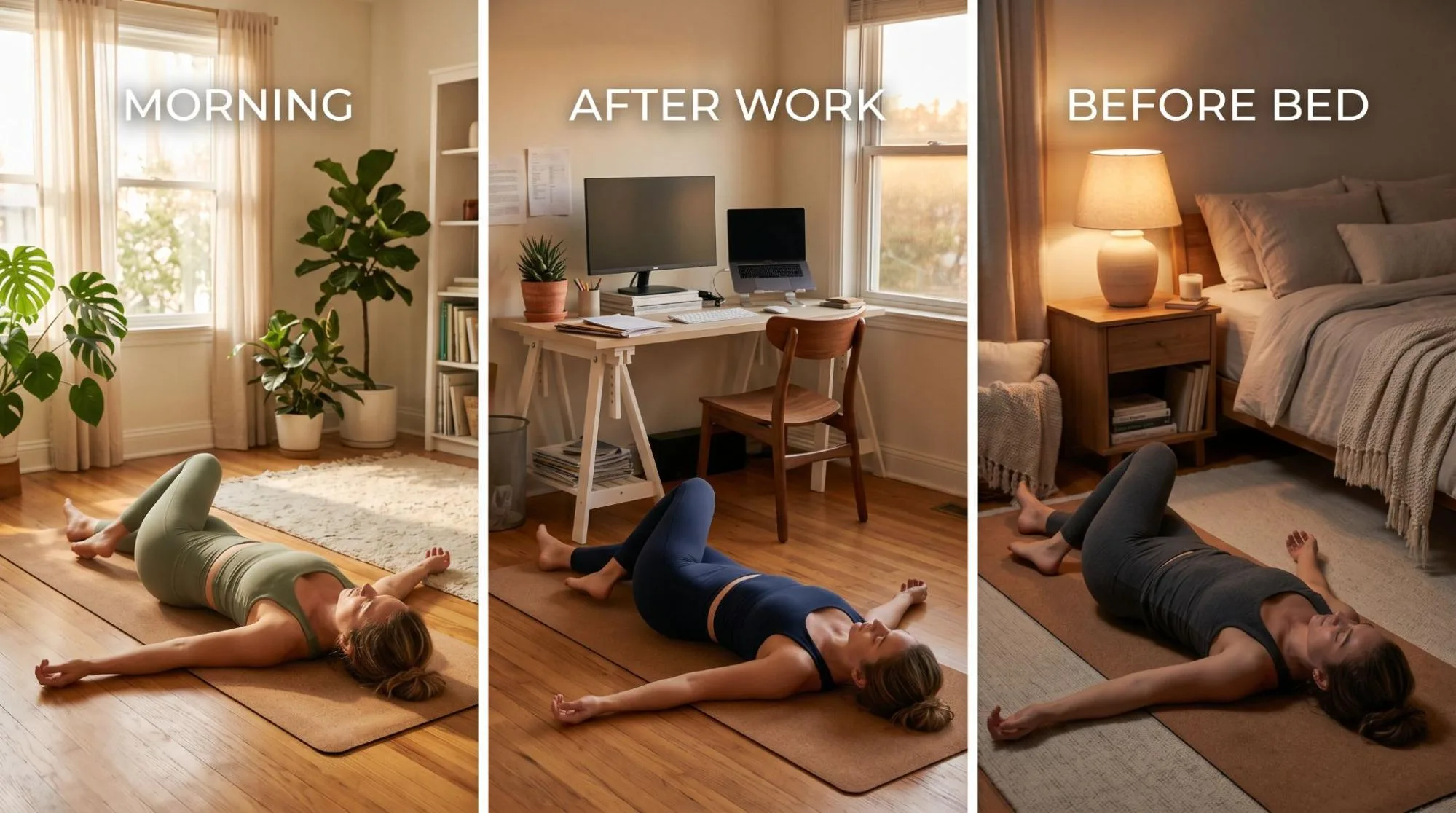
Best Time to Practice lying spinal rotation
You can enjoy the lying spinal rotation yoga benefits in the morning, after work, or before bed, depending on what your body needs.
In the Morning
In the morning, this pose can help ease stiffness after sleep. Keep the twist light because the body may feel less open at first.
A few slow breaths on each side can help the spine and hips wake up gently.
After Work
After work, this pose is useful for releasing tension from sitting. It helps the lower back, hips, chest, and shoulders relax.
You can do it on a mat, carpet, or even on your bed if the surface is firm enough.
Before Bed
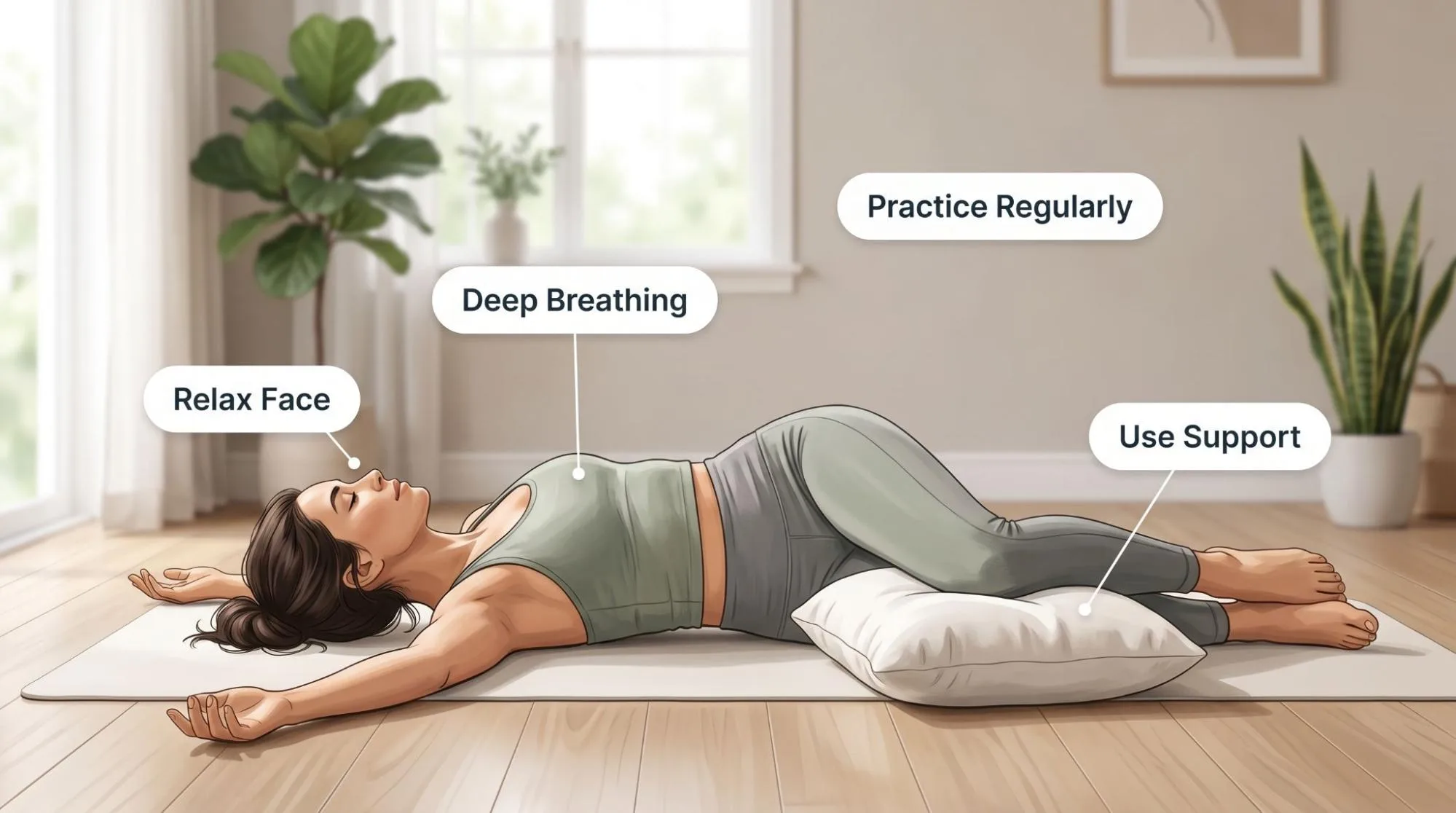
Before bed, a lying spinal rotation can help calm the nervous system. Use a pillow under your knees if you want a softer version.
Stay with slow breathing and let the body settle without effort.
 alt=”Spinal rotation with knees bent” title=”Spinal rotation with knees bent”
How Long Should You Hold the Pose?
Start with 30 seconds to 1 minute on each side. If the pose feels good, you can hold it for 2 to 3 minutes per side.
The best guide is your breath. If you can keep breathing deeply and comfortably, you are probably in a good range.
Tips to Get More Benefits
Use Deep Breathing
Deep breathing helps the muscles soften. Inhale gently through the nose, feel the ribs expand, then exhale slowly.
Do not force the breath. Keep it smooth and natural.
Keep the Face Relaxed
Relax your forehead, jaw, eyes, and tongue. These small details make the whole body feel calmer.
If your face is tense, your body is probably working too hard.
Do Not Chase Flexibility
A deeper twist is not always better. The goal is release, not performance.
Use props when needed and let the pose meet your body where it is.
Practice Regularly
A few minutes most days can be more helpful than one long session once in a while.
Regular practice helps the back, hips, and nervous system respond more easily over time.
 alt=”Gentle yoga cooldown twist” title=”Gentle yoga cooldown twist”
FAQs
What are the main lying spinal rotation yoga benefits?
The main benefits include better spinal mobility, lower back relief, hip and glute stretching, chest opening, digestive support, calmer breathing, and nervous system relaxation.
Is lying spinal rotation good for lower back pain?
It may help mild lower back tightness, especially from sitting. If you have sharp pain, nerve pain, or a serious back condition, practice only with professional guidance.
Should my knees touch the floor?
No, your knees do not need to touch the floor. Use a pillow, blanket, or yoga block if the twist feels too strong.
Can beginners practice this pose?
Yes, beginners can practice the bent-knee version. Move slowly, keep the breath steady, and avoid forcing the knees or shoulders.
What does the extended variation do?
The legs extended variation gives a deeper stretch through the hamstrings, hips, lower back, and side body. It is stronger than the basic version, so use it carefully.
How does deep breathing help in this pose?
Deep breathing helps calm the body and relax tight muscles. It also supports the nervous system and keeps the pose gentle.
Why does one side feel tighter?
One side may feel tighter because of posture, sitting habits, old injuries, sleeping position, or daily movement patterns. This is common, so do not force the tighter side.
Can I do a lying spinal rotation before sleep?
Yes, it can be a good bedtime pose. Keep it slow, supported, and comfortable so the body can relax.
What are the top lying spinal rotation yoga benefits?
The top lying spinal rotation yoga benefits include better spinal mobility, lower back relief, hip stretching, chest opening, relaxed breathing, digestive support, and nervous system calming.
 alt=”Supported supine twist alignment” title=”Supported supine twist alignment”
Learn More: Triangle Pose Yoga Common Mistakes and How to Fix Them
Final Thoughts
lying spinal rotation is simple, but it can be very effective when practiced with care. It helps the spine move, releases lower back and hip tension, opens the chest, supports breathing, and calms the nervous system.
The best approach is gentle. Let the floor support you, breathe slowly, and avoid chasing a deep stretch. A few quiet minutes on each side can leave your back, body, and mind feeling lighter. The lying spinal rotation yoga benefits are strongest when you practice gently, breathe deeply, and avoid forcing the body into a deep twist.
 alt=”Supine twist final relaxation” title=”Supine twist final relaxation”
Frequently Asked Questions
Is lying spinal rotation suitable for beginners?
Yes, beginners can start with bent knees and a pillow for support. Keep the twist small and let the breath remain easy.
Should both shoulders stay on the floor?
Ideally, keep the shoulders relaxed and grounded without forcing them. If one shoulder lifts, reduce the rotation or add support.
Can this twist replace treatment for back pain?
No. It may be a gentle mobility exercise, but ongoing, severe, or worsening symptoms should be assessed by a qualified professional.
Further reading: For general yoga safety information, see NCCIH: Yoga—What You Need To Know.
