
Quick answer: Garland Pose, or Malasana, is a supported deep squat that may improve awareness of the hips, ankles, and pelvic position. Use blocks or a folded blanket when needed, and never force the knees or heels.
Important Safety Note
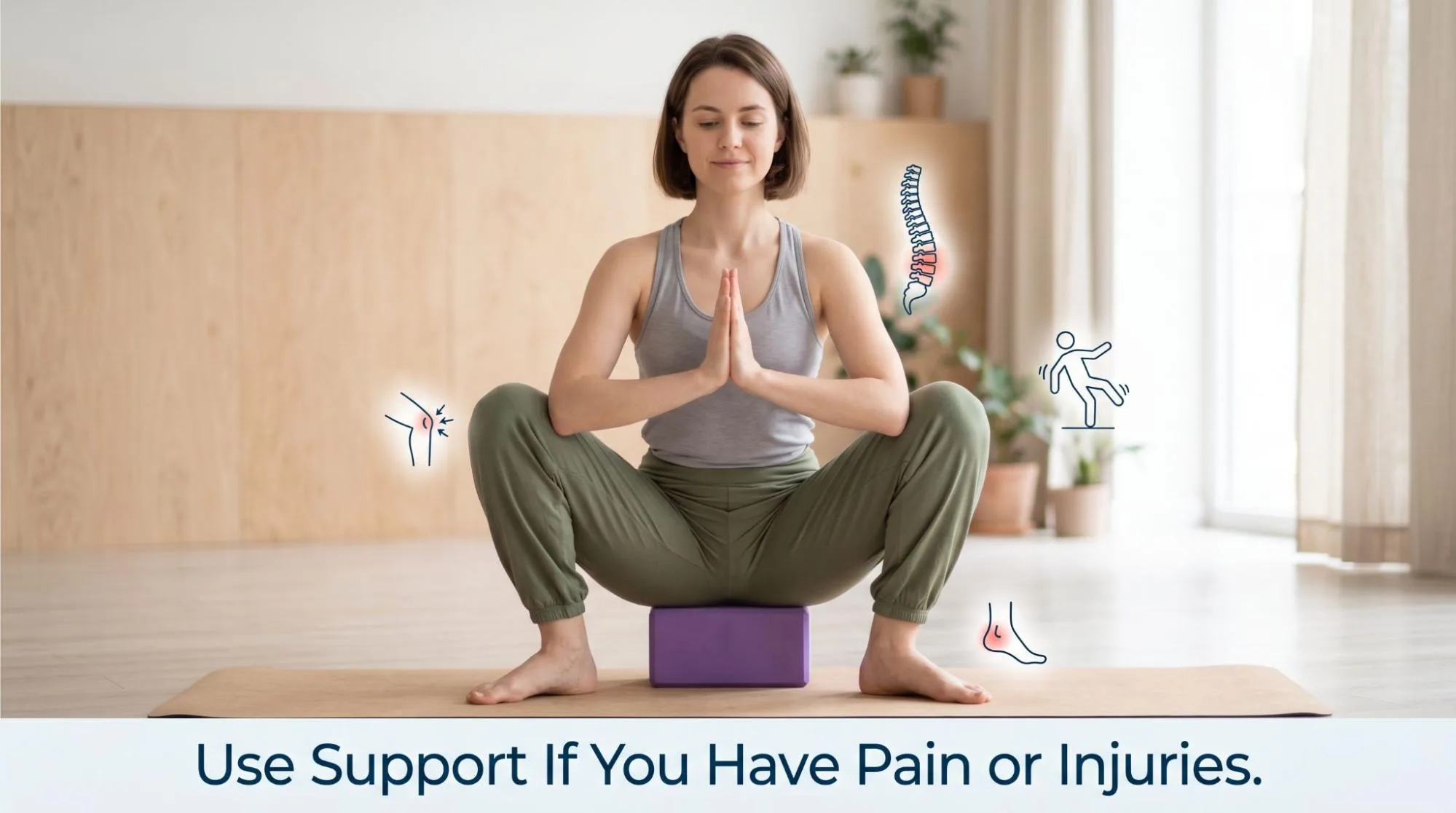
Keep the movement pain-free and use support if balance or ankle mobility is limited. Stop for knee, hip, ankle, or lower-back pain. People with recent lower-body injuries, joint conditions, pelvic-floor concerns, or pregnancy-related limitations should seek qualified guidance and use an appropriate variation.
Introduction
Garland Pose, also known as Malasana, is one of those yoga poses that looks simple until you try it. It is basically a deep squat, but in yoga, it becomes much more than just sitting low to the ground. This pose gently opens the hips, stretches the lower back, strengthens the legs, and helps the body return to a natural resting position that many people lose because of long hours sitting on chairs.
For beginners, Garland Pose can feel challenging at first, especially if the hips, ankles, or lower back are tight. That is completely normal. You do not need to force your body into a perfect shape on the first day. With small adjustments, steady breathing, and simple support like a yoga block or rolled blanket, Malasana can become one of the most useful beginner yoga poses in your practice.
The main garland pose malasana benefits beginners often notice are better hip mobility, improved posture, stronger lower body muscles, and a calmer feeling in the body. It is also a practical pose because it teaches balance, grounding, and body awareness in a very natural way.
What Is Garland Pose, or Malasana?
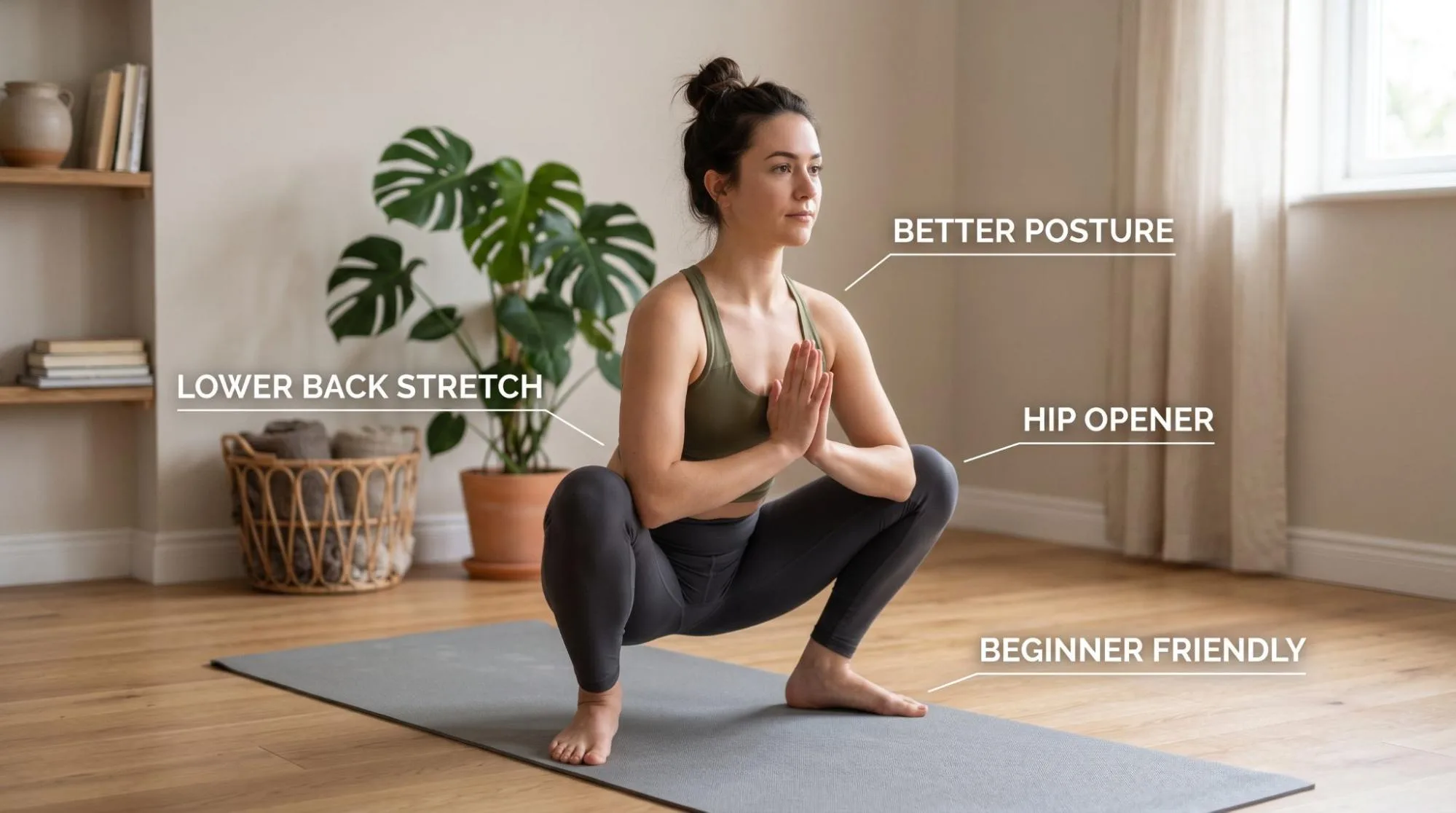
Garland Pose, or Malasana, is a deep squatting yoga posture. In this pose, you bend your knees, lower your hips toward the floor, keep your feet grounded, and bring your hands into a prayer position at your chest.
The hands are often placed in Anjali Mudra, which means palms together near the heart. The elbows gently press against the inner knees to help open the hips.
Malasana or Garland Pose is a deep squat, but it should not feel harsh or painful. The idea is to settle into the posture with control, breathe steadily, and allow the hips and lower back to release gradually.
Why Garland Pose Is Good for Beginners
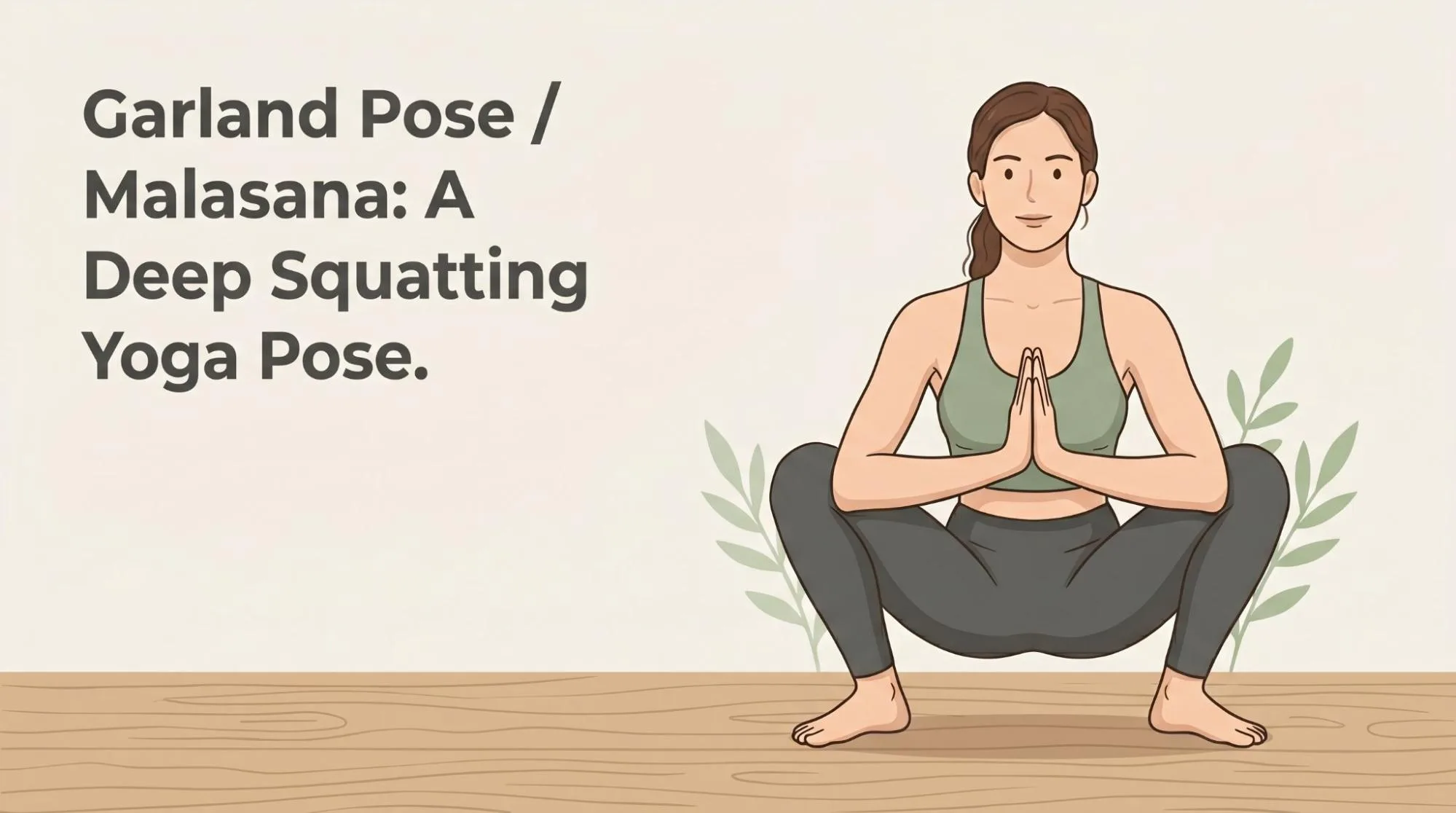
Garland Pose is good for beginners because it works on many basic areas of the body at the same time. It improves hip flexibility, ankle mobility, leg strength, balance, and posture.
Many beginner yoga poses focus on stretching one area, but Malasana connects the whole lower body. You feel the feet, knees, hips, spine, and breath working together.
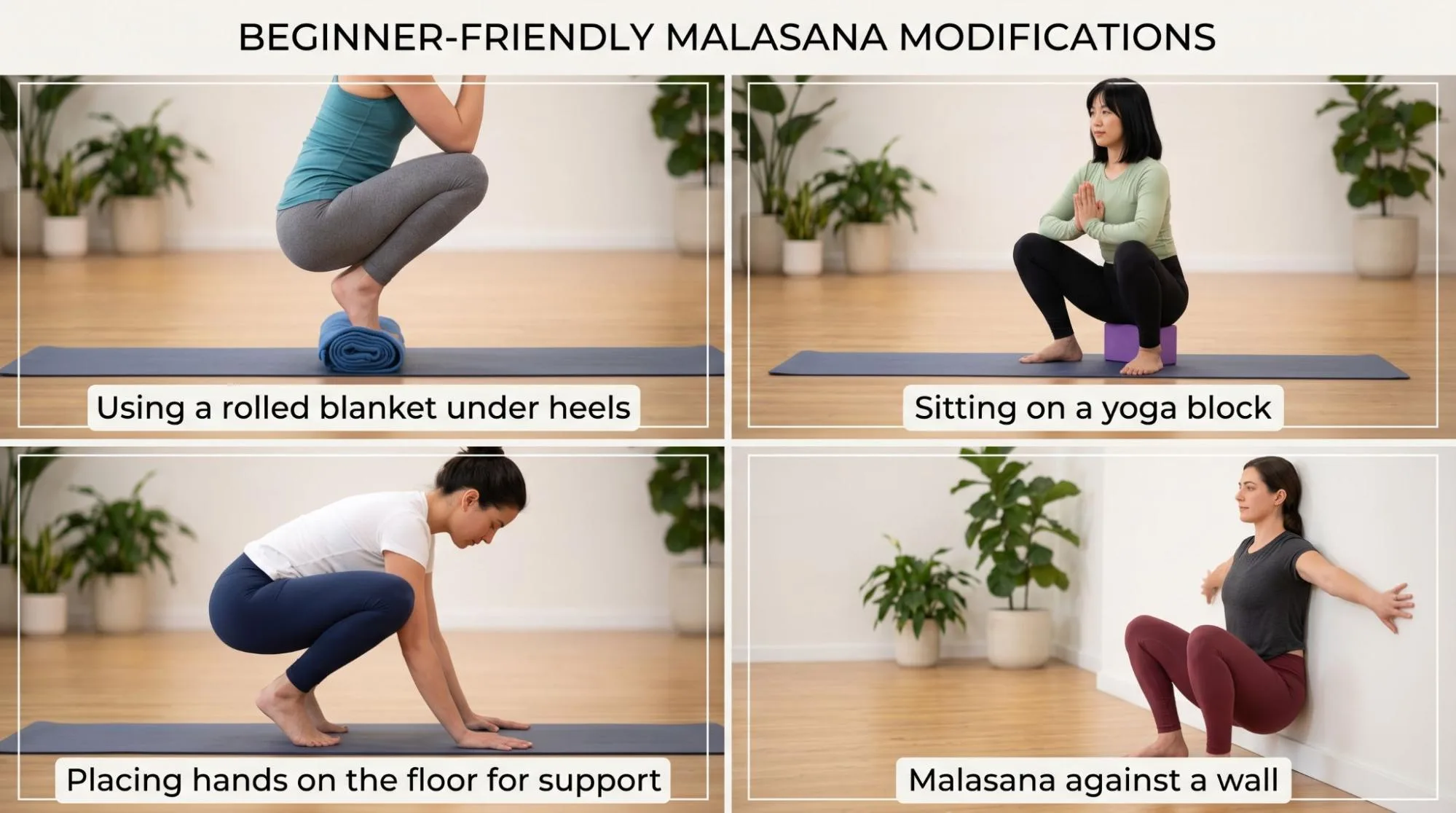
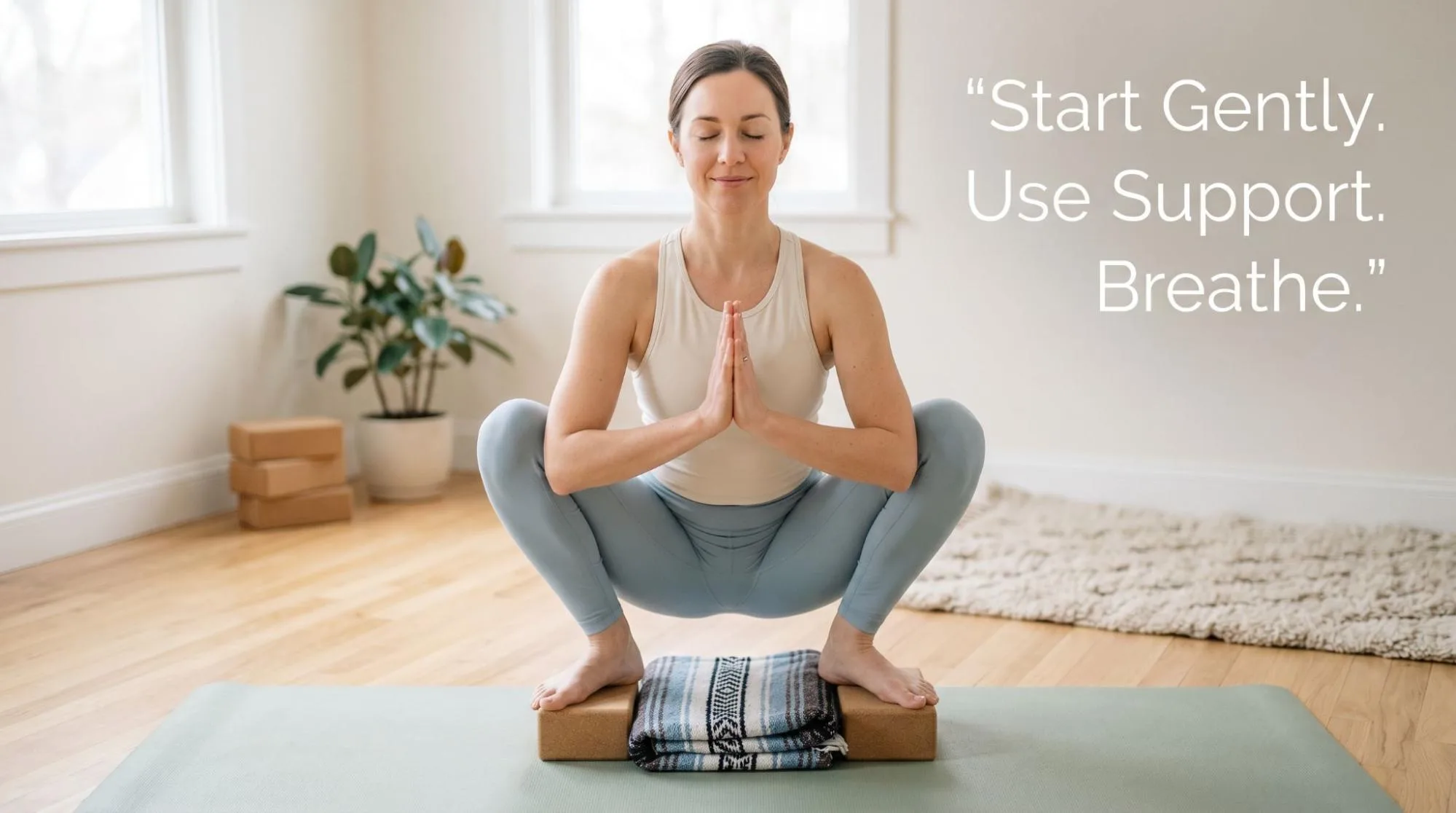
Another reason beginners benefit from practicing Malasana is that it can be modified easily. If your heels do not touch the floor, you can use a rolled blanket. If the squat feels too deep, you can sit on a yoga block. If balance is difficult, you can place one hand on the floor or practice near a wall.
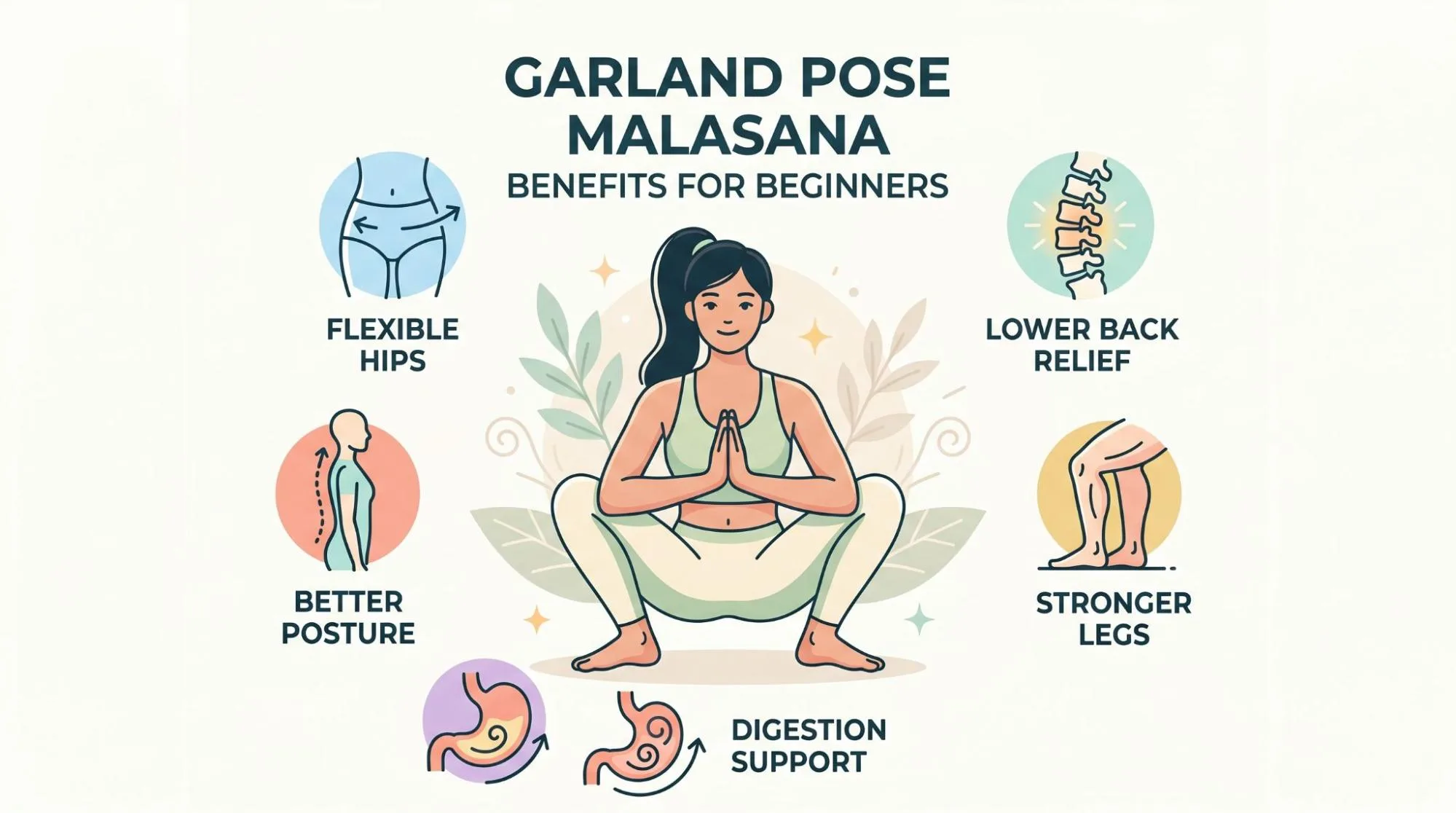
Garland Pose Malasana Benefits Beginners Should Know
Improves Hip Flexibility
Garland Pose is a strong but gentle hip opener. It stretches the inner thighs, groin, and hips while allowing the lower body to relax into a natural squat.
If you sit for many hours during the day, your hips may become stiff. Practicing Malasana can help bring movement back into that area.
Do not push the knees too wide. Let the hips open slowly with breath and time.
Stretches the Lower Back
The deep squatting position can help release tightness in the lower back. When your hips drop down and your spine stays long, the lower back gets a soft stretch.
The key is to avoid collapsing forward. Try to lengthen your spine and lift your chest slightly.
If your back rounds too much, use a yoga block under your hips for support.
Strengthens the Lower Body
Garland Pose does not only stretch the body. It also strengthens the lower body.
While holding the pose, your thighs, calves, ankles, glutes, and feet stay active. This can improve balance and make everyday movements easier, such as bending, lifting, sitting, and standing.
Supports Better Posture
Malasana teaches you how to keep the chest open while staying grounded through the feet. This is helpful for posture because many people sit with rounded shoulders and a curved back.
When you practice Garland Pose properly, you learn to keep the spine long, shoulders relaxed, and chest lifted.
May Help Digestion
Garland Pose may help with stimulating digestion because the deep squat gently compresses the abdominal area. Many yoga practitioners find this pose useful when the stomach feels heavy or tight.
It also encourages slow breathing, which may help relax the nervous system. A relaxed nervous system can support better digestion and reduce body tension.
Learn More : Reclined Pigeon Pose for Hip Pain
How to Do Garland Pose Step by Step
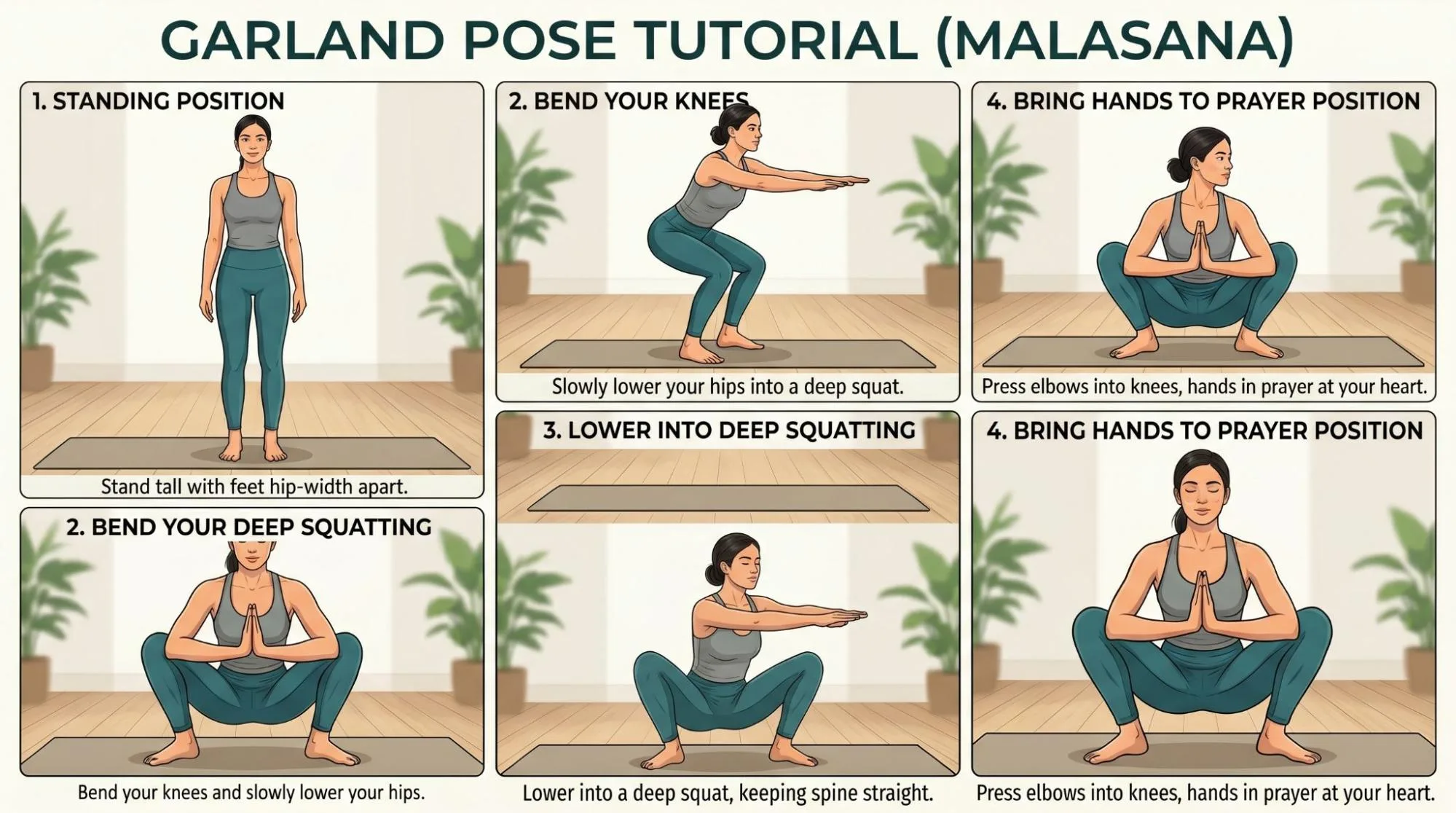
Start in a Standing Position
Stand with your feet slightly wider than hip-width apart. Turn your toes out a little.
Keep your body relaxed. Take a slow breath before moving into the pose.
Lower Into a Deep Squat
Slowly bend your knees and lower your hips toward the floor.
Move with control. Do not drop suddenly into the squat. Keep your feet grounded as much as possible.
This deep squatting position is the base of Malasana.
Bring Hands to Prayer Position
Bring your palms together in a prayer position at the center of your chest.
This hand position is called Anjali Mudra. Keep your shoulders relaxed and your chest lifted.
Use Elbows to Open the Knees
Place your upper arms inside your knees. Begin pressing your elbows gently against your inner thighs.
This helps the hips open, but does not force the knees outward. The movement should feel natural and controlled.
Hold and Breathe
Stay in the pose and breathe slowly.
Try to lengthen your spine as you inhale. As you exhale, allow your hips to soften downward.
Beginners can hold the pose for a short time and gradually increase the duration.
Garland Pose Modifications for Beginners
Use a Blanket Under the Heels
If your heels lift off the floor, place a rolled blanket under them. This gives support and helps you feel more stable.
This is one of the easiest modifications for beginners with tight ankles or calves.
Sit on a Yoga Block
Place a yoga block under your hips and sit lightly on it. This reduces pressure on the knees and makes the pose easier to hold.
A yoga block is especially helpful if you feel tired quickly in the squat.
Place Hands on the Floor
If the prayer position feels difficult, place your hands on the floor in front of you.
Keeping a hand on the floor can help with balance and make the posture feel safer.
Practice Against a Wall
Stand with your back close to a wall and slowly lower into Malasana. The wall gives support and helps you stay upright.
This is useful if you feel unstable or nervous while practicing the pose.
Common Mistakes to Avoid
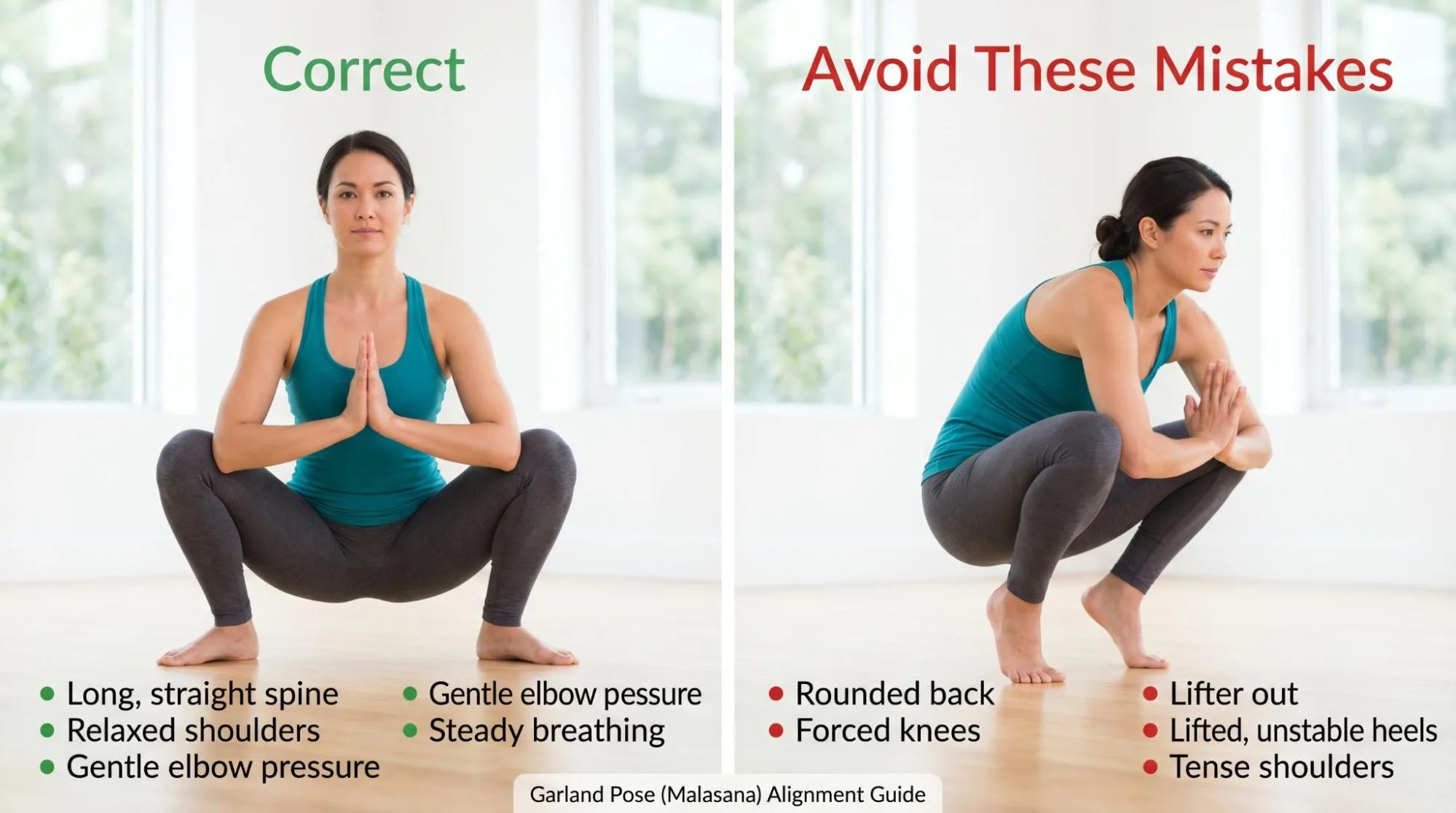
Rounding the Spine Too Much
Some rounding is natural, but avoid collapsing completely. Keep your chest lifted and try to lengthen your spine.
If your back keeps rounding, use a block or wall support.
Forcing the Knees Outward
Do not push your knees aggressively with your elbows. This can strain the knees or hips.
Garland Pose should gently opens the hips, not force them.
Holding the Breath
Beginners often hold their breath when a pose feels hard. Try to breathe slowly and evenly.
Your breathing should help you relax, not make the pose more stressful.
Ignoring Pain
A stretch is fine. Sharp pain is not.
Stop if you feel pain in the knees, ankles, hips, or lower back. Yoga should build awareness, not push the body into injury.
Learn More : Sphinx Pose Yoga for Beginners
Who Should Be Careful with Garland Pose?
People with knee injuries should be careful with Garland Pose. The deep bend can put pressure on the knees if the pose is forced.
You should also be cautious if you have:
- Ankle pain
- Hip injury
- Lower back pain
- Recent surgery
- Pelvic floor discomfort
- Balance issues
Pregnant women should practice with proper guidance, especially if they are new to yoga.
How Long Should Beginners Hold Garland Pose?
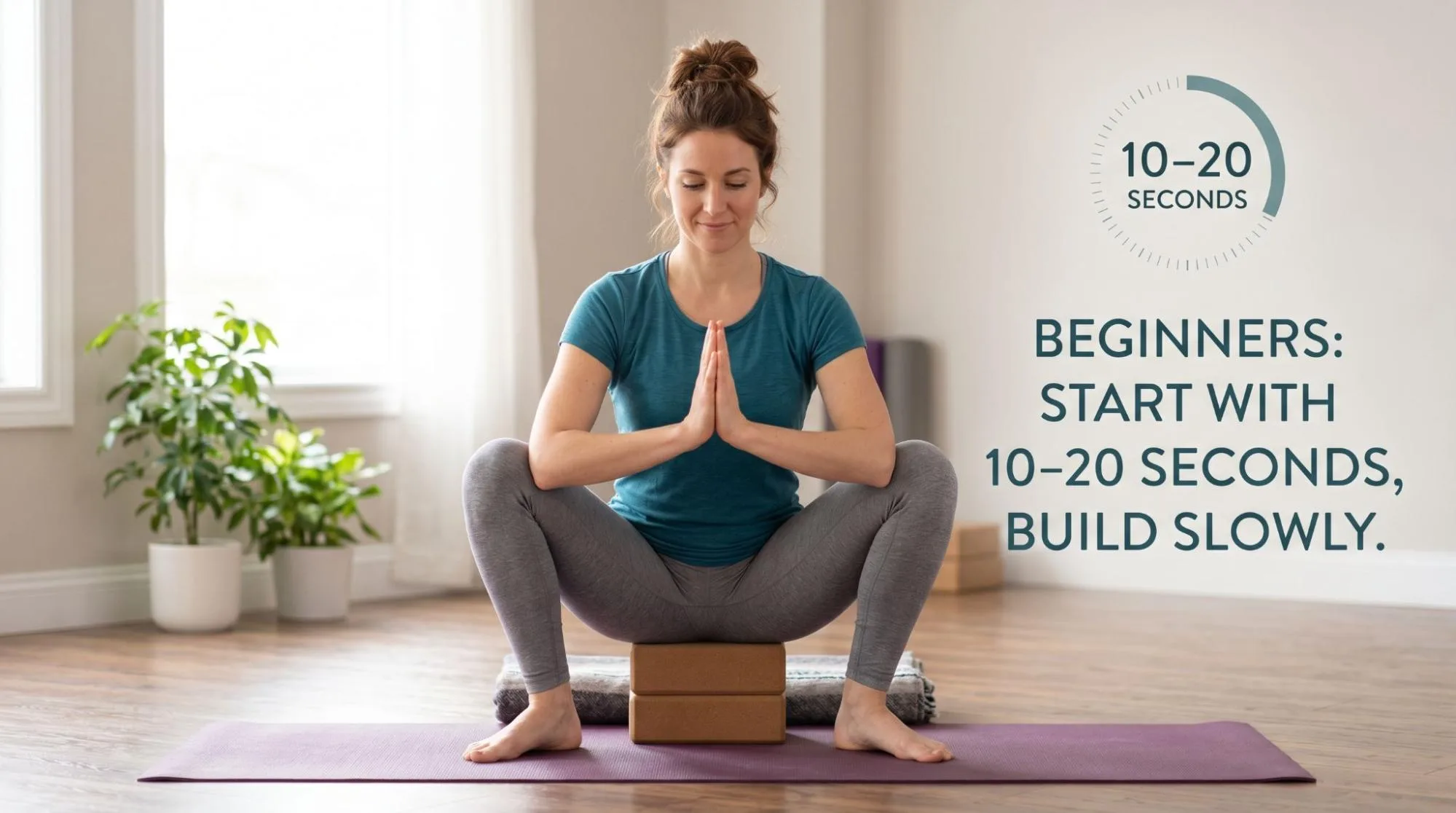
Beginners can start by holding Garland Pose for 10 to 20 seconds.
As the body becomes more comfortable, you can increase the hold to 30 seconds or even 1 minute.
Do not worry about holding the pose for a long time. A short, steady, well-supported Malasana is better than forcing a deep pose with poor posture.
Best Time to Practice Garland Pose
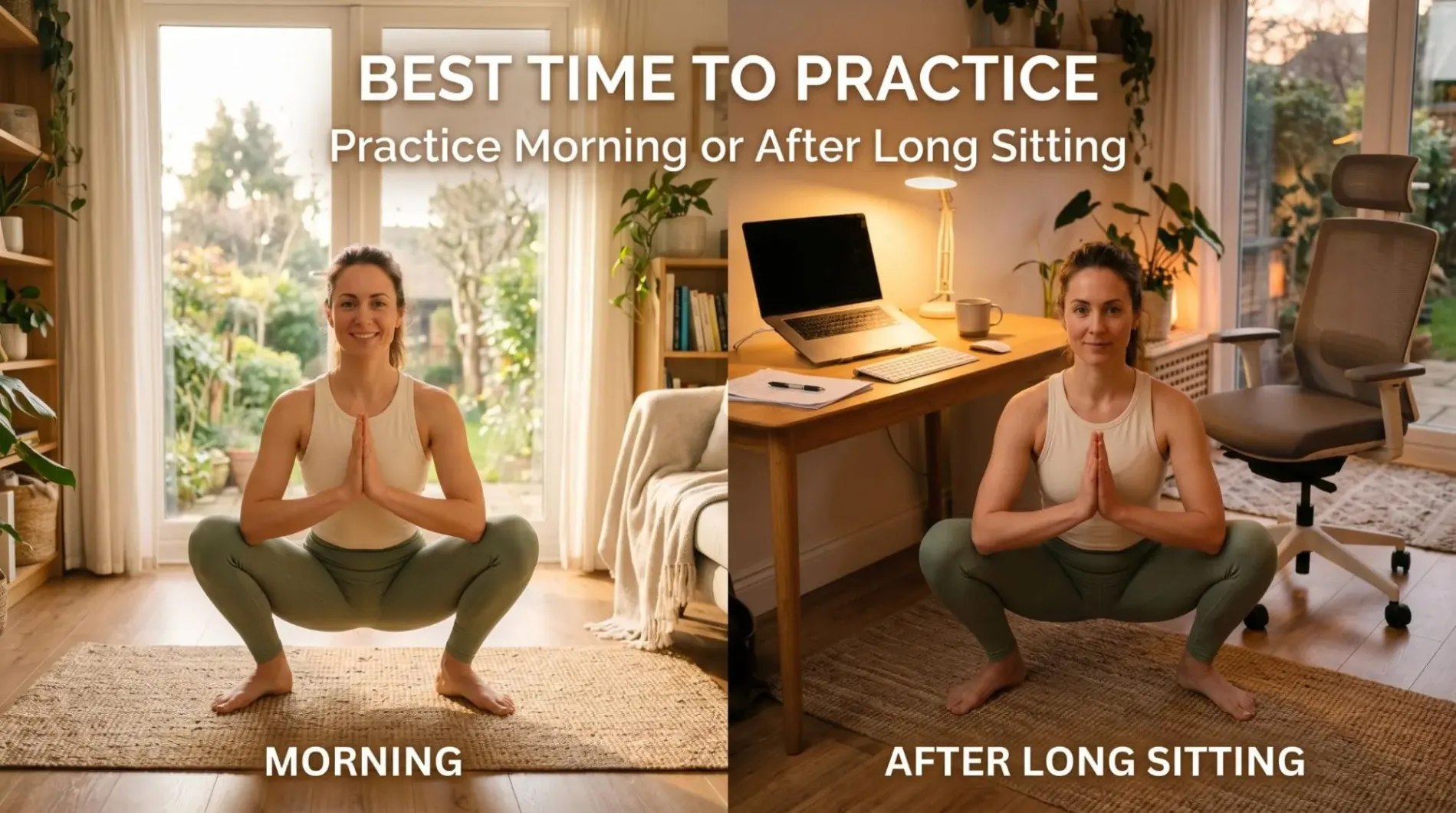
Garland Pose can be practiced in the morning to wake up the hips and legs. It can also be practiced in the evening after sitting for long hours.
You can add it:
- Before a yoga session
- After walking
- During a stretching routine
- After long desk work
- Before meditation, if it feels comfortable
Avoid practicing it immediately after a heavy meal.
FAQ answer
Is Garland Pose good for beginners?
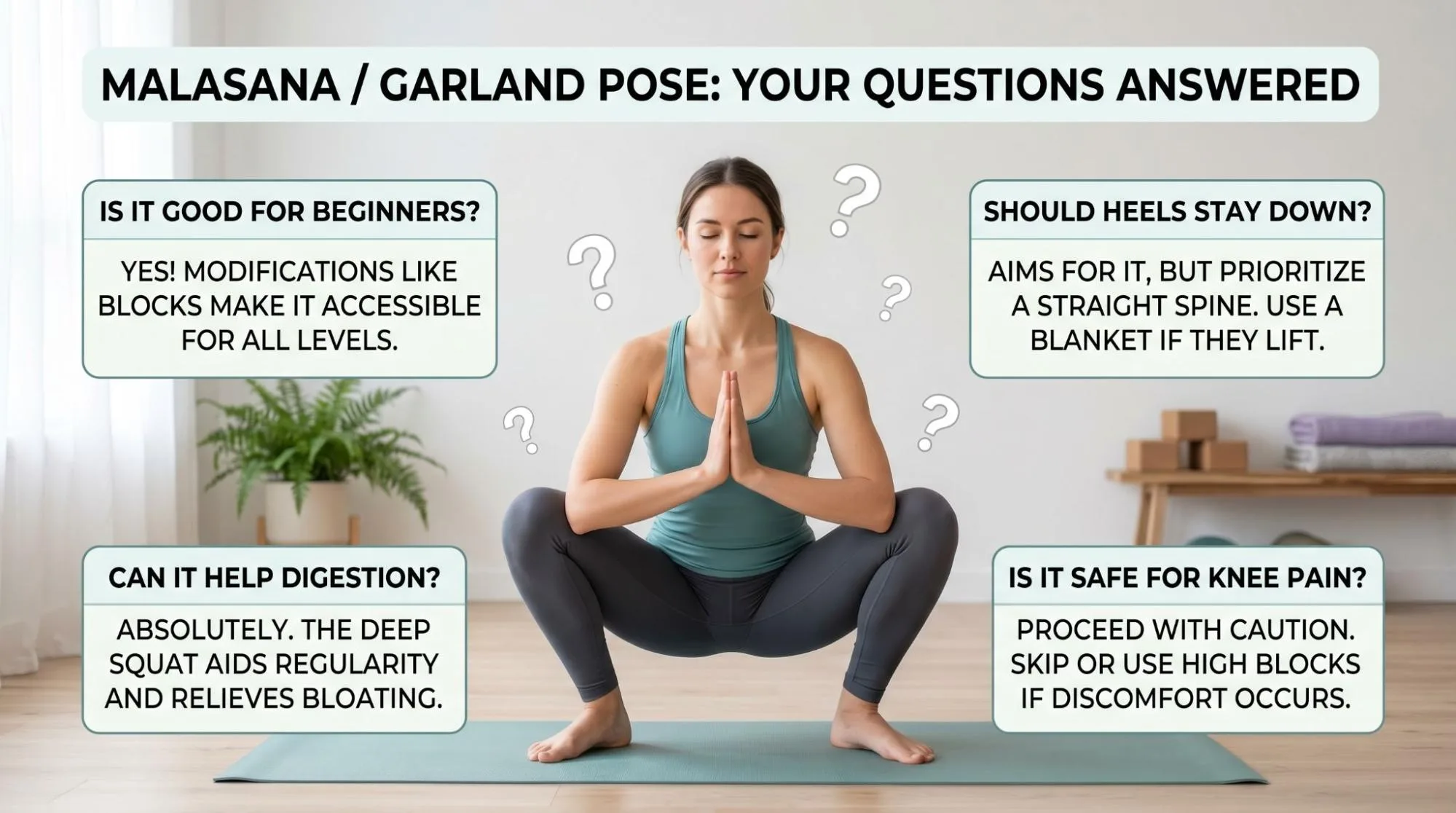
Yes, Garland Pose is good for beginners when practiced slowly and with support. A rolled blanket, yoga block, wall, or hand on the floor can make it easier.
What are the main benefits of Garland Pose?
The main benefits include better hip flexibility, lower back stretching, stronger legs, improved posture, and possible support for digestion.
Why is Malasana hard for me?
Malasana may feel hard if your hips, ankles, calves, or lower back are tight. This is common, especially for people who sit on chairs for many hours.
Should my heels touch the floor?
It is fine if your heels do not touch the floor at first. Use a rolled blanket under your heels for support.
Can Garland Pose help digestion?
Garland Pose may support stimulating digestion by gently compressing the abdomen and calming the body. It should not be used as a treatment for medical digestive problems.
Is Garland Pose safe for knee pain?
If you have knee pain or knee injuries, be careful. Use a block, avoid going too deep, and stop if you feel pain.
How often should beginners practice Malasana?
Beginners can practice Malasana a few times per week. Even short holds can help when done regularly.
Can I do Garland Pose every day?
Yes, many people can practice it daily, but only if it feels comfortable. Use support when needed and avoid forcing the body.
Learn More : Supported Bridge Pose Block Benefits
Conclusion
Garland Pose, or Malasana, is a simple beginner yoga pose with real practical value. It helps open the hips, stretch the lower back, strengthen the lower body, support posture, and build better body awareness.
Start slowly. Use a yoga block, rolled blanket, wall, or hand on the floor if needed. Let the pose meet your body where it is today.
With regular practice, Garland Pose can become more comfortable and more useful. It may even become one of your favorite resting positions after a long day of sitting.
Frequently Asked Questions
Is Malasana suitable for beginners?
Beginners can start with a wider stance, a block under the hips, or a chair for balance. The supported version is often more useful than forcing the full squat.
Why do my heels lift in Garland Pose?
Limited ankle mobility or stance width may cause the heels to rise. Place a folded mat or blanket under the heels and keep the movement comfortable.
What should I do if my knees hurt?
Come out of the pose, reduce the depth, and try a supported variation. Knee pain is a reason to modify or stop.
