
Quick answer: Standing Forward Bend, or Uttanasana, is a standing yoga pose that gently folds the torso toward the legs. It may support hamstring mobility, body awareness, and relaxation when practiced without forcing the spine or knees.
Important Safety Note
Keep the knees softly bent if needed and stop for sharp pain, dizziness, numbness, or symptoms traveling down the legs. People with recent back or hamstring injuries, uncontrolled blood pressure, balance problems, or pregnancy-related concerns should use modifications and seek qualified guidance.
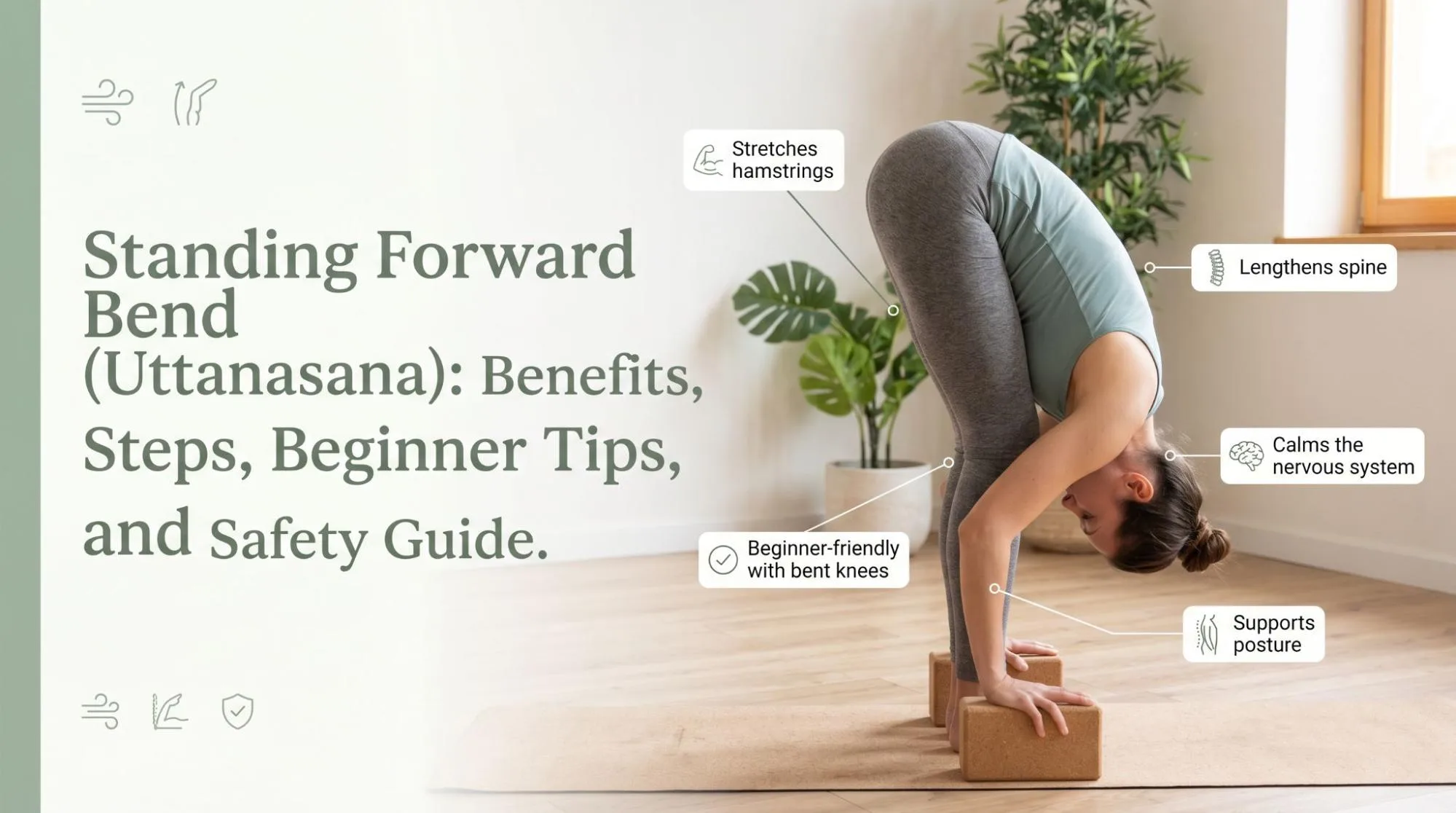
Standing Forward Bend Uttanasana Benefits are one reason this simple-looking yoga pose is practiced in many beginner and advanced yoga classes. Also known as Uttanasana Standing Forward Bend, this calming yoga pose stretches the back of the body, supports better posture, relaxes the spine, and can help settle the nervous system when practiced gently.
At first glance, it may look like you are just folding forward. But when done correctly, Uttanasana is not about forcing your hands to the floor. It is about hinging from the hips, softening the body, breathing steadily, and allowing the spine and legs to release with control.
What Is Standing Forward Bend (Uttanasana)?
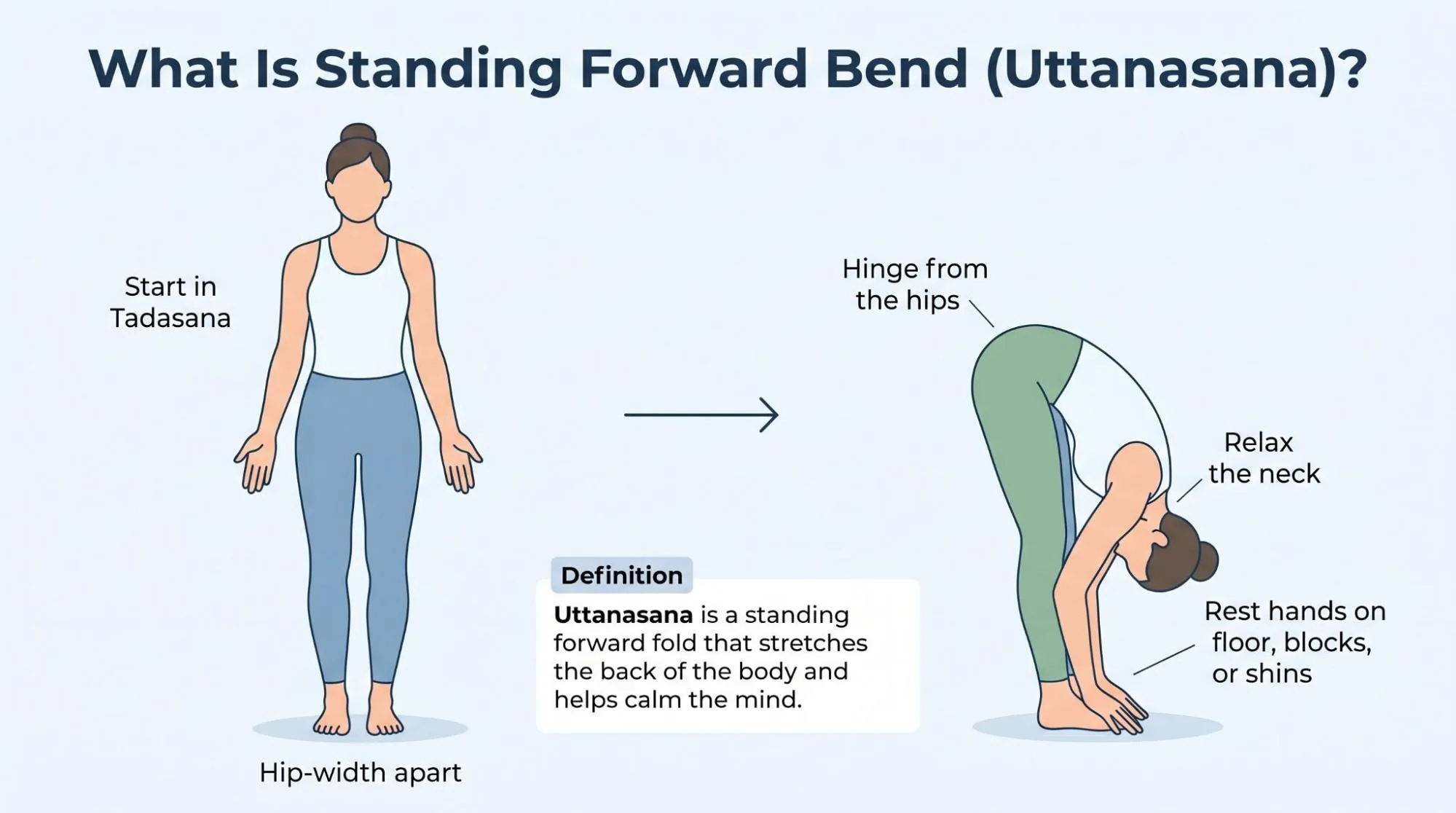
Standing Forward Bend, or Uttanasana, is a standing forward-fold pose where the body bends from the hips and the upper body moves toward the legs. In Sanskrit, “ut” means intense, and “tan meaning to stretch” refers to lengthening or extending. So, Uttanasana can be understood as an intense stretch or extension of the body.
The pose usually begins from Tadasana Mountain Pose. From there, you fold forward while keeping the legs active, the spine long, and the breath steady. Your hands may touch the floor, rest on blocks, hold opposite elbows, or simply rest your hands on your shins or thighs.
Why Standing Forward Bend Is a Foundational Yoga Pose
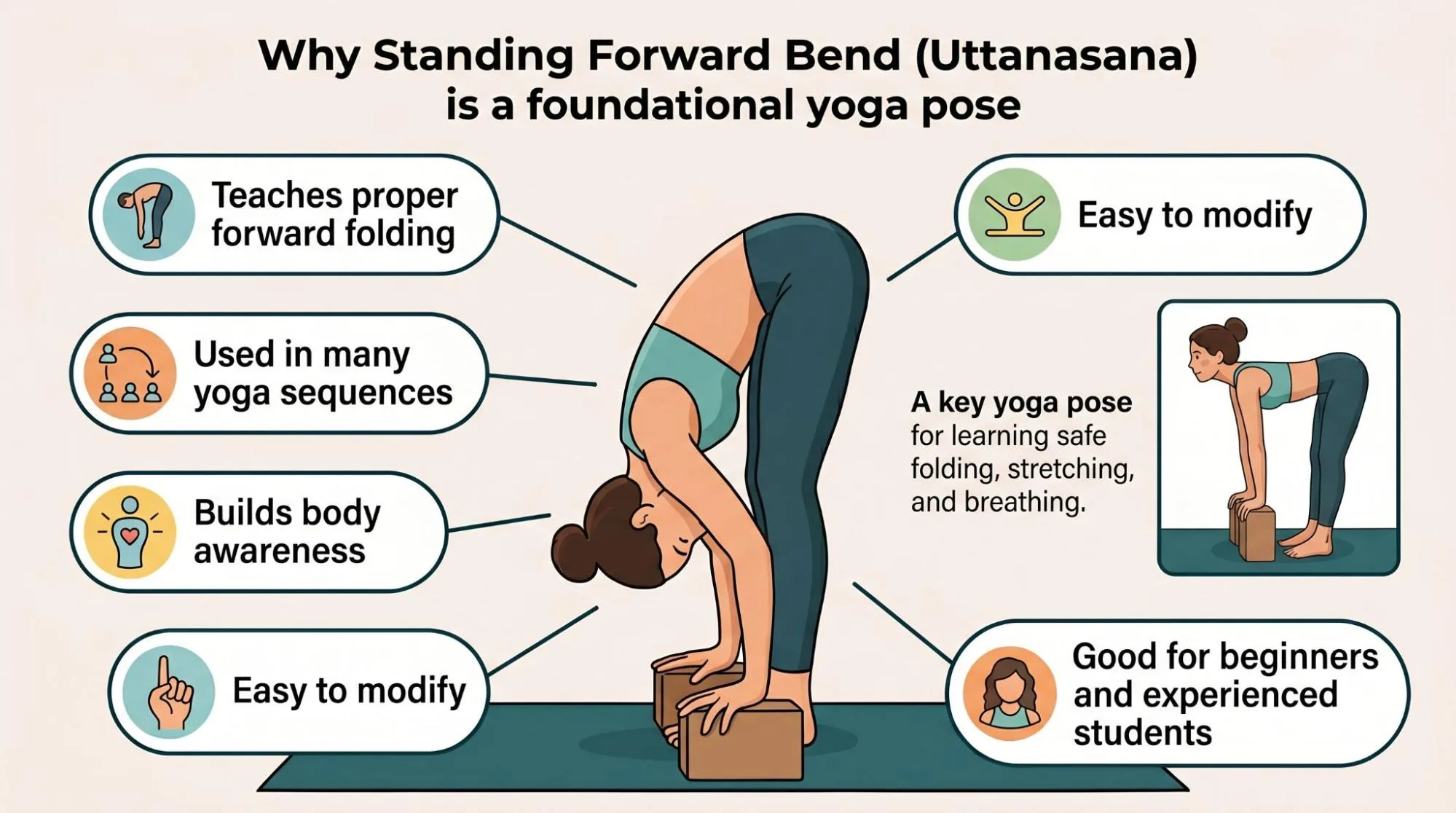
Uttanasana is used in many yoga sequences because it connects standing, folding, breathing, and body awareness. It appears in Sun Salutations, gentle stretching routines, and cooling-down practices.
This bend pose teaches a very useful movement pattern: folding forward by moving from the hips instead of collapsing from the lower back. That one detail makes a big difference. When you learn to fold safely, you protect the spine and get a better stretch through the hamstrings, calves, and back body.
It is also a pose that can be adjusted easily. Beginners can bend the knees, use blocks, or practice a half-lift version called Ardha Uttanasana to build strength and awareness.
Physical Benefits of Standing Forward Bend (Uttanasana)
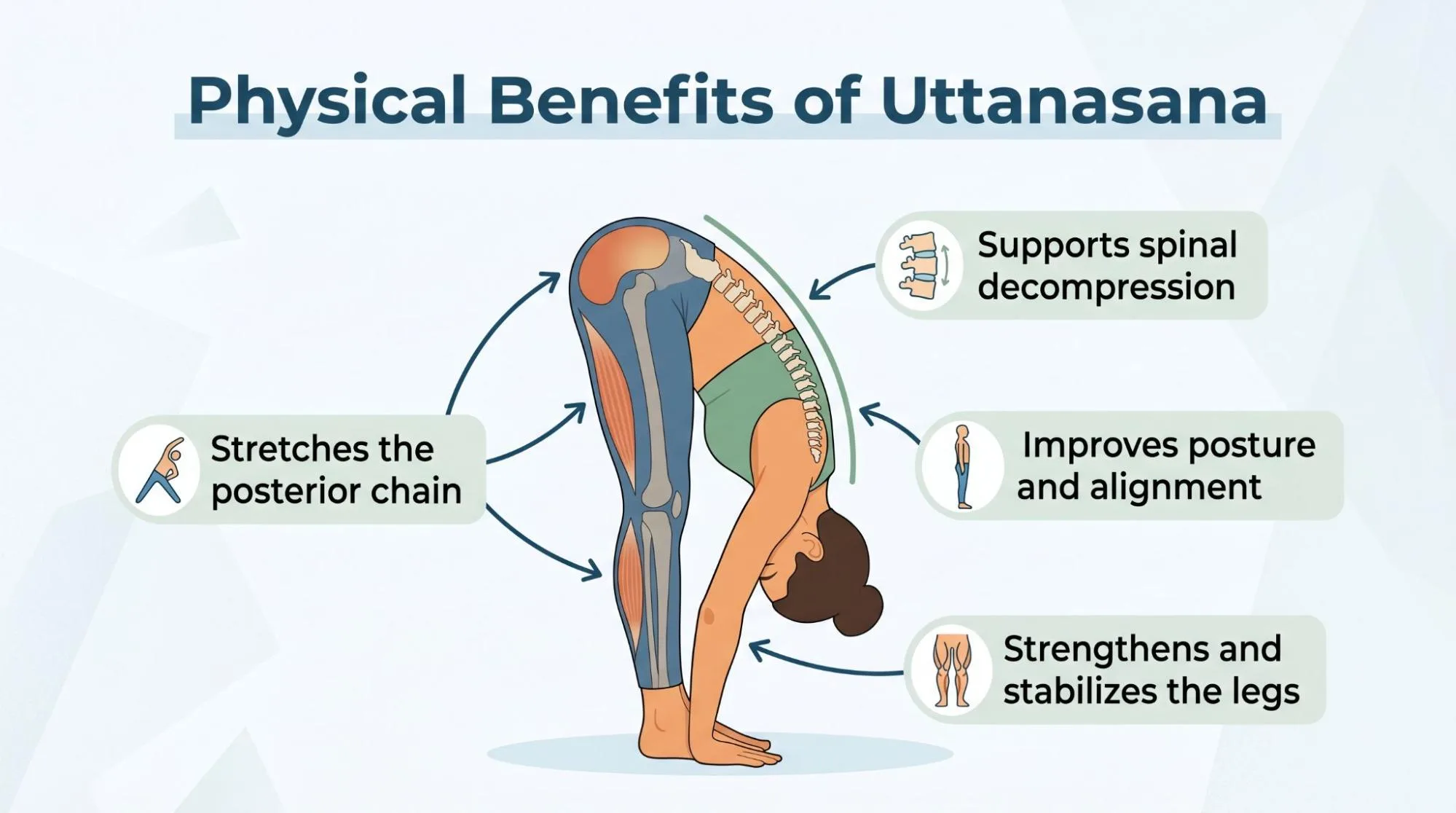
One of the main Standing Forward Bend Uttanasana Benefits is the deep stretch it gives to the back side of the body, especially the hamstrings, calves, glutes, and lower back.
Stretches the Posterior Chain
One of the main Standing Forward Bend Uttanasana Benefits is the stretch it gives to the posterior chain. This includes the hamstrings, calves, glutes, and the muscles along the back.
If you sit for long hours, these areas often become tight. A gentle Uttanasana can help the body feel more open, especially around the backs of the legs. You do not need to touch your toes to benefit. The real goal is to stretch or extend with control, not to force your body into a shape.
Supports Spinal Decompression
When practiced with care, Uttanasana can create a feeling of space along the spine. As the upper body folds downward, gravity helps the back release tension.
The key is to avoid pulling yourself down. Instead, allow the crown of the head to soften toward the floor while keeping the hips grounded through the legs. If your back feels rounded or strained, bend your knees and focus on creating length through the torso.
Improves Posture and Body Alignment
Uttanasana can support better posture because it brings awareness to the hips, spine, legs, and feet. Many people round their shoulders or tuck their pelvis without noticing. This pose helps you feel where the body is tight and where alignment needs attention.
A good forward fold begins with the front of your feet grounded, the heels steady, and the sit bones lifting gently upward. This helps the spine lengthen naturally instead of collapsing.
Strengthens and Stabilizes the Legs
Although Uttanasana is known as a stretching pose, the legs still work. The thighs stay active, the feet press into the ground, and the ankles help maintain balance.
This gentle activation supports leg stability. It also teaches you not to “hang” in the joints. Strong, steady legs make the fold safer and more controlled.
Learn More : Triangle Pose Yoga Common Mistakes and How to Fix Them
Mental and Internal Benefits of Uttanasana
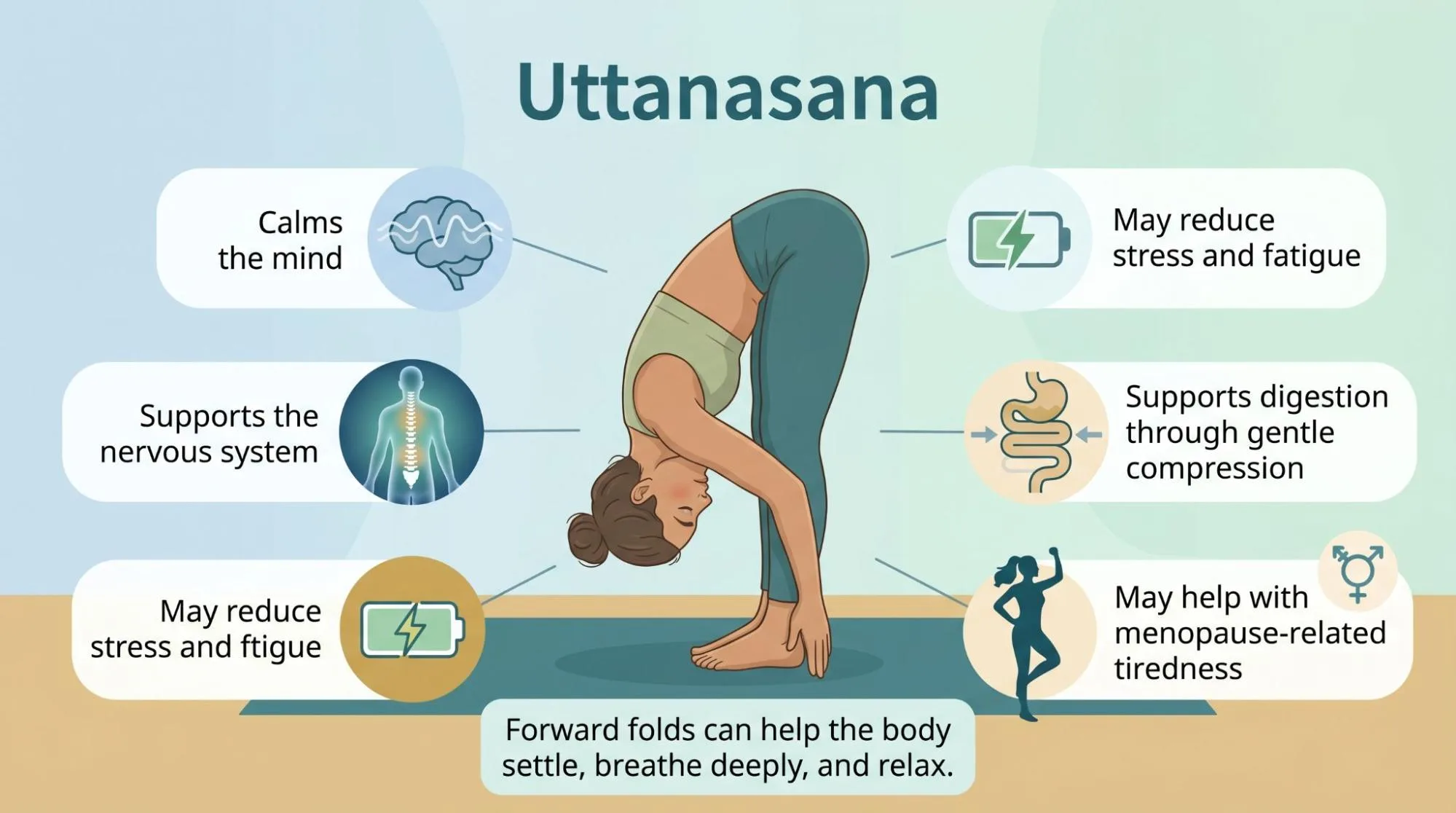
The mental side of Standing Forward Bend Uttanasana Benefits is just as useful as the physical side. A slow forward fold can help calm the nervous system and reduce body tension.
Calms the Mind and Nervous System
Forward folds are often used for calming the mind. The head moves lower than the heart, the breath slows down, and the body naturally turns inward.
For many people, this pose feels quiet and grounding. It may help reduce mental restlessness, especially when practiced slowly with soft breathing.
May Help Reduce Stress and Fatigue
A gentle Uttanasana can feel refreshing when the body is tired. It gives the back and neck a chance to release and encourages a slower breathing rhythm.
This does not mean it is a cure for stress or fatigue, but it can be a helpful part of a regular relaxation routine. The effect is usually best when you avoid pushing and let the body settle gradually.
Supports Digestion Through Gentle Compression
When you fold forward, the front torso moves closer to the thighs. This creates gentle compression around the belly area. Some yoga traditions believe this may support digestion by softly stimulating the abdominal region.
To keep it comfortable, avoid squeezing the belly too strongly. If needed, bend the knees more and create space for the abdominal muscles and organs.
May Support Menopause-Related Tiredness
Some people use gentle forward folds during menopause when they feel tired, tense, or mentally overloaded. A supported version of Uttanasana, with blocks or a chair, may feel calming.
If dizziness, blood pressure issues, or discomfort are present, it is better to practice under guidance or choose a gentler supported pose.
How to Do Standing Forward Bend Correctly
Step-by-Step Practice
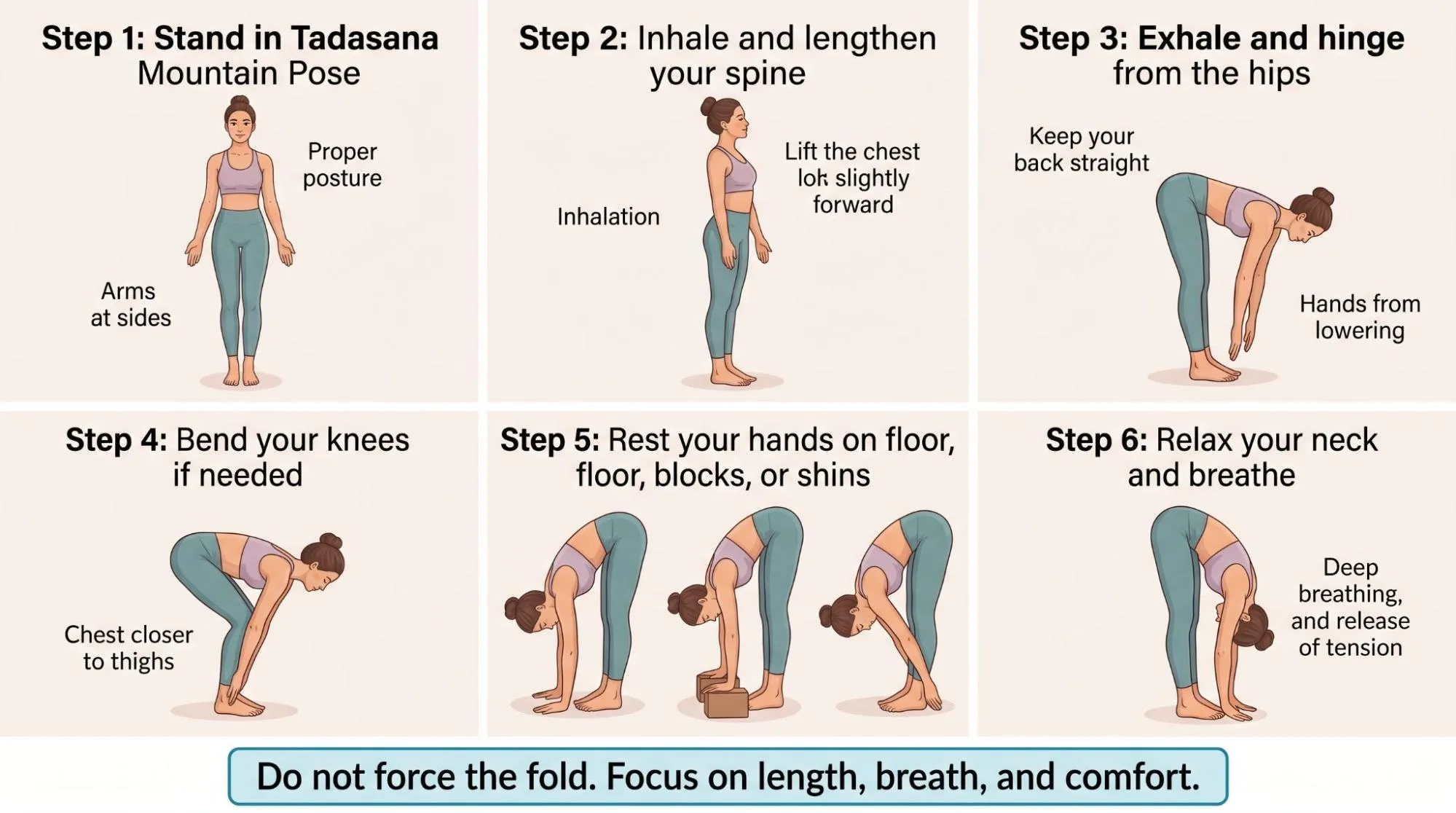
Follow these simple step by step instructions:
- Stand in Tadasana Mountain Pose with your feet hip-width apart or together, depending on what feels stable.
- Press evenly through the heels, toes, and the front of your feet.
- Inhale and lengthen your spine.
- Exhale and begin hinging from the hips, not from the waist.
- Keep a soft bend in the knees, especially if your hamstrings are tight.
- Let your upper body fold forward naturally.
- Place your hands on the floor, blocks, shins, ankles, or a chair.
- Relax the head and neck.
- Stay for a few slow breaths.
- To come up, bend the knees and rise slowly with control.
Your chest does not need to touch your legs. A safer aim is to extend your chest forward slightly as you fold, keeping the spine long before relaxing deeper.
Breathing in Uttanasana
Breathing is what makes Uttanasana feel steady rather than forced.
As you inhale, feel the ribs expand and the spine lengthen. As you exhale, allow the body to soften slightly. If the breath feels stuck, you may be folding too deeply.
A simple rhythm works well:
- Inhale to create space.
- Exhale to release tension.
- Keep the neck soft.
- Let the jaw relax.
Pro Tips for Beginners
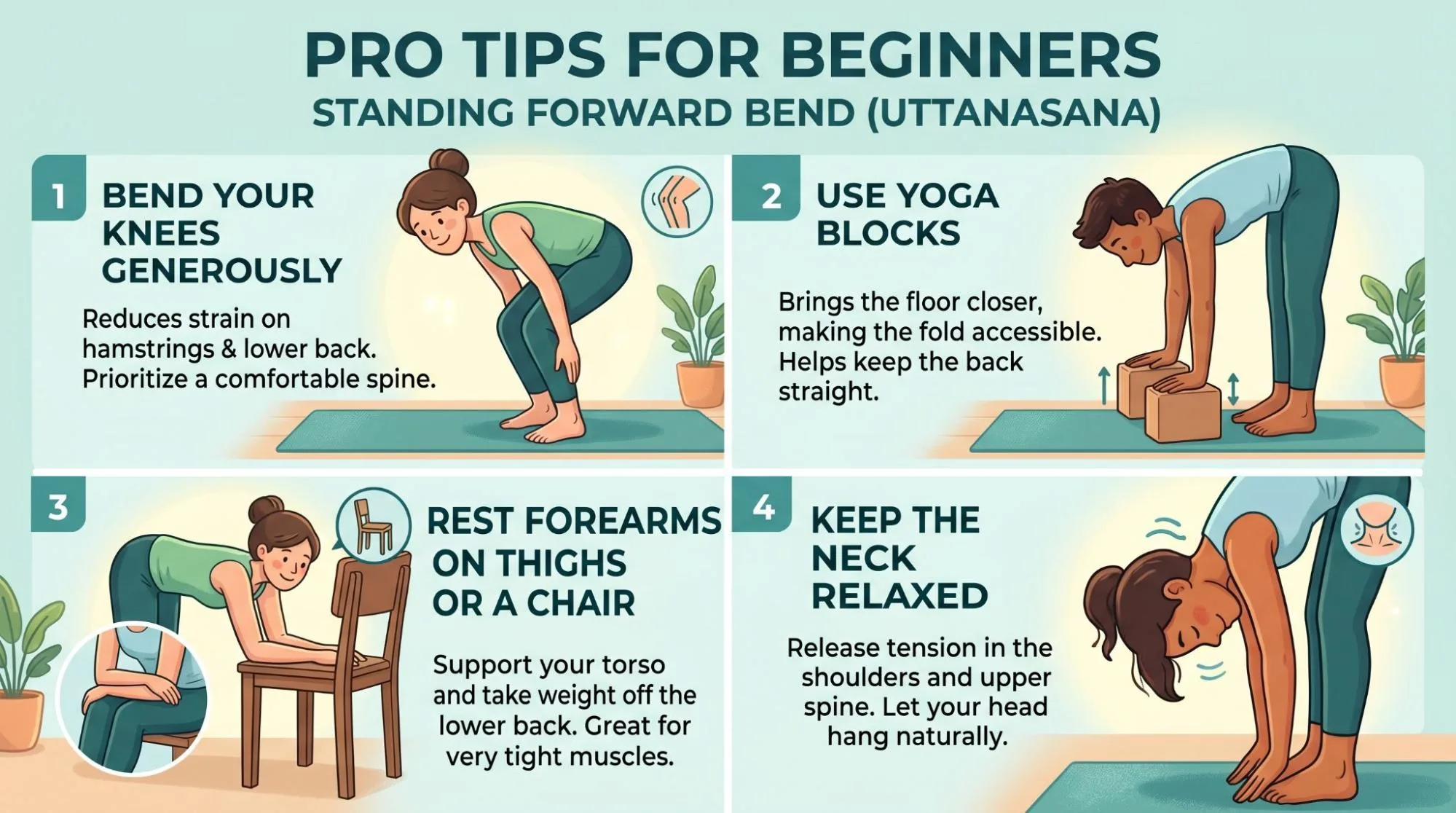
To enjoy Standing Forward Bend Uttanasana Benefits safely, beginners should bend the knees, use yoga blocks, and avoid forcing the body toward the floor.
Bend Your Knees Generously
This is the most useful beginner tip. Bend your knees as much as you need. Straight legs are not required, especially when you are learning.
Bent knees protect the lower back and allow the pelvis to tilt more naturally. Over time, your hamstrings may open, but there is no need to rush.
Use Yoga Blocks
Yoga blocks bring the floor closer to your hands. This helps you avoid rounding the spine too much or overstretching.
Place one block under each hand. You can use the highest setting at first, then lower the blocks as your flexibility improves.
Rest Forearms on Thighs or a Chair
If reaching down feels uncomfortable, rest your forearms on your thighs. You can also place your hands or forearms on a chair.
This version is especially helpful for beginners, older adults, or anyone with back sensitivity. It keeps the pose accessible without losing its benefits.
Keep the Neck Relaxed
Many people hold tension in the neck without realizing it. In Uttanasana, let the head hang naturally. Do not look forward sharply or tuck the chin too hard.
The neck should feel soft, not strained.
Learn More : Chair Pose Benefits and Steps
Common Mistakes to Avoid
Rounding the Lower Back Too Much
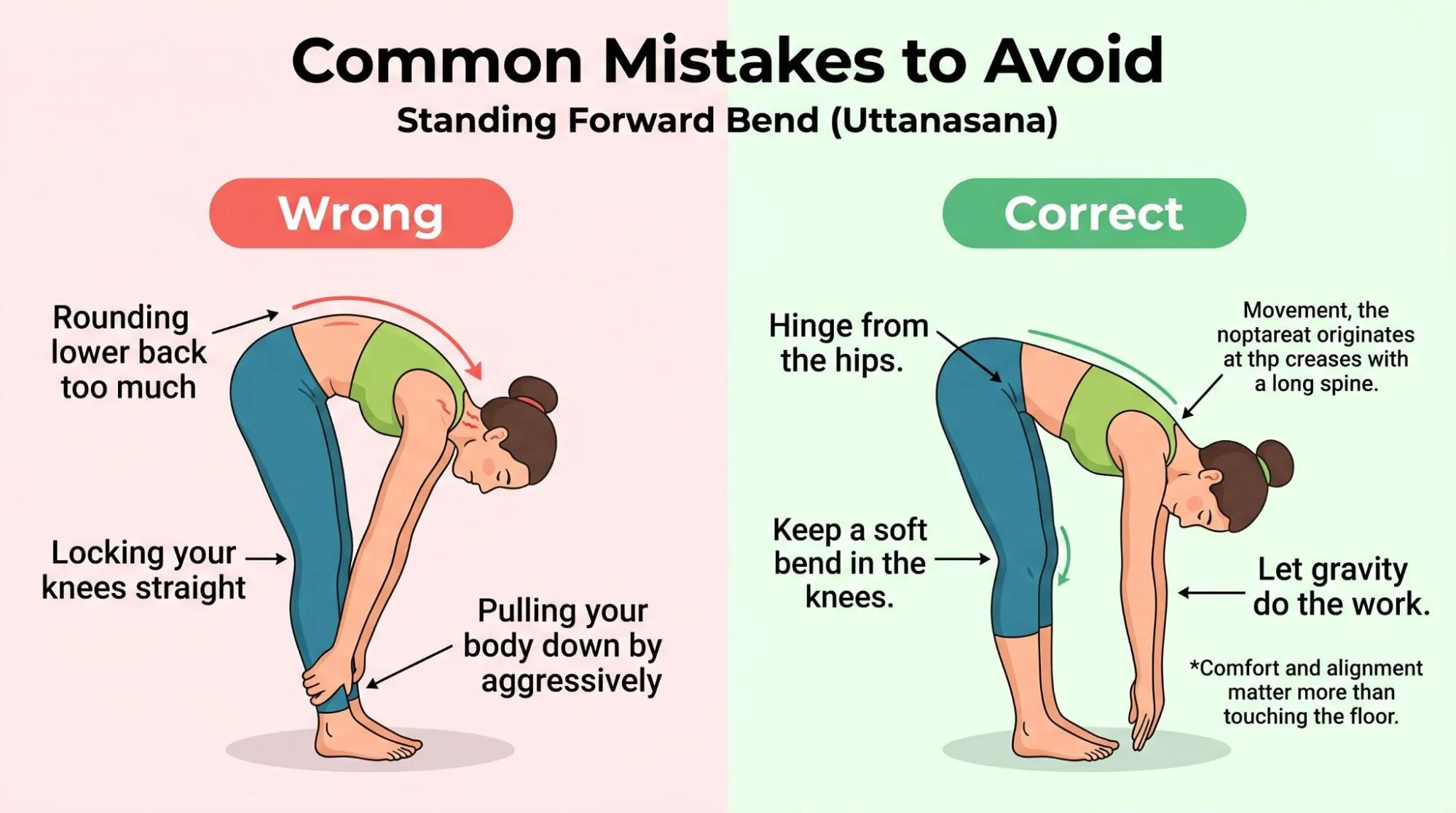
Some rounding is natural in a forward fold, but too much rounding in the lower back can create discomfort. If you feel pressure in the lumbar area, bend the knees and lift halfway into Ardha Uttanasana.
In Ardha Uttanasana, place your hands on your shins, blocks, or thighs. Then lengthen your spine and reach the chest forward.
Locking the Knees
Locked knees can strain the joints and pull too strongly on the hamstrings. Keep a micro-bend in the knees, even if you are flexible.
The legs should feel active, but not rigid.
Pulling the Body Down Forcefully
Never yank yourself deeper into Uttanasana. Pulling can overstretch the hamstrings, irritate the lower back, or make the pose feel tense.
Let gravity do most of the work. Yoga is not about forcing the body. It is about listening and adjusting.
Safety Tips and Who Should Be Careful
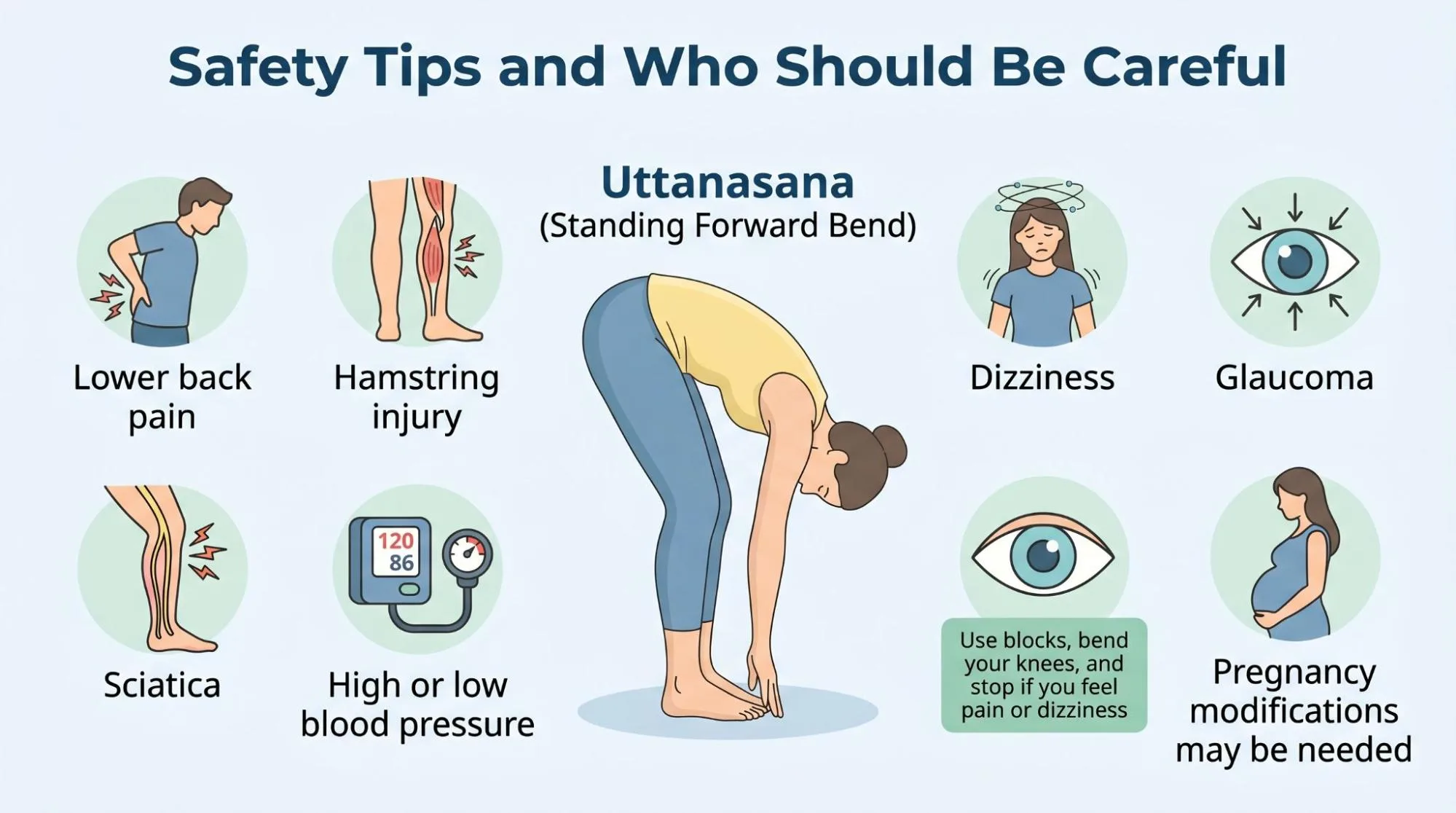
Standing Forward Bend is generally safe for many people, but it is not right for everyone in the same way.
Be careful or ask a qualified yoga teacher or healthcare professional if you have:
- Lower back pain or disc issues
- Sciatica or sharp nerve pain
- Hamstring injury
- High or low blood pressure
- Glaucoma or serious eye pressure concerns
- Dizziness or balance problems
- Pregnancy, especially in later stages
If you feel pain, numbness, strong pulling, or dizziness, come out of the pose slowly. A supported version with blocks or a chair is often a better option.
Best Time to Practice Standing Forward Bend
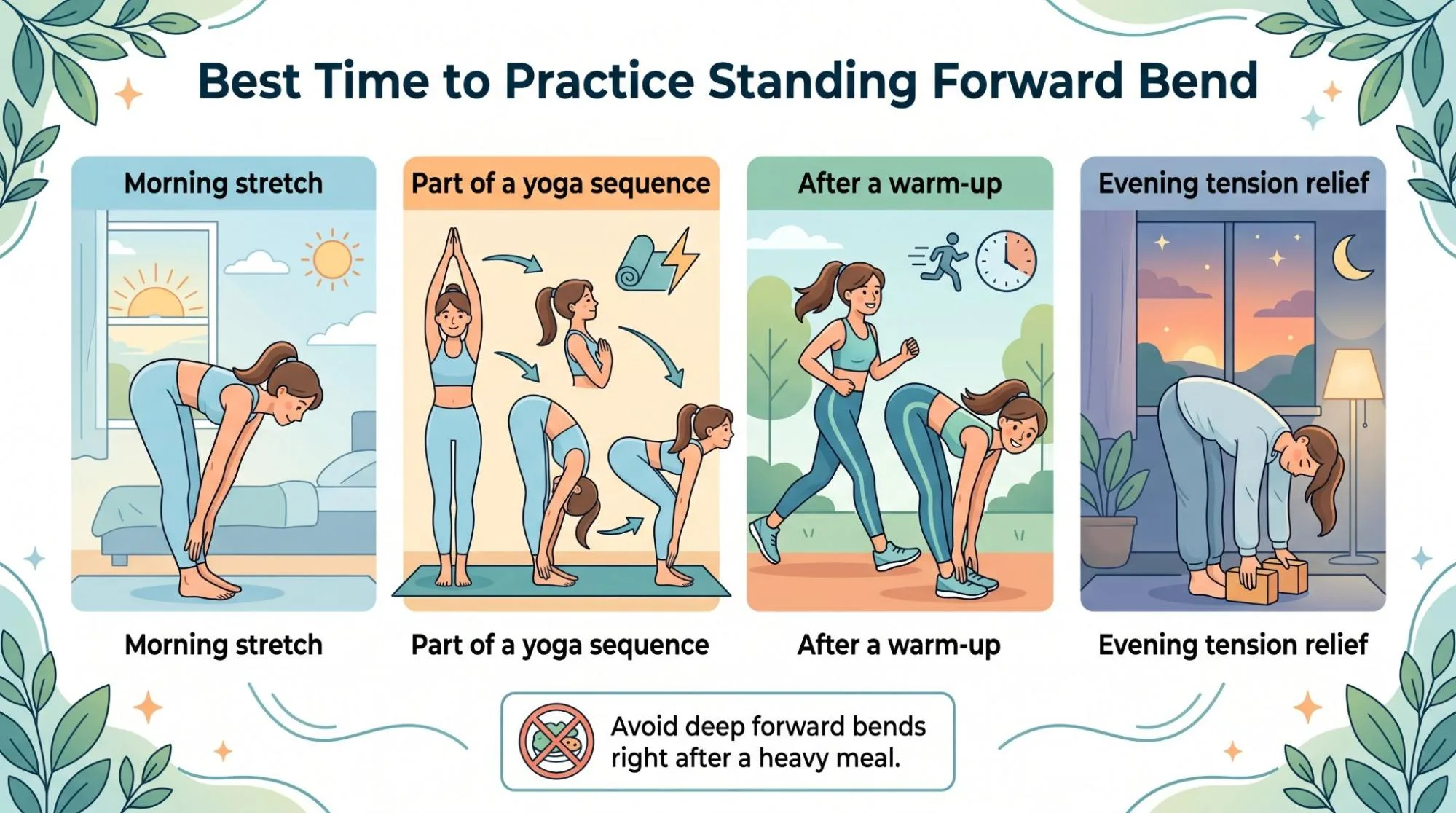
Uttanasana can be practiced in the morning, during a yoga flow, after light movement, or in the evening to release tension.
For stiff bodies, it often feels better after a warm-up. Try a few rounds of shoulder rolls, gentle hip movements, or Tadasana breathing before folding forward.
Avoid deep forward bends immediately after a heavy meal. Since the pose compresses the abdomen, it may feel uncomfortable if the stomach is full.
FAQs About Standing Forward Bend Uttanasana Benefits
Is Standing Forward Bend good for beginners?
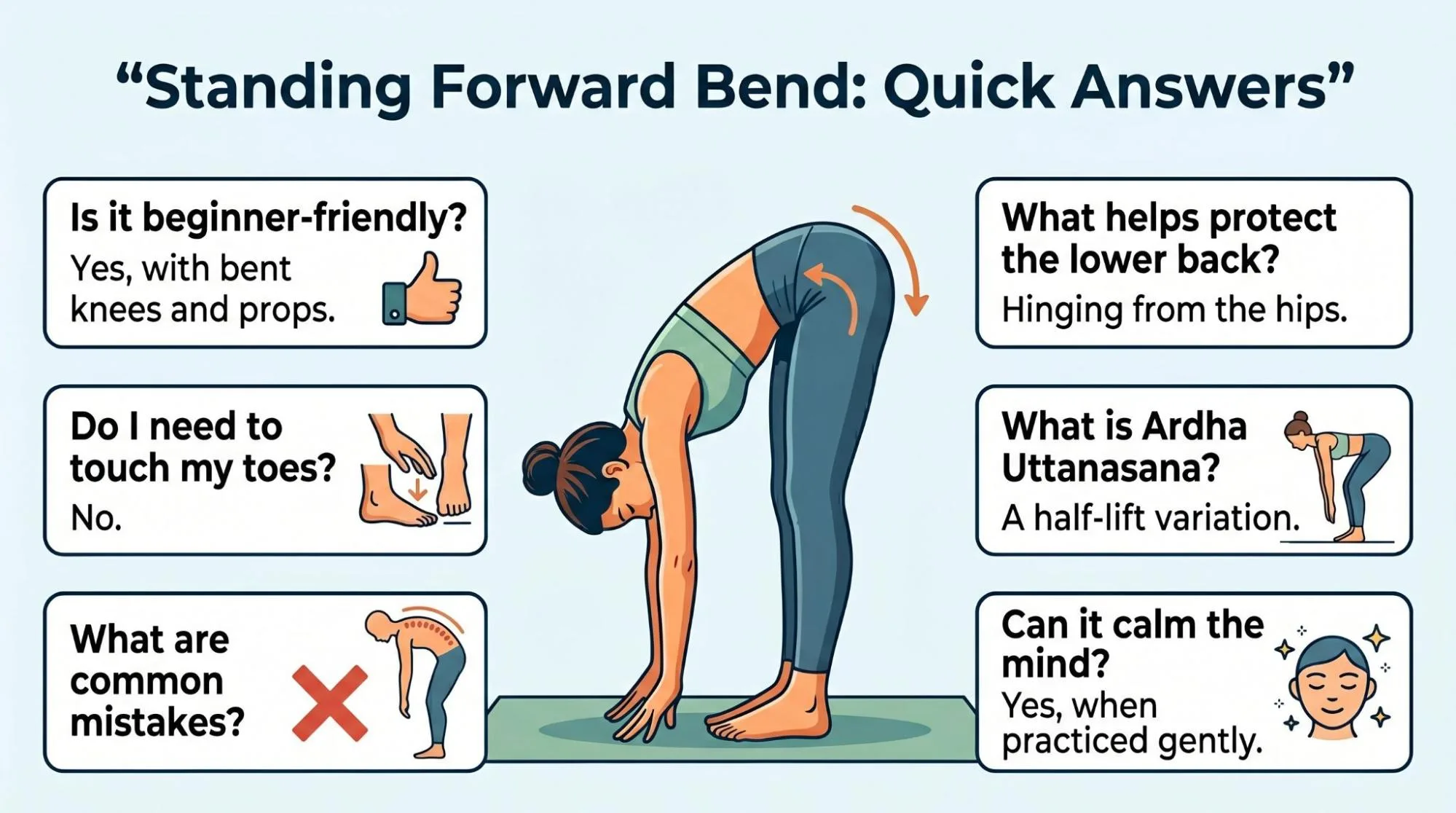
Yes, Standing Forward Bend can be beginner-friendly when modified. Beginners should bend the knees, use blocks, and avoid forcing the hands to the floor.
Do I need to touch my toes in Uttanasana?
No. Touching the toes is not the goal. The goal is to fold safely, lengthen the spine, and stretch the back body without pain.
What is the difference between Uttanasana and Ardha Uttanasana?
Uttanasana is the full standing forward fold. Ardha Uttanasana is the half-lift version where the spine extends forward and the back becomes flatter. Ardha Uttanasana is useful for learning alignment and protecting the lower back.
Why does my lower back hurt in Standing Forward Bend?
Lower back discomfort often happens when the knees are locked or the fold comes from the waist instead of the hips. Try bending your knees more and focus on hinging from the hips.
How long should I hold Uttanasana?
Beginners can start with 3 to 5 slow breaths. If the pose feels comfortable, you may hold it longer. Keep the breath smooth and come out slowly.
Can Uttanasana help calm the nervous system?
Yes, gentle forward folds may help relax the body and support the nervous system, especially when practiced with slow breathing. Keep the pose soft rather than intense.
What are the main Standing Forward Bend Uttanasana Benefits?
The main Standing Forward Bend Uttanasana Benefits include stretching the hamstrings and calves, supporting spinal relaxation, improving posture, calming the mind, and helping the body feel more relaxed.
Learn More : Body Scan Meditation Benefits: A Simple Guide to Relaxing the Mind and Body
Conclusion
Standing Forward Bend is simple, but it has a lot to teach. It stretches the legs, releases the back, supports posture, and helps quiet the mind when practiced with patience. The best way to experience Standing Forward Bend Uttanasana Benefits is to practice slowly, breathe deeply, and respect your body’s limits.
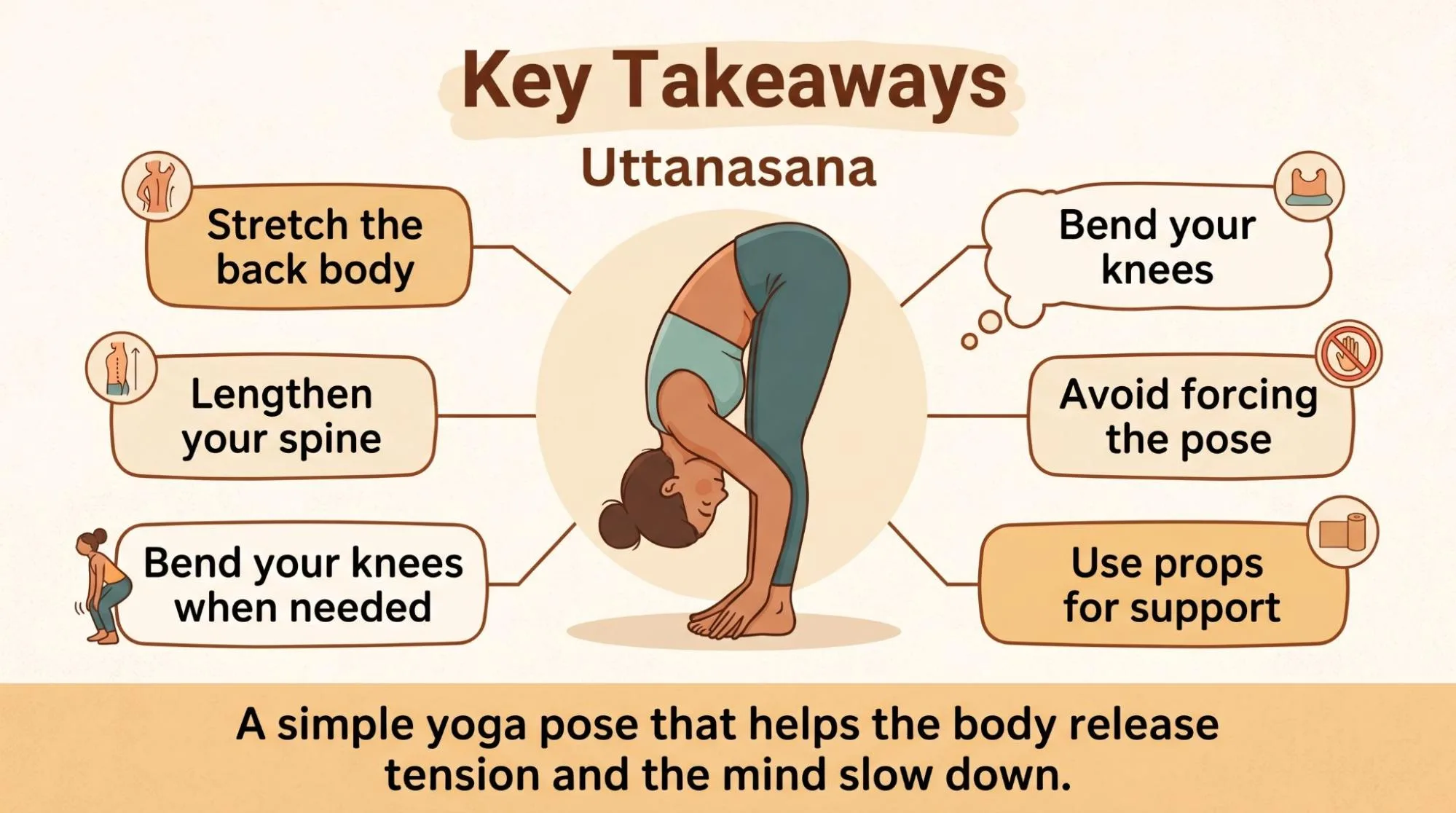
The safest way to enjoy the Standing Forward Bend Uttanasana Benefits is to move slowly, bend your knees when needed, use support, and avoid forcing the body downward. With regular practice, Uttanasana can become one of those reliable yoga poses that helps you feel grounded, open, and a little more at ease.
Frequently Asked Questions
Should beginners bend their knees in Uttanasana?
Yes. A slight bend can reduce strain and help you keep the fold comfortable. Flexibility is not a requirement for this pose.
Where should I feel Standing Forward Bend?
You may feel a mild stretch along the back of the legs and hips. Sharp pain, pinching, or pulling in the lower back is a reason to ease out.
Can Uttanasana replace treatment for back pain?
No. It may be part of a gentle movement routine, but persistent or worsening back pain should be assessed by a qualified professional.
