
Quick answer: Cow Face Pose, or Gomukhasana, is a seated yoga posture that combines a hip stretch with a shoulder and arm position. It may support mobility and body awareness, but it should be adapted to your range of motion.
Important Safety Note
Do not force the knees, hips, shoulders, or elbows into position. Use a folded blanket or strap, and stop for sharp pain, numbness, tingling, or joint pressure. People with recent hip, knee, shoulder, or spinal injuries should seek qualified guidance before practicing.
Cow face pose yoga benefits are often felt in the hips, shoulders, chest, arms, and upper back. Also known as Gomukhasana, cow face pose is a seated yoga posture that gives a deep stretch to tight areas of the body while also helping the mind slow down.
At first, this pose may look a little complicated because the knees are stacked and the arms reach behind the back. But with patience, props, and regular practice, it can become one of the most useful yoga poses for improving posture, flexibility, breathing, and body awareness.
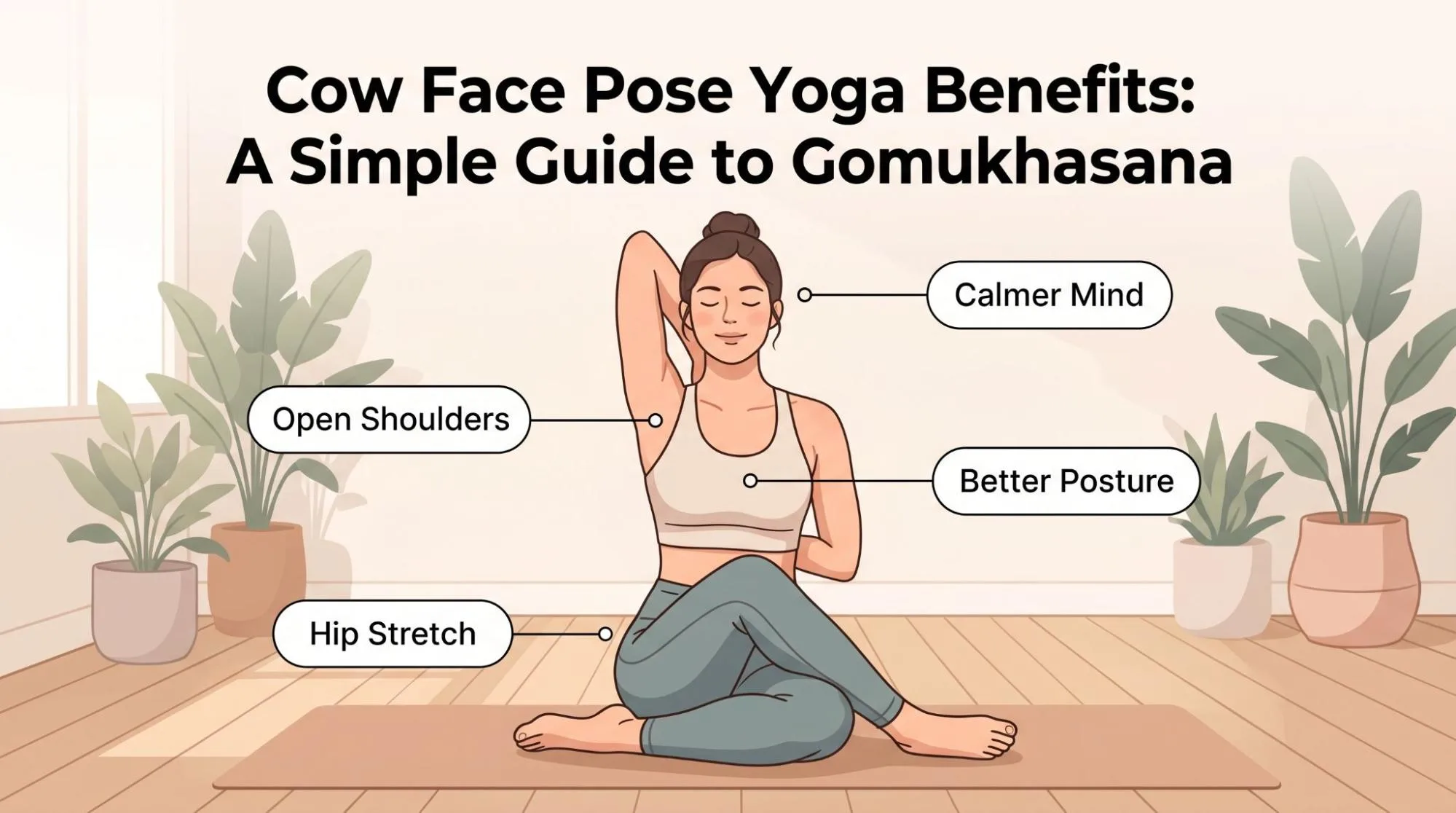
What Is a Cow Face Pose (Gomukhasana)?
Cow face pose, or Gomukhasana, is a seated yoga pose where the legs are crossed in a way that stacks one knee over the other. The arms are also positioned behind the back, with one elbow pointing upward and the other downward.
In the full pose, you may try to clasp your hands behind your back. But this is not required, especially for beginners. A yoga strap or towel works perfectly if the hands do not reach.
The pose mainly targets the hips, thighs area, shoulders, arms, chest, and ankles. It is commonly used in regular yoga routines because it combines hip opening, shoulder stretching, posture improvement, and mindful breathing in one posture.
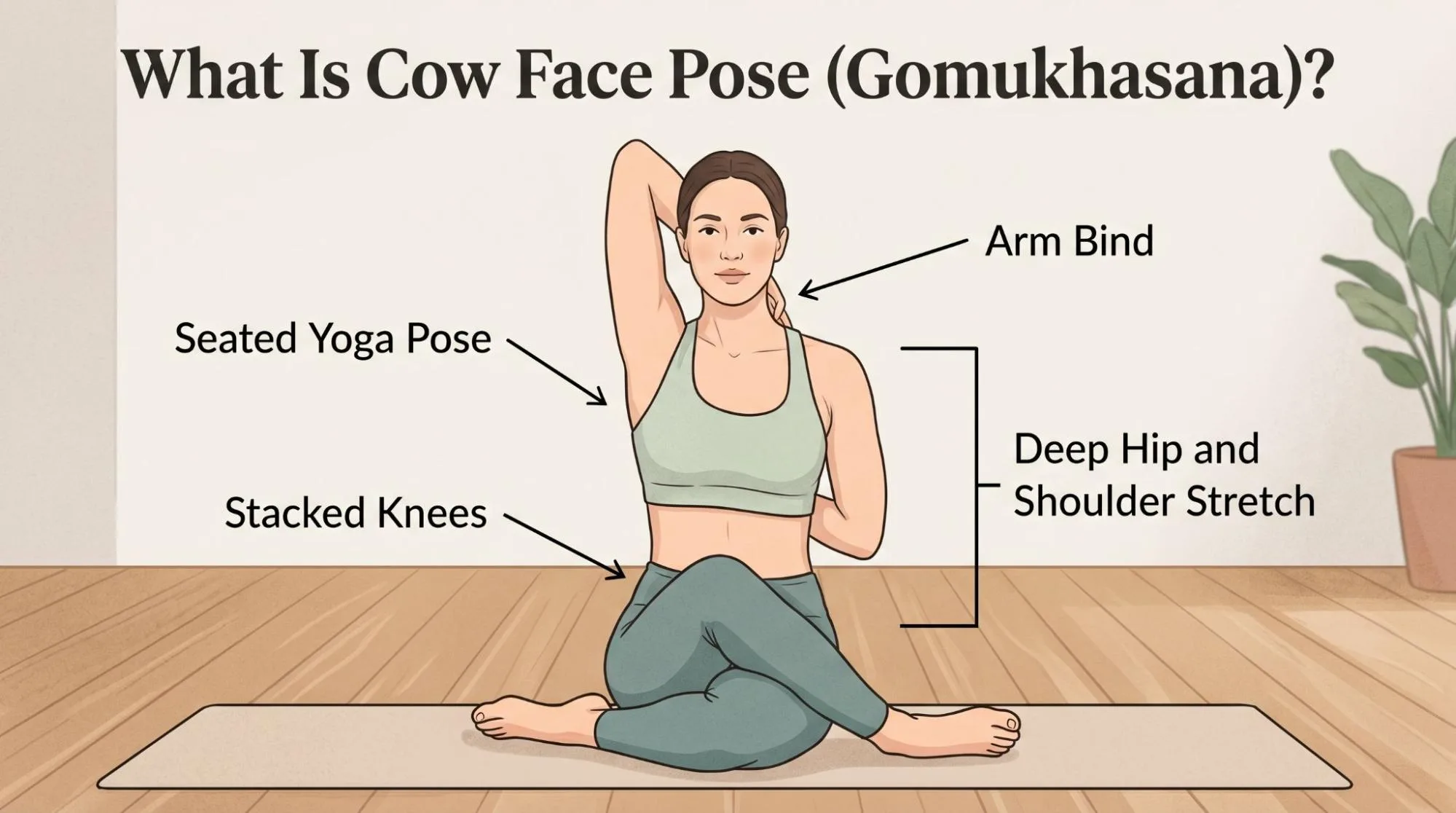
Cow Face Pose Yoga Benefits for the Body and Mind
Cow face pose has many health benefits when practiced carefully. It is especially helpful for people who sit for long hours, feel stiffness in the shoulders, or carry tightness in the hips. The main cow face pose yoga benefits include better posture, improved shoulder mobility, hip release, deeper breathing, and a calmer mind.
Improves Posture
One of the most practical benefits of cow face pose is that it improves posture. Many people develop rounded shoulders from sitting, working on laptops, or using mobile phones.
The arm position helps open the chest and pull awareness back into the upper body. When the spine stays tall in the pose, it gently trains the body to sit more upright.
Releases Hip and Glute Tension
The lower body position gives a strong stretch to the outer hips and glutes. When bringing your left leg across the body, you may feel the stretch around the left hip. After switching sides, the same stretch works the opposite hip.
This can be helpful for people who feel tight after sitting for long periods. Just remember, the stretch should feel deep but not painful.
Enhances Shoulder Mobility
Cow face pose is excellent for shoulder mobility. One arm reaches overhead while the other reaches behind the back from below.
For example, you may lift your left arm, bend the elbow, and reach the hand down the back. The other arm reaches upward from below. This position stretches the shoulders, triceps, and upper arms.
With regular practice, the pose enhances flexibility in the upper body and may make daily movements easier.
Opens the Chest and Supports Breathing
The chest-opening action in cow face pose may support better breathing. When the chest and rib cage are less tight, deep breaths feel more natural.
This does not mean the pose instantly increases lung capacity. But it can help improve posture and create more space for comfortable breathing, especially when practiced slowly.
Improves Flexibility in Arms, Thighs, and Ankles
Cow face pose stretches more than one area at the same time. The legs work on the hips, thighs, knees, and ankles, while the arms stretch the shoulders and upper back.
Over time, regular yoga practice with poses like this can help reduce stiffness and improve overall movement.
Reduces Stress and Anxiety
Because the cow face pose is seated and steady, it naturally encourages the body to calm down. When you stay in the pose with slow breathing, the nervous system gets a chance to settle.
This is one reason many people enjoy seated yoga poses in the evening or after a stressful day.
Builds Mindful Focus
Cow face pose needs attention. You have to notice the knees, hips, shoulders, spine, and breath at the same time.
That makes it a useful pose for building mindful focus. Instead of rushing, you learn to listen to the body and adjust where needed.
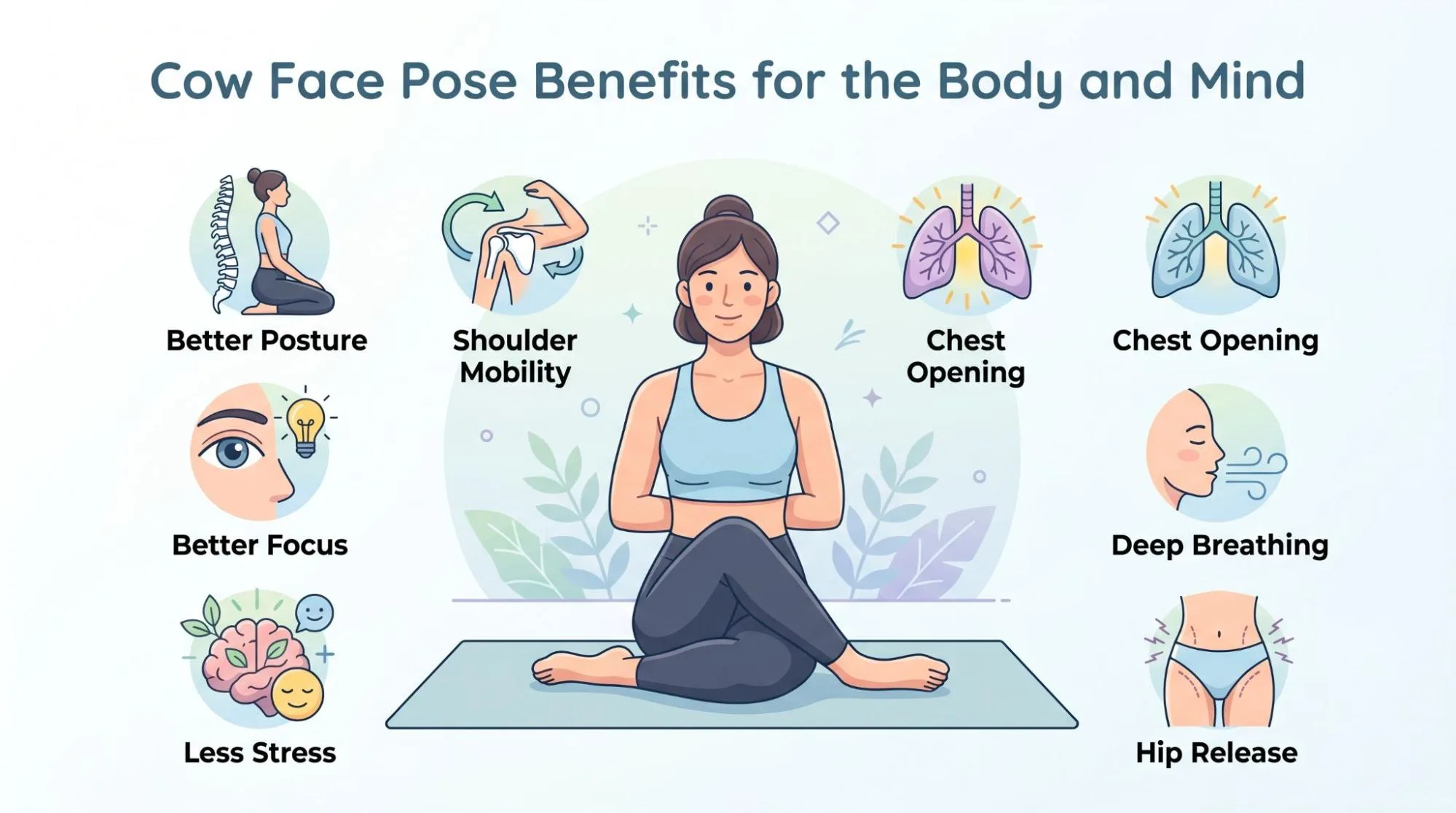
Learn More : Amazing Thread the Needle Pose Benefits
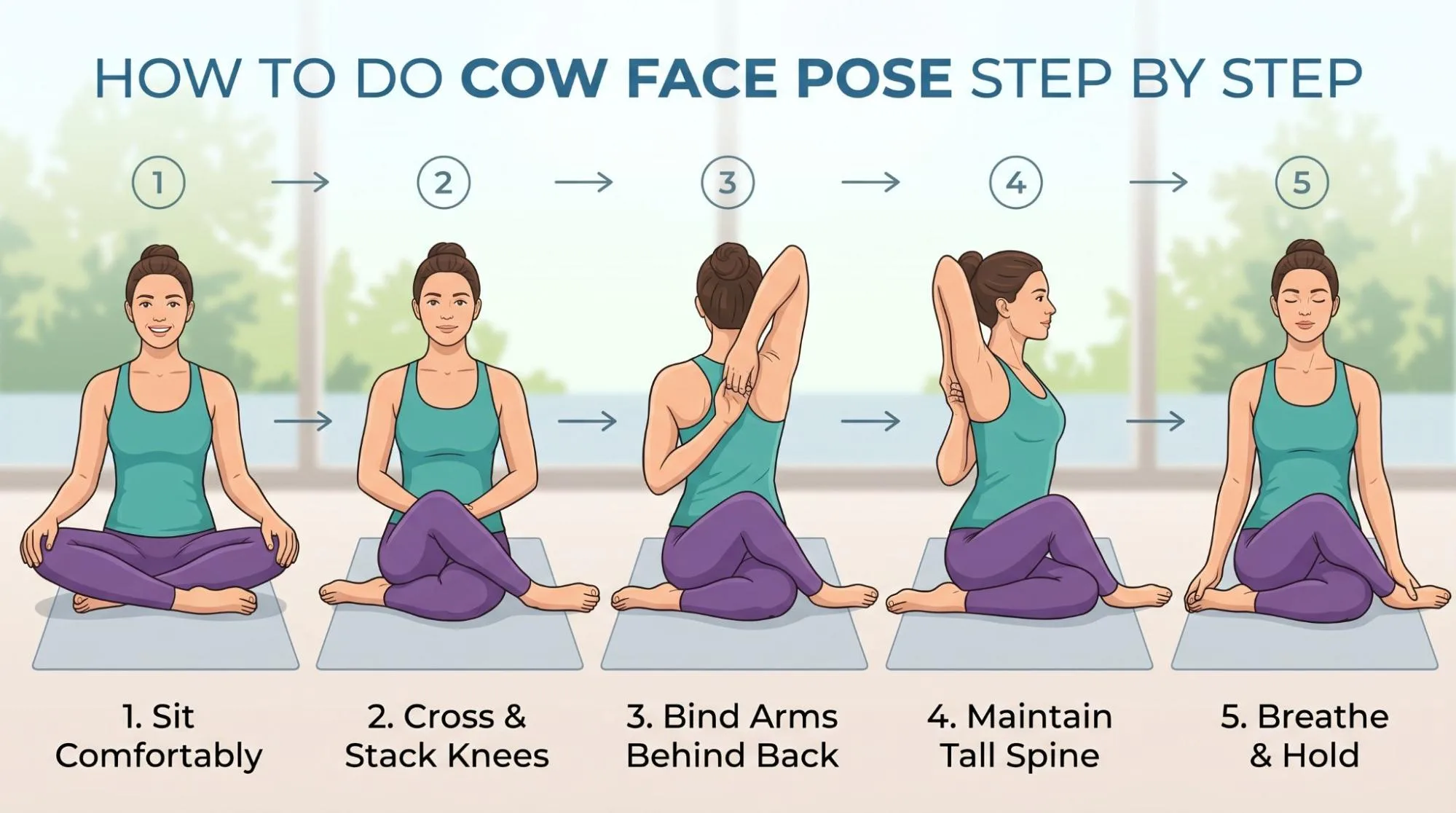
How to Do Cow Face Pose Step by Step
Move into cow face pose slowly. The aim is not to force the body into a perfect shape. The goal is to stretch safely and breathe comfortably.
Start in a Comfortable Seated Position
Sit on the floor with your legs extended forward. Keep your back tall and shoulders relaxed.
If your lower back rounds, sit on a folded blanket or yoga block. This small support can make the pose much easier.
Cross and Stack the Knees
Bend your left knee and bring the left foot toward the outside of the right hip. Then cross the right leg over the left and try stacking knee over knee.
Your knees do not need to line up perfectly. If the left knee feels uncomfortable, adjust the legs or choose a gentler variation.
Position the Arms Behind the Back
Raise one arm overhead, bend the elbow, and let the hand move down your upper back. Then bring the opposite arm behind your back from below.
Try to clasp hands if possible. If your hands do not meet, hold a yoga strap or towel between them. This keeps the stretch safe and useful.
Keep the Spine Tall
Sit evenly on both sitting bones. Keep the chest open and the spine long.
Avoid collapsing forward. If you cannot stay upright, use a block or blanket under the hips.
Breathe and Hold
Hold the pose for 20 to 60 seconds on each side. Take slow, deep breaths.
With each inhale, lengthen the spine. With each exhale, relax the shoulders, hips, and face. Then release slowly and repeat on the other side.
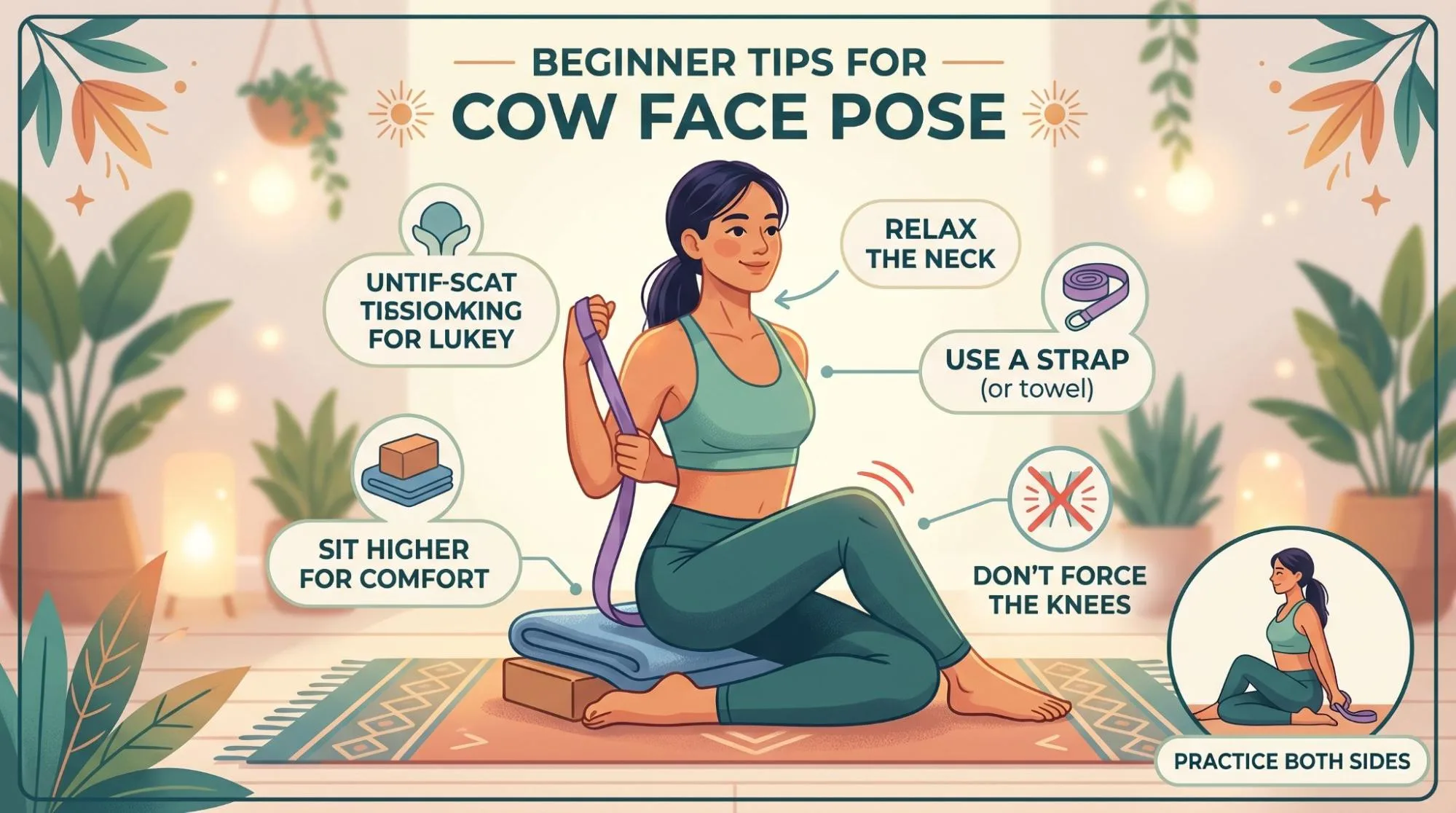
Beginner Tips for Cow Face Pose
Cow face pose can feel intense at first, especially if your hips or shoulders are tight. These simple tips can make it more comfortable. Beginners can still enjoy cow face pose yoga benefits by using props, moving slowly, and avoiding pressure on the knees.
Use a Yoga Strap or Towel
If you cannot clasp hands, use a strap or towel. This helps you work on shoulder flexibility without pulling too hard.
Sit on a Block or Blanket
Sitting higher reduces pressure on the hips and knees. It also helps keep the spine tall.
Do Not Force the Knees
Never push the knees into position. If you feel pain in the left knee or right knee, come out of the pose and try a modified version.
Keep the Neck Relaxed
Do not lift the chin or tighten the jaw. Keep the neck soft and long.
Practice Both Sides Equally
One side may feel easier than the other. That is normal. Practice both sides equally, but do not force symmetry.
Common Mistakes in Cow Face Pose
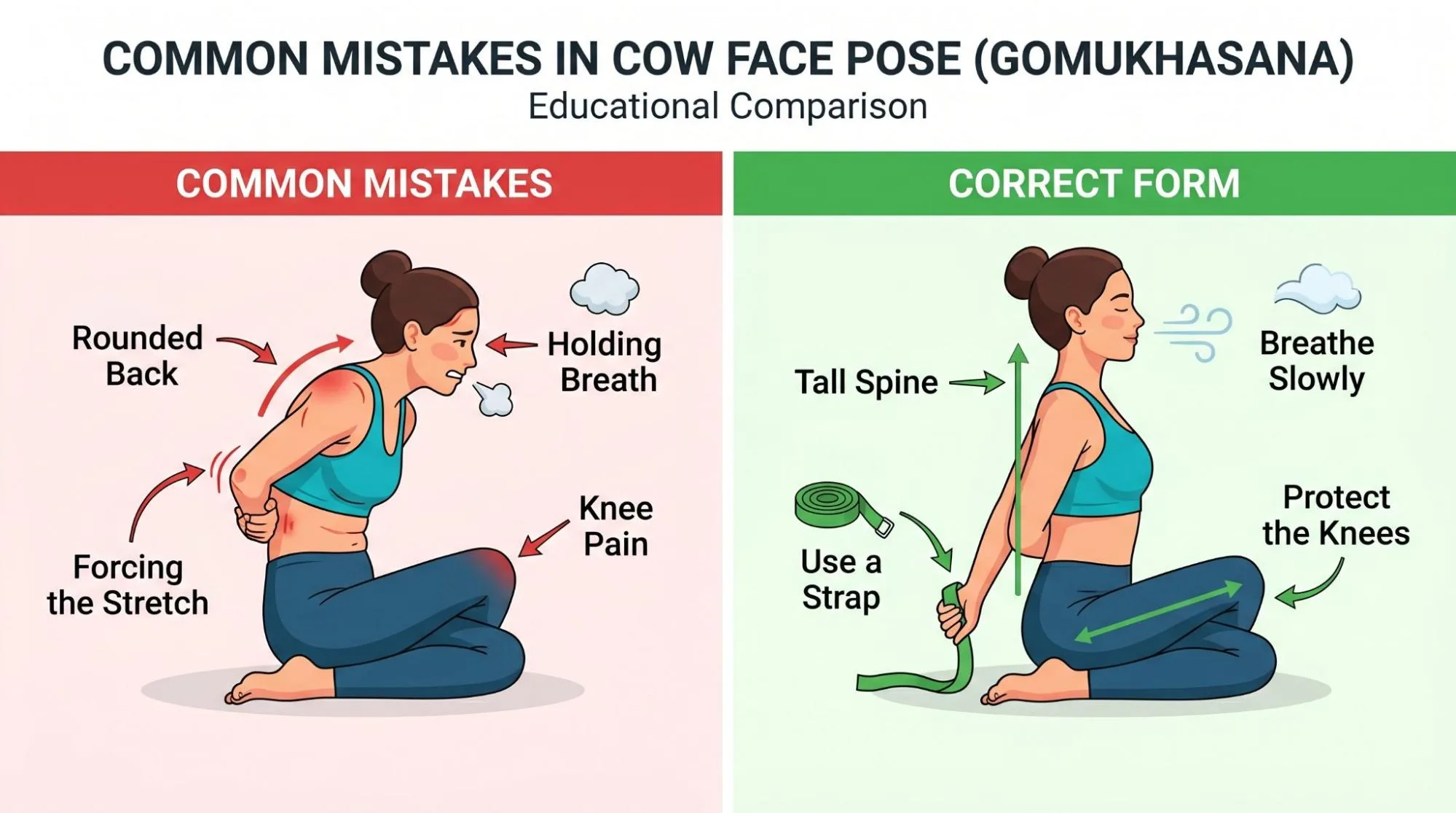
Small mistakes can make a cow face pose uncomfortable. Here are the most common ones to avoid.
Rounding the Back
A rounded back reduces the benefit of the pose. Sit taller or use support under the hips.
Forcing the Hands to Clasp
Do not pull aggressively just to make the hands touch. Use a strap if needed.
Ignoring Knee Pain
Knee pain is a warning sign. The stretch should be in the hips and thighs, not inside the knee joint.
Holding the Breath
If you are holding your breath, the pose is too intense. Ease out slightly and breathe slowly.
Learn More : Reclined Pigeon Pose for Hip Pain
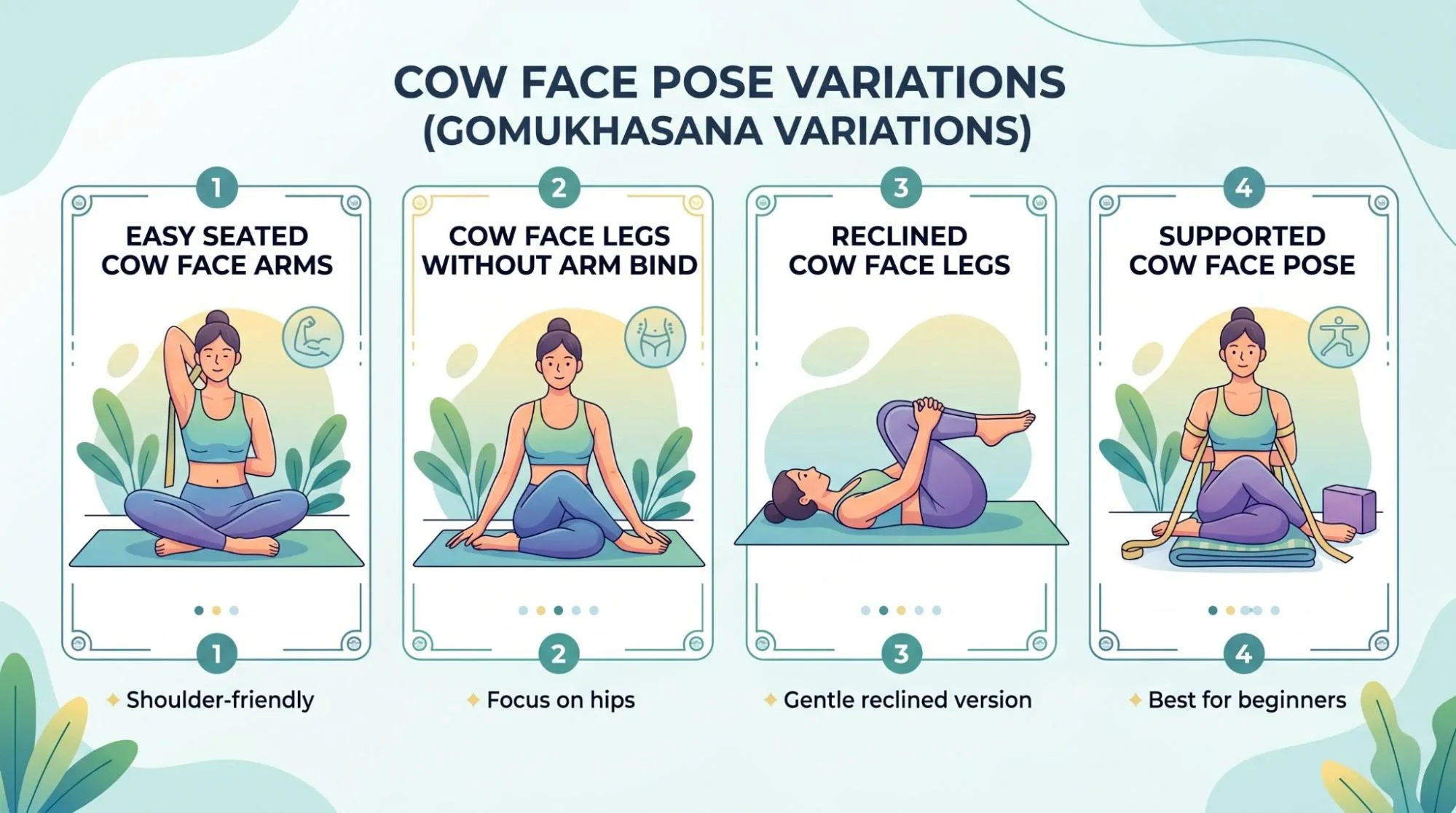
Cow Face Pose Variations
You do not need to do the full version every time. Variations are helpful and often safer for beginners.
Easy Seated Cow Face Arms
Sit cross-legged or on a chair and practice only the arm position. This is good for shoulder mobility.
Cow Face Legs Without Arm Bind
Practice only the leg position and rest your hands on the knees or floor. This focuses more on hip opening.
Reclined Cow Face Legs
Lie on your back and cross the thighs in a cow face shape. This can feel gentler for the spine.
Supported Cow Face Pose
Use a block, blanket, and strap. This version is best when the body feels stiff or tired.
Who Should Be Careful with Cow Face Pose?
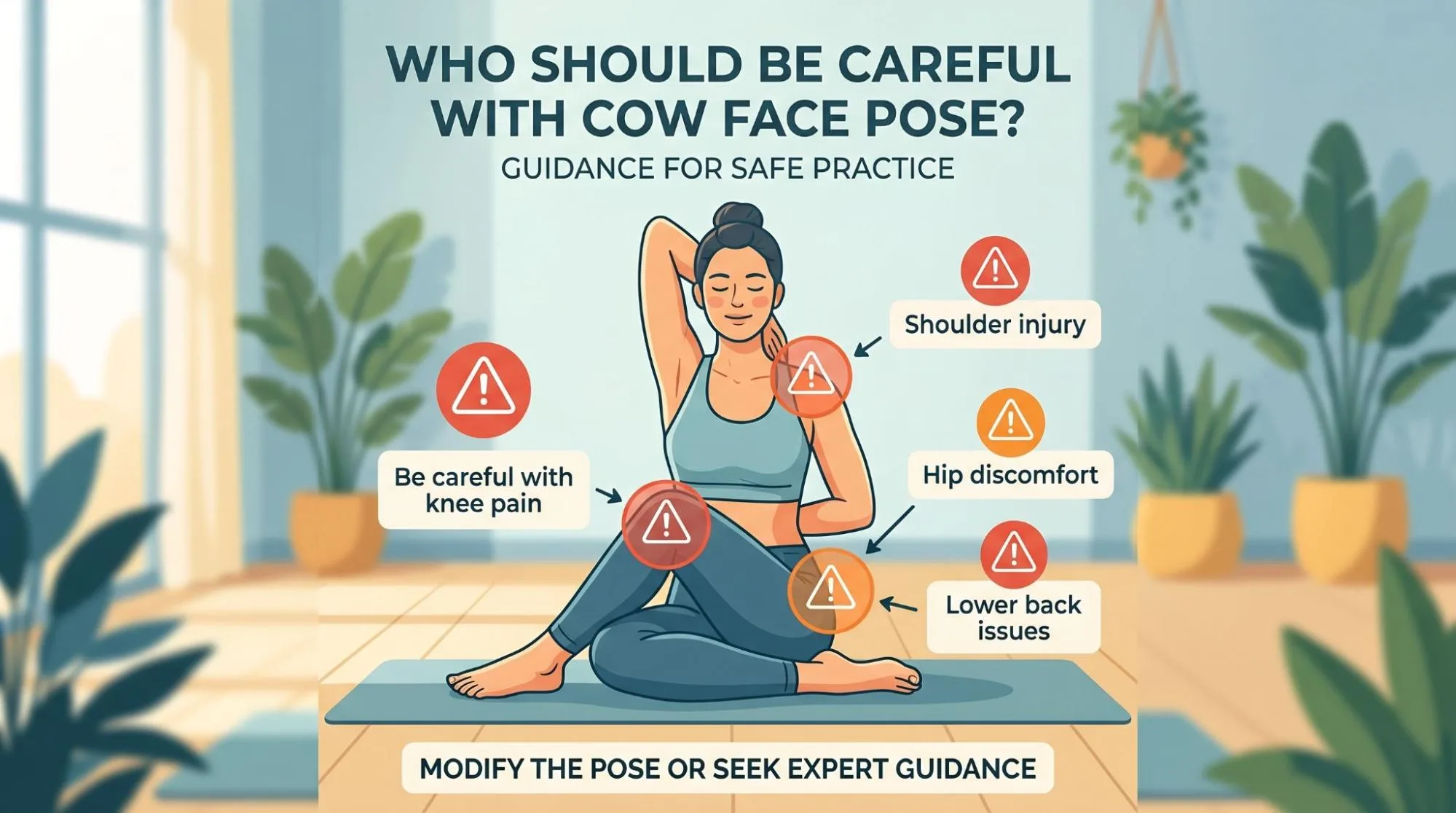
Cow face pose should be practiced carefully if you have knee pain, shoulder injury, hip problems, lower back pain, or recent surgery.
Pregnant practitioners should use modifications and avoid any position that compresses the body or feels uncomfortable.
If the pose causes sharp pain, numbness, or tingling, stop immediately. A qualified yoga teacher or healthcare professional can help you find a safer version.
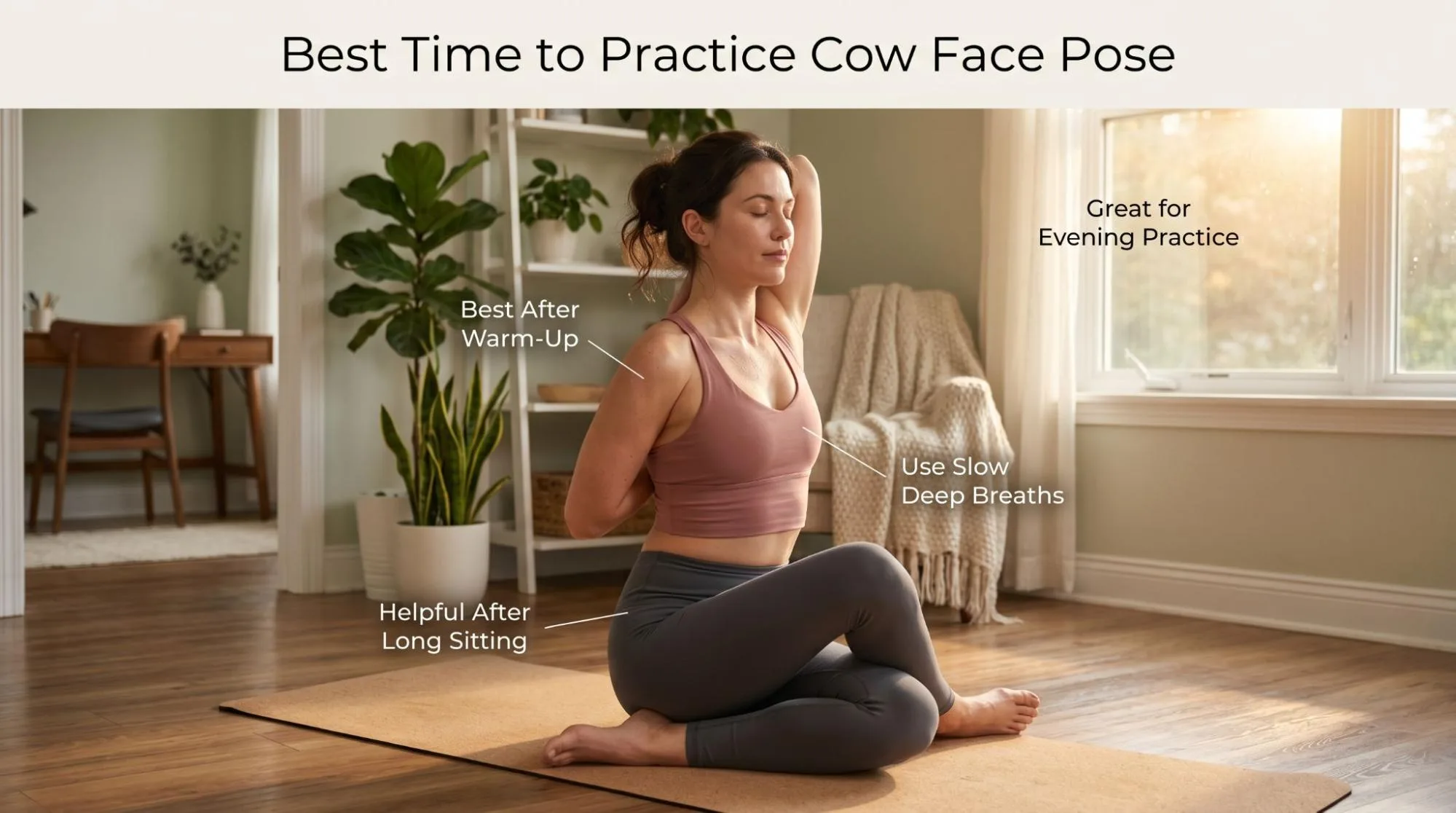
Best Time to Practice Cow Face Pose
The best time to practice cow face pose is after the body is warm. It works well in the middle or later part of a yoga session after gentle hip openers and shoulder movements.
You can also practice it in the evening after sitting for many hours. It may help release tight hips and shoulders before rest.
Avoid forcing the pose early in the morning when the body feels stiff. Start gently and let the body open naturally.
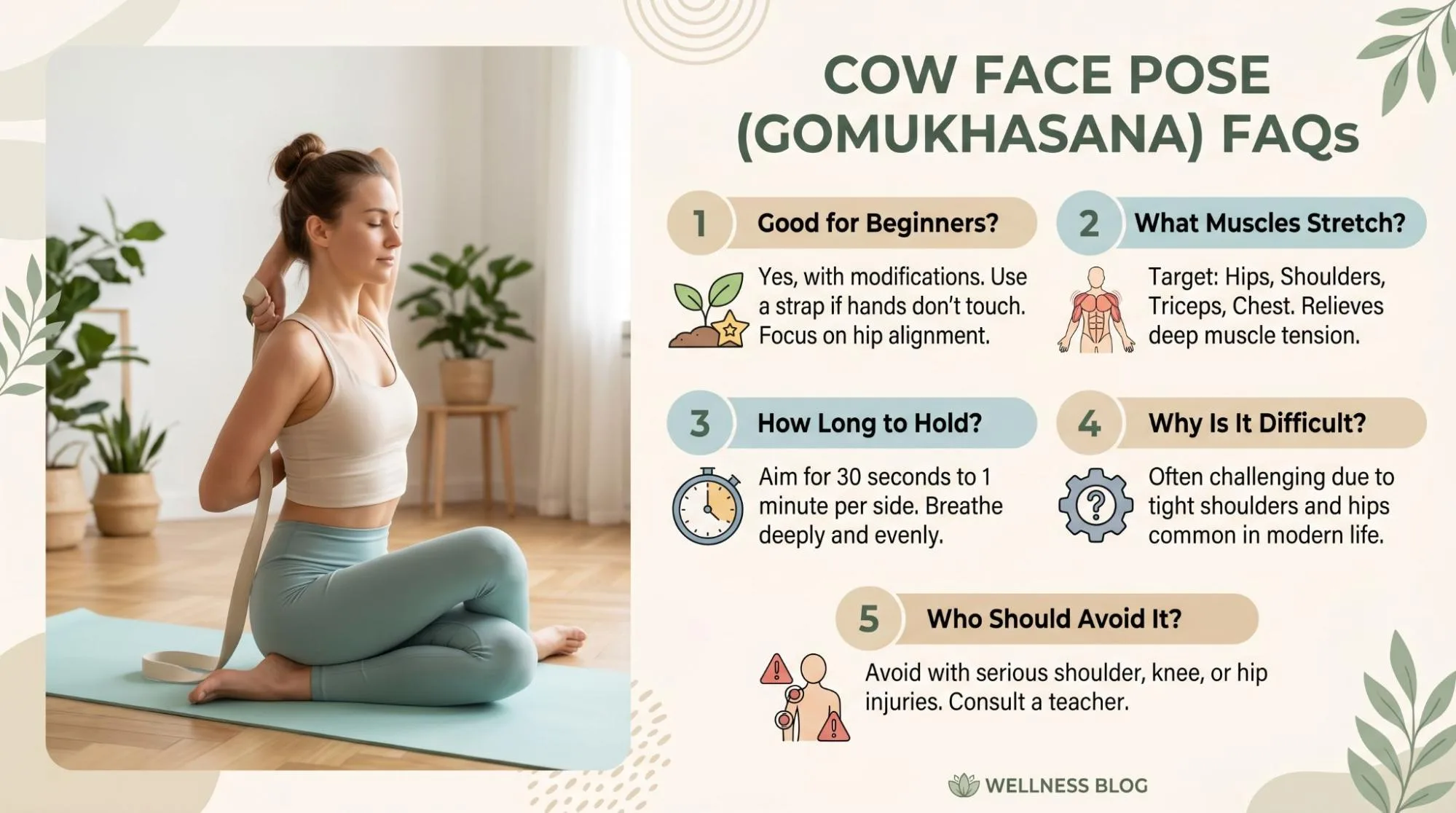
Cow Face Pose FAQs
Is Cow Face Pose Good for Beginners?
Yes, cow face pose can be good for beginners when modified. Beginners can sit on a blanket, use a strap, or practice only the arms or legs.
What Muscles Does Cow Face Pose Stretch?
Cow face pose stretches the outer hips, glutes, thighs, shoulders, triceps, chest, ankles, and upper back.
How Long Should You Hold a Cow Face Pose?
Most people can hold a cow face pose for 20 to 60 seconds on each side. Stay only as long as you can breathe comfortably.
Why Is Cow Face Pose Difficult?
Cow face pose can feel difficult because it needs flexibility in both the hips and shoulders. Tight hips, stiff shoulders, or knee discomfort can make the full pose challenging.
Can Cow Face Pose Help with Posture?
Yes, it can help improve posture by opening the chest, stretching the shoulders, and encouraging a tall spine.
Should My Hands Touch in Cow Face Pose?
No, your hands do not have to touch. If you cannot clasp hands, use a yoga strap or towel.
Who Should Avoid Cow Face Pose?
People with serious knee, shoulder, hip, or lower back injuries should avoid the full pose unless guided by a qualified teacher or healthcare provider.
Learn More : Seated Forward Fold Yoga Step by Step
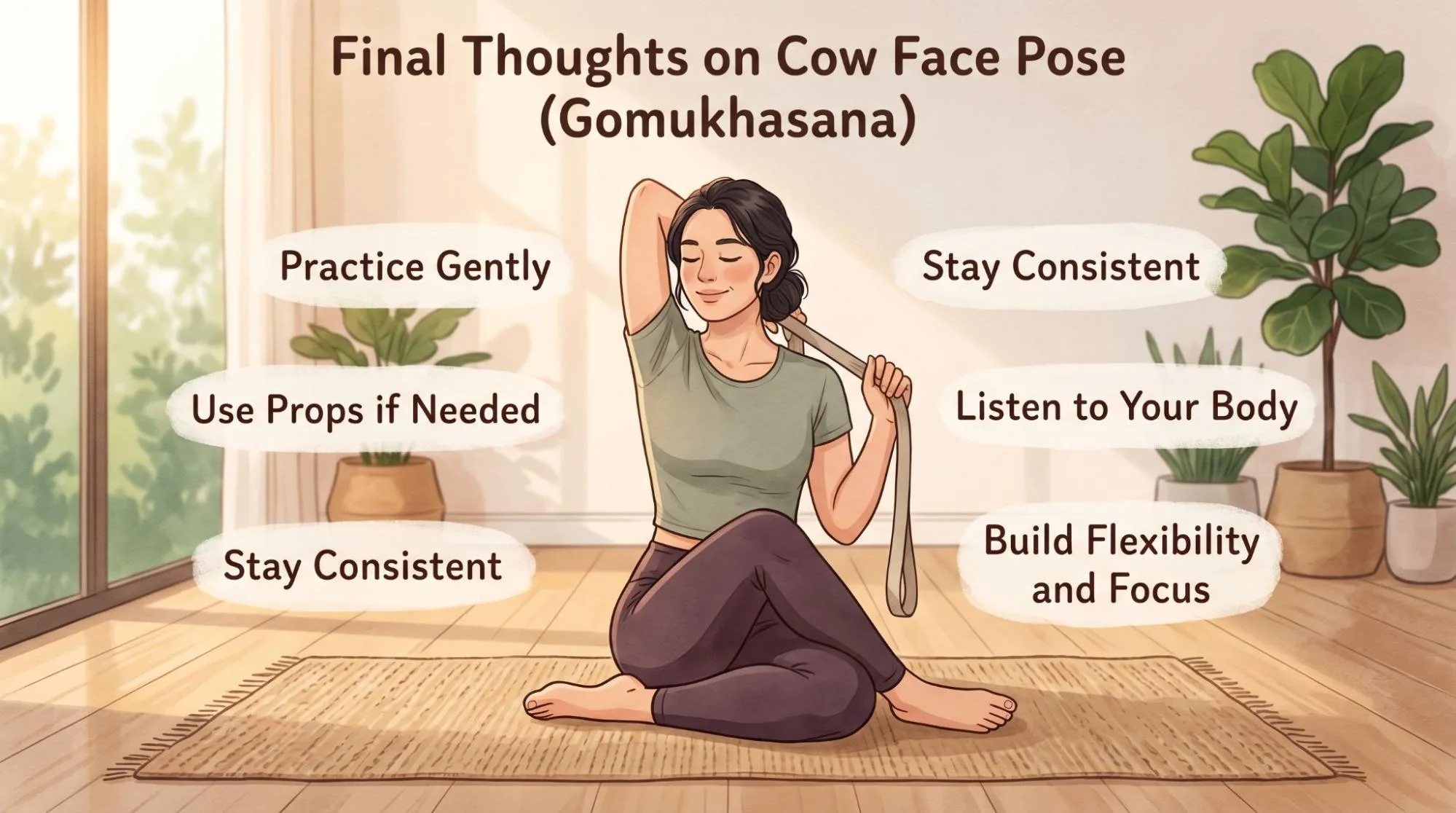
Final Thoughts on Cow Face Pose (Gomukhasana)
Cow face pose is a strong but useful seated yoga posture. It can improve posture, release hip tension, enhance shoulder mobility, support breathing, and build calm focus. The most useful cow face pose yoga benefits come from gentle, consistent practice rather than forcing the full pose.
The key is to practice gently. Use props when needed, protect the knees, and never force the arms or legs. With regular practice, Gomukhasana can become a helpful part of your yoga routine for flexibility, balance, and relaxation.
Frequently Asked Questions
Is Cow Face Pose suitable for beginners?
Yes, beginners can practice a supported version with a cushion under the hips and a strap between the hands. Work within a comfortable range.
Why can’t my hands touch behind my back?
Limited shoulder or chest mobility is common. Use a strap and avoid pulling the hands toward each other.
What should I do if my knee hurts?
Come out of the pose, straighten the legs, and try a gentler seated position. Knee pain is a reason to modify or stop, not to push deeper.
