
Santosha is one of the most practical teachings in yoga philosophy. It means contentment, but not in a shallow way. It is not about pretending life is perfect or forcing yourself to smile through every problem. Santosha is the quiet practice of accepting the present moment while staying steady, grateful, and open to growth.
In simple words, Santosha teaches us to stop waiting for life to become perfect before we allow ourselves peace. This is why the santosha contentment yoga niyama is still so useful today. It speaks directly to stress, comparison, craving, social media pressure, and the constant feeling that we are somehow “not there yet.”
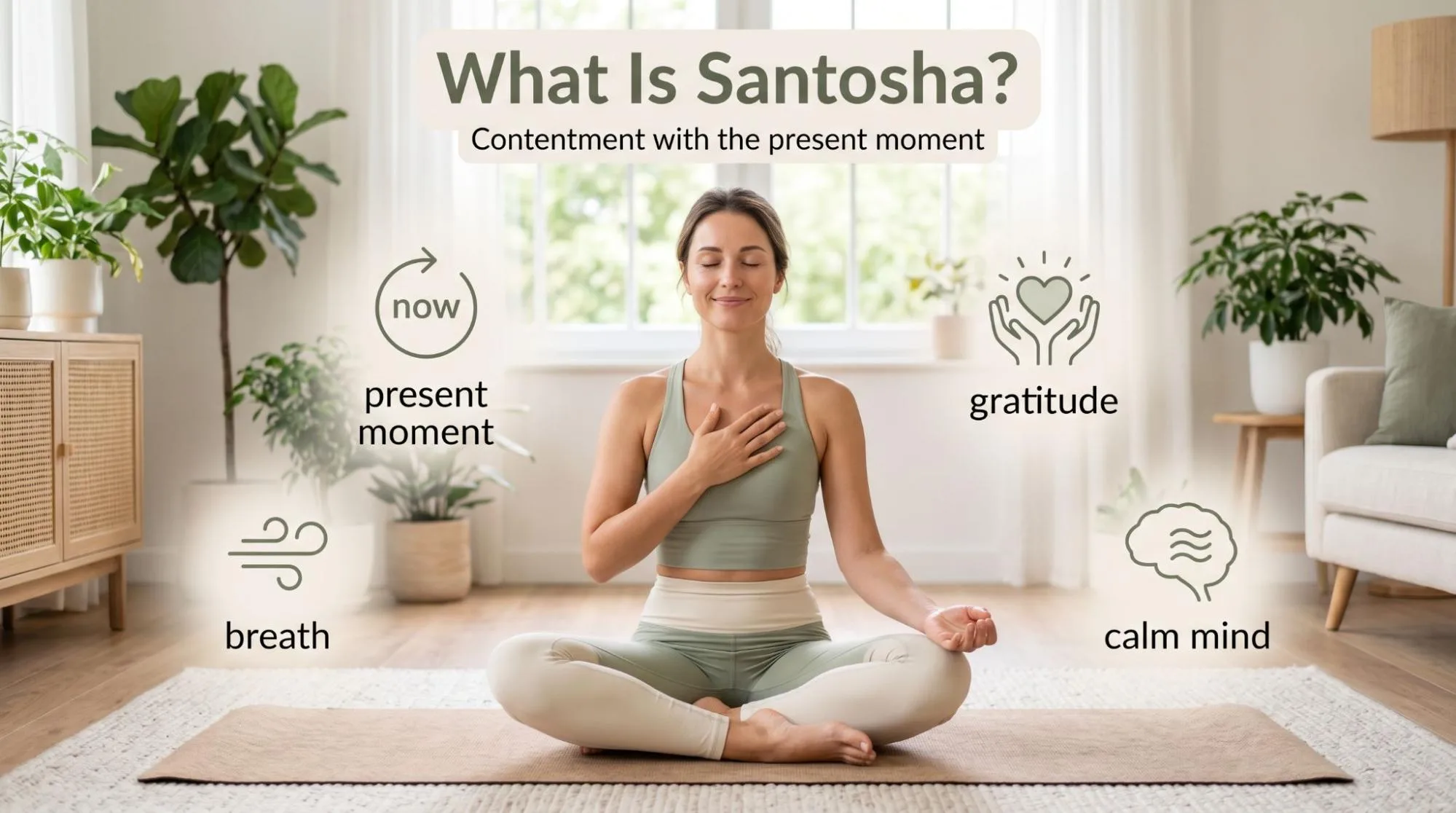
What Is Santosha Contentment Yoga Niyama?
Santosha comes from Sanskrit and is usually translated as contentment or satisfaction. In yoga philosophy, it means being at peace with what is present, without constantly fighting reality in your mind.
This does not mean you must like everything that happens. Life can be painful, unfair, or uncertain. Santosha simply helps you meet each moment with more steadiness.
In the Yoga Sutras, Santosha is linked with deep joy. The idea is simple: when the mind is no longer chasing every desire, it becomes lighter.
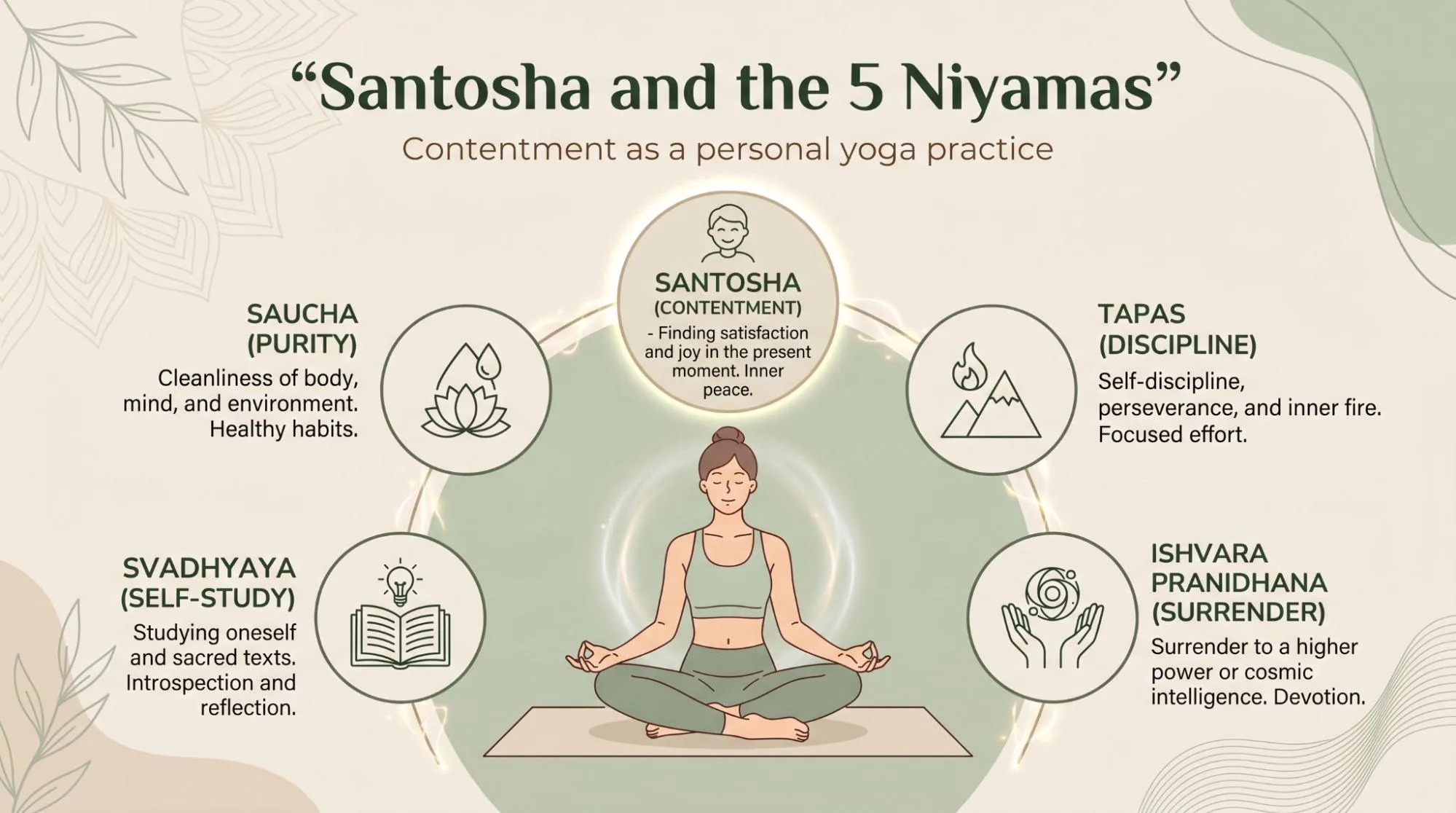
Santosha and the Five Niyamas
The yamas and niyamas are part of the ethical foundation of yoga. They guide how we live, think, act, and relate to ourselves and others.
The yamas are mainly about our relationship with the outer world. The niyamas are personal practices that support inner growth. Santosha is one of the five niyamas.
The five niyamas are:
- Saucha: cleanliness or purity
- Santosha: contentment
- Tapas: discipline
- Svadhyaya: self-study
- Ishvara Pranidhana: surrender
Niyamas Santosha balances the whole path. Without contentment, discipline can become harsh. Self-study can become self-criticism. Growth can become pressure. Santosha softens the practice.
Learn More : Yama and Niyama: Meaning, Principles, Benefits, and Daily Practice
The Deeper Meaning of Complete Contentment
Santosha or contentment is not only about being thankful for what you have. It is deeper than that. It is the ability to stop arguing with the present moment.
Contentment Is Not the Same as Having Everything
Many people believe they will feel content when they have more money, a better body, a bigger house, a stronger relationship, or more success.
But once one desire is fulfilled, another often appears. That is the nature of craving.
Santosha reminds us that having more is not the same as feeling whole. A person may own many things and still feel restless. Another person may live simply and carry a deep sense of gratitude.
Contentment Is an Inner Practice
Contentment is not something you achieve once. It is something you practice again and again.
You practice Santosha when you pause before complaining. You practice it when you stop comparing your progress with someone else’s. You practice it when you take a breath and say, “This moment is enough to begin.”

Inside-Out Happiness
Most of us are taught to look outside ourselves for happiness. We think peace will come after the next achievement, purchase, relationship, or life change.
Santosha turns the search inward.
It does not say external things do not matter. Health, safety, love, and meaningful work matter. But lasting peace cannot depend only on circumstances.
Breaking the “I’ll Be Happy When” Loop
The “I’ll be happy when” loop is very common.
I’ll be happy when I earn more.
I’ll be happy when I lose weight.
I’ll be happy when people respect me.
I’ll be happy when life becomes easier.
The problem is that the finish line keeps moving.
Practicing Santosha helps you notice this pattern. It asks, “Can I allow some peace now, even before everything is perfect?”
That one question can change the way you live your daily life.

Radical Acceptance in Santosha
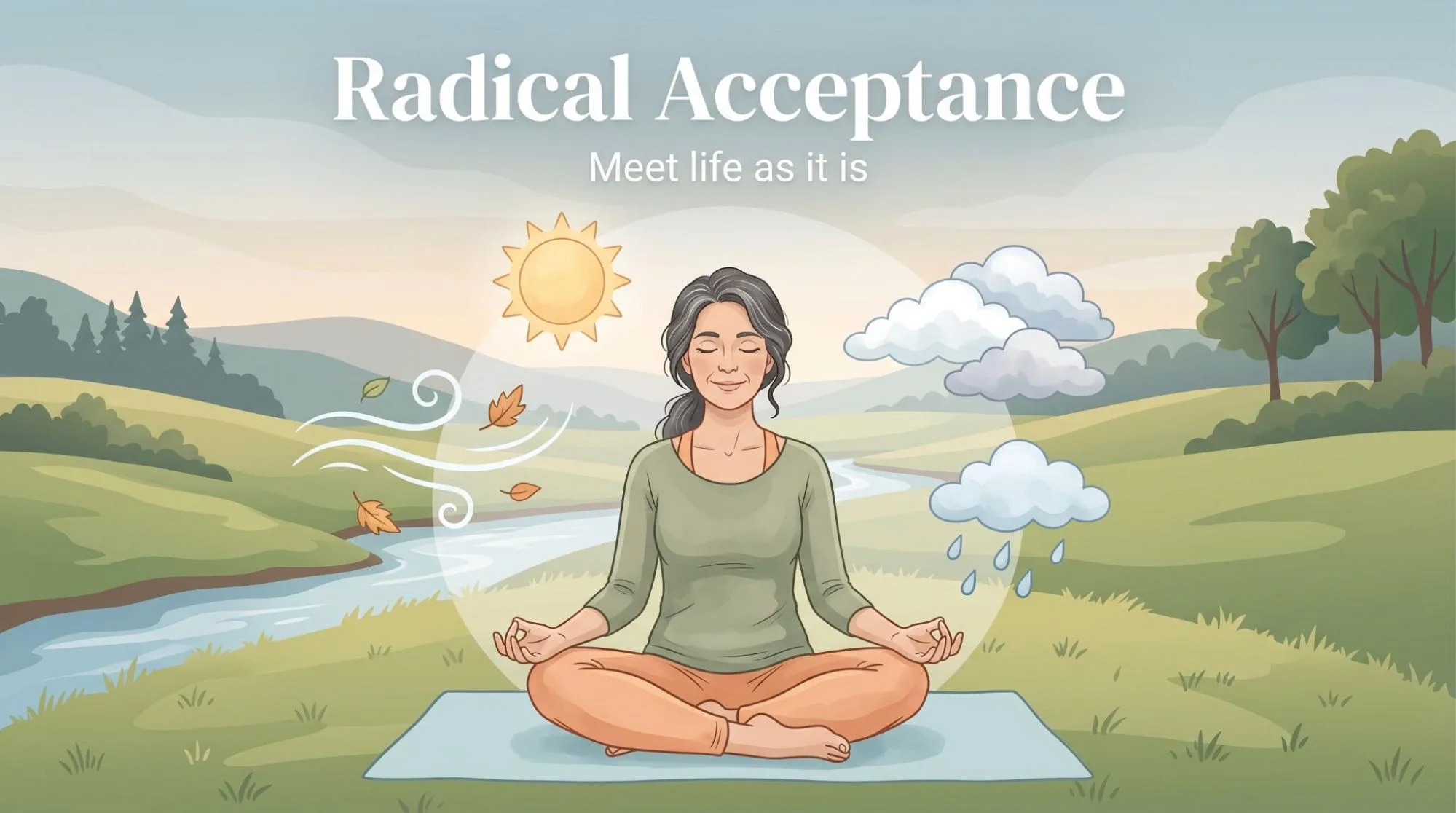
Radical acceptance means seeing things as they are, without wasting energy denying reality. It does not mean approval. It means honesty.
Santosha supports this kind of acceptance. It gives the mind space to breathe.
Being Okay When You Are Happy and Unhappy
A real yoga practice does not require you to feel calm all the time. That would be unrealistic.
Santosha allows happiness without clinging to it. It also allows sadness, tiredness, and frustration without turning them into personal failures.
You can be content and still have difficult emotions. You can feel uncomfortable and still remain grounded.
Learn More : Svadhyaya: The Yoga Practice of Self-Study and Inner Reflection
Santosha Is Active Peace, Not Passivity
One common mistake is thinking Santosha means doing nothing. That is not true.
Contentment is not laziness. It is not weakness. It is not accepting poor treatment or avoiding responsibility.
Santosha gives you a calmer place to act from.
Working Toward Goals with Contentment
You can have goals and still practice Santosha. You can study, build a career, improve your health, or grow spiritually without hating where you are now.
Without Santosha, goals can become a form of self-rejection. With Santosha, goals become part of healthy growth.
The attitude changes from “I am not enough until I achieve this” to “I am enough now, and I am still growing.”
That is a much kinder way to move forward.

Santosha and Vairagya: Weakening Desire
Vairagya means non-attachment or letting go of craving. Santosha and Vairagya work closely together in yoga practice.
Desire is not always bad. But when desire controls the mind, it creates suffering. Santosha helps weaken that grip.
Choosing to Want What You Have
A simple way to understand Santosha is this: instead of always trying to get what you want, learn to want what you already have.
This may mean appreciating your body, your breath, your home, your food, your time, or the people who care about you.
It does not remove all ambition. It simply puts desire in its proper place.

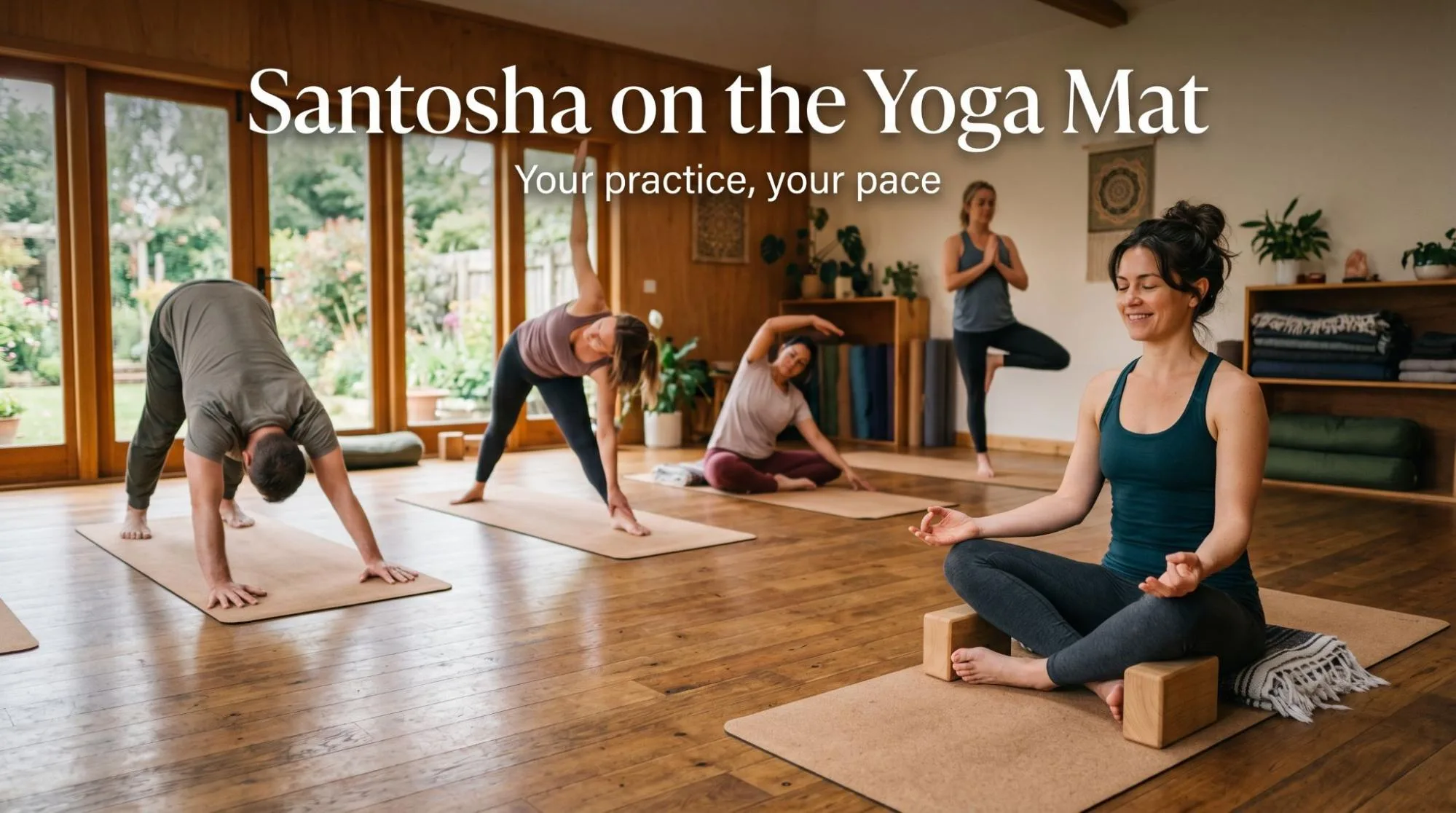
Applying Santosha on the Yoga Mat
The yoga mat is a clear mirror. It quickly shows where we compare, force, resist, or judge ourselves.
Releasing Comparison
In a yoga class, comparison can appear easily. Someone stretches deeper. Someone balances longer. Someone looks peaceful while you are struggling.
Santosha brings you back to your own mat.
Your yoga practice is not meant to look like someone else’s. It is meant to teach awareness, patience, breath, and honesty.
Honouring Your Body
Some days your body feels open. Some days it feels stiff, tired, or heavy. Santosha teaches you to respect both.
Honouring your body means listening instead of forcing. It means knowing the difference between healthy effort and harmful pressure.
Breathing Through Discomfort
Discomfort can be useful when handled wisely. In yoga, it can teach patience and presence.
Santosha helps you breathe through challenge without becoming aggressive. You stay alert, steady, and kind to yourself.
Applying Santosha Off the Mat
Santosha becomes most powerful when you bring it into daily life.
Gratitude Practice
Contentment and gratitude support each other. Gratitude trains the mind to notice what is already good, useful, or meaningful.
A simple practice is to write three specific things you are thankful for each day. Keep them real and small. A good meal. A kind message. A quiet morning.
Small gratitude becomes a strong sense of gratitude over time.
Mindful Consumption
Modern life constantly tells us to want more. More clothes, more attention, more success, more comfort.
Santosha asks us to pause.
Before buying or consuming, ask:
- Do I really need this?
- Will this improve my life?
- Am I choosing this from need or restlessness?
These questions are not about guilt. They are about freedom.
Non-Judgmental Relationships
Santosha also helps in relationships. Much of our frustration comes from wanting people to behave exactly as we expect.
Contentment does not mean accepting disrespect. Boundaries still matter. But it helps us release constant judgment and control.
Sometimes peace begins when we allow people to be human.

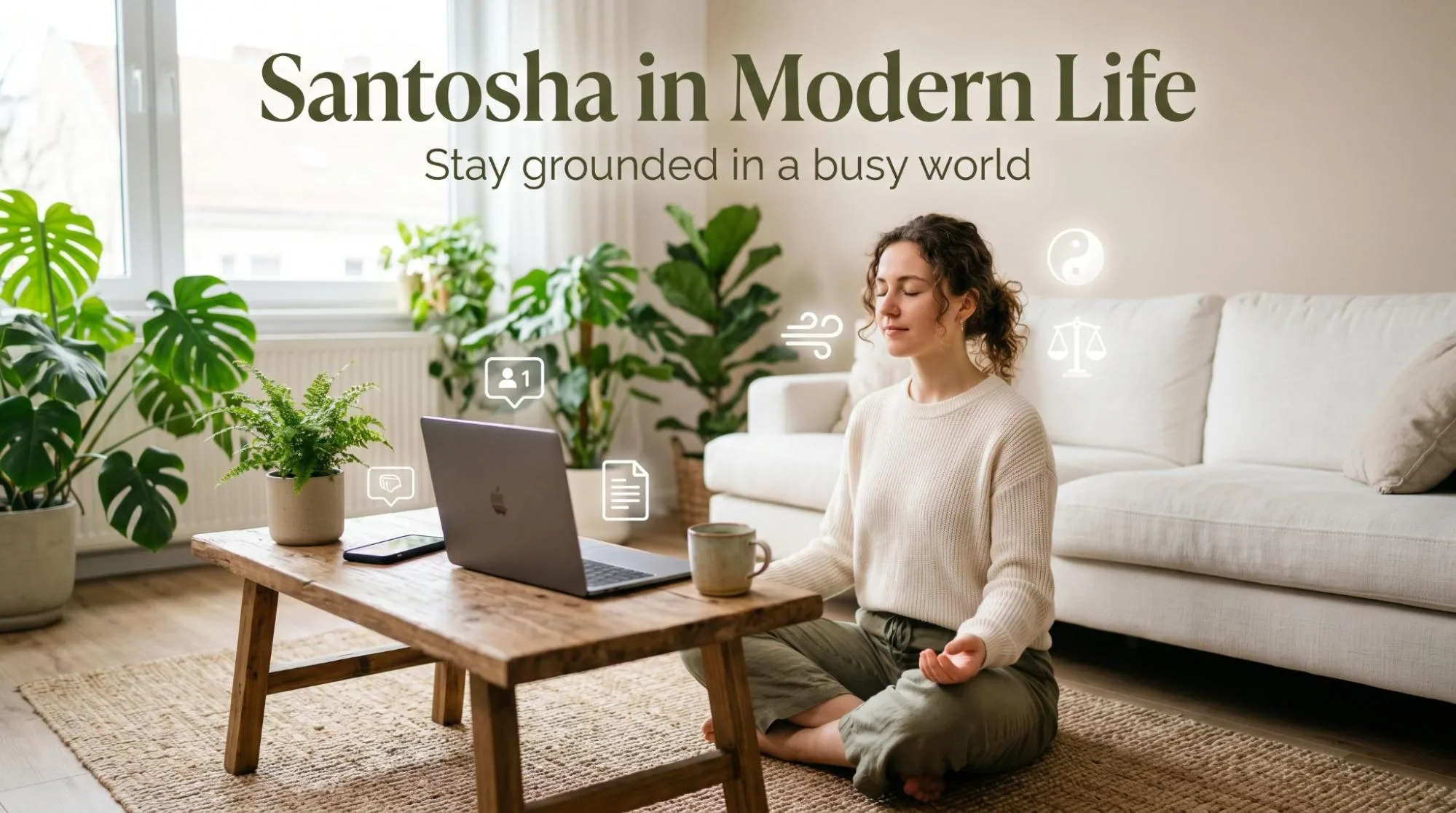
Santosha in Modern Life
Santosha may be an ancient teaching, but it feels very relevant now. Many people are tired from comparison, pressure, and endless wanting.
Santosha and Social Media
Social media can make ordinary life feel lacking. You see someone’s success, body, home, holiday, or relationship, and your own life may suddenly seem small.
Santosha reminds you that you are seeing fragments, not full lives.
A useful practice is to notice how you feel after scrolling. If certain content makes you restless or resentful, reduce it. Choose content that teaches, calms, or genuinely inspires you.
Santosha and Work
At work, Santosha does not mean losing ambition. It means not letting your job define your full worth.
You can aim for better income, skills, or promotion while still respecting your current stage.
This is especially helpful when progress feels slow. Santosha keeps you steady while you continue to grow.
Simple Daily Practices to Build Santosha
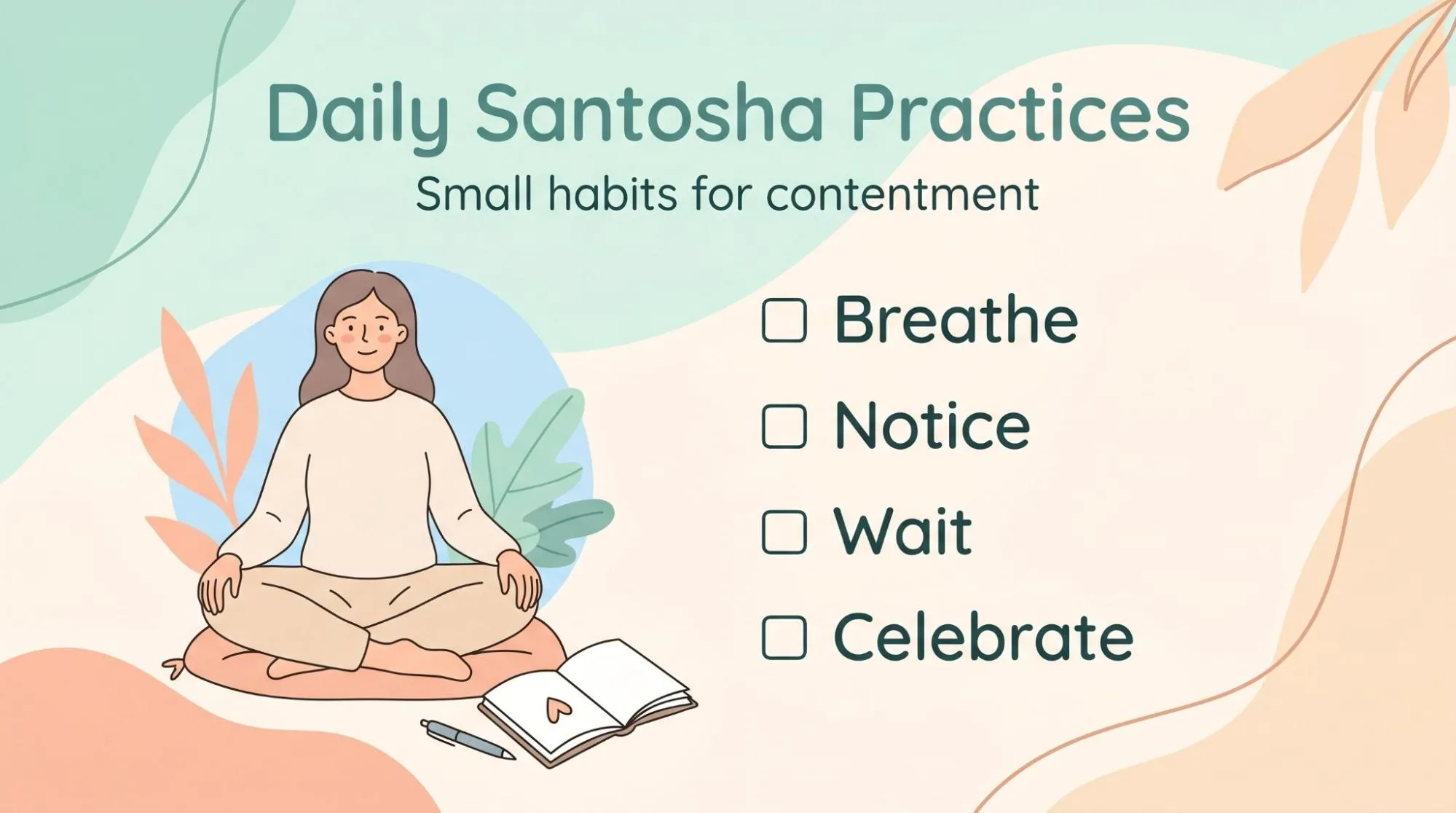
Santosha grows through small daily choices. You do not need a perfect routine.
Start the Day with Enoughness
Before checking your phone, take one breath and say, “This moment is enough to begin.”
It is simple, but it creates a calmer start.
Notice Complaints Without Judgment
Complaining is human. The practice is not to shame yourself.
When a complaint appears, ask, “Is action needed, or am I feeding dissatisfaction?”
Sometimes you need to act. Sometimes you only need to soften.
Practice Contentment During Waiting
Waiting in traffic, standing in line, or waiting for a reply can become a Santosha practice.
Instead of reaching for distraction immediately, breathe. Feel your feet. Let the moment be simple.
Celebrate Small Progress
A calmer response counts. A completed task counts. A short yoga practice counts.
Santosha teaches you to respect small progress instead of waiting for perfection.
Common Misunderstandings About Santosha
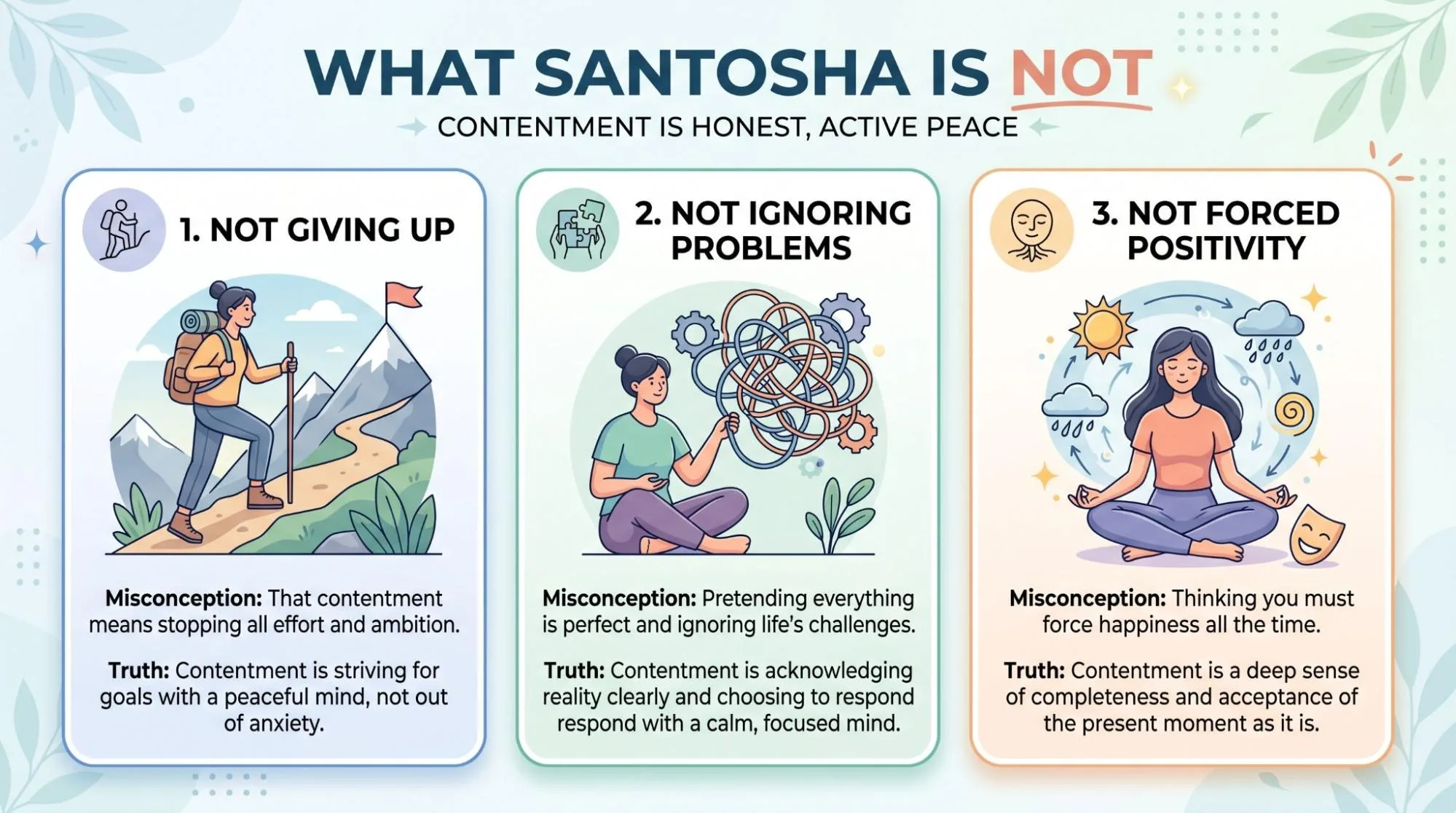
Santosha is often misunderstood because contentment can sound passive. But the real meaning is stronger and wiser.
Santosha Does Not Mean Giving Up
Giving up comes from hopelessness. Santosha comes from acceptance.
You can be content and still move forward. In fact, contentment often gives you more energy because you are no longer fighting yourself all the time.
Santosha Does Not Mean Ignoring Problems
If something is harmful, unhealthy, or unfair, Santosha does not ask you to pretend it is fine.
Acceptance is not denial. It is seeing clearly, then responding wisely.
Santosha Does Not Mean Forced Positivity
Forced positivity says, “Everything is fine,” even when it is not.
Santosha says, “This is hard, and I can still stay present.”
That is more honest and more useful.
Why Santosha Leads to Supreme Joy
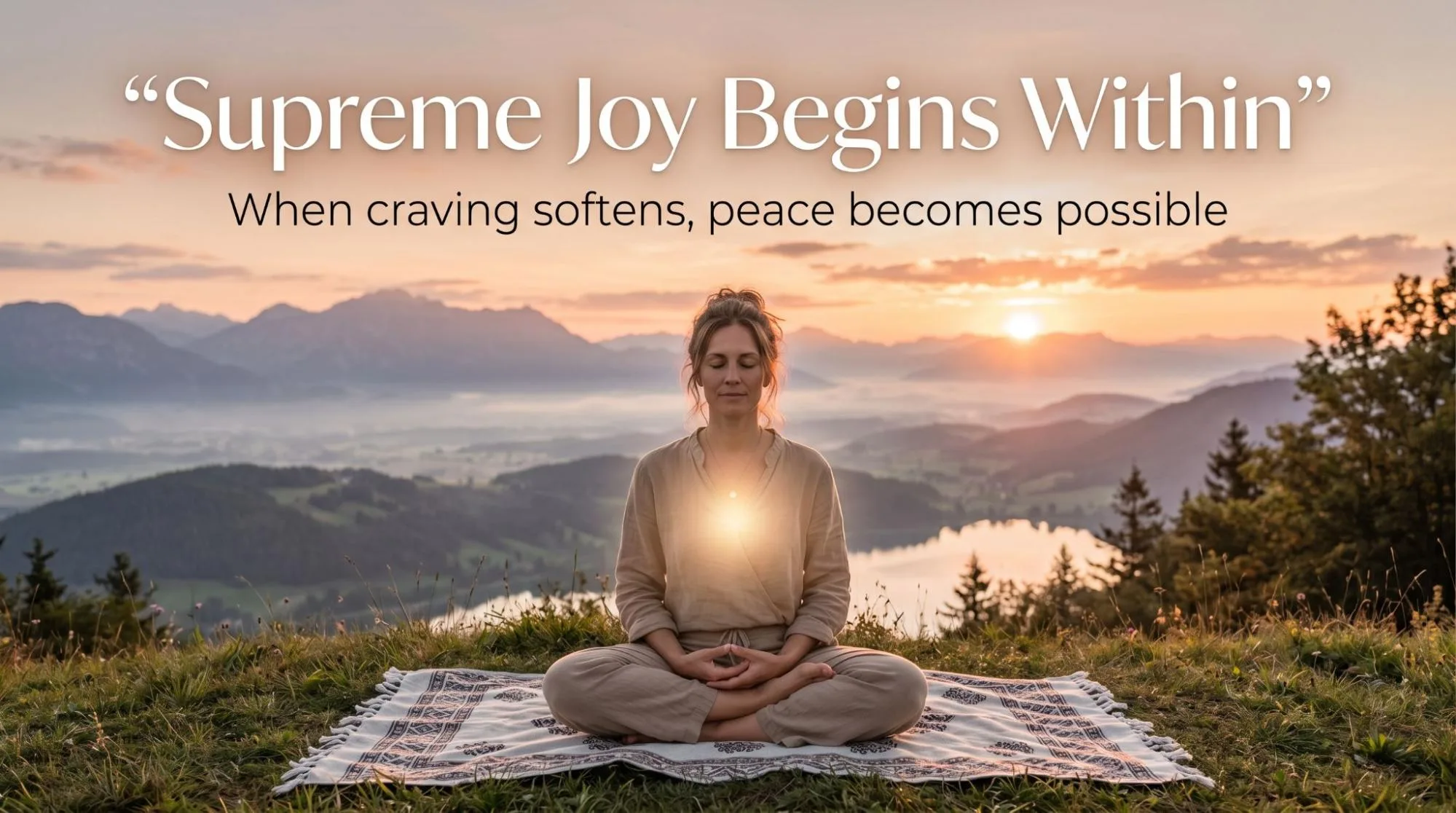
The Yoga Sutras teach that Santosha leads to a deep kind of joy. This joy is not excitement or temporary pleasure. It is quieter.
When craving becomes weaker, the mind rests. When comparison fades, the heart feels lighter. When the present moment is no longer treated as an enemy, life becomes easier to live.
This is why practicing Santosha can feel so freeing. It does not remove every challenge, but it changes your relationship with those challenges.
FAQs
What does Santosha mean in yoga?
Santosha means contentment, satisfaction, or acceptance. In yoga, it is the practice of finding peace in the present moment.
Is Santosha one of the niyamas?
Yes. Santosha is one of the five niyamas, which are personal practices within the wider limbs of yoga.
Does Santosha mean I should stop having goals?
No. Santosha allows goals. It simply teaches you not to hate your current life while working toward growth.
How can I practice Santosha daily?
You can practice Santosha through gratitude, mindful breathing, less comparison, simple living, and accepting emotions without judgment.
Is Santosha the same as gratitude?
Not exactly. Gratitude is appreciation for specific things. Santosha is a deeper state of contentment. Gratitude helps build it.
Can Santosha help with stress?
Yes. Santosha can reduce stress by helping you stop resisting every small difficulty and respond with more calm.
Is Santosha forced positivity?
No. Santosha is an honest acceptance. It allows hard feelings without letting them control your whole mind.
How is Santosha used in yoga practice?
On the mat, Santosha helps you release comparison, respect your body, breathe through discomfort, and practice with patience.
Learn More : Tapas Yoga Meaning Self Discipline
Conclusion: Living the Wisdom of Santosha
Santosha is not just a yoga idea. It is a way of meeting ordinary life with more peace.
You can practice it while stretching, working, waiting, eating, scrolling, or dealing with difficult emotions. It reminds you that peace does not have to wait until everything is perfect.
You can grow and still accept where you are. You can want better and still appreciate what is here. That is the wisdom of Santosha: learning to live with enoughness, one present moment at a time.