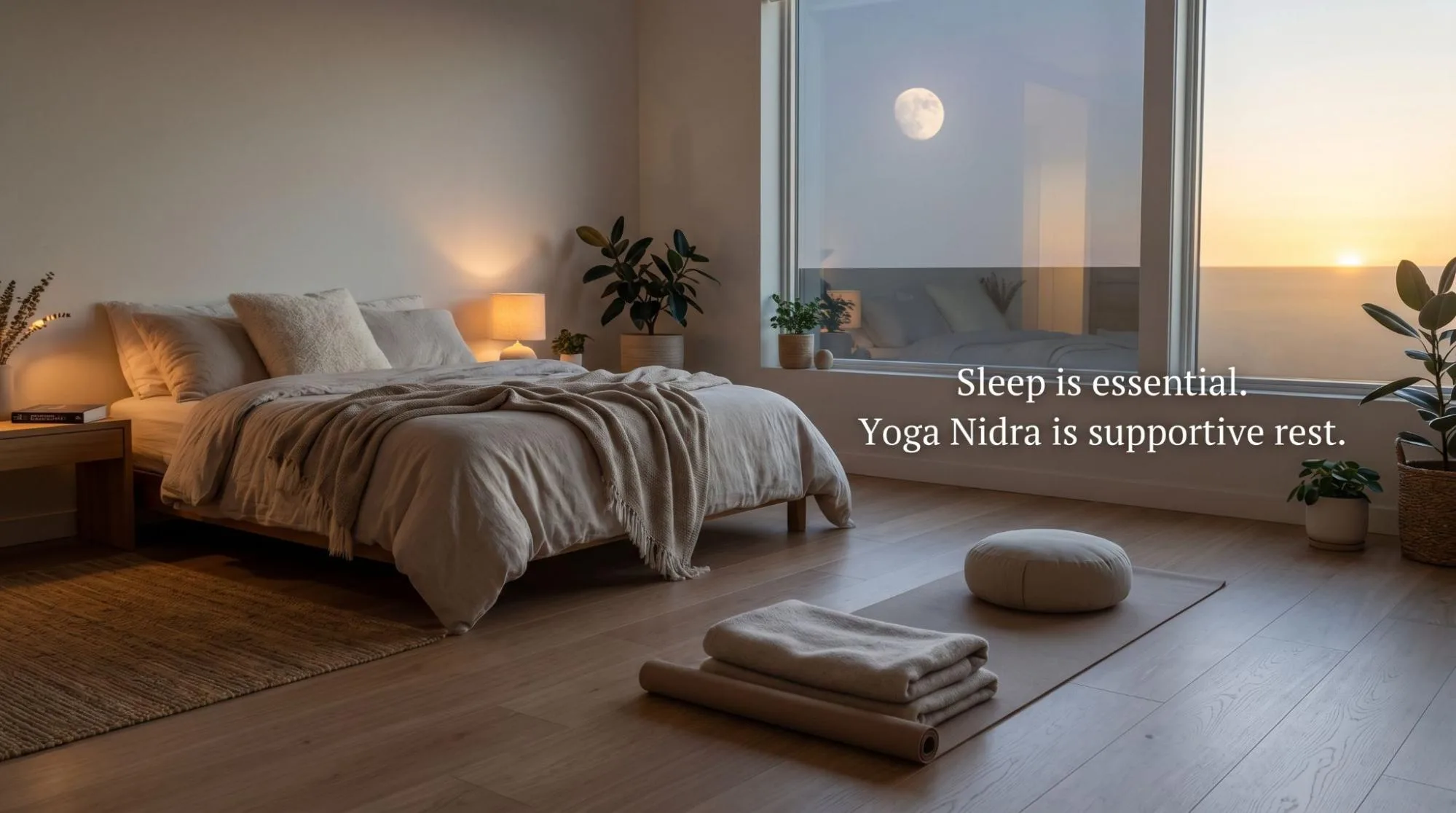
This simple Yoga Nidra vs Sleep Difference Explained guide will help you understand how both affect rest, awareness, and sleep quality. If you have ever tried Yoga Nidra and thought, “This feels like sleep, but I’m still somehow awake,” you are not alone. That is exactly why many people compare Yoga Nidra and sleep.
Both can relax the body and mind. Both can leave you feeling calmer. Both may improve sleep quality over time. But they are not the same thing.
This guide explains the yoga nidra vs sleep difference explained in simple terms, so you know when to rest, when to sleep, and when guided Yoga Nidra can support your routine.
What Is Sleep?
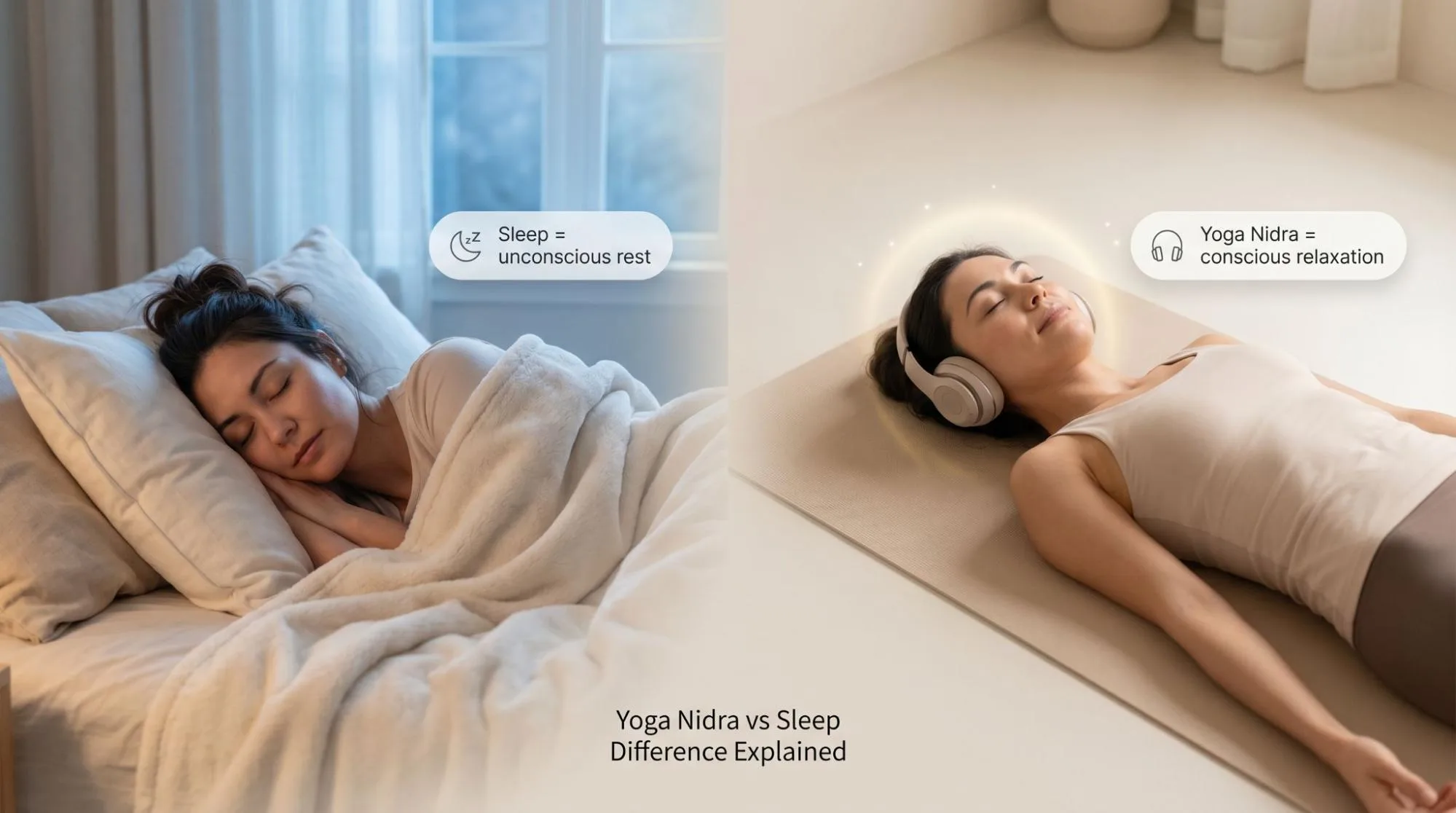
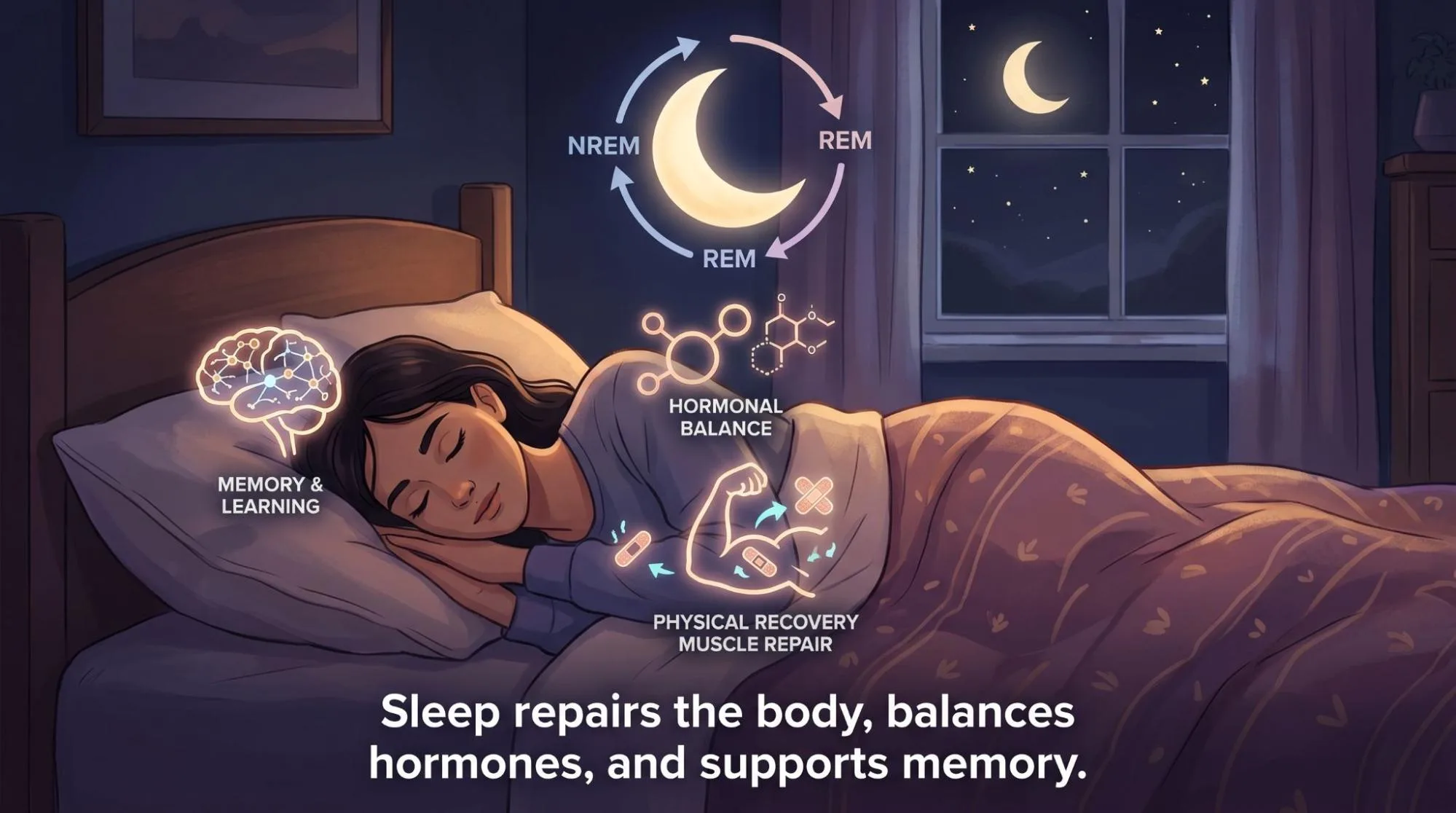
This Yoga Nidra vs Sleep Difference Explained comparison starts with understanding that sleep is a natural body process, not just simple rest. Sleep is a natural biological state where your body and brain move through different sleep cycles. During this time, your awareness of the outside world drops, your muscles relax, and your brain shifts through different brain waves.
Sleep Helps the Body Repair
During sleep, the body does a lot of quiet repair work. Muscles recover, tissues restore, and energy is rebuilt. This is one reason deep sleep feels so refreshing after a tiring day.
Sleep Supports Hormonal Balance
Sleep also supports hormones linked with growth, hunger, stress, and energy. Poor hours of sleep can disturb this balance, which may affect appetite, mood, and focus the next day.
Sleep Helps Memory and Learning
Sleep is not just “switching off.” The brain uses sleep to sort and store memories. This is why students, workers, and anyone learning something new often perform better when they sleep properly instead of staying awake all night.
Learn More : Body Scan Meditation Benefits: A Simple Guide to Relaxing the Mind and Body
What Is Yoga Nidra?
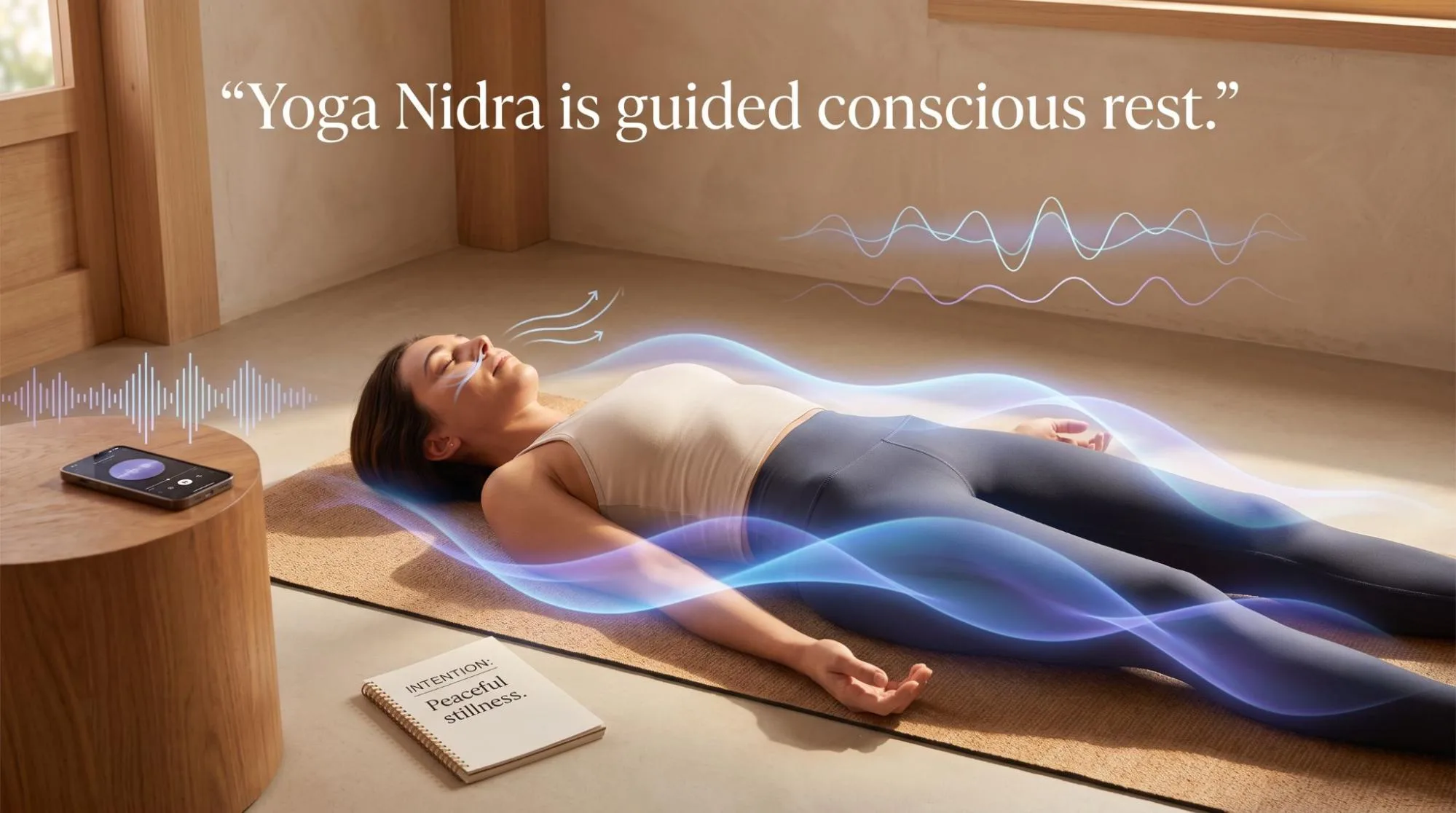
For beginners, the Yoga Nidra vs Sleep Difference Explained idea is simple: sleep is unconscious rest, while Yoga Nidra is guided conscious rest. Yoga Nidra is often called yogic sleep, but it is not normal sleep. It is a restful state where the body becomes deeply relaxed while the mind stays lightly aware.
Yoga Nidra Is Conscious Rest
The key part of Yoga Nidra is conscious awareness. Your body may feel heavy and still, but a small part of your attention stays present with the guidance, breath, or body scan.
Yoga Nidra Is Usually Guided
Most people practice with a guided Yoga Nidra audio or teacher. Many guided meditation recordings and online videos use body awareness, breathing, visualization, and relaxation cues.
Yoga Nidra Uses Intention
Many sessions begin with a simple intention. This may be something like, “I allow myself to rest,” or “I stay calm and steady.” The intention is not forced. It is gently placed in the mind while the body enters a state of deep relaxation.
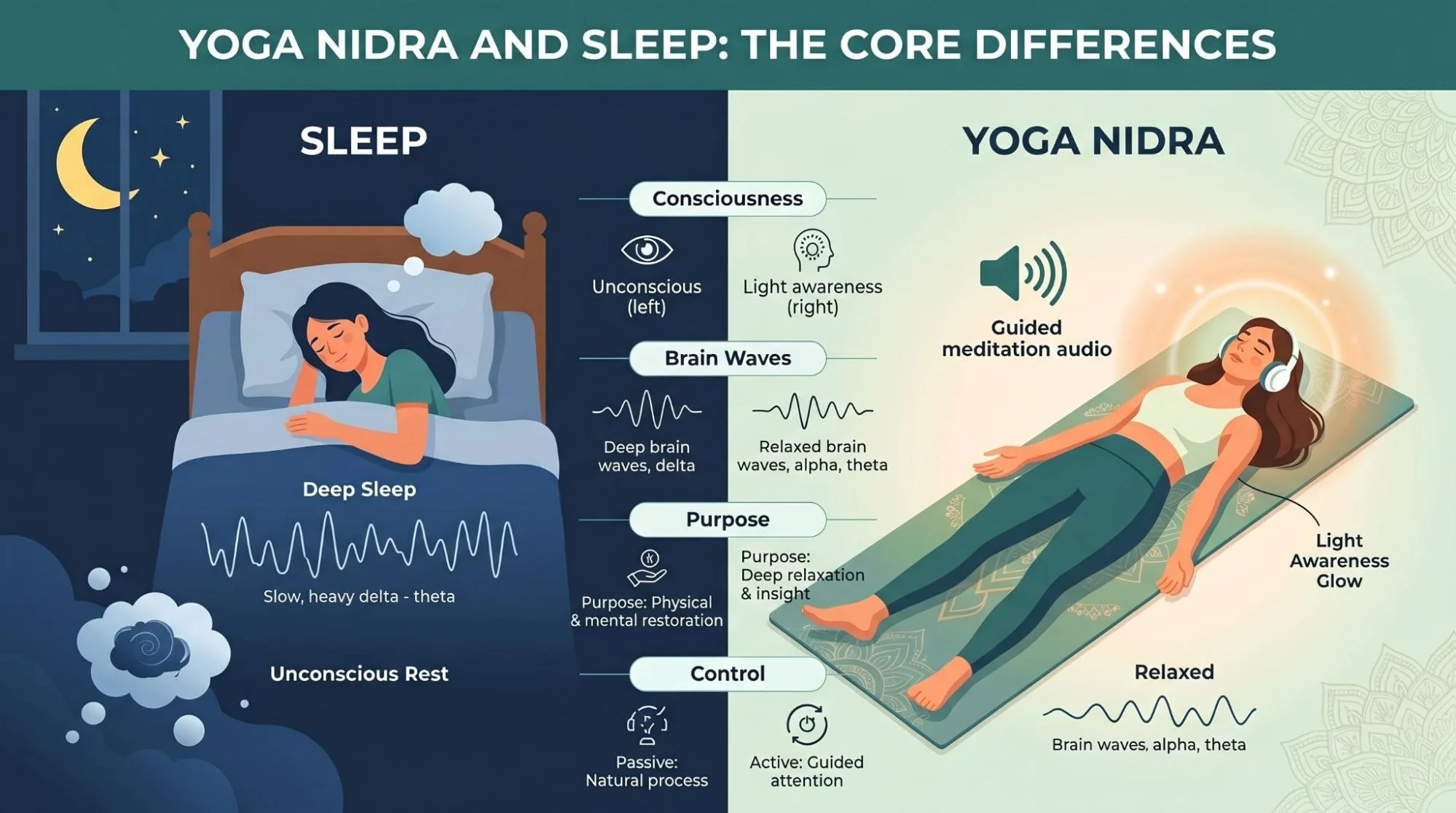
Yoga Nidra vs Sleep Difference Explained: Core Differences
Yoga Nidra and sleep can feel similar, especially if you are tired. But the inner experience is different.
Consciousness
In sleep, you usually lose conscious awareness. You are not actively following instructions or noticing your body.
In Yoga Nidra, you rest while keeping a light thread of awareness. You may drift, but you are not meant to be fully unconscious.
Brain Waves
Sleep moves through different stages, including light sleep, deep sleep, and REM sleep. Each stage has its own brain wave patterns.
Yoga Nidra often brings the mind toward slower, calmer brain waves linked with relaxation. It may feel like the space between waking and sleeping.
Another Yoga Nidra vs Sleep Difference Explained point is that both may involve calmer brain waves, but they do not work in the same way.
Purpose
Sleep is essential for survival, repair, memory, immune support, and emotional balance.
Yoga Nidra is more like a structured rest practice. It helps calm the nervous system, relax the body and mind, and support mental health, but it does not perform every function of natural sleep.
Control
Sleep happens naturally. You cannot fully control which sleep stage you enter.
Yoga Nidra can be practiced intentionally. You choose the place, the guide, the duration, and the intention.
Can Yoga Nidra Replace Sleep?
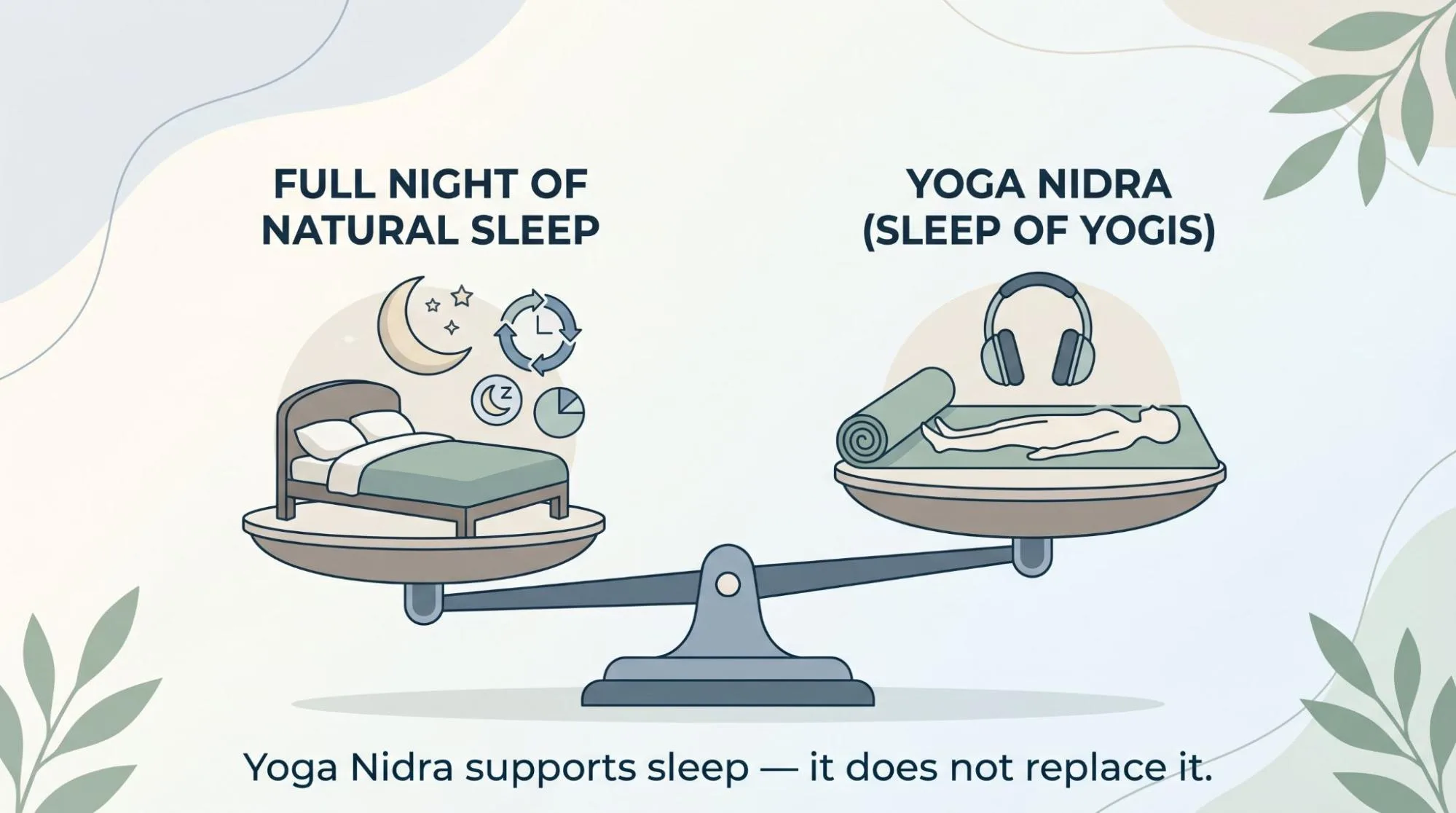
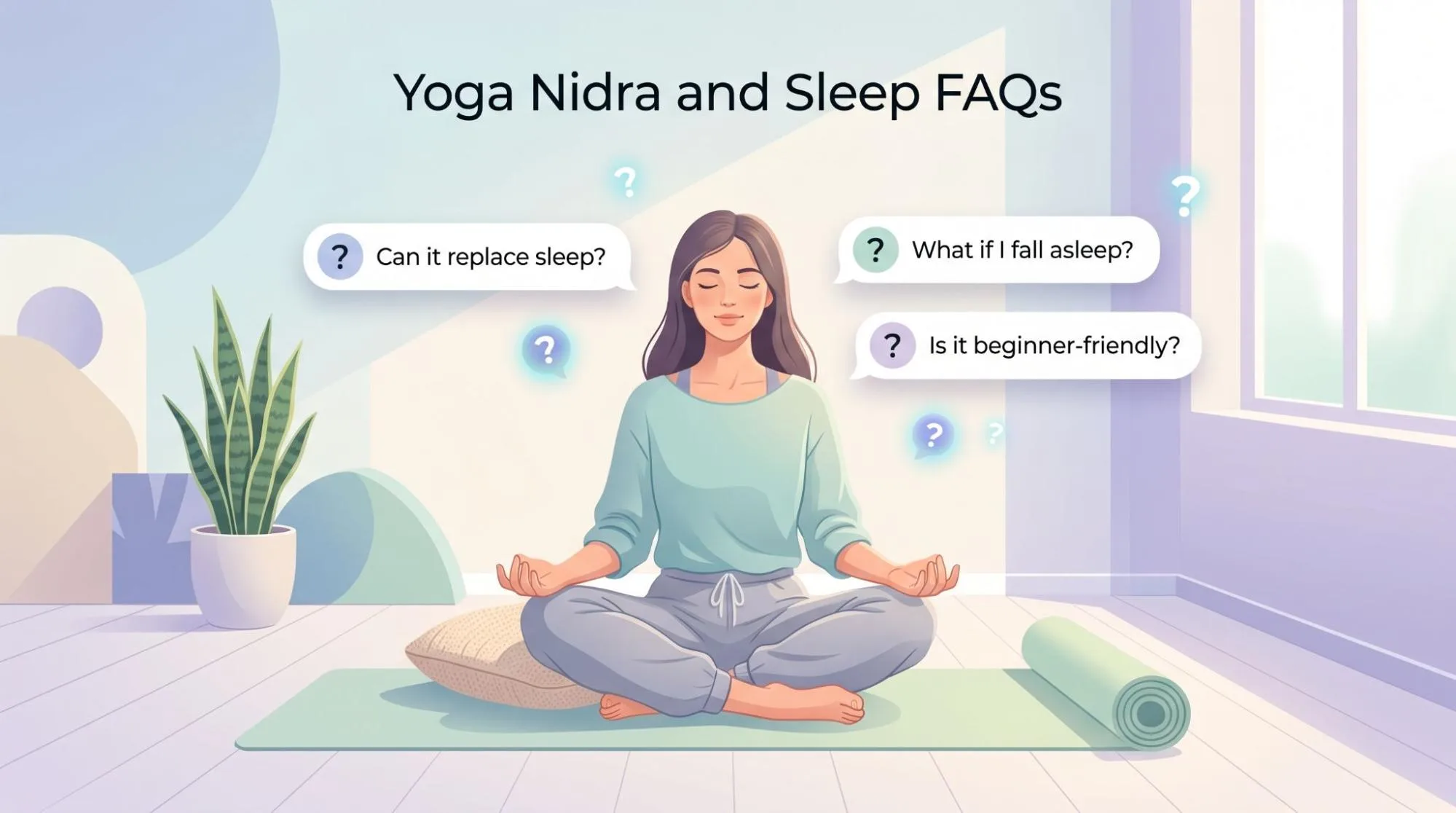
The main Yoga Nidra vs Sleep Difference Explained point is that Yoga Nidra can support rest, but it cannot replace the full repair work of natural sleep. This is one of the most common questions. The honest answer is no, Yoga Nidra cannot fully replace sleep.
Why Yoga Nidra Cannot Fully Replace Sleep
Natural sleep has complex cycles. Deep sleep and REM sleep support physical repair, immune function, memory, mood regulation, and brain recovery. Yoga Nidra may give deep rest, but it does not copy a full night of sleep.
So if you are sleeping only four hours and trying to “fix it” with Yoga Nidra, that is not a healthy long-term plan.
When Yoga Nidra Can Help With Sleep Deficits
Yoga Nidra can still help when you feel drained, stressed, or mentally overloaded. A 20- to 40-minute session may help you feel more settled, especially after a poor night.
It can also support people who struggle to fall asleep because their mind stays too active. Practicing before bed may help prepare the body for better rest.
What Happens If You Fall Asleep During Yoga Nidra?
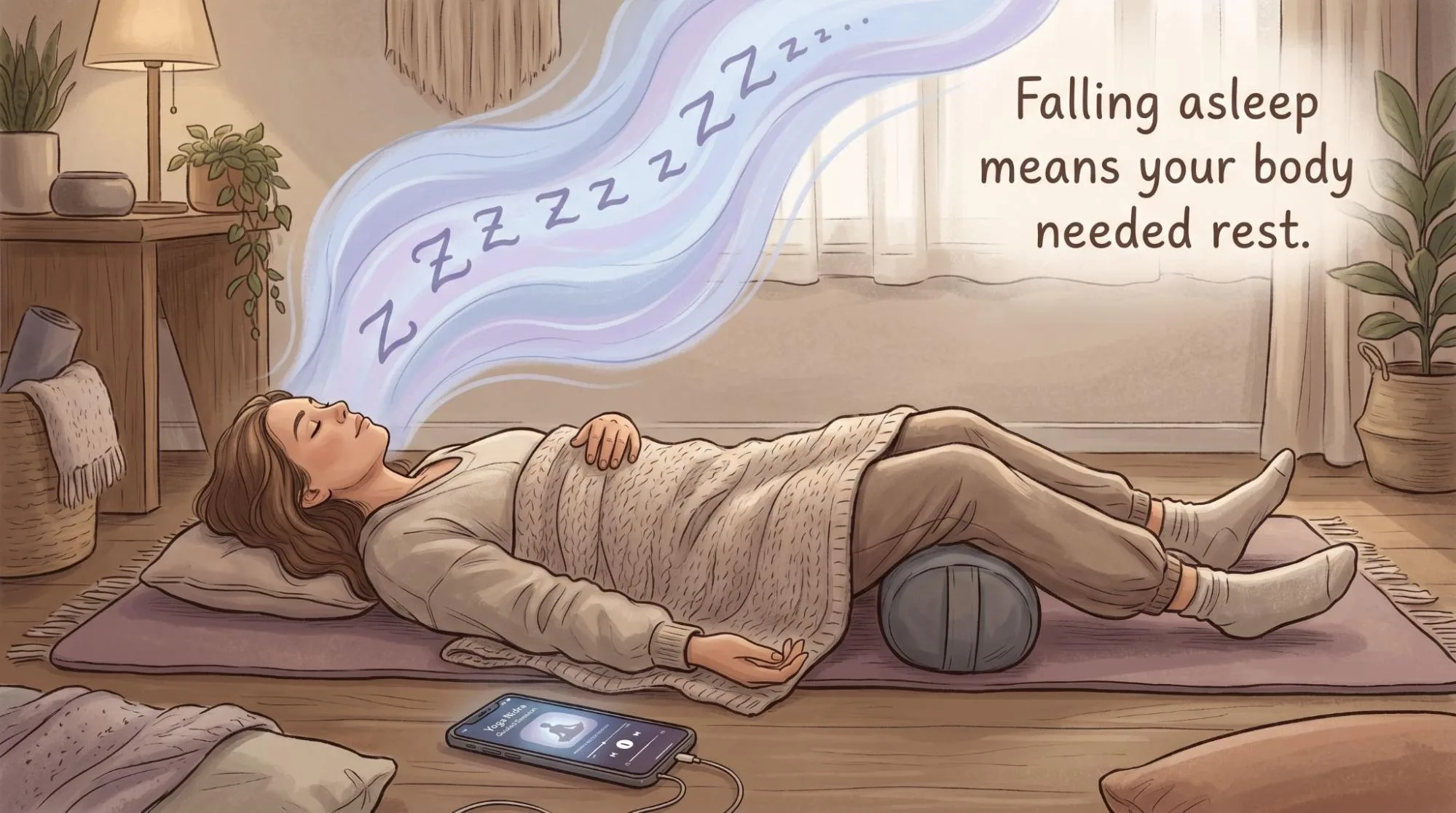
Falling asleep during Yoga Nidra is very common. It does not mean you failed.
Falling Asleep Means Your Body Needed Rest
If you fall asleep quickly, your body may simply be tired. Instead of judging it, see it as information. You may need more natural sleep.
You Still Receive Benefits
Even if you fall asleep, the body still relaxes. You may not receive the same conscious benefits of the full practice, but rest is still useful.
How to Stay Awake During Yoga Nidra
Try these small changes:
- Practice earlier in the day
- Keep the room slightly cool
- Use a shorter guided session
- Lie down comfortably, but not too warmly
- Keep one hand lightly open as a reminder to stay aware
Do not fight sleep aggressively. Gentle awareness works better than effort.
Benefits of Yoga Nidra
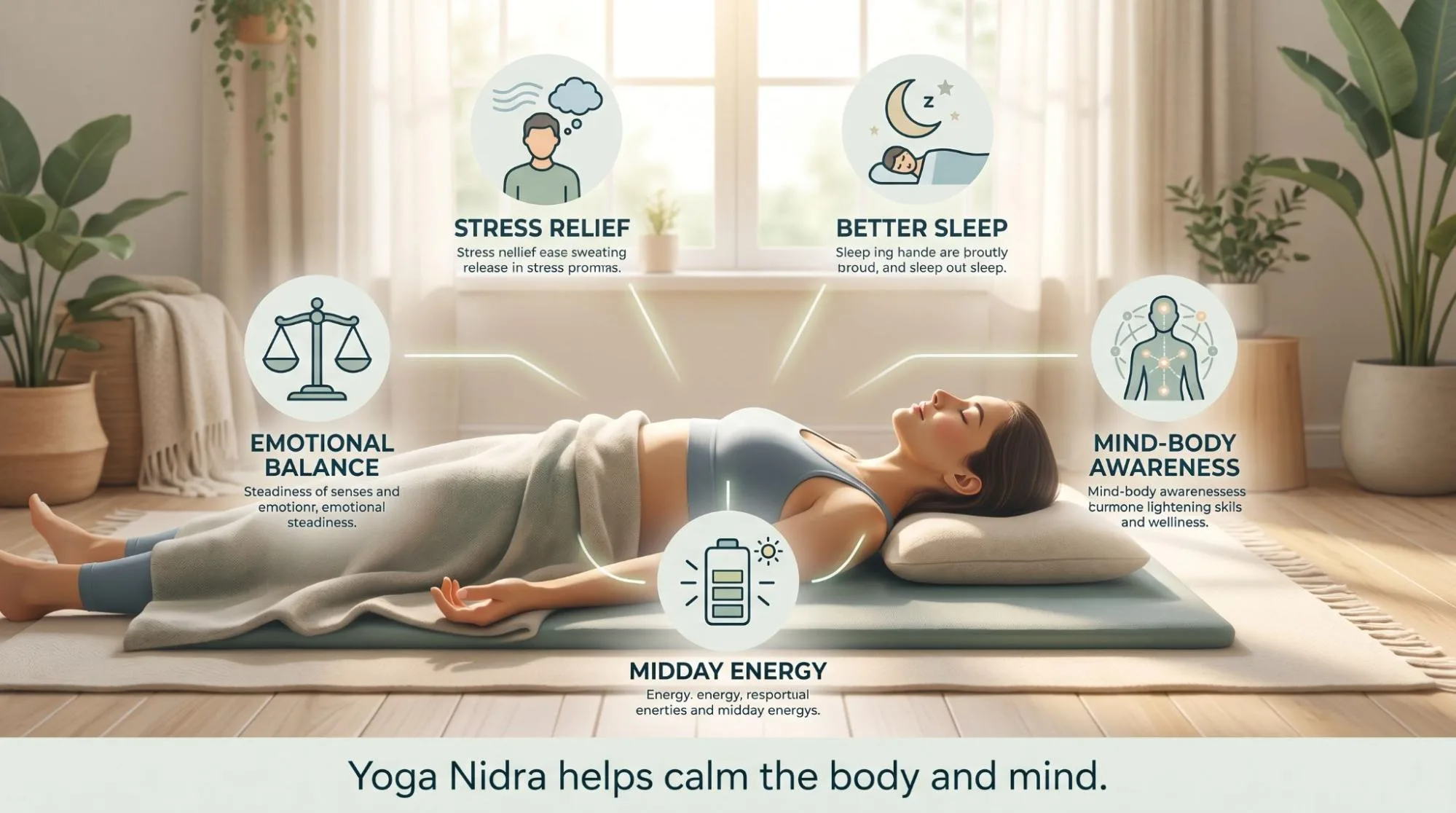
Yoga Nidra is simple, but it can be powerful when practiced regularly.
Reduces Stress
A guided Yoga Nidra session helps slow the body down. Breathing becomes easier, muscles soften, and the nervous system gets a chance to settle.
Supports Better Sleep
Yoga Nidra may improve sleep quality by teaching the body how to relax. It is especially useful for people who go to bed tired but mentally restless.
Helps Emotional Processing
Because Yoga Nidra creates a safe, restful state, emotions may settle more naturally. Some people notice they feel lighter after practice, even if they did not “think through” a problem.
Improves Mind-Body Awareness
Yoga Nidra often includes body scanning. This helps you notice tension in the jaw, shoulders, chest, or stomach. Over time, you become better at sensing stress before it builds too much.
Gives Quick Midday Energy
A short Yoga Nidra session can refresh the body and mind without the heavy feeling some people get after a long nap.
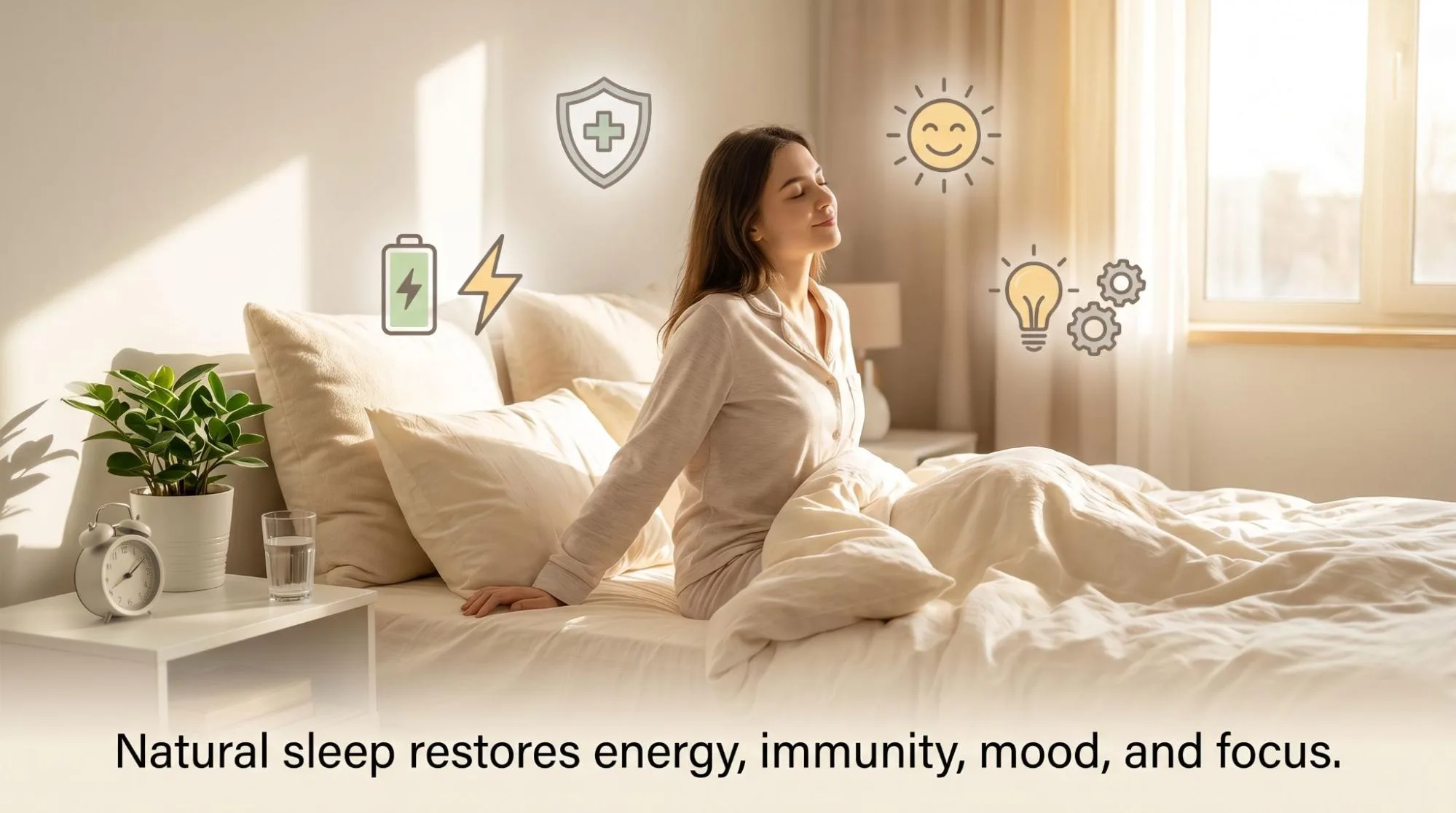
Benefits of Natural Sleep
This Yoga Nidra vs Sleep Difference Explained comparison also shows why natural sleep remains the main foundation for physical and mental recovery. A useful Yoga Nidra vs Sleep Difference Explained detail is that Yoga Nidra helps the body relax while keeping some level of awareness. Sleep is not optional. It is one of the main foundations of health.
Restores Physical Energy
Good sleep restores energy in a way no meditation can fully copy. After enough sleep, the body feels more stable, stronger, and ready for the day.
Strengthens the Immune System
Sleep supports immune function. When sleep is poor for many nights, the body may feel weaker and less resilient.
Improves Mood and Focus
Most people know this from experience. After poor sleep, small problems feel bigger. After proper sleep, thinking is clearer and emotions are easier to manage.
Learn More : Legs Up the Wall Pose Benefits: A Simple Guide to Viparita Karani
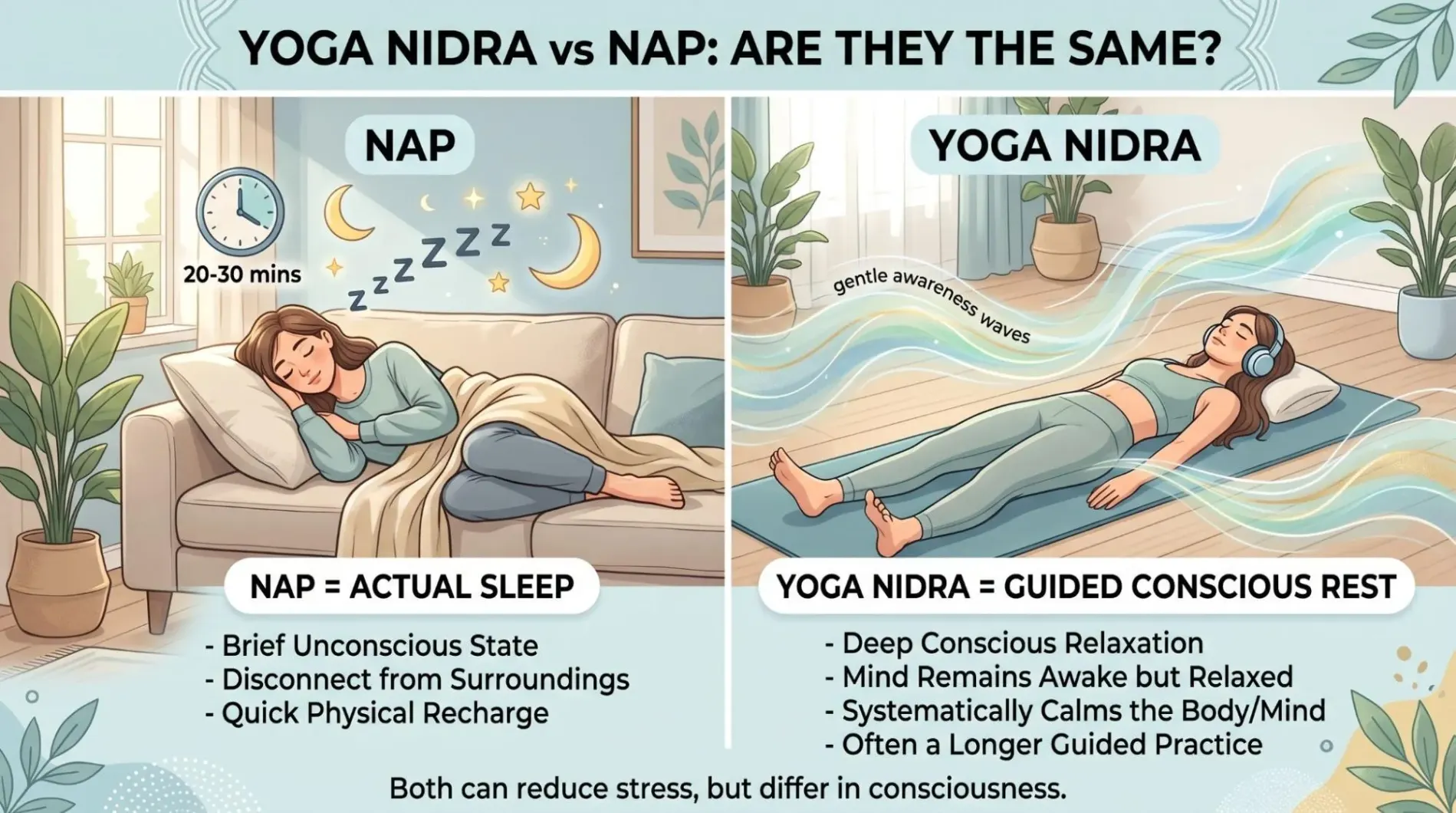
Yoga Nidra vs Nap: Are They the Same?
Yoga Nidra and naps are not the same, although both can help you rest.
A nap is actual sleep. Yoga Nidra is guided conscious rest.
When a Nap Is Better
A nap may be better when you are physically exhausted, sick, or truly sleep-deprived. If your eyes keep closing and your body feels heavy, sleep may be what you need.
When Yoga Nidra Is Better
Yoga Nidra may be better when your body is tired but you do not want to feel groggy afterward. It is also useful when stress, anxiety, or mental noise is the main issue.
How to Practice Yoga Nidra for Better Rest
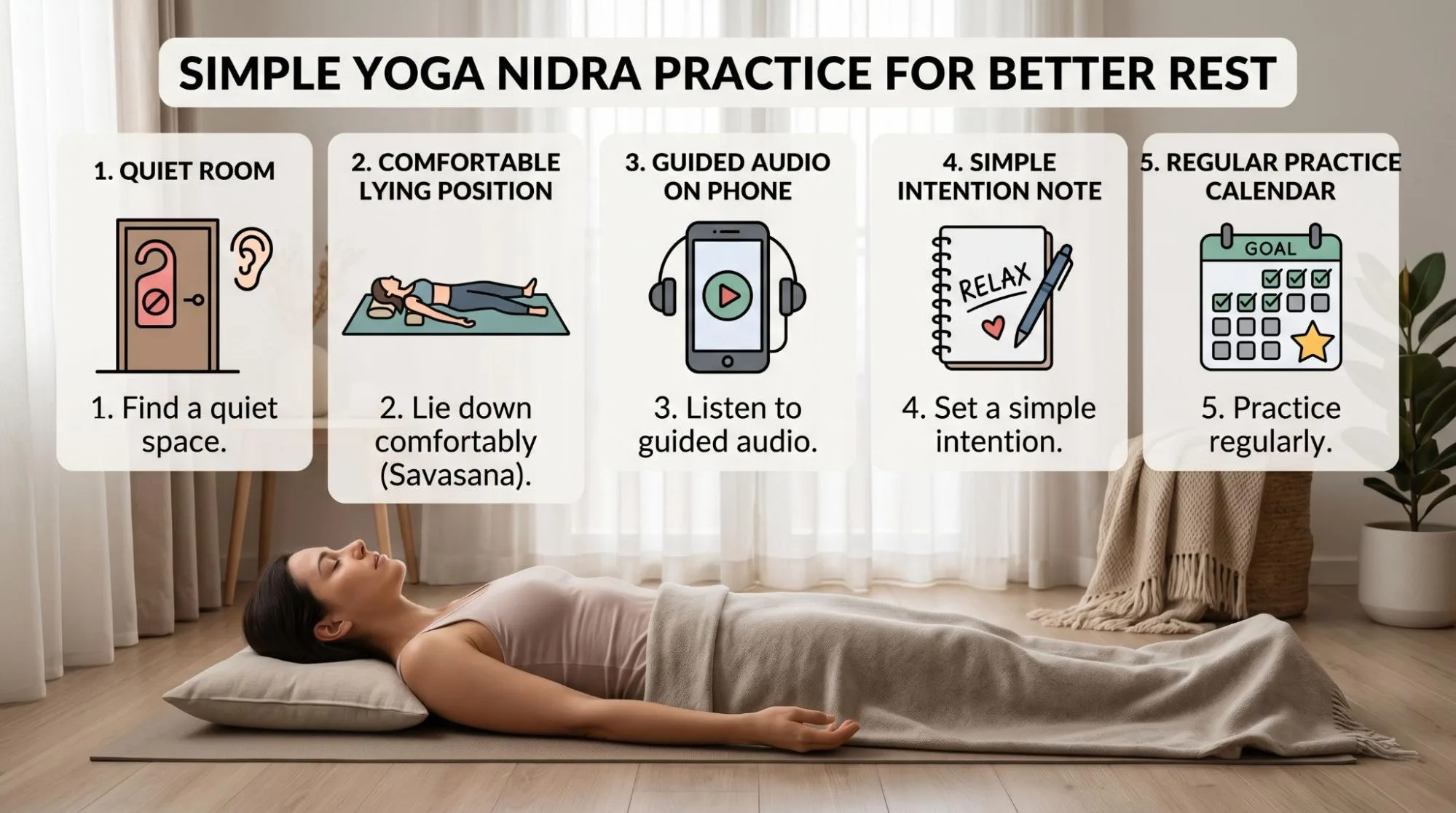
Yoga Nidra can be practiced by beginners. You do not need flexibility, special clothes, or yoga experience.
Choose a Quiet Place
Pick a place where you will not be disturbed. Silence is helpful, but it does not need to be perfect.
Lie Down Comfortably
Lie on your back if possible. Use a pillow under the head or knees if needed. The goal is comfort, not a perfect pose.
Follow a Guided Session
Start with a guided Yoga Nidra audio. Online videos are fine, but choose a calm voice and a session length that suits you.
Set a Simple Intention
Keep it short. For example:
- “I rest deeply.”
- “I feel calm.”
- “I let go of tension.”
The intention should feel natural, not dramatic.
Practice Regularly
Yoga Nidra works best when it becomes familiar. Even 10 to 20 minutes a few times a week can help your body learn how to enter a restful state more easily.
Best Time to Do Yoga Nidra
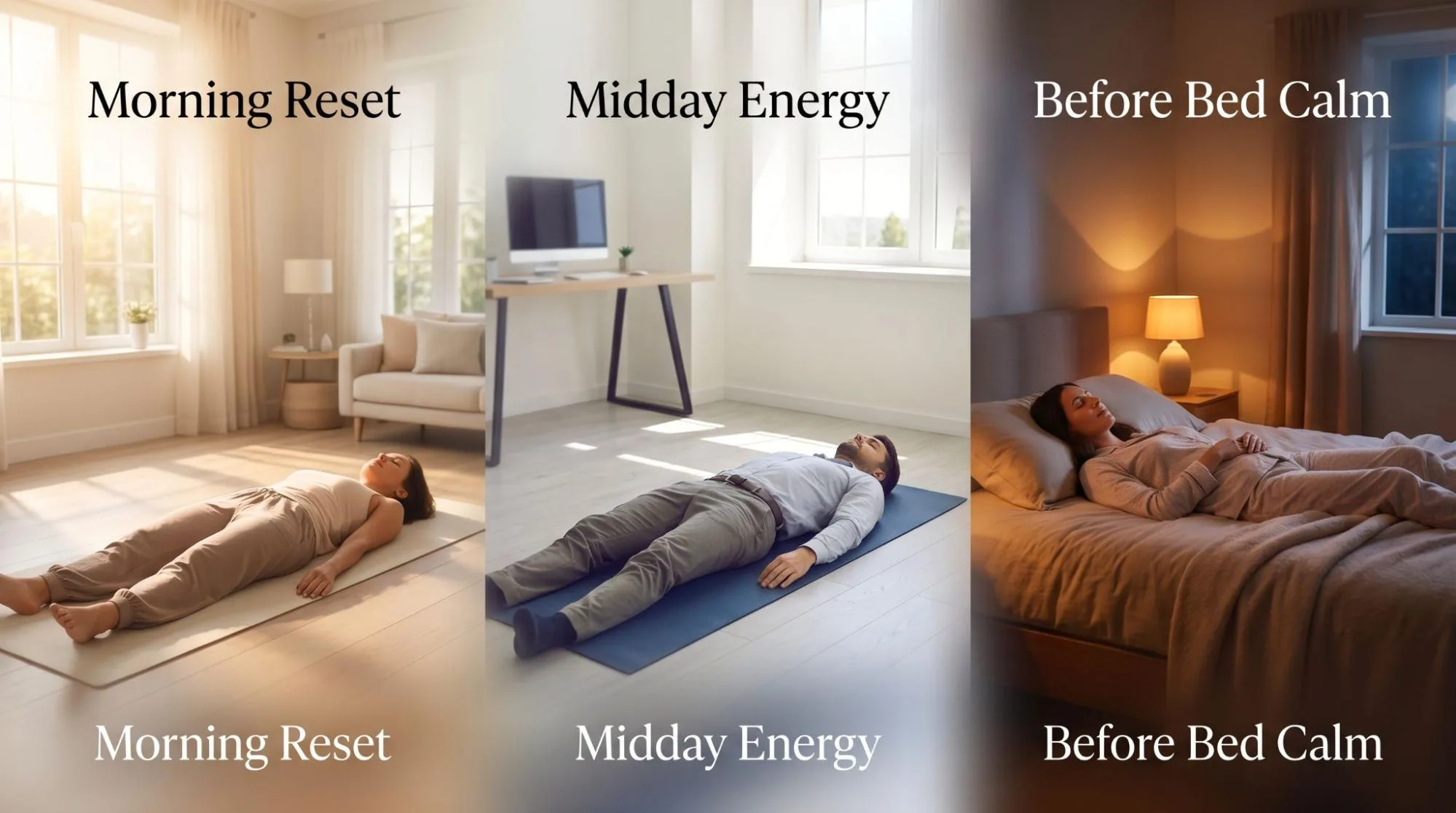
For a practical Yoga Nidra vs Sleep Difference Explained approach, use Yoga Nidra as support during the day or before bed, not as a sleep replacement. There is no single perfect time. It depends on why you are practicing.
Morning Practice
Morning Yoga Nidra can help if you wake up anxious or tired. Keep it short so you do not drift back into sleep for too long.
Midday Practice
Midday is a great time for a reset. It can help you recover energy without needing caffeine or a long nap.
Before Bed
Before bed, Yoga Nidra can help the mind slow down. If you often overthink at night, a calm guided session may support better sleep quality.
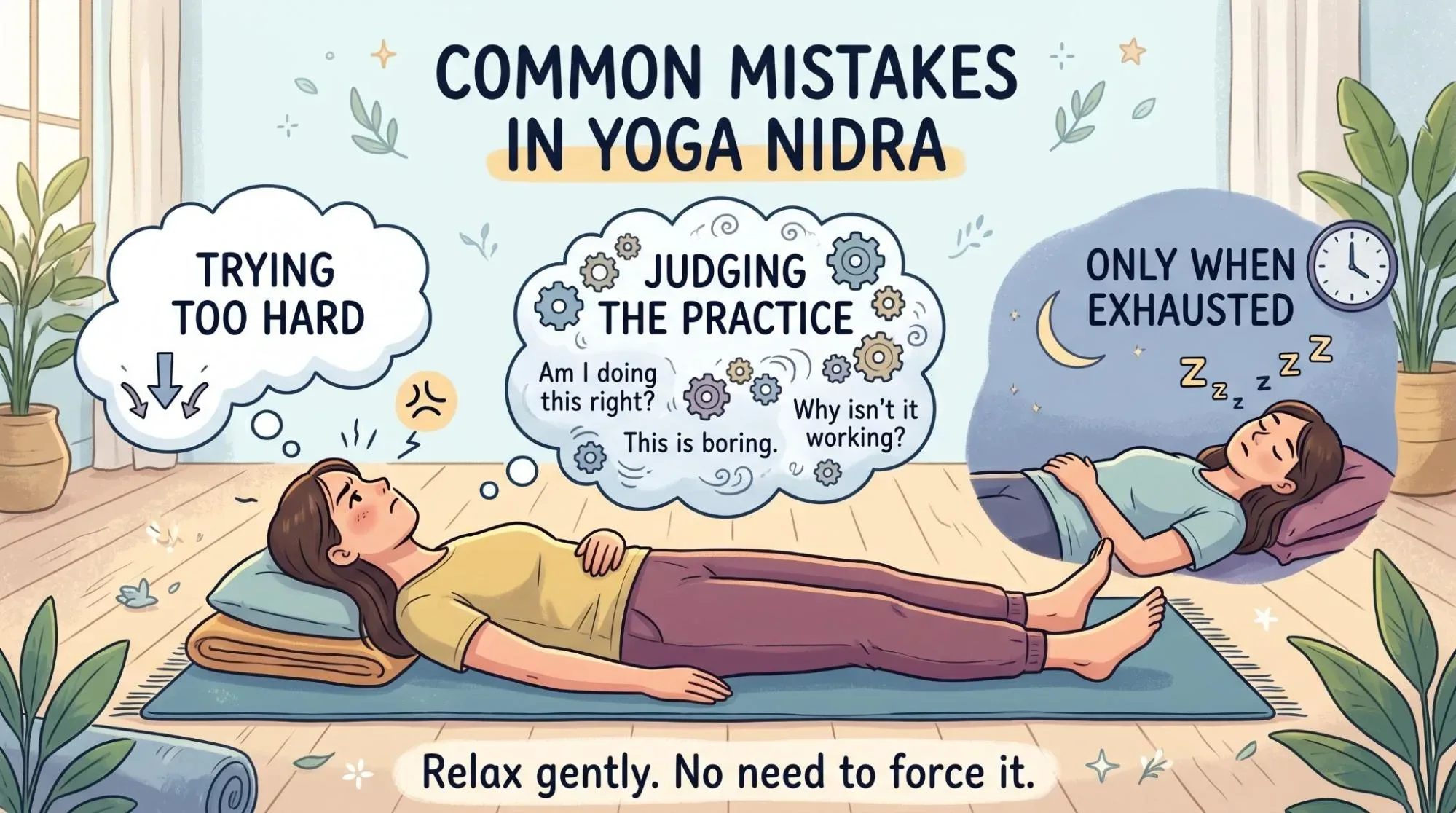
Common Mistakes in Yoga Nidra
Yoga Nidra is simple, but people often make it harder than it needs to be.
Trying Too Hard
You do not need to “perform” relaxation. Trying too hard keeps the mind active. Let the guidance carry you.
Judging the Experience
Some days you will feel peaceful. Some days your mind will wander. That is normal. The practice is still useful.
Practicing Only When Exhausted
If you only practice when you are completely drained, you may fall asleep every time. Try using Yoga Nidra on normal days too, so your mind learns the restful pattern.
FAQs
Is Yoga Nidra the same as deep sleep?
No. Yoga Nidra may feel very deep and restful, but it is not the same as deep sleep. Deep sleep is a natural sleep stage with important physical recovery functions.
How many hours of sleep do I need if I practice Yoga Nidra?
Most adults still need a full night of sleep. Yoga Nidra can support rest, but it should not be used as a regular replacement for healthy hours of sleep.
Can Yoga Nidra help if I cannot fall asleep?
Yes, it may help by calming the body and reducing mental activity. Many people use guided Yoga Nidra before bed to relax.
What if I fall asleep every time?
That usually means your body needs rest. Try practicing earlier in the day or using a shorter session.
Can beginners practice Yoga Nidra?
Yes. Yoga Nidra can be practiced by beginners because it does not require difficult poses or advanced meditation skills.
What is the short Yoga Nidra vs Sleep Difference Explained answer?
The short answer is that sleep is natural unconscious rest, while Yoga Nidra is guided conscious relaxation.
Learn More : Pratyahara Yoga Meaning and Practice: A Simple Guide for Beginners
Conclusion: Yoga Nidra Supports Sleep, But It Does Not Replace It
The best Yoga Nidra vs Sleep Difference Explained takeaway is this: sleep is essential, and Yoga Nidra is a helpful support for deeper relaxation. Yoga Nidra and sleep both matter, but they serve different roles. Sleep is a biological need. It restores the body, supports the brain, and helps keep your mood and energy steady.
Yoga Nidra is a conscious rest practice. It can calm stress, support mental health, improve body awareness, and help you enter a more restful state.
The best approach is not Yoga Nidra vs sleep as a competition. Use sleep as your foundation. Use Yoga Nidra as a helpful support when your body and mind need extra calm.